Sanshiro Sugata (姿三四郎, Akira Kurosawa, 1943)

It might seem curious in some ways to make a film about the importance of humanity in martial arts during a time of war, but Akira Kurosawa’s debut feature Sanshiro Sugata (姿三四郎, Sugata Sanshiro) does just this in depicting the hero’s coming of age as a gradual progress towards awakening as he learns to attain control over body and mind through the modern discipline of judo. Based on a novel by Tsuneo Tomita, the film is in many ways a typical martial arts drama in which a young hopeful seeks a master and must eventually face a rival, but lends a note of poetry to the tale which is in other ways perhaps out of keeping with its times. 

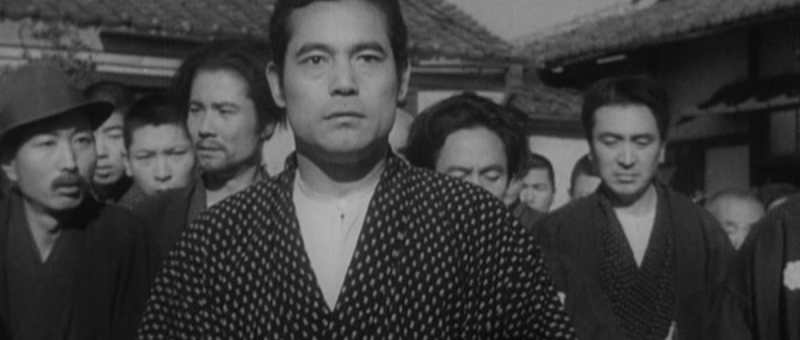
The times of the film, however, are late Meiji as demonstrated in the lively opening sequence which ventures into a town in transition where policemen in Western-style uniforms walk the streets alongside townspeople dressed largely in kimono as is the hero, Sanshiro Sugata (Susumu Fujita), who’s come looking for a famous jiujitsu master. Taken on as a pupil, he overhears the master, Momma (Yoshio Kosugi), disparaging a rival, Yano (Denjiro Okochi), who has come up with a new martial art he calls judo which is fast gaining both respect and popularity. Momma thinks it’s all just a branding exercise and Yano’s “judo” is just repackaged jiujitsu, irritated that he seems primed to take a prestigious position as a trainer to the police force which runs its own martial arts contest. Sanshiro goes with them when they attempt to ambush Yano and teach him a lesson only to be easily defeated and humiliatingly thrown in the local river. Sanshiro immediately switches his allegiance, discarding his geta to give Yano a ride home in his rickshaw.

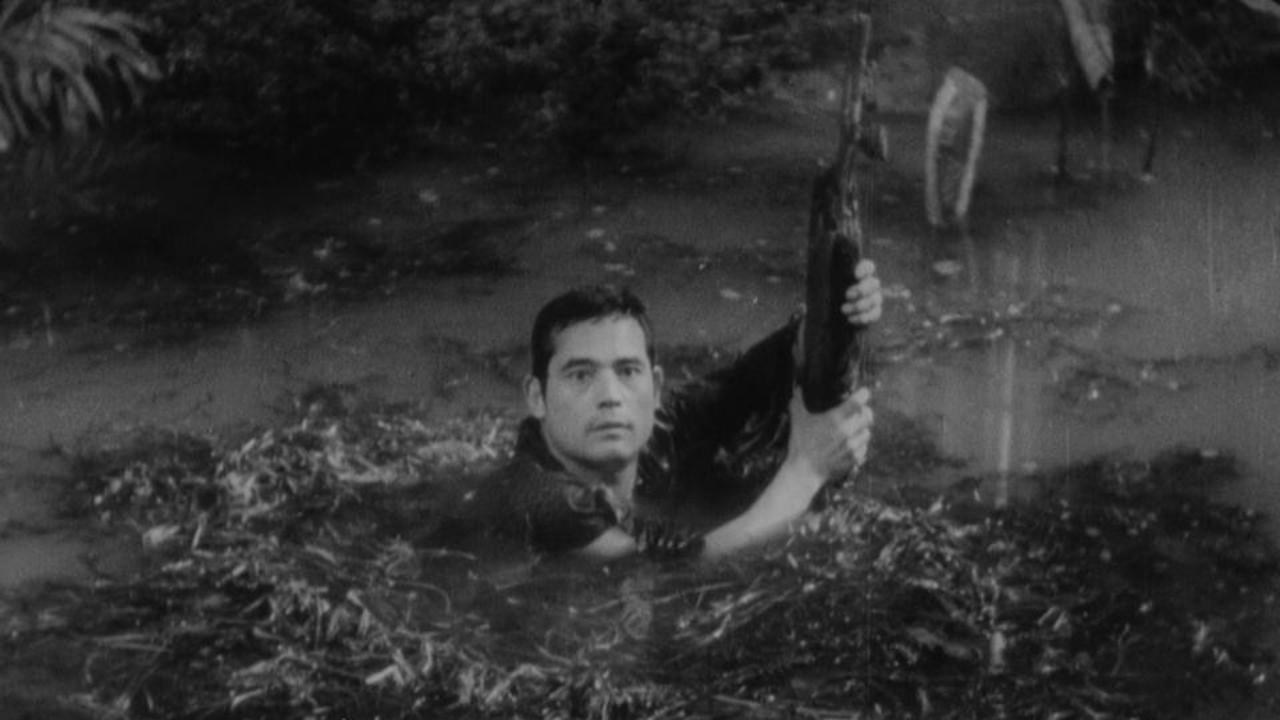
As Yano repeatedly tries to teach Sanshiro, judo is more than a martial arts discipline and places humanity at the centre of everything. This is a difficult lesson for the hot-headed Sanshiro to learn, quickly falling foul of his new master after brawling in the red light district and dramatically throwing himself into the pond. Clinging to a pole, he refuses to get out until Yano forgives him, but in true master fashion Yano merely says that getting out of the pond or not is entirely up to him. It’s while he’s in there, and after a few words from a Buddhist monk, that he witnesses a lotus flower slowing unfolding and achieves a kind of enlightenment that allows him to realise he’s been childish and petulant, finally getting out of the water to submit himself to the rigorous discipline of the martial arts life. 

The flower motif recurs several times, not least being its subversion when antagonist Higaki (Ryunosuke Tsukigata) sprinkles the ash of his cigarette over it. Making his first appearance in dandyish Western dress, Higaki is described as a snake-like villain, his evilness emphasised by his non-Japanese attire in contrast to pretty much everyone else who continues to dress in kimono. Higaki vows that his fight with Sanshiro must be to the death, in part a fight between the nascent art of judo originating in the post-feudal society and the traditional art of jiujitsu, but echoing Sanshiro’s first fight with former master Momma which resulted in his death and plunged the hero into spiritual conflict. He then experiences something similar when realising that he has inadvertently fallen in love with Sayo (Yukiko Todoroki) the pure-hearted daughter of another rival, Murai (Takashi Shimura), who also desires to fight him but as it turns out only in his desire to face a worthy opponent. Sanshiro wants to back away, afraid that he may humiliate or even kill the father of the woman he loves but is brought back to himself by more words from the monk who tells him that he must be as innocent as she is and engage in the fight in a sportsmanlike fashion as a spiritual as well as physical contest. 

This is also to some degree true of his final confrontation with Higaki which too is a confrontation with the evils of the age if less comfortably also satisfying the censors by allowing Higaki to stand in for foreignness in general. Higaki is indeed often accompanied by the sound of the wind which echoes his modernity, the fight taking place in a large windswept field below roiling clouds as the two men grapple despite the advice of their intermediary to call it off before one of them really dies. Higaki does in a sense die a sort of death in that we’re told after the fight he reformed and also managed to find a similar kind of enlightenment to Sanshiro who is then bashful and romantic while heading off on another journey from which he assures Sayo he will soon return. It’s true enough that there doesn’t seem to be much that would appeal to the censors of 1943 save the implied defeat of Western powers and celebration of Japanese martial arts given that humanity is repeatedly emphasised as the core component of judo and that Sanshiro achieves an individual enlightenment rather than finding peace as a member of a team or community, but they did otherwise decide to cut a substantial amount of the film said to contain a love scene and references to alcoholism that they deemed improper. Nevertheless, there are shades of Kurosawa’s later greatness even here in his dramatic composition and expressionistic use of nature to detail one boy’s journey into manhood through the spiritual rather than physical gymnastics of the philosophy of judo. 

Home Sweet Home (我が家は樂し, Noboru Nakamura, 1951)

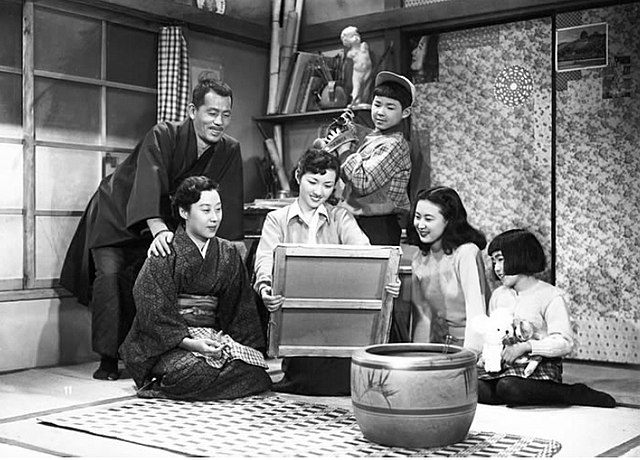
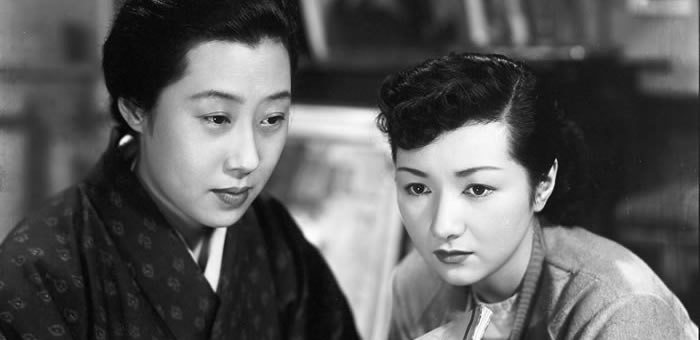
There must have been a lot of families like the Uemuras in the Japan of 1951. As film’s title implies, their home is a happy one and though they may not have much they make the most what they have and are cheerful and loving towards each other. Still, the world stores up trouble for them perhaps because they are so very defiant of their circumstances. In many ways a classic shomingeki, Home Sweet Home (我が家は樂し, Waga Ya wa Tanoshi) was the film that put Noboru Nakamura on the map and finds Japan at a kind of crossroads edging past post-war privation towards a broadly consumerist society.

We can get a sense of that in the constant needs of four children in the Uemura family, patriarch Kosaku (Chishu Ryu) picking up his young son Kazuo (Katsumasa Okamoto) after baseball on his way home and noticing that his mitt is almost worn through only to get there and spot his daughter’s boots are getting pretty thin too. It’s clear they struggle for money despite Kosaku’s steady job for which he is about to receive a 25-year good service commendation as wife Namiko (Isuzu Yamada) supplements the family income by taking in sewing at home while we later find out that she’s already sold most of her kimono to help make ends meet and is considering selling her wedding ring to pay for middle daughter Nobuko’s (Keiko Kishi) school trip to Kyoto.

But her hard-nosed sister Kayo (Mutsuko Sakura) tells her that secondhand kimono have lost their value with so many new ones now available. In the immediate post-war era, rice and kimono were the only things that had held their value and so selling one could bring in a lot of money quickly. Conversely, after receiving a sizeable bonus along with his commendation, Kosaku and Namiko visit a department store which has a large range of affordable clothing for sale though the kimono fabric Kosaku picks out for Namiko is still fairly expensive so she instinctively puts it back insisting that they buy the presents they promised the children first. 

That was probably a good move, seeing as the rest of the money is stolen from them on their way home to a congratulations party the children are busy setting up. Kosaku asks why someone would rob people like them, honest, hardworking types who don’t have much to begin with but as Namiko sensibly points out pickpockets don’t really think like that and how would they know anyway. The subtext is that times are still hard for a lot of people even if there are now more exciting, definitely non-essential things appearing on shelves for people with disposable income to buy and a new kimono, though out of fashion, is no longer so out of reach for the ordinary housewife. 

The loss of the money might seem as if it should place a wedge between husband and wife, but bar a moment of disappointment cured by the realisation that oldest daughter Tomoko (Hideko Takamine) has been considerate enough to place hot water bottles in their futons, they resolve to muddle through together and in any case they’re no worse off than they were before. Tomoko herself is conflicted, feeling as if as a young woman in her early 20s she should give up her dreams of becoming a painter and get a job to support the family but Namiko always tells her not to. She encourages each of her children to follow their dreams, perhaps a sign of a new post-war liberation, telling her sister that she’d happily sell all her kimono so that Tomoko could go on painting. Later we discover that she also dreamed of becoming an artist and that though Kosaku had encouraged her to keep it up, a housewife’s day is never done and there was simply no time left for herself. Painting is just another thing she sacrificed for her family and Namiko seems to be determined that Tomoko won’t have to do the same not that she particularly regrets her decision.

Tomoko only really comes to understand her mother’s sacrifices on noticing that the cupboards really are bare, she’s sold everything that could be sold and pawned her ring though the colleague that owned the house they were renting has encountered some financial difficulties of his own and going to to sell to the grumpy old man who bought the house across the way. The Uemuras are such obviously good people that it feels so unfair that so much bad luck has come their way all at once though it is their goodness that eventually saves them when the old man is touched by seeing youngest daughter Mitsuko (Kazuko Fukui) playing with his dog. He later comes to admire Tomoko’s painting of his garden though he’d put a fence up to stop her peering in. The scars of the post-war era are visible in the damage to Uemura’s front wall which would have blocked the way but now perhaps enables them to become good neighbours after all. Though the film may lack some of the visual flair present in Nakamura’s later work, it more than makes up for it with genuine sentiment and the implication that in the end the world is basically good and rewards those who are the same even if it sometimes tests their resilience.


Scandal (醜聞, Akira Kurosawa, 1950)

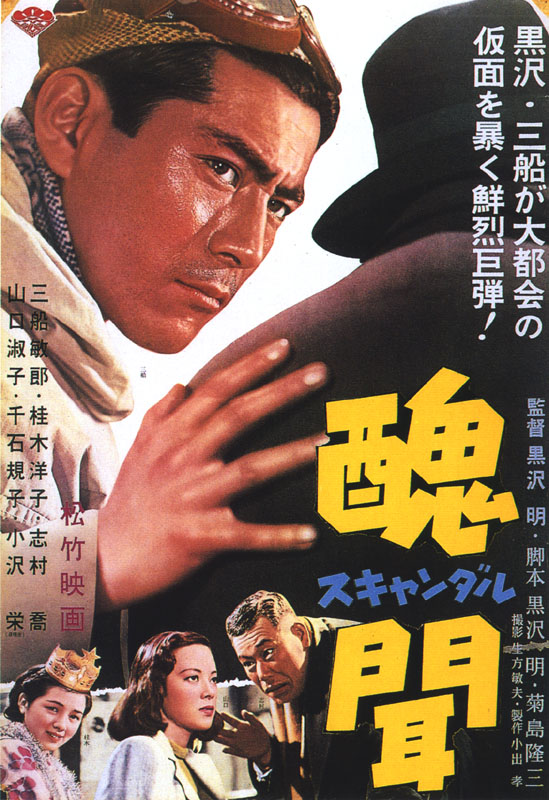
“Freedom of the press or harassment?” The more things change, the more they stay the same. Akira Kurosawa’s attack on the declining moral standards of the post-war society as reflected in the duplicity of the gutter press has unexpected resonance in the present day in which the media is simultaneously unwilling to challenge authority and in thrall to the populist allure of celebrity gossip with sometimes tragic results. The aptly named Scandal (醜聞) is essentially a morality tale which draws additional power from its seasonal setting and embodies the soul of the contemporary society in a conflicted lawyer consumed by internal struggle against despair and hopelessness. 

The more literal scandal however revolves around a well known singer, Miyako Saijo (Yoshiko (Shirley) Yamaguchi), and a motorcycle-riding artist, Ichiro Aoe (Toshiro Mifune), who meet by chance while staying at the same remote mountain inn. Having ironically headed to the mountains to escape the various “annoying things” that plague her in the city, Miyako has been pursued by two muckrakers from the tabloid press who take umbrage at her refusal to see them. They are then fairly delighted when they manage to snap a picture of Ichiro and Miyako standing on her balcony looking out at the mountains like a young couple in love. They deliver the photo to their seedy boss, Hori (Eitaro Ozawa), who is over the moon with excitement at his new business prospects. Suddenly Ichiro and Miyako are on posters all around the city with headlines such as “Love on a Motorcycle” and “Miyako Saijo’s secret love – revealed!”. 

Though Ichiro is a semi-public figure himself having been featured in magazine spreads as an artist on the rise, he is not a worldly man and is shocked by the idea that the press can make something up and print it with no consequences. He feels he must resist not just on a personal level angry to have been misrepresented but for the post-war future to ensure that the press is held to account and that it does not misuse its power to breach the privacy of ordinary citizens. To his mind, they only get away with it because most people just ignore them and wait for the scandal to pass, a sentiment born out by Hori who dismisses a concerned underling with the reminder that they’ve never yet been sued so they need have no fear saying whatever they like whether it’s true or not. “The kind of snobs we target think the law is beneath them” he adds, suggesting that most people prefer to think of the gutter press as something they can safely ignore and that it’s only themselves that they show up in their torrid obsession with the lives of others. 

But Hori also ironically defends his right to press freedom and quickly hits back that he’s being oppressed by those who wish to silence his right to free speech even when what he’s saying isn’t true. Lawyer Hiruta (Takashi Shimura) who offers to represent Ichiro in his lawsuit quickly identifies Hori as a duplicitous conman but also allows himself to be manipulated accidentally accepting a bribe after being led to believe that Hori has a top legal expert on retainer and the case is hopeless unless Miyako, who has so far maintained a dignified silence, can be persuaded to join as co-plaintiff. Ichiro had decided to accept Hiruta’s offer of representation largely on meeting his teenage daughter, Masako (Yoko Katsuragi), who has been bedridden with TB for the last five years. Masako is a pure soul whose isolation from the contemporary society has allowed her to maintain her innocence and humanity but it’s also true that it’s the society that made her ill in the first place.

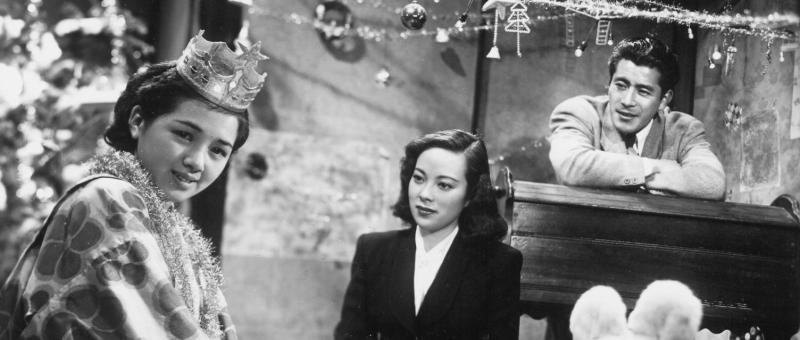
The morality play reaches a climax on Christmas Day as Ichiro delivers a tree on his motorbike while Miyako sings carols for a radiant Masako who is at least sitting up and looking much healthier than she’s ever been before. But the more Hiruta debases himself, caught between an accidental debt to Hori, his own lack of conviction, and the frustrated desire to do right, the sicker she gets as if poisoned by post-war duplicity. Even so, Ichiro continues to defend him insisting that Hiruta isn’t a bad person just a weak one and that in the end he won’t be able to go through with betraying him but will eventually come clean and tell the truth when it counts. Ichiro’s faith is as much in the institutions of the new democratic Japan as it is in Hiruta as he explains at the trial admitting that he may have been naive in placing too much trust in the legal system thinking that he couldn’t lose because he knows he’s in the right. As the opposition lawyer points out, that’s not a very good legal argument because his client thinks he’s in the right too only he doesn’t know that Hori is both a liar and an idiot who’s staked everything on the assumption that Hiruta won’t expose him for bribery, which would at least strongly imply he can’t back up his story, because it would mean destroying himself. 

In the end it’s Hiruta who puts himself on trial, baring his soul to the court which he acknowledges he has betrayed in his negligence and wilful obstruction of justice. It’s a victory for truth and decency and a turn away from the duplicitous, capitalistic mores of men like Hori who think they can do whatever they want and only laugh at those who value fairness and compassion. “In all my 50 years I’ve never seen a more confused age” Hiruta explains speaking of post-war chaos and the forced comprises of the intervening years of despair and desperation. As he coaxes the denizens of a small bar into an early rendition of Auld Lang Syne on Christmas Day, each vowing that this time next year things really will be better, many of them breakdown in frustrated longing drowning their sorrows as they continue to yearn for better times they do not really believe will come. But then like all the best Christmas films, this is also a redemption story of a man who decided that it wasn’t too late after all and that he might have to destroy himself in order make himself anew and be the man his daughter always knew he could be even if in the end he could not save her from the ravages of the post-war society.


Scandal screens at the BFI Southbank, London on 10th & 24th January 2023 as part of the Kurosawa season.

The Love of the Actress Sumako (女優須磨子の恋, Kenji Mizoguchi, 1947)

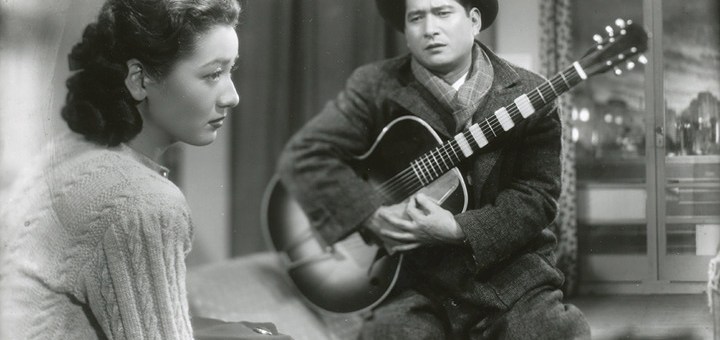
vlcsnap-2019-03-27-01h39m45s435The Taisho era was, like that of the post-war, a time both of confusion and possibility in which the young, in particular, looked for new paths and new freedoms as the world got wider and ideas flowed in from every corner of the globe. In The Love of the Actress Sumako (女優須磨子の恋, Joyu Sumako no koi), the second of a loose trilogy films about female emancipation, Kenji Mizoguchi took the real life story of a pioneering actress of Western theatre and used it to explore the progress of lack there of in terms of social freedoms not only for women but for artists and for society as a whole.

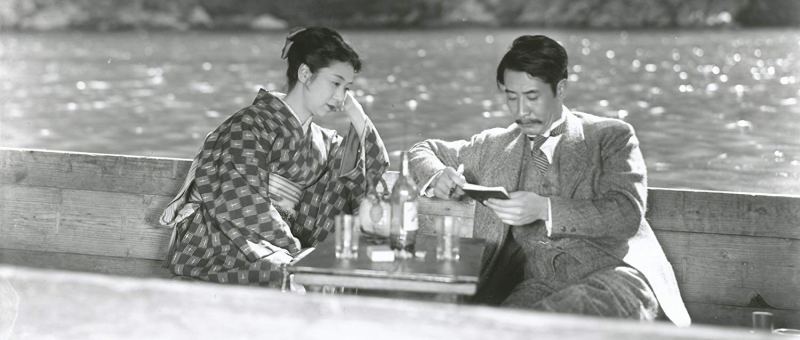
We begin in late Meiji as theatre director Shimamura (So Yamamura) fights to establish a foothold of Western-style “art theatre”, moving away from the theatricality of kabuki for something more immediate and naturalistic. He has, however, a problem in that as women were not allowed to take to the kabuki stage all of his students are male and casting a man to play a woman’s role would run counter to his desires to create a truly representative theatre. It is therefore lucky that he runs into Sumako Matsui (Kinuyo Tanaka) – a feisty, determined young woman who had divorced her first husband for infidelity and then left the second when he complained about her desire to pursue a career on the stage. In Sumako, Shimamura finds a muse and the ideal woman to portray the extremely controversial figure of Nora in his dream production of Ibsen’s incendiary A Doll’s House.

Shimamura casts Sumako because he sees in her some of Nora’s defiance and eventual desire to be free from illusionary social constraints, but it is in fact he who ends up embodying her spirit in real life. Somewhat feminised, Shimamura is in a difficult position in having married into his wife’s family, leaving him without real agency inside his own home as evidenced by his mild opposition to his daughter’s arranged marriage. While he wishes that his daughter be happy and if possible marry for love, Shimamura’s wife is very much of the old school and wants to make the best possible match in terms of financial gain and social status, viewing emotional compatibility as a low priority (the daughter herself as relatively little say). Unwisely falling in love with Sumako, it is he who eventually decides to follow Nora’s example by walking out not only on his family but also on the theatre company. He does this not quite because the scales have been lifted from his eyes – he was never under any illusion that his arranged marriage was “real” and there is of course an accepted degree of performance involved in all such unions, but because he finally sees possibility enough in his love for Sumako and the viability of emotionally honest Western art to allow him to break free of outdated feudal ideas of familial obligation.

Nevertheless, making a career as an artist is a difficult prospect in any age and Shimamura’s emotional freedom quickly becomes tied up with that of his art. Sumako’s Nora proves a hit (in the last year of Meiji), but he is ahead of his times both in terms of his liberal, left-wing philosophy and his determination to embrace modern drama in a still traditional society. The roles we see Sumako perform, including that in Tolstoy’s Resurrection which was another of those that helped to make her name, are all from proto-feminist plays which revolve around women who, like herself, had chosen to challenge the patriarchal status quo in pursuit of their own freedom and agency. Shimamura’s wife makes no secret of her outrage to her husband’s desire to stage A Doll’s House, viewing Nora’s decision as “selfish” and perhaps of a subversion of every notion she associates with idealised femininity. Though not so far apart in age, Sumako is a woman of Taisho who left not one but two unfulfilling marriages and is determined to forge her own path even if that path eventually leads her to subsume her own desires within those of her lover as the pair attempt to put their social revolution on the stage.

The revolution, however, does not quite take off. Despite good early notices, Shimamura’s Art Theatre company quickly runs into trouble. Faced with financial ruin, he does what any sensible theatre producer would do – he begins to prioritise bums on seats and acknowledges that if he’s to keep his company afloat and facilitate his dream of making Western theatre a success in Japan he’ll have to compromise his artistic aims  by putting on some populist plays. Of course, this sudden concession to commercial demands does not go down well with all and some of his hardline actors begin to leave in protest not just of his selling out but of his twinned desire to make Sumako his star.

Tellingly, the pair are eventually forced out of Japan entirely to tour the beginnings of empire from Korea to China and on to Taiwan. Their ideas are too radical and their society not quite ready for their messages even if not initially as hostile as it would later become. Shimamura works himself to the bone trying to keep his dream alive, eventually damaging his health. Sumako remains somewhat petulant about being forced into an itinerant lifestyle while her onstage personas come increasingly to influence her offstage life until it is said of her that her performance is “no longer an interpretation but an extension of reality”. In this, Sumako has, in a sense, achieved Shimamura’s dreams of a truly naturalistic theatre, but it comes at a cost, as perhaps all art does, and, Mizoguchi seems to suggest, becomes a kind of sacrifice laid down to a society still too rigid and unforgiving to appreciate its sincerity. Nevertheless, their boldness, as fruitless as it was, has started a flame which others intend to keep burning, eventually becoming a beacon for another new world looking to rebuild itself better and freer than before.


Short clip featuring Sumako’s performance as Carmen.

Here’s to the Young Lady (お嬢さん乾杯!, Keisuke Kinoshita, 1949)

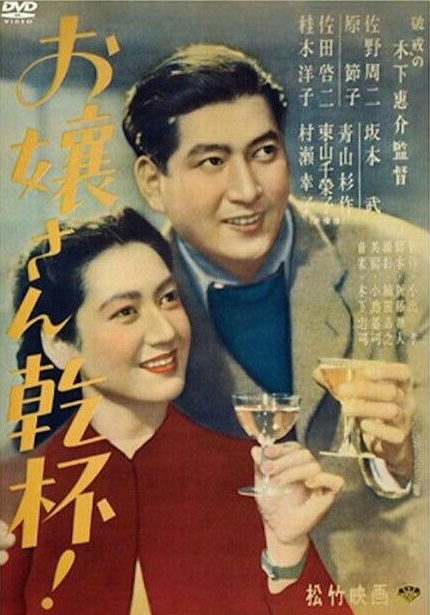
Here's to the young lady DVD coverLove across the class divide is a perpetual inspiration for melodrama, but what if the problem is less restrictive social codes and more emotional inertia and frustrated desire? Many things were changing in the Japan of 1949, racked by post-war privation and burdened with a scrappy desire to remake itself better and kinder than before. Keisuke Kinoshita, the foremost purveyor of post-war humanism, looks back to the 1930s for his 1949 cheerfully superficial romantic comedy Here’s to the Young Lady (お嬢さん乾杯!, Ojosan Kampai!). A tale of changing social codes and youth trying to find the courage to break free, Kinoshita’s easy romance is as breezy as they come but also hard won and a definitive step towards the freer, fairer world he so often envisages.

Keizo Ishizu (Shuji Sano), a 34-year-old self-made man and successful garage owner, is still single and seemingly pestered by his well meaning friends who keep finding matches for him that he doesn’t really want. Reluctantly, he acquiesces to the demands of his good friend Mr. Sato (Takeshi Sakamoto) who is desperate to introduce him to a pretty young woman from a wealthy family and agrees to meet Yasuko (Setsuko Hara) – a demure 26-year-old apparently keen to get married. Ishizu is instantly smitten, dumbstruck by her beauty and elegance. He begins to think all this marriage talk isn’t so silly after all, but then he is only a country bumpkin made good in the scrappy post-war economy. Yasuko is old money. How could he ever be permitted to enter her world and would she ever truly fit in his? Ishizu falls hard but his dreams of romance are eventually crushed when he discovers that the Ikedas, once a noble family, have hit upon hard times following half the family’s repatriation from Manchuria and the unwise business relations of Yasuko’s father which have landed him in jail as a co-conspirator in large scale fraud.

Despite his misgivings, Ishizu is talked into “dating” Yasuko for a few months during which he plans to find out if she could fall in love with him for real or if the marriage is likely to be an eternally one-sided affair which will make them both miserable. Ishizu resents being thought of as the cash cow, the classless nouveau riche upstart roped in to breathe new life into the fading aristocracy, but can’t let go of the hope that Yasuko might fall for his down to death charms even if not all of her family are very happy with this particular means of survival.

Yasuko’s grandparents are at great pains to emphasise (repeatedly) the immense gap in social class between Ishizu and their cultured, refined ingenue of a granddaughter who enjoys such elegant hobbies skiiing, tennis, and the ballet. Ishizu is into boxing and drinking at his favourite bar. He has no idea what the tune is that Yasuko plays on the piano that he bought for her and somewhat gauchely had delivered direct in front of the mildly scandalised family who can’t help feeling belittled by his generosity, but he finds it charming all the same even if his lack of refinement also stings with embarrassment. Nevertheless, the youngsters end up finding their own way – she takes him to the ballet where he is bored and then somehow moved, and he her to the boxing where she is frightened and then thrilled. They grow closer, but also not as Ishizu becomes increasingly frustrated (if in his characteristically good natured way) by Yasuko’s continuing aloofness.   

Perhaps unusually, it is Yasuko who struggles to move on from the idealised pre-war past in which she lived the romanticised life of a wealthy noblewoman who had not a care in the world and no need to worry about anything. The war has destroyed the nobility but this no Cherry Orchard-style lament for a declining world of elegance and rise of the unrefined in its place but a plea for rational thinking and a desire to move forward into a more egalitarian future. Yasuko’s grandparents cannot accompany her on this journey even if her parents and siblings are minded to be pragmatic, but it’s she herself who will need to make the decision to abandon her rigid ideas of what it is to be a fine lady and learn to embrace her own desires if she is to find happiness (as her father urges her to do) in the rapidly changing post-war world.

Then again, Ishizu is not entirely free of petty prejudice and the mild conservatism of the upwardly mobile as he shows in his intense hostility towards his best friend’s (Keiji Sada) tempestuous relationship with a club dancer (Naruko Sato). Nevertheless, after a good old fashioned case of fisticuffs and a proper consideration of all the obstacles he faces in winning the heart of Yasuko, Ishizu eventually reconsiders and urges his friend to chase happiness wherever it may lie. He vacillates and doubts himself, finds it impossible to approach the icy lady of the manor because of a feeling of social inferiority and finally decides to give up on an unrealistic idea of romance to spare them both pain, but then the obstacles were not all his to overcome and if there is a choice to be made it is Yasuko’s to make. A joyous throwback to the screwball ‘30s, Here’s to the Young Lady, banishes the darkness of the postwar world to the margins while its melancholy youngsters use romantic heartbreaks as a springboard to free themselves from the restrictive social codes of the past in order to choose happiness over misery and despair.


Titles and opening scene (no subtitles)