Blind Love (失明, Julian Chou, 2025)

There’s none so blind as those who refuse to see, as the old saying would have it. Though in Julian Chou’s Blind Love (失明, shīmíng) the problem is often more an obsession with the gaze of others that prevents its lonely protagonists from looking within and coming to an acceptance of themselves along with what it is they really want out of life. Set before Taiwan’s legalisation of same sex marriage, the film positions patriarchal heteronormativity as the cage in which the heroine willingly imprisons herself in fear and shame.

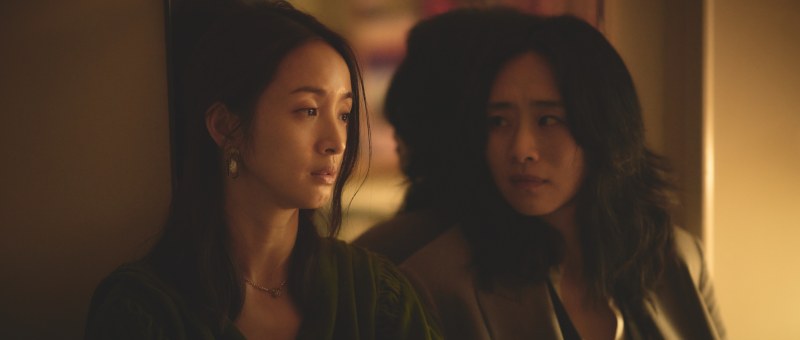
It’s telling that on being discovered with her girlfriend Xue-jin (Wu Ke-xi) when they were university students, Shu-yi (Ariel Lin) immediately jumps to the shame she feels in having done this to her mother. When the two women are together, it’s a bubble of perfect happiness, but on gazing at herself from the outside, Shu-yi feels only disgust in her feelings for Xue-jin and at some point evidently chose “properness” and conformity. Years later, when her mother has lost her sight and is living in a nursing home, she snaps at the nurse not to call her daughter because she’s married to a doctor and therefore very busy. Though it’s an odd moment, she says this with pride as if her own life were fulfilled by her daughter’s “successful” transition to wife to a professional man and mother to his sons. But it also seems as if this continual unseeing as manifested in her mother’s literal blindness is what later leads her to take her own life when forced to look inside herself while otherwise rendered dependent on Shu-yi and her unsympathetic husband Feng (Frederick Lee).

Feng is a selfish and unkind man who rules his home with an authoritarian iron fist. When Shu-yi tentatively hints that it might be better for her mother to live with them, he doesn’t answer but then immediately needles her, asking if she’s put on weight and whether the dress she’s supposed to wear to an important dinner will still fit. The domestic environment is rendered as a prison in which there is no natural light. The furnishings are cold and grey, as if there were no love or warmth here, and Shu-yi is under constant observation to ensure she plays her roles effectively. Feng sees his family only as tools or extensions of himself. He paints the picture of a perfect family to smooth his path to career success by ingratiating himself with the influential Doctor Gu and though Mrs Gu later sees through Shu-yi and is aware of the cracks within her marriage, chooses to unsee them and encourages Shu-yi to do the same by reaccepting her duty to dissolve herself within her husband’s ambitions even if her heart lies elsewhere. 

Feng exerts the same pressures on his teenage son, Han (Jimmy Liu Jing), by insisting that he study medicine though Han is now too old to submit himself to his father’s authority. You can’t let others decide for you, he tells a friend, and is told the same by Xue-jin whom he meets by chance and unwittingly falls for not knowing that she is his mother’s long-lost love. Xue-jin might seem like a more liberated soul having divorced her husband and accepted her sexuality while pursing her art as a photographer, which is of course the art of seeing, but her drink problem also hints at her loneliness and unresolved longing for Shu-yi. “You think what we do is wrong,” she tells Shu-yix with frustration, but Shu-yi can only answer, “How could be right?” before returning to her conformist life with all of its misery.

When she tells her younger son Rui that all that matters is how other people view you and asks him why he can’t just be “normal”, it’s as if she’s talking to herself. As the three of them pass through the pride parade and Rui asks what’s going on, Feng tells him that there are two kinds of people, the “normal” and the “abnormal” and that the people parading want to be seen as “normal” though they are not. Shu-yi pushes hard on the accelerator in anger and frustration, but it’s a divide she’s internalised within herself and remains unable to see that her love for Xue-jin is normal and natural. A woman in the bathroom at Feng’s dinner suggestively offers her her lipstick, explaining that it’s “the best form of camouflage for people like us,” before kissing her and leaving having rewakened Shu-yi’s latent desire. Hiding within this world of traditional femininity is the way Shu-yi has chosen to sublimate her desires and the concurrent self-loathing, but is also, in its way, an act of self-harm and means of punishing herself that amounts to a kind of suicide.

Only while making love with Xue-jin does she become fully herself before the self-recrimination finally kicks back in. Their connection is raw and honest, filled with tenderness and yearning, yet Shu-yi struggles to embrace happiness or accept her authentic self by escaping from the patriarchal superstructure represented by her mother and her husband’s authoritarianism. Chou ends on an ambiguous note in which Shu-yi is perhaps learning to see the truth of herself, but her world still appears cold and grey as if suggesting that, in the end, this kind of happiness and fulfilment is still not permitted to her even if she has finally accepted what kind of life it is that she wants.


Blind Love screens as part of this year’s San Diego Asian Film Festival.

Trailer (no subtitles)

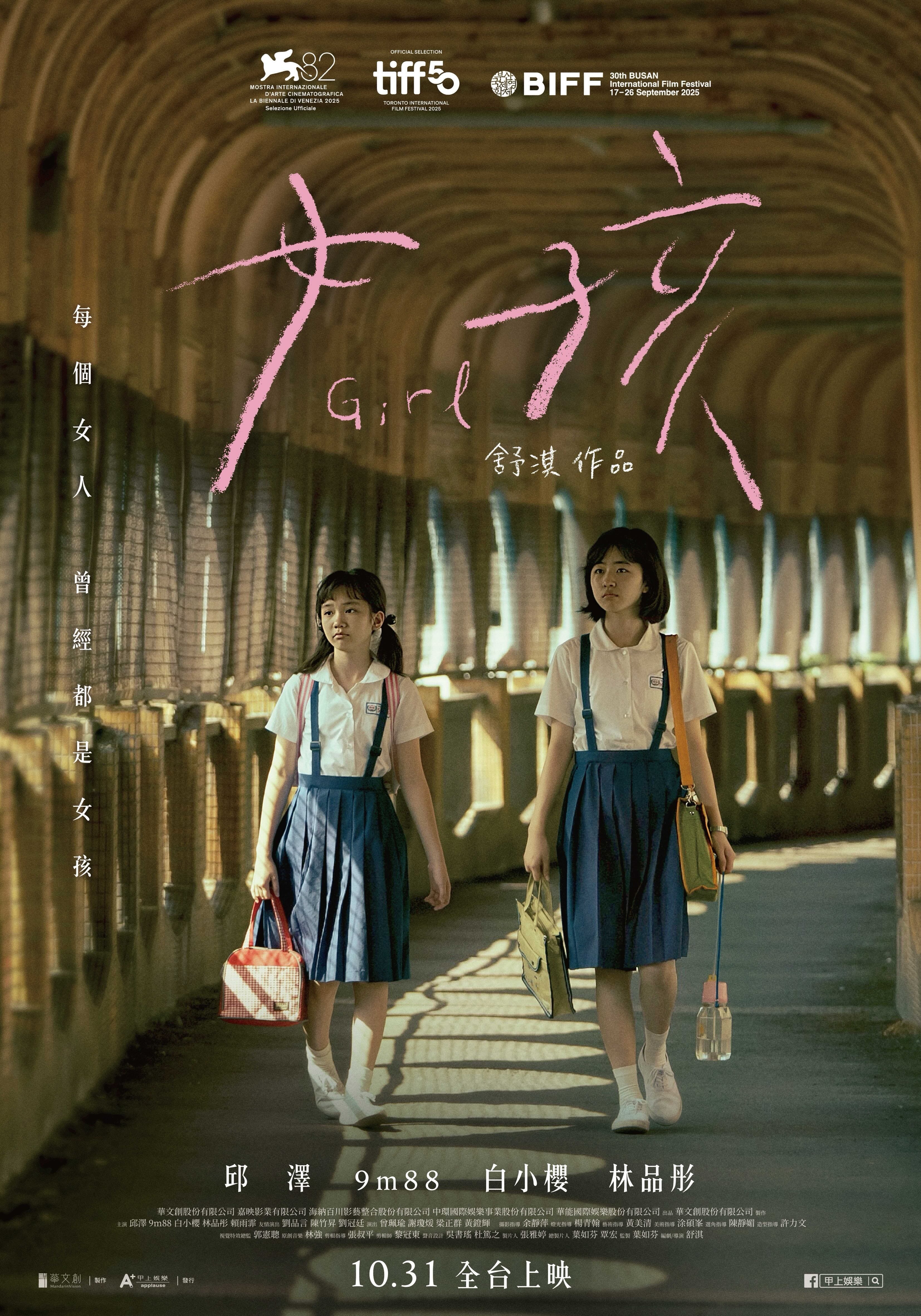
Girl (女孩, Shu Qi, 2025)

Taiwan may be emerging from martial law, but the cycles of patriarchal violence and oppression prove much harder to escape in Shu Qi’s touching directorial debut and portrait of a disrupted childhood, Girl (女孩, Nǚhái). Inspired by her own memories and set in the late ’80s, the film is unflinching in its depiction of mundane, domestic horror, but equally even-handed in extending understanding even to the most flawed of its protagonists who are themselves locked into a cycle of violence and self-loathing.

Hsiao-lee (Bai Xiao-Ying) doesn’t quite understand how her sister can be so cheerful even the other children at school make fun of her. Hsiao-lee is often criticised for looking “sullen,” and even her new friend Li-li (Lin Pin-Tung) jokes that on the rare occasion she smiles, she still looks “bitter”. But Hsiao-lee has plenty of reasons to be sorrowful and has perhaps already internalised the idea that there is no escape from her dismal circumstances. Finding a hole in the wall behind the school quite literally shows her another world, one that she later passes into in the company of Li-li who convinces her to ditch her classes and hang out with her at a sleazy video booth that is not really an age-appropriate environment for the two young girls. 

Li-li is Taiwanese-American and has recently moved to the island following her parents’ divorce. The fact that Li-li’s parents’ marriage has ended, even if she wistfully wonders if her father will suddenly jet in to repair the family, shows Hsiao-lee that the prison that is her family home has a door that could be unlocked. It’s clear that Hsaio-lee is terrified of her father (Roy Chiu) who is a violent drunk and may also be sexually abusing her. She zips herself up in a tent at night and cowers in terror as his hand presses down on the canvas, though he doesn’t like closed doors and flies into rages when he encounters them, which explains the large dent next to the handle to the door of her room. Hsiao-lee’s mother, Chuan (9m88), seems to take most of her frustrations out on her even if she tries to intervene and distract her father from further harming her.

Hsiao-lee doesn’t understand why her mother seems to resent her while doting on her sister, though we soon come to wonder if she blames her for condemning her to this kind of life. Shots of Chuan’s adolescence in rural Taiwan hint at a still more patriarchal world in which her father told her there was no need to study and if she had free time to hang out with friends she should spend it helping her grandmother instead. It’s implied that Chuan may have been assaulted while finally embracing the simple freedom of spending time with other people her age, while her father disowned her on her pregnancy declaring himself ashamed and telling her to leave and never return. Even now, she earns a meagre living as a hairdresser’s assistant and is groped by the male customers which the salon otherwise has little option other than to court. Her boss fusses over the air conditioning whenever they come in, and though Chuan may have taken a liking to Mr Chen, he is already married and only ever a symbol of the life that has eluded her. 

Chuan’s boss also tells her of a woman in Taipei who left an abusive husband and is now living happily with someone who treats her better, but Chuan continues to stick with Chiang possibly as an act of self-harm in her deep-seated self-loathing. Chiang doesn’t always seem to have been that way, but he’s otherwise someone who can’t fit into the contemporary society and is only employed thanks to a very understanding friend of his late father. Having gone too far and realised that Chuan may leave him if he continues to beat and rape her, he tries to reform, but it doesn’t last long and he’s soon back to drunkenly riding his scooter through town in the middle of the night. He too may feel hard done by, but it can’t excuse his behaviour nor the authoritarian terror of his home in which he takes out the frustrations of his fractured manhood on Chuan and Hsiao-lee. 

Chuan is imprisoned within the house and can find no escape from it, even when Hsiao-lee directly asks her to divorce him. Hsaio-lee might, however, be able to get out but only be accepting exile from her family and leaving her mother and sister behind at her father’s mercy. Given the omnipresence of male failure, there’s something quite heartening about the female solidarity that arises between Hsiao-lee and Li-li even if their circumstances are quite different from each other. Li-li is mired in the collapse of her family and longs for its repair with her father’s return while resentful of the unfairness of being exiled to an unfamiliar country where she’s looked after by her grandmother whom she can’t understand, presumably because she speaks Taiwanese rather than the Mandarin her mother made her keep up in America, while Hsiao-lee is trapped and looking for a way to free herself from her father. On a trip to the local shop, she ominously eyes up the rat poison while Li-li buys some sweets.

But even as Taiwan emerges from the authoritarian superstructure of the martial law era, patriarchal violence refuses to die and it’s only through an act of maternal sacrifice, framed as rejection and a continuation of that same cycle of violence now enacted by her mother, that Hsaio-lee finds a more literal kind of escape. Only once her father is gone does light return to the house and the possibility of healing the disrupted relationship with her mother become a reality. Beautifully written and elegantly directed, the film has a very genuine sense of place with its busy alleyways and bustling streets. The kids at school might cheerfully sing that there’s no place like home, but for Hsiao-lee home might be the scariest place of all and the one it’s the most difficult to escape.


Girl screened as part of this year’s LEAFF.

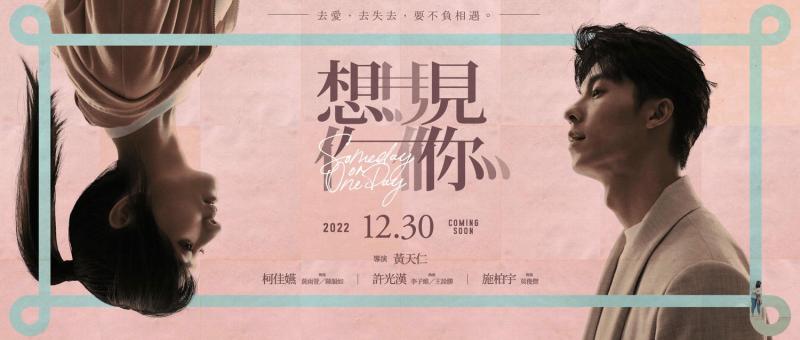
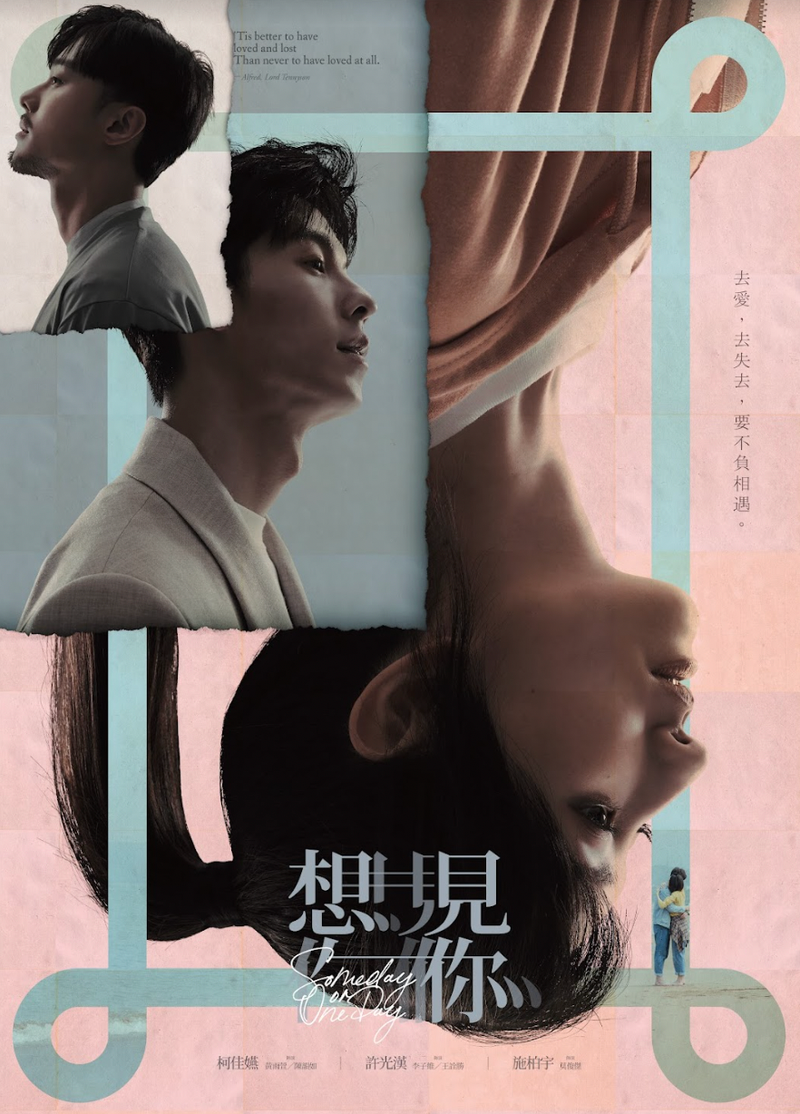
Someday or One Day (想見你, Huang Tien-jen, 2022)

A young woman finds herself quite literally in someone else’s shoes while trying to reclaim lost love in Tien Jen Huang’s sci-fi-inflected drama, Someday or One Day (想見你, Xiǎng Jiàn Nǐ). Inspired by the hugely popular television drama of the same name and starring the same cast, this big-screen edition drops the 20-year time slip device for a comparatively compressed tale largely taking place between 2014 and 2017 while the romantically troubled heroes effectively span a kind of multiverse of heartbreak, each looking for the good timeline where both they and their love can survive together. 

It has to be said, however, that the meet cute between destined lovers Yu-hsuan (Ko Chia-yen) and Zi-wei (Greg Hsu) is not without its problematic elements given that Yu-Hsuan is still in high school when the tale begins while Zi-wei is in his mid-20s, not to mention he’s largely interested in her because she looks exactly like old high school friend Yun-ru (Also Ko Chia-yen). Their meeting was brokered by a shared dream featuring the song Last Dance by Wu Bai which was released in 1996 which might explain why Yu-Hsuan didn’t know it prior to hearing it in the dream world where she lived with a man she didn’t know but turns out to be Zi-wei. The pair hit it off and eventually move in together. They are blissfully happy until Zi-wei is killed protecting Yu-Hsuan when they both randomly fall from a building which is still under construction. 

What they were doing there in the first place isn’t really explained, but it doesn’t become the nexus of Yu-hsuan’s trauma as she struggles to move on with her life continuing to communicate with Zi-wei through text message and imagined conversation even after moving to Shanghai for work. After being sent a walkman and cassette tape of The Last Dance, she wakes up in the body of Yun-ru the day before the accident and realises she can save Zi-wei if only she can convince him, and herself, that the danger is real. 

Moving the action to 2014 does rather undermine the nostalgic power of the song along with that of the walkman itself as a kind symbol of a late ‘90s youth only hinted at in brief flashes of Zi-wei’s high school days that were most likely better fleshed out in the TV series. Then again the theme of nostalgia is itself destructive given that the opening lines remark on how “silly” it is to try to hold on to “something that is vanishing” which is what each of the lovers is trying to do in the time slip drama by attempting to prevent the accident at the building site (though it doesn’t seem to occur to any of them that they could just not go there). 

As the rather trite closing quotation suggests it’s better to have lost and lost than not loved at all, each of the lovers realising that they cannot in fact change the past however much they might wish to and should try to do their best to enjoy the time they’ve been given with those they love for no one knows how long that will be. Nevertheless, there’s no denying that all the body swapping, multiverse shenanigans become incredibly convoluted, especially towards he film’s conclusion, making it largely impossible to keep track of who is who at the current time and what their relations to each other are. Viewers of the TV drama will be better placed to decipher whom some late introductions actually are given that their presence goes largely unexplained save for vague references to their names. 

Then again, we can’t be sure if the heroine eventually wakes up from a dream or is unable to do so becoming trapped in a fantasy of lost love defined by dream logic and wilful nostalgia rather than the anxieties of her nightmare in which she feared that though Zi-wei held her tight he would one day disappear. Undoubtedly confusing, the film nevertheless manages to deliver its time slipping messages of the importance of holding every moment close and then treasuring the memories of lost love rather than continuing to pine for something that can never be regained.


Trailer (English subtitles)
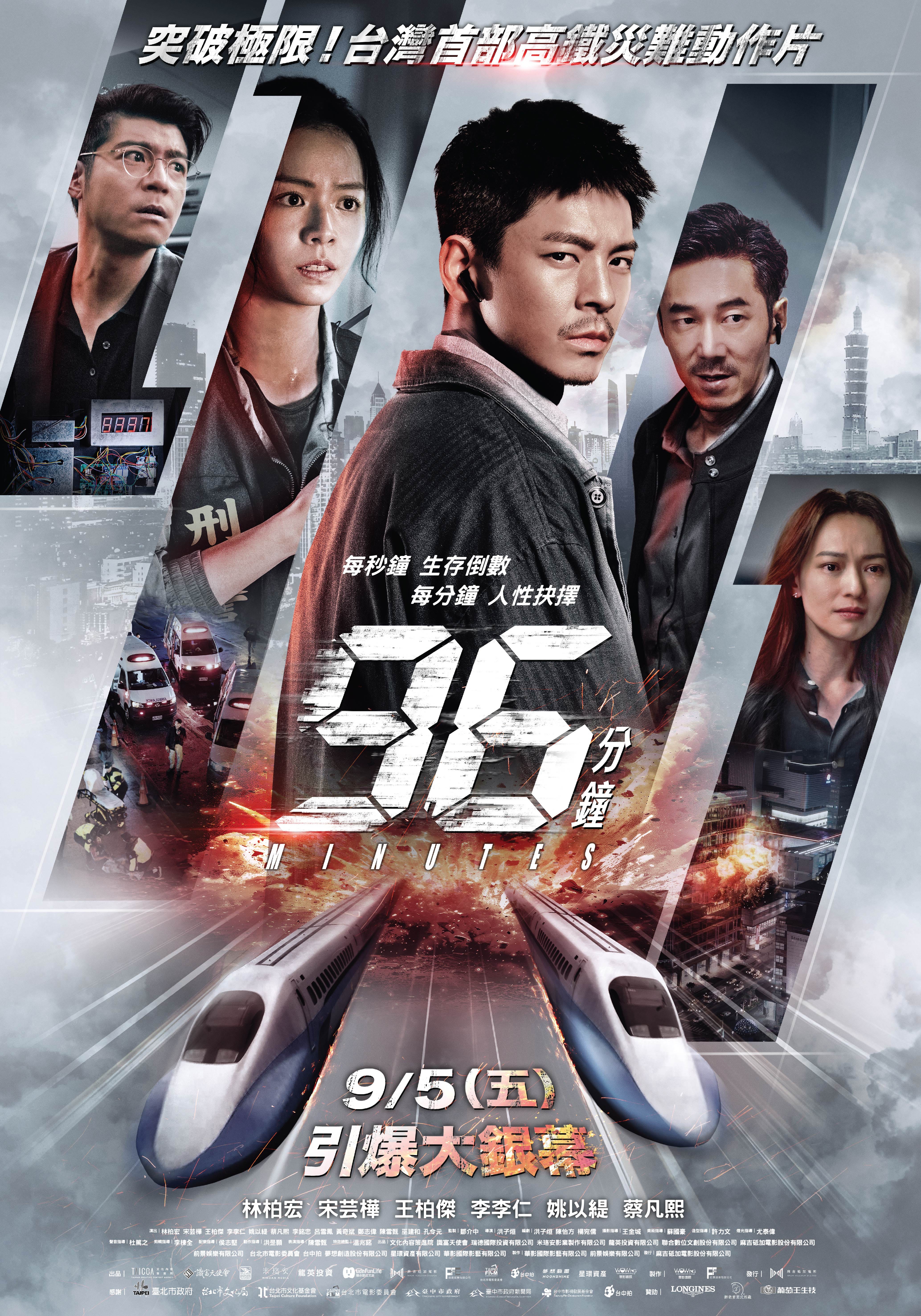
96 Minutes (96分鐘, Hung Tzu-Hsuan, 2025)

The needs of the many outweigh the needs of the few, as the famous goes. Prioritising saving lives where you can rather than risk spreading yourself too thin and not helping anyone as a result may be a sensible decision. But what if you or a loved are among those who’ve been deprioritised? Like many things, now it’s not just theory but here right in front of you and victims are real people not just anonymous numbers, it looks quite different.

At least, that’s how it is for A-Ren (Austin Lin), a brash bomb disposal expert. Though he disarmed a bomb in a cinema, another one went off across the road in a department store. The bomber had warned them that might happen, but A-Ren’s commanding officer Liu (Wang Bo-Chieh) convinced him they were probably bluffing. They were told there were two more bombs, one located in their command centre, and the other in the department store, and given a choice. Save the people in the department store by heroically blowing themselves up, or choose to save themselves even though this time they’re in the minority. 

Three years later, A-Ren has never forgiven himself, or Liu, for the bomb going off. He’s quit the police and though he’s married fellow officer Huang Xin (Vivian Sung), they never had a wedding and still haven’t been on honeymoon. His guilt is compounded by the fact that he’s been feted as a hero even though he knows he’s directly responsible for everyone who died in the department store. He gets a shot at redemption when the train he’s travelling on returning home after a memorial service for victims of the bombing receives a bomb threat, but at the same time he fears the eventual exposure of what really happened three years ago and is too ashamed to get his mind fully on the job.

On the other hand, it’s true that, ironically, no one on the train has been able to move on from the incident. All of them are mired in their grief and confusion, while looking for someone to blame. Needing to solve the case quickly, the police named a random victim with a criminal past as the bomber rather than admit they didn’t know who did it, making the police themselves a legitimate target for the resentment of the victims’ families given their cavalier attitude to life and death. Liu reminded A-Ren that the policemen in the command centre had families too, as if the people in the department store didn’t or that having a family made their lives weigh more, while Huang Xin was there too further influencing their decision and feeding into A-Ren’s guilt wondering if he was just selfish and made a choice to save her at the expense of the lives of a large number of people he didn’t know.

The bomber essentially gives him the same choice again, putting two bombs on two trains and leaving A-Ren with a binary choice of choosing to sacrifice one or the other to see if he will make the same hypocritical decision again in opting to save the minority because he is among them. Of course, they try a number of other high-risk strategies to disarm both bombs and/or evacuate passengers, but the bomber leaves them with little choice other than to accept the fact that one of the bombs has to go off. A-Ren and Liu can either blow themselves up figuratively by admitting that they chose to sacrifice the lives of the department store victims, or they can save themselves by blowing up the other train.

During a train derailment incident, Liu had cited his greater good philosophy in prioritising passengers who remained outside the tunnel rather than those trapped in the carriages inside, but he perhaps he was wrong to do so and should either have made more of an effort to help everyone or refrained from announcing his decision to let some of the victims die live on television. But then again, the victims’ families are also torn now they are directly involved with some leaning towards saving themselves rather the passengers on the other train whom they don’t after all even know. A-Ren, meanwhile, is in a race against time to restore his sense of integrity by disarming the bombs inside his mind to cure the lingering trauma of the department store bombing as the train rockets forward with only him between it and certain destruction.


96 Minutes screened as part of this year’s LEAFF.

Trailer (Traditional Chinese / English subtitles)

Unexpected Courage (我們意外的勇氣, Shawn Yu, 2025)

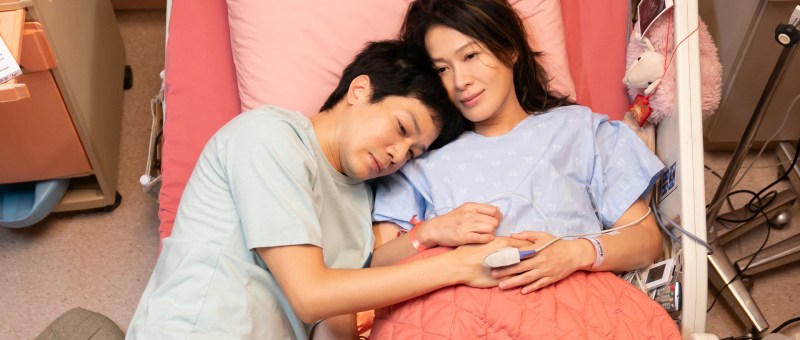
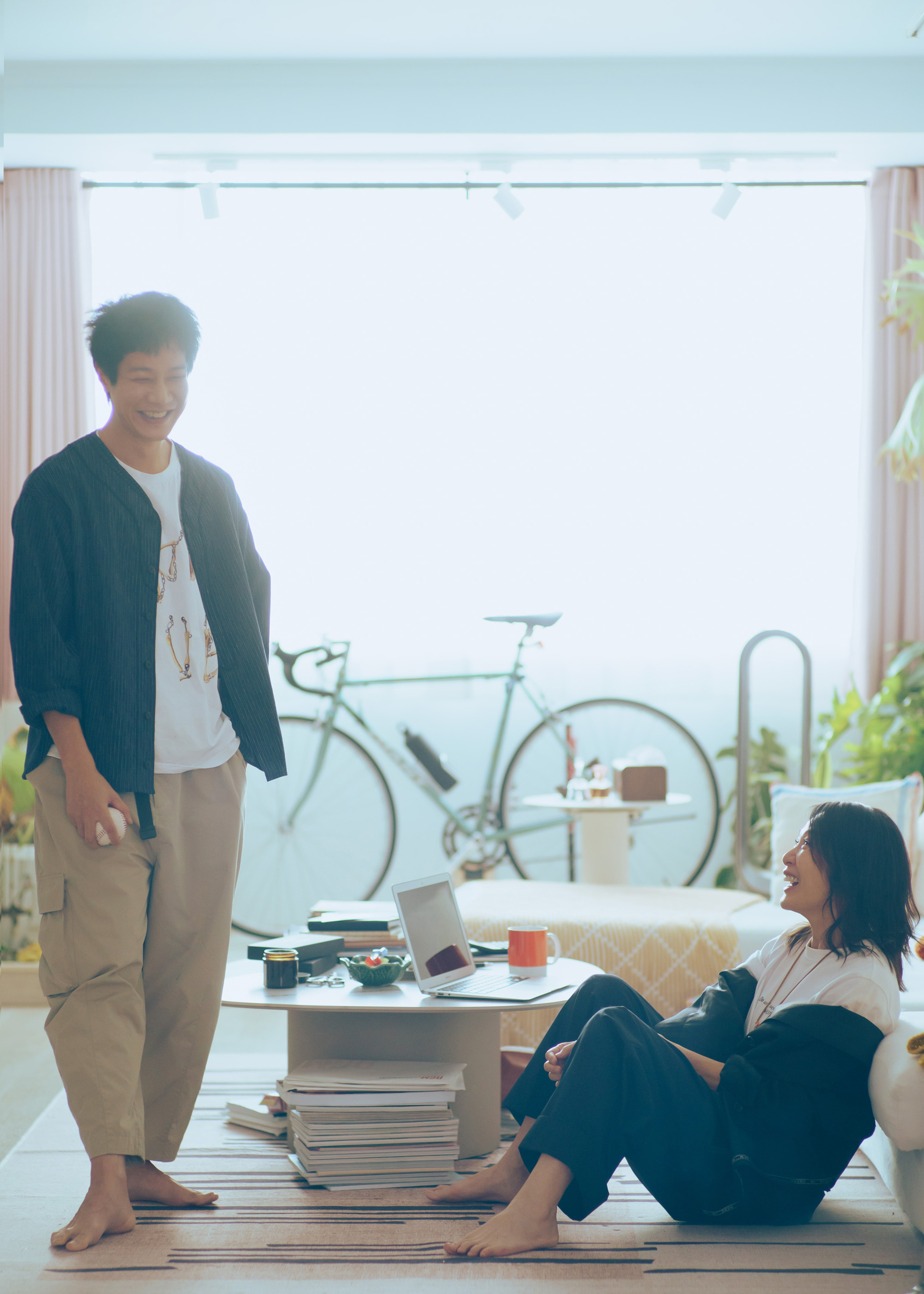
Faced with a surprise pregnancy at 45, a workaholic music executive finds herself re-evaluating her life choices in Shawn Yu’s autobiographically inspired maternity drama, Unexpected Courage (我們意外的勇氣, wǒmen yìwài de yǒngqì). A kind of pun, the unexpected baby is later given the name “courage”, the film’s title hints at the resolve needed by the couple to face their new situation from the prospect of parenthood to the cracks already undermining the foundations of their relationship.

Those would partly be economic, but also their contradictory desires for professional fulfilment. The fact is that even before the baby they are already exhausted. Advertising filmmaker Po-en (Simon Hsueh) has been out all night on a shoot and walks in zombie-like just as Le-fu (René Liu), an executive at a record label, is walking out the door to travel to Shanghai with one of her stars so he can participate in a reality TV programme. They already live somewhat parallel lives and are barely connected to the extent that it seems their relationship may have run its course.

They aren’t really alone in that as Po-en discovers on running into another man at the hospital who is undergoing IVF treatment with his wife. The process is hampered by the fact that he works in Mainland China and only returns every three months which obviously makes trying for a baby logistically difficult. His wife accuses him of not really wanting children, while he later seems less than impressed on being told they’re having twins presumably because of the increased expense while his wife coldly tells him not to ask her to reduce the number because she won’t. A later phone call conversation reveals that the couple can’t afford a three-bedroom home in their preferred neighbourhood, while the husband would prefer they all move to Shenzhen which has a lower cost of living but this would necessarily mean the wife uprooting herself, losing her home and community while there would be no one left to look after her parents as they age. 

Le-fu is also considering taking a big promotion to head up the office in Beijing which is what she’s been aiming for throughout her career. It’s not clear if she intended to take Po-en with her, but in any case the discovery of the pregnancy, brought on by the scandal of one of her biggest stars being involved in a sex tape scandal, forces her to reassess her possibilities. Originally, she resolves to sign the contract and is resentful of the entire situation for throwing a spanner in the works, but is also touched by Po-en’s devotion and reluctant to give up what might be her only chance to become a mother even if it comes at the cost of her career. 

For his part, Po-en wants to keep the baby and is excited, if also anxious, about becomgina father. Having undergone a previous operation to remove part of her womb, Le-fu was led to believe she couldn’t have children and this too seems to have presented a fault-line in their relationship that prevented them from fully committing to each other. At 32, Po-en is 12 years younger, and Le-fu assumes he will eventually leave her for a younger woman while he at times seems resentful that she keeps him at arms’ length. 

The windowless hospital room in which Le-fu is confined then becomes a kind of womb from which she herself is reborn as a mother. Po-en’s tying a red ribbon to each of their wrists is both a romantic gesture that echoes the red string of fate connecting fated lovers, but also a kind of umbilical cord that finally helps them cement their relationship. Nevertheless, they also live in a patriarchal and conservative society that forces the question on them more directly as friends and family suddenly start asking if they’re getting married while others seem to disapprove of the fact that they’ve conceived a baby outside of wedlock. Likewise, the implication is that Le-fu must choose between motherhood and her career and the motherhood is the “proper” choice, negating the choice and agency she is otherwise given in the option to terminate the pregnancy. Po-en, meanwhile, wrestles with himself unsure he is up to the responsibility of fatherhood given that he did not have a father himself and therefore has no role model to follow. A grumpy sugar juice seller explains that his child will teach him, which is what children are put here to do as Le-fu has already realised. Expressing an anxiety surrounding the declining birthrate, the film does not shy away from its causes and the knock-on effects of life in a fast-paced, capitalist society but does in the end find a kind of serenity in the courage of both parents and child to embrace this new life with hope and excitement.


Unexpected Courage screened as part of this year’s New York Asian Film Festival.

Trailer (English subtitles)
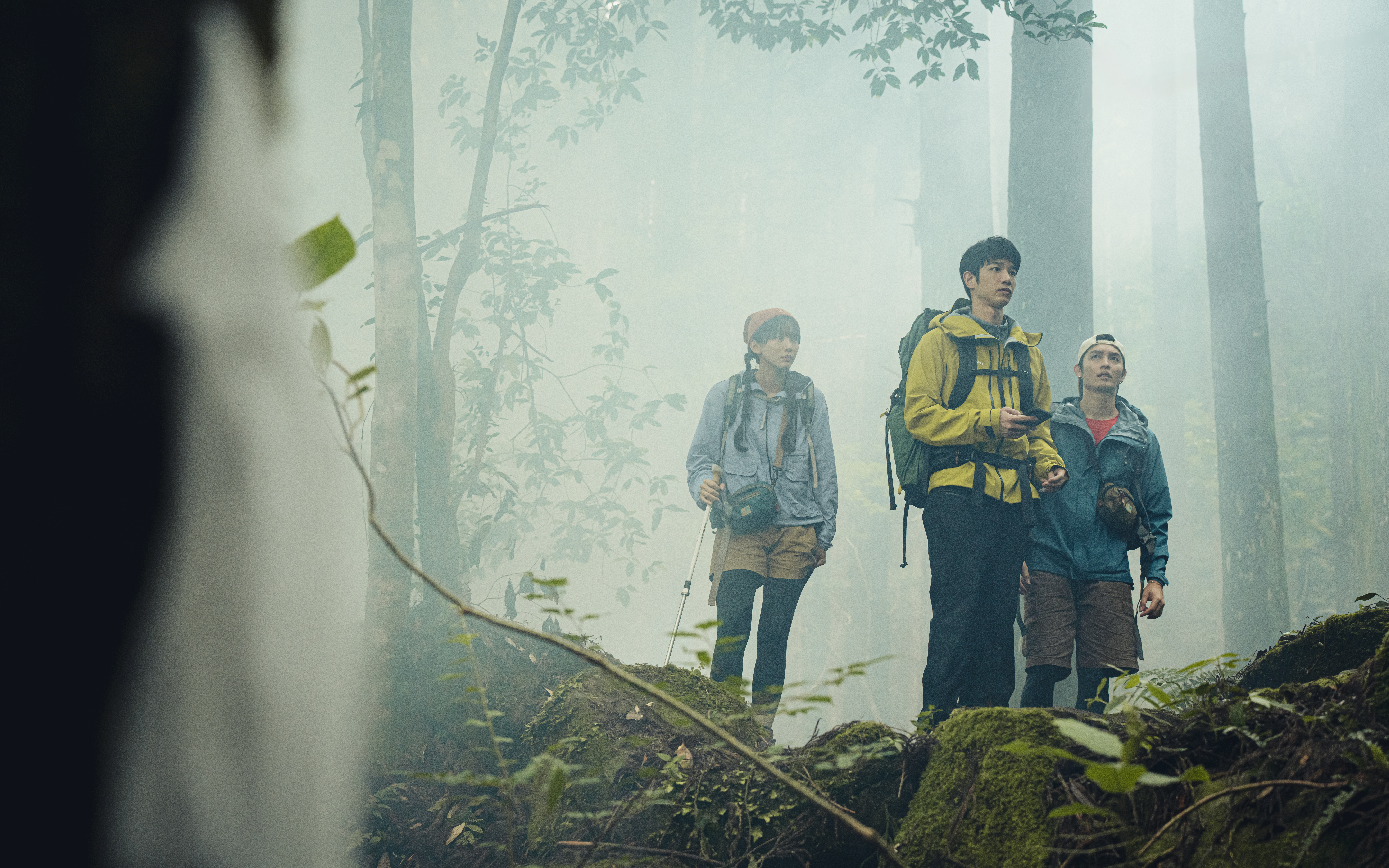
Haunted Mountains: The Yellow Taboo (山忌 黃衣小飛俠, Tsai Chia-Ying, (2025) [Fantasia 2025]

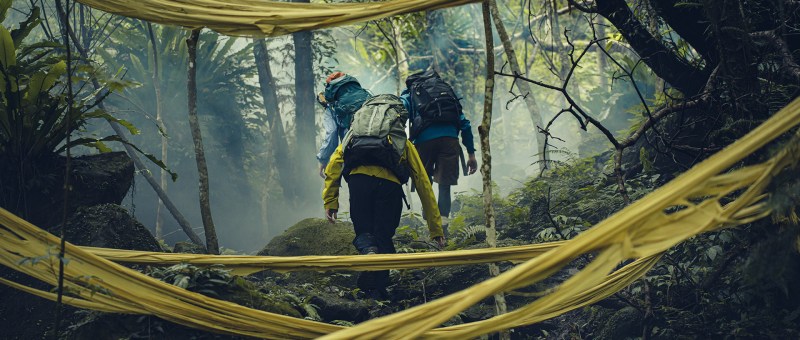
There are some things you aren’t meant to see. Or at least, should you come across them, you should think better of it and be quietly on your way minding your own business. But unfortunately, curiosity got the better of the three hikers at the centre of Tsai Chia-Ying’s timeloop horror, Haunted Mountains: The Yellow Taboo (山忌 黃衣小飛俠, shān jì huáng yì xiǎo fēi xiá) and now one of them’s trapped, forever living the same day over again and forced to watch his fiancée die in increasingly bizarre ways knowing he is unable to save her. 

To that extent, Tsai uses the time loop as a metaphor for grief in which the guilt-ridden Chia-ming (Jasper Liu) is psychologically unable to escape the mountain on which his friend, An-wei (Tsao Yu-ning), died. Five years later, he’s in a relationship with An-wei’s old girlfriend Yu-hsin (Angela Yuen)who was also on the mountain that day, but he can’t help feeling haunted by the spectre of An-wei and convinced that Yu-hsin would never have chosen him if An-wei were still alive. He worries that perhaps he didn’t try hard enough to save him knowing that he’d never have a shot at Yu-hsin with An-wei in the picture. He promised he’d get An-wei of the mountain, but in the end he left him there and in a way he’s still there too. 

This trip to the mountains seems to have been for closure. They’re still looking for An-wei’s body, but Chia-ming has a ring in his pocket and a question he’s too afraid to ask. He’s asked Yu-hsin to marry him before and she said no. He thinks it’s because she’s still hung up on An-wei, but in reality he’s the one who can’t let go and his insecurity is killing his current relationship. Repeatedly watching Yu-hsin die is a manifestation of his anxiety that she’ll never really be his, that he can’t keep or protect her, and that the only reason they’re together is because he betrayed An-wei. Yet the looping is also an expression of the way that his grief roots him in time. He literally can’t move forward and is forced to remember every day that his friend is gone. During his journey he eventually meets an older woman in a smilier position who says that she too finds each day repeating as she struggles to process the loss not only of her son who also went missing on the mountain, but of her husband, who was swallowed by his grief and ended up abandoning her in the same way that Chia-ming is unwittingly abandoning Yu-hsin.

But there are also ancient and arcane forces at work. All of this seems to have happened because An-wei broke a taboo and opened the door to the vengeful spirits of those who were killed by nature and claimed by the mountain. The mountain then becomes a place of death into which people disappear and leave those who love them lonely on the other side. The woman’s husband also felt that souls had become trapped here and wanted to free them while searching for his missing son, but as Chia-ming later discovers, though it may be possible to change the reality, it will come at a great cost and at least one sort of loss will have be to accepted before the mountain will release its grip.

Chia-ming makes his decision, but the outcome does rather have the effect of making his present life seem like a dream or thought experiment in which he imagined a future for himself in which his friend was no longer a romantic obstacle and then felt bad about it. He doesn’t really give Yu-hsin much of a say and makes (almost) all her decisions for her, never really knowing if one day she might have tired of An-wei and chosen him instead or if he could have resigned himself to loving her from afar. In the end, the only way he can free himself from this loop is to face the past with emotional honesty and reckon with his feelings along with his guilt and jealousy. The question is how much he really wants to leave the mountain or whether his obsession will eventually trap him there as just another “missing person” swallowed by grief and led astray by despair. 


Haunted Mountains: The Yellow Taboo screened as part of this year’s Fantasia International Film Festival.

Trailer (Traditional Chinese / English subtitles )

Taiwan Film Festival in Australia Returns for 2025

The Taiwan Film Festival in Australia returns for its 8th edition 24th July to 6th September 2025, travelling to six cities across the country. This year’s festival puts women at the forefront with female-led dramas featuring family relationships, pregnancy, IVF, and nuanced explorations of sexuality and desire.

Daughter’s Daughter

Sylvia Chang stars as an ageing woman trying to come to terms with motherhood through the prism of the daughters she did and didn’t raise. When the daughter she raised in Taiwan is killed while receiving fertility treatment in New York, she becomes the guardian of a viable embryo and is presented with a choice. Review.

Flower of Shanghai

The Closing Night Gala presented at the Sydney Opera House is the 4K restoration of the Hou Hsio-Hsien classic set in the “flower houses” of the British concession in late 19th century Shanghai.

The Chronicles of Libidoists

Latest from Yang Ya-Che loosely based on the Little Mermaid in which four people adrift in pursuit of sexual gratification are united by their desire for something more.

Unexpected Courage

Romantic drama in which a long-term couple who had been leading parallel lives is forced into a recontemplation of their relationship when one of them is hospitalised and they spend every moment together in their hospital room.

Yen and Ai-Lee

Gritty drama in which a young woman is released from prison after killing her abusive father only to learn her mother (played by the iconic Yang Kuei-mei) is dating another abusive man.

Worth the Wait

Asian-American romantic drama revolving around four couples who are each contending with the scars of the past.

Organ Child

Taut action thriller in which a father purses revenge against those whom he believes stole and trafficked his baby daughter. Review.

Stranger Eyes

A fracturing family is confronted with the cracks in its foundations when they begin receiving strange DVDs after the disappearance of their daughter in Yeo Siew Hua’s elliptical drama. Review.

Dancing Home

Documentary focusing on Paiwan choreographer Bulareyaung Pagarlava.

The Taiwan Film Festival in Australia runs 24th July to 6th September in Sydney, Melbourne, Canberra, Brisbane, Adelaide, and Perth. Full details for all the films as well as ticketing links can be found on the official website while you can also follow the festival on FacebookInstagram, and YouTube for all the latest news.

Organ Child (器子, Chieh Shueh Bin, 2024)

How far would a father go for his daughter? There’s an ironic duality at the centre of Organ Child (器子, qìzǐ) in that the vengeful man at its centre and the man he is chasing are basically the same and may have made the same choices were the situation reversed. Nevertheless, a terrible and morally indefensible crime has taken place which will lead to many more of the same as bereaved father Qi-mao (Joseph Chang Hsiao-chuan) stealthily tracks down all those who stole his newborn daughter and sold her to an organ trafficking ring. 

The film is keen to paint Qi-mao as a figure of uncompromised fatherhood through his association with a group of orphaned boys. Working as a baseball coach at the orphanage, he becomes a surrogate father to them and provides a familial environment as he and his wife frequently invite the boys for dinner. When his daughter is born, she automatically gets a whole baseball team of overprotective brothers, but that doesn’t stop her being snatched one day when her mother turns her back for an instant to pick up her bottle. The more Qi-mao searches for his daughter, the more he becomes convinced that she was stolen to order and the hospital is somehow involved. After getting too close to the truth, he’s framed for murder and sent to prison for 18 years during which he plans his bloody revenge.

What he uncovers is a vast ring of human trafficking run through the dark web in which rich people can buy poor ones and harvest their organs to save those they love rather than waiting for a good candidate to present themselves. This is apparently what filthy rich businessman Xu did when his newborn daughter needed a heart, so Qi-mao is led to believe his daughter must be dead but is after answers and the location of her body more than to expose the network which appears deeply entrenched among the elite because it so very lucrative. Yet if Qi-mao is going to all this trouble now, perhaps he may have done the same as Xu if the situation were reversed. He appears blasé about putting other people’s children in danger while torturing their parents to get to the truth even if as it turns out he may not have actually intended to harm them. Just like him desperate to save their child, the parents largely give in when they are threatened and promise to tell him everything he wants to know if only he let them go. 

But there is something quite insidious in Xu’s plan given that it may be one thing to buy a living body off a website and never have to think about the person whose life will sacrificed, but quite another to be prepared to kill someone that trusts and loves you. Xu uses his money to employ a poor yet oblivious family while collaborating with a hospital to fake medical records and manipulate his daughter Qiao who thinks the biggest problem in her life is her forbidden romance with the son of one of their servants, again echoing the class divide that makes Xu think he can do what he likes with those he feels to be lesser than himself. The real “family” turns out to be that created by the orphans which is then spread to the younger generation who are eventually freed from their parents’ corruption and the boundaries of class to live in a freer world less bound by capitalistic imperative than simple solidarity. 

But for all that, Qi-mao is orphaned too in realising that even if his daughter were alive and he could still save her, she likely wouldn’t accept the man he’s become. Qi-mao is man of rage and vengeance. He brutally tortures those connected with his daughter’s disappearance and commits acts of heinous violence that render him unable to return to mainstream society despite his position as an idealised father figure to the orphan boys. A subplot about sexual abuse at the orphanage is under explored, but hints at the institutionalised corruption in which the powerless can be exploited by those in power when no one cares enough to stop them. Qi-mao may not really care that much about opposing the system, but certainly does about the boys and his missing daughter as he wades into hell in search of answers but also retribution. 

Organ Child screens 27th July as part of this year’s New York Asian Film Festival.


Trailer (English subtitles)

Daughter’s Daughter (女兒的女兒, Huang Xi, 2024)

Never having fully dealt with the trauma of her teenage pregnancy and decision to give her child up to be raised by a family friend, 64-year-old divorcee Jin Ai-xia (Sylvia Chang Ai-chia) finds herself in an eerily similar position on on learning that the daughter she raised in Taiwan has been killed in a car accident in New York where she was receiving fertility treatment. The process resulted in a healthy embryo of which Ai-xia now finds herself the “guardian”. She is given four options, keep the embryo in storage and pay to renew the contract when it runs out, find a surrogate to carry to it term, donate it to another couple, or have it destroyed.

The fact that there are eight months left on the contract that her daughter Zuer (Eugenie Liu Yi-er) signed makes this almost another pregnancy which Ai-xia must decide whether or not to continue. Keeping the embryo in storage only defers the decision and traps it in the same mental space in which Ai-xia thinks of Emma (Karena Lam), the daughter she did not raise and tried to put out of her mind. In its consideration of motherhood, the film does shy away from suggesting that it is a kind of burden and requires sacrifice whether willing or not. Later confronted, if gently, by Emma who has unbeknownst to her become a single mother who chose to keep her child, Ai-xia justifies herself that she was 16 and afraid. Most of all, she was afraid the baby would trap her in New York’s Chinatown and that her life would never change after that. She wanted more, so she went along with her mother’s proposed solution of giving her daughter to a childless couple to raise while she returned to Taiwan and never looked back.

Yet it’s Emma who seems to haunt her while she’s in New York trying to sort out Zuer’s affairs while mired in her grief. It’s clear that she feels that she failed both her daughters as her unresolved trauma over separating from Emma left her unable to fully bond with Zuer whom she raised at arms’ length. When Zuer and her same-sex partner Jia-yi (Tracy Chou Tsai-shih) decide to have a child, Ai-xia is against it. It seems there may be some lingering prejudice in her about their relationship as she tells Zuer that the baby won’t be able to explain their family situation, but it’s also partly that she doesn’t want her to be trapped by motherhood as she felt herself to be. She asks her why she and Jia-yi don’t just enjoy their life together rather than complicate with a child. Ai-xia tells Emma that she wanted to live her own life, while expressing the same desire now that she has become a second mother to her own mother, Yan-hua (Ma Ting-Ni), who is living with dementia. Once her mother passes away, she’s looking forward to enjoying her freedom for once. 

Ai-xia rails that no one ever really considered her feelings and that she’s been given this burden without ever really being given an opportunity to ask herself if she wanted it. There’s a minor irony in Yun-hua’s segueing back into the past to tell the 64-year-old Ai-xia that she can’t raise a child at this age as if she were still a pregnant 16-year-old. As an older woman, she reflects that Yun-hua probably didn’t make that decision solely because she was embarrassed by the stigma of teenage pregnancy but genuinely thought it was best for both her daughter and her granddaughter. But now Ai-xia is facing the same choice at the other end of her life knowing that if she chooses to raise Zuer’s baby she may not live long enough to see it to adulthood, nor may she have the energy to look after a small child even if she has the time. 

But Ai-xia carries Zuer’s ashes around with her holding them in front of her belly as if they were the embryo and she were already carrying it. Placing the square black container on the airport scanner and watching it travel through the tunnel is oddly like an act of rebirth. Attempting to come to terms with her own complicated maternity, she thrashes out the past with Emma but also really with herself in trying to decide whether or not to continue this maternal legacy despite the sacrifices and compromises it entails. For her, motherhood becomes an act of self-forgiveness in which she learns to understand both her own mother and her daughters along with their shared connection in this ever-increasing line.


Daughter’s Daughter screens 18th July as part of this year’s New York Asian Film Festival.

Trailer (English subtitles)
Silent Sparks (愛作歹, Chu Ping, 2024)

Recently released from prison, a young man discovers that it might be easier to be free behind bars than amid the incredibly homosocial world of urban gangsterdom in Chu Ping’s poignant LGBTQ+ drama, Silent Sparks (愛作歹, ài zuò dǎi). Pua (Akira Huang Guang-Zhi) is a kind of silent spark himself. As the gang boss describes him, he’s too rowdy and can’t keep his cool, which makes him a liability, but he’s also reticent and lonely, not to mention hurt by the seeming rejection when the man he fell in love with in prison ignores him on his release.

There is indeed a latent violence in Pua that hints at his frustration and inability to express himself. When we see him enter prison, he appears as a small boy lost in his own thoughts and silently crying, though he was sent there for breaking a man’s leg in a fight. Though he’s served his time, Pua is still paying off the monetary compensation he owes to the man whose leg he broke and otherwise struggles to get by, which leaves him almost dependent on the gang boss who agrees to take him under his wing as a favour to his mother. It seems that he once knew Pua’s long-absent father, presumably also a gangster, and plays a quasi-paternal role but only half-heartedly in seeing Pua more as a resource to be employed or otherwise an irritating burden he can’t quite seem to shake.

It was the gang boss who asked Mi-ji (Shih Ming-Shuai), his right-hand man, to “look after” Pua in prison. The boss sneers a little, and claims responsibility for saving him, adding that things could have ended up “real nasty” for him inside, by which he means “getting it up your ass”. The irony is that Mi-ji was Pua’s prison lover and Pua is excited about the idea of his release fully expecting to pick up where they left off. But the reunion between them is awkward. Mi-ji is not happy to see him. He speaks tersely and makes it clear he’s not exactly keen for a catch up while keeping one eye on the room in case anyone is getting the right idea. Though Pua continues to pursue him, Mi-ji is avoidant. Perhaps for him, it really was a prison thing that he’s embarrassed about on the outside, whereas Pua is more secure in his sexuality and less afraid of its exposure, only longing to resume the intimacy they once shared.

Mi-ji’s ambivalence hints at the toxic masculinity and entrenched homophobia of the world around them in which homosexuality is not really accepted and “getting it up your ass” is synonymous with defeat and humiliation. The irony is that Pua and Mi-ji were freer in prison where they could embrace their love without shame. Pua is imprisoned within the outside side world by virtue of being unable to be his authentic self, but is also trapped by his socio-economic prospects, which leave him dependent on the underworld and the dubious paternity of the gang boss. Expressing his frustration through violence damns him further in leaving him with mounting debts he can only hope to satisfy through acts of criminality. It is really on this side of the bars that the “real” prison lies, and it’s from this world that Pua longs to be released to return to the prison utopia of his love with Mi-ji.

Still, he cannot really escape his destiny, as his mother keeps reminding having read his tragic gangster fortune and trying to get him to eat rice noodles for 100 days to change his fate only to get her heart broken realising salvation for her son might mean something quite different than she had imagined and also take him away from her. Gritty in its gangland setting and hinting at the connections between political corruption and organised crime Chu’s slow-burn drama makes a hell of the contemporary society in which men like Pua find themselves trapped by toxic masculinities and hierarchal violence under an intensely patriarchal social order that permits them little sense of possibility or the ability to be their authentic selves and true freedom is to be found only within the homosocial world of a more literal “prison”.


Silent Sparks screens at Rio Cinema 5th May as part of this year’s Queer East.

Trailer (Traditional Chinese / English subtitles)