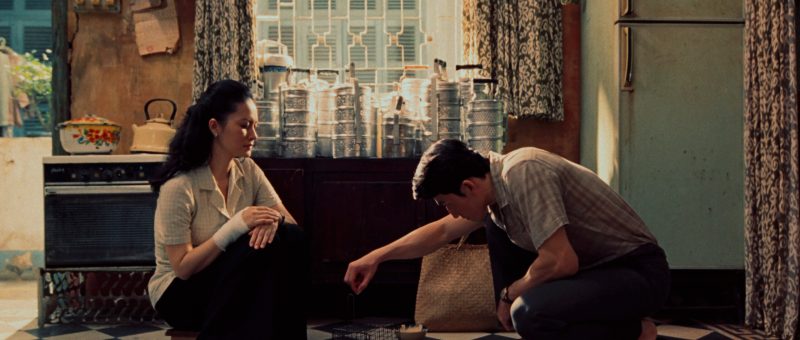

Ky Nam Inn (Quán Kỳ Nam, Leon Lê, 2025)

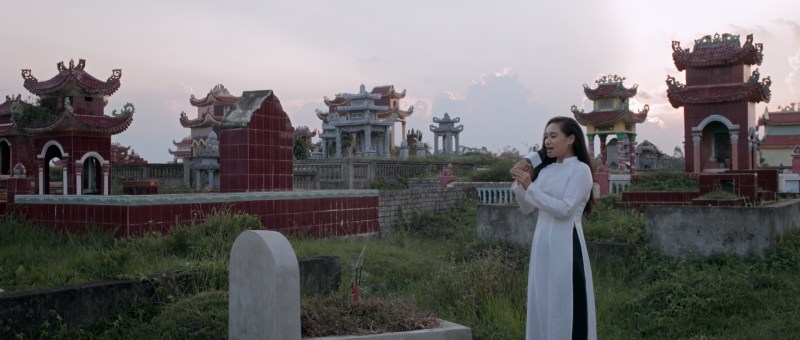
As related in the opening voice over, “ky nam” is a type of agarwood that only forms when the tree is wounded. The tree lets out tiny drops of a fragrant resin to heal itself that in many years become “ky nam”. It also, however, the name of a woman with whom the writer has fallen in love who has herself spent many years trying to heal the past, much as her nation is still doing as it remakes itself after years of war and not to everyone’s liking.

A slow-burning love story, Leon Lê’s Ky Nam Inn (Quán Kỳ Nam) is set mainly in Saigon in 1985 as a “red seed” nephew of an influential Party man is sent to live in a small housing complex while he works on a new translation of Antoine de Saint-Exupéry’s The Little Prince. The book has been translated before to great acclaim, but the new regime must have a new translation and it must prove as good as the old. Khang (Liên Bỉnh Phát) only became a translator because he was so impressed with the dexterity of Bui Giang’s language in the original translation, but now he must erase and surpass him because times have changed and Bui Giang belongs to the old world. When Khang and Ky Nam encounter him by chance, he’s been reduced to directing street traffic, knocked over by the hustle and bustle of the flower market as if time were flowing past him like a fast-moving current.

In her own way, Ky Nam (Đỗ Thị Hải Yến) is much the same. She was once a well-known writer with a recipe column in a magazine, but is now living a lonely life as a widow running a meal delivery service for her neighbours yet avoided by many of them because of her problematic background. Her husband seems to have died in a labour camp, and her younger son has gone “missing”. 1985 was the year when the highest number of people tried to flee the country. Young men could be conscripted for the war with Cambodia, and so Ky Nam sent her youngest away but there’s been no word of him since. Her surviving son, Don, wants to hold a memorial service believing that the only conclusion is that Duong did not survive the journey though Ky Nam remains confident he’s still out there, somewhere. 

Su, a mixed-race boy who helps out in Ky Nam’s kitchen, also wants to leave though in part because he is bullied, discriminated against, and made to feel like a burden by the family who took him in. His uncle refused permission for him to finish high school, and has arranged for him to become a part of another “family” to be able to emigrate to America. As much as he’s there as the new hope of the Communist elite, Khang also has his sights set on studying abroad in France and it’s never clear how long he will be allowed to stay in this transitory space between the new Vietnam and the old which makes his growing affection for Ky Nam all the more poignant. Like him, she is an intellectual well versed in French literature though now finding herself at odds with the contemporary reality. The French schools they attended have all been renamed, as the new regime does its best to erase the history of the colonial era.

Perhaps that’s why Khang is so drawn to her as he struggles with his own role in this society. He barely knew the influential uncle who engineered this future for him and is acutely aware that if his translation’s no good, everyone will say he was only given the opportunity because of his personal connections. Meanwhile, his uncle, Tan, has arranged it so that he won’t be given a key for the front gate and will have to ring the bell to enter the complex while the doorman and community leader will be reporting all his movements. Nevertheless, that doesn’t seem to have much affect on his behaviour as he settles into the community and continues helping Ky Nam even after it’s made clear to him that associating with someone who has a problematic background could negatively affect his standing. As someone says, Khang will eventually have to choose between career and love.

For Ky Nam, it isn’t that much of a choice. She knows this love is impossible, so she tries to refuse Khang’s help and keep him at arms’ length all the while yearning to hold him closer. During their final night together as they roam the streets of Saigon until morning, Ky Nam says she’s reminded of heroine of Camus’ Adulterous Woman who breaks away from her husband to escape to an abandoned fort by herself for a brief taste of freedom before going back to her disappointing life. Khang says he didn’t like the ending, but later wonders if Ky Nam were not like the woman, only pretending to have forgotten her gate key so they could spend this brief time together. He confesses, though, that he doesn’t know how to end his own story and is wary of disrupting the new life that Ky Nam has made for herself after he ironically helped her heal a rift with her judgemental neighbour which has allowed her to expand her business. He now is a kind of exile too, marooned in Hanoi waiting for passage elsewhere having left the apartment complex and along with it his rose to experience more of the world. Yet for all its sadness, there’s a joy in it too that this lost love existed at all and became the tiny drops that may one day save the tree.


Ky Nam Inn screens as part of this year’s San Diego Asian Film Festival.

Trailer (English subtitles)
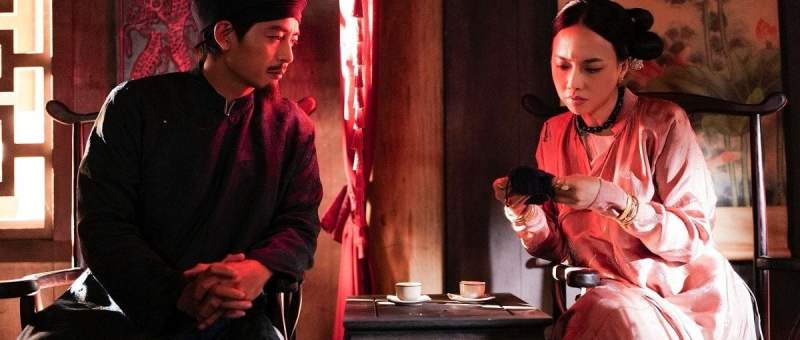
Detective Kiên: The Headless Horror (Thám Tử Kiên: Kỳ Án Không Đầu, Victor Vũ, 2025)

Five years ago, headless corpses started washing up on the shores of the lake. Believing them to have been victims of the Drowning Ghost, the villagers simply accepted it as a part of their life and carried on as best they could. But Miss Moon (Ngọc Diệp) isn’t prepared to that and when her niece, Nga, goes missing with only her slipper left behind at the lake, she will stop at nothing to find her. 

Luckily, she knows a top detective, Kien (Tín Nguyễn), whom she met when he arrested her former husband for corruption, which is how she knows he’s very good at his job. In any case, Detective Kien arrives to bring a semblance of order to this 19th-century rural town ruled over by a governor who very much seems like he too is probably not really on the level. Though he doesn’t seem to put much stock in talk of the Drowning Ghost, Kien quickly finds himself plagued by weird visions of terrifying monsters and is respectful of the local shaman, who proves very helpful, even if continuing to look for more rational answers.

What he uncovers, however, is that the village can be unkind and judgemental. Nga was rendered an outcast because her mother left the family to be with another man not long after she was born. The other children wouldn’t play with her when she was a child and she’s still regarded as something of a pariah, while her father, Lord Vinh, has always resented her as a symbol of his humiliation. Miss Moon was the closest thing she had to a mother, though she had to leave her too when she was married to the corrupt governor only to return years later when Nga was already a grown woman. 

Detective Kien is open to the idea that Nga too may have simply left with a lover, but the truth is a little more complicated. The problem is that under the feudal order, no one is really free and the younger generation is forever oppressed by the older. Marriages are arranged in childhood and rooted in hopes for social advancement. Marrying a man with prospects is one way a woman can gain status and power, and some will go to great lengths to pursue it. Miss Moon, now no longer married, is something of an exception and operating outside of these patriarchal social codes in asserting herself to look for Nga when it seems no one else will. Detective Kien cautions her not to go with him because the villagers may gossip if they see her walking alone with a man, but she doesn’t really care about that and follows him anyway at which point he is forced to accept her rather than waste time arguing. 

The case of a man who complains he had no choice other than to become a thief after being falsely accused of stealing because the social stigma made him unemployable further emphasises the ways those in power misuse it. Even the mysterious headless deaths at the lake may have a connection with an event 30 years previously in which a whole family were beheaded after being falsely accused of treason while standing up to the oppression of feudal lords. The wealthy elites act with a kind of entitlement in which they bully those below them to affirm their own status. So it is with Lady Tuyet who was seen arguing with Nga after refusing to pay for an order at her fabric stall claiming that it was incorrect. The two women are portrayed as a mirrors of each other, but where Lady Tuyet is haughty, jealous and violent, Nga is gentle and honest. When told she can’t have the only thing she wants in life, she fights back but only for the mildest compromise only for Tuyet to react with rage unable to accept that some may prefer Nga over her.

Detective Kien does what he can to right this wrong while trying to find out what’s happened to Nga and, if possible, save her. He gets a tremendous sword fight after tracking down the secondary villain while even Lady Moon has a hilariously unladylike tussle with her own opposite number as she tries to rescue Nga. The chemistry between them as they investigate the mystery together adds a charming and often quite funny touch to what is otherwise a horrifying tale of heartless cruelty and murder in which the “evil” in the village turns out to be something quite different from that first imagined and possibly much more difficult to exorcise.


Trailer (English subtitles)

Sister Sister 2 (Chị Chị Em Em 2, Vũ Ngọc Đãng, 2023)

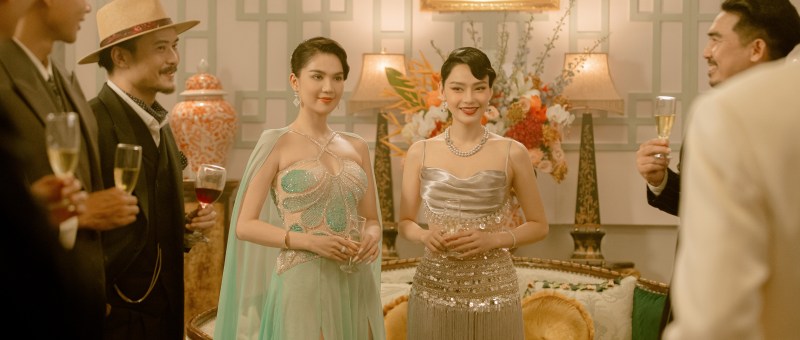
An ambitious young woman determined to escape the world of sex work resorts to a series of schemes to get close to the number one beauty in 1930s Saigon in Vũ Ngọc Đãng’s lighthearted melodrama Sister Sister 2 (Chị Chị Em Em 2). A thematic sequel to 2019’s Sister Sister, the film once again sees two women face off against each other knowing that only one can be the greatest beauty in the city while otherwise evoking a subtle message of female empowerment. 

Indeed as great beauty Ba Tra (Minh Hằng) points out, ordinary women can only be chosen by men while the extraordinary choose men for themselves. This is something in which Ba Tra has excelled, weaponising her beauty and sex appeal to capture the hearts of well to do bachelors who spontaneously offer her expensive gifts for which she need do nothing in return save continue to exist. Nhi (Ngọc Trinh), the top sex worker at a nearby brothel, wonders if Ba Tra is so different from herself only to be told by a gaggle of local women in thrall to her star image that Ba Tra’s situation is entirely different because of the power she wields over men by, essentially, refusing to give them what they want while Nhi crudely exchanges it for money and is largely at the mercy of those who will pay. 

The issue is in one sense control, Ba Tra seemingly possessing it fully and Nhi not at all. She is still indentured to the brothel having sold herself into sex work to pay for her mother’s medical treatment only for her mother to drop dead of shock as soon as she found out. But Ba Tra also has maternal troubles of her own in her “crazy gambler” mother who is forever emotionally blackmailing her for more money while caring nothing for her feelings. To be the first beauty is to make friends with loneliness, Ba Tra warns and there is a kind of sadness in her solitude as a towering image of beauty not quite allowed to be a whole person or display much of an interior life lest the spell be broken. There is then something quite poignant in the genuine connection that arises between the two sisters who after all have similar goals and outlooks even if it’s destined to end in heartbreak when Ba Tra inevitably realises she’s been schemed by the manipulative Nhi. 

Director Vũ Ngọc Đãng flirts with homoeroticism in the closeness of the two women as they dance together perfecting their art but does so mainly for titillation rather than romance, also resorting to family gratuitous nudity even if it does otherwise hint at Nhi’s “naked” ambition to raise herself from the lowest layer of the society to the highest or at least the highest that may be claimed by a woman in this period. The film at once hints at the oppressive nature of the 1930s society in which the only power a woman can achieve is that exercised through her body and then undercuts any sense of a feminist message with its contradictory conclusion that implies it is impossible for Nhi to escape her past and that she will always be a sex worker no matter what else she becomes. 

Nevertheless, Nhi does demonstrate her right to the top spot through her ability to outsmart Ba Tra who otherwise has savvily figured out how to use the society to her advantage through careful media management to make herself a star. As she says, Ba Tra only thinks about the next move, but Nhi has already plotted her trajectory towards the top and thought of every eventuality. Even so, Nhi is expected to pay for her “mad ambition”, putting her back in her place again and slapping down her rebellion against the social order. With mild comic undertones in all Nhi’s crazy plans which include faking her own death and almost killing Ba Tra so she can dramatically save her, Sister Sister 2 isn’t really setting out to explore the lives of women in the 1930s so much as set two against each other in a battle of the beauties but is surprisingly entertaining even in its wilful silliness. 


Trailer (English subtitles)

The Foggy Mountain (Đỉnh Mù Sương, Phan Anh & Ken Dinh, 2020)

A former prize fighter’s quest for revenge takes him deep into the mountains in Phan Anh and Ken Dinh’s martial arts adventure Foggy Mountain (Đỉnh Mù Sương). In essence, the fighter’s battle is against himself and his darkest interests as he must decide whether he’s going to pursue personal revenge or attempt to free the innocent citizens caught up in his quarry’s venal crime enterprise. In any case, Ba Rau (Kim Long Thach) represents a frightening and oppressive force that cannot be stopped unless someone chooses to take a stand.

That someone might not necessarily by Phi (Peter Pham) for he has reasons of his own to hate Ba Rau that are purely personal. Phi gave up his career as a prize fighter to spend more time with his wife, Lanh (Truc May), but was tempted back for one last bout that would supposedly carry a large payout and enable him to pay for treatment for Lanh’s eye condition. However, the match was a pretext set up by Ba Rau so that he could offer him a job. Phi definitively refuses it, telling Ba Rau he wants nothing to do with his dodgy dealings. Offended, Ba Rau has Phi beaten up and dumped in the middle of nowhere before heading to his house and killing Lanh.

An older man who lost his son in the ring during a bout with Phi warns him that hate is a poison and revenge is not an antidote so he’d best dig two graves before he goes, but Phi is adamant that he needs to avenge Lanh’s death by killing Ba Rau who is holed up on Foggy Mountain. Phi seems to have some friends there, but discovers that the village has been taken over as Ba Rau kidnapped the headman’s children and blackmailed him into letting them take root so he can facilitate his new people trafficking business. Matters come to a head for Phi when he finds some captive children but vacillates over rescuing them, firstly claiming that he has more important things to do before eventually coming back after his old friend Bang Tam asks him what happened to his martial arts spirit. Ironically, Phi had asked the same of the village headman wondering whether he can really call it “peace” after making a deal with the devil to appease Ba Rau to “protect” his villagers though the headman simply tells him he’d feel differently if he were older and is simply too young to understand the decisions he has made. 

For a time, the film turns into a forest chase movie as Phi and Bang Tam attempt to guide the children back towards the village while avoiding Ba Rau’s henchmen, making use of mountain traps and encountering natural dangers such as the fast flowing river one of the kids falls into spraining her ankle. Phan Anh and Ken Dinh largely eschew narrative in favour of moving from one fight set piece to another with the consequence that there’s very little to tie them together aside from Phi’s otherwise unstoppable obsession with tracking down Ba Rau and exacting his revenge on him. 

Then again, as it turns out Lanh probably didn’t want him to avenge her death anyway and may have willingly sacrificed herself in an attempt to protect him from Ba Rau and getting even more blood on his hands by killing him. To truly satisfy himself, Phi may have to remember that there is more than one kind of justice and putting a stop to Ba Rau’s ever expanding crime empire and heinous people trafficking enterprise might be a better way of getting revenge if only in teaching him a lesson that he’s not quite as untouchable as he thought he was. Even so, Phi’s self-obsessed quest for revenge rather than a desire to free those around him from Ba Rau’s influence makes him a fairly complicated hero though the film never really tries to explore the conflict in any depth while the hollowness of the narrative largely robs his quest of its power. Well choreographed action scenes otherwise help to overcome the lack of engagement and budgetary constraints even if the same cannot be said for those around them.


The Foggy Mountain is available on Digital in the US courtesy of Well Go USA

Trailer (English subtitles)

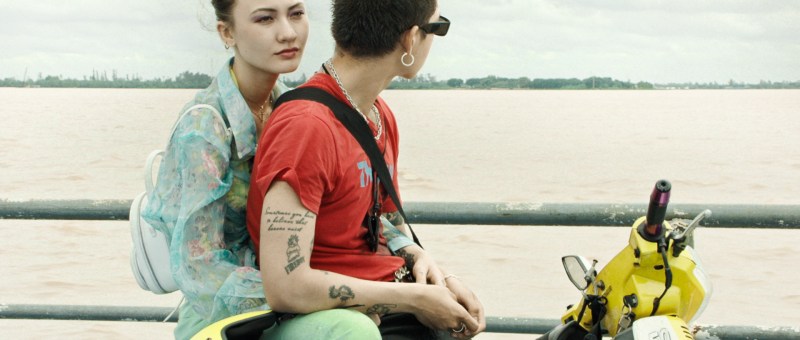
Don’t Cry, Butterfly (Mưa trên cánh bướm, Linh Duong, 2024)

There’s an odd moment of calm in the opening stretches of Linh Duong’s debut feature, Don’t Cry Butterfly (Mưa trên cánh bướm), as the heroine, Tam, dances alone as if enraptured by the music flooding in from the open air aerobics going on in the square downstairs. The Vietnamese cover of ‘90s dance hit Smile by a band also called Butterfly maintains its distinctive “find my samurai” chorus in English though its vision of idealised masculinity couldn’t be further from the reality of Tam’s laconic and apparently unfaithful husband Thanh who utters precisely one line and only at the film’s conclusion which seems to take place in a possibly imaginary past. 

The irony is that Tam works as a wedding planner. We see her shepherd a couple through rehearsal with business-like efficiency, as they were on some kind of conveyor belt to be rushed in and out as quickly as possible. But for all that the wedding is display of untold extravagance that stands in stark contrast to the reality of Tam’s marriage. Even so, many of the attendees apparently to do not show up because the couple have scheduled their nuptials on an auspicious day which also happens to be that of the cup final. Auspicious it is not for Tam who is passed a phone by her 20-something-daughter Ha revealing Thanh at the football with another woman. In a meta touch, the commentator seems to narrate her discovery while photos soon go viral among her friendship group adding to the sense of displacement and humiliation that eventually send her to a soothsayer for a black magic cure to bring her husband’s affections back to her. 

Ha doesn’t understand her mother’s calmness, why she hasn’t thrown Thanh out or raised hell, but also perhaps does not feel the same sense of failure and despair resulting from the end of a marriage as a woman of her mother’s generation might. Though the other women joke about cutting Thanh’s bits off, they too put up with cheating husbands and the onus is on the woman to change and recapture her husband’s love as if she were somehow at fault for losing it. One of the videos Tam watches online features a middle-aged woman who claims to have reformed herself after her husband’s infidelity insisting that it was her fault for letting herself go but now she’s lost weight and dresses more youthfully so her marriage is repaired. Tam goes the black magic route instead but is tempted by memories of a fantasy romance from the past with her college crush though he ultimately turns out to be a loyal husband to a woman none of them liked. 

The slow drip of poison into her life is manifested by a leak in the ceiling and its surrounding mould which only women can see. Another woman knocks on her door with some irritation and asks if she has a leak too, dragging the landlord who declares himself oblivious unable to see the obvious problems of their society because of course he’s a man so everything seems just fine to him. Eventually he sends some anti-mould paint to placate them, leaving Tam and Ha to apply it though it does little to cover up their mounting unhappiness and despair. Ha, fearing that her parents always wanted a boy, wants to go abroad and is intent on taking her best friend from across the way with her but as in her parents marriage never really thought to ask him if actually wanted to go. Trong seems to have a number of abandonment issues seeing as his mother left choosing to pursue her desires to become a dancer rather be trapped by conventional domesticity. 

In the final and increasingly surreal stretches of the film it becomes clear that the women are drowning amid the floods of a patriarchal culture, no different from the fish in Thanh’s tank that he randomly buries in their houseplants and then simply replaces when they die. As the soothsayer had told her, Tam does indeed live a thankless life in which all her efforts are on the behalf of others leaving nothing for herself while slow poisoned by the mould in her ceiling that eventually threatens to consume her whole or else suck her back to time that at least seemed happier but in retrospect may not have been even at its most idealised.


Don’t Cry, Butterfly screened as part of this year’s BFI London Film Festival

Original trailer (English subtitles)

Inside the Yellow Cocoon Shell (Bên trong vỏ kén vàng, Pham Thien An, 2023)

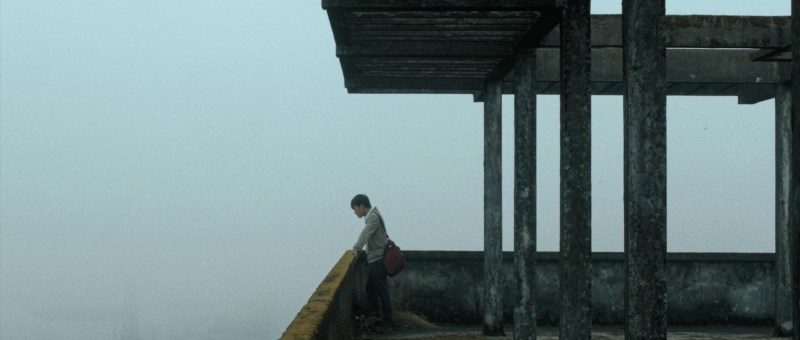
Late into Pham Thien An’s three hour spiritual epic Inside the Yellow Cocoon Shell (Bên trong vỏ kén vàng), a youngish man rides through endless fog as if echoing the miasma of his life. He finds himself displaced, admitting that he no longer has any reason to return to his hometown now that his parents have moved to the US and the girl he loved has become a Christian nun, yet he continues to yearn for a greater meaning in his life or something that would anchor him in an Earthly world that seems somehow fragile and intangible much like the soul itself. 

Tellingly, in the film’s opening scene Thien (Lê Phong Vũ) is situated across from a man who is giving up his life in the city for a more spiritual existence in the mountains. The third friend between them cannot understand his decision, remarking that he knows many who’ve tried the same thing but have all eventually returned if for no other reason than money. “The existence of faith is ambiguous,” Thien admits when pressed for his opinion but cannot fully choose either side neither able to accept the certainty of the man bound for the mountains nor the cynicism of his city-dwelling friend. He wants to believe, but he can’t. “My mind holds me back,” he explains, trapped in an existential limbo still searching for a truth he is unsure exists. 

While the men are talking, they are momentarily distractedly by a loud noise that turns out to be a nearby traffic accident in which two motorbikes have collided. The man died instantly while the woman is seriously injured but the child with her has apparently escaped more or less unscathed. No one really reacts very much to this seemingly horrific event, perhaps it is simply too common an occurrence to bother them. Thien too remains in his seat, barely looking up. At massage parlour he ignores his ringing phone, jokingly telling the masseuse that “God is calling,” apparently an ironic pet name for his client, only to receive a visit from a member of staff telling him to answer to because there has been a “family emergency”. It turns out that the woman in the crash was his sister-in-law, Hahn, who has since passed away and he must now take charge of his young nephew, Dao (Nguyễn Thịnh), who is now orphaned in the absence of his brother who disappeared without trace some years previously.

No one knows what happened to Tam, though some speculate that ran off with another woman or recalling that he once wanted to become a priest assume he encountered a spiritual calling that caused him to abandon his family. In the wake of tragedy Thien begins searching for him, but as an old lady insists it’s really a way of searching for himself in an attempt to make peace with the ineffiablities of life. Unable to understand what’s happened to his mother, Dao asks his uncle abour the nature of “faith” but Thien has few answers for him explaining that it’s what he too is looking for. Dao childishly asks what shape it is, only for Thien to admit that it is formless and in essence he does not know what he seeks. 

The old lady pushes him towards a more concrete religion, detailing an experience in which her soul detached from her body and she was able to discern the mortal world’s rottenness while even the most pious of souls continue to suffer for their sins. She urges prayer and attendance at Mass, while an old man who spent his youth in war tells him that money is merely dust and the way he’s made peace with his life is through helping others. In the city, Thien had been like a lost thing scooping up a lonely bird like him marooned in urban emptiness, but is also restless in the country. He tells his former girlfriend that he admires her decision, which only makes her laugh, but is unable to find such certainty himself and seems set on a path of endless wandering searching for a truth which may not even exist. Pham Thien An follows him with an etherial gaze, segueing into memory as the current Thien stands in for his former self literally reliving the past much as in the lyrics of the melancholy song he performs at karaoke which speak of a lover trapped in nostalgia still hoping their love will return to them. Thien is much the same, searching for himself while lost in the fog of an everlasting road. 


Inside the Yellow Cocoon Shell screened as part of this year’s BFI London Film Festival.

Trailer (English subtitles)
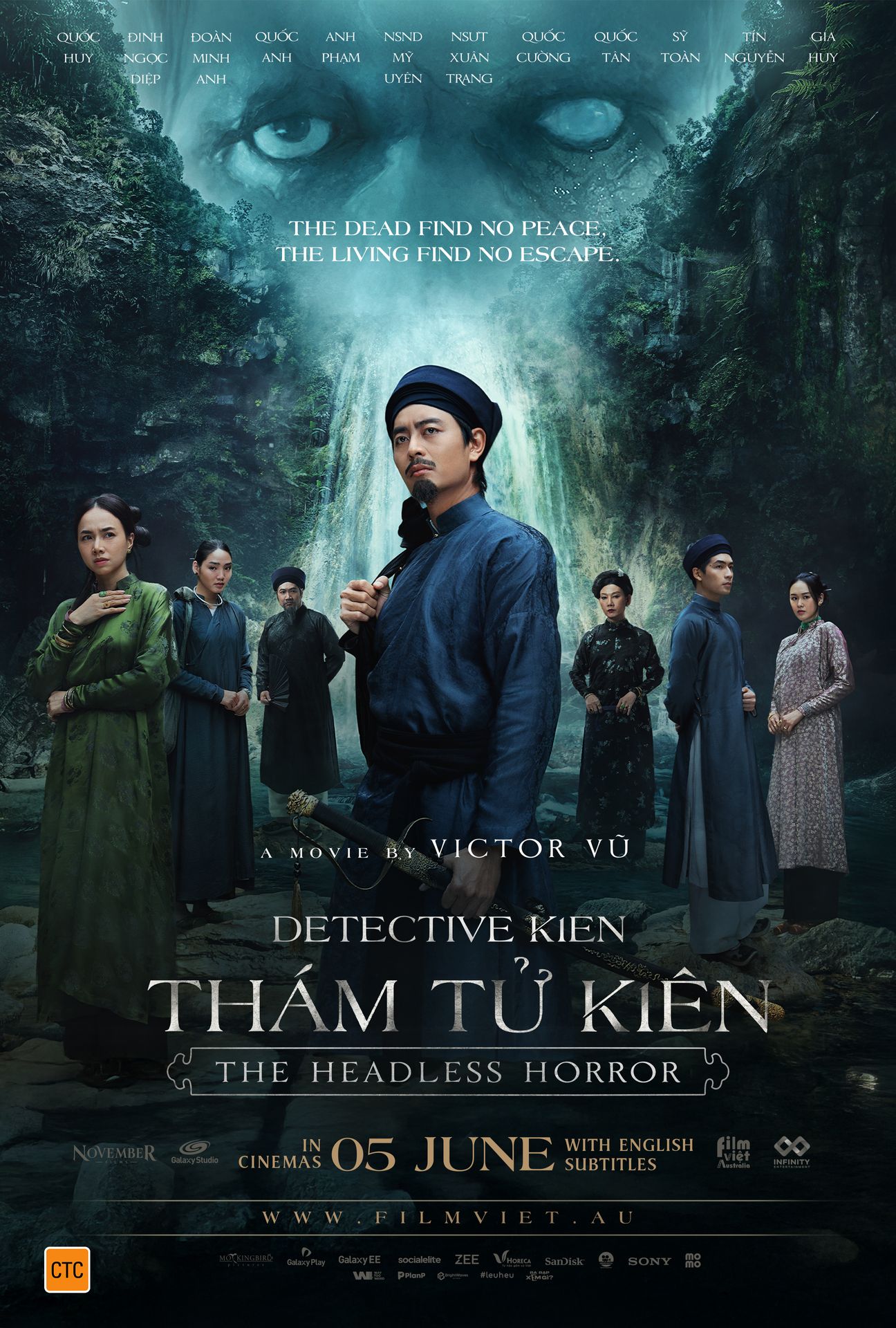
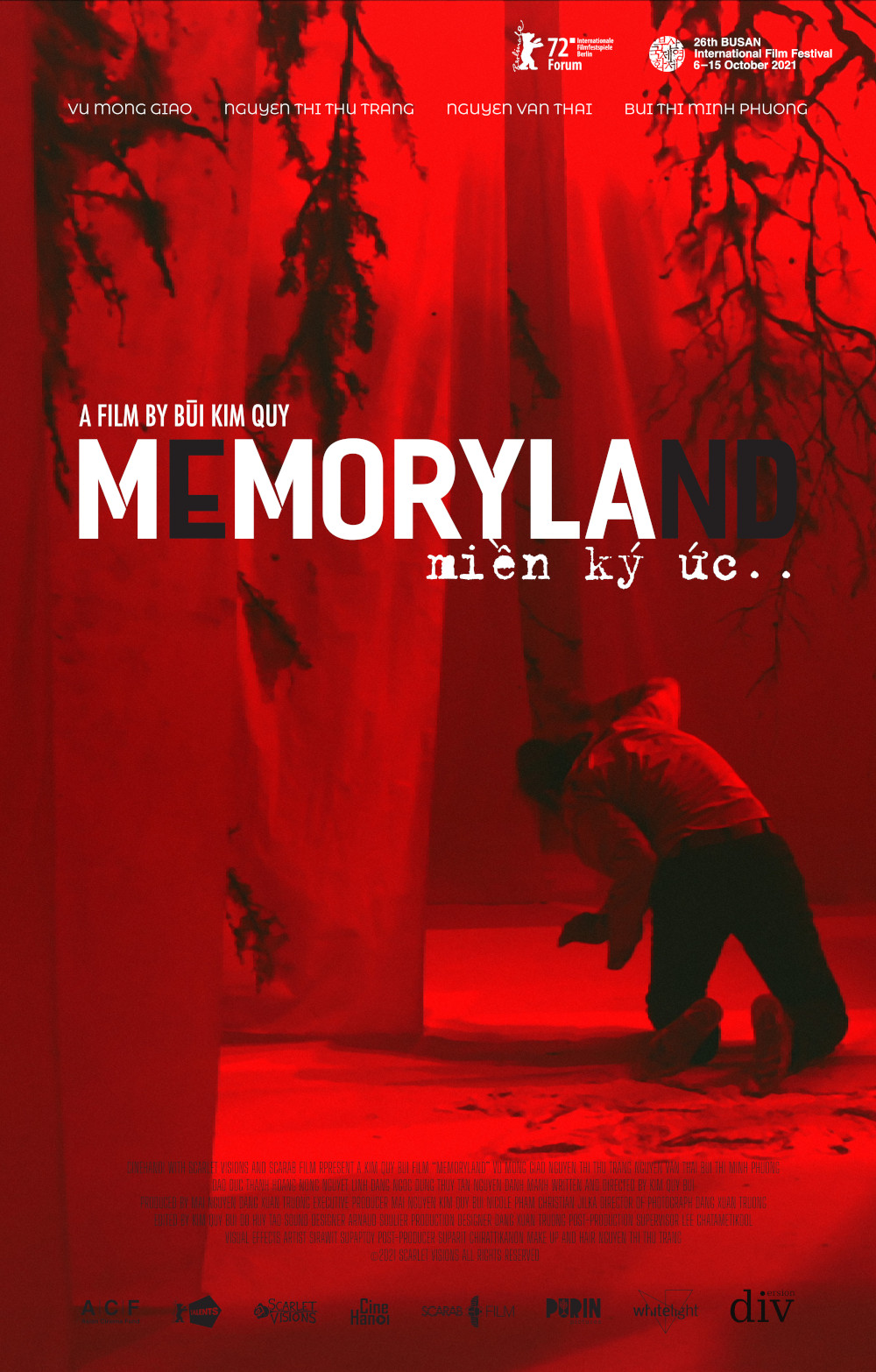
Memoryland (Miền ký ức, Kim Quy Bui, 2021)

In Kim Quy Bui’s melancholy tale of the rites of death it’s almost as if it’s the living who haunt the dead. Contrasting the earthiness of traditional ritual with the clinical cremations of the city, Memoryland (Miền ký ức) both contemplates the effects of ongoing urbanisation and the perhaps undue stress placed a peaceful afterlife rather than on finding happiness in this one. Even so, it’s a sense of absence that eventually haunts the nation in the creation of a literal ghost town with names and numbers written on walls in much the same way as the documents of deed printed on the exterior of paper houses intended to be burned for the dead. 

The film opens however with a little magical realism as a woman’s soul gets up out of her body and makes its exit if not quite from this world. Surrounded by flies and rotted fruit, Me leaves an unheard message for her son that she would like to be buried in the vicinity of her house so that she can still look after it but the son has been away too long and knows nothing of traditional rituals. “Everyone is cremated in the city” he tells a confused neighbour who has already dug a grave for her while keeping half an eye on the mounting costs, the itemised bill including listings for shamans and multiple days of mourning he wonders if it would be alright to shave. 

Death is indeed an expensive business. One young man makes his living selling coffins and burial plots for a hefty price in which you’re even charged rent for storing remains. Frightened of what decisions may be made after his death, the neighbour later plans a funeral for himself and his wife prepared to pay a princely sum for the guarantee of dignity in death which his wife quite understandably describes as ridiculous. Yet there’s something in his words that only soil can nurture the soul in the earthiness of its embrace in contrast with the icy mechanical doors that draw closed across a coffin before it is assaulted on all sides by tightly controlled flames with only another sign across them listing a name and a date of death lest the now anonymous ashes be confused. 

Meanwhile some years previously a man is killed in a construction accident that neatly symbolises the literal dangers of urbanisation leaving his devastated wife numbed to the point of catatonia. Her husband’s family refuse to accept the quietude of her grief, suggesting that as she is still young and pretty, a childless widow at 30, she may plan to cut her losses and try again with someone new. The wife however remains loyal if over identifying with a female pig she believes longs for male companionship even as a widowed neighbour reminds her that boars and men are each scarce in this rapidly depleting environment. Eventually she travels to the city and takes her rituals with her, lodging with a middle-aged painter to whom she becomes a new muse, but discovers only loneliness and disappointment. She burns paper effigies of cars, homes, and even a replacement wife for her late husband but has no life of her own, a ghost in the frame once again abandoned longing for connection with something that is only now a memory existing in a different place and time. 

The neighbour’s wife tells her children that they’ve got an air conditioner and wireless internet so they needn’t worry when they visit, but it remains unclear whether they do or not. The traditional houses in the traditional village are falling apart, distant messages on the radio asking children to come before they collapse but in the end each is only a space of emptiness, no different from the cemetery the widow walks through with its houses for the dead or that encountered by the painter in his visit to the other world walking between paper houses laid out in much the same fashion. They are each for sale, a name and phone number of a descendent penned on the wall though it seems unlikely anyone is going to buy. Inhabited only by memory these now empty buildings belong to another land in their own ways haunted but perhaps more by the living than the dead. 


Memoryland screened as part of this year’s Five Flavours Film Festival and is available to stream in Poland until 4th December.

Original trailer (English subtitles)

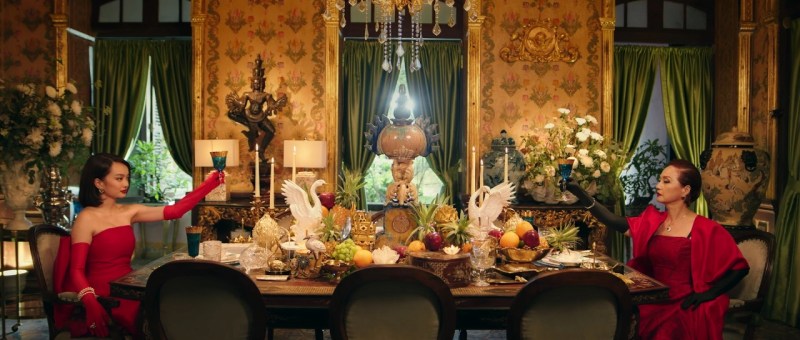
Camellia Sisters (Gái Già Lắm Chiêu V: Những Cuộc Đời Vương Giả, Namcito & Bảo Nhân, 2021)

The dark secrets surrounding three super rich sisters are dragged into the light by the mysterious disappearance of a prized robe in Bảo Nhân and Namcito’s operatic rom-com, Camellia Sisters (Gái Già Lắm Chiêu V: Những Cuộc Đời Vương Giả). Apparently the fifth in a series of thematically linked movies, the film finds the central trio trapped in the golden cage of their wealth while pulled in different directions by their conflicting desires but eventually brought back together after a series of unexpected revelations exposing the long buried truths of the remaining Ly family. 

Living in a huge European-style mansion up in the mountains, the oldest of the sisters, Han (Lê Khanh), rules with an iron fist maintaining the family name and finances as a well-known antiques dealer. Only the truth is that many of the “antiques” are fake and she’s roped in her more cheerful sister Hong (Hồng Vân) to assist her in a scam to push up auction prices while ensuring they never lose their most prized possession of the Phoenix Robe and most particularly to shady nouveau-riche businessman Lam Quach (Sĩ Nguyễn). Meanwhile, youngest sister Linh (Kaity Nguyễn), who is at pains to remind her boyfriend Gia Huy (Anh Dũng) that she is only a foster child, is fiercely ambitious and desperate to take over Empire Tower. When Gia Huy makes her an offer she can’t refuse to betray her sisters’ trust and help him and his dad get their hands on the robe in return for a giant promotion that would make all her dreams come true she hardly blinks but when the robe goes missing right before the auction she begins to discover that there is far more to all of this than she originally thought. 

Part of the problem is that there is apparently a curse on the women of the Ly family in that they are not permitted to marry unless a red camellia blooms in the middle of their white camellia field. Ha meanwhile is obsessed with maintaining the family name and influence partly through the allure of the curse which means she must be seen as virtuous but has secretly been carrying on with a married business associate for the previous 25 years, a romantic tragedy that has long been eating away at her soul as well as her pride in being the matriarch of this powerful family while only the mistress of a married man. Hong meanwhile is just the same, secretly living with one of their servants as man and wife but keeping up the pretence of the two spinster sisters living in their giant mansion spending all their time sourcing antiques for other people with far too much money who engage reckless spending as a kind of status war. Lam Quach mainly wants to take the robe so that Ha won’t have it while as we discover her desperation to keep it is largely sentimental if also in a similar fashion the desire to prevent it going back to her lover’s wife who apparently owned it originally. 

Linh, meanwhile, wants the robe in order to secure her own status insisting that “only power is the true purpose of this life” willing to betray her sisters to get it while insecure in her liminal status as an adopted child, not really one of the Ly family. Through her various investigations, she begins to discover the reason for her sense of disconnection with her sisters eventually reintegrated into the family in learning the truth. There is however a degree of naivety in her worldview, unduly shocked by her sisters’ duplicity in realising that most of their superrich aesthetic is superficial and founded on lies, Han selling fake antiques to people who just wanted to spend a lot of money on something ultimately pointless without really caring what it is only that they’ll be denying it to others while keeping up the mystery of the Camellia Sisters as a kind of marketing tool even if it’s made her miserable and as she later realises denied her the greatest joy of her life. 

As aspirational as their comfortable lives may seem, the superrich are also somewhat skewered as vacuous and backstabbing devoid of all human feeling in their insatiable material desires before Linh is shown the error of her ways in realising that she has been manipulated by just about everyone but familial love is more important than wealth or power. Operatic in scale and shot for a mammoth budget, Camellia Sisters is full on melodrama with its gothic overtones of the rot at the base of noble family but in any case suggests that each of the women is in their own way constrained by their frustrated desires while bound by outdated patriarchal social codes, eventually rediscovering a sense of solidarity in exposing the truth that allows them to reassume control over their collective destinies. 


Camellia Sisters screened as part of Osaka Asian Film Festival 2022

Original trailer (English subtitles)

Maika: The Girl From Another Galaxy (Cô Bé Đến Từ Hành Tinh Khác, Ham Tran, 2022)

A small boy struggling to come to terms with loss learns to find accommodation with grief while helping a marooned extraterrestrial get back to her people in the delightful Vietnamese family film, Maika: The Girl From Another Galaxy (Cô Bé Đến Từ Hành Tinh Khác). A classic kids’ adventure movie, Ham Tran’s zany tale finds its young hero not only trying to reorient himself in a world of constant change but also attempting to process the wider sources of societal destabilisation such as rapid gentrification and shady billionaire scientists with dubious ambitions. 

Eight-year-old Hung lost his mother to illness a year or so ago and is now living alone with his father Thanh who is forced to work long hours in his shop fixing mobile phones in order to clear the family’s mounting debts. Not only are they being constantly hounded by a pair of thugs working for a local gangster with a thing for Japan who wants to evict all the tenants so he can sell their building to developers to build more luxury apartments, but his best friend is moving to Saigon and his already busy dad seems to have become awfully friendly with pretty neighbour Miss Trang. When his father breaks a promise to watch a meteor storm with him, Hung goes out on his own and witnesses a strange sight which he later learns to be a UFO crashing to Earth subsequently discovering a young girl, Maika, who has been marooned and is looking for her comrade so she can contact the mothership and get a ride home. 

“Even fishes need friends” Hung’s friend had told him on leaving her fish with him so it could be close to his, and that’s true enough for Hung himself now left largely alone and looking for both companionship and adventure. Besides bonding with Maika, he also has a frenemy in a boy who lives in the upscale apartments whose drone keeps chasing his remote control aeroplane. CuBeo is a somewhat awkward boy who just wants to be friends with Hung but admittedly has a funny way of showing it, largely because he has asthma and his overprotective family don’t let him out to play with the other kids so he’s incredibly bored and intensely lonely despite all the high tech toys he has at home. Like Hung, he also seems to have lost his mother and has a workaholic father who rarely visits having left him and his older brother Bin largely in the care of a live-in tutor. 

Eventually any sense of class conflict between the two boys disappears as they gradually become friends while bonding over their shared quest to help Maika get back to her family battling the gangster thugs and shady billionaire Nghia who seems to have bought up half the area for his special space project and intends to exploit Maika’s advanced scientific knowledge after having impounded her spaceship. Of course, Nghia and the local gang boss turn out to be little different, in it for personal gain rather than any real interest in the evolution of mankind, while the kids just want to protect their friends and the world in which they live. Making full use of their shared skills, Hung and Beo have immense fun crafting their own weapons, modifying NERF guns to shoot silly putty or slapping their enemies in the face with kimchi, determined to save Maika from Earthly greed. 

Through this transitory friendship, Hung begins to come to terms with the loss of his mother while repairing his relationship with his dad and preparing to move on in making friends with Miss Trang no longer seeing her as a threat to his mother’s memory in learning that she’ll always be in his heart as will Maika. Boasting some impressive effects visualising Maika’s various powers and alien technology, Ham Tran’s retro world building otherwise has a defiantly down to Earth sensibility contrasting the inherent warmth of Hung’s cluttered home and friendly neighbourhood with Beo’s obvious loneliness in the emptiness of his white box high rise flat. Child-friendly humour and a healthy dose of silliness add to the whimsical charm, yet the central messages of learning to live with grief and loss even at such a young age are sure to touch the hearts of children and adults alike. 


Maika: The Girl From Another Galaxy screens at UltraStar Cinemas Mission Valley, San Diego April 23 as part of this year’s SDAFF Spring Showcase.

Original trailer (no subtitles)

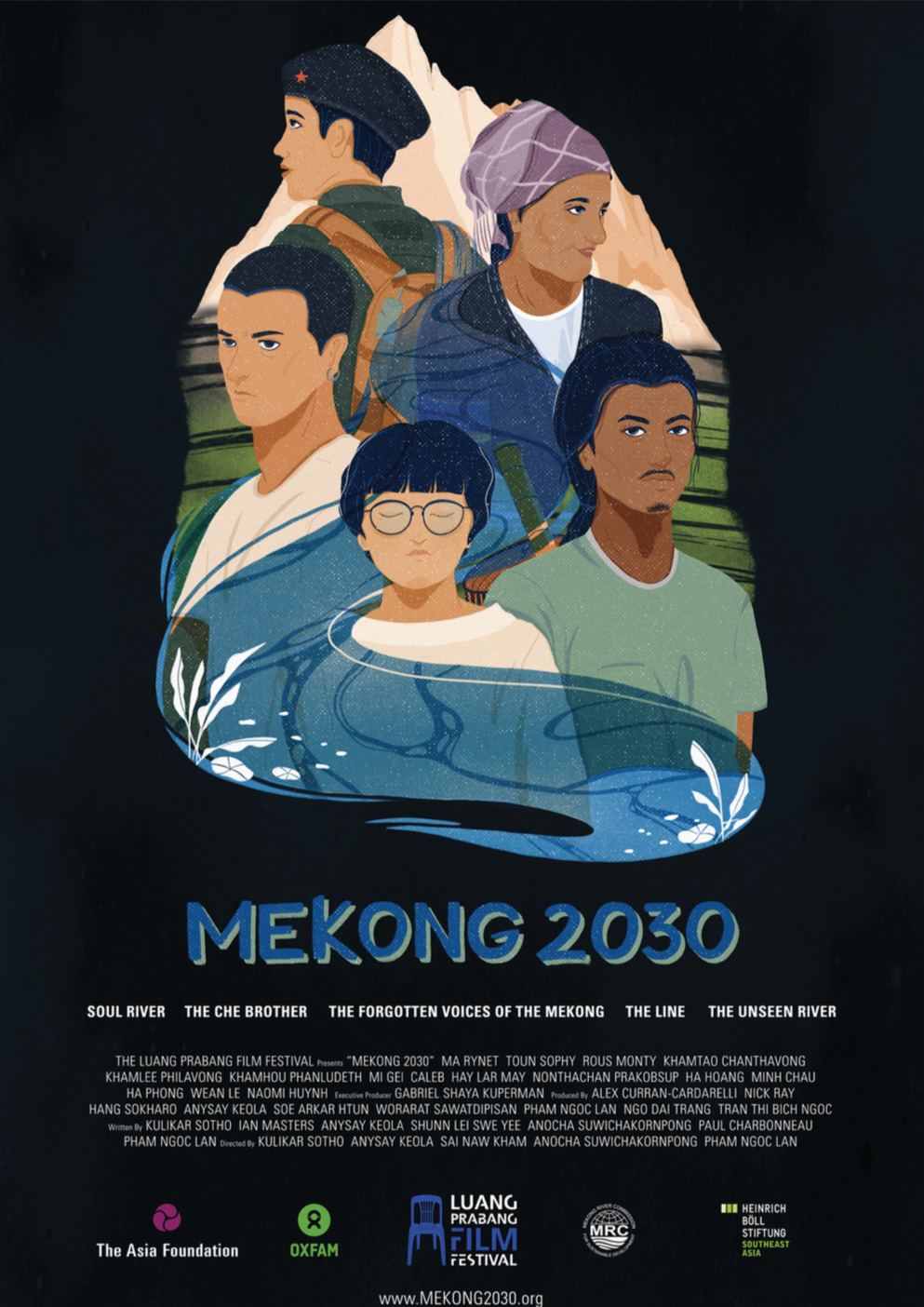
MEKONG 2030 (Kulikar Sotho, Anysay Keola, Sai Naw Kham, Anocha Suwichakornpong, Pham Ngoc Lân, 2020)

Literally on the shores of an ecological crisis, the communities along the Mekong River know better than most the dangers of climate change and increasing industrialisation. Commissioned by the Luang Prabang Film Festival, MEKONG 2030 takes its cues from the recent “ten years” phenomenon, bringing together five directors from different nations along the Mekong to imagine what the situation might be in a decade’s time. 

Environmental concerns and changing times are clearly at the forefront of Cambodian director Kulikar Sotho’s Soul River in which Klark, an indigenous huntsman, discovers an ancient statue in the forest and determines to sell it to buy a better future for himself and his wife having lost everything in a flood caused by deforestation and the affects of increasing industrialisation. Unfortunately he is challenged by Sok, a former fisherman forced onto the land due to the lack of fish in the river, who claims to be the land’s owner and insists the statue is his. An amusing stand off, Klark’s machete vs Sok’s walkie-talkie, signals their respective positions as avatars of new and old. Nevertheless, the statue is too heavy for one man to carry and so they agree to work together, occasionally quibbling over their respective cuts and irritating Klark’s conflicted wife Ladet whose premonition that the statue is cursed is well and truly borne out as the two men begin to lose themselves in greed and suspicion. Yet as her closing voice over reminds us their sin is emblematic of their times in their irresponsible and arrogant desire to “sell” their nation’s ancestral treasures, be they forests, rivers, or statues the protection of which should have been their only duty. 

Depleting fish stocks and industrial pollution are also a persistent theme in the entry from Laos as a worried sister explains to her student brother concerned to see nets covered in dust on his return home from university. Xe is worried because his sister has a bruise on her face and seems to have separated from her husband and children she says to look after their mother who, as it turns out, is immune to the ongoing plague and therefore a valuable commodity to those hoping to find a vaccine. The bruise was apparently caused when their older brother, who has since become a warlord, kidnapped mum in order to monopolise her exploitation. The sister wants Xe to kidnap her back, but the deeper he gets into this awkward situation the more conflicted Xe feels knowing that whatever is actually going on both of his siblings are in effect determined to bleed his mother dry for economic gain. 

The precarious position of the older generation and the side effects of industrialisation raise their heads again in chapter three, Myanmar’s The Forgotten Voices of the Mekong in which well-meaning young village chief Charlie determines to “modernise” his community by inviting a mining conglomerate to begin digging gold on their land. An old grandma patiently teaching her grandson to care for the local herb grown for its medicinal properties is the voice of opposition, pointing out that there is nothing wrong with their lives as they are and so she feels they don’t need the complications of the “modernity” Charlie is determined to bring them. He tells her that he’s the chief now and so they’ll do as he says and so she calmly walks out of the meeting, but her animosity is soon vindicated when farmers complain their livestock has been poisoned after drinking water contaminated by the mine. Not long after a child is taken ill. Devils devour everything, but there is something we can do the old woman assures her grandson: make the mountains green again. 

Shifting into a more abstract register, Anocha Suwichakornpong’s Thai entry The Line takes the river as a protagonist through the film within the film playing on a gallery wall though apparently in some way unsatisfying to its creator. Speaking in a robotic Mandarin, the video places an ironic voiceover on top of images of the river and the city juxtaposing an incongruous family history with a vision of modernity. Meanwhile, a young intern makes smalltalk with her temporary bosses who seem to have no time for her about a weird animal captured on camera in the river near her hometown, and the artist explains her intention of dramatising a vision of space and time through the story of the river.  

The sense of the Mekong as liquid time recurs in the final instalment, Vietnam’s The Unseen River, in which two stories, one of youth and the other age, run in parallel. While a young couple make a visit to a temple hoping to find a cure for the boy’s restless sleep, a middle-aged woman catches sight of a somehow familiar dog that serendipitously reunites her with her long-absent first love who went abroad to study shortly before they dammed the river. In a piece of possibly unhelpful advice, the old monk tells the young man that all he needs to do is “believe” in the act of sleeping. Sinking into a deep sleep is like surrendering yourself to the current he explains, directly linking the rythms of life to the river while the young monk attributes their youthful llistlessness, the failure to see a future that has prevented the young couple marrying, to the inability to dream. The river is both past and future, dream and reality. It is disconnection with the natural world which has so affected the young man, something he perhaps repairs borrowing the monk’s decommissioned fishing rod to gaze upon the wide river under the light of the moon. 

Giving voice to the anxieties of climate change, overdevelopment, the unequal power dynamics of large corporations operating in rural communities, the erosion of traditional culture, and the loss of the natural world, MEKONG 2030 issues a strong warning against ecological complacency but also rediscovers a kind of serenity in the river’s eternal presence even as it is perhaps flowing away from us. 


MEKONG 2030 streamed as part of this year’s San Diego Asian Film Festival. Readers in Poland will also have the opportunity to stream MEKONG 2030 as part of the 14th Five Flavours Film Festival 25th November to 6th December.

Original trailer (English subtitles)