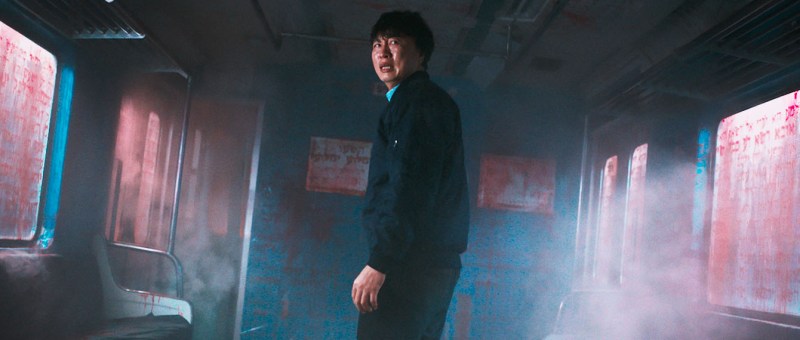
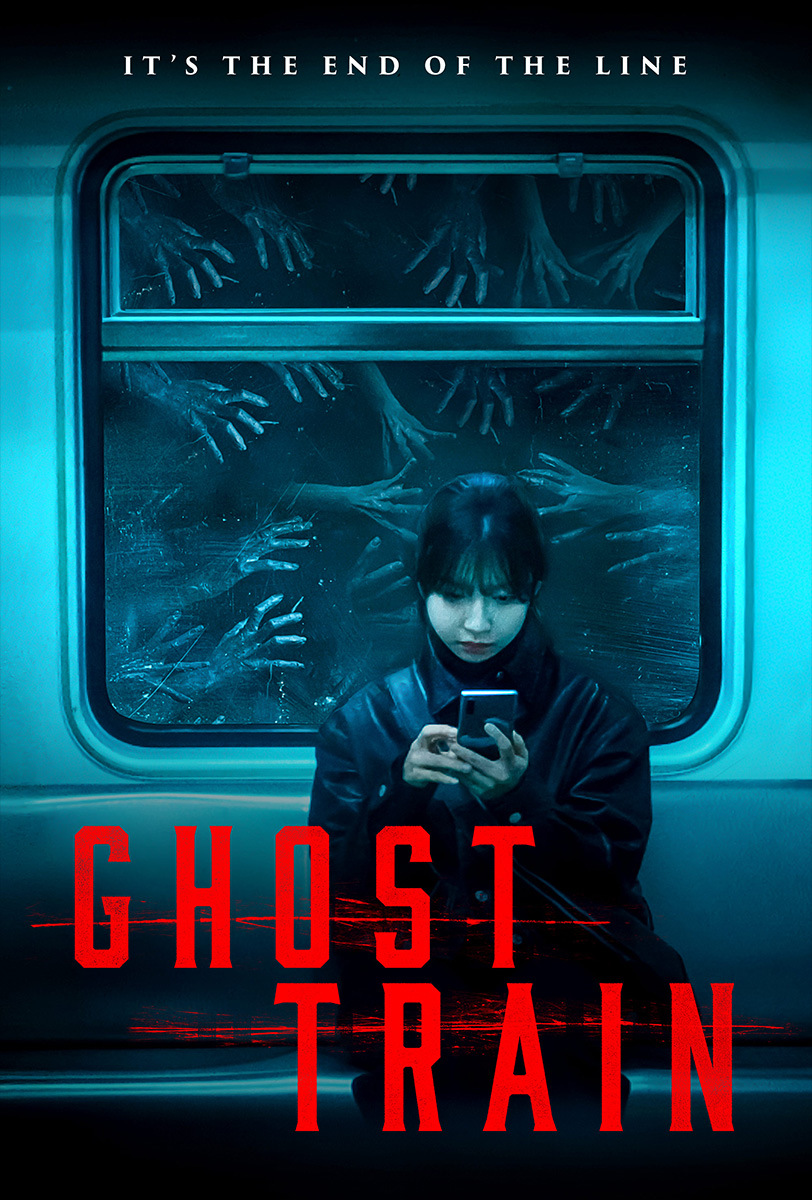
The Villagers (동네사람들, Im Jin-soon, 2018)

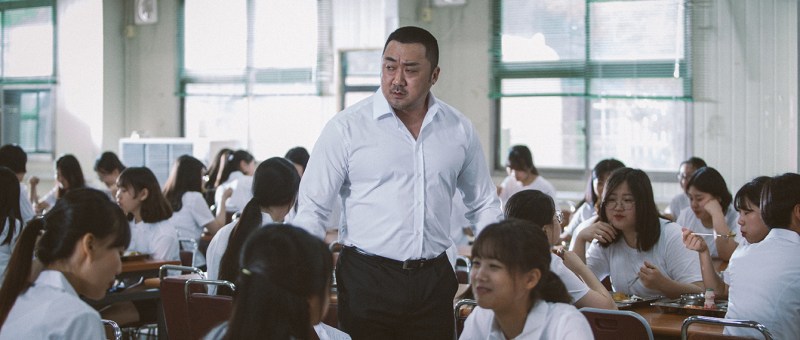
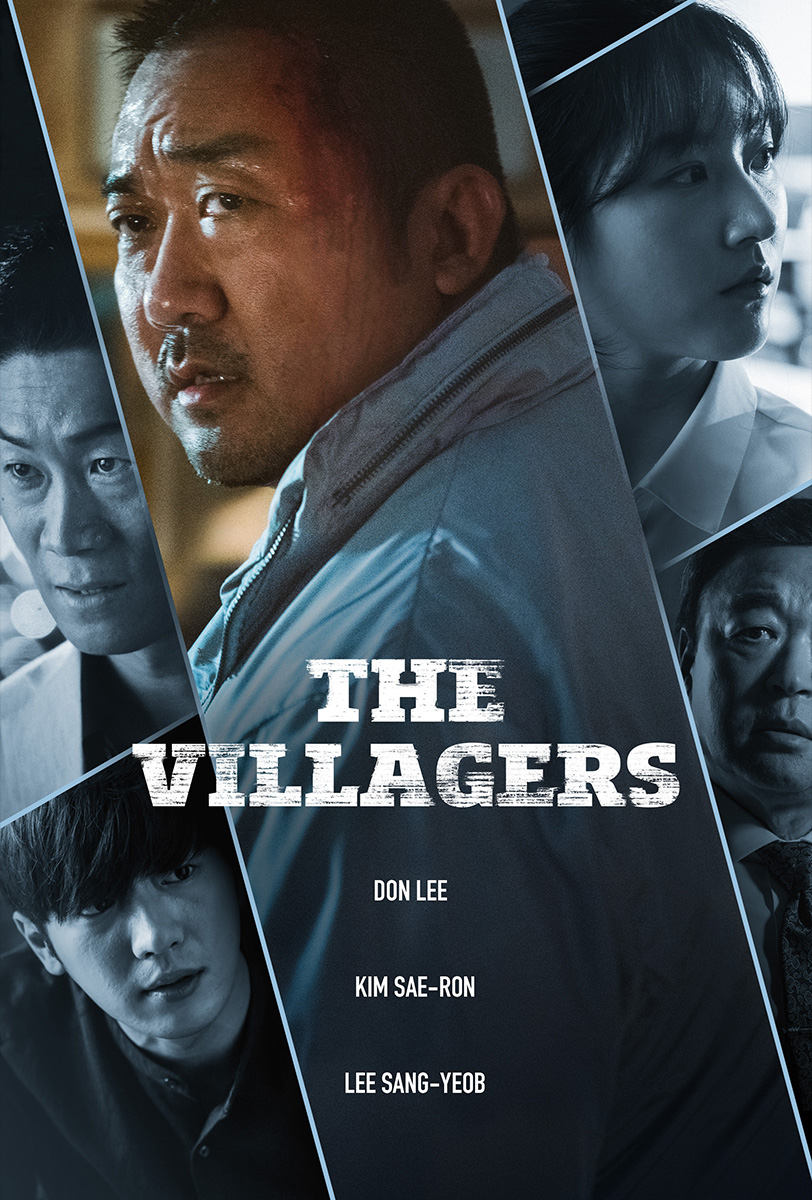
Trying to make a fresh start after being fired as a boxing coach in Seoul for challenging match fixing practices, a rookie teacher finds himself embroiled in small-town conspiracy in Im Jin-soon’s Ma Dong-seok vehicle, The Villagers (동네사람들, Dongnesaramdeul, AKA Ordinary People). Unlike the big bad city, this rural backwater is mired in feudalism and corruption as if it were stuck in the authoritarian past in which everyone keeps their head down and minds their own business rather than challenging injustice or trying to improve the lives of those around them.

What Ki-chul (Ma Dong-seok) and high schooler Yu-jin (Kim Sae-ron) have in common is that they’re both outsiders. Yu-jin transferred to the high school from Seoul and has been branded a troublemaker by the judgmental teachers. But despite the school’s seeming authoritarianism, the pupils have little respect for the school system and openly flout the rules by smoking on school premises and being rude to the staff. It transpires that Ki-chul has basically been hired as a kind of muscle, charged with getting students who haven’t paid their fees or dinner money to cough up ahead of an upcoming audit of the school’s finances. Many of the students he approaches brush him off as if they simply don’t intent to pay, but the school doesn’t seem to be interested in finding out why they might not be able to or if there are problems at home. Yu-jin too rolls her eyes he asks her, but in her case she’s unwilling to finance an institution that’s not doing anything for her even if as Ki-chul advises her they won’t let her graduate if she doesn’t.

Ki-chul seems uncomfortable with his new role and tries to do what he can to help, but encounters resistance from the teachers who tell him there’s no point worrying about kids like these. If they skip school, they’re branded runaways and no attempt is made to look for them. The teaching staff lowkey threaten Ki-chul by reminding him his job’s to get the money and he doesn’t want to make trouble for himself when he was lucky to be employed here in the first place. And so he finds himself conflicted when he spots Yu-jin in town getting herself into dangerous situations trying to find out what’s happened to her friend Su-yeon (Shin Se-hwi) who’s been missing for days but the police won’t seem to do anything. Yu-jin tells him that adults can’t be trusted, especially not the police, but he thinks it’s teenage alienation before trying to report the case again himself through a friend on the force and having it rejected.

The fierce resistance to even mentioning Su-yeon ought to tip them off that’s something bigger’s going on, but everyone is focussed on the upcoming election in which the headmaster of the school is standing for governor that nothing’s getting done at all. Ki-chul tries to report another teacher for harmful behaviour towards students, but is yelled at for exposing the school’s business by going to the police “over some runaway”. He’s reminded to keep his head down and mind his own business, even while Yu-jin continues to be in danger and Su-yeon is still missing. An orphan whose parents had massive debts to loansharks, Su-yeon was forced to work in a bar to support herself and her grandmother. She dreamed of being beautiful and free as an adult, but was badly let down by many of those around her including the school who decided that girls like her weren’t worth helping.

Of course, Ki-chul can’t help standing up for justice through the medium of his fists and smashing his way to the truth while trying to keep Yu-jin safe. If someone disappeared Su-yeon, they won’t think twice about doing the same to Yu-jin, though she of course thinks she’s invincible and is too young to think sensibly about her own safety while desperate to find out what’s happened to her friend. They are both, however, trapped by the legacy of an authoritarian era in which the police works only for the powerful and dirty local politics taints everything around it as everyone desperately tries to ingratiate themselves with the new regime while avoiding stepping out of line and endangering themselves. Ki-chul, however, has not much interest in that and is determined to smack some sense into gangsters and law enforcement alike in an effort to show that the world doesn’t necessarily need to be this way if only more people were willing to stand up to cronyism and exploitation.


The Villagers is released Digitally in the US Oct. 7 courtesy of Well Go USA.

Trailer (English subtitles)
Nine-Ring Golden Dagger (挡马夺刀, Feng Xiaojun, 2024)

The daughters of General Yang venture into Liao territory in search of their father’s famed “nine-ring nation stabilising sword” in Feng Xiaojun’s wuxia adventure, Nine-Ring Golden Dagger (挡马夺刀, dǎng. mǎ Set in the middle of the Song Dynasty, the film draws inspiration from the western in its dusty frontier town setting if also clearly from King Hu’s Dragon Inn in the design of its central staging post where a series of action set pieces take place.

Emperor Taizong has expelled the Khitan in the north and is intent on reclaiming the sixteen prefectures of Yan and Yun for the Han people. General Yang (Wu Yue) leads his men against the invading Liao while the Middle Army do nothing and wields his nine-ring nation stabilising golden sword but is cut down by Liao general Liu and his sword is captured as loot. Yangying, (Liu Shinlei) Yang’s ninth daughter, cannot stand the injustice and is determined to march into Liao and get it back. Her sister, Yanqi (Zhang Xintong), tries to stop her but then relents and decides to go with her instead. 

The sword is in the home of the South Prime Minister of Liao, Zhang Hua (Tan Kai), who is Han and resented by some of the Liao warriors for being a token hire designed to appeal to the Han population who they fear are taking over now they’ve joined the Liao. Though Dowager Empress Xiao is minded to make peace, General Liu and Zhang would rather the war continue because it facilities their advancement amid an otherwise rigidly hierarchical social system.

One expression of this is in hilarious comic relief character Xiao Pusage (You Xianchao) who has a long and pointless intro he’s fond of reciting that explains he’s the Dowager Empress’ nephew. Jiao Guangpu (Song Tianshuo), owner of the staging post, was thinking about killing him but decides to let him go instead because they only kill evildoers and Pusage actually seems quite nice and enjoys doing good things like helping the poor. Jiao is also a former Song soldier trapped behind enemy lines without the resources to go home but dreaming of reclaiming Yang’s sword and taking it back with him. Nevertheless, he originally distrusts the Yang daughters believing them to be Liao soldiers and therefore his enemies. He too has a witty intro song in which he gives away his origins only no one seems to be paying attention. 

But in some ways, Jiao’s desire to reclaim the sword is more sentimental than that of the daughters even though part of the reason why they want it is to avenge the deaths of their father and brothers. Even so, their main mission is taking it back to stabilise the nation and symbolically end the war with Liao. Jiao, by contrast, wants it to fulfil an obligation he feels to General Yang who fought bravely in the film’s opening sequence but was executed by a cowardly arrow from Liu. After a botched attempt at assassination and an intense fight through the inn, the trio form an uneasy alliance and agree to travel back to Song together only to be continually frustrated by Liao forces who eventually have them surrounded at the staging post.

While the design may echo Dragon Inn, Feng uses the techniques of Peking Opera to stage the battle between Yangqi and Jiao while otherwise echoing the western through the newspaper-like onscreen text and dusty frontier sensibility as the Yang sisters make their way back to the border with their father’s sword in hand. Through somewhat epic in scope despite its compact runtime, the film is essentially structured around a series of action sequences from the daring raid to retrieve the sword with its various booby traps to a chase through a cornfield and the final confrontation at the inn. Each is impressively choreographed and expertly performed to make full use of the well-designed sets and meagre budget. The lean, mean feel and linear progression also add to the retro sensibility while there’s something undeniably satisfying about seeing these two rather slight women run rings around the Liao forces thanks to the training they received from their father as they become the inheritors of his legacy and saviours of Song by retrieving the sword and ushering in a new era of peace and coexistence.


Nine-Ring Golden Dagger is released Digitally in the US on July 1st courtesy of Well Go USA.

Trailer (English subtitles)
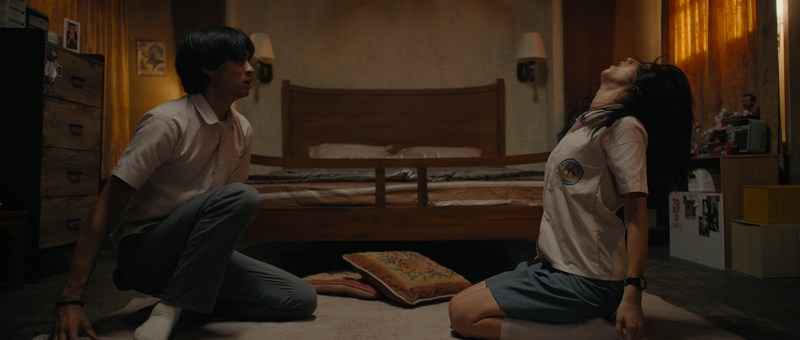
Soul Reaper (Malam Pencabut Nyawa, AKA Respati, Sidharta Tata, 2024)

A young man finds himself haunted by the spectres of his trauma, but also, as it turns out, by a not so ancient evil in Sidharta Tata’s eerie horror film Soul Reaper (Malam Pencabut Nyawa AKA Respati). Plagued alternately by nightmares and insomnia, he discovers an ability to enter a hidden world of dreams while simultaneously noticing a connection with an ongoing spate of mysterious deaths along with that to a traditional village and its ancient beliefs. 

Suffering with a kind of survivor’s guilt, Respati (Devano Danendra) blames himself for the death of his parents and is haunted by visions of their vengeful ghosts. A new girl at his school, Wulan (Keisya Levronka), is ostracised by the others who hear that the reason she left her last school was that she has a tendency to get possessed by ghosts which upset the other students. Like Respati, she is also haunted by bad dreams and desperately misses an absent parent, in her case her mother. The fact that so many seem to be connected by violent robbery hints at a generalised anxiety within the wider community that is only exacerbated by the series of mysterious deaths hitting the news. 

What Respati eventually realises is that he’s witnessing real deaths in his dreams though taking place in the dream realm. Others who’ve suffered loss and trauma such as a man who recently lost his young daughter are led away towards a bright light where they think they see their loved ones but are actually consumed by a dark force. In the midst of his own grief, Respati is forced to face a secondary trauma that relates to his grandfather’s hometown where the villagers believe in the power of an ancient god. A powerful witch, Sikma, convinced herself that she was the inheritor of the witch’s power and in her zeal to learn more about the dream world began sacrificing her patients. The other villagers shunned her until she too ended up dying a mysterious death after which her body disappeared.

Sikma maybe feeding on grief, but she also had a child who viewed her as a mother and is now bereft in the same way as Respati and Wulan are having lost their parents. Respati refuses to talk about his trauma with the doctor his grandfather takes him to about his insomnia but discovers a new way to face it through the dream realm as if by overcoming his nightmares he could learn to sleep peacefully again while simultaneously ending the series of mysterious deaths by taking care of Sikma. In the dream realm, he is able to manifest his own desires by virtue of his lineage that makes him a descendent of the mountain goddess and imbued with her power which means that he is able to make peace with the past by envisioning a different outcome for a painful event which, though it cannot change what really happened, allows him to let go of his guilt while realising what’s really important. As a young man his grandfather brought from the country advises him, you never really know how much time you have left, so it’s important to cherish your loved ones while there’s still time.

The irony is that everyone wants the same thing and has been hurt in the same way, though they have different ways of dealing with their grief in their inability to let go of the past. The dream world appears as an eerie forest in which it is the grieving who are called towards the light as if like Respati they blame themselves for not going with those they loved, though it also echoes an ancient horror in the natural world. The grieving are pinned in the mortal realm by tree roots which seem to encircle and constrain them until they break free, called towards the light by a comforting lullaby which offers them one way to escape their grief, whereas Respati can only leave by violent means. Ejecting oneself from the dream realm involves physical pain rather than simply the emotional, but allows him to literally “wake up” from the inertia of his grief to find a new purpose in life and overcome his trauma. Bringing traditional folk horror with its witches and ancient gods together with a more overtly modern tale of psychological haunting lends an additional edge to Respati’s quest to solve the mysterious deaths but even if his own trauma has been exorcised it seems this particular strand of evil may not quite be done with him yet.


Soul Reaper is released Digitally in the US 17th June courtesy of Well Go USA

Trailer (English subtitles)

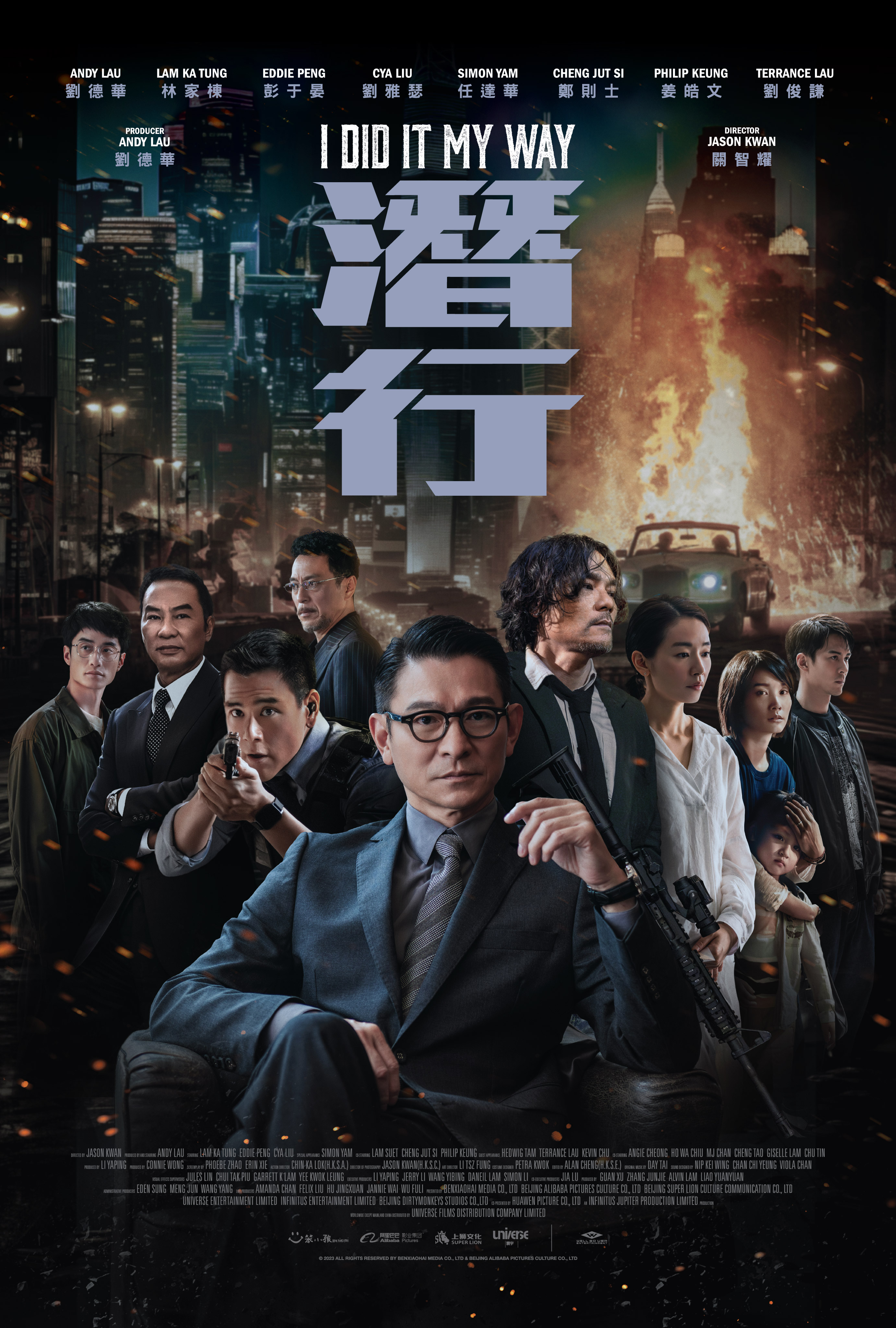
I Did It My Way (潛行, Jason Kwan, 2023)

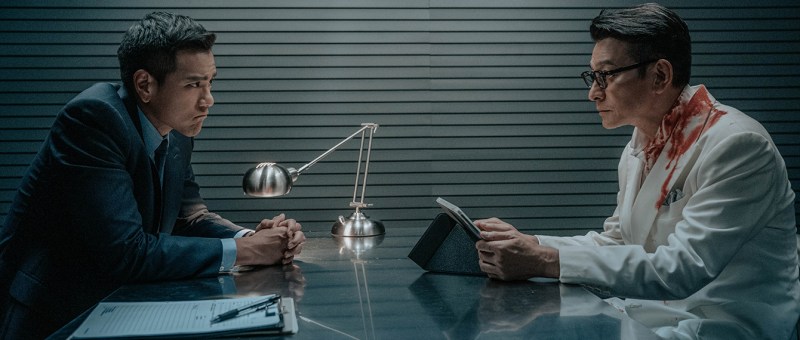
“Oldies are still the best,” one bad guy tells another while listening to a retro pop song about the inability to distinguish good from evil, “life was simpler back then.” Jason Kwon’s I Did it My Way (潛行) is in many ways an attempt to recapture the action classics of the 90s starring many of the same A-listers though they are all 30 years older and in some cases really ageing out of the kinds of roles they’re accustomed to playing in these kinds of films. Nevertheless, the action is updated for the contemporary era in its unsubtle messaging that drugs and cyber crime are bad, while the police are definitely good and will always win.

Indeed, barrister George Lam (Andy Lau Tak-wah) is not a particularly sympathetic villain and is given little justification for his crimes save doing things his way. Cybercrime specialist Eddie Fong (Edward Peng Yu-Yan) isn’t terribly sympathetic either, but mostly because of his bullheaded earnestness. Chung Kam-ming (Simon Yam Tat-wah) asks him to work with regular narcotics cop Yuen (Lam Suet), but Eddie originally refuses, insisting that they formed their new cybercrimes squad because the “old ways” weren’t working, so it’s better that they keep their investigations separate, which is of course quite rude to Yuen especially as he goes on to add that Chung’s only asked him out of politeness and professional deference. Chung, however, reminds them that they’re all part of one big family and should learn to work together. 

One might think that a criminal enterprise is also a kind of family, but it’s shown to be illegitimate in comparison to that of the police. Yuen’s undercover agent, Sau Ho (Gordon Lam Ka-tung), has a family he’s trying to protect, as does Lam who is about to marry his much younger pregnant girlfriend. For them, family is also a weakness because it gives them a reason to be afraid not to mention something to lose. Beginning to suspect him, Lam uses Sau Ho’s wife and son as leverage, symbolically taking them hostage along with Sau Ho’s promised future that would allow him to emigrate for a life of freedom under a new identity. 

Like the song says, Sau Ho is also struggling to define his identity as an undercover cop caught between his original desire to fight crime and the criminal lifestyle he’s been forced to live which leaves him never quite sure what side he’s actually on. Lam claims he only started dealing drugs after his girlfriend was raped and subsequently developed depression but that’s too late for him to turn back and so he’s gone all in. There is a kind of brotherhood that arises between them that’s permanently strained by their positioning on either side of this line and the inevitability of confrontation. Fong promises to save Sau Ho, but he failed to save most of their other undercover officers, while Sau Ho and Lam pledge to save each other, though the act of salvation could mean different things to each of them while both torn between their respective codes and the natural connection that’s been fostered by their long years working together as part of the gang. 

The severing of this connection is again part of the price for their involvement with crime, with Lam led to believe that his choices have ironically robbed him of the pleasant familial future he dreamed of, while Sau Ho is returned to the familial embrace of the police force. Chung is repositioned as a benevolent father who can save his men, while Eddie too is forced to reintegrate by working with the other officers to fight cybercrimes which often intersect with those of other divisions. While the film includes several action sequences, it also insists that the major battle takes place online between hackers and police computer specialists, dramatising these online fights with CGI to slightly better effect than 2023’s Cyber Heist but still struggling to move on from an outdated iconography of the web. Even so, it’s clear that crime never pays even if a policewoman asks herself if it’s really worth it on a trip to the police cemetery. The sun has come out once again, making the dividing line between good and evil clear if also reinforcing the paternalistic authority of law enforcement under which living life “my way” will never be tolerated.


I Did It My Way is available digitally in the US courtesy of Well Go USA.

Trailer (English subtitles)
Striking Rescue (惊天大营救, Cheng Siyi, 2024)

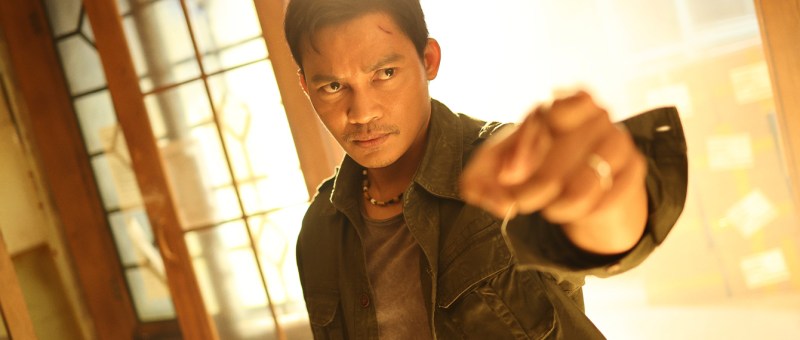
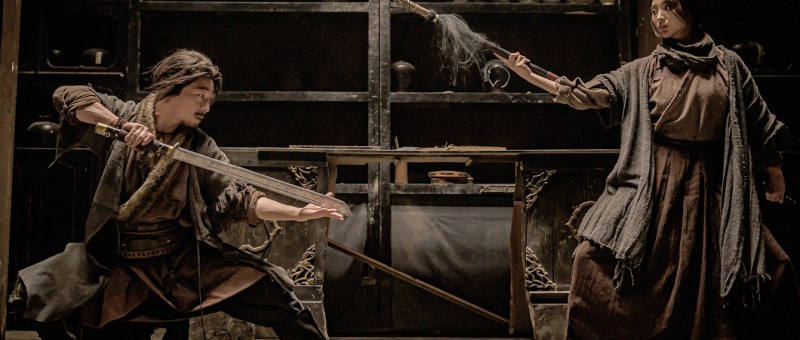
Once again set in a fictional South Eastern Asian nation largely inhabited by Mandarin speakers, Cheng Siyi’s action drama Striking Rescue (惊天大营救, jīng tiāndà yíngjiù) is a comeback vehicle for action star Tony Jaa who has mostly been relegated to cameos and supporting roles for the last decade or so. It’s also one of a string of recent films with a bee in its bonnet about the drugs trade, and a less obvious one about the powers of large corporations though in this case the fat cat turns out to be a good guy.

To begin with, we can’t be so sure about Bai An. A flashback reveals that his wife and daughter were just murdered in an apparent gangland killing, and now he wants revenge. After targeting a petty drug dealer, Bai An is told the man he’s looking for is He Yinghao (Philip Keung), the CEO of a phenomenally successful logistics business which has nevertheless been implicated for the smuggling of drugs. Something like this happened once before, but Yinghao is well connected and was able to make it go away just as he apparently has this time. Later he also reveals that his company is the only one that is exempt from customs checks, presumably because he’s bribed someone to make that happen.

We can’t really be sure about Yinghao, either. He doesn’t seem to know about the drugs but could be bluffing or attempting to shift the blame. His spiky teenage daughter Ting seemingly resents him for his authoritarian parenting and blames him for her mother’s death. She fires back at him that he behaves as if all problems can be solved with money, and she may have a point. After their convoy is attacked by drug gangs, Ting has no idea who to trust but continues to believe in her father’s innocence while unexpectedly teaming up with Bai, who wants to kill him, and trying to figure out what’s going on. The one thing she’s sure of is that she and her father really hate drugs because they caused her mother’s death, so if it really is him behind the local drugs trade then it’s even worse that she thought it would be. 

As the truth is gradually revealed, it allows both men to reclaim their paternity as Jaa becomes a kind of surrogate father to Ting. He attempts to protect her from this very dangerous world of drug dealers and criminals, though it may not have been all that far from the otherwise life of luxury she was used to leading. Her driver, Wu, had already taught her some martial arts skills for protection while she’s bullied by the thuggish boys at school who pick on her for being Yinghao’s daughter and a foreigner. But it’s Bai An who seemingly shows her what real fatherhood is like, which ironically causes her to reevaluate her relationship with Yinghao. He in turn is somewhat redeemed by his righteousness in the face of the gangsters as opposed to a snivelling new reporter picked up by Clay and forced to choose which son to kill before being killed himself.

Making Yinghao the hero may be a slightly awkward fit given that his business interests do not appear to be all above board which is one reason why he relocated here rather than stay in China where, the implication is, he wouldn’t have gotten away with it for so long. Indeed, the film ends with a series of title cards explaining that all of the wrongdoers, including Bai, were caught and punished. Nevertheless, as Bai later reminds us, it’s every man’s dream to be a hero to his daughter and both men have now a claim on “heroism”, at least in the eyes of the idealistic Ting. Though he could not save his own daughter, Bai steps in to protect Ting on several occasions. Fighting off hordes of thugs and one very weird female assassin, Jaa gets the opportunity to show off his martial arts skills once again while relentlessly pursuing his revenge and quest for answers about the death of his wife and child. But it’s also this defence of her that allows him to reconnect with his humanity and reclaim his image of himself as a father even while mired in his grief and anger towards a world full of corruption and betrayal.


Striking Rescue is available digitally in the US from April and on blu-ray from May 15 courtesy of Well Go USA.

US release trailer (English subtitles)

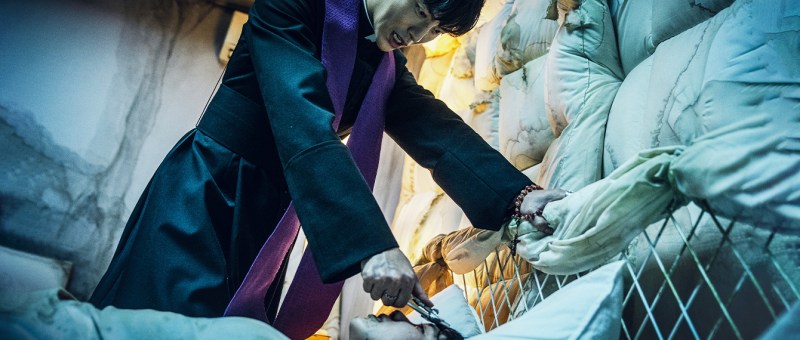
Devils Stay (사흘, Hyun Moon-seop, 2024)

Unable to accept his daughter’s death, a father refuses to let her soul rest in Hyun Moon-seop’s possession thriller, Devil’s Stay (사흘, Saheul). The film’s Korean title “the Third Day” hints at its inverted religious overtones as a priest explains that she will indeed rise again like the Lord himself three days after her death, but as a destroyer of worlds in the incarnation of powerful demon. Heart surgeon Seung-do (Park Shin-Yang) isn’t sure that’s such a bad thing if only his daughter survives.

Then again, there’s a sense that Seung-do himself may share that So-mi’s (Lee Re) plight was partly down to his hubristic conviction in his skills as a surgeon that he alone could save her. So-mi evidently had some kind of serious medical condition that could only be cured by a heart transplant, but the obvious implication of that is if So-mi is to survive then another child must die. There is a kind of equivalent exchange in play and a wager that Seung-do is making with the universe. He may not think of it that way, but he is in fact making a deal with the Devil in his willingness to commit a human sacrifice to save his own child at the expense of someone else’s that in turn would colour the rest of So-mi’s life even if she had not become possessed by a demon.

Father Ban (Lee Min-Ki), a young and intense priest very committed to exorcisms and demon hunting, presses Seung-do as to how he came by this heart that he gave to his daughter, already sensing that this is how the demon crept in. Seung-do must in effect wrestle with the decision he made that has both damned and saved his daughter in equal measure along with the reality that whatever has survived is not So-mi, or at least, not So-mi alone. Father Ban tells him that when the demon rises on the third day, it will immediately turn on those closest to its host. He must then place another wager, deciding whether saving So-mi is worth risking the lives of his wife and son in addition to his own rather than letting her go gracefully and attempting to go on with his life while carrying the burden of paternal failure. 

But to all around him, it appears as if Seung-do has lost his mind. He rants and raves, insisting that his daughter isn’t really dead and even at times interfering with the funeral process to take charge of her body. Like him, Father Ban is also considered an outsider by other members of his church who think he’s too invested in demonology and possibly also blame him for the death of another exorcist priest who saved him when he was demonically possessed himself while serving in the army. Perhaps subversively, the film heavily implies that there was more than friendship to Father Ban’s relationship with the other priest and that his desire to vanquish the demon is also one of vengeance. In this, he may be Seung-do’s enemy as he is gradually seduced by the demon and considers appeasing it to save So-mi, encouraged to make another equivalent exchange and in a sense enact his own funeral to take her place.

In this way, the religiosity is undercut by the implication that the “light” that guided So-mi belonged to father rather than to God as he fulfilled his role as a her polestar and his promise that he’d come find her if she made sure to stay where she was. Even so, it amounts to an awkward advocation that father knows best in that So-mi’s salvation lies in her obedience to Seung-do, rejecting her autonomy to place her faith in her earthly father to save her as he promised he would. In many ways, it’s a story of paternal redemption in which Seung-do must reckon with the transgressive choice he made, no longer able to run or hide from it to but forced to accept his weakness and failure along with the morality of what he did. Essentially a character study, Hyun Moon-seop’s conjures a palpable sense of evil and eeriness but also hope as Father Ban’s mentor had reminded him, that demons too can be beaten though the worst of all dwells in the human heart. 


Devils Stay is released in the US on Blu-ray, DVD and Digital March 18 courtesy of Well Go USA.

International trailer (English subtitles)

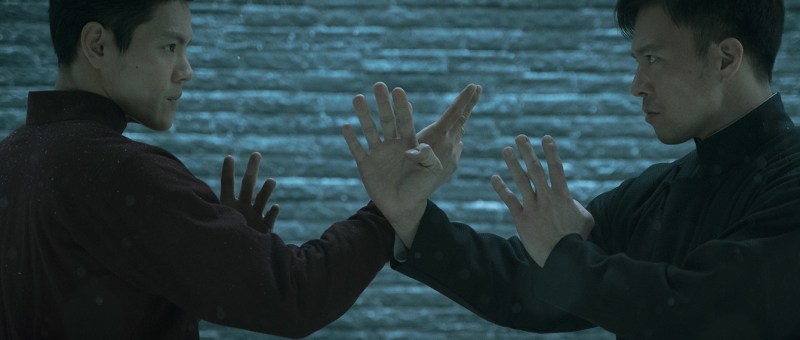
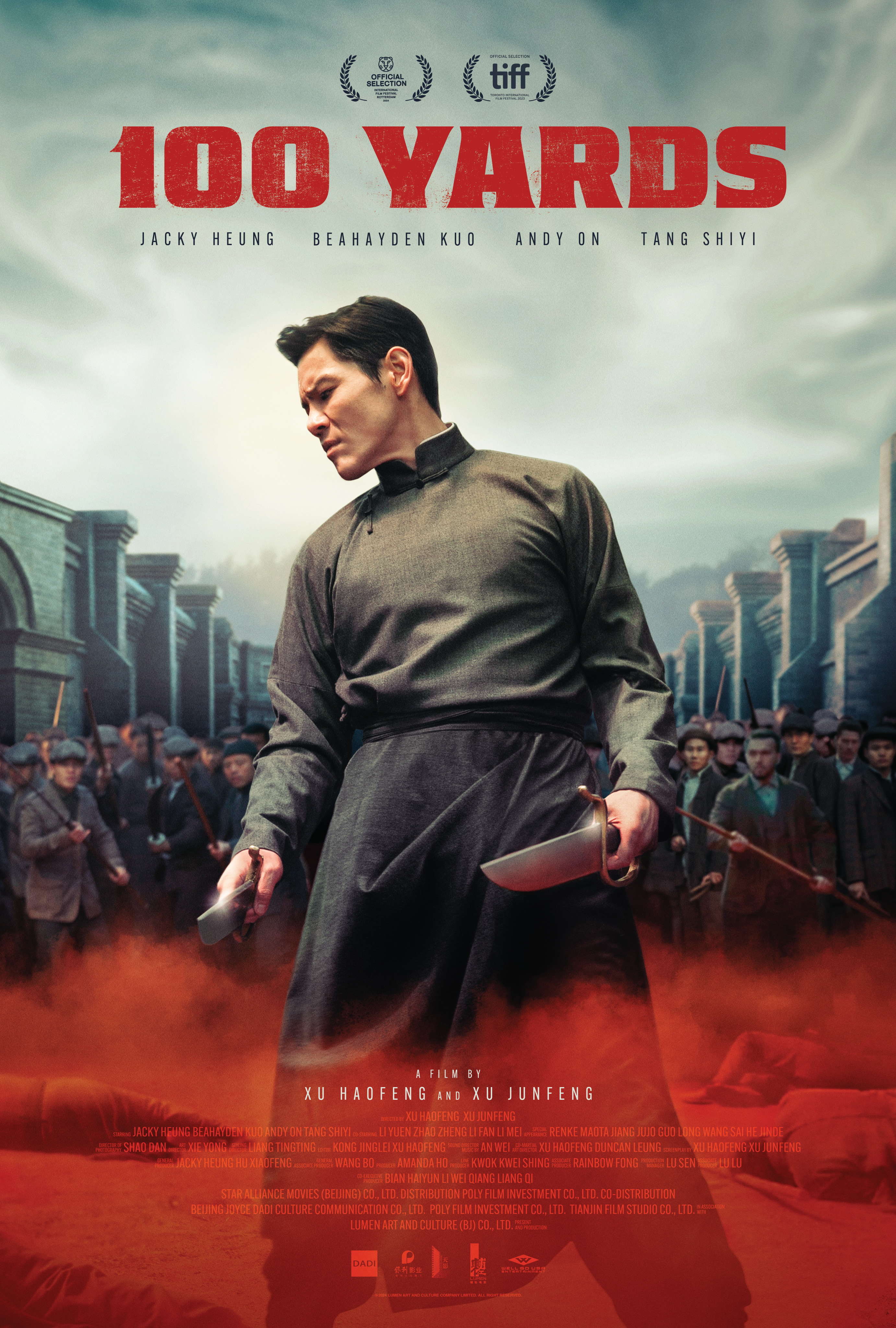
100 Yards (门前宝地, Xu Junfeng, Xu Haofeng, 2023)

“When my father went to the market, I always thought he was a threat to you. I’ve only learned now that you were a threat to him.” Set in martial arts hotspot Tianjin in 1920, nothing is ever quite as it seems in Xu Haofeng & Xu Junfeng’s 100 Yards (门前宝地, ménqián bǎodì). As a young man replies, everyone has their part to play in keeping the peace, or at least some sort of balance that allows the city to function while otherwise caught between declining colonial interests, warlords, crooks and the old world represented by Shen’s house of kung fu.

The struggle is in essence one of which way to lean. Old master Shen is dying. He must choose a successor and is stuck between his only son, An (Jacky Heung Cho), thought to be of insufficient skill, and his best apprentice, Quan (Andy On). Shen orders the two men to fight while he watches from his deathbed and admonishes each of them for holding back. Finally he tells Quan to beat An decisively or he’ll never learn and will simply be beaten by better masters later on. Quan knocks An out with a neck blow and inherits the school, but his management style immediately rankles former right-hand woman Chairmen Meng (Li Yuan).

Part of old Shen’s job had been to patrol the marketplace discouraging hoodlums from extorting the traders, but what An comes to realise is that it’s more like he cut a deal with them in which they permitted the illusion he controlled the gangs while he in turn turned a blind eye and allowed them to practice their art while wasn’t around. Everyone has their part to play, and like the 100-yard boundary around the martial arts school, it has clearly defined yet unspoken borders. Quan threatens these by recruiting hoodlums and Westerners into the martial arts society blurring what should be a hard barrier between martial artist and thug. He paints this as modernisation and egalitarianism, that he’s deliberately recruiting people from all walks of life so that they might all walk towards the future together. But in reality, Quan is merely a dictator in waiting quietly building up a personal power base that would make him unassailable in the martial arts world or otherwise.

An, meanwhile, has the desire to reclaim this space as one of greater nobility that keeps violence off the streets and settles disputes in gentlemanly fashion behind closed doors. Those who are defeated in a fair fight accept the results and consequences of their trial by combat with grace and honour. An signals his desire to leave the mainstream world and return to that of the Martial Arts Circle by breaking up with his longterm girlfriend Xia (Kuo Bea-ting) to pursue martial artist Gui Ying (Tang Shiyi) who is then also pursued by Quan in the belief she may know of the rumoured Fourth Fist Style of Shen’s family taught to her as a kind of safeguard against his eventual betrayal of the martial society. 

Xia is also caught between two worlds in that she is the illegitimate daughter of the Frenchman who runs the bank where Shen got An a job hoping that he would leave the martial arts world to live a “normal” life. Beaten by Quan, he takes the job and begins dressing in Western-style suits but is outraged when Xia’s father forces him to fight his bodyguards for the amusement of his guests. Tearing off his tie, he quits the job and goes back to wearing traditional Chinese dress while Quan, now essentially behaving like a mob boss, starts wearing colourful suits and sunglasses while taking violence to the streets and leading An to fight henchmen one by one until finally reaching him for their final confrontation. He forces An to fight with two short sabres with which he is unfamiliar in revenge for their previous duel in which Quan elected to use them falsely believing that this was Shen’s rumoured Fourth Fist technique which may not actually have existed.

In any case, An’s is then a battle of adjustment and acclimatisation in which he must learn to use these new tools on the go just as each of the men must learn to find an accommodation with rapidly changing 1920s society. The Xus’ action choreography is precise and complex, thrilling in its unpredictability while certain in its intent. The aim of the Martial Arts Circle is to minimise violence and so blows are often bated, we don’t need to see the connection because the winner is obvious. But there’s also a rawness and poignancy to the battle between An and Quan over a paternal legacy, the abandoned son yearning for acceptance and the talented apprentice nevertheless insecure in his master’s approval. The martial arts world is over, the conclusion seems to say, or in another way, perhaps it has only just begun as An begins his new life as a defender of a 100-yard fiefdom in a reclaimed post office just shy of its borders.


100 Yards is released Feb. 18 in the US on blu-ray and DVD courtesy of Well Go USA.

Trailer (English subtitles)

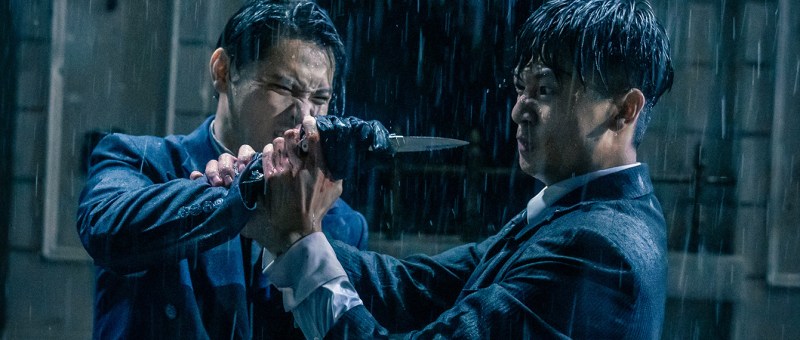
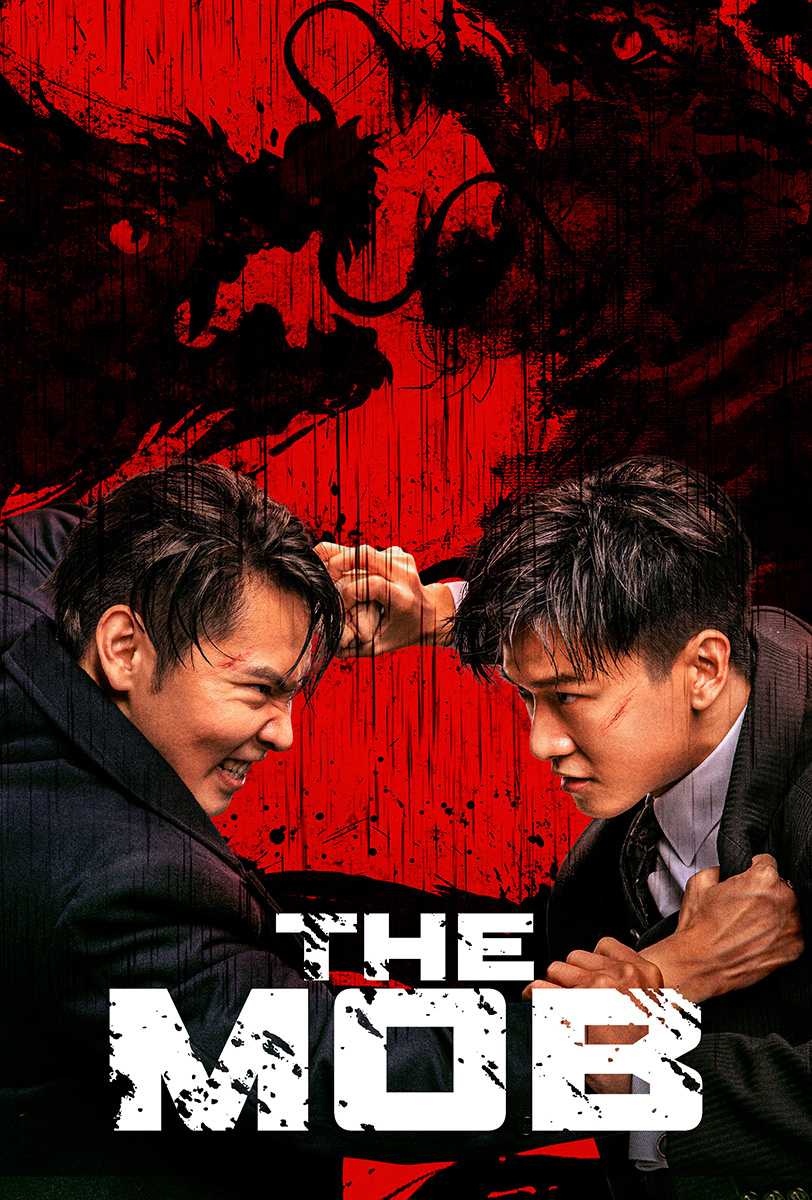
The Mob (龙虎制霸, Zhao Cong, 2023)

The feckless son of the head of the Chamber of Commerce discovers he needs to grow up fast when a rival gang starts selling opium in the Shanghai of 1928 in Zhao Cong’s well appointed action streamer, The Mob (龙虎制霸, lónghǔ zhì bà). There can be few settings as enticing as pre-war Shanghai and Zhao certainly makes the most of his budget with beautifully designed sets along with a number of stylish action sequences and a narrative that’s a little more interesting that your average streamer.

The interesting thing is that the bad guys are the ones who want to work with foreigners, particularly the British, to flood Shanghai with opium which is obviously very bad for everyone and will cause a series of social problems the good gangs and the authorities don’t really want to deal with not least because it will disrupt their other business and increase foreign influence in the city. Evil gangster Zhao Longde doesn’t care about that though and is already making trouble that is only exacerbated by the return of his illegitimate son Yuyang from studying abroad. Yuyang has a serious chip on his shoulder about his relationship with his father and is jealous of Longde’s adopted son, Hai, who is just much better at this whole gangster thing and all thing’s considered the son Longde probably wants as opposed to Yuyang who can’t be trusted with anything.

Across town, Fang is also a feckless son but one on the side of the good guys in that his father is the current head of the Chamber of Commerce and dead against anyone trading opium in Shanghai. If they do, they’ll be kicked out and unable to do business in the city. Though the name sounds legitimate, it’s really just a forum to maintain equilibrium between the various gangs who control the local ports though the balance has already been destabilised with tension between Zhao Lin who runs swanky nightclub New World and Longde who apparently caused his brother to lose the use of his hand. Fang is drawn into the conflict when he comes to the defence of Hai when he’s attacked and outnumbered at New World.

They’re obviously on opposing sides, but the two men discover a respect for each other as fighters and men of honour. Hai is a loyal son to Longde and respected Yuyang out of loyalty to him but privately does not approve of some of the gang’s actions such as flouting the rules of the Chamber of Commerce, bumping off their rivals, and planning to take control of the local opium trade. Fang, meanwhile, is just really directionless and an overindulged little brother who spends all his time reading comic books and gambling on frog racing much to the disappointment of his father. But with all hell breaking loose in Shanghai, he has no choice but to step up to the plate and play his part as a member of the Tongmingtang to restore order and keep drugs out of Shanghai.

Interestingly enough, though perhaps just because it’s a streaming movie set firmly within the pre-Communist past, the film does not end with one of the familiar title cards explaining that justice was done and the wrongdoers punished but in fact justifies Fang’s violence as righteous and adds that he later joined the resistance movement against the Japanese (which sounds like a hook for another interesting film). In any case, Zhao includes plenty of twists and turns, betrayals and counter betrayals, while reserving the most interesting arc for the conflicted Hai who eventually shakes himself free of the sense of obligation he has to a gang that offends his sense of morality realising that like Fang he owes nothing to anyone and is free to make an individualistic choice as regards which side to be on. Fang’s sister Jiayue meanwhile is somewhat underused but is otherwise quite an imposing presence and certainly makes an impact with a hardline stance against the priggish Yuyang. Echoing the era of Heroic Bloodshed, Zhao lends the action an epic quality through his artfully designed set pieces including the rain soaked finale and an impressively staged assassination sequence intercut with scenes of a grieving family at a funeral.


The Mob is available now in the US on Digital courtesy of Well Go USA.

US trailer

Alienoid: Return to the Future (외계+인 2부, Choi Dong-hoon, 2024)

Choi Dong-hoon’s hugely entertaining sci-fi-inflected fantasy adventure Alienoid ended with a classic cliffhanger promising resolution only in an as then unscheduled sequel. Part two arrives almost two years later and thankfully opens with a brief recap before delving straight into the ongoing drama as the older Ean pursues the Divine Blade that will allow her to stop humanity from being wiped out in a toxic gas attack by fugitive aliens.

Thus the majority of the first half takes place in the 14th century past as various parties vie over the blade in the manner of a wuxia serial. Ean is also on a quest to recover Thunder and get back to the crashed spaceship in order to get back to the future and stop the world being destroyed. But in some ways, she’s also now an orphan of time. She’s spent half her life back in the feudal era and will return to 2022 ten years older than she should be. Reuniting with Muruk (Ryu Jun-yeol), she finally figures out his identity and is more well disposed towards him, but also decides it would be better for them to head in different directions given the possibility that Muruk is a possible host for the missing Controller, the leader of a resistance movement among the alien criminals who have been imprisoned in the minds of humanity. 

Once again, the key to salvation lies in the past as we discover that Gae-lin (Lee Hanee) is a descendent of a blind swordsman who left very specific instructions for what to do during the alien attack. Ultimately, the aliens can only be defeated by a perfect integration of past and present as the Joseon team end up in 2002 complete with their magical weapons to fight a decidedly scientific threat. Though it’s true enough that the lines between science and magic are often thin and defined by a perspective on knowledge, it’s clear that Joseon magic continues to work in our world as the two bumbling shamans fight back with minor and pipe and Muruk pulls an incredibly heavy sword out his fan. 

Ean tells him that no matter if he may have a monster inside, Muruk is still Muruk guiding him on his journey towards an acceptance of himself as someone useful with genuine talent rather than just a hack. Choi throws in a series of twists and turns over who may be hosting the Controller at any given moment along with the true identities of several others as Ean attempts to handle her own baggage while tracking down Thunder and attempting to restore his energy levels so they can get back to the future and save the world. In order to defeat the aliens, they must all be united, past and future, coming together to defeat an alien threat.

Yet like the first film, we can see that this moment is both ending and beginning. Following a surprisingly poignant closing sequence the possibility of a new opportunity to set the past to rights is raised if on a more personal level that would allow orphans Ean and Muruk to unite in new time thereby closing a circle which otherwise remains open. In any case, the looping, elliptical quality of the cycling narrative eventually becomes clear and we understand where each of these disparate heroes belongs in the grand plan apparently orchestrated by Thunder and the now absent Guard. That’s not to say the rich lore underpinning the intricate world building is completely exposed and there is a sense that there are many other stories to be told in this madcap universe of scientists and magicians in the high tech present and feudal past.

In any case, Choi ups the ante with large scale sequences including a train chase that culminates in a derailment, while in the Joseon era the heroes leap from rooftop to rooftop and run through idyllic forests while pursued by mystical forces. Every bit as charming as the first instalment, the film builds on the existing relationships between its vast list of characters and generates a sense of warmth and familiarity that also has its melancholy as er really these two worlds cannot remain bridged forever but must eventually separate whether the alien threat prevails or not.


Alienoid: Return to the Future is out now on DVD & blu-ray courtesy of Well Go USA.

International trailer (English subtitles)
Blind War (盲战, Chris Huo Suiqiang, 2022)

After losing his sight in an explosion, a former swat officer must battle his way to the top of a human trafficking network in a fictional South East Asian nation in Chris Huo Suiqiang’s action drama, Blind War (盲战 máng zhàn). The film opens with an assault on justice, but the wounded cop must in effect turn vigilante to protect his daughter from a failure of the judicial process and pervasive misogyny in a culture in which women and girls can be sold at will while the corrupt police force do nothing.

In fact, the local cop Rama (Dou Dou) is played mostly for comic relief and is otherwise incredibly stupid, determined to nail blind former cop Dong (Andy On), whom he knows to be the father of a murdered girl from a neighbouring nation, as the king pin of the drug smuggling and people trafficking operation. Dong’s struggle runs concurrently with a succession drama in which Zha Kun (Qi Shenghan), son of drug dealer McQueen who was blown up in the dock in the opening courthouse sequence, seeks to cement his authority over the gang and get revenge on Cena (Yang Xing) for the death of father while she wants revenge on Dong for blowing up her husband. 

Dong is in fact dismissed from the police force in disgrace due to public opinion which blames him for the deaths of his men who were killed by the gang when he decided to check out a funny noise in the courthouse though he was only supposed to be guarding McQueen’s post-trial extradition. Having lost both his sight and his status as police officer, he begins to lose his mind becoming violent and paranoid with looking after his teenage daughter Yati (Cheng Sihan) his only other outlet. When she’s taken by the people traffickers, he’ll stop at nothing to get her back though it has to be said is not particularly interested in the other women or stopping the gang and in the company of Cena who is using him for her own revenge plot becomes increasingly corrupted in his willingness to use violence. 

Luckily, Dong was blessed with superior hearing to begin with and with the loss of his sight is largely able to navigate the world by ear alone, giving him an advantage over his opponents even if he can’t see them. The film sets him up with almost supernatural powers, at one point using a conveniently placed climbing rope to jump from one window to the apartment below. The fight scenes are often impressive and well choreographed, especially one tortuous sequence in which Dong is attached to Cena by chain and his position dictates whether or not she’s dunked in the water, and in terms of scale display impressive production values for a low budget streaming film.

Nevertheless, Dong is often eclipsed by the villainess, Cena whose tragic backstory makes her claim to vengeance just as valid as Dong’s as she battles to take down the gang that raped and controlled her after being sold by her father to a Thai warlord as a child. The local police seem to be much more interested in the drugs than the people trafficking, and Rama’s unintentionally ironic cries that Cena’s bumped off the only female officer they have, which is presumably why he had a crush on her, bares out the misogynistic attitudes in play in which female life is cheap and the only way to escape subjugation to oppress other women, like Dragon King (Qian Zhiyi), or to become crazed and cruel like Cena.

In any case, though it was never really in question, Dong’s fatherly devotion is eventually proved by his knowledge of his daughter which eventually enables him to save her, with the help of his loyal friend Yun (Wang Hanyang) who doesn’t really seem to mind that Dong went rogue and endangered his life while he’s been hanging around in the shadows the whole time in case anyone needs him. Perhaps in a concession to the censors, it’s clear that Dong is also paying for his transgressions though through his vigilante action is able to reclaim his position as a father and protector despite his career setbacks and the loss of his sight.


Blind War is available now in the US on Digital and Blu-ray courtesy of Well Go USA

Trailer (English subtitles)