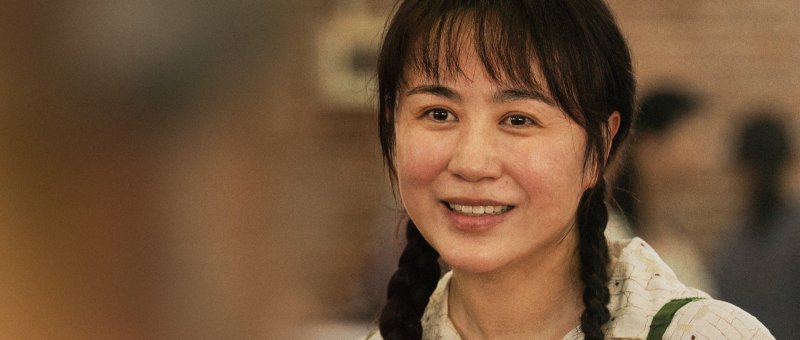
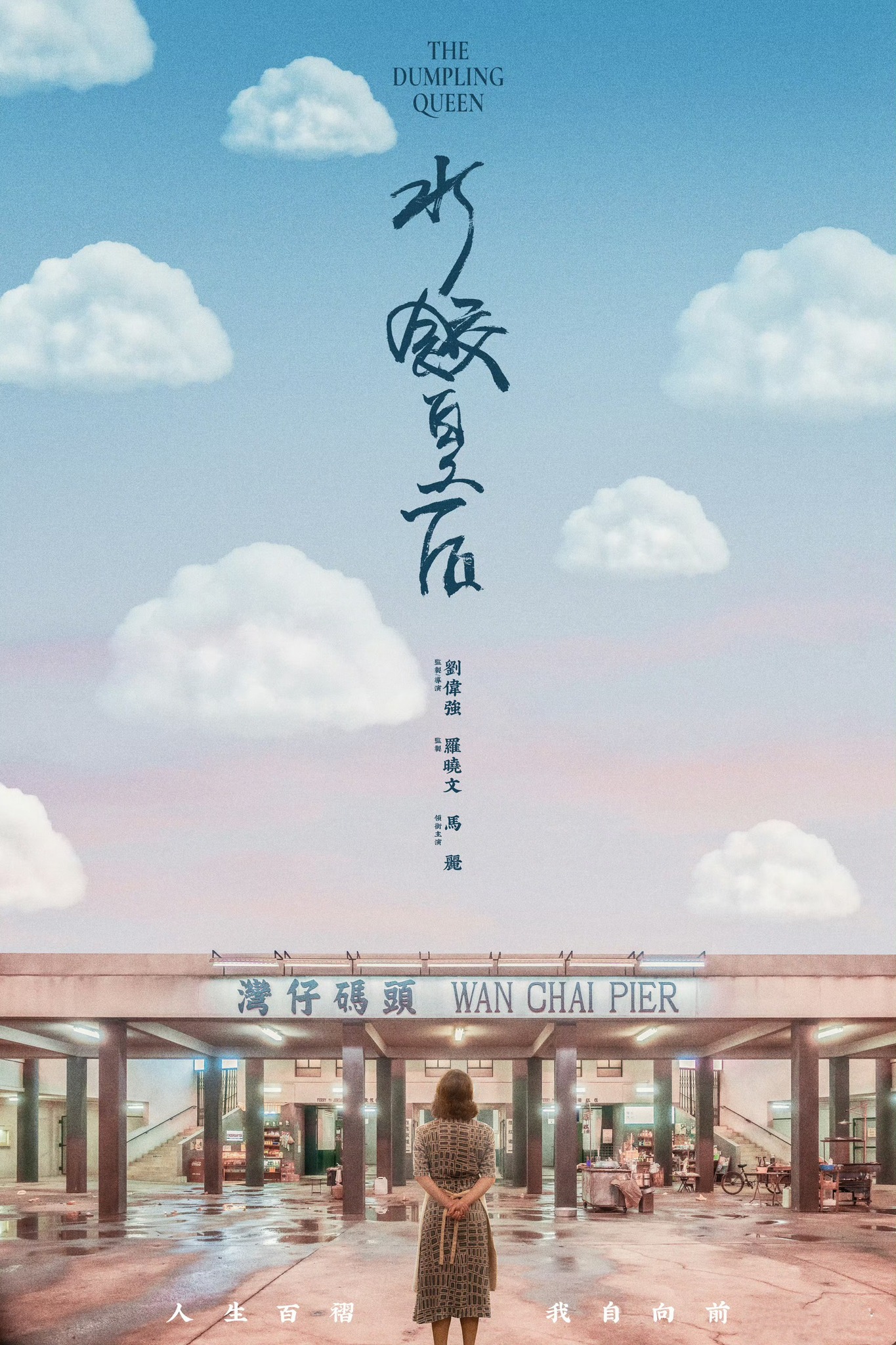
There are a lot of ironies and contradictions at the heart of Andrew Lau’s Dumpling Queen (水饺皇后, shuǐjiǎo huánghòu) inspired by the life of Zang Jianhe who founded the international dumpling empire Wanchai Ferry, but there’s no getting away from the celebratory joy it finds in the heroine’s hard-won transition from jilted spouse to successful entrepreneur. Then again, there might be something uncomfortable in the film’s framing and the repeated claim that Jianhe’s dumplings are about the warmth of familial bonds and reunion. Zong’s desire to kick back at American imperialism as manifested in the ubiquity of hamburgers and US-style delivery pizza by making Chinese dumplings accessible across the world is also an advocation for the One China philosophy in which the greater Chinese diaspora is connected as a family through “the taste of home.”
Beginning in 1977, the film is noticeably quiet about why anyone would be risking their lives to escape from Mainland China to Hong Kong, though this is what Jianhe is doing in her quest to be reunited with her husband, Hanzhou, who has been away for four years. Unfortunately, when she reaches the station at the border, Hanzhou’s mother (Nina Paw Hee-ching) rudely explains that she had him marry another woman in Thailand who has since borne him a son. Branding Jianhe a failure for giving birth to only daughters, she tells her that she can come with them but that she will be the second wife subservient to the mother of the family heir. She repeatedly claims this does not make Hanzhou a bigamist because Thai law supposedly gives him the right to marry more than one woman, though it seems the mother-in-law may not be aware that the pair were legally married in Mainland China as Jianhe’s traditional wedding photos would otherwise suggest.
The fact that Jianhe is discarded for giving birth to daughters contributes to the film’s feminist undertones and sense of female solidarity as Jianhe strives to pass on the dumpling recipe she learnt from her own mother to the next generation of women and beyond. Jianhe must now find a way to fend for herself, which she eventually does through a combination of hard work, excellent business sense, and the supportive community around her. Though Jianhe and her children face some instances of prejudice against Mainlanders when they first arrive, they are helped by various people including enigmatic landlady Hong Jie (Kara Wai Ying-hung) who makes her a part of her boarding house community and tries not to pressure her about the rent out of consideration for the children,
But times are sometimes hard and Jianhe is directly contrasted with the woman across the way whose husband has a gambling problem and beats her. Having been injured in a workplace accident that leaves her unable to work as she had been before, Jianhe begins to feel hopeless and considers taking her own life only to be saved by her children and a neighbour who sells dessert soups, but the other woman is not as lucky and eventually makes a fateful decision, blaming herself for the man her husband has become. Jianhe is also given another shot at romance with a sympathetic policeman (Zhu Yawen) who comes from the same area of Mainland China and is taken by her dumplings, but he also wants to move abroad and Jianhe has already followed one husband to another country and it didn’t work out so well. It’s not so much that she sacrifices love for career success, the policeman could after all simply chose not to go, but that she no longer needs to compromise herself for marriage because she’s fulfilling herself through her business enterprise.
Just as the film doesn’t mention why Mainlanders came to Hong Kong, it doesn’t really go into why some Hong Kongers choose to leave save for a brief onscreen text mention about the beginning of the negotiations for the Handover though Jianhe is repeatedly keen to emphasise the universal Chineseness of her dumplings. She makes a deal with a Japanese department store, but threatens to walk when they try to make her change her packaging to bring it into line with their house style and thereby erase its cultural identity. She also refuses to allow them a monopoly after they demonstrate their lack of trust in her as a businesswoman, quickly realising she’s better off making deals with every supermarket on the island as well international flour companies. Jianhe is pretty quick to cotton to new technologies such as household refrigerators and the possibilities for frozen foods. But at the end of the day, she’s earnest and hardworking, sharing her success with her many friends who helped her along the way and always repaying kindness when she can. It’s an oddly utopian vision at times in which everyone seems to recognise Jianhe’s greatness and get out of her way, including a triad boss who helps her because she reminded him of his mother when she threatened one of his men with a meat cleaver,) but it also reinforces a sense of the One China family with the dumplings, now refined to suit local tastes, as the glue binding it together in the face of an onslaught of hamburgers and pizzas as harbingers of a cultural apocalypse.
International trailer (Simplified Chinese / English subtitles)

 Despite its title, Mission Milano (王牌逗王牌, Wángpái Dòu Wángpái) spends relatively little time in the Northern Italian city and otherwise bounces back and forth over several worldwide locations as bumbling Interpol agent Sampan Hung (Andy Lau) chases down a gang of international crooks trying to harness a new, potentially world changing technology. Inspired by the classic spy parodies of old, Wong Jing’s latest effort proves another tiresome attempt at the comedy caper as its nonsensical plot and overplayed broad humour resolutely fail to capture attention.
 Windows on Worlds