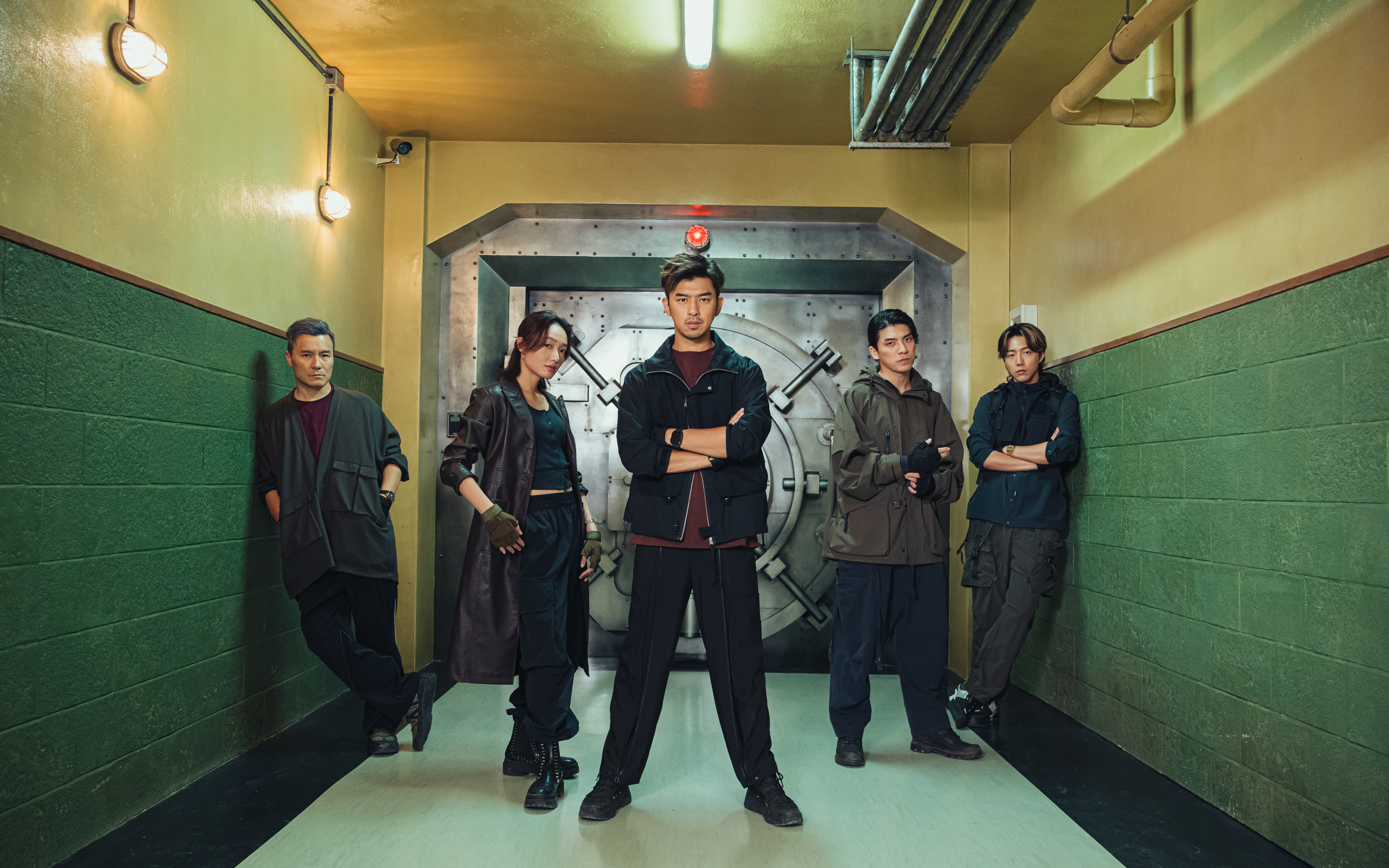
Breaking and Re-entering (還錢, Wang Ding-Lin, 2024)

You go to the trouble of planning a massive heist, and then it turns out you have to put it all back again. The gang of theives at the centre of Wang Ding-Lin’s hugely entertaining crime caper Breaking and Re-entering (還錢, huán qián) brand themselves modern day Robin Hoods, pausing for a laugh when they claim to help the poor, “yeah, us”. Yet there is something a little suggestive about this particular gig as they find themselves hired for an inside job by an obnoxious bank chief who claims the most important thing in life is yourself and those around you are merely passengers to be jettisoned at will..

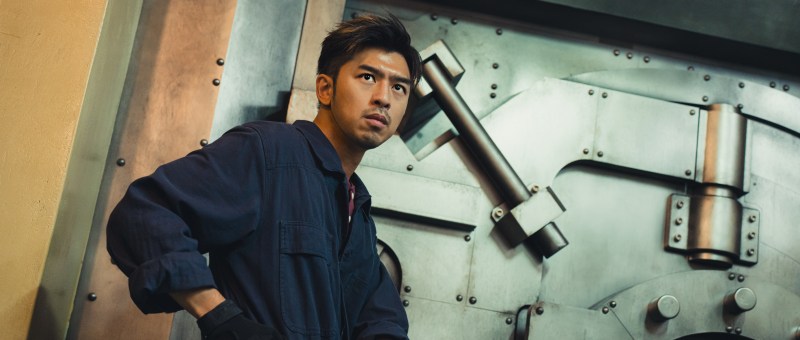
Chen (Wu Kang-ren) is a rich kid who inherited the family bank and thinks he’s hot stuff after studying abroad, speaking Mandarin like foreigner and peppering his speech with English. His big idea is a cryptocurrency called BST and his tagline is “Peace, Love, and Money” while ironically enough he is also claiming to run a charity to help the poor. It’s obvious he’s running some kind of scam and not altogether surprising that he’d plot to rob his own back and then have the thieves bumped off to keep them quiet along with the two employees he’s decided to frame for the crime. Unfortunately for everyone, one of his scapegoats, Shen Shu-wen (Cecilia Choi), is the long lost flame of chief crook Po-chun (Chen Bo-lin) who, having realised Chen plans to bump her off, comes to the conclusion his only option is to mess up Chen’s plan by putting the money back in the vault.  

Of course, Chen is a kind of gang leader too complete with his own chief minion, Hu, though at one point he simply shoots one of his guys in the back of the head after he complains that Chen that doesn’t really value him. By contrast, Po-chun’s gang is a close-knit family, a brotherhood of thieves founded on mutual solidarity and infinite loyalty. Chen’s philosophy maybe that the individual is all, but these men live and die for each other. Nevertheless, Po-chun has a problematic hero complex that sees him, as others put it, aways trying to “take responsibility alone”, sacrificing himself for the group rather than allow his fellow gang members to shoulder some of the burden. That’s presumably one reason he (un)intentionally ghosted Shu-wen after getting arrested and going to prison, convincing himself he was doing the noble thing by avoiding getting Shu-wen mixed up with crime but perhaps also ashamed and insecure unwilling to let her know he met her as part of a heist and his cover personality wasn’t real while never giving much thought to her feelings. Shu-wen spent the last five years looking for him which was apparently a primary motivation for changing her career to work in the bank.

Po-chun’s quest is really one of maturity, to stop being the lone hero and fully integrate into the group by sharing responsibility with the others rather than jump straight to self-sacrifice. As he says through the medium of a montage sequence, their secret weapon is teamwork which is how they’re able to fight back against the well equipped Chen and his minions when the reason Chen flounders is his arrogance and the indifference of his men. That is not to say there isn’t tension in the team, such as the unrequited attraction bruiser Wen-hao has for Po-chun that is quite definitely antagonised by the resurfacing of Shu-wen who seems to have figured out the group dynamics pretty quickly in addition to seeing through Po-chun’s strong man act. 

It’s the warm-hearted, lived-in relationships between the team members that give the film it’s charm along with the quirkiness of the elaborately planned reverse heist and its mild dig at corporate tyranny along with class-based inequality. But most of all what it seems to advocate for is a collective spirit and the triumph of the intellect over the pampered authority of rich kid Chen as Po-chun strategises a way out of his grasp while ending his influence and getting the girl. Wholesome and charming, the film makes the most of its surreal humour along with some hilariously placed reality gags such the infuriating slowness of a “high end automatic door” that ironically prevents a wealthy crook from fleeing the scene.


Breaking and Re-entering screened as part of this year’s New York Asian Film Festival and is also screening as part of the Taiwan Film Festival in Australia

Original trailer (English subtitles)
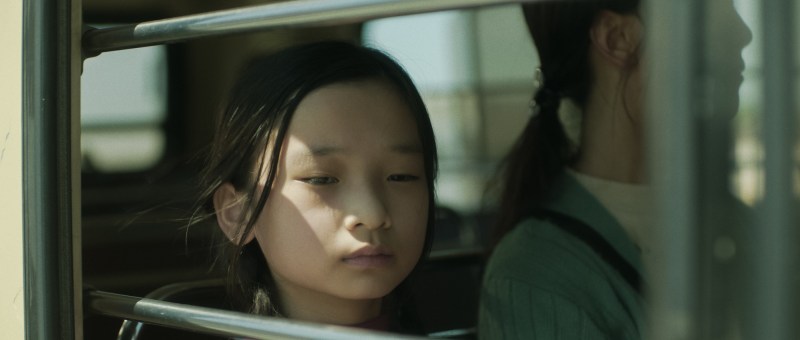
Fly Me to the Moon (但願人長久, Sasha Chuk Tsz-yin, 2023)

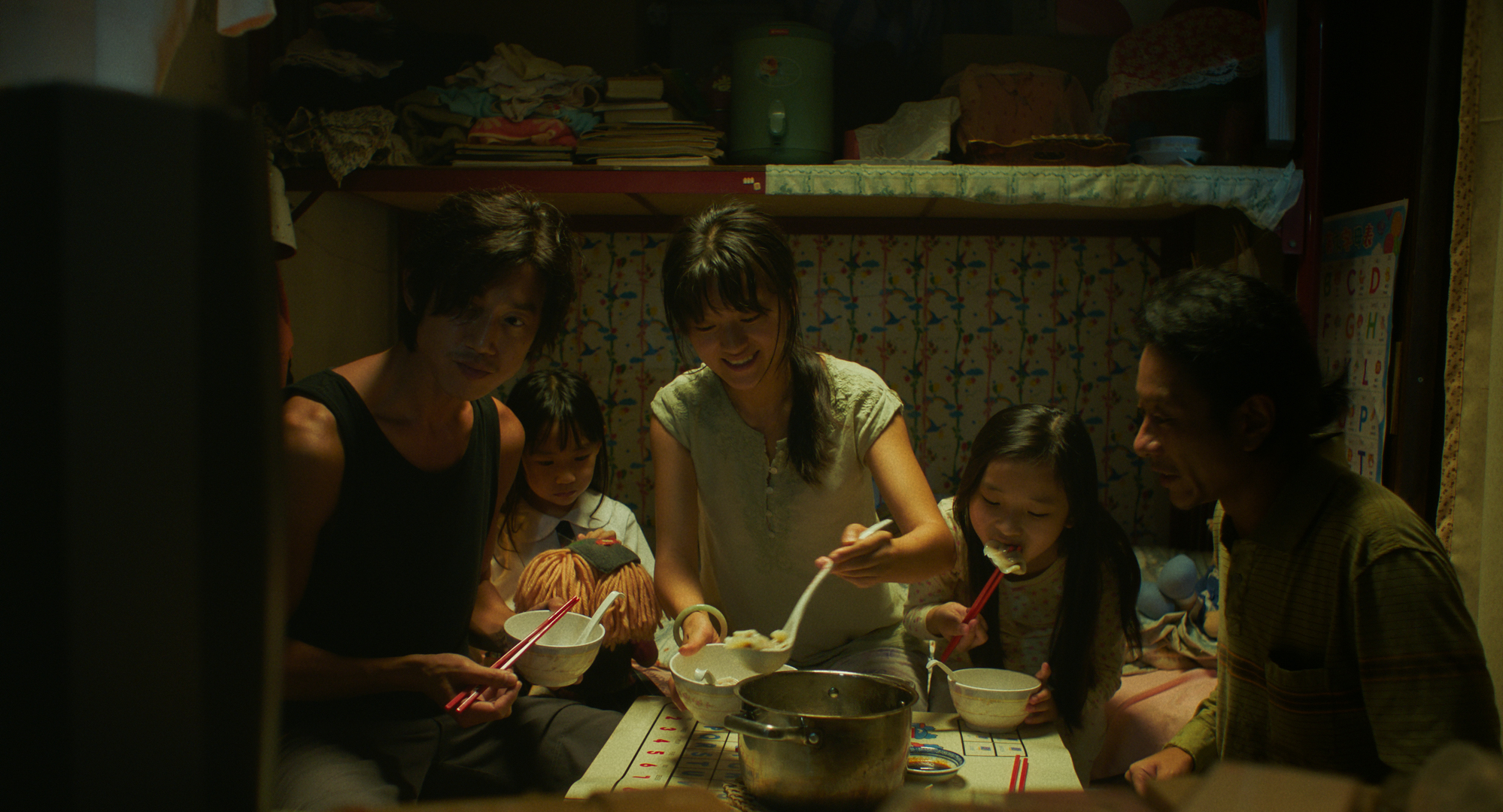
A pair of sisters find themselves exiles in their own home in Sasha Chuk Tsz-yin’s poignant familial drama, Fly Me to the Moon (但願人長久). Burdened by a sense of rootlessness, they have only each other to cling to while their family otherwise disintegrates amid the pressures of making a life in an unfamiliar place and an unavoidable paternal failure that has a lasting legacy on the lives of each of the girls as they struggle to emerge from the shadow their father cast over their lives.

It’s telling that the film opens in 1997, though Yuen’s father Kok-man (Wu Kang-ren) has apparently smuggled himself into Hong Kong from Hunan, later sending for his wife and older daughter, Yuen, while leaving the younger behind. The first image we see is of Yuen being taken to see her father in prison by her mother, a meeting in which no words are exchanged that seems to leave the young Yuen conflicted and confused. Not long after arriving in Hong Kong, she discovers him using drugs and learns of the addiction that has ruined his life, turning him into a petty thief in and out of prison for the children’s entire lives.

Yet in his later years, Kok-man told his relatives that his best and only achievement was raising two wonderful daughters though of course he didn’t actually raise them at all. Nevertheless, he had a profound effect on their lives, Yuen also tempted to steal on witnessing her father’s bad example even while remaining contemptuous and resentful of him. Though he eventually becomes violent, so desperate for money he threatens his teenage daughters, Kok-man appears to have wanted to take of his family but was not able to do so while their mother is forced to work long hours supporting the family and living the life of a single mother even while her husband is home. 

This leaves the girls with no one else to rely on while otherwise removed from mainstream society which is often is hostile towards those who’ve arrived from the Mainland and most particularly at this strained political moment. Their otherness is signalled by their home dialect of Hunnanese which later mingles comfortably with their Cantonese, much as Yuen’s Mandarin later does, which is as good as anyone else’s though some might not them as real Hongkongers. Kuet’s schoolfriends, little knowing she also was not born in Hong Kong, shun another girl after spotting that the number on her ID card begins with an “R” which means she came to Hong Kong from somewhere else. Kuet eventually decides to befriend the girl herself, though it remains unclear whether or not she discloses that she was also born outside of Hong Kong. Years later after becoming a tour guide, a customer remarks that Yuen’s Cantonese and Mandarin are both so good he wonders where she’s from which is quite an ironic comment. 

Yet in other ways, the girls can’t escape their roots. Despite her enmity towards him, Yuen’s first boyfriend is a carbon copy of her father. A brusque boy with blond hair who shoplifts to impress her, but then runs off and leaves her behind when he almost gets caught. Her romantic relationships seem fraught and difficult and the men largely no good, while her sister similarly has troubles with the law leading her mother to lament that there was little point in going to university if she was just going to end up like her father. When Yuen eventually returns to Hunan, she’s that girl from Hong Kong, even while in Hong Kong she’s that girl from the Mainland. For the girls, Hunan has a kind of mythical quality bound up with their memos of happier times for their family, but Yuen is quickly disillusioned. The lily fields her father mentioned are long since gone, destroyed in a fire, and her family home is empty as a result of her grandmother’s illness. All that remains are photographs that present a kind of evidence of the relationship Yuen once had with the father she struggled to accept in adulthood, reuniting her with her childhood self and perhaps restoring the roots she’s been looking for even she herself remains a floating presence guiding tourists around foreign countries while otherwise marooned in the family flat now shared only with the sister who equally is heading in another direction. 


Fly Me to the Moon screens July 21 as part of this year’s New York Asian Film Festival.

Original trailer (Traditional Chinese /.English subtitles)

High Flash (引爆點, Chuang Ching-shen, 2018)

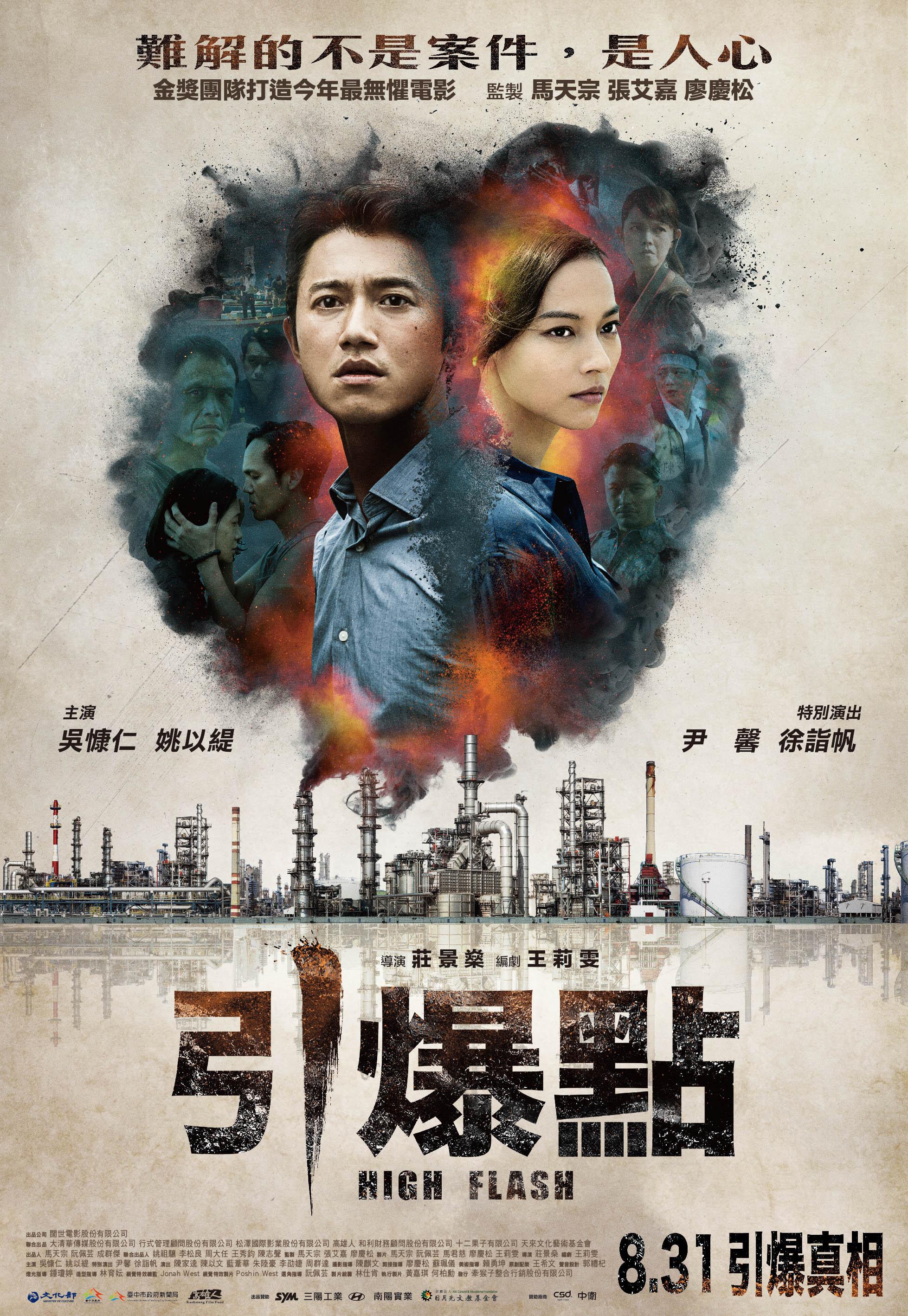
High Flash posterThe little guy is often at the mercy of big business, but the conspiracy runs still deeper in Chuang Ching-shen’s high stakes thriller High Flash (引爆點, Yǐnbàodiǎn). Set in the relatively unglamorous world of a small fishing village, High Flash begins with a mysterious death but quickly spirals outwards to ask questions about the connections between industrial conglomerates and the political establishment both local and national. Those who seem keenest to root out corruption may in fact be no less self serving than those who take advantage of it but perhaps there’s nowhere free of greed and selfishness when there are such gains to be made.

The action opens with a fierce protest by the local fishing community towards the large scale Tonglian petrochemical plant which they believe has been polluting their waters, ruining their health and livelihoods. While the newly elected mayor, Chen (Lan Wei-hua), is giving his best at the megaphone, a commotion breaks out when a burning boat collides with protestors and is later found to be harbouring the body of one Ah-hai (Bokeh Kosang / Hsu Yi-Fan) who is assumed to have committed self immolation in protest of the plant’s continued intransigence.

Earnest medical examiner Chou (Chris Wu Kang-Ren) isn’t sure that’s the case. His evidence suggests Ah-hai, who was already terminally ill with liver cancer, did not die of burns or smoke inhalation while his kidneys also exhibited strange florescent spots later identified as copper sulphate. Chou’s findings are music to the ears of jaded prosecutor Jin (Yao Ti-Yi), who also happens to be Chou’s former fiancée. She too is convinced there’s more to this than the elaborate suicide of a man whose life had been ruined by the heartlessness of big business.

Chuang quickly sets up the expected contrast between the scientifically minded Chou who claims to assess only hard evidence without emotional baggage, and the passionate Jin who is desperate to expose the truth at any cost though the romantic drama between the pair never quite ignites even as the past continues to inform their present relationship and the case at hand. Despite his insistence on hyper-rationality, Chou is not is a cold or unfeeling man as he proves by tenderly introducing himself to Ah-hai’s body and asking for his cooperation in investigating why he died, but his rigidity is perhaps to have unexpected consequences despite his best intentions which see him taking a special interest in Ah-hai’s unfortunate wife and son.

Ah-hai’s illness and that of his little boy who is suffering from a brain tumour are not explicitly linked to the illicit activities of Tonglian but the implication is clear. Industrial pollutants have destroyed not only the local fishing industry but with it a community which is now suffering with a large number of serious and unexplained illnesses. Tonglian, as might be assumed, is not particularly bothered, assuming it can rely on friends in high places and a complex web of thuggery and corruption to deal with any more serious opposition. Meanwhile, Ah-hai’s death is already being repurposed for political gain. The village regards him as a hero and a martyr who sacrificed himself in the most painful of ways in order to bring attention to their plight and the evils of Tonglian. None of which, however, is much use to his wife and son who are now unable to claim on his life insurance and are left without an income.

Vested interests exist on both sides – those keen to uphold Ah-hai as a hero and a martyr at the cost of his wife and son, and those keen to minimise the effects of his death in ensuring Tonglian is able to go on doing its (extremely dodgy) business with the same bottom line. While top execs boast about making a killing on the fluctuating company stocks and spending it on yachts, horses, and vintage wine, Ah-hai’s wife and son are left at the mercy of prevailing forces and fearful for their futures. The village might well feel that seeing as Ah-hai is dead anyway making a martyr of him whether he was one or not might be worth it if it helps expose Tonglian’s various transgressions but then again they may have overestimated the extent to which anyone really cares about big business corruption and the complicity of the state.

Nevertheless, in true conspiracy thriller fashion getting too close to the truth can prove dangerous and Chuang perhaps missteps in the case of whom he allows to pay the price, but his anti-corruption messages and warning about the cynical hypocrisy of big business eager to claim it cares about the little guy and his environment are sadly universal, as are his world weary implications regarding the eventual corruption and diminishing efficacy of longterm protests.


High Flash screens as part of the eighth season of Chicago’s Asian Pop-Up Cinema on March 28, 7pm at AMC River East 21 where director Chuang Ching-shen & actor Chen Chia-kuei will be present for a Q&A.

Original trailer (English subtitles)