Strawman (稻草人, Wang Tung, 1987)

The literal “strawman” at the centre of Wang Tung’s colonial era satire is a scarecrow who occasionally narrates the events of this small village where, he laments, almost all the young men have been sent off to die in small corners of South East Asia in the name of the Japanese emperor. All of this sounds quite absurd to A Fa (Chang Po-Chou) and Big Mouth (Cho Sheng-Li), two brothers who’ve evaded the draft because their mother cleverly smears cow dung in their eyes while they sleep so they won’t get taken by the Japanese like everything else in the village.

The brothers are caught in a clash of imperial powers and changing times yet are busy just trying to live their ordinary lives. They each have several children, so many the scarecrow quips that they can’t remember all their names, which might be why the most recognisable two are nicknamed “doo-doo” and “stinky head,” and struggle to support themselves by farming sweet potatoes on the land that turns out to be owned by their pro-Japanese brother-in-law. Not really wanting to admit that the war is all but lost, the brother-in-law is planning to sell the farm and move his family to Japan, meaning the brothers will be displaced from their land and lose their livelihood with few other prospects for making a living. 

Though things carry on as normal in the village, it’s clear that the Japanese are essentially looting and exploiting them. Not only do they take the young to die for the emperor, but later come for the brothers’ cows too, insisting that they need them for “taxes” because men are starving at the front. This clash of cultures is obvious in the opening scenes as a Japanese soldier returns the ashes of men who fell in battle to their families while reading out a formal speech in his own language that the villagers do not really understand. While their brass band plays the ironically Westernised sounds of militarism, the villagers drown them out with their traditional instruments as they start their own set of death rituals. These two communities are essentially incompatible and effectively living separately. The soldiers turn around and walk in one direction, while the villagers walk in the other releasing the tension born of this oppositional meeting.

Indeed, the villagers all speak Taiwanese (though Wang was ironically, and anachronistically forced to use Mandarin at the time of release) and exist in a slightly different world to the Japanese-speaking soldiers. A Fa is annoyed with Doo-doo for asking if he should take a Japanese name but subsequently asks if he can have one too on learning that he’ll get better sugar rations. The brother-in-law mixes Japanese and Taiwanese in the same sentence while his wife mainly answers in Taiwanese when her children exclusively speak Japanese. The sight of the children’s traditional Japanese geta wooden sandals scandalises and confuses the brothers’ children, while the cousins mock them in Japanese knowing they won’t understand. Only the slightly bumbling local Japanese official straddles the two worlds by conversing mostly in Taiwanese with the villagers and Japanese with his bosses.

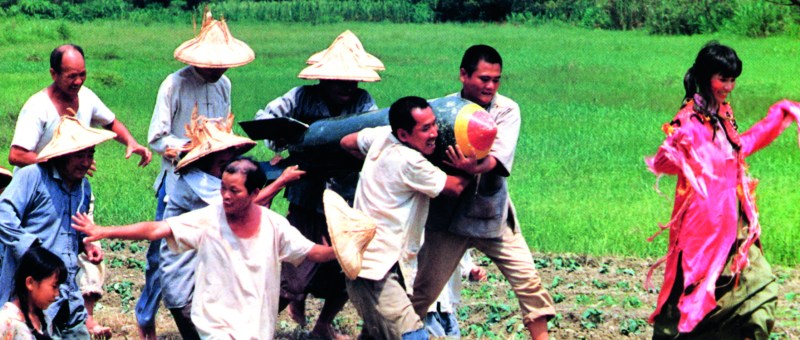
As good citizens of the empire, the children are asked to participate in metals collection and are given rewards for their finds. Doo-doo gets extra again when he picks up shrapnel from an American bomb which sets up a more complex relationship with American imperialism that will arrive after the war when the island is essentially recolonised by the arrival of the KMT and a large influx of mainlanders fleeing the communist take over. When a bomb lands on the brothers’ land but doesn’t go off, they think it’s manna from heaven and determine to take it to the main police station in the town in the hope of a large reward, while the official is convinced he’s going to get a big promotion for this tremendous find. 

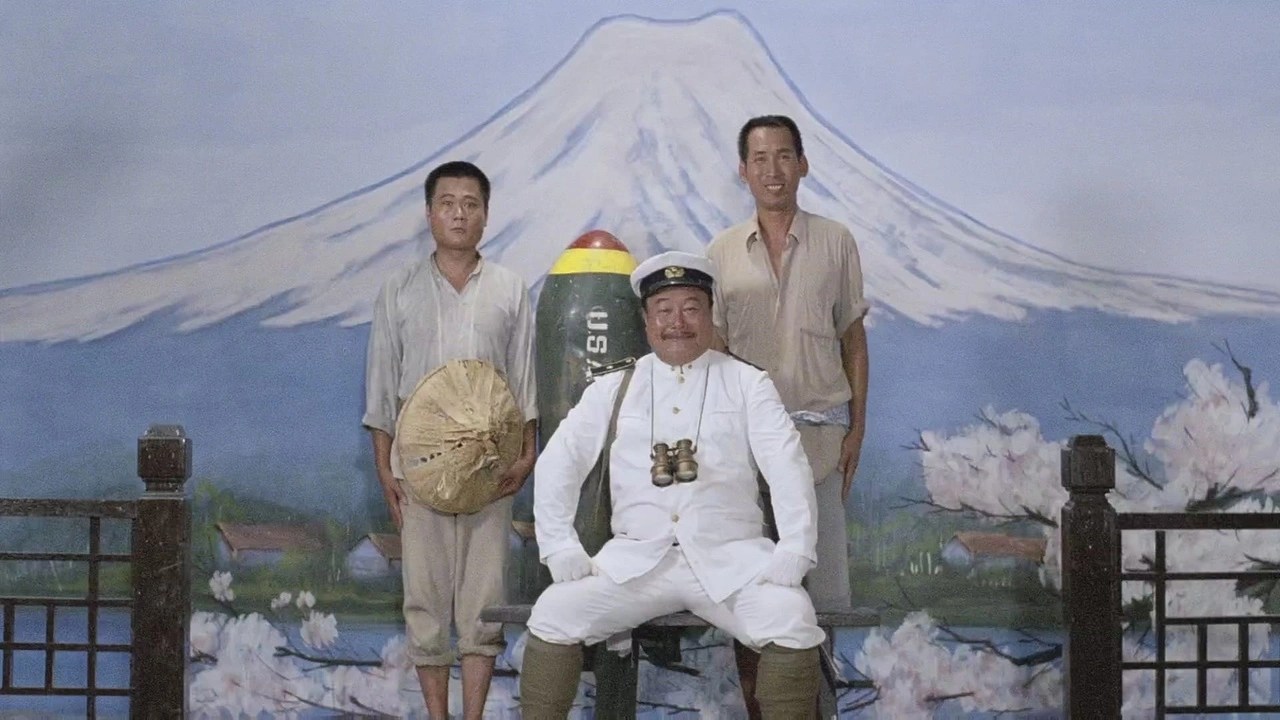
Everyone is so fixated on the economic potential that they’ve forgotten this is a bomb and even if it seems like a dud, there’s still a chance it could go off any second and this could all quite literally blow up in their faces. In this, the film seems to be satirising an over dependence on America who were the main backers of the KMT regime. The film was released shortly after the end of martial law during which there had been an attempt to rewrite the history of the island, preventing open discussion of the fact that Taiwanese men had died fighting for Japan and that the island had been bombed by the Americans. So impressed with themselves are they that the brothers and the official have their photo taken with bomb in-between and Mount Fuji backdrop behind as if signalling this complex network of relationships.

Still, even after the prize turns out not to be great riches after all but a hefty supply of fish, the Doo-doo and his grandmother cheer on the bombings hoping for more of the same in the future. The kids even put buckets out in the field waiting for the next raid hoping they can catch some of the shrapnel while forgetting that bombings are actually dangerous, rather than just lucrative, until being caught in one. Small moments of terror and sadness such as the brothers’ finding a frightened deserter hiding in their shed who doesn’t want to go to war because his wife’s pregnant and his family’s economically dependent on him, interrupt what is otherwise a warm and humorous depiction of rural life. A Fa and Big Mouth might be strawmen too, living their lives knowing little of the geopolitical situation but just trying to keep the crows off the grass long enough to get a little to eat before that too is taken away from them.


Strawman screened as part of the BFI’s Myriad Voices: Reframing Taiwan New Cinema.

Trailer (Traditional Chinese / English subtitles)

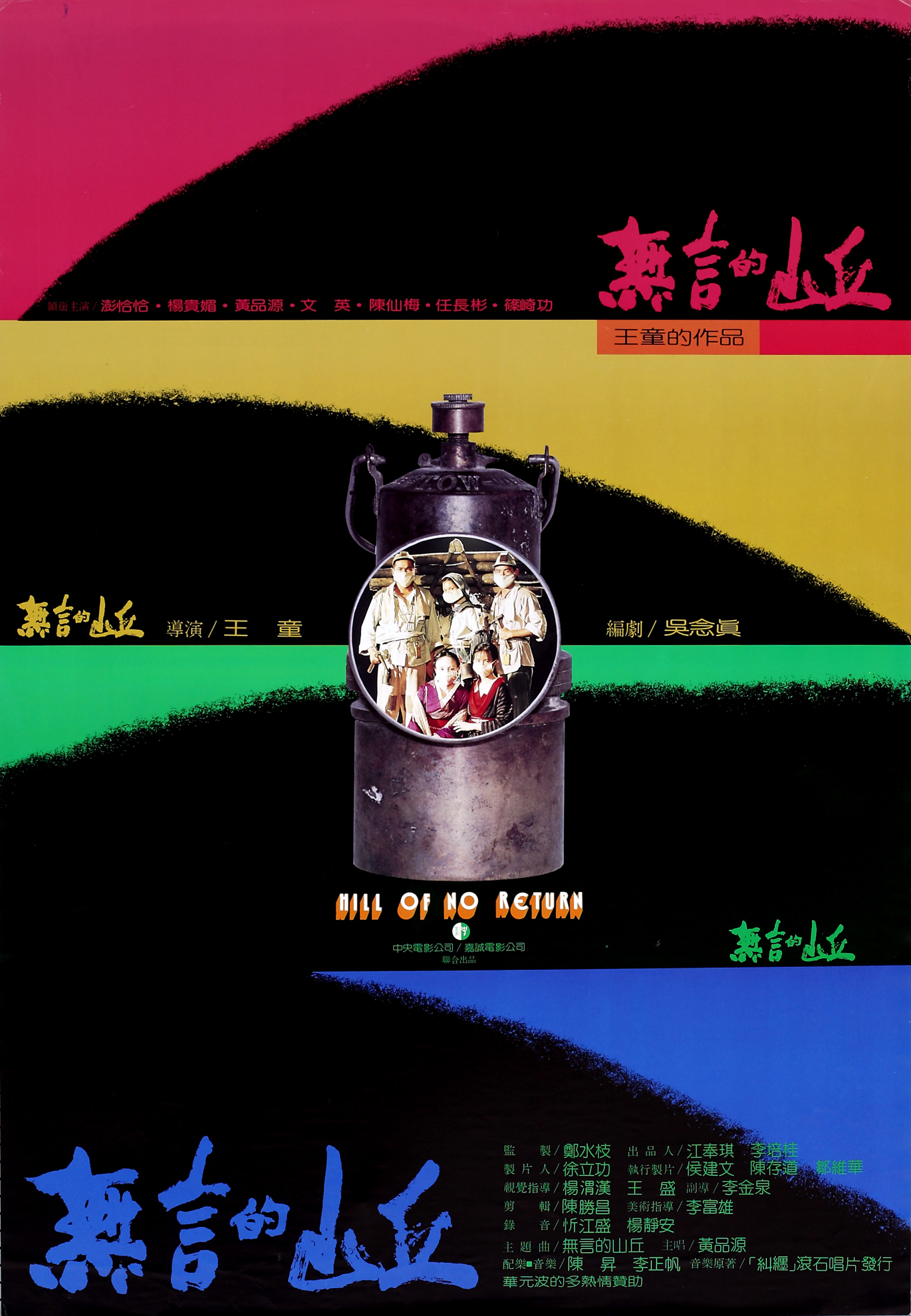
Hill of No Return (無言的山丘, Wang Tung, 1992)

Two orphaned brothers set out to find a literal goldmine, but discover only relentless exploitation and defeat in Wang Tung’s meditation on oppression and colonialism, Hill of No Return (無言的山丘, Wúyán de Shānqiū). The third in a trilogy of films exploring Taiwanese history, Wang’s tragic melodrama finds commonality if not solidarity among a collection of villagers living in a small town sustained entirely by the mine which produces riches only for the Japanese while those who risk their lives underground deprived of the light of the sun delude themselves that if they work hard they too can become rich only to discover each of their attempts to escape the constraints placed against them leading to nothing other than despair. 

As the film opens, brothers Chu (Peng Chia-Chia) and Wei (Huang Pin-Yuan) who have signed long-term five year contracts as farm labourers, are listening to an old man’s story about the grandfather of a local man who followed a frog to a mountain noticing its skin glowing gold and thereafter filling his pockets with gold dust he later used to buy up land and become rich. Chu thinks the man was foolish for not going back and becoming even richer, but the old man explains that he was reminded in a dream that excessive greed would only anger the gods and lead to his downfall. Fed up with their lives as labourers, the brothers take the story to heart and decide to look for their own mountain of gold, their backs too bathed in the light of the sun as they rest while looking for the goldmine town of Jiou-fen, later coming across a grisly and ominous scene shortly before they arrive. 

Both illiterate and speaking only Taiwanese, the brothers are each intent on becoming landowners partly in order to give their late parents, apparently killed by TB, a fitting resting place, but soon find themselves once again exploited, Wei becoming increasingly disillusioned with being trapped underground whereas in the fields at least he’d had the sun. The mine is of course a Japanese concern and its operators care little for the local Taiwanese workforce even if their treatment may not be as deliberately brutal as it might have been elsewhere. The new director is convinced that the miners are pocketing gold before it reaches the surface, instituting several new controls which threaten the local economy and especially that of the Japanese-style brothel which depends entirely on the mine for its survival. 

Like many, Hong-mu (Jen Chang-bin), a young man raised in the brothel by its madam following the death of his mother, looks up to the Japanese colonisers seeing them as innately “better” than the Taiwanese all around him. “People will respect me if I wear Japanese clothes” he tells the madam disappointed on receiving a new outfit in the local fashion. Having been told that his father, whom he has never met and was presumably a client of the brothel, was Japanese he speaks the language fluently and believes himself to be slightly superior by virtue of his birth but only too late learns his mistake in collaborating with the mine owners believing they would help him marry a young Japanese woman working at the brothel as a maid, Fumiko (Mayko Chen Hsien-Mei), and finding himself betrayed. As Fumiko is from the Ryukyu islands (Okinawa), the mine owner doesn’t quite see her as fully “Japanese” either and thinks nothing of using and abusing her in the course of his activities. 

The wily madam quips that you can’t call yourself Taiwanese if you haven’t figured out how to do illegal things legally finding ways of getting around the prohibition on accepting gold from the miners as payment, but that doesn’t stop the military police later raiding the brothel and brutally taking back “their” gold even though it has already changed hands albeit not entirely in good faith. The sex workers too are victims of this same vicious cycle, dependent on the custom of the miners for their livelihood while deprived any real possibility of escaping their desperate circumstances. Meanwhile, the brothers’ grumpy landlady, Ro (Yang Kuei-mei), is a twice-widowed single mother of numerous children left with no choice other than to engage in independent sex work, advertising herself as the more economical, local alternative to the Japanese-style “opulence” of the traditional teahouse. While Wei falls for the melancholy innocence of Fumiko singing Okinawan folksongs in a field of golden flowers, Chu takes a liking to Ro and her many children but though they both dream of the same thing, saving enough money to buy a farm, their tempestuous romance is later frustrated by Chu’s reckless decision to take advantage of chaos at the mine in an attempt to get rich quick by harvesting a mega load of gold while no one’s looking. 

He has perhaps been too greedy, ignoring the lessons from the old man’s story. The brothers are continually forced to pay for their transgressions, Chu cutting off his own fingers when cornered by thugs sent out by his previous employer to satisfy their literal demand for an arm and a leg in satisfaction of the broken contract, while Wei’s foot is later injured in a partial cave in when caught underground during an earthquake. Ro calls Chu foolish in his delusion that hard work will bring him a comfortable life, watching him slaving away to make the Japanese rich but what other choice do either of them really have? Only later does Wei begin to reflect on the possibility that the treasure of the mountain was the bright yellow flowers which covered it, a natural beauty soon destroyed by industrial exploitation. A melancholy chronicle of life in a small mountain town in the colonial era, Hill of No Return finds only despair and impossibility for its orphaned brothers whose eternal quest for ownership of their own land leads to nothing but continual disappointment. 


Hill of No Return streams in the UK until 31st October as part of this year’s Taiwan Film Festival Edinburgh.

Trailer (Traditional Chinese / English Subtitles)


The Silent Forest (無聲, Ko Chen-Nien, 2020)

There can be no justice in silence, but when those in a position to help refuse to listen what can be done? Inspired by true events, Ko Chen-Nien’s The Silent Forest (無聲, Wúshēng) takes aim at cycles of abuse and systems of oppression in society at large through a thorough investigation of the culture of silence at a school for deaf children in which endemic bullying spreads like a virus emanating from a single trauma inflicted by a negligent authority. Yet this kind of violence cannot be fought with violence and there must be empathy too for the bully or the chain will never end as Ko’s ambivalent conclusion makes clear. 

The film opens with a boy on the run, finally chasing down an old man and tackling him to the ground pummelling him until the police turn up and separate them. The policemen are frustrated. This is apparently the first time they’ve ever come into contact with a deaf person and have no idea how to communicate with him. Chang Cheng (Troy Liu Tzu-Chuan) tries to protest their injustice, but they continue to treat him as aggressor rather than victim even as he explains in writing that the old man had stolen his wallet (the old man claims he “found” it and was planning to hand it in). Finally a teacher from his new school, Mr. Wang (Liu Kuan-ting), turns up and interprets but it quickly becomes clear that he too is in a sense complicit, reporting that Cheng is sorry for what he did and grateful to the officers. In his view at least, the boy has his wallet back and there’s no harm done so why make a fuss? Just let it go and everyone goes home.

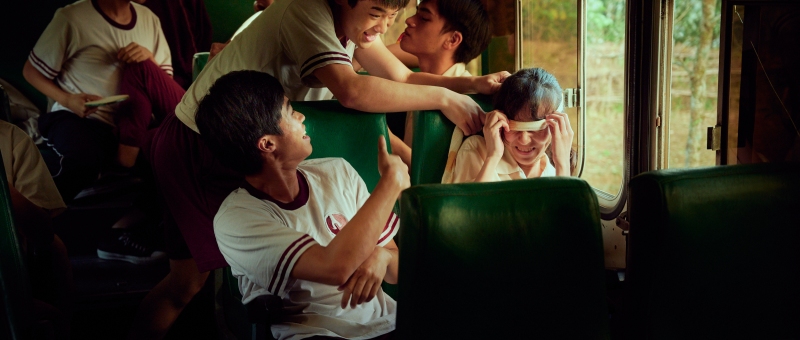
It’s this conflict between “silence” and justice that continues to prey upon Cheng’s mind after he starts at the school and becomes aware of the widespread culture of bullying witnessing a girl he likes being sexually abused by a gang of boys at the back of the school bus while the teacher sitting at the front does nothing. He tries to convince the girl, Beibei (Buffy Chen Yan-Fei), to tell one of the other teachers but she refuses, not wanting to “betray” her “friends”, insisting they were “just playing around”. Her reluctance however mainly stems from an intense fear of being sent away, that she might have to leave the school which is the only place she feels accepted. Both she and Cheng feel intensely othered in the hearing world, wary of being blamed for things that weren’t their fault as if their very existence were bothersome or “abnormal”. Even if it means putting up with extreme degradation, she would prefer it to the loneliness she felt before she found the school.

Yet the sense of social isolation is only one of the various oppressions to be found at the institution which ironically cultivates a culture of silence as regards the ongoing abuse as a means of preserving its reputation and therefore the “greater good” in providing the “safe space” from the social stigma the children face in the hearing world. Beibei points out that she was screaming, yet nobody could hear her. At first she tried to tell a teacher, but the teacher blamed it on her and implicitly on her disability insisting that the boys were “good kids” who were “just playing around” and didn’t understand she didn’t like it because she failed to communicate that she was uncomfortable. If they knew she was suffering they’d have stopped, the teacher insists before coldly walking away. Mr. Wang feels quite differently and wants to help but discovers that the culture of silence extends much deeper than he thought and the problem most likely cannot be solved through a few simple countermeasures but requires whole-scale systemic reform.

In fact, very little is done by the authorities leaving Chang Cheng with a hero complex believing that he has to be strong to beat the bad guys and save Beibei, but his righteous desire still leads him back towards complicity in order to protect her. The arch antagonist, Xiao Guang (Kim Hyun-Bin), bullies as a defence mechanism insisting that no one would dare bully him, manipulating others to do his bidding through the same mentality that one can either be a bully or a victim. Yet Xiao Guang is also a victim himself, a wounded damaged boy let down by a culture ruled by shame and unable to defend himself by any other means though apparently uniquely vulnerable to one particular aggressor. Only by addressing the root of his trauma can the cycle be brought to an end, but the concurrent cycles which he set in motion will in turn require their own resolution. A painful allegory, The Silent Forest boldly makes the case for speaking out but also admits that it doesn’t matter how loud you shout if no one is listening and without the desire for empathy and communication in all its forms the cycles will grow and repeat until the end of time.


The Silent Forest streams in Illinois until March 21 as part of the 12th season of Asian Pop-Up Cinema.

Original trailer (English subtitles)

Han Dan (寒單, Huang Chao-liang, 2019)

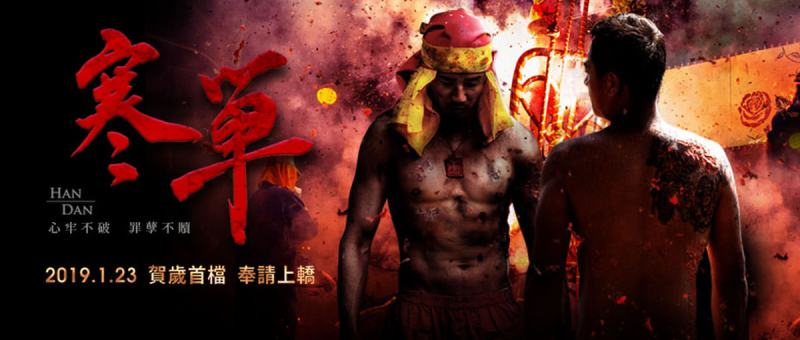
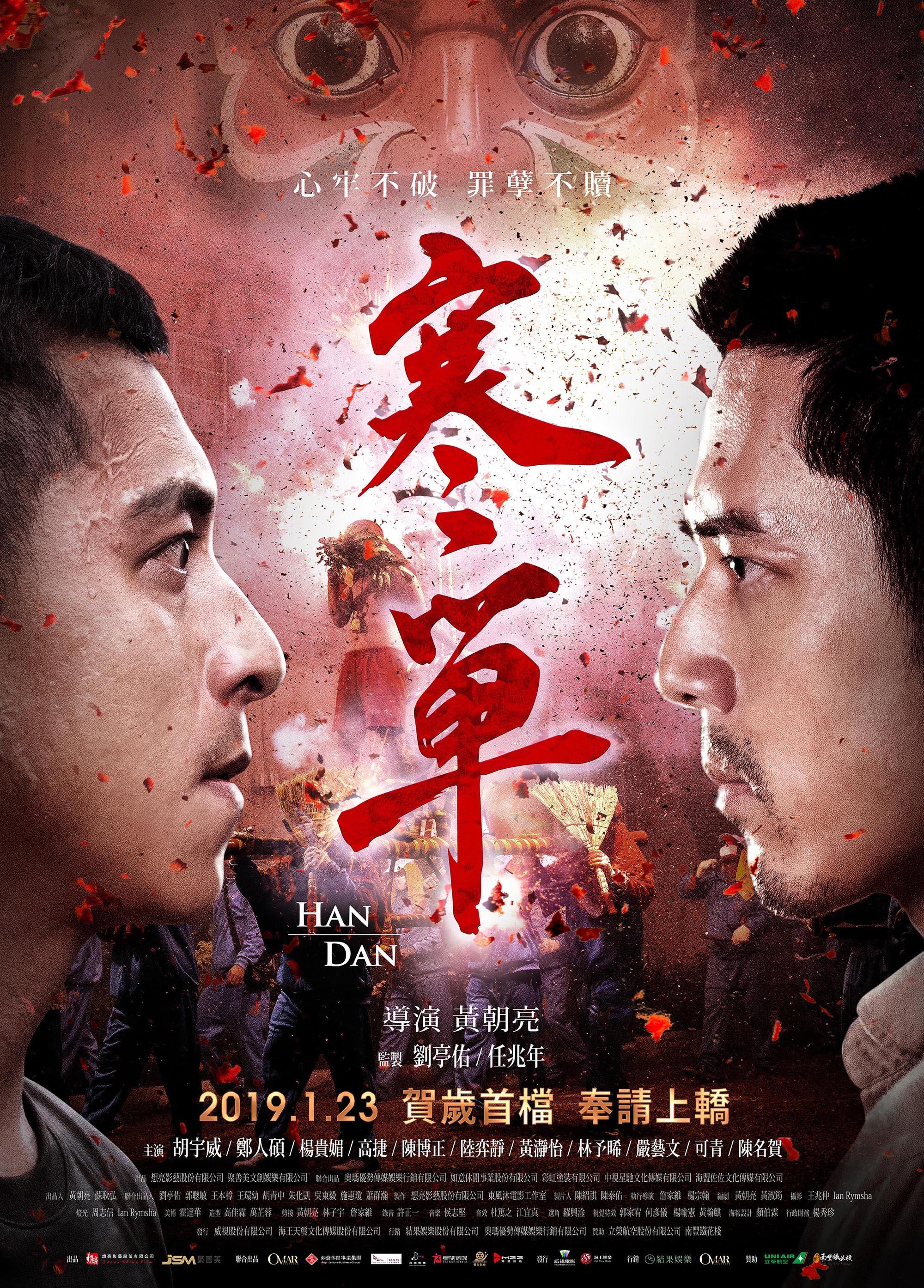
Han Dan poster 1Military deity of wealth “Han Dan” is said to be afraid of the cold, so those who worship at his altar try to keep him warm with firecrackers during a ritual still practiced in the Eastern cities of Taiwan in which young men embody the god and brave the fiery assault in a daring show of their masculinity. Some volunteer to play the god for money, others for pride, and a few for atonement but there are some crimes you can’t simply burn away either with fire or by hate. The heroes of Huang Chao-liang’s Han Dan (寒單) bond through tragedy and try push past their pain through brotherhood but only one of them is aware their present relationship is founded on twisted hate fuelled revenge even as a genuine connection forms underneath.

Nerdy, earnest school-teacher-to-be Zheng-kun (George Hu Yuwei) has been fostering a lifelong crush on the girl next door, Xuan (Allison Lin), who went away to Taipei and only rarely returns home. Too shy to declare himself, he is enraged and hurt to discover that she has been secretly dating a guy they went to high school with – popular kid Ming-yi (Cheng Jen-shuo) who used to bully him for being only a trash collector’s son. Ming-yi is set to play Han Dan at this year’s Lantern Festival and his show of manly bravado is almost more than Zheng-kun can bear. In a moment of madness, he throws his lighter into a pile of firecrackers hoping to injure his rival, but Xuan runs to warn him and is caught in the crossfire. She dies from her injuries, leaving both men feeling guilty and bereft though no one else knows that it was Zheng-kun who started the fire. 

While Zheng-kun gives up on his teaching career and retreats into gloomy introspection, Ming-yi, who lost his hearing and the use of his hand in the accident, has become a drug addict and petty criminal. Riddled with guilt, Zheng-kun commits to “saving” his former enemy – locking him up while he goes cold turkey and then bringing him into the recycling business he’s started on his father’s land, but still harbours hate in his heart both for himself and for the man Ming-yi used to be.

“If only we were real friends” Zheng-kun mutters under his breath during an otherwise idyllic moment at the river. Learning more about his “blood brother”, Zheng-kun discovers that a toxic family situation is what made him such a terrible person in high school which might ordinarily have fostered compassionate forgiveness but only makes things worse for Zheng-kun who continues to hate Ming-yi to avoid having to think about how much he hates himself for what he did to Xuan. In an effort to atone, he forces himself through the Han Dan ritual year after year, scorching his body with firecrackers but finding little in the way of cathartic release.

“Feeling the pain means I’m alive” he tells a melancholy woman who seems to have had a thing for him ever since he was a shy student with a part-time job in the sleazy snack bar where she works. Now violent and angry, he’s not such a sensitive soul anymore but she loves him all the same and resents the intrusion of the late Xuan into their awkward relationship. Like the lovelorn hostess and the song they find themselves listening to, Zheng-kun too has a secret in his schoolbag that’s becoming impossible to keep but speaking it threatens to upset the carefully balanced semblance of a life that he’s forged with an oblivious, wounded Ming-yi.

Both men struggle to move on from the past, unable to forgive themselves not only for what happened to Xuan but for the choices they did or didn’t make in their youths that leave them afraid to move forward and locked into an awkward brotherhood bonded by love and hate in equal measure. A final cathartic explosion may provide a path towards a new life but only through shattering the fragile bond born of shared tragedy and irretrievable loss. A beautifully lensed morality tale, Han Dan is an acutely observed portrait of the corrosive effects of guilt and trauma but also a tragedy of misplaced male friendship as two lost souls find each other only in losing themselves as they battle the inescapable shadows of the past.


Han Dan screens as part of the 2019 New York Asian Film Festival on June 30.

Original trailer (English subtitles)

Goodbye, Dragon Inn (不散, Tsai Ming-Liang, 2003)

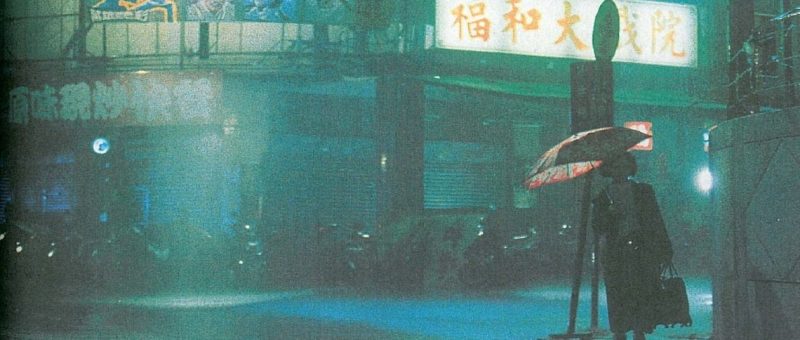
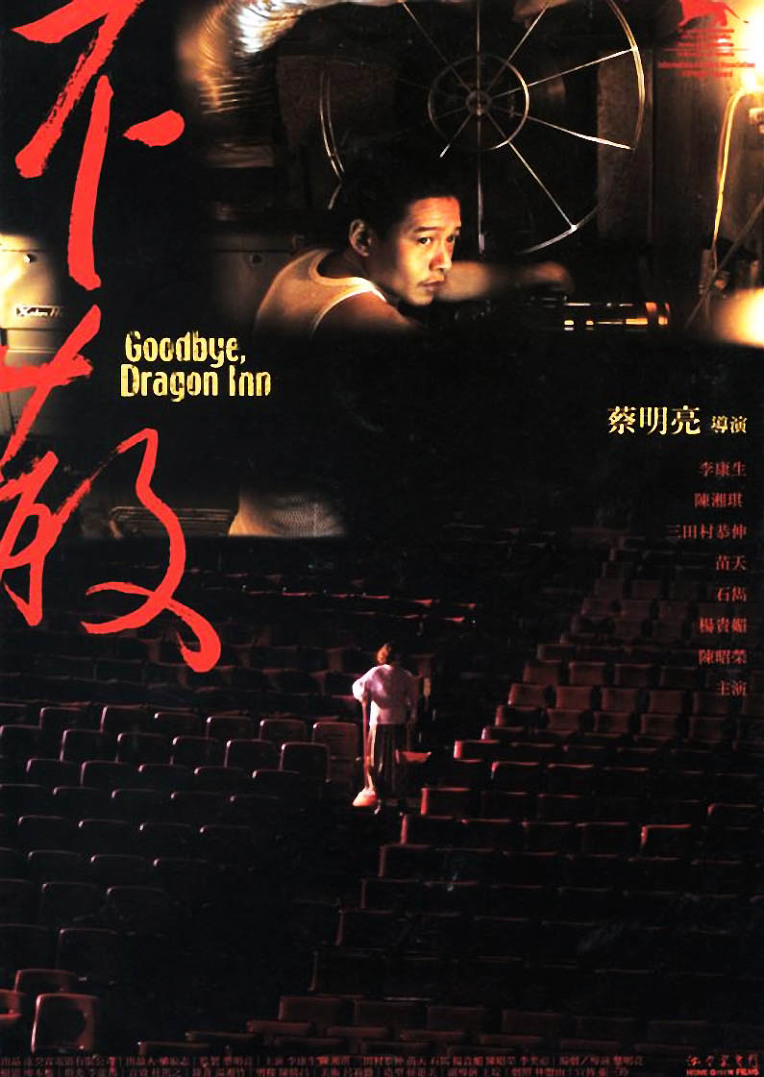
Goodbye, Dragon Inn poster“So much of the past lingers in my heart” laments the melancholy song which closes Tsai Ming-Liang’s Goodbye, Dragon Inn, (不散, sǎn) “I’ll remember with longing forever”. What is cinema if not an expression of irresolvable nostalgia, a kind of visual hiraeth for something that probably never quite existed but is so painfully missed. Everything in here stayed the same, but everything outside changed and now the present seems to be literally raining in leaving the last few fugitives from reality lost in halls of memory like lonely ghosts trapped on the wrong side of the screen.

On the wrong side of the screen is where we find ourselves. We begin in darkness with the opening narration from King Hu’s 1967 wuxia masterpiece Dragon Inn before the curtain in front of us begins to flicker and reveal an entire theatre filled with people. We pull back, and eventually the people are gone leaving just a few desperate souls returning to watch this now classic picture on what could be its very last evening as this theatre – now so unsuitable for the modern cinema environment, will be closing “temporarily” as soon as the reels stop turning.

Truth be told, no one much is even very interested in the movie. Some have merely come in to shelter from the rain, but unfortunately for them not even here is safe thanks to a leaky roof. The dazzling labyrinths of the backstage environment seem to have been co-opted by the local cruising community, men brushing past each other looking for another like them but needing to be sure their desires will be returned. Meanwhile they gaze at each other in the dim half light of the cinema screen, aching with unspeakable longing.

Longing is also something on the mind of an older gentlemen, seemingly the only one actually watching the film, who turns out to be one of its actors shedding a silent, solitary tear for time passed. Running into a friend much like himself outside he laments that “No one comes to the movies anymore”. Everyone has forgotten them, turning them into ghosts of cinema, immortal but unremembered. They have, in a sense, been attending their own funeral, entombed inside a moribund building lit only by spectres of the past.

All this is, however, secondary to the backstage drama of the lonely box office cashier (Chen Shiang-chyi) and her inexpressible crush on the projectionist (Lee Kang-sheng) who never seems to be around when she needs him. Sadly cutting into a celebratory bun, she saves half of it for him – the least ambiguous expression of love which seems to be possible within this space. Slowly climbing the stairs with a lame leg, she gazes fondly at the screen while the heroine fearlessly dispatches a series of bad guys, but the light cast on her face seems only to emphasise her lack of courage before she sadly retreats back to the ticket booth where no customers require her services.

Meanwhile, in the auditorium, a young woman (Yang Kuei-mei) munches peanuts and throws her legs over the backs of the seats in front much to the chagrin of the confused tourist whose confusion seems only to deepen when the crushing noise stops and the woman disappears (unbeknownst to him she’s on a mission to retrieve a lost shoe, or perhaps has evaporated into thin air). The first words spoken, which occur at the 45 minute mark, are to state that this theatre is haunted. Departed spirits all, the lonely denizens are indeed haunting the room and themselves as they attempt to escape the relentless march of the modern world through self-internment in a damp and crumbling mausoleum of cinema.

A lament for a dying world stripped bare by the passage of time, Tsai’s exploration of urban loneliness is a nostalgic elegy for a simpler age, filled with unresolvable longing and the ironic misconnection of an individualised communal activity. Stillness and solitude define all for these lonely, disconnected souls chasing oblivion. The past can never return, nor can the missed opportunities and brief moments spent bathed in celluloid splendour, but then perhaps you wouldn’t want it to anyway because then you couldn’t miss it. “I’ll remember with longing forever” – romanticism at its finest, but it’s a trap that’s difficult to resist.


Goodbye, Dragon Inn screened at Tate Modern as part of the Taiwan Film Festival UK 2019 and The Deserted film series.

International trailer (dialogue free)

Liu Lian by Yao Lee – the poignant song playing over the end credits.