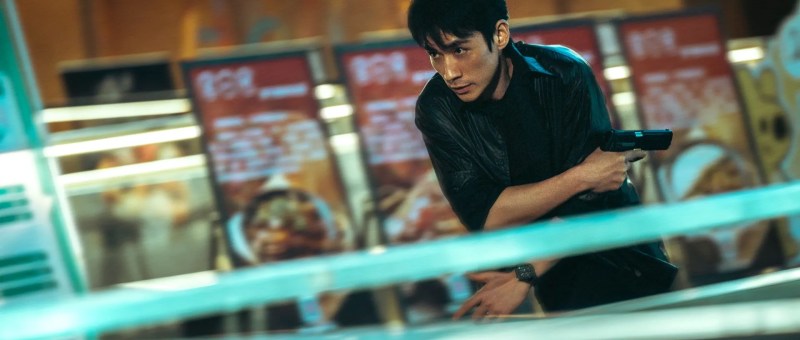
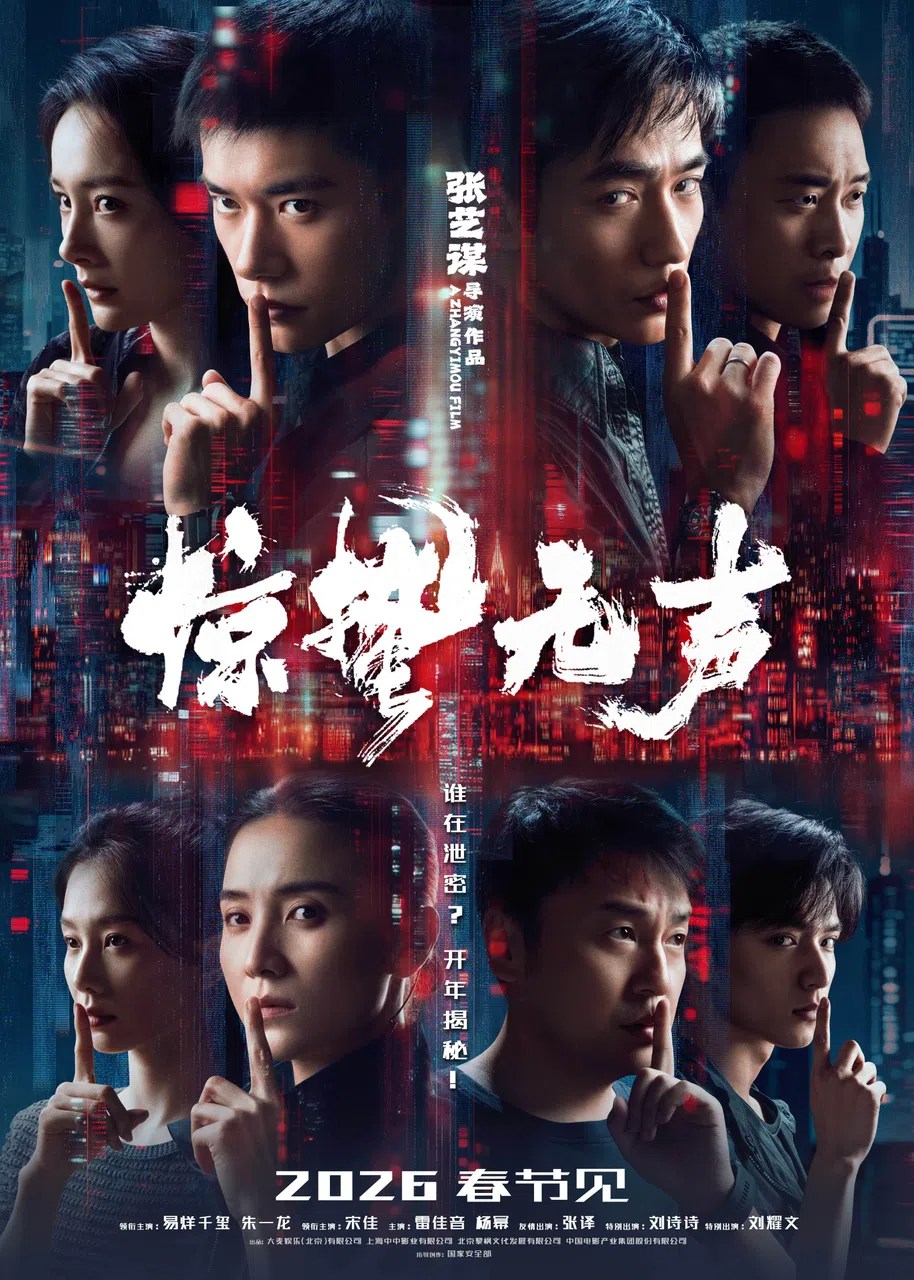
A Writer’s Odyssey (刺杀小说家, Lu Yang, 2021)

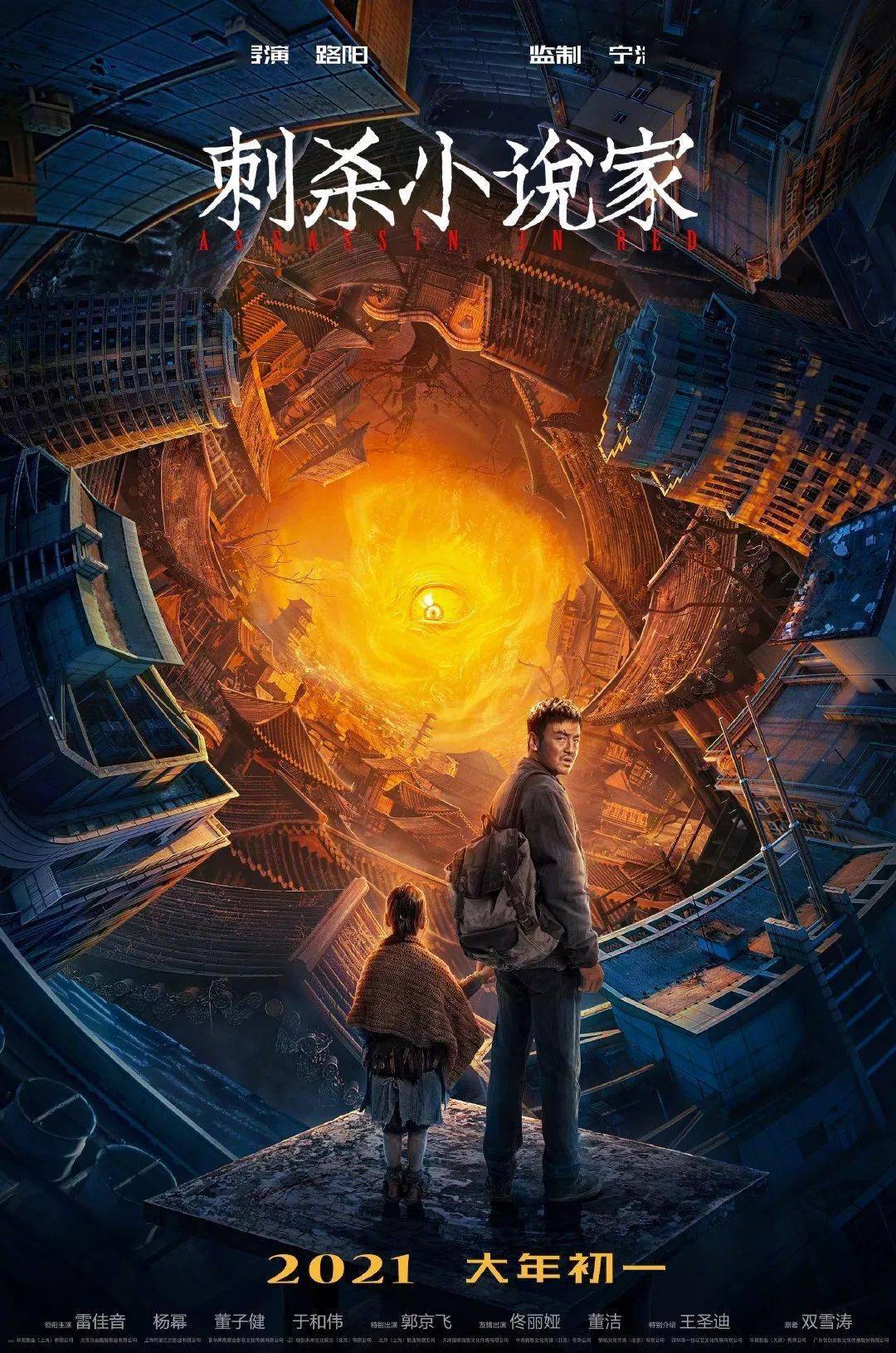
“As long as I keep writing, my existence has meaning,” according to the titular writer at the centre of Lu Yang’s action fantasy, A Writer’s Odyssey (刺杀小说家, cìshā xiǎoshuōjiā). His art, though derided as trivial, is it seems the best form of resistance to the feudalistic capitalism that has overtaken the authoritarianism of the communist past. Broken father Guan Ning (Lei Jiayin) desperately searches for his daughter Tangerine who has been missing six years, assumed to have been swallowed by China’s child trafficking network, only to find himself plagued by bizarre dreams of a fantasy city.

The city is, it seems, that of Kongwen’s (Dong Zijian) fantasy novel series which he live streams over the internet. Whenever something bad happens to the evil despot at the story’s centre, Lord Redmane, it’s visited on the CEO of vast corporation Aladdin (read: Alibaba), Li Mu (Yu Hewei), which has just launched the Lamp App which will they claim “resculpt time” so that time and distance are no longer an issue. Li Mu is panicked because Kongwen has said he’s going to end the series in three days and it doesn’t look good for Lord Redmane, so he’s fearful for his life. Noticing that Guan Ning has some sort of super power in which he can hurl rocks with unusual accuracy, he leverages Tangerine’s disappearance to convince him to knock off Kongwen in exchange for his daughter’s location.

Of course, the fantasy world and the “real” are connected in more ways than one with Ranliang conjuring visions of the Cultural Revolution in which the despotic leader is literally protected by hordes of mindless “Red Guards” while pitting one district against another and seemingly destroying all art. Li Mu, meanwhile, is destroying human innovation with his apps and treats the lives of others with callous disregard. His right-hand woman Tu Ling (Yang Mi), originally resentful of Guan Ning in blaming him for losing his child having been abandoned by her own parents, becomes disillusioned with his tactics on realising that he lied to Guan Ning and the candidates he picked for Tangerine are five random girls none which is likely to be her. Figuring out that she’s probably next after Li Mu knocks off Kongwen, who is also the son of his former business rival that he seemingly betrayed to take control of the company, and gets rid of Guan Ning for good measure, her allegiances begin to change creating a kind of parallel with Tangerine and the mysterious boy hanging around with her.

Meanwhile, in the fantasy world, Kongwen teams up with a demonic suit of armour that feeds on his blood but is also a near unbeatable killing machine that may or may not be evil. Guan Ning comes to believe that the fantasy world may be the only place he can find Tangerine and switches side from agreeing to kill Kongwen to deciding to protect him so that he can finish the story and possibly write a better ending for his fantasy character who as yet remains undefined. He’s later revealed to be a member of the brainwashed Red Guard, which may be appropriate as his former job was a banker which is to say a soldier of capitalism. Only art can break his programming in the form of Tangerine’s flute playing which reawakens his humanity and memory. 

The implication seems to be that China cannot escape either its communist past or capitalist future except through the liberation that comes with artistic endeavour. When Guan Ning is tasked with killing Kongwen, he follows him about town and hears his neighbours run him down as a “parasite”, a man of almost 30 with no real job and no income who is still being financially supported by his mother. This information might be offered to make it seem less bad to kill him, as if in this hyper-capitalistic society his life is worth nothing because that’s what he contributes. Kongwen feels this a little himself and has suicidal thoughts, but also insists that his life has meaning precisely because he writes and expresses all of this frustration with the contemporary society along with his buried resentment towards Li Mu for the death of his father and theft of his birthright. Shot like a video game, the film’s sprawling fantasy-esque world hints at still more adventures to come in this David and Goliath competition in which Kongwen and Guan Ning attempt to overthrow this cruel and corrupt order to find a way to free themselves from its authoritarian cruelties if only in their minds.


Trailer (English subtitles)

Reset (逆时营救, Chang, 2017)

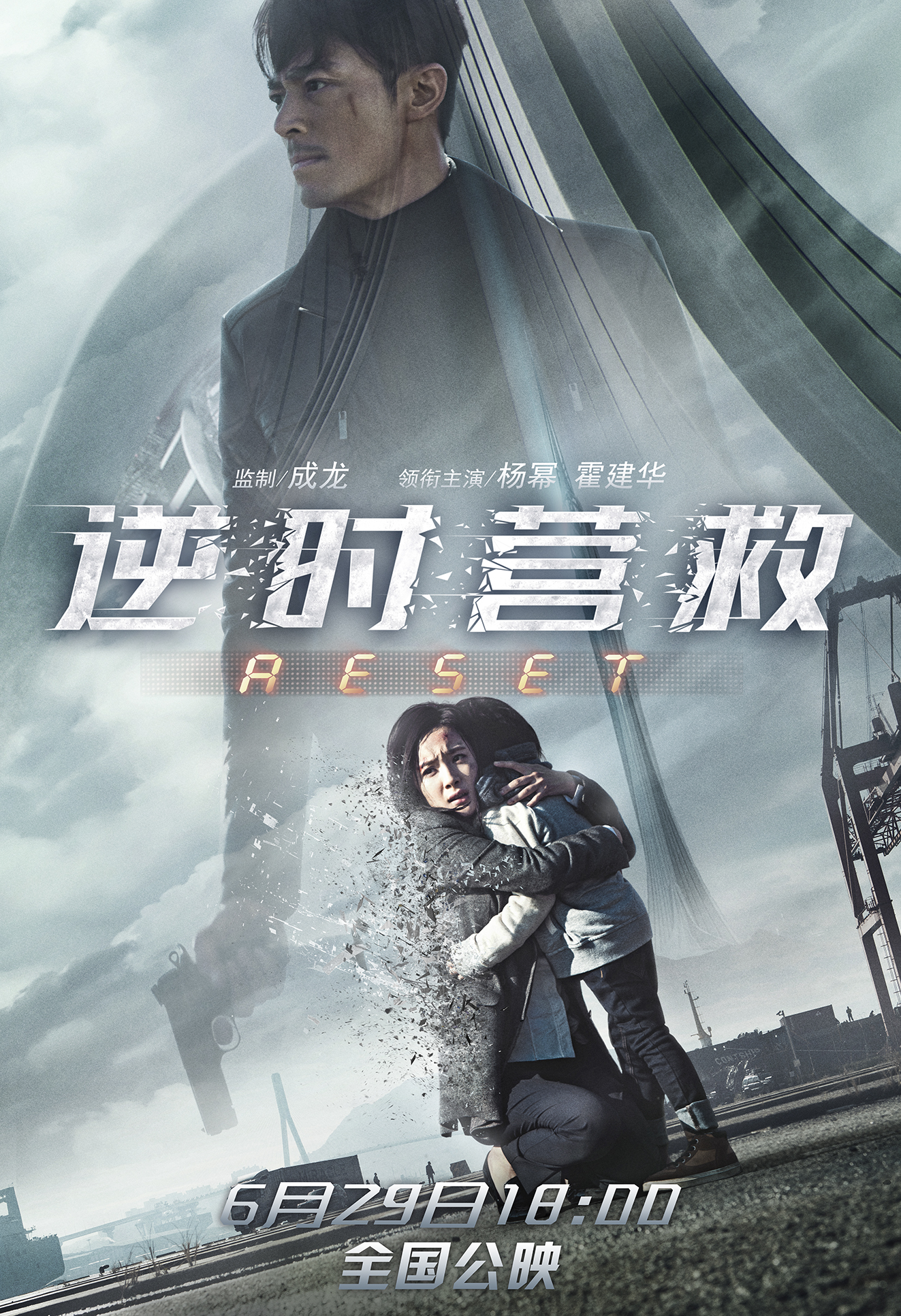
reset posterTime travel – the solution to all one’s problems. Or is it? Chinese thriller Reset (逆时营救, Nì shí yíngjiù) is helmed by Korean director Chang (AKA Yoon Hong-seung) but it’s also produced by Jackie Chan and is very much in the vein of his recent projects in its non-sensical sci-fi setup and troubling conservative messages. Reset casts a female scientist as its heroine but uses the crisis to explore her ongoing guilt as a single mother with an intense workload who has chosen to dedicate herself to both her work and her son without remarrying. Despite the action packed drama in which Xia Tian plots, shoots, and stabs her way back to her son, the message which is ultimately delivered is that you can’t go back in time and mothers should just give up everything to be with their kids 24/7.

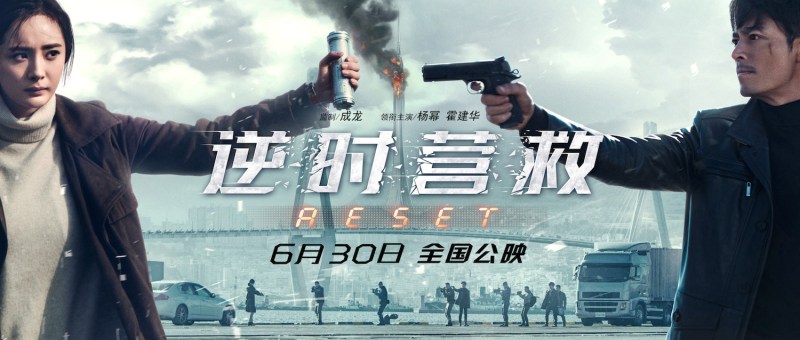
In the near future, the existence of parallel worlds has been confirmed but early research into time travel has been derailed after test subjects transported between universes descended into mindless violence destroying each other and valuable data. Xia Tian (Yang Mi) works for one of the big companies still investigating parallel world theory and has just made a major breakthrough in “projecting” test subjects into the recent past. In order to steal her research for a rival company, Xia Tian’s young son Doudou is kidnapped by mysterious men who give her a limited amount of time to hand over the top secret documents. Xia Tian’s first attempt to rescue her son fails, leading her to make personal use of her findings and travel into the past to change the future.

Reset starts as it means to go on with Xia Tian having a heart to heart with her boss and mentor (King Shih-Chieh) who reminds her that it’s been ages since she broke up with Doudou’s dad and its high time she find someone new. Xia Tian, embarrassed, says she’s dedicating herself entirely to Doudou and doesn’t need anyone else. The bond between mother and son is the focus of the film (though Xia Tian’s clinginess may become an ongoing problem as Doudou grows up) as Xia Tian travels through time to ensure the survival of her little boy no matter how morally compromised she may eventually become.

Use of the time machine apparently has certain side effects, as the first experimenters discovered. The original Xia Tian was a sweet, innocent woman way out of her depth with these fearsome, amoral gangsters but Xia Tian 2 is much more savvy, chloroforming the “nice” version of herself and taking over with the power of hindsight to help her get out of the building before all hell breaks loose. Xia Tian 3, however, has taken things too far, acting without any kind of concession to morality and suddenly becoming some kind of major action star with special forces training for no given reason. There might be a clever point about Xia Tian’s various conflicting roles but Reset doesn’t want to make it so much as have Xia Tian help/hinder herself in a selfish tug of love to save little Doudou who just wants to go home to his mum.

Non-sensical as it is, Reset picks up when it hits its action heavy final third in which Yang Mi, more often seen in sweetly romantic roles, acquits herself well enough as a fiery action star filled with maternal rage. The various layers of the resets generally hang together as the three Xia Tians cross each other’s paths to get Doudou to safety, only to belatedly realise that only one of them can really stay with him forever.

Maternal love is the machine which drives the story forward but it’s also the most problematic element in its partial insistence than Doudou’s fate is somehow Xia Tian’s fault for daring to use her finely tuned brain for the common good rather than just staying home and reading comics with her little boy like a mother should. It’s difficult to escape the conclusion that the lesson is women shouldn’t work, rather than corporations are inherently untrustworthy and that time travel creates problems for everyone (not least editors and scriptwriters) and should generally be avoided. Despite high production values, interesting production design, and an impressive (or is that three impressive) performance(s) from Yang Mi, Reset’s strong action credentials cannot compensate for its unpalatable conservative message and non-sensical science fiction narrative.


Screened at the London East Asia Film Festival 2017.

International trailer (English subtitles)

Love in the Buff (春嬌與志明, Pang Ho-cheung, 2012)

love in the buff poster2010’s Love in a Puff was a delightfully low-key, slow burn romance in which two lonely smokers found each other over a back ally rubbish drum and a series of aimless text-based and ambulatory conversations. Jimmy and Cherie were both so diffident, fearful, and emotionally restrained that their grand love affair ended on a positive if ambiguous note, promising only to continue in forward motion. Where is there to go in a sequel? The same place again, apparently. Or, more precisely, Beijing.

So, Jimmy (Shawn Yue) and Cherie (Miriam Yeung) have found true love, moved in together and are very happy. Except, Jimmy is still Jimmy and Cherie is still Cherie and so there are problems. Things come to a head when Jimmy forgets a dinner arrangement with Cherie’s family, invites her to a beach party that turns out to be a work engagement, and then unwisely tries to win an argument by “reminding” her who plays the bills. Unsurprisingly, when Jimmy returns home Cherie has gone back to her mother’s. Jimmy takes a job in Beijing and starts dating an air hostess only for Cherie to also get an unexpected transfer to the mainland capital.

More or less following the pattern of the first film but with the roles of the protagonists reversed, Jimmy and Cherie find themselves falling back into the same old routine as they’re marooned in an unfamiliar city. Jimmy, still immature and self-centred, may have started an accidental relationship with a stewardess his friend intended to molest on an aeroplane, but it’s essentially superficial (at least from his side) and once again he finds himself texting Cherie whilst bored with his girlfriend’s elegant friend set. Cherie, not over Jimmy (much as she’d like to be) and perhaps regretting her over hasty grand gesture, begins a tentative relationship with a sensitive millionaire, Sam (Xu Zheng), whose only defects seem to be an old-fashioned idea of chivalry and the fact that he is extremely bald.

Despite Sam’s obvious goodness, Cherie can’t let Jimmy go and is ultimately disappointed to find that some of his childish strangeness has rubbed off on her – in fact, the very qualities which Sam finds attractive are ones she associates with Jimmy. Back to sneaking around, bickering, and exchanging cryptic text messages the pair are left to wonder if anything has really changed. The problems are exactly the same – neither one is willing to trust the other enough to make a real go of things. Cherie, still a little over sensitive about the (very small) age difference between herself and Jimmy as well as her ticking clock, resents being made to feel like the old ball and chain when Jimmy plays the coward in lying to her to go out drinking with friends. Jimmy still fears confrontation too much talk to Cherie in a straightforward way and so they’re locked in continuing cycles of passive aggressive drama.

Once again Jimmy and Cherie are the main draw though their friends take on a slightly larger role. Eunuch (Roy Szeto) remains Jimmy’s worst enabler as he urges him to make a series of bad decisions in making a life in the mainland capital, though there is a potential happy ending for Cherie’s “plain” friend Brenda (June Lam) whose lack of looks was the butt of such mean-spirited humour in the first film. Transposing the action to Beijing Pang takes another look at modern love with its marriage markets full of old women sitting in parks with signs selling the virtues of their sons not to mention the terrible blind dates but even if the actions of the central couple lean towards the sordid as they re-engage in accidental adultery, the romance is always gentle, innocent, and sincere. Jimmy and Cherie bonded in a puff, but now they have to learn to love each other “in the buff”, warts and all or call it quits.

Pang wisely drops the documentary conceit though maintains the laid-back aesthetic and whimsical music as the ballad of Jimmy and Cherie continues. The various cameo appearances threaten to derail the low-key style of the drama but once again Pang manages to capture something youthful, fresh, and heartfelt even if not moving very much beyond the original.


Original trailer (Cantonese with traditional Chinese/English subtitles)

https://www.youtube.com/watch?v=yoF6gwe1UOA

The Bullet Vanishes (消失的子弹, Law Chi-leung, 2012)

20128291720405212Review of Law Chi-leung’s The Bullet Vanishes (消失的子弹, Xiāo Shī Dè Zǐ Dàn) – first published on UK Anime Network in June 2013.


In 1930’s Shanghai there’s a bullet factory where a young girl has been accused of pilfering. The punishment, it seems, is a cruel and very public trial by Russian roulette where fate, the gods or whoever will judge her innocent or guilty with a simple click or a loud bang. Crying out her innocence to the end, the girl pulls the trigger and presumably never actually hears the outcome as her co-workers look on in horror – she must have been guilty though, right? Or she would have been spared by the immortal powers at be.

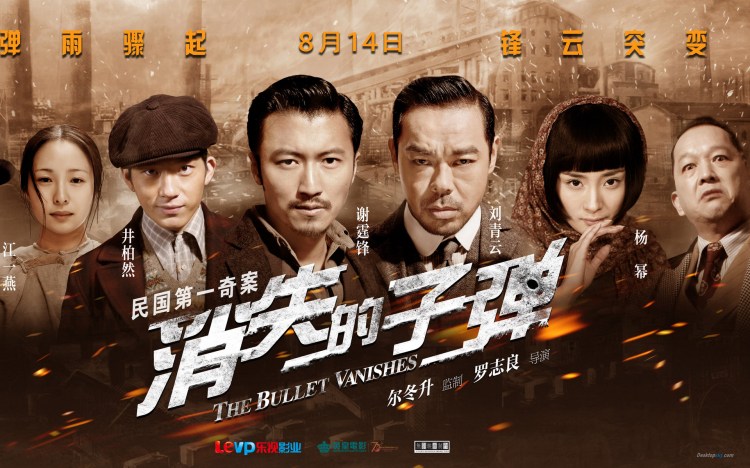
Following this horrific incident, other deaths start to occur in the factory – the strange thing is, on examining the bodies, no trace of a bullet can be found (nor any casings at the scene). Some of the munitions workers start to believe the ghost of the poor girl who died must have returned to take revenge – perhaps she was innocent after all. To solve this intriguing mystery, the police turn to two unorthodox detectives – recently transferred former prison warden Song (Lau Ching-Wan) and maverick cop “fastest gun in town” Guo (Nicholas Tse). Neither of these two are buying the “supernatural” explanation and both are determined to get to the truth even if they work in very different ways. The solution is going to be a lot more complicated than anyone could have thought, and will, ultimately, be painful to hear.

Let’s get this out of this way first – yes, the film owes a significant debt to the recent “westernisation”, if you want to put it that way, of Ritchie’s Sherlock Holmes and other Victorian set crime dramas (e.g. Ripper Street) which seek to present themselves as taking place in a totally lawless world denizened by a criminal population that is somehow both repellent and glamourous. Although The Bullet Vanishes is set in 1930s, it still has a noticeably “Victorian” sensibility presenting a world in which rapid industrialisation has brought about mass corruption and a decline in morality. Once again, setting a film in China’s past proves to be a surefire way of getting subtextual criticisms of modern China past the country’s strict censorship regulations.

The murder mystery itself is certainly very intriguing with a series of unpredictable twists and turns. The idea of disappearing bullets might not be a new one, but The Bullet Vanishes manages to find an original solution that is perfectly plausible within its own time setting. Also, the “supernatural” element exists only as an idea and is never seriously entertained as an explanation by any of the investigators – something of a break from the genre norm.

The two detectives seem much more like rivals than partners for much of the film though an awkward sort of camaraderie does eventually grow up between them. Lau and Tse both give excellent performances but Tse in particular who’s often criticised for being a pretty boy trading on family connections, really proves himself with his surprisingly complex Guo. There is, however, the familiar criticism that the female characters are severely underdeveloped and seem almost like a rushed afterthought. Yang Mi gives a lot to the barely two dimensional Little Lark but can’t disguise the fact that the character only exists as a love interest for Guo and that in turn a love interest for Guo only exists so that we can have the “obligatory” love scene. That wouldn’t be so much of a problem if the love scene itself didn’t feel quite so “obligatory” – it could easily have been excised and the film would have remained pretty much unchanged as the scene feels as if it exists purely to satisfy a perceived audience need for romance.

There really isn’t much to fault with The Bullet Vanishes. As a slightly cerebral mainstream period thriller it’s certainly very successful. It has an engaging mystery element, strong characters played excellently by the cast and extremely slick, modern direction. In Song they’ve created a very interesting character who’d be very welcome in a sequel or two. His relationship with female prison inmate, a sort of Irene Adler figure to Song’s cerebral detective, who he’d previously investigated before being transferred was quite an usual idea that would really benefit from further exploration. All in all The Bullet Vanishes is a very impressive and enjoyable period procedural that is truly a cut above its genre origins.


http://www.youtube.com/watch?v=8oZOMNeJjzQ