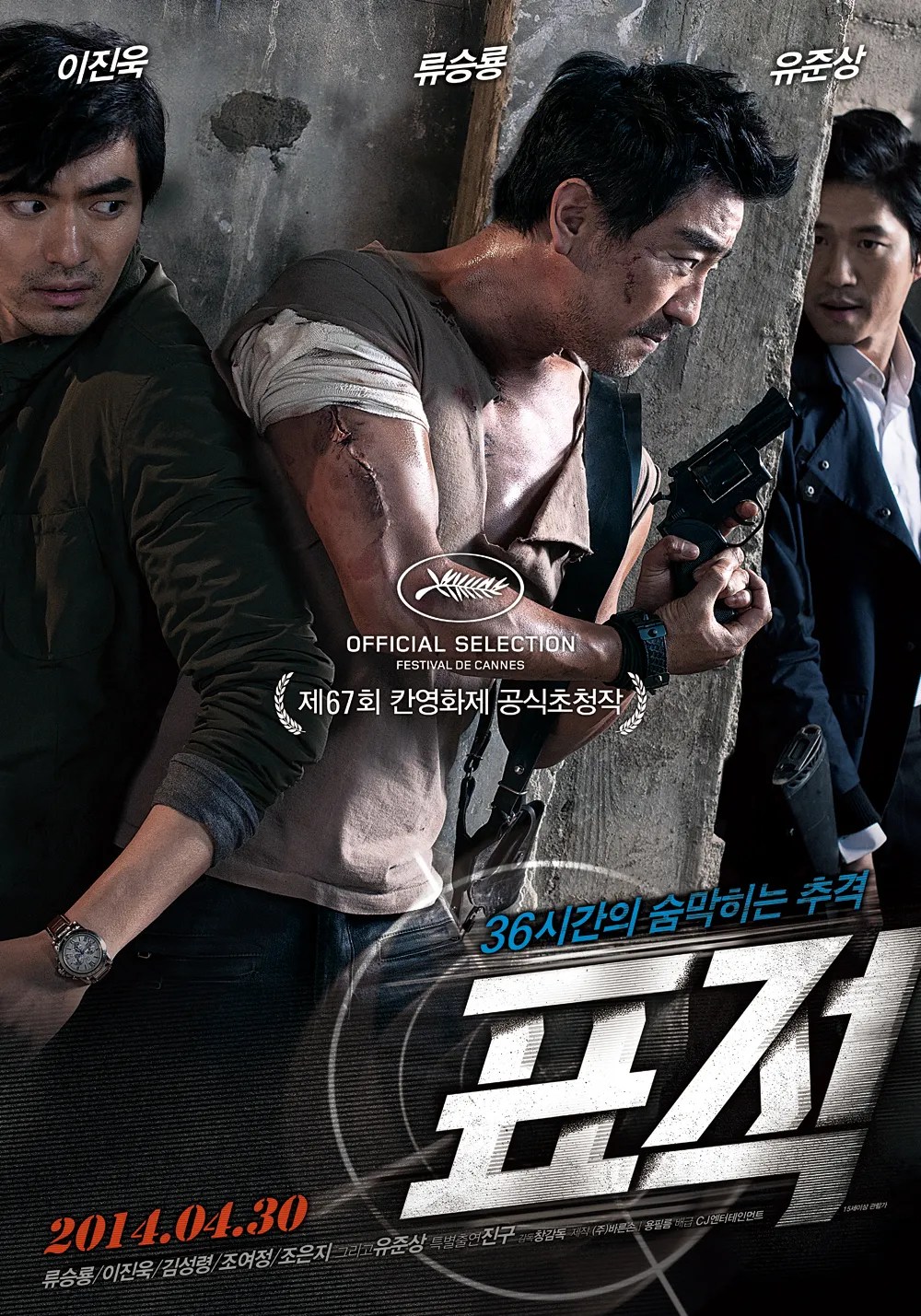
The Target (표적, Chang, 2014)

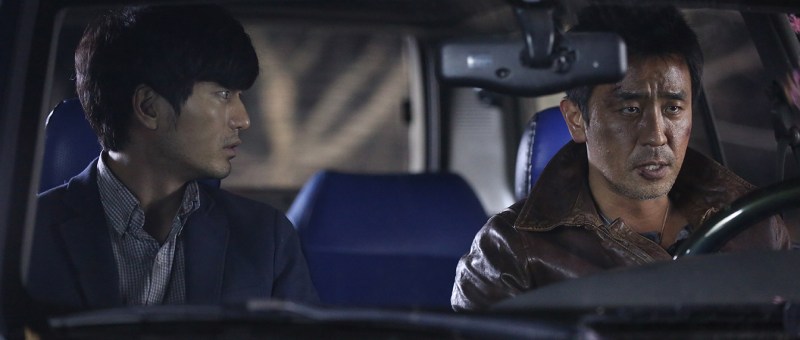
A doctor finds himself dragged into conspiracy after saving the life of a man framed for murder in Chang’s South Korean remake of the French action thriller Point Blank (표적, Pyojeok). Despite having seen off an assassin, Tae-jun (Lee Jin-wook) doesn’t take too long wrestling with his medical ethics when his pregnant wife is kidnapped and immediately decides to give up his patient to whoever is looking for him, but just like the bad guys, he’s picked the wrong man to mess with because Yeo-hoon is a former mercenary with nothing but revenge on his mind.

Tae-jun’s determination does however make it clear the extent to which people are prepared to compromise their morals when something important to them is threatened. The person that kidnapped his wife thought he no choice either and is only trying to protect someone close to him. They are all at the mercy of a corrupt system. It turns out that Yeo-hoon has been framed for murdering a businessman who manipulated the market to buy an apartment building at a cheaper price, but his partner would rather have all the money for himself so decided to knock him off. Corrupt police officer Song (Yoo Jun-sang) has been running a side business as a hitman aided by his team of equally compromised subordinates and decided that Yeo-hoon’s brother, who has learning difficulties, would make a good fall guy because they assumed he was an orphan with no family to go asking questions. What they didn’t bargain for was dealing with a ruthless and highly trained opponent like Yeo-hoon.

Tae-jun didn’t really bargain on that either and is originally unsure how far he can trust Yeo-hoon (Ryu Seung-ryong) though technically, they’re on the same side. The loyal police officers have the same issue, resentful of Song because he’s pinched their case rather than realising he’s only done so to cover up his own corruption. Nevertheless, like Tae-jun and Yeo-hoon, policewoman Soo-jin (Jo Eun-ji) is also after revenge for the loss of someone close to her. In truth, her tearful distress and inability to dispose of female superior’s belongings hints at a deeper connection than simple loyalty to her fallen comrade. Her need for revenge is as hot as Yeo-hoon’s, though she too originally believes Song’s version of events and is only motivated to look deeper precisely because it matters to her how her friend died.

There is then a theme of frustrated familial reunions that runs under that of the overriding corruption that surrounds them. Yeo-hoon returned home to reunite with his brother but is too late to stop him being drawn into Song’s web, while Soo-jin wants vengeance for her friend, and Tae-jun to save his wife and unborn child. Though not everything can be repaired, there is a final restoration of the family in the closing scenes in which Yeo-hoon is reunited with his dog and is symbolically adopted as a brother to Tae-jun and a new member of his family. To that extent, the film suggests that familial bonds are the ultimate defence and rebellion against the corruption of men like Song whom, one of his subordinate says, would even sell his parents for money.

Nevertheless, the real focus is propulsive action and Chang keeps the tension high as Ryu Seung-ryong shows off his skills as an action with several high-octane hand-to-hand combat scenes, along with shootouts and explosions even before the police station finale in which Yeo-hoon must attack the very structure of law enforcement to clear out its inherent corruption. Tae-jun, meanwhile, is more of a hapless stooge left with little other choice than to follow along behind Yeo-hoon while trying to weaponise the righteousness of the good police officers to locate and rescue his wife before the bad guys can take care of what they see as a loose end. For her part, Hee-joo (Cho Yeo-jeong) is mostly reduced to a damsel in distress, but at the same time in her role as a psychologist and is able to extend sympathy to Sang-hoon helping him see the error of his ways and further emphasising the film’s familial themes. Though incomplete, justice of a kind at least is served in the exposure of the corruption and the final moment of healing which exists outside the system in the reinforcing of the simple bonds between people.


Trailer (English subtitles)
Reset (逆时营救, Chang, 2017)

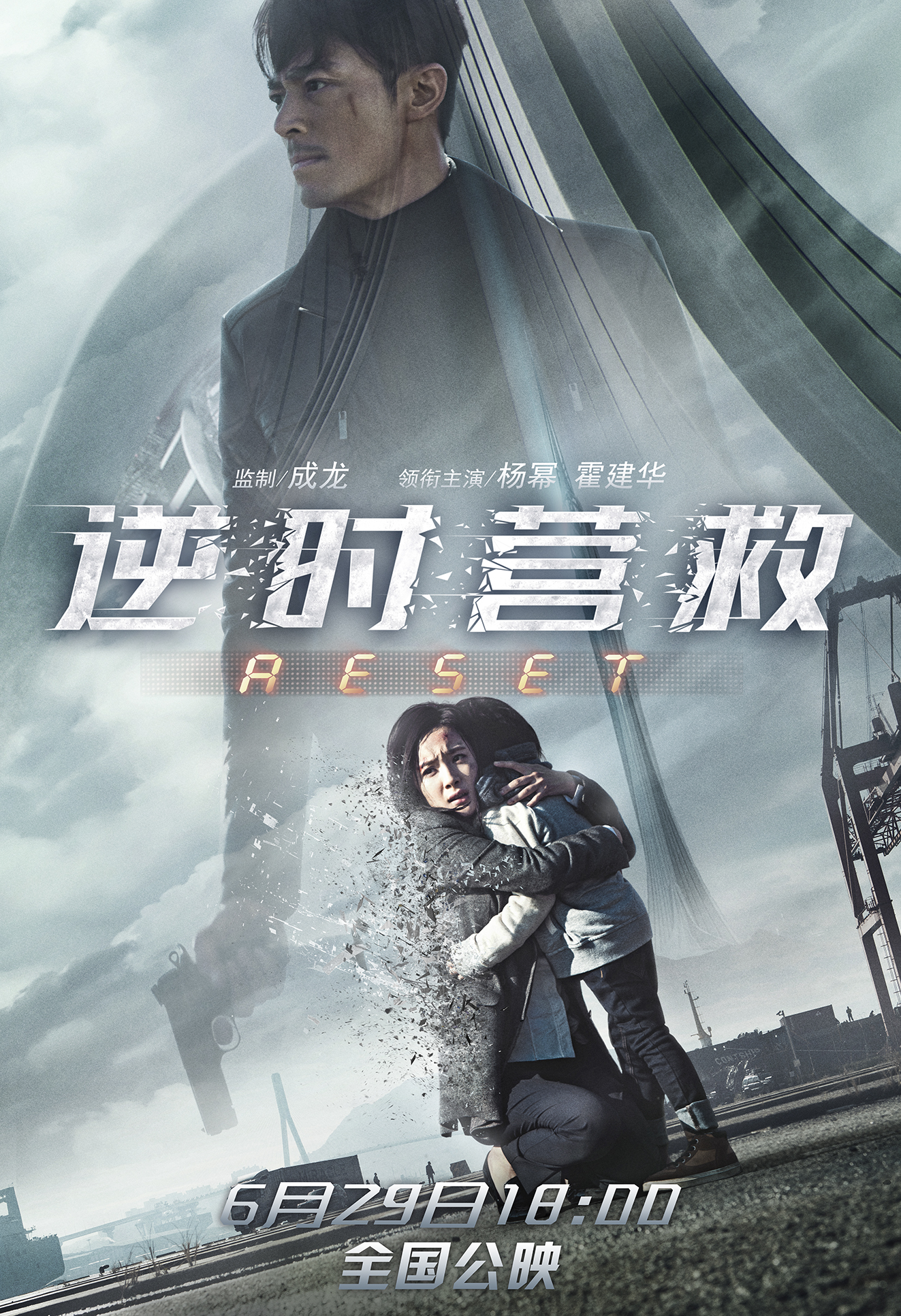
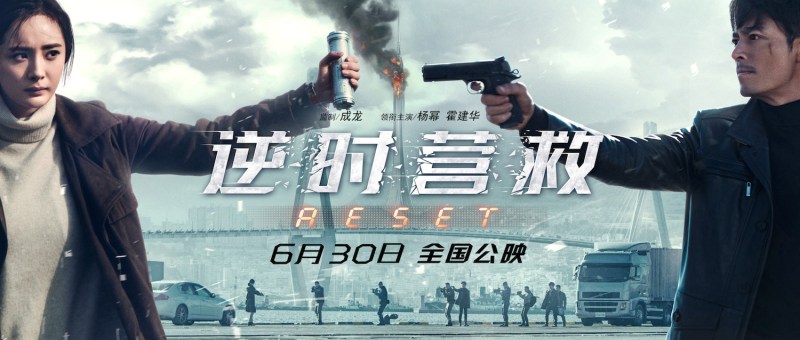
reset posterTime travel – the solution to all one’s problems. Or is it? Chinese thriller Reset (逆时营救, Nì shí yíngjiù) is helmed by Korean director Chang (AKA Yoon Hong-seung) but it’s also produced by Jackie Chan and is very much in the vein of his recent projects in its non-sensical sci-fi setup and troubling conservative messages. Reset casts a female scientist as its heroine but uses the crisis to explore her ongoing guilt as a single mother with an intense workload who has chosen to dedicate herself to both her work and her son without remarrying. Despite the action packed drama in which Xia Tian plots, shoots, and stabs her way back to her son, the message which is ultimately delivered is that you can’t go back in time and mothers should just give up everything to be with their kids 24/7.

In the near future, the existence of parallel worlds has been confirmed but early research into time travel has been derailed after test subjects transported between universes descended into mindless violence destroying each other and valuable data. Xia Tian (Yang Mi) works for one of the big companies still investigating parallel world theory and has just made a major breakthrough in “projecting” test subjects into the recent past. In order to steal her research for a rival company, Xia Tian’s young son Doudou is kidnapped by mysterious men who give her a limited amount of time to hand over the top secret documents. Xia Tian’s first attempt to rescue her son fails, leading her to make personal use of her findings and travel into the past to change the future.

Reset starts as it means to go on with Xia Tian having a heart to heart with her boss and mentor (King Shih-Chieh) who reminds her that it’s been ages since she broke up with Doudou’s dad and its high time she find someone new. Xia Tian, embarrassed, says she’s dedicating herself entirely to Doudou and doesn’t need anyone else. The bond between mother and son is the focus of the film (though Xia Tian’s clinginess may become an ongoing problem as Doudou grows up) as Xia Tian travels through time to ensure the survival of her little boy no matter how morally compromised she may eventually become.

Use of the time machine apparently has certain side effects, as the first experimenters discovered. The original Xia Tian was a sweet, innocent woman way out of her depth with these fearsome, amoral gangsters but Xia Tian 2 is much more savvy, chloroforming the “nice” version of herself and taking over with the power of hindsight to help her get out of the building before all hell breaks loose. Xia Tian 3, however, has taken things too far, acting without any kind of concession to morality and suddenly becoming some kind of major action star with special forces training for no given reason. There might be a clever point about Xia Tian’s various conflicting roles but Reset doesn’t want to make it so much as have Xia Tian help/hinder herself in a selfish tug of love to save little Doudou who just wants to go home to his mum.

Non-sensical as it is, Reset picks up when it hits its action heavy final third in which Yang Mi, more often seen in sweetly romantic roles, acquits herself well enough as a fiery action star filled with maternal rage. The various layers of the resets generally hang together as the three Xia Tians cross each other’s paths to get Doudou to safety, only to belatedly realise that only one of them can really stay with him forever.

Maternal love is the machine which drives the story forward but it’s also the most problematic element in its partial insistence than Doudou’s fate is somehow Xia Tian’s fault for daring to use her finely tuned brain for the common good rather than just staying home and reading comics with her little boy like a mother should. It’s difficult to escape the conclusion that the lesson is women shouldn’t work, rather than corporations are inherently untrustworthy and that time travel creates problems for everyone (not least editors and scriptwriters) and should generally be avoided. Despite high production values, interesting production design, and an impressive (or is that three impressive) performance(s) from Yang Mi, Reset’s strong action credentials cannot compensate for its unpalatable conservative message and non-sensical science fiction narrative.


Screened at the London East Asia Film Festival 2017.

International trailer (English subtitles)