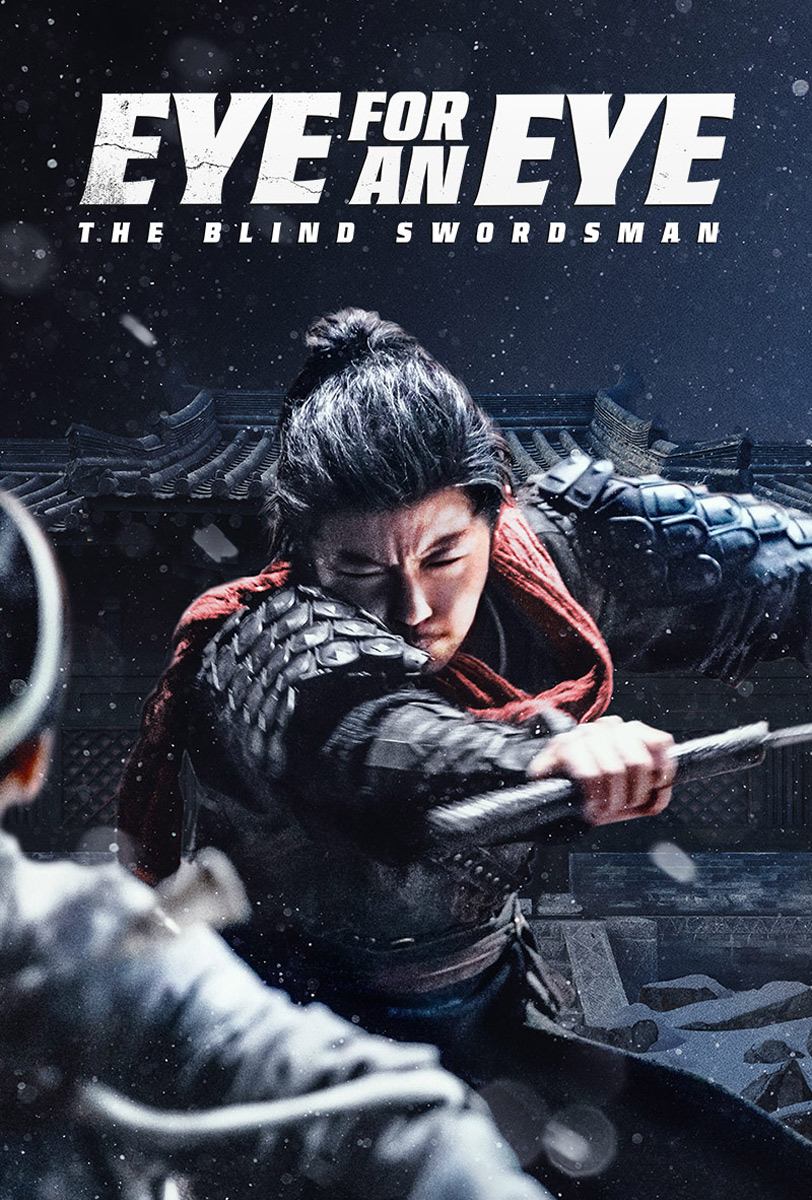
Eye for an Eye: The Blind Swordsman (目中无人, Yang Bingjia, 2022)

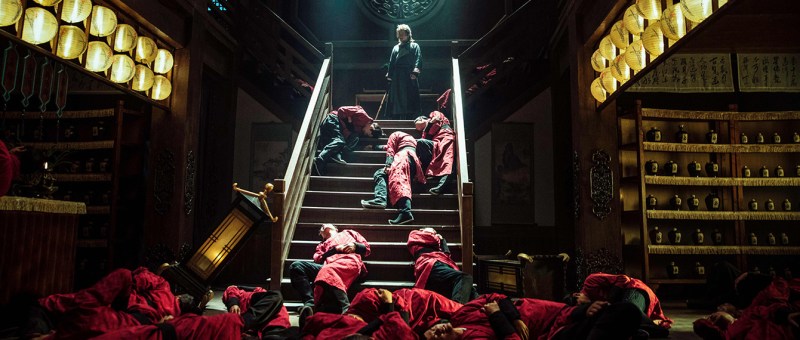
A blind swordsman takes revenge against the evils of feudal society in Yang Bingjia’s impressively helmed action drama, Eye For An Eye: The Blind Swordsman (目中无人, mùzhōngwúrén). Set in the “lawless” society of the Tang era following the Tianbao rebellion, the film has a western sensibility with its twanging guitar score and dusty roads not to mention jumped up gangsters trying to get a foothold in the legitimate order simply because they have become too powerful and no one is willing to resist them. 

Ni Yan (Gao Weiman), a young tavern woman who lost her brother and husband when her wedding was attacked by the Yuwen clan asks for nothing more than “justice” but that’s something no one can give her. Wandering swordsman Cheng Yi (Mo Tse) who’d taken a liking to her because she offered him some of her wine and even gave some to his horse reports the crime to the local magistrate after claiming the bounty on a fugitive, only he tells her directly that he will do nothing because the Yuwen clan have already moved beyond justice and not even he will touch them. 

In a way, Cheng is depicted as a failed revolutionary and his blindness a symbol his despair in a world he no longer cares to see. A bounty hunter by trade, his work is facilitated by old comrade Lady Qin (Zhang Qin) who, in contrast to him, seems to live a cheerful life repairing musical instruments while much loved in the town around her. Though they pretend to be saving money for an operation to restore Cheng’s sight, their line of work is perhaps cynical in taking advantage of the times while accidentally outsourcing a justice the authorities can no longer provide in the weakened Tang society. The Yuwen have infiltrated most institutions and cultivated relationships with important people that allow them to ride roughshod over ordinary citizens who are now completely at their mercy.

There might be something quietly subversive in these references to a corrupt and authoritarian institution which tries to brand Ni Yani the criminal in her pleas for justice, insisting that she admit to killing her brother herself in resentment of his criminal past while he is also hunted by the Yuwen because he knows to much about their dodgy dealings including raiding tombs to get precious gems to use as bargaining chips in a dynastic marriage negotiation. Cheng Yi did not originally want to get involved, himself too cynical and having given up hope of “justice” in this “lawless” society, but finds himself sympathetic towards Ni Yan because of the kindness she showed him and the obvious suffering her ordeal has inflicted on her. 

In a sense, his eyes are opened to the injustice of the society around him to which he had been wilfully blind if ironically accepting that he will never see again. He alone is willing to stand up to the Yuwen while even within their ranks petty resentments are growing as a princeling grows ambitious to escape his own oppression at the hands of an authoritarian brother who berates him for his weakness. 

Despite the budgetary issues which often plague straight to streaming cinema, Yang’s elegantly lensed drama brings a real sense of place to the dusty provincial towns where Cheng plies his trade along with the ornate elegance of the realm of Lady Qin whose flowing robes belie her military past. Drawing inspiration from the western as well as Japanese genre classics such as Yojimbo the film presents a world in decay in which the wandering swordsman becomes a moral authority, delivering justice if for a price. The irony is that it isn’t money which opens his eyes, but the reclaimed ability to see with his heart in deciding to help Ni Yan in her quest to avenge the deaths of those close to her. A series of excellently choreographed and well-shot action scenes along with Yang’s post-modern take on the material lend this tale of wandering swordsmen and feudal abuses a sense of the legendary that hints at further adventures for wandering sword for hire Cheng Yi bringing his own brand of justice to a lawless place. 


Eye for an Eye: The Blind Swordsman is out in the US on Digital, blu-ray, and DVD on 28th November courtesy of Well Go USA.

US trailer (English subtitles)
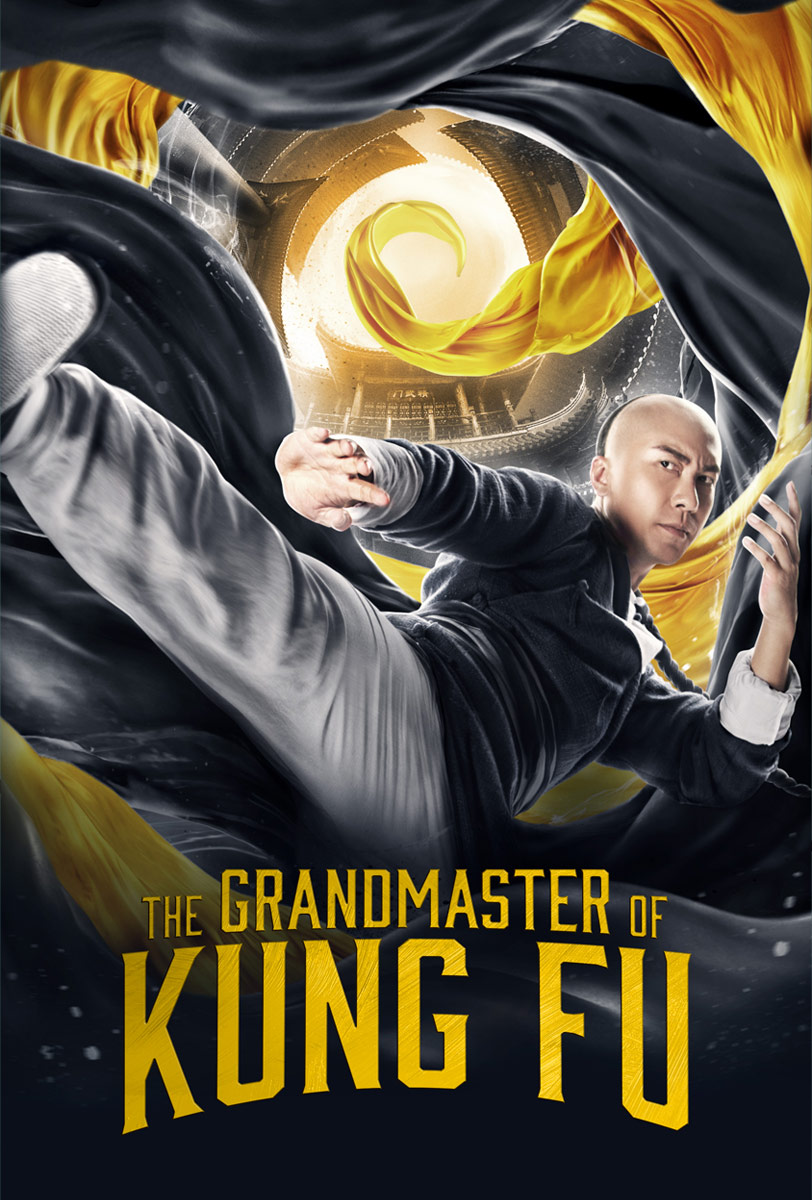
The Grandmaster of Kung Fu (霍元甲之精武天下, Cheng Siyu, 2019)

“Chinese martial arts are unimpressive” sneers a Japanese soldier as a member of an aikido school which has just received permission to open in the martial arts homeland of Tianjin. Boasting surprisingly high production values in comparison with the average Chinese action movie streamer, The Grandmaster of Kung Fu (霍元甲之精武天下, huò yuán jiǎ zhī jīng wǔ tiānxià) once again sees a humble man stand up on behalf of all of China against an oppressive coloniser this time intent on fighting them on their own ground by beating the locals in a “fair” fight pitting Chinese boxing against Japanese martial arts. 

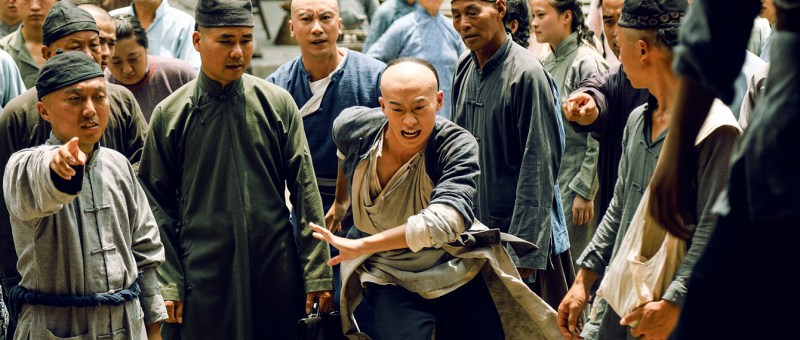
Set at a complex historical moment, the film opens with the news that new regulations have taken hold at the Imperial University which will introduce Western learning to China but that many fear it’s a ruse to open the door to a Japanese invasion. That does seem to be the case in Tianjin which is soon occupied by unpleasant and duplicitous Japanese military officers who plan on opening a martial arts school of their own to rival those already in the town and eventually take it over. Meanwhile, the chairman of the Wu Shu association is about to step down and is holding a contest to find his successor. The burly Zhao quickly sees off all challengers until the arrival of mysterious stranger Huo Yuanjia (Dennis To Yu-hang) places his victory in jeopardy. Zhao plays a few underhanded moves, but an irritated Yuanjia essentially lets him win knowing his next blow may kill him. Zhao seems like the wrong person to lead the association now that it is threatened by the Japanese but eventually encourages Yuanjia to take a stand refusing to allow the proud traditions of Tianjin to be destroyed by the burgeoning Japanese empire who brand China the “sick man of Asia”.

Indeed, from the offset the Japanese are shown to be cruel and dishonourable despite the captain’s early words that they should play strategically in their quest to colonise China. Colonel Takeda is in someways much more even handed, openly reprimanding his men for acting in a way that reflects badly on the Japanese such as ordering the entire school to attack Yuanjia after he defeats aikido champ Anbei. But even Takeda is playing the long game, hoping that he can break the spirit of the Chinese by defeating them at martial arts leaving them so demoralised that they will give up on all thoughts of rebellion. Yuanjia is not however so easily beaten and neither is China as he very directly says to the japanese soldiers who try to shut him down. He frames his battle as one that will decide the course of the entire nation, that if he fails to stand up to the Japanese now then China will forever be oppressed by foreign powers though as he’s also fond of pointing out, he’s “just” a porter that the martial arts society didn’t even really want to accept before he showed them what he can do.

Nevertheless, he finds himself torn by the admittedly well-worn plot device of a nagging wife who doesn’t like him going off fighting and would much rather he stay at home even if it means all of China falls. Even she eventually comes round and gives him a precious amulet that becomes his saving grace. Chinese kung fu is he points out all about love and the desire to protect, whereas as according to Takeda Japanese martial arts are all about conquest and destruction. Yuanjia tells him that there’s no need to look for a winner or a loser in a contest of martial arts, and that in the end he cannot win because his philosophy is soulless and little more than meaningless violence while his is rooted in love and country. Martial arts is about applying peace, he explains, not bullying the weak (which seems like an odd concession in its characterisation of China as a defenceless victim only Yuanjia can save). 

Running a tight 74 minutes, the film boasts a series of impressive fight sequences performed by genre star Dennis To along with a series of above average performances as the small band of Tianjin martial artists attempt to preserve their traditions while taking a stand against foreign incursion which might in is own way have a few uncomfortable implications in its nationalistic dimensions. Nevertheless, it boasts surprisingly good production values for a straight to streaming movie and largely manages to sell its admittedly familiar tale with considerable panache.


The Grandmaster of Kung Fu is released in the US on Digital, blu-ray, and DVD on Jan. 31 courtesy of Well Go USA.

US release trailer (English subtitles)