Labyrinth Romanesque (花園の迷宮, Shunya Ito, 1988)

“Poor things, born in the wrong time,” a woman laments of two girls perhaps not that much younger than herself yet as trapped by the age of militarism as anyone else. Adapted from a short story by Edogawa Rampo, Shunya Ito’s gothic mystery Labyrinth Romanesque (花園の迷宮, Hanazono no Meikyu) effectively skewers militarism’s hypocrisies and lays bare the dehumanising effects its nihilistic philosophy has wrought on the nation as a whole. When killing is almost an imperative, life has little value and brutality seemingly the only acceptable response to mass violence.

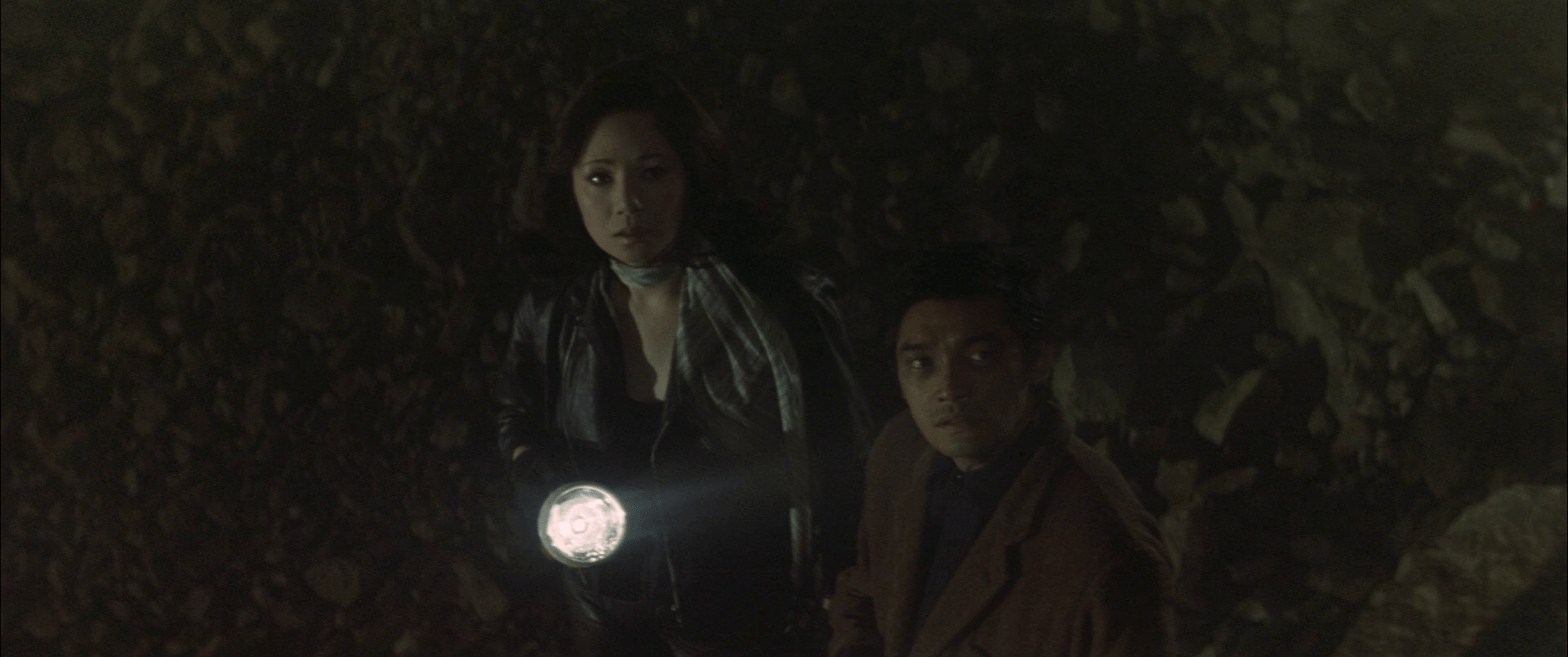
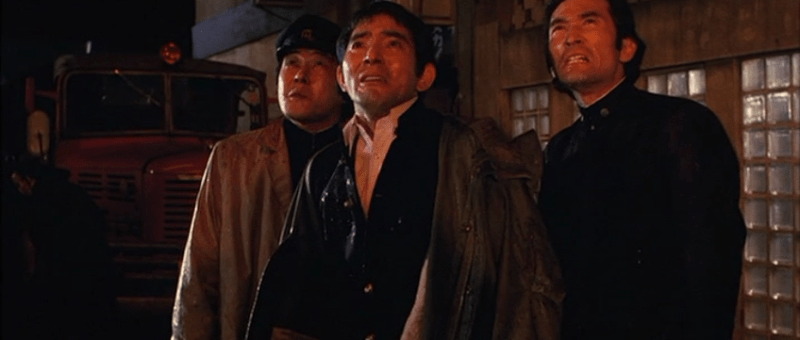
Ito conjures a sense of haunting by adding a modern day framing sequence in which the abandoned hotel is an eerie space of cobweb-ridden collapse. A wrecking ball arcs back and fore, threatening to unearth a truth long buried and this is after all a mystery, at least in part. With extraordinary finesse, the camera travels from the ruins into the hotel of old as a woman enters the frame. We are now in 1942. This is Yokohama, a harbour town, and so the “hotel” is filled with military personnel though transgressively it also seems trapped in a kind of before time. The sailors dance to American standards such as Georgia on my Mind and Goodnight Sweetheart though otherwise at war with America. All eyes are on sex worker Yuri (Hitomi Kuroki) and her dashing Zero Fighter pilot boyfriend, Takemiya (Tatsuo Nadaka).

But later we learn that Takemiya hated planes and was scared of heights to the point that it kept him up at night. Apparently from a military family, he felt unable to avoid going on with this militaristic charade and saw no future for himself other than glorious death. Everyone at the Fukuju Hotel is in their way already dead and chief among them the madam, Tae (Yoko Shimada), who becomes the prime suspect when her unpleasant husband Ichitaro (Akira Nakao) is murdered during the night. Her nemesis is however. Ichitaro’s sister, Kiku (Kyoko Enami), who has just been deported from the US where she had been living after selling herself into sexual slavery in order to financially support Ichitaro after their parents died. 

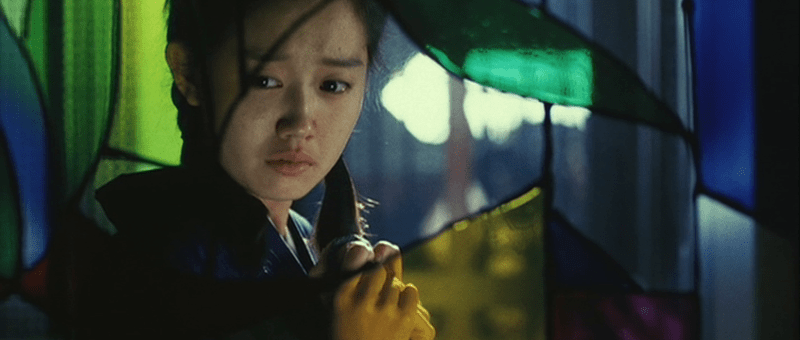
Kiku had been Tae’s madam, bringing her over from Japan at 17 and as she will do again, actively sitting on her face when she screamed and fought after being assigned her first customer. This brutalisation seems have driven Tae towards a desire for escape, but that was only available to her by marrying Ichiro who then betrayed his own sister to open another brothel that he ran with Tae before leaving the US and setting up in Yokohama in light of the declining relationship between America and Japan. Though she herself was brutalised, Tae can only earn her freedom by exploiting other women. At the beginning of the film two young girls, Mitsu (Mami Nomura), 18, and Fumi (Yuki Kudo), 17, arrive from the country excited for their new lives but without fully understanding what they’ve signed up to. Like Tae, Omitsu fights back when chosen by a sleazy, nouveau riche factory owner who made his money making planes for the navy, and while Tae tries to talk her down Kiku simply sits on her face and tells the man to do his business. Afterwards, Mitsu tries to kill herself and her friendship with Fumi is strained by her internalised sense of shame. Determined to save enough money to redeem Fumi’s contract before the same thing happens to her, she throws herself into sex work and begins to lose Fumi’s respect. 

It’s the two girls who see this place as haunted most clearly, firstly in catching sight of Tae wandering the corridors in her nighty on the night of her husband’s murder, and then by Fumi’s belief she has seen the pale ghost of a geisha only to realise it was just a wig on a shelf. Mitsu says it belonged to a woman who contracted syphilis, went mad, and then died, a fate she now fears may also befall her. Like many of the other women, the girls have been sold into sexual slavery by their parents most likely because their families are poor and they can’t feed their other children. This kind of rural poverty is of course exacerbated by the financial demands of imperial expansion while the dehumanising elements of militarism, the belief that everything must be devoted to the war effort, allow this heinous relic of the feudal past to continue. Sons after all belong to the emperor and will become brave soldiers fighting for their nation, while daughters have no intrinsic value other than as wives or sex workers to be advantageously traded or sold on.

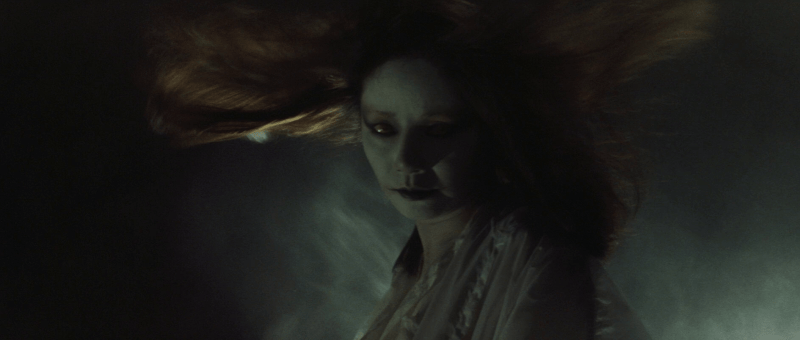
It’s this that Fumi comes to realise and resent. She insists that she will never return to her home or parents because at the end of the day, they sold her. Yet she feels little sympathy on learning that one of the other women is a notorious criminal who murdered her foster parents because they too took girls in to sell them on. The hotel somehow becomes the nexus of all this pain and violence, a place the women can never escape. Ito does his best to make clear that this is hell by travelling through the air ducts, on towards the eerie glow of the furnace and the dank passages running under the hotel and out into the sea. The boiler room connects all other areas of the hotel and exposes all their secrets in the sound that travels through the ducts. But some secrets are designed to remain forever hidden until the wrecking balls of the contemporary era force them into the light and confront us with this buried history. Until then, the hotel exists in a ghostly state, Ito flooding it with hazy images and visitations that read as eternal apparitions of this place’s inescapable despair trapping all within its labyrinth of unresolved longing.


Trailer (no subtitles)
Village of Eight Gravestones (八つ墓村, Yoshitaro Nomura, 1977)

Can a curse end up being “real” just because people believe in it? Unlike many of his other crime films which were adapted from the novels of Seicho Matsumoto, Yoshitaro Nomura’s The Village of the Eight Gravestones (八つ墓村, Yatsuhaka-mura) edges towards the idea that the curse at its centre is real in a more literal sense with grimly grinning samurai standing on their hilltop and rejoicing in the fulfilment of the 400-year campaign of vengeance, but also hints at a toxic legacy of enmity and warfare along with a karmic sensibility found in many of Seishi Yokomizo’s other mysteries in which a noble family must account for the way it gained its riches. 

In this case, the Tajimi family which now owns most of the village became prosperous after betraying a band of eight displaced samurai during the Sengoku era. Fleeing the battlefield in defeat, the samurai had originally frightened the villagers when they came down off the mountain but were in actuality non-threatening, simply settling down to a life of farming and peaceful co-existence. But some members of the community became greedy and accepted the promises of riches from a rival clan for the service of eliminating the eight samurai. Cruelly inviting them to the local festival in what seemed like a moment of acceptance as members of the village, they betrayed them killing some by poison and others by the sword. 

Now, hundreds of years later, the Tajimi family is on the verge of extinction with the eldest daughter unable to bear children and the oldest son bedridden and soon to die which explains why they’re keen to track down long lost grandson Tatsuya Terada (Kenichi Hagiwara) who was presumably adopted by his stepfather and bears his name after his now deceased mother Teruko left the family to escape her abusive relationship with half-mad husband Yozo (Tsutomu Yamazaki). Surprisingly, it’s his maternal grandfather Ushimatsu Igawa (Yoshi Kato), who comes looking for him only to drop dead as soon as they meet of apparently strychnine poisoning in the first of several murders that all echo the ancestral curse placed upon the Tajimi family by samurai leader Yoshitaka Amako (Isao Natsuyagi) as he died. 

Like many of Nomura’s films this too features a journey only this one is in a sense into the past as Tatsuya ventures to the rural heart of Japan hoping to see his mother’s birthplace and satiate his curiosity about his birth father. What he discovers there is obviously a lot of what seems like unfounded local superstition along with a degree of unpleasant stigmatisation as he’s immediately accosted by a shamaness who calls him a murderer to his face for his connections with the Tajimis to whom he feels himself a stranger, and then is later blamed for all the weird goings on which only began after he arrived. The film uproots itself from the original 1948 setting to the present day which perhaps lessens the impact of its central theme about the legacy of violence and betrayal that is stoked by war and enmity along with the destructive capacity of human greed that encourages some to betray others for their own advancement only to discover that success founded on human sacrifice will never get you very far. 

Ironically in a more real world sense, it turns out to be greed that motivates these present crimes with the villain hoping to usurp the Tajimi family fortune and utilising the curse as a means to do so. Much of the action takes place in a network of underground caves filled with glowing green lakes where the villain eventually takes on demonic proportions, face ghostly white with yellowish eyes and a crazed expression that echoes those of the samurai as they died. Nomura hints at the sense of ancient dread in this very old place while also surprisingly bloody in his flashbacks which feature scenes of shocking violence including severed heads one of which seems to lick its lips and stare intently even while on display. This being a Kindaichi (Kiyoshi Atsumi) mystery, the famous detective does indeed appear though remains a background presence quietly solving the crime behind the scenes while Tatsuya searches for the key to his own history and an escape from this legacy of violence and destruction in reclaiming his own identity.


Original trailer (no subtitles)

Dead Angle (白昼の死角, Toru Murakawa, 1979)

The jitsuroku yakuza movie which had become dominant in the mid-70s had often told of the rise and fall of the petty street gangster from the chaos of the immediate post-war era to the economically comfortable present day. The jitsuroku films didn’t attempt to glamourise organised crime and often presented their heroes as men born of their times who had been changed by their wartime experiences and were ultimately unable to adjust themselves to life in the new post-war society. Adapted from a serialised novel by Akimitsu Takagi which ran from 1959 to 1960, Toru Murakawa’s Dead Angle (白昼の死角, Hakuchu no Shikaku) by contrast speaks directly to the contemporary era in following a narcissistic conman who has no need to live a life of crime but as he says does evil things for evil reasons. 

Prior to the film’s opening in 1949, the hero Tsuruoka (Isao Natsuyagi) had been a law student at a prestigious Tokyo university where he nevertheless became involved in the Sun Club, a student financial organisation launched by mastermind Sumida (Shin Kishida) who eventually commits suicide by self-immolation when the organisation collapses after being accused of black market trading. An unrepentant Tsuruoka resolves to start again, rebuilding in the ashes as a means of kicking back against hypocritical social institutions and rising corporate power by utilising his legal knowledge to run a series of cons through the use of promissory notes to prove that the law is not justice but power. 

In this Tsuruoka has an ironic point. He doesn’t pretend what he’s doing is legal, only that he’s safeguarded himself against prosecution. When a pair of yakuza thugs break into his office and threaten him in retaliation for a con he ran on a shipping company, he reminds them that as they’ve had him open the safe it would make the charge of killing him robbery plus murder which means automatic life imprisonment rather than the few years they might get for simply killing him without taking any money. He always has some reason why the law can’t touch him, while implicitly placing the blame on his victims who were often too greedy or desperate to read the small print and therefore deserve whatever’s coming to them. In at least one case, Tsuruoka’s victimless crimes end up resulting in death with one old man whom he’d double conned, pretending to give him the money he was owed but getting him drunk and talking him into “re-investing” the money with him, takes his own life by seppuku in the depths of his shame not only in the humiliation of having been swindled but losing his company, who had trusted him, so much money. 

You could never call Tsuruoka’s rebellion an anti-capitalist act, but it is perhaps this sense of corporate tribalism symbolised by the old man’s extremely feudalistic gesture that Tsuruoka is targeting. As his wife Takako (Mitsuko Oka) tells him, Tsuruoka should have no problem making an honest living. After all he graduated in law from a top university, it’s not as if he wouldn’t have been financially comfortable and it doesn’t seem that the money is his primary motive. While Takako continues to insist that he’s a good person who wouldn’t do anything “illegal”, his longterm geisha mistress Ayaka (Yoko Shimada) knows that he’s an evil man who does evil things for evil’s sake and that’s what she likes about him. Elderly businessmen are always harping on about the “irresponsible youth” of the day but all are too quick to fall for Tsuruoka’s patter while he is essentially nothing more than a narcissist who gets off on a sense of superiority laughing at the law, the police, and the corporate landscape while constantly outsmarting them. 

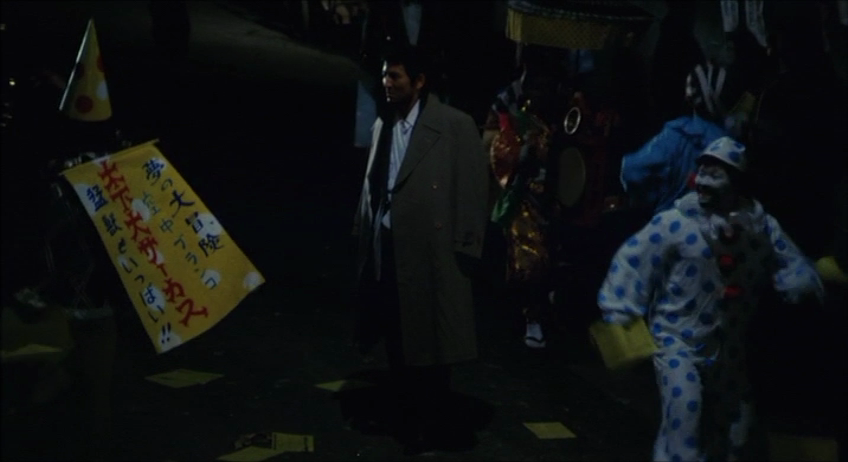
In this, the film seems to be talking to the untapped capitalism of the 1970s. Like Tsuruoka, the nation now has no need to get its hands dirty and should know when enough is enough but is in danger of losing sight of conventional morality in the relentless consumerist dash of the economic miracle. That might explain why unlike the jitsuroku gangster pictures, Murakawa scores the film mainly with an anachronistic contemporary soundtrack along with the ironic use of saloon music in the bar where Tsuruoka’s associates hook an early target, and the circus tunes which envelope him at the film’s opening and closing hinting that this is all in some ways a farce even as Tsuruoka is haunted by the ghosts his narcissistic greed has birthed. Then again perhaps he too is merely a product of his times, cynical, mistrustful of authority, and seeking independence from a hypocritical social order but discovering only failure and exile in his unfeeling hubris. 


Original trailer (no subtitles)

The Inugami Family (犬神家の一族, Kon Ichikawa, 1976)

the inugami family 1976 posterUnlike many of his contemporaries, Kon Ichikawa was able to go on working through the turbulent ‘70s and ‘80s because he was willing to take on purely commercial projects. The phenomenal and hugely unexpected success of 1976’s The Inugami Family (犬神家の一族, Inugami-ke no Ichizoku) set him in good stead for the rest of the decade during which he followed up with another four movies starring Koji Ishizaka as the eccentric detective Kosuke Kindaichi as featured in the novels of Seishi Yokomizo each of which was a bonafide box office success partially thanks to the effect of Haruki Kadokawa’s intensive multimedia marketing strategy then still in its infancy. In fact, Ichikawa would return to the sordid world of the Inugamis for his final picture in which he dared to remake his “greatest hit” with a now much older Koji Ishizaka reprising his role exactly 30 years later. Ichikawa might have been making “commercial” movies, but he never lost his experimental spirit.

Old Sahei Inugami (Rentaro Mikuni) finally drops dead in 1947 after a lifetime of seemingly doing exactly as he pleased. As a 17-year-old orphan he was taken in by a kindly priest and thereafter founded one of the biggest pharmaceuticals companies in Japan which is to say he leaves behind him a vast estate and desirable name. Unfortunately, he also leaves a messy family situation. Sahei was never legally married, but fathered three daughters with three different women who each have a son. In his 50s, he also fathered a son with his maid who would be about the same age as the grandchildren if anyone knew where he was. Sahei’s will, which in dramatic fashion can only be read with everyone present, leaves everything to a young woman, Tamayo (Yoko Shimada), who isn’t even part of the family but was doted on all the same by the elderly patriarch. In order to inherit, Tamayo must consent to marry one of the three grandsons – Suketake (Takeo Chii), Suketomo (Hisashi Kawaguchi), or Sukekiyo (Teruhiko Aoi) with whom she seems to have shared a past attachment. The will stresses that she is free to choose though if she decides to marry someone else entirely, the fortune will be divided in five with one part each to the grandsons and the rest to the maid’s son. As one can imagine, the daughters are furious.

Kindaichi is called in by a clerk (Hajime Nishio) at the solicitor’s office who has seen the will and finds it all decidedly strange (plus he’s in love with Tamayo so it’s very bad news for him). The clerk gets murdered before he can spill the beans, but the solicitor himself, Furudate (Eitaro Ozawa), decides to enlist Kindaichi’s help in figuring all of this out before it claims any more lives. Unfortunately, claim more lives it will.

Greed, as ever, is at the root of all evil but like the other entries in the Kindaichi series the crimes are largely a result of the world which surrounds them. Old Sahei made his money in some dubious ways. Ingratiating himself with the rich and powerful, later becoming a militarist for what seems like opportunistic reasons, he got himself special dispensation to grow poppies for their medicinal properties. Which is to say, he got rich selling opium to the masses. Inugami pharmaceuticals profited hugely from suffering incurred in wars spanning the century – with Russia, with China, through the first world war and the second. There was Inugami, ready to fuel the fire by numbing the pain.

Yet it’s his own unresolved emotional suffering that seems to have sent him such a dark and amoral path. Later we discover that a strange and emotionally difficult set of circumstances involving a quasi-incestuous, bisexual love triangle seem to have left him craving something to numb his own pain but only succeeding in passing it on to those around him. Firstly through the women he kept around to satisfy his carnal desires and then sent away, keeping the children with him but in a loveless, austere home. The sisters – Matsuko (Mieko Takamine), Takeko (Miki Sanjo), and Umeko (Mitsuko Kusabue) share an uneasy sort of camaraderie but are quick to turn on each other when it becomes clear that only one of them will inherit the family fortune and that they are now each rivals for the hand of Tamayo.

Like their grandfather, the Inugami boys are not an especially good catch. Two of them eventually attempt to rape Tamayo in an attempt to force her into marriage through shame (despite the fact that one has already fathered a child with his cousin), while she also has her doubts that Sukekiyo, with whom she has always felt a connection, is really who he says he is. Having gone away to the war, Sukekiyo did not return home after being demobbed because of intense survivor’s guilt. He also sustained severe burns to his face which require him to wear a latex mask over his entire head making positive identification difficult seeing as his voice, which he rarely uses, is also changed.

Rather than submit himself to the necessarily pokerfaced approach common to prestige murder mysteries from across the globe, Ichikawa uses the saleability of the property as an excuse to go all out. His tone varies wildly, almost to the point of parody in his frequent cuts to Kindaichi causing another of his famous anxiety induced dandruff avalanches. The blood eventually flies as do severed heads while upended corpses do handstands in lakes. The story of the Inugami family is a strange one filled with moments of bizarre whimsy but somehow it all works. As in many a Japanese mystery, the past refuses to die and the guilty eventually realise how misguided their enterprise has been, but there is hope for those left behind if they can free themselves from the cycle of guilt and suffering on which the Inugami name was built.


Original trailer (no subtitles)