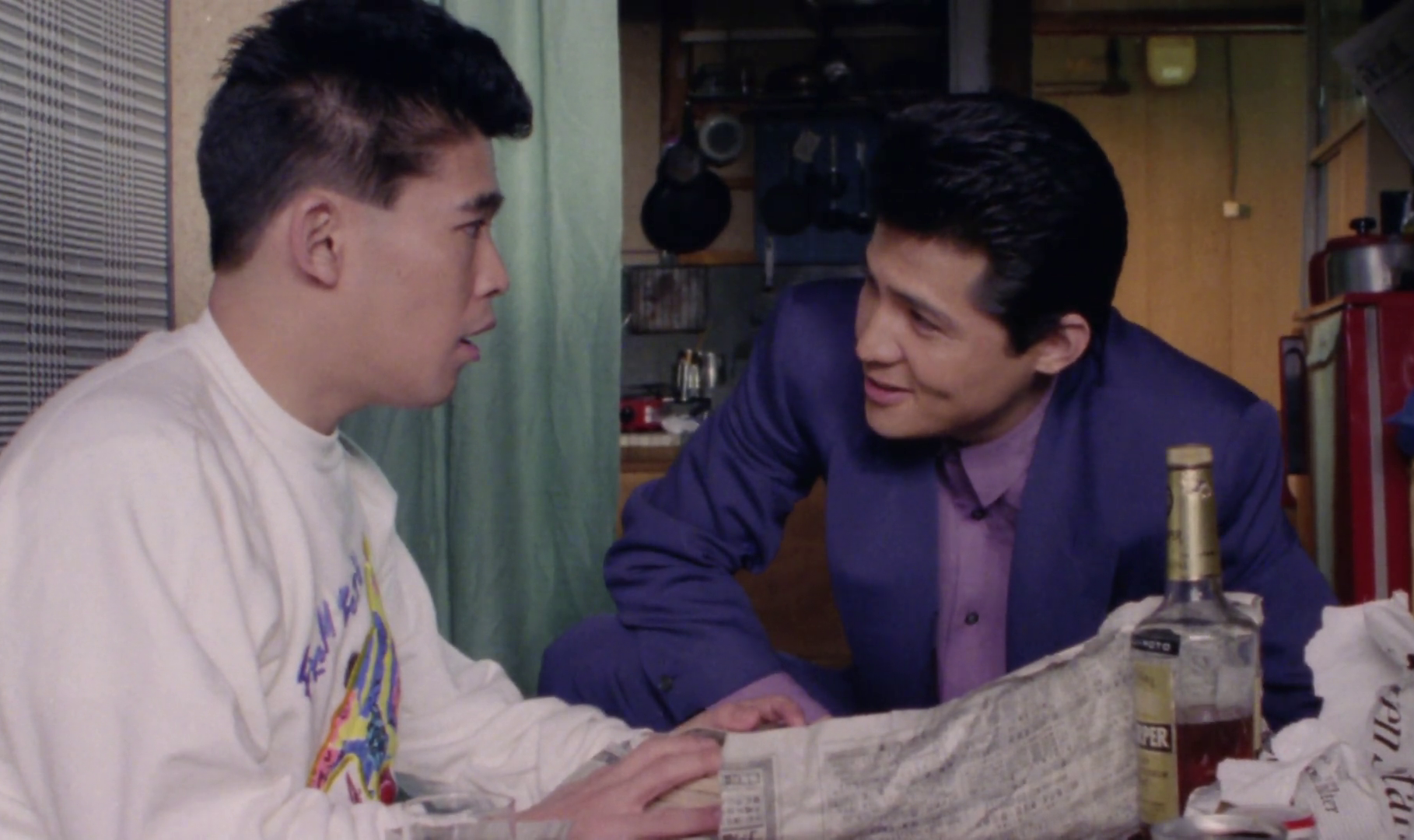
A Quiet Life (静かな生活, Juzo Itami, 1995)

“One person is not a tool for another” the heroine of Juzo Itami’s 1995 melodrama A Quiet Life (静かな生活, Shizukana Seikatsu) eventually writes in her diary quoting her novelist father but also reflecting on herself and her life in which some have indeed attempted to use others for their own ends. Outside of international mega hit Tampopo, Itami is best known for a series of anarchic comedies each starring his wife Nobuko Miyamoto as forthright woman tackling the ills of contemporary Japan from tax evasion and increasingly amoral capitalism to the yakuza and shady cults. Based on a novel by his brother-in-law Kenzaburo Oe, A Quiet Life is therefore something of an outlier yet once again addresses a number of social issues from treatment of disability in the contemporary society to the relationships between parents and children and the dangers of a rapidly modernising society. 

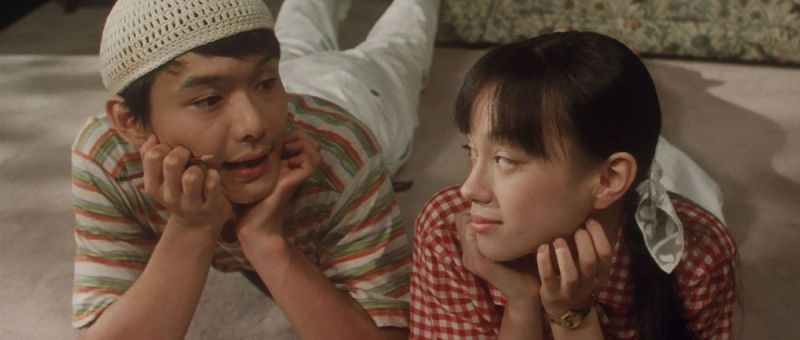
Middle daughter Ma (Hinako Saeki) lives in a large Western-style in the country with her father, internationally renowned author K (Tsutomu Yamazaki), mother and two brothers the oldest of which, Eeyore, has some learning difficulties but is largely independent. Nevertheless, when K, who is experiencing a moment of crisis that leads him to consider suicide when he is unable to fix a problem with the drains and has to resort to a plumber, is offered a job at a university in Australia Ma is left in charge at home and therefore responsible for her brother. Though the family fully accepts Eeyore, it’s clear the world around them is not always so kind. As they approach a centre for the disabled on a walk, others around them openly express disgust, suggesting they are a “bad influence” and wanting to leave the area entirely. 

Meanwhile as the film opens two children are locked together in a game of magnets, a collection of adults attempting to pull them apart by force. The shot is later repeated as Eeyore holds his sister in the rain following a traumatic and unexpected incident and demonstrating the close and affectionate bond between the siblings. Yet there is an uncomfortable suggestion from some that Ma is being asked to sacrifice her life to look after her brother who after all is unlikely to marry and will require additional care as long he lives, while she is perhaps slightly overprotective and wilfully self-sacrificing. “Don’t expect another human to sacrifice their life for you” goes another of her father’s lines, “to expect such a thing is the worst kind of depravity”, the family otherwise committed to the insistence that Eeyore has his own life and interiority which must neither be sacrificed, nor sacrificed for, for to do so would be to deny his personhood. Eeyore is not a tool for Ma’s charity nor is she a tool for the family’s duty towards him. 

Nevertheless even she is not immune to negative stereotyping becoming increasingly concerned that her now adult brother may pose a threat to the local community in his lack of understanding and inability to control his impulses. When a child molester is on the loose in the village, she is terrified Eeyore may be involved having read a newspaper report about a similar crime committed by someone with learning difficulties uncomfortably echoing the prejudice of the walkers by the disabled centre not to mention to middle-aged women who openly gossip about it in front of their house. Meanwhile, her own naivety becomes a threat when she allows a smarmy young man, Arai, to give her brother swimming lessons later learning that he has a grudge against her father who he feels “used” him to facilitate his art having bought and drawn inspiration from his experiences of being accused of a crime but leaving readers with the impression that he was a sex offender. 

Arai may indeed be trying to use her for revenge and at any rate is not all he seems even if the implication of her father’s story is that he wanted to sacrifice himself to save the young man. While K works through his artistic block offscreen aided by his wife (whom he soon forgets once he’s well), Ma has a series of epiphanies of her own over an eventful summer you couldn’t really call “quiet” even if there’s a strange tranquility in its anarchy. Going to some dark and unexpected places, Itami’s gentle dramedy veers away from the zany comedies of his earlier career but discovers a kind of serenity in the quiet of life of the siblings getting on with business of living in the sometimes hostile Japanese countryside. 


Original trailer (no subtitles)

Gohatto (御法度, Nagisa Oshima, 1999)

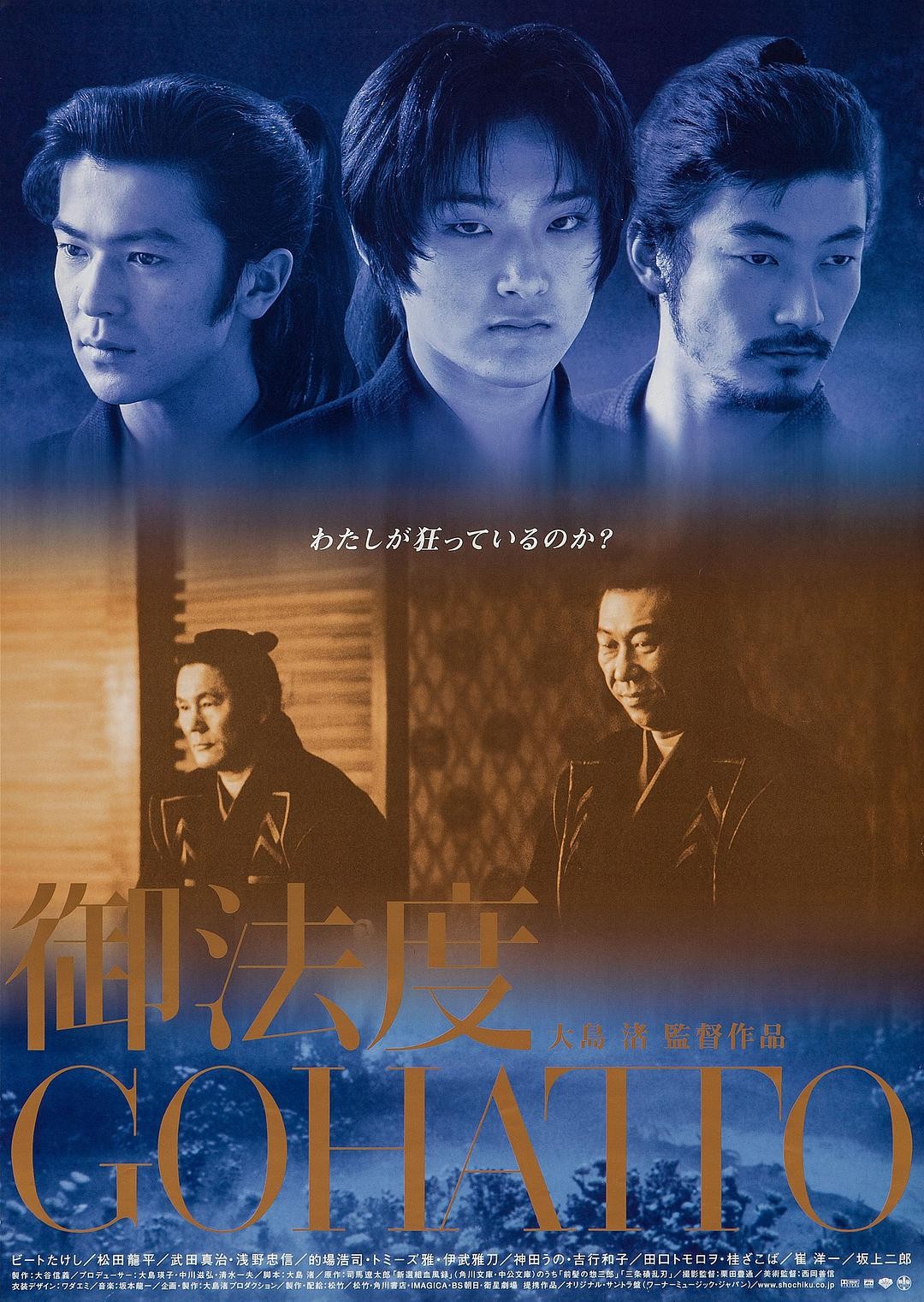
Nagisa Oshima once said that his hatred of Japanese cinema extended to absolutely all of it, decrying the hackneyed nativism of “foggy beauty and stupid gardens”, yet his final film is filled with Mizoguchian mist and almost a paen to Japanese aesthetics which ends with a cherry blossom tree in full bloom cut down in its prime. Burdened by the slightly more salacious title “Taboo”, Gohatto is less about love between men in an intensely homosocial world even as it asks what it might mean by “forbidden” or “against the law” than it is about idealism and aesthetics as its band of contradictory conservatives unknowingly approach the end of their world in a coming modernity ushered in by dangerous beauty. 

Set in the Kyoto of 1865, a scant three years prior to the Meiji Restoration, the film opens with an audition of sorts as the Shinsengumi search for promising new recruits among talented swordsmen. Already a mess of contradictions, the Shinsengumi is, loosely, a kind of official police force dedicated to defending the Shogunate against the revolutionary forces set on restoring power to the emperor. Nevertheless, in an odd way and in contrast to the elite Mimawarigumi which was staffed only by direct retainers to the Shogun, the Shinsengumi was noted for its lowkey egalitarianism in that it made a point of admitting those of ordinary birth as well as lower level samurai and ronin. Of course, the notions of equality only went so far and perhaps only fuelled its reputation for merciless savagery, but also make it a strangely progressive force fighting against progress in defence of the feudal status quo. 

Only two of the hopefuls are thought to be any good, one a young ronin, Tashiro (Tadanobu Asano), and the other a beautiful boy, Kano Sozaburo (Ryuhei Matsuda), the third son of a wealthy merchant whose line were once samurai but are no longer counted among the noble retainers. A talented swordsman, Sozaburo’s dangerous beauty presents an existential threat to the Shinsengumi order, the steely Hijikata (Takeshi Kitano) looking on conflicted in witnessing the way his commander, Kondo (Yoichi Sai), looks at this vision of androgynous beauty remarking that he had not known him to be “that way inclined”.

Being that way inclined does not seem to be a particular issue within the Shinsengumi, it is not against their draconian rules and in fact appears to be tolerated at least as long as it causes no further problems. Kondo is however mindful of the chaos caused by a similar wave of homoerotic lust which took hold shortly before a climactic battle which would prove to be their last success. What Sozaburo seems to arouse in them is something more dangerous than the accepted patterns of love between military men which is in a sense sublimated as a mentor/student relationship, loyalty more than romance. Tashiro, who is of a similar age to the apparently 18-year-old Sozaburo, lets his desire be known, vowing to sleep with him before he dies ironically acknowledging Sozaburo for what he is, an angel of death. 

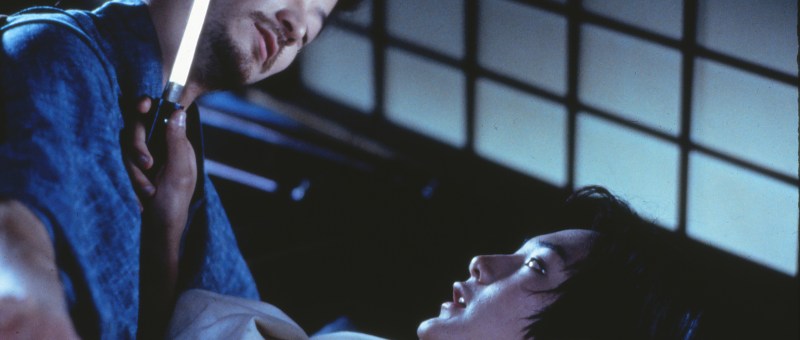
For his part, Sozaburo remains curiously passive in each of his encounters, aroused only it seems by the act of killing. Yet Hijikata discerns that he has indeed become Tashiro’s lover on witnessing them fight, Sozaburo losing clumsily despite being the more skilled in a dynamic that mimics their relationship in which Tashiro is the dominant partner. Aware of the danger in Sozaburo’s allure, Kondo suggests having a superior take him to the red light district to show him the delights of woman hoping to guide him back towards a less dangerous path, only the attempt backfires on several levels. Firstly, Sozaburo has no interest in women and continues to decline believing his commander is also hitting on him (like everyone else), thereafter determined to seduce him after all. Another retainer does indeed succeed in seducing Sozaburo, developing a mild obsession, but later ends up dead, Tashiro a main suspect in his murder with the motive of sexual jealousy though all of this additional violence is perhaps only an expression of Sozaburo’s dangerous beauty. 

As so often, sex if not love becomes the force which destabilises the social order only here it’s equated both with death and with an alternative mediation of male violence. Perhaps reflecting the way they look to the 18-year-old Sozaburo who makes a faux pas in accidentally suggesting at least one of them is of pensionable age, the ranking members of the Shinsengumi are played by actors already well into their golden years as if relics of a bygone era though in reality most were in their 30s. As Soji (Shinji Takeda), a filial figure like Sozaburo wearing long hair, puts it, there are no old men in their unit which is in essence an anti-revolutionary force. Nevertheless, the Shinsengumi is on the wrong side of history and already living in its end times, perhaps ushered towards its doom by the figure of the beautiful boy. “You were too beautiful”, Hijikata eventually laments as he finally perhaps understands the nature of the revolution he is witnessing. Perverse to the last, Oshima sets his ethereal finale in a stygian fog and pays an ironic tribute to the Mizoguchian classicism he so railed against in his youth, taking a sword to the cherry blossoms as he like Hijikata severs his own legacy in a moment of destructive beauty. 


Gohatto screens at Genesis Cinema on 25th September as part of this year’s Queer East

International trailer (English subtitles)

Goodbye for Tomorrow (あした, Nobuhiko Obayashi, 1995)

goodbye for tomorrowAfter completing his first “Onomichi Trilogy” in the 1980s, Obayashi returned a decade later for round two with another three films using his picturesque home town as a backdrop. Goodbye For Tomorrow (あした, Ashita) is the second of these, but unlike Chizuko’s Younger Sister or One Summer’s Day which both return to Obayashi’s concern with youth, Goodbye For Tomorrow casts its net a little wider as it explores the grief stricken inertia of a group of people from all ages and backgrounds left behind when a routine ferry journey turns into an unexpected tragedy.

Three months after nine people were drowned when a local ferry sank in the harbour, friends and relatives of the dead begin to receive messages signed by their loved ones instructing them to be at a small island at midnight. Cruel joke or not, each of the still grieving recipients makes their way to the boathouse, clutching the desperate hope that the dead will really return to them. Sure enough, on the stroke of midnight the ghostly boat rises from the ocean floor bringing a collection of lost souls with it, but its stay is a temporary one – just long enough to say goodbye.

Obayashi once again begins the film with an intertile-style message to the effect that sometimes meetings are arranged just to say goodbye. He then includes two brief “prequel” sequences to the contemporary set main narrative. The first of these takes place ten years previously in which a boy called Mitsugu throws a message wrapped around a rock into a school room where his friend Noriko is studying. We then flash forward to three months before the main action, around the time of the boat accident, where an assassination attempt is made on the life of a local gangster in a barber shop. At first the connection between these events is unclear as messages begin to arrive in innovative ways in the film’s “present”. After a while we begin to realise that the recipients of the messages are so shocked to receive them because they believe the senders to be dead.

At three months since the sinking, the grief is still raw and each of our protagonists has found themselves trapped in a kind of inertia, left alone so suddenly without the chance to say goodbye. The left behind range from a teenager whose young love story has been severed by tragedy, a middle aged man who lost a wife and daughter and now regrets spending so much time on something as trivial as work, a middle aged trophy wife and the colleague who both loved a successful businessman, two swimmers with unresolved romances, and the yakuza boss who lost his wife and grandson. For some the desire is to join their loved ones wherever it is that they’re going, others feel they need to live on with double the passion in the name of the dead but they are all brought together by a need to meet the past head on and come to terms with it so that they can emerge from a living limbo and decide which side of the divide they need to be on.

Aside from the temporary transparency of the border between the mortal world and that of the dead, the living make an intrusion in the form of the ongoing yakuza gang war. The Noriko (Kaori Takahashi) from the film’s prequel sequence also ends up at the meeting point through sheer chance, as does the Mitsugu (Yasufumi Hayashi), now a gangster and charged with the unpleasant task of offing the old man despite his longstanding debt of loyalty to him. These are the only two still living souls brought together by an unresolved message bringing the events full circle as they achieve a kind of closure (with the hope of a new beginning) on their frustrated childhood romance.

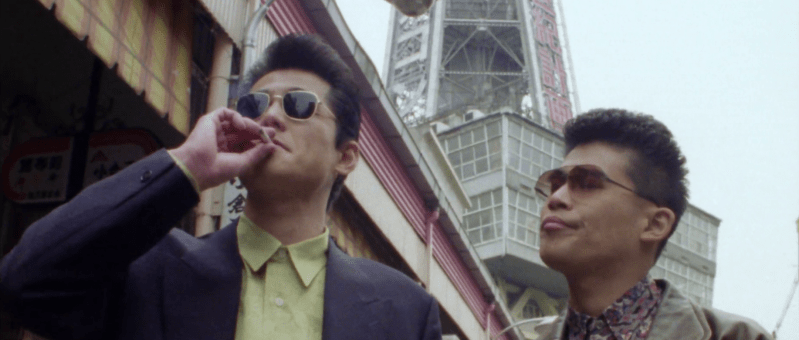
The other two hangers on, an ambitious yakuza with a toothache played by frequent Obayashi collaborator Ittoku Kishibe, and a lunatic wildcat sociopath played by the ubiquitous Tomorowo Taguchi, are more or less comic relief as they hide out in the forrest confused by the massing group of unexpected visitors who’ve completely ruined their plot to assassinate the old yakuza boss and assume control of the clan. However, they too are also forced to face the relationship problems which bought them to this point and receive unexpected support from the boss’ retuned spouse who points out that this situation is partly his own fault for failing to appreciate the skills of each of his men individually. The boss decides to make a sacrifice in favour of the younger generation but his final acts are those of forgiveness and a plea for those staying behind to forget their differences and work together.

Revisiting Obayashi’s frequent themes of loss and the need to keep living after tragedy strikes, Goodbye For Tomorrow is a melancholy character study of the effects of grief when loved ones are taken without the chance for goodbyes. Aside from the earliest sepia tinged sequence, Obayashi plays with colour less than in his other films but manages to make the improbable sight of the sunken boat rising from the bottom of the sea genuinely unsettling. The supernatural mixes with the natural in unexplained ways and Obayashi even makes room for The Little Girl Who Conquered Time’s Tomoyo Harada as a mysterious spirit of loneliness, as well as a cameo for ‘80s leading man Toshinori Omi. The Japanese title of the film simply means “tomorrow” which gives a hint as to the broadly positive sense of forward motion in the film though the importance “goodbye” is also paramount. The slight awkwardness of the English title is therefore explained – saying goodbye to yesterday is a painful act but necessary for tomorrow’s sake.