Sasaki in My Mind (佐々木、イン、マイマイン, Takuya Uchiyama, 2020)

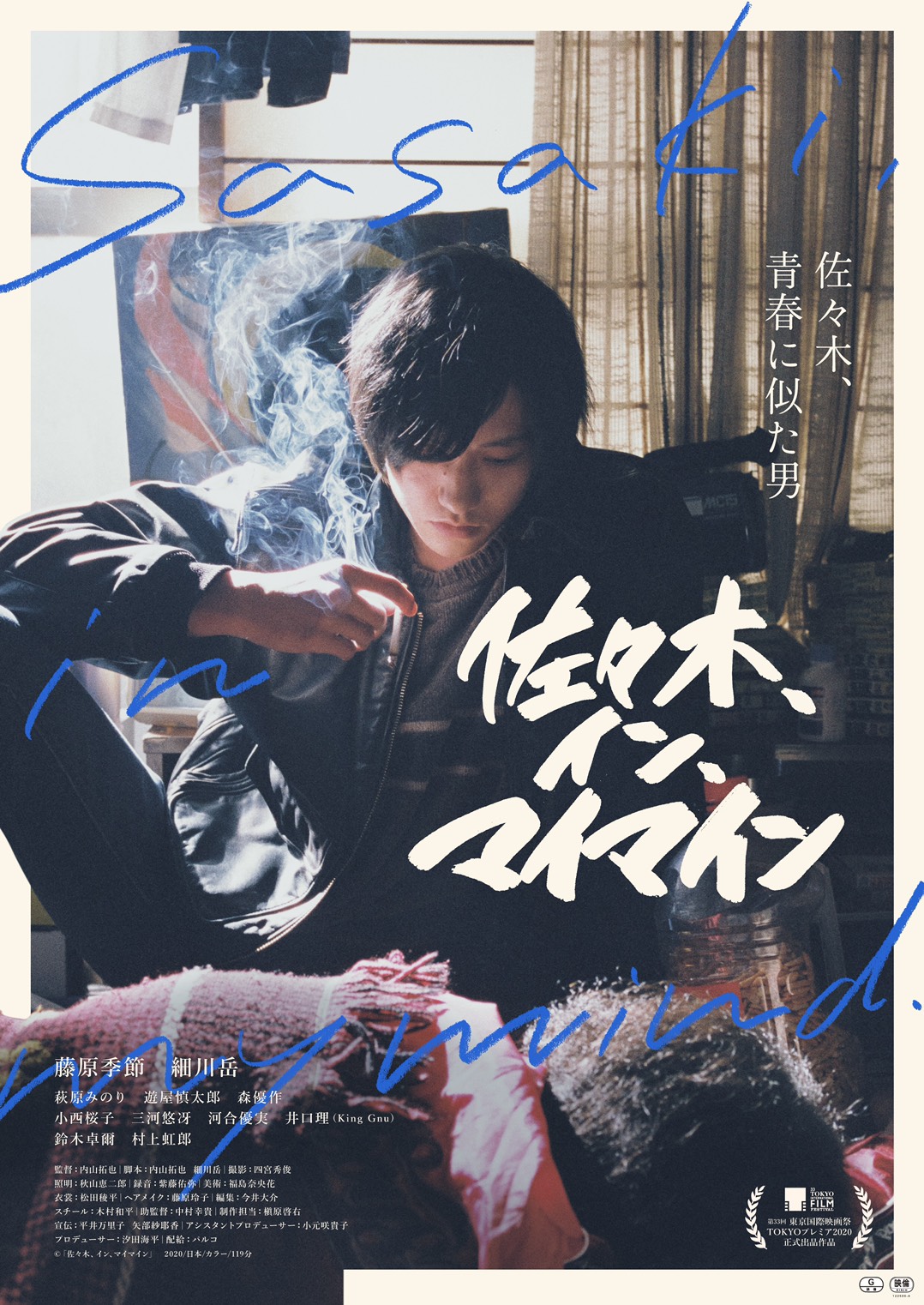
A young man is forced to confront his quarter life malaise when presented with unexpected tragedy in Takuya Uchiyama’s heartfelt youth movie, Sasaki in My Mind (佐々木、イン、マイマイン). A study in inertia, Uchiyama’s moody drama finds its melancholy hero defeated by life, looking back to more hopeful high school days and the larger than life friend he has, by his own admission, failed convinced by his own rather solipsistic sense of personal inadequacy that he lacked the capacity to save him. 

An aspiring actor, Yuji (Kisetsu Fujiwara) lives in a small apartment with his ex-girlfriend (Minori Hagiwara) and makes ends meet with a factory job he seems to be embarrassed by. Approached by an actor friend (Nijiro Murakami) apparently doing a little a better with a series of bit parts in TV shows and commercials, Yuji is reluctant to take him up on his offer of a part in a play, while an accidental meeting with an old high school friend, Tada (Yuya Shintaro), pushes him into a defensive mindset after he’s rightly called on his passivity. “Watching life go by in terror” as his character in the play eventually puts it, Yuji is so defeated by life that it has rendered him entirely listless. Ironically taking up boxing, he gets into a random fight with a customer from the the next table at an izakaya, insisting that he doesn’t want to lose but otherwise refusing to fight for anything even the girlfriend he apparently still loves whose refusal to move on perhaps hints at the desire to be given a reason not to. 

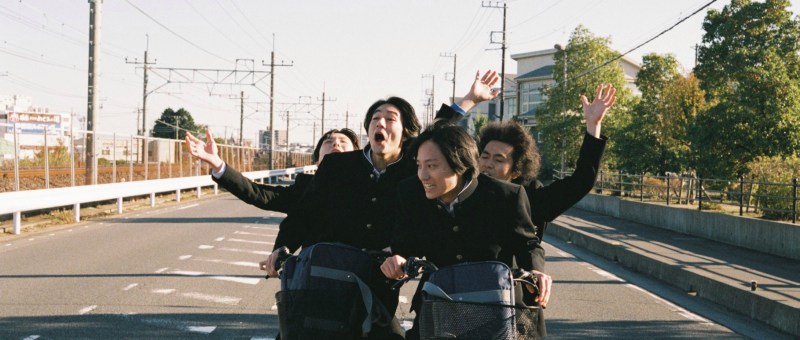
His meeting with Tada, now a moderately successful, married salaryman, reminds him of his high school friend, Sasaki (Gaku Hosokawa), a larger than life character who used to strip impromptu and dance in the nude when greeted by chants of his name. It was Sasaki who first convinced him to become an actor as they watched Kirk Douglas in Champion on TV, though after graduation and a move to Tokyo Yuji made no real effort to keep in touch with his friend seeing him only once and discovering he had become a lonely pachinko player equally consumed by a sense of personal hopelessness. As Sasaki once put it, elephants communicate with each other through low frequency sound imperceptible to humans, his own quiet distress call apparently missed by his old friends who perhaps tired of his outlandishness as they outgrew their teenage selves and became bogged down in their own lives leaving him behind as they strove forward alone. 

Left behind is something which Yuji cannot help but feel, further deepening his sense of personal failure in having achieved not much of anything in his Tokyo life. Sasaki aside, his high school friends, Tada and Kimura (Yusaku Mori), have each shifted into a conventional adulthood with regular salaryman jobs, homes, wives, and even children. He didn’t go to his last high school reunion, probably as Tada seems to have realised out of a sense of shame, for the same reason avoiding contact with his old friends while living in an awkward limbo with the ex who apparently grew bored with his lack of drive and continuing air of defeated ennui. Despite his own insecurity, Sasaki had encouraged him to live his life, assuring him that he’s got this, but when it came to it Yuji failed to do the same abandoning him in their old home town as a relic of the past he can’t quite accept. 

Admitting as much to his theatre director, Yuji is once again told to shine in his own spotlight and that lonely people aren’t necessarily lonely because they’re alone. Everyone keeps telling him to grow up, act like an adult, but Yuji doesn’t seem to know how hung up on high school immaturity and reflecting only too late that perhaps they never really understood their friend and in the end they simply left him behind. Only a confrontation with finality pushes him towards a break with his sense of inertia, acknowledging that what he feared was letting go and the eventual forgetting that comes with loss but the “world is rushing forward. We have to keep up”. Sasaki remains for him at least in his mind as he always was, the first of many goodbyes in an “empty elegy” that eventually becomes one’s own. A touching tale of quarter life crisis, Uchiyama’s moving drama eventually pushes its static hero towards an acceptance of his moral cowardice but finally gives him the courage to move forward taking his memories with him into a freer future. 


Sasaki in My Mind streamed as part of this year’s Nippon Connection.

Original trailer (no subtitles)
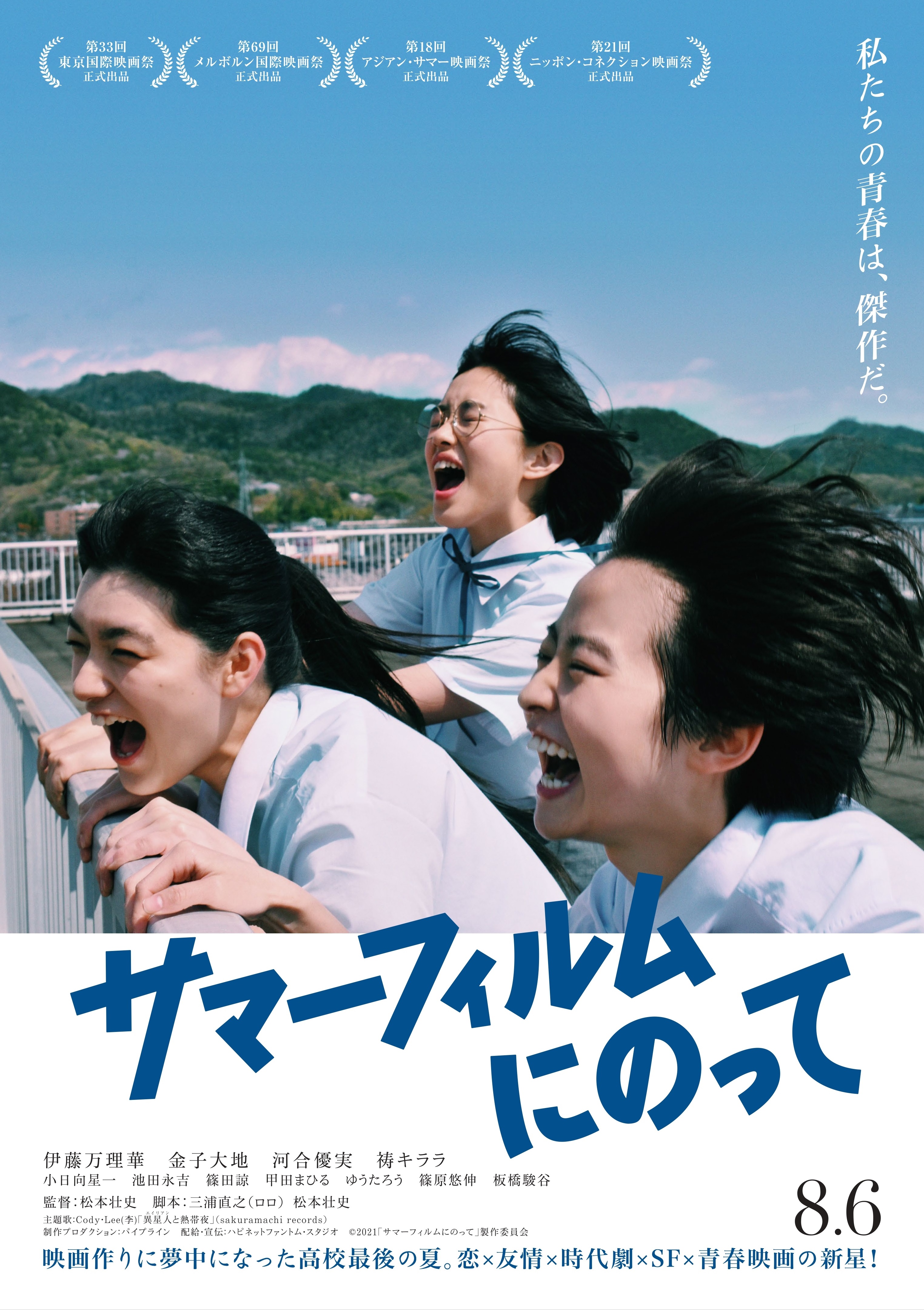
It’s a Summer Film! (サマーフィルムにのって, Soshi Matsumoto, 2020)

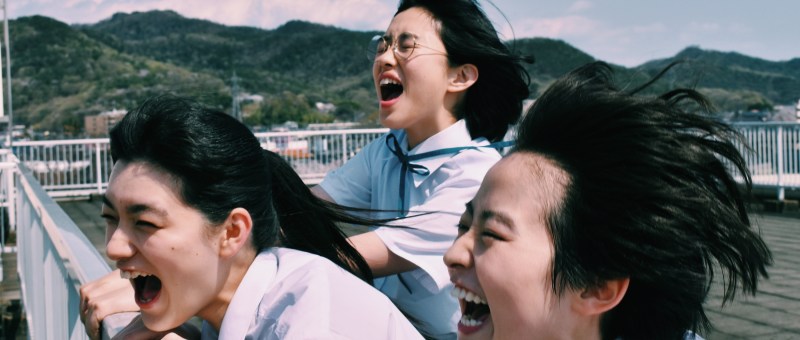
“Movies connect the present with the past through the big screen” according to the jidaigeki-obsessed heroine of Soshi Matsumoto’s charming sci-fi-inflected teen movie It’s a Summer Film! (サマーフィルムにのって, Summer Film ni Notte). True to its title, Matsumoto’s whimsical drama very much belongs to the grand tradition of high school summer movies as its youthful heroines contemplate eternity, romantic heartbreak, and artistic fulfilment while secretly plotting to best their vacuous rival by filming their very own teen samurai movie ready in time for the all-important school cultural festival. 

Aspiring director Barefoot (Marika Ito) is completely obsessed with classic samurai movies, arguing with her similarly devoted friends about who is hotter Shintaro Katsu or Raizo Ichikawa. She is a key member of the school movie making club, but intensely resentful of star player Karin (Mahiru Coda) who won the tender to make the film for this year’s cultural festival with a sappy teen romance which mostly seems to involve repeated scenes of the central couple loudly declaring their love for each other. Barefoot thinks a film should convey love without words and has written a script for a teen samurai movie in which adversaries become too emotionally invested in each other to engage in the expected final confrontation. All she’s lacking is a star and after spotting a handsome guy apparently as moved by a local rep screening as she is decides she’s found her man. What she doesn’t know is that Rintaro (Daichi Kaneko) is a secret time traveller from a future in which she has become a renowned master filmmaker but film itself sadly no longer exists. 

Being from the future and all explains Rintaro’s reluctance to star in the film, dropping accidental hints that he’s from another place as in his amusement that humans still staff removal companies and total mystification by the word “Netflix”. Yet he too is completely obsessed with classic jidaigeki from the heyday of the genre which had largely gone out of fashion by the early 1980s. As many point out, Barefoot’s hobby is slightly unusual, though she learned her love of chanbara from her grandma, receiving messages from the past she hoped to pass on to the future. Gathering most of the other rejected, outsider teens from a boy who looks about 40 to a pair of baseball nerds who can correctly guess the player from the sound of a ball hitting a glove and a bleach blond biker, she assembles a team to make her movie dreams come true as if to prove there’s something more out there than the, as she sees it, vacuous high school rom-coms favoured by the likes of Karin. 

Among the series of lessons she finally learns is that Karin need not be an adversary but could be a friend if only she look beyond her snootiness and resentment of the popular crowd even if Karin’s all pink, needlessly extravagant and egotistically branded crew shirts don’t do much to dispel Barefoot’s perception of her as entitled and self-obsessed. Another lesson she learns is that she’s not as disinterested in romance as she thought she was, though falling for Rintaro leaves her with a secondary dilemma realising that he’ll eventually have to return to his own times while also contemplating what the point of the future even is if they don’t have movies there. What she’s going to do with the rest of her life if the art of cinema is already obsolete? 

With some ironic help from Karin, what she realises is that even if something is destroyed it doesn’t disappear, films live on in the memories of those who saw them who can then take their memories with them into the future. Where her first draft had ended with an emotional anti-climax that saw her heroes too emotionally involved to engage in conflict, she now realises that samurai movies are love stories too and that “killing is a confession of love” in a slightly worrying though not altogether inaccurate take on the homoerotic subtext of the chanbara. A charmingly whimsical coming-of-age tale filled with meta touches from the constant references to classic jidaigeki to the heroine’s sci-fi-obsessed sidekick who seems to have an unrequited crush on her best friend idly reading The Girl Who Leapt Through Time, It’s a Summer Film! more than lives up to its name in its cheerful serenity as the teenage old souls defiantly learn to claim their own space while connecting with each other as they contemplate love and transience in the eternal art of cinema. 


It’s a Summer Film streamed as part of this year’s Nippon Connection.

Original trailer (English subtitles)