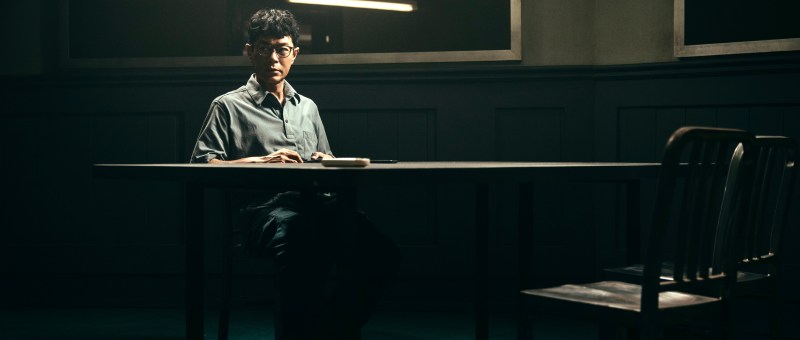
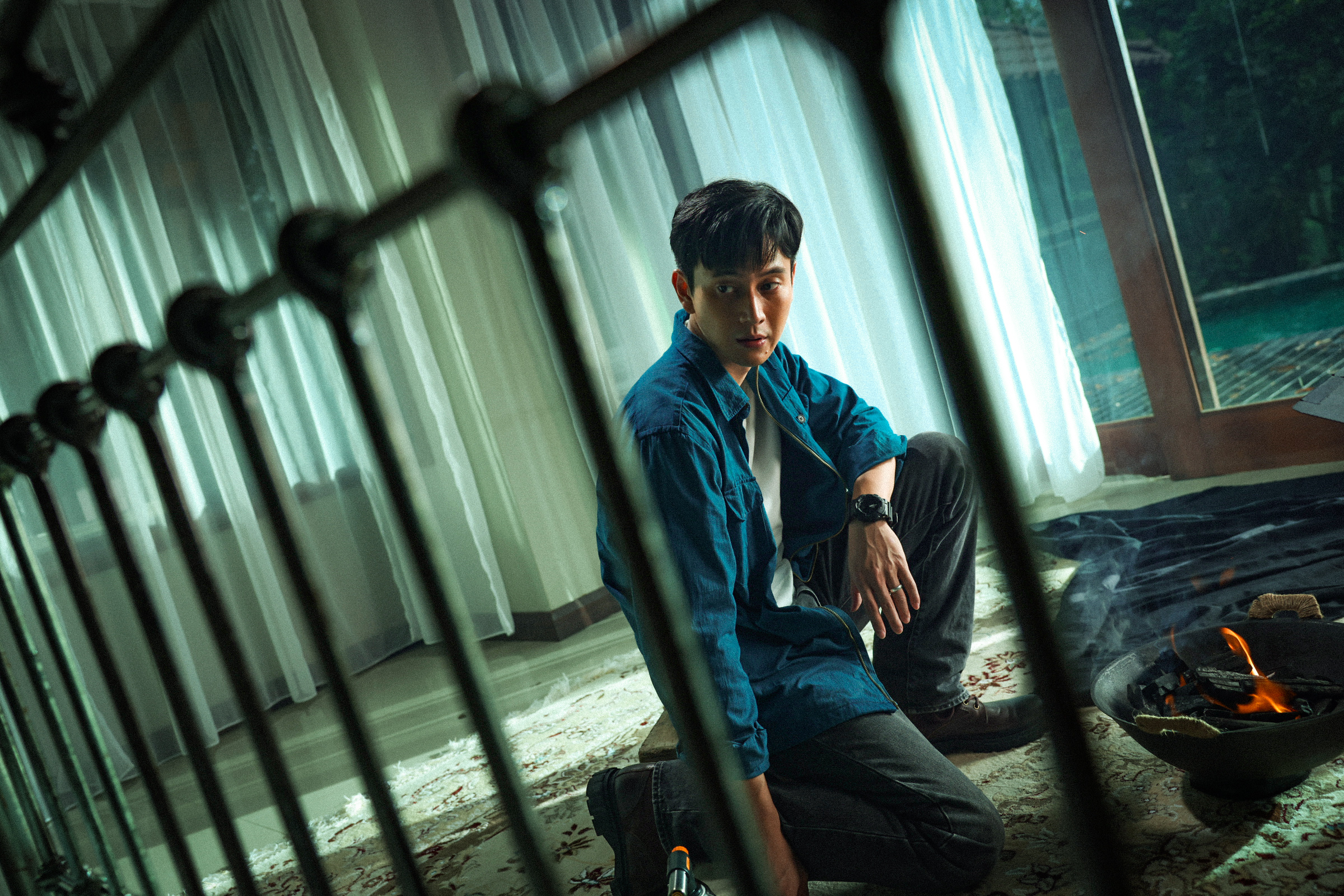
“At our age, we do what we have to do instead of obsessing over the good old days,” according to a put upon wife sick of waiting for her husband to make good on his promises. Jonathan Li Tsz-Chun and Chou Man-Yu’s Malaysia-set drama Behind the Shadows (私家偵探) is in its way as much about the disconnect in modern romance which has now been corrupted by capitalistic desires and frustrated notions of traditional masculinity as its central mystery.
As someone says, in the old days women hired private detectives to chase their men, but now it’s the other way around. In someways, the parade of men rocking up at Wai-yip’s (Louis Koo Tin-lok) office to hire him to follow their wives, girlfriends, or women with whom they may not actually have much of a connection, all seem to be trying to regain control over their lives by asserting it over a lover they fear has betrayed them. Ironically, this is sort of true of Wai-yip too in that he’s taken to spending his evenings at his friend’s restaurant to escape his moribund marriage. When one customer brings him a photo of his own wife, Kuan (Chrissie Chau Sau-na), little knowing he’s the other man Wai-yip is irate but not as surprised as might be expected. Still, he hands the case off to a junior associate and tries to avoid thinking about it while otherwise passively seething about his wife’s potential betrayal.
But the ironic thing is that Kuan might only have done this to get Wai-yip’s attention and force him to confront their fracturing relationship. While Wai-yip hangs back, tries to act with maturity, and struggles to accept his wife’s decision, she privately wants him to fight back, to shout at her or punch her lover as a sign of manly love. She attacks his masculinity by berating him for being work-shy and refusing to have a child because they can’t afford it, though she can support them all on her salary, while Wai-yip remains hung up on the lost glory of his life in Hong Kong which he gave up to marry Kuan and move to Malaysia. The suggestion is that Wai-yip has been trapped in a kind of limbo, unable to let go of the past and embrace his new life and now Kuan is sick of waiting for him.
The circumstances of his own marriage and the cynicism of 20 years spent chasing cheating spouses cause Wai-yip to be wary when a man comes and asks him to look for a runaway fiancée. He wonders if they’ve just had a tiff, if she’s left because the man was violent or unfaithful, or if the man is delusional and the woman doesn’t believe herself to be in a relationship with him and so is just happily living her own life. Along with all these anxieties is his sense of responsibility in knowing that this woman may be in danger if he finds her, as will Betty if Wai-yip manages to uncover evidence of her infidelity and relays it back to her gangster boyfriend. Like Kuan, Betty (Renci Yeung Sz-wing) says she just wants a man who will listen to her when she wants to talk and is half-minded to let Wai-yip send the video to find out if the gang boss cares about her enough to actually do anything about it.
But the consequences of inaction are also brought home to Wai-yip when one of the women he’s following is murdered after he leaves his investigation to chase Kuan and her lover. Trying to makeup for his failure brings him into contact with a zombified cop, Chen (Liu Kuan-ting), whose wife is in a coma after a car accident. While Chen’s solicitous care and repeated pleading that his wife wake up may paint him as a lovelorn man, the marks on her arm that perfectly fit his fingers suggest a violent and controlling past along with a thinly concealed rage that she may have escaped him at last. “There’s nothing much the police can’t do,” he ominously tells Wai-yip while hinting at his desire for authoritarian control as mediated through the patriarchal institution of the police force and his rejection of a woman’s sexual freedom. Wai-yip feels similarly trapped as his own increasing sense of inadequacy deepens the gap between his wife and himself that leaves him unable to have an honest conversation with her about how he really feels and prevents him from healing the rifts within his own marriage even as he chases answers on behalf of other insecure men. What he indeed realises is that it’s time to move on from the past and live in the present, though as it turns out not even he may be strong enough to leave his insecurities behind.
Behind the Shadows screened as part of this year’s New York Asian Film Festival.
Trailer (Traditional Chinese / English subtitles)
 Windows on Worlds