A Good Man, A Good Day (好人好日, Minoru Shibuya, 1961)

It’s funny, in a way, that life can hold so much goodness in it even with an underlying, barely visible melancholy. Goodness does indeed breed goodness for the sometimes misunderstood heroes of A Good Man, a Good Day (好人好日, Kojin Kojitsu) who struggle to adjust themselves to changing times but at the end of the day just want each other to be happy and for life to be blissfully dull and free of complication.

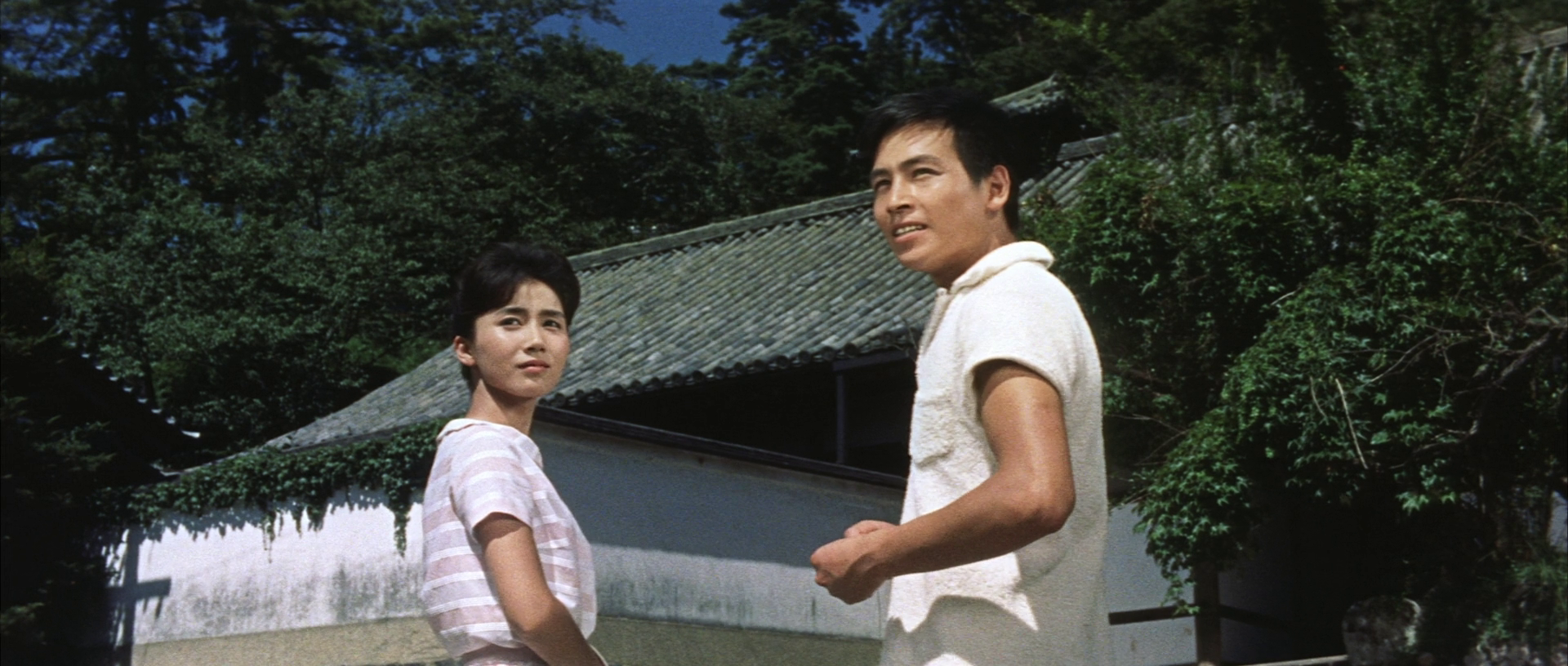
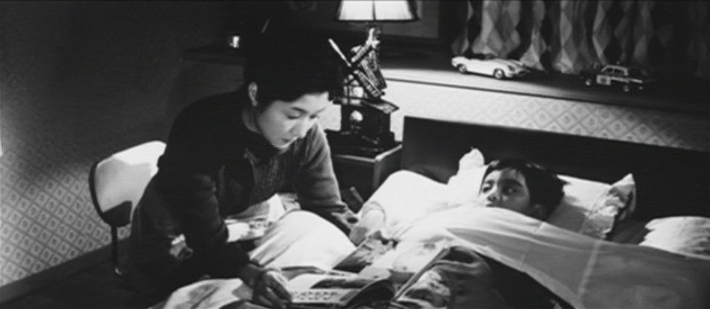
The obvious point of friction is that 20-something daughter Tokiko (Shima Iwashita) has had a proposal. She behaves as if it’s an arranged marriage, but in reality Ryuji (Yusuke Kawazu) is actually her boyfriend and the two of them have mutually decided to formalise their union but are doing things the “proper” way perhaps in part because Ryuji’s family run a 200-year-old ink shop and are intensely conservative. Though it’s Tokiko’s fuddy-duddy professor father Hitoshi (Chishu Ryu) who is often regarded as the sticking point, it’s equally Ryuji’s family and particularly his traditionalist grandmother (Tanie Kitabayashi) who isn’t sure that Tokiko is really good enough. She is however the only member of the family who thinks it’s not a big deal after discovering that Tokiko is adopted while others regard her with an increased suspicion and the prejudice often held towards orphans that they don’t want to let someone into their family whose familial lineage they don’t know.

It’s most likely for their benefit that Tokiko and Ryuji are intent on compromising by doing everything the “proper” way rather than as her mother Setsuko (Chikage Awashima) tells her just get married on their own without worrying about what anyone thinks. But in this awkward mix of tradition and modernity we can see that times have changed and Ryuji and Tokiko have decided their future for themselves. They firmly believe it will work out so they’re remaining patient, but should that patience run out they will decide to prioritise their own happiness. 

For his part, Hitoshi later says that he never actually objected to the marriage but just hates the idea of big weddings which he regards, not without reason, as stupid and pointless. In any case he warms to Ryuji when he loses his temper and calls him an “old fart,” realising that he’s a young man with a backbone and possibly worthy of Tokiko. A professor of mathematics, Hitoshi is an awkward man who doesn’t quite fit into polite society but has a good heart even if he has a funny way of showing it. When he wins an important medal from the government for his contribution to scholarship and it gets stolen, he won’t let the hotel owner report it because of his embarrassment but when the chastened thief brings it back he sends Tokiko after him with money for his train fare and a little more as a thank you. 

Still, he was probably not an easy man to live with and Setsuko’s not so secret sake habit is likely a result of the strain of dealing with him and his constant faux pas in the boredom of a rural life in which she says all she does is make pickles. But despite that, she still tells Tokiko that marriage is essential to a woman’s happiness if also encouraging her to fight for what she really wants. Tokiko is already doing just that, but has lingering doubts over her parentage and wants to know who her birth parents may have been partly out of curiosity but also a mild fear of the implications it may have. But what Hitoshi eventually tells her is that she is a war orphan which makes her a kind of everywoman and a symbol of the young, post-war generation which is making a break with the past. 

The film in fact includes a small satirical, anti-war sequence in which Hitoshi is accosted by a snooty nationalist who shouts out that he lacks “patriotism” for allowing the medal the emperor so generously gave him to be stolen. The man tells him he should face the direction of the Imperial Palace and apologise all which makes him look quite mad and paints Hitoshi as the figure of exasperated sanity. He also rejects contemporary consumerist culture in continuing to live like a student counting every last yen and rejecting the TV set Ryuji buys him because it would deprive him of going to the coffee shop to watch baseball games instead (though he does regret it later). In any case, Hitoshi’s guileless goodness does seem to ameliorate the world around him in making others, like the thief, want to live up to it as he, like Tokiko, defiantly does what he wants and though at times perhaps insensitive generally has his heart in the right place.


The Twilight Years (恍惚の人, Shiro Toyoda, 1973)

In the early 1970s Japanese society was not as concerned with population slowdown as it would come to be, but Shiro Toyoda’s sympathetic ageing drama The Twilight Years (恍惚の人, Kokotsu no Hito) is evidence of a growing consciousness that traditional ideas about how one cares for the elderly may now be becoming incompatible with the functioning of modern society. Based on a best-selling novel by Sawako Ariyoshi, the film has profound empathy both for the ageing patriarch once apparently a tyrant but now a meek and frightened child, and the daughter-in-law to whom his care largely falls.

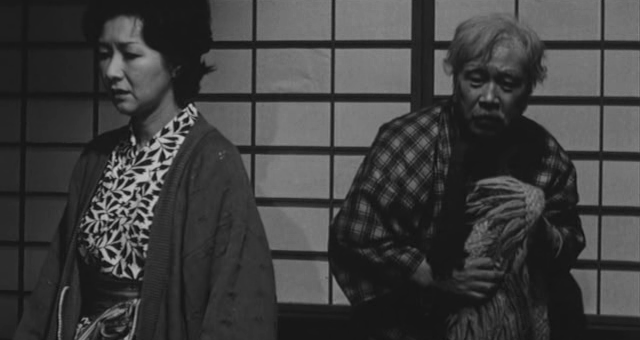
In fact, it’s caring for Shigezo (Hisaya Morishige) that some believed shortened the lifespan of his late wife who passes away in the film’s opening scenes. Already somewhat detached from reality, Shigezo simply reports that his wife won’t wake up no matter how much he tries to wake her, much like a child who’s discovered someone no longer living. While his daughter-in-law Akiko (Hideko Takamine) rushes to her room with a sense of foreboding, Shigezo merely stays in the kitchen eating boiled potatoes straight out of the pan. It’s the odd behaviour that seems to irk his son Nobuyoshi (Takahiro Tamura) but it’s only now that the couple seem to be realising that there’s something wrong especially as Shigezo does not appear to understand that his wife has died. Pitiably, he chides her for lounging around so late in the day when she’s already been laid out for her funeral.

When his daughter, Kyoko (Nobuko Otowa), arrives having actually missed the funeral itself due to transport issues and a conflicting responsibility to act as a matchmaker at a wedding, Shigezo doesn’t recognise her. He continues to ask for Akiko and gradually forgets most of the other people in his life, screaming when encountering Nobuyoshi and instructing Akiko to call the police to report a burglar in their home. According to both women, Shigeyoshi had treated Akiko poorly ever since she joined their family, which makes caring for him so much harder. The reason he becomes so attached to Akiko is likely simply that she is the person who is always around him so he has less time to forget her. He may realise on some level that she may not wish to care for him given his previous behaviour which may be why he becomes preoccupied with the idea she may “disappear” and cries out in the night when he can no longer see her.

But Akiko also has other responsibilities including a job outside the home and a teenage son studying for his exams. Nobuyoshi expresses regret that he hasn’t been more help and voluntarily tries to pitch in, but lets himself off the hook given that his father doesn’t recognise him and becomes anxious in his presence. Satoshi (Izumi Ichikawa) meanwhile does try to do his bit but is young and a little resentful of the responsibility. As his dementia becomes more severe, Shigezo begins calling Satoshi “Dad” as if he were a child again. Which is all to say, Shigezo becomes Akiko’s responsibility and the strain of caring for him begins to affect her own mental and physical health leading her to fear that she too may die younger than she otherwise might have. 

Yet in exploring her options, Akiko finds little by way of support. Most nursing homes won’t accept patients with complex needs like Shigezo and conditions such dementia are often regarded as mental illnesses meaning her only option might be to put him in an asylum. Shigezo was attending an old person’s daycare centre, but later says he doesn’t want to go anymore because it’s full of old people and therefore no fun. While the film is sympathetic towards Akiko and the difficulties she is facing in caring for her father-in-law it also has profound empathy for Shigezo for though he has so many people who are doing their best to look after him, his increasing mental confusion quite obviously leaves him isolated and he must be incredibly lonely while trapped within his own reality. He develops a habit of saying “hello, hello,” as if he were answering the telephone which may be his attempt to communicate while he is also fascinated with a caged bird which may reflect his own sense of being constrained by his condition.

Later, the bird seems to symbolise Akiko too, trapped as she is within the domestic environment where all responsibility seemingly falls to her. Even so a young student couple she rents the annex to for a lower price in exchange for keeping an eye on Shigezo during the day remark that he may be in the ideal state for a human being having returned to early childhood in which there are no concerns or responsibilities and he is therefore unburdened by the weight of what is to live. Toyoda often uses handheld camera to symbolise the desperation and destabilisation of Shigezo’s existence in which Akiko has become his only fixed point. One of Nobuyoshi’s friends remarks that perhaps it was better when the average life expectancy was 50 and Nobuyoshi’s mother might have been lucky passing away peacefully while otherwise in good health. Still, as Nobuyoshi says, it comes for us all in the end and we should all try to be kinder to each other while we’re here.


Hit and Run (ひき逃げ, Mikio Naruse, 1966)

The contradictions of the contemporary society drive two women out of their minds in Mikio Naruse’s dark psychological drama, Hit and Run (ひき逃げ, Hikinige, AKA A Moment of Terror). Scripted by Zenzo Matsuyama and starring his wife Hideko Takamine in her final collaboration with the director, Naruse’s penultimate film takes aim at the persistent unfairness of a post-war society already corrupted by increasing corporatisation while caught at a moment of transition that leaves neither woman free to escape the outdated patriarchal social codes of the feudal era. 

The two women, both mothers to five-year-old boys, are mirror images of each other. Kuniko (Hideko Takamine), the heroine, is a widow working in a noodle bar and continually exasperated by her energetic son Takeshi who keeps escaping kindergarten to play pachinko which is not a suitable environment for a small child. Kinuko (Yoko Tsukasa), meanwhile, is mother to Kenichi and married to a high ranking executive at Yamano Motors, Kakinuma (Eitaro Ozawa). These two worlds quite literally collide when Kinuko, emotionally distressed and driving a little too fast, knocks over little Takeshi while he is out playing with some of the other neighbourhood boys. As she is with her lover, Susumu (Jin Nakayama), she decides to drive on abandoning Takeshi to his fate but discovers blood on the bumper of her shiny white convertible on returning home and thereafter decides to tell her husband everything aside from revealing her affair. Kakinuma covers the whole thing up by forcing their driver to take the rap to protect not his wife but the company along with his own status and success fearing that a scandal concerning his wife driving carelessly may have adverse consequences seeing as Yamano Motors is about to launch a new super fast engine that will make them worldwide industry leaders. 

Perhaps in a way the true villain, Kakinuma cares about nothing other than his corporate success. Kinuko states as much in complaining that he’s never once considered her feelings only his own and that their marriage was a failure from the start, little more than an act of exploitation in which she was traded by her father for money in return for political connections. For these reasons she seeks escape through her extra-marital affair but is unable to leave partly in the psychological conflict of breaking with tradition and partly because she has a son whom she would likely not be permitted to take with her even if it were practical to do so. Another woman says something similar in disparaging Kuniko, implying that her life is in some ways over as few men would be interested in marrying a widow with a child. 

Takeshi’s loss is therefore additionally devastating in severing Kuniko’s only lifeline. A brief flashback reveals that Kuniko was once a post-war sex worker, she and her yakuza brother Koji war orphans who lost their parents in the aerial bombing. When she married and had a child she thought the gods had smiled on her but in true Narusean fashion they gave only to take away leaving her a widow and finally robbing her even of her child. To add insult to injury, they try to put a price on her son’s life, a mere 500,000 yen for a boy of five hit by a car. When the driver stands in the dock, he gets off with only a 30,000 yen fine for the death of a child. Then again on visiting his home, there appears to be a boy of around five there too, perhaps you can’t blame him for taking the money having been robbed of his youth in wartime service. 

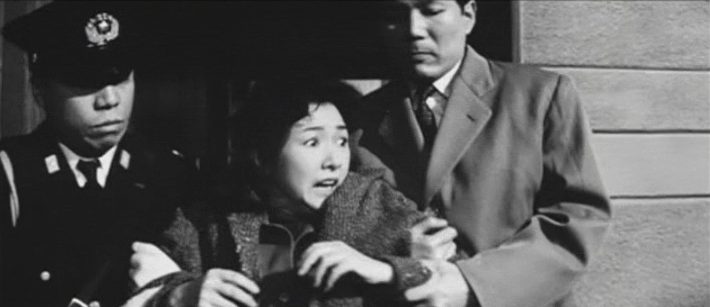
Still, on hearing from an eye witness that it was a woman who was driving, Kuniko quickly realises that Kinuko must have been responsible. Quitting her job she joins a maid agency in order to infiltrate the house and gain revenge later settling on the idea of killing little Kenichi, who takes an instant liking to her, to hurt his mother in the way she has been hurt only to be torn by her unexpected maternal connection with the boy. The conflict between the two women is emotional, but also tinged with class resentment that a wealthy woman like Kinuko should be allowed to escape justice with so little thought to those around her while Kuniko is tormented not only by her grief but the persistent injustice of the cover up. 

As in all things, it’s the lie that does the most damage in ironically exposing the truth of all it touches. Kinuko’s escape route is closed when her lover reveals that he’s lost faith in her, unable to trust a woman who’d run away from the scene of a crime and allow someone else to take the blame, while Kakinuma’s emotional abandonment of his social family for the corporate is thrown into stark relief by his immediate decision to further exploit their driver just as he will later their maid. Driven out of her mind, Kuniko has white hot flashes of lustful vengeance as she imagines herself engineering an accident for Kenichi, throwing him off a rollercoaster or coaxing him into traffic, only to regain her senses unable to go through with it so pushed to the brink of madness is she that no other action makes sense. 

Even so the conclusion is brutally ironic, Kuniko accused of a crime she did not commit but half believing that she must have done it because she wanted to so very much. Kakinuma gets a minor comeuppance, encouraged by his servant to make clear what actually happened and exonerate Kuniko thereby walking back his total commitment to the corporate (then again it seems his dream project was itself under threat from a potential plagiarism scandal) though the damage may already have been done. This societal violence of an unequal, increasingly corporatised and unfeeling society, eventually comes full circle bringing with it only death and madness as the two women seek escape from their internal torment. Naruse experiments with handheld camera and canted angles to emphasise the destabilisation of the women’s sense of reality along with blow out and solarisation in the visions that plague them, but curiously ends with a set of motor vehicle accident stats as if this had been a roundabout public information film to encourage careful driving. Then again perhaps in a way it is, a cautionary tale about the dangerous curves of untapped modernity and the cruelties of the nakedly consumerist era.  


A Woman’s Place (女の座, Mikio Naruse, 1962)

“A woman’s life is so dreary” laments a disappointed woman as she sits awkwardly at a funeral in Mikio Naruse’s A Woman’s Place (女の座, Onna no Za, AKA The Wiser Age). What exactly is “a woman’s place” in the changing post-war society? The continuing uncertainties of the age begin to burrow into the Ishikawa household as it becomes plain that the house is already divided, in several senses, as daughters and sons find themselves pulled in different directions, each of them perhaps banking on an inheritance to claim a different future. 

As the film opens, the sons and daughters of the Ishikawa family have been sent telegrams to come home at once because dad is at death’s door. Thankfully, that turns out to be premature. All he’s done is put his back out overdoing it in the garden by trying to lift a big rock in defiance of his age. Oldest daughter Matsuyo (Aiko Mimasu), who runs a boarding house, is quite put out to have rushed over for nothing, but everyone is obviously relieved that there turned out to be nothing to worry about after all. Widowed daughter-in-law Yoshiko (Hideko Takamine) realises that she needs to wire Michiko (Keiko Awaji) who moved to Kyushu when she got married that there’s no need to come, but she later turns up anyway along with her goofy husband Masaaki (Tatsuya Mihashi), claiming they’ve decided to make the trip a kind of honeymoon though it seems obvious to everyone that there must be reasons they seem intent on overstaying their welcome. 

“They depend on us, everyone does when they return home” mother/step-mother Aki (Haruko Sugimura) chuckles as Matsuyo and only remaining son Jiro (Keiju Kobayashi) pocket some paper towels from the family shop on their way out. Everyone is indeed depending on the family, not least for a clue as to where they stand as much as for a permanent place to return to. Three daughters of marriageable age still live at home. The oldest, Umeko (Mitsuko Kusabue), the daughter of patriarch Kinjiro’s (Chishu Ryu) first wife, has renounced the possibility of marriage and has made a career for herself as an ikebana teacher, a traditionally respectable occupation for “independent” women. In her 30s, she has become cruel and embittered, sniping at her sisters and always smirking away in a corner somewhere being aggressively miserable (nobody in the family seems to like Umeko very much, but still they accept her). Later she offers a sad, surprisingly romantic explanation for her decision in her unrequited love for a middle school classmate who died in the war, but is in someway revived by an unexpected attraction to a young man Matsuyo brings to the house who claims to be the infant boy Aki was forced to give up when she left her former husband’s family and married Kinjiro. 

The unexpected reappearance of Musumiya (Akira Takarada) destabilises the family across several levels, firstly in highlighting Aki’s awkward status as a second wife and step-mother to the two oldest children, and then by inciting a false romantic rivalry between the widowed Yoshiko and the unmarried Umeko. Umeko at one point cruelly describes Yoshiko as the only “outsider” in the household, viewing her connection to them now that her husband has died solely through the lens of being the mother of the only male grandchild, Ken (Kenzaburo Osawa). Yoshiko, only 36 years old, is repeatedly urged to remarry, but she like Aki would be forced to leave Ken behind if she did, though he is now a teenager and perhaps old enough not to feel abandoned. Ken in fact joins in encouraging his mother to find a second husband, but partly because she is always nagging him to study harder (something which will have have tragic, unexpected consequences). Yoshiko’s “place” in the household is therefore somewhat liminal, part of the family and yet not, because her status depends on solely on her relationships to others rather than blood. 

Nevertheless, Yoshiko is clearly in charge as we witness all of the other women disturbing her while she’s cooking to enquire after missing items, whether the bath is ready, or to attend to something in the store. Umeko has built her own smaller annex on another part of the property and mostly keeps to herself, while the two younger daughters busy themselves with a series of romantic subplots. Despite her sister Matsuyo’s eye-rolling that she should “forget about working and get married”, Natsuko (Yoko Tsukasa) is trying to find another job after being laid off when the company she worked for went bankrupt. Her brother, meanwhile, is experiencing the opposite problem in that it’s impossible to find and keep delivery staff at his ramen shop and he desperately needs help because his wife is pregnant again. Natsuko is convinced to “help out” though it’s clear that working in a ramen shop wasn’t what she had in mind, but it does bring her into contact with an eccentric friend of her sister Yukiko’s (Yuriko Hoshi) while she works on the box office of a nearby cinema. 

A crisis occurs when Natsuko is presented with the prospect of an accelerated arranged marriage to a man who took a liking to her while working at the company which went bust and has since got a job which requires him to relocate to Brazil. The ramen shop guy, Aoyama (Yosuke Natsuki), meanwhile is also getting a transfer but only to the top of Mount Fuji. Natsuko is torn, but also wonders if Yukiko actually wants Aoyama herself and only tried to set them up as a sort of test. In any case, both of these younger women also feel that their “place” is defined by marriage and their status conferred by their husbands even if they are exercising a personal preference in their choice, Yukiko’s in romance while Natsuko’s is perhaps a little more calculation in that she knew and liked her suitor but would not go so far as to call it “love”. 

In her own strange way, Umeko may be the most radical of the women in that she has attempted to define her own place through rejecting marriage and making enough money to buy her own home (albeit still on the family property) in a kind of independence, later deciding that perhaps she does want marriage after all but only on her own terms. Unfortunately, she is drawn to Musumiya whose presence poses a threat to the family on several levels, the most serious being that he is quickly exposed as a conman guilting Aki into assisting him financially while also trying some kind of car sale scam on the smitten Umeko who wants to add to her independence through learning to drive. Musumiya, it seems, prefers Yoshiko and his affection may well be genuine, but she is trapped once again. While she and Aki privately express their doubts about Musumiya, they have no desire to hurt Umeko’s feelings and cannot exactly come out and say that he is no good seeing as he is Aki’s son. Yoshiko stoically keeps the secret, perhaps also attracted to Musumiya but loyal to the Ishikawas and wanting no trouble from such a duplicitous man. Still, Umeko regards Yoshiko’s attempts to discourage her as “jealousy” and wastes no time embarrassing them both in a nasty public altercation. 

While all of this going on, there has been some talk that the shop may be compulsory purchased to make way for an Olympic road, and each of the Ishikawa children is eagerly awaiting their share of the compensation money, not least Michiko and her feckless husband who turns out to have fled Kyushu after getting fired from his job for assaulting a client. The “heir”, technically is Ken as the only male grandchild and Yoshiko’s tenuous status in the household is entirely conferred on her as his mother. When that disappears, her “place” is uncertain. Most of the others are for kicking her out, she’s not a “real” member of the family and so deserves none of the money with only Natsuko stopping to defend her. But, as so often, the widowed daughter-in-law turns out to be the only filial child. Mum and dad feel themselves displaced in their own home, somehow feeling they must stand aside, but it turns out they have plans of their own and Yoshiko is very much included. They want to take her with them, and if one day she decides to marry again then that’s perfectly OK and they will even provide a dowry for her as if she were one of their own daughters. 

“We have many children but they only think of themselves” Kinjiro laments, “let’s not worry about them and live peacefully by ourselves”. It’s easy to see their decision as a strategic retreat, as if they’re being left behind by a future they cannot be a part of, but it’s also in some ways an escape from the increasingly selfish post-war society. Yoshiko may not have actively chosen her “place” but she does at least have one and reserves the right to choose somewhere else in the future. The older Ishikawas choose to be happy on their own, freeing their children and giving them their blessing so long as they’re “doing their best”. It’s a strangely upbeat conclusion for a Naruse film, if perhaps undercut with a mild sense of resignation, but nevertheless filled with a hope for a happier future and an acknowledgement that “family” can work but only when it is defined by genuine feeling and not merely by blood. 


Our Marriage (私たちの結婚, Masahiro Shinoda, 1962)

Like many directors of his age, Masahiro Shinoda had to serve his apprenticeship at Shochiku contributing to the studio’s particular brand of light and cheerful melodramas though 1962’s Our Marriage (私たちの結婚, Watashitachi no Kekkon) did perhaps allow him to explore some of his persistent themes in its ultimately empathetic exploration of the romantic and existential dilemmas of two sisters who ultimately find themselves taking different paths in the complicated post-war society. Co-scripted by Zenzo Matsuyama, Our Marriage is essentially a chronicle of changing times and the crises of modernity, but it’s also surprisingly even-handed in its refusal to judge or indeed to sugarcoat the “romance” of a working class life. 

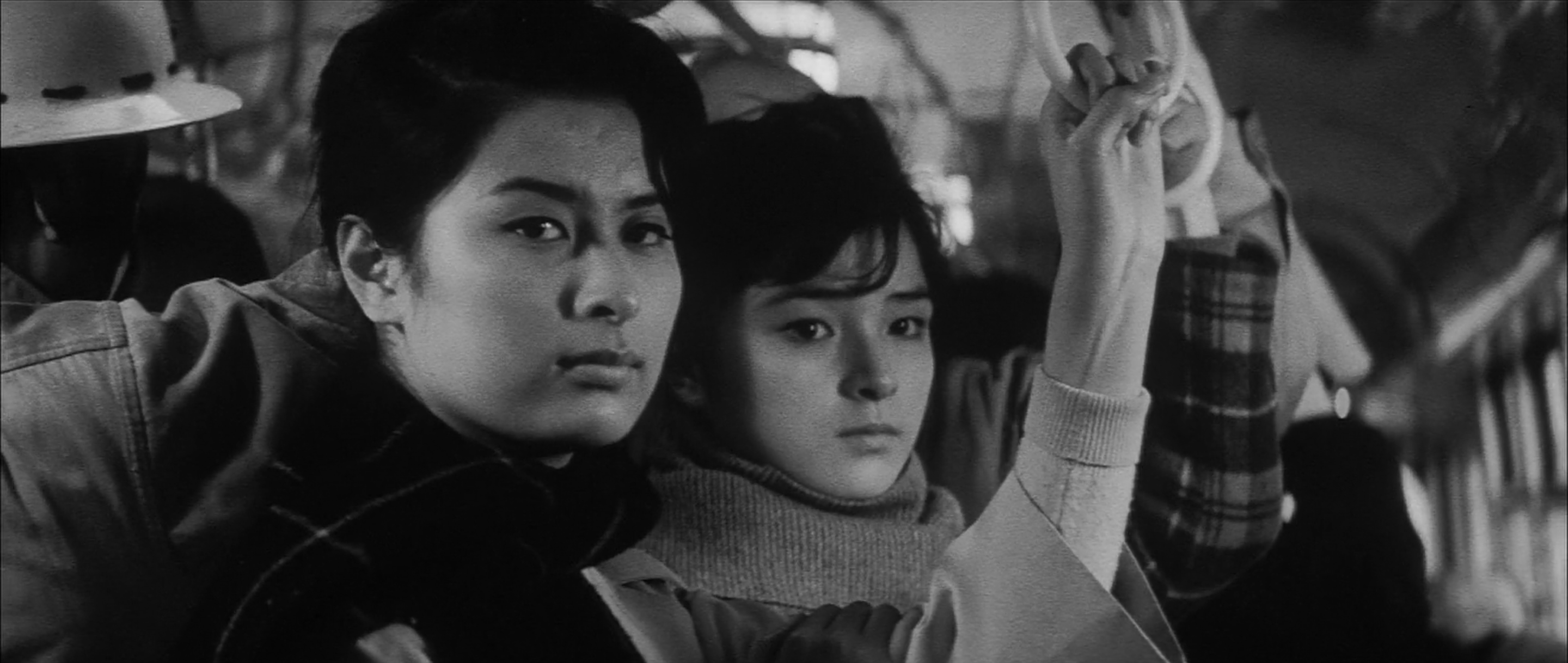
Keiko (Noriko Maki) and her younger sister Saeko (Chieko Baisho) both have jobs in the local factory with Keiko working in the accounts department which is where she first meets the brooding and self-righteous Komakura (Shinichiro Mikami) when he marches straight into the office to complain that he’s been shorted on his pay-packet to the tune of 10 yen. The ladies are non-plussed, it’s only 10 yen after all so perhaps there’s no need to be so unpleasant about it, but Komakura insists on having it looked into even after they give him the single coin in an effort to make him go away. Getting so upset about 10 yen is perhaps disproportionate, but then it is Komakura’s 10 yen and he has a point that if a mistake has been made it needs to be acknowledged and corrected especially when you’re dealing with people’s livelihoods to ensure that everyone is being paid fairly. On the other hand, marching in and shouting at people is unlikely to help the situation. 

It just so happens that Komakura is a good friend of Saeko’s who perhaps reads more into the mild embarrassment he and her sister each experience on meeting in another context to assume that they are romantically involved, immediately swinging into action to get them together. Meanwhile, another potential suitor has turned up at home in the form of Matsumoto (Isao Kimura), apparently an old friend dropping in on their parents out of courtesy. Matsumoto is very good looking and apparently now has a well paying job in the textiles trade, but despite their politeness to him the parents later have their doubts because it turns out that he was their blackmarket dealer during the dark days of the immediate post-war era. 

The Hibino family make their living as seaweed farmers and live in a small two-story home in a fishing village. Times are hard because the sea is dying. Increased industrial pollution, land reclamation, and the new airport have reduced the harvest to almost nothing and the girls’ father (Eijiro Tono) can no longer make ends meet. The union hasn’t paid him and he can’t ask about it because he’s still in debt from a previous loan, which is why Keiko’s mother (Sadako Sawamura) is always asking her for extra money to help with household expenses. Keiko intensely resents this, especially as her father’s irresponsible drinking habits continue to adversely affect the family’s finances. They haven’t really been thinking about her marriage perhaps partly because they need her salary but are now forced to because of all the sudden and unexpected interest. On top of Matsumoto and Komakura, it seems that the union leader’s widowed son is also interested which would, admittedly, be quite beneficial to the family. 

Keiko, however, is insistent that her husband must have a decent salary and that her married home must have a refrigerator and a washing machine. Quite the consumerist, Keiko has had enough of poverty and of feckless men like her authoritarian father who waste all their money on drink while relying on female labour to keep them out of trouble. When Matsumoto writes a formal letter proposing marriage, the parents decide to push the union leader’s son instead hoping to avoid embarrassment all round. Keiko immediately assumes the worst, that her father is trying to sell her to the union leader in exchange for the cancelation of his debts. She insists that she will decide her own future, leading Saeko to make a disastrous intervention revealing Keiko’s relationship with Komakura which only has the effect of enraging her father who brands her an ungrateful “whore” while shouting that a mere workman is not good enough for his daughter despite having previously stated that the union leader’s son was really “too good” and they were only in the running because it’s a second marriage. 

Both women still implicitly feel that marriage will define their futures, they do not have an expectation of living independently. Nevertheless, marriage itself may not be an answer. Everyone keeps talking about how happy Miyoko (Fumiko Hirayama) is with her new husband and she herself is forever extolling the joys of married life even in poverty, insisting to Saeko that “a woman’s happiness lies in marrying and having babies”. It’s a cruel irony then that we later see her arguing with her husband who is trying to force her to have an abortion against her will because they cannot afford to raise a child. Keiko has had enough of poverty, she wants to be more than comfortable, enjoying the new consumerist age. Re-encountering an old schoolfriend who has become a glamorous social butterfly she is mildly scandalised when she tells her that she obtained all her treasures through a complex network of compensated dating arrangements with foreigners, but later decides to check it out for herself when directly faced with the hopelessness of her situation. 

The fact remains, however, that no matter the initial attraction and her sister’s earnest attempts to make it work, Keiko and Komakura are fundamentally unsuited. They have entirely different ways of thinking about the world and want completely different things. Komakura is an angry young man but committed to his working class roots. He isn’t trying to get on, he’s happy with working in the factory for the rest of his life and just wants a quiet, honest existence. Keiko wants more, she thinks that people who say they’re poor but happy have merely given up on life. Revealing himself, Matsumoto says that he was struck by Keiko’s harsh words to him when she was a child, her calling him a blackmarketeer to his face apparently showing him what he was. He claims to have reformed and now fears the various ways that poverty can corrupt, something Keiko feels herself after her brief brush with the shady world of compensated dating. They are very much on the same page, both intent on seizing the benefits of the consumerist age but hoping they won’t have to stoop too low to get them. 

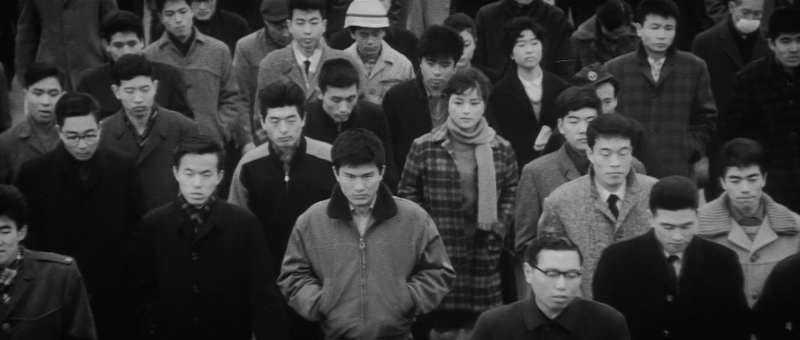
Saeko meanwhile is a little younger, still naive, and unlike her sister completely resistant to the corruptions of consumerism. Part of that might be because Keiko has shielded her from some of the harsh consequences of the way their family lives such as the financial burden of her father’s drinking, leaving her with a rosier view of poor but honest life which has her taking notes from Miyoko on how it’s easy to be happy even when you don’t have enough to eat. She and Komakura are in fact perfectly suited and perhaps she is already in love with him but either afraid of her feelings or unable to recognise them, pushing him towards her “prettier” sister instead. Then again, is there anything to say that Komakura will not turn into another man like her father, embittered and old, trying to drown his disappointment in sake? There’s no guarantee Keiko will be happy with Matsumoto, or perhaps with anyone, but they are at least moving forward in the same direction, as are Saeko and Komakura even as they blend back in with a hundred other cheerful youngsters making their way towards the factory. Our Marriage offers no judgment on its heroines’ choices, merely stating that people make their own paths in life pursuing their particular ideal of happiness and it happens that those paths might necessarily diverge but the people are still the same ones they always were and perhaps you don’t need to reject them for choosing differently than you might have done. Isn’t that what post-war freedom is all about after all?


Black River (黒い河, Masaki Kobayashi, 1957)

20140731_762128Masaki Kobayashi is still not enamoured with the new Japan by the time he comes to make Black River (黒い河, Kuroi Kawa) in 1957 which proves his most raw and cynical take on contemporary society to date. Set in a small, rundown backwater filled with the desperate and hopeless, Black River is a tale of ruined innocence, opportunistic fury and a nation losing its way.

The tale begins as a poor student, Nishida, moves into a rundown tenement owned by a tyrannous landlady who collects rent payments as if drinking in souls. Nishida looks around his new abode with a depressed air as the landlady advises him that he can always clean the place up. The vast majority of his possessions are books and the studious Nishida quickly sets himself apart from the ordinary working class denizens of this forsaken place to whom he clearly feels himself superior. However, he does take a liking to a local waitress. This too is destined to go wrong as when Shizuko visits him late after work one night hoping to borrow a book, she is grabbed by a gang of guys who attempt to assault her. Another man turns up and disrupts them but it quickly transpires that the whole thing is a ruse set up by the local gangster, Killer Joe, who then rapes her himself.

The modern, jazz inspired score and classic love triangle plot are almost a seishun eiga cliché but Kobayashi is only partly interested in the central trio with the ruined girl at its core. Casting the net wider, he’s interested in each of the wretched people that live in this place which is on the fringes of an American military base. From the obvious and blatant pan pan girls to the secret prostitutes and black marketeers, the American military has become a disruptive force in the area offering the weak minded easy, if dishonest, ways of living. That is to say, the problem is not “the Americans” or “the occupation” so much as it is the society which is allowing itself to become corrupted by Western values.

In this place, it’s everyman for himself. One of the community is ill, probably with tuberculosis. At one point he’s in desperate need of a blood transfusion so the wife hysterically asks everyone else if they have a matching blood type which they all deny (some of them obviously lying). Nishida admits he has a match, but outright refuses his blood despite the fact that this man will likely die without it. This doesn’t matter however because someone remembers the wife herself is a match but even she did not want to volunteer her own blood to save the life of her husband. Later when he is rushed to hospital she will delay his departure trying to take all their worldly goods with them in case the husband dies and his relatives turn up to claim everything.

The landlady has hatched a plot with Killer Joe (played by a young Tatsuya Nakadai in his first film role) to evict the tenants, knock the place down and build a love hotel catering to the American troops. They have a small problem as a committed communist lives in the building and refuses to move – he also tries to organise some community action where he tries to get them to club together to reduce energy costs as the local American base doesn’t pay their bills and the community has to foot the bill for the entire area. Nobody really cares though and no one wants to pay.

Killer Joe plays the tough guy in swanky clothes and sunglasses but his authority is hollow and really he’s just a scared little boy. He rapes Shizuko because he’s too lazy and frightened to bother about doing things in the more conventional way. She, for herself, is too pure to consider herself anything other than ruined by her traumatic experience and immediately petitions Joe to marry her (he, predictably, laughs and offers to let her move in with him). She’s disgusted with herself but is completely in thrall to Joe, both attracted and repelled by him. Gone are her demure outfits and white parasol, in with the dark, figure hugging dresses with exposed shoulders, loose hair and pretty pearl earrings. Her love for Nishida is the one aspect of her former self that she clings to as a way of keeping her innocence alive. Eventually she decides the only way to reclaim her honour and be free of Joe is to kill him and kill the new self born in her by his violence.

Innocence, once lost, is not something which can ever be truly regained. Nishida makes the typically male decision and is saved from his folly by a typically female one, but the ending here can never be anything other than tragic for all involved. It’s the usual B-movie conclusion, leaving only a lonely white parasol lying abandoned on the road to ruin. The message is clear, the world is cruel because we allow it to be and that is a fact that is unlikely to change.


Black River is the third of four early films from Masaki Kobayashi available in Criterion’s Eclipse Series 38: Masaki Kobayashi Against the System DVD boxset.

Here’s a scene from about half way through the movie: