Hero (英雄, Zhang Yimou, 2002)

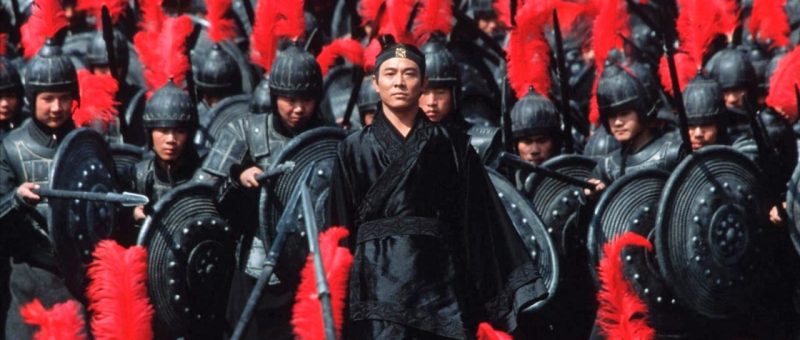
In the closing moments of Zhang Yimou’s Hero (英雄, Yīngxióng), what we see is an empty space. The outline of a person surrounded by arrows, or perhaps the doorway they protected with their body that nevertheless remains closed. On its initial release, Zhang’s film received criticism for what some saw as an overt defence of authoritarianism. After all, what we may come to understand is that the hero of the title is the Qin emperor (Chen Daoming), the founder of the modern China, but also in historical record a brutal tyrant whose tyranny is therefore justified in the name of peace, just as contemporary authoritarianism is justified in the name or safety and order.

This reading is only reinforced by the demeanour of Qin himself who condemns the nameless “hero” to death because he has chosen authority and this is what authority demands. No forgiveness, no compassion, only brutality and an iron first. Yet he cries because he is a compassionate man and understands the sacrifice he is asking his remorseful assassin to make. He does not do it because he is cruel or out of vengeance or anger, but because he believes it necessary to ensure peace for “all under heaven”. Now we may find ourselves asking again if the assassin is the hero after all because he willingly submits himself to and sacrifices himself for a tyrannous authority because he believes it to be the best and only choice that he can make for the wider society.

Nevertheless, there is something chilling in the vision of a thousand arrows flying toward one man who does not flinch while the man who ordered them sent appears to shake with his own power. The soldiers retreat, and the king is left alone, dwarfed by the immense architecture of the palace and the blood-red calligraphy of the character for sword reimagined by another potential hero whose name echoes his final conviction that in the end the apotheosis of the swordsman lies in the realisation that there is no sword. It’s this that leads him to abandon is own desire to assassinate the king and submit himself to a greater authority in the name of peace. In the end what he rejects is the tyranny of the sword itself, yet the king is also an embodiment of that tyranny because his authority is only possible through terrifying violence. 

In this way, the assassin, ironically named “Nameless” (Jet Li), may stand in for the everyman refusing to bow to the authority of a corrupt king who cares only for power. In one of the many tales he tells, Nameless remarks that he fought with the first of Qin’s three assassins in his mind and it’s true enough that what passes between the two men is a duel of words which is eventually won by the king. Qin tells Nameless of his desire to increase his influence beyond the other six kingdoms of Warring States China and create an empire that encompasses “all under heaven”, but Nameless later cautions him to remember those who gave their lives for the highest ideal, peace, and refrain from further killing. The closing title card is displayed over the Great Wall, making plain that Qin did in fact stop after conquering the six other kingdoms to unite all of China while building the wall to protect his citizens from “northern tribes,” or perhaps competing imperialists.

But walls keep people in as well as out and are in fact another facet of the king’s tyranny and a symbol of enduring authoritarianism. The problem is that it isn’t tyranny or authoritarianism that any of the assassins oppose for they are driven only by hate and vengeance and have no greater ideology or vision for the future. The argument is that peace under the iron fist of Qin is better than the chaotic freedom of the Warring States society, yet what we’re left with is nihilism. The love between assassins Flying Snow (Maggie Cheung Man-yuk) and Broken Sword (Tony Leung Chiu-wai ) is disrupted in each of the tales Nameless relates of them, firstly by romantic jealously and then secondly ideological divide. The conclusion that Broken Sword comes to is that they must not resist, but Flying Snow cannot live without recrimination with the past and the sealing of its tragic legacy. Her revolution fails, and as such “all under heaven” there is only death and only in death is freedom to be found.

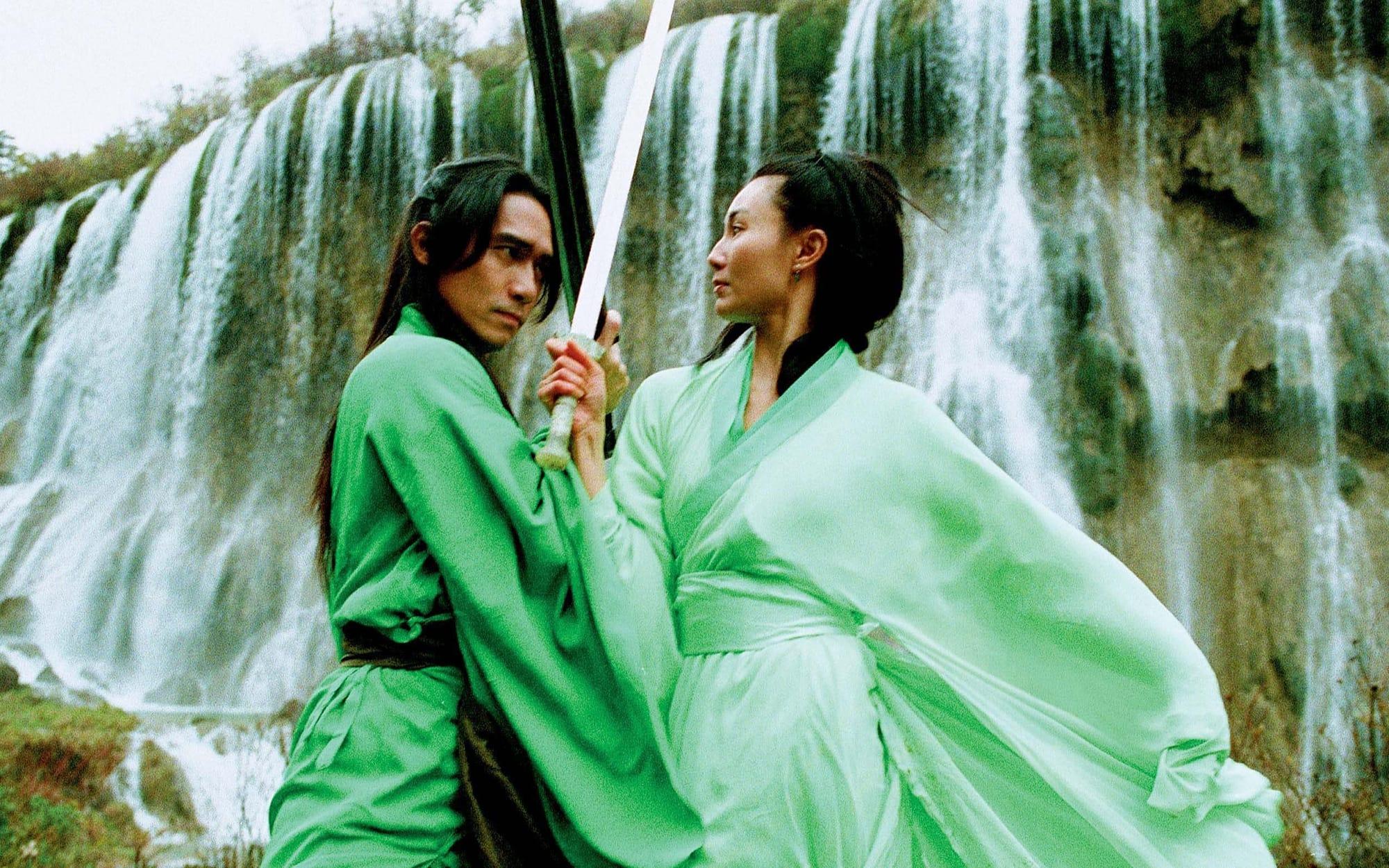
The sense that these assassins are already dead is echoed in the choice of white for the final sequence of the film. Zhang frames each of his sequences in vibrant colour, the red of the first tale in which the lovers are destroyed by a supposed love triangle, the blue of the second in which tragedy and sacrifice do not so much destroy as deify it, the green of the penultimate in which jade curtains billow and fall inside the imperial palace, and finally the cold white of death in which the lovers eventually find their home leaving their surrogate child alone in a windy desert of futility. Yet each of these sequences is filled with an intense beauty and the romanticism found in classic wuxia. What remains in the mind is the balletic fight between the tragic heroine Flying Snow and the orphaned pupil Fading Moon (Zhang Ziyi) in an autumnal forest that’s suddenly drenched in red, or feet dancing across the water, an image of an idealised past and lost love among wandering ghosts with no home to go to. Here there are no heroes, only lonely souls and frustrated ideals. 


Article 20 (第二十条, Zhang Yimou, 2024)

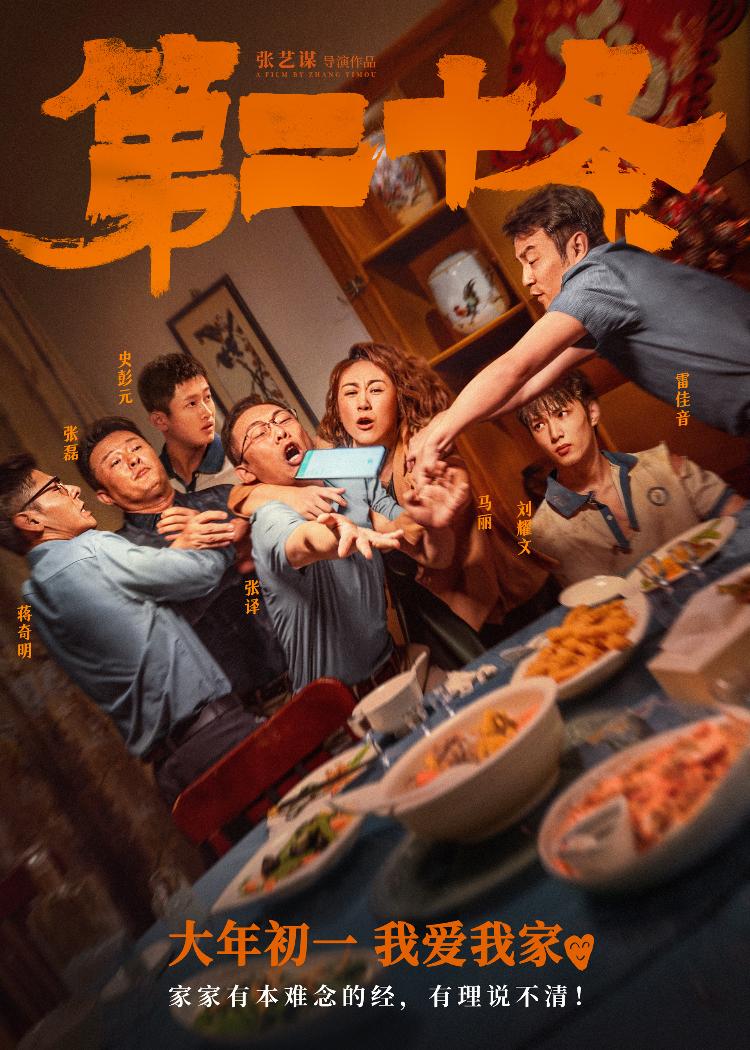
There’s something quite strange going on in Zhang Yimou’s New Year legal dramedy Article 20 (第二十条, dì èrshí tiáo). Generally speaking, the authorities have not looked kindly on people standing up to injustice in case it gives them ideas, yet the film ends in an impassioned defence of the individual’s right to fight back in arguing that fear of prosecution should not deter “good” people from doing “the right thing” such as intervening when others are in danger. Nevertheless, the usual post-credits sequences remind us that the legal system is working exactly as it should and the guilty parties were all caught and forced to pay for their crimes.

In this particular case, the issue is one akin to a kind of coercive control. Wang (Yu Hewei) stabs Liu 26 times following a prolonged period of abuse and humiliation. After taking out a loan to pay for medical treatment for his daughter who is deaf and mute like her mother Xiuping (Zhao Liying), Wang was terrorised by Liu who chained him up like a dog and repeatedly raped his wife. Prosecutor Han Ming (Lei Jiayin) eventually argues that his attacking Liu qualifies as self defence under Article 20 of the constitution because even if his life was not directly threatened at the time it was in the long term and he did what he did to protect himself and his family from an ongoing threat.

Han Ming becomes mixed up in several different cases along the same lines only with differing levels of severity. Some years ago he’d worked on the case of a bus driver who was prosecuted after stepping in to help a young woman who was being harassed by two louts. His problem was that he got back up after they knocked him down and returned to the woman which makes him the assailant. Zhang has spent most of his life since his conviction filing hopeless petitions in Beijing. Meanwhile, Han Ming’s son, Chen (Liu Yaowen), gets into trouble at school after stepping in to stop obnoxious rich kid and Dean’s son Zhang Ke from bullying another student.

Now jaded and middle-aged, Chen first tells his son that he should he give in an apologise to get the boy’s litigious father off his back though Chen is indignant and refuses to do so when all he did was the right thing in standing up to a bully. Bullying is the real subject of the film which paints the authoritarian society itself as a bully that rules by fear and leaves the wronged too afraid to speak up. The choice Han Ming faces is between an acceptance of injustice in the pursuit of a quiet life and the necessity of countering it rather than live in fear while bullies prosper.

The thesis is in its way surprising given that the last thing you expect to see in a film like this is encouragement to resist oppression even if the idea maybe more than citizens should feel free to police and protect each other from the immorality and greed of others. It is true enough that it’s those who fight back who are punished, while the aggressor often goes free but according to Han Ming at least the law should not be as black and white as some would have nor be used as a tool by the powerful, or just intimidating, to oppress those with less power than themselves. 

Other than the theatrical drums which play over the title card, there is curiously little here of Zhang Yimou’s signature style while the film itself is not particularly well shot or edited. It also walks a fine line between the farcical comedy of Han Ming’s home life in which he perpetually bickers with his feisty wife (an always on point Ma Li) who worries he’s too interested in his colleague Lingling (Gao Ye) who turns out to be an old flame from his college days during which he too was punished for standing up to a bully by being relegated to the provinces for 20 years. A minor subplot implies that the justice-minded Lingling is largely ignored because of the sexist attitudes of her bosses who feel her to be too aggressive and often dismiss anything she has to say in what amounts to another low level instance of bullying. The film ends in a rousing speech which seems more than a little disingenuous but even so ironically advocates for the right to self-defence against a bullying culture while simultaneously making a case for the authorities having the best interests of the citizen at heart which would almost certainly not stand up particularly well in court.


Article 20 is on limited release in UK cinemas courtesy of CMC.

International trailer (English subtitles)

Under the Light (坚如磐石, Zhang Yimou, 2023)

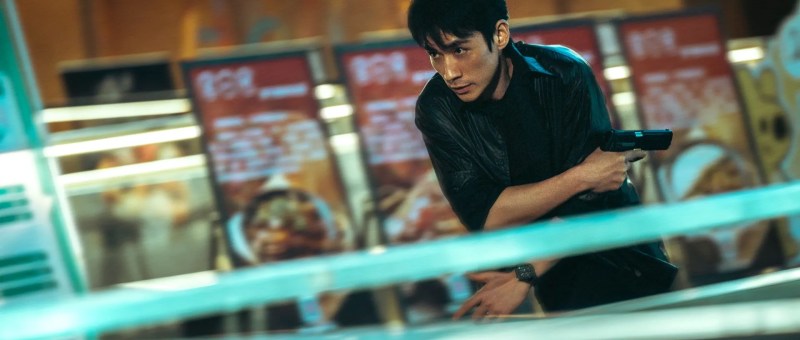
The irony at the centre of Zhang Yimou’s Under the Light (坚如磐石, jiānrúpánshí) is that it takes place in a neon-lit city of eternal visibility, though of course where you have light you’ll also find shadows. Even so, it appears he’s trying to make a point in the plain sight nature of political corruption and it’s connections with organised crime. At heart it’s a tense cat and mouse game between two men who share some kind of sordid past, but also of how it’s the next generation that often pay in the infinitely corrupted paternity of the contemporary society.

Zhang opens with a hostage crisis as a man hijacks a bus and threatens to blow it up if he doesn’t receive a visit from deputy mayor Zheng Gang (Zhang Guoli). Zheng attends but his policeman son Jianming (Lei Jiayin), currently assigned to the tech division, notices that the bomb can be detonated remotely and it doesn’t appear the hostage taker knew that it was real. In any case, all is not as it seems and as Zheng is soon squaring off against shady businessman Li Zhitian (Yu Hewei) who invites Jianming to dinner and puts on a show by blackmailing another business owner with a sex photo before forcing him to put his hand in boiling oil. 

In contrast to his ruthless exterior, Zhitian dotes on his grown up daughter currently pregnant with her first child and about to be formally married to his business heir David (Sun Yizhou). Jianming meanwhile has a complicated relationship with his father by whom he feels rejected in part because he’s adopted. Zheng also appears to be meeting with a mysterious young woman for unclear reasons, later hinting that she’s a kind of daughter figure someone at some point asked him to protect. In a strange and probably unintended way, it’s this parental quality of protection that has been disrupted by ingrained corruption and is then re-channeled in a desire to protect society in general. When it’s all over, Jianming asks his bosses why they trusted him to make the right decision, and they tell him it’s because he told them he wanted to be a “true policeman” for the people.

Apparently stuck in limbo for four years because of censorship concerns, the propaganda thrust of the film centres on the crackdown against political and judicial corruption. Zheng is engaged in a political project to target corrupt officials but is heavily implied to be on the wrong side of the fence himself which would explain his connection with Zhitian, a supposedly self-made man who keeps a heavy pole in his living room to remind him of his roots as a lowly porter in a rural town before taking advantage of the ‘90s economic reforms to make himself wealthy beyond his wildest dreams. 

They each have hidden secrets which Jianming becomes determined to drag into the light while working with the anti-corruption officers in his precinct, as well as old flame Hui-lin (Zhou Dongyu). Zhang adds in some distinctly retro comedy vibes not least in the frustrated romance of Jianming and Huilin who at one point dangle dangerously off a building while she later bites back, “don’t deprive me of the chance to protect you. It’s what they call love” when firing a pistol at a bunch or marauding bad guys. Yet the comedy seems incongruous with infinite bleakness of the resolution in which once again the children are made to suffer as Jianming comes to a greater understanding of his origins. 

In an ironic touch, the villains are later revealed to have been dyeing their hair which is in reality already white though they are not really all that old. Playing into the themes of duplicity, it also hints at the central message that the older generation must recede and the young, like Jianming, learn to find an accommodation with their failures in order to reclaim a sense of justice. Then again, the film itself is quite duplicitous with a series of glaring plotholes including a giant one relating to the DNA identification of a missing woman whose body is finally dragged into the light. Huiling warns Jianming that there are some boxes it’s better not to open. At the film’s conclusion he may wish he’d listened, but his job is to drag truth into the light and not least his own. In any Zhang’s infinitely bright, ever illuminated city of neon and glass has a host of hidden darkness only temporarily exorcised by the unusually lengthy parade of the now standard title cards explaining that the wrongdoers were caught and punished while deprived of their ill-gotten gains no matter how much it might seem that crime really does pay.


International trailer (Simplified Chinese / English subtitles)

Full River Red (满江红, Zhang Yimou, 2023)

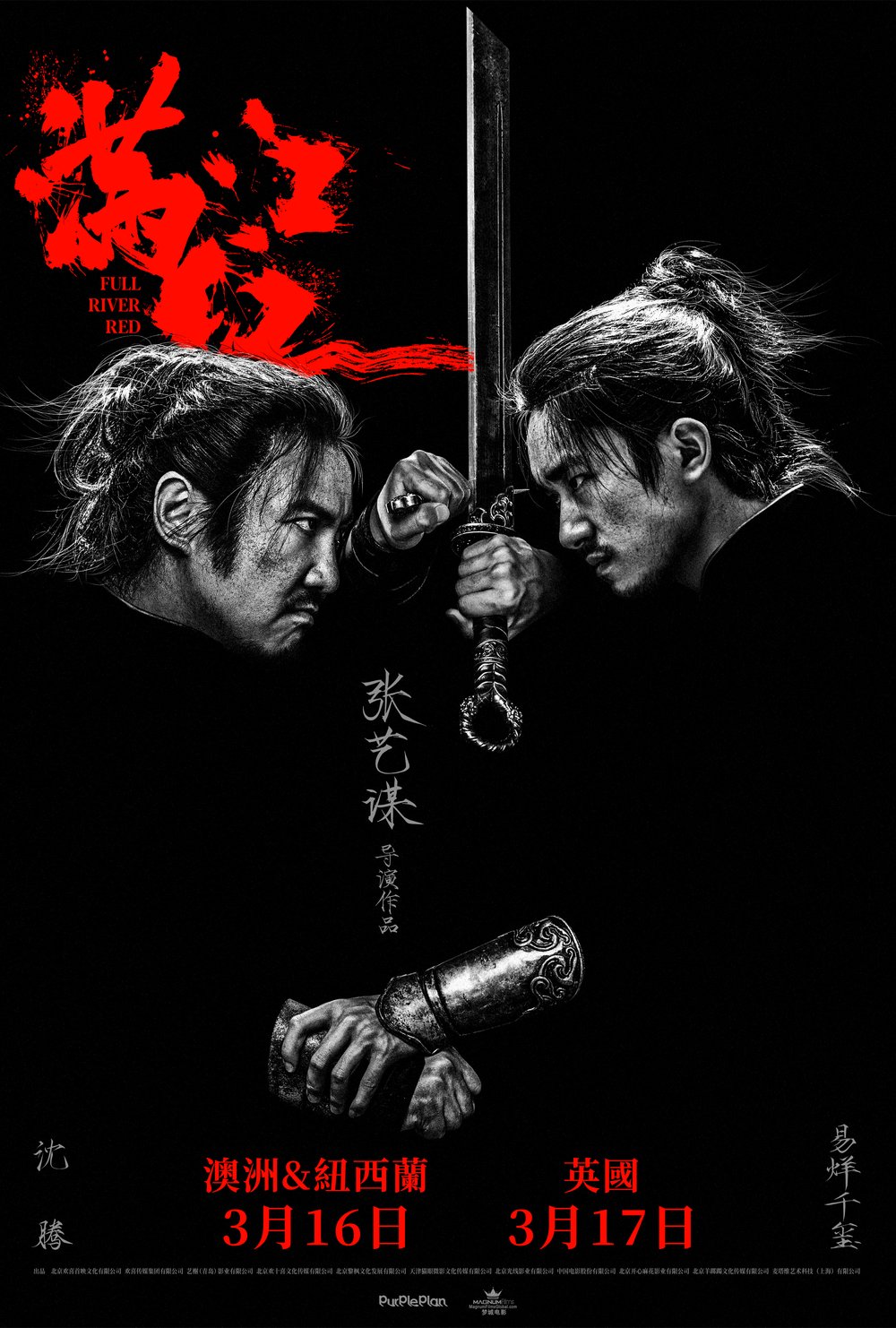
It’s a curious thing, in a way, that the central conceit of Zhang Yimou’s deliciously convoluted Song Dynasty mystery Full River Red (满江红, Mǎnjiānghóng) should turn on the idea that a truth that shames you should not be concealed. Its heroes die for a poem written by a wronged man that according to the closing text at least every child in the China of today knows by heart. Yet one could also say that this tale of intrigue in the court has it parallels in the political realities of the contemporary society, while the ambiguous ending which implies a rejection of the systemic corruptions of the feudal era might also in its way be subversive despite the rabid jingoism of the closing scenes and their thinly veiled allusions to a One China philosophy.

In any case, the film takes its title from a classic poem attributed to general Yue Fei who was put to death on a trumped up charge by corrupt prime minister Qin Hui (Lei Jiayin) who favoured making peace with the warlike Jin over Yue’s bloodthirsty conquest. Qin is about to meet with the Jin on an important matter and it seems to help clear his name only a Jin diplomat is inconveniently murdered in the palace and not only that, it’s also thought he was carrying a highly confidential letter intended for Qin’s eyes only which may implicate him in treachery. For somewhat unclear reasons, buffoonish corporal Zhang Da (Shen Teng) is given two hours to find the letter and figure out who killed the diplomat or prepare to meet his end. Though as he knows find it or not certain death is all that awaits him. 

Zhang uses Shen Teng’s comic background to his advantage, painting Zhang Da as a man desperately trying to talk himself out of trouble whose word for those reasons cannot be relied upon. Though all is not as it seems, and Zhang Da proves unexpectedly astute in navigating the complicated machinations of the courtly life. The letter is something of a MacGuffin, but it’s clear that everyone wants it largely as a safety net, hoping to get kompromat on Qin they can use protect themselves in this hellish prison where death lurks around every corner. This is indeed a world in which blood will have blood, nobody is safe, and no one can be trusted. Getting the letter is like getting an immunity card from palace intrigue, something which diffident courtier Wu (Yue Yunpeng) assumed he already had in a golden seal gifted to him by the emperor only to discover it can’t necessarily protect him from someone with no respect for the system. 

The palace itself is reflection of the feudal order with its labyrinthine corridors barely narrow enough for two men to pass. There’s a constant feeling of constraint and oppression, not least in the persistent greyness of the palace walls. Even Qin seems to have adopted an air of austerity or perhaps because of the illness he affects dresses less elaborately than one might expect as do his colour coded handmaidens in blue and green who have been rendered deaf and mute to prevent them revealing any of his secrets. Zhang Da is paired with the serious commander Sun (Jackson Yee) who in a running gag is actually his uncle though much younger than him. On one level Sun is committed to this system and fully complicit with it even if casting suspicion on himself with his counterproductive habit of killing of potential suspects before they’ve given up any information, but also harbours a lingering resentment in being rendered little more than a tool for a corrupt order for which he is willing to debase him in wilfully waterboarding a friend with vinegar in a bid for redemption in the eyes of the palace.

The tone is however ironic and filled with dark humour as a kind of rebellion against the amoral nihilism of constant betrayals that define feudal life. The heroes are tattooed with the world loyalty on their backs as if standing for a more wholesome humanity though there’s no particular reason to think the system they are loyal to is much better especially given the bloodthirsty quality of Yue’s death poem which is the text that’s really being sought in its talk of national humiliation, lost lands, and feasting on the corpses of one’s enemies. Moving with the comic beats of Peking opera, Zhang scores the film with a mix of classical instrumentation and angry, hip hop-style arrangements of warlike folk songs that reinforce the duality of this tale of so many dualities in talking both of the present day and the ancient past. In any case, the ending most closely resembles a western as the world weary hero recovers his self-respect and rides off into the sunset to live as an ordinary man far away from the corrupt world of the court and finally free of its tyrannous constraints.


Full River Red was released in UK cinemas courtesy of Magnum Films.

Original trailer (Simplified Chinese / English subtitles)

Shadow (影, Zhang Yimou, 2018)

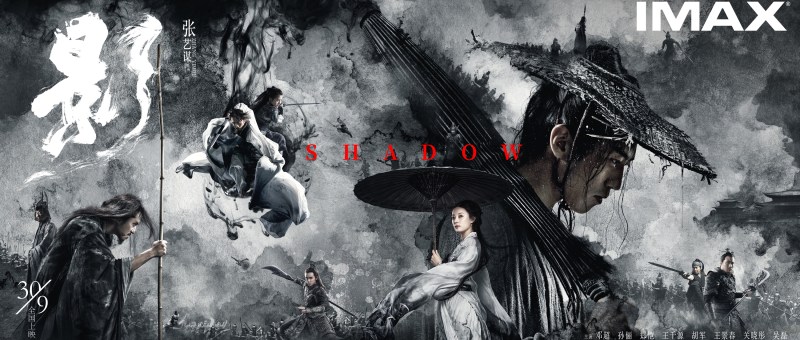
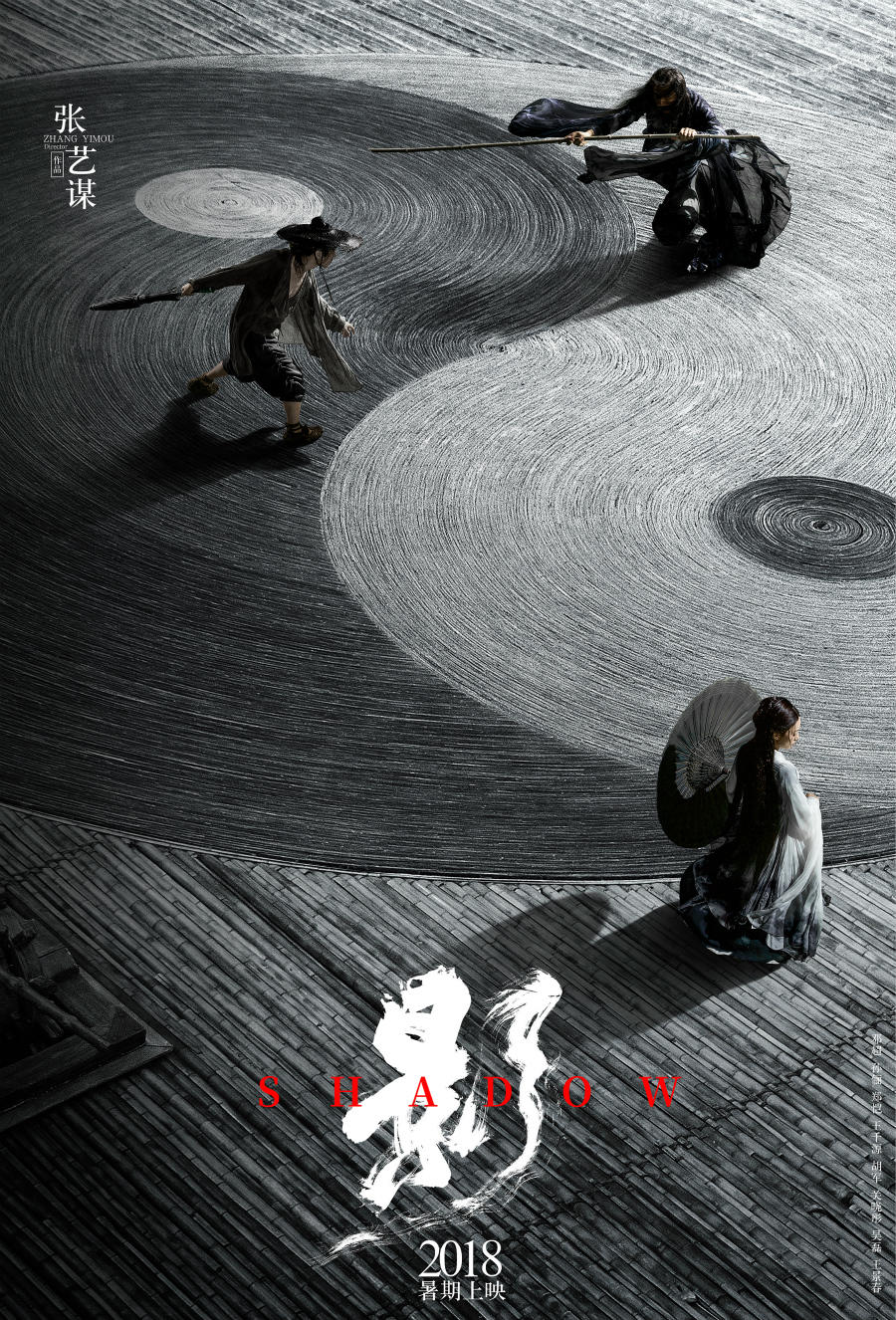
Shadow poster 1Zhang Yimou waxes Shakespearean in a tale of palace intrigue and a world out of balance in his latest return to the age of wuxia, Shadow (影, Yǐng). Drawing inspiration from classic ink paintings, Zhang’s monochromatic world has a chilling beauty even in its intense layers of oppression which make prisoners of king and subjects alike. Like the yin yang diagram on which the climatic battle takes place, Shadow is a tale of dualities and oppositions as its hollowed out hero begins to wonder who exactly he might be without the mirror.

Long ago in feudal China, the Kingdom of Pei has been living in peace thanks to an “alliance” with the Yang who are technically occupying the former Pei city of Jing. Many in the Kingdom of Pei are unhappy with this arrangement, regarding the loss of Jing as a humiliation and the king’s refusal to retake it more cowardice than pragmatism. Despite the king’s instruction that the truce must be maintained and war avoided at all costs, his trusted commander has undertaken a secret meeting with Yang in which he has agreed to a personal duel for the honour of Pei. The king is very unhappy. A lesser man might have lost his head, but the king needs his commander. What he doesn’t know, however, is that the commander is not all he seems. Nobleman Yu (Deng Chao) was badly injured during a previous fight with Yang and has retreated to the catacombs while his double, Jing (also Deng Chao), has been playing his part in court.

Jing, “saved” from poverty as a young child brought to the palace as a double for Yu, is grateful and loyal. He respects his masters and has trained hard to learn the skills needed to pass as a nobleman and more particularly as Yu. As such he has no “identity”. Even his name was given to him by his master and is simply that of the town where he was found which happens to be the disputed city itself. Jing does everything right – his instincts are good, he is clever and quick-witted with a talent for intrigue, all of which makes him both a danger and a shield for Yu. Yu, meanwhile, trapped in the same underground cell which used to house Jing, has become warped and embittered. Nursing a mortal wound, he plots and schemes against the king, scuttling goblin-like as he rails against his fate.

Yu promises Jing a release from his mental imprisonment if he agrees to take part in the duel with Yang. Jing knows that Yu’s promise is hollow and that he is not intended to survive, but submits himself to his fate anyway. He does this, partly, in hope but also because of his longstanding but unspeakable love for Madam (Sun Li) – Yu’s wife, who is one of the few people ever to express pity for his miserable circumstances. As the film opens, Madam and the king’s sister are reading proverbs together including one which insists that men are meant to rule. The king, however, is weak – he is effete and prefers the art of the brush to that of the sword, while his sister is “wild” – a bold and impetuous young woman seemingly more suited to the throne than her foppish brother.

As if to complete the theme, it’s Madam who eventually reveals the technique to beat Yang to her increasingly crazed husband. In order to defeat his hyper masculine enemy who fights with a giant sabre, Yu resolves to fight like a girl armed with one of Pei’s iconic parasols reconfigured in sharpened iron. Only by creating balance can they hope to win, meeting the weight of Yang’s blunt force with a lightness of touch and feminine elegance. 

The world of Shadow is one defined by its dualities – male/female, lowborn and high, betrayal and loyalty, arrogance and supplication. Jing’s existence is defined by that of the “true” commander – a shadow cannot exist without a form to cast it, or so it had always been thought. Offered the possibility of escape, Jing’s original identity begins to resurface. Yet his victory over his “other self” is also a defeat which infects him with the dubious moralities of the court, allowing him to become more than himself alone and leaving the world once again dangerously unbalanced. As the opening narration told us, however, it is not Jing, or Yu, or the king who hold the fate of Pei in their hands but Madam whose final decision will dictate the course of history. Set in a world of oppressive greys broken only by the driving rain and shocking redness of blood, Shadow may not return Zhang to the balletic heights of the poetic Hero, but does its best to add Shakespearean grandeur to its tragic tale of fractured identities and conflicting desires.


Screened as part of the 2018 BFI London Film Festival.

International trailer (English subtitles)
The Road Home (我的父亲母亲, Zhang Yimou, 1999)

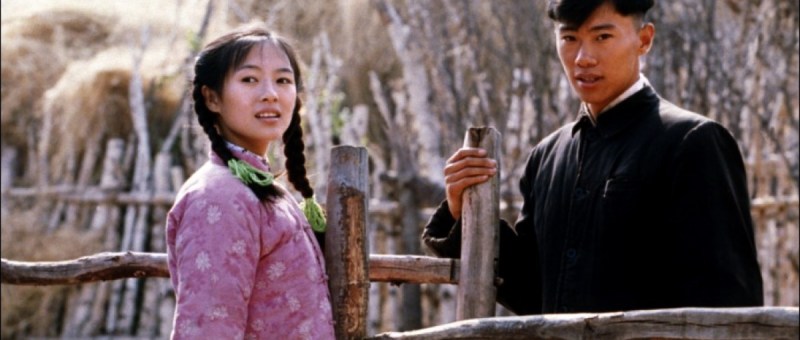
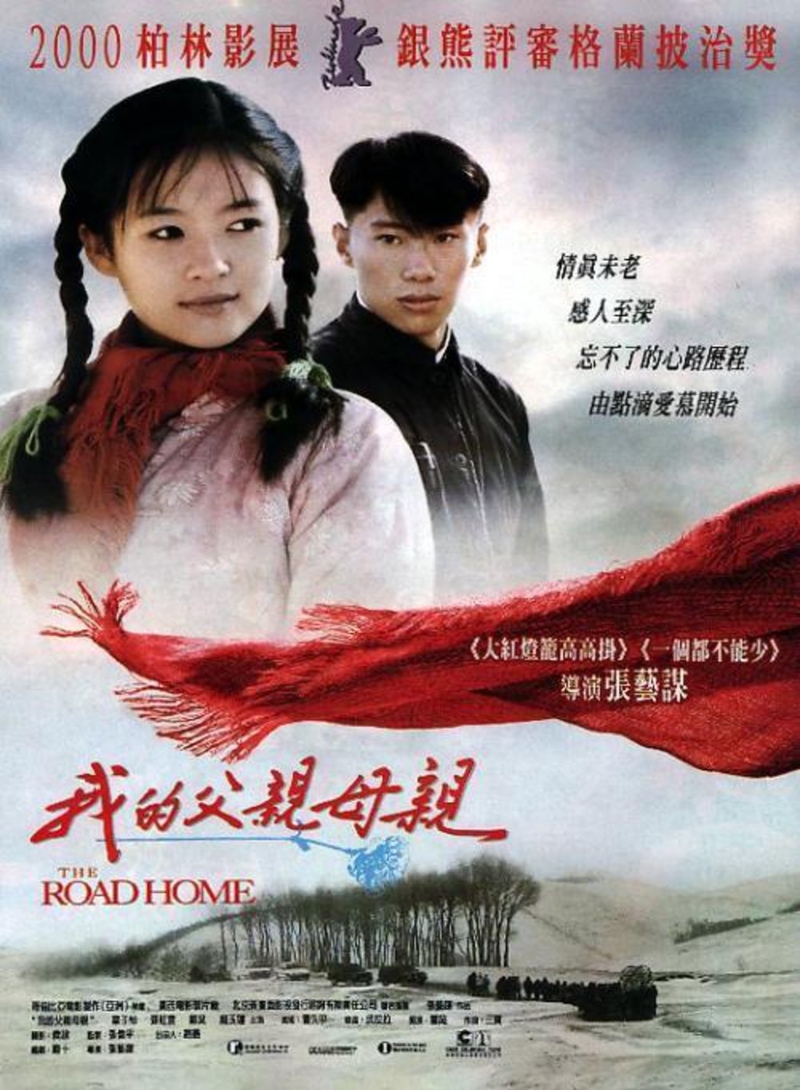
The Road Home PosterChinese cinema, it could be said, has been looking for the road home for quite some time. Not only is the past a relatively safe arena for present allegory, but even among the previously hard edged fifth generation directors, there’s long been a tendency to wonder if things weren’t better long ago in the village. Zhang Yimou certainly seems to think they might have been, at least in the beautifully melancholic The Road Home (我的父亲母亲, Wǒde Fùqin Mǔqin) in which a son returns home after many years away and reflects on the deeply felt and quietly passionate love story that defined the life of his parents.

In the late ‘90s, a successful businessman, Luo Yusheng (Sun Honglei), drives back to his rural mountain village on hearing of the sudden death of his father, Changyu (Zheng Hao ) – a school teacher. The village’s mayor explains to him that for some years his father had been desperate to improve the local school and, despite his advanced age, had been travelling village to village raising money until he was caught in a snow storm and taken to hospital where they discovered he had heart trouble. The mayor wanted to pay for a car to fetch Changyu, but Yusheng’s mother Zhao Di (Zhang Ziyi) wants him to be carried back along the road to the village in keeping with the ancient tradition so he won’t forget his way home.

The problem, as the mayor points out, is that like Yusheng, most of the other youngsters have left the village and there just aren’t enough able-bodied people available to make Zhao Di’s request a realistic prospect. Zhang’s film is not just a warm hearted love story, but a lament for a lost way of life and a part of China which is rapidly disappearing.

This fact is poignantly brought home by Yusheng’s realisation that his parents’ love, set against one kind of political turbulence, was a kind of revolution in itself. In the Chinese countryside of the 1950s, marriages happened through arrangements made by (generally male) family members, no-one fell in love and then decided to spend their lives together. Yet Zhao Di, a dreamy village girl whose own mother was so heartbroken by the death of her husband that she was blinded by the strength of her tears, dared to believe a in romantic destiny and then refused to accept that it could not be.

Zhang begins the tale in a washed out black and white narrated by the melancholy voice over of the bereaved Yusheng whose first visit home in what seems likes years is tinged with guilt and regret. His father wanted him to be a teacher in a village school, but Yusheng left the village and like most of his generation took advantage of changing times to embark on a life of wealth and status in the city. As remembered by their son, the love story of Zhang Di and Luo Changyu is one of vivid colour from the freshness of the early spring to the icy snows of winter.

An innocent love, the courtship is one of sweet looks and snatched conversations. Zhao Di, captivated by the new arrival, listens secretly outside the school and waits for Changyu on the “road home” as he escorts the children back to the village. Yet these are turbulent times and even such idyllic villages as this are not safe from political strife. The burgeoning romance between a lonely village girl and earnest young boy from the city is almost destroyed when he is ordered back “to answer some questions” for reasons which are never explained but perhaps not hard to guess. Zhao Di chases him, the totality of her defeat crushing in its sense of finality but again she refuses to give up and remains steadfast, waiting for her love to reappear along the road home.

Though “the road home” carries its own sense of poignancy, the Chinese title which means something as ordinary as “my mother and father” emphasises the universality of Yusheng’s tale. This is the story of his parents, a story of true and enduring love, but it could be the story of anybody’s parents in a small rural village in difficult 1950s China. The world, Zhang seems to say, has moved on and consigned true love to an age of myth and legend while the young, like Yusheng, waste their lives in misery in the economic powerhouses of the city never knowing such poetical purity. China has been away too long and lost its way, but there will always be a road home for those with a mind to find it.


International trailer (English voiceover)

Not One Less (一个都不能少, Zhang Yimou, 1999)

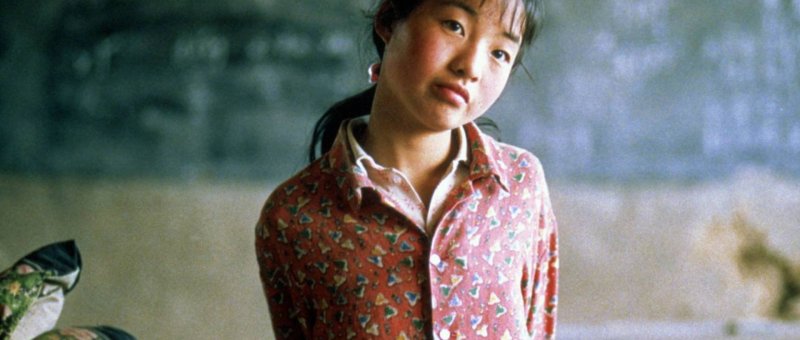
not one less posterIt’s tough being a kid in rural China. Childhood is perhaps the rarest of commodities, all too often cut short by the concerns of the adult world, but then again sometimes childish innocence can bring forth the real change in which grownups have long stopped believing. Zhang Yimou is no stranger to the struggles of life in China’s remote villages, but in Not One Less (一个都不能少, Yīgè Dōu Bùnéng Shǎo) he crouches a little closer to the ground as one tenacious little girl finds herself thrust into an unexpected position of authority and then cast away on an odyssey to rescue a lost sheep.

The girl, 13-year old Wei Minzhi has been brought over from an adjacent village to substitute for the local teacher whose mother is ill, meaning he needs to take a month off to go back to his own remote village and look after her. The problem is that no-one would agree to spend a month teaching little kids in a rural backwater for almost no money. Wei Minzhi graduated primary school which makes her one of the most educated people around and at least means that she’s a little way ahead of some of the other kids and, to be fair, teaching methods here generally end at copying the lessons from the master book up onto the blackboard so the kids can copy them down and study in their own time. Given the relative poverty of the village, children often drop out of school altogether because their parents need them at home. Teacher Gao has promised Wei 10 extra yuan if the same number of kids are still coming to school when he comes back as there were when he left.

Documenting daily life in the village, the early part of the film strikes a warm and comedic tone to undercut the hardship the villagers face. The Mayor, apparently a slightly dishonest but well meaning sort, is doing his best but the village is so poor that the children turn desks into beds and huddle together to sleep in the school. Chalk is strictly rationed and resources are scarce. Wei takes to her new found authority with schoolmarmish tenacity but struggles to exert her authority over her charges, and especially over one cheeky little boy, Zhang Huike.

When Zhang Huike disappears one day and Wei finds out he’s been sent to the city, she becomes fixated on the idea of going after him to drag him back and make sure she gets her 10 yuan bonus. The quest is a fallacious one – it will coast Wei far more than the 10 yuan bonus to get to the city and back so it’s hardly cost effective, but Wei is a literal sort and doesn’t tend to think things through. Nevertheless, the need to figure out how to get Zhang back does finally get her teaching as she gets the kids to help her do the calculations of how much money she’s going to need and to figure out how to get it.

If life in the village was tough, the city is tougher. When Wei arrives and tries to find Zhang, she winds up at the dorm of a construction site which is peopled exclusively by children who are (presumably) all working here to help their families out of poverty. Zhang, however, got lost on the way to his new job and is currently wandering the city alone, staring enviously at meat buns until someone takes pity on him and hands him one. Luckily he later meets a kind restaurant owner who takes him in off the street and gives him food in return for dishwashing. Wei, meanwhile, is completely at a loss as to how to look for Zhang. She hits on the idea of fliers but doesn’t think to leave contact details beyond the name of her school – after all, everyone in the village knows where the school is so why wouldn’t they in the city. Later someone recommends she try TV only for her to become semi-exploited for a human interest story on rural education in which the rabbit-in-the-headlights Wei can do little more than burst into tears and plead for Zhang’s return.

Wei’s single-mindedness may eventually reap rewards, but it’s impossible to escape the fact that it was motivated out of pure self interest. She wanted her 10 yuan bonus, and she never stopped to think about anyone’s else situation so long as she got it. Thus when scouts arrive from a nearby sports school with an amazing opportunity for one of her pupils, she tries to mess it up just so she’ll get the money. Similarly she’s determined to bring Zhang back even after visiting his home and meeting his bedridden mother who explains the family situation that necessitates sending her 11-year-old son away to work on a construction site. Despite having been warned about the chalk shortage, she allows half of it to get ground into the floor because she’s too busy trying to assert her authority to realise the (accidentally) destructive effects of her own actions. Nevertheless, her bullheadedness does eventually pay off. Asked about his experiences in the city, Zhang Huike remarks that the city is “beautiful and prosperous” before looking sad and admitting that he’ll never forget that he had to beg for food. Cities, it seems, are teeming hubs of wealth and success but they’re also cold, lonely, and so anonymous that small boys like Zhang get lost amid the hustle and bustle of the individualist life.


International trailer (English voice over)

Happy Times (幸福时光, Zhang Yimou, 2000)

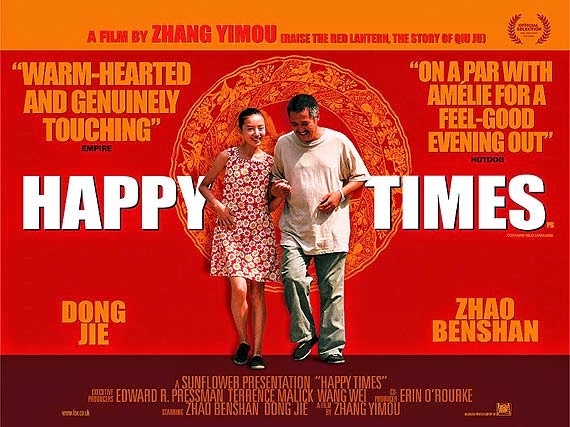
Happy TimesPossibly the most successful of China’s Fifth Generation filmmakers, Zhang Yimou is not particularly known for his sense of humour though Happy Times (幸福时光, Xìngfú Shíguāng) is nothing is not drenched in irony. Less directly aimed at social criticism, Happy Times takes a sideswipe at modern culture with its increasing consumerism, lack of empathy, and relentless progress yet it also finds good hearted people coming together to help each other through even if they do it in slightly less than ideal ways.
An older man in his 50s, Zhao is a bachelor afraid that life has already passed him by. Desperate to get married for reasons of companionship, he’s settled on the idea of finding himself a larger lady who, he assumes, will be filled with warmth (both literally and figuratively), have a lovely flat he can move into and will also be able to delight him with delicious food. Not much to ask for really, is it? Unfortunately, he ends up with a woman nicknamed “Chunky Mama” who is pretty much devoid of all of these qualities beyond the physical. She has an overweight son whom she spoils ridiculously and a blind stepdaughter she treats with cruelty and disdain.

Zhao is eager to please his new lady love and has told her a mini fib about being a hotel manager. He and his friend Li had been planning to open a “love hut” in an abandoned trailer in the forest but this plan doesn’t quite work out so when Chunky Mama asks him to give the blind girl, Little Wu, a job in the hotel Zhao is in a fix. Together with some of his friends, he hatches a plan to create a fake massage room in an abandoned warehouse where they can take turns getting massages from the girl in the hope that she really believes she’s working and making money for herself. However, though Little Wu comes to truly love her mini band of would be saviours she also has a yearning to find her long absent father who has promised to get her treatment to restore her sight, as well as a growing sense of guilt as she feels she’s becoming a burden to them.

Zhao decided to name his “love hut” the Happy Times Hotel – to him there’s really no difference between a “hut” and a “hotel”. In some ways he’s quite correct but the expectation differential isn’t something that would really occur to him, straightforward fantasist as he is. In fact, Zhao is a master of the half-truth, constantly in a state of mild self delusion and self directed PR spin as he tries to win himself the brand new life he dreams of through sheer power of imagination. His friends seem to know this about him and find it quite an amusing, endearing quality rather than a serious personality flaw.

Unfortunately this same directness sometimes prevents him from noticing he’s also being played in return. The ghastly stepmother Chunky Mama is in many ways a clear symbol of everything that’s wrong with modern society – brash, forceful, and materially obsessed. For unclear reasons, she’s hung on to Little Wu after the breakdown of the marriage to her father but keeps her in a backroom and forces her do chores while her own son lounges about playing video games and eating ice-cream. Ice-cream itself becomes a symbol of the simple luxuries that are out of reach for people like Little Wu and Zhao but quickly gulped down by Chunky Mama’s son with an unpleasant degree of thoughtless entitlement. The son is a complete incarnation of the Little Emperor syndrome that has accompanied the One Child Policy as his mother indulges his every whim, teaching him to be just as selfish and materially obsessed as she is.

For much of its running time, Happy Times is a fairly typical low comedy with a slightly surreal set up filled with simple but good natured people rallying round to try and help each other through a series of awkward situations but begins to change tone markedly when reaching its final stretch. Zhao and Little Wu begin to develop a paternal relationship particularly as it becomes clear that the father she longs for has abandoned her and will probably never return but circumstances move them away from a happy ending and into an uncertain future. The film ends on a bittersweet note that is both melancholy but also uplifting as both characters send undeliverable messages to each other which are intended to spur them on with hope for the future. “Happy Times Hotel” then takes on its most ironic meaning as happiness becomes a temporary destination proceeded by a long and arduous journey which must then be abandoned as the traveller returns to the road.


Retitled “Happy Times Hotel” for the UK home video release.

US release trailer (complete with dreadful voice over and comic sans):

Coming Home (UK Anime Network Review)

coming-home-film-decembre-2014-sortieZhang Yimou’s latest reviewed at UK Anime Network


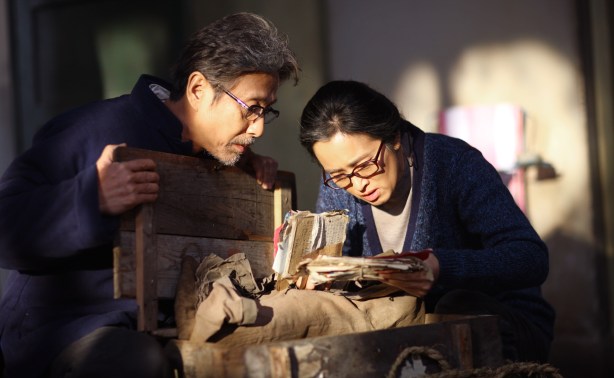
Dealing with the recent past in mainstream Chinese film can be a difficult business. While you may be able to get away with making a comment on the present through looking at the pre-communist past, raising the spectres of some of the darker episodes in the post Mao Zedong China is, at best, taboo. That Zhang Yimou, more recently moving into the mainstream as one of China’s most bankable directors both abroad and domestically, has been able to make a film about the suffering endured by countless citizens during The Cultural Revolution is therefore a little surprising. However, Coming Home is far from an examination of the period’s horrors but rather a metaphor for modern China reframed as a melodrama of deep love and marital happiness frustrated by historical circumstance.

Based on The Criminal Lu Yanshi a book by Yan Geling, the central story focuses on the trio of Lu – a professor sent for “re-education” at the beginning of The Cultural Revolution, his wife Feng and their daughter Dandan. The first part of the film sees Dandan attending a ballet school and hoping to gain the lead in the upcoming propaganda ballet Red Detachment of Women. However, despite being the most talented dancer she learns she will not be chosen for a leading role because of her father’s disgrace – a situation further complicated because it transpires her father has escaped from the camp and may be trying to return home. Despite the warnings and the obvious danger, Feng is desperate to see her husband again though Dandan, who was just an infant when her father was taken away, is angry and resentful. Lu’s attempt to return ends in recapture and it’s not until the end of The Cultural Revoltion years later that he’s finally able to come home. However, Feng now suffers from mild dementia and refuses to recognise this much older version of the man she’s been waiting for all this time. Every fifth day of the month she goes to the station to wait for her husband completely unaware that he has already returned.

It’s the second half of the story that occupies the bulk of the running time as Lu’s original escape attempt becomes more or less a prologue to the main story. Having returned home, Lu tries to reawaken his wife’s dormant memories by reminding her of their shared past. Feng can take care of herself day to day though she forgets things and muddles up timescales, but is unable to acknowledge Lu as her husband. Along with the remorseful Dandan who only now understands exactly what her parents have been through, he tries to remind her of happier times by reading her letters or playing the piano as he used to do. In someways the political circumstances take a back seat here as Feng’s dementia could easily be solely of natural causes (though the film strongly suggests a blow to the head during Lu’s escape attempt and subsequent traumas maybe a partial cause of her memory loss) and Lu the loving husband trying to keep their past alive. However, the situation is further complicated as the couple have now been separated for over twenty years with no contact at all. There was immense suffering on both sides with Lu desperate to see his wife and daughter again but never knowing if he would, and his wife making great sacrifices to try and protect him in the hope that he would survive and one day return home.

The film never really goes into what Lu did, other than his having been a professor which might have been enough on its own, or probe into very much detail about his life being re-educated. Bar a final reveal and a general feeling of melancholy, it doesn’t much delve into Feng’s life other than her devotion in waiting for Lu. In fact, it sort of leaves The Cultural Revolution to one side as much as it can. However, its ambiguity is almost an analogy for the way modern China wishes to think about its past – both remembering and not at the same time. Lu endures all, suffers all only to return to a world where he doesn’t quite exist. Patiently, he tries to undo this painful knot of memory that has paralysed his wife’s brain so that he might regain something of what he’s lost but the more he tries to show her the less she seems to see. She can only recognise him as the man he is now, a kindly neighbour, and not as the man that was taken from her all those years ago and for whom she still waits. There are those like Lu who are desperately trying to reconcile the past with the present so they can move forward but there are also those like Feng who are unable to come to terms with everything they’ve suffered and accept the now for what is. The result being a kind of numb limbo which leaves everybody waiting at the station for a train which will never arrive.

Coming Home probably goes as far it’s allowed to go, but that still isn’t terribly far. As a film about China’s turbulent recent history, it’s a start but doesn’t begin to approach some of those darker themes with any kind of depth. That said, it’s really much more of an old fashioned melodrama about a faithful husband who comes home to his devoted wife after many years of enforced separation only to find that, far from having “forgotten” him, she can’t forget the him that was taken away long enough to recognise that he’s come home. Fans of romantic drama will find a lot more to like than those hoping for a hard hitting examination of horrors The Cultural Revolution but Coming Home does do what it promises in a typically polished style. A little bit stuffy and noticeably restrained, Coming Home is not exactly a late career masterpiece from the director of Raise the Red Lantern, but it does at least open a few doors.