We Girls (向阳·花, Feng Xiaogang, 2025)

Feng Xiaogang’s films often straddle and awkward line in which it’s not entirely clear whether he’s deliberately being subversive or only unwittingly. The surprising thing about We Girls (向阳·花, Xiàngyáng·huā) is, however, its contradictory attitudes towards the modern China of which one would not otherwise assume the censors would approve. Nevertheless, the true goal appears to be paying tribute to the prison and probation service which is thoughtful and compassionate, geared towards helping these unfortunate young women who’ve made “poor choices” to reform and become responsible members of society. 

But like many films of this nature, the problem is that the society the prison authorities want these women to “reform” into doesn’t exist. The onus is all on the women to change, while no attempts have been made to address the circumstances that led to them being sent to prison which are also the same circumstances they will be returning to. The women don’t appear to receive any additional education or learn any new skills while inside, and when they get out it’s impossible to find a mainstream job that will hire a woman with a criminal record. Consequently, they are forced into short-term, casual labour which is often exploitative while male employers withhold pay to extract sexual favours. 

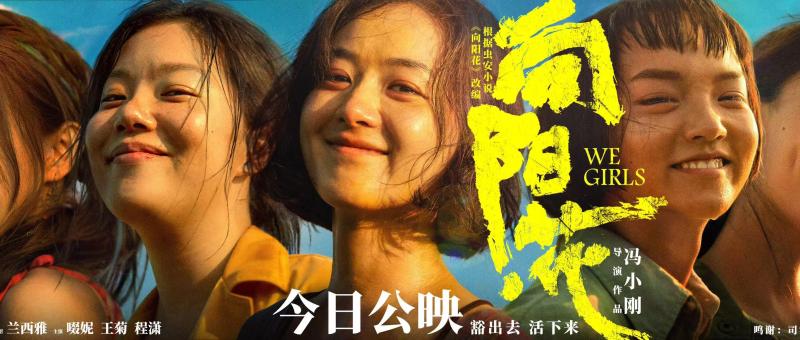
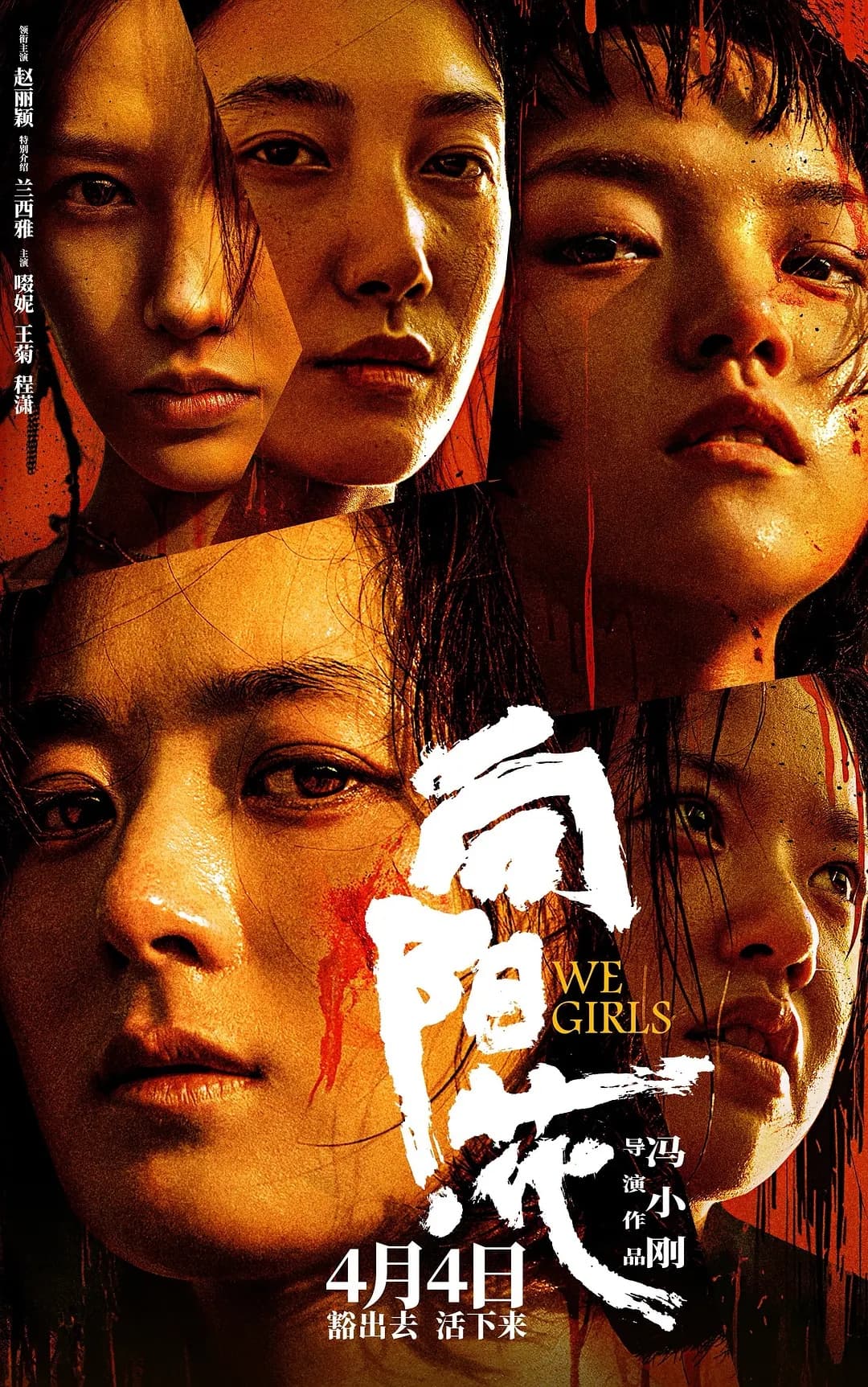
Aside from praise for the police force, the film is also a celebration of female solidarity and it’s clear that their biggest enemy is entrenched misogyny and the patriarchal society. Yuexing (Zhao Liying) is forced into a marriage with a man who couldn’t work because of a physical disability. As he resented their daughter and gave her no help with childcare, Yuexing felt responsible when the baby experienced hearing loss after contracting meningitis and was determined to save for a cochlear implant. To earn more money, she became a cam girl but was caught and sent to prison for two years for obscenity. Mao Amei (Cheng Xiao), meanwhile, is an 18-year-old deaf-mute orphan exploited by criminal gang who are sort of like her “family” but force her to steal for them. 

Having learned a little sign language for her daughter, Yuxing becomes Mao Amei’s interpreter in prison, but the pair find things on the outside much more difficult than in. Apparently illiterate and unable to speak, Mao Amei cannot rent a place to stay and is caught breaking into an abandoned car. The police take pity and let her go, but also take most of the money she was given on her release. Yuexing, meanwhile, discovers her husband abandoned their daughter who is now in an orphanage but is unable to reclaim her without a stable income and permanent address. She finds a job as a hotel maid, but is falsely accused of thievery by a wealthy businessman on a power trip and subsequently fired for concealing her previous conviction. Realistically, the women have little option but to fall into criminality because there really are no other options. 

Still, they’re supported by a network of female solidarity from sympathetic corrections officer Deng Hong (Chuai Ni), herself a foundling raised by a policeman, to another young girl sent to prison for reselling exotic animals off the internet. Orphanhood is a persistent theme with China’s longtime child trafficking problem ticking away in the background. The gang of thieves is eventually exposed as running a baby farm to make up for the decline in their traditional line of work thanks to digitalisation. Yuexing is faced with an impossible decision when she discovers that a wealthy couple are keen to adopt her daughter and are prepared to buy her a cochlear implant right away, knowing that it would be wrong to deny her this “better life” but also that her child has been taken away from her because of her socio-economic marginalisation and husband’s indifference. 

It’s only thanks to the found family that emerges between the women because of their shared experiences that they are able to find a way through, while small acts of “foolish” kindness are later repaid in kind. To that extent, the resolution falls into the realms of fantasy as the women are saved by a deus ex machina rather than through finding a place for themselves within the contemporary society and “reforming” themselves in the way the prison service insists. In the end, they are only able to free themselves through an act of violence that comes with additional, though bearable, costs and grants them the possibility of making a new life for themselves if one spiritually and geographically still on the margins of the contemporary society.


Trailer (Simplified Chinese / English subtitles)

Article 20 (第二十条, Zhang Yimou, 2024)

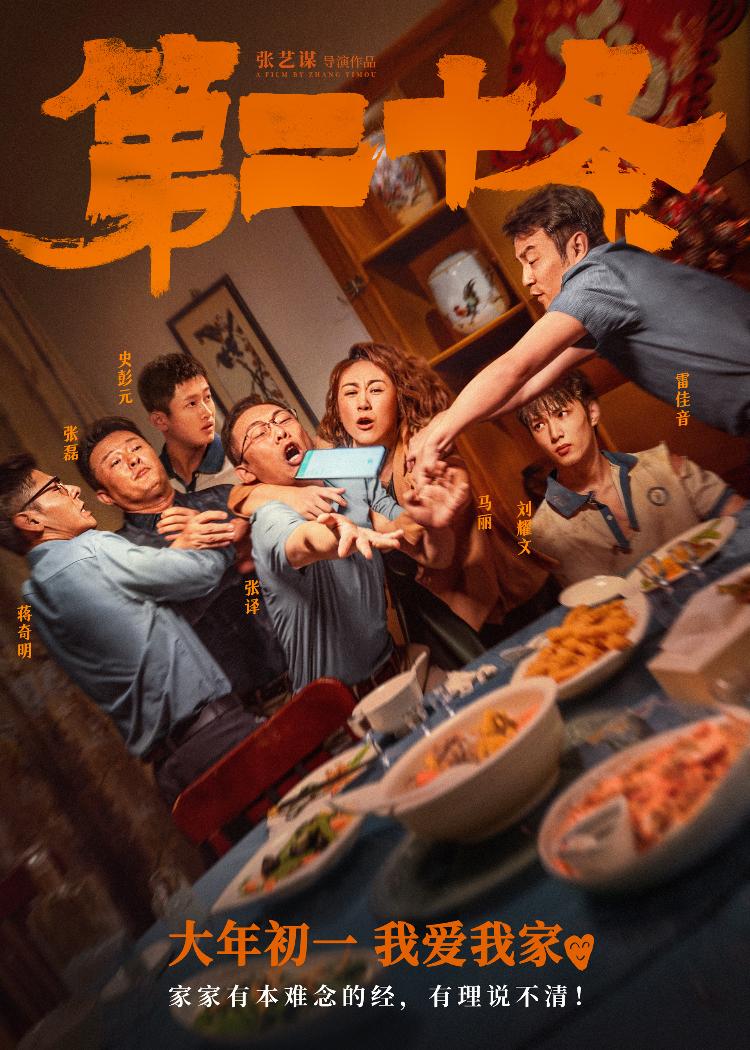
There’s something quite strange going on in Zhang Yimou’s New Year legal dramedy Article 20 (第二十条, dì èrshí tiáo). Generally speaking, the authorities have not looked kindly on people standing up to injustice in case it gives them ideas, yet the film ends in an impassioned defence of the individual’s right to fight back in arguing that fear of prosecution should not deter “good” people from doing “the right thing” such as intervening when others are in danger. Nevertheless, the usual post-credits sequences remind us that the legal system is working exactly as it should and the guilty parties were all caught and forced to pay for their crimes.

In this particular case, the issue is one akin to a kind of coercive control. Wang (Yu Hewei) stabs Liu 26 times following a prolonged period of abuse and humiliation. After taking out a loan to pay for medical treatment for his daughter who is deaf and mute like her mother Xiuping (Zhao Liying), Wang was terrorised by Liu who chained him up like a dog and repeatedly raped his wife. Prosecutor Han Ming (Lei Jiayin) eventually argues that his attacking Liu qualifies as self defence under Article 20 of the constitution because even if his life was not directly threatened at the time it was in the long term and he did what he did to protect himself and his family from an ongoing threat.

Han Ming becomes mixed up in several different cases along the same lines only with differing levels of severity. Some years ago he’d worked on the case of a bus driver who was prosecuted after stepping in to help a young woman who was being harassed by two louts. His problem was that he got back up after they knocked him down and returned to the woman which makes him the assailant. Zhang has spent most of his life since his conviction filing hopeless petitions in Beijing. Meanwhile, Han Ming’s son, Chen (Liu Yaowen), gets into trouble at school after stepping in to stop obnoxious rich kid and Dean’s son Zhang Ke from bullying another student.

Now jaded and middle-aged, Chen first tells his son that he should he give in an apologise to get the boy’s litigious father off his back though Chen is indignant and refuses to do so when all he did was the right thing in standing up to a bully. Bullying is the real subject of the film which paints the authoritarian society itself as a bully that rules by fear and leaves the wronged too afraid to speak up. The choice Han Ming faces is between an acceptance of injustice in the pursuit of a quiet life and the necessity of countering it rather than live in fear while bullies prosper.

The thesis is in its way surprising given that the last thing you expect to see in a film like this is encouragement to resist oppression even if the idea maybe more than citizens should feel free to police and protect each other from the immorality and greed of others. It is true enough that it’s those who fight back who are punished, while the aggressor often goes free but according to Han Ming at least the law should not be as black and white as some would have nor be used as a tool by the powerful, or just intimidating, to oppress those with less power than themselves. 

Other than the theatrical drums which play over the title card, there is curiously little here of Zhang Yimou’s signature style while the film itself is not particularly well shot or edited. It also walks a fine line between the farcical comedy of Han Ming’s home life in which he perpetually bickers with his feisty wife (an always on point Ma Li) who worries he’s too interested in his colleague Lingling (Gao Ye) who turns out to be an old flame from his college days during which he too was punished for standing up to a bully by being relegated to the provinces for 20 years. A minor subplot implies that the justice-minded Lingling is largely ignored because of the sexist attitudes of her bosses who feel her to be too aggressive and often dismiss anything she has to say in what amounts to another low level instance of bullying. The film ends in a rousing speech which seems more than a little disingenuous but even so ironically advocates for the right to self-defence against a bullying culture while simultaneously making a case for the authorities having the best interests of the citizen at heart which would almost certainly not stand up particularly well in court.


Article 20 is on limited release in UK cinemas courtesy of CMC.

International trailer (English subtitles)

The Monkey King 3 (西遊記女兒國, Cheang Pou-soi, 2018)

the monkey king 3 posterSun Wu Kong and his band of merry scripture seekers will face many challenges on their journey to the West, but none so dangerous as the poison of love! Aaron Kwok reprises his role as the titular Monkey King in the third of the ongoing series directed by Cheang Pou-soi (here credited as Soi Cheang) but steps back a few paces into a supporting role while noble hearted monk Xuanzang (William Feng Shaofeng) takes centre stage to face the multifaceted dilemma of love and personal fulfilment vs the fulfilment of his quest to better the lives of all mankind. An age old problem, but one you can’t truly address until you have stake in the game.

Xuanzang, now returned and dressed in white, has a romantic destiny – something which makes him a little nervous as he happily sails along a picturesque river in the company of companions Wujing (Him Law) and Zhubajie (Xiaoshenyang) while Wu Kong (Aaron Kwok) flies along behind, apparently having mislaid his trousers somewhere along the way. All of a sudden the atmosphere darkens as the gang sail into a “demonic” area where they are attacked by a giant, whale-like river god and subsequently thrown into another dimension thanks to an intervention from the Goddess of Mercy (now played by Liu Tao in place of the series’ previous cameo from Kelly Chen).

The guys have inadvertently landed themselves in Womanland which is 100% man free. In fact men are illegal and to be executed on sight which is a bit of a problem seeing as it’s also impossible to leave. Not so much of a problem, however, as the strange moment which occurred between Xuanzang and the Queen of Womanland (Zhao Liying) as their eyes met during a near fatal fall from a cliff edge. Following the childish exuberance of the first film and the morbidly gothic horror of the second, it’s love which now threatens to derail our heroes’ quest and with it the possibility of salvation for all mankind.

Womanland was founded by a woman scorned who turned her back on faithless men forevermore, instructing her followers that men are selfish and duplicitous, that they lie to win the hearts of women which they later break in forsaking them for the next conquest. The holy scriptures of Womanland warn of the “poison of love” which is (usually, they say) spread from man to woman and leads to nothing but inescapable suffering. Foreswearing all romance (apparently there is no concept of romantic love in the all woman kingdom save the rumour that there was once a young woman who fell in love with a river she was never able to see) turns out not to be the best solution to the problem as we discover that all the ruckus in the world above is in someway caused by these repressed or denied emotions as well as by a failure to accept that sometimes feelings must be sacrificed in favour of greater responsibilities.

Whereas the second film pitted Wu Kong and Xuanzang against each other as advocates of compassion and rationality, this time Xuanzang must face a monk’s dilemma alone in deciding whether the love of one woman is equal to that of the whole of mankind. His choice is a forgone conclusion but serves to remind the monk that denying one’s true feelings is not the same as facing them and wilfully isolating oneself from possible suffering is not the same as overcoming it. The residents of Womanland discover something similar in the parallel journey of their embittered first minister (Gigi Leung) whose own unfulfilled romantic desires have made her cruel and vindictive only to be presented with another choice and find herself denying love for duty once again.

Duty, however, turns out to be warmer than it sounds – in Womanland, maternal love trumps the romantic, undercutting the otherwise progressive atmosphere of a society of women doing fine on their own with a return to maternity as central virtue of womanhood. Love is the force which threatens to undo carefully won civility (a “bourgeois affectation” as the more dogmatic definition would have it), but desire repressed rivals love scorned as a force to burn the world. Xuanzang has a choice to make, but the choice itself is not so important as the conscious act of choosing. Aside from a bizarre subplot featuring male pregnancy and forced abortion, Monkey King 3 makes a largely successful shift away from gung-ho adventuring into poignant romantic melodrama. With the gang en route to Fire Mountain, where will their journey take them next?


Currently on limited release in UK cinemas courtesy of China Lion Film.

International trailer (English subtitles)