 Written by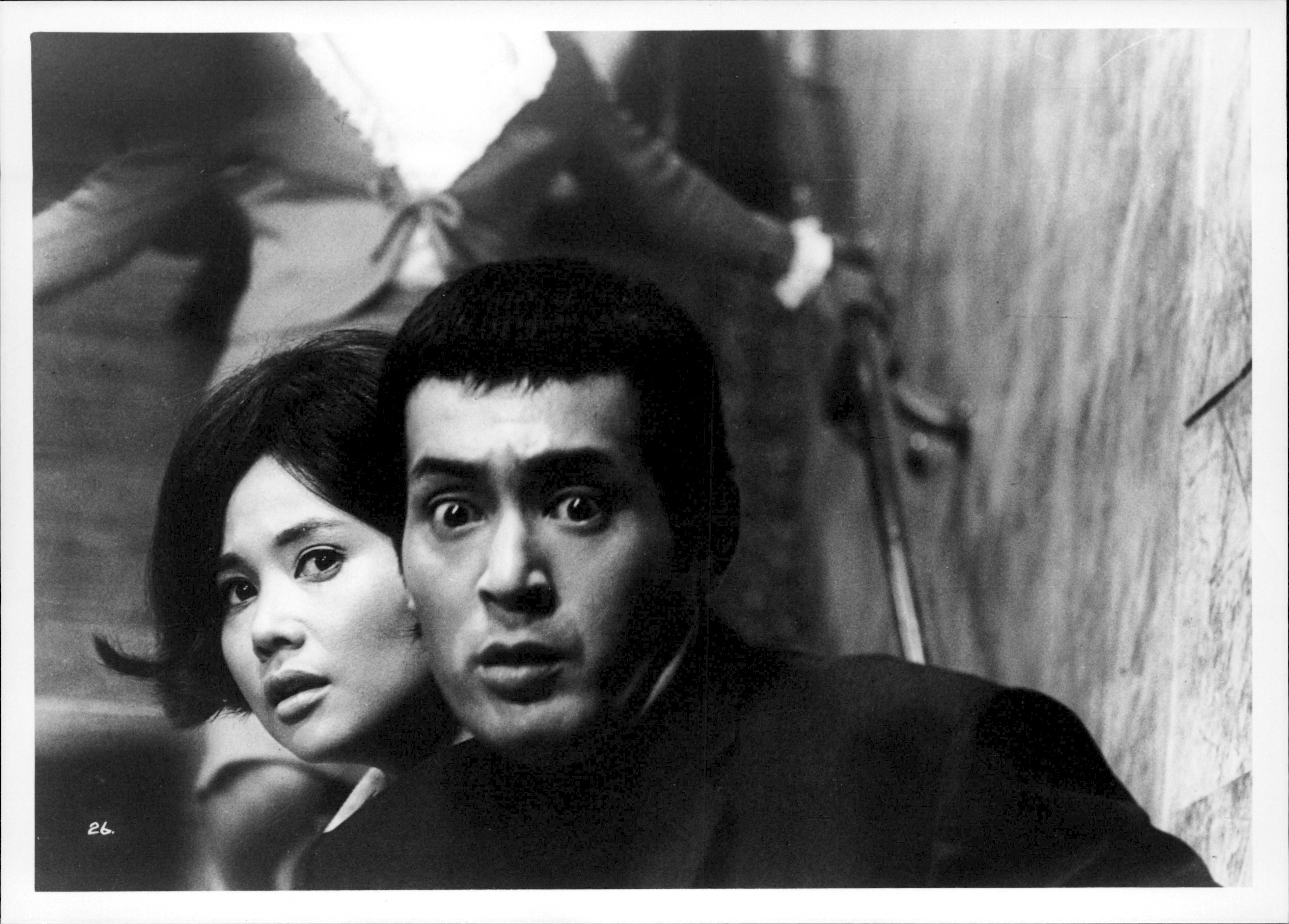
When they think about Tatsuya Nakadai, most people associate him first with Masaki Kobayashi and then perhaps with Akira Kurosawa. Some might also say Kon Ichikawa or Mikio Naruse. But really, the second most important director in terms of Nakadai’s career was undoubtedly Kihachi Okamoto. Just through a historical accident, Okamoto has become best known in the English-speaking word for a film that is entirely atypical in terms of the rest of his career. In fact Sword of Doom was forced on Okamoto by his home studio Toho who were extremely dissatisfied with the film you’re about to see, Age of Assassins, to the extent they withheld it from release for a few months for being “too mad”.
When they finally did release it, it was as part of a double bill with a documentary about rally racing called Explosion Course directed by Hiroshi Teshigahara, who made Face of Another, that they didn’t anticipate there being much of an audience for and in fact the screenings were very poorly attended, partly because they didn’t promote the film in any way, which was a disappointment for Okamoto. Some cinemas stopped screening it after three days and Nakadai also became persona non grata at the studio.
In any case, Sword of Doom is best for its extreme nihilism as expressed through Nakadai’s chilling central performance, but if you look at the rest of Okamoto’s career what he specialised in was zany comedy and cartoonish crime movies. His films are incredibly playful and absurdist, often making little literal sense. Even something like The Elegant Life of Mr Everyman intended as a more conventional salaryman comedy is anarchic and ironic featuring animated sequences and rapid editing. If you look at his earlier crime thrillers, they’re often full of fun and silliness like heavily stylised fight scenes or shootouts in children’s playgrounds.
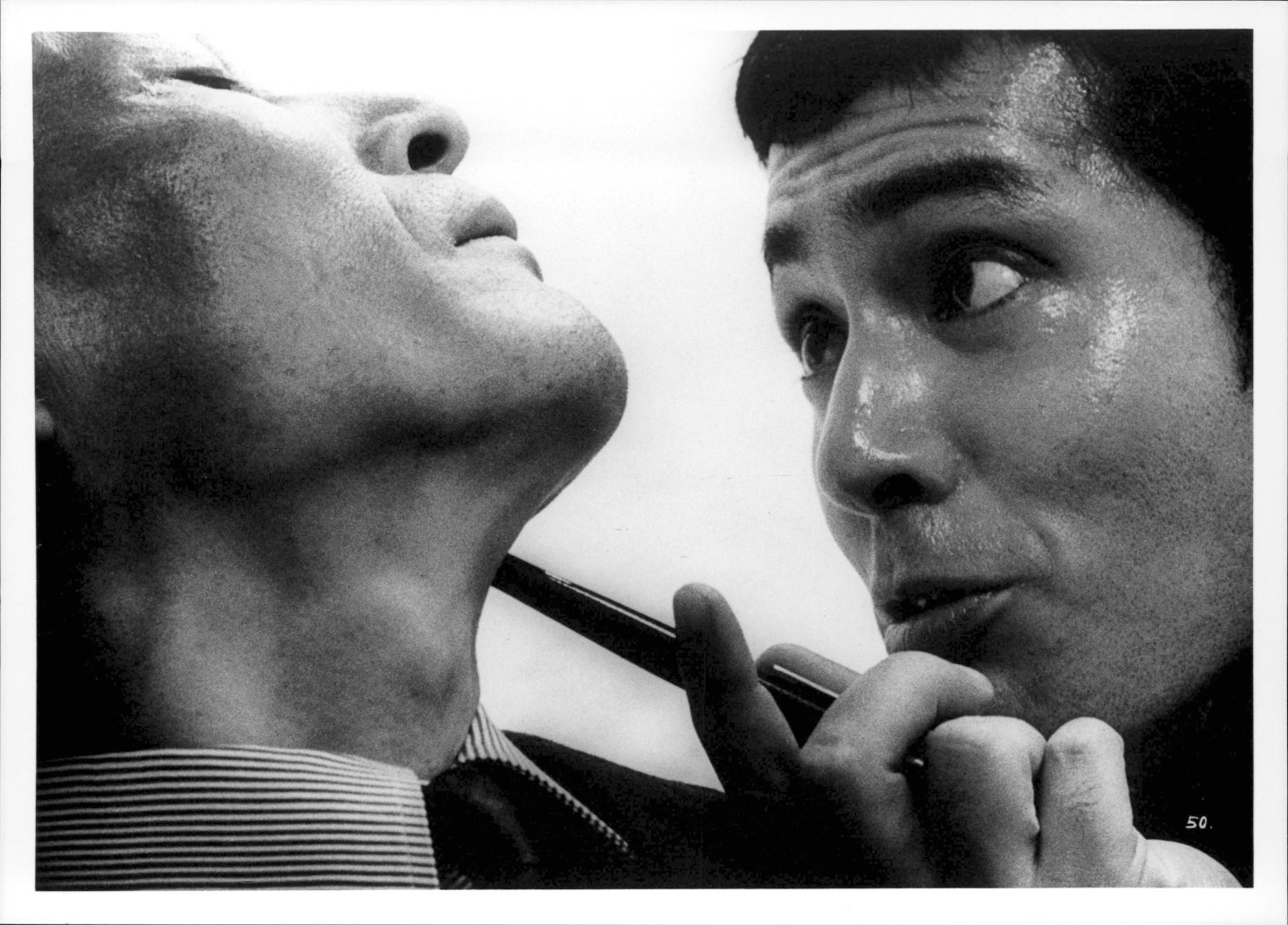
Even so, with Age of Assassins, he really does push it to the limit and the film is in some ways about the art of chaos. The project had originally been put together at Nikkatsu and Okamoto was handed a completed script he was instructed not to tamper with but he did make a few small changes that contributed to the anarchic quality of the film. Mad scientist Mizorogi claims that all great men were a little crazy in some way, which is why he’s been training the patients at his psychiatric hospital to become assassins.
Around this time, like much of the world, Japanese cinema was falling for Bond mania and as you’ll see the assassins all have their own particular gadgets while Nakadai’s character undergoes a transformation to become a super suave Bond-style spy. Spoofs like these were common at Toho at the time in films like Jun Fukuda’s Ironfinger, which was scripted by Okamoto, and its sequel Golden Eyes. They also had a long-running series starring Tatsuya Mihashi called International Secret Police that was also strangely obsessed with Interpol.
These films were more about exploring Japan’s place on the global stage during the era of high prosperity, but Age of Assassins is more interested in conditions in Japan itself. The evil organisation at the centre is the The Greater Japan Population Control Council which believes that the nation is becoming overpopulated and measures need to be taken to reduce population growth. It’s ironic to think about now when the same arguments are being made for declining population, but the film expresses similar anxieties to something like Yuzo Kawashima’s Burden of Love that the post-war baby boom has placed too much pressure on resources and is hampering economic prosperity.
Nevertheless, the Council don’t necessarily want to limit the number of births in case they accidentally prevent someone “important” being born, rather they think “useless” people should step aside. This idea of categorising certain people as “useless” is also a critique of the increasing capitalist high prosperity era in which people are only valued for their productivity and those who are not seen to contribute or contribute only in a way that is not seen as useful are seen as actively harmful to the wider society.
Kikyo is chosen at random but perhaps it’s not difficult to see why some might have considered him “useless”. It’s a very different look for Nakadai than most people are used to. He’s introduced with these milk-bottle bottom glasses and a bad case of athlete’s foot while seemingly obsessed with his mother. Yet Nakadai actually said that this is closer to his real self than most of his other film roles. Since he was young he had the nickname “Moya” which means “myst” because he was so absent-minded. He’d known Okamoto since he was an assistant director and the pair were quite close friends. Nakadai even had a cameo in Okamoto’s debut film, All About Marriage, that was a romantic comedy vehicle for pop star Izumi Yukimura. Nakadai called Okamoto “the Buddha” as opposed to “the demon” Kobayashi because he never told him off on set about his acting. Okamoto apparently wanted to make a film that was different from work Nakadai was doing with people like Akira Kurosawa and Masaki Kobayashi that showcased his comical side and silly sense of humour, which wasn’t something that Nakadai got to do very often. Nakadai even said that he didn’t have to do a lot of preparation for the role because he was basically just playing himself. Even so, his smooth transition to supercool spy has you wondering which is his real persona.
In addition to the spy plot, we also have the B-movie style Macguffin of the missing necklace, Cleopatra’s Tears. For some reason, the female lead working a magazine is a common element in genre films with pair forming an investigative couple, though really we have a trio in this case with the inclusion of Otomo Bill. Reiko Dan who plays Keiko was a quite a popular actress at Toho starring in the Shacho series of salaryman comedies as well in films for Akira Kurosawa and Naruse. Like Nakadai, Hideo Suzanaka who plays Otomo Bill also trained at the Haiyuza theatre company and specialised in comedy and was one of Okamoto’s regular actors though he often also appeared in tokusatsu movies.
Hideyo Amamoto who plays the mad scientist is also quite an interesting person, best known in Japan for playing another made scientist, Dr Shinigami in the first series of Kamen Rider. In fact, he used to wear a skull cap, cape, and boots just as his normal clothes and appeared in a lot of films dressed that way. He worked with Okamoto quite a lot and bore a physical resemblance to him so sometimes children would spot them sand shout things like “there are two Dr Shingamis” which didn’t impress Okamoto very much. Amamoto was also obsessed with Spain publishing several books about it and Mizorogi’s duel with Kikyo is where they tie their hands together and fight with knives is apparently a Spanish-style duel in homage to that. The really striking thing about this film, though, as you’ll see is the wonderful production design such as Mizorogi’s all-white, art deco lair with cells on either side. There really isn’t anything quite like this, a riot of cartoonish inventiveness and satirical hokum that defies any kind of explanation. I do hope you’ll enjoy it.
Text of an intro given at the 2026 Nippon Connection film festival.

