
 Written by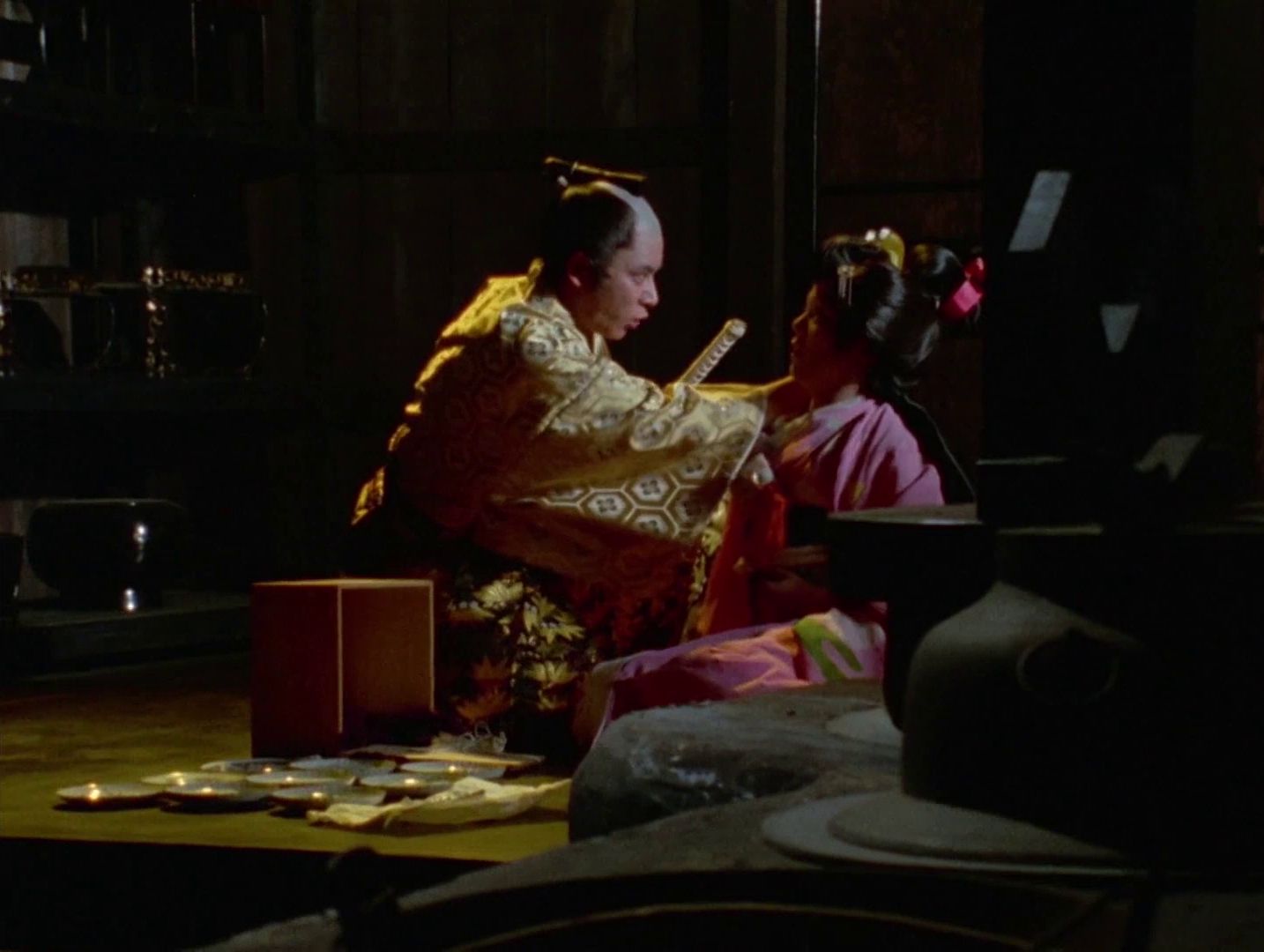
Class differences and the arbitrary codes of the samurai society come between a couple in love in Teruo Ishii’s take on the classic ghost story The Dish Mansion at Hell’s Bancho (怪奇十三夜 第二回 番町皿屋敷, Kaiki Jusan Ya Bancho Sarayashiki). Produced as part of the Mysterious Thirteen Nights TV series, this version of the tale focuses more on love across the class divide and general unfairness of the world around the lovers rather than the lord’s rashness and unforgiving cruelty.
At least, the real issue is that Hatamoto Harima has refused an offer of marriage from the influential Abe family because he is still clinging to the impossible idea of marrying Okiku, a young woman working as a maid at the estate. As she says, the class difference between them is too great. No matter how much Harima may say that they are the same and all that matters is that they love each other, he is not actually free to make this decision. Even if he wanted to go so far as to renounce his samurai status, his family would likely not allow it and use any means possible to stop him, including murder.
What they do instead is frame Okiku for breaking one of a set of precious plates gifted to the family by Ieyasu after the battle of Sekigahara. Okiku counts the plates as instructed, only to realise that there is one missing. Two of the other servants say she broke it, though Okiku swears she has no knowledge of whatever happened to the plate. Harima is shaken, believing the testimony of the two servants who were particularly close to him, yet thinking that Okiku has done this deliberately as a means of reducing the status of the Aoyama family and thereby dissolving the class difference between them so they can be together.
He does not seem to mind this kind of manipulation and even appears grateful that Okiku has forced his hand, planning to give up his status to be with her. When his scheming retainer Jinnai, however, tells him that it was all a trick Okiku has played to test his affections because she doesn’t really trust him, Harima loses his temper at this apparent act of betrayal. Despite saying that, at the end of the day, it’s a just plate and he’s not the sort of person who would let someone die over it, Harima ends up killing Okiku in a fit of range. Her body falls into the nearby well where she is said to have broken the plate.
The fact is that this is a plot put in motion to force Harima into accepting the proposal from Abe for the good of the clan who fear refusing him will only ensure his rage. Okiku had become an obstacle to Harima’s marriage in drawing him away from his duty to the clan in favour of his personal feelings, so they removed her by trying to split the couple up. As a member of the samurai society, Harima is actually less than fishmonger’s sister to decide his romantic destiny. Even Okiku’s brother Iwakichi extends a degree of understanding to Harima on learning that he has killed his sister after telling him that Okiku meant to leave the castle because she too thought he would be happier with Abe’s daughter and no longer wished to stand in his way. Iwakichi understands that it was the samurai world that wielded the sword that killed Okiku, telling Harima only that he should live in Okiku’s memory as this is doubtless what she would have wanted.
Harima, however, goes on a rampage avenging her death, killing off most of the retainers that betrayed him, though he is not driven “mad” by Okiku’s vengeful spirit as in many similar films but makes a righteous decision to attack the corrupt samurai society. Even so, the film ends in a climatic sword fight taking place during a thunderstorm in which Okiku’s ghost appears among the men Harima is trying to kill. Ishii’s use of slow motion and surreal imagery such as the plates bleeding as Harima destroys them further add to a sense of supernatural dread, The conclusion then takes on a poetic quality as Okiku and Harima become a pair of butterflies, suggesting that their love was only possible outside of the human world free from the barriers of social class. That this classless society has not quite come about suggests that the film is also talking to a contemporary audience facing similar issues during the era of high prosperity while leaning in to a tragic tale of frustrated romance rather than condemning the hero’s rashness or the inherent cruelty of samurai society outside of its obsession with status.

