Alone in the Night (夜がまた来る, Takashi Ishii, 1994)

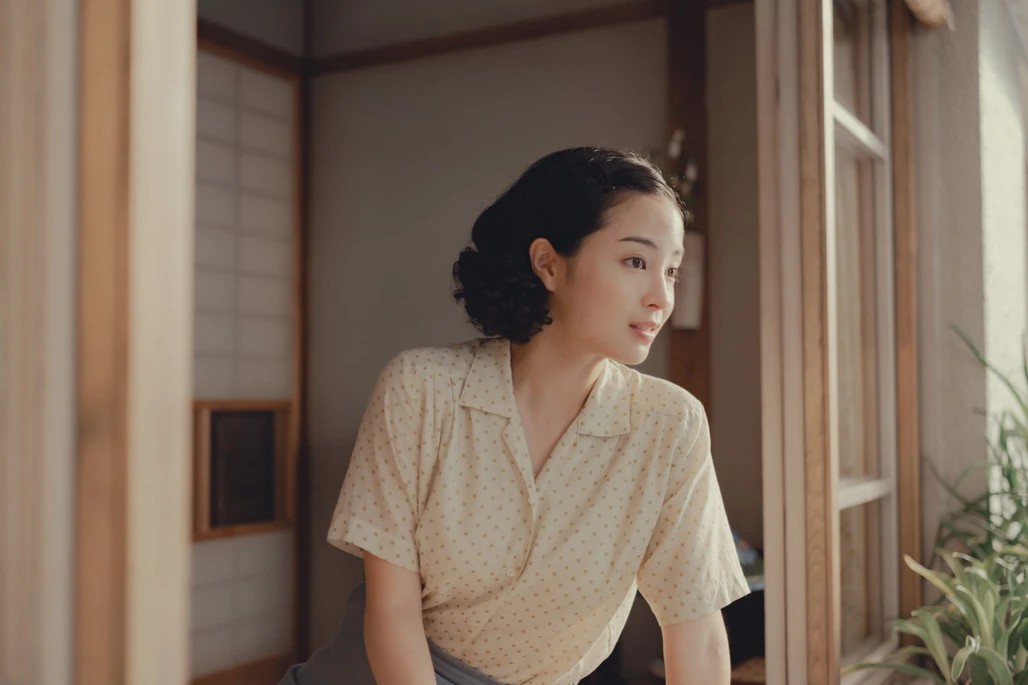
A woman enters the homosocial world of the yakuza in search of revenge for her murdered husband, but discovers only more degradation and hopelessness in Takashi Ishii’s rain-soaked noir, Alone in the Night (夜がまた来る, Yoru ga mata Kuru). Then again, perhaps it’s not really revenge Nami (Yui Natsukawa) is after so much as death itself, her relentless fall one of self-harm born of her sense of futility in world ruled by irony in which there is no such thing as truth or justice.

Indeed, one of the things that propels Nami on her mission is the injustice that her husband Mitsuru (Toshiyuki Nagashima), killed while working undercover investigating a gang dealing drugs, is then accused of taking the drugs he seized and selling them on himself. After her husband dies, she’s hounded by the press who paint him as a corrupt cop while she’s also denied his police pension because he died in disgrace. What she wants is to clear his name and thereby drag her husband back from the netherworld in an affirmation of their love for each other. 

But she too becomes corrupted by the darkness of the criminal underworld. Soon after the funeral, yakuza thugs break into her home and rape her while looking for the drugs they assume Mitsuru stashed somewhere. Amid the chaos, she attempts to take her own life by slashing her wrist with one of Mitsuru’s bones but is unexpectedly saved by a mysterious man. Reborn after her brush with death, she reinvents herself as bar hostess “Mitsuru” as a means of getting close to the gang boss, Ikejima (Minori Terada), she believes to be responsible for her husband’s death. Her attempts to kill him, however, prove unsuccessful. She’s once again raped, this time by Ikejima, and thereafter becomes his mistress until another opportunity arises which she then botches by stabbing him in a non-lethal way which only gets her beaten and tortured by his underling Shibata (Kippei Shiina) and eventually sold to a brothel in Chiba where they get her hooked on drugs to make her easy to control. 

In fact, she’s only spared death once again thanks to the intervention of the mysterious man, Muraki (Jinpachi Nezu), a middle-aged yakuza seemingly weary of life and perhaps drawn to Nami as to death. He seems uncomfortable and out of place in this world of brutal masculinity while his modernity is singled by his association with the gun to counter Shibata’s with the sword. He has other reasons for his duality, but is charged with rooting out moles in the yakuza of which there seem to be an inordinately large number. Despite warning her off, he does what he can to help Nami, in part of out of guilt and a need for atonement, but also a kind of escape from his own entrapment within the purgatorial space of the yakuza underworld. 

Permanently raining and shot in an eerie blue, the world around Nami and Muraki takes on an etherial, dream-like quality as if taking place somewhere between sleeping and waking. After rescuing her from an attempt to drown herself, Muraki remarks that Nami slept like the dead or perhaps as if someone was calling to her from the other side. Death seems to be beckoning each of them, even as Muraki desperately tries to keep Nami alive by tenderly nursing her back to health and helping her beat drugs so she can finally free them both by achieving their mutual revenge.

But the film’s irony is that Nami cannot achieve her vengeance on her own. She’s constantly rescued by Muraki who achieves some if for her while each of her attempts only plunge her further down the cycle of degradation and in danger of losing herself entirely. She is and remains an ordinary woman venturing into hell in search of justice, but discovering only cruel ironies and futility. Muraki too is unable to transcend himself and meets a personal apocalypse in embracing his authentic identity. Nami has been chasing a ghost all along, though in some ways it may be her own as she tries to make her way back into the world of the living by reclaiming a vision of the world she had before in which her husband was a good and honest man and there was justice in the world even she declared herself largely disinterested in world outside of their romance and their private paradise just for two.


Alone in the Night is available as part of Third Window Films’ Takashi Ishii: 4 Tales of Nami boxset.

The Killer (喋血雙雄, John Woo, 1989)

“We’re outmoded characters,” a dying man laments, having previously advanced that “nostalgia is one of our saving graces.” The heroes of The Killer (喋血雙雄) are indeed remnants of an earlier time, out of place amid the modern city and adhering to a code that has long since fallen by the wayside. “Our world is changing so fast,” hitman Jeff (Chow Yun-fat) exclaims of a Hong Kong hurtling not only towards the Handover but an increasingly amoral capitalism in which friendship and brotherhood no longer have any currency.

We can tell this straightaway from the fact that the man who ordered the hit on the drug lord Jeff took out at the dragon boat races was his own nephew, Weng (Shing Fui-on). To tie up loose ends, Weng also sends his own hitmen to take out Jeff, who can’t be sure if his handler and best friend Sidney (Chu Kong) is involved in the plot to knock him off. Later in the film, Inspector Li (Danny Lee) asks what Jeff will do if Sidney betrays him, but he merely says that he will still treat him as a friend because he has been good to him in the past. Jeff says this in an abandoned church, echoing not only the codes of jianghu brotherhood now largely absent in the contemporary society but Christianising notions of forgiveness and acceptance. 

Jeff claims that he isn’t a religious man but appreciates the tranquillity of the disused chapel. Inspector Li meanwhile is often pictured next a statue of the Buddhist god of war and dressed in black in opposition to Jeff’s white, but what emerges is that the two men are effectively the same and somewhat interchangeable. Jennie (Sally Yeh), the nightclub singer Jeff accidentally blinded during a a chaotic hit and subsequently falls in love with, first mistakes Li for Jeff while Woo also pictures him sitting in Jeff’s chair and pulling a gun on his partner in much the same way Jeff cooly dispatched an assassin sent by Weng. Chang had told Li that he looked exactly like what he was, an undercover policeman, which is obviously a problem, but Jeff remarks that he is a “very unusual cop,”while Li agrees he’s a very unusual killer. 

In some senses, Li will also become the killer of the film’s title in the closing moments, a man who believes in justice but is not himself believed and knows that there will be no real justice for a man like Weng. Both men share a code which is essentially the same, a more primal kind of morality largely incompatible with the modern society and in many ways rightly so. Li even says that Jeff does not look like a killer, that there’s something “heroic” about him, and that his eyes are full of passion as if he had a dream. His words have a kind of irony to them, but Jeff does indeed have a dream in the desire to gain redemption for himself by restoring Jennie’s eyesight, which is the reason for his last big job having now been reformed by her no longer believing that the people he killed deserved to die but that everyone has a right to live.

Despite the triangular relationship with Jennie, there is an undeniably homoerotic tension in the connection between Li and Jeff even if they are also two sides of the same coin. They train their guns on each other and lock eyes, but unexpectedly find a kindred spirit in a man who should be an enemy. “The only person who really knows me turns out to be a cop,” Jeff chuckles but has an equally deep relationship with handler Sidney just as Li has with parter Chang (Kenneth Tsang) while the homosociality that defines their world is subverted by Weng who simply shoots his own underling when he becomes inconvenient to him. 

Both Li and Jeff are effectively men left with “no way out” and “nowhere to go” because their code of brotherhood is no longer understood by the contemporary society. Jennie’s progressive loss of sight also echoes their dwindling futures as if the light were going out of their world long before Woo shatters the statue of the Virgin Mary and unleashes the doves of futility inside the no longer quite so tranquil church that becomes the final resting place of manly honour and brotherly love. “Perhaps we are too nostalgic,” Jeff sighs but nostalgia is indeed his saving grace in a world in which honour and friendship exist only in a mythologised past or may never have really existed at all.


Trailer (no subtitles)

Eight Men to Kill (賞金首 一瞬八人斬り, Shigehiro Ozawa, 1972)

In the first instalment of the Bounty Hunter series, Shikoro Ichibei (Tomisaburo Wakayama) had been a shogunate spy intent on putting down rebellion to their oppression, but by the third, it seems he’s thoroughly fed up with the ills of feudalism and apparently no admirer of the Tokugawa who he feels to have failed in their responsibility to the people along with their personal greed and desire to hold on to their power.

Ichibei’s chief objection is their lack of healthcare provision, seeing as he is a doctor who mainly cares for the poor. That’s one reason he agrees to the job, asking for a large percentage of the gold he’s been asked to retrieve by a worried retainer who explains that the Edo government is relying on it to bridge a gap on their finances. If the gold’s not returned, the entire economy may crash. The government’s heartlessness is further borne out by the retainer’s words that it’s not the time to be concerned about one boy whose importance pales in contrast to that of the Tokugawa Shogunate when a rogue ronin kidnaps the son of the man responsible for the theft of the gold from a local mine. 

In a repeated motif, men attempt to swallow the gold as a means either of stealing or hiding it but it gets stuck in their digestive system and causes them a great deal of pain that could lead to death. The cruel mine owner Kanoke Tatsu (Minoru Oki) forces Ichibei to cut open the man’s stomach to get the gold out, while he insists on sewing him back up again because as a doctor it would be wrong not to. What he’s really performed maybe a kind of gold-ectomy, removing the toxic substance from the men’s stomachs even if he may not be able to save their lives or improve their circumstances.

Ichibei tells the bandit, Yasha the Wolf (Kenji Imai), who is held responsible for the theft of the gold, that he is as bad as him and is only looking for a fast way to make money, yet he wants it to use to build better hospitals for the poor, ironically using the government’s cash to make up for their failing. Meanwhile, he finds himself coming up against a man much like himself only inverted in the form of wandering assassin Yajuro (Shigeru Amachi), a former secret policeman in the rebellious Bishu domain who doubt crosses everyone he comes across in an attempt to get his hands on the gold. Ichibei asks the man who hired him why they don’t want to use government spies but he tells him that it’s because they’d run out. The ones they sent to investigate have all been killed, presumably by the treacherous Yajuro.

All around him, Ichibei discovers only omnipresent greed. A geisha he comes across is working with the mine owner to steal the cash, but simultaneously seducing Ichibei and the apparently won over by his bedroom prowess though it’s difficult to know which is an act, her fondness for Ichibei or pledges to sell him out to Kanoke. Meanwhile, Kanoke vacillates when presented with a binary choice by Yajuro, his adorable three-year-old son, or the gold. As always, it’s the innocent who suffer while personal greed and governmental indifference leave ordinary people little room to manoeuvre. 

This time around, the righteous Ichibei cuts a solitary figure. He no longer has a posse and is supported only by an older gentleman who is mute. As a result of his mission, he even ends up on a wanted poster himself with the shogunate, presumably unwilling recognise him, yet eventually congratulating him on a job well done, much to his shame and embarrassment having witnessed shogunate soldiers committing an atrocity. Very much in the western vein, Ozawa lends the dusty old mining town a sense of dread and decay as it rots from the inside out thanks to the corrupt authority of a weakened shogunate seeking only ways to cement its own power. The red-tinted final taking place during a solar eclipse seems to emphasise the hellishness of the situation even as Ichibei announces that they can all go to hell but he’s sending the money to heaven where it can be put to better use. 


The Fort of Death (五人の賞金稼ぎ, Eiichi Kudo, 1969)

Shikoro Ichibei (Tomisaburo Wakayama) returns yet this time seemingly on the opposite side in the second in the Bounty Hunter series, The Fort of Death (五人の賞金稼ぎ, Gonin no Shokin Kasegi) this time directed by Eiichi Kudo. If the first film had been an Edo-era take on James Bond, the second is very much Spaghetti Western and feudal tragedy as Ichibei finds himself coming to, if not quite the rescue of the oppressed farmers, then at least moral support in taking stand against corrupt and self-interested lords.

This might be surprising in that in the first film Ichibei had been a shogunate spy and seemingly close friend of the man himself, yet this time around he’s working as a doctor while taking bounty hunter jobs to earn extra money to support the poor people who come to him for help. Like a true western hero, he has a small posse which includes the ninja lady, Kagero (Tomoko Mayama), from the first film only she’s being played by the actress who previously starred as his other love interest. In any case, he’s approached by a young man from a small village which is making a last-ditch appeal to the local lord to lower their tax burdens so they don’t all starve, though so far the lord’s response has been to add additional taxes and kill people for not paying them. 

On his arrival, Ichibei soon realises that the man who recommended him was actually the leader of the government forces during a previous peasant uprising at which Ichibei had also tried to help the farmers. In that case, Bessho (Shin Tokudaiji) had won, but it didn’t do him any good. His clan was dissolved and he became a wanderer, taken in by the village and now indebted to them, hoping Ichibei can help but fully aware of the brutality with which such challenges to the feudal order are put down. 

The lord later suggests it’s not really his fault. He has to curry favour with Edo to protect the domain, which is why he agreed to participate in a construction project that led him to confiscate all of his farmers’ rice and wheat. But then it’s also true that he is vain, and cruel. On realising the village has hired a man like Ichibei, some of the retainers suggest reopening negotiations but others complain that they must now crush the farmers or face ruin themselves while trying to ensure the strife in their domain does not come to the attention of the government in Edo. 

Part of their problem is that Ichibei simply has better technology in the form of gatling guns. Tying into the western themes, Ichibei is well versed in the use of firearms, while the samurai are mostly reliant on traditional weaponry such as arrows and swords. The lord later insists on using some canons, but is oblivious to the risk as the shogun has banned the use of gunpowder and using them may end up bringing him to his attention and thereby landing him in a lot of possible fatal trouble. 

In any case, it’s the villagers who suffer. Ichibei encounters a woman who has lost her mind, refusing to give up her baby who has died of malnutrition while her husband was executed for non payment of taxes. Meanwhile, some of the other ronin they hired attempt to rape a villager, and a young couple are prevented from marrying because the headman is worried that it would send the wrong message in a time so much strife. Then again, a woman basically attempts to rape Ichibei, descending on him while he’s still asleep which otherwise leads into a fairly comic sequence in which Ichibei must fight of a bunch of ninjas intent on stealing the gatling gun while dressed only his underwear.

Darkly comic it may be, but also surprisingly violent with a ninja at one point using a dead body as a Molotov cocktail not to mention the severed heads and limbs of the battle scenes. Ichibei is fully aware that the battle is a forlorn hope, but also that the villagers have no choice and perhaps this is better for them than simply accepting their fate and starving to death. Even so, he reserves his final words for the Edo inspector who arrives only when the battle is done to survey the scene, berating him that he ought to know what happened here from looking at the battlefield and deducing that this domain has not been run particularly well. It’s a tragedy of feudalism that provokes a tearful rage from the compassionate bounty hunter trying his best to heal the sickness in his society, though perhaps like the patient who visits him with a venereal complaint concluding the best solution is to cut it right off.


Killer’s Mission (賞金稼ぎ, Shigehiro Ozawa, 1969)

According to the title card at the beginning of Shigehiro Ozawa’s Killer’s Mission (賞金稼ぎ, Shokin Kasegi), none of the events it depicts have been recorded in history because the shogunate decided to erase them all in fear of the effect they may have on the nation’s geopolitical stability. Nevertheless, it gives some very concrete dates for its historical action, even if they may not make complete sense while foreshadowing the political turbulence of the following century. 

What it essentially attempts to do is tell a James Bond-style tale of political intrigue in a feudal Japan in which perpetual peace has begun to create its own problems. Here played in a cameo appearance from Koji Tsuruta, the Shogun Ieshige was weak in part because he was in poor health and had a speech impediment which led him to be rejected by his retainers. The problem here, however, is with Satsuma which has been on bad terms with the Tokugawa shogunate since the Battle of Sekigahara after which they took power. Satsuma will in fact be at the centre of the conspiracy to overthrow the government in the following century, but for the purposes of the film have fallen foul of a rumour that the plan to do an arms deal with some Dutch sailors who sailed South to Kyushu after being rebuffed in Edo. 

A civil war is feared and in the interests of maintaining peace, Ieshige sends his trusted spy Ichibei (Tomisaburo Wakayama) to protect Satsuma official Ijuin Ukiyo (Chiezo Kataoka) in the hope that he will be able to talk his young and naive lord out of doing the deal. Ostensibly a doctor by trade, Ichibei has a series of spy gadgets such as hidden blades and collapsible guns stored in a secret room at his surgery which he then carries in a black leather utility belt. He keeps the nature of his mission close to his chest, but often double bluffs by simply telling people he is a shogunate spy or otherwise adopting a disguise as he does in a moment of meta comedy impersonating the signature role of his brother Shintaro Katsu by posing as a Zatoichi-style blind masseur. 

As if to signal the cruelty of the feudal world, Ichibei comes across the corpses of suspected spies abandoned outside Satsuma territory while his enemies meditate on their ancient slight and consider taking the deal in the hope of avenging their defeat and overthrowing the Tokugawa. They are warned that creating unrest and sowing division may be exactly what foreign powers like the Dutch crave, but aren’t particularly bothered, preferring to take their chances with them rather than curry favour with the Shogun and possibly destabilising the entire society along with it. 

Of course, much of this is anachronistic with the Dutch sailors appearing in a distinctly 19th century fashion carrying weapons which are also too advanced for the era as are Ichibei’s folding pistols. Through his travels, he runs into a female Iga spy who too can do some nifty ninja tricks and has a gadget of her own in a comb which can shoot poison darts, though luckily it’s one of the poisons Ichibei has already developed an immunity to. Ichibei is fond of crying that you kill him he’ll simply come back to life, barrelling through the air with feats of improbable human agility and generally behaving like some kind of supernatural entity with a secondary talent for violent seduction. 

Though ironic and often darkly comic, there is an unavoidable poignancy in the inner conflict of Ijuin who knows his clan is about to do something very foolish but is torn between his duty to obey them and that to act in their best interests, eventually backed into a corner and left with no real way out of his predicament. As Ichibei points out, it’s difficult to keep the peace, especially when restless young samurai spot opportunities to cause chaos and the outside world knocks on the door of a closed community. Even so, Ozawa ends on a romantic image of a beach at sunset somehow undercutting the violence and tragedy with the restoration of an order that might itself be imperfect in its peacefulness.


MA – Cry of Silence (မ – Cry of Silence, The Maw Naing, 2024)

After their factory withholds wages for two months, seamstresses decide they have no other option but to strike in The Maw Naing’s hard-hitting drama, Ma – Cry of Silence (မ – Cry of Silence). As the opening title cards explain, Myanmar has seen a series of military coups over the last few decades and is now in a state of civil war. The military’s burning of villages has forced young people into the cities in search of work and shelter, but also left them in a precarious position and vulnerable to exploitative conditions. 

Mi-Thet, at least,ƒ is haunted by memories of her village burning and lives in a kind of hell where smoke is always on the horizon. She has a job as a seamstress and lives in a dorm with other young women in similar positions, but the factory hasn’t paid wages in two weeks and the landlady is beginning to get fed up. She snaps at the girls and ironically asks if they want her to starve to death, laying bare both the domino effects of this world in collapse and the pervasive heartlessness of capitalism. At the factory, the Forman watches over them, ruler in hand and often strikes them if he thinks they aren’t working hard enough while they’re terrified of taking breaks or visiting the bathroom because he also peeps on them or tries to extract sexual favours which some of the girls grant because they need the money.

The foreman’s face is kept offscreen and even when the women confront him, he appears as a ghostly silhouette behind the plastic sheeting. The factory boss, even when he supposedly arrives by car, is never seen at all. It may be that the political situation makes it impossible to run this kind of business, but at the same time it seems more like the factory just don’t want to pay the women because they think they don’t have to. After all, they have money to hire thugs to break up the protests when the women decide to strike rather than just giving them what they’re owed. The foreman alternately threatens them and makes false promises of payment that the women can’t believe because they’re still owed so much money even though as Mi-Thet says, she spends her days between the factory and the dorm. It wouldn’t surprise her if she died at her machine, while one of the others quips they’d still keep them working after they died.

Mi-Thet remains on the fence about even joining the strike, as do many of the other women afraid of the repercussions and of losing the money they’re owed entirely though it doesn’t seem as if it would be paid anyway. Her neighbour U-Tun who is disabled and is covered in scars from the 1988 protests for democracy remains world-weary and not so much encouraging as fatalistic but offers Mi-Thet a series of books that help her commit to the cause though it’s seeing her friend who works as a maid be badly beaten by her employer that convinces her they have to act now. 

As U-Tun says, the country should have changed but it stayed the same, while Mi-Thet can’t figure out if they’re emerging from the darkness or walking deeper into it. News reports speak of torched villages and refugees but also of the food shortages the destruction has caused. Even the cook at the dorm complains prices have gone up so much she can’t get good food and says she’ll cook better when they pay her more. “Better” doesn’t really matter at the factory as long as the girls hit their quotas, but workers can’t work on empty stomachs and no sleep even as the foreman seems intent in working them to their deaths. Mi-Thet and the others attempt to stand up against this cyclical destruction, but discover that they have almost no power and the factory owners don’t care at all if they live or die because they think there’s an endless stream of displaced girls looking for work. Gunshots and the rumble of fire echo in Mi-Thet’s ears, but ultimately she discovers herself trapped within this historical loop but issuing a rallying cry to the youth of Myanmar to rise up against this continuing oppression.


MA – Cry of Silence screened as part of this year’s New York Asian Film Festival.

Trailer (English subtitles)
To Kill a Mongolian Horse (一匹白馬的熱夢, Jiang  Xiaoxuan, 2024)

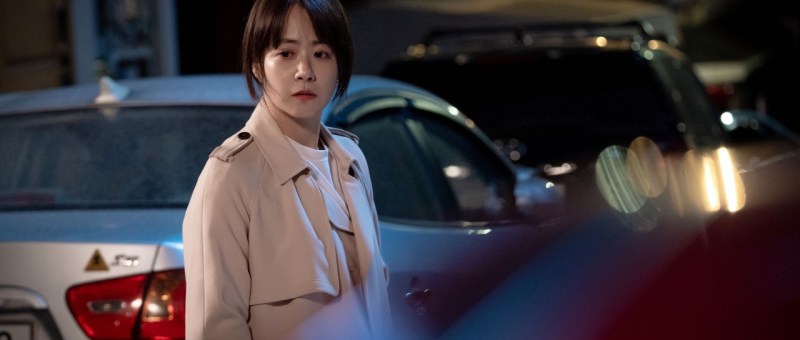
The Mongolian Steppe is known for its vastness and ever-extending horizon, but for Saina it’s shrinking to the extent that seems to be homing in on him and threatening to destroy the only environment in which he feels he belongs. Saina is himself often likened to a runaway horse, though he’s forever catching them and bringing them back, longing for a world in which he could exist within this natural environment just as his ancestors did but finding only futility everywhere.

Once a racer, Saina injured his shoulder and is now relegated to the sidelines while trying to find other ways to work. His father, a broken man who drinks and gambles, has already sold off most of his sheep and is on at Saina to sell the horses too. His friend Hasa has also sold up, first rejoining the circus but then declaring himself sick of being a herdsman. After getting injured he decides to try his luck in the city and ironically ends up getting a job working for the mining company that is quite literally disrupting the foundations of Saina’s life.

The main enemy is modernity, but it’s delivered by the Chinese. Saina finds himself surrounded by Mandarin speakers, while it’s a Chinese mining company that is gradually buying up the Steppe to open a mine and eventually tries to force Saina and his father off their land. Saina’s father keeps telling him a Chinese horse broker could get them a good deal, but he’s also told that his beautiful white horse isn’t worth very much because it’s Mongolian. It’s meat wouldn’t even be worth as much as a cow’s, though that’s the only reason the broker is interested in it.

Nevertheless, it’s largely for Chinese tourists that Saina is obliged to parade his culture. He takes part in Medieval Times-style dinner shows where the audience is repeatedly reminded they can buy drinks for their favourite riders and carrots for the horses, though the riders and horses almost certainly don’t see them. Saina rides dressed as a heroic Mongol warrior, but has dreams of himself dying on the battlefield alone with his white horse. His ex-wife Tana encounters something similar, as her Chinese boss makes her serve drinks at dinner parties with Chinese businessmen while insisting she sing a Mongolian song for the local colour. Later Saina gets a job at a ranch where city slickers come to experience life on the Steppe, but complains that the tourists ride the horses too hard and end up injuring them. They don’t have a connection to the land or know how to treat animals, while the ranch owners exploit the horses in the same way they exploit Saina, taking little interest in their physical wellbeing only their ability to work. At the show, Saina discovers his horse is injured and asks to switch to another one to let it rest, but encounters resistance in being told to get higher approval from the boss.

Meanwhile, he applies for a job at a fancy equestrian facility but is basically told he’s too he’s common for this elite, aristocratic Western sport that’s no longer about racing but fine technique. The snooty woman who interviews him says that Mongolian riders don’t ride properly and their skills aren’t needed somewhere like this. Saina could possibly start from the ground up as a stable boy but most of those are teenagers. Meanwhile Saina reflects that his father never actually taught him how to ride, he just placed him in the saddle and left the rest up to him with the natural consequence that it feels like something that is innate and essential. Yet he wonders if his son will ride at all or if these grasslands will still exist when he comes of age. Tana lives in the city and wants to send the boy to a school she thinks is better where they speak Mandarin and English while Saina is worried he’ll lose his Mongolian. When he puts him on a horse, the boy is terrified and asks to get off. All Saina really seems to want is to ride horses and raise sheep, but this way of life is dying out and the grasslands are shrinking all around him. There is something quite sad and defiant in his riding of his horse along a motorway in the juxtaposition between the traditional way of life and the modernity which all but destroyed it even as Saina is seemingly left with nowhere to go and no place to roam.


To Kill a Mongolian Horse screened as part of this year’s New York Asian Film Festival.

Trailer (English subtitles)
Phobia 2 (5 แพร่ง, Paween Purijitpanya, Visute Poolvoralaks, Songyos Sugmakanan, Parkpoom Wongpoom, Banjong Pisanthanakun, 2009)

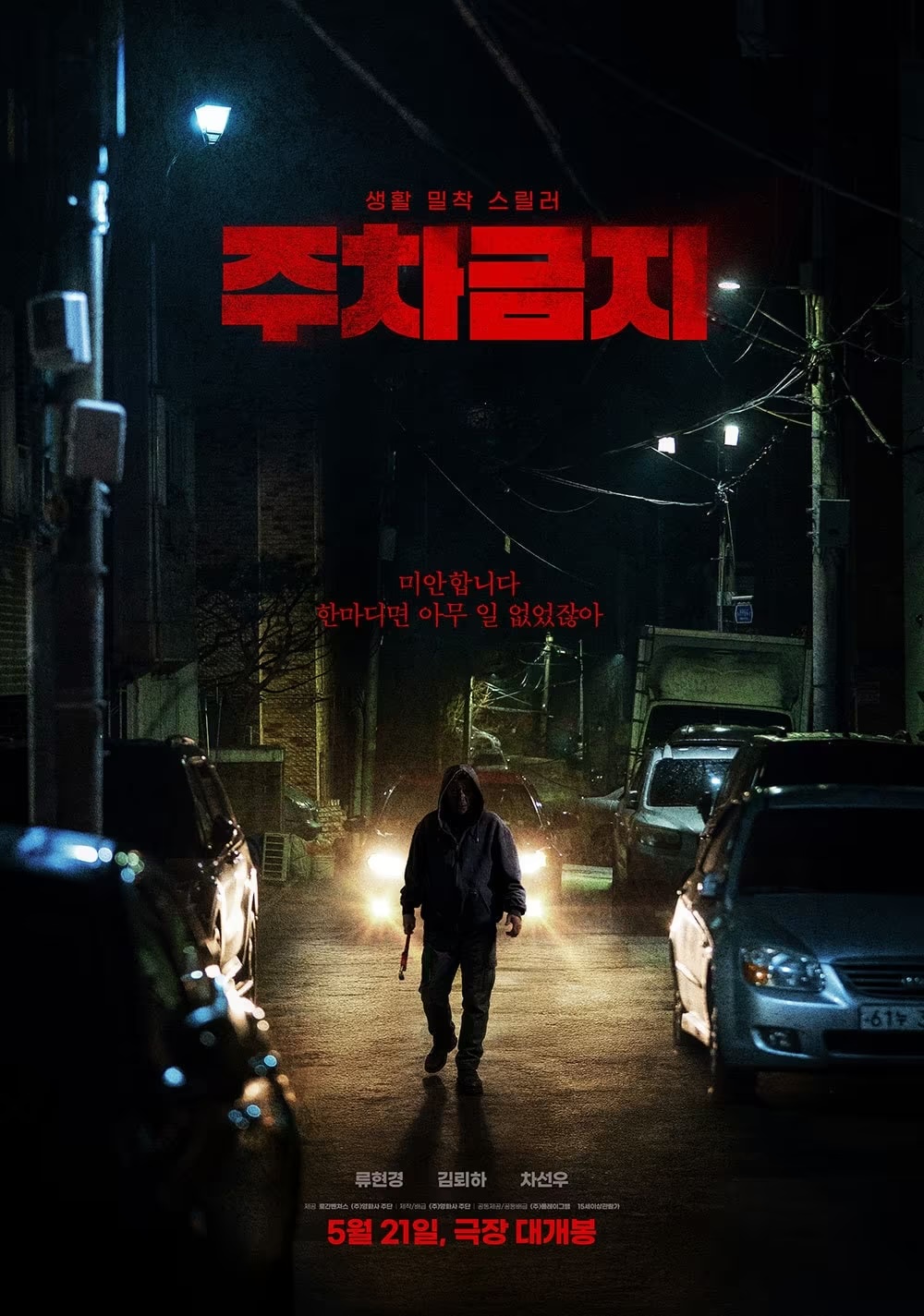
Aptly termed “5bia” but retitled in English as Phobia 2, this sequel to the original four-part anthology adds an additional director for five tales of Thai horror. Unlike the first film, there aren’t any particular linking details though they each someway turn on an anxiety towards cars and other forms of transportation along with exploring the effects of unresolved guilt and natural justice in the form of karma.

Thus in the first sequence, Novice, a young man, Pey (Jirayu Laongmanee), is sent to a temple to hide out after being involved with a crime. He evidently did not want to become a monk and is resentful towards his mother and stepfather for bringing him here. But what he soon becomes involved with is a haunting, a hangover from the hungry ghosts festival that confronts him with his unresolved feelings towards his mother and lingering guilt over the crime he committed. Elegantly lensed, the film has a creeping sense of dread and eerieness as Pey begins to accept responsibility for his actions even if as it seems he must also pay for his lack of respect towards traditional custom.

Continuing the theme, in the second part, Ward, a young man, Arthit (Worrawech Danuwong), with casts on both of his legs is intrigued by the patient in the next bed, a former priest who it seems is not quite ready to move on. Rendered vulnerable by his incapacitation, Arthit can only watch as a weird ritual seems to unfold while the hospital staff do not seem to take his distress seriously. Despite its grim strangeness, there is a dark humour underpinning the action along with a kind of absurdity in the oddness of this weird black magic.

There’s nothing quite so supernatural in the third instalment, however, as a pair of Japanese hitchhikers are unwittingly picked uo by a people trafficker whose entire cargo turns out to be dead because his son tried to use them as drug mules. The film might have something small to say about exploration and the devaluing of the human life, but soon slips into zombie drama as the truckers try to outrun the consequences of their actions while the tourists pay a heavy price for their naivety. 

Just as in the earlier sequences, Salvage too finds a source of fear in the car but this time its largely because it’s haunted, both literally and by the spectre of amoral capitalism embodied by the boss’ attempts at corning cutting. Nuch (Nicole Theriault) has largely been making her money by buying wrecks and selling them as second-hand without telling the new owner they were involved in a fatal accident. After being taken to task by a mother who complains her son was nearly killed, she can’t find her son Toey anywhere and while looking at him is confronted by the ghosts of the various people who’ve been killed by her cars. It’s a neat indictment of the various ways capitalism is killing us even if ending on a note of improbable cruelty.

The fifth, final, and best instalment meanwhile takes on a meta quality. Directed by Shutter’s Banjong Pisanthanakun, it follows the action on the set of a sequel to his film Alone and stars the same actors as his segment in 4bia which Banjong Pisanthanakun humorously references while inverting its structure. After the supporting actress is taken ill, a rumour begins that she has in fact died only for her to turn up on the set provoking terror from the boys who become convinced she’s s vengeful ghost.In any case, it turns out it wasn’t the supernatural they really needed to look out for but a sleepy, overworked driver. Like Man in the Middle, the gentle camaraderie between the guys and zany humour help carry the witty tale alone as the gang start suspecting each other and acting irrationally in an attempt to escape “the ghost.” All in all, it’s a fitting way to end the series, concluding on a note of cosmic irony as the real threat turns out to be all too human and an exmplifcation of an exploitative employment culture rather than a vengeful spirit seeking revenge from beyond the grave.


Trailer (English subtitles)

Visitor Q (ビジターQ, Takashi Miike, 2001)

As Japan emerged from post-war privation into bubble-era comfort, the family underwent something of a reassessment. Remoulding Teorema, Yoshimitsu Morita’s The Family Game had punched a hole through the concept of the family in sending in a mysterious teacher who slowly proved to them all they were merely involved in a prolonged act of performance unpinned by social convention rather than genuine feeling. Sogo Ishii’s The Crazy Family did something much the same but ultimately opted to save the family unit by allowing them to find peace literally “outside” of the contemporary rat race. And then there comes Takashi Miike who, ever the ironist, runs the whole thing in reverse as Visitor Q (ビジターQ) comes to put the family back together again by giving them permission to bond through satisfying their previously unanswered emotional needs.

As the film opens, however, patriarch Kiyoshi (Kenichi Endo) is in a hotel room interviewing a young woman as part of a documentary investigating the youth of today. She replies only that what the youth can tell him about the future of Japan is that it’s hopeless, before getting back to business and elaborating on her price list for a menu of sex acts. Though originally unwilling, Kiyoshi ends up having apparently very exciting sex with her, but comes to his senses after climaxing too early. The girl, we later learn, is his runaway daughter, Miki (Fujiko), who has been living a life of casual sex work in the city. Kiyoshi determines to pay her in full, but explains that that he’ll give the rest of the money to her mother and she must keep everything that happened between them in that room a secret (a minor problem being Kiyoshi left the camera on and ended up documenting the whole thing, something that he will repeat later but quite deliberately). 

Stunned by his transgressive encounter, Kiyoshi looks on at a happy family with a degree of confusion while a strange young man leans through the window of the train station waiting room and whacks him on the head with a rock. Before he finally arrives home, the man hits him again just to be sure, but eventually follows him for dinner where he is introduced as an “acquaintance” who will be staying with him for an unspecified amount of time. 

Kiyoshi’s household is already falling apart, and quite literally seeing as the shoji are full of holes, partly because of the attacks of the “big bullies” who torment his teenage son Takuya (Jun Muto) by launching fireworks into his bedroom, but also because the boy takes his humiliated frustration out on his mother Keiko (Shungiku Uchida) who is covered in scars from previous beatings and has taken to using heroin to escape the misery of her family and doing part-time sex work to pay for it. 

Like the intruder of The Family Game, Visitor Q gradually infiltrates the family by usurping a place within it but begins to reawaken and reinvigorate each of the members as he goes. The first thing he takes hold of is Kiyoshi’s camera, literally observing the family and helping to document the Japan of today through the eyes of this very strange yet “ordinary” family. A man of the post-bubble era, he’s another failed provider whose career continues to flounder while his home spirals out of control, shorn of paternal authority. He feels insecure in his manhood, humiliated by his tendency towards premature ejaculation, and is raped with his own microphone by the “youth of today” while trying to interview them, which leaves him, according to his boss and former lover, looking like a fool. 

Kiyoshi is convinced he can get his mojo back through career success in making himself the subject of his own documentary, or more accurately his observation of his son’s bullying which he later reveals perversely turns him on. When his boss shuts his idea down, he rapes her, feeling humiliated again in complaining that she dumped him because of the premature ejaculation and vowing to prove himself but accidentally strangling her. Meanwhile, Visitor Q is back home getting busy with the under appreciated Keiko who describes herself as neither special nor pathetic but an ordinary woman, longing to be loved and wanted. Even one of her clients, exclaiming surprise to discover that a “nice woman” like her does stuff like this, appears to have a disability fetish remarking that is feels different with someone who has a limp. Visitor Q gets her juices running again, literally, reactivating her maternity and perhaps allowing her to reclaim her position within the household. 

“I’ve never seen her so competent since we married,” Kiyoshi exclaims after she employs some top housewife logic to help him deal with his dead body problem, after which they take a rather more active stance against Takuya’s snotty bullies, pulling together to protect him in a way they never have before. Takuya may remain outside of the family hive, but he’s drenched in mother’s milk and perhaps the only one to truly recognise Visitor Q for who he is. Nevertheless, the Yamazakis are an “ordinary” family, just taken to extremes. Dad’s an emasculated salaryman broken in spirit by economic failure, mum’s an unhappy housewife lonely in repressed desire, son is an angry young man like his dad humiliated by the big boys, and daughter is a melancholy runaway who has tried to seize agency through using her body as a weapon but still feels that the future is hopeless and that her gesture may be one of self harm. Nevertheless, through the exposure of their myriad transgressions, they begin to bond in shared perversity. Thanks to Visitor Q, the family is “restored”, not “cured” but reaching its natural state of being as a collection of individuals assume their complete selves and in mutual acceptance rediscover a home.


Trailer (English subtitles)
Dongji Rescue (东极岛, Guan Hu & Fei Zhenxiang, 2025)

If someone’s drowning, then you save them no matter what language they speak or where they come from. Such is the simple logic of the Dongji fisherman who risked their lives to rescue British prisoners of war when the boat they were travelling on was torpedoed in the waters near Zhoushan. Inspired by this historical event, Guan Hu and Fei Zhenxiang spin a tale of resistance and righteousness with an unexpected advocation for borderlessness and freedom as the two orphaned pirate brothers at the film’s centre finally find their way back to their home in the sea.

It’s Ah Dang (Wu Lei), the younger of the brothers, who fishes a British soldier out of the water and tries to rescue him, while the older, Ah Bi (Zhu Yilong), refuses and tries to throw the man back. Ah Bi may appear heartless, but considering the risk the presence of the British soldier poses to the islanders perhaps Ah Bi’s callousness is perfectly understandable. Nevertheless, Ah Dang stashes the young man, Thomas Newman, in their cabin and seems fascinated by his blue eyes and a vision of the wider world that he seems to represent. Thomas desperately tries to communicate with Ah Dang but though he knows some Cantonese cannot get through to him that there are men trapped on the sinking boat. Meanwhile, Japanese troops turn up on the nominally occupied island erroneously looking for a blond, blue-eyed man missing from the ship. Convinced the islanders must be harbouring him, they start taking hostages and executing villagers until Thomas finally knocks out Ah Dang so he can give himself up to save them.

Though the island was not in fact occupied in real life, here the villagers are placed under incredibly oppressive rule despite there only being two Japanese soldiers standing guard. The fishermen are no longer allowed out to fish and are, they say, stuck on land like turtles unable to practise their traditional crafts or way of life. Old Wu led the resistance before, but didn’t end well and now even he has been cowed into submission. The rescue is then as much for the islanders as anyone else as an act of resistance to authoritarian oppression in their following their belief that those in peril on the sea must be saved in defiance of the Japanese’s prohibition on sailing. The same is doubly true of Ah Bi’s girlfriend Ah Hua (Ni Ni), Old Wu’s adopted daughter who takes up his place and breaks a taboo about women going to sea to lead the rescue mission. 

She, Ah Bi, and his brother are all technically outsiders on the island who were never fully embraced by the community. The brothers were held at arms’ length because of their possibly pirate origins, while Ah Bi’s dream had been to escape to Shanghai with Ah Hua. Ah Dang is then touched by Thomas’ constant attempts to talk to about “home” though he perhaps doesn’t quite have one while Ah Bi’s “home” more than anything else is simply Ah Dang. Rather than the expected definition of a homeland of the greater China, the brothers’ “home” is later redefined as “the sea” which is to say a place of boundless freedom where national borders don’t exist. 

These elemental origins also give the brothers a mythical quality that adds to the sense of heroism in the rescue as Ah Bi goes after the Japanese and attempts to save the remaining POWs, some of whom can’t swim, marooned in the middle of the sea. The Japanese, meanwhile, are intent on covering the incident up which means everyone must die from the POWs to the residents of Dongji Island, though it isn’t really clear who the islanders would tell anyway considering that they live on a fairly remote island. In any case, the heroism of the Chinese fisherman is directly contrasted with the craven callousness of the Japanese who are still trying to pick off the POWs like fish in a barrel and only stop on realising that there are too many Chinese fisherman and if they were to kill them all it would get out and they’d look very, very bad. Epic in scope and impressively staged with some truly stunning underwater photography, there is a sense of genuine poignancy and human solidarity in standing up to oppression and cruelty no matter how ironic or jingoistic it might otherwise seem as ordinary villagers rise to up to help those from a distant land they don’t even know at the risk of their own lives and livelihoods.


Dongji Rescue opens in UK cinemas 22nd August courtesy of CineAsia.

Trailer (English subtitles)