The Shadow’s Edge (捕风追影, Larry Yang, 2025)

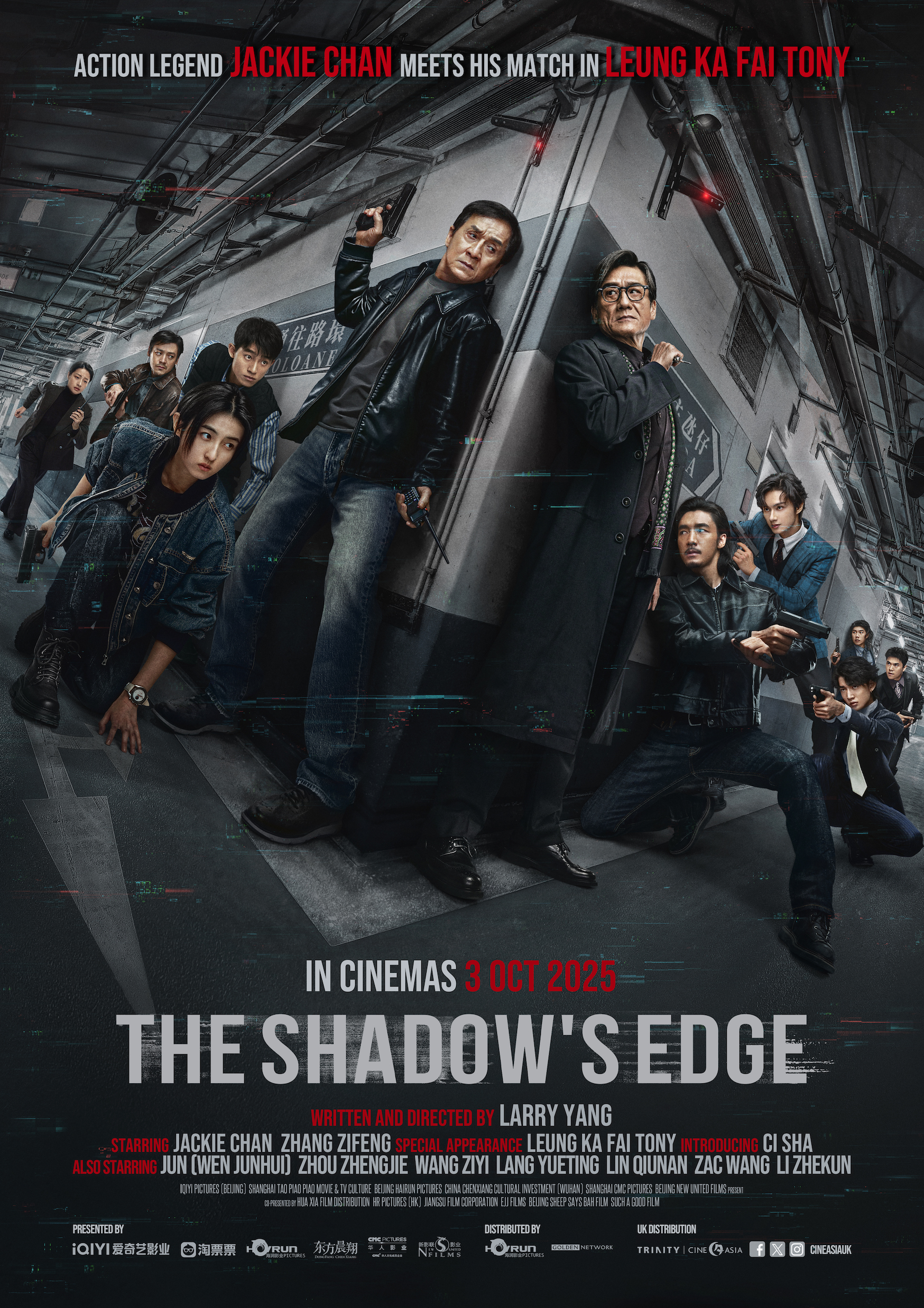
China’s mass surveillance system has come to the rescue in many a recent action film, as if it were saying that China will always find you if you’re in trouble but perhaps also if you’re the one making it. A loose Mandarin-language remake of 2007’s Eye in the Sky, The Shadow’s Edge (捕风追影, Bǔfēng zhuīyǐng) takes a slightly different tack in being somewhat wary of AI-based technology and the way it’s already embedded itself so deeply in our lives as to have engendered a rapid deskilling of the younger generation. 

The Macau police force rarely conducts on the ground surveillance anymore and is heavily reliant on its network of video cameras along with facial recognition software. Madame Wang (Lang Yueting), however, the officer in charge ends up disabling the AI system because it’s proving unhelpful and undermining her authority. In any case, it leaves them vulnerable to interference and unbeknownst to them they’ve been hacked. A talented group of thieves have managed to throw them off the scent by manipulating the footage so it looks like their vehicle is in a completely different place while they’re busy committing the crime. The hackers have managed to combine new technologies and old in a much more successful way than the police as they use a mixture of traditional disguise techniques and well-honed spycraft along with video manipulation to evade detection. 

It’s at this point that the police decide they need to bring back someone who still remembers how to do analogue police work to teach them how to combat this new digital threat. The irony is that the hackers are also being led by a veteran espionage expert now in his 70s and known only as “The Shadow” (Tony Leung Ka-fai). Though it’s true enough that he knows the evil that lurks in the hearts of men, The Shadow has surrounded himself with a group of former orphans whom he has trained in the arts of surveillance and infiltration while they take care of all the new technological stuff. But it’s also a slight degree of hubris and a mishandling of the digital side that leads to a slip-up in which the Shadow’s face may have been captured on camera for the first time in decades. As he ages out, there is conflict between father and sons as the boys begin to resent the Shadow’s paranoia and over cautiousness, wondering why they don’t simply take the bigger prize without considering that it may be more difficult to claim and leave them vulnerable to retribution.

Wong (Jackie Chan), the former special forces veteran officer they bring in to train the youngsters experiences something similar in the awkwardness of his relationship with Guoguo (Zhang Zifeng), the daughter of his former partner who was killed on the job because of an error in judgement made by Wong. Guoguo has been consistently sidelined by the police team where she’s surrounded by incredibly sexist men who doubt her ability to do the job because of her gender and short stature, and now has conflicting feelings about Wong that are bound up with her father’s death and a fear of being patronised convinced that Wong too is reluctant to let her do her job out of a problematic sense of overprotection.

Nevertheless, she proves a natural at the old-fashioned art of surveillance and develops a more positive kind of paternal relationship with Wong than that the Shadow has with his band of orphans. In essence, Guoguo learns both how to be part of a team and how to lead it, while Shadow’s boys don’t really learn much of anything beyond ruthlessness and generational conflict. In any case, the answer seems to be that’s what’s needed is both old and new, and that an over-reliance on technology isn’t helpful while AI isn’t necessarily faster than a finely tuned mind like the Shadow’s or merely someone who knows the backstreets well enough to anticipate an exit route. Drawing impressive performances from both his veteran leads, Yang succeeds in blending expertly crafted action sequences with interpersonal drama and giving the film a slick retro feel through the use of split screens and impressive editing. A post-credits sequence also hints at a wider conspiracy in play and the potential of a sequel, which would certainly be a welcome development given the strength and ambition of this opening instalment.


The Shadow’s Edge is in UK cinemas from 3rd October courtesy of CineAsia.

UK trailer (English subtitles)

Design of Death (杀生, Guan Hu, 2012)

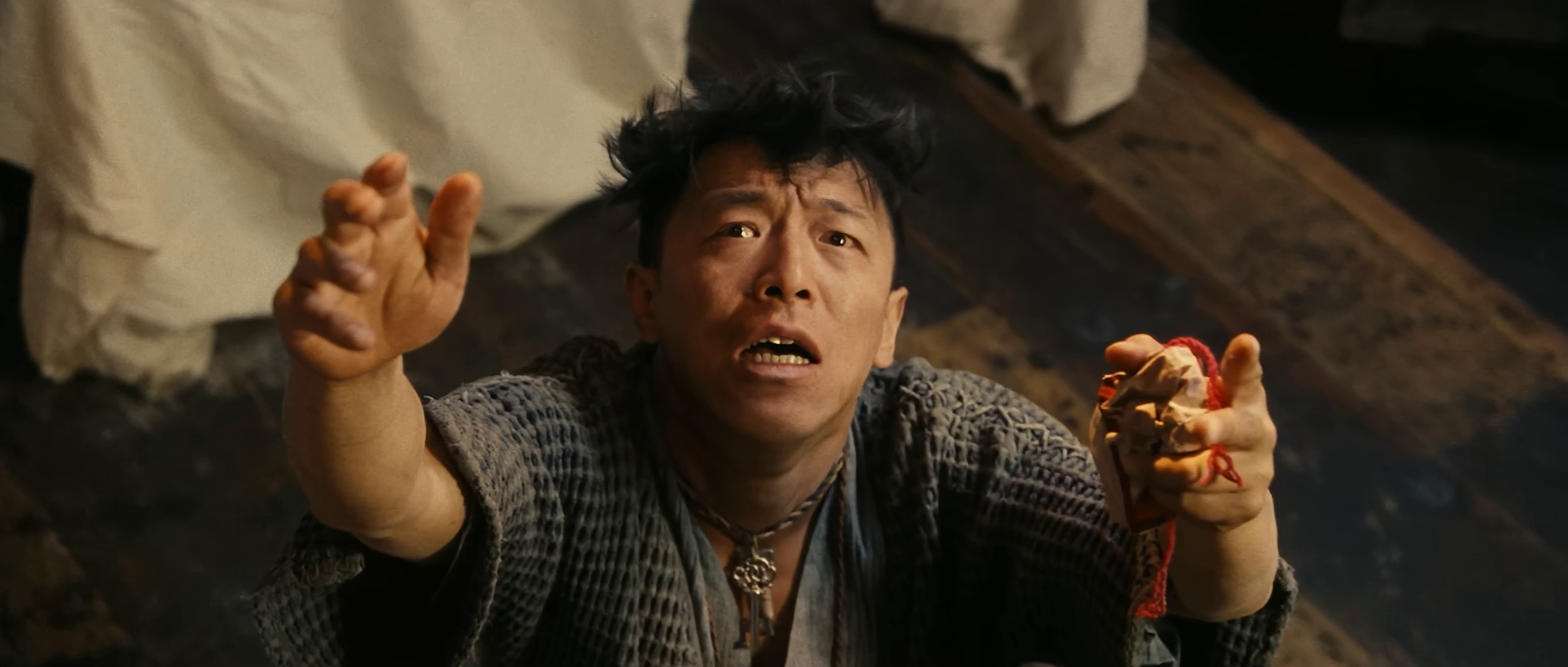
A doctor (Simon Yam Tat-wah) dispatched to put an end to a “mysterious disease” finds himself embroiled in mystery after discovering the barely breathing body of an unpopular villager in Guan Hu’s darkly comic drama, Design of Death (杀生, Shāshēng). Adapted from a 1998 novella by Chen Tiejun, the film’s Chinese title translates as “to kill a living thing”, the first act forbidden under Buddhism. Yet this particular village has decided it has no other choice if it is to maintain order along with its famed “longevity”.

The son of an itinerant pedlar reluctantly taken in by the village’s ruling Niu clan, Niu Jieshi (Huang Bo) is a general nuisance and agent of chaos. For the first part of the film, we see him act in ways which are rude and vulgar, cruel, violent, and morally repugnant. In short, we can well understand why pretty much everyone wanted him dead and any one of them might have killed him. Yet as the film goes on, we come to sympathise with Jieshi. We see him more as a loveable rogue who was never fully accepted by the village because he was not of it by birth. His foreignness is the reason to which the other villagers attribute to his inability to conform with their rules and traditions, and though, in retrospect, most of his pranks are just silly, his presence destabilises the sense of order which has enabled this place to earn the name Long Life Village. In any case, living past 120 might not be much fun when you’re constrained by so many rules and social mores while many are concerned more with the village’s reputation than the lives or happiness of the villagers.

But the village’s reputation does seem to be important to the powers that be, which is why the doctor is eventually sent there. They want him to find out the cause of this “mysterious disease” and stop it spreading so the Long Life Village doesn’t lose its USP. When he arrives, however, it seems like the “mysterious disease” is actually cancer, which obviously doesn’t spread from person to person. The only other symptom is a minor eye infection, though the real disease running through the village is enmity with the determination to put a stop to Jieshi’s chaotic antics. Jieshi proves oddly unkillable, resurrecting himself after his first encounter with the doctor having been thrown off a cliff in a sack. His defiance only spurs on the villager elders, who then bring back another doctor, Niu (Alec Su You-peng), who had been away studying Western medicine in the cities after being kicked out of the village for another infraction some years previously.

There’s something disconcertingly modern about Niu that makes his presence in the village somehow threatening, as if he were the harbinger of a more authoritarian era. Despite being a doctor, he is cold-hearted and rational and is determined not only to kill Jieshi but his unborn child. The unnamed doctor is, by contrast, a master of Chinese medicine though also educated in the Western style and suspicious of Niu. All he wants to is to understand why Jieshi died, which is also in its way to cure the sickness in the village to which Niu is an obstacle. What he gradually realises is that most of the other people in the village are pretty awful and what they succeeded in doing was creating the circumstances for Jieshi’s death by making the village uninhabitable for him. 

But it may also be true that there’s something cosmically dangerous about killing such an elemental spirit and that the village cannot in fact survive in the absence of chaos. Jieshi is then the individual hammered into submission by implacable authoritarianism while the village is a microcosm of a corrupt authoritarian society ruled over by a petty elite obsessed with rules and tradition. That the doctor dresses in modern style and uses a mix of traditional and modern equipment suggests, as does the pregnant finale, that in all things there must be balance. The ultramodernism of Niu with its fascist undertones won’t work, nor will the hardline traditionalism of the village. Had they only made more of an attempt to understand and accept Jieshi rather than forcing him into submission, they too might have survived and evolved but in fact were only ever headed towards destruction in their obsession with a long life lived in misery.


Cow (斗牛, Guan Hu, 2009)

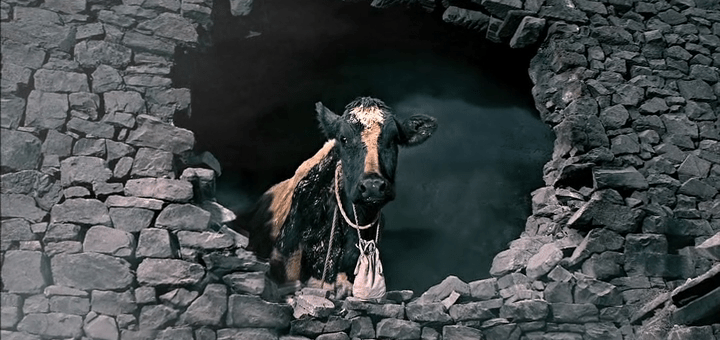
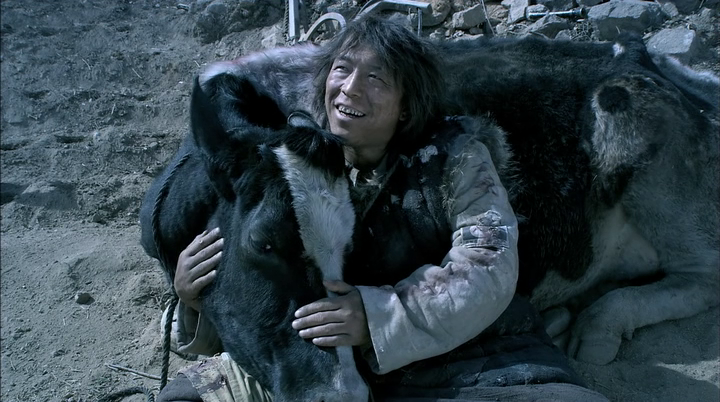
“We’ll stay in the mountains and never go back down,”  embattled peasant Niu Er (Huang Bo) insists having safeguarded his Dutch cow through the Sino-Japanese war and onward towards the new China. A satire revolving around the senselessness of war and the endurance of Chinese everyman, Guan Hu’s Cow (斗牛, Dòu Niú) is also testament to the bond between man and beast who somehow manage to survive through the chaos and the carnage all around them.

That said, Niu Er was not originally happy about being forced to take care of the giant black and white cow he christens Jiu after his feisty wife (Yan Ni). He had a cow of his own. A nice little yellow one he thought was perfectly fine. He didn’t really see why his little yellow cow didn’t deserve the fancy grain reserved for Jiu and got into trouble for giving some of it to her. But when the entire village is wiped out by the Japanese with the cow the only other survivor, Niu Er thinks he has a duty to save it because the village was supposed to be keeping it safe for the 8th Army. It turns out it was an anti-fascist cow sent by the Dutch to feed wounded soldiers busy fighting the Japanese and the 8th Army are supposed to be coming back for it after they return from a strategic retreat. 

But Niu Er’s problem is he’s not just in hiding from the Japanese because there’s also fighting going on between the nationalists and communists. Once bandits have killed all the Japanese who invaded Niu Er’s village, refugees soon turn up with their eyes on the cow. Because he’s a nice man, Niu Er shares some of the milk with a starving woman cradling a baby before realising there’s a whole crowd of other displaced people behind her. But as much as Niu Er gives them, they can’t be satisfied, and insist on over milking Jiu until she becomes ill with mastitis before one of them suggests killing and eating her instead. Not only is this quite shortsighted given that it will only feed them immediately whereas Jiu could still go on producing milk indefinitely if only they were a little less greedy, but it speaks to the loss of their humanity in the midst of their desperation. When Niu Er makes it clear he’s not on board with them killing his cow, the doctor leading the refugees pretends to help cure Jiu’s illness but is really trying to corner Niu Er so they can kill him and eat the cow anyway. In any case, they end up paying for their greed and cruelty by falling foul of all the booby traps the Japanese troops left behind.

To that extent, the Japanese aren’t all that bad. One of them, whom Niu Er finds hiding in a tunnel, used to be a dairy farmer and shows Niu Er how to treat Jiu’s illness which is why Niu Er decides to save him and take him with them to their place of salvation in a cave in the mountains. But a nationalist is already hiding there and the pair end up killing each other. The film seems to ram the point home that there was no real difference between these men who had no particular reason to fight when Niu Er ends up burying them together in a makeshift grave. Setting himself apart from all this war and absurdity, he resolves to stay above it by living in the mountains with Jiu and planting new grain up there for them both to live on.

Seven years later when the PLA eventually turn up, they’ve forgotten all about the cow and are keen to tell Niu Er that they don’t take things off peasants so the cow is now lawfully his. The soldier may be a representative of the new Communist and caring China, but it otherwise seems that Niu Er has been become a guardian of the China that existed before the Japanese with the petty goings of his random village in a way idyllic and filled with nostalgia. Yet it had its problems too. The village chief seems to have had a xenophobe streak, restricting milk from those not born in the village like the widow Jiu who became Niu Er’s wife. She is in many ways an envoy of an idealised communist future in her feminist attitudes and feistiness even amid the sexist and traditionalist culture of the village. Nevertheless, Niu Er and Jiu the cow seem to have found a little alcove of serenity up the mountains of the real China free from the chaos below.


Trailer (Simplified Chinese / English subtitles)

Dongji Rescue (东极岛, Guan Hu & Fei Zhenxiang, 2025)

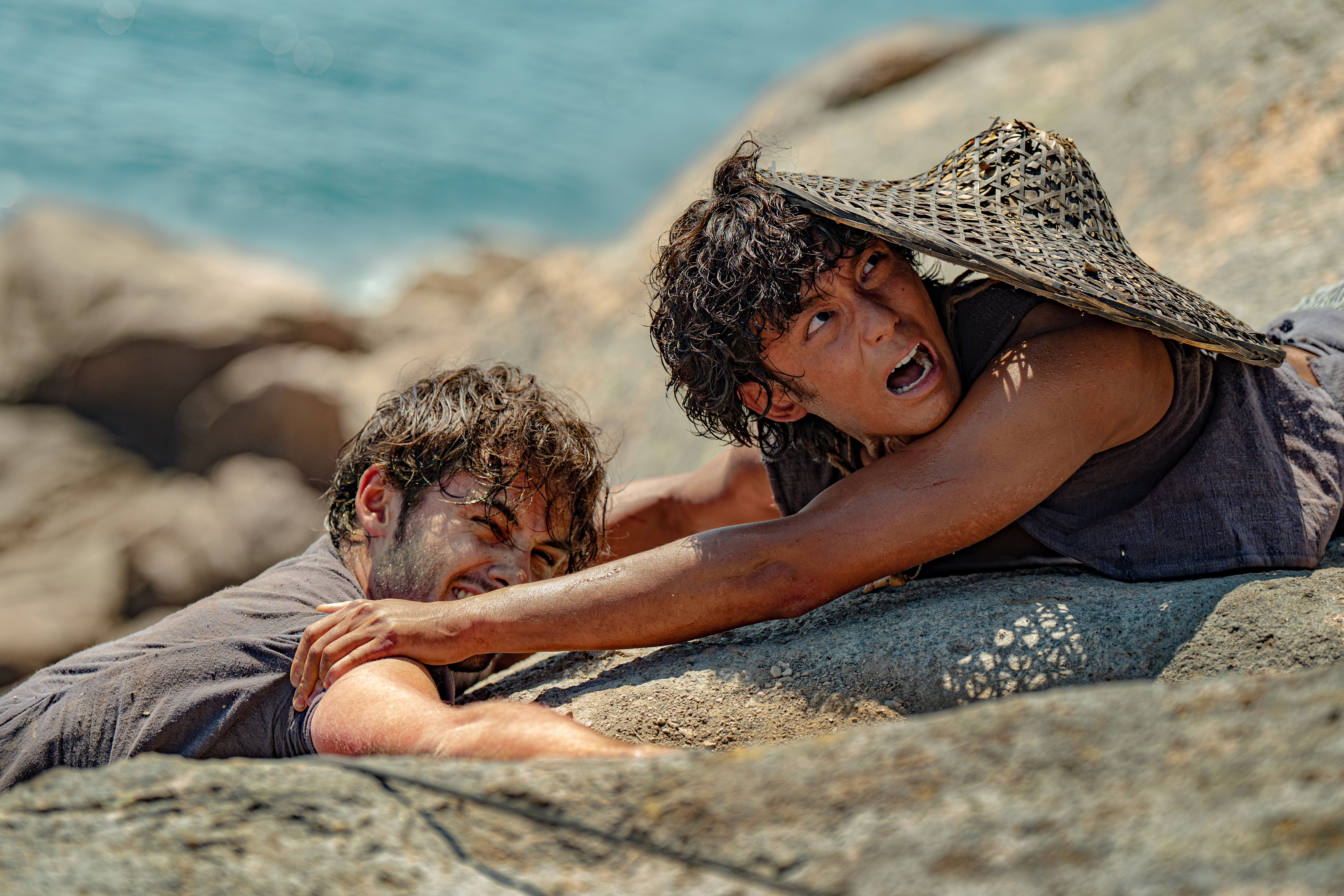
If someone’s drowning, then you save them no matter what language they speak or where they come from. Such is the simple logic of the Dongji fisherman who risked their lives to rescue British prisoners of war when the boat they were travelling on was torpedoed in the waters near Zhoushan. Inspired by this historical event, Guan Hu and Fei Zhenxiang spin a tale of resistance and righteousness with an unexpected advocation for borderlessness and freedom as the two orphaned pirate brothers at the film’s centre finally find their way back to their home in the sea.

It’s Ah Dang (Wu Lei), the younger of the brothers, who fishes a British soldier out of the water and tries to rescue him, while the older, Ah Bi (Zhu Yilong), refuses and tries to throw the man back. Ah Bi may appear heartless, but considering the risk the presence of the British soldier poses to the islanders perhaps Ah Bi’s callousness is perfectly understandable. Nevertheless, Ah Dang stashes the young man, Thomas Newman, in their cabin and seems fascinated by his blue eyes and a vision of the wider world that he seems to represent. Thomas desperately tries to communicate with Ah Dang but though he knows some Cantonese cannot get through to him that there are men trapped on the sinking boat. Meanwhile, Japanese troops turn up on the nominally occupied island erroneously looking for a blond, blue-eyed man missing from the ship. Convinced the islanders must be harbouring him, they start taking hostages and executing villagers until Thomas finally knocks out Ah Dang so he can give himself up to save them.

Though the island was not in fact occupied in real life, here the villagers are placed under incredibly oppressive rule despite there only being two Japanese soldiers standing guard. The fishermen are no longer allowed out to fish and are, they say, stuck on land like turtles unable to practise their traditional crafts or way of life. Old Wu led the resistance before, but didn’t end well and now even he has been cowed into submission. The rescue is then as much for the islanders as anyone else as an act of resistance to authoritarian oppression in their following their belief that those in peril on the sea must be saved in defiance of the Japanese’s prohibition on sailing. The same is doubly true of Ah Bi’s girlfriend Ah Hua (Ni Ni), Old Wu’s adopted daughter who takes up his place and breaks a taboo about women going to sea to lead the rescue mission. 

She, Ah Bi, and his brother are all technically outsiders on the island who were never fully embraced by the community. The brothers were held at arms’ length because of their possibly pirate origins, while Ah Bi’s dream had been to escape to Shanghai with Ah Hua. Ah Dang is then touched by Thomas’ constant attempts to talk to about “home” though he perhaps doesn’t quite have one while Ah Bi’s “home” more than anything else is simply Ah Dang. Rather than the expected definition of a homeland of the greater China, the brothers’ “home” is later redefined as “the sea” which is to say a place of boundless freedom where national borders don’t exist. 

These elemental origins also give the brothers a mythical quality that adds to the sense of heroism in the rescue as Ah Bi goes after the Japanese and attempts to save the remaining POWs, some of whom can’t swim, marooned in the middle of the sea. The Japanese, meanwhile, are intent on covering the incident up which means everyone must die from the POWs to the residents of Dongji Island, though it isn’t really clear who the islanders would tell anyway considering that they live on a fairly remote island. In any case, the heroism of the Chinese fisherman is directly contrasted with the craven callousness of the Japanese who are still trying to pick off the POWs like fish in a barrel and only stop on realising that there are too many Chinese fisherman and if they were to kill them all it would get out and they’d look very, very bad. Epic in scope and impressively staged with some truly stunning underwater photography, there is a sense of genuine poignancy and human solidarity in standing up to oppression and cruelty no matter how ironic or jingoistic it might otherwise seem as ordinary villagers rise to up to help those from a distant land they don’t even know at the risk of their own lives and livelihoods.


Dongji Rescue opens in UK cinemas 22nd August courtesy of CineAsia.

Trailer (English subtitles)

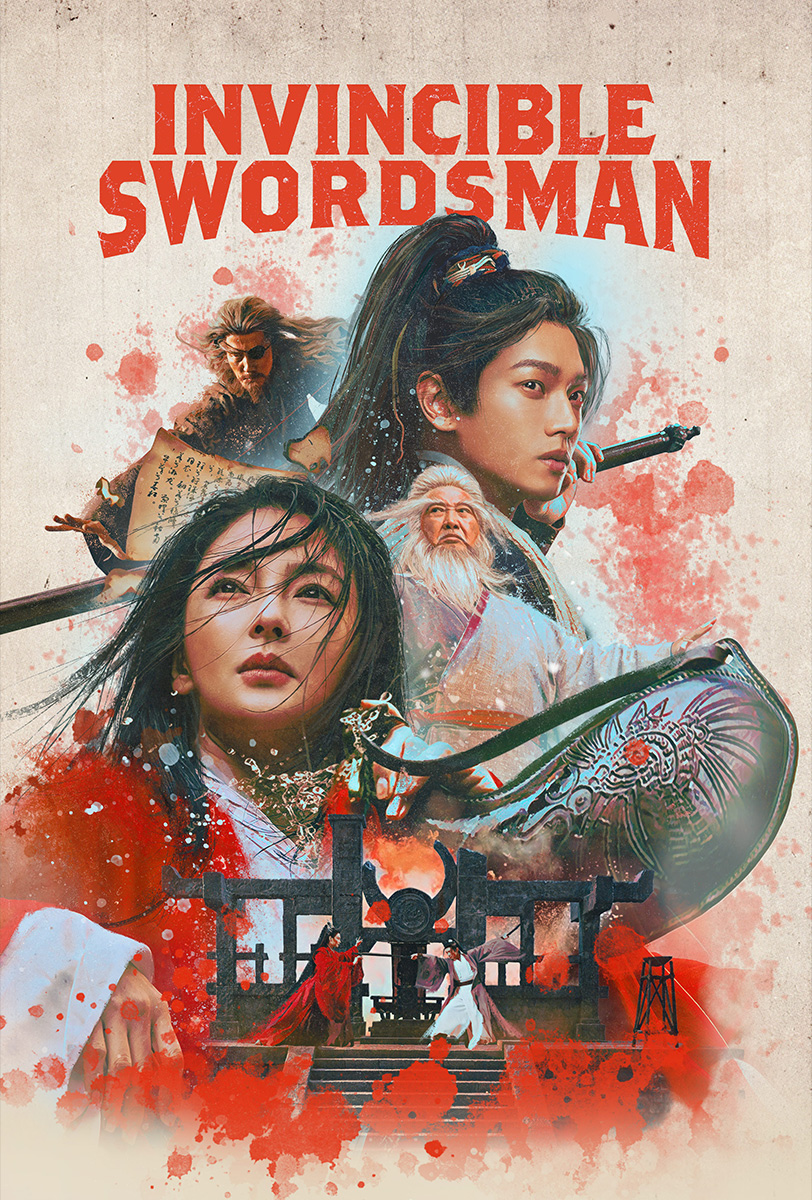
Invincible Swordsman (笑傲江湖, Luo Yiwei, 2025)

Adapted from Jin Yong’s wuxia classic The Smiling Proud Warrior, Invincible Swordsman (笑傲江湖,
xiào ào jiānghú) has a hard battle to fight in covering the same ground as 1992’s Swordsman II which featured an iconic performance from Brigitte Lin as the androgynous Invincible Asia. Produced by streaming network IQYI and Tencent, the film has a more epic feel than the studio’s similarly pitched wuxia and was also released in cinemas but is undoubtedly a much more conventional affair let down by an over-reliance on CGI.

To recap, Ren Woxing (Terence Yin Chi-Wai) led the demonic Sun and Moon Sect in despotic fashion slaughtering many of his own followers. Consequently, they flocked behind Invincible East (Zhang Yuqi ) to free them who eventually defeated Woxing and has imprisoned him in the basement of their lair. Meanwhile, drunken but earnest swordsman of the Mount Hua sect Linghu Chong (Tim Huang) has befriended Woxing’s daughter Ren Yinging (Xuan Lu) through their shared love of music and is kicked out of the clan for treason. Nevertheless, he’s taken on as a disciple by the charismatic Feng Qingyang (Sammo Hung Kam-Bo) who continues teaching him martial arts before he’s called back to the world of Jianghu by Yingying who warns him his friends are in danger after teaming up to defeat Invincible East who has now become even more despotic than Woxing in drinking the blood of their victims to stay young.

Even so, breaking Woxing out of containment so he can take out Invincible East seems like a bold plan given there’s no guarantee he’ll actually do that and even less he won’t just go back to his old ways afterwards. Linghu Chong only participates out of loyalty to his men and as a favour to Yingying and is therefore constantly insisting that none of this is anything to do with him because he’s leaving the martial arts world. It’s a fault with the source material, but it’s quite frustrating that all these women are hopelessly in love with the actually quite bland Linghu Chong who has a nasty habit of turning up every time a woman is about to fight someone and heroically standing in front of her. Ironically, that’s how he meets “Invincible East” without realising, or at least the nameless final substitute of Invincible East who has become the public face of the legendary warrior. 

Christened “Little Fish,” by a besotted Linghu Chong who believes her to be a damsel in distress, she is the only female substitute of Invincible East who has undergone self-castration in order to achieve a higher level of martial arts and in the film’s conception thereby feminised. Unlike the ’92 version, however, Little Fish is concretely female and bar a brief flirtation with some of her maids more preoccupied with her lack of individual identity in having no name of her own. Consequently, her love of Linghu Chong becomes an opposing identity though she feels herself forced to take on the persona of Invincible East. Linghu Chong too is fascinated by her mystery which causes him to act in a caddish way towards Yingying who is otherwise positioned as his rightful love interest even if their romance is frustrated by the relationships of their respective clans.

What they’re really fighting is Invinsible East’s corruption of Jianghu which it wants to rule in its entirety. The corruption has already worked its way into the Mount Hua sect as ambitious couturiers vie for power and throw their lot in with the Sun and Moon sect in the hope of advancement. Luo does his best to conjure a sense of the majestic in the elaborate action set pieces, but the over-reliance on wire work and CGI particularly for the swords leaves them feeling inconsequential while there’s barely any actual martial arts content as the fights revolve around the martial arts stances rather than combat. Frequent homages to the ’92 film including the use of its iconic song also serve to highlight the disparity in scope and vision though even if Zhang Yuqi appears to be channelling Brigitte Lin there is genuine poignancy in her tragic love for Linghu Chong which is also the longing for freedom and another identity that is forever denied her. With his belief in Jianghu well and truly destroyed, Linghu Chong finds himself a lonely wanderer and refugee from a martial arts world largely devoid of hope or honour and adrift with seemingly no destination in sight.


Invincible Swordsman is released on Digital 19th August courtesy of Well Go USA.

Trailer (English subtitles)

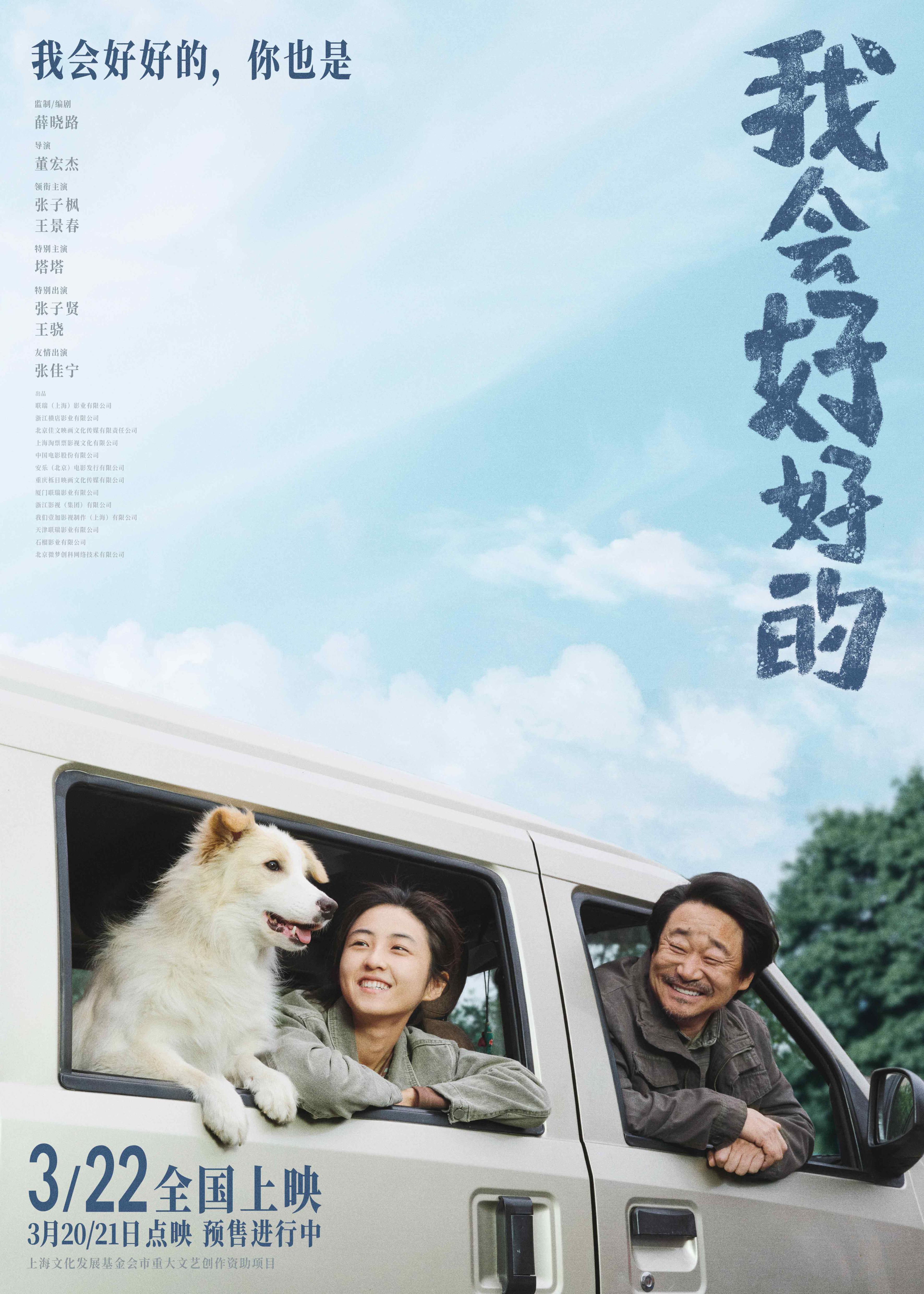
New Life (我会好好的, Dong Hongjie, 2025)

A lost young woman begins to find new purpose in life after taking in a stray dog in Dong Hongjie’s tearjerking drama, A New Life (我会好好的, wǒ, huì hǎohǎo de). A tribute to the healing power of a dog’s unconditional love, the film is partly about the grieving process and learning to let go, but also about what it’s like to feel abandoned and hopeless. Having something to look after gives Xiaoman (Zhang Zifeng) a reason to look after herself as well as her heartbroken father who’s turned to drunken rages in the wake of his wife’s death and subsequent loss of his business.

Ironically, Zhao Bujin’s (Wang Jingchun) old wood carving shop has been taken over by a vet, though Bujin can’t seem to let it go and is intent on causing trouble there. Having lost her mother due to an illness, Xiaoman is intent on not taking up her place at university and instead is earning money as a removals driver often helping to clear houses after the death of the owner. It’s during one particular job that she’s confronted by an angry dog who refuses to leave a cardboard box where, a neighbour explains, it stayed with its mother until she died. Ever since then, he’s been unable to get out, much like Xiaoman who also remains trapped within the box of her grief.

Identifying with the dog, she begins to worry about him during a rainstorm and decides to rescue him as a means of rescuing herself. But at the same time, she doesn’t really want to keep him and continues referring to the dog as “doggie” rather than naming him while he imprints on her as a new maternal figure. There’s a half an idea in the back of her mind that there might be money in it if she cleans the dog up a bit and sells him on with the help of the vet, Chuan (Zhang Zixian), who promises to help her find a good home for it. The first couple he suggests appear to be extremely wealthy and keen to adopt, but the film seems to be critiquing the idea that a life of material comfort is better than one spent struggling with family. The wealthy couple clearly have ideas about their ideal dog and how it would fit into their Instagram-worthy life including a name that skews feminine while Xiaoman’s dog is a boy. Predictably, the couple eventually send it back when it fails to bond with them and insists on returning to Xiaoman. 

Then again, Xiaoman and her father don’t necessarily seem to be struggling all that much. Though they don’t have much money, they’ve managed to keep their sizeable home and furniture even they’re economising on food and worrying about how to make ends meet with Bujin unable to find work. Xiaoman attributes this to his drinking, though it seems he actually sustained an injury he never got treatment for which has damaged his ability to carve. In any case, his industry has also changed. Though Xiaoman is led to believe he’s found a well-paying job at a factory producing wooden statues, she later learns that he’s being paid a pittance to do an apprentice’s job doing things like prepping wood. His friend explains that only elite master carvers make money these days because all the lower grade stuff is all mass-produced by machine so there aren’t any jobs for mid-grade craftsmen like Bujin. Bujin keeps on about finding an amazing log he’ll use for his masterpiece, but like so much in his life it seems like an impossible pipe dream.

Meanwhile, Xiaoman tries to keep it together with her only goal being to buy a proper grave for her mother overlooking ocean. Nevertheless, bonding with the dog, whom she later names Xiaoyi as if it were really her brother gives, her new reasons to look after herself and think about her future. Identifying with it closely, she also comes to realise how little people value the lives of cats and dogs and by extension other people too. That’s one reason why she begins holding proper funerals for pets to give them a little dignity in death when some owners just tell the vets to get rid of their remains and don’t even bother to collect the ashes. Adopting a quasi-maternal position in caring for Xiaoyi also helps her process her own mother’s death and begin letting her go so that both she and her father can start to move on. Truly tugging at the heartstrings, Dong’s film is a tribute to the unconditional love of a dog and the healing effects it can have on a life if only someone is willing to offer it the same in return.


Trailer (no subtitles)

We Girls (向阳·花, Feng Xiaogang, 2025)

Feng Xiaogang’s films often straddle and awkward line in which it’s not entirely clear whether he’s deliberately being subversive or only unwittingly. The surprising thing about We Girls (向阳·花, Xiàngyáng·huā) is, however, its contradictory attitudes towards the modern China of which one would not otherwise assume the censors would approve. Nevertheless, the true goal appears to be paying tribute to the prison and probation service which is thoughtful and compassionate, geared towards helping these unfortunate young women who’ve made “poor choices” to reform and become responsible members of society. 

But like many films of this nature, the problem is that the society the prison authorities want these women to “reform” into doesn’t exist. The onus is all on the women to change, while no attempts have been made to address the circumstances that led to them being sent to prison which are also the same circumstances they will be returning to. The women don’t appear to receive any additional education or learn any new skills while inside, and when they get out it’s impossible to find a mainstream job that will hire a woman with a criminal record. Consequently, they are forced into short-term, casual labour which is often exploitative while male employers withhold pay to extract sexual favours. 

Aside from praise for the police force, the film is also a celebration of female solidarity and it’s clear that their biggest enemy is entrenched misogyny and the patriarchal society. Yuexing (Zhao Liying) is forced into a marriage with a man who couldn’t work because of a physical disability. As he resented their daughter and gave her no help with childcare, Yuexing felt responsible when the baby experienced hearing loss after contracting meningitis and was determined to save for a cochlear implant. To earn more money, she became a cam girl but was caught and sent to prison for two years for obscenity. Mao Amei (Cheng Xiao), meanwhile, is an 18-year-old deaf-mute orphan exploited by criminal gang who are sort of like her “family” but force her to steal for them. 

Having learned a little sign language for her daughter, Yuxing becomes Mao Amei’s interpreter in prison, but the pair find things on the outside much more difficult than in. Apparently illiterate and unable to speak, Mao Amei cannot rent a place to stay and is caught breaking into an abandoned car. The police take pity and let her go, but also take most of the money she was given on her release. Yuexing, meanwhile, discovers her husband abandoned their daughter who is now in an orphanage but is unable to reclaim her without a stable income and permanent address. She finds a job as a hotel maid, but is falsely accused of thievery by a wealthy businessman on a power trip and subsequently fired for concealing her previous conviction. Realistically, the women have little option but to fall into criminality because there really are no other options. 

Still, they’re supported by a network of female solidarity from sympathetic corrections officer Deng Hong (Chuai Ni), herself a foundling raised by a policeman, to another young girl sent to prison for reselling exotic animals off the internet. Orphanhood is a persistent theme with China’s longtime child trafficking problem ticking away in the background. The gang of thieves is eventually exposed as running a baby farm to make up for the decline in their traditional line of work thanks to digitalisation. Yuexing is faced with an impossible decision when she discovers that a wealthy couple are keen to adopt her daughter and are prepared to buy her a cochlear implant right away, knowing that it would be wrong to deny her this “better life” but also that her child has been taken away from her because of her socio-economic marginalisation and husband’s indifference. 

It’s only thanks to the found family that emerges between the women because of their shared experiences that they are able to find a way through, while small acts of “foolish” kindness are later repaid in kind. To that extent, the resolution falls into the realms of fantasy as the women are saved by a deus ex machina rather than through finding a place for themselves within the contemporary society and “reforming” themselves in the way the prison service insists. In the end, they are only able to free themselves through an act of violence that comes with additional, though bearable, costs and grants them the possibility of making a new life for themselves if one spiritually and geographically still on the margins of the contemporary society.


Trailer (Simplified Chinese / English subtitles)

Deep in the Mountains (如意饭店, Li Yongyi, 2025)

Such in the confusion in mid-90s China that the chaos has penetrated all the way to a remote village in Li Yongyi’s satirical farce Deep in the Mountains (如意饭店, rúyì fàndiàn). What begins as gritty Sino-noir soon turns into black comedy as the unfairly demoted policeman hero finds himself chasing a serial killer right into a traditional village community that seems to be home to some of the nation’s least astute people who are themselves caught between the old China and the New but also obsessed with their own status and petty vendettas.

The problems begin when middle-aged former detective Yao (Qiao Shan), now working as a vehicle checker after being demoted for chasing a woman he thought was a missing person while in his underpants which frightened her so much she ran into traffic, is knocked out by criminal mastermind Ge Wenyong (Wang Yanhui) and the pair are taken into custody by the current village chief’’s daughter. She hopes that by catching the “thief” before the public security representative she can secure her succession to the role. As such, she’s inclined to believe Ge Wenyong when he says that he caught Yao breaking into his restaurant while as Yao came out in search of his missing friend on his off hours, he doesn’t have anything on him that proves he works in law enforcement. The villagers’ inability to believe him signals their declining faith in the authorities, while Ge Wenyong signals the rise of the new merchant class which is in this case quite literally bludgeoning the workers to death. 

As a vehicle checker, Yao is immediately suspicious when one of the fog light caps he fitted on a now-missing lorry turns up on another one. The increasingly nervous driver tells him there’s an out of the way place where people sell parts from scrapped vehicles on the black market. Amid the economic reforms of the 90s as the nation transitioned away from the planned economy to a market one, many lost their jobs along with, at least as far as the film goes, their moral compass. Infected by greed, they climb over each other in search of material wealth. In some ways repentant lorry driver Yang is symbol of this newly materialistic impulse. His business went bust and he’s racked up massive debts which is why he ended up becoming a long-distance lorry driver. Even if his gift of pretty white shoes for his wife hints at this new consumerist society in their frivolity, the fact that Yang is dying of pancreatic cancer suggest that he too has been poisoned by the corrupting influence of capitalism. Now his only wish is to clear his debts so that his wife and daughter won’t be burdened by them when he’s gone. 

There are a series of family photos that appear in the film besides the one that Yang keeps in his lorry beginning with the wedding photo which is dramatically shattered in the opening sequence. The “missing” woman we’re first introduced to is perhaps of this new China and looking for a more modern “freedom” in fleeing an abusive marriage to a man who tells the police that he didn’t hit her “that hard”. But unfortunately, she ends up running into Ge Wenyong who takes her prisoner and forces her to be a tool in his dark and exploitative criminal enterprise which involves knocking off lorry drivers and stealing their vehicles which are often carrying new consumerist goods such as televisions and video players. Yet, suave and manipulative, he manages to convince the villagers that he is actually an undercover public security agent while Yao is just a thief. 

Meanwhile, they squabble amongst themselves while ironically preparing to accept an award as a “civilised advanced village”. The title cards at the end of the film assure us they were all punished too for “obstructing official duties, picking quarrels and provoking troubles”, though they are perhaps symptomatic of the problems of the old China, which have not exactly gone away, in their petty politicking at the expense of the people they’re supposed to be protecting. Yao, however, is redeemed by solving the case, if not without a few casualties, and is rewarded with reinstatement as a detective. He continues to be plagued by anxiety about the “missing persons” of China’s transitionary period as a representative of an authority almost certainly a little less benevolent than it’s being made out to be if also positioned as the only real force of resistance towards the rise of rampant capitalism and heartless “entrepreneurs” like Ge Wenyong.


Deep in the Mountains screened as part of this year’s New York Asian Film Festival.

Nine-Ring Golden Dagger (挡马夺刀, Feng Xiaojun, 2024)

The daughters of General Yang venture into Liao territory in search of their father’s famed “nine-ring nation stabilising sword” in Feng Xiaojun’s wuxia adventure, Nine-Ring Golden Dagger (挡马夺刀, dǎng. mǎ Set in the middle of the Song Dynasty, the film draws inspiration from the western in its dusty frontier town setting if also clearly from King Hu’s Dragon Inn in the design of its central staging post where a series of action set pieces take place.

Emperor Taizong has expelled the Khitan in the north and is intent on reclaiming the sixteen prefectures of Yan and Yun for the Han people. General Yang (Wu Yue) leads his men against the invading Liao while the Middle Army do nothing and wields his nine-ring nation stabilising golden sword but is cut down by Liao general Liu and his sword is captured as loot. Yangying, (Liu Shinlei) Yang’s ninth daughter, cannot stand the injustice and is determined to march into Liao and get it back. Her sister, Yanqi (Zhang Xintong), tries to stop her but then relents and decides to go with her instead. 

The sword is in the home of the South Prime Minister of Liao, Zhang Hua (Tan Kai), who is Han and resented by some of the Liao warriors for being a token hire designed to appeal to the Han population who they fear are taking over now they’ve joined the Liao. Though Dowager Empress Xiao is minded to make peace, General Liu and Zhang would rather the war continue because it facilities their advancement amid an otherwise rigidly hierarchical social system.

One expression of this is in hilarious comic relief character Xiao Pusage (You Xianchao) who has a long and pointless intro he’s fond of reciting that explains he’s the Dowager Empress’ nephew. Jiao Guangpu (Song Tianshuo), owner of the staging post, was thinking about killing him but decides to let him go instead because they only kill evildoers and Pusage actually seems quite nice and enjoys doing good things like helping the poor. Jiao is also a former Song soldier trapped behind enemy lines without the resources to go home but dreaming of reclaiming Yang’s sword and taking it back with him. Nevertheless, he originally distrusts the Yang daughters believing them to be Liao soldiers and therefore his enemies. He too has a witty intro song in which he gives away his origins only no one seems to be paying attention. 

But in some ways, Jiao’s desire to reclaim the sword is more sentimental than that of the daughters even though part of the reason why they want it is to avenge the deaths of their father and brothers. Even so, their main mission is taking it back to stabilise the nation and symbolically end the war with Liao. Jiao, by contrast, wants it to fulfil an obligation he feels to General Yang who fought bravely in the film’s opening sequence but was executed by a cowardly arrow from Liu. After a botched attempt at assassination and an intense fight through the inn, the trio form an uneasy alliance and agree to travel back to Song together only to be continually frustrated by Liao forces who eventually have them surrounded at the staging post.

While the design may echo Dragon Inn, Feng uses the techniques of Peking Opera to stage the battle between Yangqi and Jiao while otherwise echoing the western through the newspaper-like onscreen text and dusty frontier sensibility as the Yang sisters make their way back to the border with their father’s sword in hand. Through somewhat epic in scope despite its compact runtime, the film is essentially structured around a series of action sequences from the daring raid to retrieve the sword with its various booby traps to a chase through a cornfield and the final confrontation at the inn. Each is impressively choreographed and expertly performed to make full use of the well-designed sets and meagre budget. The lean, mean feel and linear progression also add to the retro sensibility while there’s something undeniably satisfying about seeing these two rather slight women run rings around the Liao forces thanks to the training they received from their father as they become the inheritors of his legacy and saviours of Song by retrieving the sword and ushering in a new era of peace and coexistence.


Nine-Ring Golden Dagger is released Digitally in the US on July 1st courtesy of Well Go USA.

Trailer (English subtitles)

Hunt the Wicked (缉恶, Chris Huo Suiqiang, 2024)

Once again set in a fictional South East Asian nation, Chris Huo Suiqiang’s Hunt the Wicked (缉恶, jī è) neatly unites the contemporary obsessions of political corruption and drugs as an earnest cop discovers he has an unexpected ally in a man he first assumed to be a crook. Consequently, and perhaps subversively, he realises that these twin problems can only be rooted out from outside of the official justice system and the rules of conventional law enforcement.

The opening sequence sees Wei Yunzhou (Andy On) and his wife Na Mei (Hong Suang) go after a chemistry professor who has secretly been working on a new techno drug called Ice Spider for a kingpin named King Long whom they have yet to identify. Making off with the designer drugs encased in ice, Wei Yunzhou is later confronted by hero cop Huang Minjin (Tse Miu) who takes the credit for their recovery. The city of Wusuli had been regarded as drug free as Huang and his colleagues had already rounded up all of the local dealers, but in fact, despite what Huang’s superiors instruct him to say in the press conference, the drugs were manufactured locally and that there’s another gang in town who are now running the entire operation alone.

A subplot about cleaning up the sewers to make the water drinkable hints at the embedded corruption of the society in which the mayor, who ran on a Duterte-esque anti-drugs platform, is later revealed to be the mysterious kingpin King Long and in effect merely used his position to take out the competition. Wei’s wife Na Mie later also hints at a persistent sense of elitism and inequality as Huang refuses to believe her claims that people are being abducted and used as drug mules against their will by insisting that it’s impossible for large numbers of people to be going missing under the radar. Pointing out most of them were from the slums, Namie explains the truth is they simply weren’t missed and the system so little values the lives of those like her from poor areas that it doesn’t bother to account for them. 

Though Wei first seems like he wants to take over the drugs business in Wusuli, it soon turns out that he as something else on his mind and like Huang is pursuing a noble mission in trying to get revenge against King Long. Realising they share a common goal, the two men generate an uneasy alliance as they team up to expose the mayor and take down not only Kin Long but all the other gangs who are working with him while setting free all the people he stole from the slums and getting rid of the source of corruption before mayor Song Pa can be elected as governor making him otherwise unassailable.

Huo ups the action stakes while making use of top stars Tse Miu and Andy On one of whom fights with a sledge hammer on a chain and the other a retractable knife on a wire. In some ways, these two weapons represent their approaches to justice, with Huang pictured on TV using the sledge hammer to smash through the ice and expose the drugs. He makes a noise and does everything in the open. Huang is so old school, he can’t even work the new printer. Wei meanwhile is a silent killer slicing and dicing with his knife on a string while otherwise using it to craft salmon sashimi at every conceivable opportunity. He’s pursuing his own kind of justice in the shadows and playing a long game that makes it unclear whose side he’s really on until it becomes obvious that he doesn’t really care about drugs or even really the corruption. He’s motivated solely by vengeance that is tinged with righteousness in that like Huang he is also trying to get justice for his men who were also casualties in this duplicitous war on drugs. 

As usual, the film ends with a roundup of the punishments all the guilty parties were given after being caught and arrested to ram home the message that both corruption and drugs are definitely bad things that no one should have anything to do with. It does however accidentally endorse the hero’s brand of rogue justice even if each of them also pay a price for stepping outside of the accepted rules of law enforcement. Then again, the fates of each of the female characters attached to the three leading men leave a sour taste in the mouth in rendering each of them mere plot devices in the guys’ machinations. The same could be said for the awkward characterisation of female police officer Tianyu (Gu Jing) as the squad’s maternal figure in her obsession with getting everyone their favourite dinner while simultaneously at the centre of a love triangle between boxing cop Li (Anson Leung Chun Yat) and the intense Huang. Nevertheless, the film more than makes up for any shortcomings in its high-octane action sequences and impressive production values.


Hunt the Wicked is released on Digital in the US on May 20 courtesy of Well Go USA.

Trailer (English subtitles)