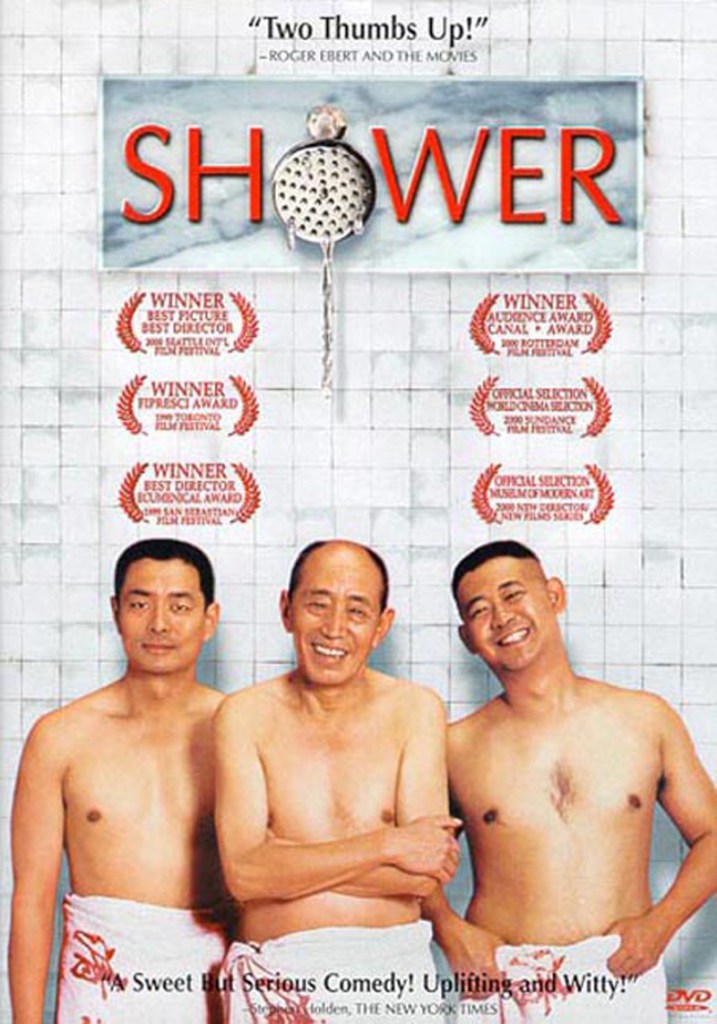
 China is changing. Transforming faster than any other society at any other point in history. This brave new future, flooding in as it has across an ancient nation, has nevertheless left a few islands of dry land untouched by modern progress. Old Liu’s bathhouse is just one of these oases, far away from the big city with its frantic pace and high technology. In the city, you can step into a tiny cubicle and “undergo” a shower inside a contraption that’s just like a carwash, only for people. In Liu’s bathhouse you can relax for as long as you like, laughing and joking with old friends or just hiding out from the world.
Prodigal son Da Ming returns to this untouched relic from his past on a brief reprieve from his busy businessman life, attempting to reconnect with his distant father and younger brother, Er Ming, who has some learning difficulties. Da Ming left here for something better, he looks down on his father’s profession and its old fashioned insistence on taking one’s time, but gradually as he returns to the rhythms of his childhood the warmth of the bathhouse atmosphere begins to soak into his heart.
Most of Liu’s customers are older men who grew up in an era when going to the bathhouse was normal rather than bathing at home as younger people do. They use the bathhouse as some would use a teahouse or a bar, they spend all day there getting various treatments, racing crickets and bickering about the past. If it weren’t for the bathhouse many of these older men would have nowhere to get together. However, times have changed and even if the bathhouse were more popular with the young folk, it seems the entire block has been bought up by property developers intent on throwing up an array of tall buildings replacing the cosy, traditional atmosphere of the small town shops, restaurants and amenities which currently occupy it.
Da Ming keeps meaning to go home, he even books a return flight, but keeps putting it off. Eventually he begins to bond with his father again, going so far as climbing up to the roof to help him secure a tarpaulin during a heavy thunderstorm. He enjoys hanging out with his brother but after being away for so long has perhaps forgotten how much looking after he really needs with the consequence that Er Ming actually wanders off somewhere for the first time in his life. However, Er Ming is much more resourceful than his father had assumed and returns with a broad grin and pockets full of apples as if nothing out of the ordinary had happened.
In its final stretch, Shower makes a tonal shift to the arid deserts of Northern China and a story which happens to reflect the early life of Da Ming’s parents. In this dry land, water is worth more than all the gold in the world. There is an ancient custom that on the night before her wedding, each bride enjoys a hot bath – a true luxury in a place where death from thirst is a real possibility. The extreme measures her family have to go to to allow their daughter to perform this important ritual emphasise its importance as do the tears shed by the girl in question as she sinks into what is possibly the first and last time she will ever enjoy the simple pleasure of a hot bath. Water unites all things, as a TV broadcast watched by Er Ming reminds us, the elephant and the dung beetle have exactly the same dependency on water and their access to it is entirely in the hands of fate.
Liu’s bathhouse is a place of solace where men can come and talk through their troubles together. One local man has a series of marital problems with his rather feisty wife whereas another enjoys loudly singing O Sole Mio whilst having a shower but freezes up when he tries to sing on stage, and then there’s the old guys with their crickets and decades old arguments. Liu listens to them all, allowing their tensions to run away with the bathwater. The “human wash” shower cubicle might be efficient and undoubtedly useful in the quickening pace of modern life, but you go in there alone with all your thoughts and no one to gently lead you to the truths you always knew were there but were unwilling to see.
Shower is another China at the cross roads movie as older brother Da Ming represents the forward marching younger generation who’ve abandoned their old hometowns for the bright lights of the cities only to feel cheated out of something more essential. Returning home is a journey filled with ambivalence – being hit both by the backwardness of the place but also by its wholesome goodness and the warmth of community spirit. It may be too late to save the bathhouse, but that doesn’t mean all that it represents has to go with it. The future is uncertain for Da Ming and Er Ming, as it is for China itself, but if anything can hold back the erasure of centuries of culture it has to start here, with two brothers and a bathhouse, or doesn’t start anywhere at all.
Shower (洗澡, Xǐzǎo) is available on DVD in the UK from Momentum and in the US from Sony Pictures Classic.
US release trailer:
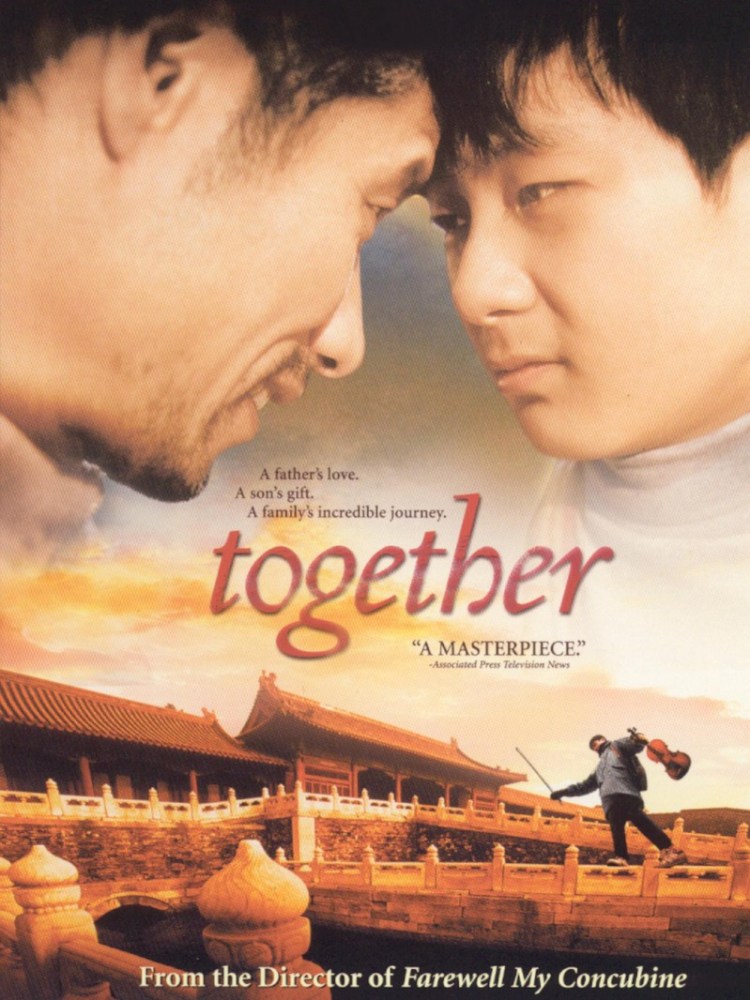 It’s a sad truth, but talent isn’t enough to see you succeed in the wider world. In fact, all having talent means is that unscrupulous people will seek to harness themselves to you in the hope of achieving the kind of success which they are incapable of obtaining for themselves. 13 year old Xiaochun is about a learn a series of difficult life lessons in Chen Kaige’s Together (和你在一起, Hé nǐ zài yīqǐ), not least of them what true fatherhood means and whether the pursuit of fame and fortune is worth sacrificing the very passion that brought you success in the first place.
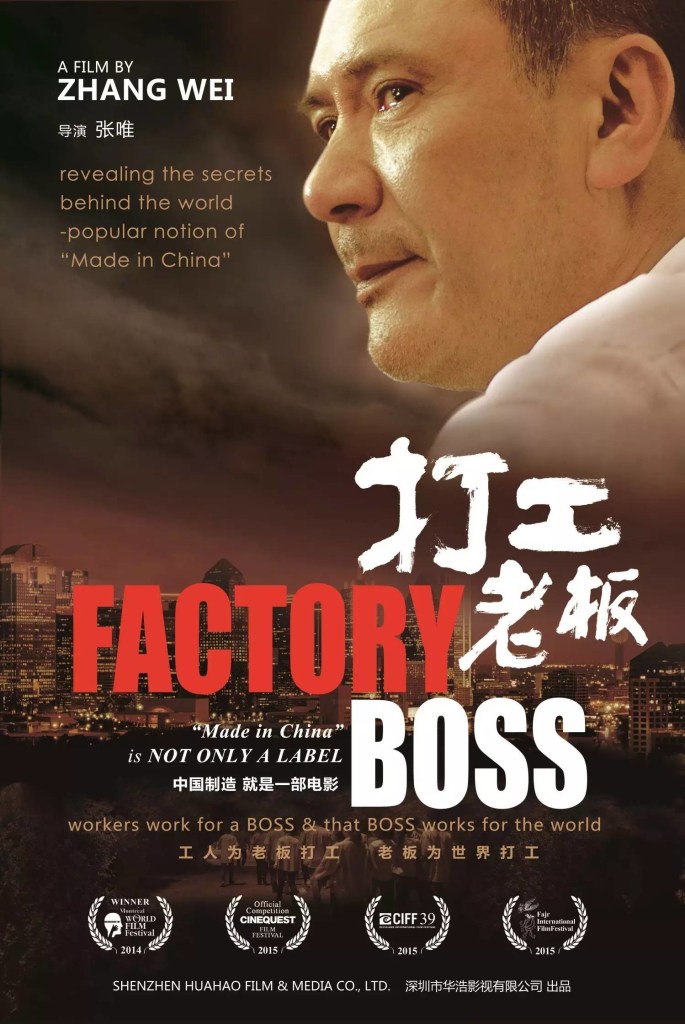 Generally speaking, capitalists get short shrift in Western cinema. Other than in that slight anomaly that was the ‘80s when “greed was good” and it became semi-acceptable to do despicable things so long as you made despicable amounts of money, movies side with the dispossessed and downtrodden. Like the mill owners of nineteenth century novels, fat cat factory owners are stereotypically evil to the point where they might as well be ripping their employees heads off and sucking their blood out like lobster meat. Zhang Wei’s Factory Boss (打工老板, Dagong Laoban) however, attempts to redeem this much maligned figure by pointing out that it’s pretty tough at the top too.
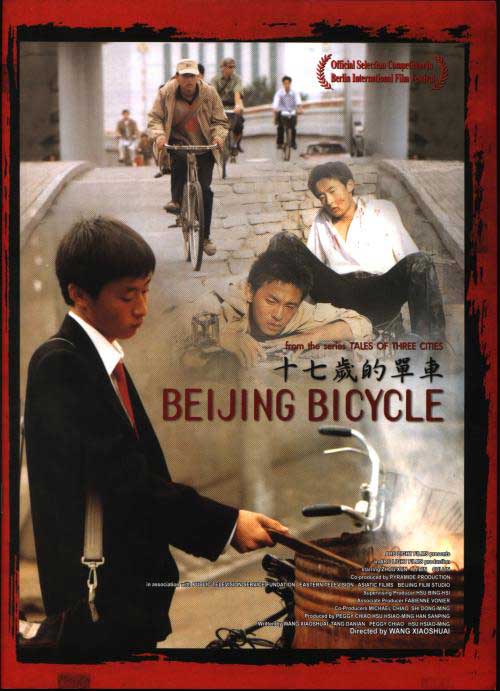 There are nine million bicycles in Beijing (going by the obviously very accurate source of a chart topping song) but there are 11.5 million inhabitants so that’s at least two million people who do not own a bike. Still, if you’re in the unlucky position of having your bike stolen by one of the aforementioned two million, your chances of finding it again are slim. Luckily for the protagonist of Wang Xiaoshuai’s Beijing Bicycle (十七岁的单车, Shí Qī Suì de Dānchē), he manages to track his down through sheer perseverance though even once he gets hold of it again his troubles are far from over.
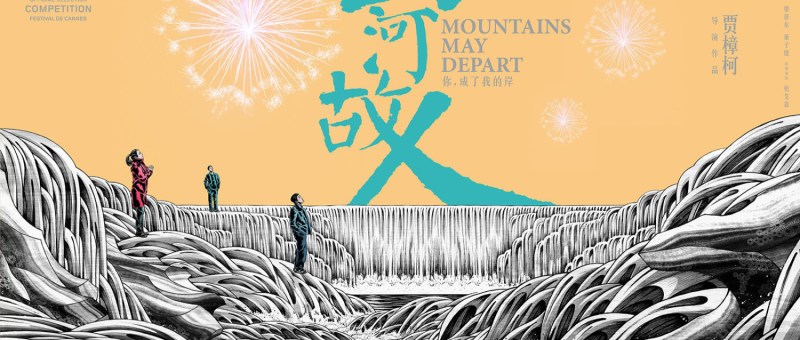
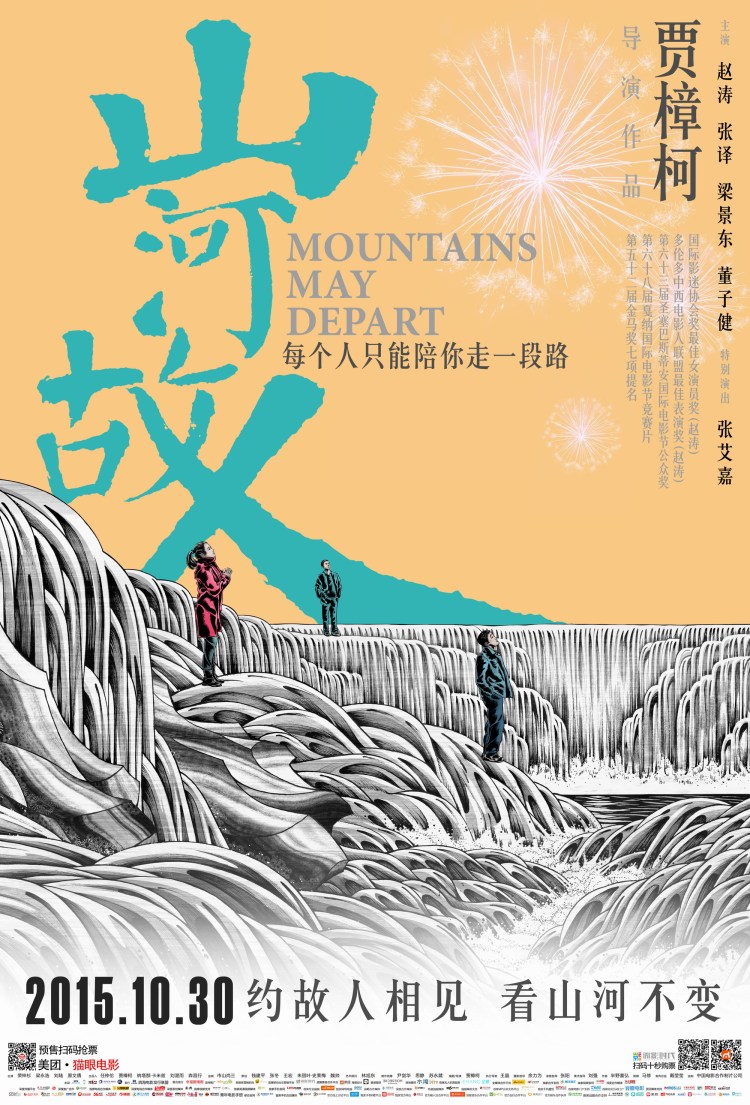 Jia Zhangke has made something of a career out of charting his nation’s history through the lives of ordinary people caught up in the business of living when everything about them is changing. Mountains May Depart (山河故人, Shānhé gùrén) isn’t the first of his films to span a comparatively wide period of time, though it is the first to venture into the “future” if only by a decade or so. Through a story of dislocation and isolation both cultural and personal, Jia has traversed the melancholy odyssey of those who grow up to discover that all the wrong choices have already been made.