Why You Can’t Be Prime Minister (なぜ君は総理大臣になれないのか, Arata Oshima, 2020)

When Shinzo Abe stepped down in September 2020 citing a recurrence of the chronic illness which had caused him to resign from the same position in 2007 he did so as Japan’s longest serving prime minster having held the post since 2012. The centre-right Liberal Democratic Party has rarely been out of power since its foundation in 1955 though the opposition Democratic Party of Japan did achieve a minor breakthrough in the 2009 election only to lose out again in 2012, its reputation tarnished by a perception that it had not done enough during the 2011 earthquake and tsunami crisis. 

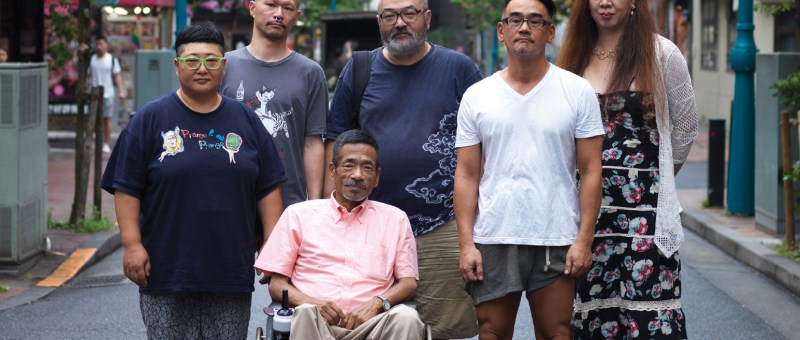
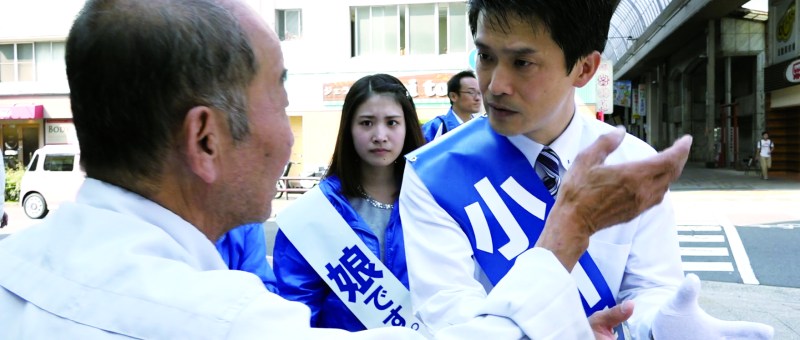
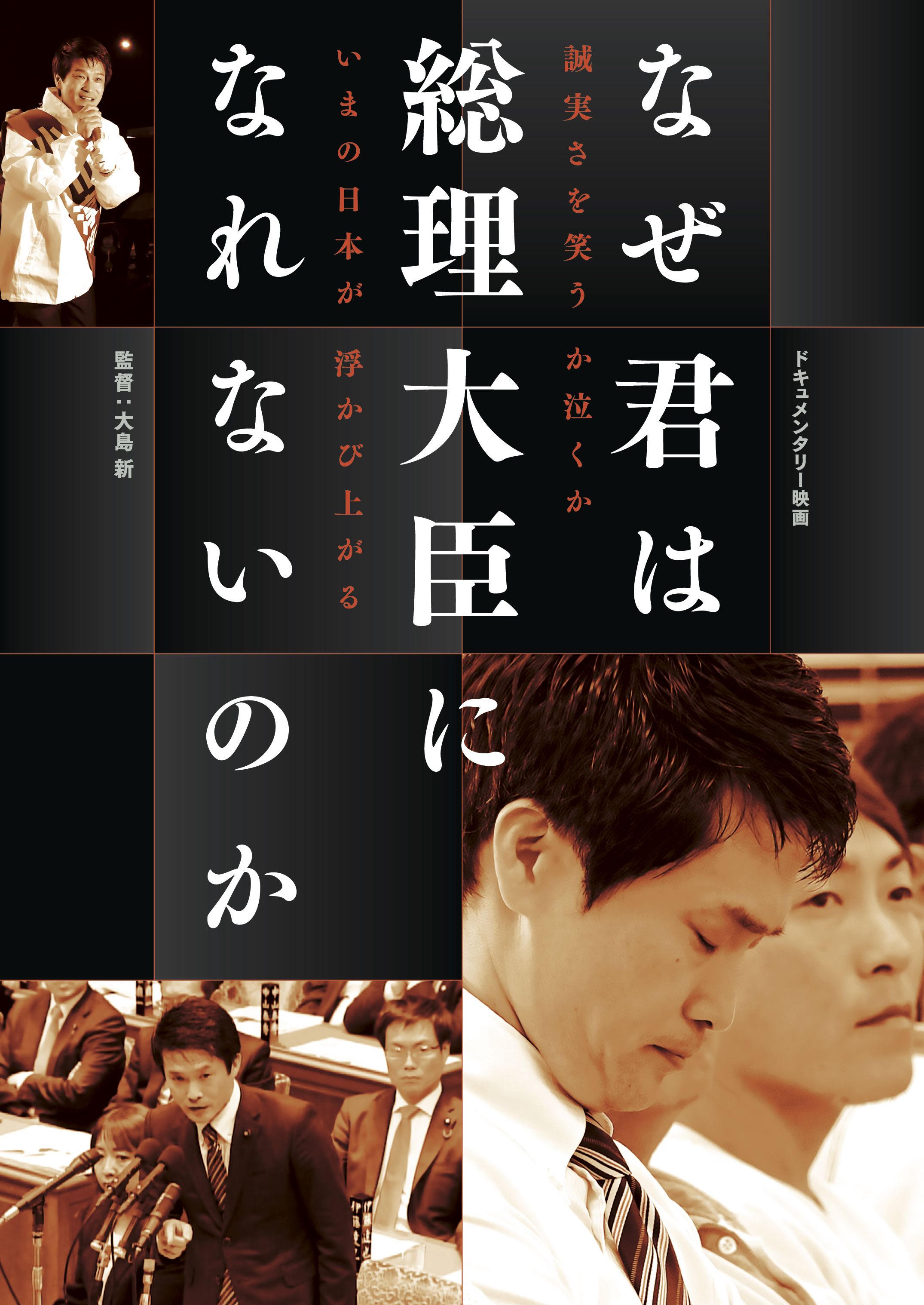
This is the background which informs Arata Oshima’s probing documentary Why You Can’t Be Prime Minster (なぜ君は総理大臣になれないのか, Naze Kimi wa Soridaijin ni Narenai no ka) which follows idealistic politician Junya Ogawa over 17 years from his beginnings as a 32-year-old former bureaucrat standing on a platform of integrity in politics, to a no less idealistic yet perhaps weary middle-aged man now sitting as an “independent” representative. Oshima perhaps partly answers the central question in a lengthy series of opening titles attempting to explain Japan’s rather complicated electoral system which operates both first past the post and proportional representation components. Although mitigated by the additional proportional representation list seats, just as in the UK Japan’s political system remains biased towards the centre-right by virtue of the fact that the leftwing vote is split between a number of different parties. As Oshima also points out, Ogawa’s rival for a first past the post seat is a dynastic candidate whose family is prominent in the local area. 

The other problem, if you want to call it that, is Ogawa’s essential personality and (near) unshakeable idealism. He stands on a platform of integrity in politics in which politicians should be accountable to the people they serve believing that the government has become overly complacent and forgotten about the lives of everyday citizens, the Abe regime famously focussing on their key concerns such as constitutional reform and the military. As such he watches as his more ruthless colleagues surge ahead of him, local rival Tamaki always managing to secure a first past the post seat by playing the political game while he scrapes through on the reserve list. Yet later he makes a fatal mistake, allowing himself to be persuaded to join Yuriko Koike’s Party of Hope after the proposed merger with the DP during the 2017 election. Current governor of Tokyo, Koike is a prominent figure on the conservative scene and member of the ultra-nationalist Nippon Kaigi. It’s not surprising that many of Ogawa’s supporters felt disappointed and betrayed on his decision to follow his mentor Maehara, on the right of the DP, and join the new party which could not credibly claim to reflect the values he’d hitherto espoused while even those accepting his logic that he was simply lending his voice to a unified anti-Abe coalition were put off by Koike’s duplicity in immediately walking back on earlier promises by announcing she would not accept all DP members into the Party of Hope.

“Your face is pretty but your heart is black” is just one of the many comments he receives from disappointed voters while out canvassing, another actively distancing herself from him before angrily remarking that he should have joined the CDP, a rival leftwing party set up by a former DP member Edano which promised to accept anyone who wanted to join. Yet the problem might not be so much the party as Ogawa’s inner conflict, wrestling with himself that he should have stood as an independent even if acknowledging he would have had a much harder time campaigning with no party backing him. His decision obviously conflicts with his pledge of integrity, a broken promise it will prove extremely hard to overcome while his secondary battle is and always will be legacy of the DP’s failure in government leaving many to assume only the LDP is qualified to govern. Following the party’s electoral defeat he does indeed sit as an independent but obviously acknowledges that he has far less influence even than he had as a less powerful list seat representative. 

Ogawa himself attributes his inability to become prime minster by an arbitrary date he’d thrown out after the 2009 opposition win engendered a false sense of hope for long lasting political change to his lack of personal ambition unwilling to do whatever it takes to climb the ladder, preferring to pursue his political goals ahead of his own position. He describes himself as an “otaku of making Japan a better place” and brands himself a centrist while advocating for socialist policies such as a welfare state modelled on that seen in Scandinavia. His parents who along with his wife and children are very much involved in his campaigning wonder if he’s too “pure” for politics, that his inability to compromise is the reason he can’t gain a foothold in the political establishment yet he refuses to give up, later telling Oshima in an otherwise unnecessary Covid-themed coda that if he didn’t think he could be PM he’d stand down right away. Politics needs men like Ogawa, Oshima seems to say, but the electorate isn’t so sure.


Why You Can’t Be Prime Minister streams in the US until Sept. 2 as part of this year’s Japan Cuts.

Original trailer (English subtitles)

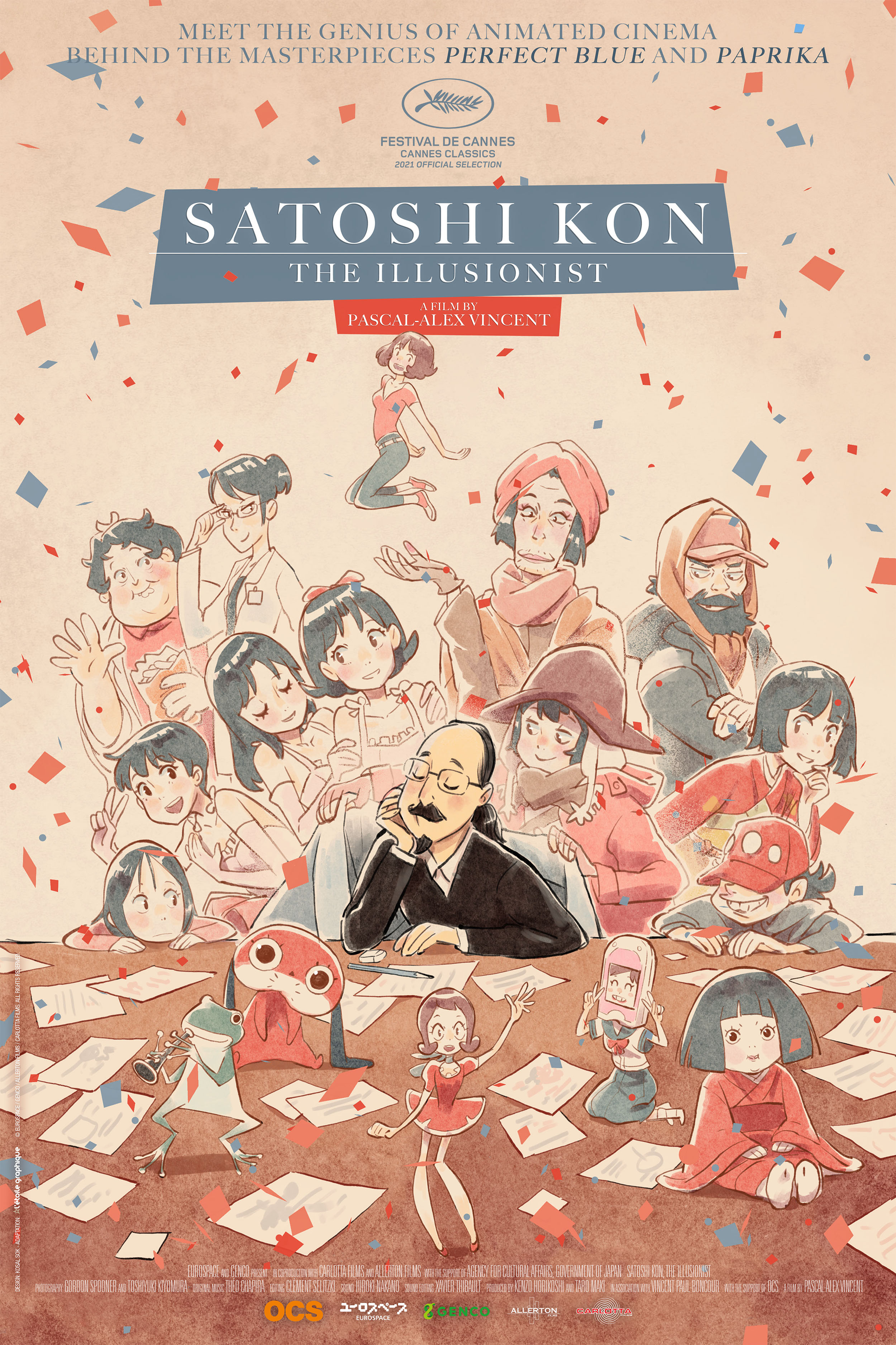
Satoshi Kon: The Illusionist (Satoshi Kon, l’illusionniste, Pascal-Alex Vincent, 2021) [Fantasia 2021]

“A genius but a nasty guy” is the way a former collaborator describes the late director Satoshi Kon, a sentiment echoed by others who’d worked alongside him though many also describe him as gentle if reserved remarking on his seeming impenetrability. Pascal-Alex Vincent’s documentary Satoshi Kon: The illusionist (Satoshi Kon, l’illusionniste) is less interested in illuminating the man than briefly sketching an overview of his career yet nevertheless seems to content to present him as an enigmatic figure filled with contradictions which his work, in some way, was intended to resolve. 

Skipping over Kon’s early life and beginnings as a manga artist, Vincent begins with Perfect Blue before proceeding through each of his features chronologically finishing with the incomplete Dreaming Machine. In essence a talking heads doc, he interviews a series of well-known figures in the anime world such as fellow directors Mamoru Oshii, Mamoru Hosoda, and Jin-Roh’s Hiroyuki Okiura, as well as those who had worked with Kon directly, the international filmmakers who’d found inspiration in his work such as Darren Aronofsky, Jeremy Clapin, Marc Caro, and Rodney Rothman, and experts in anime and manga history. 

In a sense, Vincent is less interested in Kon as a man than in the lasting impact of his oeuvre, which does in a sense lend an uncomfortable imbalance in implying Kon’s work is of greater importance because of the influence it went on to have on Western, particularly Hollywood, cinema. Kon’s impact on contemporary anime for example is not addressed in any real depth save for implying that it gave the art form permission to deal with more mature concepts and ideas which in itself implies that it up to that point had not done so. 

Yet even if Kon is described as “prickly”, an intense perfectionist unable to tolerate failure or resistance, he is also regarded as another kind of innovator in his determination to change the notoriously difficult, often exploitative working culture of the contemporary anime industry. Despite facing financial hardship, he ensured his crew members and animators were paid fairly while also determined to support the next generation of anime creatives. His goodbye letter published the day after he passed away similarly expresses concern for his animators now left adrift with Dreaming Machine destined to remain incomplete. A former colleague remembers Kon as a patient mentor and teacher, gaining a new appreciation for him when she dared to challenge some of the attitudes she found unpalatable in his work including his depiction of women only for Kon to reveal that the women in his films are often reflections of himself. Thus Mima’s torment is an expression of his own in dealing with the fractious politics of the anime and manga industry. 

According to others, the desire to address these issues was born of that to resolve the things he did not understand, Kon again describing the heroine of Millennium Actress’ quest to retrieve a lost key as like that of a director pursuing the idealised vision in his mind, finally arriving at the conclusion that what he loved was the chase itself. His work was frequently concerned with the interplay between dream and reality, yet his vision could sometimes be at odds with others’ describing Paprika as his “Sailor Moon” movie intended as a piece of commercial cinema about a dream hopping “magical girl”. Despite his perfectionism, his universe was anything but black and white, a space which held no place for those who embody evil and sought only to understand. According to an archive interview, Dreaming Machine would have marked a break with his persistent themes, aimed at children as well as adults though apparently also dealing with some darker ideas as mankind’s children attempt to survive their orphanhood. It’s this sense of contradiction which gives Kon’s work its power, at once a man who “radiated gentleness” but was unafraid to speak his mind, bluntly berating a colleague for not pulling his weight but hurt and confused when the colleague declined the opportunity to continue working together because of his intense management style. “He had two sides to him. He could be a nasty guy. A really nasty guy, OK? But I loved him” according to Madhouse’s Masao Maruyama, “He’ll always be in our hearts” a contradiction to the last.


Satoshi Kon: The Illusionist streams in Canada until Aug. 25 as part of this year’s Fantasia International Film Festival.

Original trailer (English subtitles)
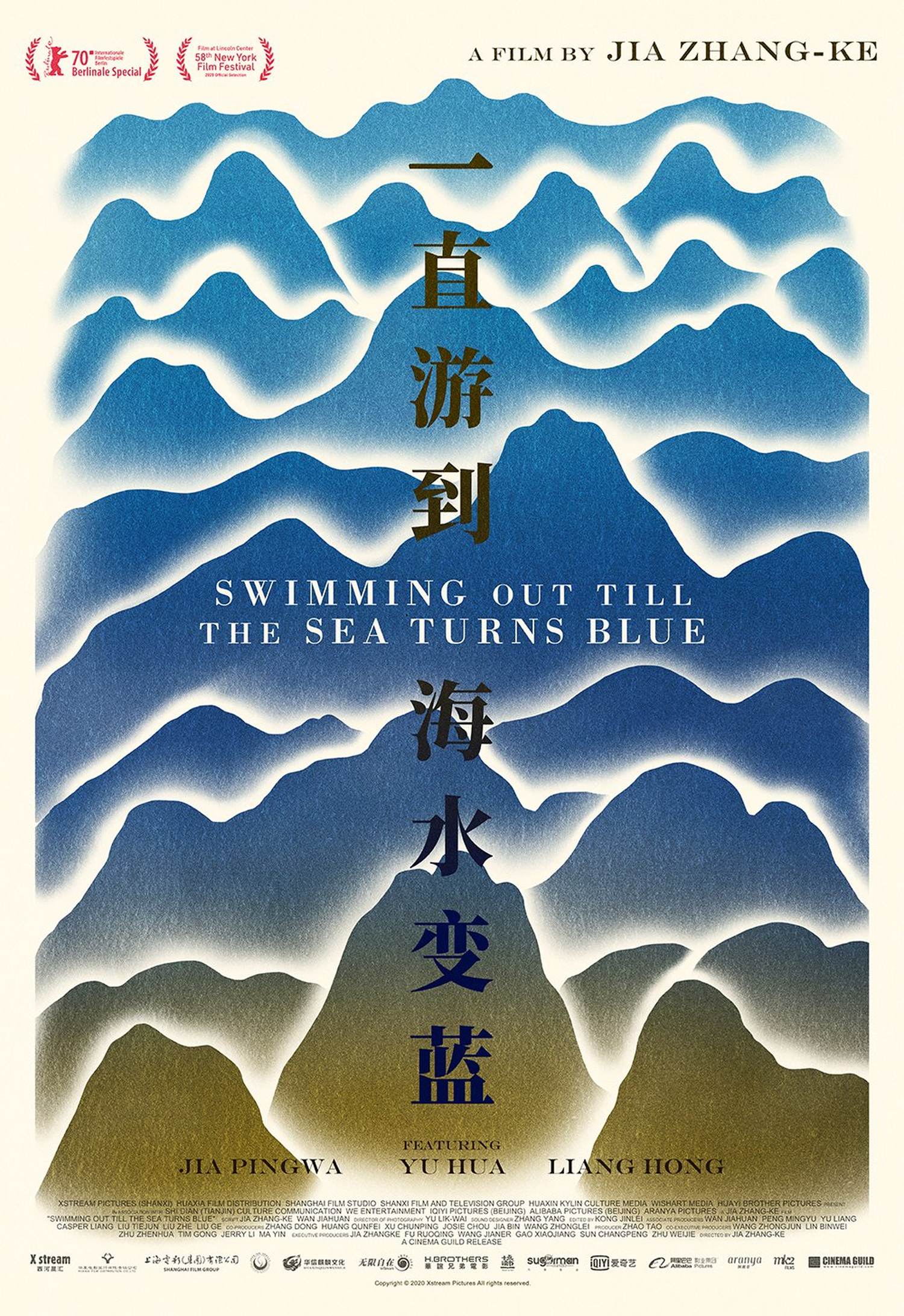
Swimming Out Till the Sea Turns Blue (一直游到海水变蓝, Jia Zhangke, 2020)

Returning to his rural hometown, Jia Zhangke embarks on an alternate history of China in the 20th century through the prism of literature in the poetically titled documentary Swimming Out Till the Sea Turns Blue (一直游到海水变蓝, Yīzhí Yóu Dào Hǎishuǐ Biàn Lán). Taking its title from an off the cuff though strangely profound comment from the witty and loquacious Yu Hua, Swimming is the third in a loose series of documentaries focussing on artists following Dong and Useless each of which were completed over a decade ago. 

Signalling his intentions early on, Jia opens with a lengthy sequence of elderly people in a canteen. The first of his 18 chapters is titled simply “eating”, and as we quickly infer hunger will be a constant background presence for each of our writers who recount their sometimes difficult rural childhoods and the paths which eventually led to them becoming chroniclers of provincial life. The earliest stretches are dedicated to legendary author Ma Feng who passed away in 2004 but it’s some time before we even get to his literary work, struck as we are by his role as an agrarian moderniser who ingeniously saved his village through collective action, bringing the villagers together in a plan to purify the water before irrigation to reduce the alkaline quality of the soil which had made it impossible to farm. Eventually we’re introduced to Ma’s daughter who begins to fill in his biography from a personal perspective while explaining how it was that he came to be known for his naturalistic depictions of the lives of ordinary rural folk in the early days of Communism. 

That idealism soon takes on a darker hue, however, in the story of Jia Pingwa who recounts his childhood during the Cultural Revolution in which his father was sent sent away for “re-education” after being falsely accused of receiving training as a KMT spy in the ‘40s. In Jia Pingwa’s early childhood eating was indeed a concern, something which he later says caused tension in the family that was only eased by the presence of his grandmother but even she couldn’t keep them all together after the institution of the communal kitchen. Perhaps more austere than you’d expect, Jia Pingwa admonishes his daughter, also a published poet, that she should fulfil her role as a wife and mother before that as artist, and that being a poet doesn’t always mean one lives poetically. Nevertheless he recounts the widening of horizons which occurred as China began to open up in 1980s, an influx of foreign art that introduced him to “the West” but also left him in an artistic quandary in the search for new yet authentic directions. 

A little younger than Jia Pinghua, the 1980s is when the extremely animated Yu Hua came of age, revealing an unexpected effect of the Cultural Revolution that led to his artistic destiny as he found himself re-imagining the endings of books which had long since fallen apart and existed for him only in fragments. Training first as a dentist but finding it not to his liking, Yu Hua longed to broaden his horizons and began writing seriously with the hope of getting a better job, eventually enrolling in university in Beijing in 1989 which he recounts somewhat incongruously as cheerfully uneventful. 

There is indeed a kind of micro framing in Jia’s concentration on rural China as a place to one side of wider society or politics. Just as Yu Hua casually ignores the reasons why others might find it interesting to have been a student in Beijing in 1989, Liang Hong opens by recounting that the year was 1997 which was the year Hong Kong returned to China but she was so busy that as an event it hardly registered for her. Like Yu and Jia Pingwa she recounts a difficult rural childhood in which her mother was rendered ill and later died due to the demands of country living while her kindhearted though feckless father struggled to manage his small family. While the men concentrate on their own paths, Liang mostly talks of her family, the sister who sacrificed her future for her siblings, and later her own son who talks of learning about his history through mother’s books though he no longer remembers the rural dialect and his associations with the area are mainly to do with playing with his cousins on visits to his mother’s family home. 

Liang’s son is the last and least deliberately staged of Jia’s frequent cutaways to local people reciting brief snippets of literature by the four authors and others often in praise of the land. Between lengthy talking head sequences, he switches from present day to historical stock footage showcasing the lives of ordinary people as they play cards, eat, or hurry on their way from one place to another. Spiralling out and away from Fenyang and back around again what Jia presents is less a literary survey than a rural history which is in its own way also mythologised as the wounded soul of the modern China. 


Swimming Out Till the Sea Turns Blue screens at the BFI Southbank on 24th July as part of this year’s Chinese Visual Festival.

International trailer (English subtitles)

The Two Lives of Li Ermao (他她:李二毛的双重人生, Jia Yuchuan, 2019)

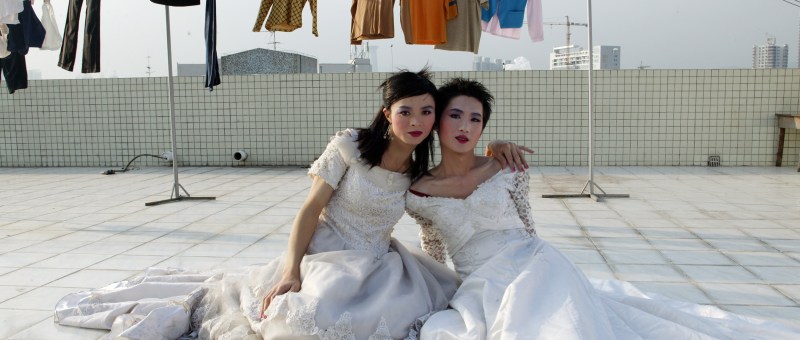
“The only thing I’ve ever wanted is someone with whom to live a normal life” Li Ermao explains thinking she’s found it only to have it slip through her fingers once again. Photographer Jia Yuchuan first met Ermao while working on a project with the LGBT community becoming as she describes it something like a big brother. Following her over 17 years, Jia’s documentary The Two Lives of Li Ermao (他她:李二毛的双重人生, Tā Tā: Lǐ Èrmáo de Shuāngchóng Rénshēng) witnesses her constant search for acceptance in a rigid and conservative society the pressures of which also contribute to her sometimes self-destructive behaviour. 

As Ermao explains in an opening onstage monologue, she is not a man dressing as a woman though once thought of herself as crossdressing before living as a “ladyboy” and now identifying as a transgender woman. Jia begins in a sense with her high point at which she has achieved a degree of success as a cabaret performer despite having no formal training in singing and is in what seems to be a positive and loving relationship with a young man, Jiang. Things start to go wrong when Ermao fails to capitalise on the possibility of recording an album while her self-destructive gambling habit begins to eat away at her relationship with Jiang who eventually leaves her. 

As Jia explains, Ermao would often drop out of contact with him for unexplained periods of time despite describing him as an indispensable big brother. After another self-destructive episode renting out her spare room to randomers from the internet to escape her loneliness, Ermao next calls Jia to introduce him to her new boyfriend, Long, over whom she has apparently just attempted to take her own life prompting him to call the police which ends both with her being evicted by her fed up landlady and arrested for the possession of illegal drugs. 

Worried about her elderly mother, Ermao takes Long with back to her hometown but quickly finds herself conflicted in this even more conservative environment where she’s “Li Guomin’s son”, the villagers by turns bemused and scandalised by her feminine appearance. Ermao ran away to live on the city streets following the death of her father who, we learn, was a notorious people trafficker who kidnapped and sold women and children including Ermao’s younger brother who he sent away to Hainan while rumoured to have eaten the corpse of the stillborn baby who would have been Ermao’s elder. This might go someway to explaining the animosity with which she is held in the village, along with the fact that as she’s been away so long and was not expected to return other farmers have long since colonised her land and are not minded to return it. Stubborn, Ermao pitches a tent and tries to make a living chicken farming on the tiny patch that remains in the hope of funding the completion of her confirmation surgery but is finally forced out by the local mayor who describes her as an “unwelcome stranger” in their community and asks her leave. 

Falling still further, Ermao finds it impossible to gain steady employment as a transgender woman eventually when getting back touch with Jia having made the decision to essentially detransition, preparing to have her implants removed while presenting as male in order to continue working at a factory producing components for iPhones. She fears her coworkers finding out that she is transgender and for good reason as she’s later brutally beaten by a male middle-aged colleague. Despite this she seems in a sense happier to have been reaccepted by her hometown, but soon finds herself rejected once again on learning that she is HIV+ and coming to the conclusion that she is “harmful to others” and should choose self-isolation. 

Despite their long years of friendship, Jia is not always sympathetic to Ermao’s plight nor does he condone her sometimes self-destructive behaviour or tendency to overdramatise while uncomfortably asking where a woman like Ermao belongs in the contemporary society before finding that it may have no real place for her. Rejected in the city and finding no refuge in her hometown, Ermao’s reversion to a male persona cannot help but feel like a defeat, her gradual decline from brassy cabaret star to melancholy recluse a result of her battering at the hands of an unwelcoming society unprepared to accept those who do not conform to its rigid ideas of gender and sexuality.


The Two Lives of Li Ermao screens at Genesis Cinema on 19th July as part of this year’s Chinese Visual Festival in partnership with Queer East.

A Dedicated Life (全身小説家, Kazuo Hara, 1994)

“Human beings have things they don’t want to share with others. This is the truth, but what we choose to tell from the truth is fiction” according to the elusive subject of Kazuo Hara’s probing personality doc, A Dedicated Life (全身小説家, Zenshin Shosetsuka). “Full of lies and contradictions” as a friend later describes him, Hara had apparently planned to follow controversial author Mitsuharu Inoue for a number of years only for his subject to be diagnosed with terminal liver cancer shortly after filming began. 

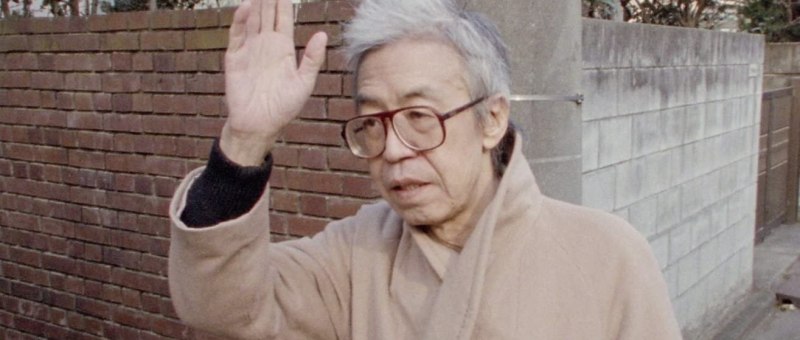
Even as the film opens, however, we can intuit that much of the life of Mitsuharu Inoue is performance, an adoring audience of his students and followers screaming in pleasure as he performs a striptease while dressed as a geisha to the classic enka hit Tsugaru Kaikyo Fuyugeshiki. Seconds earlier he’d told them that he longed to belong to a theatre troupe and that his grandfather had been a famous kabuki actor, a claim that later seems to be entirely untrue. Nevertheless, Inoue commands almost cult-like adoration from the mainly middle-aged women who surround him, one after another confessing their undying love for the genius author in successive to camera interviews and only occasionally hurt or frustrated in the often callous way he seems to have treated each of them. As we later realise, somewhat casually, Inoue is also married to patient and presumably very understanding wife who tenderly cares for him throughout his illness. 

To begin with, Hara presents us with a vision of Inoue at face value as a fun loving libertine living it up with his students/disciples who can also be cuttingly cruel in his criticism, humiliating one of his female followers at the podium by tearing apart her assignment in front of the class, later doing the same thing to a male author at a dinner party. After making a good recovery from his first battle with cancer he vows to go in harder with his students, reminding them that he can be friendly and charming one minute and unceremoniously cut them off the next should they disappoint him. Nevertheless, they apparently remain devoted to their mentor or at least the image of himself he seeks to project. 

Those who’ve known him many years appear to know that Inoue is a habitual liar and that even his much praised autobiography is largely an act of autofiction. An author friend and Buddhist nun later suggests that Inoue perhaps had something deep inside him he didn’t want to share and lying was his way of taking control over his life, his cultivated persona an avant-garde literary act. Having presented him as he is or claims to be, Hara eventually begins to undercut Inoue’s image by interviewing friends, relatives, and acquaintances who frequently debunk his sometimes outlandish claims while also hinting at the half-truths and mysteries at the centre of his family history. Following Inoue’s sister Tazuko who remains as clueless as her brother realising they’ve either misremembered her grandmother’s name or it was wrong on the family register, Hara uncovers a melancholy tale of marital failure and maternal abandonment once again embellished by Inoue who alternately gives differing accounts of his youthful attempt to reconnect with the mother who left him behind which are themselves disputed by the recollections of others. 

His grandiose claims go seemingly unexamined by his followers, eating up his tales of how he founded the first Communist Party in Japan only to become disillusioned by the movement and be kicked out after writing a story criticising the Party (a friend from the time describes him as more of an errand boy who was never really “serious” in his politics), or the tragedy of his first love which ended with a Korean classmate sold to a brothel where he later lost his virginity in a not quite consensual chain of events he claims left him feeling violated while she laughed from an upper window witnessing his defeated retreat. In a break from his usual observational shooting style, Hara adds a series of dramatic reconstructions tinted in a pre-war blue the unreality of which stands in stark contrast to the almost too intimate scenes of Inoue’s cancer diagnosis and subsequent operation as his liver is lifted from his belly and taken away as if presented for the camera. In a revealing moment, Inoue remarks that an alternative medical practitioner he’s just consulted going by the name “Redbeard” just like the movie is not convincing, lacking credibility because he failed to fill the gap between his words perhaps hinting at the techniques he himself uses to convince himself and others of his self-created image. Hara does not so much try to dissect it as to look quizzically at its contradictions, admiring the beauty of the enigma if in reflection of its intrinsic sadness. 


A Dedicated Life streams in the US & Canada until July 2 as part of Japan Society New York’s Cinema as Struggle: The Films of Kazuo Hara & Sachiko Kobayashi

DVD rerelease trailer (no subtitles)

Sayuri Ishikawa’s Tsugaru Kaikyo Fuyugeshiki

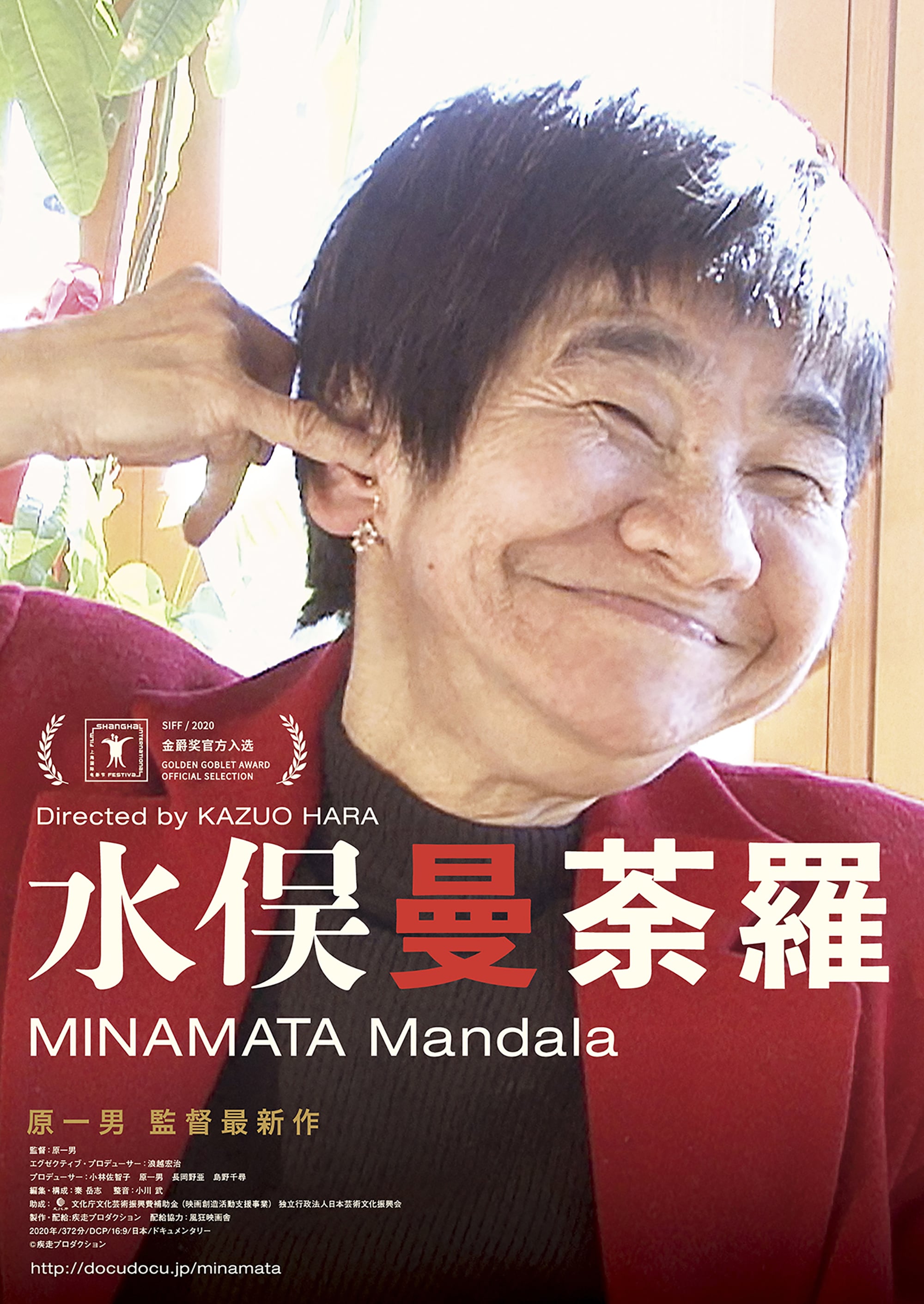
Minamata Mandala (水俣曼荼羅, Kazuo Hara, 2020)

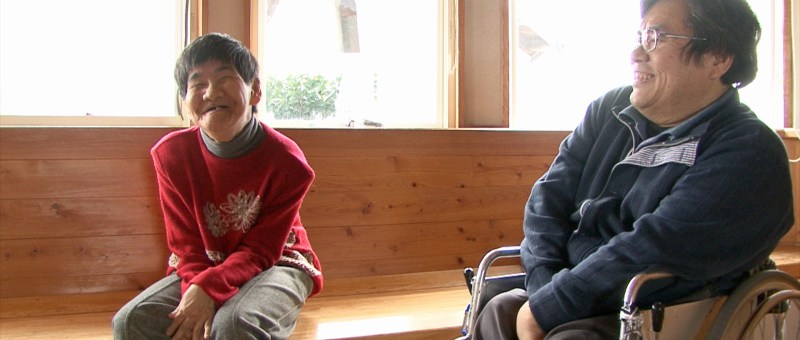
“An Individual can never win against the government” according to a man seeking justice, “Challenging the government means risking your life”, yet he continues to fight. In his 2017 documentary Sennan Asbestos Disaster, Kazuo Hara had charted the protracted efforts of workers from the factories in Sennan to get justice from the government that failed to protect them. 15 years in the making, Minamata Mandala (水俣曼荼羅) addresses another of post-war Japan’s great industrial scandals as victims of the “Minamata disease” struggle for recognition in the face of continued governmental intransigence. 

Opened in 1908, the Chisso chemical plant was among the most technologically advanced in Japan yet it routinely expelled wastewater directly into Minamata bay. The factory had already paid compensation in 1926 and 1943 for damage done to local fisheries before a change in its production process led to the release of methylmercury into the local water system from 1951 onwards. Though some had noticed unusual behaviour in animals, it wasn’t until 1956 when a little girl fell ill with strange symptoms including difficulty walking and speaking that a widespread “”epidemic of an unknown disease of the central nervous system” was discovered in the local community and subsequently came to be known as the “Minamata Disease”. In order to cover their tracks, Chisso began discharging wastewater directly into Minamata River spreading the pollution further along the coast with additional cases arising in other villages on the Shiranui Sea. 

Hara’s justice seekers, however, take aim not directly at Chisso which still exists and is a dominant economic force in the area, but local and national governments whose continued failure to protect them has greatly exacerbated their suffering. The greatest source of their discomfort is the unfairness of criteria set down in 1977 for legal certification of Minamata Disease in order to gain access to compensation. According to contemporary researchers, the criteria, inspired by Hunter-Russell syndrome discovered after an industrial accident in the UK in the 1940s, were simply wrong leading to the vast majority of applicants being rejected. Hara shifts between the stories of various victims and a pair of scientists determined to prove that the root of the disease lies not in peripheral nerve but brain damage and that the criteria is therefore useless in certifying cases of Minamata Disease. The applicants, meanwhile, intensely resent the implication that they are not genuine, that they are undergoing a collective delusion, faking their symptoms, or suffering from an unrelated illness not the responsibility of Chisso or the government. 

One campaigner whose hair was found to contain high levels of mercury at two years old recounts his ill treatment at the hands of the legal system which implied application of the criteria could be affected by “personality” factors while passive aggressively listing his occupation as “time waster”. Though his case may at first seem mild, it’s also true that as he’s suffered from Minamata Disease his entire life it’s difficult for him to assess how severely it affects him as evidenced by the accidental severing of the top of his thumb which he barely noticed because of his reduced sensitivity to pain. Like other sufferers, he is often privy to the usual hollow apologies from politicians (including one from then Minister of the Environment Yuriko Koike), though another source of frustration is that those in power often refuse to attend meetings with Minamata patients sending underprepared underlings in their stead. One particularly heated meeting quickly goes south when a rookie civil servant allows his handwritten memo reading “no apologies” to be seen by a woman recording the proceedings from the front row while his embarrassed colleagues are able to offer little other than the standard platitudes insisting the Minamata issue has already been dealt with through the previous settlements. 

Rather than focus on the court cases and medical investigations, however, Hara is keen to remind us of the costs to the victims of industrial poisoning, one of the scientists later breaking down as he explains that the main effect of the disease is sensory deprivation leaving even those mildly affected unable to enjoy their lives fully. A rather poignant song written by a congenital sufferer reflects on her tendency to fall in love too easily and be forever disappointed while longing for a freedom and independence denied her because of her disability. For the campaigners, meanwhile, Minamata Disease has robbed them of their right to a personal life as they devote all of themselves to fighting for justice while acknowledging that even when they win it brings little improvement into the lives of those forever affected by industrial pollution. Just as Hara had expressed frustration with the Sennen campaigners he felt were overly feudal in their deference to authority, some find it difficult to support those who ultimately opted to accept a paltry settlement while simultaneously understanding the desire not to have to fight anymore especially as even those born with the disease are now approaching late middle-age. Ending on a poignant freeze-frame, however, Hara reminds us that the damage can never be undone nor can there be adequate compensation for the tremendous loss of potential even as the government continues to vacillate in the abdication of its responsibility. 


Minamata Mandala streams in the US until July 2 as part of Japan Society New York’s Cinema as Struggle: The Films of Kazuo Hara & Sachiko Kobayashi

Clip (English subtitles)

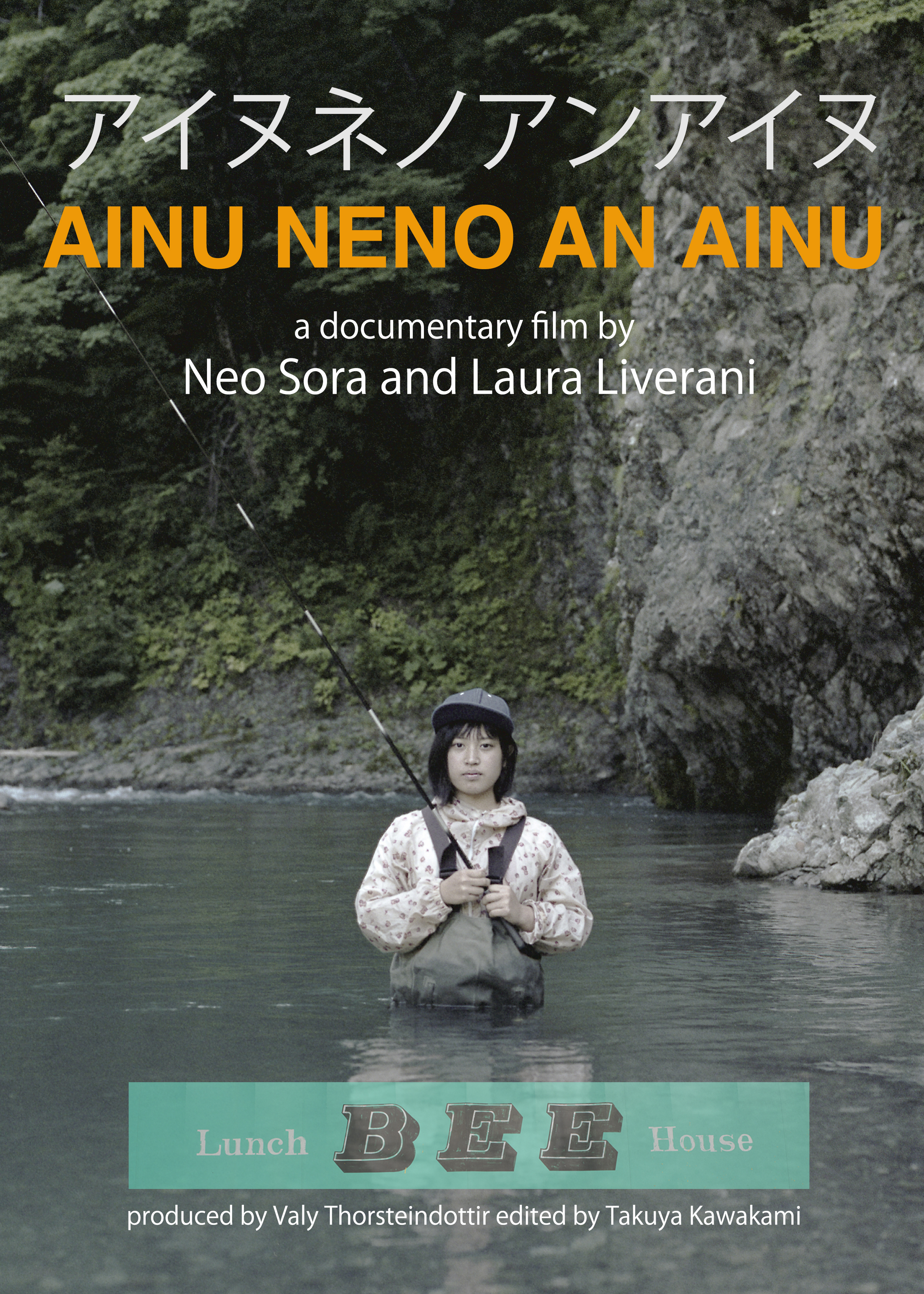
Ainu Neno An Ainu (アイヌネノアンアイヌ, Neo Sora & Laura Liverani, 2021)

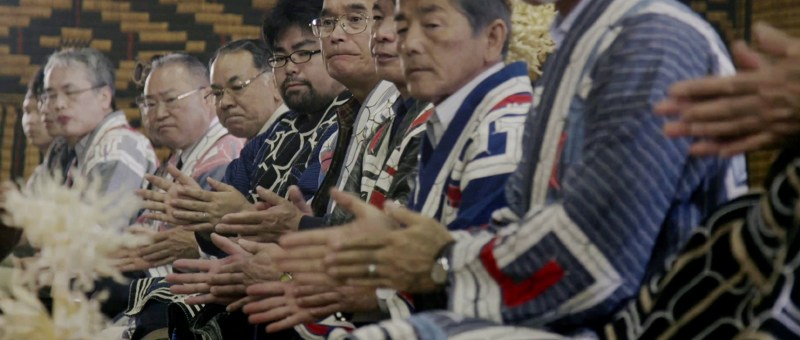
Japanese society often presents itself as homogenous claiming a harmony born of a universal culture to which all subscribe, but in reality has sometimes sought to exclude or assimilate those it regards as different such as the still continuing prejudice against the burakumin underclass and towards the indigenous people of Hokkaido, the Ainu, who were only officially recognised by the Japanese government in 2008. Laura Liverani & Neo Sora’s documentary Ainu Neno An Ainu (アイヌネノアンアイヌ, lit. humanlike human) explores the realities of what it means to be Ainu in contemporary Japan as the community strives to recover and preserve its traditional culture in the face of increasing modernity. 

Japan annexed Hokkaido during the Meiji era largely through settler colonialism, later determining to “develop” the island which entailed confiscating Ainu lands along with banning their language and traditional practices such as tattooing in an act of forced assimilation. Many of the participants in the documentary have the same name but this is not necessarily because they are related as one explains, the entire town was in fact given the same surname inspired by the name of their settlement translated into Japanese when assimilated as Japanese citizens. While some aspects of traditional culture survived, many of the older residents lament that their parents preferred not to teach them the Ainu language in fear of social discrimination, something which is repeatedly cited by many as a reason some prefer not to disclose their Ainu identity after leaving for the cities. 

Nevertheless, some younger people are eagerly attempting to reclaim and preserve the Ainu language which is entirely oral and has no writing system. The main protagonist of the documentary, Maya, opens the film by teaching a traditional lullaby to a class of students later revealing that her father Kenji, who was not born Ainu, taught himself the language and has become passionate about passing it on. Language classes can also be heard on local radio while remnants of Ainu words pepper the local dialect even if many may not realise. Meanwhile, others relearn ancient lullabies not directly from their mothers but from archival tapes. 

Maya’s mother is also part of a stage performance showcasing traditional Ainu music for tourists from outside of the community, a Korean translator interpreting for a rapt audience each clutching pamphlets as they listen. A young man, Hibiki, who works for the Ainu museum admits that some feel ambivalent about the way they’ve chosen to commodify their culture in order to preserve it while others feel it’s a price worth paying in order to ensure that something at least survives. Some customs are perhaps harder to justify in the modern society such as the Iomante bear sacrifice which no longer takes place after successful campaigns by animal rights organisations. 

While some speak of divisions within the Ainu communities, others praise the local traditions of acceptance and hospitality in which it is normal to offer food, gifts, and shelter to others without expectation. Many who were not born Ainu have been accepted into the community, the Takanos for example who arrived from Tokyo in the 1960s and now run a store selling the Ainu handicrafts they have spent a lifetime learning, or Magi a transgender woman from Okinawa finding family and a place to belong among the Ainu. 

It is not in any case an either or situation, the local children cheerfully singing the theme from My Neighbour Totoro as they supervise the harvest as well as a Japanese folk song before they leave school for the day while at the end of the film introducing themselves in the Ainu language for a local radio host. Intended as a “family photo album” of the local community, an image which opens the film and recurs throughout in static captures of the various protagonists posed for a portrait, Ainu Neno An Ainu examines what it means to be a member of the Ainu community in the present society and uncovers with it a tremendous warmth and openness not only among the extended families as its centre but towards the wider society in the hope of preserving their culture through sharing it as widely as possible with all who wish to learn. 


Ainu Neno An Ainu streamed as part of this year’s Nippon Connection.

The photo project which sparked the documentary

Original trailer (English subtitles)
I Quit, Being “Friends” (友達やめた。, Ayako Imamura, 2020)

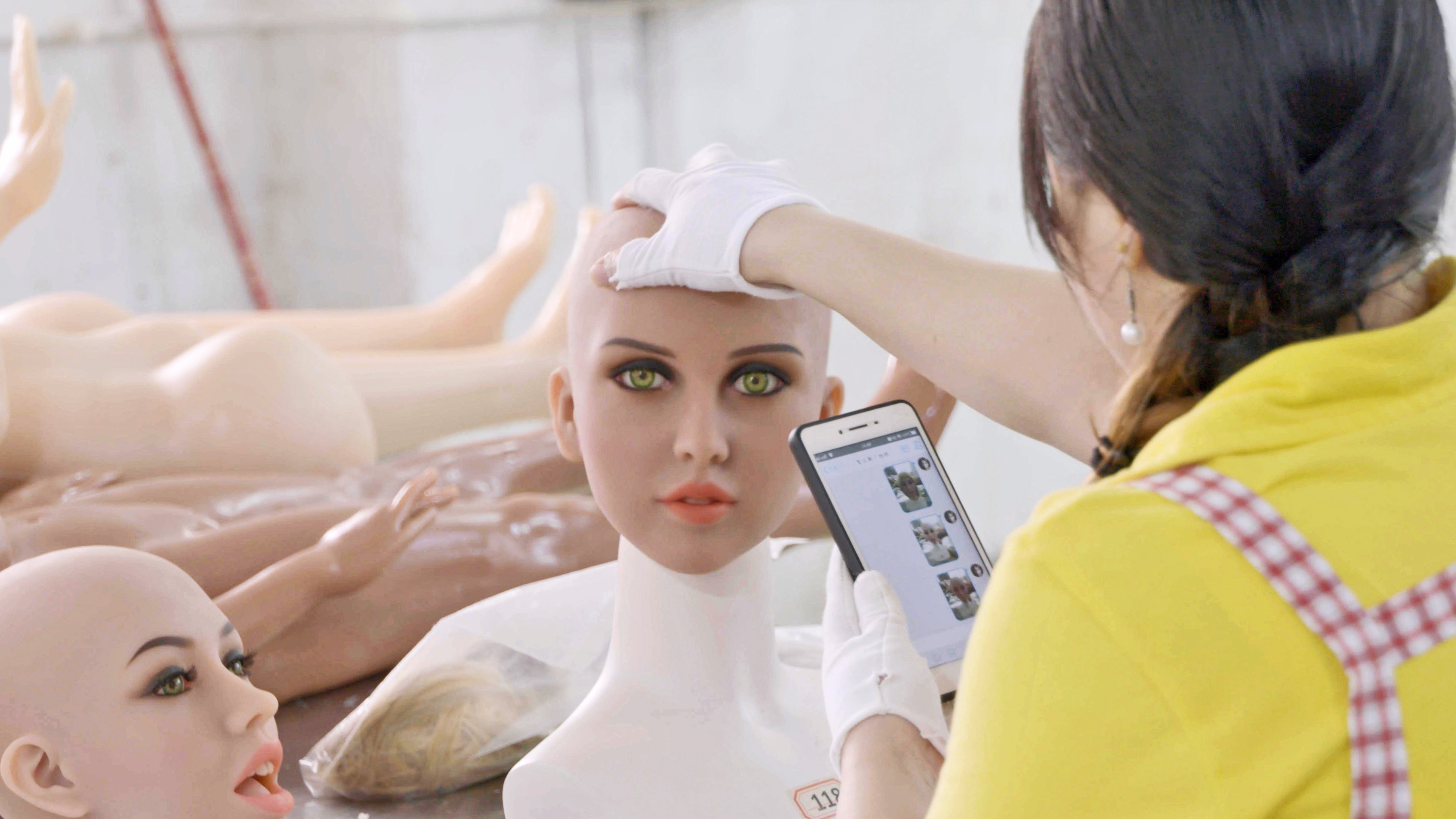
“I thought we could understand each other because we’re both minorities, but that was wrong”, director Ayako Imamura admits in her revealing, self-reflective documentary I Quit, Being “Friends” (友達やめた。, Tomodachi Yameta) in which she contemplates her sometimes awkward relationship with a friend who has Asperger’s and struggles with communication. Imamura herself was born deaf and so also faces daily communication barriers living in a hearing society but often has difficulty understanding Ma-chan’s sense of anxiety and social rejection becoming increasingly irritated by seemingly trivial examples of what she sees as rudeness or lack of consideration. 

Ayako apparently met Ma-chan a few months before the film began at a screening of her previous film, Start Line, which charted her journey across Japan by bicycle. Ma-chan had become involved with social welfare issues in university, making friends with deaf students and learning sign language. At the event, Ma-chan was supposed to be her interpreter, but as the screening began ahead of schedule she arrived after it started and simply sat in the front row of the audience not knowing what else to do. This seems to have irritated Ayako, put off by her supposed bad attitude. 

It is then a minor irony that part of Ayako’s growing resentment stems from something she did not even notice directly in that Ma-chan never says “itadakimasu” as is customary and polite before eating. Ayako’s grandmother pointed this out to her, taking against Ma-chan thinking her rude or ungrateful while Ayako herself who obviously couldn’t hear if she said it or not tried to defend her if superficially on the grounds of her disability. Later Ma-chan explains that she believes not saying itadakimasu is not (directly) related to her neurodivergence but simply because her family did not say it and so she never learned the habit, while Ayako gradually realises that she has perhaps become fixated on “Asperger’s” to the extent that she stopped seeing Ma-chan as person rather than an embodiment of her “condition”. 

She had perhaps assumed that as two people who experience similar problems with communication they would be on the same wavelength, but finds it increasingly difficult to accept Ma-chan’s atypical behaviour, perhaps irrationally upset by the itadakimasu issue while otherwise put out by her tendency to eat other people’s snacks without asking and smack her on the back of the head when she’s done something silly. For her part, Ma-chan reveals she prefers using sign language because there’s less need for superficial politeness and therefore less chance of causing offence. Ayako consciously affects tolerance, wary of turning into one of those people who ask a deaf person if they haven’t just tried listening harder in railroading Ma-chan into neurotypical behaviour patterns but eventually decides to end their friendship explaining that she’s “done with trying to act like a nice person”. 

While Ayako only obliquely addresses some of the problems she faces in the hearing world, using a relay system to book tickets over the phone for example, she is surprised to realise that Ma-chan has similar problems, too anxious to order food in a restaurant for example and reluctant to use the telephone even if not physically incapable. We’re told that Ma-chan also suffers from depression and see her expressing suicidal thoughts in despair of being constantly told that she needs to change in order to adapt to neurotypical society and knowing that she can’t. What occurs between the two women is perhaps an ironic kind of miscommunication informed by a degree of culturally specific rigidity in which rudeness deliberate or otherwise is an unforgivable sin. 

Despite having elected to end their friendship, Ayako eventually changes her mind and decides to try again, more directly, with a little mutual understanding each stating bluntly what behaviour they find puzzling or hurtful and attempting to explain why it occurs, drawing up something like a set of ground rules and boundaries for their relationship. Attending a meeting in Tokyo in which disabled activists express solidarity with the LGBTQ+ community following a politician’s crass remark that “unproductive” (ie those who do not contribute to solving the declining birthrate problem) people do not deserve social support, both women are forced to reconsider their views on and as minorities addressing some uncomfortable thoughts they too may have had about their place in society and that of others. Nevertheless, in the end they each resolve to struggle against any unconscious prejudice they may have, actively striving to forge a friendship based on mutual understanding and brokered by resolute honesty rather than allow pettiness and resentment to drive them apart. 


I Quit, Being “Friends” streamed as part of this year’s Nippon Connection.

Original trailer (English subtitles)
Ushiku (牛久, Thomas Ash, 2021)

Japan has famously tough immigration policy and despite having signed up to various international agreements is unique among developed nations in its reluctance to accept refugees. Making migration easier has often been posited as a potential solution to the nation’s declining birthrate and stagnant economy, but it’s one that has never found favour with those in power. An immigration bill that was due to go through the Diet in May 2021 which would have made deportations easier was in fact halted in part because of public outcry after a young woman sadly passed away in an immigration detention centre after staff allegedly ignored her pleas for medical assistance claiming that she was simply faking her symptoms in an effort to avoid deportation. To add insult to injury, the young woman was detained for overstaying on her visa after having attempted to get help from the police as she was suffering domestic violence. Having learned she had reported him, her boyfriend threatened revenge should she return to her home country.

Filmed mainly with hidden camera, such facilities do not allow photography of any kind, Thomas Ash’s unflinching documentary ventures inside a dentition centre for male refugees awaiting confirmation of their applications in Ushiku. Though some claim they are in a sense better off than they were for having a degree of safety, shelter, and freedom from hunger, the facility is indeed little better than a jail with those inside it treated as prisoners whose movements are heavily restricted and communications monitored. As another points out, at least if you’re in jail they have to tell you how long for whereas immigration detention is indefinite (also the case in the UK). Many of those sharing their stories have been in Ushiku for several years already and have no indication of when they might be released or eventually deported. 

The desperation of their circumstances has pushed some towards suicide, while hunger strikes have become a worryingly common form of protest as authorities often offer a temporary release on the condition the detainee agrees to resume eating only to pick them back up again shortly afterwards. One detainee uses a wheelchair as he is too weak to walk but that does not apparently prevent his rough treatment at the hands of immigration centre staff who attempted to deport him without notice, the attempt only halted when the airline refused to carry him. The central problem is that the government often refuses to recognise their status as refugees, claiming that they have simply declined to return to their birth countries rather than accepting that they cannot return because their lives would be in immediate danger. Many of the detainees recount seeing their friends and relatives murdered or their homes destroyed, knowing that to be sent back is as good as a death sentence. 

This remains the case even for those who have married Japanese women with some recounting that immigration officials have attempted to convince their wives that the relationship is not genuine and encourage them to divorce their foreign-born spouse. In the interests of transparency, actions inside the detention centre are videoed but the officers appear to act with impunity. Ash includes a lengthy and painful sequence of a detainee enduring violence at the hands of guards he claims have assaulted him off-camera, complaining that he can’t breathe while another of the guards argues with him as they insist he is “resisting” even though he is cuffed and motionless. Perhaps it’s surprising that the footage exists and is available, but then again perhaps they simply have no fear of accountability believing that few care about what goes on in this arcane system of which the general public remains largely unaware. 

With the advent of the Covid-19 pandemic, 75% of detainees were granted a temporary release but this too is its own kind of prison as the refugees are still regarded as foreign nationals without the right to work leaving them entirely unable to support themselves if they have no access to a support network such as family, friends, or a charitable organisation willing to help. It goes without saying that neither can they access social support or medical care but remain in a perpetual limbo while they must also pay a deposit amount on leaving the detention centre. As one young man points out, many abscond while on temporary release but he chooses not to because he wants to live free with a legitimate social status and proper visa to build better life. Even so he wonders why he’s worse off for having done the “right” thing, imprisoned by an unforgiving government whose hostility may actually kill him. “Japan is a wonderful country but the government is cruel” the young man laments, left entirely without options other than to wait, indefinitely. An often harrowing account of what one opposition politician brands as a stain on their democracy, Ash’s unflinching humanitarian documentary is an eye-opening exposé of the bureaucratic heartlessness at the centre of a needlessly hostile and inhumane immigration system. 


Ushiku streams worldwide until 6th June as part of this year’s Nippon Connection.

Movement to End Indefinite Detention in the UK

Original trailer (English subtitles)
The Witches of the Orient (Les Sorcières de l’Orient, Julien Faraut, 2021)

A turning point in Japan’s post-war fortunes, the 1964 Olympics were touted as a return to the world stage and a clear symbol of the nation’s rapid progress towards economic and social recovery. Two new sports were set to be added to the roster that year, judo in which the Japanese entrant would take only Silver in a moment of mild national embarrassment, and volleyball in which the women’s team eventually took Gold. More interesting stylistically than thematically, Julien Faraut’s anarchic documentary Witches of the Orient (Les Sorcières de l’Orient) directly ties the women’s success to that of their nation even as they become pop culture heroines immortalised in anime and manga. 

Faraut opens in the present day with surviving members of the team meeting at a Kyoto hotel, a scene he will intermittently return to as the women (briefly) narrate their personal experiences and origins, most of them hailing from Osaka where the team was based and employees of the Nichibo Kaizuka textile factory. Volleyball then being an amateur sport, the Nichibo team came to represent their nation by virtue of winning the national championships and thereafter venturing overseas touring Europe where they triumphed over various Eastern Bloc countries including the USSR whom they would later face in the Olympic final. On their European arrival, the team acquired the nickname of the “Typhoon of the Orient”, perhaps a little problematic in modern terms and slightly irritating to at least one team member who interpreted it to mean that their success would be a short-lived flash in the pan, blowing out by the time they hit Russia. Their victory conferred on them a new title, “Witches of the Orient” which they found even less flattering until they were informed that it referred to a supernatural playing ability rather than a purely pejorative, misogynistic attempt to belittle them. 

As Faraut goes on to outline, the team’s success sparked a new trend in volleyball sports manga including the hugely influential Attack 1 by Chikako Urano, the anime adaptation of which he later directly intercuts with stock footage of the extraordinarily tense final match. A superpower special move is a hallmark of the genre, along with an emphasis on rigorous, body breaking training regimes. The team’s coach, Daimatsu, acquired the nickname of “the demon” for the intensity with which he practiced, a newspaper feature on the girls running under the heading “Driven Beyond Dignity”, yet the older women some of whom are shown still engaging in sporting activity even in advanced age, claim that they did not object to such harsh treatment which often saw them training through the night until the early hours of the morning only to rise at 6.30 for their factory work. In fact, one of them also describes Daimatsu as the sort of man they’d have liked as a father or a husband and that as he had such a calm demeanour they did not feel scolded when he reprimanded them. Daimatsu had apparently managed to survive months stranded in the Burmese jungle at the end of the war and had brought all of his men home safely, perhaps dedicating the same kind of military care and hyper focus to his coaching. 

Nevertheless, Faraut also includes stock footage of the nation in the early ‘60s much of which was still in rubble while later shifting into a more familiar portrait of the headlong economic drive from neon-lit city scapes to factories producing televisions, a new signal of the age many of which will be purchased in order to watch the upcoming Olympics, the women’s volleyball match still among the highest viewed events in the nation’s history. While intercutting scenes from the anime, he does not particularly critique the various ways in which the women’s success was dramatically repurposed and perhaps falls into the same trap implied in the film’s title in a slight fetishisation of certain vision of Japan in neon and electronica while his attempt to interview the surviving Witches often falls oddly flat if not superficial. In any case, he ties the women’s struggle to that of Japan itself, implying that sweat and tears, a spirit of determined endurance, and a certain degree of self-belief powered the nation’s post-war economic miracle culminating in the Olympic gold that seems to have marked the beginning and the end of their story. 


The Witches of the Orient streams in Germany until 6th June as part of this year’s Nippon Connection.

Original trailer (English subtitles)