The Grass is Greener on the Other Side (野草不盡, Crystal Wong, 2022)

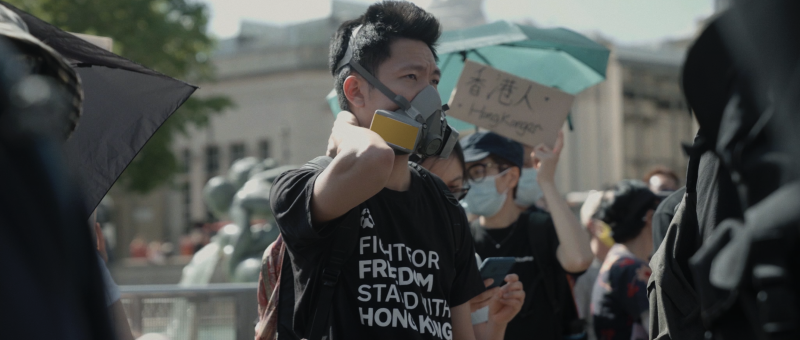
Following the crackdown on the protest movement, many Hong Kongers began to think about seeking freer futures abroad, but what was it that those who decided to leave found there? Crystal Wong’s documentary the Grass is Greener on the Other Side (野草不盡) follows a collection of Hong Kongers who moved to the UK and explores the emotional complexity of life in exile as they attempt to hang on to their cultural identity in a society largely ignorant of their struggle. 

Wong mainly follows two protagonists, one a graphic designer about to become a father and the other a young student still fearing repercussions from his role in the protests whose friend is currently awaiting trial in Hong Kong. Both are clear that they reject a “Chinese” identity and defiantly describe themselves as Hong Kongers. Yet in the UK they are repeatedly asked to fill in forms asking for their ethnicity which generally offer only the choice of “Chinese” or a nebulous “other”, each time they write in Hong Kong as an alternative answer. One of the reasons the expectant father chose to leave is that he didn’t want his child growing up speaking Mandarin (both men are also ironically greeted with “ni hao” before explaining that they speak Cantonese in Hong Kong) but others ask him if he won’t end up losing his language to English instead, a removals man bringing up the case of his Australian niece who now refuses to answer her grandparents in Cantonese even when she understands what they’re saying. He and his wife insist they won’t let that happen, but even in job interviews they seem more interested in his ability to speak Mandarin than his design skills.  

Before he left, he attended a housewarming party for another friend who decided to stay and was able to buy a home thanks to a motivated seller emigrating in a hurry. Everyone seems to be leaving, even a shop attendant guesses that the student she’s serving is probably leaving soon when he mentions that he’s not sure if his card’s topped up enough. Yet another of the older men had said that it’s mainly those of their age who are planning to go abroad, the student protestors are deciding to stay and fight some of them resentful that the previous generation is dropping the ball by abandoning ship. The student, however, has taken the opportunity to study abroad to protect himself from repercussions from participating in the protests in Hong Kong heading to the UK while his friend prepares to leave for Germany vowing only to return should a war break out. 

Yet the designer asks himself if he’s really satisfied while a friend of his who’s been in the UK for a while cautions that he may get bored moving to a town like his which he says is better suited to retirees. He struggles to secure employment and considers moving out of London to save money but describes leaving Hong Kong as akin to an acrimonious divorce. He’s offended when someone asks him what he misses because what he misses is a disappeared Hong Kong to which he can never return. Some of his friends had described Hong Kong as like Goose Town in the 2010 Mainland comedy Let the Bullets Fly, a place completely oppressed by a corrupt authority. “You need to whole heartedly hate a place to decide to leave it permanently” he explains. 

Both he and the student attend the central London protests attempting to raise awareness of Hong Kong’s plight while carrying on the fight even in exile. One encounters a man who asks him what the protest is about and if he really “hates” China while stating that it reminds him of the situation in Sri Lanka and expressing solidarity with his struggle. The student meanwhile makes his way towards Trafalgar Square where the protest merges with another one hosted by Nigerians protesting political oppression in Nigeria. He regrets that he won’t be able to return to Hong Kong in time for his friend’s trial (especially considering the quarantine procedures during the pandemic) while trying to get on with his studies. Each of them struggle with their decision, wondering if they’ve done the right thing and if they will ever return to a free Hong Kong while trying to hang on to their cultural identity as they forge new lives in an unfamiliar society.


The Grass is Greener on the Other Side screens in London 31st March as part of this year’s Hong Kong Film Festival UK.

Original trailer (Traditional Chinese / English subtitles)
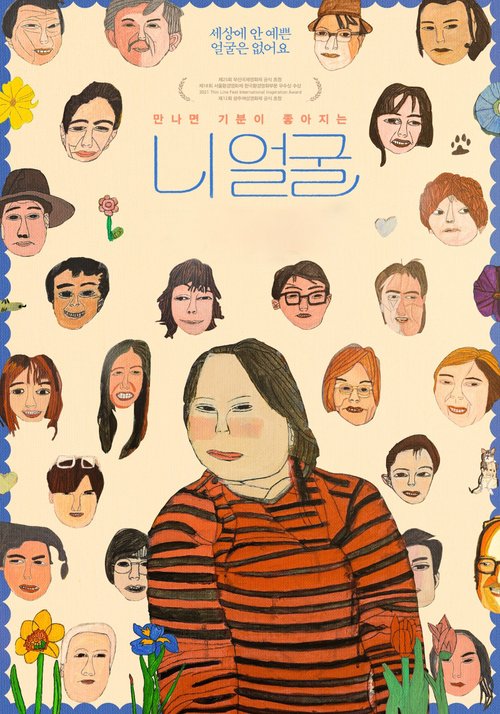
Please Make Me Look Pretty (니얼굴, Seo Dong-il, 2020)

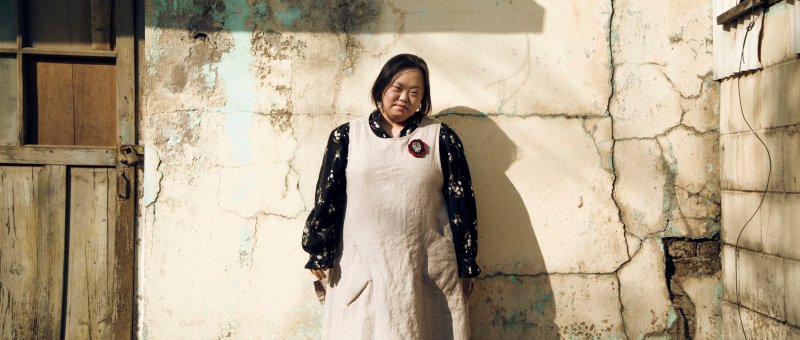
“We all have different ways of looking at the world” according to a customer to Jung Eun-hye’s caricature stand at a local market explaining that she’s told all her friends to come and check her out because she wants them to see the world from Eun-hye’s perspective. A short time later, however, the same woman seems to attempt taking advantage of her in pleading for a little more change back than she’s actually owed because she’s handed over her bus fare home. The exchange in some sense characterises Eun-hye’s existence in her persistent battle to show others the world the way she sees it, responding to her customers’ pleas to make them look pretty that they are pretty already, while often experiencing discrimination on the grounds of her disability,

Directed by Eun-hye’s stepfather documentary filmmaker Seo Dong-il, Please Make Me Look Pretty (니얼굴, Nieolgul), follows Eun-hye over a period of three years as she develops a career as an illustrator that eventually leads to a solo exhibition and a residency at a centre promoting the work of disabled artists. Eun-hye was born with down syndrome and at 27 had been unable to secure a job, left at home all day with nothing to do but knit. Helping out at her mother’s art school she developed a desire to draw herself and adopted an unconventional style that is all her own. Her mother says that if she attempted to teach her conventional art theory, Eun-hye simply nodded and then went back to drawing instinctively. Originally with her mother’s help, she began drawing carictures at a local crafts markets and soon gained a steady stream of customers. 

Though in the beginning some may have complained and even asked for their money back, people came to love Eun-hye’s unique vision in which as she says she draws what she sees. She is clear that they are “caricatures” and not “portraits”, though looking at her compositional style they bare a strong resemblance to traditional portrait paintings from the feudal era with a comparatively large empty space at the top and the subject looking directly ahead. Her mother occasionally offers advice, telling her she should have started higher up on the paper, or that she’s made one of the people too big in comparison to the other but Eun-hye draws things the way she sees them and quickly becomes irritated with her mother hovering over her until she concedes to let Eun-hye draw in peace.

It is however quite tiring, especially in the heat of summer or in the freezing cold, and it occasionally seems like it might be too much for her but Eun-hye resolves to soldier on and eventually runs the stall all on her own even if struggling a little when it comes to figuring out the right change and dealing with confusing customers. In her spare time she writes song lyrics in a notebook that poignantly describe her loneliness and feelings of isolation as a disabled person often locked out of mainstream society, but clearly enjoys interacting with the other vendors at the market and participating in its community atmosphere. After saving money from her work, she is able to host a solo exhibition and is also invited to illustrate a book on business etiquette aimed at the disabled community as well as taking up a residency at a centre dedicated to promoting the work of disabled artists. 

What’s most evident is how happy drawing seems to make Eun-hye, giving her both an outlet and means of expressing herself while expressing her love for others in drawing caricatures which truly make their subjects feel seen as if Eun-hye has captured how pretty they are on the inside as well as out. Since the documentary was completed, she’s also gone on to become an actress playing an artist with down syndrome in the popular TV drama Our Blues and continuing to raise awareness of the lives of disabled people in a society which can often be hostile and unaccommodating. In any case, she continues to draw the world as she sees it, a place where everyone is pretty and deserving of love even if they don’t always see her the same way.


Please Make Me Look Pretty streams in the US until March 31st as part of Asian Pop-Up Cinema Season 16.

Original trailer (English subtitles)

A Holy Family (神人之家, Elvis Lu, 2022)

“Do you think the gods ever helped our family? Or, should I say, do the gods exist?” asks documentary filmmaker Elvis Lu of his brother, a spiritual medium who stayed behind with their devoutly Taoist parents while Lu left for the city 20 years previously and never returned. Lu admits that he likely never would have come back had his mother not contacted him with an ominous message about sorting out her funeral plans, but while filming seems to come to a new accommodation with his familial relationships guilty that he stayed away so long no longer a resentful young man but one beginning to consider the encroachment of mortality.

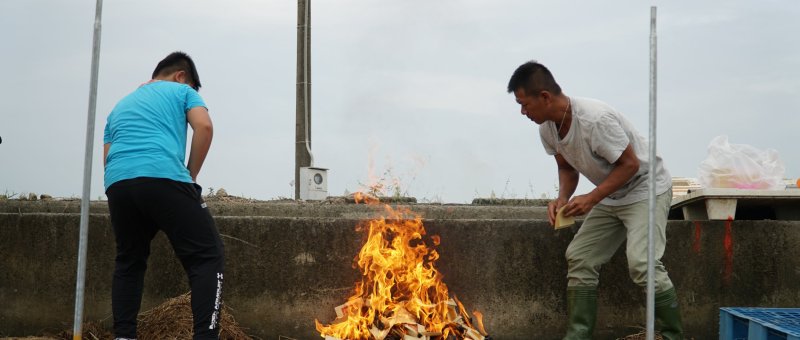
Lu’s mother confesses that she had pretended to herself that he didn’t exist, hurt that he rarely answered her calls and never visited home even as he points out that she never came to visit him him Taipei either. She feels she “achieved nothing as a parent” and is most regretful that she could not nurture Lu’s talent because she was forced to work long hours to support the family while also taking care of the household. In the opening conversation Lu had coldly answered the phone assuming his mother had called to ask for money, and the hollowness at the centre of the family is largely caused by Lu’s father’s longterm gambling problem which saw him fritter away most of the family’s property and savings leaving the couple financially dependent on their sons for support. Lu’s brother also feels a degree of resentment towards their near silent father, revealing that he does not want to do to his son what his father’s done to them in leaving them nothing but debt and disappointment. That’s one reason he’s always looking for new ways to support the family and has recently begun farming.

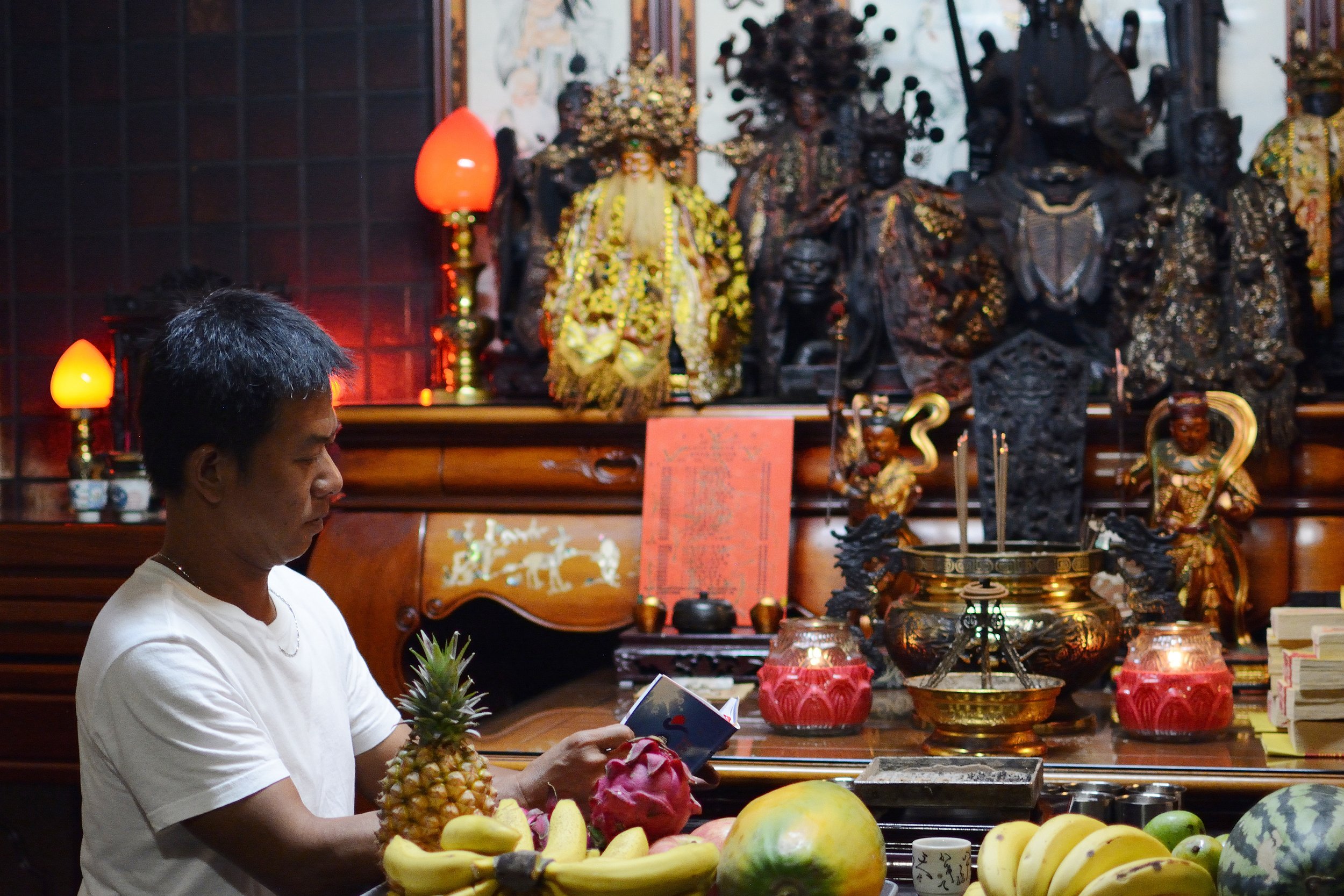
The obvious question when his tomato crop is destroyed by floods is why didn’t he ask the gods for guidance first, only it turns out that he did. As Lu points out, the family has endured long years of suffering despite their piety, if his brother is really so close to them why didn’t they help? It’s a question he obviously doesn’t have an answer for, nor does he have one when his son pleads with him to ask the gods for advice as to what to next with the ruined tomato field. His brother’s pained expression hints that he might have doubts despite being able to talk to the gods in his job as a spirit medium handing out advice on investments and other more Earthly worries for a small donation. The family’s upper floor is home to a large altar with several statues of the gods his mother describes as her only friends during the time that both her sons and husband were absent from the family home. Lu’s mother is tiny and now somewhat advanced in age. The stairs appear difficult for her, yet she climbs them every day to pay obsevance to the gods. 

After 20 years in the city all of this religiosity seems even more bizarre to the now adult Lu, but he also also captures ceremonies in the community in which people pray to the gods for health and prosperity suggesting that it’s not so odd after all and that the sense of community may be more important that the rituals themselves. Even so, it’s also true that this almost transactional view of spirituality feeds directly back in to his father’s gambling addiction in which he constantly looks for signs of lucky numbers to place bets or buy lottery tickets. After being diagnosed with glandular cancer and too ill to do much else, Lu’s father still picks up the phone to lay a sizeable bet even while his exasperated wife tries to control her resentment that if only he hadn’t lost his job he’d have had a pension, they’d have kept more of their property, and would all have happier, more comfortable lives. 

In any case, through adopting a more neutral position as a filmmaker Lu is able to better interrogate the realities of his family and his own relationship with it. As the documentary progresses, he sometimes appears on screen holding a large camera on a tripod while someone else films him from another angle. What began with frosty resentment slowly gives way to warmth and reconciliation even while underpinned by a melancholy practicality as Lu helps his parents choose pictures to use at their funeral underlining a sense of oncoming loss as Lu finally takes his mother to see the sea and gently tracks her as she walks along the shore, slowly moving away from him.


A Holy Family screens in London 24th March and in Edinburgh 25th March as part of this year’s Hong Kong Film Festival UK.

Original trailer (English subtitles)

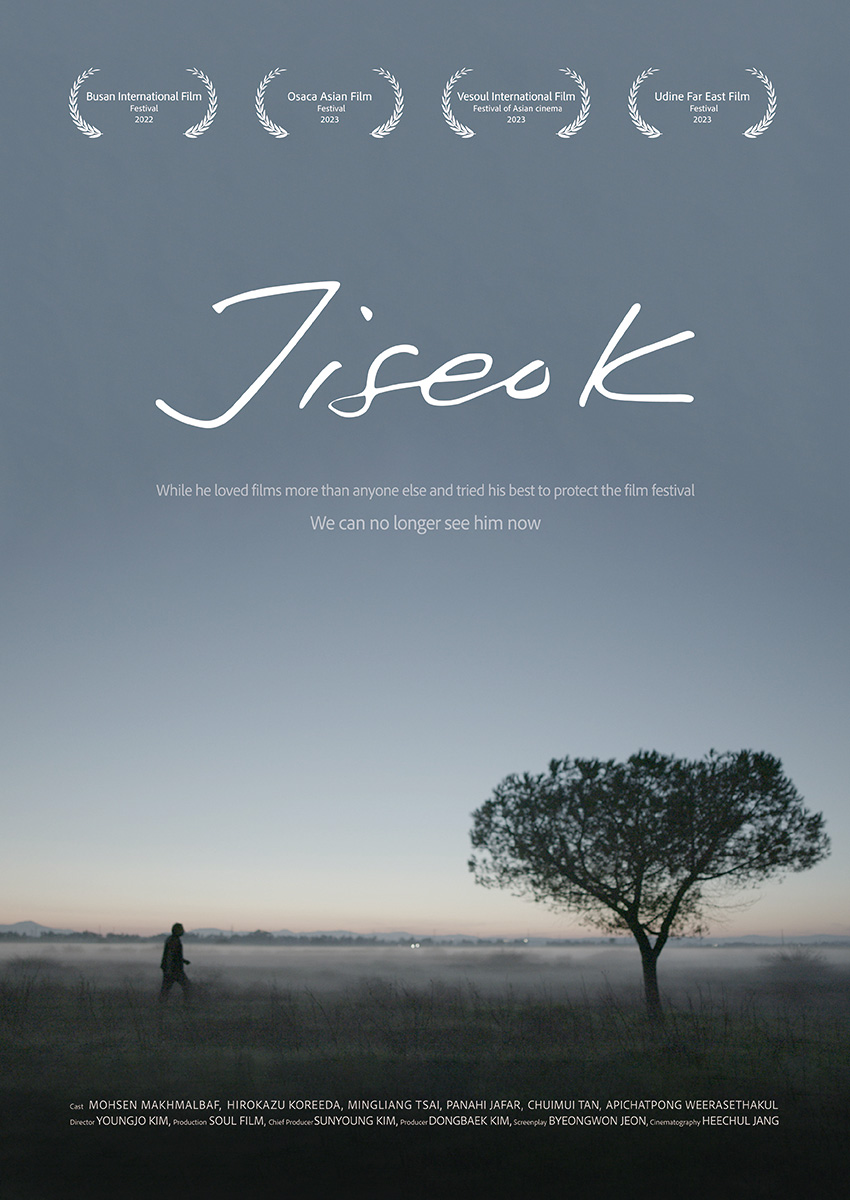
Jiseok (지석, Kim Young-jo, 2022)

When Kim Jiseok, co-founder and head programmer of the Busan International Film Festival, passed away suddenly at Cannes in 2017 of a heart attack at the young age of 57, it sent shockwaves through the cinema industry. Kim had been a key figure in the promotion of Asian cinema which he founded the festival to showcase, but had also become mired in controversy following the decision to go ahead with a screening of a documentary about the Sewol Ferry disaster that the municipal authorities had tried to pressure the festival to cancel because it reflected badly on the government. 

Kim Young-jo’s documentary Jiseok (지석) makes no secret of suggesting that the stress of dealing with the government’s attempts to overrule the festival’s autonomy was a direct cause of his death. In a poignant clip from a 2012 interview included close the documentary’s conclusion, Jiseok is asked why BIFF has managed to survive when so many other festivals have not and answers that there has always been such a tight bond between its team members which has not so far been strained by conflict or controversy and he doubts that it ever will be. 

But this is in fact thought what happened as the organisers split into factions with differing views as to how the festival should proceed after it was targeted by the government, some feeling they should cancel all together and others wanting to go ahead. Jiseok felt himself pressed into a corner caught between opposing forces and torn between loyalty to his old friends and the desire to preserve the film festival. Industry friends also privately recall that he was personally very affected by the Sewol Ferry Disaster in which a large number of school children were killed when the ferry they were travelling on as part of a school trip capsized due to mismanagement and lax safety procedures. 

Still, Jiseok was regarded by some as a traitor for continuing to work with the festival and taking over the duties of Lee Yong-kwan who had made the decision to go ahead with the screening but was forced to resign under government pressure and later accused of embezzlement after a government audit carried out in retaliation. In subsequent years, many Korean industry figures decided to boycott the festival entirely while a question mark hung over its autonomy and artistic freedom. Most of the interviewees are able to acknowledge that Jiseok found himself in a difficult position and do not necessarily hold his decision to continue working at BIFF against him but do suggest that it was the fragmentation of these relationships, some of which went back over 30 years, that caused him additional strain and damaged his health. 

What’s most clear is that Jiseok was very well loved and is much missed not only by his wife who also appears in the documentary but by the international industry at large. Some of the biggest names in East Asian cinema such as Hirokazu Koreeda, whom Jiseok had asked to become the dean of the Asian Film Academy, and Apichatpong Weerasethakul appear on camera offering their memories of Jiseok while it’s clear that he also enjoyed warm and close relationships with filmmakers at both ends of their career. Malaysian director and actress Tan Chui Mui (Barbarian Invasion) makes a particularly poignant statement recalling the bubbling frog bath toy Jiseok had gifted her infant son who will now only know his “Korean Uncle” only from photographs and her stories of him. Other South Eastern filmmakers also pay tribute to his warm support of underrepresented national cinemas and encouragement of new cinematic voices.

Kim’s documentary may in some ways find itself caught between competing visions on the one hand keen to examine the fallout from the tightening censorship regime of the Park Geun-hye era which eventually led to the blacklisting of artists who were critical of the regime including internationally renowned names such as Park Chan-wook and Bong Joon-ho, while on the other offering a simple memorial of the man himself in an act of catharsis for those who knew him with the consequence that little else of him is revealed aside from his warmth, cheerfulness, and affability along with his passionate love of film. In any case, many of the interviewees appear close to tears as they attempt to bid Jiseok goodbye, testament to good he left behind not just in terms of cinema but as a human being.


Jiseok screened as part of this year’s Osaka Asian Film Festival.

Original trailer (English subtitles)

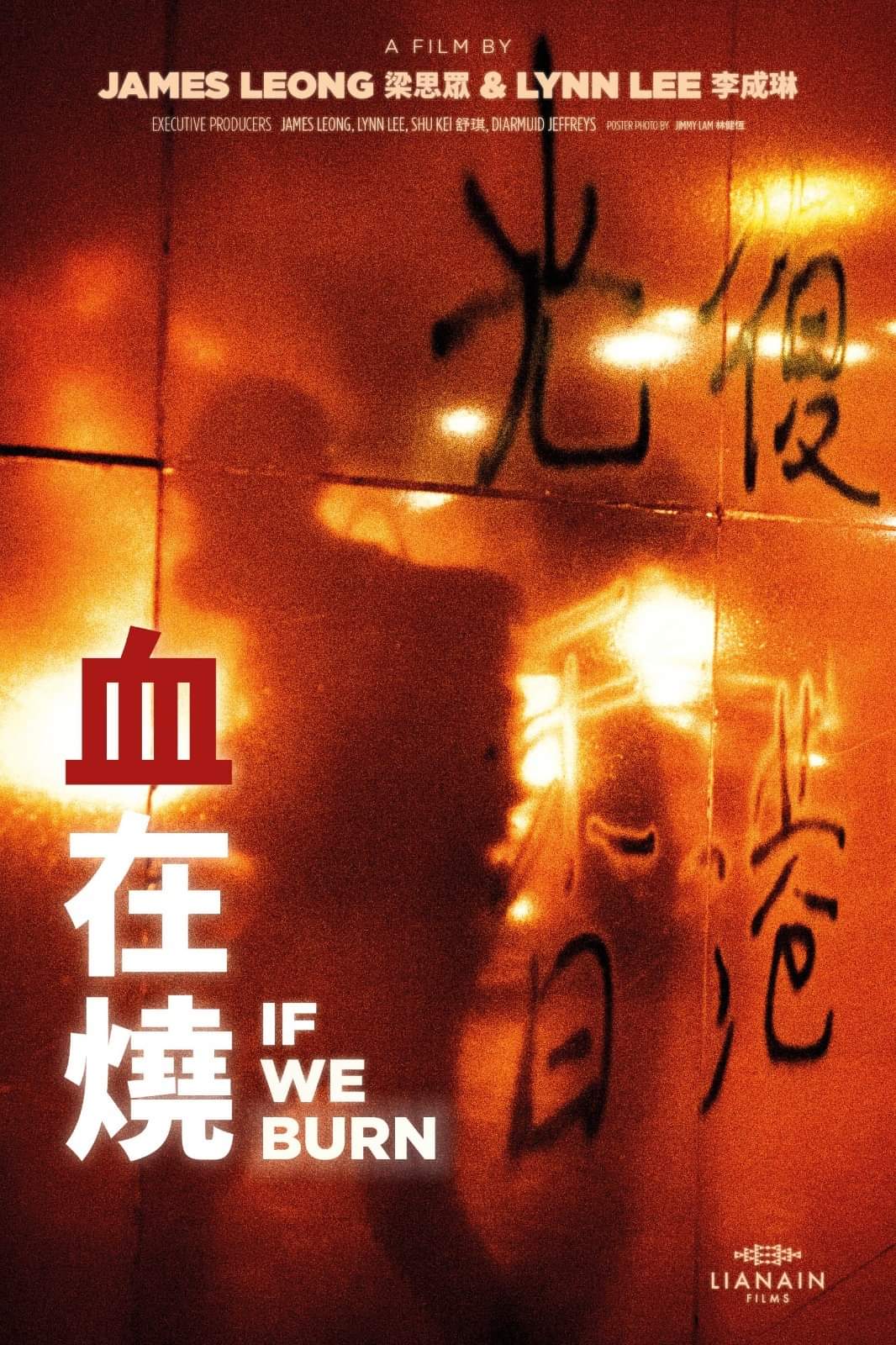
If We Burn (血在燒, James Leong & Lynn Lee, 2023)

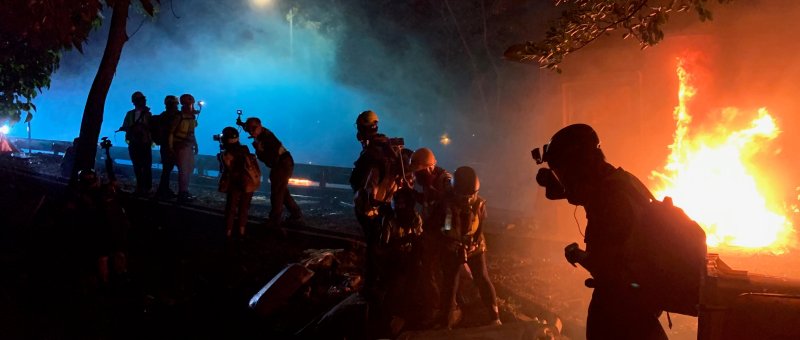
Clocking in at over four hours James Leong & Lynn Lee’s If We Burn (血在燒) provides the most comprehensive overview of the Anti-Extradition Law Amendment Bill Movement of any of the recent documentaries focussing on the events leading up to the passing of the Security Law in June 2020. Utilising professionally shot footage of the protests along with that captured by protestors via mobile phone, the film presents a tale of gradually escalating tensions provoked by increasing police violence and an expanding sense of hopeless desperation. 

Focussing largely on a series of climactic events such as the storming of the Legislature, the Yuen Long and Prince Edward Station attacks, and the sieges of the Chinese University and Hong Kong Polytechnic University, the film posits police brutality as a deliberate tactic that developed into state terrorism designed to intimidate society into submission. In the talking heads segments which occupy the first half of the film, the filmmakers interview a journalist who was present at the Yuen Long attack and was herself beaten by the mysterious vigilantes who raided the station. In this and the attack at the Prince Edward station which followed, it was clear that the target was not solely protestors but the people of Hong Kong who were simply attempting to catch a train in order to go about their ordinary business and became victims of, in the case of the Prince Edward MTR passengers, state violence in an unwarranted police intervention. As the journalist explains, given such a threat to their safety it is not surprising that many were radicalised and that some who had previously been committed to peaceful protest resolved to fight fire with fire. 

Some also regard the police action as a deliberate tactic, that in escalating violence the authorities attempt to provoke those protesting in order to justify even harder crackdowns. It’s also later revealed that police officers infiltrated the movement, dressing as protestors but suddenly attacking those around them giving rise to mistrust and paranoia. A lengthy sequence in which a mob at the airport protest catch a man they believe to be a Mainland police spy hints at the moral ambiguity of the protest movement as they argue with each other what to do with him while the man himself becomes a stand-in for the entirety of the violence inflicted so far. As tensions rise and duplicitous actions of the authorities increase, protestors begin to lose their sense of righteousness agreeing that there no longer is any line they will not cross to secure the freedom of Hong Kong. 

It’s clear that this period of instability has greatly affected the mental health particularly of younger protestors with many thrown into despondency and despair. During the university sieges, many state their intention to die and become martyrs while others talk of suicide and the toll the deaths of friends have already taken on them. During a rally in which older people offer thanks and support to the student protestors a young musician tearfully talks of how the the protest movement’s lack of success has exacerbated his depression and left him feeling hopeless with the only the solidarity of the people around him keeping him going. 

What had begun as a simple request to reject the Extradition Law Amendment Bill soon turns into a series of five demands and finally towards a desire for independence among the more hardline of the protestors who are now so mistrustful of Mainland authoritarianism that they can never consent to living under it. The documentary ends with alarm bells still ringing and a post-apocalyptic vision of battlefield destruction in the quad of the Polytechnic University peppered with small fires and piles of rubble while police drag protestors away from the scene. Talking heads who still appear in masks and goggles with disguised voices look back on the effects of the protests and the various ways they are changing Hong Kong while a piece of onscreen text coldly explains that the Security Law was passed and many have since been arrested or fled into exile. Still, as the alarm bells ring over the closing scene featuring the graffiti that gives the film its title, the documentary seems to suggest that all not yet lost while flame of resistance continues unextinguished.


If We Burn screens at London’s Genesis Cinema 18th March as the Opening Gala of this year’s Hong Kong Film Festival UK.

R 21 aka Restoring Solidarity (Mohanad Yaqubi, 2022)

The occupation had ended in 1952, but America’s influence on Japanese society continued in other ways not least among them defence. 1960 saw the biggest protest movement Japan has ever experienced against the renewal of the security treaty with the Americans that underpinned the pacifist constitution, though the treaty was eventually signed anyway in defiance of public opinion. Student protestors and radicals came to feel oppressed by American imperialism and objected to the hypocrisies of Japan’s role in America’s foreign in policy in Asia. For these reasons, those on the political left came to feel a solidarity with the Palestinian struggle against colonialism and began to travel to Palestine in order to learn and share support often filming what they’d observed for those back home. 

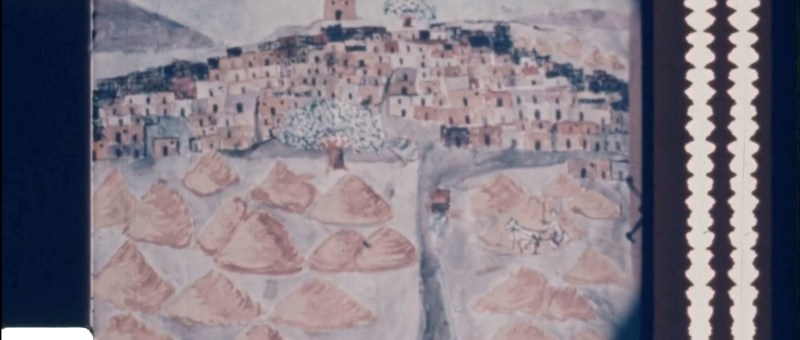
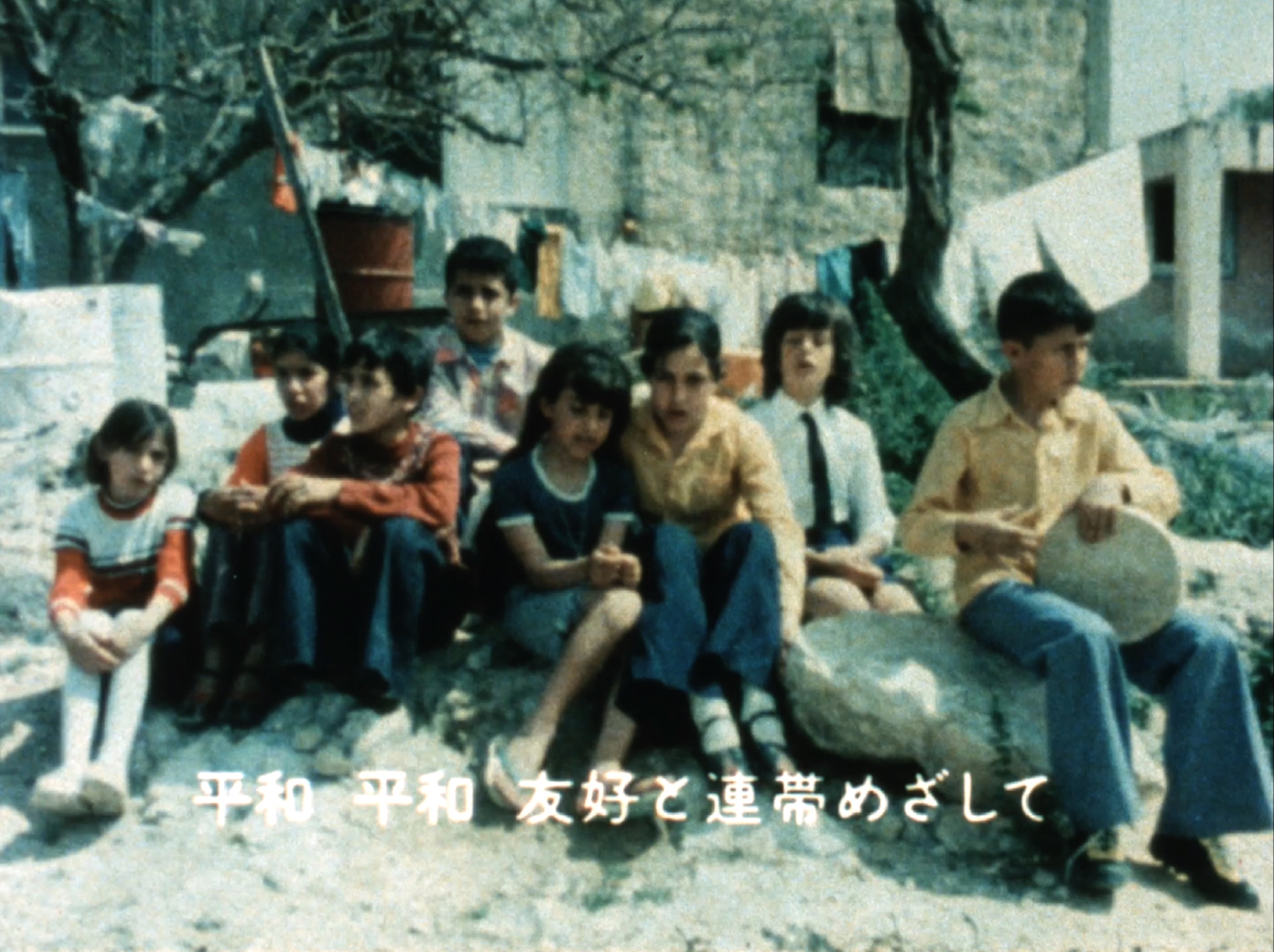
R 21: Restoring Solidarity is a collection of 20 such films kept safe in Japan and later handed to the director, Mohanad Yaqubi, after a screening of his previous film, Off Frame. Film number 21 is the film itself intended as a message of solidarity in the overarching contemporary voice over narration in Japanese. The films themselves are in several languages, many of them subtitled or dubbed for audiences in Japan, some shot by Japanese activists in Palestine and others produced by news organisations or other observers. A few feature upsetting footage of bodies and rubble, tanks on the streets, and shoes without owners while others record children singing cheerfully about peace or displaced students talking about their hopes of one day restoring their country.  

A lengthy sequence contains an interview with an old woman recounting how her village was slowly erased to a British reporter, a more obvious parallel with Japan occurring with the direct allusion to the devastation of the atom bomb in ruined landscapes now devoid of all human life existing only as the symbol of societal collapse. The old woman tells the reporter that they should leave the town the way it is as a reminder of the evils which have gone before. Yet also included in the archive is footage from a programme with a British voice over which seems to be much more propagandistic in tone, raising questions of the purpose and objectivity of the videos and the role they were intended to play. 

Perhaps the most interesting segment features a short film starring a collection of children who come across an abandoned missile launcher and start playing with it only to be confronted with the realities of conflict on coming across the body of another child. The children then appear in military uniforms, radicalised to avenge their friend by fighting for their country. The reels also include direct to camera statements and interviews from prominent people that may also in their own way contain a degree of artifice. Yaqubi frequently cuts in with images of the reels themselves or restoration process reminding us that what we’re seeing is a constructed image that’s being reconstructed before our eyes and quite literally repurposed but also “restored” and repaired as an archive of struggle. 

The voice over reminds us of the struggles still ongoing, the indifferent self-interest of global powers that led to the early ‘70s oil crisis which threatened to derail the Japanese economic miracle and itself fostered a desire for closer relationships with Middle Eastern nations. A reporter for a Japanese newspaper, however, states that he thinks most people in Japan would be broadly in favour of the Palestinian cause if superficially knowing little of it while political support can be fickle and lacking in depth. As the voice over suggests, video is and was a powerful way of keeping memories alive but also of expressing solidarity with an otherwise distant cause in the shared struggle against colonial oppression.


R 21 aka Restoring Solidarity screens March 18 at New York’s Museum of the Moving Image as part of this year’s First Look.

Huahua’s Dazzling World and its Myriad Temptations (花花世界, Daphne Xu, 2022)

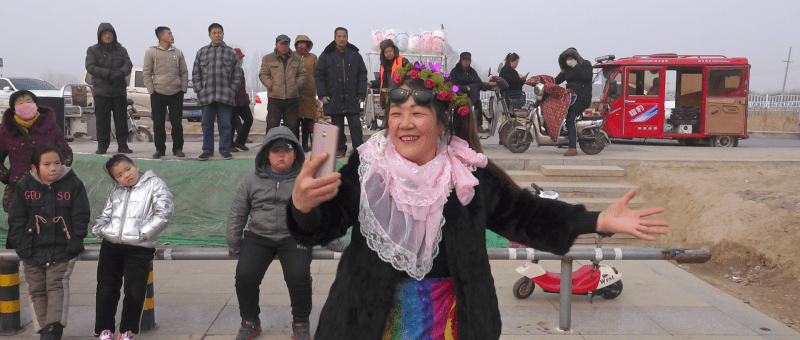
“If there were no live streaming platforms, I don’t think I’d know anyone” a middle-aged grandmother turned unexpected online star admits, laying bare the sense of isolation and impossibility she feels in her life in rural China. Daphne Xu’s largely observational documentary Huahua’s Dazzling World and its Myriad Temptations (花花世界, huāhuāshìjiè) follows Huahua as she goes about her ordinary days, Xu’s camera filming her as she films herself so, she claims, that those like her “won’t lose hope” gaining their own kind of courage in witnessing her optimism and positivity. 

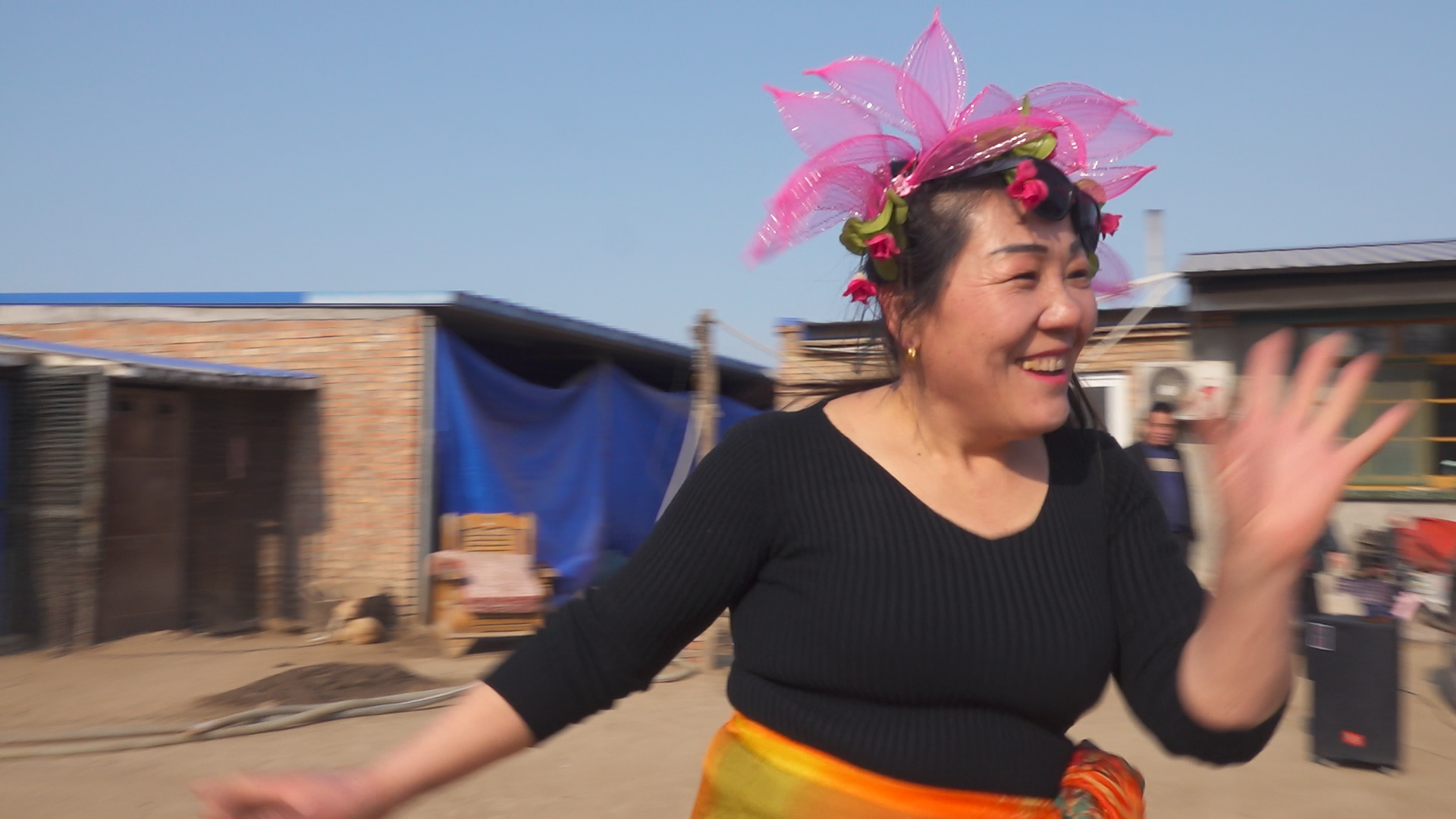
Huahua’s most popular activity is her furious dancing, often wearing a distinctive floral headband if adding a beauty filter to her videos as a means of altering her realities. Reality might not, however, be that far away. During one particular dancing video she suddenly stops and picks up a box of oranges currently on sale at her store and begins peddling them to her followers who often support her monetarily by sending hearts online. As Huahua admits, live streaming is a learning curve for a woman like her who is illiterate and was given little education. While driving home from a nearby commercial area, she emphasises the importance of early education for all children while suggesting that kids from the city learn faster not just because their schools are better resourced but simply because they interact with more people. Children in rural areas might go days without seeing anyone and only have regular contact with the same few family members and acquaintances limiting their ability to learn from each other which also in its way informs her appreciation for live streaming in the community it has given her access to which she might otherwise be denied. 

Meanwhile, she’s clear on the importance of education for women in particular explaining that she’s dedicated to supporting her daughter’s studies so that she will have a better future than she has had not least because she will be financially independent which means she will be at less risk of becoming trapped in an abusive relationship. Huahua’s relationship with her husband seems to that extent to be unhappy, Huahua complaining that she has to cook his meals after working all day while no one cooks for her. During a later live-streaming session, she characterises him as violent but says that she gives as good as she gets suggesting that this is the way she mediates the power differential in their relationship. Then again, she also uncomfortably remarks that women who are killed by violent partners or continue to suffer domestic abuse bring it on themselves by being too “weak” to fight back lending a darker shade to her messages of no-nonsense self-sufficiency in implying that her drive is largely fuelled by a desire to be free of male violence and subjugation. 

On her live streaming platform, she is very much in charge but also offers a fairly egalitarian sensibility in which each of her viewers is free to contribute as little or as much as they want whenever they choose without needing to think about hierarchy. China’s live streaming networks are also subject to a heavy degree of censorship, but Huahua declares herself unafraid to speak her mind and frequently uses profanity which might otherwise incur a ban given the prohibition against “vulgar” behaviour. Her followers seem to appreciate her frankness along with her willingness to offer advice and commentary on the things that might be bothering them.

It’s the idea of exchange which might in the end be the most valuable. Huahua’s videos are as much about sharing as they are showing off, allowing her to connect with others in the otherwise isolated environment of rural China. This sense of openness seems to have rubbed off on her daughter who dreams of studying languages and eventually becoming a diplomat channeling her mother’s “optimism” into an international career. She does though worry about the declining opportunities available in her community in which a new commercial development offers no promise of employment but in fact its reverse. “There won’t even be a place for you to buy jianbing” her teachers somewhat dismissively warn, speaking of an age when everything is automated. They even have robots to mix cocktails, what will the local people do to support themselves in the future? Like Huahua they may need to find alternative means not only to make money but to create new worlds in their own image free of geographical and social constraints.


Huahua’s Dazzling World and its Myriad Temptations screens March 18 at New York’s Museum of the Moving Image as part of this year’s First Look.

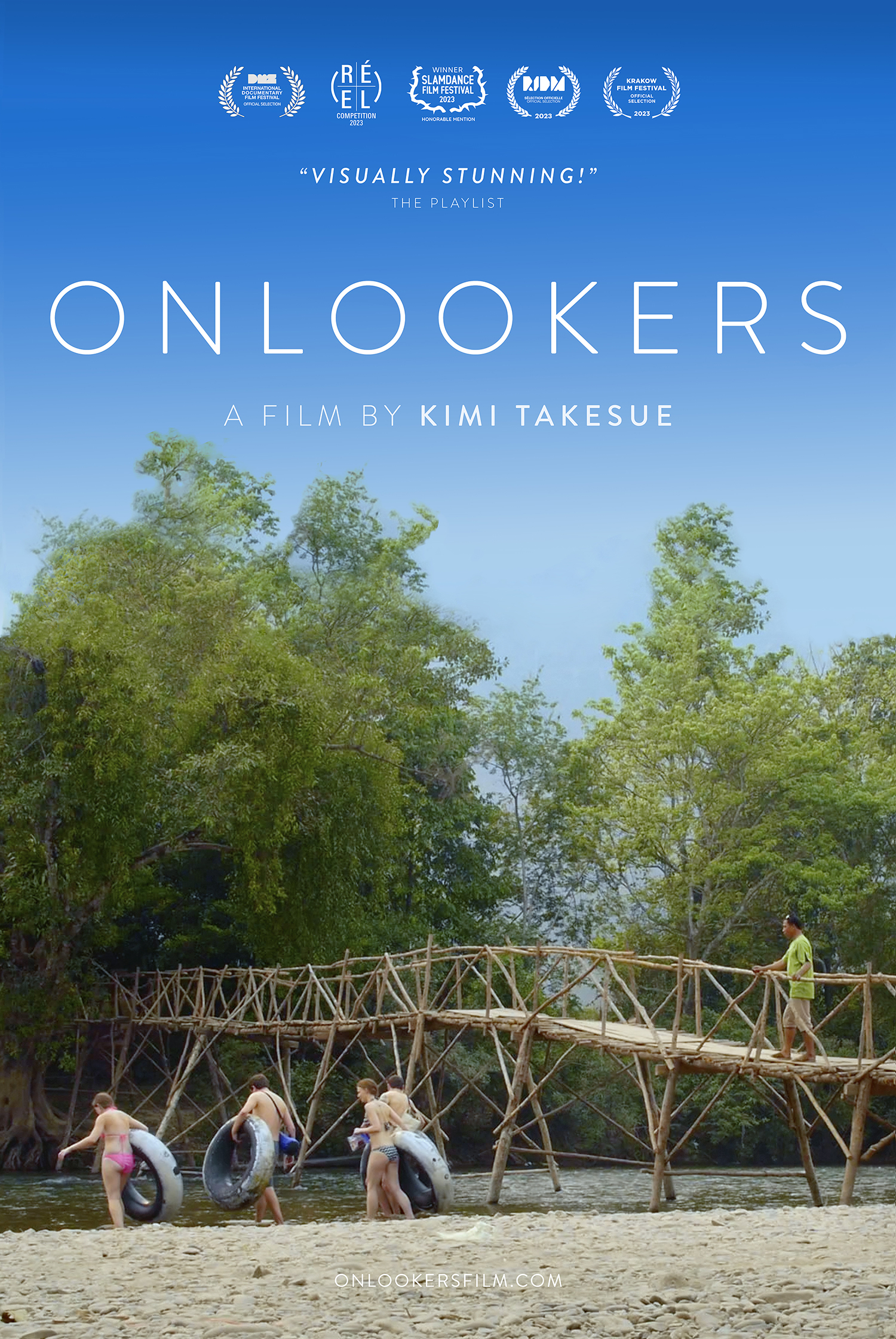
Onlookers (Kimi Takesue, 2023)

Onlookers is a strange word. It implies passivity, if also perhaps indifference, but nevertheless invites a question. Who exactly is looking at what or is the onlooker themselves also a spectacle of attention? The opening shots of Kimi Takesue’s Laotian documentary find a row of people waiting by the side of a road. A young man stares intently at his phone, as does an older woman two stools over, while an old lady’s eyes idly flicker as she watches the passing traffic. Another woman sits further away with a dog, facing an entirely different direction. 

Of course, we are also onlookers, watching the old lady as she watches if not exactly us then perhaps our ghost as manifested in the camera. In a sense the landscape is also onlooker, a passive presence often strangely forgotten by the tourists who pass through the frames throughout the rest of the film. In the early scenes, more local sightseers can be seen visiting temples and other landmarks, like others paying more attention to getting the perfect photographs rather than immersing themselves in the experience of actually being there. 

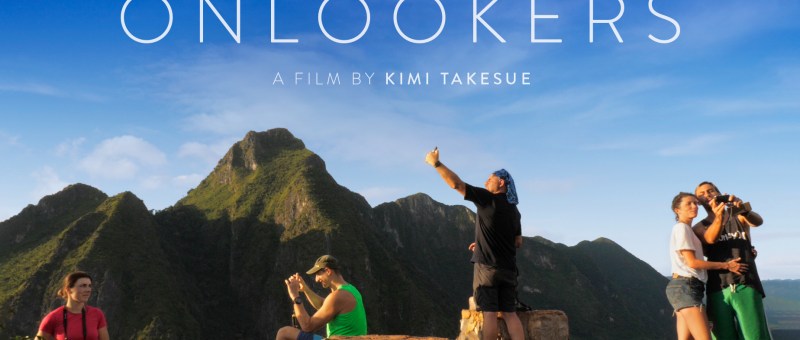
The temples seem to loom over them, onlookers too, passively observing their conduct which is not always respectful. “Don’t smoke weed here” a large sign pleads in English while large groups of tourists congregate at a swimming hole. In an elegantly composed shot of the mountains, most of the tourists are facing the wrong direction, quite literally bending over backwards to get the perfect selfie while otherwise oblivious to the beauty all around them. In a small waiting area near a shop offering tube swimming tours, the TV seems to be tuned in to ancient episodes of Friends while potential customers haggle with the driver leaving the young boy who accompanies him to wander out into the road. 

Even religious practice seems to have become a tourist attraction, gaggles of sightseers crowding round a small hut where monks ring bells, taking turns banging gongs themselves. Takesue contrasts these acts of accidental voyeurism with the local people simply trying to go about their business, a row of women again siting on the roadway though this time to offer alms to a seemingly endless parade of monks in a near eternal loop. Much of the local economy does seem to revolve around the tourist trade, the monk’s parade also attracting is share of onlookers, while a woman washes a dog in the street and others try to get on with selling their goods before Takesue abruptly switches to scenes of schoolchildren on scooters or filling plastic water bottles from the river. 

Then again, perhaps the real onlookers are the bemused cows fighting over tufts of grass as they wander onto temple grounds. The tourist trade may also be having a negative effect on the local environment, drowning out the sounds of the nature and disrupting the natural tranquility of the area while the tourists often appear indifferent to the world around them as if it were a mere playground and the people themselves little more than onlookers observing them from the outside. Occasionally Takesue cuts to scenes of nature without any people in them, bathing in the natural beauty of the landscape unsullied by human intervention as if to remind us of the various ways in which consumerism eats away at the world in which we live if also hinting at our own desire, as onlookers, to paint these scenes with a kind of pastoral innocence coupled with an otherwise uncomfortable exoticism. 

The film ends as it began, with another roadway only this time empty save for a dog who turns around to look towards the departed people before a second dog enters the frame and barks at the camera as he passes through as if to ask where everyone’s going or perhaps what they were doing here in the first place. A gentle meditation on the nature of “travel” and the disruptive qualities of “tourism”, Takesue’s elegantly lensed images seem to argue for a more active reflection on the world and our place within it rather than remaining a perpetual onlooker observing without thought or feeling.


Onlookers had its world premiere as part of Slamdance 2023.

Trailer

Kim Jong-boon of Wangshimni (왕십리 김종분, Kim Jin-yeol, 2021)

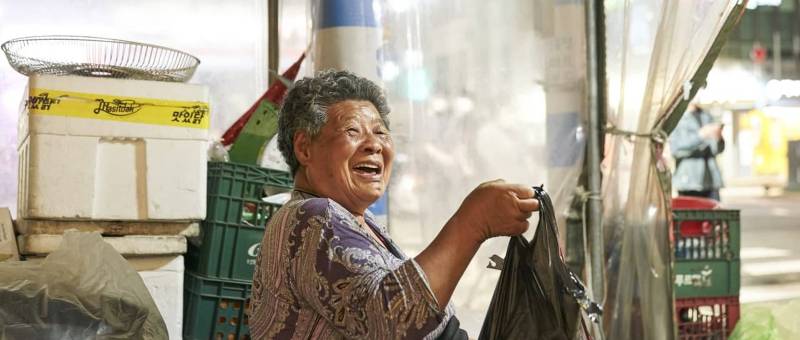
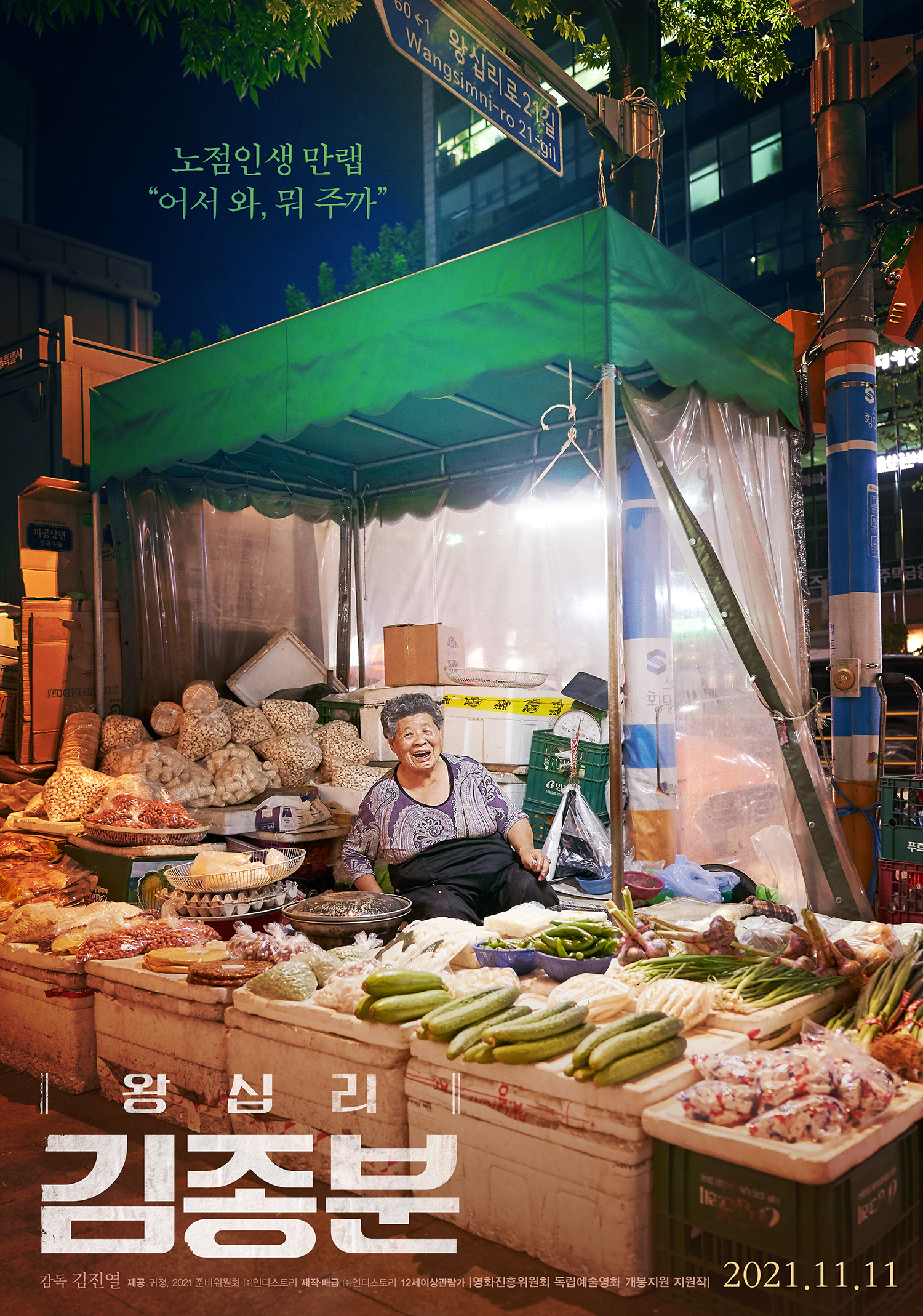
“I’m lucky” elderly market vendor Kim Jong-boon finally explains to director Kim Jin-yeol, having endured a long life filled with hardship and sadness but having learned to see the best in it in gaining experiences others might not have the opportunity to and thankful that her circumstances while certainly not luxurious are comfortable enough and her surviving children and their spouses are healthy and happy. Titled simply Kim Jong-boon of Wangshimni (왕십리 김종분, Wangshimni Kim Jong-boon), Kim’s documentary is testimony to the extraordinary stories of ordinary people and the heartwarming resilience of those who’ve known tragedy but have resolved to remain honest and kind to all those around them. 

Born in 1939 and now in her 80s, Jong-boon is still a regular fixture running a small night stall in the lower-class district of Wangshimni in Seoul where she has lived for the last 50 years. Wind and snow, she runs her business enjoying a gentle camaraderie with a group of fellow market sellers of around the same age with whom she often goes for dinner or plays cards in her small apartment where they also come together to make kimchi. Jong-boon isn’t forced to work into her 80s because of financial penury, but because she’s become a kind of symbol with people glad and reassured to see her stall where it always is. She lends money or extends a tab to those who need it whether she thinks they’ll pay her back or not. In the closing scenes a man arrives to return some money she’d lent him 30 years previously, he nervously arriving laden with pumpkins and quinces uncertain if she’d be alive but feeling relieved to finally unburden himself of this spiritual and literal debt. 

Part of this is as we later discover an extension of her private tragedy in having lost her daughter, the middle of three children, during the democracy protests of the early ‘90s. Though the climactic events of 1987 had led to the introduction of a democratic system, the left-wing, pro-democracy vote had been spilt by infighting which allowed the protege of former dictator Chun Doo-hwan, Roh Tae-woo, to become the first elected leader of a “democratic” Korea leading to an intensification of political protests led by the student movement. In university at the time, Jong-boon’s daughter Gwi-jung became involved in democratic and labour activism and was killed during a protest in which police kettled protestors with no provided exit route (as had previously been the norm) leading to a crush in which Gwi-jung was suffocated. Despite the depths of her grief, Jong-boon became a prominent figure in the movement in her daughter’s memory campaigning for justice and recognition along with others who had lost family members to police violence during the protest. Though over 30 years have now passed since Gwi-jung’s death, as many as 300 mourners still come to her annual memorial service which Jong-boon and her family cater themselves. 

Though she and her husband had actually voted for Roh, Jong-boon continues to support the causes her daughter had given her life fighting for in the hope of a better world while discovering a new community not only with the other bereaved relatives but in the students themselves many of whom continue to look in on Jong-boon and accompany her as she travels to universities around the country to give talks in Gwi-jung’s memory. Despite her grief and sorrow, we later see her collapsing in tears on visiting Gwi-jung’s grave in a small area dedicated to those who died in the protests, she’s also thankful for the new opportunities Gwi-jung has given her in travelling all around the country and meeting new people. One of the reasons she continues to run her stall is for the former student protesters, so they’ll always know where to find Kim Jong-boon of Wangshimni. Having endured crushing poverty in her youth, working several jobs from construction to domestic service and then running her stall at night, Jong-boon can declare herself happy to have lived so much experiencing things others might never get the chance to even if they’re things no-one really wants to experience like getting tricked out of a house or having all your money stolen by a credit union. A portrait of a truly extraordinary woman living an ostensibly very ordinary life, Kim’s quietly moving documentary is testament both to the hidden stories of those all around us and to the enduring resilience of a mother’s love.


Kim Jong-boon of Wangshimni screened as part of this year’s Udine Far East Film Festival.

Original trailer (no subtitles)

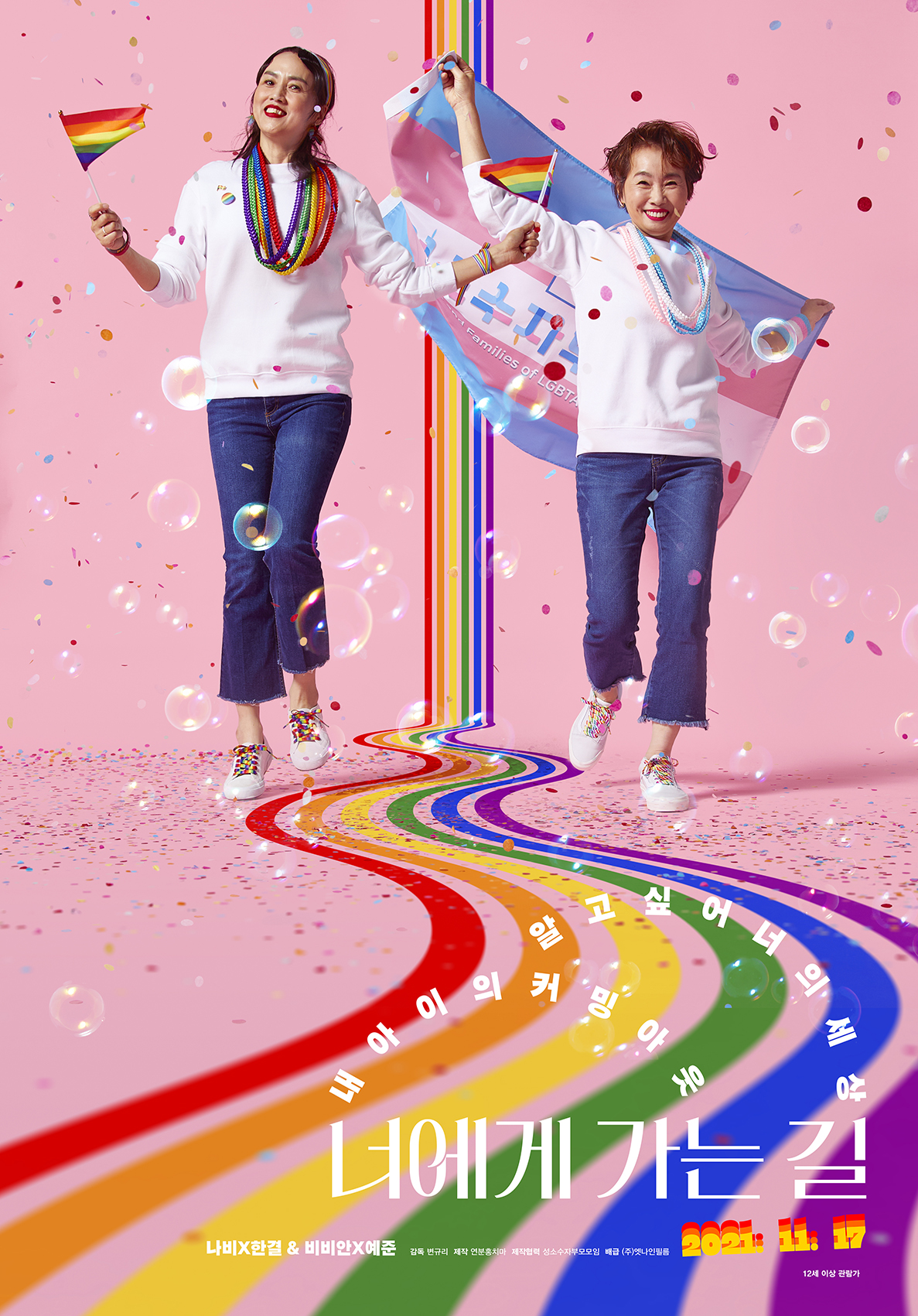
Coming to You (너에게 가는 길, Byun Gyu-ri, 2021)

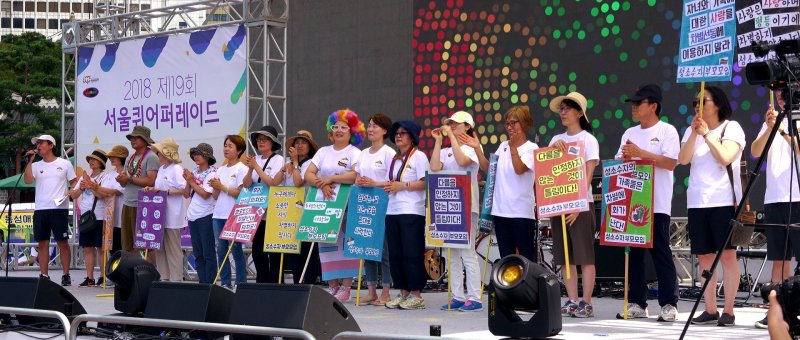
South Korea is one of the least progressive Asian nations when it comes to the rights of the LGBTQ+ community who often face social prejudice and outright hostility from the religious right. A counter protestor at a Pride rally in Byun Gyu-ri’s documentary Coming to You (너에게 가는 길, Neoege Ganeun Gil) loudly screams in the face of allies, claiming to love his nation which is why he’s bringing his kids up to be model Korean citizens while insisting, incorrectly, that homosexuality is “illegal” and the Pride goers all need to leave the country as soon as possible. 

The man is perhaps an extreme case, but it’s just this kind of aggressive hostility that led two mothers to fear for their children even as they struggled internally to accept their their coming out. Firefighter Nabi had no idea what to think when her only child Hangyeol told her that they hated their body so much it had led to them experiencing suicidal thoughts. Nabi simply thought it was a phase or else that it was born of the discrimination women face in society and told Hangyeol so directly which only added to their mounting depression and sense of impossibility. Air hostess Vivian meanwhile was stunned when her son Yejoon handed her a letter that began “I am a homosexual”. Though she was accustomed to meeting all kinds of people in her work, she couldn’t quite take in what her son had told her and was then fearful that his life would be difficult or lonely going so far as to apologise for having given birth to him. 

Both women have since become staunch defenders of their children’s right to happiness through their involvement with PFLAG, an organisation for parents of LGBTQ+ children yet they are still frustrated by their conservative nation and its slow progress towards equality. Hangyeol’s chief problem is that they are unable to find steady employment because of the mismatch between their identity documents and gender presentation. On trying to get their gender changed from female, which they were assigned at birth, to male, they face several hurdles including an arcane regulation that insists that even as adults those wishing to legally change their gender must have the permission of both parents (the law was abandoned only in 2019). This is obviously difficult for many transgender people who may have become estranged from their families or otherwise not wish to contact them, leaving aside the absurdity of needing to ask for permission for anything at all when over the age of majority. Meanwhile, Hangyeol also struggles because of the narrow criteria which insist that an applicant should have the matching genitalia for the gender they have requested be recognised on the form which is something they are not currently interested in pursuing. Another judge at the district level is however much more sympathetic and does not make the same demand, simply telling Hangyeol that along with their mother’s testimony all the evidence submitted makes it “obvious” that they are male, telling them to go out and live with pride while apologising for their “intolerant” nation.

Vivian’s son Yejoon meanwhile decided to escape the hostile environment in Korea to study abroad in Canada where he hoped he could live openly as a gay man but has discovered that though this is largely true he still feels somewhat out of place as a Korean living in a foreign culture. Vivian admits that she hoped he would stay in Canada though it meant him being apart from her because his life would be much easier there, though Yejoon eventually makes the decision to move home after falling in love with the friend of a friend he met on his last trip back. One of Vivian’s chief worries had been that Yejoon would be lonely. While thankful that he has found someone with whom he can share his life, she realises that being married isn’t the be all and end all yet continues to campaign for the legalisation of same sex marriage so her son can have the same legal rights as anyone else. Yejoon’s boyfriend Seongjun only recently came out to his mother who is obviously on a bit of a learning curve but quickly comes to accept the boys’ relationship and even attends a PFLAG meeting that gives her even more confidence in her decision. 

Still, it’s clear that there is still a lot of prejudice to be overcome. Nabi is at one point hit in the face by an angry protestor at Pride while the police do nothing, and is intensely worried about her child’s wellbeing especially after seeing a report on the news about radical feminists hounding a transgender student out of an all female university. Yejoon and Seongjung have decided that they don’t necessarily want to be flag wavers but are determined to live happily with the support of both their families in spite of whatever social prejudice they may face. As for Vivian and Nabi, they are committed to fighting for their children’s rights, but also breaking with tradition in abandoning the hierarchal nature of the traditional family to stand shoulder to shoulder with them as they do their best to push for social change in an all too conservative nation. 


Coming to You screened as part of this year’s London Korean Film Festival.

Original trailer (no subtitles)