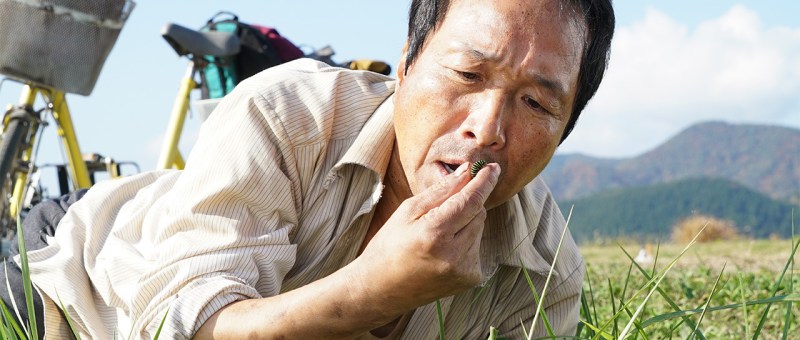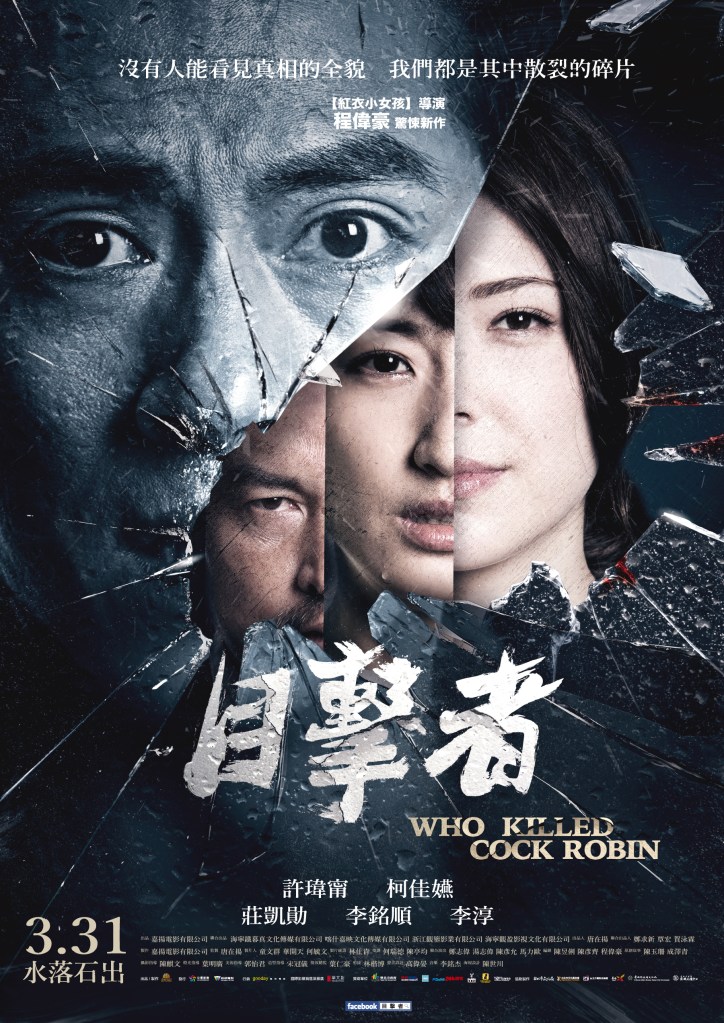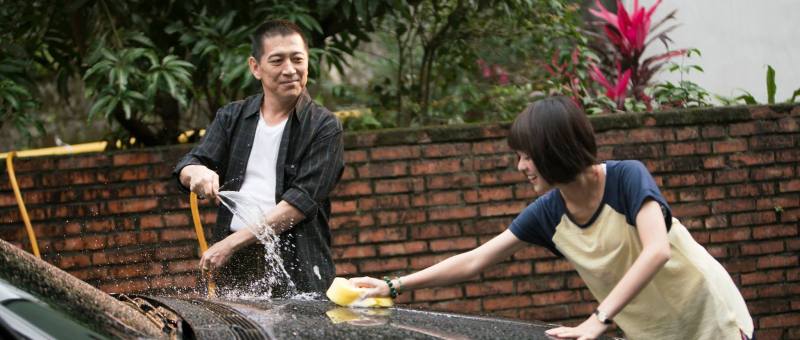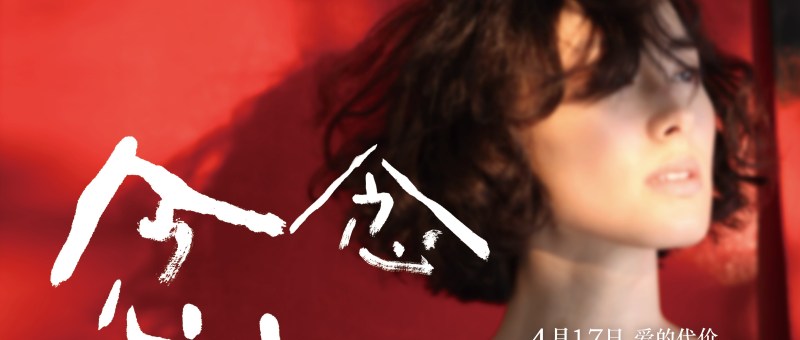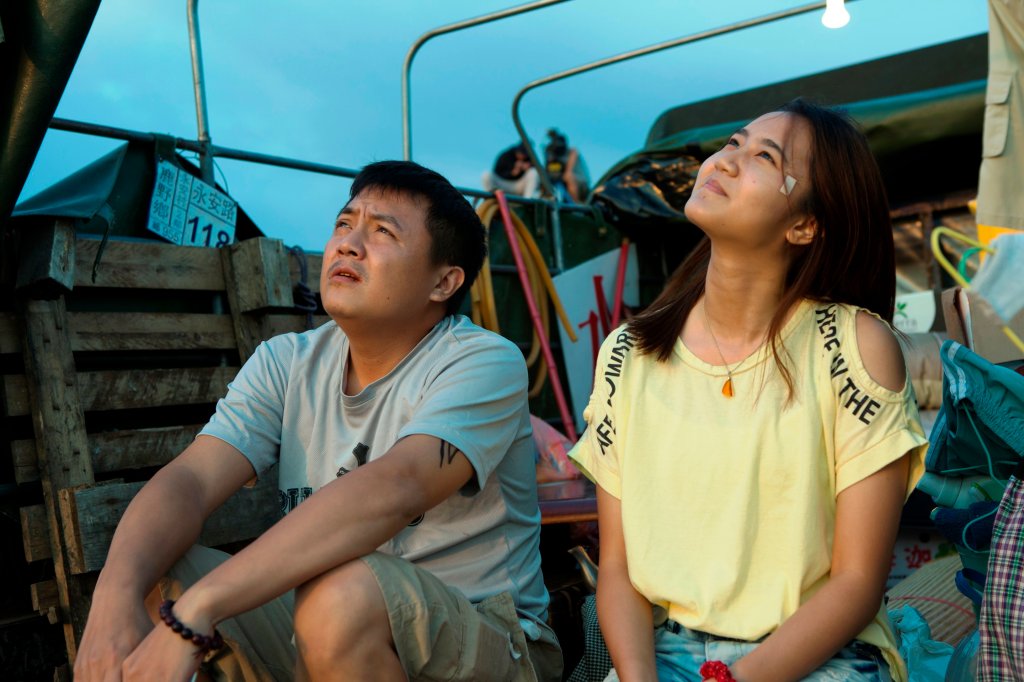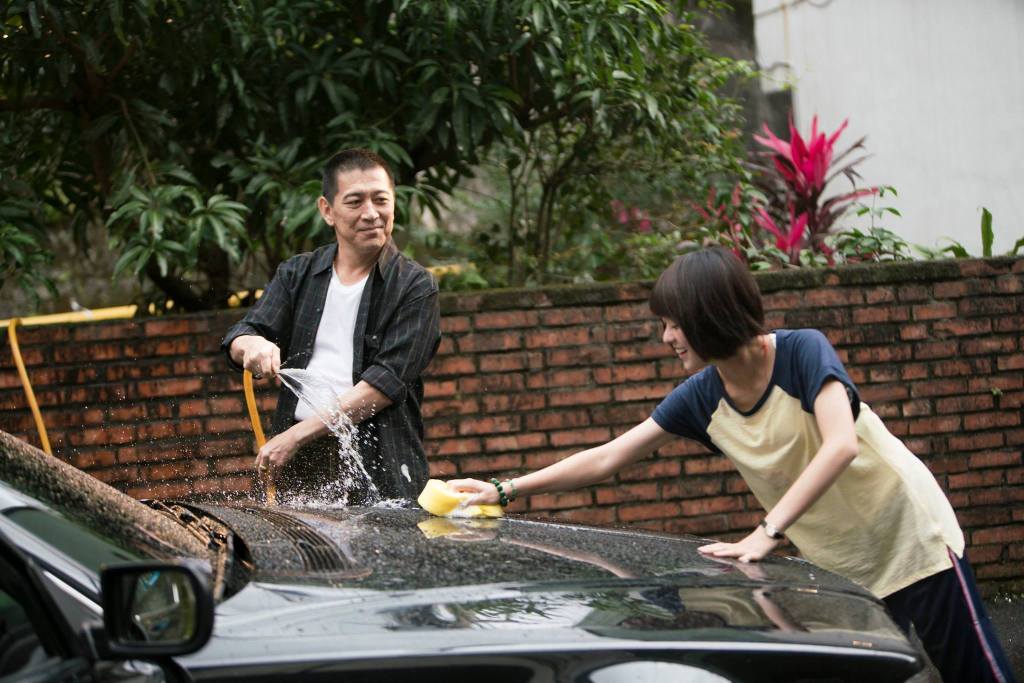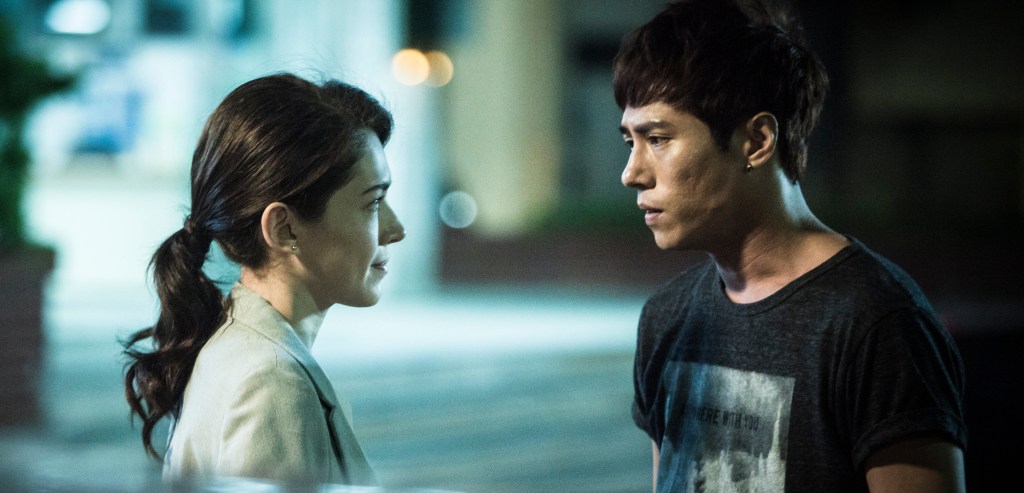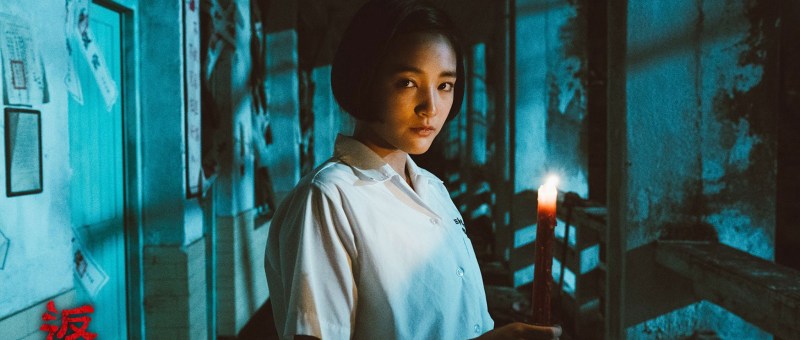

Who Killed Cock Robin (目擊者, Cheng Wei-Hao, 2017)

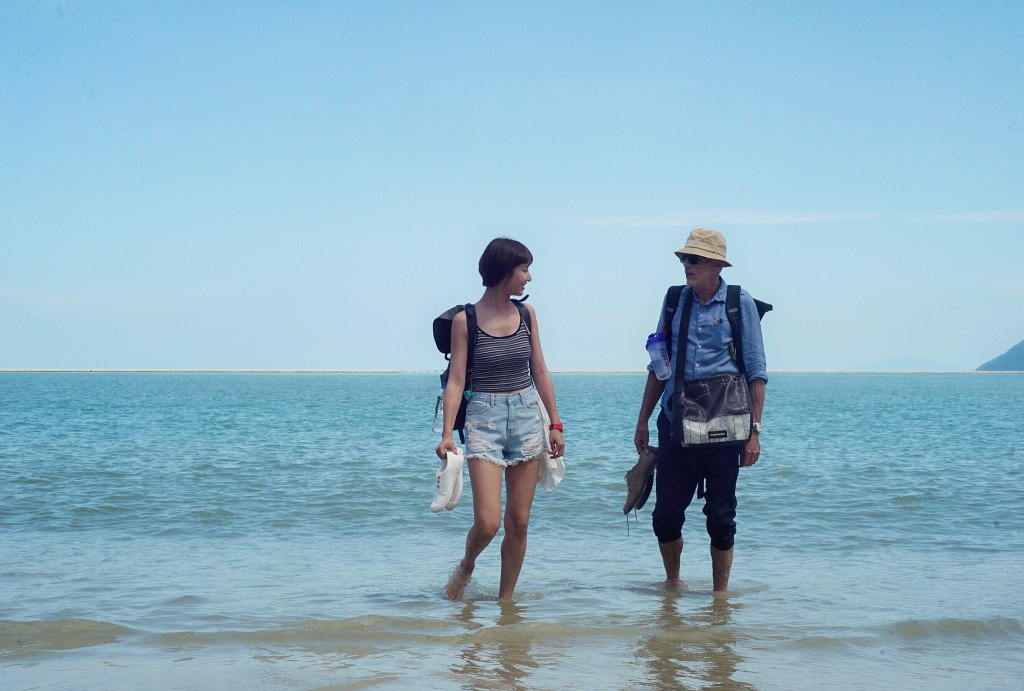
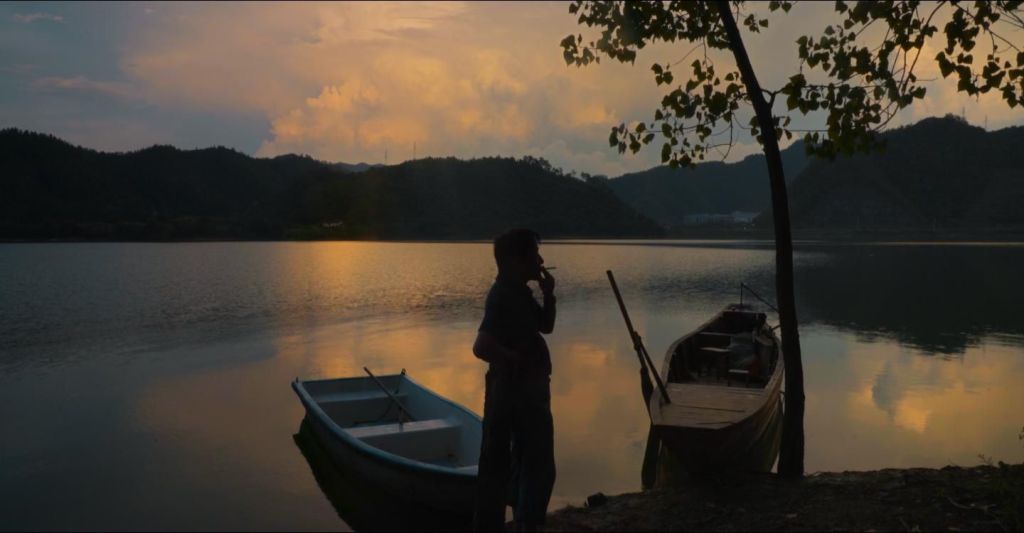
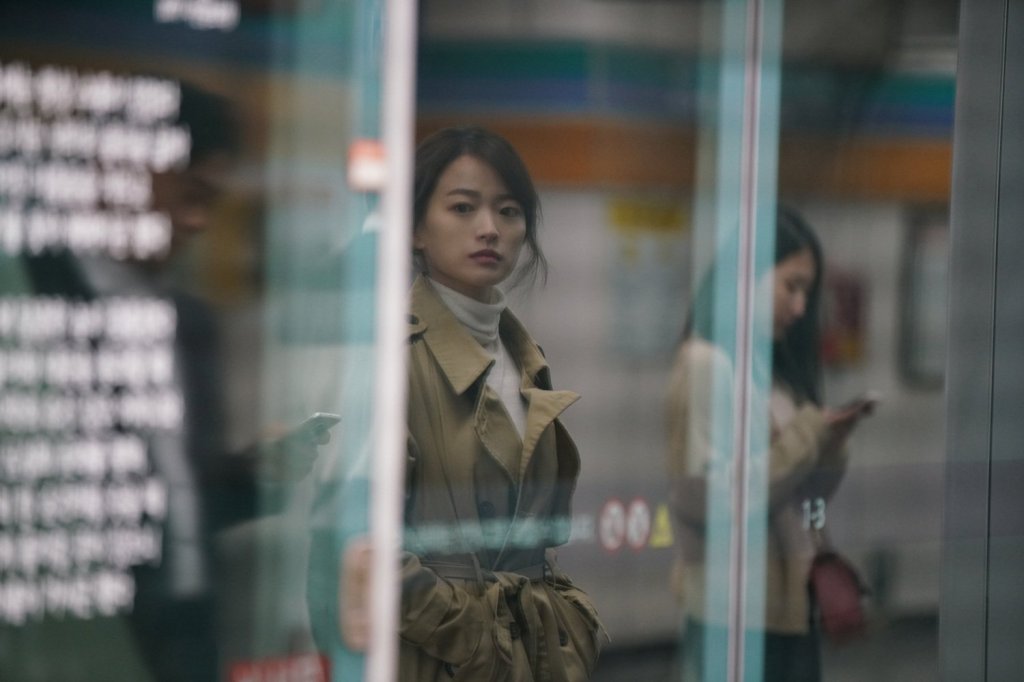
“Everything in this world has already been decided, no one is free” according to a jaded, psychopathic killer in Tag Along director’s Cheng Wei-Hao fatalistic neo-noir, Who Killed Cock Robin (目擊者, Mùjīzhě) . As the English title implies, each has their part to play when it comes to the orchestration of death, but the peculiar confluence of circumstances sees the central “witness” corrupted by his decision to alter his position, becoming part of the story in a way a journalist never should.

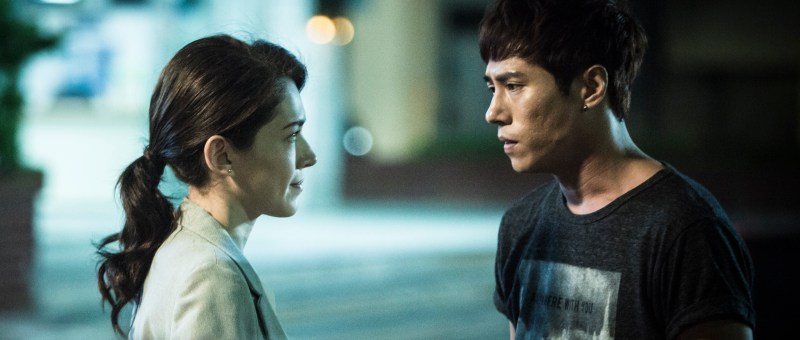
At 30-ish, Chi (Kaiser Chuang Kai-hsun) is a jaded paparazzo tuning in to the police scanners for the latest scoop on potentially scandalous crime. He thinks he’s hit the jackpot in pulling off the road and discovering a local politician in a car wreck with a beautiful young woman he later realises is a top glamour model, but his insistence on pushing the story without proper background checks comes back to haunt him when the politician comes out with documents proving he married the model in secret some months earlier and signals his intention to sue. All of a sudden, Chi’s bright future is slipping away from him. His mentor retires, and he’s abruptly made redundant, effectively fired for the problematic politician scoop. It’s at that point he starts looking back at photos he took of another car crash nine years earlier when he was still a rookie and realises his boss may have deleted some behind his back. 

As his mentor, Chiu (Christopher Lee Meng Soon), eventually tells him, Chi isn’t the sort of man who’d fight for justice for someone he didn’t even know. He’s in this for petty revenge in hoping to expose some kind of scandal involving the boss who got him fired. He’s also, however, meditating on the earnest young man he once was and the jaded hack he’s since become. As an intern he wanted to do hard journalism and make a difference, but after falling in with Chiu he became corrupted by urbanity, seduced by the fancy suits, celebrity contacts, and stylish parties. He does his business by forming “relationships” with useful people such as law enforcement officers though homosocial bonding, i.e. drinking and women. 

Chiu also, perhaps ironically, thanks his wife for helping him make the “relationships” which have enabled his successful life. These complex networks of interwoven corruption are what keeps the city running, but they’re also a web that can be unravelled to reveal the dirty secrets at its centre. Chi seems to know that fate is coming for him. “Things that happened to you come round in circles” he drunkenly laments on learning not only that the used car he was duped into buyng is an illegally remodelled vehicle but also that the chassis belongs to the one from the accident he witnessed all those years ago. Car accidents plague him, as if implying his life is one long car crash bracing for the impact. 

Yet, as Chiu cautions him, he only has a part of the truth. He is lied to and misled, left to reply on the reporter’s instinct he has long since allowed to become rusty. His investigation places others in danger, not least a young woman who was beginning to think she’d escaped the accident’s wake and built a nice life for herself free of past transgression. But Chi still has to make a choice, try to expose this world of infinite corruption for what it is while accepting his own complicity within it, or decide to unsee what he worked so hard to uncover and go back to being the hack reporter dependent on that same web of corruption whose entanglement he was so keen to escape. 

“I just want to know the truth” Chi claims, as a good reporter should, but his subjects ask him “what’s the point?”, “everyone wants to know the truth, but once you know then what?”.  It’s a good question, and one perhaps that Chi doesn’t know the answer to, reducing his dilemma to a sheepish grin and a cynical joke. “I prefer to remember happier things”, he admits. An infinitely compromised figure, Chi finds himself on dark and fatalistic path towards discovering, at least, his own truth. “I believe in myself” he later tells an equally corrupted colleague but something tells us we perhaps should not. 


Who Killed Cock Robin streams online for free in the US as part of Asian Pop-Up Cinema’s Mini-Focus: Taiwan Cinema Online on June 11.

International trailer (English subtitles)

The Gangster’s Daughter (林北小舞, Chen Mei-Juin, 2017)

Do little fish always get eaten by bigger ones, or can they manage to swim free into kinder waters? As the title perhaps suggests, The Gangster’s Daughter (林北小舞, lín běi xiǎowǔ) finds its young heroine battling parental mystery, stepping into her father’s world of crime and dubious morality while he grows ever more disillusioned with his duplicitous lifestyle and the price he has clearly been paying to survive it. Yet they are both in many ways victims of the corruptions of the society in which they live in which others play the system in less overt ways but to the same ends in order to manipulate individual privilege. 

Now a teenager, Shaowu’s (Ally Chiu) parents split up when she was little and she and her mother returned to live with her grandmother in Kinmen, an idyllic island village. Shaowu has no real memories of her father, Keigo (Jack Kao), a Taipei gangster and her grandmother is reluctant to enlighten her. The first time she sees him in many years is at her mother’s funeral at which he makes a notable appearance, an obvious “gangster” in dark sunglasses and sharp suit, backed by a dozen henchmen that, it later transpires, have been hired for the day by his overenthusiastic minions who thought he needed to look “good” while paying his respects to the mother of his child. 

For herself, Shaowu is a rebellious teen who hangs out in a makeshift den where she keeps the various souvenirs she finds of a more violent time in scouring the corn fields for landmines. A pair of horrible boys appear to be bullying her as an orphan with an atypical family background, but Shaowu is unfazed until a nasty prank backfires and harms her only friend. In revenge, she dumps a pail of cow dung over the ringleader while he’s eating his lunch right in the middle of the classroom which would be funny if it weren’t that his dad’s a bigwig with political clout. Reluctant as she is, grandma calls Keigo to help her negotiate with the school, but it ends with a “recommendation” that it might be better Shaowu continue her education in the capital. 

Which is all to say, that father and daughter have quite a lot in common. Shaowu becomes fascinated with the gangster life, acting out scenes from movies with an umbrella only to be stunned when she tries the same thing after finding one of Keigo’s guns and it turns out to be loaded. She finds herself sucked into his homosocial gangster world, dining with big boss Ting who remembers her from when she was a baby and has just returned from an extended stay in Thailand, and making friends with the daughter of another gangster, while Keigo ponders new routes forward as a responsible father trying to protect his daughter from the dangers of the circles in which he moves. 

Twin crises arrive when his underling Dreamer gets into a fight a powerful corrupt cop, Chang, while Boss Ting edges towards moving the gang into drugs which is something Keigo, a noble gangster, cannot condone especially after he finds some stuffed into a cigarette packet one of Shaowu’s new friends asked her to look after. He tries do his best as a modern dad, patiently reminding himself that his daughter’s not a little girl and refraining from laying down the law, but is frustrated by her fascination for everything he regards as a fall from grace in his life as a petty gangster. He wants to get out and dreams of opening a restaurant with his girlfriend but discovers that the gangster world may not be done with him yet. 

Father and daughter are, it seems, divided by an increasingly corrupted society where bent cops like Chang are no better than gangsters themselves while snotty kids know they can do as like they because they have powerful fathers and will never be expected to take responsibility for their actions. Little fish like Keigo don’t stand any kind of chance especially when they insist on swimming against the tide in adhering to the same kind of romanticised ideas of gangsterdom that Shaowu idolises from movies hopped up on jianghu idealism. Taipei or Kinmen, it doesn’t really matter. You’ll still find yourself squatting in the tall grass while others plot against you in the open. In her first narrative feature documentarian Chen Mei-Juin delights in capturing local character from the faded grandeur of traditional island life to the sleazy, neon-lit underbelly of the modern capital but never shies away from the ugliness which underpins it all and disrupts even the most essential of bonds.


The Gangster’s Daughter streams online for free in the US as part of Asian Pop-Up Cinema’s Mini-Focus: Taiwan Cinema Online on June 10.

Original trailer (English subtitles)
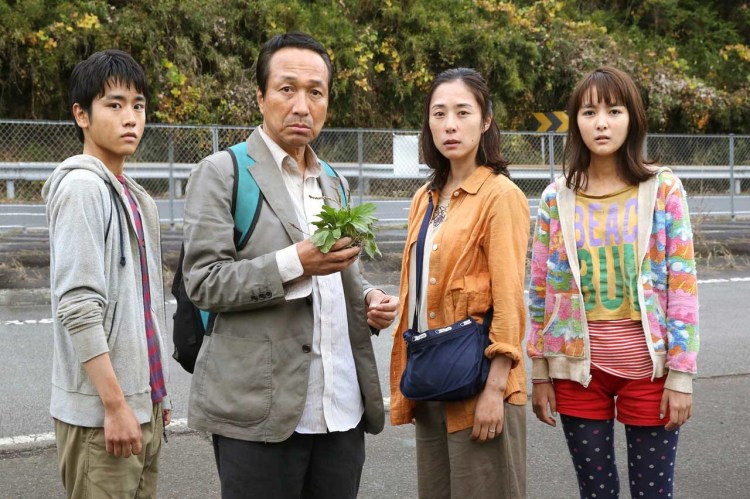
Murmur of the Hearts (念念, Sylvia Chang, 2015)

A legacy of abandonment frustrates the futures of three orphaned adults in Sylvia Chang’s moving drama, Murmur of the Hearts (念念, Niàn Niàn). Marooned in their own small pools, they yearn for the freedom of oceans but find themselves unable to let go of past hurt to move into a more settled adulthood, eventually discovering that there is no peace without understanding or forgiveness and no path to freedom without learning to let go of the shore. 

The heroine, Mei (Isabella Leong), is an artist living in Taipei and apparently still consumed with rage and resentment towards her late mother. She is in a troubled relationship with a down on his luck boxer, Hsiang (Joseph Chang Hsiao-chuan), who has abandonment issues of his own that are compounded by toxic masculinity which leaves him feeling inadequate in failing to live up to the expectations of his long absent father. Mei’s long lost brother, Nan (Lawrence Ko), meanwhile is now a melancholy bachelor in his 30s who, unlike all the other young men, never swam far from home, working for a tourist information company on Green Island which, though once notorious as a penal colony housing political prisoners during the White Terror has now become a tourist hotspot thanks to its picturesque scenery. 

Like one whole cleaved in two youthful separation weighs heavily on each of the siblings who cannot but help feel the absence of the other. Their mother, Jen (Angelica Lee Sinje), trapped in the oppressive island society, was fond of telling them stories about a mermaid who escaped her palace home by swimming towards the light and the freedom of the ocean. She tells the children to be the “angels” rescuing the little fish trapped in rock pools by sending them “home” to the sea, and, it seems, eventually escaped herself taking Mei with her but leaving Nan behind. Neither sibling has been ever been able to fully forgive her, not Mei who lost both her family and her home in the city, or Nan who stayed behind with his authoritarian father wondering if his mother didn’t take him him because she loved his sister more. 

Mei, meanwhile feels rejected by her father after overhearing him on the phone saying he wanted nothing to do with either of them ever again. Idyllic as it is, the island wears its penal history heavily as a permanent symbol of the authoritarian past which is perhaps both why Mei has never returned, and why Nan has remained afraid to leave. Unable to make peace with the past they cannot move forward. Mei’s life has reached a crisis point in the advent of maternity. She is pregnant with Hsiang’s child but conflicted about motherhood in her unresolved resentment towards her mother while insecure in her relationship with the emotionally stunted Hsiang who, likewise, is terrified of the idea of fatherhood because of his filial insecurity. 

Only by facing the past can they begin to let it go. Chang shifts into the register of magical realism as a mysterious barman arrives to offer advice to each of the siblings, Nan indulging in an uncharacteristic drinking session while sheltering from a typhoon on the evening his father that his father dies and somehow slipping inside a memory to converse with the mother who was forced to leave him behind, coming to see the love in her abandonment. Jen told him that she wanted him to see the world, but he is reluctant even to go Taipei and afraid to seek out his sister. 

Jen’s battle was, it seems, to save her children from the oppressions of Green Island, to be their angel returning them to the great ocean she herself felt she’d been denied. She wanted her children to be “creative”, resisting her abusive, authoritarian husband and his fiercely conservative, patriarchal ideals but eventually left with no option other than to leave. Yet the children flounder, left without guidance or harbour. “I don’t know where my home is”, Mei laments, revealing that she only feels real and alive when angry. For all that, however, it’s Jen’s story that finally sets them free, showing them path away from the prison of the past and finally returning them to each other united by a shared sense of loss but unburdened by fear or resentment in a newfound serenity.


Murmur of the Hearts streams online for free in the US as part of Asian Pop-Up Cinema’s Mini-Focus: Taiwan Cinema Online on June 9.

Original trailer (English subtitles)

Asian Pop-Up Cinema Announces Mini-Focus: Taiwan Cinema Online

Asian Pop-Up Cinema returns with another fantastic collection of movies streaming for free online while you do the responsible thing and stay at home as much as you are able. From June 5 to 12, you can catch a series of recent Taiwanese shorts and features available to stream in the US for a one-time viewing between 2pm and 10pm CDT on the named date only.

Friday June 5: Detention

Lonely high schooler Fang falls for guidance councillor Zhang who alone seems to understand her. She joins his secret study group to read banned books, but Zhang soon “disappears” while only Fang and another student seem to remember him in this gothic horror set during Taiwan’s repressive martial law period. Review.

Monday June 8: Shorts

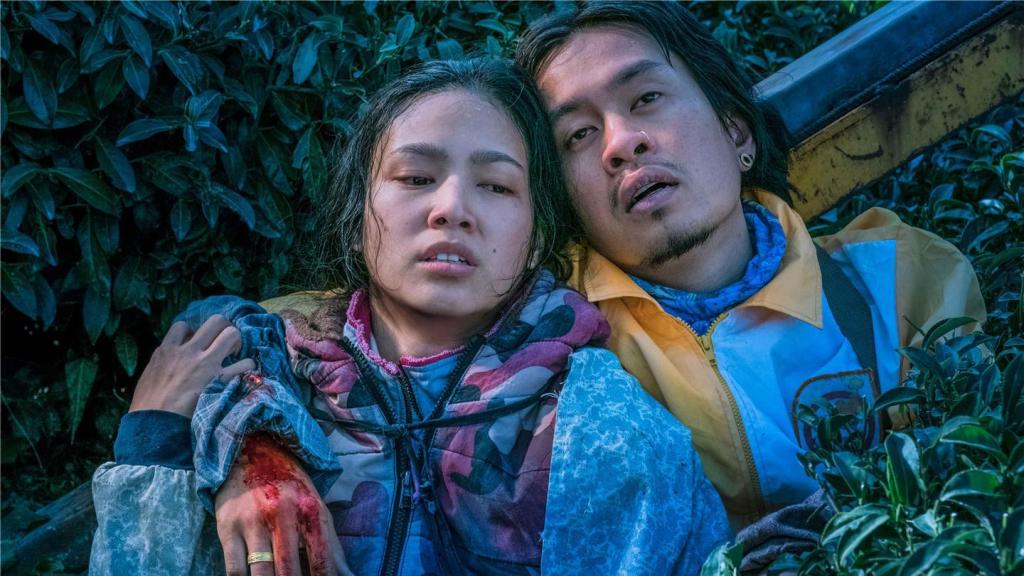
  • Tea Land: undocumented workers from South East Asia form a small family while working on a mountainside tea plantation but their bond is disrupted when one is found dead.
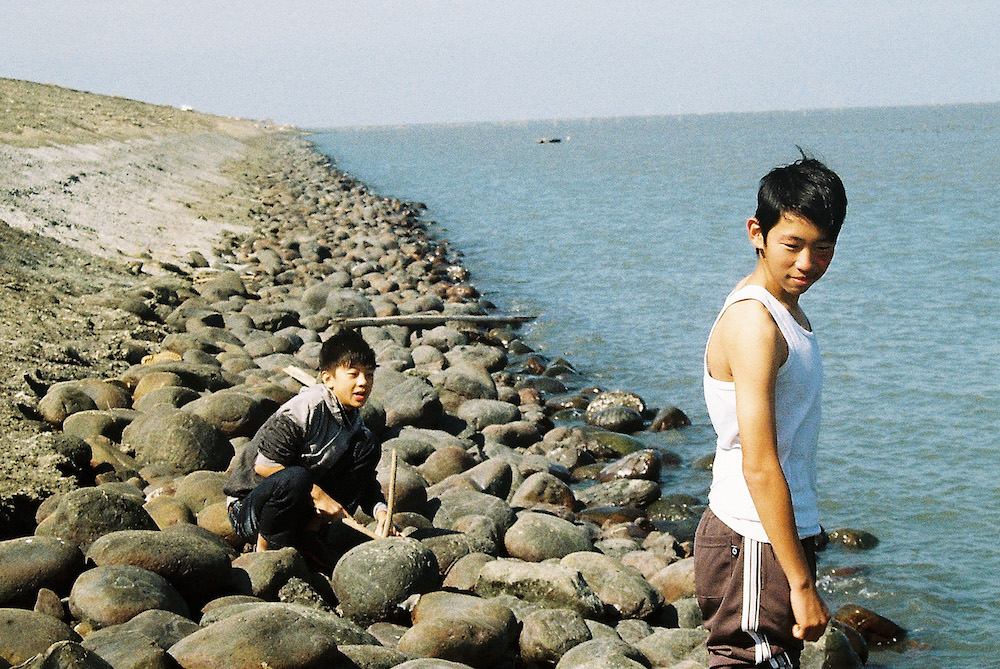
  • Wild Tides: a boy who is disliked by everyone does his best to win approval.
  • Towards the Sun: Cannes selected short from 2017 in which two outcasts meet by chance and take a road trip through the Taiwanese countryside.

Tuesday June 9: Murmur of the Hearts

Sylvia Chang’s moving drama in which an artist separated from her brother in childhood struggles to resolve her lingering feelings of resentment towards her mother while trapped in a difficult relationship with a troubled boxer.

Wednesday June 10: The Gangster’s Daughter

Drama in which a young woman is sent to live with her gangster father in Taipei who tries his best to reform but is soon dragged back into the underworld in search of vengeance.

Thursday June 11: Who Killed Cock Robin?

Neo-noir thriller in which a reporter uncovers a series of mysteries after investigating a car accident he witnessed nine years previously.

Friday June 12: We Are Champions

Sporting drama in which two brothers find themselves on opposite sides as they try to seize their destinies on the basketball court. While one joins an elitist team in which nothing matters except winning, the other bonds with a fatherly coach who values compassion and solidarity.

Each of the movies is available to stream in the US on the named date only from 2pm to 10pm CDT and is free to view but registration is essential. After registering you will be emailed the link shortly before the viewing time and must activate it within the 8-hour window after which you will have 24 hours to finish watching the movie. You can find further information and registration links on Asian Pop-Up Cinema’s official website and you can also keep up with all the latest news by following them on Facebook, Twitter, and Instagram.

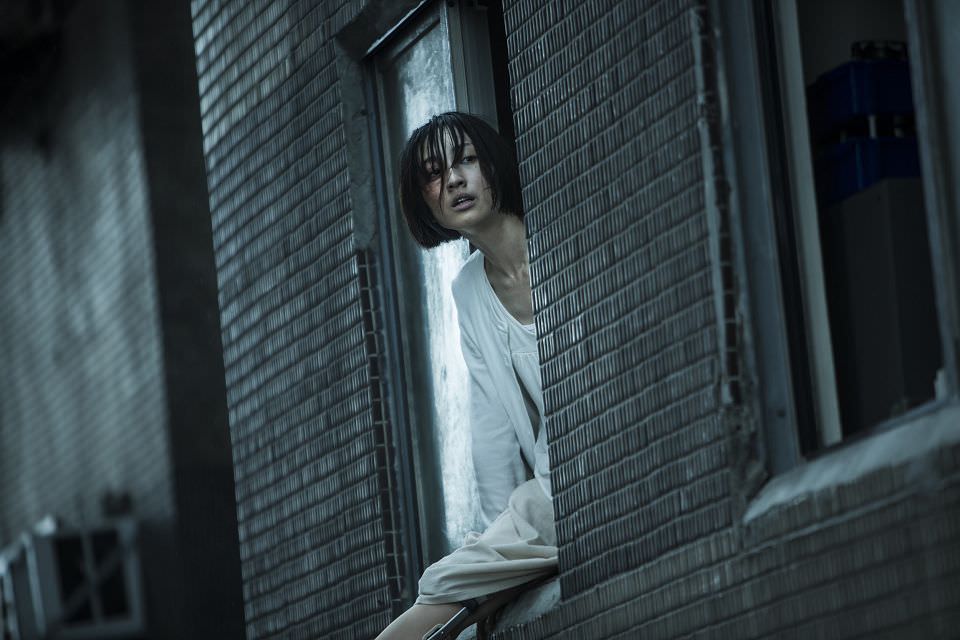
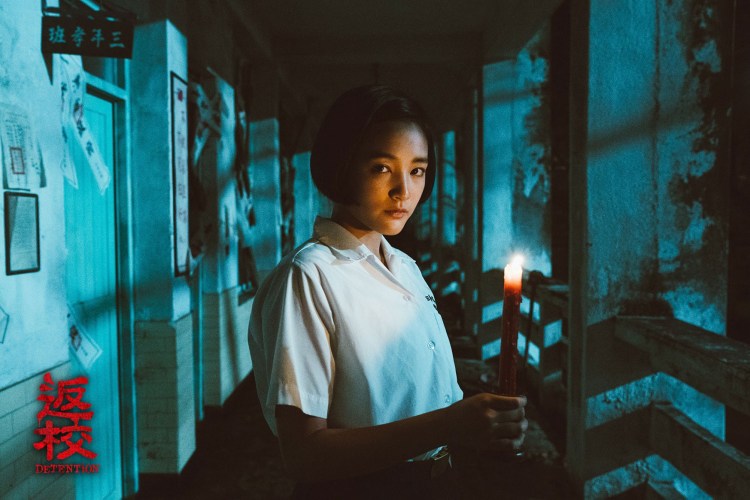
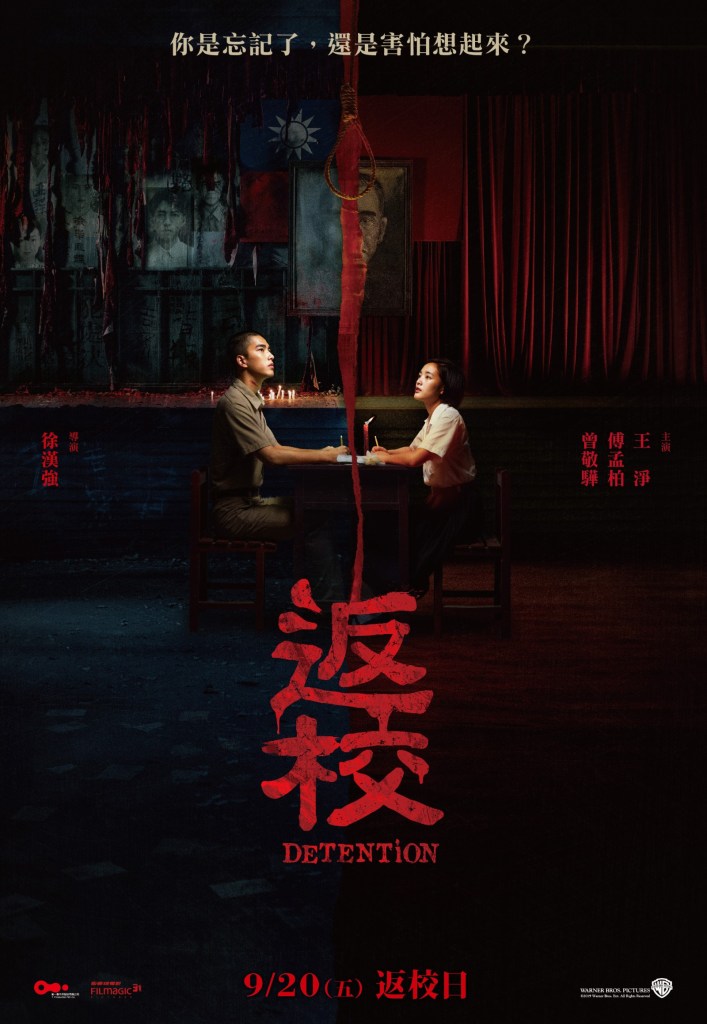
Detention (返校, John Hsu, 2019)

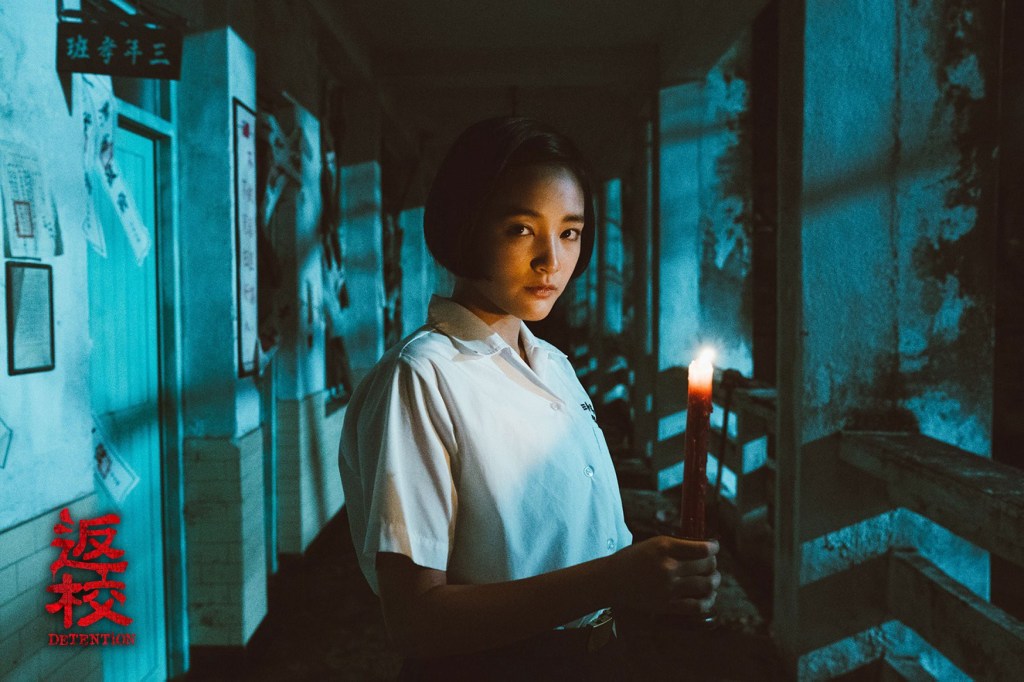
“Have you forgotten or are you scared of remembering?” a mysterious supernatural force seems to ask the heroine of John Hsu’s ironically named Detention (返校, Fǎn Xiào). In fact, the Chinese title means something close to “back to school”, hinting at its central message which uses the, it argues forgotten, tyranny of the “White Terror” to remind us that freedom is hard to win but harder still to keep. An unfortunately timely message given the assaults on democracy across the world but even more so given the recent protests in Hong Kong which have found support in Taiwan as it too looks back on its complicated history.

Based on a popular survival horror video game, Detention’s first hero is idealistic student Wei Zhong-ting (Tseng Ching-hua) who we quickly learn was picked up and tortured by the military police for reading books banned by the regime as part of an underground club run by two of his teachers – mild-mannered artist Zhang (Fu Meng-po) and stern musician Yin (Cecilia Choi Sze-wan). Set in 1962, the film finds itself at the height of the “White Terror”, a period of martial law which lasted for 38 years, during which any resistance real or perceived towards Chiang Kai-shek’s Kuomintang government was brutally suppressed with thousands tortured, imprisoned, or killed by the regime.

Wei finds himself in a lucid nightmare, trapped in his school building which has become derelict and seemingly abandoned while cut off by a raging flood. Gradually he starts to piece together memories of what must have happened, realising that his fellow club members seem to be absent and something must have happened with the military police. While in the school he runs into a fellow classmate, Fang Ray-shin (Gingle Wang Ching), though she doesn’t quite seem to remember him. Having apparently fallen asleep and woken up in this nightmare world, Fang seems even less clear about what’s going on than Wei but desperately wants to find their teacher, Zhang, with whom, we learn, she has fallen in love. 

Plagued by horrifying visions that maybe repressed memories or simple nightmares, the pair are chased by giant monsters dressed in KMT uniforms standing in for the terror of living under an authoritarian regime. Only, these particular nightmare soldiers are literally “faceless” in that their hollowed out skulls, which themselves sit on fetid, rotting corpses, are filled only by a mirror making plain that the faces of the “faceless” regime are our own. Fang and Wei become convinced that someone has betrayed them by giving one of the illicit books to arch militarist teacher Inspector Bai, but they can’t be sure who it was, finally doubting even themselves in their inability to remember the exact circumstances which brought them here. 

Flashing back to the “real” world, we discover that one sort of oppression cannot help but lead to others. Fang’s father is a respected soldier and supporter of the ruling regime, but he’s also abusive towards his wife, enforcing a rule of fear and violence even within his own home. Her mother has taken to religion in order resist him, regretting her marriage and furiously praying that he will soon be “gone for good”. “Gone for good” becomes a kind of mantra for others straining to free themselves from obstacles to their desires. Fang learns all the wrong lessons from her parents, allowing herself to be corrupted by their twin failures – her father’s in being a willing participant in the oppression of others, and her mother’s in subverting the world in which she lives in an attempt to free herself from violence. 

Yet, as Zhang later tells her, no one is really at fault because they are all victims of the oppressive rule of the KMT. The ruined schoolhouse becomes a kind of repository for the orphaned memories of a forgotten past. You can tear it down and build a fancy apartment complex over the top, but the ghost of authoritarianism is always lurking on the horizon, and capitalist success will not safeguard your freedom. Those left behind have to tell the story so  this never happens again because those who fail to learn from history are doomed to repeat it. Zhang imagined himself a narcissus, living in his own world without caring what other people thought and claiming that the solidarity of silent understanding is the best cure for loneliness, but he lived in times in which he had no freedom in which to live, sacrificing his own future to become the selfless roots of emancipation blooming only for those who will come later.


Detention screens in Amsterdam on March 5/7 as part of this year’s CinemAsia Film Festival. It will also screen in Chicago on March 26th as part of the 10th Season of Asian Pop-Up Cinema.

Original trailer (English subtitles)

Asian Pop-Up Cinema Returns for Season 10!

Chicago’s Asian Pop-Up Cinema returns March 10 to April 9 with another handpicked selection of the best in recent East Asian cinema! This landmark 10th Season kicks off with Aaron Kwok homelessness drama i’m livin’ it which is nominated in 10 categories at this year’s Hong Kong Film Awards, and closes with Yukiko Mishima’s much anticipated romantic drama Shape of Red.

March 10, 7pm: i’m livin’ it

Introduction and Q&A with Director Wong Hing Fan and Actress Kathy Wu

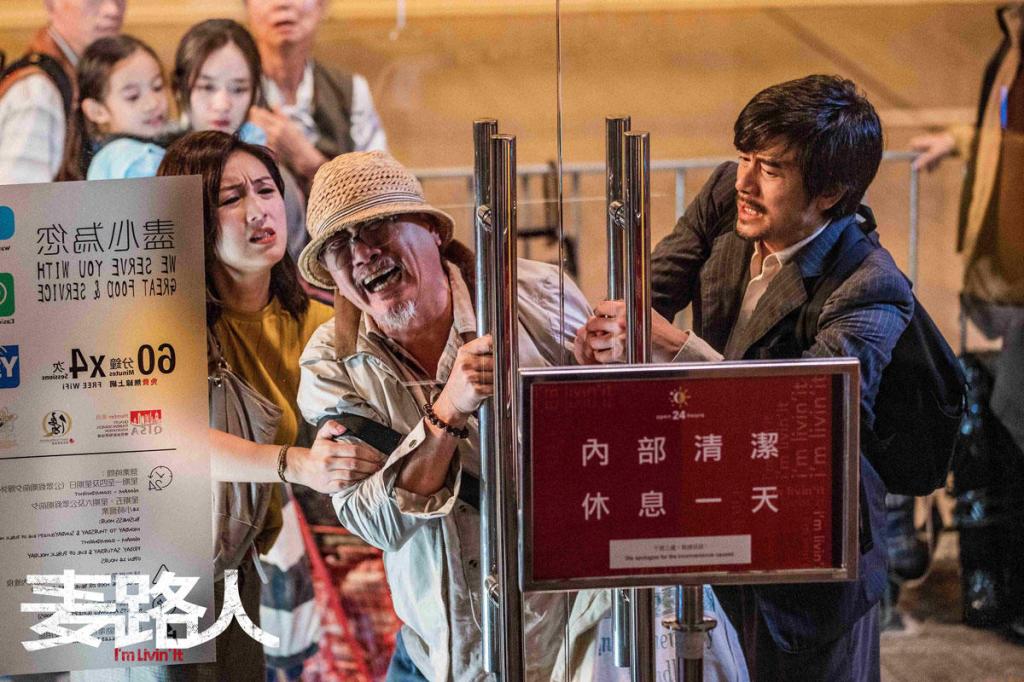
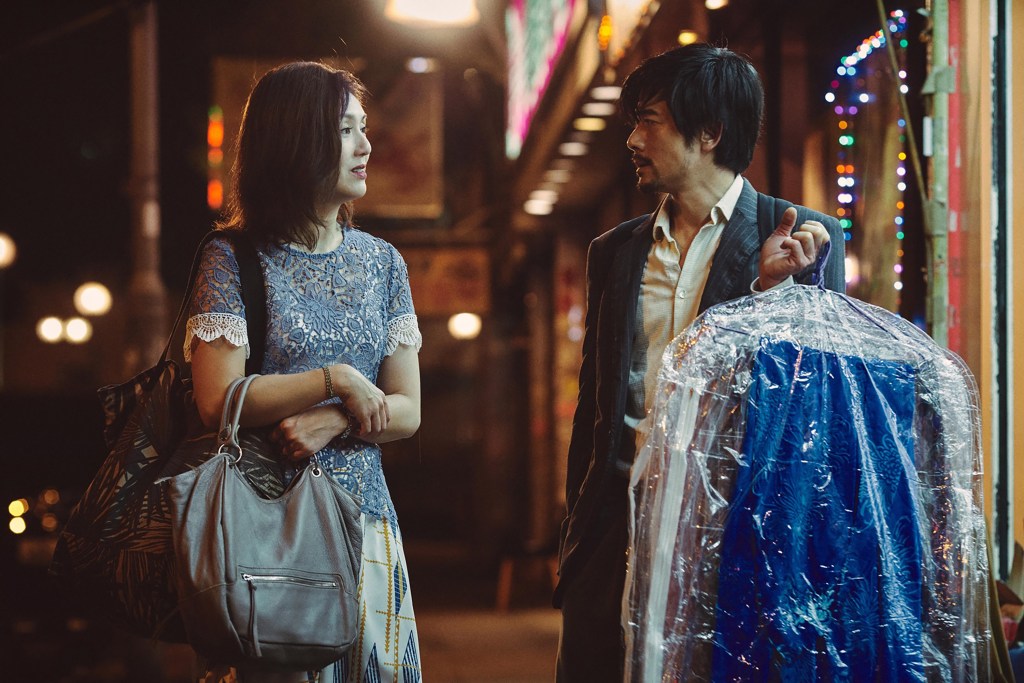
Receiving 10 nominations at this year’s Hong Kong Film Awards including all the major categories, i’m livin’ it stars Aaron Kwok as a once successful banker who has unexpectedly become homeless and spends his nights in a 24hr fast food restaurant among others facing similar difficulties.

March 11, 7pm: A Witness Out of the Blue

Introduction and Q&A with Director Fung Chih-Chiang

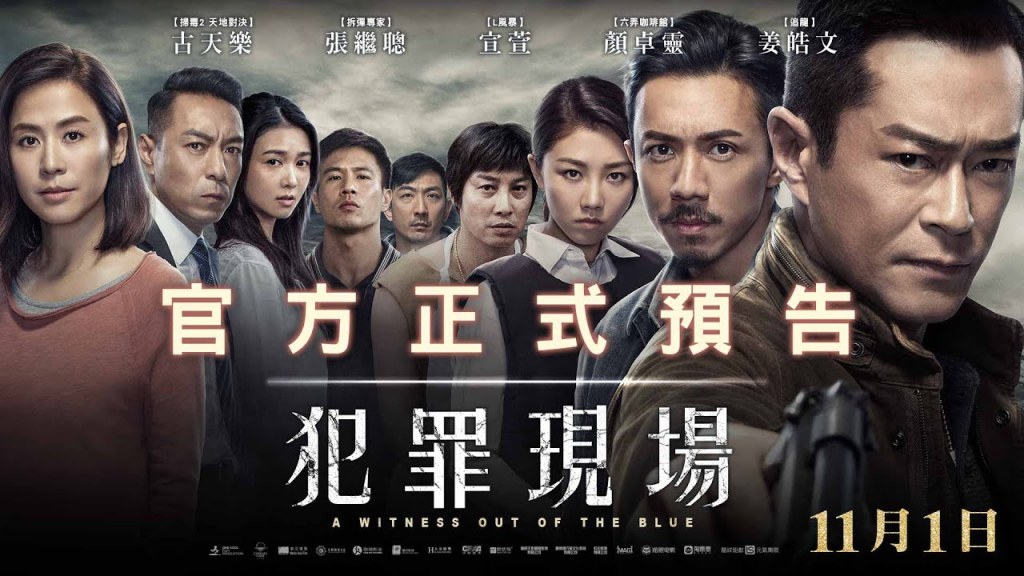
A detective finds himself investigating a murder in which the only witness is a parrot! Louis Koo is up for best actor at the Hong Kong film awards for his role as the prime suspect while Philip Keung also gets a nod for best supporting as a senior detective.

March 12, 7pm: First Night Nerves

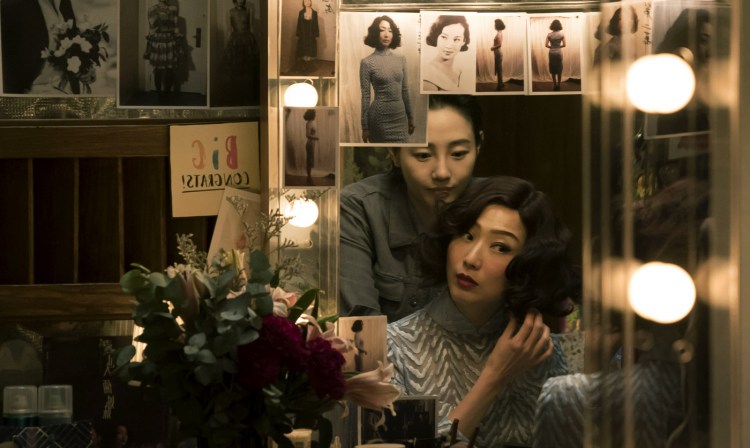
Stanley Kwan’s starry drama pits two warring divas against each other in a battle for the spotlight as they rehearse for a new play penned by a transwoman who struggles to find acceptance in the surprisingly conservative theatre industry. Review.

March 14, 2pm: Men on the Dragon

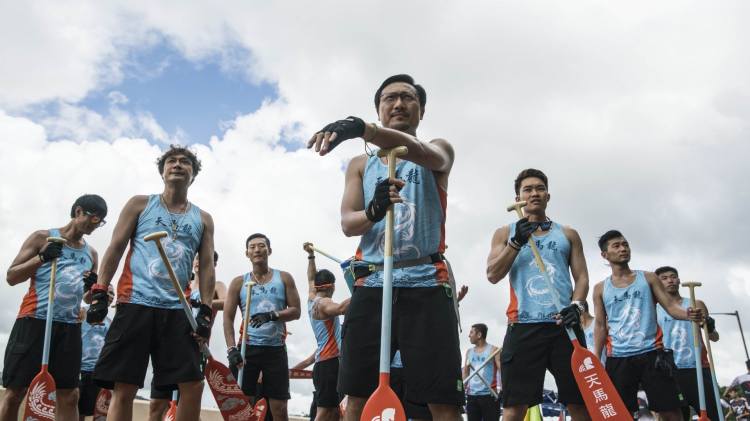
A collection of dejected middle-aged men can no longer avoid facing their respective crises when forced to participate in the company dragon boat team in Sunny Chan’s heartfelt comedy drama. Review.

March 16, 6.30pm: A Touch of Spring

Introduction and Q&A with Director He Xiao-Dan

Following the breakup of her marriage, a young woman decides to return to her hometown in China after living in Montreal for 10 years. Reconnecting with her family and an old flame helps to show her new direction in her life.

March 18, 7pm: Red Flowers and Green Leaves

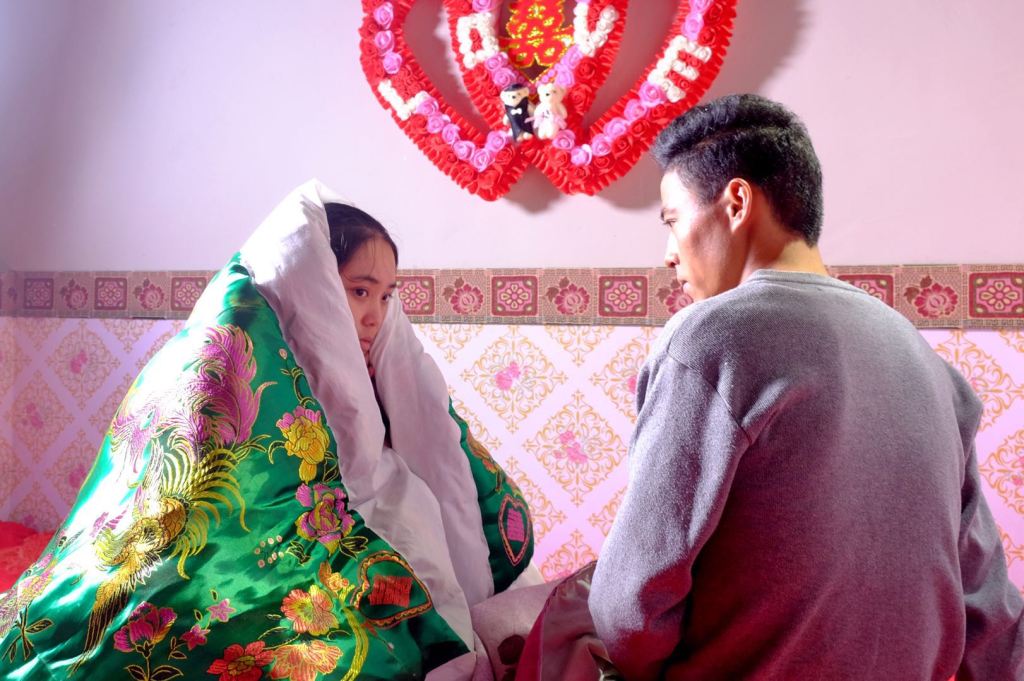
A young man who assumed he’d never marry because of a longterm illness suddenly finds himself with a beautiful wife through an arrangement made by his family.

March 19, 7pm: 3 Adventures of Brooke

A young Chinese woman has three very different adventures while traveling in Northern Malaysia, trying on different identities as she encounters different people.

March 21, 7pm: Vanishing Days

Zhu Xin’s debut feature follows a little girl, Li Sen-Lin, who loses her pet turtle while her dad is away on business. Overhearing other relatives talk about an alternate “Sen-Lin”, she begins to wonder if her aunt is really her mother.

March 25, 7pm: We Are Champions

Introduction and Q&A with Producer Rachel Chen and Actor Berant Zhu who will also pick up the Bright Star Award before the screening.

Taiwanese sporting drama in which teenage brothers attempt to change their fates through success on the basketball court.

March 26, 7pm: Detention

Lonely high schooler Fang falls for guidance councillor Zhang who alone seems to understand her. She joins his secret study group to read banned books, but Zhang soon “disappears” while only Fang and another student seem to remember him in this gothic horror set during Taiwan’s repressive martial law period.

April 1, 7pm: Vertigo

Introduction and Q&A with Director Jeon Gye-Soo

A woman in her 30s begins to feel a sense of existential vertigo, trapped in a dead end relationship with a feckless boyfriend while worrying that her career is going nowhere either. Then, she meets a tightrope walking window cleaner.

April 2, 7pm: Paper Flower

Introduction and Q&A with Director Koh Hoon and Actor Ahn Sung-ki who will also receive the Career Achievement Award.

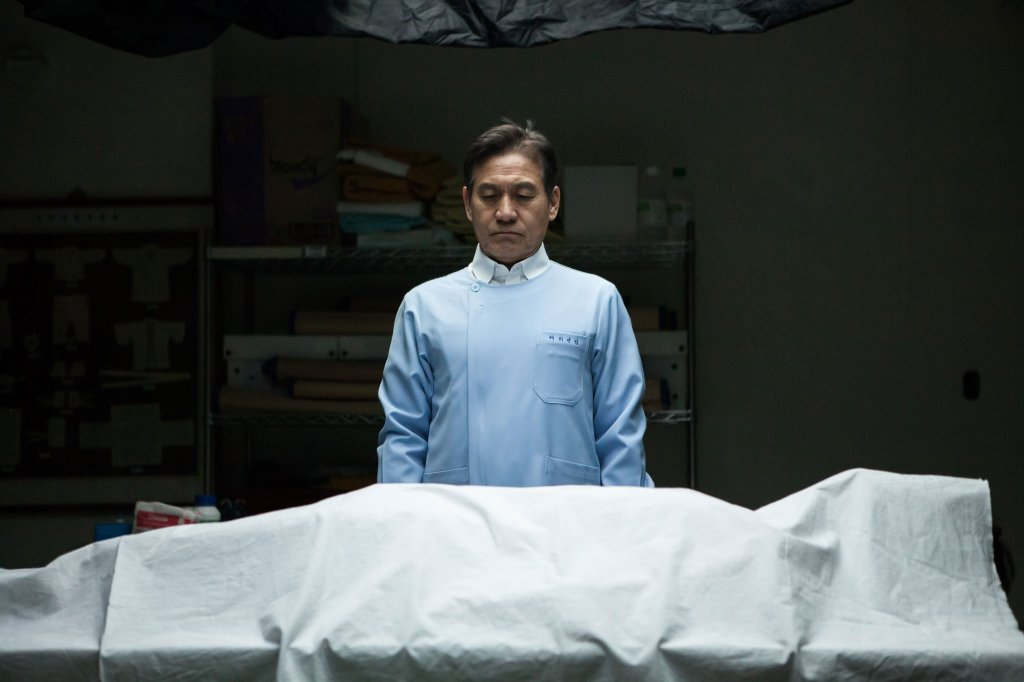
A funeral director struggling to care for his sickly son bonds with a cheerful single mother while going against the city to assist in a public funeral for a noodle stall owner who became a hero to the homeless.

April 4, 7pm: Life Finds a Way

Introduction and Q&A with Director Hirobumi Watanabe

Hirobumi Watanabe once again stars as a version of himself as he experiences a creative crisis as a director while hanging out with his elderly grandmother in sunny Tochigi.

April 8, 7pm: Samurai Marathon

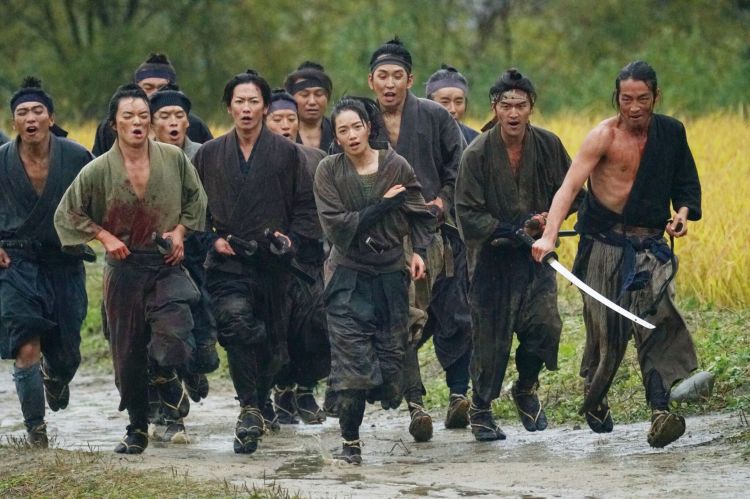
A small fiefdom is thrown into crisis when a ninja spy mistakes his lord’s intentions to toughen up his men as a prelude to rebellion in this unusual samurai drama directed by Bernard Rose. Review.

April 9, 7pm: Shape of Red

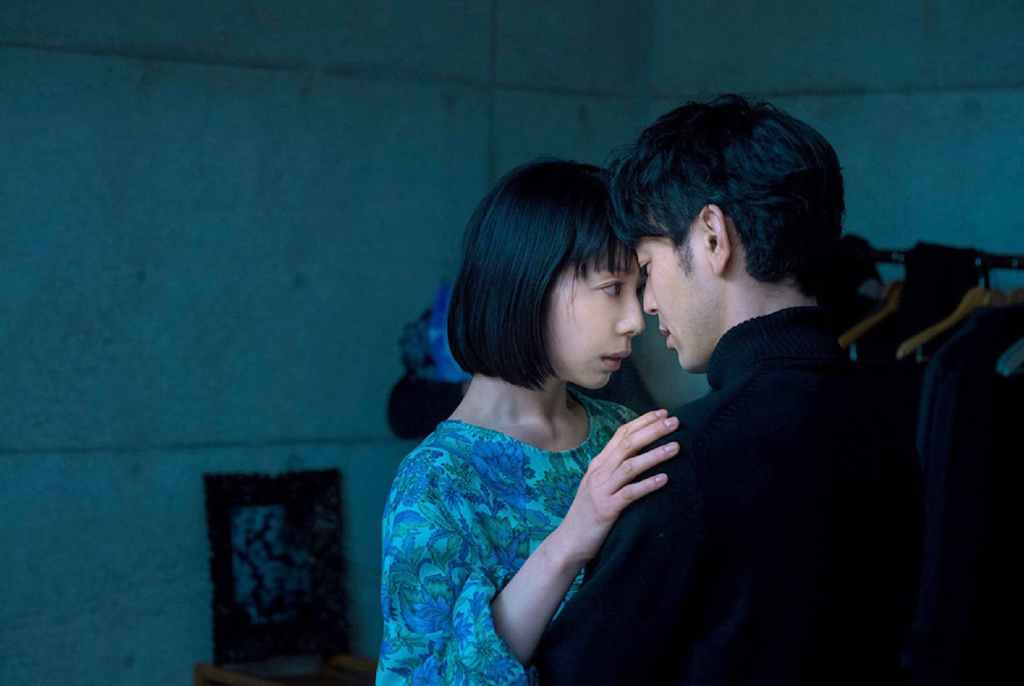
Kaho stars as a happily married woman who embarks on a passionate affair with an old flame (Satoshi Tsumabuki) in Yukiko Mishima’s steamy adaptation of the novel by Rio Shimamoto.

Asian Pop-up Cinema Season 10 runs in Chicago from March 10 to April 9. Full details for all the films are available via the festival’s official website where tickets are already on sale. You can also keep up with all the latest news by following Asian Pop-up Cinema on FacebookTwitterInstagram, and Vimeo.

Stand By Me (陪你很久很久, Lai Meng-jie, 2019)

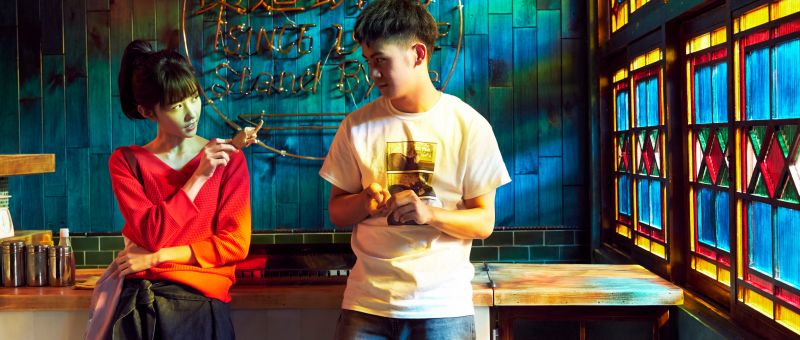
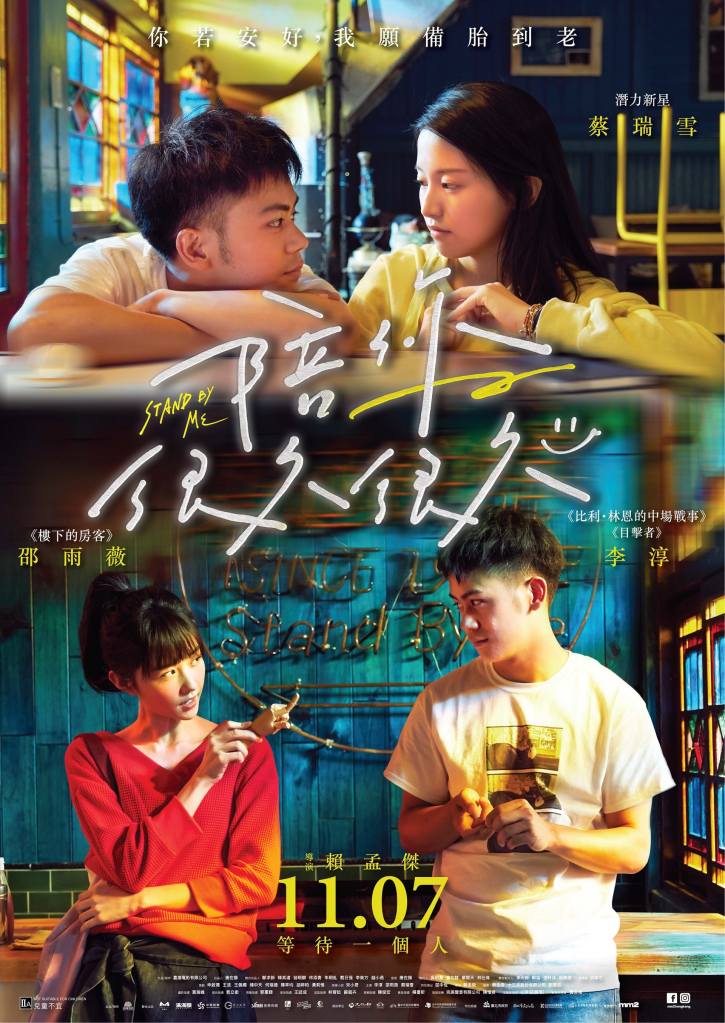
“Teenage days we all need a romance that hurts” exclaims a rejected teen, too shy to declare her crush directly but trying to achieve a kind of closure by literally shouting it from the rooftops in Lai Meng-jie’s charming teenage rom-com, Stand By Me (陪你很久很久, Péi Nǐ Hěn Jiǔ Hěn Jiǔ). For Jiu-Bing (Mason Lee), however, his romance has gone on a little longer than just his teenage years. He’s been silently in love with Bo-he (Ivy Shao Yu-Wei) since he was 12, but their relationship has remained at the innocent level of childhood friendship. Nevertheless, all of his subsequent decisions have been taken with one aim in mind, being at Bo-he’s side to protect her. Now that they’re grown, he’ll have to come to terms with the fact that their relationship is inevitably going to have to change in one way or another. 

As with most youngsters, those changes arrive as they set off for university (he’s enrolled in the same one as her for that reason alone). No matter how close you are, it can be quite claustrophobic having someone buzzing around you all day and Bo-he is beginning to get fed up with Jiu-Bing’s continuing immaturity. He’s promised to “protect” her, but often ends up in trouble himself and needs her to rescue him. It’s Bo-he that finds him a place to stay after he accidentally blows up his new student dorm and gets kicked out, only it turns out to be half of a teenage girl’s bedroom above a family bakery, rented out by high schooler Xia-Tian (Tsai Jui-Hsueh) without her father’s (Chu Chung-heng) permission as an enterprising way to get a little more pocket money. Meanwhile, Bo-he has fallen for a handsome, heroic classmate, Mai-zi (Edison Song Bai-Wai), who is, in every stereotypical way, the perfect man. 

In an ironic twist, Jiu-Bing’s part-time job is as a “pacer”, supporting other runners as they make their way towards the finish line but eventually dropping back himself. He takes pride in being there for people, protecting and encouraging them, but still struggles to accept the fact that his chosen role inevitably means he’ll spend his life celebrating the successes of others rather than his own. Jiu-Bing eventually has this fact thrown in his face when a romantic rival describes him as nothing more than a rebound guy, implying that Bo-he only sees him as a fallback she can rely on when some other boy breaks her heart but will never really want to be with in the long term. 

On one level, Jiu-Bing is fine with that. He really does just want Bo-he to be happy even if it’s with someone else, but still struggles with the decision of whether to speak his feelings out loud and risk ruining their friendship or keep silent and live with the pain of being just her friend forever. As one of his eccentrically nerdy friends puts it, companionship is the “dark matter” that supports a relationship, but the jury’s still out on whether companionship alone is enough to go the distance. Meanwhile, he remains entirely oblivious to the fact that Xia-Tian is beginning to develop feelings for him that place her in exactly the same place as he is with Bo-he. Maybe he just thinks of Xia-Tian as a crazy little sister, and maybe Bo-he just thinks of him as a troublesome little brother who will always need looking after despite his constant protestations that all he wants is to be able to “protect” her. 

What Jiu-Bing learns however is that being a pacer is no bad thing. It’s much better to run with someone than to run alone, but there are times when you just need to set a pace for yourself so you can figure out how far you can run. There are more ways to love than just the romantic, though maybe that’ll come in time but perhaps not from the direction you’d expected. “Being heard and accepted is nothing we can decide” Xia-Tian adds, and what is teenage romance other than coming to an acceptance that sometimes you love people who don’t love you back? But then sometimes they do, and if you never say anything you’ll never know. Jiu-Bing has some growing up to do, and a few decisions to make so he can figure out where it is he ought to be – supporting from the sidelines or waiting with flowers near the podium. Either way, Lai Meng-Jie’s charming teenage rom-com is a refreshingly progressive take on the genre which allows it’s “nice guy” hero to find solace in the authenticity of his generosity while its heroine embraces her own sense of agency entirely independent of her romantic destiny. 


Stand By Me screens at Chicago’s Gene Siskel Film Center on Feb. 17 where the full lineup for the upcoming 10th season of Asian Pop-Up Cinema will also be unveiled. Director Lai Meng-jie will be in attendance for an introduction and post-screening Q&A.

Original trailer (English/Traditional Chinese subtitles)

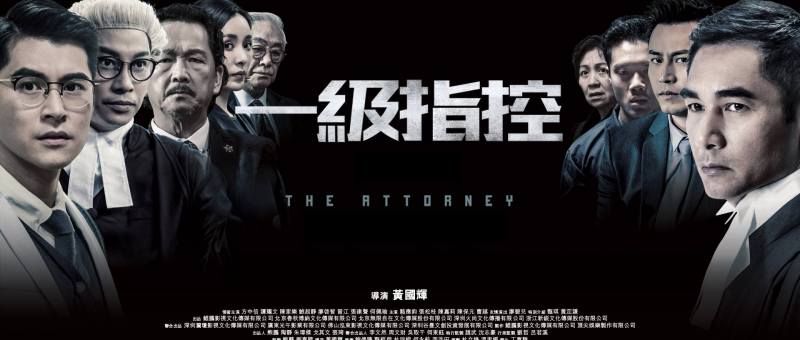
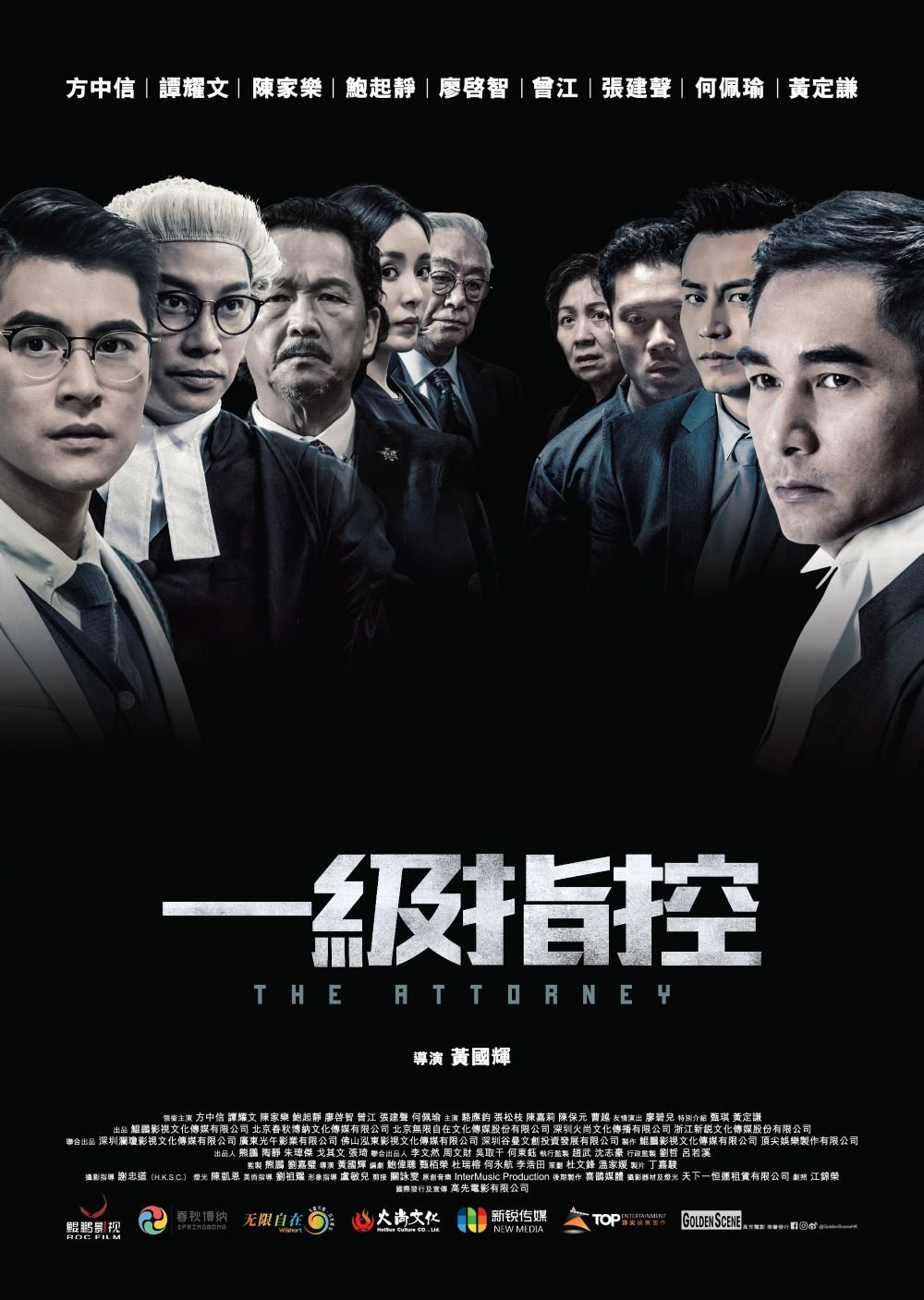
The Attorney (一级指控, Wong Kwok-fai, 2019)

The Attorney poster 1What price justice? Wong Kwok-fai’s legal thriller The Attorney (一级指控) puts an unequal society on trial but discovers that to beat shadiness you might need to get a little shady and a healthy bit of deviousness may serve you well if it’s offered in service of a noble ideal. Then again, it’s a slippery slope towards the abyss if even the proponents of law aren’t above a little judicial finagling to ensure that “justice” gets done in a society which continues to defer to those with the biggest pockets rather than protecting those of meagre means.

We meet our two attorney heroes in the middle of their respective cases. Jaded hot shot Lei You Hui (Alex Fong Chung-sun) is defending a journalist who broke an important story about corruption in the competition for places at prestigious schools from a defamation charge, while the idealist rookie Kelvin (Carlos Chan) is defending a frail old woman held up on a charge of operating without a proper business licence. Lei wins his case, and Kelvin loses. Lei mocks Kelvin’s lack of success, and Kelvin has only contempt for Lei’s cavalier attitude towards the upholding of justice.

The action begins when a 25-year-old man, Lee, is found lying in a pool of blood next to the dead body of a young woman, Ka-yee, who is later discovered to be the daughter of a billionaire businessman, Kwok (Liu Kai-chi). The case seems open and shut. Lee claims he passed out and found the body when he woke up but the circumstantial evidence against him is overwhelming. His grandmother, Chu (Nina Paw Hee-ching), of course believes that he is innocent and enlists the best lawyers she can get access to, leading her to a solicitor who introduces her to Kelvin who is determined to see that the young man gets a fair trial. Lei, meanwhile, has a personal interest in the case in that his late wife was killed in a shopping mall collapse 10 years previously which also took the lives of Lee’s parents. Lei prosecuted a class action law suit, but lost. The shopping mall was constructed by Kwok’s company, which gives him an additional reason to want to help aside from trying to make things up to Lee and Chu whom he feels he failed all those years ago. 

Wong wastes no time in demonstrating that “justice” is a nebulous concept when society is necessarily set up to benefit the rich. Ka-yee’s body was discovered in a building belonging to a property magnate, Tsai Chi-wai (Patrick Tam), who is currently running for political office on a platform of equality for all. Chi-wai is, however, a member of the super rich elite who believes he can do as he pleases because he is protected by his wealth and privilege. Lee, by contrast, is a poor boy delinquent who ordinarily wouldn’t have access to a fancy lawyer to clear his name and most likely would have been torn apart by the elite prosecutor those with vested interests have ensured is attached to the case even though it’s a simple enough affair. 

Yet, as Lei discovers, the roots of corruption lie in the understandable desire to protect one’s children even when they’ve made terrible mistakes. Meeting with Chi-wai’s smarmy father, he discovers a man who talks up his youthful high ideals of union activities and working for the workers but later emphasises his hard won cynicism in insisting that no one with a brain seriously believes in things like truth and justice, only self interest. Tsai wants to protect his son at all costs, if only to protect himself by getting his boy into high office. Meanwhile, Kwok is left with questions about his own responsibility for his daughter’s death. If having literally billions in the bank can’t keep your little girl alive, then what use are they?

Then again, having billions in the bank is pretty useful leverage for getting your own way even if you eventually have a change of heart about enabling societal corruption. Chi-wai snarls that you need to be smart to survive, but according to Kelvin saving lives is more important than winning. Lei, who had given up his lofty ideals after being unable to get “justice” for his wife’s death begins to regain his faith in the law thanks to Kelvin’s influence and the accidental coincidence of getting a kind of revenge on Kwok by showing him the error of his ways in illuminating the truth behind his daughter’s death. To do that, however, he’ll have to bend the law a little which leaves him a compromised figure if for the best of reasons as he wilfully demonstrates the flaws in a legal system which is in itself inherently corrupt in its avowal that everyone is equal before the law while ignoring the fact that not everyone has access to the same level of “justice”. Wong’s conclusion may be a little rosy as even the most jaded of legal minds finds himself minded to rebel against the system, but there’s no denying his purpose as Lei decides to protect his daughter by protecting his society from the forces which threaten to blacken her future.


The Attorney screens in Chicago on Oct. 10 as the closing night gala of the ninth season of Asian Pop-Up Cinema. Actor Kenneth Tsang Kong, scriptwriter Frances To, and xxecutive producer Cherrie Lau will be in attendance for an introduction and Q&A.

Original trailer (English subtitles)
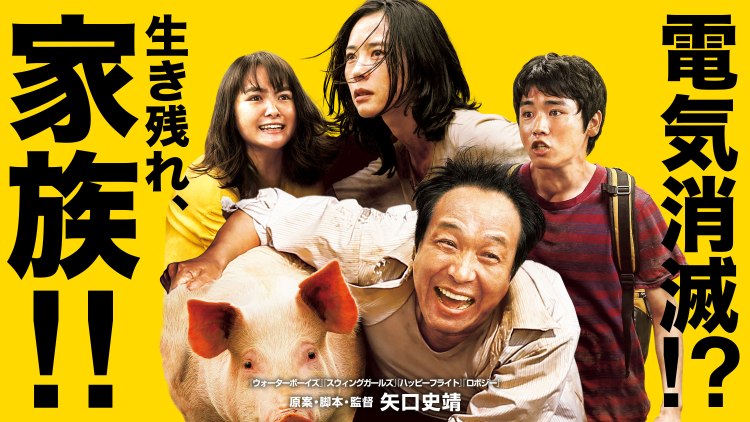
Office (華麗上班族, Johnnie To, 2015)

Johnnie To office poster 1Can love and capitalism walk hand in hand? Perhaps not, at least in Johnnie To’s beautifully choreographed musical exploration of high stakes finance and moral bankruptcy, Office (華麗上班族). Adapted from Sylvia Chang’s stage play, Office situates itself on the edge of an abyss as the 2008 financial crisis edges its way towards Hong Kong while enterprising businessmen try to figure out how to ride the waves even if that means standing on someone else’s shoulders as they sink deeper into the moral morass that is the modern economy.

Top Hong Kong trading company Jones & Sunn is about to go public. CEO Winnie Chang (Sylvia Chang) has long been running the show for her boss and lover, Chairman Ho (Chow Yun-fat), who has promised her a sizeable dividend once the floatation is complete. Meanwhile, two new interns have just joined the company, eager to make their marks in the corporate world and ensure they survive their three month probation. Bright-eyed and bushy-tailed Li Xiang (Wang Ziyi), “Lee like Ang Lee, Xiang like dream”, just wants to work hard and get rich so he can live a nice life, while his colleague Kat Ho (Lang Yueting) has just returned from studying economics at Harvard and appears to be slumming it in a lowly internship while (unconvincingly) pretending to be from a humble background. The funny thing is no one seems to pick up on the fact Kat has the same surname as the company’s owner, or they might have figured out she’s the boss’ daughter either forced to learn the trade from the ground up or working as a spy among the regular employees. In any case, Li Xiang is smitten.

Love, it seems, is the destabilising force at the centre of this great machine. CEO Chang, an all powerful woman in a male dominated industry, rules the office with a will of iron but allows herself to be manipulated by Ho with whom she has been having a longstanding affair. Ho has a wife in a coma, but neither of the pair object to the office gossip which brands Chang as “Mrs. Ho”, seeing it only as cutely romantic rather than a slight on Chang’s very real authority. Meanwhile, lonely in Ho’s lack of serious commitment, Chang has also been sleeping with her favourite underling, the feted David (Eason Chan), who in turn is getting fed up with feeling like a spare part who’s hit the peak of his career. Unbeknownst to Chang who may have taken her all-seeing eye off the ball, David has started playing with fire in gambling with company money and losing badly. As a counter measure, he’s begun romancing lovelorn accountant Sophie (Tang Wei), who unlike Chang, is still facing the work/home dilemma in that her fiancé back on the Mainland is pressuring her to give up work and settle down.

Li Xiang is very keen on following his “dreams” which in the beginning are charmingly naive – he wants a nice life for himself and the ability to pay off his friends’ debts (seemingly for entirely altruistic reasons, not as an excuse to show off). Slowly, however, his new world begins to corrupt him. He’s irritated that he’s not allowed to ride the executive elevator and badly wants in, but is still green enough to chivalrously cover up for Kat’s mistakes, while Kat is so clueless that she forgets turning up to work in designer outfits and in a chauffeur driven car is going to blow her cover. Li Xiang sees through her, but only to the nice part – it never really occurs to him she’s a mole or planning to betray Mrs. Chang who is kind of her step-mother. Chang isn’t blind to office politics. She sees Li Xiang take the blame for Kat and even likes him for it. She also likes his “originality” and plans to take him under her wing for her new expansionist plans but finds herself once again blindsided by all the difficult romantic drama bubbling under the surface of coldhearted capitalism.

David and Sophie decide they want to start a “love revolution”, but David has already gone to a dark place and his romantic confession is immediately followed by a manipulative request to get Sophie to help him with his nefarious plans. Meanwhile, Li Xiang’s gradual descent into corporatism begins to sour Kat who’d taken a liking to him because he wasn’t like everyone else. They didn’t mean to do it, but they’ve betrayed themselves and others in their relentless pursuit of conventional success. Drunken salarymen at a local bar ask themselves what all of this is for when their kids don’t recognise them and they barely recognise themselves, yet no one quite has the guts to get off the corporate train and go do something else.

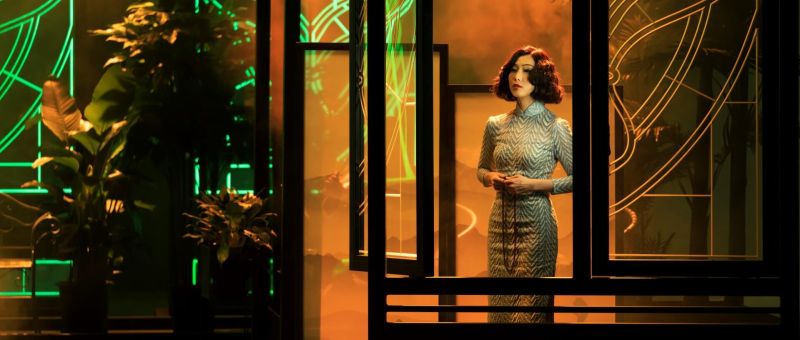
In To’s elaborate set design, no one is ever truly able to leave the office. An elegant construction of neon and steel, the abstract theatricality of To’s artificial universe only underlines its essential meaninglessness – something the Office’s denizens eventually come to understand whether they choose to stay or not. As Chang quips, smart guys control money and stupid ones are controlled by it, but she herself is wise enough to know when the game is up and it’s time to move on. Did love destroy the system or did the system destroy love? Beautiful melodies telling us terrible things, To’s anti-capitalist musical crushes its earnest heroes under the wheel of progress while they dance blithely all the way over the edge.


Office screens in Chicago on Oct. 5 as part of Asian Pop-Up Cinema.

Original trailer (English subtitles)
Signal Rock (Chito S. Roño, 2018)
kinopoisk.ru“Family is family, I can’t just say no” a young woman tells her boyfriend in response to his angry outburst on discovering that, like all the young women round these parts, she’s being dispatched to another part of the country to work in a bar. Inspired by true events in the ‘90s, Chito S. Roño’s Signal Rock situates itself in an idyllic fishing community left behind by the modern world like a lonely rock pool after the tide has pulled out. A microcosm of the nation itself, the island has become used to its transitory status as a conduit between two worlds, dependent on those who leave for its survival while the young men rendered incongruously obsolete have little more to do than battle their feelings of resentment and powerlessness.

Our hero, Intoy (Christian Bables), is the youngest son of the Abakan family, charged like so many young men with responsibility over technical things – in this case, maintaining the mobile phone which is the only point of contact that they have with oldest daughter Vicky who is supporting them all while working overseas in Finland. Remote as it is, the only place you can get a signal on the island is by climbing to the top of a rocky outcrop so communication has to be carefully planned in advance. This becomes a particular problem when Intoy discovers that the reason the money from Vicky hasn’t been coming through is that her relationship with a Finnish man with whom she has a small daughter is falling apart because he is both abusive and adulterous. As her daughter Sofia was born in Finland, Vicky fears that her boyfriend will try to seize custody and prevent her returning home to her family. Intoy, a fiercely protective brother, is not about to let that happen and sets about mobilising the community to hatch a plan to ensure Vicky and Sofia come home safely.

Despite Intoy’s protective instincts, the rest of the family’s relationship with Vicky is ambivalent. Oldest son Joaquin (Arnold Reyes), one of many resentful middle-aged men left on the island with not much to do, endlessly complains about the lack of ready money from his sister which he claims he needs to buy a motorbike in order to work. Joaquin also resents the shame of Vicky’s out of wedlock pregnancy, while the parents are still a little put out about the financial sacrifices they had to make in order for Vicky to achieve her “dream” of going abroad.

In order to sell the fantasy that Vicky comes from a wealthy family in the Philippines which is perfectly well equipped to support herself and her daughter, the Abakans are forced to confront their longstanding family issues. Intoy’s parents have been estranged for some time with his father technically living in a shed outside the main house, apparently loathed by his wife who claims the youngest two children are a result of marital rape. Another product of the patriarchal society, Intoy’s parents apparently eloped at a young age so that his mother could escape a marriage arranged by her father, only for the relationship to sour when Intoy’s dad lost his job at an American-run factory causing his wife to become disillusioned with his ordinariness.

Little seems to have changed in the last 30 years in that the lives of women are still largely dictated by the whims of their fathers. Vicky may have made a free choice to go abroad, but seeing as work is easier to come by for women, it is the norm for girls of the island to be sent away while the boys remain home alone. While dealing with his sister’s plight, Intoy is also facing the inevitable heartbreak of losing his girlfriend Rachel whose father has arranged for her to work in a bar in the city. As Intoy points out, from the parents’ point of view bar work is a pathway to finding a rich foreign husband – like Gina, another young woman from the village, who is returning home to celebrate her marriage to an elderly German (official now that his divorce has come through). Hardly pausing at the dockside, Gina introduces her former lover as a “cousin” before whispering in his ear that her feelings haven’t changed and she hopes to bring him to Germany for a better life after the old man snuffs it.

Intoy makes a kind of living on the island running errands for older people and acting as an MC during village celebrations, but as there is no real work round here and all the girls are gone, the young men largely spend their time playing basketball and getting into fights. They resent being forced to live off their sisters and seeing the women they love promised to other men, but have no other option than to make uneasy peace with their lack of possibilities. Intoy battles against his baser emotions, remaining kind and cheerful as he convinces his friends and neighbours to help him forge documents that imply his sister owns property while cosying up to the local mayor who hopes to hang on to power at the next election by convincing his wife to stand as a candidate.

Intoy alone is desperate to preserve the integrity of his family, even when spread across continents, standing out on Signal Rock as a kind of beacon left behind solely to convey information from one point to another. Having helped his sister, however, he discovers the depths of her resentment in her embarrassment at the idea of returning home after receiving the help of so many people. He loses his temper, unable to understand his sister’s rejection of everything he has worked so to protect at great cost to himself. Even so, Intoy manages to maintain his cheerfulness and desire to help others, sinking back into island life with his customary stoicism even if mildly troubled by a bargain he may have committed to without fully comprehending its implications. An ambivalent depiction of idyllic island life built on the back of female exploitation and entrenched patriarchy, Signal Rock nevertheless finds finds hope in community spirit and in its hero’s essential goodness.


Signal Rock screens in Chicago on Oct. 3 as part of the ninth season of Asian Pop-Up Cinema where actor Christian Bables will be present for an introduction and Q&A.

Original trailer (English subtitles)