Filipiñana (Rafael Manuel, 2026)

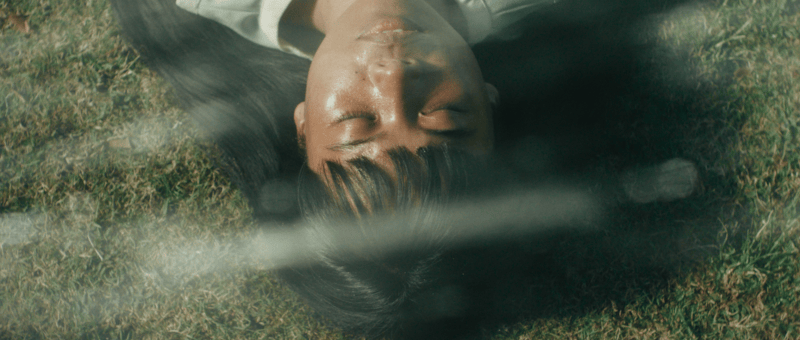
“If one of them dies, it will be replaced,” a worker reassures a wealthy client, ostensibly talking about a dried-out tree, but it’s clear his comment extends even to the largely anonymous employees of an upscale Manila golf course in Rafael Manuel’s satirical drama, Filipiñana. 17-year-old country girl Isabel (Jorrybell Agoto) has come here from her rural hometown to become a “tee girl,” which is to say her job consists of sorting golf balls and placing them in front of the wealthy men who are the course’s main clientele.

The sunlight glints ominously off the club fondled by Renato (Carlos Siguion-Reyna), a golfing supplies magnate who has brought his niece Clara (Carmen Castellanos) to the resort in the hope of convincing her to come “back” to the Philippines from the US and join his company. Manuel’s sound design captures every thwack of the club with an eerie violence that hints both at the damage this place is doing to the natural world and social fabric, and the power and privilege wielded by men like Renato against young women like Isabel. Noticing that the man she’s teeing keeps mis-hitting his balls, Isabel fears one is going to hit her and asks another girl for advice only to be told that it doesn’t hurt that much really and the golfer will probably feel guilty and tip more.

Isabel is temporarily handed the club herself when charged with returning it to the course’s mysterious manager, Dr. Palanca (Teroy Guzman) whom she first saw snoozing with one of the caddies under a mango tree. The club gives Isabel a free pass to wander through the parts of the resort where she would not ordinarily be allowed to go and also grants her access to some of its grimmest secrets. It seems that Isabel might have come here with revenge on her mind, recounting how Dr. Palanca’s trucks arrived to turf her out of her hometown, which is also his hometown though it seems like it means something different to him. But at the same time, she doesn’t quite know what to do with this power that she’s temporarily been given, give it back to those who think it’s theirs, or use it to begin dismantling this system even if it requires violence to do so.

In that sense her dilemma might not be that different from Clara’s, despite the extreme differences between them. Clara is the only female golfer that we see in a world otherwise entirely set up for men. Ina (Isabel Sicat), Clara’s caddie, asks her if all the caddies in America are female too, but is surprised to learn that in America people mostly carry their own bags. Perhaps this might suggest a rather simplistic characterisation of America as an egalitarian paradise, yet America once colonised the Philippines and these golf courses, even if now mostly catering to Chinese tourists, are a legacy of its occupation. Towards the end of the film, Manuel inserts black and white photos of plantations on the grounds of which these courses have been built.

Clara makes a point of telling Ina that her uncle is “harmless,” which is something there wouldn’t be any need to say if she actually believed it. Like Isabel, she seems uncomfortable with the course and what it represents, values implied to be born of her US upbringing, yet it’s exactly this discomfort that her uncle weaponises in suggesting she change the system from the inside. He tells her that they urgently need to diversify their customer base seeing as all their clients are older men and they urgently need people like her do it, so this country can progress. By “progress”, he likely means in his favour preserving the power and privilege of men like himself, but couched in more compassionate language such as his attempt to pass the hat round for golfers to donate to a fund to support the caddies’ families during the drought, when the best way to do that would obviously be to turn the sprinklers off at the gold course.

In the opening scenes we a minibus carrying Chinese tourists to the hotel pass through a crowd of people waiting to collect their water ration under the blistering Manila sun. It’s as if the course itself has sapped the life out of the surrounding city, rendering all too tired to want to resist having internalised the status quo as just that. The wealthy golfers relentlessly cheat at the game and are allowed to get away with it, while the smallest transgression can spell disaster for an employee. “I should aim for the left,” Clara says while looking at a hole despite her uncle and Ina’s advice that it bends right, only for Renato to reassure her that she’s “still learning” as he pulls her towards accepting this privilege despite her misgivings over the excess and exploitation on which the golf course is founded. Somewhat bleak in its implications, Manuel subverts the film’s quirky production design to create a sense of uncanniness in its essential unreality as a ruling class seeks to recreate the idyllic pastorality of a bygone age that they themselves have largely destroyed while seeking to keep it purely for themselves.


Filipiñana opens in UK cinemas 20th November courtesy of BFI Distribution.

Trailer (English subtitles)
The Girl and the Gun (Babae at Baril, Rae Red, 2019)

“Everything is personal” according to one extremely oppressed young man in Rae Red’s neo noir voyage through the legacies of authoritarian violence, The Girl and the Gun (Babae at Baril). Drawing a direct line from Marcos-era oppression to Duterte’s Philippines and the war on drugs, Red’s debut solo feature is an irony-fuelled inquisition of the modern society equally ruled by fear and desperation in which many feel violence is the only recourse against their sense of despair only to discover that violence breeds only more of the same in a nihilistic spiral of hopeless impotence. 

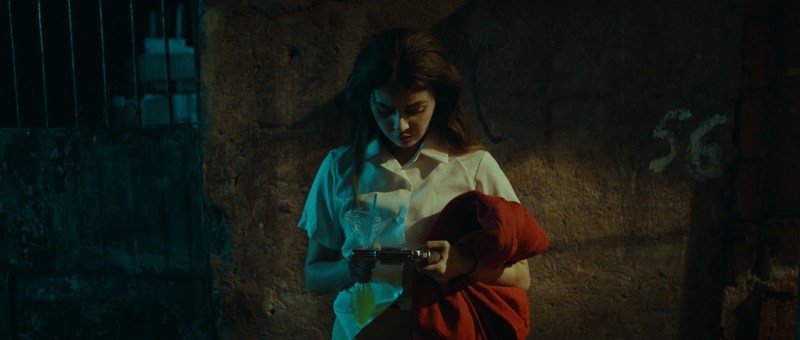
The never named heroine (Janine Gutierrez) is a meek and mild young woman who works in a department store where women, in particular, are expected to be prim and proper. The girl, however, is forever pulled up about the ladder in her tights, seemingly her only pair and as we’ll see she cannot afford to buy a replacement nor will one be provided for her by her employers who pat down employees as they leave the store each evening to ensure they haven’t stolen anything. Despite this however she believes she works hard and is under-appreciated, her sense of disappointment palpable as she witnesses another young woman be named employee of the month. Her colleagues view her as aloof because she is always the last to leave the building and never joins them for drinks, little knowing that it’s not her shyness that keeps her away but shame in her poverty. She has a long and arduous journey home to the poor part of town where she shares a room with another young woman, unable even to make her rent because she sends most of what she earns to the mother she apparently feels unable to return to. For all these reasons, she finds herself alone with a predatory colleague (Felix Roco) who rapes her, sheepishly apologises, and then returns with more threatening violence to advise her to keep her mouth shut. 

The evening before she’d heard a gun shot, left her apartment to investigate and seen a man run away, noticing an abandoned pistol with a heart on the barrel discarded in a rubbish bin. After the rape, she picks it up, immediately pointing it directly at the abusive boyfriend of her roommate. The gun gives her a sense of empowerment that counters the trauma of her victimisation. She is already beyond caring and can now say all the things she’s ever wanted to say to the men who treat her with such utter contempt, taking a flirty customer to task for his inappropriate behaviour with his young daughter sitting right next to him, and eventually giving her boss a piece of her mind when he finally fires her over something as petty as a barely visible uniform infraction. 

The girl had not usually been the type to complain, both her sleazy landlord and priggish boss keen to tell her that there are plenty of people waiting to take her place as if she should be grateful that her awful life is still not more awful. She and her friend dream of escaping the city, going home, or at least far away to a place where they could live a better life. Jun Jun (Elijah Canlas) the teenage drug dealer from the news reports dreams of something similar, lamenting most of all that he had homework due before he became the subject of a manhunt with which he’d struggled. He wonders how he might have done. His friend gives him all his savings which he’d been collecting for his own escape, hoping to return to his mother with his younger sister in tow in order to save her from a father he at least fears is abusive. 

Tracking through the history of the gun before it found its way into the hands of the girl, Red takes us back to the authoritarian violence of the Marcos regime as a nervous policeman assassinates “activists” in place of the current “drug dealers”, his son eventually picking up his gun a “policeman” like his father but filled with resentment towards inescapability of his fate. The gun passes from hand to hand, a child sticking the little heart sticker on it, creating only more chaos wherever it goes. It gives the girl the courage she thought she lacked to seize her agency, to talk back, to be “unladylike” in insisting on her equality in the face of the countless men who ignore, cat call, and abuse her. But the gun itself is not enough, her quest for violent vengeance hollow and unfulfilling, the only real liberation coming as she decides to abandon it in a final act of catharsis that breaks the cycle of violence and oppression which had trapped each of the gun’s owners. As a boy had said, it’s all personal. You might think it’s nothing to do with you, but you can’t escape the oppressions of the world in which you live be they poverty, misogyny, or authoritarianism. 

Largely taking place at night, Red bathes her city in the tones of neo noir, a land of shadows among neon, a shining cityscape of high rise buildings the like of which neither the girl or the street kids are ever likely to enter. Making fantastic use of music from the noirish jazz to the nostalgic pop of the oppressive ‘80s she fully embraces the pulpy exploitation of the material but always maintains a sense of playful irony, never forgetting the full import of her sometimes grim satire of life on the margins of Duterte’s Philippines as her variously oppressed protagonists seek freedom in violence but find only more constraint in the depths of nihilistic despair.


The Girl and the Gun streamed as part of this year’s New York Asian Film Festival.

Original trailer (English subtitles)

Signal Rock (Chito S. Roño, 2018)

kinopoisk.ru“Family is family, I can’t just say no” a young woman tells her boyfriend in response to his angry outburst on discovering that, like all the young women round these parts, she’s being dispatched to another part of the country to work in a bar. Inspired by true events in the ‘90s, Chito S. Roño’s Signal Rock situates itself in an idyllic fishing community left behind by the modern world like a lonely rock pool after the tide has pulled out. A microcosm of the nation itself, the island has become used to its transitory status as a conduit between two worlds, dependent on those who leave for its survival while the young men rendered incongruously obsolete have little more to do than battle their feelings of resentment and powerlessness.

Our hero, Intoy (Christian Bables), is the youngest son of the Abakan family, charged like so many young men with responsibility over technical things – in this case, maintaining the mobile phone which is the only point of contact that they have with oldest daughter Vicky who is supporting them all while working overseas in Finland. Remote as it is, the only place you can get a signal on the island is by climbing to the top of a rocky outcrop so communication has to be carefully planned in advance. This becomes a particular problem when Intoy discovers that the reason the money from Vicky hasn’t been coming through is that her relationship with a Finnish man with whom she has a small daughter is falling apart because he is both abusive and adulterous. As her daughter Sofia was born in Finland, Vicky fears that her boyfriend will try to seize custody and prevent her returning home to her family. Intoy, a fiercely protective brother, is not about to let that happen and sets about mobilising the community to hatch a plan to ensure Vicky and Sofia come home safely.

Despite Intoy’s protective instincts, the rest of the family’s relationship with Vicky is ambivalent. Oldest son Joaquin (Arnold Reyes), one of many resentful middle-aged men left on the island with not much to do, endlessly complains about the lack of ready money from his sister which he claims he needs to buy a motorbike in order to work. Joaquin also resents the shame of Vicky’s out of wedlock pregnancy, while the parents are still a little put out about the financial sacrifices they had to make in order for Vicky to achieve her “dream” of going abroad.

In order to sell the fantasy that Vicky comes from a wealthy family in the Philippines which is perfectly well equipped to support herself and her daughter, the Abakans are forced to confront their longstanding family issues. Intoy’s parents have been estranged for some time with his father technically living in a shed outside the main house, apparently loathed by his wife who claims the youngest two children are a result of marital rape. Another product of the patriarchal society, Intoy’s parents apparently eloped at a young age so that his mother could escape a marriage arranged by her father, only for the relationship to sour when Intoy’s dad lost his job at an American-run factory causing his wife to become disillusioned with his ordinariness.

Little seems to have changed in the last 30 years in that the lives of women are still largely dictated by the whims of their fathers. Vicky may have made a free choice to go abroad, but seeing as work is easier to come by for women, it is the norm for girls of the island to be sent away while the boys remain home alone. While dealing with his sister’s plight, Intoy is also facing the inevitable heartbreak of losing his girlfriend Rachel whose father has arranged for her to work in a bar in the city. As Intoy points out, from the parents’ point of view bar work is a pathway to finding a rich foreign husband – like Gina, another young woman from the village, who is returning home to celebrate her marriage to an elderly German (official now that his divorce has come through). Hardly pausing at the dockside, Gina introduces her former lover as a “cousin” before whispering in his ear that her feelings haven’t changed and she hopes to bring him to Germany for a better life after the old man snuffs it.

Intoy makes a kind of living on the island running errands for older people and acting as an MC during village celebrations, but as there is no real work round here and all the girls are gone, the young men largely spend their time playing basketball and getting into fights. They resent being forced to live off their sisters and seeing the women they love promised to other men, but have no other option than to make uneasy peace with their lack of possibilities. Intoy battles against his baser emotions, remaining kind and cheerful as he convinces his friends and neighbours to help him forge documents that imply his sister owns property while cosying up to the local mayor who hopes to hang on to power at the next election by convincing his wife to stand as a candidate.

Intoy alone is desperate to preserve the integrity of his family, even when spread across continents, standing out on Signal Rock as a kind of beacon left behind solely to convey information from one point to another. Having helped his sister, however, he discovers the depths of her resentment in her embarrassment at the idea of returning home after receiving the help of so many people. He loses his temper, unable to understand his sister’s rejection of everything he has worked so to protect at great cost to himself. Even so, Intoy manages to maintain his cheerfulness and desire to help others, sinking back into island life with his customary stoicism even if mildly troubled by a bargain he may have committed to without fully comprehending its implications. An ambivalent depiction of idyllic island life built on the back of female exploitation and entrenched patriarchy, Signal Rock nevertheless finds finds hope in community spirit and in its hero’s essential goodness.


Signal Rock screens in Chicago on Oct. 3 as part of the ninth season of Asian Pop-Up Cinema where actor Christian Bables will be present for an introduction and Q&A.

Original trailer (English subtitles)