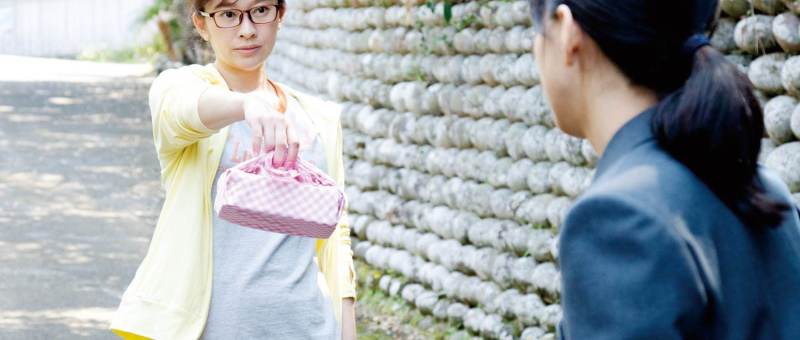

Bento Harassment (今日も嫌がらせ弁当, Renpei Tsukamoto, 2019)

Bento harrassment posterChildhood’s a funny thing. Obviously lacking life experience and used to being the centre of someone’s universe, children can be curiously self-centred, little knowing the hard work their parents put in to try and make them happy until they suddenly realise years later that their mothers must have toiled through the night just to finish that costume for fancy dress that they didn’t really want to wear. Fed up with her teenage daughter’s sullen indifference, the heroine of Bento Harassment (今日も嫌がらせ弁当, Kyo mo Iyagarase Bento) comes up with an ingenious solution – increasingly elaborate lunchboxes designed to vent her frustration in a way that’s impossible for her daughter to ignore.

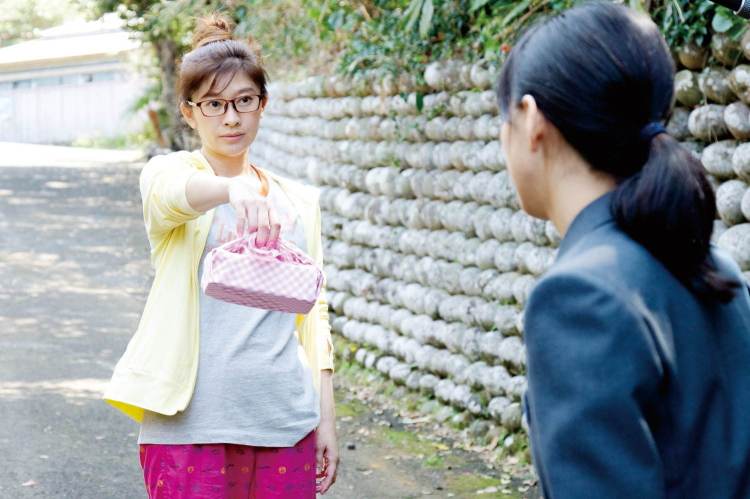
12 years previously Kaori (Ryoko Shinohara) was blissfully happy with her two little daughters, Wakaba (Rena Matsui) and Futaba (Kyoko Yoshine), but then her husband was killed in an accident and her life was turned upside down. Now she lives alone with her youngest daughter Futaba who has entered something of a rebellious phase, never directly talking to her mother but communicating through pithy, passive aggressive texts. In a bid to get her attention, Kaori decides to play her at her own game – by becoming so annoying that she’s impossible to ignore. From the day that Futaba enters high school she commits herself to making one “annoying” bento every day, eventually adding a message or two into the mix. Much to Futaba’s chagrin, her mother’s bento becomes a cause of daily excitement among her school friends who can’t wait to see how her mother has chosen to troll her on this particular day.

Perhaps tellingly, Kaori and her daughters live on a small island, Hachijojima, which is technically classed as “Tokyo” though in another sense almost as far from the bustling metropolis as it’s possible to get. There are no trains, or shopping malls, or convenience stores, just cows and wholesome wisdom. Caught between one thing and another, Futaba quits her after school athletics club to sit in a field and write angsty poetry about how she’s all alone in the universe. She doesn’t understand why her mum’s so extra and is confused by her attraction to a childhood friend (Kanta Sato) who has now become buff after developing an obsession with taiko drumming. Beginning to figure out why her daughter’s so moody lately, Kaori doubles down on the annoying bento plan but tries to put a little guidance in there too to push the indecisive Futaba towards making concrete decisions about her future.

Unlike the typically self-sacrificing mothers of “hahamono”, Kaori has her spiky side and never particularly looks for thanks or recognition from her daughters only basic civility. She works two jobs (one in a bento shop and another in a pub) and still makes time to devote herself to the petty art of annoying bento which she also posts online on a blog which becomes an instant hit with similarly stressed out parents looking for a little innocent revenge. Through the blog she finds herself bonding with Shunsuke (Ryuta Sato), a widowed father of a five-year-old boy who is struggling to perfect the art of bento though his aim is less revenge than trying to bond with his son who obviously misses his mum. Yet even “annoying” bento comes from a fundamental place of love – after all, you don’t spend all night cooking to send a passive aggressive message to someone you don’t like. Rising to the challenge, Futaba refuses to admit defeat and makes a point of eating all of the annoying bento without a word of complaint, allowing a kind of communication to arise between herself and her extremely patient mother.

Seeing all her dreams crushed on one extremely bad day, however, makes Futaba lose faith in her mother’s gentle wisdom. Kaori tries to convince her that nothing’s ever really “wasted” because even when things don’t work out the way you hoped they still teach you something else but that’s a hard lesson to learn when you’re young and unused to disappointment. Nevertheless, thanks to her mother’s relentless trolling and some careful words from her sister, she comes to realise just how much her mother has sacrificed on her behalf and understand her mother’s love. A warmhearted tale of mother daughter bonding and an ode to persevering through life’s various difficulties, Bento Harassment is a wholesome treat and inspirational tribute to living life without regrets.


Bento Harassment screens in Chicago on Sept. 27 as part of the ninth season of Asian Pop-Up Cinema.

Original trailer (English subtitles)

The Enigma of Arrival (抵达之谜, Song Wen, 2018)

The Enigma of the Arrival posterChinese cinema has always had a fondness for melancholy nostalgia. Perhaps its natural enough to romanticise one’s youth and long for a simpler time of possibility, though that same desire for “innocence” has often been read as a rebuke on the “soulless” modern economy and critique of Westernising individualism of a China some feel has lost its way since the economic reforms of the ‘80s and beyond. Song Wen’s The Enigma of Arrival (抵达之谜, Dǐ Zhī Mí), seemingly borrowing a title from the novel by VS Naipaul, seems more straightforwardly personal in its universality as it locates a single fracturing point in the lives of a collection of young people forced apart yet eternally connected by tragedy and disappointment.

Song begins in the present day with his 40-ish narrator, San Pi (Liu Wei), who tells us that he is looking forward to reuniting with his old friends with whom he has largely lost touch. Falling into a reverie, he takes us back to their harbourside hometown some 15 years or so previously when he used to hang out with three friends from school – Feng Yuan (Dong Borui), Xiaolong (Li Xian), and Da Si (Lin Xiaofan). Young men, they spent their time watching “cool” Hong Kong movies like Days of Being Wild and A Better Tomorrow, which were always followed by a blue movie watched incongruously in public. The trouble starts when the guys meet local beauty Dongdong (Gu Xuan) and are all instantly smitten. Hoping to get themselves a more impressive motorbike, they make a fateful decision to steal some diesel and sell it on, only the fuel they steal belongs to gangsters which lands them in a world of trouble they are ill-equipped to deal with despite their adolescent male posturing. Dongdong disappears without trace leaving the guys wounded and confused.

As San Pi tells us in his opening monologue, things are not always as they seem, “Life is floating between fiction and reality”. It’s a particularly apt comment from him because, as we later find out, he was present only for the single climactic events not for the ones which preceded and followed them. He didn’t go with the guys when they, mistakenly, tagged along with Dongdong to an athletics tournament to which she only intended to invite Xiaolong, and as he left soon after Dongdong disappeared his memories of those times are not first hand. He invites us to assume that each of the men has their own narrative which necessarily places themselves at the centre and offers a flattering portrait of their actions which attempts to absolve them of guilt for whatever they did or did not do to lose Dongdong.

A case in point, though it seems that Dongdong favoured Xiaolong who has spent the remainder of his life pining for her, Fang Yuan always thought she fancied him while Da Si was technically dating her friend Xiaomei (Zhang Qiyuan) but seems to have developed some kind of protective sympathy towards her which may have an edge of puritanical resentment. San Pi is the only one who does not seem to have engaged in sad romance, a perpetual outsider looking on from the edges. That might be why he seems to be the one eulogising their friendship, less hung up on what happened to Dongdong than on the effect it had on the later course of his life and that of his friends. Reuniting in a Japanese-style onsen, an ironic reminder of their youthful dreams to see Japan, he wonders if they might return to their teenage intimacy but discovers that youthful innocence cannot be reclaimed once lost, some secrets must stay secret, and some betrayals are too much to bear. They will never go to Japan together, or even catch a movie in a rundown theatre. It would be embarrassing; the moment has passed.

Song frames his tale in a mix of hazy images and black and white, neatly symbolising the patchwork quality of narrative assembled from memory and wishful thinking, coloured by a single perspective that lacks the composite whole of accepting the reality of others’ perceptions. In contrast to the longing for the old China that marks many a youth drama, Song’s young guys yearn for the world – they worship Hong Kong tough guys, listen to Western music, and dream of seeing Japan, but their present life is one of settled middle-aged disappointment marked by the unresolved tragedy of their pasts which both binds them together and forces them apart. “No one is flawless” Xiaolong is reminded, but somehow that only makes it worse. A melancholy ode to ruined friendship and the nostalgia of bygone adolescent possibility, Enigma of Arrival is a suitably abstract effort from the founder of the XINING FIRST International Film Festival and signals a bold new voice on the Chinese indie scene.


The Enigma of Arrival screens in Chicago on Sept. 19 as part of the ninth season of Asian Pop-Up Cinema where director Song Wen will be present for an intro and Q&A.

Original trailer (English subtitles)
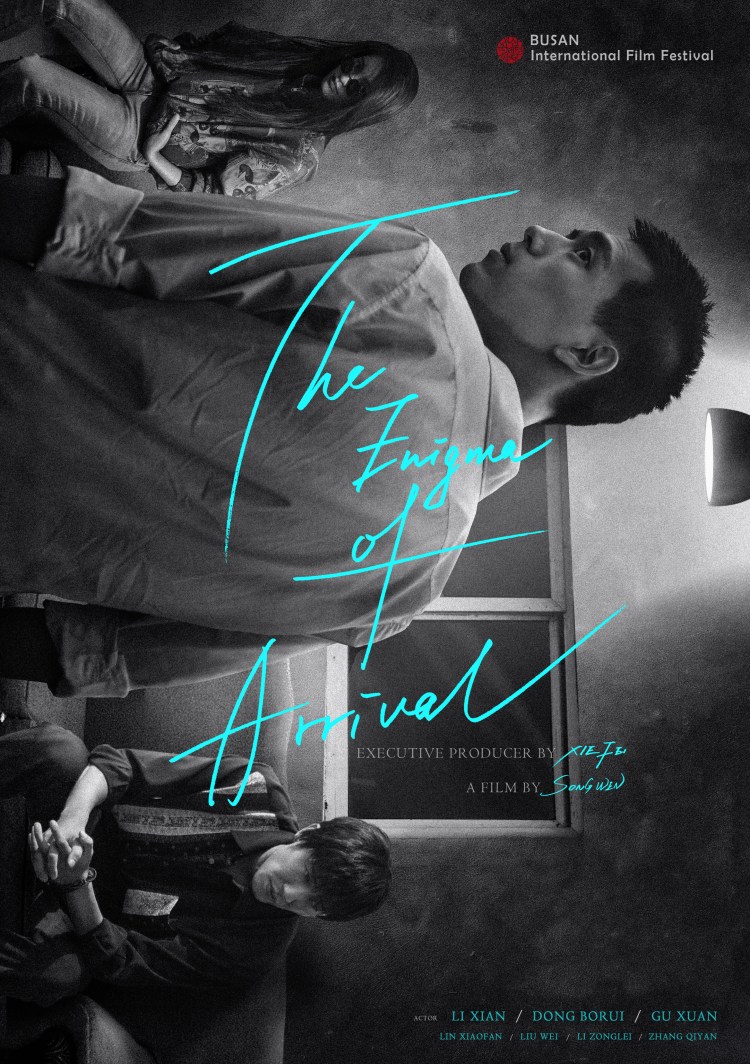
Swing Kids (스윙키즈, Kang Hyeong-cheol, 2018)

Swing Kids poster 2“Fuck Ideology” the embittered hero of Kang Hyeong-cheol’s Swing Kids (스윙키즈) exclaims, pushing back against his casually cruel commanding officer from the comparative safety of the stage on which he decides to cast off his frustration through a natural love of dance. It may be too much of a truism to suggest you can dance your way to freedom while a very literal prisoner of war, but in any case Kang eventually shows us that sooner or later someone will be along to crush even the smallest of dreams and it may not be the people you’d most expect.

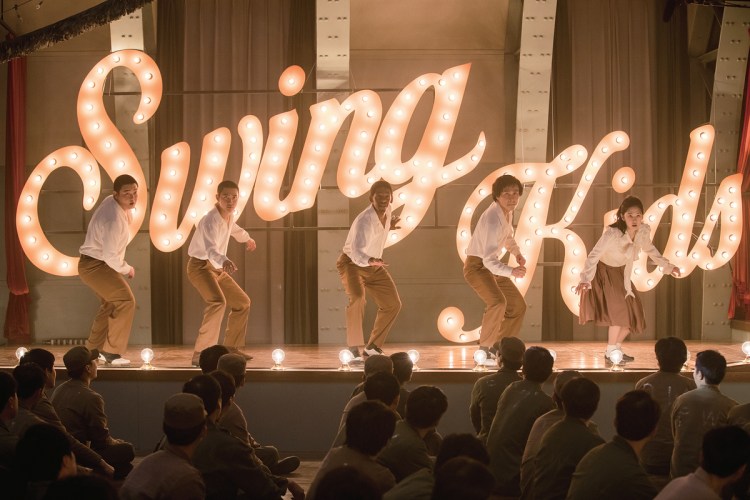
The film opens with a propaganda newsreel that eventually skews pro-North in lamenting the poor conditions at the Koje POW camp where a small civil war recently broke out between those who remain fiercely loyal and those who have been seduced by American freedoms and no longer wish to return. Unfavourably comparing Koje with a camp in the North which is run under strict adherence to the Geneva convention so you’d hardly even think there was a war on at all, the film ends by casting shade on the American forces’ casual cruelty and inability to keep their house in order. The old commander having been sacked, newbie General Roberts (Ross Kettle) is keen to reform the camp’s image and so he hatches on the idea of getting Sergeant Jackson (Jared Grimes), who used to be a Broadway tap dancer, to teach the “commies” the American dance of freedom which seems tailor-made for front page photo sensation.

Jackson is reluctant to take the job but is persuaded when Roberts attempts to threaten him over his complicated personal life which has seen him breaking regulations to earn extra bucks in the hope of getting transferred back to Okinawa where he apparently had a woman he wanted to marry and a child he needed to make legitimate. Time and again we’re told that getting sent to the Korean War is something that happens to soldiers who’ve made mistakes, which might explain why the camp appears to be staffed by a collection of thoroughly unpleasant, incompetent foot soldiers while Roberts himself is mostly interested in raising its profile to save his own reputation.

“Communism, Capitalism. If nobody knew what they were, no one will kill or be killed” a young woman points out, quite reasonably before awkwardly wading into an ill-advised debate over who is more oppressed – ethnic minorities or women in a time of war. Sgt. Jackson who hails from the land of the free had to abandon his dream of the stage because of racism and continues to experience persistent micro aggressions from junior soldiers who refuse to follow his orders. The Korean internees are often no better, throwing up their own racial slurs and parading their cultural ignorance by reserving a special layer of scorn just for him in addition to that they feel for the Americans who have, after all, wandered onto their land and decided to have a war on it while making them join in. Communism and Capitalism, another soldier intones, are concepts made by and for the Russians and Americans, they have precious little to do with him so why are he and his loved ones supposed to die over an ideological disagreement?

Hero of the North Ki-soo (Do Kyung-soo) remains conflicted. He was loyal and truly believed in his cause, but secretly has the heart of a dancer and longs for the freedom of physical movement. He can’t talk to Jackson, or to another of the Swing Kids who is a lonely Chinese soldier who can only speak Mandarin (Kim Min-Ho), but discovers that they do have a shared language in dance and are able to communicate on an elemental level that makes culture an irrelevance. Feisty young woman Yang Pallae (Park Hye-su), who, out of necessity, has learned to speak three additional languages (English, Mandarin, and Japanese), discovers something much the same as she reluctantly begins dancing even though there’s no money it, while lovelorn Kang Byung-sam (Oh Jung-se) wants to dance to become famous because he’s become separated from his wife and thinks that then she’d be able to find him again. 

As Pallae puts it, when she puts the tap shoes on all the awful things go away. Pointedly introducing the big dance number, Jackson describes the Swing Kids as longing for freedom and liberalism while fighting for their rights, speaking as much for himself thoroughly fed up with the manipulative Roberts who seems set to hang the bunch of them out to dry as he is for the disparate collection of dancers whose young lives have been ruined by the chaos of war. “Fuck ideology” indeed, all they want to do is dance but repressive regimes aren’t good with people having fun expressing themselves and so even this small dream seems to grow ever more distant. What started off as a cheerful musical comedy undergoes a decidedly Brechtian tonal shift in its final moments, neatly underlining the terror and unpredictability of life in war but nevertheless extremely hard to reconcile with the inspirational cheerfulness of all that’s gone before. Still for the vast majority of its running time, Swing Kids is a joyful celebration of the universal language of movement and an ode to the power of escapist fantasy in a cruel and confusing world.


Swing Kids screens for free in Chicago on Sept. 14 as part of the ninth season of Asian Pop-Up Cinema where actor Jared Grimes is expected to appear for a Q&A. It is also available on US blu-ray courtesy of Well Go USA.

International trailer (English subtitles)

Juror 8 (배심원들, Hong Seung-wan, 2019)

Juror 8 poster 1What is the role of the law in a free and democratic society? In an effort to democratise justice, Korea held its first jury trial in 2008 giving “the people” a voice in the courts. As might be expected the judiciary had its doubts. Where judges and lawyers are best placed to assess the evidence and draw their conclusions, might not ordinary citizens be swayed by emotion or argument? Then again, compassion might be a force sorely lacking in a legal process some might feel to have become too efficient in its keenness to see justice is done speedily, losing all important scrutiny and allowing corruption and complacency to sneak their way in.

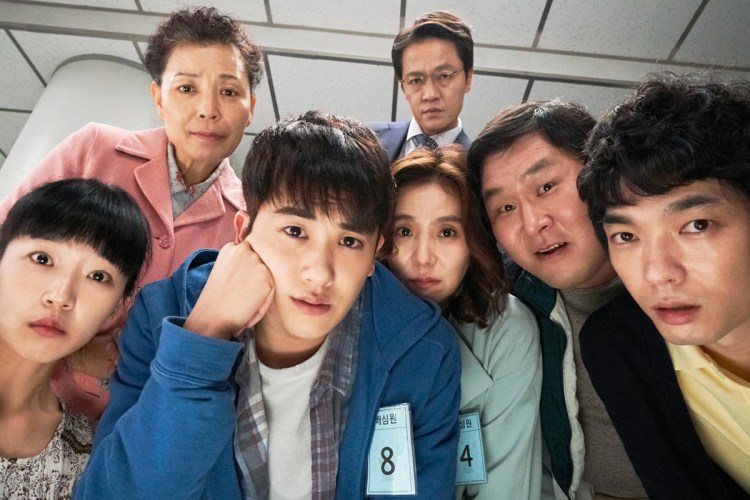
Juror 8 (배심원들, Baesimwondeul), a courtroom comedy drama, subtly puts the nation on trial as it asks what the point of the law is if it’s wielded like a blunt object. The case in hand concerns a middle-aged man, Kang Du-sik (Seo Hyun-woo), accused of hitting his elderly mother (Lee Yong-yi) on the head with a hammer and then throwing her off the balcony to disguise the crime. Though the defendant made a confession to police shortly after the incident, he did so vaguely from a hospital bed after being knocked out and now claims he can’t remember the events in question. This presents a problem for the judiciary who had chosen this case for the first jury trial precisely because it seemed so open and shut, all the jury was supposed to do was consider sentencing. Now they’re being asked to consider guilt or innocence and asking lots of awkward questions in what was supposed to be a token effort on behalf of law enforcement to demonstrate that it is listening.

Everything might have gone to plan if it hadn’t been for problematic “Juror 8” Nam-woo (Park Hyung-sik ) who, despite giving some worryingly conservative answers in his interview, instantly sympathises with the suspect and worries that there are too many unanswered questions in the evidence presented. His conviction only strengthens when he wanders off trying to get to the patent office to file sample of a self-defence device he was trying to launch as a business and accidentally meets Kang who seems despondent and frightened, worried he really might be guilty but fundamentally unable to remember.

More cynical minds might ask if Kang’s memory lapse is merely convenient and he hopes to exploit the jury trial to win acquittal through sympathy. Having noticed that Kang has no fingers, Nam-woo insists on a test to see if he is able to swing a hammer only for others to point out that there is no real way to know if he is not physically able to do it or chooses not to to aid his case. Meanwhile, Kang sits sullenly like a defeated ball of pent-up rage, eventually exploding when the jury is handed a letter he claims he was forced to write expressing frustration with his mother’s refusal to sign a legal separation form so that he would be eligible to receive welfare payments.

As his lawyer later puts it, the real villain here is poverty. Kang was raised by a single-mother, something still frowned upon, who had to leave him alone to go out to work. She locked the door from the outside to keep him safe, but that also meant he was unable to escape a house fire and was badly burned at only five years old sustaining prominent facial scarring and the loss of the fingers on both hands which means he is unable to work and cannot easily write. According to the testimony, Kang and his mother argued constantly over money, especially since her job washing dishes at a restaurant came to an end. As her son and dependent, he was unable to claim benefits and wanted, the prosecution claims, to legally sever ties. When his mother refused, they allege that he lost his temper, killed her, and tried to make it look like an accident.

Nam-woo is unconvinced as is another juror whose 30 years as an embalmer tell him that the head wound was unlikely to have been caused by a hammer. Juror 6 is dismissed for speaking out in court, his exuberance held up as an example of teething problems in the jury system, but his words strike a chord with some of the other jurors who wonder if the smug expression on the forensic scientist is there to mask the fact that he didn’t really bother to investigate because there had already been a confession and all he needed to do was “confirm” the police’s findings. Time and again, the jurors accidentally uncover the failings of justice in a system geared towards efficiency. Kang was pushed to confess by police keen to meet their targets, the confession then became basis for deprioritising his case. Or as some of the legal minds put it, they got “sloppy” because there was no sense in devoting time and energy to a matter already closed.

The same thing happens in the jury room. The jurors are ordinary people. They have lives waiting for them. Nam-woo wants to file his paperwork for the business loan, another juror has a child to get back to, one is a salaryman with an angry boss on the phone. Everyone has a vested interest in getting this over with as quickly as possible so they can all go home, but they also take their responsibilities seriously – much more seriously than they were intended to. Korea is a conservative society in which it is natural to follow the guidance of the authorities and the collective will, and so it seems natural to everyone that you simply rubber-stamp whatever the judge says. Nam-woo is a bit different, he notices details and he asks awkward questions. “Just go with the flow” the other jurors urge him, “when in doubt follow their lead”, but he wants to do what feels right. The exasperated businessman orders him to fall in with the boss, in this case the judge, but crumbles when another juror asks for his own opinion. He doesn’t have one, because he’s corporate drone and he’s been conditioned to do whatever the boss says without really thinking about it.

In any case, the jury system itself is a bit of a sham. The jury’s opinion is not legally binding, the judge only has to take it under advisement and can overrule. Sympathetic judge Kim (Moon So-ri), defended in her appointment as “strong and resolute like a man”, is fighting her own battles in a male-dominated arena, hoping for a long overdue promotion following the successful handling of this high profile case she only got through lottery. She begins to notice things she might not have when it was just a formality of sentencing a man who had confessed, but she is under pressure to maintain control and authority while demonstrating the magnanimity of the state. The jurors’ deliberations expose their pettiness and snobbery, some taking against Kang just because he lives in the poor part of town, but also their keenness to ensure the law is fair and exists to protect and not to oppress. Genial and humorous, Juror 8 addresses a serious subject with a lightness of touch and a subtlety that gently exposes the shortcomings of its society while placing its faith in “the people” to make a compassionate choice in the face of a fierce pressure to conform.


Juror 8 screens in Chicago on Sept. 12 as part of Asian Pop-Up Cinema season 9 where director Hong Seung-wan will be in attendance for an introduction and Q&A moderated by Korean cinema expert Darcy Paquet.

Original trailer (English subtitles)

Asian Pop-Up Cinema Returns for Season Nine

The Attorney still 2Chicago’s Asian Pop-Up Cinema returns for its ninth season from Sept. 10 to October 10 with another handpicked selection of the best recent East Asian cinema. Running for five weeks, the season highlights one region each week and also has a special mini focus on movie musicals!

Sept. 10,  7pm: The Odd Family: Zombie on Sale

Introduction and Q&A with Director Lee Min-Jae 

Odd family still 1A weird family take in the “zombie” victim of nefarious pharmaceutical plant experimentation and decide to keep him as a pet, especially once they realise that his bite has healing qualities with intense marketability. Hilarious off the wall zombie comedy. Review.

Sept. 12, 7pm: Juror 8

Introduction and Q&A with Director Hong Seung-Wan 

Juror No 8 still 1Courtroom comedy from Hong Seung-Wan inspired by Korea’s first jury trial in 2008. A young man is accused of murdering his mother. All the evidence points to his guilt and he has also confessed to the crime but one juror isn’t quite convinced.

Sept. 14, 2pm: Swing Kids

Swing Kids still 1A North Korean prisoner of war falls in love with tap dancing after being co-opted into a group by a former broadway dancer turned US Army captain in Kang Hyung-chul’s musical drama.

Sept. 15, 10.30am: Shadow

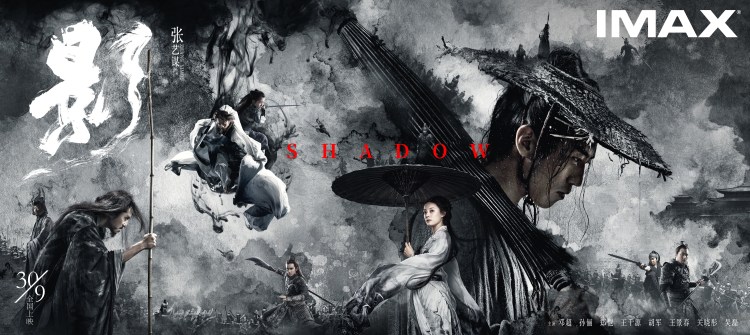
Shadow bannerDrawing inspiration from classic ink paintings, Zhang Yimou returns to the world of wuxia with a tale of balance and duality as a general’s double processes his conflicted loyalties in a world in which the king is weak and his enemies strong. Review.

Sept. 18, 7pm: Crossing the Border

Introduction and Q&A with Director Huo Meng

Crossing the Border still 1A little boy gets sent to stay with grandpa over the summer, but grandpa unexpectedly gets a message about an old friend he hasn’t seen in a long time and decides to drag his grandson halfway across the country on a makeshift vehicle to go visit him.

Sept. 19, 7pm: The Enigma of the Arrival 

Introduction and Q&A with Director Song Wen and Actress Gu Xuan

Enigma of the Arrival still 1A group of former uni friends reunite years after the disappearance of a friend broke them apart in an experimental drama from the founder of the “Chinese Sundance” Xining FIRST International Film Festival, Song Wen.

Sept. 20, 6pm: Wushu Orphan

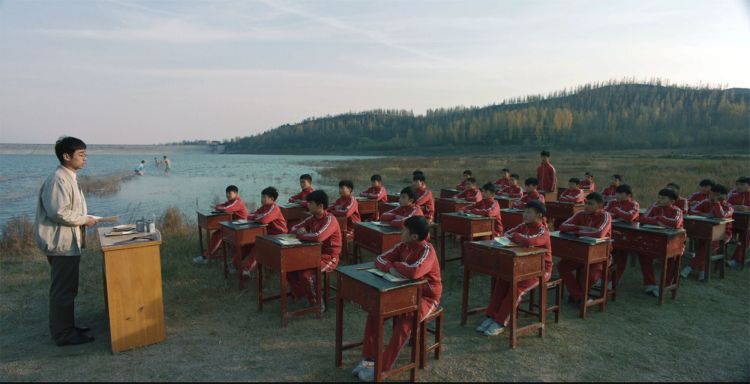
Wushu Orphan still 1The new teacher at a martial arts school is disheartened to discover his pupils’ lack of interest in education but bonds with a lonely young boy ironically disinterested in martial arts but talented in his studies. Review.

Sept. 25, 8pm: Melancholic 

Conversation with Director Seiji Tanaka and Producer/Lead Actor Yoji Minagawa 

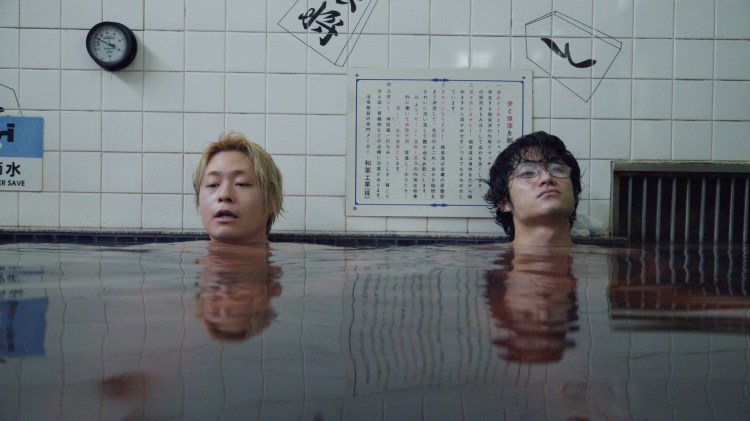
Melancholic still 1An alienated young man who graduated from Todai but remains totally opposed to the rat race ends up taking a job in a bathhouse after a conversation with a pretty girl he went to high school with, only to find out that the bathhouse doubles as a yakuza killing ground after hours. Review.

Sept. 26, 7pm: Can’t Stop the Dancing (Dance with Me)

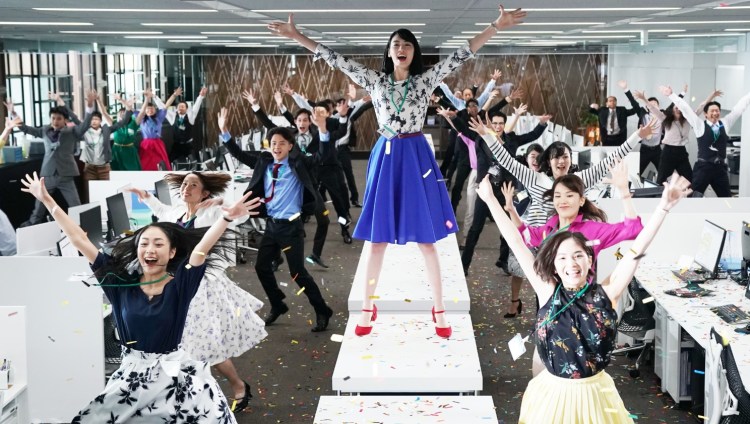
dance with me syill 1An ambitious executive’s dreams of promotion are dealt a serious blow when she ends up getting hypnotised by a shady theme park entertainer and finds herself breaking into song and dance like the heroine of an old fashioned Hollywood musical every time she hears music in the latest madcap comedy from Shinobu Yaguchi (Swing Girls, Waterboys, Wood Job!). Review.

Sept. 27, 7pm: Bento Harassment

Bento Harrassment still 1A single mother fed up with her teenage daughter’s nonsense starts sending passive aggressive messages through bento in a tale inspired by a real life blog.

Oct. 2, 7pm: The Pool

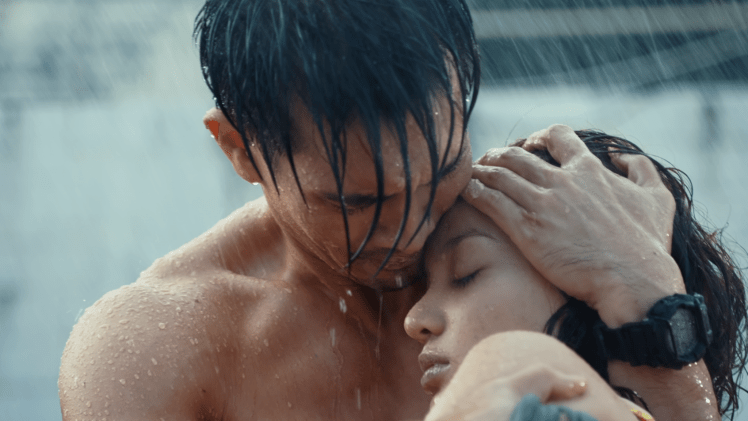
The Pool still 1A man ends up having to clean a disused pool after a film shoot but falls asleep on an inflatable raft. When he wakes up, he finds that the water level has fallen so low he can no longer climb out. He screams for help, but the only creature to hear him is a crocodile…

Oct. 3, 7pm: Signal Rock

Introduction and Q&A with Actor Christian Bables, Bright Star Award Recipient 

signal rockA young man from a small island where the only cell phone signal is found on a rocky outcrop desperately tries to help his sister and her child escape an abusive marriage in Finland.

Oct. 5, 2pm: Office

Office (TO) bannerJohnnie To’s beautifully choreographed musical set in the high stakes world of corporate finance.

Oct. 6, 2pm: Long Time no Sea

Long time no Sea bannerA poor boy missing his dad and a resentful teacher dispatched to a remote island against his will eventually bond through the unlikely medium of traditional dance in Heather Tsui’s charming coming of age drama. Review.

Oct. 8, 6pm: Miss Granny

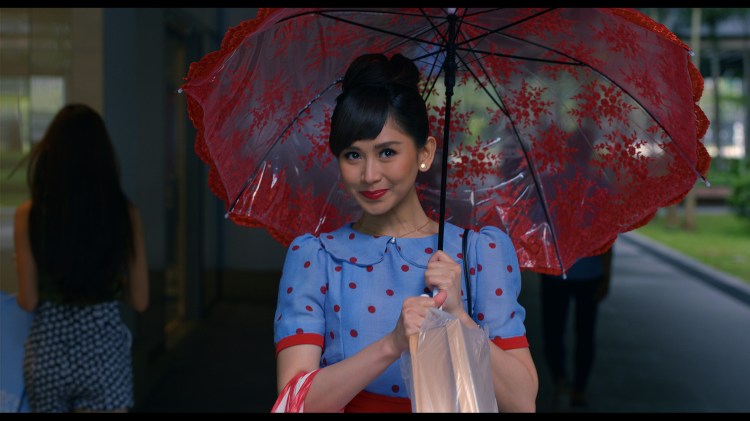
Miss Granny PhilippinesA Philippine take on the Korean musical comedy in which a grumpy, disillusioned old woman visits a mysterious photo gallery and gets a second shot at youth.

Oct. 9, 7pm: Deception of the Novelist

Introduction and Q&A with Director Christopher Sun and Producer/Lead Actor Justin Cheung 

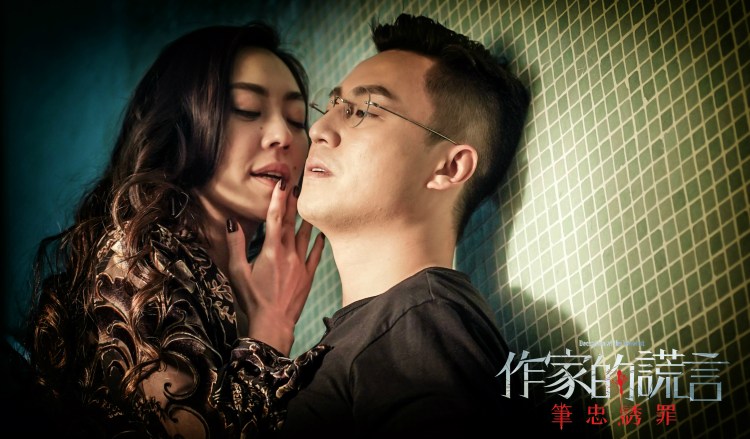
Deception of the novelist still 1A popular novelist’s marriage to his childhood sweetheart is on the rocks thanks to his womanising ways. When an attractive woman moves into the flat above him, he quickly begins having yet another affair but when she threatens blackmail his thoughts turn murderous…

Oct. 10, 7pm:  The Attorney

Introduction and Q&A with Actor Kenneth Tsang Kong, Scriptwriter Frances To, and Executive Producer Cherrie Lau

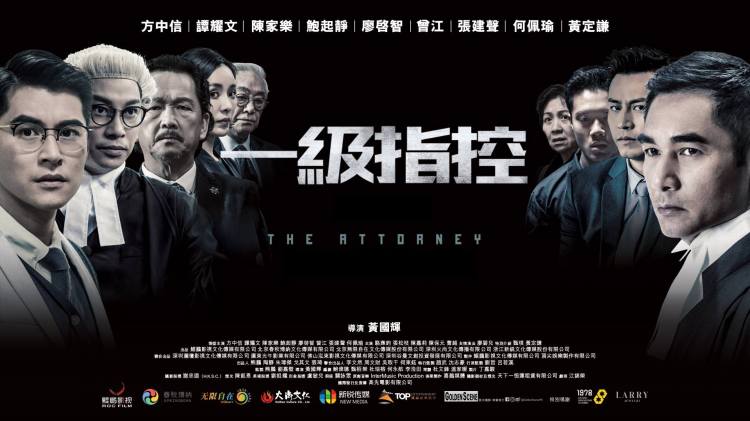
The Attorney bannerA jaded lawyer agrees to take on a seemingly open and shut case of a young man who wakes up next to the dead body of a billionaire’s daughter with no idea what happened only to find himself caught up in a wider conspiracy.

Asian Pop-up Cinema Season 9 runs in Chicago from Sept. 10 to Oct. 10. Full details for all the films are available via the festival’s official website where tickets are already on sale. You can also keep up with all the latest news by following Asian Pop-up Cinema on FacebookTwitterInstagram, and Vimeo.

Still Human (淪落人, Oliver Chan Siu-kuen, 2018)

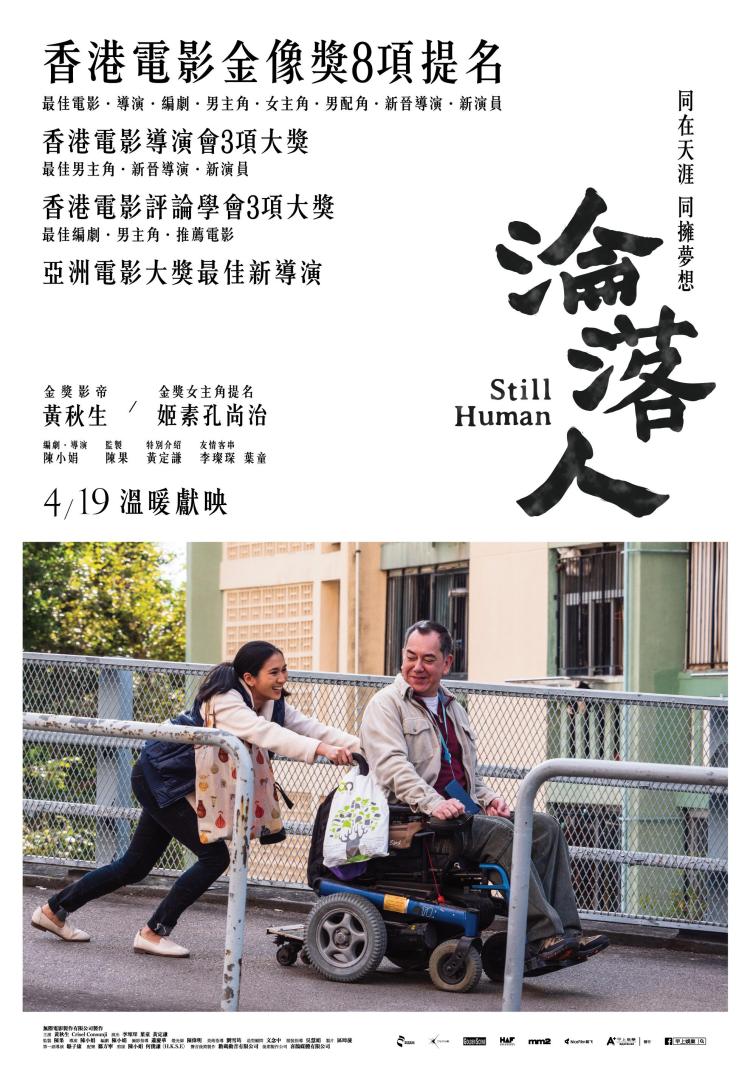
Still human posterA peculiarly Hong Kong phenomenon – crowds of Filipina domestic helpers filling the city streets on a Sunday, for many of them their one and only day off in an often 24/7 job. The presence of the Filipina workers has often been a taboo subject, as has the frequently inhumane treatment they receive from exploitative employers, but Hong Kong cinema has been in a self-reflective mood of late as Oliver Chan’s Still Human (淪落人) proves. A quiet ode to the power of breaking down barriers and embracing difference, Chan’s bold debut centres itself on the unlikely friendship between a disabled man and his Filpina carer.

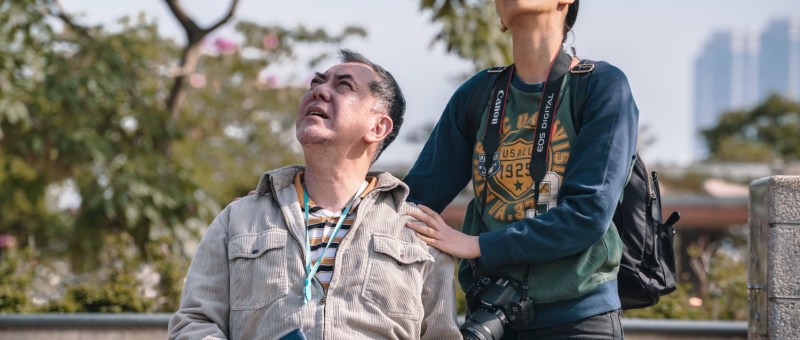
Cheong-wing (Anthony Wong) has been paralysed from the chest down for the past few years following a construction site accident. Though he has enough movement in his hands to be able to get himself about with an electric wheelchair, he needs day to day help with essential tasks such as cleaning and washing not to mention getting himself from the chair to the bed. His last few carers have all abruptly left him in the lurch so he doesn’t have high hopes for the latest – Evelyn (Crisel Consunji), a former nurse from the Philippines recruited by Cheong-wing’s friend Fai (Sam Lee). Cheong-wing is irritated to discover that Evelyn speaks no Cantonese while he has almost no grasp of English but is encouraged to make it work because he needs help and, according to Fai, none of the Cantonese-speaking carers is prepared to help him.

From Cheong-wing’s earliest behaviour, it might seem obvious why he has such a high turn over of helpers and one wouldn’t blame Evelyn for walking out right away but then again, perhaps he is only grumpy because he’s lonely and sick of everyone suddenly abandoning him. A solitary pensioner, Cheong-wing lives alone in a high rise council flat. His wife left him years ago and remarried while his medical student son is away in the US. On the ground he only has Fai – a slightly younger man who acts as a surrogate child in gratitude for the various ways Cheong-wing once looked after him when he arrived as teenager from the Mainland with no Cantonese and no family to help him.

Meanwhile, Evelyn tries to adjust to her new life, having made peace with her decision but making the best of a suboptimal situation. Scrimping and saving, she tries to get the funds together to definitively escape a bad marriage against the wishes of her family who constantly beg her for money and guilt her into doing their bidding. Making friends with some other helpers via a Facebook group, she joins the regular Sunday gatherings but feels herself somewhat out of place even as she begins to bond with the already jaded veteran overseas workers. Play dumb, they tell her. Don’t learn Cantonese, or do but don’t let your employer know. All that matters is not getting fired and sent back to the Philippines so keep your head down and say yes sir while always looking for a better gig or, best of all, a wealthy husband. Evelyn ignores most of their advice. She isn’t interested in another loveless marriage, what she wants is her freedom.

Nevertheless she continues to endure xenophobic micro-aggressions and constant mistrust despite her warm and winning personality. Cheong-wing, teaching her Cantonese, eventually begins to bond with Evelyn, convinced that she is a “good person” though maybe, like him, going through some tough times. Interacting with Evelyn allows his sweet side come through, making plain that he is at heart a kind and sincere man but one who had long since given up on life and kept others at a distance believing himself to be a burden. Where the traditional family has failed, found family plugs the gap as Cheong-wing and Evelyn pick up an easy paternal rapport, supporting each other with genuine warmth and affection as Cheong-wing discovers Evelyn’s long buried dream of becoming a photographer and commits to helping her achieve it all while knowing it will eventually take her away from him.

Realising that where there’s life there’s hope, the pair come to the conclusion that it’s never too late to dream and each find themselves edging towards what it is they really want from life with the confidence of knowing someone has their back and their best interests at heart. A warm and empathetic yet uncompromising look at life on the margins of modern Hong Kong, Still Human is a beautifully humane tribute to the healing power of human connection and the joy of finding kindred spirit in unexpected places.


Still Human was screened as part of the 2019 Udine Far East Film Festival. The film will also receive a special one off screening in Chicago courtesy of Asian Pop-Up Cinema on Monday 13th May at the Gene Siskel Film Center, 8pm where director Oliver Chan and actress Crisel Consunji will be present for a Q&A.

Original trailer (English subtitles)

Tracey (翠絲, Jun Li, 2018)

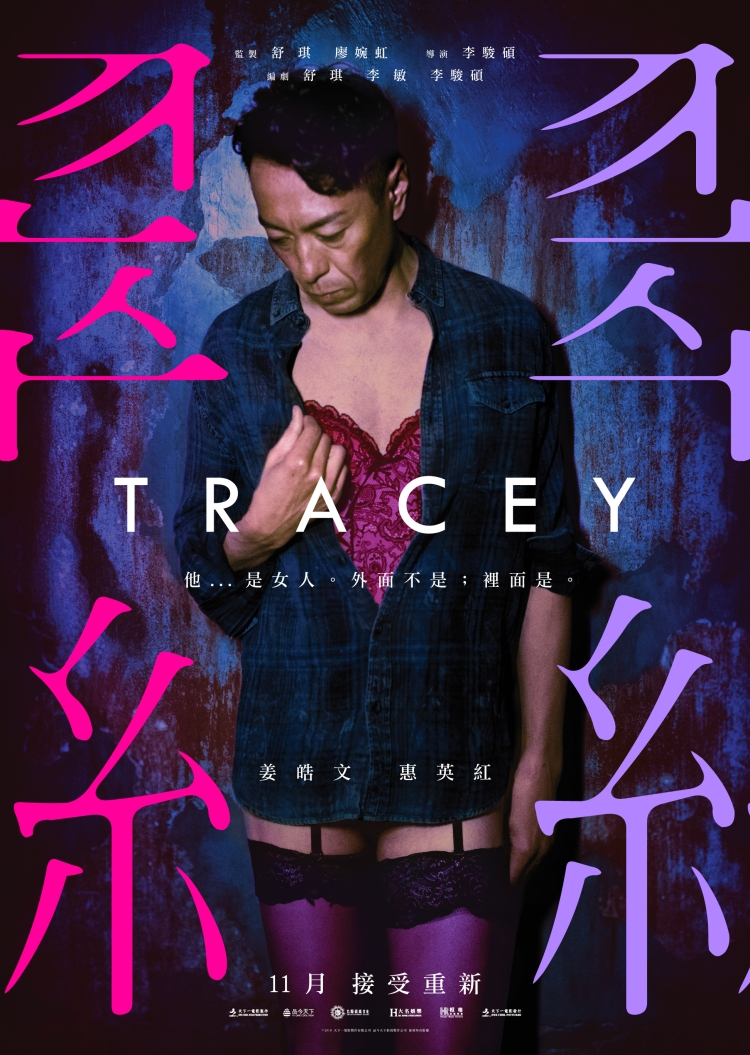
Tracey PosterHong Kong has often sought to present itself through its cinema as an ultramodern, cosmopolitan city, claiming a kind of cultural freedom from Mainland oppression. In truth, however, there are areas in which it may disappoint itself. Jun Li’s debut feature, Tracey (翠絲), is in many ways an empathetic attempt to redress the balance in making plain the destabilising effect emotional repression can exert across an entire society, causing nothing other than the mutual unhappiness which provokes one person to oppress another in service of nothing more than conventionality.

A married, 50-something father of two grown up children, Tai-hung’s (Philip Keung) conventional, ordered life is disrupted when he receives a phone call telling him that a treasured childhood friend, Ching, has been killed while working in Syria as a war photographer. Unbeknownst to anyone, and not quite admitted even to himself, Ching had been the love of Tai-hung’s life and his death finally forces him into a reconsideration of the feelings which are now, perhaps, a lost opportunity. The sense of loss is doubly brought home when he collects Ching’s partner, Bond (River Huang), from the airport and discovers that he had been legally married to another man in the UK though the pair’s marriage certificate is not valid in Hong Kong which presents a problem in trying to repatriate Ching’s ashes.

Bond, himself from Singapore where homosexuality is at least technically still illegal, knew of Ching’s love for Tai-hung and Tai-hung’s unrealised attraction to Ching but struggles with Tai-hung’s decision to not to embrace his sexuality, preferring to marry and have children in pursuit of a conventional life. Despite having grown up in an arguably even more oppressive society, Bond is 20 years younger and has perhaps benefitted from an increasingly liberal world in which greater awareness has afforded him the vocabulary to process Tai-hung’s complex identity with a delicacy that was not available to Tai-hung in his youth, nor to his quasi-mentor Brother Darling (Ben Yuen) – a performer of Chinese Opera who specialised in female roles and confided to Tai-hung that he identified as a woman but is unlikely to have ever come across the term “transgender” let alone claim it as an identity.

Nevertheless, Bond’s arrival begins to push Tai-hung’s long repressed longing to the surface even if his first attempt to explain to Bond that he too identifies as a woman is met with mild derision as Bond misunderstands him in assuming his claiming of a female identity is an attempt to reject his homosexuality. What Tai-hung tries to explain to him is that he does not see himself as a gay man but a straight woman and therefore felt that pursuing his love for Ching, a man who loved men, would never have been a possibility. Fearing his gender identity would never be accepted by anyone, Tai-hung kept his true self hidden even from his closest friends and unwittingly placed a wedge between himself and the man he loved.

Bond pushes him still further with the perhaps unfair charge that his entire life has been essentially selfish and founded on the continued deception of his wife and children. Despite its seeming conventionality, Tai-hung’s family life is not altogether happy. His wife, Anne (Kara Hui), is a fiercely conservative sort who prizes nothing so highly as respectability as she proves by rifling through the maid’s room in search of evidence of sexual indiscretion which she later uses as grounds to suggest firing her. As the couple’s son Vincent (Ng Siu-hin) points out, there is also an unpleasant racial component to her puritanical morality which objects to her Indonesian maid having a right to a private life, fearing that she will bring “disease” into the house by sleeping with another “foreigner”. This is perhaps why she objects to her pregnant daughter’s (Jennifer Yu) desire to divorce her highflying lawyer husband when she discovers that his serial philandering has resulted in a sexually transmitted disease which he has passed to her and which has thankfully been detected early enough to avoid harming the baby.

Despite Anne’s pleas with her daughter that you don’t reject someone for turning out to be different than you assumed them to be, she is obviously not ready to accept Tai-hung’s authentic self despite having been aware that there was always something slightly amiss within their marriage which prevented it from being a true and total union. It is perhaps this sense of nagging incompleteness and unhappiness which has pushed Anne’s need for respectable conventionality into overdrive, as if a superficially successful adherence to the rules could be a substitute for emotional fulfilment. Her own suffering then seeks to push her daughter into the same space as a self-sacrificing housewife who has exchanged personal happiness for the cold comfort of social respectability. 

Thanks to reuniting with a now elderly Brother Darling and finding himself accepted by the younger Bond, Tai-hung begins to find the courage to embrace his true self and discovers that many of his friends and relatives are more supportive than he might have assumed even if some of them may need time to get over the initial shock. As his mother tells him, the important thing in life is learning to find one’s peace of mind – something which could only be helped by abandoning the outdated Confucian ideas which continue to define the social order in favour of something warmer, freer, and fairer built on mutual acceptance and compassion.


Tracey screens as the closing night gala of the eighth season of Chicago’s Asian Pop-Up Cinema on April 24, 7pm, at AMC River East 21. It will also be screened in London as the closing night of this year’s Chinese Visual Festival on 9th May, 6pm, at BFI Southbank where members of the cast and crew will be attendance for a Q&A.

 Original trailer (English subtitles)

Memories of My Body (Kucumbu Tubuh Indahku, Garin Nugroho, 2018)

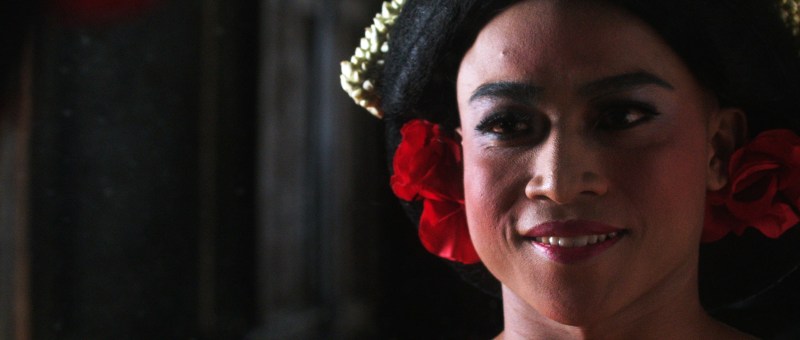
Memories of My Body posterYou view life through a tiny hole, as the narrator of Garin Nugroho’s Memories of My Body (Kucumbu Tubuh Indahku) so often observes. Loosely based on the life of Lengger Lanang dancer and choreographer Lianto, Nugroho’s 19th film examines the physicality of history as bodies become maps of trauma and dislocation while its itinerant hero is pushed from pillar to post through a series of abandonments and upheavals that leave him at the mercy of a society permanently on the brink of eruption.

We begin with the older Juno who narrates his story to us as if it were a piece of ritual theatre. The camera pans left and we meet Juno (Raditya Evandra) as a child – or more precisely, the child of the older Juno’s memory. Abandoned by his father, the boy begins hanging around a troupe of Lengger dancers for whom sensuality is all. Though Juno was originally attracted to the show for this very reason, peeping at the ladies through another “tiny hole” in the wall, he eventually becomes disillusioned with the dancers when he sees the group’s leader viciously beat an underling for having sex with his assistant at her instigation.

Sex, violence, and dancing continue to define the young Juno’s life even after he is taken in by an aunt when it becomes clear his father will never return. Following a brief obsession with chickens, Juno is then sent on to live with an uncle who trains him as a tailor where he develops a friendship with an ultra macho, soon-to-be-married boxer (Randy Pangalila) who too longs to be free of his bodily constraints but has become indebted to gangsters. Before long he finds himself in motion again before coming full circle as a costuming assistant with a troupe of travelling dancers where he becomes a favourite of the “Warok” (Whani Darmawan) but also the object of unattainable affection for the local military representative (Teuku Rifnu Wikana) of a corrupt regime whose insoluble jealousy seems set to burn the world around him.

As Juno’s uncle later tells him, bodies can go anywhere but they take their traumas with them. Even so, you have to love your body or all is lost. His uncle goes on to add that this family is particularly burdened, explaining the reason for his brother’s coldness to his son which turns out to lie in a rational distrust of family born of seeing his own massacred in a river, a sight he couldn’t seem to forget and eventually decided to erase by leaving his home and family far behind for the anonymous vistas of an unfamiliar island. Juno’s own traumas, as he seems to remember them, imprint themselves on his physicality and give weight to his dance as he tells his own story, filled with abandonments, rejections, transformations and rebirths in the intensely repressive atmosphere of a nation trapped in perpetual revolutions.

Juno’s own, slow path towards delight in his own body takes place against a series of external reformations obliquely referenced in a red terror threat to have the dancers denounced as communists, while primacy of religion remains paramount – the local military officer running for office, or more particularly his eminently practical but perhaps also compromised wife, is panicked by a photo in which he unwisely took Juno’s hand in public. Merely grasping a hand becomes suspect in an atmosphere of intense suspicion and any hint of impropriety potentially enough to destabilise an already volatile situation.

Illicit romantic jealously spurs on a greater tragedy, and Juno is soon on the road again. As Juno says, you see life only through a tiny hole – in this case through the rhythmic history of an itinerant dancer whose stage is perpetually ripped away from him as external freedoms shrink and all that remains is the unification of the contradictory elements of one’s own soul and the authenticity of touch and movement. Poetically told and boasting a wonderful selection of classic Indonesian pop music, Memories of My Body is a beautiful exploration of “muscle memory” as lived history and the tangible effects of a life lived in turbulent times.


Memories of My Body screens as part of the eighth season of Chicago’s Asian Pop-Up Cinema on April 23, at Joffrey Ballet Tower Studio A, 10 East Randolph Street, 7pm.

Original trailer (English subtitles)

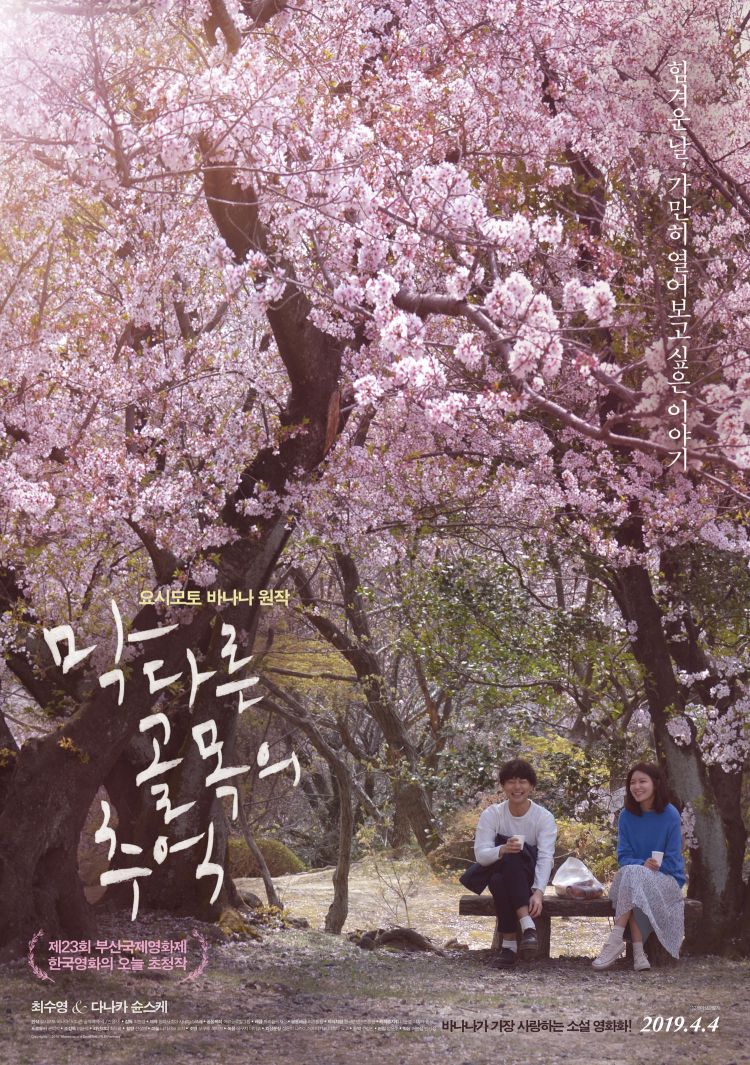
Memories of a Dead End (막다른 골목의 추억, Choi Hyun-young, 2018)

Memories of a dead end posterSometimes dead ends show up unexpectedly, as the heroine of Memories of a Dead End (막다른 골목의 추억, Makdareun Kolmokui Chueok) points out while ruminating on the abrupt revelation which has just rendered all her life’s hopes and dreams null and void. Adapted from the Banana Yoshimoto novella, Choi Hyun-young’s debut feature follows a young-ish Korean woman to Japan where she finds out something she probably knew already but didn’t quite want to accept and, thanks to the kindness of strangers, begins to see a way forward where she feared there might not be one.

Yumi (Sooyoung), a woman in her late 20s from a wealthy family, has been engaged to Tae-gyu (Ahn Bo-hyun) for the last few years but he has been working away in Japan supposedly preparing for their shared future. Unable to get in touch with him and worried he seems to be dodging her calls and refusing to return her texts, Yumi decides (against the advice of her steadfast sister) to go to Japan and confront him. Sadly, her family were right when they advised her that perhaps she should just forget her fiancé and move on. Tae-gyu has met someone else. On arriving at his apartment, Yumi is greeted by another woman who knows exactly who she is and why she’s come, but takes no pleasure in explaining that she and Tae-gyu plan to marry and were hoping Yumi would take the hint given a little more time.

Confused and heartbroken, Yumi checks into a hotel for the night planning to return to Korea the following day but a nagging phone call from her “I told you so / plenty of fish in the sea” mother (tipped off by her loudmouth sister) makes her think perhaps that’s not the best idea. Wandering around, she winds up at the End Point hotel and cafe where she cocoons herself away to think things through, trying to reconcile herself to the “dead end” she has just arrived at in the life path she had carved out for herself.

“End Point” is not perhaps an auspicious name for a hotel. A hotel is, after all, a deliberately transient space and not in itself a destination. The reason it might accidentally become one is perhaps on Yumi’s mind when she decides to check in, but despite the name the cafe is a warm, welcoming, and accepting place perfectly primed to offer the kind of gentle support someone like Yumi might need in order to rediscover themselves in the midst of intense confusion.

This is largely due to the cafe’s owner, Nishiyama (Shunsuke Tanaka), who, we later discover, was himself neglected as a child and almost adopted by the community who collectively took him under their wing and sheltered him from his childhood trauma. This same community still frequents the End Point cafe and is keen to extend the same helping hand to those in need, becoming a point of refuge for a series of lonely souls many of them travellers from abroad. Despite her desire for isolation, Yumi is finally tempted out of her room by the gentle attentions of the cafe’s regulars who make sure to include her in all their gatherings, reawakening something of her faith in humanity in the process.

In introducing her to the cafe, Nishiyama remarks that though it is literally in a dead end, many begin their forward journeys from here. A dead end does not, after all, have to be an “end point” but can become an opportunity to turn around and start again without necessarily having to go back the way you came. Yumi likes the End Point so much she briefly considers staying, but it would, in a sense, be a betrayal of its spirit. Nishiyama, becoming a staunch friend and ally, finally comes to the conclusion that her former fiancé was not a bad man even if he was a weak one, but that in all the time he knew her he never discovered the “treasure” of her heart as he seems to have done despite knowing her only a few days. Yumi takes this new knowledge with her on her forward journey as she abandons her much commented on practicality for warmhearted connection as a path towards fulfilment, learning to treasure her “dead end” memories not as time wasted but as a pleasant diversion which led her to exactly the place she needed to be in order to discover the treasure in her own heart and the willingness to find it in others.


Memories of a Dead End screens as part of the eighth season of Chicago’s Asian Pop-Up Cinema on April 17, 7pm, at AMC River East 21.

International trailer (English subtitles)

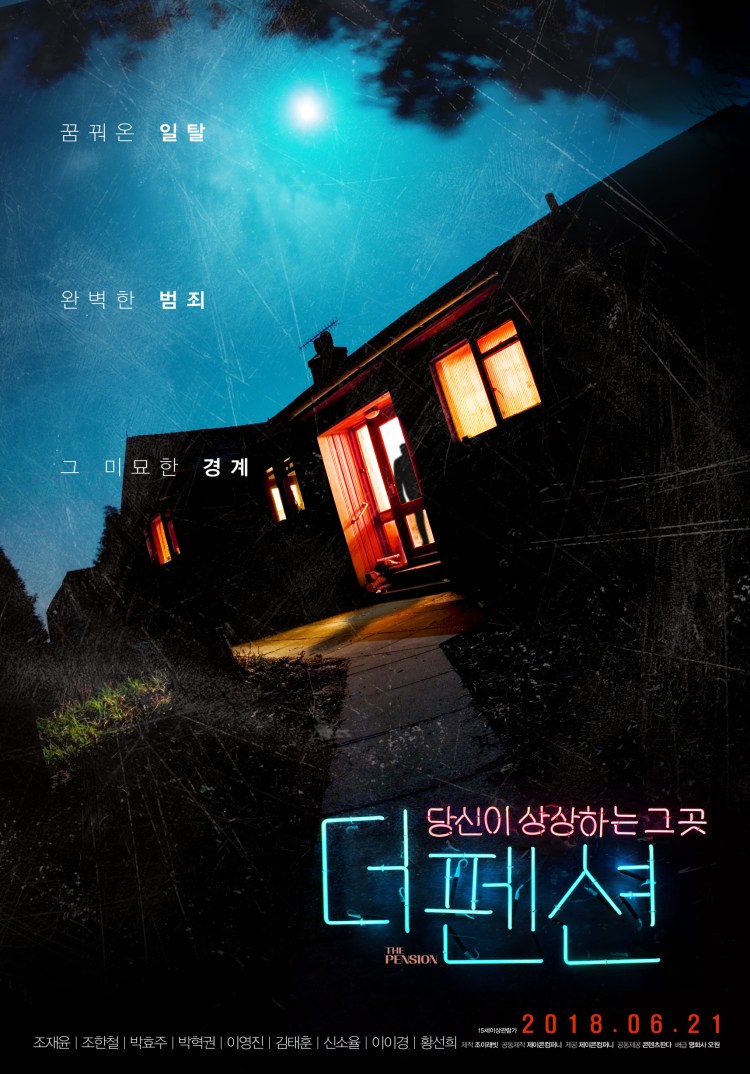
The Pension (더 펜션, Ryu Jang-ha, Yang Jong-hyun, Yoon Chang-mo, Jung Heo Deok-jae, 2018)

The Pension poster“We’re all lonely beings” the proprietor of a small mountain lodge advances hoping to comfort a distressed guest. The temporary denizens of The Pension (더 펜션), a four part omnibus set in a charmingly old-fashioned forest hideaway, are indeed mostly lonely beings making use of this liminal place to process the taboo away from the prying eyes of civilisation, embracing the savagery of the natural world as they cast off conventional morality to pursue their illicit desires be they vengeful, violent, protective or loving.

We begin with darkness as our first pair of guests, a man, Choo-ho (Jo Han-chul), and his wife Mi-kyung (Park Hyo-joo), seem to be all too interested in the family next door. Eventually we discover that the couple have come with ill intentions and revenge on their mind, though the man they’re after doesn’t seem so bad to begin with – he asks them to dinner with his wife and son who seem happy, but the atmosphere grows tenser as he begins to drink and a darkness creeps in. Before long Mi-kyung has set her mind on poetic justice, leaving the other couple’s young son in peril while Choo-ho struggles with his desire to stop his wife making a terrible mistake while not wanting to upset her.

Unhappy families continue to be theme with the second pair of guests – a married couple hoping to rekindle their listless romance in the peace and tranquillity of the remote mountain lodge. While the arrival is pleasant enough, perhaps too much so as the husband (Park Hyuk-kwon) puts on a show of making the effort, despair creeps in when he realises he’d made sure to bring his wife’s (Lee Young-jin) favourite coffee but forgotten the grinder. He wants her all to himself, but she just wants to go home and worries about their young daughter staying with a mother-in-law she doesn’t seem to like very much. Eventually the couple decide they need some time apart and she ends up meeting someone else (Kim Tae-hoon) in the woods to whom she recounts all the loneliness and isolation she experiences in her married life, seemingly trapped by conventionality but unconvinced that anything would be very different if she left.

The hotel owner (Jo Jae-yoon) might agree with her – a lonely soul he is too, though it appears he opened this hotel for just that reason, burying himself away from his heartache by coming to live alone with the transient presence of strangers and peaceful isolation of the woods. His mother, however, is not convinced and is constantly nagging him to get married – in fact, she’s set up a meeting for the following day meaning he’ll have to close the shop. That might be a problem, because he gets a surprise guest in the middle of the night, a distressed woman (Shin So-yul) intent on staying in a very particular room. Finding it odd, he can hardly turn her away with nowhere else to go but a TV programme on the causes of suicide (loneliness, the decline of the traditional family, economic pressures etc) convinces him he ought to check on her. Assuming she is merely lovelorn (as is he), he tries to comfort her with platitudes but pulls away from her emotional need only to find himself eventually wounded only in a much more physical way as he idly fantasises what it might have been like if he’d gone back to her room and been a bit more sympathetic.

Our proprietor is notably absent in the final segment, replaced by a much younger man (Lee Yi-kyung) with much more urgent desires. Despite being there to do a job, the boy has brought his girlfriend whom he alienates by failing to explain a mysterious text from another girl all while making eyes at the attractive young woman (Hwang Sun-hee) staying next door who claims to be “from the future”. When another guest turns up and starts making a fuss about a missing engagement ring she supposedly left behind, everything becomes much more complicated than it seems but one thing is certain – there is precious little love to be found in this hotel where everyone has come to embrace the side of themselves the city does not allow to breathe.

Much more cynical and obviously comedic than the preceding three tales, the final chapter perhaps bears out the message that it’s not so much rest and relaxation people have come to The Pension for, but “privacy” or to be more exact “discretion”. Some came for love, others for lack of it, but all of them are looking for something they are unlikely to find here though the first couple could perhaps have found it if only they had stuck together. Nevertheless, hotels are transient places for a reason – take what you need from your stay and leave the rest behind.


The Pension screens as part of the eighth season of Chicago’s Asian Pop-Up Cinema on April 16, 7pm, at AMC River East 21.

International trailer (English subtitles)