The Box Man (箱男, Gakuryu Ishii, 2024)

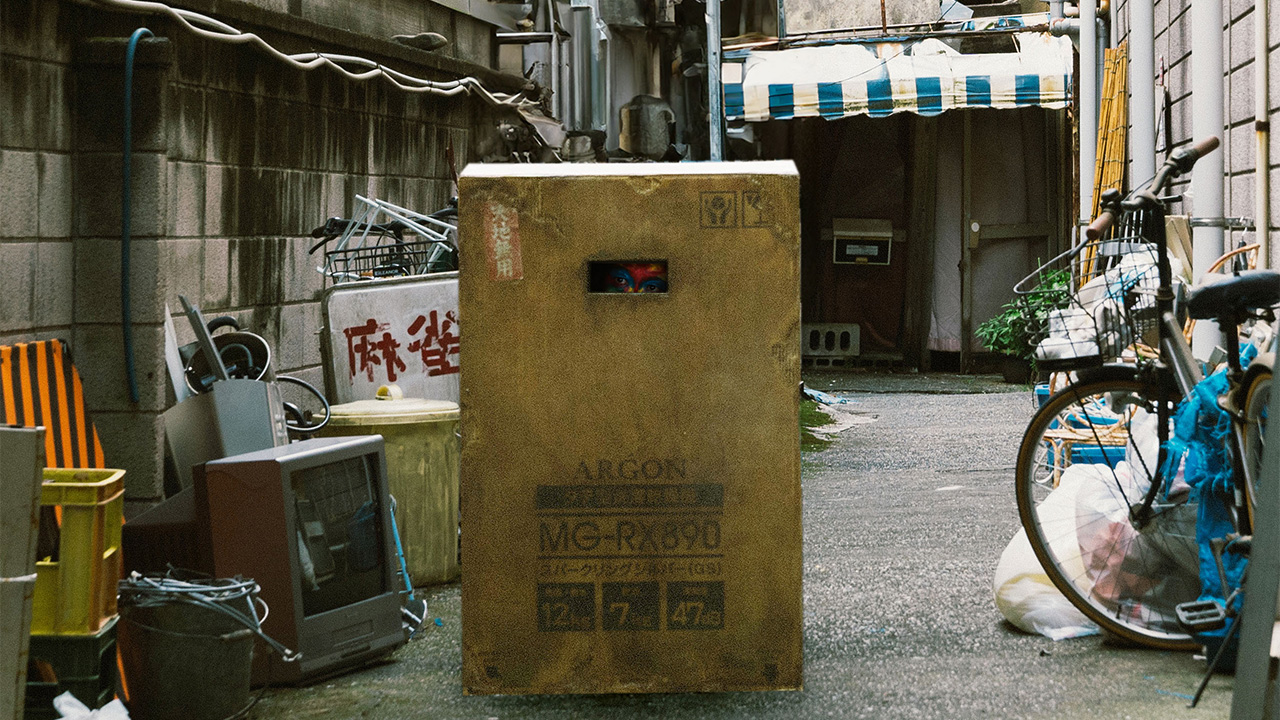
Those who obsess over the Box Man, become the Box Man, in Gakuryu Ishii’s adaptation of the Kobo Abe novel. Yet the unnamed hero’s problem is that he feels himself unable to become “the real thing” and is thereafter trapped inside a labyrinth while forever seeking an exit. It’s never clear to him, or to us, if the cardboard box he wears is really just that or something imbued with a supernatural power that actively masks his identity even from himself.

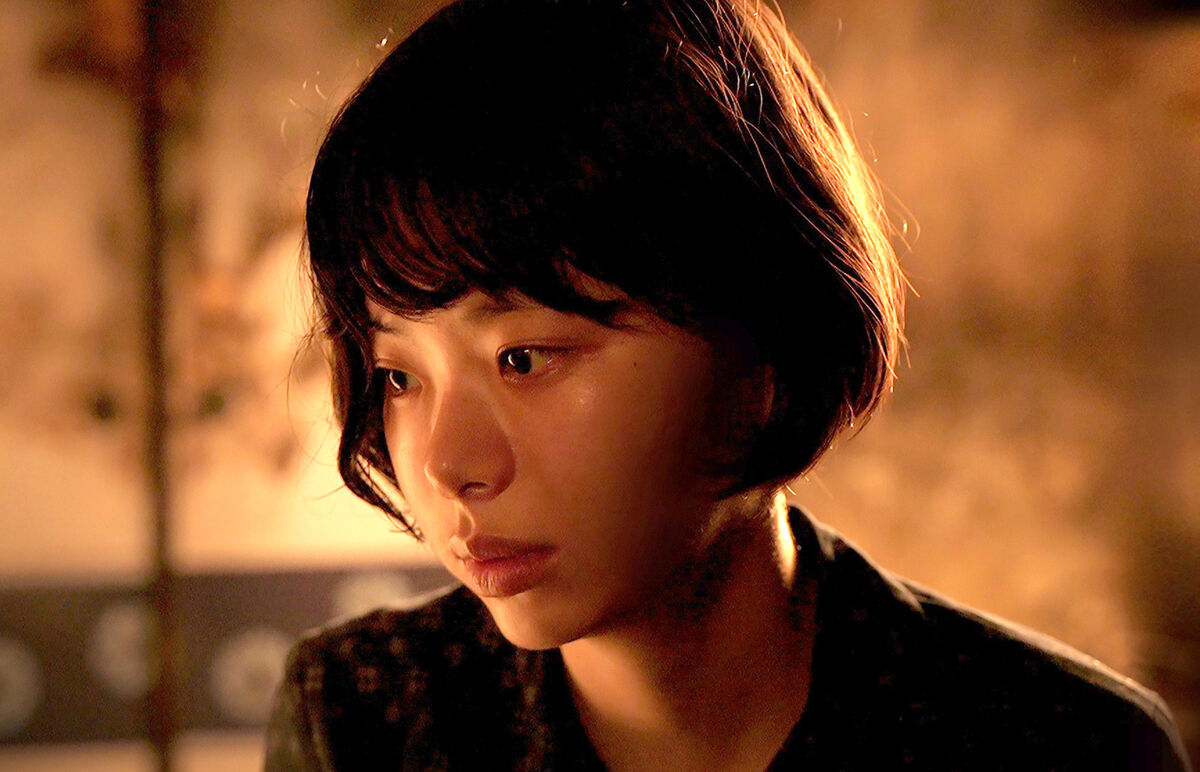
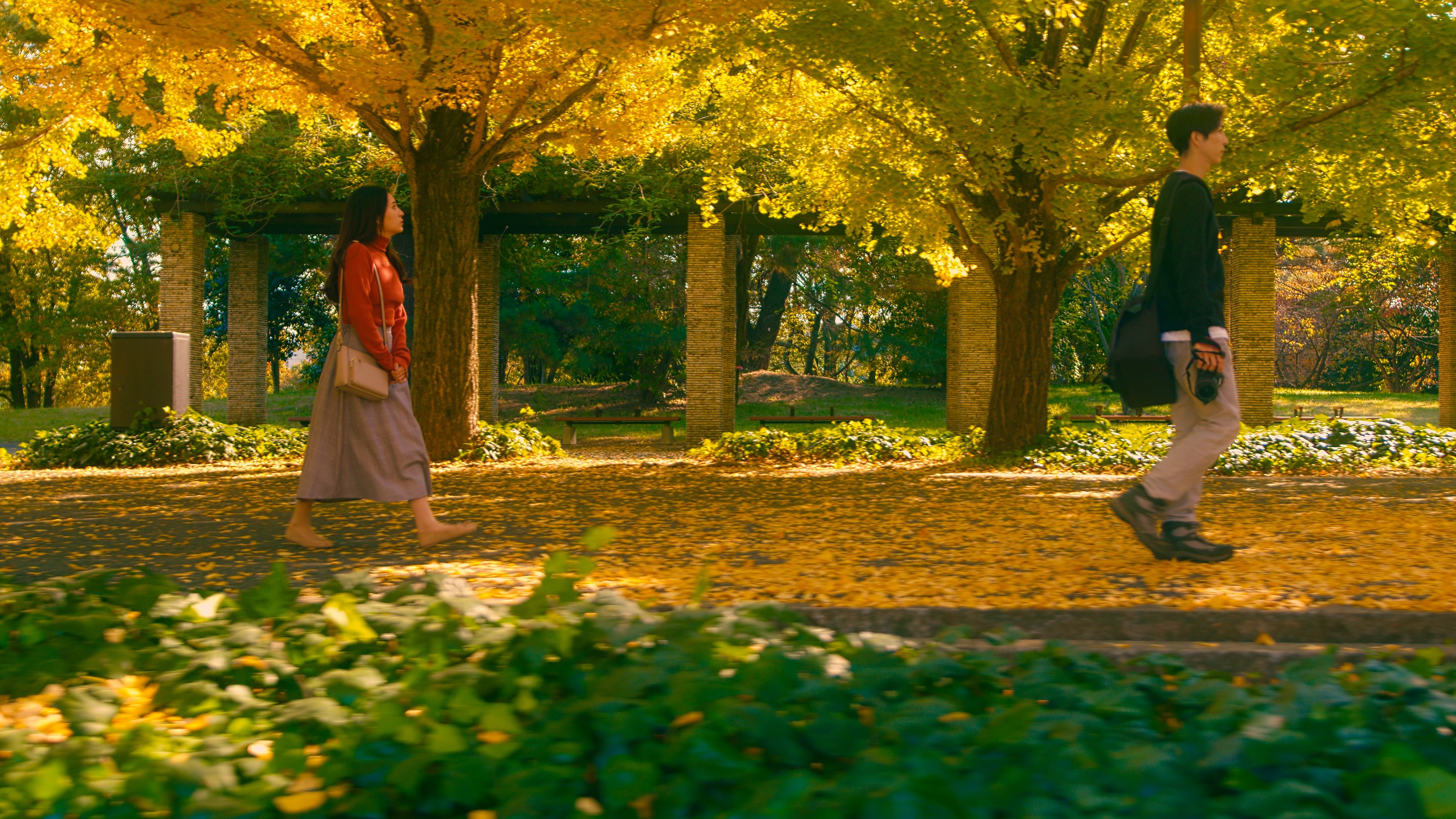
Tellingly, the only named character is a woman, Yoko (Ayana Shiramoto), who seems to exist outside of the box. She appears to be free, confident, aware of all she is and apparently certain of her identity. The Box Man, or perhaps “a” Box Man, meanwhile, is known only as “myself,” a former photographer (Masatoshi Nagase) who almost pities those who target him in memory of the Box Man who once infected and cursed him to the same fate. Watching the city through the tiny letterbox slit, he remains a step away from our world and later refers to the box as the entrance to some other place suggesting that it’s really we who are trapped on the other side of the cardboard.

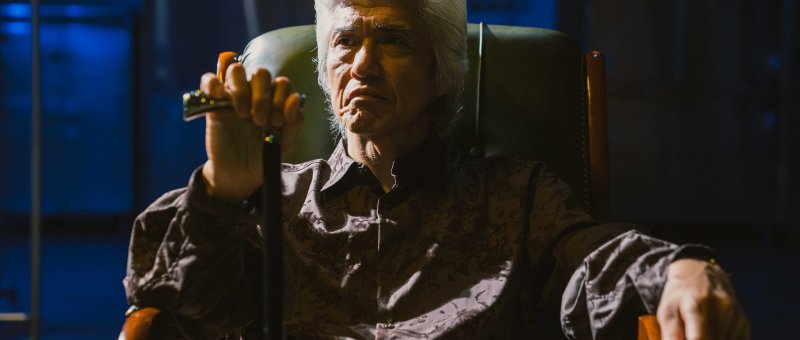
He advances something similar when he in effect turns the box inside out, walling himself inside a single room by covering the windows and doors to box out the world but not really finding escape. Still, others seem to covet the title of Box Man, those also without concrete identities but going by names such as Fake Doctor (Tadanobu Asano) and the General (Koichi Sato), both of whom are apparently interested in the Box Man and tracking his every move. It seems they believe there can only be one real, authentic Box Man allowed, but become increasingly uncertain which of them is “real”. The notes the Box Man is keeping become key to his identity, but like a metaphor for the unseen hand of fate, one points out that perhaps someone else has written them out for them, Myself lamenting that the author has written a better version of himself than he ever could. 

There is something undeniably absurd about the way the Box Men scuttle around, occasionally sticking their ams out of the box’ flaps while arguing over the true identify of the Box Man despite having described the mystery as boring. The Fake Doctor seems to want to destroy the box, as if he wanted to obliterate it perhaps in an attempt to destroy the image of a mask to avoid the suggestion that he has one himself, while it remains unclear if this would free the other Box Man or trap him further while Fake Doctor would take his place. When Myself killed the Box Man before him, a mask may have been what he wanted. A photographer sick of seeing the world and longing to be free of it, to shed himself of an identity he no longer wanted only to search for it once again even as others try to crush it from without. 

The Box Man comes to the conclusion that it’s the world that should be boxed away, but of course it’s all the same. When he remarks that Yoko, after leaving their sanctuary, did not really escape but has simply gone to a deeper level, it’s reflective if his own desire to find meaning in a meaningless world. He claims that he dreams of a world yet to begin but is finally confronted perhaps by anonymity in witnessing a row full of Box Men apparently all also devoid of personality which might in an ironic sense tell him who is if only in reflection. 

Strange and surreal, Ishii lends an edge of absurdity to the strange existence of the Box Man while perhaps aligning the letterbox frame of his open window to that of the cinema screen and the artificial reality that surrounds us. In any case, it seems the other world the Box Man longed to enter was that of the self, his interior life expanding inside the box as a small galaxy he has somehow become lost inside, no longer able to see beyond himself but trapped inside an “exitless black hole” looking for a path to authenticity away from this “fantasy” in which everything is “fake” save the potential salvation of a distant guiding light.


The Box Man screens in New York July 13 as part of this year’s JAPAN CUTS.

Original trailer (English subtitles)
Six Singing Women (唄う六人の女, Yoshimasa Ishibashi, 2023)

“Don’t take any detours,” the hero of Yoshimasa Ishibashi’s Six Singing Women (唄う六人の女, Utau Rokunin no Onna) is warned by his partner though it’s advice he’ll end up not taking if not entirely of his own volition. Even so, it may be that it’s the society that has gone off track, poisoning the environment and losing respect for the land that has always nurtured and protected us. Part eco-drama, Ishibashi’s surreal odyssey into an etherial realm of nature and spirits has its share of eeriness but also a kind of comfort in the embrace of the natural world.

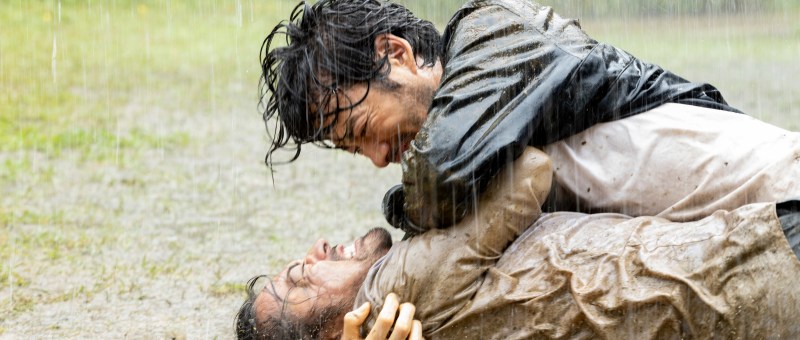
Only that’s not how it first seems to Shin (Yutaka Takenouchi). After receiving a phone call to inform him his estranged father has passed away, he leaves his partner Kasumi (Rena Takeda) at home in Tokyo and travels into the mountains with the intention of selling his father’s house. But when he arrives, he finds himself in a place stranger than your average remote country hamlet and after signing a contract with the slimy Uwajima (Takayuki Yamada) is kidnapped by a band of mysterious, apparently mute women. While he is looked after in the house. Uwajima is tied up in the shed and tortured.

As we later discover Shin and Uwajima are embodiments of light and dark, a protector of nature and its destroyer. When Shin had asked him what Uwajima’s company, which has also bought up all the neighbours’ land, plans to do with his father’s house he tells him they just want to protect nature but his answer is of course ironic. He represents a corporate entity that cares nothing at all for the mountain but is simply looking to make some money by dumping potentially harmful stuff where no one will find it. Realising that his father had been on some kind of quest to stop the corporate take over, Shin begins to investigate his death and the wider fate of the mountain taking him ever deeper into the woods. 

What he finds there is a another realm, a place of spirits that seems somehow sacred if dangerous. Unable to speak, the women appear to have a message a for him but it’s only after reconnecting with his father and accepting his legacy that Shin finally begins to understand. His mother had told him that his father had been “possessed by the mountains,” and there may be something in Shin’s mania as if the spirits had indeed taken him over aside from merely captivating him. Yet despite his newfound desire to protect these women as embodiments of a natural order, he is powerless to do so alone and especially against the destructive corporatism of Uwajima.

Ishibashi strays into folk horror territory in that the strange place Shin finds himself in has the trappings of a cult. He witnesses strange rituals and is prevented from leaving a place he cannot understand by the women who cannot speak to him nor explain themselves. Bees, spiders, frogs and snakes surround him with an air of malice but are perhaps trying to protect, both him and themselves or else realising Shin is no threat to them but a prodigal son returning to accept and claim the legacy he sought to reject from a misunderstood father like him possessed by the mountains. Finally he finds the answer to the question his father asked him, in the woods exactly where he said it would be. 

His solution runs contrary to that of the estate agent who encouraged him to sell his father’s home, that the world is what it is as if it could not be changed and resisting destructive capitalism is merely foolish when it would be better to take the money and run. Ishibashi rams him message home with his haunting capture of the woods as a dreamlike idyll though not without its sense of darkness while lending an air of surreality to Shin’s ethereal quest with all its owl women and inscrutable ritual that somehow hint at a natural order of things that is deeper and older than our society and with which we tussle at our peril for nature is never quite as passive as we thought for all the compassion it may otherwise hold for its prodigal sons and daughters yet to return to the fold.


Six Singing Women screens in New York July 12 as part of of this year’s JAPAN CUTS.

Trailer (English subtitles)


Between the White Key and the Black Key (白鍵と黒鍵の間に, Masanori Tominaga, 2023)

The hero of Masanori Tominaga’s Between the White Key and the Black Key (白鍵と黒鍵の間に, Hakken to Kokken no Aida ni) looks up and declares that it’s not Jazz if you can’t the stars, quoting Charlie Parker but mired in artistic compromise amid the heady air of Bubble-era Ginza. Adapted from the 2008 memoir of jazz pianist Hiroshi Minami, the film’s surrealist conceit sees two eras overlap confronting a jaded bandman with his naive, earnest younger self while looking for a path back towards “real” jazz.

The intentionally confusing opening sequences introduces us to Hiroshi (Sosuke Ikematsu), dressed in white, a young man with romantic jazz dreams slumming it in a moribund cabaret bar, and Minami dressed in a smooth black and wearing sunshades now the top pianist at the area’s most prestigious bar. Chaos ensues when Hiroshi, intimidated by a recently released yakuza, innocently plays his request of the Godfather Waltz without realising that the song is prohibited, only the local yakuza chairman is allowed to request it. Minami is, meanwhile, the only musician apparently allowed to play the boss’ favourite tune, but it’s a double-edged sword. He’s come to hate his life of soulless playing and feels trapped as the chairman’s favourite while secretly plotting his escape to study real jazz in America.

Irritated by the attitude of American guest singer Lisa, Minami explains that the musicians are really just decoration. At the height of the Bubble-era the bars are full of people with too much money looking to show it off. No one really cares about jazz or even about music so no one pays them any attention. Minami has long since got used to this, but is also crushed by his sense of artistic inauthenticity and declares himself sick of making music that doesn’t come from his soul.

Perhaps the rest is mere fever dream, but in the cyclical turn of events Hiroshi’s godfather faux pas comes back to haunt him, stalked by the recently released yakuza who follows him like a ghost while simultaneously dealing with the chairman’s apparent crisis which may send him abroad and change the local hierarchy forever. In the increasing surreality, the two periods overlap and influence each other as Minami is confronted by artistic compromise and forced to quite literally confront himself in a dirty alleyway while his opposite number claims that they already are in America and have been for some time.

To that extent it’s Minami who is caught between the black and white keys, looking for the sweet spot between the ability to play real jazz and the economic and social realities of his life as a Ginza bandman suffering with what he calls “bar musician disease”. His former mentor had told him that he needed to learn to play more “nonchalantly” which is advice somewhat difficult to understand but perhaps implies that Hiroshi Minami needs to learn to let himself go, to struggle less with anxiety and just play as if it were as easy as breathing. To that extent, what Minami has discovered is the wrong kind of nonchalance. Told that his job is only really to sit there and add to the false sense jazzland sophistication, he’s lost himself between the gangsters and the high rollers and is at a crossroads of an artistic crisis that maybe about to fracture his mind.

Tominaga does his best to capture an anarchic sense of a world bent out of shape and filled with surrealistic absurdity as Minami seems to see events replay with different outcomes and encounters various bizarre incidents around the back alleys of Ginza clubland themselves an incongruous mix of high class sophistication and sleaziness in which gangsters still rule the roost. Consequently the other players in Minami’s psycho drama remain largely cyphers, themselves part of the furniture in this weird mental landscape in which violence appears cartoonishly and in silence, never really connecting and irony rules in the petty gangsters who see the the Godfather Waltz as their song. In any case, Minami seems to recover himself, partly thanks to a vision of his oblivious mother retuning to him something that was lost, in the simple act of sitting down to play as if it were the beginning once again, or perhaps it really is, more acquainted with the music of his soul.


Between the White Key and the Black Key screens in New York July 10 as the opening night of this year’s JAPAN CUTS.

Original trailer (no subtitles)

JAPAN CUTS Announces 2024 Lineup

 JAPAN CUTS returns for 2024 once again presenting a selection of the best of recent Japanese cinema at Japan Society New York from July 10 to 21. This year’s Cut Above award goes to the actor Mirai Moriyama while his Great Absence co-star Tatsuya Fuji will receive a lifetime achievement award.

Opening Film: Between the White Key and the Black Key

Opening Night Film with Director Masanori Tominaga Q&A and Reception

Surreal adaptation of the memoirs of jazz musician Hiroshi Minami starring Sosuke Ikematsu and taking place over a single night of overlapping eras in ’80s Ginza.

Centerpiece Film: Shadow of Fire

Followed by Mirai Moriyama CUT ABOVE Award presentation, Q&A with Shinya Tsukamoto and Mirai Moriyama, and Reception

The ruins of a firebombed city become a purgatorial space haunted by the tortured souls who cannot escape the traumatic wartime past in Shinya Tsukamoto’s eerie voyage through post-war Japan. Review.

Lifetime Achievement Award: Great Absence

Followed by Lifetime Achievement Award Presentation for Tatsuya Fuji, Q&A with Kei Chika-ura and Tatsuya Fuji, and Reception

A forced reconnection with his estranged father forces a young man to contemplate the great absences of life in Kei Chikaura’s poetic drama. Review.

All the Long Nights

Mismatched colleagues struggling amid contemporary corporate culture find unexpected solidarity in Sho Miyake’s gentle human drama. Review.

Blue Period

Adaptation of the manga by Tsubasa Yamaguchi in which a lost young man discovers the power of art and embarks on a quest to enter one of Japan’s most prestigious art schools.

The Box Man

Surreal adaptation of the Kobo Abe novel starring Masatoshi Nagase as a photographer living his life inside a box and Tadanobu Asano as a scientist who becomes obsessed with him.

Cha-Cha

Quirky comedy that turns unexpectedly dark as a free-spirited young woman develops a crush on a taciturn chef while simultaneously the subject of office gossip due to her ambiguous relationship with the boss.

Following the Sound

Following the sound on her cassette recorder, a young woman interacts with two troubled souls in a gentle drama from Kyoshi Sugita.

ICE CREAM FEVER

Featuring Director Tetsuya Chihara In-Person.

Adaptation of a short story by Mieko Kawakami following four young women who come together at a local ice cream shop.

KUBI

Takeshi Kitano directs and stars as Toyotomi Hideyoshi in an ironic retelling of the Honnoji Incident in which Oda Nobunaga (Ryo Kase) is betrayed by his retainers.

Kyrie

Musical drama from Shunji Iwai told over 10 years and starring AiNA THE END as a street musician who can only communicate through song.

Look Back

Adaptation of an award-winning manga in which a manga artist looks back and recalls a childhood friendship asking themselves if they would still make the same choices despite knowing the outcome.

SHIN GODZILLA: ORTHOchromatic

Black and white version of Hideaki Anno and Shinji Higuchi’s landmark take on the classic kaiju franchise.

Six Singing Women

Long-awaited feature from Milocrorze: A Love Story’s Yoshimasa Ishibashi in which a Tokyo-based photographer is called back to his mountain home on the death of his estranged father.

Whale Bones

An office worker joins a dating app after his fiancée abruptly breaks up with him but the date doesn’t exactly to plan leaving to follow cryptic clues from an augmented reality influencer.

Blue Imagine

A young woman finds the strength to fight back against her mistreatment thanks to a sense of female solidarity in Urara Matsubayashi’s timely drama. Review.

Motion Picture: Choke


Dialogue-free indie drama set in a post-apocalyptic society in which one woman’s days of self-sufficiency are disrupted by the arrival of a young vagabond.

Performing KAORU’s Funeral

Darkly comic drama in which a failed actor is summoned to play the part of the chief mourner at his former wife’s funeral. Review.

Rei

Unhappy in the city, a young woman embarks on a love affair with a photographer from Hokkaido .

RETAKE

Looping summer holiday drama as a teenager working on a film with his crush gets the opportunity to “retake” some of his mistakes.

Sayonara, Girls.

A collection of teens contemplate the ghosts of youth in facing graduation from a school soon to be demolished in Shun Nakagawa’s poignant drama. Review.

August in the Water

Imported 35mm Print – Featuring Director Gakuryu Ishii In-Person. 

Sogo Ishii’s ’90s masterpiece in which a female transfer student enters a higher plane of consciousness after undergoing a diving accident.

Mermaid Legend

Elegiac horror from Toshiharu Ikeda in which an ama diver plots revenge when her husband is killed after witnessing a murder.

Moving

A young girl struggles to come to terms with her parents’ impending divorce in Shinji Somai’s ethereal coming-of-age drama.

Kadono Eiko’s Colorful Life: Finding the Magic Within

Documentary focussing on the renowned author best known for Kiki’s Delivery Service.

The Making of a Japanese

Featuring Director Ema Ryan Yamazaki In-Person

Documentary focussing on Japan’s elementary school system and shot over the course of a single year.

Shunga: The Lost Japanese Erotica

Documentary focussing on the erotic artwork of the Edo era.

JAPAN CUTS 2024 runs at Japan Society New York July 10 to 21. Tickets are on sale now. Full details for all the films are available via the official website and you can also keep up with all the latest details by following the festival’s official LetterboxdInstagramFacebook page and X (formerly) account.