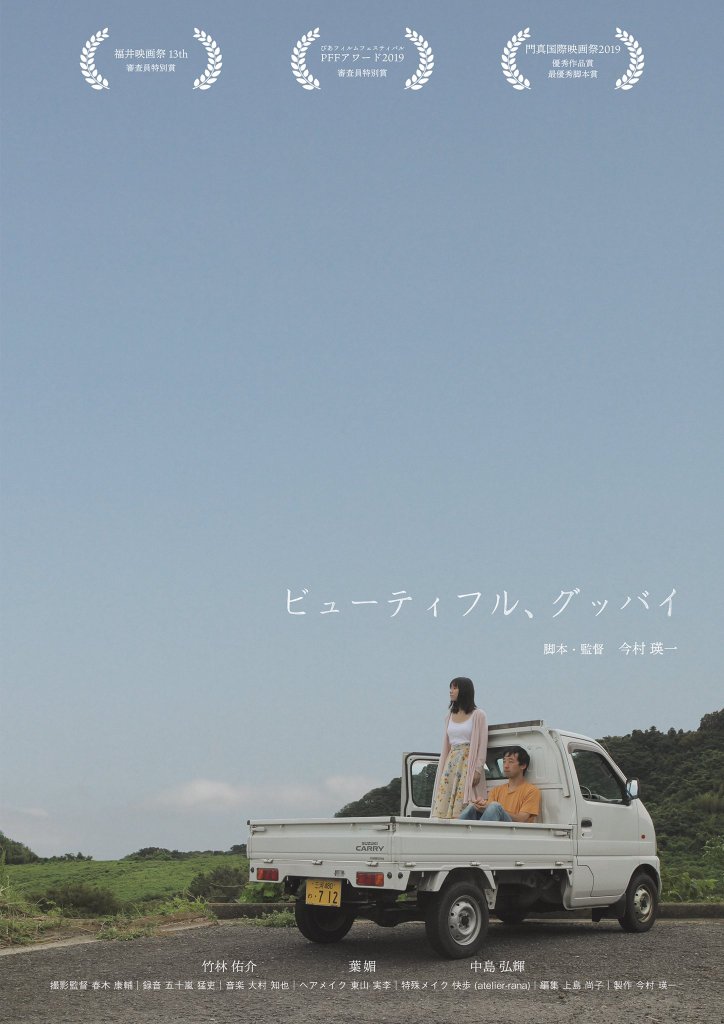
Beautiful, Goodbye (ビューティフル、グッバイ, Eiichi Imamura, 2019)

A man on the run hits a woman running out of time, what else could you call it but fate? Winner of the Special Jury Award at the PIA Film Festival, Eiichi Imamura’s Beautiful, Goodbye (ビューティフル、グッバイ) sees its conflicted heroes cast adrift as they flee from past trauma, bonding over their shared sense of hopeless alienation while driving towards some kind of resolution to their respective anxieties but perhaps fearing that there are no real safe spaces for those who find themselves at odds with the world in which they live. 

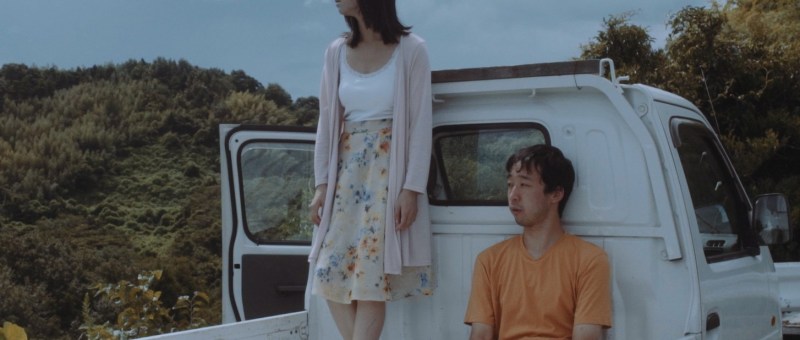
As the film opens, 32-year-old Daisuke (Yasuke Takebayashi) is caught in the immediate aftermath of having stabbed a man while a small child curls himself into a ball in the corner. Pausing only to comfort him, Daisuke leaves in a hurry and later steals a pickup truck still laden with the last of someone’s moving boxes. Meanwhile, another man, Shinoda (Koki Nakajima), chases after a woman, Natsu (Yobi), who is later found wounded in an alley before being wrapped in a sheet and toe tagged at the local morgue. That is not, however, the end of her story. Shinoda, having recovered her body, performs some strange ritual which brings her back to life only for her to escape and run directly into the path of Daisuke’s car. Fearing he has made his day even worse, Daisuke puts her in the passenger seat and, unlikely as it seems, the pair end up travelling together pursued both by law enforcement and by the psychopathic Shinoda. 

Daisuke, a shy man nervous about his stammer which sees him exiled from mainstream society, does not immediately seem like the type of person to stab someone but we later find out that he had a good reason (if you can say such a thing) and was acting to protect someone else from longterm abuse. He’s not sure running was best thing to do, but it has at least introduced him to Natsu who doesn’t seem to mind about his stammer and makes a point of calling him by a diminutive in an effort to avoid detection on the road by amping up the couple act. Apparently from Taiwan but with a Japanese mother, Natsu is herself on the run, besides being undead, in trying to keep one step ahead of the violent boyfriend it seems was responsible for her demise and then brought her back after trying a few rituals he found on YouTube so he could terrorise her afterlife too. 

Both outsiders at the mercy of an unforgiving society the two discover a kindred spirit one in the other, retreating from their brush with crime to return the moving boxes to their original address with an apology for having borrowed some of the contents. Regaining her memories and coming to an awareness that her zombiefied state might only be temporary, Natsu wonders why her life has turned out the way it has and if God is punishing her for being a “bad” person. She has a tattoo of a lightbulb on her leg because of a story she was once told about there being two paths in the darkness, one to heaven and one to hell, and that God would always light the way for the good while the bad were left to stumble around on their own, losing their way and ending up in hell, so she decided to make her own light fearing that she was not one of God’s good people. Daisuke just laughs, pointing out that lightbulbs don’t work out of the box, leading her to make a few adjustments which allow him to give her the power to face the darkness.

Daisuke meanwhile remains on the run, in part because he wants to help Natsu move on from her traumatic past by facing her victimisation at the hands of the psychotic Shinoda who has been using social media to try and track them down but later finds himself falling victim to his bullying. Together, the undead woman and the barely living boy give each other the strength to face their respective anxieties, his in his crime and hers in her murder as they contemplate the calm at the end of the world, or at least the road, while the gentle tones of Teresa Teng linger in the breeze behind them like a lullaby as if in echo of a more innocent time.


Beautiful, Goodbye was streamed as part of this year’s online Nippon Connection Film Festival.

Original trailer (no subtitles)

Teresa Teng’s “Toki No Nagare Ni Mi Wo Makase”

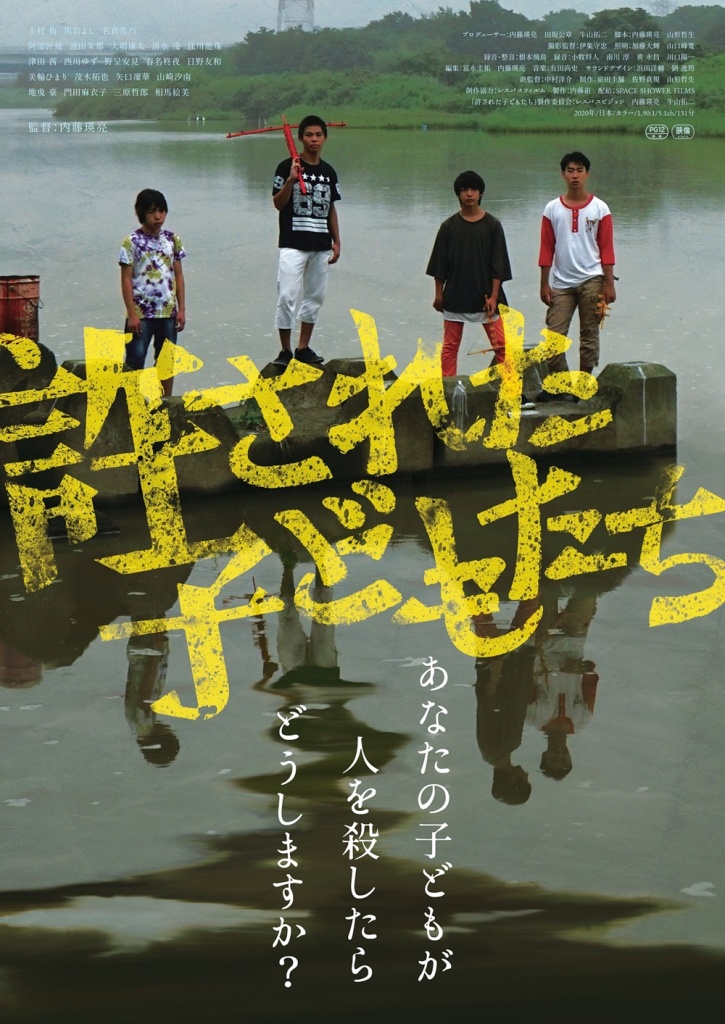
Forgiven Children (許された子どもたち, Eisuke Naito, 2020)

“You can’t steal a life and get off the hook” a sheepish young man is told by an unsympathetic police officer pushing him to confess his crime, but the “justice” he will later face will be of a less official kind. Eisuke Naito’s ironically named Forgiven Children (許された子どもたち, Yurusareta Kodomotachi) is, in some ways, a tale of sympathy for the bully in the acknowledgement that a bully can be a victim too, but it’s also a condemnation of a bullying society defined by pent up, misdirected rage in which wounded people take out their hurts for thousands of petty humiliations on those they see as in some way vulnerable in an attempt to prove that they are not. 

The “hero”, Kira (Yu Uemura), was mercilessly bullied in primary school. The first time we meet him he is wandering wounded, bleeding profusely while stumbling home without shoes. Some years later, now 13, Kira has a scar on his cheek and a mean look in his eye. At school he’s an angry young man and petty delinquent while at home a dutiful son cheerfully singing karaoke with his loving parents. Everything changes one day when he bullies another boy into bringing a homemade crossbow to the riverbank. Without really knowing why, Kira fires it and pierces him through the neck. Terrified, the other boys flee leaving Itsuki (Takuya Abe) to die alone by the water undiscovered for hours. 

Kira and the others are not that smart. They’re on CCTV heading to the riverbank, and there are messages on Itsuki’s phone from Kira telling him to meet them there. It is obvious they are involved though in legal terms the evidence is circumstantial. The policeman who visits encourages Kira to confess, implying it was an accident, or risk further punishment if he says he’s innocent and is later found not to be. Kira confesses, but his overprotective mother (Yoshi Kuroiwa) convinces him to recant, hires a fancy lawyer who bullies the only one of the other boys brave enough to tell the truth into straightening his story, and gets him off but the right wing internet trolls have already gone into overdrive and guilty or not Kira will not be allowed forget his crime. 

This is of course ironically another kind of bullying. The constant through-line is that Kira is the way he is because of the bullying he endured in primary school. He is a young man consumed by rage and taking revenge for being made to feel small and vulnerable by making others feel the same. After being forced to move around a few times, Kira ends up in a new school where they’re supposed to discuss how to address the bullying problem but worryingly most of the other kids have no desire to solve it. Rather than ask why people bully others, they universally blame the victims, insisting that it is their own fault simply for being the sort of people who get bullied. That might be because they are in some way different or vulnerable, but oftentimes is just a cosmic quirk of personality. Of course, bullies rarely think of themselves in those terms, which might be why one particularly vindictive young man voices the worrying principle of “justifiable bullying”, branding himself as a hero of justice as he prepares to unmask Kira as a murderer in hiding. 

Kira meanwhile remains conflicted, unable to come to terms with his crime or his internalised rage. Some might feel his bullying is indeed “justifiable” because in this case he is guilty and could make some of it at least stop by engaging in dialogue with Itsuki’s parents even if he cannot expect to be forgiven and must consent to carry the burden of his crime for the rest of his life, but it does not excuse the wholesale hounding of himself and family which prevents any kind of future restitution. Why is this society so angry that people go online to issue death threats against a 13-year-old boy over a crime that has absolutely nothing to do with them, what it is that they are really so outraged about? Kira is merely a product of an inescapable spiral of misdirected rage and emotional austerity. 

The children turn a blind eye to the bullying of others, or are encouraged to join in to avoid becoming victims themselves while adults claim to want to help but only contribute to the stigmatisation of those who are bullied. Kira says he thinks that he had a reason for doing what he did, but no longer remembers, later refocussing his rage on bullies to avoid having to recognise the bully in himself. But society is itself a bully, consumed by misdirected rage and a socially conservative tendency to blame and exclude rather than understand which ensures that there can be no end to the cycle of violence and abuse until society learns to look within itself. 


Forgiven Children was streamed as part of this year’s online Nippon Connection Film Festival.

Original trailer (English subtitles)

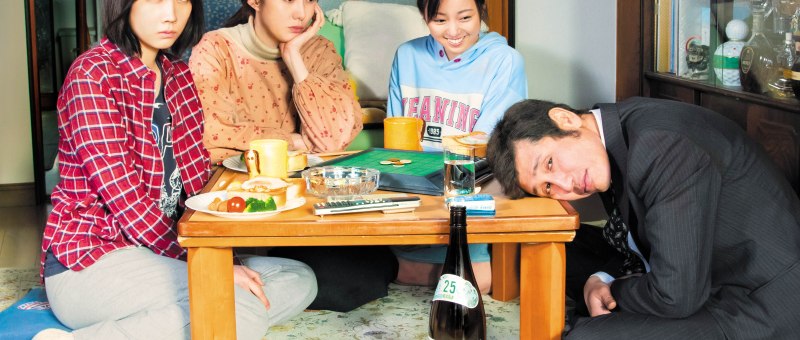
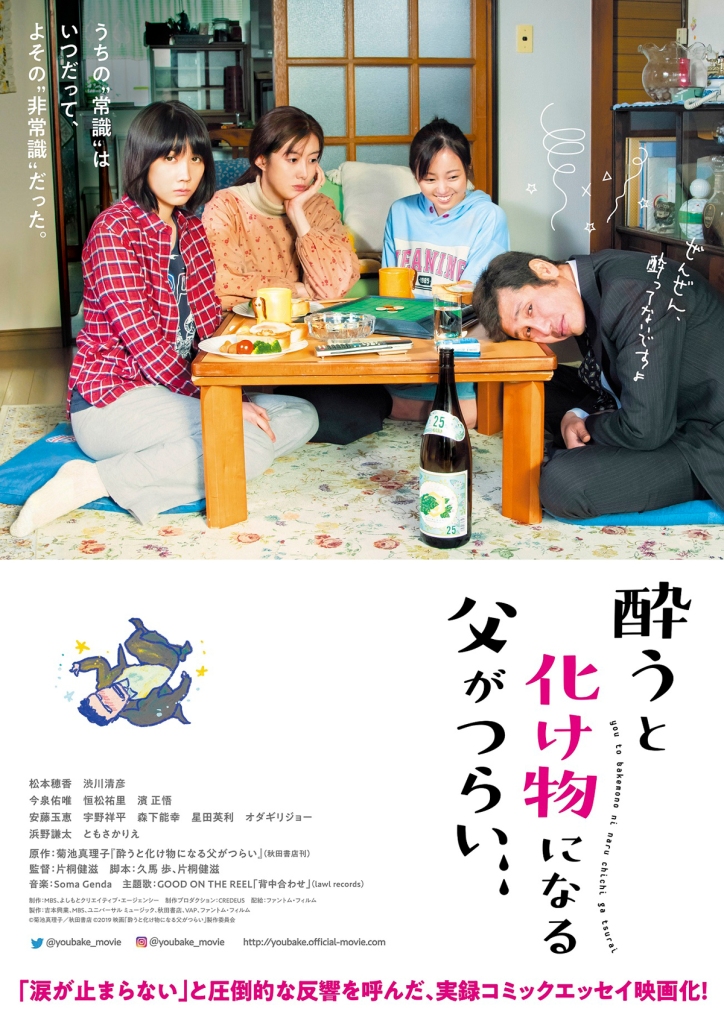
A Life Turned Upside Down: My Dad’s an Alcoholic (酔うと化け物になる父がつらい, Kenji Katagiri, 2019)

A dejected young woman finds herself conflicted in her memories of the father who failed her in Kenji Katagiri’s A Life Turned Upside Down: My Dad’s an Alcoholic (酔うと化け物になる父がつらい, You to Bakemono ni Naru Chichi ga Tsurai). Drawing inspiration from the webcomic by Mariko Kikuchi, Katagiri’s whimsical drama does its best to put a comical spin on the extended trauma of living with an alcoholic dad while laying the blame squarely at the the feet of a society with an entrenched drinking culture in which refusing to imbibe is all but unthinkable. 

The heroine, Saki (Honoka Matsumoto), begins her tale in the late ‘90s when she is only eight years old and unaware that her family circumstances are not exactly normal. Tadokoro (Kiyohiko Shibukawa), her salaryman dad, usually rolls in late and collapses in the hall after staying out all night drinking. This is such a common occurrence that Saki and her younger sister Fumi are completely unfazed by it, marking off dad’s drunken days with a big red X on the calendar and cheerfully helping their mum drag him back into the house. Saeko (Rie Tomosaka), their mother, tries to put a brave face on it, and to the girls it probably still seems a little bit funny, but as she gets older Saki begins to see the toll her father’s drinking has taken on her mother not only in practical terms but emotional in realising that he drinks largely as a means of escaping his responsibility which includes that towards his family. 

Saki asks her mum why dad’s three friends keep coming round to drink while playing mahjong but the only explanation she can offer is that adults need to socialise. Socialisation does it seems revolve around alcohol, and to that extent perpetuates deeply entrenched patriarchal social codes in largely remaining a homosocial activity with the only women present those that run the bar (the wives of Tadokoro’s friends make a point of thanking Saeko for allowing their husbands to drink at her house, they it seems are not invited). Tadokoro’s excuse for his drinking is that it’s a necessary business activity, that you can’t get by as a salaryman without figuring out how to have fun at a nomikai and bond with your clients over sake. His office best friend later discovers this to be true as a teetotaller given the banishment room treatment he attributes to the fact he doesn’t drink which is why his bosses don’t trust him as member of the team. 

Tadokoro might think he’s serving his family through his career, but it’s clear that he neglects them physically and emotionally by refusing to moderate his drinking. He breaks promises to his kids to take them to the pool because he’s still hung over from the night before while his wife finds herself at the end of her tether with his continued indifference later telling the little Saki that she wanted to divorce him even before the kids were born but it’s too late for that now. Saeko escapes from the burden of her life through religion, adhering to a shady Christian-leaning cult which preaches that endurance builds character and character leads to hope, all of which presumably convinces her that she is supposed to just put up with Tadokoro’s problematic behaviour rather than reassuring her that there is no sin in leaving him. 

Saki fears making her mother’s mistake, traumatised by her childhood experiences and drawn into an abusive relationship of her own out of loneliness and low self esteem. She resents her father but also feels bad about it, simultaneously thankful when he takes a temporary break from drinking and mahjong but also aware of how sad it is that she is grateful for things that other families would consider normal. Tadokoro proves unable to quit drinking, and Saki wonders if she’s right to even ask him if, as others say, drinking is his mechanism for escaping loneliness, but also reflects on the sadness she now understands in her mother as stemming from her father’s abnegation of his responsibilities and the loneliness it must have provoked in her. Fumi (Yui Imaizumi), trying to explain why Saki should break up with her abusive boyfriend (Shogo Hama), tells her of an experiment she read about in which a rat was trapped in a box and randomly given electric shocks. At first, it tried to escape, but eventually became resigned to its fate and settled for learning to endure the pain. Saki is perhaps much the same, trapped by filiality in finding herself unable to either forgive or reject the memory of the father who so resolutely failed to live up to the name.


A Life Turned Upside Down: My Dad’s an Alcoholic was streamed as part of this year’s online Nippon Connection Film Festival.

International trailer (English subtitles)

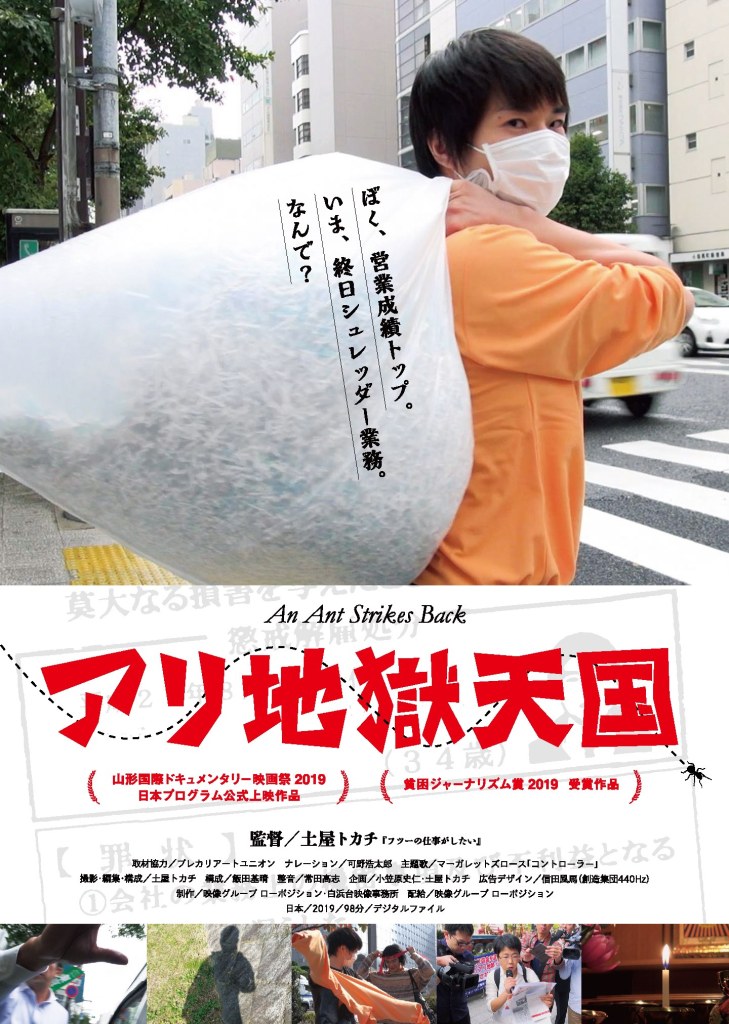
An Ant Strikes Back (アリ地獄天国, Tokachi Tsuchiya, 2019)

During Japan’s post-war economic miracle, death from overwork became such a prevalent phenomenon that it generated its own grim buzzword, “karoshi”. Sadly, karoshi is still with us today as evidenced by the death of a young woman back in 2015 which hit the headlines when it was revealed that she had taken her own life after being forced to log over 100 hours of overtime at top advertising firm Dentsu in the months before she died. Despite comparatively advanced labour law, a culture of shame and entrenched corporate loyalty often prevent employees from speaking out about exploitative workplace practices, allowing unscrupulous bosses to flout the rules with impunity. So-called “Black Companies” bully and manipulate employees into accepting poor pay and conditions rather than risk dismissal or defacto blacklisting. 

Following the suicide of a close friend who took his own life because of workplace bullying, director Tokachi Tsuchiya documents the case of another young man who decided to fight back after being awakened to the fact that the practices at his company were not fair, normal, or acceptable but cynical and exploitative. Nishimura, known for the moment under an alias, left a job as a systems engineer to work at one of Japan’s best known moving companies because it promised a good, stable salary and he wanted to get married. What he discovered, however, was that the advertising was somewhat disingenuous. After working hard and getting a promotion to the sales department and subsequently into management, he was expected to work 19-hour days. His relationship with his wife suffered to the degree that she eventually left him. They later reconciled, but it became clear that his working life was not healthy or sustainable. He took a demotion back to sales and remained a top employee. 

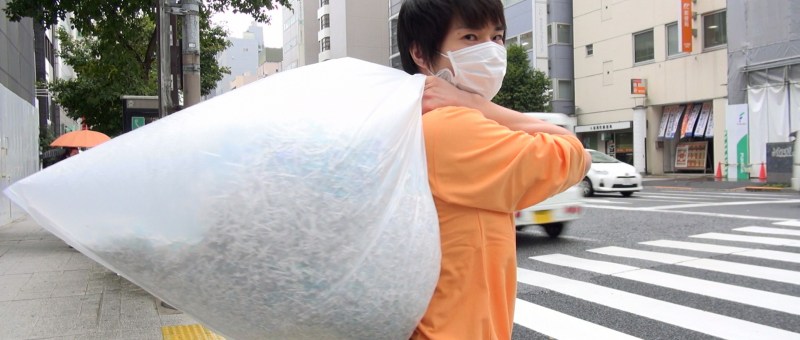
Disaster struck, however, when he was involved in a fatigue-induced traffic accident while driving a company car. The moving company, like many other corporate entities, is run like a shady cult with its own idiosyncratic corporate policies that are often in contravention of standard employment law. After damaging the company car, Nishimura is liable for paying compensation with a significant sum of money due to be docked from his pay. Thoroughly brainwashed, he signed for the debt without thinking, only questioning his liability when his wife handed him an article about another employee in much the same position who’d turned to an external union for help. Hearing the patient explanations from the union advisors who tell him he doesn’t need to pay, Nishimura is suddenly awakened to the fact he’s been exploited and decides to stand his ground. The company, however, fight fire with fire. After finding out he’s involved with the union, they demote him to another department with a far lower salary before going further and forcing him to shred documents all day long while wearing an orange polo shirt that marks him out as a special employee. 

This kind of treatment is a common method of constructive dismissal practiced by Japanese companies in which they force “difficult” employees to perform boring, menial, or degrading tasks while separating them from the group in the hope that they will eventually quit of their own accord so the company won’t be liable for any severance benefits they would otherwise be entitled to. Nishimura, however, does not quit. He throws himself into union activities and views sticking it out as a way of sticking it to the man. What he wants is his sales job back, but he also wants to prove to other employees that the way they’re being treated isn’t normal and that they can resist by joining a union and presenting a united front against exploitative employers. 

Looking back on his recruitment process, Nishimura notices several red flags he did not pick up on at the time.The kinds of people the company never hire include those who are familiar with labour law, people who’ve run businesses, people who’ve worked in law enforcement, and “communist” lawyers. Along with that, they apparently don’t hire “third country nationals” which seems to be a euphemism for Zainichi Koreans, illegal discrimination from a managerial team former employees describe as being vehemently racist as well as prejudiced against burakumin and other groups considered undesirable under a decidedly outdated idea of feudal social hierarchy. Nishimura feels his demotion was not so much to do with the accident, but with his decision to join the union in another breach of conventional employment law. 

The managers attempt to silence the female union negotiator by screaming misogynistic slurs, caught on camera harassing a union rep handing out fliers while using a loudspeaker outside the building. They add Nishimura’s photo to a newsletter as an example not to be followed and even go so far as to send threatening letters to his family members while he is on leave to attend his mother’s funeral. Yet Nishimura bravely refuses to give up, doggedly doing his shredding job as an act of resistance while holding their feet to the fire in the courts. Nishimura’s wife had described him as “brainwashed” in his early devotion to the company which he had earnestly served, wanting to get on and be successful, forcing other employees to pay the onerous fines that he eventually refused to pay because it never occurred to him to question the company line. That questioning is precisely why he continues to resist, so that others will know that collective action really works and that they don’t have to be complicit in their own exploitation. One tiny worker ant said no and the company trembled, think what a thousand tiny worker ants could do together.


An Ant Strikes Back is available to stream worldwide until June 14 as part of this year’s online Nippon Connection Film Festival.

International trailer (English subtitles)

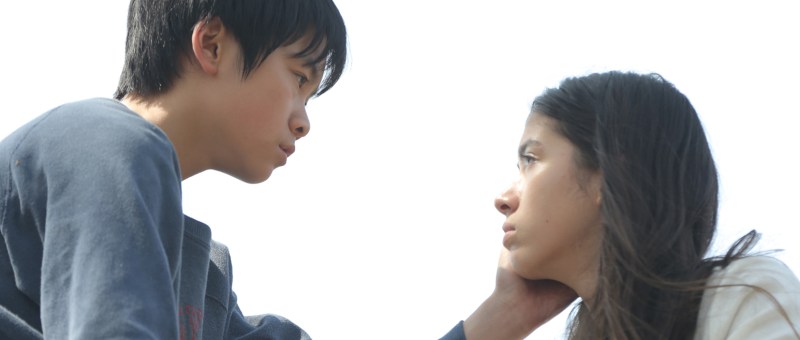
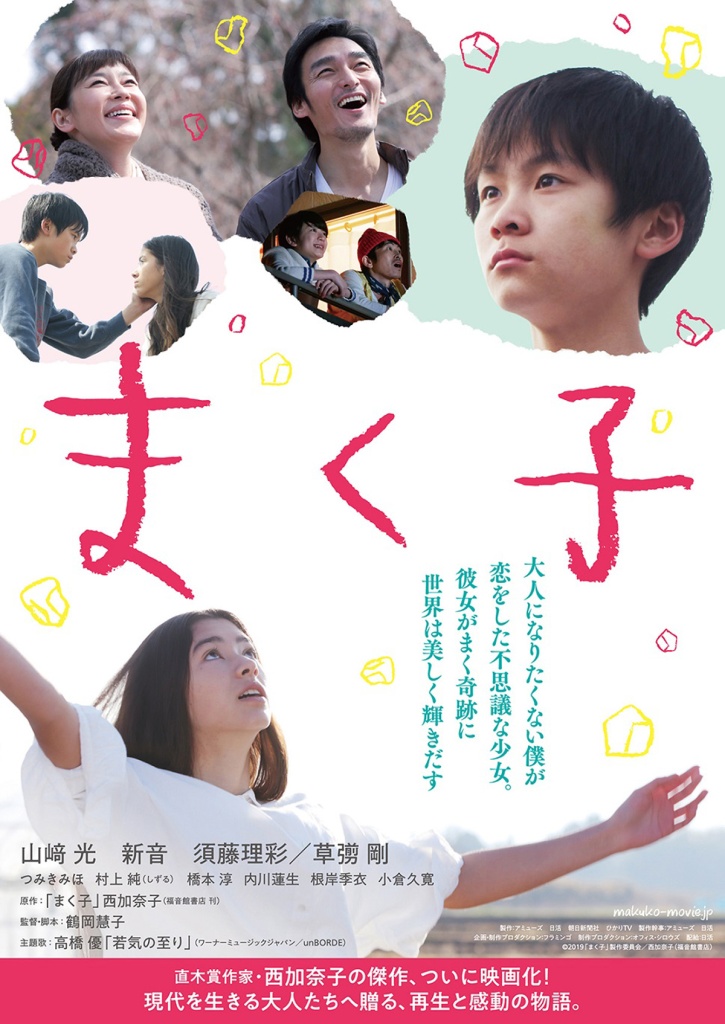
Makuko (まく子, Keiko Tsuruoka, 2019)

“In this world nothing lasts forever” the conflicted hero of Keiko Tsuruoka’s Makuko (まく子) is tearfully told, though it’s a lesson he struggles to learn as he battles the anxiety of leaving the certainties of childhood behind. Adapted from Kanako Nishi’s 2016 novel, Makuko is unafraid of the fantastical but resolutely rooted in the everyday as “aliens” make their descent into regular small-town life to learn what it is to die, or so they say, while the hero discovers what it is to live through the beauty of transience. 

11-year-old Satoshi (Hikaru Yamazaki) is coming to the realisation that he is growing up. Things around him, or more precisely his perception of them, are changing in small but obvious ways and he’s not OK with it. Like the other children he used to enjoy being read manga by Dono (Jun Murakami), a middle-aged man with learning difficulties who hangs around with the local children, but has for some reason begun to find it embarrassing. Meanwhile, he’s also battling a degree of resentment towards his distant father (Tsuyoshi Kusanagi) in becoming aware of his parents’ complicated relationship after spotting him with another woman and hearing constant references to his philandering which his mother (Risa Sudou) seems to have accepted. Satoshi doesn’t know much, but he knows he doesn’t want to be like his dad or any of the other duplicitous adults he sees around the town which is one of many reasons that he fears growing up and being forced to enter the world of adult hypocrisy against his will. 

All of these fears are challenged by the unexpected appearance of intergalactic transfer student Kozue (Ninon) who tells him that she and her equally odd mother (Miho Tsumiki) are actually from a distant planet somewhere near Saturn where nothing ever changes and no one gets old. This is, she explains, because their bodies are made of particles which are eternal and unchanging, unlike those of Satoshi’s body which are constantly in flux which is why humans grown old and die. When a meteorite carrying different particles hit the planet’s surface, it caused a population explosion leaving her people with the unprecedented choice to die only no one really knows what “death” means which is why she’s come to Earth. Satoshi is envious of an unchanging world, seeing only futility in his equation of change with death which is what it is that he’s really afraid of. Why grow up only to die? he asks, only for Kozue to point out that like the leaves she’s fond of throwing in the air, if they didn’t fall they wouldn’t be so pretty. 

Satoshi isn’t really sure he believes Kozue’s strange story, only that he’s certain he doesn’t want her to die. It seems he fell out with a friend who stopped coming to school because of stories the other kids thought he was making up about UFOs and ladders in the sky, but if what Kozue says is true then perhaps he owes him an apology. Dono, whom he’d previously looked down on as “the town’s second biggest loser” offers him some valuable advice that perhaps it’s better to believe the things that people tell you and if you find out later that they lied, well you can deal with that then. 

Whether Kozue’s an alien or not, Satoshi is fairly certain he’s falling in love with her which is a whole other set of problems which brings him back to his problematic dad and the awkwardness of puberty. He doesn’t want to be an adult, but his body is changing all on its own and there’s nothing he can do about it. The local festival is all about “rebirth” through creation and destruction, but Satoshi still struggles to accept the necessity of change in order to grow, wishing things could simply remain as they are. What he learns is that we’re all “aliens” in one sense or another, everyone is lost and afraid and different but also the same, keepers of a hundred “tiny eternities” equating to one vast whole.  

“Everything disappears in the end” Satoshi is told during an intense encounter with his father’s mistress, but then again perhaps it doesn’t only remaining in a different form. A cosmic event brings the townspeople together in banal awe that quickly passes into a collective memory, and while some depart others arrive in their place bringing with them their own near identical anxieties and, like meteorites striking home, new opportunities for growth. 


Makuko is available to stream in Germany until June 14 as part of this year’s online Nippon Connection Film Festival.

International trailer (English subtitles)

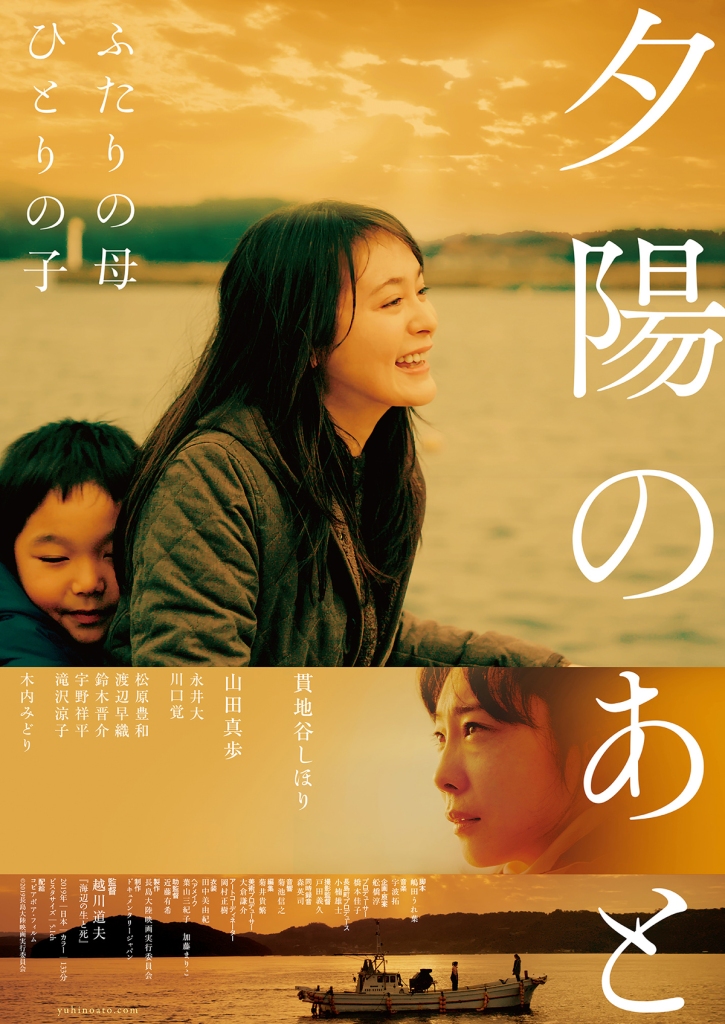
After the Sunset (夕陽のあと, Michio Koshikawa, 2019)

Two women find themselves caught up in an impossible situation in Michio Koshikawa’s sensitive maternal drama After the Sunset (夕陽のあと, Yuhi No Ato). Though both want the best for the child, they have to acknowledge that someone is going to end up desperately hurt while perhaps no one is at fault other than the insensitive and austere society which saw fit to punish a young woman already in the depths of despair rather than come to her aid. 

7-year-old Towa (Towa Matsubara) lives in a cheerful island village with his mother Satsuki (Maho Yamada), fisherman father Yuichi (Masaru Nagai), and compassionate grandma Mie (Midori Kiuchi). What he doesn’t know is that Satsuki and Yuichi are not his birth parents. Unable to have children of their own they decided to pursue adoption after years of unsuccessful fertility treatments and now that they have everything else sorted are hoping to finalise Towa’s legal status as a member of their family. What they don’t know is that Towa’s birth mother, Akane (Shihori Kanjiya), has been living on the island for the past year to be close to her son but is conflicted and at something of a loss as to what to do. Matters come to a head when they need the birth mother’s signature on the adoption forms to confirm her renunciation of parental rights and Akane’s true identity is exposed. 

The first and most obvious problem is that both women believe themselves to be the rightful mother. Satsuki has been raising Towa since he was a baby and her feelings for him are no different than if she had given birth to him herself. Akane meanwhile gave birth to Towa in difficult circumstances and was then separated from him. She has spent the past four years searching and wants nothing more than to be reunited with her son. Though she can see that he is very happy with with Satsuki and Yuichi and is grateful that he has found such a loving family in such a beautiful place, she cannot bear the thought of losing Towa while Satsuki cannot help but fear that this other woman who was able to do what she was not in giving birth has come to take her child away. 

It is of course an impossible situation with no good or right answers. Satsuki begins by resenting Akane, discovering that Towa was abandoned as an infant in an internet cafe and regarding her as having lost the right to call herself his mother but on investigating more begins to understand the kind of despair she must have been in to have taken such a drastic step. A victim of domestic violence left all alone with an infant child and no means of support, she considered suicide but rather than help her the authorities criminalised her actions and took her child away, dangling the false hope of a reunion in return for “rehabilitation” while Satsuki and Yuichi gave him a happy family home she knew nothing about. Towa has lived all his life on the island, he thinks Satsuki and Yuichi are his mother and father, how could you explain to him that he has to leave his second mother to return to the first that he never really knew?

Where one might expect there to be fear and anger, the two women eventually come to an understanding of one another as mothers who each want the best for the child even if that means they may end up hurt. As grandma puts it, the island is a welcoming place. It accepts all those who come, and does not pursue those who choose to leave but is always willing receive them when they return. Towa points out that that it takes a village, to him everyone on the island, including Akane, is his mother because they all raised him together though his father holds that the best mother of all is the sea. There is perhaps room for more than one if only in an ideological sense, no true mothers and no false only people who love their children and struggle against themselves to do what they know in their hearts is best. A gentle exploration of everyday life on a tranquil island, Michio Koshikawa’s sensitive drama finds people at their best in the extremities of emotional difficulty, finding their way through mutual compassion and understanding in an acknowledgement that there is no right answer only an acceptable best that leaves the door open for a future reconciliation.


After The Sunset is available to stream in Germany until June 14 as part of this year’s online Nippon Connection Film Festival.

Original trailer (No subtitles)

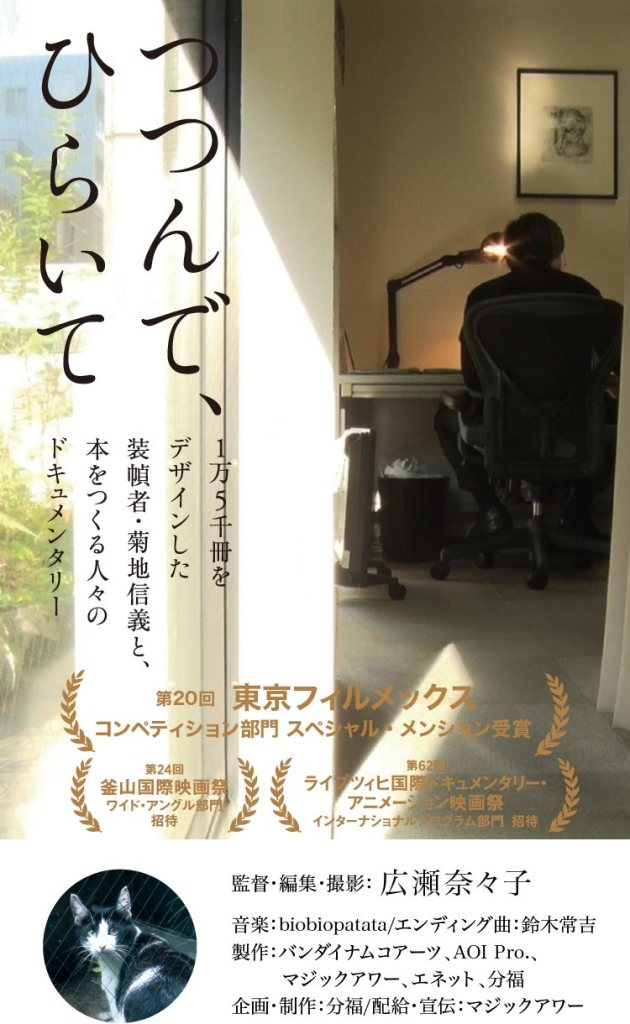
Book-Paper-Scissors (つつんで、ひらいて, Nanako Hirose, 2019)

Particularly at the present moment, it’s near impossible to ignore the fact that we live in an increasingly digital world. We value speed and convenience, and perhaps we’ve begun to lose a sense of aesthetic pleasure in the objects which we consume and then all too often discard. When we think of a book, then we think of the words and words do not necessarily have to be attached to any one thing to have meaning. But a book is also an object, it can have weight and import entirely separate from the words which it contains and, indeed, perhaps some of us are guilty buying them especially for their aesthetic qualities with little to no intention of ever opening the covers. 

The subject of Nanako Hirose’s documentary Book-Paper-Scissors (つつんで、ひらいて, Tsutsunde, Hiraite), Nobuyoshi Kikuchi, is now in his 70s and over the last 40 years been one of Japan’s premier book designers. You could say that his is a dying art, at least we’re always hearing that traditional bookshops are struggling and e-books are on the rise (though the trend seems to have reversed in the last few years), but Kikuchi finds himself still very much in demand working with some of Japan’s biggest publishing houses as well as smaller indie endeavours producing more esoteric affairs such as poetry, philosophy, and religion. 

An old soul, Kikuchi frequents the same Showa-era kissaten he’s patronised for most of his working life the advent of which coincided with its opening, joking that he treats it almost as an extention of his office. He favours pour over coffee even at home where he pays close attention to the quality of the cup to enahance the flavour while playing records on a vintage windup gramophone. Which is all to say, he values the totality of experience above that of the essence. For him, words are living things which exist outside of human beings and the book is their physical body. 

His approach is as much tactile as it is visual. He describes the feeling of the book in the hand, reminding us that this is an object intended to be held and read and that the design must contribute to the experience. In this case and others, the intention is sensual, Kikuchi wants the cover to mimic the texture of human skin. He selects his paper with the utmost care not only for its quality but its effect. When technology limits his first choice he finds another, but we are reminded once again that this is a dying medium in the need to conserve materials because this kind of paper is about to be discontinued by its manufacturer. 

Kikuchi offers the fact that he has no successor as one reason he has no intention of retiring, but there are those coming up behind him such as a young man, Mitobe, who was inspired by one of Kikuchi’s books to become a book designer himself. Kikuchi’s own editor on a collected edition of his writings for magazines suggests that his aestheticism is in itself a kind of reaction to the death of print, whereas Mitobe suggests his generation is also operating in opposition. Design should be simple he admits, but his generation favours the elaborate. To contradict himself, he pulls out a book which has no jacket at all, its design is fused to the endpapers, prompting Hirose to ask from behind the camera what the point of the jacket is at all. And as for that, what about the ubiquitous obi which is attached to every book. Isn’t the band there for the soulless purposes of advertising and marketing? Does it too serve an aesthetic purpose or will the reader simply dispose of it as part of the wrapping?  

Even after so much success and a decades-long career, Kikuchi claims he has no real sense of accomplishment. He thought of literature as a tool for nurturing the mind but after so many books is more aware than ever of a sense of emptiness. In any case, he prefers to think of himself not as a “creator”, but as someone who “prepares” because his is an art which necessitates interraction. His design is for others, not for himself. He has no desire to retire, but is preparing to simply fade away, feeling a responsibility to create a space for the next generation while insisting that his is a connected existence, that it’s all about the people rather than the art. Will books survive? Who can say, but they are more than just words on a page and have their own vitality thanks in no short order to Kikuchi and his expansive artistry.


Book-Paper-Scissors is available to stream in Europe until June 14 as part of this year’s online Nippon Connection Film Festival.

Original trailer (English subtitles)

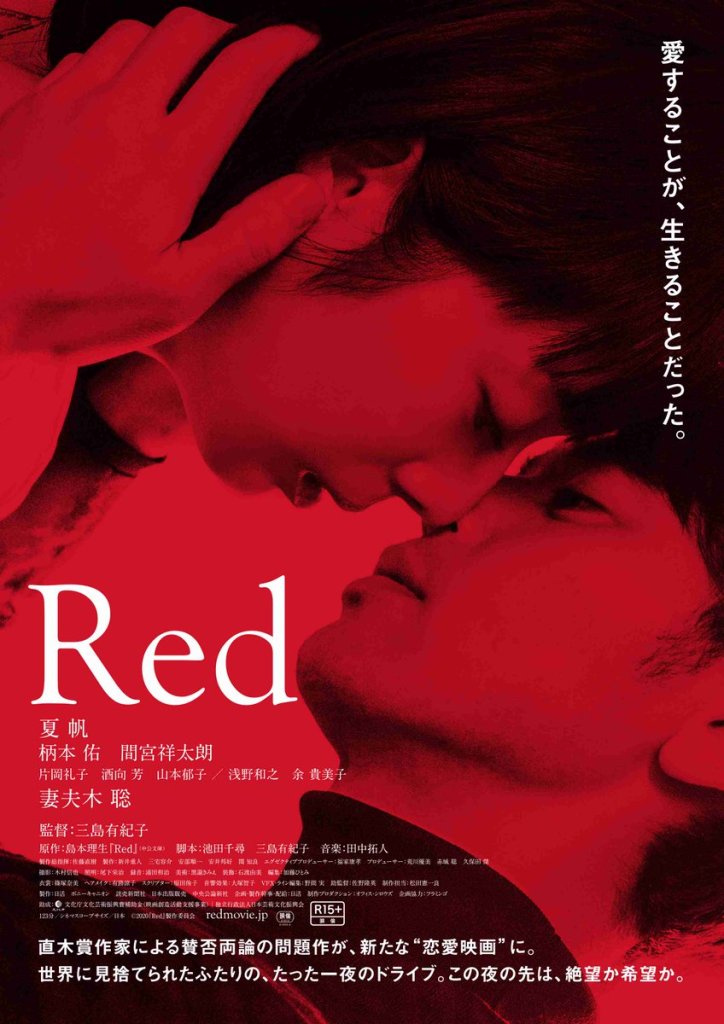
Shape of Red (Red, Yukiko Mishima, 2020)

“This isn’t A Doll’s House” the heroine of Yukiko Mishima’s Shape of Red (Red) is exasperatedly told by a well-meaning colleague, only in many ways it sort of is. Adapted from the novel by Rio Shimamoto, Shape of Red proves that not all that much has changed since Nora slammed the door on the patriarchal hypocrisies of a conventional marriage as its not quite middle-aged wife and mother is confronted by the weight of her choices, wondering if a dull yet secure middle-class life is worth the sacrifice of personal fulfilment. 

32-year-old Toko (Kaho) gave up a career in architecture to marry upperclass salaryman Shin (Shotaro Mamiya) and is now a housewife and mother to six-year-old daughter Midori. The marriage is unhappy only in the most ordinary of ways, leaving Toko feeling neglected and unfulfilled, treated as a servant in her own home expected to fulfil her husband’s needs while her own go unsatisfied. That is perhaps why she wanders off from a work gathering her husband has dragged her to (in the outfit he picked out for her to wear) into a more interesting party where she re-encounters an old flame who abruptly drags her into an unoccupied room for a rough and unexpected embrace. Leaving the party together for a walk along the beach, Toko fills Kurata (Satoshi Tsumabuki) in on the past 10 years, lying through her teeth that she’s blissfully happy though admitting that she would have liked to continue with her career. 

Meeting Kurata either awakens a dormant sense of desire in the otherwise button-down Toko, or merely gives her permission to pursue it. She plucks up the courage to tell the less than enthusiastic Shin that she wants to go back to work and takes a job at Kurata’s company where the pair grow closer, but struggles to decide what it is she really wants – the “traditional” housewife life she picked when she married Shin, or the right to fulfil her individual desires. Shin, it has to be said, is an unreconstructed chauvinist from a conservative background who runs all of his major life decisions by his parents. He told Toko he was fine with her continuing to work after marriage but didn’t really mean it, coming up with excuses why she shouldn’t even though Midori is now in regular school. He tells her she can give work a go, but views it as little more than a hobby he assumes she’ll fail, later instructing her to stop because his parents want a second grandchild and, tellingly, he would like a son. Toko, meanwhile, is beginning to feel trapped but conflicted, convincing herself this is the life that she should want while simultaneously accepting that it makes her miserable. 

A third potential man at her place of work, Kodaka (Tasuku Emoto), also quite sexist and a little bit creepy but perhaps ironically so, strikes at the heart of the matter in bringing up her family background. Like seemingly everyone else, she grew up without a father because her parents are divorced, something she’s kept a secret from her conservative in-laws. Toko’s far less conventional mother (Kimiko Yo), sick of keeping up the pretence, brands her daughter’s life choices as “pathetic”, disappointed that she’s deluding herself she’s happy “living a lie” with a man she doesn’t even love.

Yet as fiercely as her newly awaked desire burns, she isn’t convinced by Kurata. Kodaka tells her that she and Kurata are two of a pair, off in their own worlds not really caring about anything, while pointing out that if Kurata has an empty space inside him he refuses to let anyone fill then the reason she sees it is that she does too. The pair work together symbolically rebuilding an imagined future through designing their idealised home, Toko eventually deciding that the windows need to be bigger because she wants to see more, literally broadening her horizons. What she’s deciding is that she wants more of life, but struggles to free herself of the old patriarchal ideas which convince her she’s betraying something by choosing herself. 

Once upon a time, a film like Shape of Red might have punished its heroine for her pursuit of passion, pushing her back towards a life of traditional respectability in forcing her to accept her maternity at the cost of her personal happiness or accept that her only freedom lies in death. Times have changed, if not as much as you’d think. You still can’t have it all, a choice has to be made and largely the choice is the same as Nora’s – stay and live the lie, or leave and accept that social censure is the price of authenticity. “I’ve a feeling we’ll be trapped like this forever” Toko exclaims driving down a seemingly endless tunnel lit by the warm red glow of security lights. Sooner or later you have to choose where you want to live, the superficially cosy show home with tiny windows and no soul, or the drafty opportunity of a room with a view opening out onto wide open vistas of infinite possibility.


Shape of Red is available to stream in Germany from June 9 to 14 as part of this year’s online Nippon Connection Film Festival. It was also due to be screened as part of the 10th season of Asian Pop-Up Cinema prior to its suspension.

International trailer (English subtitles)

Little Miss Period (生理ちゃん, Shunsuke Shinada, 2019)

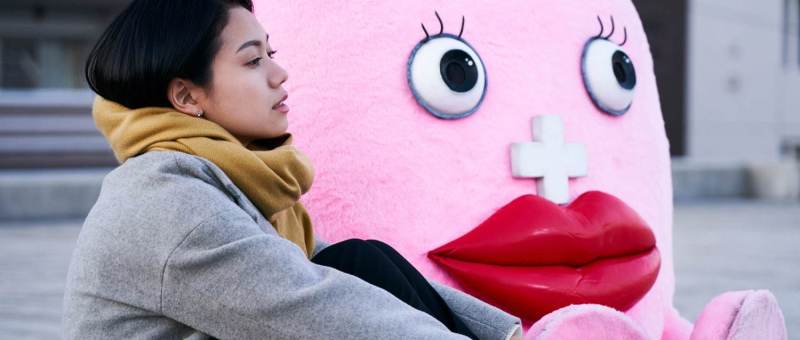
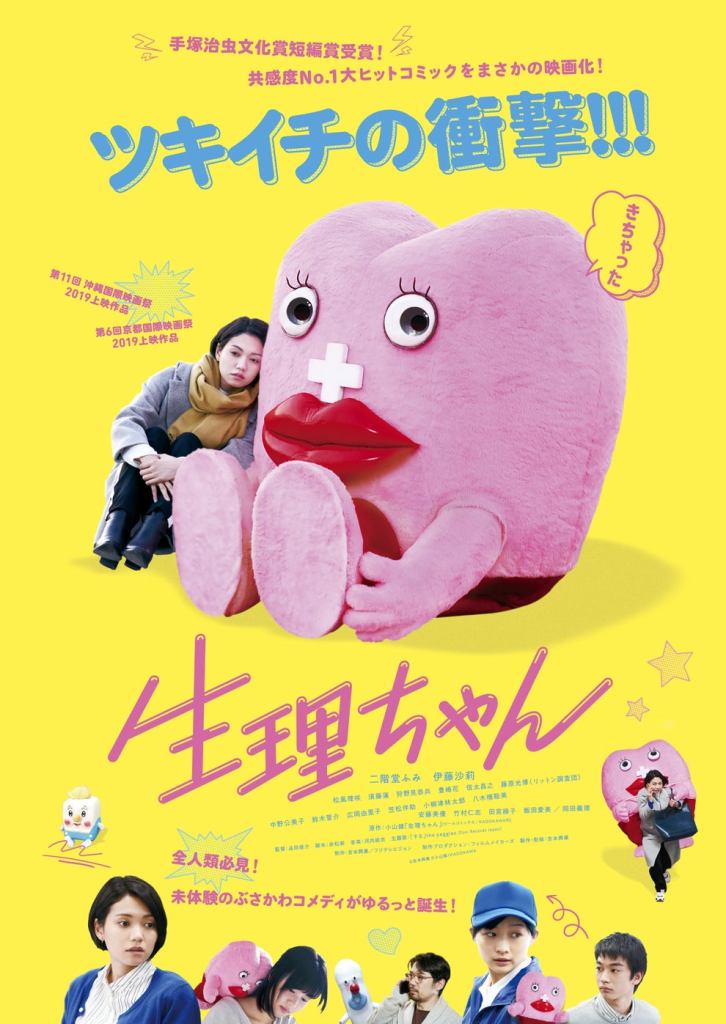
Perhaps surprisingly, Japanese cinema has never been afraid to tackle the sometimes taboo issue of menstruation but Little Miss Period (生理ちゃん, Seiri-chan) is certainly the first time it’s been turned into an accidental protagonist. Inspired by a popular web manga by Ken Koyama, who is male as is the director Shunsuke Shinada, the film revolves around the titular Little Miss P who arrives every month in the form of a giant pink fuzzy monster and generally causes havoc in women’s lives, but for all the trouble, pain, and inconvenience she causes Little Miss P also becomes a symbol of female solidarity and an accidental confidant whose presence can also be a comfort in regrettably patriarchal society. 

The first victim is Aoko (Fumi Nikaido), a young woman working in a busy publishing office who receives an inconvenient visit from Little Miss P while trying to sort out a problem with an uncommunicative writer which eventually leads to more trouble after the author begins bad mouthing them on social media and Aoko is given a public telling off by her sexist boss for failing to appreciate artistic temperament. Aoko’s boss is an unreconstructed chauvinist who makes deliberately inappropriate comments in the workplace and then jokes that he hopes he won’t be accused of harassment. He complains about Aoko looking tired and exclaims that these are the reasons he doesn’t like working with women, but running into a colleague in the ladies’ room, Aoko gets some practical though unhelpful advice coming from another woman to the effect that they can’t ever use Little Miss P as an “excuse” because it will just be seen as another reason to deny women the same rights and privileges as men. 

Aoko wishes that men could experience what it’s like to host Little Miss P if only once year and then perhaps they’d understand, though they also have problems of their own as manifested in the large white Mr. Sex Drive who appears out of nowhere to bother the boyfriend (Kyohei Kanomi) of Aoko’s younger sister Hikaru (Risaki Matsukaze). While Aoko laments the sexist atmosphere in the workplace that leaves her feeling as if she has to make a choice to be seen actively prioritising her career, being more present, more productive than the men just to be seen as equal, the office cleaner, Riho (Sairi Ito), resents her invisibility as a faceless service worker many regard as little more than a bot or real world NPC with no identity or interior life. She makes caustic comments about the vacuous lives of the office workers around her but has fully internalised this view of herself as worthless and undesireable. She resents Little Miss P in part because she doesn’t understand what the point of her visit is when it seems so unlikely that she would ever bear a child. 

Riho is so invested in her inferiority complex that she cannot comprehend that Aoko’s company want to hire her for writing gig after figuring out her secret blogger identity, believing it must be some kind of trick. In one sense, she might be right in that Aoko’s colleague Uchiyama (Ren Sudo) has an obvious crush on her, but still she finds it impossible to accept that she has a right to expect recognition as a human being and indeed as woman. Each of the women find themselves in dialogue with Little Miss P who often provides a quite literal shoulder to cry on as well a reassuring sense of “you got this” security. Aoko apologises to Little Miss P as she bids her goodbye for another month, admitting that it can’t be nice that in general no one is glad to see her (though there are of course cases in which they might be rather more than glad), but Little Miss P takes it all in her stride as part of the job and as much as she often causes trouble and inconvenience is also a warm and reassuring presence which unites women not so much in shared struggle but gentle camaraderie. 

It’s Little Miss P who helps Aoko bond with her prospective step-daughter Karin (Hana Toyoshima), while she perhaps remains ambivalent on the idea of marriage with its consequent loss of independence and the responsibility of suddenly becoming a mother for the first time to an adolescent girl. Female solidarity trumps family or romance, or at least so it seems as Aoko looks back on getting her own first visit from Little Miss P which threw her recently widowed single-father into an ambulance-calling panic but also resulted in a comforting dish of rice with red beans, traditionally eaten at moments of celebration. “Not everything about it is bad” Aoko tells a troubled Karin, “there’s nothing good about it. Not one thing” she replies, but Little Miss P has at least brought them together in female solidarity as they return to their respective, disappointingly patriarchal, worlds. 


Little Miss Period is available to stream online (Worldwide except Japan, Mainland China, Taiwan, Hong Kong, Macau, Thailand, Laos, Cambodia, & Myanmar) from 9th to 14th June as part of this year’s Nippon Connection Film Festival.

Original trailer (English subtitles)

My Sweet Grappa Remedies (甘いお酒でうがい, Akiko Ohku, 2019)

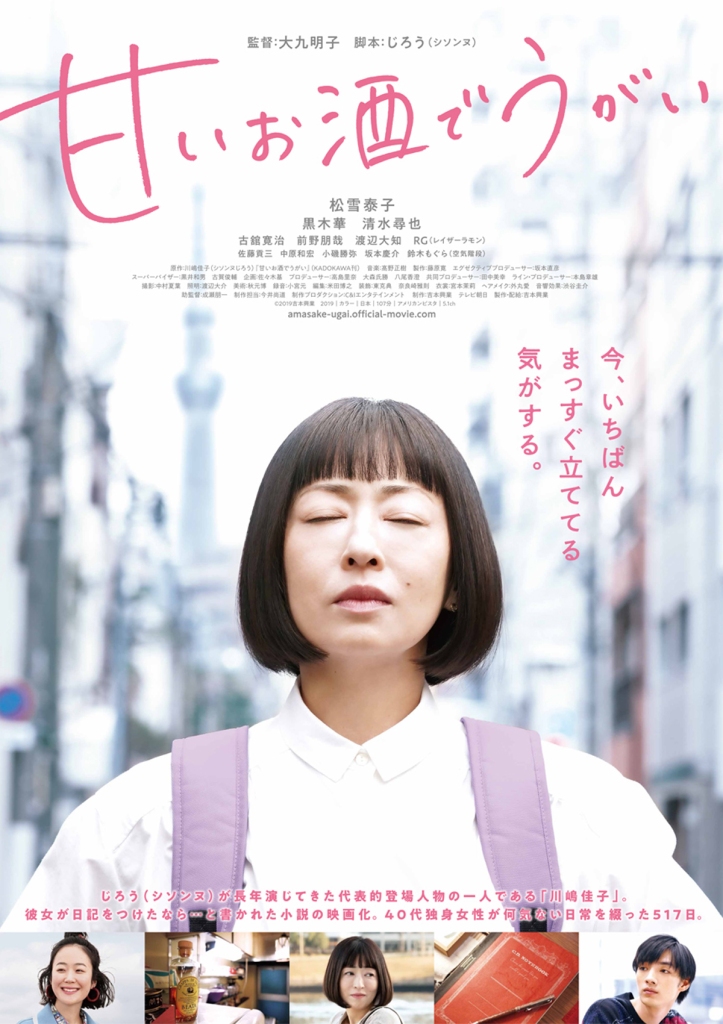
In Tremble All You Want, Akiko Ohku showed us a painfully shy woman’s path towards seizing control of her romantic destiny while Marriage Hunting Beauty told us that there are no short cuts to love. My Sweet Grappa Remedies (甘いお酒でうがい, Amai Osake de Ugai) takes things one step further as a lonely middle-aged woman gradually finds the desire to make a change in her otherwise unchanging existence, coming to like herself as seen in the eyes of others and trusting in happiness however temporary it might turn out to be. 

40-something Yoshiko (Yasuko Matsuyuki) is an unmarried woman working at a publishing company. She tells us that she keeps a diary that she never expects any one to read, not even herself, and mostly spends her free time drinking alone at home or in elegant bars. From the sometimes lengthy gaps between entries, we can see that Yoshiko’s life is generally uneventful and essentially unchanging, that she has few friends, and though she gets by well enough on her own she often dwells on what might have been, disappointed that she was never able to become a mother. 

She is, however, a deeply caring person, sublimating her need for human attachment into anthropomorphising objects, gently patting her bicycle saddle as she parks it for the day and becoming alarmed that it has ended up “in prison” after being impounded. If she’d had children, she muses, she might never have let them leave the apartment. Yet when she discovers one of her favourite earrings is missing, she decides not to look for it because she accepts its decision, later welcoming it home when it makes an unexpected return. 

Overhearing the conversation of the women next to her at a bar, she wonders if their idle complaints that half the year is gone already are excessively negative but accepts that she too is living life in retrograde and needs to learn how to look forward with positivity, which might be why she starts making a series of small but active changes. She observes the world around her from a new angle in crossing a footbridge she has never crossed before, swaps her comfortable red loafers for grey high heels, and her futon for a bed. 

Some of these changes at least are down to an unexpected friendship with a young woman in her office, Wakabayashi (Haru Kuroki), who invites her out on paydays and brightens up the office atmosphere with her goofy antics. Yoshiko herself might be classically quirky, but she mainly keeps her quirks to herself, quietly getting on with her work, while Wakabayashi is the opposite, cheerfully outgoing yet perhaps just as lonely if in a less obvious way. It’s Wakabayashi who sets her on off another path by introducing her to a friend from university, Okamoto (Hiroya Shimizu), who has recently joined their company and to whom Yoshiko had already taken a liking in passing though he is more than 20 years her junior.  

Too shy to shout bingo, Yoshiko is a lifelong believer in love, observing a young couple at festival and hoping they enjoy a night of passion in the fullness of their youth. She still remembers old anniversaries with long gone exes and wonders if they still remember her, but resents the universe’s attempts to test her with texts from past lovers every time she becomes interested in another man. The fact that Okamoto is so much younger is never really an issue, though Yoshiko admits that she likes the fact he seems to favour older, lived in homes over sparkling new builds while she helps him look for a new apartment. 

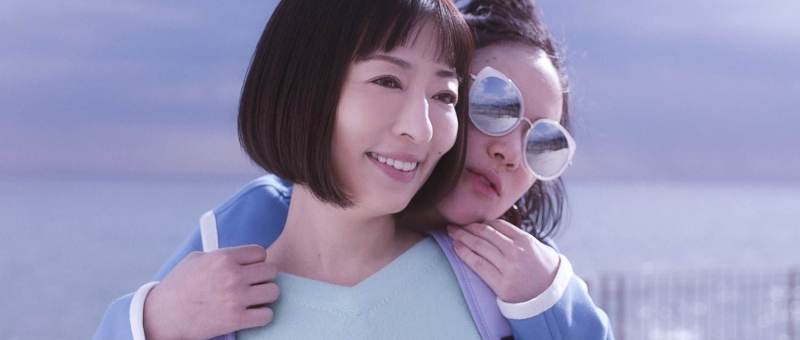
Yoshiko celebrates the fact that colour seems to be returning to her black and white days, her desire to see the dark sea where she feels closest to death in order to reaffirm her connection to life seemingly receding. From her childhood, Yoshiko had wondered if the woman she sees in the mirror is the same one everyone else sees, but later realises that the vision of herself reflected is “somewhat nice”, catching sight of herself in Wakabayashi’s mirrored sunshades and noticing that she is in fact smiling. Reinvigorated by her younger friends, Yoshiko steps into an acceptance of herself, looking forward rather than back and willing to take on new challenges rather than merely dropping into a defensive position of protecting the irreplaceable. No longer dark and foreboding, the sea is now sunny and calm, a scene of peace and positivity with nary a cloud on the horizon.


My Sweet Grappa Remedies is available to stream online (worldwide excl. Japan, Mainland China, Taiwan, USA, & Italy) from 9th to 14th June as part of this year’s Nippon Connection Film Festival.

Original trailer (no subtitles)