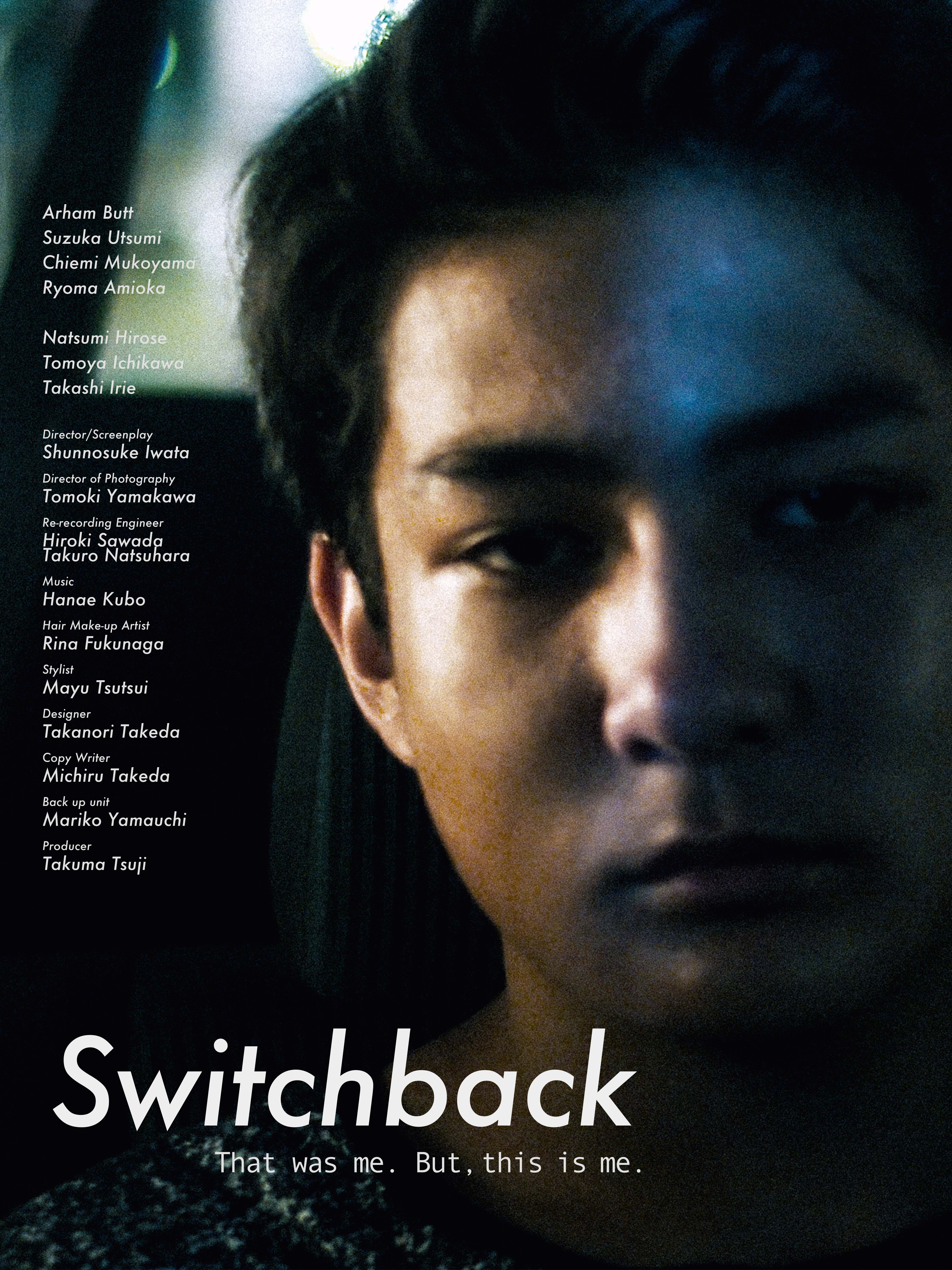
Switchback (スイッチバック, Shunnosuke Iwata, 2022)

Really, everything in life is a learning experience but how should you feel if something that you thought was quite profound and serendipitous was actually engineered even if the way you reacted to it wasn’t? The young heroes of Shunnosuke Iwata’s Switchback (スイッチバック) find themselves caught in a moment of confusion uncertain how far they should trust the adult world while equally at odds with each other and trying to figure out what it is they may want out of life. 

Brazilian-Japanese teenagers Arham and Chiemi are attending a summer workshop project along with basketball enthusiast Suzuka while her childhood friend Eiichiro never actually shows up. Led by Tokyo influencer Rei, the kids will be working together in order to produce a video of a ball bouncing through the countryside. By reversing the footage to make it seem as if the ball is on its own little adventure she hopes to create a sense of the uncanny and with it a new perspective. Arham doesn’t quite get the point of it, but participates anyway and ends up forming a special bond with an old man in a wheelchair they encounter who has a hobby of flying drones. Yet when he finally arrives, Eiichiro claims to have seen the old man walking around and accepting something from Rei assuming he must be some kind of stooge and the children’s adventure they’ve all been on since has been a setup. 

Arham is very invested in the old man’s story and outright rejects Eiichiro’s suggestions that he isn’t “real”, carrying out an investigation into everything he told them about a former airfield that had been built in their town during the war and was later bought by a media company for recording aerial footage. What he discovers is that all of that seems to be true save for one crucial personal detail the old man had mentioned, leaving a grain of doubt in his mind while he continues to resent Eiichiro despite being unable to come up with a reason as to why he would lie. Eiichiro is in fact not quite telling the whole truth though he’s right about the old man, engaging in a kind of engineered adventure of his own but later offers the explanation that adults too are often frustrated and they may have tried to “destroy” Arham because they’re jealous of his cheerful and openhearted nature. 

Even though he concedes that he still experienced what he experienced for himself after meeting the old man, developing an interest in drones and learning a lot of local and aviation history, Arham is uncertain how he should feel about being manipulated, disappointed on trying to confront Rei and hearing exactly the same speech as she’d used in her influencer videos explaining her approach to life and art aiming to give young people a head start in gaining new experiences without them realising that they’re being taught something even if she doesn’t otherwise attempt to push them in a particular direction simply provide the catalyst for growth. Chiemi experiences something similar when she’s offered the opportunity to become a model, a skeevy older man repeatedly telling her she is suited to the work and may have a promising future, adding that she has a quality of ferocity that “Japanese” kids don’t while she complains that she dislikes being told what does and doesn’t suit her preferring to do as she pleases whether other people think it suits her or not. 

Suzuka meanwhile quietly struggles to fit in on her own having come to the town only eight years previously hinting that she and her family may have moved in the wake of the 2011 earthquake but stating only that she doesn’t like to talk of it either traumatised or fearing stigmatisation. Unity came first security second she claims of her basketball team reflecting on the positivity she experienced as they came together before a match in the face of their opponents. The kids perhaps do something similar as they each in their own way react to adult duplicity while deciding to take it in their stride embracing the experiences they’ve had as their own. Rei’s social experiment could easily have backfired leaving them cynical and indifferent, unwilling to believe in or pursue anything fearing that there is no objective truth only manipulation but in they end they run the other way, deciding to trust each other and themselves while creating new experiences of their own. Produced in celebration of the 50th anniversary of the town of Obu in rural Aichi Prefecture, Iwata captures the beauty of the local landscape along with the natural openness it engenders in allowing the children to become fully themselves as they ride their own individual switchbacks to adulthood.   


Switchback screened as part of Osaka Asian Film Festival 2022

Original trailer (no subtitles)
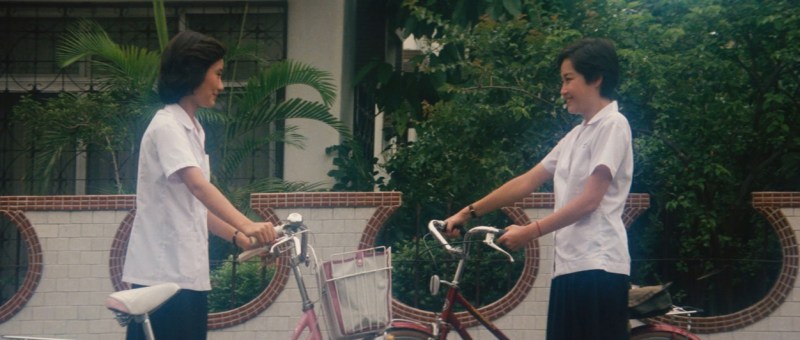
Girls’ School (女子學校, Mimi Lee, 1982)

The intense friendship between two young women is placed in jeopardy when a rumour begins to circulate that they are more than friends in Mimi Lee’s subversive 1982 drama Girls’ School (女子學校, nǚzǐ xuéxiào). The film’s educational framing may ensure that it can only reinforce the contemporary social codes of the repressive martial law era in insisting the two women must be guided back towards he “correct” path, but otherwise affords them a genuine sympathy that undercuts the sense of moral censure while simultaneously rooting the source conflict in the rejection and frustrated longing that provoke only pettiness and jealousy. 

Chia-Lin and Chih-Ting have been best friends all the way through school and are more or less inseparable but the transgressive intensity of their relationship has also isolated them from their classmates some of whom, such as Chun-Hsueh, feel rejected and excluded. Possibly with a high degree of projection, it’s Chun-Hsueh who first starts the rumour that the two young women are “lesbians” only later admitting to the teacher Mr. Mei, informed via a note from class monitor Yu-Liang who has a crush on him, that she doesn’t quite understand what the word means or what saying it might mean not only for Chia-Lin and Chih-Ting but for the other girls and indeed for the school’s reputation. In reprimanding her, Mr. Mei accuses Chun-Hsueh of casting a dark shadow over the hearts of her previously innocent classmates now corrupted with the ugliness not only of her lie but the topic of homosexuality which he and the rest of the educational body view as something shameful and taboo. 

Reminiscent of William Wyler’s The Children’s Hour, the reason the rumour takes hold may be that there is a grain of truth in it in the burgeoning feelings between the two women yet in keeping with the social attitudes of the time the main interest is in proving that it isn’t true with each keen to clear their name of such vicious slander while the other girls frequently describe them as “disgusting”. Even so, the unfairness of their separation and the obviously strong feelings between the two women cannot help but evoke sympathy while Chih-Ting, the bolder of the pair, continues to insist that they’ve done nothing wrong even as Chia-Lin is overwhelmed by the pressure all around them suggesting that they might be better to simply “keep our friendship in our hearts” shamed into repressing their true feelings by an oppressively judgmental society. 

Then again, the film also succumbs to a series of uncomfortable stereotypical tropes in rooting Chih-Ting’s potential lesbianism in her tomoboyishness having been raised by a single father and longing for maternal affection. Having been abandoned by her mother she also feels emotionally rejected by her father who has a gambling problem and rarely returns home while further rejection by Chia-Lin at the instigation of her sister who is also a teacher at their school herself nursing a broken heart after her longterm boyfriend married someone else leaves her feeling like a “monster”, constantly asking herself “what’s wrong with me?” while wondering why others treat her like a “poisonous sore”. This sense of rejection and frustrated longing is the primary motivator for the actions of all, Chun-Hsueh starting the rumour because she wanted to be included in the girls’ friendship and Yu-Liang reporting it because she wanted to curry favour with Mr. Mei after seeing him scrunch up and bin a love letter while quite obviously smitten with Chia-Lin’s sister Miss Yang. 

Mr. Mei is clearly in a difficult position and often trying to do the right thing, admitting to Chih-Ting that the teacher’s don’t know how to help them, but also somewhat insensitive while like others overly mindful of the school’s reputation rather than girls’ fragile emotions never quite considering that the intensity of their feelings and the pressure placed upon them could lead them to harm themselves or else endanger their mental health. It is then a little uncomfortable that the resolution lies in Chih-Ting who had previously professed to hate everyone except Chia-Lin undergoing a softening in which she becomes “more cheerful and mature”, eventually re-embraced by the same classmates who shunned her now satisfied the rumour isn’t true while Chih-Ting has quite literally sacrificed a part of herself to be accepted by a society whose acceptance she had been insistent was unnecessary. The starkness of her conversion along with the subversive quality of the melancholy love song which recurs throughout may attack the underlying homophobia in supporting the truth of the feelings between the two women but leaves them with little possibility for emotional authenticity in an overly conservative society. 


Girls’ School screened as part of Osaka Asian Film Festival 2022

Restoration trailer (Traditional Chinese / English subtitles)

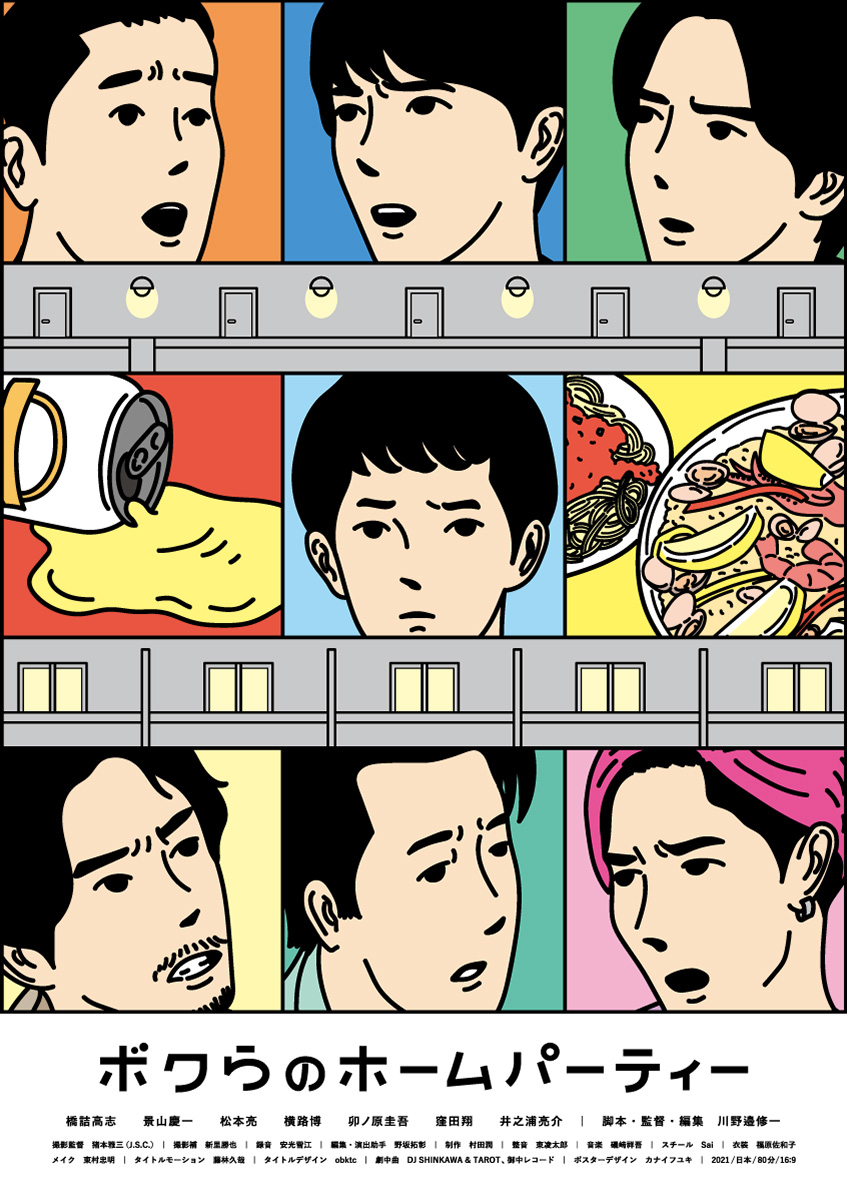
Our House Party (ボクらのホームパーティー, Shuichi Kawanobe, 2022)

The pressures of living in a still conservative society quietly build towards a small explosion provoking a moment of catharsis among a series of gay men some of whom are lovers or long term friends while others are meeting for the first time each bringing with them their own particular fears and anxieties. Inspired by his own life experiences, Shuichi Kawanobe’s Our House Party (ボクらのホームパーティー, Bokura no Home Party) presents a naturalistic view of gay life in contemporary Tokyo in which the six men find solace in their friendship while outside battling a sometimes unsympathetic society. 

The slow burn drama waiting to tank the party revolves around the relationship between hosts Akito and Yashushi who have been together for seven years, Akito having accidentally overhead his boyfriend with another man, Kenichi, through a phone call Yasushi presumably didn’t mean to answer. Despite living together so long, Akito is not out at work and finds himself deflecting potentially invasive comments from his boss about his plans for marriage while he and a recently engaged colleague not so subtly attempt to set him up with a female co-worker who has romantic issues of her own, all of them oblivious to Akito throwing longing looks at their handsome waiter in the local izakaya. When the party begins to get out of hand and provokes a complaint from the couple’s neighbours, Akito’s hostile response implies that they have faced similar complaints before which he believes to be rooted in homophobia, that they simply object to him living there. “All our lives we’ve been trying not to cause trouble” he adds, “where do you expect us to go? Why do we have to apologise?” pushed into a moment of rebellion by the emotional intensity of the present situation that is later unexpectedly echoed by Kenichi who reminds them that they’ve suffered enough, insulted and looked down on, unable to voice their feelings freely and seeing their relationships crumble under the constant pressures of a sometimes hostile society all of which leads them to hurt each other without really meaning to. 

Yet the catalyst for all this is a naive and idealistic college student hopelessly in love with his straight best friend invited to the party after being taken under the wing of kindly bar owner Sho who introduces him to the scene and tries to help him loosen up while accepting his sexuality. Tomoya acts as a kind of judge or arbiter, only just learning the rules of this society but somehow feeling betrayed by its contradictions and hypocrisies. Only he can see that Akito is not really enjoying the party and makes several attempts to check in with him only to see something he shouldn’t have and partially misunderstand it, his illusions a little shattered as he recalibrates his internal sense of morality. Meanwhile he’s both matched and challenged by the lovelorn Masashi who has come in the company of recent hook up Naoki but dreaming of a stable relationship disappointed by Naoki’s assertion that he doesn’t do commitment while picking a fight with Sho over a disagreement about the importance of physical intimacy in romantic relationships. 

Nevertheless through all of these heated debates and fraught emotional crises the men achieve a kind of catharsis in having cleared the air and agreed to return to the sense of solidarity they had felt before only with a little more clarity. “Don’t lie to yourself about how you feel, you’ll only make yourself miserable” Sho had advised the conflicted Tomoya convincing him to join the fun by pointing out that if you don’t like it you can always go back to where you were, advice that might go as well for all as they begin to interrogate how they really feel along with the fears and anxieties that cause them to behave the way they do until approaching a moment of calm after the storm cleared with all truths aired and seemingly at least forgiven. Taking place largely within the claustrophobic and intense environment of the apartment, Kawanobe captures a naturalistic vision of contemporary gay life through the eyes of a series of jaded not-quite-middle-aged men and a naive youngster discovering both himself and a new community only to be confronted by the difficulties and contradictions of life in a society he believed to be better than it is. 


Our House Party screened as part of Osaka Asian Film Festival 2022

Original trailer (no subtitles)

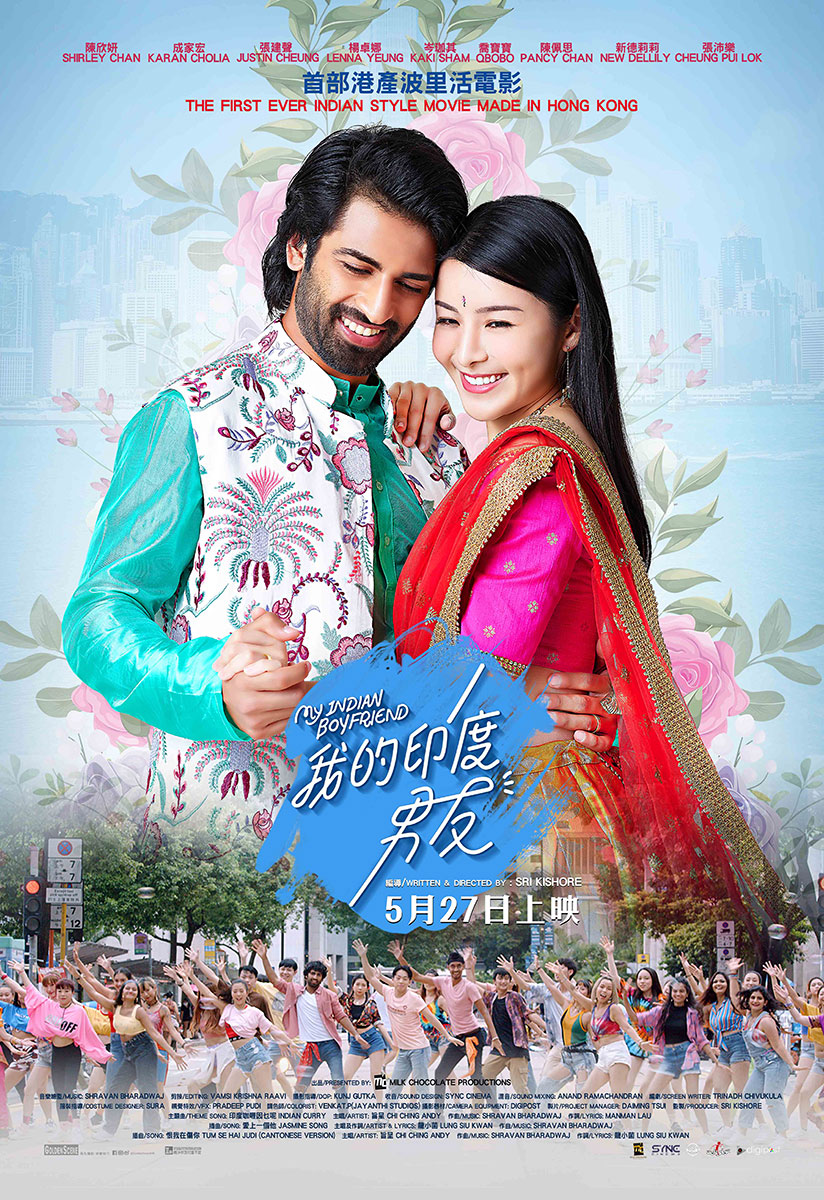
My Indian Boyfriend (我的印度男友, Sri Kishore, 2021)

An awkward young man from India begins to see new possibilities in life after falling for his beautiful neighbour in Sri Kishore’s comic melodrama My Indian Boyfriend (我的印度男友). Billed as the first ever Indian-style film made in Hong Kong, Kishore’s musical romance has already come in for a degree of criticism with some objecting to what they see as a pun on a racial slur in the film’s original Cantonese title (which has since been changed) though the cross-cultural love at the film’s centre does perhaps attempt to overcome a sense of division even if cultural differences are not in the end what keeps the couple apart so much as their individual circumstances. 

The hero, Krishna (Karan Cholia), is the youngest of three siblings and moved to Hong Kong with his family as a child but has been unable to settle, finding it difficult to get a job and repeatedly stating a desire to return to India. Jasmine (Shirley Chan Yan-Yin), meanwhile, is a model and dance instructor technically engaged to sleazy businessman Richard (Justin Cheung Kin Sing) to whom she feels indebted because he took care of her family when her father died but otherwise appears not to like very much possibly because of his worryingly controlling, possessive personality. In fact, the pair’s first meeting is brokered by Richard’s unsolicited racist provocation on spotting Krishna and his Chinese friend Kong (Kaki Sham) outside the building into which Jasmine is about to move generating a sense of animosity that proves difficult to dissipate until Krishna discovers that Jasmine is actually a friend of his sister’s and thereafter falls in love with her. 

It has to be said that Krishna’s obsessive courtship crosses the line of what is considered appropriate, quite clearly making Jasmine uncomfortable and leaving her in a difficult position because of her friendship with the rest of the family. We can see that Richard is definitely bad for her (and every other woman on the planet), but to begin with it’s not clear Krishna is much better save for the fairly low bar that when he realises his behaviour is problematic he does agree to back off if occasionally trying to badger Jasmine into a platonic friendship while warning her against marrying Richard whom she already agrees is likely to make her extremely unhappy. 

Richard meanwhile is continually spitting chips, both incredibly jealous and intensely racist throwing racial slurs around at random and later sending in some of his hired thugs to have Krishna beaten up though it’s unclear why he thought doing either of these things would help to endear him to Jasmine even as he continues to leverage the financial assistance he’s given her family to imply she has no other choice but to become his wife in recompense. In fact neither of the men really give much thought to what Jasmine might want, nor does her mother (Griselda Yeung) take her feelings into consideration coming from an earlier time in which financial stability was the only concern either oblivious to Richard’s many red flags or thinking they’re worth putting up with so long he continues to provide a comfortable life. Even so Richard’s obvious racism does not seem to be so far out of line with society around him, Krishna finding himself constantly facing xenophobic microaggressions with even a prospective employer taking one look at him and openly remarking that they don’t hire South Asians followed by a justification based on a series of offensive racial stereotypes. 

The constant xenophobia along with his father’s incessant criticism fuels Krishna’s sense of futility along with his half-hearted desire to return to India where he perhaps feels he might do better free from the twin pressures of unfair parental expectation and societal prejudice. Nevertheless, his love for Jasmine forces him to confront himself and turn his life around now given a reason to start making a concrete life for himself in Hong Kong while her love for him strays a little into the uncomfortable as she’s won over by the force of his feelings and thereafter turns him into a kind of project, a fixer upper boyfriend, restoring his sense of confidence by embracing his talent for dancing so that he can begin to make something of himself while she continues to struggle with her mother’s disapproval not only because of her prejudice towards Krishna on the grounds of his ethnicity but her insistence on the debt they owe to Richard. But then as Krishna says love is love whether it’s in India or Hong Kong, and will eventually conquer all. Featuring several Bollywood-style musical sequences and some fairly questionable twists typical of romantic melodrama, Kishore’s light hearted love story does at least embody a sense of cross-cultural flow as the lovers (and their families) overcome their various prejudices to embrace the love they have for each other. 


My Indian Boyfriend screened as part of Osaka Asian Film Festival 2022

Original trailer (Traditional Chinese/English subtitles)

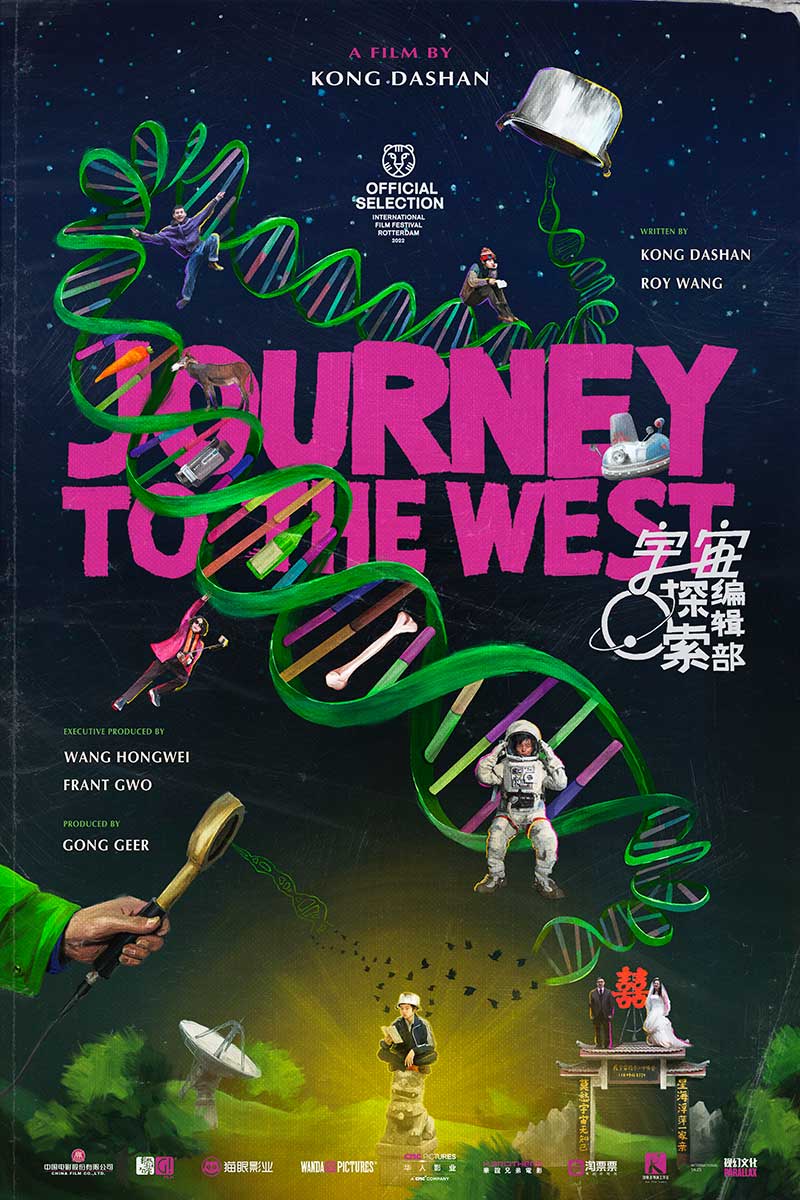
Journey to the West (宇宙探索编辑部, Kong Dashan, 2021)

An eccentric middle-aged man’s search for alien contact sends him on a quest for enlightenment in Kong Dashan’s deadpan epic Journey to the West (宇宙探索编辑部, Yǔzhòu Tànsuǒ Biānjí Bù). Inspired by the classic Chinese tale of the monk Tang Sanzang who journeyed west in order to bring true Buddhism to China in the company of the anarchic monkey king Sun Wukong, Kong’s comical adventure finds its awkward hero longing for connection in contemporary China his search for the extraterrestrial a means of provoking the next great human evolution in the belief that on the discovery of alien life humanity would immediately abandon its petty disagreements and live in perpetual harmony. 

Kong opens however with some VHS footage from 1990 in which UFO-obsessive Tang (Yang Haoyu) is interviewed for a documentary before flashing forward 30 years to the present day in which Tang has made little progress. The magazine which he edits, Universe Exploration, is on the brink of bankruptcy with his exasperated boss Mrs Qin (Ai Liya) already holding tours for prospective sponsors none of which go particularly well. As we later discover, Tang’s obsession has dominated his life resulting in the breakdown of his marriage while his daughter later died by her own hand it seems in part because of the same despair he too feels in his inability to understand the purpose of human existence. His quest is partly one for answers, though his theories often sound unhinged as he patiently explains about messages in the white snow of a detuned analogue television or pays visits to psychiatric institutions believing that psychopaths whose brains are wired differently may be better able to receive extraterrestrial signals. 

On the other hand, his way of life is not perhaps that different to that of his namesake Tang Sanzang in his wilful aestheticism insisting that the desire for better food along with sex for reasons other than procreation is merely a consumerist trap actively blocking the path towards human evolution which he believes he will discover in contacting extraterrestrial life. In his theory, if the Earth is like a grain of sand in the desert of the universe then it’s illogical to assume there are not other beings out there whom he assumes will be far advanced not only in technological terms but also in morality. But then, as a poet he later meets on his journey west into the mountains eventually asks him what if the aliens don’t have any answers either and have in fact come to Earth in order to ask the exact same question for which Tang seeks the solution?   

Inevitably, the conclusion that he comes to is that the answer lies within, that humanity is the universe and each person a single word in a great poem centuries in the making that might in its conclusion allow us to understand why we live if only we can go on connecting with each other to form new sentences in the great unfinished journey towards enlightenment. Then again, Mrs Qin hints at the mean spiritedness of the contemporary society in her conviction that if there are aliens out there who want to come to Earth it’s probably to rob it, while out on the road Tang is taken in by a bizarre scam involving the body of an alien in a freezer you can only see if you are the chosen one which requires the willingness to pay $99.99 to man running the alien embassy on Earth though it does at least result in Tang receiving a mysterious bone which does seem to be crucial to his quest once he runs into monkey king stand in Sun Tiyong (Wang Yitong) who wears a saucepan on his head and claims to have received a mission to retrieve a stone ball stolen from a lion statue’s mouth from a mysterious alien entity. 

Ever mindful of the contemporary realities, Kong throws in several ironic nods to the censors board Tang repeatedly reminded that he must always find a “scientific” explanation for bizarre phenomena rather than succumbing to “superstition”. Travelling west with Sun and a small team including his drunken friend and a young woman the same age as his daughter would have been if she’d lived, Tang does indeed undergo a kind of vision quest culminating in the apotheosis of Sun into Wukong while a strange man in a red hat riding a tiny UFO-like cart always seems to be one step ahead of them. Shot in a faux documentary style complete with direct to camera interviews and occasional breaking of the fourth wall, Kong’s hilariously deadpan, absurdist epic sees Tang journeying west in search of the meaning of life only to be confronted by the vastness of the universe and discover himself, and the answer he seeks, already in its embrace. 


Journey to the West screened as part of Osaka Asian Film Festival 2022

Clip (English subtitles)

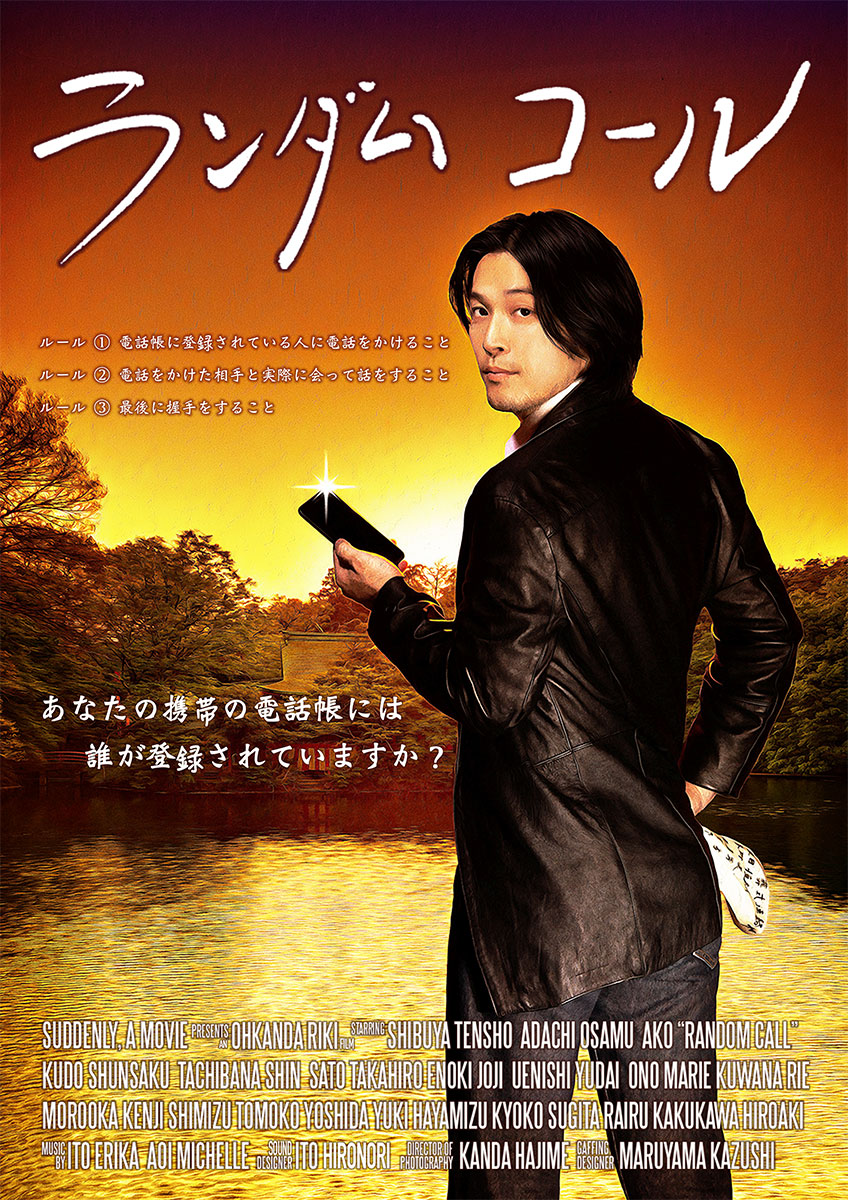
Random Call (ランダム・コール, Riki Ohkanda, 2022)

We may be more connected than ever before but now that it’s so easy to stay in touch we hardly every think of doing it. When was the last time you called someone just because with no specific reason in mind other than a desire to spend time with them? Struggling in his career and personal life, the hero of Riki Ohkanda’s heartwarming dramedy Random Call (ランダム・コール) begins to reconnect with his sense of humanity after a series of meetings with contacts from his phone selected at random each of whom teach him something about himself while reminding him that he is not alone and even if he’s not always been his best self love him anyway. 

A little over 30, Ryo’s acting career has not worked out as well as he’d hoped and he’s beginning to get depressed, isolated by his internalised sense of failure while believing he’s sunk too much into his dream of becoming a successful actor to simply give up as several people including his mother advise him to do. The random call he gets from old friend Shintaro is then a kind of lifesaver reminding him he’s not been forgotten though he’s slightly bemused to discover that Shintaro claims to have no reason for wanting to meet, except he does in fact have an ulterior motive. Inspired by a recent experience in which he became ill abroad and people just helped him out of nothing other than simple human compassion, he’s embarked on the “Random Call” social experiment the results of which he hopes to turn into a book. The idea is he calls a number at random from his phone’s contact book and asks them to go for coffee making sure to shake their hand before he leaves, just checking in with old friends with no other demands or expectations. Inspired, Ryo decides to try it out for himself and encounters various reactions to the unusual project. 

Perhaps that’s understandable, after all it’s natural enough that we mainly contact people when we want something from them so it’s only fair that some are annoyed or confused to discover there is no “point” to the meeting. It probably doesn’t help that the first “random” call is to a business contact, Saito, a TV producer, rather than to a friend with whom it might be more natural to meet up for a drink out of the blue. Saito is then irritated and suspicious, annoyed that Ryo is “wasting” his time assuming he’s making an awkward attempt to network but then something strange happens. He gives in to the magic of the random call and takes it at face value, accepting the warmth of an unexpected friendship and leaving a little happier than he arrived. 

But then, Ryo finds himself not being entirely honest with some of his encounters painting himself as more successful than he’s actually been talking up meetings about movies after hearing of another friend’s award-winning career success and recent marriage though as we later discover the friend wasn’t being entirely honest either. Meanwhile, he cheats a little in making a not all that random call to old friend Mie after learning that she may have fallen on hard times but she tells him that her contact list is mainly full of people she’d rather not speak to so random calling’s probably not for her though she does begin to tag along on some of his adding an additional perspective to his quest for connection through which he gradually begins to realise that his inner insecurities have him led to treat people badly with the consequence that they don’t always remember him fondly. 

Of course it doesn’t always work out, people don’t answer his calls, have moved away, or leave abrupt voicemails explaining they’re not lending him any money but even if it’s awkward or painful both sides gain something from the encounter emerging with a little more confidence in the knowledge that they haven’t been forgotten or else gaining a little closure to some unfinished business that allows both parties to begin moving forward. Through his various re-encounters, Ryo re-establishes a sense of connection with the world around him, encouraging and encouraged by others, and walking with a new sense of positivity into a less lonely future. 


Random Call screened as part of Osaka Asian Film Festival 2022

Trailer (no subtitles)

The Girl on a Bulldozer (불도저에 탄 소녀, Park Ri-woong, 2021)

“Everyone just takes it” the heroine of Park Ri-woong’s Girl on a Bulldozer (불도저에 탄 소녀, Bulldozere Tan Sonyeo) is advised by her partly well-meaning uncle, urging her to know her place, stop fighting and become complicit with the injustice that pervades their society. Already beaten down by life, he has come to the conclusion that there is no other way out other than to submit himself to the quasi-feudalistic social codes of contemporary capitalism, but Hye-yeong (Kim Hye-Yoon) is still naive enough to think that she’s entitled to fairness and that she has the capacity to resist if not exactly for the good of society then in standing up for herself and her family. 

Family is however something about which she feels conflicted, disappointed in her feckless father (Park Hyuk-Kwon) fearing his gambling and drinking problems may have got the better of him yet again. As the film opens, 19-year-old Hye-yeong is in court charged with assault after intervening in a convenience store dispute. She already has a criminal record but the judge is lenient with her in reflection of the fact that she stepped in to defend someone weaker than herself, sentencing her to community service and vocational training rather than prison but reminding her she is now old enough to receive a custodial sentence should anything like this happen again. It’s immediately obvious that Hye-yeong is a very angry young woman who has already lost any real hope for the future, staking everything on saving enough money from her part-time jobs to rent a flat so she can move out and take her younger brother Hye-jeok with her. 

What little stability she has disappears when her father leaves early one morning and does not return, Hey-yeong receiving a call from the police informing her he’s a wanted man having apparently committed an assault and stolen a car from his former employer which he later drove off a bridge harming two pedestrians in the process. Meanwhile she also discovers that her father may have lost the restaurant where they live and work, a couple turning up to make alterations as if they already owned the place, the woman claiming that her husband is the nephew of Chairman Choi (Oh Man-seok) her father’s former boss and the owner of the car which he is accused of stealing. Part of Hye-yeong’s problem is her liminal adolescent status. It’s obvious her father had been keeping a lot of things from her while she’s constantly asked when her mother is coming to sort everything out though her mother died years ago and even the aunt she later approaches for help is less than sympathetic partly as we discover because her father dragged his brother into his money problems by making him a witness to a deal with the increasingly shady Choi. 

Choi is an embodiment of corrupt chaebol culture, adopting a quasi-feudalistic authority that allows him to wield his authority over those lower than himself in the complicated class hierarchy of the contemporary society as if he were a lord and they merely serfs. Also in debt to him, Hye-young’s uncle tries to talk to her about the way the real world works, that she should stop resisting Choi whom she blames one way or another for her father’s accident and know her place, acknowledging that when you’re nice to men like Choi they’re nice to you blaming his brother not for his foolish decision to trust him but for his eventual rebellion in insisting on getting what he was promised rather than submitting himself to Choi’s whim. The fact that Choi is currently running for political office promising to “never surrender to injustice” while making this small corner of backstreet Incheon great again through almost certainly corrupt construction contracts is only another expression of the insidious links between business and politics that once again work to oppress young women like Hye-yeong. 

Meanwhile, she finds herself constantly at the mercy of shady insurance companies one working for the victims of her father’s accident who turn out to be, as she thought, scammers playing up their injuries in the hope of cash amid the compensation culture that defines the modern society. Then again on the other hand, she discovers that her father had reactivated a series of insurance policies of his own, some suggesting the accident may have been a suicide attempt in that he hoped to take his debts with him while providing his children with financial security through the payout. The dragon tattoo on Hye-yeong’s arm which she has to hide with a sleeve in mainstream society marks her out as someone not to be messed with, but also exiles her from conventional success making it difficult to get a regular job or walk around without the implication of violence following her while even the vocational training she chooses of learning how to drive heavy vehicles also rejects her the instructor flat out saying that he’s “not being sexist” but thinks the course is unsuitable for a woman and she won’t find work as one in the construction industry. Young, reckless, and naive Hye-yeong opts for short-term vengeance literally attempting to take a bulldozer to the comfortable lives of men like Choi whose wealth is founded on the exploitation of those like her in counting on their desperate complicity, but discovers that his position is already far too entrenched to be turfed out by a single mechanism alone. “We at Korea Insurance will always be a source of strength for you” she’s ironically told after finally receiving a payout rather than an invoice left with little other choice than to try and make her way free of the control of the Chois of the world in rejecting her complicity. 


The Girl on a Bulldozer screened as part of Osaka Asian Film Festival 2022

Clip (English subtitles)

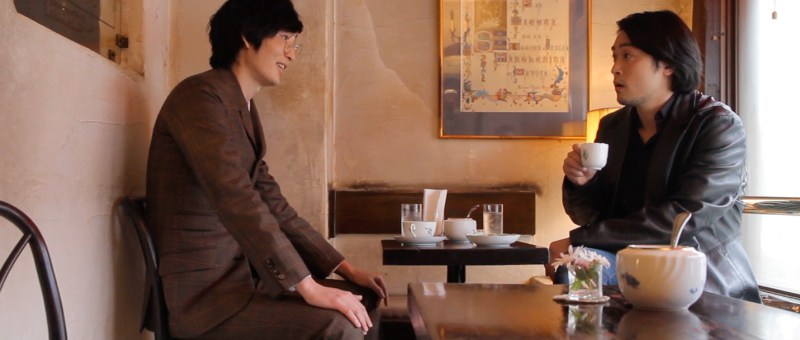
Howling (遠吠え, M Haris Sheikh, 2022)

“What do you want from the world?” the sad sack hero of M Harris Sheikh’s noirish drama Howling (遠吠え, Tooboe) is asked on three separate occasions giving first a non-answer, then the answer he’d like to give, then the real one which is far less heroic or edifying but at least honest. Like everyone else, he too is howling into a void putting a brave face on his inner insecurity while longing to play the hero in his own life only to discover that no matter how many chances he’s given he may not be up to the mark. 

A self-professed nice guy, we first meet Ryuji (Ichiro Hashimoto) trying to help a young woman at the karaoke bar where he works escape sexual harassment in the workplace promising that he can protect her while pledging to kick the other guy’s ass, only as it turns out the other guy is her boyfriend and it’s Ryuji who’s been harassing her. Quite clearly uncomfortable, the young woman informs Ryuji she’s already reported him to HR and he’ll probably be fired today which is exactly what happens but rather than take this as an opportunity to learn Ryuji goes around telling everyone it was all a misunderstanding and he’s fallen victim to a needlessly judgmental society. “The world is tough for middle-aged men” he adds, lamenting that even having a “friendly discussion” with a younger woman has somehow become inappropriate. 

It’s these twin facets of his personality that go on to precipitate his downfall in his intense desire to conform to the masculine ideal as a protector when coming into contact with two women who are each in need of his help. Apparently never having had a girlfriend, Ryuji is overexcited when a 20-year-old college student, Akane (Yukino Takahashi), contacts him, a 40-year-old man, on a dating app never really considering that there might be something untoward going on right until the moment she explains that she’s trying to hire a randomer to kill her abusive father who happens to be the chief of police which is why she can’t hire a professional. Meanwhile, a school reunion grants him the opportunity of reuniting with middle-school crush Chisato (Sonae Kotani) only to discover that she has since married the bully, Tsuchida, who made their lives miserable and is trapped in an abusive relationship. Ryuji had been unable to protect her when they were children but claims to be different now. Then again Tsuchida said the same the thing and clearly hasn’t changed at all. Hoping to solve all his problems by getting a sudden windfall and proving that he can be the hero, Ryuji agrees to Akane’s plan but of course eventually disappoints himself realising that his fantasy of being a saviour is just that. 

Meanwhile the two women, who happen to be neighbours in a swanky high rise apartment block, begin by believing that they cannot escape their situations alone but need a male saviour each placing their hopes in the overeager Ryuji but finally freeing themselves perhaps spurred on by Ryuji’s male failure but otherwise rendering him an irrelevance. By the final confrontation each of the trio has sustained a wound to the hand to which Akane and Chisato jokingly refer as an eye of truth just like the hero from a manga yet with its own degree of truthfulness in that the women begin to see that their freedom is theirs for the taking while Ryuji is finally forced to accept that his presence is unnecessary proving his mettle only with a gesture of nihilistic futility. 

On the other hand we can also see the hand of a highly pressurised society on his fragile masculinity as he accidentally bonds with a pair of weird street preachers crying out for revolution but with an ironic bent. The first is a former Todai graduate who lost a good job in advertising because of all his unhealthy coping mechanisms. He preaches about a creating a truly fair society free of inequality brought about through a deadly virus claiming that his guru, the Master, is the origin not only of the coronavirus pandemic but every other dangerous pathogen known to man. Somewhat contradictorily, the Master reveals that he once lived in a swanky high rise apartment and would like to do so again which sounds somewhat incompatible with the goals of his revolution assuming he’s not planning to build so many that everyone who wants one can have one. The contradiction is further borne out in Ryuji’s answers about what it is he wants from the world, firstly stating ordinary requests such as a decent job, home, wife, children etc before admitting he’d actually prefer a really big house, lots of women, and respect from other people the last emphasising his internalised sense of belittlement and failure. 

The world that Ryuji inhabits does indeed seem to be oppressive and ominous, the strange overgrown alleyway below an overpass where he first encounters the revolutionaries reflecting the dark path of his soul while in the film’s complex production design the sterile space of the upscale tower block becomes a kind of trauma room where truths are aired leading to the final confrontation whimsically scored with circus music in which the women literally take matters into their own hands, and even the diner where Ryuji meets Akane takes on a Lynchian sense of the uncanny. Darkly humorous with its deadpan gags of giant spaghetti and the completely random entrance of an unrelated older woman also with a glove on her right hand ranting about her daughter’s hairdresser boyfriend and his koala neck tattoo, Sheikh’s absurdist drama quietly builds to its theatrical conclusion bringing down the curtain on a bloody tableaux the world as prophesied turned upside-down.  


Howling screened as part of Osaka Asian Film Festival 2022

International trailer (English subtitles)

Far Far Away (緣路山旮旯, Amos Why, 2021)

An introverted IT specialist gets a crash course in romance when he accidentally ends up dating a series of women from the far flung corners of the land in Amos Why’s charming romantic comedy, Far Far Away (緣路山旮旯). An occasionally subversive love letter to a disappearing Hong Kong, Why’s elegantly scripted romance also presents a snapshot of the contemporary society in exploring the various reasons each of the women has rejected the high status, consumerist lifestyle of the cities in favour of a more bespoke happiness elsewhere. 

At 28, Hau (Kaki Shum) has had only one relationship and is still unsure why his previous girlfriend, a former co-worker, broke up with him. His sympathetic hometown friends are forever trying to set him up while he nurses a gentle crush on another woman from the office, A Lee, but is too shy to say anything and worried that her reluctance when colleagues suggest he drive her home after a night out implies that she finds his company uncomfortable. That is not as it turns out quite the case, the reason she didn’t want him to drive her home is that she’d moved from an upscale, prestigious area to a small rural town far out of the city because she broke up with her boyfriend and couldn’t afford the rent but didn’t want anyone to know. 

The constant obsession with men driving women home becomes a minor plot point with several of the women actively questioning why it’s necessary and occasionally even offended while forcing Hau to admit that in most cases he’s offering because he wants to spend more time with them rather than out of a general concern for their safety or simple convenience. Having abandoned the dating app he was working on at work to concentrate on a delivery/map service, he ends up bouncing all around Hong Kong visiting various women even venturing to places so far out he needs to apply for a separate permit to enter while beginning to rethink his life choices realising that the reason he’s so set on stubbornly occupying his family’s flat in the city is rooted in his childhood trauma of having lost his mother to illness and his father to the Mainland in a symbolic orphanhood that hints at the anxieties of contemporary Hong Kong. Hau’s recently married friends discuss the possibility of having children but admit that they don’t really want to do it unless they can move abroad, Hau later speculating they will go to Taiwan while his friend who goes by the ironic name “Jude Law” has a British National (Overseas) Passport. Hau himself admits that he’d never really given it much thought until recently when a prospective partner asks him if he’d ever considered moving abroad mostly to confirm he won’t suddenly announce he’s leaving once they start dating seriously because almost no one can see a future for themselves in a changing Hong Kong.

Meanwhile, each of the women has made a decision to prioritise something else rather than join the city rat race from a youthful young woman living in an idyllic coastal town while determined to marry at 29 to Hau’s college friend Melanie (Jennifer Yu Heung-Ying) who chose to work for an NGO because of the better work/life balance that meant she wouldn’t be pressured into endless overtime. Then again another of Hau’s suitors appears to be just as ambitious as any other city dweller while viewing herself superior because her family bought a flat in a provincial area 25 years previously at a preferential rate and then sold it to her at below market value but more than they paid originally which strikes Hau as an odd arrangement between parent and child but speaks to the penny pinching mean spiritedness that leads her to blow up at him because he left a nice tip at a restaurant where service was included in the bill. An artist friend is willing to put up with primitive conditions in a remote mountain village because she’d rather have the stars than city lights, while each of the women also worry that any attempt at romance is always doomed to failure because no matter how keen they are or claim to be sooner or later the guys all ask them to move back to the city prioritising their own convenience while ignoring all of the reasons they chose to live in these very specific places. 

Eventually Hau becomes the exception, realising that the where isn’t the most important question acknowledging that perhaps he’s the one who ought to move in deciding to let go of the childhood trauma in his family home in order to make a new one of his own having figured out what he wants out of life and who he wants to spend it with which in the end dictates the where. Sometimes, love is just around the corner if you’re willing to go and have a look. A gentle celebration of a disappearing Hong Kong both literally and metaphorically, Why’s charming rom-com sends its hero on a roundtrip to love figuring out his place in the world in finding that home really is where the heart is. 


Far Far Away screened as part of Osaka Asian Film Festival 2022

Original trailer (English subtitles)

Images: (C)2021 DOT 2 DOT CREATION LIMITED

To Be Killed by a High School Girl (女子高生に殺されたい, Hideo Jojo, 2022)

Are there some desires so taboo that they can never be spoken of even if they cause no harm to others? Adapted from the manga by Usamaru Furuya, Hideo Jojo’s To Be Killed by a High School Girl (女子高生に殺されたい, Joshikosei ni Korosaretai) is indeed about a man fixated with the idea of being strangled by a teenage girl but one who also embodies the inspirational teacher stereotype planning to leave behind him a kind of manifesto instructing his pupils to live their lives to the full while remaining true to their authentic selves in the knowledge that their lives will be defined by the manner of their deaths. 

Subverting a trope from shojo manga, Higashiyama (Kei Tanaka) is the hot new teacher at school proving an instant hit with most of the girls in his class but he’s come with an ulterior motive in that his ultimate fetish is being murdered by a high school girl. Even so, he claims to feel no attraction to his teenage pupils and is sickened by teachers who abuse their position later revealing he orchestrated his predecessor’s downfall by accelerating a complaint that had already been registered against him for inappropriate contact with students. His fetish lies solely in being overpowered by someone he would ordinarily perceive as being weaker than himself after fighting for his life with all his strength. 

Then again, as Satsuki (Yuko Oshima), a councillor brought into the school following a traumatic incident who also happens to be Higashiyama’s uni ex, points out his techniques for manipulating the girls are little different than those of a predatory sex offender grooming their prey. He figures out their weaknesses and goes out of his way to make each of them feel special while simultaneously provoking a sense of jealousy so he can bend them to his will in enacting a plan that will eventually lead to his murder in the middle of the school cultural festival. On the other hand, he crafts his plan in such a way as to protect his killer, his fetish won’t be fulfilled unless it’s a perfect crime, and because of the nature of the girl he’s selected he’s confident she won’t even remember having killed him and therefore will remain largely unaffected. 

Higashiyama doesn’t give much an explanation for his fetish save an allusion to having been born with the cord around his neck, a sensation he claims to remember only later admitting that he “recovered” a memory of it after his mother described the event to him. He later says something similar to Satsuki after suffering with amnesia, claiming to remember how he ended up in the hospital but then confessing that Satsuki had explained it to him on a previous occasion. He claims that he’s not suicidal but continues to fixate on death as force which gives life meaning, paradoxically insisting on living with all his might while otherwise drawn towards mortal extremity and fearing a “bad” ending such as being pushed off a cliff or poisoned with carbon monoxide neither of which would satisfy his fetish in their distinct lack of romance.  

Even so as another pupil suggests is he just a regular “pervert” after all despite his rather high minded-view of his proclivities? Despite all his manipulations, the various girls which he targets all seem to begin making progress in their lives, an angry judo enthusiast kicking back against a boy who’d long been bullying her, a shy theatre kid turning popular girl, and a young woman beginning to overcome her trauma thanks to the power of unconditional friendship. His replacement, a middle-aged man with a bad wig, is completely ignored by his pupils hinting perhaps that Higashiyama’s teaching practice was effective no matter now uncomfortable if not quite inappropriate some of his conduct may have turned out to be. After all he argues, he’s not a “pervert” just someone who wanted to be murdered by a teenage girl insisting that his fetish is essentially harmless because he has no sexual interest in the girl herself yet as we later see it does indeed involve inflicting violence on her. 

Playing with a series of B-movie tropes aside from Higashiyama’s taboo fetish from multiple personality disorder to premonition, traumatic memory, and fatalistic obsession, Jojo’s approach is arch in the extreme fully embracing the outlandishness of the material while both lending the troubled Higashiyama a degree of sympathy and hinting at the buried darkness beneath his handsome facade even as that darkness is essentially directed within, his death dictated by the circumstances of his birth as he “remembers” them. Occasionally shifting into the realms of giallo with creepy spiders and ominous red lighting, To Be Killed by a High School Girl never takes itself too seriously but revels in the inherent absurdity of its premise while remaining strangely respectful not only of the hero’s unique dilemma but of the ordinary problems among the otherwise besotted teens. 


To Be Killed by a High School Girl screened as part of Osaka Asian Film Festival 2022

Original trailer (no subtitles)