Rude to Love (愛に乱暴, Yukihiro Morigaki, 2024)

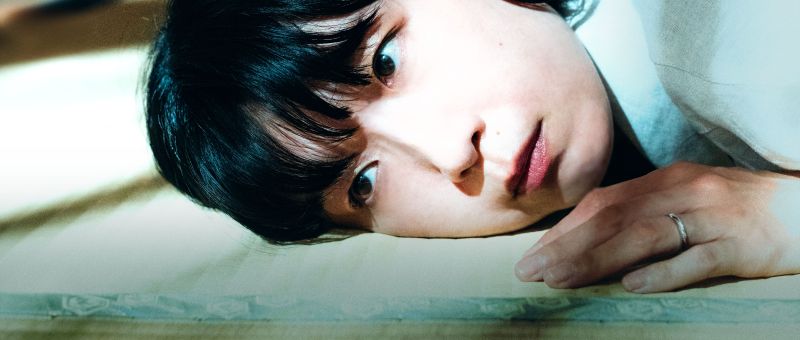
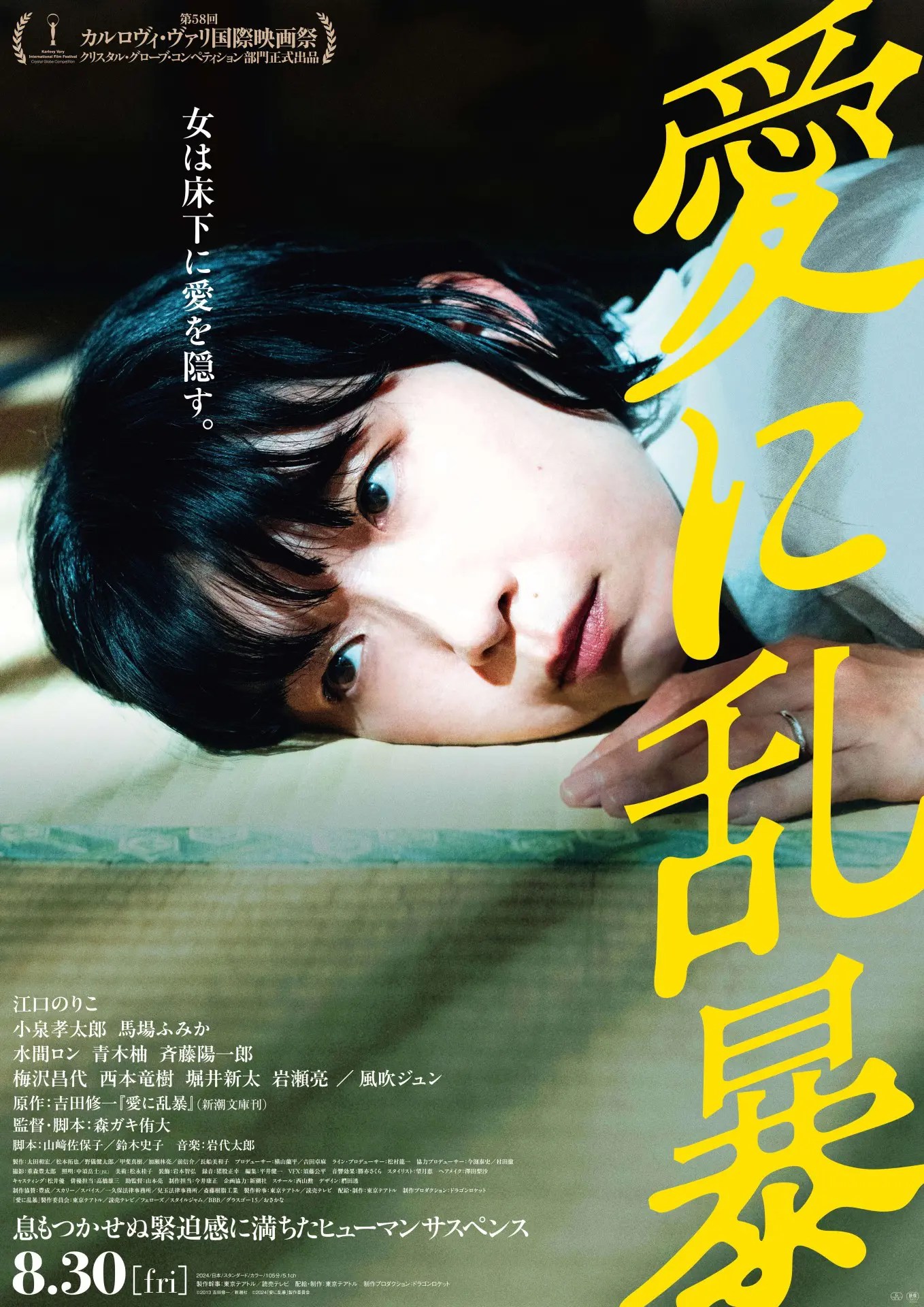
Momoko (Noriko Eguchi) can’t find her cat, Pi-chan. It hasn’t been home for days, and now there’s a stray prowling around near its water bowl. Her mother-in-law, Teruko (Jun Fubuki), can’t abide strays. They come into people’s homes and mess up their gardens. She shoos them away, making it clear they aren’t welcome here. It seems like Momoko’s not all that welcome either, and though her relationship with Teruko is civil enough, it’s clear Teruko has no great love for her and no desire to be any more friendly than she has to be to keep the familial peace.

In many ways, it’s Momoko herself that’s a stray cat and in trying to find Pi-chan she’s trying to reclaim her space within the domestic environment in which she fears she is imminently to be replaced, convinced that her husband, Mamoru (Kotaro Koizumi), is having an affair. At the core of Yukihiro Morigaki’s Rude to Love (愛に乱暴, Ai ni Ranbo) is a cry of despair from a middle-aged woman left with nowhere to turn. Someone in their quiet, residential district has been setting fire to the bins and it’s difficult to not think that the culprit is someone much like Momoko pushed to breaking point and desperate for some kind of release. For Momoko’s part, taking out Teruko’s rubbish has become a daily ritual and one of her key tasks as a dutiful daughter-in-law while she also goes out of her way to keep the place tidy, sweeping up the stray cigarette butts and tin cans that fall from other people’s loosely tied bags. But in other ways, we can see she wants things to change. She repeatedly approaches Mamoru with catalogues to talk about their plans for radically renovating their home, including the removal of a non-load-bearing pillar in the living room, but he generally ignores her.

In fact, Mamoru pays little attention to her at all and is frequently away on “business trips”. Momoko has a sideline in teaching other housewives how to make soap, but left her corporate job eight years previously when she married Mamoru. She tries approaching her old boss to expand the soap-making business and he suggests that she return to the office instead but almost certainly doesn’t really mean it and totally ignores her business proposal. Momoko knows that after so long out of the work force and as a middle-aged woman getting another corporate job is unlikely and the soap classes don’t pay enough to live on. If Mamoru leaves her, she’ll be left flat with nothing to fall back on. This is a key element of Mamoru’s betrayal and one of the reasons that Momoko holds fast to this domestic space to the point she would degrade herself by accepting Mamoru’s affair and begging him not to divorce her. 

Yet in other ways Momoko feels uneasy within it because she and Mamoru had no children. She looks on at other women with their babies and visits a doctor who tells her that her increasingly painful menstrual cramps are a symptom of ageing that she may have been able to ameliorate by giving birth to a child, but also that she is likely heading into the menopause so this maternal milestone is one that may already have passed her by. She can’t escape the feeling that she’s failed to make a success of her womanhood and channels all of her ambitions and desires into the remodelling project that her husband remains entirely uninterested in because he’s already decided to vacate this space. In the depths of her rage, Momoko finally takes a chainsaw to the foundations of her home in the hope of “freeing Pi-chan,” and ends up lying in a grave-like pit in the middle of her living room much like the deluded patriarch of The Crazy Family

The only person who seems to appreciate her efforts is the Chinese student, Li (Long Mizuma), who works at the local garden centre where he is treated poorly by some of the other customers. Mamoru never thanked her for anything, but Li expresses gratitude for her always keeping the rubbish drop tidy. Teruko resents her for something that is really a kind of misunderstanding, but has on some level some sympathy for her plight as a housewife. She idly remarks that she wishes she’d been widowed sooner, which sounds like a terrible thing to say, but also reflects the sense of doom a woman feels in her increasing age that a man does not. Men are never too old to start over but for a woman there are certain things for which is just “too late”, just as it was “too late” for Teruko to fulfil herself after her husband died. She tells Momoko that she still young enough to start over, but Momoko knows that in many ways she’s not. Still, at least the domestic space is hers to do with as she pleases no longer under the watchful eyes of her next-door neighbour and mother-in-law, stray cat no more but master of her own domain.


Rude to Love screens as part of this year’s Japan Foundation Touring Film Programme.

Trailer (no subtitles)

Based on the original novel Shuichi Yoshida “Rude to Love” published by Shinchosha

Images: ©2013 Shuichi Yoshida/Shinchosha ©2024 “Rude to Love” Film Production Committee
The Colors Within (きみの色, Naoko Yamada, 2024)

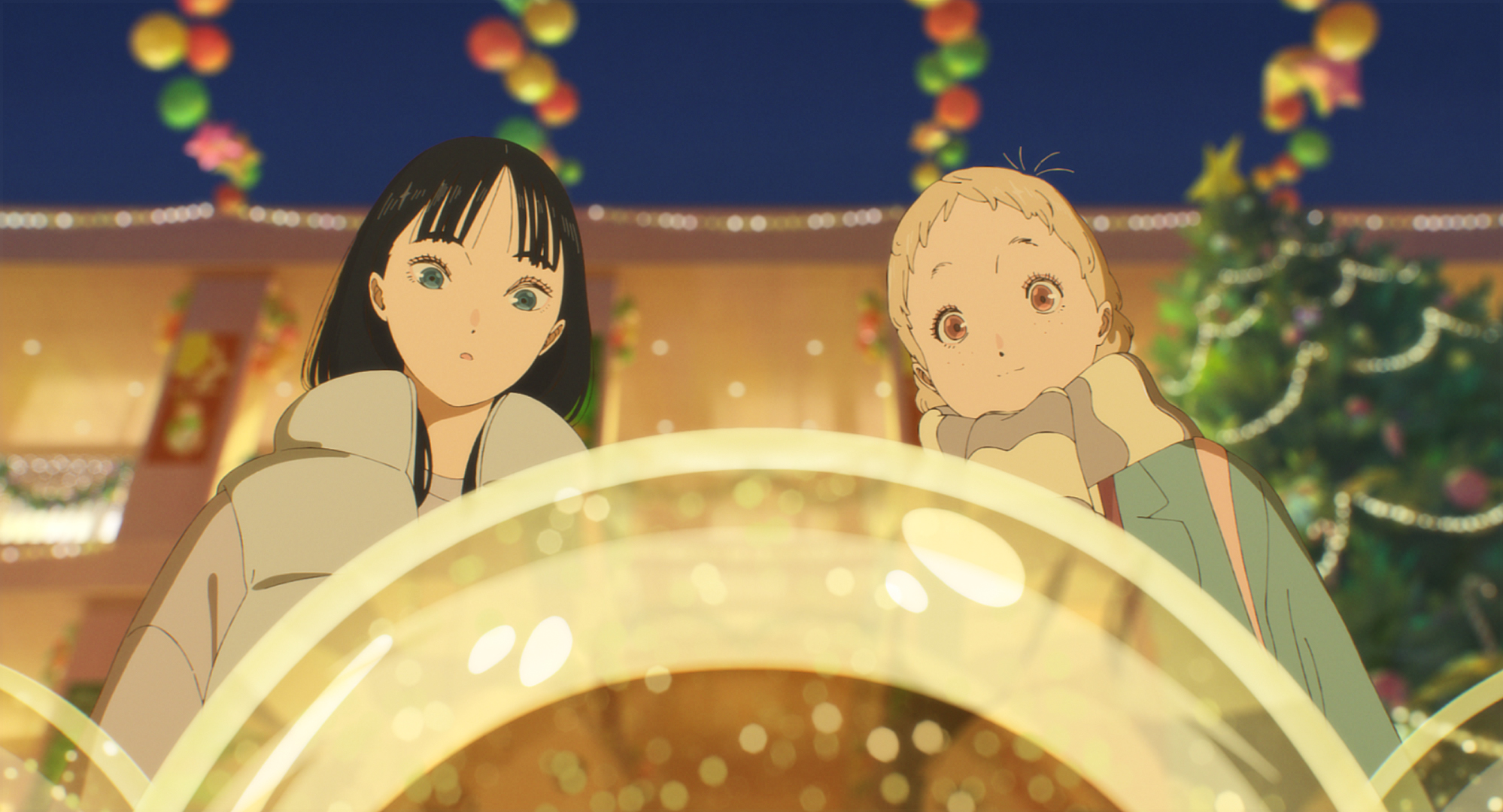
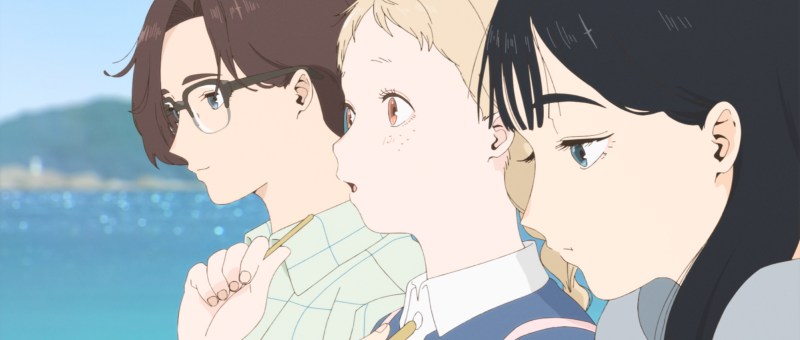
“If I could see my own colour, what kind of colour would it be?” the heroine of Naoko Yamada’s The Colors Within (きみの色, Kimi no Iro) asks herself. Yet there’s a curious pun in the film’s Japanese title in that the word “kimi” simply means “you” but it’s also the name of another girl by whom Totsuko (Sayu Suzukawa) is captivated though she doesn’t quite have the ability to articulate her feelings beyond the fact she feels “all sparkly inside”. 

In any case, Totsuko has the ability to see people as colours but largely keeps it to herself in fear that people will think she’s “weird”. Totsuko does indeed appear to be slightly otherworldly, though no one really seems to reject her for her ethereality save perhaps one classmate who describes her as that girl who sits in the chapel on her own all the time. What she’s mostly doing in there is reciting the serenity prayer to find “peace of mind,” and talking to the cool nun at her Catholic boarding school, Sister Hiyoko (Yui Aragaki), who tries probe gently into whatever it is that’s bothering Totsuko but equally avoiding pressuring her reveal anything before she’s ready. Then again, Totsuko may not quite know what it is that’s making her feel uneasy even if she remains upbeat and cheerful with a childlike sense of fun and innocence.

This quality of joyfulness is directly contrasted with the intense melancholy of Kimi (Akari Takaishi) with whom Totsuko becomes fascinated after catching sight of her “beautiful” and “clear” colours. When Kimi disappears from the school it’s rumoured she talked back to a teacher or that they found out she had a boyfriend, but it seems a Catholic education just isn’t a good fit for Kimi so she decided to drop out. Like Totsuko, Kimi has a secret but hers is that she can’t bring herself to tell her grandmother, who attended the same school and is over the moon about her going there, that it isn’t working out for her. What with it being a Catholic school, there’s also the implication that Kimi and also Totsuko may be struggling to define themselves within a repressive environment and reconcile their differences in the intense fear of not only being rejected by their community but damned to hell. 

After Totsuko checks every bookshop in town because someone said they saw Kimi working in one, she accidentally starts a band with her and a boy who just happened to wander in, Rui (Taisei Kido). Rui also has a secret which is his love of music which he fears conflicts with his responsibility of taking over the family medical practice. He isn’t exactly sure he wants this future that’s been forced on him and prevents him from following his dreams. In fact, none of the teens really wants the kind of life their parents wanted for them but they aren’t yet certain of the kinds of lives they do want or really who they are which is why Totsuko is still unable to see her own colour despite clearly discerning everyone else’s.

Through making music together, they discover new ways of expressing themselves and with it growing self-acceptance that allows them to be honest with themselves and others about who they are and what they want. Music in itself becomes an act of holy communion with the universe, a pure communication of one soul to another much like Totsuko’s synaesthetic ability to see people as colours. Even Sister Hiyoko insists that any song that is about goodness, beauty, truth or indeed suffering is itself a hymn and in the end Totsuko’s song is about all those things. Her joy, Kimi’s sadness, and Rui’s confusion coming together in a harmonised symphony as a consequence of “sharing secrets and feelings of love”. This sense of delicacy extends to the animation itself which has a watery, ethereal quality. Produced by Science Saru, this is the first of Yamada’s films not based on existing material and is underpinned by a tremendous empathy for its anxious adolescents as well as their uncertain adults along with a true sense of wonder for a world of colour and light hidden from most but visible to the ever cheerful Totsuko content to dance through life for the pure joy of it even if as she says she wasn’t very good.


The Colors Within screened as part of this year’s BFI London Film Festival and is released in UK cinemas on 31st January courtesy of All the Anime.

Trailer (Japanese with English subtitles)

Images: © 2024 “THE COLORS WITHIN” FILM PARTNERS

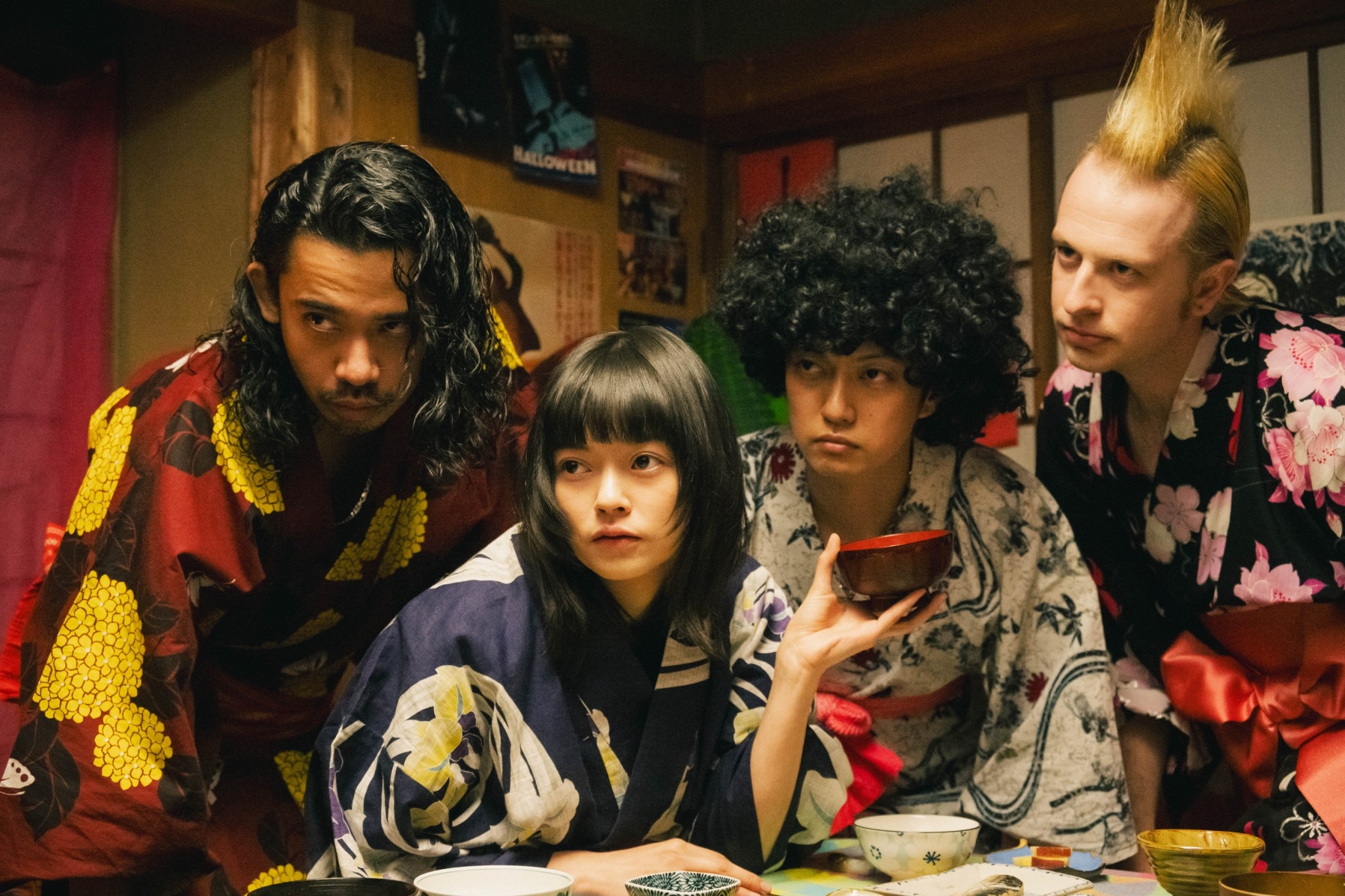
The Gesuidouz (ザ・ゲスイドウズ, Kenichi Ugana, 2024)

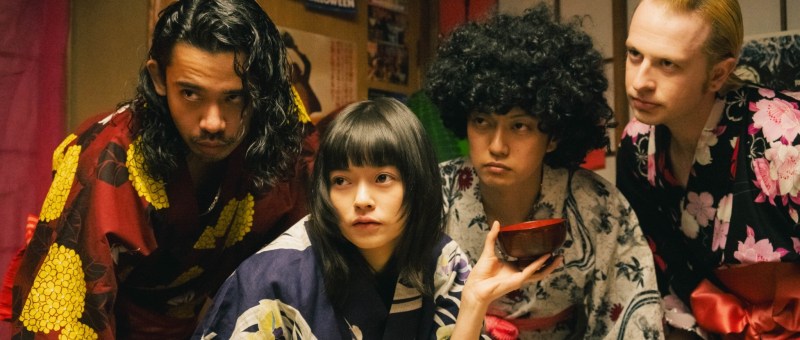
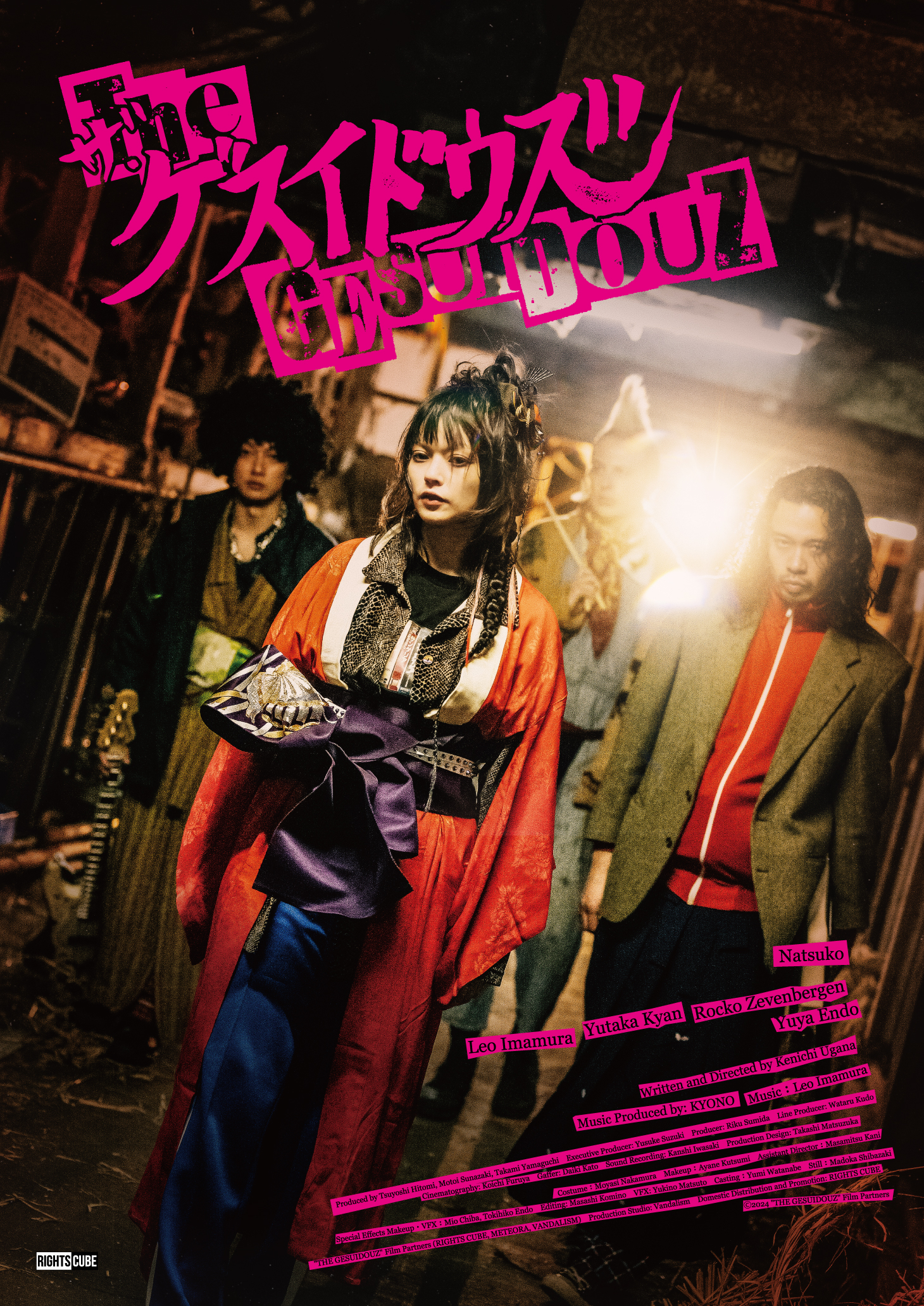
According to Hanako, vocalist of the band The Gesuidouz (ザ・ゲスイドウズ), punk is “like this miso soup”. She later describes the soup as soothing, made by her bandmate Santaro who turns out to be an unexpectedly dab hand in the kitchen, though in many ways the band’s selling point is that they aren’t very good at anything, least of all music. Even so, and quite crucially, they have one devoted, though otherwise anonymous fan who comes to all their gigs and dances wildly which just goes to prove that the old lady who becomes a kind of muse to them was right when she said there was probably someone out there to whom their music meant more than anything. 

But Hanako is writing under the shadow of death because she’s just turned 26 and is convinced she’s going to join the 27 club which means she has a very limited window to achieve her musical destiny. Perhaps in a way it’s a kind of quarter life crisis, or the sense of desperation that can be felt while young that time is already running out and you still haven’t made anything of your life. You still don’t know who you are or what you want to be and in Hanako’s case, no one has much faith her except her bandmates who stoically excuse their lack of audience under the rationale that everyone’s very busy these days and they should make sure to consult the calendar when they’re booking gigs. 

In fact, her manager’s the least supportive of all. He calls the band “rubbish” though casually admitting the may have forgotten to even release their album though it’s true that no one’s buying it. He’s the one that talks them into taking part in a government-backed scheme to encourage young people to move to the country in exchange for a stipend and place to live. But the weird thing is, unlike the indifference they felt in the city, the local community embrace their eccentricity and support their music even if they find it difficult to see what’s good about it. Despite describing the place where she lives as a “shithole”, the old lady listens patiently to Hanako’s tall tales about headlining Glastonbury while arranging gigs for them to play for such esteemed audiences as the local cows while bemused elderly resents look on stony faced but ultimately supportive. After all, as the old lady says, it’s a rare gift to create something so amazing that other people don’t understand it.

Though obsessed with horror films, darkness, and death, Hanako is strangely touched by country warmth and almost seems to tear up on the simple gift of a bunch of leeks after working in the fields. In a funny way, this village is actually quite like Glastonbury, a small rural settlement with a down-to-earth new age sensibility that suddenly erupts with music even if in this case on a much smaller scale. The old lady who becomes in a way a future echo of Hanako might be the most punk of all, joyfully living her little life in the shithole she’s never been outside of but welcoming these weird youngsters with patience, warmth, and acceptance which eventually allows Hanako to find a way back to herself and to art leading to a kind of rebirth in contrast to the death she was convinced was waiting for her. 

Of course, that all comes from a talking dog giving life advice through he medium of pithy quotes and song lyrics divined through automatic writing while practicing calligraphy. With frequent references to classic horror films, the film is an ode to the strangeness of country life but also its borderless horizons and sense of community solidarity alien to Hanako’s lonely life in Tokyo. But tellingly this is a paradise destined to be lost as the band finds success separating them from the environment that made them successful, fostering their art but also their souls with its gentle sense of acceptance. Often hilarious in its matter of factness, Kenichi Ugana’s anarchic dramedy has true punk spirit which is to say there’s nothing more punk rock than a good bowl of miso soup crafted with wholesome practicality and an altruistic desire for mutual happiness.


The Gesuidouz screens 30th November as part of this year’s London International Fantastic Film Festival (LIFFF)

Original trailer (English subtitles)

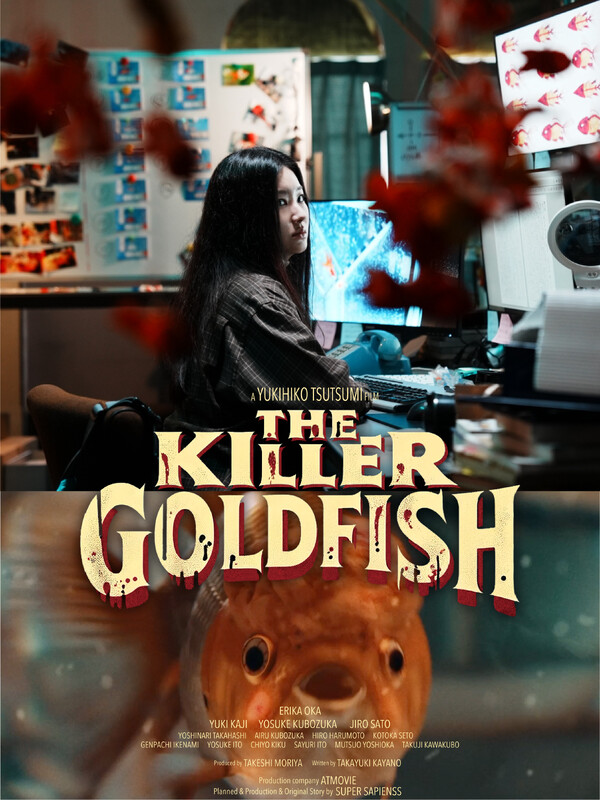
THE KILLER GOLDFISH (Yukihiko Tsutsumi, 2024)

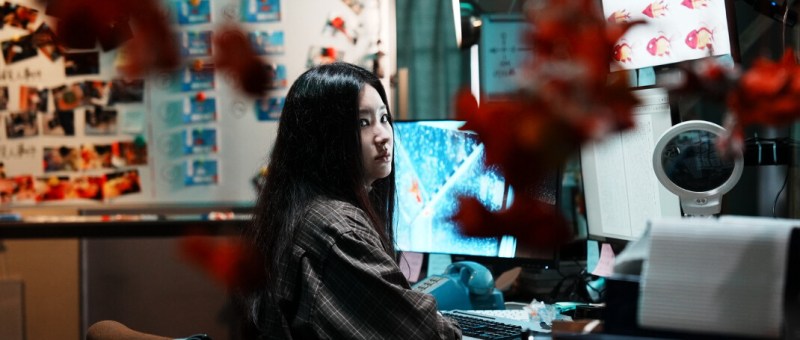
“Did the goldfish have a grudge against your husband?” It is a very strange question, but the policeman admits he has to ask it because he knows his contact at Public Security’s Extraordinary Unit will ask him if he asked. Goldfish aren’t something you’d ordinarily think of as dangerous, but perhaps they’re sick of being cooped up in tiny bowls, denied the whole ocean, so they’ve decided to fight back against humanity? Either that or, as Public Security agent Erika (Eriko Oka) suspects, someone is using them to exact a very particular kind of revenge.

Helmed by one of the premier directors of mainstream contemporary Japanese film, Yukihiko Tsutusmi’s The Killer Goldfish is not the schlockfest its name may suggest but a hark back to the anarchic conspiracy thrillers of the 90s. In fact, it’s produced by a director collective, Super Sapienss, of which Tsutsumi is a member alongside Katsuyuki Motohiro, best known for the Bayside Shakedown series, and Yuichi Sato (Kisaragi) which aims to shake off the inertia of the contemporary Japanese film industry by taking charge of the entire process so they can make the kind of films they want. 

You have to admit, it might be difficult to get a production committee to sign off on a such an outlandish series of events that only begins with murderous goldfish and eventually spins off into a far reaching conspiracy involving superhumans, psychic powers, neanderthal migration, missing high school students, a young woman who is somehow connected psychically with goldfishkind, and long-haired jizo that can stir up human appetites to the point of mass destruction. Erika has a feeling all of this is connected, but she doesn’t quite yet know how save that this world is apparently full of strange crimes to the extent that the powers that be are well aware of them but they prefer to keep quiet and let the Extraordinary Unit handle them.

In any case, the action proceeds X-Files style as Erika teams up with sceptical cop Yukine to try to solve the mystery and avoid any more fishy crimes in the future. This conspiracy is it seems located at the nexus of the primaeval and sophisticated, neanderthal rage delivered into the contemporary society in the opening scenes via our ubiquitous technology with a secret symbol broadcasting into the minds of those born to receive it. A professor digs up evidence that suggests early man arrived in Japan earlier than previously thought and is invited on a daytime talk show only to cause consternation with the obscene quality of his find, while further clues are bizarrely delivered through a love island-style reality dating show and its caddish heartthrob contestant. Making contact with the suspect eventually entails solving a riddle, messaging them on social media, and then completing an online questionnaire.

Nevertheless, these superhumans are apparently so because of their primaeval genetic makeup that places them outside of contemporary notions of civility. Their atavistic qualities render them, like the goldfish, constrained by the limitations of contemporary society from which they long to break free. Even so, their sensibilities seem to align with a problematic seem of historical nationalism that lends them an edge of danger aside from their potential connection to the unexplained goldfish murders which in themselves may indicate a rebellion against entrenched patriarchy given that they seem to target only middle-aged men. 

These ideas may be fleshed out more fully in the accompanying manga, also produced by Super Sapienss, or explained in the Chapter Two alluded to in the title card following the post-credit sequence but otherwise have an unconstrained, freewheeling quality rocketing between the primaeval past and the ultra modernity of reality television and social media conspiracy. The film makes frequent use of animation to express transformation or transportation between these worlds along with another that may exist in a less visible dimension, and has an unexpected freshness that belies Tsutsumi’s long career in the industry. The script by Hoarder on the Border director Takayuki Kayano similarly has an anarchic sensibility which is both retro and ultra-contemporary blending buddy cop procedural with zany horror comedy and an unfolding sense of unease in modern society. It’s fair to say that with The Killer Goldfish Super Sapienss has made good on its mission statement to disrupt the status quo of mainstream Japanese cinema with hopefully more to come in Chapter 2.


THE KILLER GOLDFISH screens 26th November as part of this year’s London International Fantastic Film Festival (LIFFF)

Original trailer (English subtitles)

London International Fantastic Film Festival (LIFFF) Announces Full Programme

The London International Fantastic Film Festival (LIFFF) celebrates its inaugural edition this year running at BLOC Cinema and Genesis Cinema in Mile End, London from 26th December to 1st November. Included in this year’s packed programme, are three films from Japan.

THE KILLER GOLDFISH

Surreal conspiracy thriller from the prolific Yukihiko Tsutsumi in which a series of murders take place across Japan which appear to have been comitted by goldfish.

Self-Revolutionary Cinematic Struggle

Meta drama from Gakuryu Ishii in which a professor of film named Gakuryu Ishii goes missing after being driven out of his mind by his work. His fellow professors try to teach his ideas though they do not really understand them, plunging the students into a labyrinthine world of expanded consciousness.

The Gesuidouz

Charming punk-themed rural drama in which an unsuccessful band are sent to the country to take part in a subsidised scheme to ameliorate rural depopulation.

London International Fantastic Film Festival (LIFFF) runs at BLOC Cinema and Genesis Cinema in Mile End, London from 26th December to 1st November. The full lineup is available on the official website as are scheduling and ticketing details. You can also follow the festival on Facebook and Instagram.

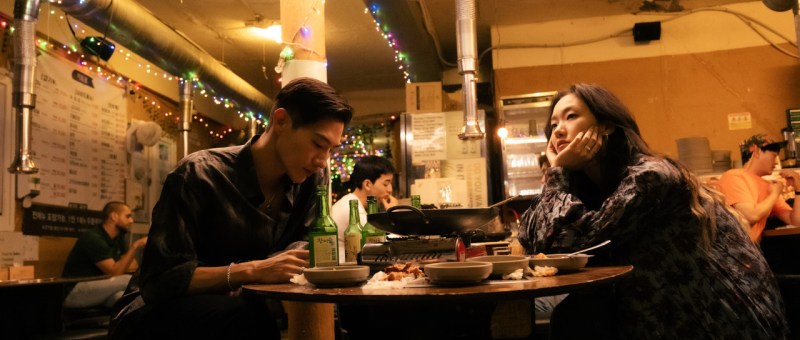
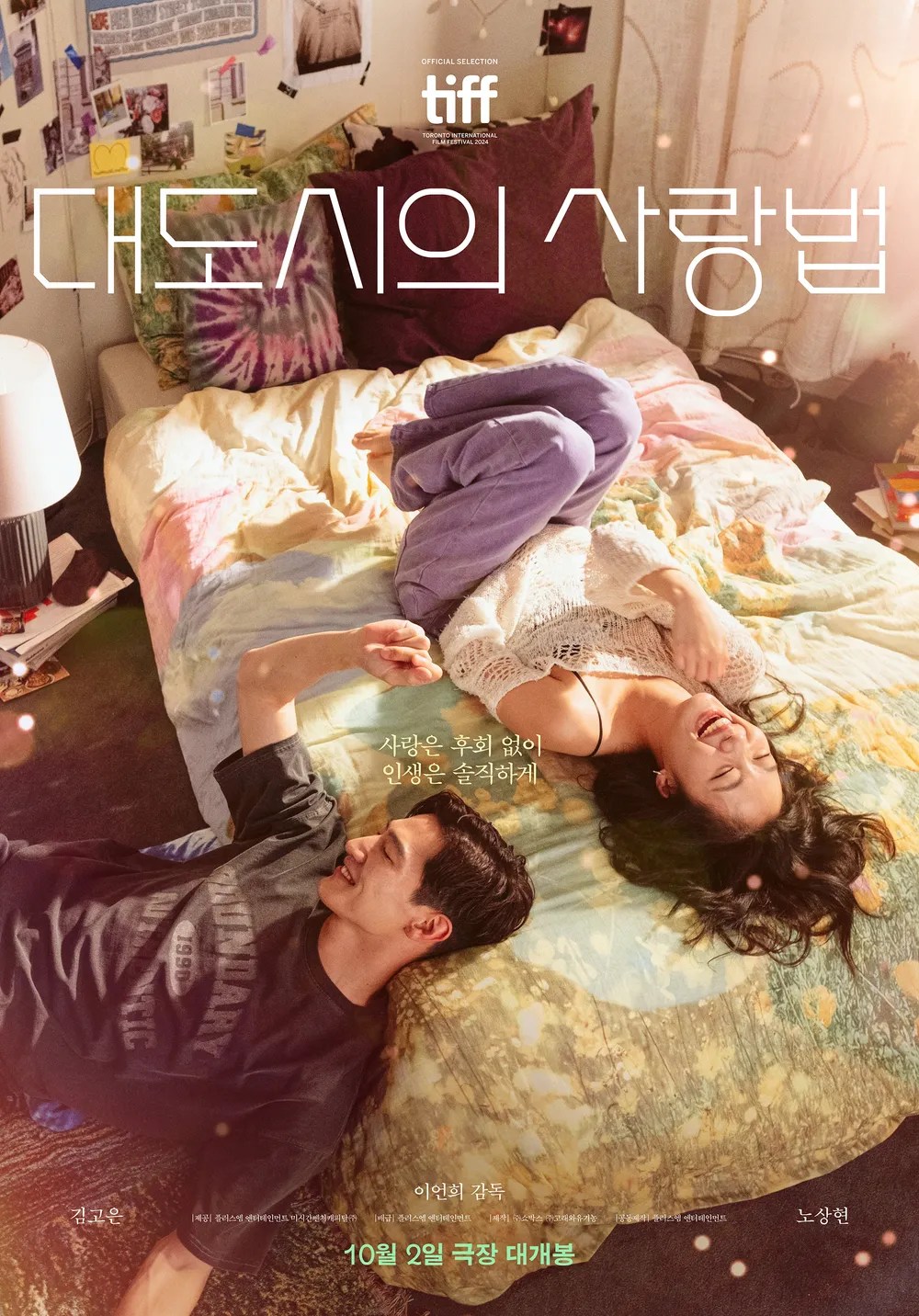
Love in the Big City (대도시의 사랑법, E.oni, 2024)

“How can being yourself be your weakness?” asks a young woman who, more than anything else, is defiantly herself, to a young man who indeed is anything but. The heroes of E.oni’s Love in the Big City (대도시의 사랑법, Daedosiui sarangbeop), adapted from the acclaimed novel by Park Sang-young, are in some ways on parallel journeys that somehow weave through and around each other as they each try to navigate an often hostile society that has no place either of them.

For aspiring writer and in the film’s early stretches student of French literature Heung-soo (Noh Sang-hyun), his “weakness” is that he’s gay and though he seems to have accepted this about himself is firmly in the closet. Free spirited Jae-hee (Kim Go-eun) who spent her teenage years abroad in France catches him making out with their professor but couldn’t care less though Heung-soo rebuffs her attempts at friendship fearing they’re akin to a kind of blackmail or that she plans to out him to their fellow students. It’s not until Jae-hee is publicly shamed when it’s rumoured a topless photo being shared online is of her that the pair finally become friends. Sick of the curious stares and covert giggles, she lifts her shirt in front of the class to prove it isn’t her, earning the nickname “crazy bitch”.

Her response is the exact opposite of Heung-soo. She claims her freedom by baring all, being defiantly herself and outwardly at least little caring for what others think of her while Heung-soo makes himself invisible and says nothing harbouring intense fear of being exposed. They are each in their way pariahs. Heung-soo because of his sexuality which is still unacceptable to many in the fiercely conformist society of South Korea in which Christian religious bodies still have huge influence and loudly oppose LGBTQ+ rights and freedoms. Heung-soo’s widowed mother is also intensely religious and having stumbled on one of his stories about a crush on a classmate is aware that he is gay but does not speak of it and continues to believe he will be “cured”. This is perhaps why she keeps urging him to do his military service believing it will make a man out of him.

For all of these reasons, it’s not surprising that Heung-soo is unwilling to live his life openly as a gay man because of the prejudice he knows he will face from those around him. Jae-hee, by contrast, refuses to hide and lives the way she wants to but is shamed by those who feel a woman should live in a certain way which is to say quietly, politely, and obediently. A man she thought was a boyfriend while he thought of her as a bit on the side publicly slut shames her and asks what sort of idiot would want to date a woman like her. Though we first meet her as a confident, rebellious student we see her gradually beaten down by the world around her and the demands of corporate culture. Considering marrying a man she may not actually like because it’s what you do, she stares sadly at a middle-aged woman opposite her on the train dressed in a near identical outfit and the comfortable shoes that are psychologically at least uncomfortable for Jae-hee in representing her capitulation to the properness of mainstream society. 

Her degradation continues to the extent that she finds herself in a relationship with a domineering, intensely patriarchal man who later turns violent when she tries to leave him. E often cross cuts and juxtaposes Heung-soo’s and Jae-hee’s experiences as they each suffer similar blows and indeed violence from a macho society if in different ways and for different reasons while having only their intense bond as fellow outsiders to rely on. This really is the love in the big city, a deeply felt platonic and unconditional love between two people who essentially have no one else. It’s through this love that each comes to love and accept themselves, Heung-soo eventually gaining the courage to fully embrace his authentic self while Jae-hee finally regains her independent spirit and refuses to let others shame her while standing up both for the LGBTQ+ community and the young woman she once was at the mercy of a male-dominated corporate culture. Warm and often funny, the film paints contemporary Seoul as an outwardly oppressive city of enforced conformity but equally discovers small pockets of freedom and joy along with the wholesome comfort of true friendship and self-acceptance.


Love in the Big City screened as part of this year’s London Korean Film Festival.

International trailer (English subtitles)

The Noisy Mansion (백수아파트, Lee Lu-da, 2024)

Could the neighbourhood busybody actually be a force for good? The Noisy Mansion (백수아파트, Baeksu Apateu) at the centre of Lee Lu-da’s goodhearted comedy is a metaphor for the nation itself and also a kind of purgatorial space inhabited by the heroine as she attempts to repair herself by enforcing justice and improving the lives of others though it brings her no other real benefits. Some may brand her an inconvenient troublemaker, a nosy parker poking her nose where it doesn’t belong, but Geo-ul is really trying to do good if in an unconventional way.

It’s this tendency to rock the boat that’s finally started to annoy her brother Duon who fears her problematic do-gooding is going to have an adverse effect on his children while he is also fed up with fending off animosity from the neighbours regarding Geo-ul’s frequent attempts to police them. In many ways, this is a society in which minding your own business is considered a virtue and speaking up is a breach of social etiquette but then if nobody says anything, then nothing will ever change and those who abuse their power will be able to go on doing so unchallanged. 

Of course, Geo-ul’s determination to enforce justice it also her way of overcoming her sense of guilt and resentment towards a world in which a small mistake, the overlooking of something that should have been important, can have tragic consequences. She is quite literally haunted by what she feels was a lapse of responsibility, something she will never allow to happen again. Yet the apartment complex she moves into after her brother kicks her out assuming it will only be a matter of days before he asks her back is also a haunted space inhabited by lonely souls like herself who are being driven slowly mad by ominous banging noises at 4am. Geo-ul becomes determined to discover the culprit behind the maddening noise if only to vindicate herself in the eyes of her brother that she really can accomplish something through her busy-bodying.

But she finds herself at the nexus of the nation’s problematic capitalism as it becomes clear the banging is likely a tactic employed by gangsters trying to get people to move out so the building can be demolished. In fact, most of the units are empty and the building itself is in a possibly wilful state of disrepair which is why Geo-ul was able to move in so easily despite the discouragement of the estate agent who introduced her to it. The people she meets there are also all struggling with their own problems aside from those exacerbated by their exhaustion and while previous attempts to unite to oppose the plans for redevelopment had largely failed, her quest to unmask the noisy neighbour does indeed provoke a sense of solidarity in the community and the conviction that they really could change their circumstances if they work together.

As some say, the most dangerous person is one with too much time on their hands. What some might call nosy, Geo-ul might term taking an interest in her community. Though some may originally be irritated by her desire to root out injustice, they later come to respect her when she starts getting results. Aside from a sense of vindication, her actions have a positive effect on the community liberating the apartment block from the oppressive shadows haunting it which in this case would be corruption, organised crime, violence, and ultimately hopelessness. Above all else, Geo-ul’s dedication proves that it is possible to change the world, to restore peace, order and self-respect by exorcising the evil spirits of contemporary capitalism. The residents even get over Geo-ul’s status as a “renter” who has no place in their struggle as homeowners and affectionally refer to her as “captain” as she leads their accidental revolution. Filled with a cast zany characters and undercut with a sense of tragic melancholy, the film is an advocation for the power of community but also for the concerned citizen standing up for fairness and justice even when it has no real relevance or benefit to them personally and may actually do them harm but less so than living in an unfair society which allows tragedy to occur simply through indifference.


The Noisy Mansion screened as part of this year’s London Korean Film Festival.

It’s Okay! (괜찮아 괜찮아 괜찮아!, Kim Hye-young, 2023)

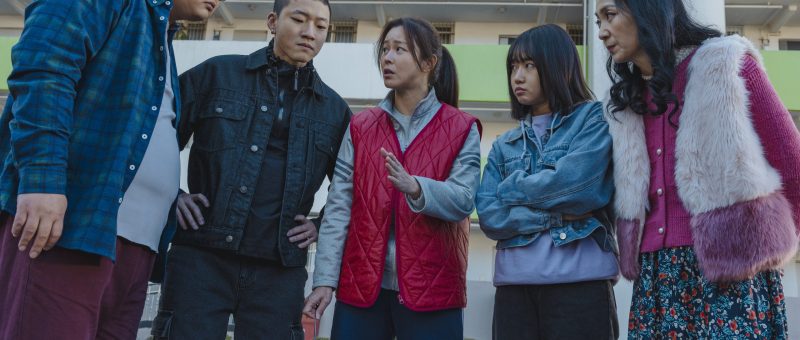
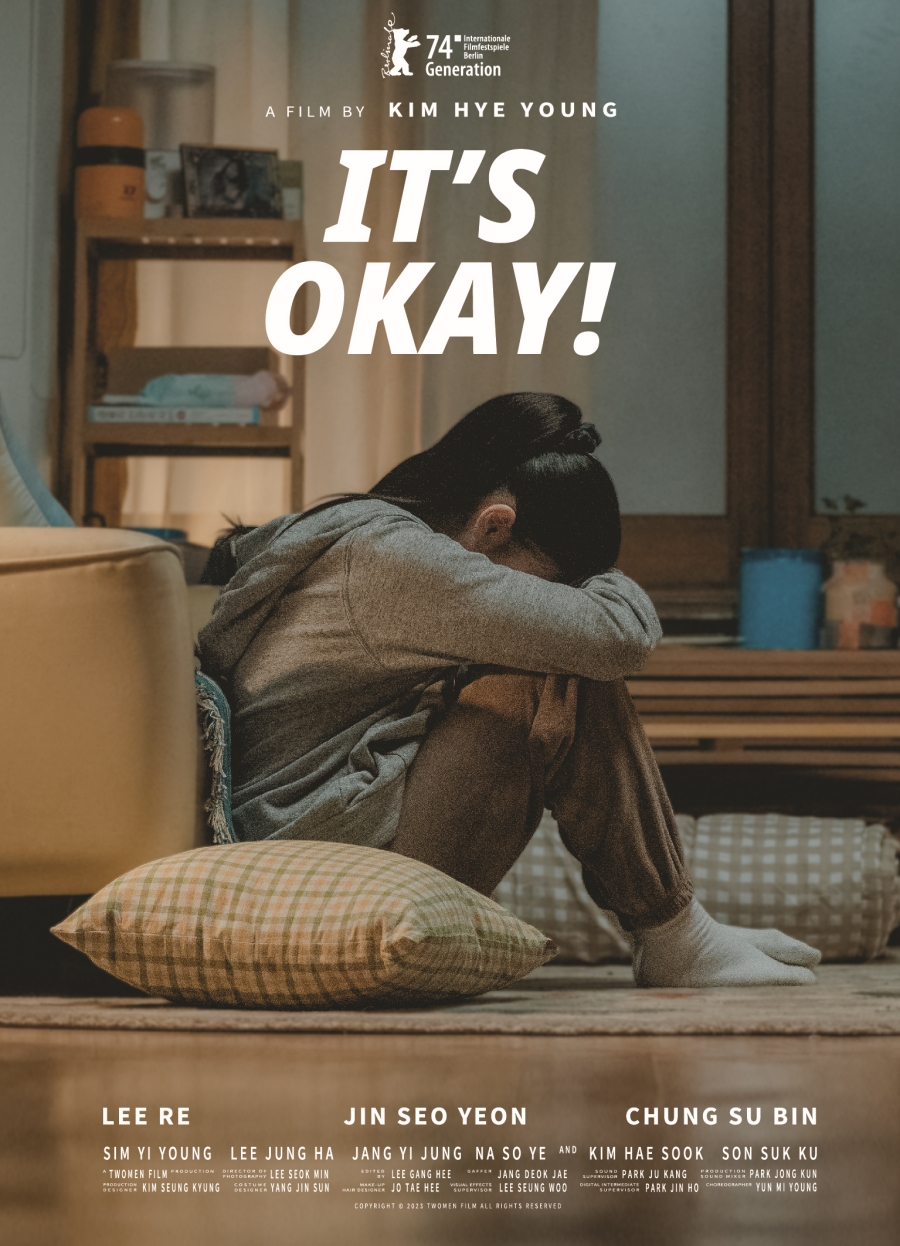
The ironic thing about the title of Kim Hye-young’s debut feature It’s Okay (괜찮아 괜찮아 괜찮아!, Gwaenchanh-a Gwaenchanh-a Gwaenchanh-a!) is that for the most part it really isn’t but the ever cheerful heroine In-young (Lee Re) manages to face her hardship and loneliness with down-to earth-practicality and good grace. It’s her infectious happiness that begins to improve the lives of those around her, many of whom have their own issues often stemming from entrenched patriarchy, classism, and a conformist culture that railroads the young into futures they may not want and will not make them happy.

At least that’s how it is for Na-ri (Chung Su-bin), the star of Il-young’s traditional dance troupe who has developed bulimia partly to adhere to contemporary codes of feminine perfection but also as a means of asserting control over her life which is otherwise micromanaged by her mother, once a dancer herself but now a wealthy housewife who uses her privilege to ensure her daughter is always centrestage. For these reasons she crassly remarks that she envies Il-young whose mother was killed in a car accident leaving her orphaned and entirely alone but in Na-ri’s eyes free and independent. 

It’s Na-ri’s mother who later refers to Il-young as a “worthless” person who does not deserve and will not have the opportunity to steal Na-ri’s spotlight even if she were good enough to seize it. The other girls in the troupe resent Il-young because her fees are paid by a scheme set up to help children of single-parent families, though technically she isn’t one anymore. They think it’s unfair she doesn’t have to pay when they do and also look down on her for being poor and an orphan when the rest of them come from wealthy backgrounds and are serious enough about traditional dance to consider going on to study it at university. Il-young isn’t a particularly good dancer nor does she put a lot of effort into it, but unlike Na-ri whose dancing is technically proficient but cold Il-young dances with a palpable sense of joy.

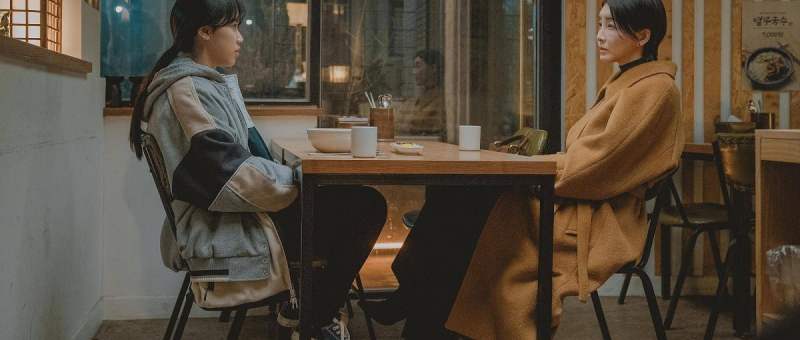
That might be why she catches the attention of otherwise stern choreographer Seol-ah (Jin Seo-yeon) who harbours resentment towards Na-ri’s snooty mother but lives a life that seems very repressed, tightly controlled and devoid of the kind of exuberance that comes naturally to Il-young. Her palatial apartment is cold, neutrally decorated, and spotlessly clean while, contrary to Na-ri, she forgoes the pleasures of eating subsisting entirely on green health drinks. Her decision to take in Il-young after finding her secretly living at the studio after her landlord evicted her from the home her mother had rented, may also reflect her own desire for a less constrained life and the familial warmth which seems otherwise lacking in her overly ordered existence. Gradually nibbling at the fried spam Il-young has a habit of cooking in the morning, she begins to open herself to the idea of a less regimented, happier life.

The same is true for Na-ri who is fed up with being forced to live out her mother’s vicarious dreams, literally letting her hair down and abandoning her need for control and dominance to embrace more genuine friendships with the other girls including Il-young. The lesson seems to be that there’s too much pressure placed on these young women in a society that dictates to them who and what they should be while shunning those like Il-young who are defiantly who they are and all the more cheerful for it even in the face of their hidden loneliness. Yet as Seol-ah eventually tells her, you’re the centre of wherever you are and Il-young’s life is her own to live in the way she chooses.

What emerges is a sense of female solidarity in the various ways Il-young is also parenting Seol-ah as she at first perhaps grudgingly offers her support and acceptance while taking on a maternal role that allows her to break free of the rigidity which had left her so unhappy. Told with a true sense of warmth that belies an inner melancholia, the film advocates for laughing through the tears and meeting with the world with an openhearted goodness that in itself allows others to break free of their own grief and pain and discover a happiness of their own bolstered by a sense of friendship and community rather than live their lives isolated and alone to conform to someone else’s ideal.


It’s Okay! screened as part of this year’s London Korean Film Festival.

Trailer (English subtitles)

Güle-Güle (귤레귤레, Ko Bong-soo, 2024)

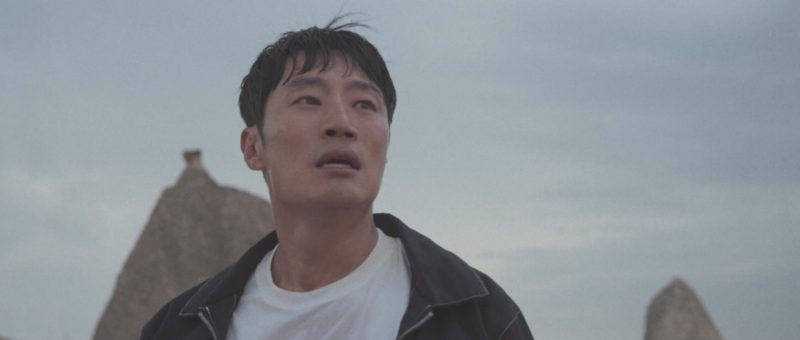
A man and woman saddled with problematic companions find themselves pushed into a space of introspection while on an inescapable Turkish holiday in Ko Bong-soo’s sophisticated comedy, Güle-Güle (귤레귤레). Each of them is perhaps burdened with regrets and wistful for what might have been but for opposing reasons, he facing the realisation that he often runs away from his problems and she that despite her sharp tongue and haughty attitude she lacks the courage to break with a situation that obviously isn’t working and become fully independent.

Dae-sik is there with his bumbling middle-manger boss Won-chang, a nepotism hire who repeatedly calls him a moron and blames him for his mistakes. Jung-hwa, meanwhile, is with her (ex?) husband Byung-sun who continually embarrasses her with his crass attempts to haggle the price down for anything and everything as means of asserting his masculinity through winning a price war. Byung-sun’s drinking and the problematic behaviour that arises from it had evidently strained their relationship with Byung-sun pledging to abstain from alcohol only to immediately break that promise claiming that he assumed drinking with Jung-hwa wouldn’t count. The issues Dae-sik and Jung-hwa face are in some ways the same in dealing with partners that attempt to dominate and overrule them without ever considering what they might actually want. Dae-sik hadn’t even planned on taking a holiday but assumed they’d be heading back to Korea right after closing the deal only to be browbeaten by Won-chang into extending their stay.

Jung-hwa isn’t sure why they’re in Turkey either, while the middle-aged woman and her daughters who are also on their tour drink in all the drama alternately fascinated and irritated that Byung-sun in particular is messing up their holiday. From the way he skirts around her, it seems that Dae-sik and Jung-hwa may have met before or have some unspoken history with each other. They are each dealing with past regrets and the frustrated dreams of the youth even if in differing ways. Dae-sik once had a promising future as a champion snowboarder but gave it up because he needed a paying job to contribute to his father’s medical fees. After a heart-to-heart with Jung-hwa he’s forced to ask himself if in reality he gave up in fear of it not working out and his father’s illness was just a convenient excuse not to have to risk failure. 

Jung-hwa, meanwhile, is irritated to learn that in college her fellow students nicknamed her “the viper” because of her sharp tongue and poisonous looks. She admits that she often says things thoughtlessly and hurts people by accident, pushing them away when she doesn’t mean to though this doesn’t seem to be the case with Byung-sun who she otherwise seems incapable of shaking off despite his treatment of her and repeated broken promises. Unlike Dae-sik who admits that he suppresses everything and approaches life with a fear of failure, Jung-hwa charged ahead doing what she thought she wanted and ended up divorced though with a husband that won’t leave her alone.

The holiday with its myriad challenges both interpersonal and physical, along with their impromptu meeting, affords each of them a new perspective and the clarity they each may be looking for to move on from their dissatisfying circumstances in search of greater personal happiness. Meanwhile, the other guests seem to carry on obliviously, Won-chang otherwise continuing to railroad Dae-sik into dangerous situations he feels unable to resist though perhaps he too is only reacting against his own sense of inadequacy as a nepotism hire promoted well beyond his abilities. Byung-sun’s problems seem less easy to solve and his selfish obnoxiousness is annoying not only to Jung-hwa who may finally be losing patience with him, but the entire group.

Like many similarly themed films from Korea, Ko structures the drama around a series of conversations many of which take place on a rooftop bar or walking through the streets of the city which as Dae-sik remarks become brighter and less intimidating thanks to his interactions with Jung-hwa as if his horizons were literally expanding. Yet what each of them is here to do is in a sense to say “gule gule” or goodbye to their old selves and old lives by gaining the courage to risk failure in breaking with the dissatisfying present for a hopefully more fulfilling future.


Güle-Güle screened as part of this year’s San Diego Asian Film Festival.

Trailer (English subtitles)

Following (그녀가 죽었다, Kim Se-hwi, 2024)

“None of this would have happened if you didn’t follow me,” the hero of Following (그녀가 죽었다, Geunyeoga jug-eossda) is told by his opposite number though he himself doesn’t see anything untoward about his voyeuristic hobby and justifies his habit of “peeping” into the lives of others on the grounds that it does no harm. Of course, he’s not very well placed to make that decision and too narcissistic to consider that while he watches someone may be watching him. 

In any case, what Jung-tae (Byun Yo-han) claims to want to see is “the real you” rather than the persona created for public consumption which is why he’s drawn to duplicitous influencer Sora (Shin Hye-sun) whom he spots simultaneously munching on a sausage and posting about eating a vegan salad. Of course, as an influencer “followers” are what most she most craves though not of the kind Jung-tae becomes nor does she want this particular kind of attention not least because it threatens the facade she’s created for herself as a “good person” posting about her altruistic deeds such as rescuing dogs and cats for which her followers send her monetary gifts and donations for various funds and charities. 

As for himself, Jung-tae thinks he remains a fairly anonymous person. As an estate agent, he projects an image of himself as being kind and trustworthy, while he runs a popular online blog under a pseudonym. He gives little of himself away and later acknowledges that part of the thrill of his voyeurism is a sense of superiority, that he is privy to privileged information about strangers that others do not have. Misusing his position, he sneaks into people’s houses and takes something insignificant as a trophy while also performing small household tasks in recompense. Perhaps it should have seemed like a red flag to him that Sora suddenly wanted to sell her apartment (on her landlord’s behalf), let alone that she didn’t make any attempt to tidy up before giving him a key, but he is so assured of himself that the possibility he has been discovered doesn’t really occur to him until he sneaks into Sora’s place and finds her dead, covered in blood on her living room sofa. Predictably, he does not call the police because he’d have to admit he let himself into her apartment when he shouldn’t have. 

Receiving a threatening letter, Jung-tae then becomes a classic wrong man in the firing line for Sora’s murder and in his mind unfairly persecuted for his “harmless” hobby. The irony is that the person who’s targeting him is doing so because they had something they did not wish others to see and fear Jung-tae may have done so which would give him power over them, while what Jung-tae wants to keep hidden is his own voyeurism. “It’s all about reputation,” he explains and his would be ruined if his clients knew he’d been misusing the keys they entrusted to him for professional purposes let alone the embarrassment of being exposed as a peeping tom even if in this case his peeping isn’t sexual but intimate on another level. 

The power dynamics between the seer and the seen are always shifting, not least because Jung-tae believed himself invisible and in fact continues to think that he is the victim as does the person targeting him. He later comes to realise that what he did was wrong and that he invaded these people’s privacy, but continues to centre himself and despite the glasses he now wears at the film’s conclusion he may not see anything any more clearly than before. What unites him with his own stalker is a sense of frustrated loneliness and longing for connection if also a kind of acceptance even if mediated through a “fake” persona to paper over the cracks in their identity. Yet ironically, even the killer’s words that none of this would have happened if he hadn’t been following them further bolsters his narcissistic sense of importance as much as it reflects the words of an abuser deflecting responsibility for their own actions. Jung-tae has met his mirror image and may not like what he sees (or perhaps does not see at all) while they equally struggle to understand why others cannot see that they are the victim. Told with a touch of humour and a degree of B-movie silliness, Kim Se-hwi’s taut psychological thriller nevertheless suggests that even as we obsess over the image we project to others and that they project to us, we remain largely blind to ourselves and all too keen to justify our actions to maintain a carefully constructed self-hood that is otherwise unlikely to stand up to scrutiny.


Following screened as part of this year’s London Korean Film Festival.

Original trailer (no subtitles)