My Favorite Love Story (어쩌면 해피엔딩, Lee Won-hoi, 2023)

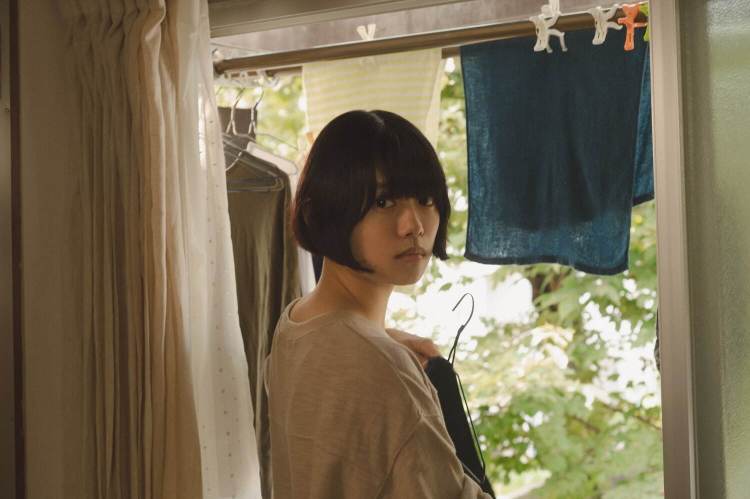
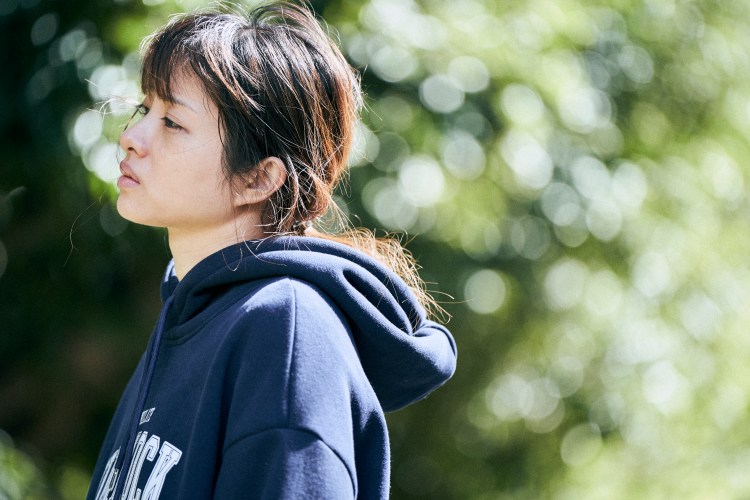
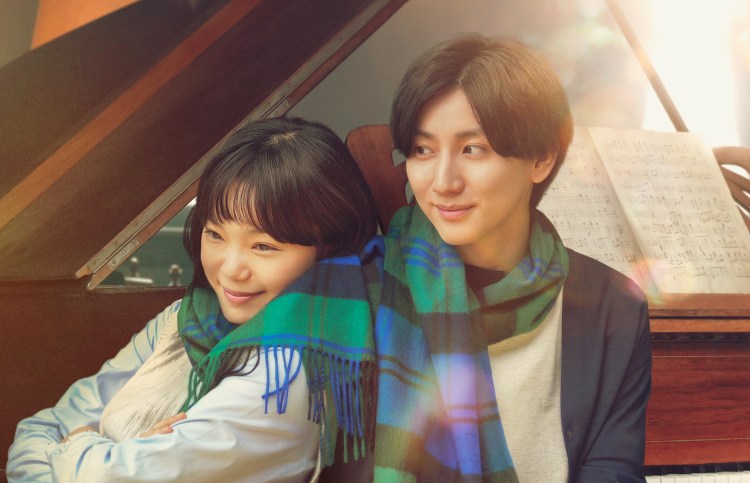
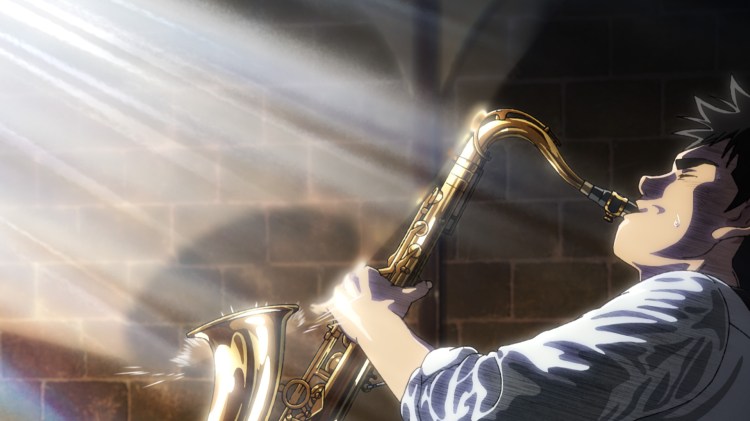
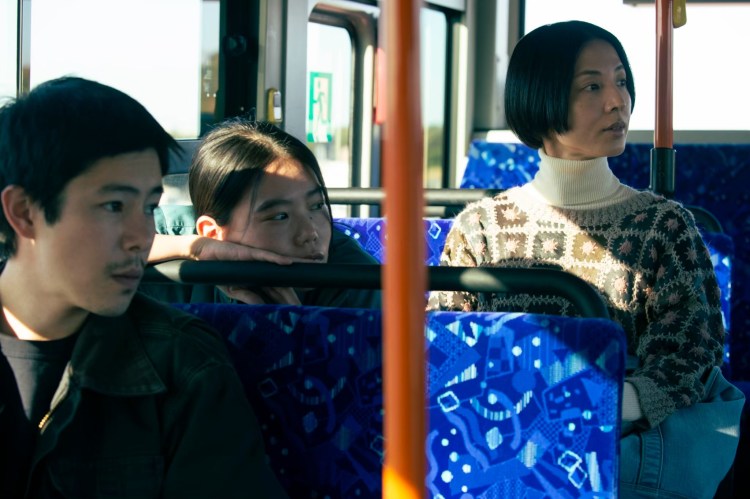
Robots aren’t programmed to love autonomously according to Oliver (Shin Joo-hyup), a helperbot seemingly abandoned by his long lost owner, or as he terms it, friend, James in Lee Won-hoi’s quirky musical romance, My Favourite Love Story (어쩌면 해피엔딩, eojjeomyeon happy ending). It’s an odd thing to say in a way, what does it mean to love “autonomously”? Or perhaps he is simply alluding to the fact that there must obviously be some robots who are programmed for love even if “love” is as good a word as any to describe the way he’s bonded to James that causes him to wait by the window like a wife willing her husband back from the war. 

Oliver rarely leaves the apartment and enjoys conversation only with a handful of potted plants and the postman who delivers vintage copies of Life magazine, jazz records, and repair kits daily. We can see that Oliver’s word is small and frozen in time, though he looks out on a Seoul that seems to him a paradise while we’re told that it’s so polluted people have started evacuating to Jeju Island. It’s because of the pollution that production of helper robots has been stopped along with that of repair kids. There is something quite poignant about the forced ageing Oliver undergoes having been abandoned by a society that valued him only for his usefulness and now prevents him from being able to repair himself as if he were suddenly denied basic medical treatment and regarded always as a lesser being. On the road trip he eventually takes with the more cynical Claire (Kang Hye-in), he encounters signs that reads “no robots” while doing his best to act human despite his obvious awkwardness. 

While Oliver is upbeat and content to wait for James certain that he’ll one day return, Claire is carrying heavier baggage stemming from her treatment by her former owners that convinces her humans are all bad and ready to discard them at any moment. Needing to borrow his charger, she bamboozles her way into Oliver’s life and convinces him to go on a trip to Jeju to look for James and unexpectedly finds herself falling in love along the way. But as Oliver says, love isn’t something that’s in their programming. After all, love causes lots of problems so why would we code it into machines we’ve built solely to serve us?

In any case, the discovery they make is that love is sad and also impossible in the knowledge that will someday inevitably end. Claire’s needs for repairs are more urgent than Oliver’s, while the world around them also seems to be crumbling and not least because of human negligence. They consider simply editing their memories to remove the new discoveries they’ve made about themselves and the world not to mention love in order to return to the state of inertia in which they existed before each just waiting for something while quietly falling apart.

Adapted from a one act fringe musical, the score has a contemporary Broadway feel which perhaps isn’t surprising given that it was written by an American musical theatre composer and sparked for the book writer by a chance encounter with the Damon Albarn song Everybody Robots in Brooklyn. Thematically, it asks whether it’s worth paying the price of love given that every romance has an expiry date even if theoretically a robot to could live forever were it not for humanity destroying the planet and then callously abandoning them. The original title translates as the more apt “maybe happy ending” hinting at the sense of inevitability in the pair’s constant reunions and desire for reconnection though they still seem reluctant to place their faith in love alone even as the world around them continues to improve and the skies above Seoul are clear once again. With its retro aesthetics and cineliteracy, the film ads a degree of timelessness to its quirky tale of robots finding love while attempting to deal with their abandonment issues in a world of human indifference and in fact settles for a different kind of inertia in the cycle of a tentative romance that might one day result in a happy ending.


My Favorite Love Story screened as part of the 18th Season of Asian Pop-Up Cinema.

International trailer (English subtitles)

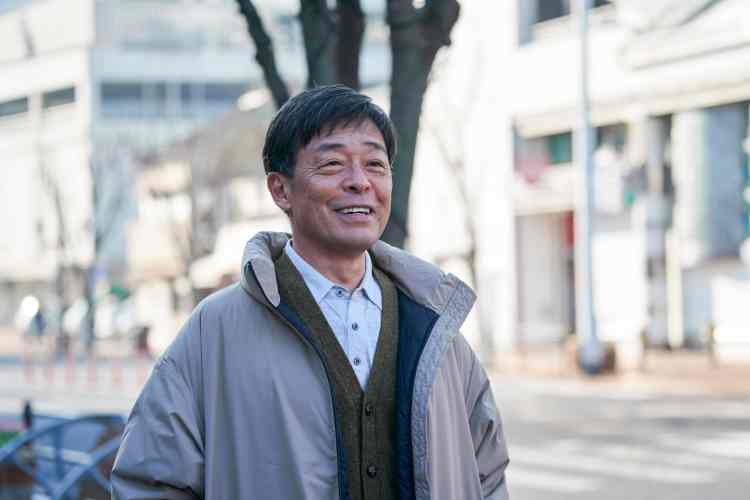
Takano Tofu (高野豆腐店の春, Mitsuhiro Mihara, 2023)

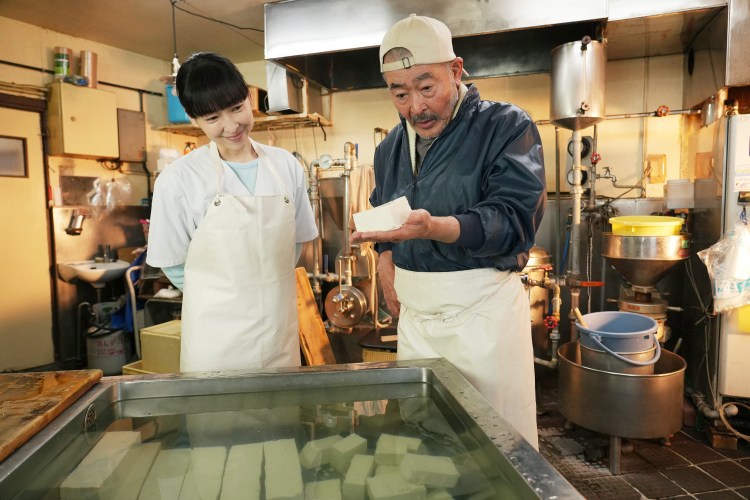
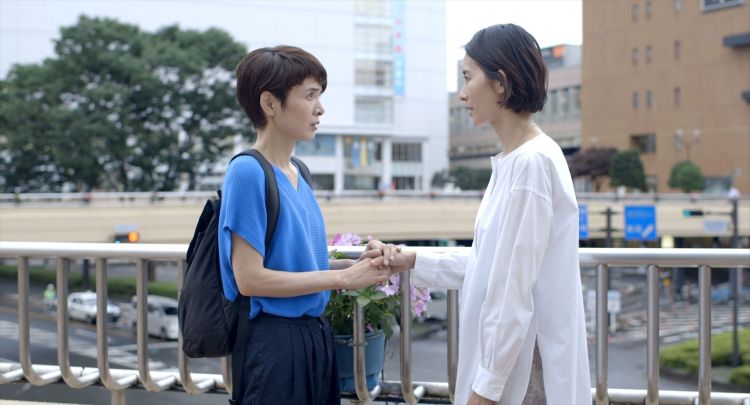
There’s an untranslated title card at the beginning of Mitushiro Mihara’s poignant dramedy Takano Tofu (高野豆腐店の春, Takano Tofu-ten no Haru) that describes the film as a story about the end of Heisei and it is in many ways about the end of an era, or perhaps of eras, but equally new beginnings and the eternal wellspring of life. With subtle hints of Ozu playing out as a kind of mashup of Late Autumn and Late Spring, it suggests that it’s never really too late to find happiness or to start something new even while preserving the best of the old. 

Harbingers of change are, however, lingering on the horizon as a customer to Takano Tofu remarks agreeing with daughter Haru (Kumiko Aso) that they need to innovate to stay in the game when the big new supermarket opens a few streets away. But change is not something father Tatsuo (Tatsuya Fuji) is keen on and especially when it comes to his tofu which is why he’s cancelled Haru’s popular new product of fried tofu and cheese despite its popularity and is also dead against her idea of expanding their network to sell in Tokyo.

There is something inherently comforting about the peacefulness of this quiet corner of Onomichi as Mihara captures it even if it also seems like a place out of time more Showa even than Heisei with its family businesses and old-fashioned shopping arcade. But equally there’s an underlying loneliness and answered longing along with a sense of lives disrupted by historical circumstance. Ironically enough, Tatsuo receives news from the hospital that one of the arteries to his heart is blocked requiring an operation to get everything working again and then immediately bumps into an old woman about his own age with whom he eventually bonds over the shared traumas of living in post-war Japan along with the lingering social stigma towards those affected by the dropping of the atomic bomb. We later learn that the failure of Haru’s marriage was in part caused by her father-in-law’s prejudice fearing her irradiated genes would contaminate his bloodline.

Then again, perhaps the pity expressed towards Fumie (Kumi Nakamura) as a woman who never married plays into outdated and sexist social attitudes that also lead Tatsuo and his friends to decide to find a mate for Haru given his sudden mortality crisis and fear that like Fumie she will be left alone when he eventually passes away. Of course, what it amounts to is a bunch of old men trying to decide who a middle-aged woman should marry while deliberately avoiding asking her if that’s even something she’s interested in. Having experienced marriage already perhaps she’s no desire to do so again and is perfectly happy the way things are. In any case she’s infinitely capable of finding a husband for herself if she wanted one. The prospective match they come up with for her is perfect on paper, youngish, handsome, wealthy and cultured, yet as it turns out what Haru might prefer is someone more ordinary, down to earth, and straightforward ironically enough just like tofu. 

As she later says, Tatsuo’s tofu has the flavour he gives it. Nicely textured, surprisingly soft on the inside, with a slight hint of astringency. There may be a minor pun involved in the Japanese title in that it can be read either as “Haru of Takano Tofu”, or as the meaning of her name implies “Spring at Takano Tofu” hinting both at a sense of transience and resurgence as Tatsuo takes in the cherry blossoms with Fumie and reflects on all they’ve experienced throughout the long years, the hardship and heartbreak of the post-war era. Yet as he says life is for living and it’s as much as you can hope for to look back and laugh at a life well lived. Maybe some things don’t need to change all that much, like carefully produced artisanal tofu as rich in soul as those who make it, but there’s always room for a little innovation and tiny chances for new happiness that could easily pass you by if you aren’t willing to take a risk or two and place a bet on change.


Takano Tofu screened as part of the 18th Season of Asian Pop-Up Cinema.

Original trailer (no subtitles)

Drifting Flowers, Flowing Days (この日々が凪いだら, Yutaka Tsunemachi, 2023)

Life goes on as usual, until it doesn’t. The couple at the centre of Yutaka Tsunemachi’s debut feature Drifting Flowers, Flowing Days (この日々が凪いだら, Kono Hibi Ga Naidara), are about to hit the crisis of youth in which they begin to think seriously about their futures and fear that their lives can no longer continue simply as they were but also struggle to find direction while torn between what society views as a successful life and their own desires.

The crunch point comes when Hiroto (Hiroki Sato), a construction worker, and Futaba (Kaho Seto), who works in a florist’s, learn that their rundown apartment block is going to be demolished and they have six months to find somewhere else to live. While Futaba idly looks at wedding rings, she isn’t really sure how Hiroto views their relationship or if he’s even assuming they’ll finding somewhere new together. The financial strain of an unexpected move also has her wondering if she should give up her job in the florist’s, which she enjoys due to her love of flowers, and start looking for a regular company job but an attempt to talk about it with Hiroto only results in petulance born of male pride as he takes it as her complaining he doesn’t earn enough with his job as a casual labourer. 

Another source of friction is that Hiroto seems reluctant to meet Futaba’s family while refusing to introduce her to his hinting at longstanding childhood trauma stemming from a legacy of domestic abuse and a father who lost himself in drink. Even so, he’s drawn to an older man at work, Haruo, who soldiers on despite his decreasing physical capability. When he is unceremoniously fired, the Haruo takes his own life having lost his both his means of supporting himself and his sense of purpose. Haruo might remind him of father though Hiroto feels somewhat guilty that he didn’t do very much to help while he was alive and resentful towards his heartless boss and colleagues who did nothing more than make fun of him. 

This idea of people being disposable tools of corporate entities is further born out by the experiences of his hometown friend, Daigo (Masashi Yamada), who is feeling burned out by his dream job in the city largely thanks to a bullying boss and overbearing work culture. A friend who experienced something similar tells him she just quit her job and feels much better so if he doesn’t feel appreciated he should leave, but it’s not really that simple. Not only does he need a steady income to survive but there’s a degree of shame and trepidation in not following the conventional path, the same shame and trepidation that has Futaba worrying she’s being irresponsible in following her dream of opening a florist’s of her own rather than using her degree to get a better paid job and start saving for the next phase of adulthood while still uncertain if Hiroto is going to want to get married and settle down. 

Experiencing another crisis that forces him to confront his childhood trauma, Hiroto sighs that his future is shrouded in darkness and he wishes that it was all set out for him an ironic inversion of the crisis experienced by others his age that they resent being railroaded into a life of conventional success that in fact does not make them happy. In any case, he emerges with a little more clarity about the kind of future he might want no longer so frightened of commitment or suspicious of familial bonds. What the youngsters experience is a perhaps premature end to their youth symbolised by the literal tearing down of their world in the soon to be demolished apartment block that forces them out of their inertia and onto a path towards a more settled adulthood. But equally that doesn’t necessarily mean that they have to abandon their dreams or live up to an ideal of conventional success if it’s not what they want but can begin to find other futures for themselves outside of the mainstream that are valid and satisfying. Tsunemachi follows them with a hazy detachment but captures something of the anxieties of contemporary youth still struggling to find accommodation with demands of living in a judgmental and uncertain society. 


Drifting Flowers, Flowing Days screened as part of the 18th Season of Asian Pop-Up Cinema.

Original trailer (English subtitles)
Good Autumn, Mommy (尋她, Chen Shizhong, 2023)

A family tragedy forces a grieving mother to confront the sexism and hypocrisy of mid-90s China in Chen Shizhong’s biting rural drama, Good Autumn, Mommy (尋她, xún tā). Quietly simmering with an internal rage her society convinces her she must repress, Fong-tai (Shu Qi) finds herself constrained by the intensely traditional atmosphere of her small-town home and more than that by her husband’s eternally passive attitude in which he resolutely refuses to rock the boat or make any attempt to stand up for himself. 

Fong-tai is warned by her brother, in a nice way, that her personality may make it difficult to live somewhere like this where a woman is clearly intended to know her place and keep her peace. Not that she particularly blames him for it, but Fong-tai is resentful towards her birth family who fostered her out and saved their money to send her brother to university. For this reason she remains an outsider in the village (a sentiment rammed home by the casting of Taiwanese actress Shu Qi whose accent quite clearly stands out in Cantonese-speaking Guangdong) and not least because of her feisty temperament and tendency to speak her mind. 

Often, however, it does her little good. Pregnant with her second child she begs her mother-in-law to take her to a modern hospital but she insists on doing everything the old fashioned way taking both her and her similarly pregnant friend Lam San to a disused clinic only to be trapped there by an encroaching storm. Both babies are born healthy, but battered by the high winds the dilapidated clinic collapses plunging them into the lake. Fong-tai manages to save one but the other disappears without trace. As she had put a bangle on her newborn child and the rescued baby doesn’t have one, she assumes it’s Lam San’s but later comes to doubt herself. 

Part of the problem is that Fong-tai assumes no one is really looking for her baby because it is a girl and if it had been a son they’d have left no stone unturned. As her desperation mounts, many of those around her imply that the loss of her daughter is a kind a kind of blessing for, as the couple have one daughter already, it frees them up to try again for a son given the restrictions of the One Child Policy which allowed a second child if the first had been a girl. One even tells them that a second daughter kills off the family name given that Fong-tai’s husband Yiu-cho was also an only son, and that they should simply have another child as soon as possible to produce a male heir. 

Ironically this might also be why Kong-yan, Lam San’s husband, is prepared to accept the rescued baby as his own and reluctant to submit to a DNA test given that in that sense it doesn’t matter as much whether or not he is the biological father because this child is not expected to continue his line in the same way a son would be. Yet Kong-yan also embodies another side of a changing China in that he has become rich under the new economic reforms but largely by exploiting local sugar cane farmers. Kong-yan leverages his wealth in insisting Fong-tai pay for the DNA test knowing full well she can’t and then refusing to buy any of her sugarcane out of pettiness thereby destroying her livelihood. 

While looking for her daughter and frightened enough to take note of an urban legend about wild men living in an old banana plantation, Fong-tai is confronted with the borders of her world after venturing to the edge of it and discovering a construction site she had no idea existed because she doesn’t venture out of the village. She begins to wonder what the outside world is like and if she’s been trapped here by outdated notions of filiality and patriarchal social codes that conspire to keep women in their place while becoming sick of Yiu-cho’s complicity and refusal stand up for their family even when it’s their child that is missing. 

When she decides to drain the supposedly sacred lake herself by destroying the dam it’s as if she’s pulling down the borders of that world and removing the source of her oppression in breaking free of “tradition”. The villagers that were hostile to her just minutes before, begin to reflect that it’s just a lake and sympathise with Fong-tai as a bereaved mother rather than a troublemaker who didn’t know her place. Highly critical of ingrained sexism and the hubristic behaviour of the nouveau riche elite in changing 90s China the film’s haunting yet hopeful ending suggests at least that Fong-tai was able to ensure that her older daughter was freer than she had ever been even if she can never escape the wounds of the past or regain what was taken from her.


Good Autumn, Mommy screens in Chicago April 13 as part of the 18th Season of Asian Pop-Up Cinema.

Original trailer (Simplified Chineses & English subtitles)

Faraway Family (彼方の家族, Taro Kawasaki & Eisuke Sakauchi, 2023)

It may be a truism to say that you never really know what’s going on in other people’s lives, but even if a family looks superficially happy and gives the impression everything is going just perfectly for them that might not actually be the case. The title of Taro Kawasaki & Eisuke Sakauchi’s Faraway Family (彼方の家族, Kanata no Kazoku) has a double meaning in that in the Japanese title can be also read as “Kanata’s Family” which is the name of the hero and also a word meaning “somewhere in the distance” which is in fact how both of the boys feel their fathers to exist. 

Kanata may feel it more closely in that he lost his father in the 2011 tsunami and has never really dealt with the grief having moved to Yamagata with his mother. Kanata’s father also had quite a difficult relationship with his fisherman grandfather who was intent on railroading him to take over the boat and seemingly never had a good word for anyone yet his father lost his life after heading to the harbour to look for him explaining only that he was family. Now the only breadwinner in the family, his mother has to work to support them and is therefore often absent, leaving him money to buy dinner from a convenience store which he usually eats alone. 

Having become withdrawn and fearful of making new relationships that may end suddenly, Kanata also has the added stigma of being someone from Fukushima in the wake of the nuclear disaster. His new teacher, Yoshikazu, makes a well-meaning faux pas in telling Kanata to consider him a father figure yet as it turns out Yoshikazu is a fairly compromised one. On being introduced to his classmate Riku who is also Yoshikazu’s son he thinks he’s had his face rubbed in it with this picture of the perfect family.

But what he discovers is that Riku has many of the same problems as himself seeing as he also fears he does not really fit in his family and wonders if they’d be happier and better off if he weren’t in it. Unlike Riku, Kanata doesn’t seem to be overly burdened by parental expectation and despite the problems between his father and grandfather his early childhood seems to have been happy and filled with love and cheerfulness. His problem is more to do with what he’s lost and the resulting sense of absence it’s left behind as he finds himself eternally missing his father. 

For Riku meanwhile, it’s the connection itself which is painfully absent. The more he tries to connect with Yoshikazu the more it seems to backfire while Yoshikazu seems obsessed with the idea of his getting into Japan’s most prestigious university mostly for his own gratification as double proof of what a great teacher and father he is. Or else, to mask his own sense of inadequacy in that he would feel embarrassed professionally if his own son turned out not to be academically inclined. Riku’s family don’t celebrate birthdays and he can’t ever remember getting a present but when he decides to try and buy one for Yoshikazu it’s a reminder of a happier memory when he simply played with him as a loving father rather than a hard taskmaster driving him on to a vicarious goal as evidence of his controlling nature. 

Kanata seems to have had more than his share of tragedy in life and is painfully aware of the things just our of reach but also increasingly that not all of them are and if you’re not careful you can in fact be the one to push them away. Shooting in the icy snow of a Yamagata winter, Kawasaki and Sakauchi capture the frostiness of the boys’ emotional isolation but also the quickening warmth of their friendship as they bond over their shared loneliness in pining for an absent father. What Kanata learns is to embrace the things that seem somewhere far away for they do at least exist there, even if no longer present in a physical sense, and that the memory of them can be warm and comforting rather than painful or lonely. 


Faraway Family screened as part of this year’s Osaka Asian Film Festival.

Original trailer (no subtitles)

Heavy Snow (폭설, Yun Su-ik, 2023)

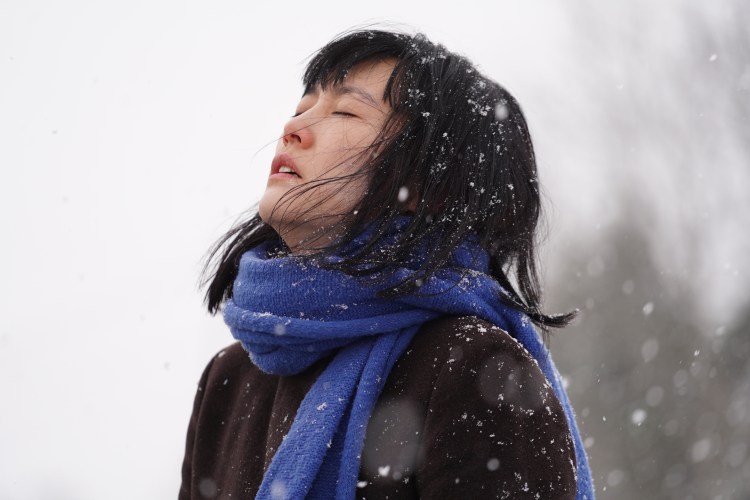
“It’s obvious it was a romance, why did you pretend it wasn’t?” one wounded woman asks another while their connection seems to be frustrated by internalised shame and conflicting desires. Yun Su-ik’s frosty drama Heavy Snow (폭설, pokseol) does indeed seem to suggest that their love for each other can only exist in a kind of otherworld, eventually segueing into a metaphysical realm which simultaneously implies that this isn’t actually a romance but self-reflection and interrogation as a tomboyish actress searches for herself inside her various roles.

Indeed, Su-an (Han Hae-in) views Seol (Han So-hee) with a kind of awe which might be understandable given that Seol is a TV drama superstar improbably transferring to her rural arts school for a break from the world of showbiz. Or as Seol would later imply, because she’s become too difficult to manage and is rebelling against the emptiness of her ostensibly glamorous life through increasing acts of reckless self-harm. Su-an might wonder if that’s all her flirtation is, an attempt to flaunt a taboo while otherwise puzzled and jealous as to why someone like Seol would actually be interested in her. 

Yet Su-an’s interest is also in part idolisation, attracted to Seol because she fears she is everything she wants to be but isn’t, beautiful and talented. But Seol seems to doubt she’s either of those things while otherwise superficially confident in her sexuality and drawn to Su-an because of her ordinariness. Experiencing a moment of identity crisis, she’s looking for herself outside the frame yet also perhaps like Su-an caught in moment of self-idolisation. Noticing one of the giant billboards of her face that the litter the city she briefly touches it before walking away as if attracted to an image of herself she recognises and doesn’t. 

Yet it seems it’s less the awkwardness of too much intimacy that causes Su-an to pull away when Seol kisses her than shame. She tells Seol that she thinks it isn’t right, and perhaps goes on to regret that decision while continually pining for an idealised teenage love. The two women in a sense trade places. Years later Su-an is a famous TV actress, having in a way taken over the image of Seol, while Seol is evidently no longer acting but a depressed and defeated figure still resentful of Su-an’s rejection. The effects of their shifting fame deepen the gap between them with the teenage Su-an further nervous in her relationship with Seol knowing the danger that her celebrity presents. There is a suggestion that their creative desires conflict with the romantic, that they feel they cannot embrace their sexuality freely and remain in the entertainment industry because of the intense pressures a conservative society places on prominent people to be shining examples of moral purity. Each of them appear to become worn out by the demands of their fame, Su-an turning to drugs in attempt to mask her depression while the teenage Seol ponders quitting acting to become more her authentic self.

In the dreamlike third act which commences at the sea, a touchstone for each of the women connected to the innocence of their teenage romance, may suggest that in looking for Seol Su-an is really looking for herself or perhaps simply to recapture the person she was at the beginning of everything. At odds with each other, the two women become marooned in a snowbound land with no one else around. Finally repairing their relationship, it seems that they can only embrace their love in this barren place where no one else exists to judge them. The implication maybe that as Seol says the things Su-an wants to say to Seol she really wants to say to herself in a desire for self-acceptance, but equally that we can’t be sure that any of this “real” rather than dream or wishfulment.  In any case all that remains is a painful longing either for an unrealised love or the elusive self. 

Hinting at the pressures of the contemporary society, the unrealistic expectations placed on those in entertainment industry and outward social conservatism the film never less presents its central romance with an evenhanded poignancy even in its continuing impossibility as the two women continue to look for the self in each other but seemingly struggling to see past the hollow images of their own self-projections.


Original trailer (no subtitles)

Heavy Snow screened as part of this year’s BFI Flare.

Performing Kaoru’s Funeral (カオルの葬式, Noriko Yuasa, 2024)

According to an undertaker in Noriko Yuasa’s darkly comic drama Performing Kaoru’s Funeral (カオルの葬式, Kaoru no Ososhiki) death is a kind of natural disaster. Despite the sometimes farcical going ons at this particular funeral, he does indeed have point in the sense of inevitable tragedy that the colours events as a dejected middle-aged man attempts to clarify his memories while overseeing the funeral of a woman he was once married to but evidently had not seen in many years.

To this extent, as the title says, Jun is “performing” Kaoru’s funeral though perhaps it’s true enough that there’s always an degree of performance in involved. As Kaoru’s young daughter, also named Kaoru, says, no one here believes in god or Buddha and this ritualised mourning process doesn’t seem to be helping her process her grief. From time to time, Yuasa cuts back to a Bruegel-esque image of a painting of hell complete with demons staring pots with people in boiling water suggesting that this too is a kind of purgatorial hellscape.

Suddenly tasked with MCing his former wife’s funeral Jun takes it with good grace if also a little confusion. Guests mainly seem to be using it as an opportunity to vent their dissatisfaction or settle old grievances. The atmosphere is strange, somehow fraught and otherworldly while the other guests seem to treat Jun as an interloper never really considering that he may be grieving too. The ritualised act of performing the funeral causes him to remember his married life along with the woman who seems to have remained an enigma to him and may have done so to everyone. 

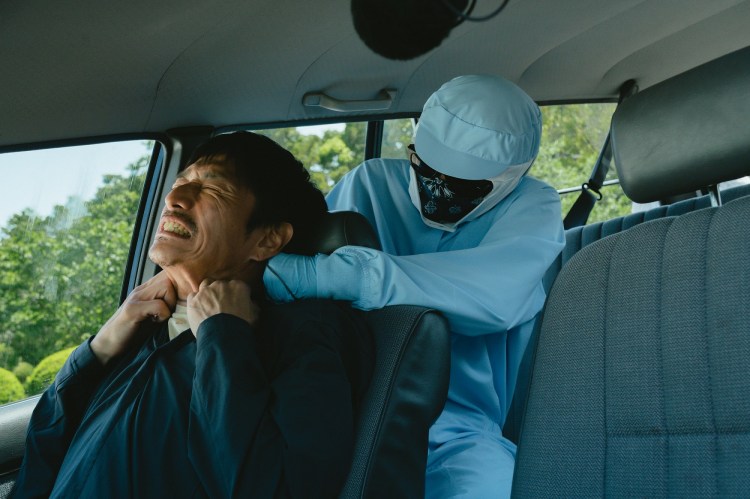
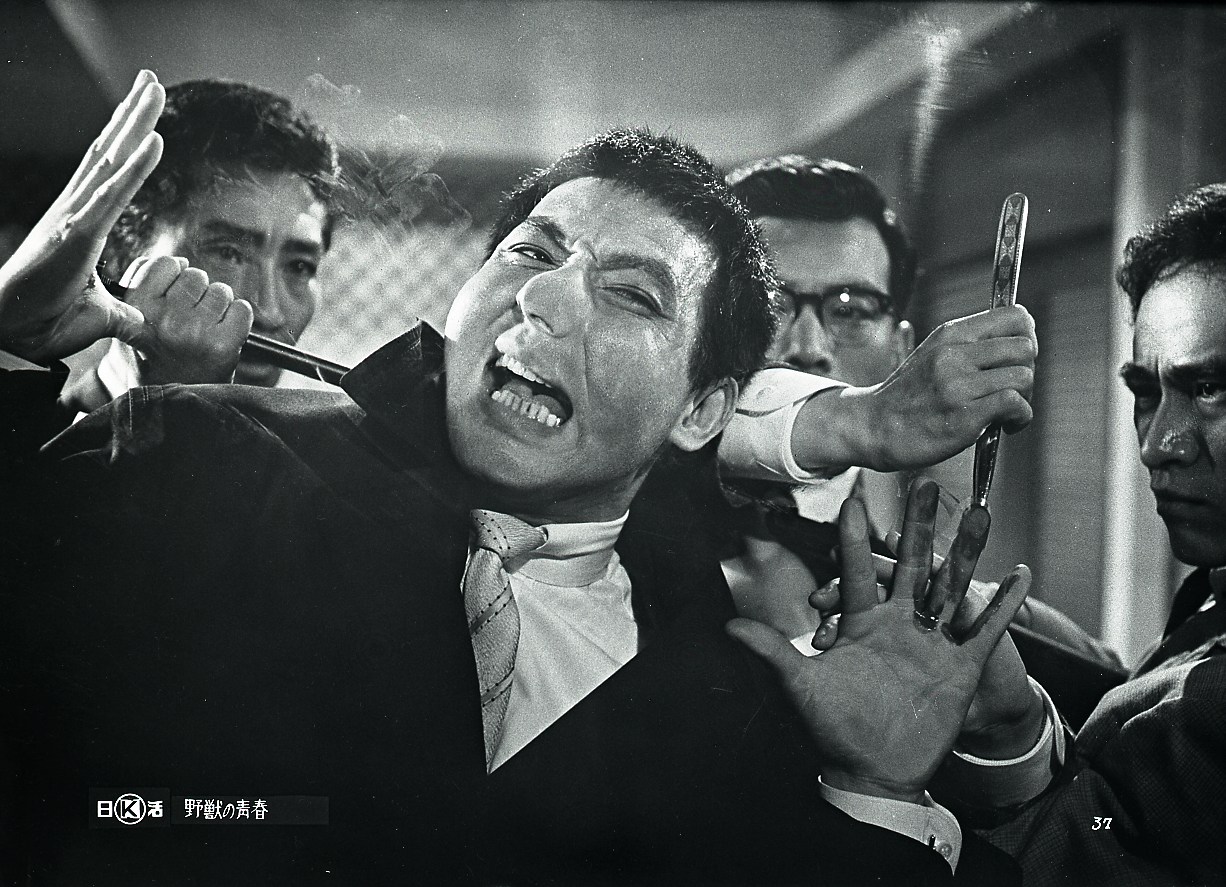
Once an aspiring actor, Jun is now a defeated figure employed as a driver for girls working at a Soapland. Before receiving the call about the funeral he’s beaten up by a pair of gangsters after intervening when one of them tried to assault the girl he was driving. Presented in a boxy square, Jun’s flashback memories have an unreal quality as if his marriage was a kind of fairytale or a dream he was woken from too soon. Kaoru’s decision to make him the chief mourner at her funeral may in a sense have been ironic, a final acknowledgement of the role he played in her life but also grants him a valuable opportunity to set the past to rest and perhaps begin to move on. 

For some of the other guests, however, that doesn’t quite seem to be the case. Some lie about their relationship with Kaoru or else cause unexpected trouble in venting a petty grievance. A rival screenwriter turns up to get drunk and make catty remarks, while a middle-aged man also uses the occasion to lay into his daughter-in-law with a lengthy misogynistic rant about his unmanly son’s inability to manage his wife. Little Kaoru seems largely left on her own, expected to carry out these rituals while grieving for her mother with no real support. A small subplot revolves around the potential candidates for her father, but none of them, bar perhaps Indonesian restaurant owner Wayan and Jun himself who claims she cannot be his pays much attention to her.

After opening with a grim scene of Kaoru on the slab, much the action is accompained by the urgent sound of something ticking as if marking out the passage of time while lending a sense of urgency to something that is no longer really urgent. Brought together by her deaths, the guests each have their own relationship with the deceased and like Jun and little Kaoru perhaps begin to process their grief and move step forward though in other ways also the opposite in one’s near literal inability to let go. The girl Jun had been escorting found an abandoned urn on the train and took it home with a kind of perverse delight musing on the reasons someone might leave their urn behind. In a way, that’s what Jun is trying to do, let his past drift away, Kaoru somehow setting him free to start living his life again after he sees her off. As the screenwriter said every script has to have a moment of catharsis and Yuasa’s tragicomic tale does indeed have its share of melancholy poignancy but ends on a bittersweet note of thank you and farewell as Jun and little Kaoru sail off into a new future having laid the past to rest.


Performing Kaoru’s Funeral screened as part of this year’s Osaka Asian Film Festival.

Original trailer (English subtitles)
The Missing (Iti Mapukpukaw, Carl Joseph E. Papa, 2023)

The title of Carl Joseph E. Papa’s meta animation The Missing (Iti Mapukpukaw) most obviously refers to the hero’s uncle with whom his mother has lost contact, but in a deeper sense refers to the protagonist himself and the various things he too is missing which notably includes his mouth. Shot in a rotoscope style, Eric’s (Carlo Aquino) mouth is literally blurred out as if it had been erased and smoothed over. He can no longer speak but uses a dry erase board to communicate with those around him.

His troubles start just he’s about to go on a sort of date with coworker Carlo (Gio Gahol) which ends with them discovering the body of his uncle who has apparently passed away in a lonely death. It’s it at this point that Eric is plagued by an alien who keeps trying to abduct him claiming that they have unfinished business. Eric later asserts that he’s afraid the alien is trying to take over his body, hinting at a deeper childhood trauma and anxiety over bodily autonomy and intimacy. The alien’s attacks seem intensify as he grows closer to Carlo, frustrating their tentative romance as if it actively trying to obstruct it. 

The alien’s presence leads to what may seem to others like strange or inconsiderate behaviour. He disappears on Carlo, locks him out of his flat, and seemingly drops out of contact for days on end causing him not an inconsiderate degree of worry given he’s just lost his uncle and appears to be in a state of emotional distress. Yet the most surprising thing is even on being told about the alien Carlo decides to just go with it, taking Eric’s explanation at face value and trying to help him evade it for as long as possible. He eventually admits that he can’t see what Eric sees and they aren’t where he thinks they are but otherwise provides a safe and non-judgmental presence that quietly supports him while he battles his internal demons. His mother Linda (Dolly De Leon) does something similar apparently aware of the alien’s existence, but not what lies behind it or what it really might mean.

Just as reality and fantasy begin to blur for Eric, Papa uses the medium to express his mental state as the world seems to literally crumble around him. The alien steals parts of his body and they literally disappear, a missing ear and blurred out eye along with a blankness where his hand should be. When Eric begins to recall his childhood memories, the animation style switches from the sophisticated rotoscoping of the rest of the film to something much simpler echoing a child’s drawings. In these sequences, the face of Eric’s uncle is always scribbled over in black pen echoing his more literal refusal to see and accept the past. He has been literally silenced by his trauma but now finds it banging on the doors of his mind demanding to be let in.

Yet the reason he is able to overcome it is precisely because of the love an acceptance he receives from his mother and Carlo who never question his reality or attempt to break him out of it, instead deciding to join him there and help him in his quest to get rid of the alien that has plagued him since his childhood. Only this way can he begin to reclaim the parts of himself that were missing, digging through the buried past to retrieve what was taken from him and eventually recovering his voice. 

His quest has a gently absurd quality as parts of him suddenly detach themselves and run away, leaving it unclear for much of the film if Eric’s alien is “real” in a more concrete sense or merely a representation of his childhood trauma and very much inspired by logics and aesthetics of a small child who has been forced to keep a secret out of fear and shame and thereby unable to communicate his pain. In the end it’s love that brings him out of it, a gentle, patient and unconditional love that takes him as he is and gives him the space to find his own way out his trauma. Filled with a sense of warmth despite the darkness of its centre Carl Joseph E. Papa’s strangely poignant film for all its talk of aliens and destruction is remarkably human allowing its protagonist to finally begins to recover himself thanks to the loving support of those around him.


The Missing screened as part of this year’s Osaka Asian Film Festival.

Original trailer (English subtitles)

City of Wind (Сэр сэр салхи, Lkhagvadulam Purev-Ochir, 2023)
Part way through Lkhagvadulam Purev-Ochir’s Mongolian drama City of Wind (Сэр сэр салхи), a young woman asks the hero if he’s ever felt as if he were split in two and there’s a part of him sitting somewhere else vaguely unfulfilled. It’s a feeling he might know all too well as he finds himself torn between the traditionalism of his upbringing and the pull towards the shiny consumerism of the modern city even as his school friend chuckles that he can’t wait to leave the country altogether.

The juxtaposition is evident even in the opening sequence as a figure in a shamanistic outfit referred to by others as “Grandpa Spirit” attempts to reassure an elderly man who fears that his time is near and that his son isn’t ready. The figure speaks with the ominously deep voice of an ancient deity while a young woman translates back and fore between a more archaic dialect and modern Mongolian though when the figure removes its headress the face the behind the mask is that of a teenage boy far too young to offer such rich life advice.

Now 17 and about to leave high school, Ze (Tergel Bold-Erdene) is a top student only mocked a little by his classmates over his shamanistic side hustle while clearly a favourite of their ridiculously pompous teacher who is convinced he is a future saviour Mongolia. But despite the traditionalism of his homelife, Ze dreams of living in a fancy appartment in the city and frequently takes trips to wander around the shopping mall gazing at items he could never afford as if infected with an unstoppable consumerist virus. 

The irony is that the girl he fancies wants exactly what he has, a peaceful life in the country and the security of a family home her parents having spilt up and her father living abroad in Korea. He first meets Maralaa (Nomin-Erdene Ariunbyamba) when her mother hires him to do a blessing before she has a risky heart operation. She brands him a conman and he’s hooked. Nevertheless, the more he associates with her the further he travels from steadiness of his spiritual practice. She dyes his hair which raises eyebrows at school and at home, and takes him to nightclubs in the city where the strobe lighting seems to cause him an existential confusion as if parts of himself were blinking in and out. He leaves abruptly and explains that he doesn’t think he should be there, it seems to have upset his spirit.

Little by little be begins to rebel, acting up at school and tempted away from his home but seems genuinely worried by the prospect that his spirit may really have abandoned him and that in crossing a line in his relationship with Maralaa he may have unwittingly made a choice that can’t be reversed. Lkhagvadulam Purev-Ochir deftly scans the changing nature of Mongolian society in panning over the somewhat rundown area in which Ze lives where yurts are mingled with more modern-looking bungalows and neighbours are treated as members of an extended family. A Soviet-era mural peers down at Maralaa and Ze as they overlook the city with its myriad high rise buildings and discuss their ironically contrasting dreams for past and future respectively.

Ze’s teacher views him as a future CEO who will one day save Mongolia through his economic acumen, though it seems like he may end up rebuilding the nation in a different, perhaps more literal way. Despite his adventures in modernity he comes to understand the value of his gift which lies in his ability to provide comfort to those around him along with a sense of continuity and spirituality that anchors them in their ever changing world. Suburban setting aside, Lkhagvadulam Purev-Ochir captures a sense of beauty and serenity in the landscape through the snowcapped vistas that lie in front of Ze in the midst of his confusion as a young man torn in two, one looking toward the future with an irrepressible yearning, and the other towards the warmth and reassurance of the past while perhaps like his nation still floundering for balance and direction but always supported by the gentle love of those around him content to let him find his own way back to wherever it is he’s supposed to be.


City of Wind screened as part of this year’s Osaka Asian Film Festival.

Not Friends (เพื่อน (ไม่) สนิท, Atta Hemwadee, 2023)

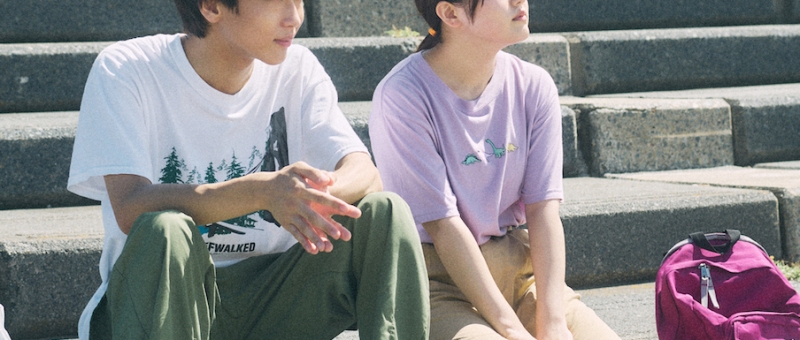
There’s a gentle sense of loss that runs through Atta Hemwadee’s quirky Thai dramedy Not Friends (เพื่อน (ไม่) สนิท), not only for those who are now absent and exist only in our memories but for missed opportunities and things left unsaid. Then again, its hero, Pae (Anthony Buisseret), takes a while to warm up to the benefits of friendship, like many teenage boys resentful and alienated, unable to accept the hand extended to him by his infinitely cheerful new deskmate, Joe (Pisitpol Ekaphongpisit), who walks around with a beatific smile permanently plastered across his face. 

Before he can make amends, however, Joe is hit by a car after returning from a school trip sending the school into a period of shocked mourning that for some reason includes a talent contest. After hearing of a competition that offers entrance to film school as a prize, Pae decides to enter and to make his late “best friend” Joe the focus of the film only to immediately be caught out in his duplicity by Joe’s former best friend Bokeh (Thitiya Jirapornsilp) who resents his intention to exploit Joe’s death for his own ends. 

It has to be said, that Pae does not come out of this well though his predicament does highlight a social stigma towards working class boys in his intense desire to escape having to take over his dad’s flour mill having been teased by his former classmates about his “stinky shirt” because he has to air dry his clothes in an area adjacent to the factory. A similar sense of lonely alienation is found in a short story Joe had submitted to a story contest which is about a boy who feels hopelessly ordinary and looks up to the stars thinking about all the other versions of himself on other planets who are “special”, top athletes or super spies or dim but loved by those around him. The boy wants his other selves to see him and know that he is special too, but seems not to feel it himself. 

Coming late to the idea, Pae slowly realises that Joe is special because “Joe is our friend” though he’d mostly ignored his attempts at friendship while he was alive. In any case, he doesn’t really notice the friendships he’s making with Bokeh or the others working on the film either but remains focussed on his own goal of winning the contest and escaping the flour mill. In the end the film he’s making ends up becoming less about Joe himself and more of an ode to absent friends, something echoed in Bokeh’s valedictory speech in which she bids goodbye to her “best not friends” and hopes that though they may not meet, they’ll miss each other every now and then. 

It comes down to a question of what friendship really is and whether Pae can be persuaded to abandon his sense of self interest to defend it. He realises that Joe had a lot of dreams too, ones he never got to fulfil and a couple that could be fulfilled for him if not in reality than in fantasy imagining how their lives might have turned out if Pae had been less self-involved and Joe had lived. Still, on finding out something unexpected he’s forced to confront the idea that perhaps you don’t really know anyone. Everyone knows a slightly different version of the same person but friendship is really about shared intimacy and a willingness to be open and vulnerable while simultaneously respecting the boundaries of others.

To that extent it really is about the friends we make along the way. Pae slowly comes to realise that he’s accidentally become friends with the crew on the film and lets go of some of his resentment becoming less self-centred and more willing to interact with others even warming to his father and family business he’d previously been ashamed of while also gaining the courage to pursue his dream of a career in film. Cineliterate, Atta Hemwadee breaks the action with a filmmaking rap and makes frequent references to popular film but invests the high school movie with a wistful sense of loss and nostalgia for the absent friends of youth whom we miss once in a while but are in another sense always with us. 


 Not Friends screened as part of this year’s Osaka Asian Film Festival.

Trailer (English subtitles)