Kingmaker (킹메이커, Byun Sung-hyun, 2022)

It’s the political paradox. You can’t do anything without getting elected but to get elected you might have to abandon whatever it was you wanted to do in the first place. Loosely based on the real life figures of Kim Dae-jung and his political strategist Eom Chang-rok, the heroes of Byun Sung-hyun’s Kingmaker (킹메이커) are obsessed with the question of whether the ends justify the means and if it’s possible to maintain integrity in politics when the game itself is crooked while the film suggests that in the end you will have to live with your choices and your compromises either way and if it’s a better world you want to build perhaps you can’t get there by cheating your way to paradise.

The son of a North Korean migrant, Seo Chang-dae (Lee Sun-kyun) is an embittered and frustrated pharmacist with a talent for spin. When his friend complains about a neighbour stealing his eggs from his chicken coop and denying all knowledge because he’s well connected and knows he can get away with it, Chang-dae’s advice is to plant one of his own chickens in the other guy’s coop and catch him red handed. Impressed by the impassioned political speechmaking of labour activist Kim Woon-bum (Sol Kyung-gu), he writes him a letter offering his services and then marches down to his office to convince him that he is the guy to break his losing streak and finally get him elected so they can “change the damned world”. 

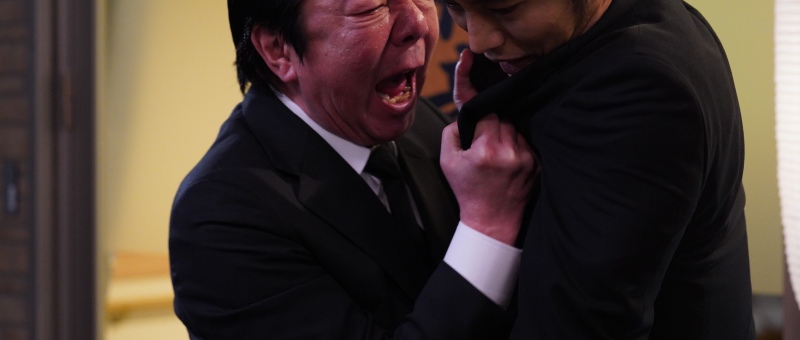
The problem is that all of Chang-dae’s ideas are like the chicken scam, built on the manipulation of the truth, but you can’t deny that they work. He plays the other side, the increasingly authoritarian regime of Park Chung-hee, at their own game, getting some of their guys to dress up as the opposing party and then set about offending a bunch of farmers by being generally condescending and entitled. They stage fights and perform thuggish violence to leave the impression that Park’s guys are oppressive fascists while asking for the “gifts” the Park regime had given out to curry favour back to further infuriate potential voters. Later some of their own guys turn up with the same gifts to send the message that they’re making up for all Park’s mistakes. At one point, Chang-dae even suggests staging an attack on Woon-bum’s person to gain voter sympathy, an idea which is met with total disdain by Woon-bum and his team many of whom are at least conflicted with Chang-dae’s underhanded tactics. 

But then as he points out, if they want to create a better, freer Korea in which people can speak their minds without fear then they have to get elected first. It may be naive to assume that you can behave like this and then give it all up when finally in office, but Chang-dae at least is committed to the idea that the ends justify the means. Woon-bum meanwhile is worried that Chang-dae has lost sight of what the ends are and is solely focussed on winning at any cost. He has an opposing number in slimy intelligence agent Lee (Jo Woo-Jin) who serves Park in much the same way Chang-dae serves Woon-bum, but Chang-dae fatally misunderstands him, failing to appreciate that for Lee Park’s “revolution” is also a just cause for which he is fighting just as Chang-dae is fighting for freedom and democracy. In an uncomfortable touch, Lee seems to be coded as gay with his slightly effeminate manner and tendency towards intimate physical contact adding an additional layer to his gradual seduction of Chang-dae whose friendship with Woon-bum also has its homoerotoic qualities in its quiet intensity. 

The final dilemma lies in asking whether or not Woon-bum could have won the pivotal election of 1971, preventing Park from further altering the constitution to cement his dictatorship and eventually declaring himself president for life, if he had not parted ways with Chang-dae and tried to win more “honestly”. If so, would they have set Korea on a path towards the better world they envisaged or would they have proved little different, their integrity already compromised by everything they did to get there poisoning their vision for the future? The fact that history repeats itself, Woon-bum and his former rival Young-ho (Yoo Jae-myung) splitting the vote during the first “democratic” presidential election and allowing Chun Doo-hwan’s chosen successor to win, perhaps suggests the latter. In any case, it’s Chang-dae who has to live with his choices in having betrayed himself, as Woon-bum had feared too obsessed with winning to remember why he was playing in the first place. “All my ideas about justice were brought down by my own hand” he’s forced to admit, left only with self-loathing defeat in his supposed victory. Some things don’t change, there is intrigue in the court, but “putting ambition before integrity will get you nowhere” as Chang-dae learns to his cost. 


Kingmaker screened as part of this year’s London Korean Film Festival.

International trailer (English subtitles)

Affliction (Teddy Soeriaatmadja, 2021)

The lives of an affluent urban family are disrupted when they receive a call from a mysterious visitor informing them that she is no longer prepared to look after the husband’s ageing mother in Teddy Soeriaatmadja’s eerie familial horror, Affliction. What posits itself as a meditation on the effects of childhood trauma turns out to be its reverse, but nevertheless contemplates contemporary filiality as the wife, blaming herself for her mother’s unexpected death by suicide, tries to repair her familial bonds by resolving to look after her estranged mother-in-law. 

The fact that Nina (Raihaanun Soeriaatmadja) has never met her mother-in-law Bunda (Tutie Kirana) despite long years of marriage to her husband Hasan (Ibnu Jamil) doesn’t seem to have felt odd to her, at least until she’s visited by a young woman who informs her that Bunda has advanced dementia and needs more comprehensive care than she can give her. Her words that it’s time a son should look after his mother further add to Nina’s sense of guilt especially as she is still grieving for her own mother whose ghost she saw slightly before she died leading her to believe that there might have been something more she could have done to save her. But when she mentions the strange encounter to her husband, he becomes angry and belligerent explaining that he has a “different” relationship with his mother than Nina had with hers and has no desire to return home or ever see her again though open to the idea of hiring a new live-in nurse. 

Nevertheless, the family to eventually make it out to the incredibly remote mountain area where Hasan grew up. To Nina there seems to be something not quite right with the house, a sense of discomfort and unease that is something more than her mother-in-law’s strange manner though bar a strange episode on their first meeting she appears to be in much better health than the young woman who visited implied. Even so, Bunda is indeed very territorial over her home, citing herself as its guardian and point blank refusing to leave it despite the worrying presence of a mysterious woman who turns up at night to stare in at them through the eerie fog gathering outside. 

Much of the drama centres on Nina and Bunda who are neither divided mother and daughter-in-law nor bonded in solidarity as women trapped by a patriarchal system that turns them into the carer and the cared for whether they like it or not. Despite having agreed to take responsibility for his mother, Hasan is incredibly ambivalent the entire time, constantly banging on about needing to get back to the city for an important interview and accusing Nina of trying to sabotage his career in pointing out that it’s going to take a little more time to sort things out with Bunda than just packing all her stuff and bundling her into the car. A child psychologist, Hasan ironically had little time for his own children and family prioritising his career prospects ahead of his role as a father, but on arrival at the cabin his manner turns towards the controlling and narcissistic, eventually taking off and leaving Nina and the kids behind while he finishes his big presentation back in the city. 

Hasan hints at a traumatic past in an opening speech insisting that a lack of parental love is responsible when a child becomes violent towards their peers but it turns out that there’s a reason beyond toxic parenting in Bunda’s raucous laughter on hearing her son’s occupation that implies both an intense love for him along with shame and resentment that he seems only to have rejected her. The house is indeed haunted as Nina had feared, though by something much darker and more human than she could ever have expected. Where a happier resolution might have been expected in Hasan suddenly realising that his narcissistic obsession with career success is ruining his family life, we find only the toxicity of familial bonds as Nina is asked to make the same choice that Bunda had but chooses a different way to save her family, easing another mother’s pain rather than allow the unresolved past to erode her relationship with her children as she tries to salvage what she can from the ruins of a seemingly perfect life.


Affliction screened as part of this year’s Five Flavours Film Festival.

Trailer (no subtitles)

24 (Royston Tan, 2021)

A recently deceased boom operator (James Choong) cleaves himself away from the world through sound in Roystan Tan’s strangely moving meditation on mortality, 24. There are of course 24 frames to a second, but there are also 24 hours in a day and a continuous sequence of days that add up to a life much in the same way expanding sequences of 24 frames result in a film. Divided into 24 vignettes most of which find the sound man invisible, darting about capturing diegetic sound of people discussing life and death or else of nature as he takes stock of the world he’s leaving, the film presents a composite mosaic of human existence. “But now we live in separate worlds” a prince from an opera sadly laments as much like the sound man he prepares for eternal exile, vowing to return even as his bereaved family vow that “stories of his life will be remembered”.

In any case, the first place we find the sound man is on the set of a gay porn film, an act of minor provocation against the conservative atmosphere of the Singaporean film industry. He then appears on a rooftop overlooking the city and on to the middle of a verdant forest where he’s later enveloped in mist. His passage seems random and etherial but also with some kind of hidden direction. He picks up fights behind the walls that hint at societal discord while offering silent comfort to those who appear to be in some kind of despair, a young woman performing an emotional dubbing script pleading with her elderly father to remember her much as the sound man hopes someone will remember him. 

An affable cemetery caretaker advises him to visit his family, for children soon grow up while two women look for clothes for dead, offerings they can burn to make the afterlife a little more bearable. The sound man records a traditional Chinese opera about a family grieving a son perhaps still unprepared to confront his own before witnessing a poignant scene of a little boy calling out for his father as his distraught mother bathes him. Only the child, the grave digger, and later a mortician to whom the sound man makes his only sound seem to be able to see him. But then isn’t the sound man always invisible to us? His boom entering the frame is greeted with embarrassment, we aren’t supposed to see him but we know he’s there. Without him this world would be silent. His boom brings sound into focus and allows those whose voices are often ignored to be heard. A bemused expression on his face, the sound man rides in a truck full of migrant workers who are also now in a separate world from their families vowing one day to return. 

Then again he listens to a trio of men bicker about the rising cost of weddings and childbirth lamenting that everything costs money even life and death, as it seems. He watches as his family prepare to burn offerings for him, arguing with each other as they lay them out, as if they had all gone on a picnic to celebrate a birthday rather than seeking to mark the passing of a man who died too young. Standing in the corner at his own funeral he shakes while silently sobbing as friends and relatives file past his grieving wife. Meanwhile, his former director visits a taoist priest to find out if he’s doing OK in the afterlife, regretting that he never got to invite him to his new house and wondering if he might have visited in the form of a butterfly who flew in shortly after he arrived. The priest rattles his tools and speaks in an incomprehensible language translated by his assistant, the irony being that the sound man is right there only he can’t see him. On his travels the sound man encounters fear and loneliness and pain, but also kindness and tranquility and knows that he was loved and that there are those who will remember him who we never see. A poignant voyage through a life in 24 frames, Royston Tan’s haunting drama casts its deadpan hero on a wandering journey towards an inevitable conclusion leaving him an exile from the world of the living but also an observer of everything it means to be alive in all of its noisy extremities.


24 screened as part of this year’s Five Flavours Film Festival and is available to stream in Poland until 4th December.

Original trailer (dialogue free)

The Hill of Secrets (비밀의 언덕, Lee Ji-eun, 2022)

A little girl contends with the boundaries of social responsibility, the nature of the contemporary family, classism, and a deep desire to be accepted while confronted by the ambivalent “honesty” of adulthood in Lee Ji-eun’s charming coming-of-age tale, The Hill of Secrets (비밀의 언덕, Bimileui Eondeok). Set in 1996 and filled with nostalgia for simpler times, Lee’s tale of the painful lessons of adolescence is in its own way timeless as the heroine begins to reprocess her complicated relationships with her family while simultaneously preparing to step away from it. 

12-year-old Myeung-eun’s (Moon Seung-ah) problem is that she’s a bit of a snob. Surrounded by children from wealthier families at her school, she feels ashamed of her background and looks down on her working class parents whom she brands “terrible people” for their every man for himself philosophy. When her brother asks their father what their family motto is for a homework assignment, he looks confused and answers that they don’t have one, but her mother jumps in with “give nothing, take nothing” having experienced a moment of outrage when Myeung-eun wanted to donate some money to a struggling family on the television. Her father had insisted that the family is only struggling because they’re lazy and aren’t trying hard enough, reminding her that their lives are hard too but they’ve made their way through buckling down and working without complaint. Myung-eun resents his explanation in part because she thinks he’s selfish and unkind, but also finds it hypocritical in that she sees her father as lazy and irresponsible while her mother is a workaholic who only cares about money and is indifferent to the suffering of those around her. 

To demonstrate that she’s different from her family, Myung-eun has developed conservative social values with a strong aspiration to achieve conventional middle class success as symbolised by the incredibly prim dress she’s forever trying to get her mother to buy for her while she opts for something a little less particular that Myung-eun won’t grow out of too quickly. So ashamed of her family is she, that Myung-eun lies at school telling her teacher that her dad’s an office worker and her mum a housewife while making constant excuses as to why they can’t come to parents’ days. Challenged by her rival, rich kid Kyung-soo, she even goes so far as to bamboozle an executive at a nearby company into an “interview” for her “homework” taking a series of fake photographs while getting a friend’s mother to pose as her own as they cheerfully bake cookies together at home. 

Wanting to knock Kyung-soo off her perch Myung-eun runs for class president and pulls off a shock victory but soon becomes drunk on her power and driven further into a narcissistic drive for approval from her harried teacher. She sets up a secret letterbox so her classmates can make anonymous suggestions, but is actually writing them all herself sometimes using her left hand, different coloured pens, and weird handwriting to cover up her crime. When she fears her brother is about to blow her cover, she gets into a physical fight with a friend accusing her of disrespecting the office of class president, and struggles to accept herself at her new status because of her internalised shame over her class background. 

Yet confronted with the incredible cynicism of transfer student Hye-jin who matter of factly answers the teacher’s question about workers making people happy that her mum makes loads of people happy because she runs a brothel which is why Hye-jin has had to change schools so often, Myung-eun begins to reconsider her notions of honesty and deceit. Hye-jin is tired of hiding her background and really doesn’t care what anyone thinks anymore, while Myung-eun is desperate to keep up an image of conventional respectability rather than admit that her parents sell salted fish at the market. As her teacher later tells her, honesty is not necessarily the best policy and sometimes you might have to lie to protect someone’s feelings but that’s really the opposite of what Myung-eun has been doing. Her lies are all about protecting herself and told out of fear of rejection ironically because she feels rejected by her family who appear disinterested in her successes and indifferent to her feelings. 

But then as her brother tried to remind her, her mother works hard to support their family while crafting a sketchbook of the ideal home she’ll probably never be able to afford. Myung-eun decamps to stay with her mother’s step father and brother who are much more stereotypically respectable than her parents, living in a nicer flat which belonged to her grandmother and outwardly religious. But then again her uncle has the same internalised shame as she does, a failed artist working part-time in construction but putting on a suit and carrying a briefcase when he picks her up from school so that people will assume he’s a middle-class office worker. Her grandfather berates her uncle for not having a proper job while he later reveals that Myung-eun’s rmother’s resentment stems from the fact she’s been supporting both families financially even though her mother has passed away and they aren’t related by blood. Myung-eun’s father complains about his domineering wife, but as his friend points out he’d be lost without her. 

An exercise in rigorous honesty confronts Myung-eun with her true feelings surrounding her family but also with the consequences of her actions as she realises an autobiographically-themed prize-winning essay may end up hurting their feelings while she herself would not necessarily come out of it looking very good. Through her friendship with Hye-jin and her sister, Myung-eun comes to a better understanding of emotional authenticity edging away from her snooty social group who as Hye-jin points out enforce hierarchy by taking turns leaving each other out and beginning to accept herself no longer so desperately in need of external approval having understood a little of the way she fits in to her family. A gentle, nostalgic coming-of-age tale, Lee’s charming debut feature is both a mild critique of deeply ingrained classism and an empathetic contemplation of what it is that “family” really means.


The Hill of Secrets screened as part of this year’s London Korean Film Festival.

Clip (English subtitles)

Barbarian Invasion (野蛮人入侵, Tan Chui Mui, 2021)

“Who are you?” the lead actress asks herself, at one point in several languages, as she tries to reclaim her identity from the library of roles which she must play key among them mother to six-year-old son and recent divorcee plagued by scandal. Tan Chui Mui’s meta drama Barbarian Invasion (野蛮人入侵), in which she also stars, is in part a search for the self along with the desire to assert ownership over a physicality that is otherwise uncomfortably shared but also an exploration of local indie filmmaking and the unique challenges faced by a female filmmaker in the South East Asian industry. 

Moon Lee (named for the Hong Kong star and played by Tan Chui Mui herself) was formerly a successful actress who married a high profile actor but has now divorced and is raising her six-year-old son Yu Zhou alone. Responding to a request from an old friend, she’s agreed to travel to the coast to revive her film career and has brought Yu Zhou with her as his father is filming in Japan and her mother has just had a knee operation. What Moon hadn’t realised is that she’ll be starring in a low budget action movie inspired by The Bourne Identity and that the director, Roger (Pete Teo), wants her to look convincing as a top assassin. Moon isn’t really convinced but begins to see it as an opportunity for personal growth training with the mysterious Master Loh (James Lee) who, like the wise old monk sitting outside, is fond of cryptic aphorisms.

Nevertheless, Moon’s attention is constantly diverted by Yu Zhou’s restlessness. He darts in to defend her while she’s trying to practice martial arts and runs away when left with a baby sitter, making friends with the daughter of a local cafe owner. She tells the assistant Cathy that when she was pregnant people would come up and touch her belly as if her body no longer belonged to her but had become public property. Moon resented being told that her baby was her greatest work, as if all of her other achievements paled in comparison to her motherhood and she herself had become nothing more than a conduit for her child’s existence. A mere 3D printer for the next generation, as she puts it. Yet what’s she’s doing is in effect an attempt to reintegrate body and soul. As the wise old monk tells her the body is not the prison of the mind but the mind a prison of the body. She achieves mastery over herself through embracing unconscious action. “What is “myself?” she asks Loh and finds the answer in the her that automatically raises its fist to her head in self-protection. 

But that doesn’t perhaps help her differentiate Moon Lee the woman from Moon Lee the actress and the various roles she’s played on and off screen. It seems there was a degree of scandal in her recent divorce that’s prompted her into a reconsideration of herself, while she is left feeling betrayed when Roger explains that the producers want to cast her ex Julliard (Bront Palarae) as her love interest and may even pick him over her if she refuses because he is still a big box office draw. Roger then gets a major offer of investment, but it’s from a Chinese actress who wants Moon’s part. Chinese producers want a Chinese star he tries to explain to an increasingly exasperated Moon who wonders what all this is for if she is so easily replaceable. 

In any case, an event which seems to transgress the borders between the real and the fictive throws her into the role of her amnesiac heroine who has only muscle memory along with the ability to speak several languages chiefly those spoken by roles she previously played such as a Burmese refugee and Vietnamese bride. Still, as her character begins to recover her identity she too comes into herself, brings some ironic closure to her relationship with her ex, and embarks on a somewhat mystic journey into the self all while ironically riffing on classic kung fu movie themes injected with a little contemporary pop culture. To the challenger the sword was everything, to Musashi everything was the sword Roger explains of a tale in which the elderly Miyamoto Musashi defeated a young rival through turning the world around him into a weapon, adding that to him while film was once everything everything is now film. And so it is for Moon in her ongoing psychodrama rediscovering herself among many others as she fights her way towards bodily autonomy and the reclamation of her authentic identity.


Barbarian Invasion screened as part of this year’s Five Flavours Film Festival and is available to stream in Poland until 4th December.

Original trailer (Simplified Chinese / English subtitles)

Coming to You (너에게 가는 길, Byun Gyu-ri, 2021)

South Korea is one of the least progressive Asian nations when it comes to the rights of the LGBTQ+ community who often face social prejudice and outright hostility from the religious right. A counter protestor at a Pride rally in Byun Gyu-ri’s documentary Coming to You (너에게 가는 길, Neoege Ganeun Gil) loudly screams in the face of allies, claiming to love his nation which is why he’s bringing his kids up to be model Korean citizens while insisting, incorrectly, that homosexuality is “illegal” and the Pride goers all need to leave the country as soon as possible. 

The man is perhaps an extreme case, but it’s just this kind of aggressive hostility that led two mothers to fear for their children even as they struggled internally to accept their their coming out. Firefighter Nabi had no idea what to think when her only child Hangyeol told her that they hated their body so much it had led to them experiencing suicidal thoughts. Nabi simply thought it was a phase or else that it was born of the discrimination women face in society and told Hangyeol so directly which only added to their mounting depression and sense of impossibility. Air hostess Vivian meanwhile was stunned when her son Yejoon handed her a letter that began “I am a homosexual”. Though she was accustomed to meeting all kinds of people in her work, she couldn’t quite take in what her son had told her and was then fearful that his life would be difficult or lonely going so far as to apologise for having given birth to him. 

Both women have since become staunch defenders of their children’s right to happiness through their involvement with PFLAG, an organisation for parents of LGBTQ+ children yet they are still frustrated by their conservative nation and its slow progress towards equality. Hangyeol’s chief problem is that they are unable to find steady employment because of the mismatch between their identity documents and gender presentation. On trying to get their gender changed from female, which they were assigned at birth, to male, they face several hurdles including an arcane regulation that insists that even as adults those wishing to legally change their gender must have the permission of both parents (the law was abandoned only in 2019). This is obviously difficult for many transgender people who may have become estranged from their families or otherwise not wish to contact them, leaving aside the absurdity of needing to ask for permission for anything at all when over the age of majority. Meanwhile, Hangyeol also struggles because of the narrow criteria which insist that an applicant should have the matching genitalia for the gender they have requested be recognised on the form which is something they are not currently interested in pursuing. Another judge at the district level is however much more sympathetic and does not make the same demand, simply telling Hangyeol that along with their mother’s testimony all the evidence submitted makes it “obvious” that they are male, telling them to go out and live with pride while apologising for their “intolerant” nation.

Vivian’s son Yejoon meanwhile decided to escape the hostile environment in Korea to study abroad in Canada where he hoped he could live openly as a gay man but has discovered that though this is largely true he still feels somewhat out of place as a Korean living in a foreign culture. Vivian admits that she hoped he would stay in Canada though it meant him being apart from her because his life would be much easier there, though Yejoon eventually makes the decision to move home after falling in love with the friend of a friend he met on his last trip back. One of Vivian’s chief worries had been that Yejoon would be lonely. While thankful that he has found someone with whom he can share his life, she realises that being married isn’t the be all and end all yet continues to campaign for the legalisation of same sex marriage so her son can have the same legal rights as anyone else. Yejoon’s boyfriend Seongjun only recently came out to his mother who is obviously on a bit of a learning curve but quickly comes to accept the boys’ relationship and even attends a PFLAG meeting that gives her even more confidence in her decision. 

Still, it’s clear that there is still a lot of prejudice to be overcome. Nabi is at one point hit in the face by an angry protestor at Pride while the police do nothing, and is intensely worried about her child’s wellbeing especially after seeing a report on the news about radical feminists hounding a transgender student out of an all female university. Yejoon and Seongjung have decided that they don’t necessarily want to be flag wavers but are determined to live happily with the support of both their families in spite of whatever social prejudice they may face. As for Vivian and Nabi, they are committed to fighting for their children’s rights, but also breaking with tradition in abandoning the hierarchal nature of the traditional family to stand shoulder to shoulder with them as they do their best to push for social change in an all too conservative nation. 


Coming to You screened as part of this year’s London Korean Film Festival.

Original trailer (no subtitles)

Memoryland (Miền ký ức, Kim Quy Bui, 2021)

In Kim Quy Bui’s melancholy tale of the rites of death it’s almost as if it’s the living who haunt the dead. Contrasting the earthiness of traditional ritual with the clinical cremations of the city, Memoryland (Miền ký ức) both contemplates the effects of ongoing urbanisation and the perhaps undue stress placed a peaceful afterlife rather than on finding happiness in this one. Even so, it’s a sense of absence that eventually haunts the nation in the creation of a literal ghost town with names and numbers written on walls in much the same way as the documents of deed printed on the exterior of paper houses intended to be burned for the dead. 

The film opens however with a little magical realism as a woman’s soul gets up out of her body and makes its exit if not quite from this world. Surrounded by flies and rotted fruit, Me leaves an unheard message for her son that she would like to be buried in the vicinity of her house so that she can still look after it but the son has been away too long and knows nothing of traditional rituals. “Everyone is cremated in the city” he tells a confused neighbour who has already dug a grave for her while keeping half an eye on the mounting costs, the itemised bill including listings for shamans and multiple days of mourning he wonders if it would be alright to shave. 

Death is indeed an expensive business. One young man makes his living selling coffins and burial plots for a hefty price in which you’re even charged rent for storing remains. Frightened of what decisions may be made after his death, the neighbour later plans a funeral for himself and his wife prepared to pay a princely sum for the guarantee of dignity in death which his wife quite understandably describes as ridiculous. Yet there’s something in his words that only soil can nurture the soul in the earthiness of its embrace in contrast with the icy mechanical doors that draw closed across a coffin before it is assaulted on all sides by tightly controlled flames with only another sign across them listing a name and a date of death lest the now anonymous ashes be confused. 

Meanwhile some years previously a man is killed in a construction accident that neatly symbolises the literal dangers of urbanisation leaving his devastated wife numbed to the point of catatonia. Her husband’s family refuse to accept the quietude of her grief, suggesting that as she is still young and pretty, a childless widow at 30, she may plan to cut her losses and try again with someone new. The wife however remains loyal if over identifying with a female pig she believes longs for male companionship even as a widowed neighbour reminds her that boars and men are each scarce in this rapidly depleting environment. Eventually she travels to the city and takes her rituals with her, lodging with a middle-aged painter to whom she becomes a new muse, but discovers only loneliness and disappointment. She burns paper effigies of cars, homes, and even a replacement wife for her late husband but has no life of her own, a ghost in the frame once again abandoned longing for connection with something that is only now a memory existing in a different place and time. 

The neighbour’s wife tells her children that they’ve got an air conditioner and wireless internet so they needn’t worry when they visit, but it remains unclear whether they do or not. The traditional houses in the traditional village are falling apart, distant messages on the radio asking children to come before they collapse but in the end each is only a space of emptiness, no different from the cemetery the widow walks through with its houses for the dead or that encountered by the painter in his visit to the other world walking between paper houses laid out in much the same fashion. They are each for sale, a name and phone number of a descendent penned on the wall though it seems unlikely anyone is going to buy. Inhabited only by memory these now empty buildings belong to another land in their own ways haunted but perhaps more by the living than the dead. 


Memoryland screened as part of this year’s Five Flavours Film Festival and is available to stream in Poland until 4th December.

Original trailer (English subtitles)
Hot in Day, Cold at Night (낮에는 덥고 밤에는 춥고, Park Song-yeol, 2021)

Anyone can have a run of bad luck, but when it’s happening to everyone at the same time perhaps it’s time to admit that something isn’t working. The latest film to tackle life on the margins of an increasingly unequal society, Park Song-yeol’s scrappy indie drama Hot in Day, Cold at Night (낮에는 덥고 밤에는 춥고, Naj-eneun deobgo bam-eneun chubgo) follows one ordinary couple who’ve found themselves jobless and are just trying to keep their heads above the water without losing either their dignity or humanity. 

Young-tae (Park Song-yeol) was working as a delivery driver until an accident with his bike left out him out of work and now he can’t seem to find anything else. His wife Jeong-hee (Won Hyangra), formerly a teacher, is also unemployed and in the process of applying for new positions which seem to be thin on the ground. They aren’t proud and are willing to do whatever is available, each of them reeling off a list of all the casual jobs they’ve done including those that are dangerous or exploitative, but they just can’t seem to catch a break. Mainly, they’re on the same page though differ slightly in their approaches to life, Jeong-hee feeling that her softhearted husband is too much of a pushover and shouldn’t always be so understanding when comes to getting what’s he’s owed. 

A case in point being his decision to lend their professional camera to a friend, Myung-su, who pays them a token rental fee and swears to return it in two weeks when he’s made enough money to buy his own but soon stops returning Young-tae’s calls. Unreturned calls become a repeated motif emphasising how money and the shame associated with not having it can disrupt even close and longstanding relationships. Jeong-hee experiences something similar with school friend Mi-sun who calls in a loan but abruptly stops talking to her after what appears to be a slightly dodgy arrangement getting Jeong-hee to sub for her at a school which goes south over a misunderstanding with the address causing Jeong-hee to ruin a good opportunity (and possibly Mi-sun’s reputation) by arriving late. 

Young-tae has his own series of interview disappointments, Myung-su getting him an opportunity through the “relative of an acquaintance’s friend” which takes a turn for the strange when the interviewer starts asking awkward questions such as whether Young-tae has any sick relatives at home because people apparently take too much time off claiming they have to take care of someone who’s ill. Another possibility sees a friend call out of the blue after 20 years which predictably turns out to be linked to a pyramid scheme.  “My identity just vanishes” Young-tae exclaims of all his soulless causal jobs, “your self-esteem just gets destroyed”. He takes a job as a proxy driver but is faced either with the tedious talk of much wealthier customers throwing their money around in the back or else harangued by drunken fares who don’t agree with this driving practice or the route he’s chosen. 

There is only so much anyone can take though Young-tae’s threshold is higher than most, keeping his cool and trying to get on with his work in the hope that happier days are coming. “There’s no such thing as easy money” he concedes, even as Jeong-hee goes behind his back to take out an ill-advised loan from loansharks who send passive aggressive messages wishing her “peace and wellbeing” while breathing down her neck for the repayments before going so far as to turn up at her mother’s door looking for money. The fact that Jeong-hee didn’t just ask her mother for help in the first place hints the secondary effects of their poverty in their intense embarrassment which further isolates them from wider society even if they hadn’t fallen out with most of their friends over money. A primary motivator for Jeong-hee getting the loan is seeing all her siblings, who each have several children, preparing gifts and money for her mother’s birthday which is something they as a couple were unable to do though it’s Young-tae who appears to feel the most awkward, guilty to be eating food at the party while bringing no gift even if that shouldn’t really be the way it works. 

Young-tae is the sort of person who likes to do things properly and sees the best in people but even he starts to feel like a mug on realising that Myung-su sold his camera ages ago, insisting he pay him back fairly and a little more for the betrayal only to feel guilty and give him back some of the money. Myung-su just accepts it without even offering an apology for acting in such a reprehensible manner but is later seen to have bought a new car which doesn’t tally with his claims of absolute desperation. It’s enough to drive anybody crazy, but really what can you do? Young-tae meditates on petty revenge, but eventually thinks better of it. It wouldn’t make any difference anyway. Quite obviously made for a shoestring and imperfect in execution, the film’s scrappiness perfectly matches that of its heroes who find themselves just muddling along trying live comfortable lives in one the world’s richest cities but discovering little more than loneliness and disappointment. 


Hot in Day, Cold at Night screened as part of this year’s London Korean Film Festival.

Original trailer (English subtitles)
Arnold Is a Model Student (อานนเป็นนักเรียนตัวอย่าง, Sorayos Prapapan, 2022)

“School is our first dictatorship” a collection of students exclaims in Sorayos Prapapan’s absurdist satire Arnold is a Model Student (อานนเป็นนักเรียนตัวอย่าง). Drawing inspiration from the Bad Student movement, the film positions the educational system as a microcosm of the whole as the students find themselves trying of petty authoritarian oppressions and the infinite corruption of the very mechanism they are told allows them to take control over their futures even as it denies them the right to self-expression or individual freedom. 

In his last year of high school, Arnold (Korndanai Marc Dautzenberg) has brought great praise to his institution after winning a gold medal in the maths Olympiad. Arnold is, however, far from a model student. Low-key rebellious he ignores all rules and does as he pleases but is largely allowed to get away with it because of his value to the school as a symbol of their own success especially as they are currently in the running for an award from the Ministry of Education. Then again this lack of censure seems to tug at Arnold’s sense of conscience wondering what the point of the rules is if they simply don’t apply to him in the same way they apply to others. Mrs. Wanee (Niramon Busapavanich), the school’s most authoritarian disciplinarian, is fond of saying that the rules are necessary for a harmonious society but even the students can see they’re mostly about preserving her own power and status.

In some way perhaps Mrs. Wanee isn’t so different from authoritarian teachers anywhere else in the world if a little more extreme in literally snipping students’ hair if she judges it to be an inappropriate length on her morning inspections. A trio of girls giggle about a man with mental health problems who was hiding in the bathrooms at a shopping mall to snip women’s hair for his wig shop and only then realise that it’s not really all that different to what Mrs Wanee is doing to them in restricting their rights to free expression over the way they look and dress. What seems to her proper discipline seems to them absurd and oppressive and even worse inculcating in them a tolerance for authoritarianism that enables the survival of corrupt dictatorship. 

In essence this is an elite school but as proud as it is of kids like Arnold, who appears to come from a wealthy family, it’s also true that most of its pupils have got in through thinly concealed bribery as parents agree to make “donations” in return for the headmaster finding a place for their less able children. Yet Arnold’s privilege only contributes to his rootlessness and lack of purpose. He doesn’t know what to do with his life in part because he has no real impetus to make a decision and few constraints on his choices. When other students ask him to join the protest movement he refuses stating that he doesn’t see the point, they’ll be finished with school in a few months anyway, thinking solely of himself and making the calculation that the smart thing to do is nothing.

He finds himself similarly conflicted when taken under the wing of dodgy cram school teacher (Winyu Wongsurawat) who runs a scam operation getting talented students to help weaker ones cheat in exams as a fast track path to stable government jobs. Arnold is disadvantaging himself twice over, taking the money but increasing his competition while remaining complicit with corruption, fostering poor government in allowing those without the proper skills to prosper and hold on to their unearned privilege. Resentful that his father, a French citizen, was deported for criticising the government, what Arnold wants is to go abroad but in doing so he’d also be leaving those unable to protect themselves behind simply harnessing his own privilege to remove himself from the system rather than actively resist it. 

Perhaps it’s no surprise that the resistance is largely led by the female students who eventually tell the headmaster that they no longer care if he expels them because there will always be students coming behind them who also will resist and expelling them all would be entirely counterproductive. Sorayos Prapapan’s deadpan approach signals the absurdity of the culture in the schools system in which pupils are given pointless lessons in citizenship which are little more than nationalist propaganda while forced to learn proper “manners” which is also only another way to bow to authority. The director even inserts a scene of a boy with his own name who has to kneel before a teacher and recite his times tables, while the school’s downfall comes about through the new medium of youth resistance TikTok as Sorayos Prapapan includes what appears to be real footage of students receiving corporal punishment in this contemporary era. Ironically the lesson that students learn is that authoritarianism must be challenged at its roots and that only by standing together can they hope to defeat it. Quirky yet clear eyed and heartfelt Sorayos Prapapan’s gentle satire is at least somewhat hopeful in the determination of the young people not to fall for the promise of superficial success in a corrupt system but to fight hard for the freedom they know to be rightfully theirs.


Arnold Is a Model Student screened as part of this year’s Five Flavours Film Festival and is available to stream in Poland until 4th December.

Original trailer (dialogue free)

Guimoon: The Lightless Door (귀문, Sim Deok-geun, 2021)

A collection of lost souls find themselves trapped between this world and the next in Sim Deok-geun’s eerie haunted house horror, Guimoon: The Lightless Door (귀문, Guimoon). On a literal quest to exorcise his demons, the hero traverses an impossible and elliptical passage attempting to atone for his sins while freeing others from a similar burden yet finally finds himself becoming his quarry as kind of jailor or perhaps guardian spirit making sure that doors which should never be opened remain forever closed not least to the morbidly curious. 

Do-jin’s (Kim Kang-woo) troubles begin when he casts off his destiny as a shaman leaving his ageing mother to battle a powerful spirit said to belong to a mass killer who suddenly snapped one day and murdered all the guests at small community centre. When the building is torn down, workers discover a body bricked up in the walls which seems almost untouched. Do-jin’s mother is brought in to exorcise the evil spirits but is finally overpowered, a dark presence causing her to stab herself in the neck. Overcome with guilt and apparently “harassed” by his mother’s ghost, Do-jin resolves to atone by releasing each of the spirits killed by the murderous custodian and solving the mystery of the body in the walls in the hope of releasing his mother’s soul so that she can move on to the afterlife and stop nagging him from beyond the grave. 

The “Guimoon” is a kind of portal open on the turn of the year by the lunar calendar. Dojin intends to venture through it assuming it will be easy enough to nix a few ghosts and then come home but soon finds himself lost in a world of uncertain time and forever looping corridors. He meant to travel to the afterlife of 1990, but his world is soon disrupted by the arrival of three university students from 1996 who really shouldn’t be here. Armed with a video camera, they are dead set on crafting their own found footage horror in the hope of winning a competition so one of them won’t have to drop out of school. For the students, this world is “real”. They entered it voluntarily and as far as they are concerned are wandering round a derelict building, not really believing it to be “cursed” or haunted in any way. But for Do-jin it’s a liminal and unreal space he has entered for a specific purpose and from which he hopes to expel those who should have left long before. 

Yet even in trying to solve the mystery, Do-jin concentrates his efforts on Seok-ho (Jang Jae-ho), the shovel-wielding custodian, taking a kind of register of the other guests while knowing little about them. He soon discovers that Seok-ho may not quite be the boogeyman he first thought him to be, realising that his sudden descent into homicidal mania may not have been of his own volition. The solution he edges towards hints at the ironically named community centre as a nexus of trauma, a nightmare world created by an entity trying to escape its suffering and finding empowerment in taking control of its oppressors. 

“I was always here” one of the lonely souls proclaims, while Do-jin and the students find themselves locked in, prevented from leaving by a literal absence of exits. While the students eventually turn against each other, seeking escape by submitting themselves the malicious evil of the entity haunting the centre, Do-jin does his best to complete his quest of vanquishing the ghosts with his shaman’s dagger but is eventually brought to a cruel realisation in a maddening series of loops and repetitions which only lead towards a door which should never be opened. In some ways frustratingly oblique, Sim Deok-geun’s eerie meta horror is an exercise in found footage psychology in which the lost wander lonely corridors while searching for an elusive truth they may already know but have perhaps forgotten. On a night between two worlds lit by a blood red moon, Do-jin ventures into a labyrinth to save his mother’s soul but comes to realise that if you walk through the door between life and death you may discover that there is no exit from existential torment.


Guimoon: The Lightless Door screened as part of this year’s London Korean Film Festival.

International trailer (English subtitles)