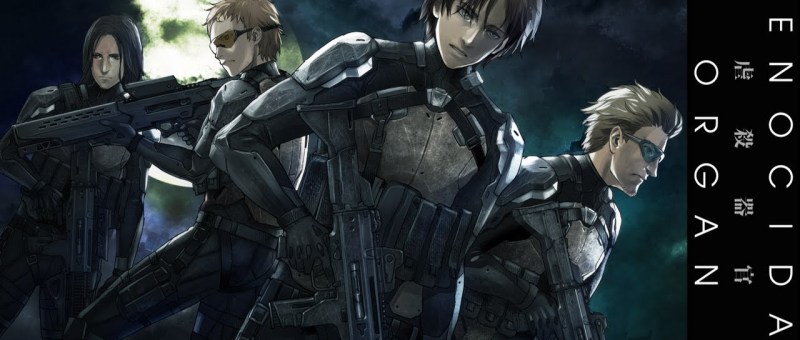
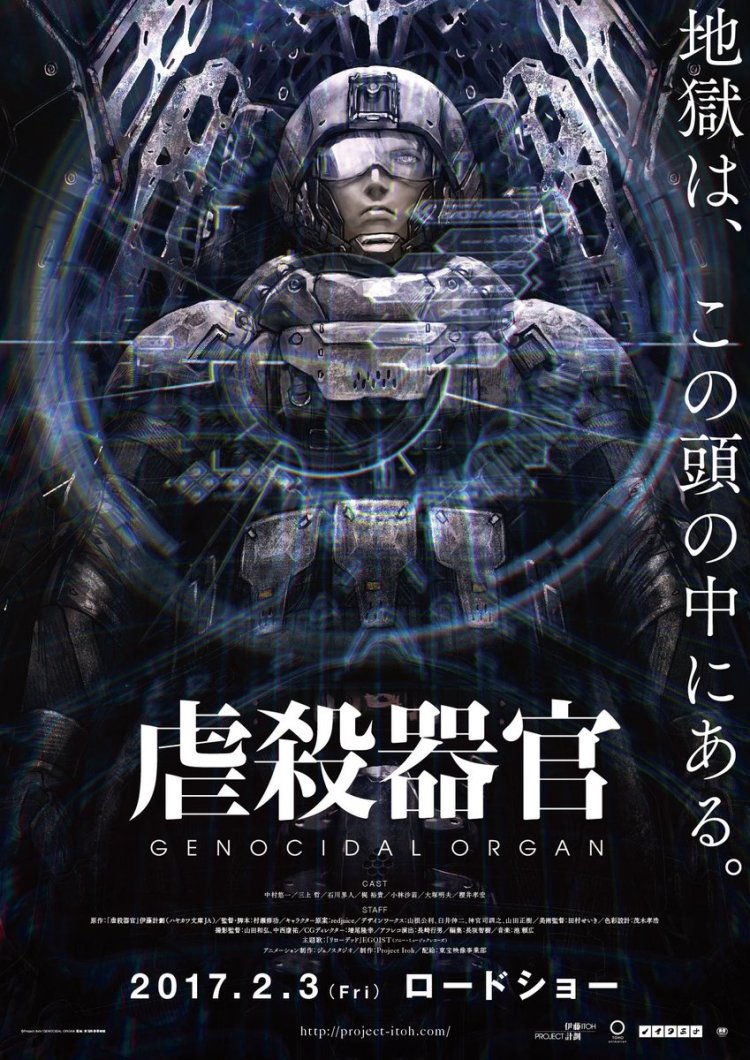
 History books make for the grimmest reading, subjective as they often are. Science fiction can rarely improve upon the already existing evidence of humanity’s dark side, but Genocidal Organ (虐殺器官, Gyakusatsu Kikan) has good go anyway, extrapolating a long line of political manipulations into the near future which neatly straddles a utopian/dystopian divide. Plagued by production delays and studio bankruptcy, Genocidal Organ is the third of three films adapted from the novels of late sci-fi author Project Itoh, arriving nearly two years after previous instalments Harmony and Empire of Corpses. Sadly, its message has only become more timely as the world finds itself on the brink of a geo-political recalibration where fear and division rule the roost.
Set in 2022, the world of Genocidal Organ is one of intense “security”. Following the detonation of a nuclear bomb in Sarajevo in 2017, developed nations have once again become jumpy. As the world weary narrative voice over informs us, Americans have sacrificed their freedoms for an illusion of safety which decreases the burden of living under the threat of terrorism. This brave new world is a surveillance state where citizens are chipped and monitored, even the simple act of buying pizza requires an identity check.
Less developed nations, however, have descended into a hellish cycle of internecine wars and large scale atrocities. American special forces have identified a pattern which puts one of their own, mysterious linguistics professor John Paul (Takahiro Sakurai), at the centre of a vast conspiracy. Army Intelligence officer Clavis Shepherd (Yuichi Nakamura) is despatched to track the master criminal down through his sometime girlfriend Lucia (Sanae Kobayashi), a Czech national and former MIT linguistics researcher now teaching Czech to foreigners in Prague.
Clavis, like the best film noir heroes, finds himself falling down a rabbit hole into an increasingly uncertain world. A top soldier, he has been “engineered” to decrease emotionality and limit pain response to make him a “better” soldier. His world is first shaken when one of his comrades goes rogue, kills a valuable mark, and then turns a gun on him. The top brass blame PTSD but not only that, PTSD that was in fact induced by the very processes the soldiers undergo to ensure than PTSD is impossible. He has always believed that his actions, and those of his superiors have been for the greater good, but he has rarely stopped to think what that greater good may be.
Clavis’ missions see him jumping into a coffin-like landing pod and parachuting into street battles in which many of the combatants are children who have been drugged “to make them better soldiers”. Just as you’re starting to wonder who exactly is perpetrating the genocide, Clavis is asked the relevant question by a captive John. He replies that it’s just his job. John reminds Clavis that that particular justification has a long and terrifying history and so perhaps he ought to ask himself why he chooses to do this particular job and do it so blindly.
John’s big theory is that violence has its own grammar, a secret code buried in language which can be engineered to provoke political instability but then conveniently contained within its own language group. Essentially, he posits the idea of sicking the “terrorists” onto each other and letting them fight it out amongst themselves in those far off places which no one really cares about. The citizens of the developed world might frown at their morning papers, but they’ll soon file it under “terrible things happening far away” and go back to enjoying their lives of peace and security. John’s plan, he claims, is the opposite of vengeance, a means of keeping his side safe by ensuring that the terrible things stay far away, contained.
The “genocidal organ” is the heart hardened towards the suffering of others. John has some grand theories about this, about the survival instinct, fear, suspicion and desperation, but he also has a few on the trade offs between freedom and security. Itoh’s vision is bleak, and the prognosis bleaker but its logic cannot be denied, even if its execution is occasionally imperfect.
Currently on limited theatrical release throughout the UK courtesy of All the Anime.
Original trailer (English subtitles)
 Depictions of wartime and the privation of the immediate post-war period in Japanese cinema run the gamut from kind hearted people helping each other through straitened times, to tales of amorality and despair as black-marketeers and unscrupulous crooks take advantage of the vulnerable and the desperate. In This Corner of the World (この世界の片隅に, Kono Sekai no Katasumi ni), adapted from the manga by Hiroshima native Fumiyo Kouno, is very much of the former variety as its dreamy, fantasy-prone heroine is dragged into a very real nightmare with the frontier drawing ever closer and the threat of death from the skies ever more present but manages to preserve something of herself even in such difficult times.
 Children – not always the most tolerant bunch. For every kind and innocent film in which youngsters band together to overcome their differences and head off on a grand world saving mission, there are a fair few in which all of the other kids gang up on the one who doesn’t quite fit in. Given Japan’s generally conformist outlook, this phenomenon is all the more pronounced and you only have to look back to the filmography of famously child friendly director Hiroshi Shimizu to discover a dozen tales of broken hearted children suddenly finding that their friends just won’t play with them anymore. Where A Silent Voice (聲の形, Koe no Katachi) differs is in its gentle acceptance that the bully is also a victim, capable of redemption but requiring both external and internal forgiveness.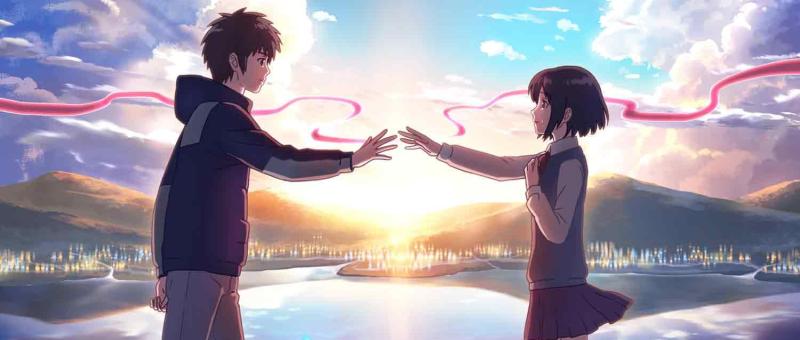
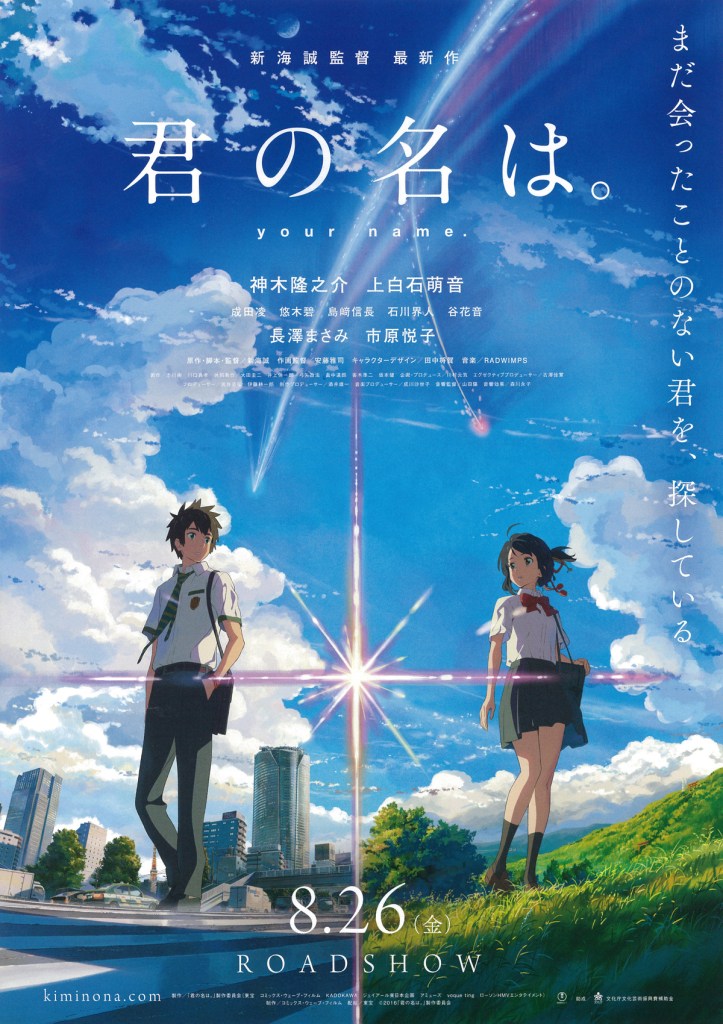 Indie animation talent Makoto Shinkai has been making an impact with his beautifully drawn tales of heartbreaking, unresolvable romance for well over a decade and now with Your Name (君の名は, Kimi no Na wa) he’s finally hit the mainstream with an increased budget and distribution from major Japanese studio Toho. Noticeably more upbeat than his previous work, Your Name takes on the star-crossed lovers motif as two teenagers from different worlds come to know each other intimately without ever meeting only to find their youthful romance frustrated by the vagaries of time and fate.
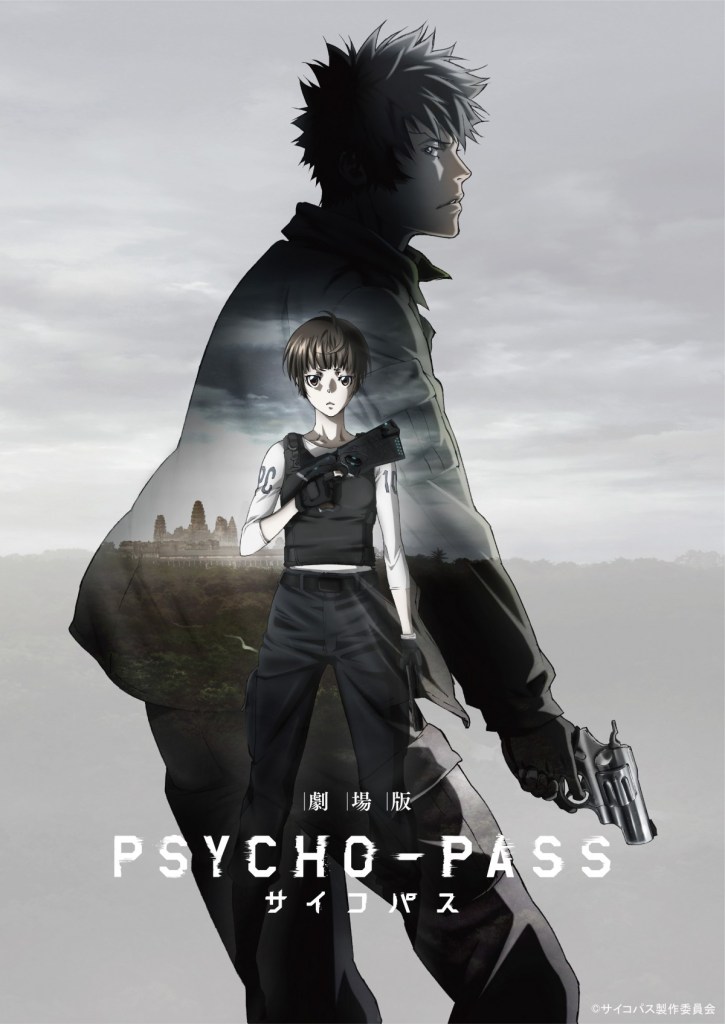 The Japan of 2116 is a peaceful place. Crime is at an all time low thanks to the Sybil system which monitors the nation’s citizens issuing them a “Crime Coefficient” rating assessing how likely they are to commit a crime. When a potential criminal’s Psycho-Pass reaches an unacceptable level, the Public Safety Bureau are called in to hopefully put a stop to any criminal activity before it has the chance to occur.
 Masamune Shirow’s cyberpunk manga Ghost in the Shell burst onto the scene in 1989 and instantly became a genre classic. Mamoru Oshii then adapted the manga into a much lauded anime movie in 1995 which almost came to define cyberpunk animation even if it emerged towards the end of the genre’s heyday. A sequel, Ghost in the Shell: Innocence followed in 2004 as well as a TV anime spin-off Ghost in the Shell: Stand Alone Complex. Now with the 20th anniversary of the original animated movie, the series has yet again been adapted into a series of entirely new anime OVAs under the name of Ghost in the Shell: Arise. Ghost in the Shell: The New Movie (攻殻機動隊 新劇場版, Kokaku Kidotai – Shin Gekijoban) is the big screen outing of this latest incarnation scripted by Tow Ubukata who also produced the very GITS influenced Mardock Scramble.
 Empire of Corpses (屍者の帝国, Shisha no Teikoku) is what would happen if someone’s vast library of Victorian literature was destroyed in a fire and then someone tried to put all the not too singed pages back together based on their knowledge of international pop culture. Inspired by Project Itoh’s novel of the same name and the first of three planned adaptations of his works, Empire of Corpses is a very specific kind of absurd, boys own action adventure based around the idea of empire supported by a zombified proletariat.
 Harmony – the word itself sounds peaceful. A coalescence of sympathetic sounds, the feeling of wholeness and happiness. However, if given the choice, would you like to live in a world of peace and plenty in which your body is almost government property and your personal freedom is limited in favour of ensuring the survival of the species, or would you rather take your chances with the world as it is complete with its violence, sadness and pain if it meant you could be free to live in which ever way you see fit? Michael Arias’ adaptation of the Project Itoh novel addresses just this question in all its complexity as utopia turns out to have a heavy entrance fee.
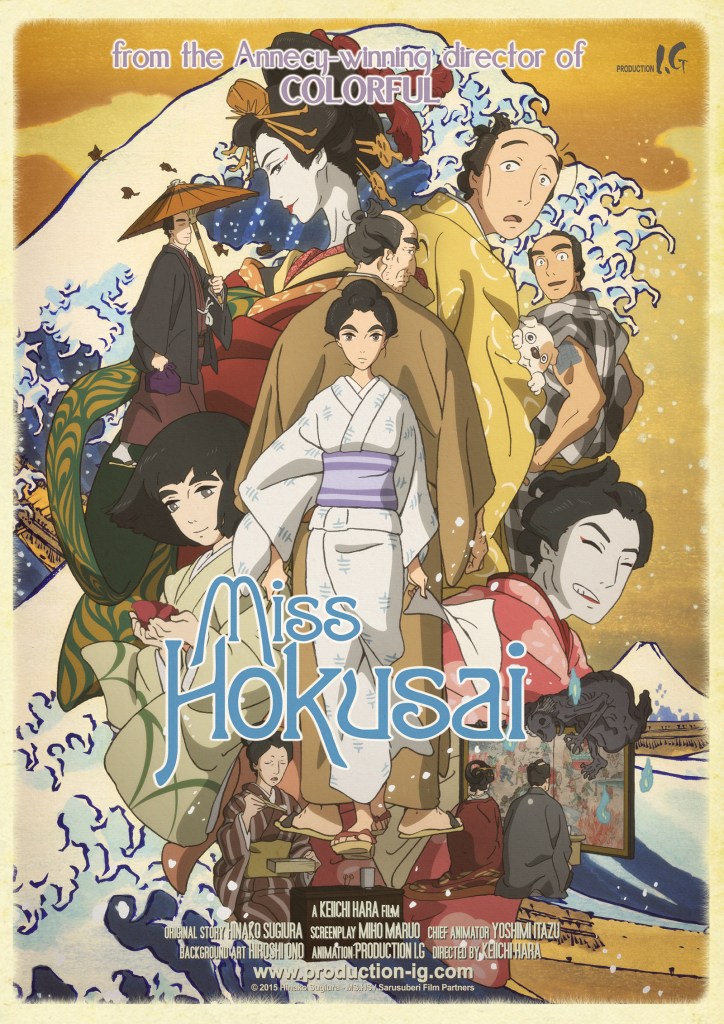 When it comes to the great Japanese artworks that everybody knows, the figure of Hokusai looms large. From the ubiquitous The Great Wave off Kanagawa to the infamous Dream of the Fisherman’s Wife, the work of Hokusai has come to represent the art of Edo woodblocks almost single handedly in the popular imagination yet there has long been scholarly debate about the true artist behind some of the pieces which are attributed to his name. Hokusai had a daughter – uniquely gifted, perhaps even surpassing the skills of her father, O-Ei was a talented artist in her own right as well as her father’s assistant and caregiver in his old age.