Sennan Asbestos Disaster (ニッポン国VS泉南石綿村, Kazuo Hara, 2017)

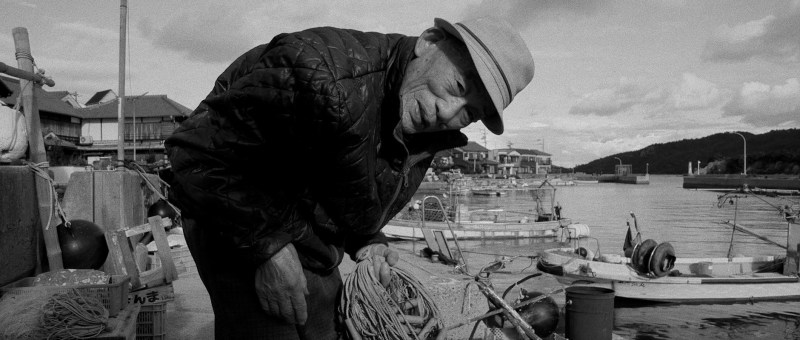
Sennan Asbestos Disaster posterIn these troubled times, many may find themselves wondering what the purpose of government really is. Is the primary duty of the state to look after its citizens or to maintain “order” and what exactly is the limit of the state’s responsibility towards those most in need of its care? Director Kazuo Hara had made a career of examining the lives of those who dared to defy the system, but his latest film Sennan Asbestos Disaster (ニッポン国VS泉南石綿村, Nipponkoku vs Sennan Ishiwata Mura) focusses not on an individual but on a group of ordinary people attempting to stand up to governmental bureaucracy after having been betrayed by successive administrations who put economic prosperity ahead of citizens’ welfare.

Asbestos was hailed as something of a wonder for its highly useful properties including sound insulation, fire proofing, strength and durability. Increasing in use throughout the industrial revolution, the harmful affects of asbestos were first discovered in the early 20th century but its use across most of the world was not banned until the turn of the millennium following long campaigns by those whose health had been adversely affected by breathing in its fibres leading to long term respiratory issues and even a risk of cancer.

In Sennan, in the South West of Japan, asbestos production was the dominant economy stretching back into the Meiji era. Concerns had been raised about the possible harmful effects of asbestos before the war and then again afterwards, but successive governments chose to do nothing while workers remained unaware of the risks even while noticing that many of their friends and family members were dying young often of respiratory conditions. Most only became aware that asbestos was dangerous in 2005 following a national scandal known as the “Kubota Shock” in which a well respected manufacturer of machinery was forced to admit that as much as 10% of its workforce had died of asbestos-related conditions.

Hara follows a collective of Sennan residents who have come together to file a class action law suit against the government for failing to ensure safety standards in asbestos production. Led by Kazuyoshi Yuoka whose grandfather owned an asbestos factory before the war, the group members are mainly older men and women who worked in the factories during the economically straitened days of the immediate post-war period. Though many point to the otherwise progressive nature of the factories which were desperate to attract workers and keen to foster a community spirit as well as offering other benefits including access to education, it is true that many of the employees were among those already facing other kinds of oppression aside from the economic – the uneducated rural poor, women, and a large number of minorities including zainichi Koreans. This information is important because it exposes the truth that the state decided these people were expendable and could be sacrificed in the name of the economic prosperity that was deemed necessary in order to rebuild the nation after its crushing wartime defeat.

Unlike the protagonists of Hara’s previous films, the Sennan campaigners are ordinary people – those assumed to have very little social power pressuring their government to take responsibility for having wilfully abandoned them. Unsurprisingly, the government is not very keen to do so. The legal case drags on eight years during which many of the sufferers die while their children or spouses continue the quest for justice. The case itself is wider than it first seems, extending not just to factory workers but to those exposed by general proximity such as famers owning land near asbestos plants and in one poignant case a woman whose parents took her to the factory while they worked when she was a child.

Forming a tightly knit community, the campaigners present a united front but come up against the wall of bureaucracy. As time wears on it’s difficult not to feel a small amount of sympathy for the junior civil servants the government trots out to deal with angry protestors, forced to repeat the same tired phrases without explanation while the group insist on seeing someone with a bit more clout, but even when the case is finally proved, progress is slow and the ritual apology as hollow as it always is. Yet even if some are angered by the perfunctory nature of professional atonement, others actively embrace it and appear grateful even for this small shred of attention from the authority. It’s here that Hara wavers in his sympathy, admiring the kindhearted solidarity of the protestors but lamenting their tendency towards feudal deference when they should be raging against a society which is often content to exploit and discard them, remaining accidentally complicit in enabling a gradual decline of democratic freedoms.

Nevertheless, Sennan Asbestos Disaster is the chronicle of a (partially) successful campaign in which a group of concerned citizens working within the law eventually force the government to concede an error, even if that concession may turn out to have no wider application. The victory, however, can’t bring back lost time nor ease past suffering and only serves to draw a line under one chapter of a struggle which is sadly far from over.


Sennan Asbestos Disaster was screened as part of a Kazuo Hara focus at Open City Documentary Festival 2018.

Original trailer (English subtitles)

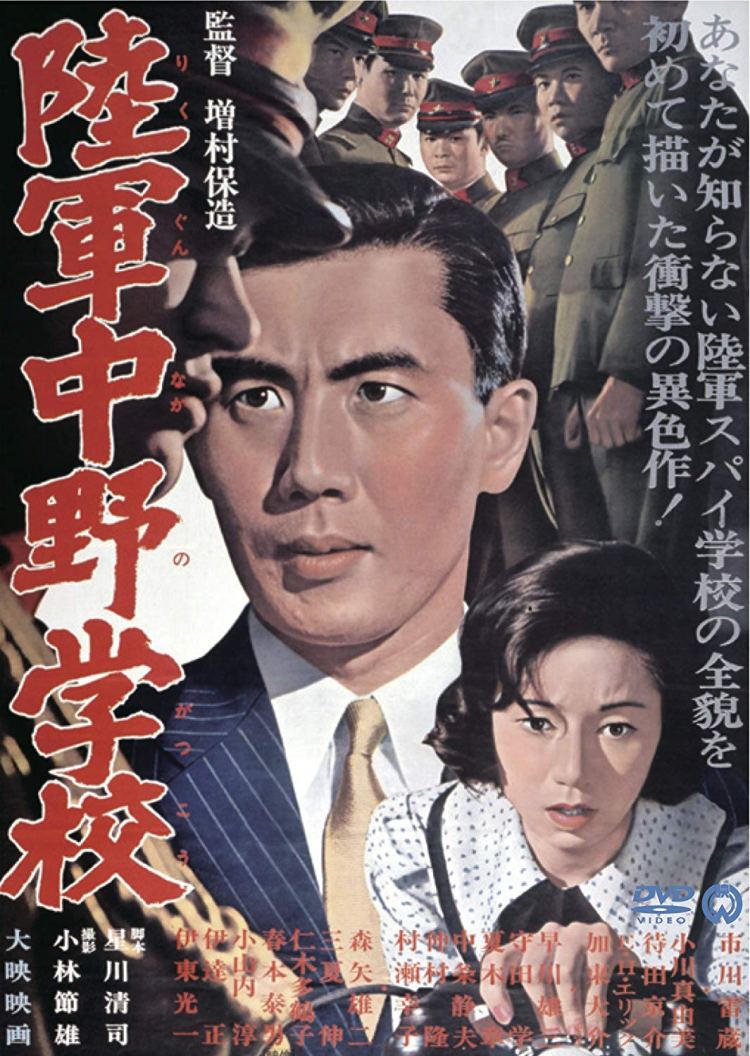
The Emperor’s Naked Army Marches On (ゆきゆきて、神軍, Kazuo Hara, 1987)

The Emperor's Naked Army Marches On PosterThe relationship between a director and a subject can often be a complex one. Who is really leading who and towards what end is a difficult enough question at the best of times, but when your subject is an unhinged crackpot with a definite agenda, a natural love of the camera, and an unpredictable violent streak, it’s an inescapable conundrum. Kenzo Okuzaki, a Pacific War veteran with a deeply seated grudge against the emperor for his refusal to acknowledge his war guilt, first came to the attention of director Shohei Imamura but a second stretch in prison for firing pachinko balls at the object of his wrath put paid to his directorial hopes. 10 years later Imamura passes his subject on to Kazuo Hara who finds himself increasingly at the mercy of his mercurial campaign for truth and reconciliation.

The main thrust of Okuzaki’s current activities lies in uncovering the facts behind the deaths of two enlisted men who were executed in New Guinea three weeks after the war was over. Okuzaki believes the men were murdered and lays the blame at the feet firstly of the officers on the ground and ultimately at those of the emperor who created the circumstances in which all of this horror was allowed to bloom. To assist him in his investigations, Okuzaki ropes in the families of the victims – one a Shinto priestess who is convinced she sees her brother in her dreams and on her altar, and the other a conflicted brother who just wants to know the truth. The truth, however, may be hard to hear, as one of the men Okuzaki corners tries to tell them. Like most of the others questioned about the events of almost forty years before, he advises the family that it’s better not to know while emphasising that their relatives died through no fault of their own.

What is probably obvious to Okuzaki but not to the relatively less cynical family members is that an issue is being skirted. The soldier makes out that he doesn’t want to go into the deaths because the men were executed for desertion – something which is absurd in itself when the war was already over, and that he did not want the family to experience the shame and social stigma of being related to “cowards” who failed in their “duty”. Such notions are already out of date by the late ‘80s, but evidently still weigh heavily on the minds of veterans. Wanting to spare others the pain and shame of discovering the truth about what happened in New Guinea is a frequent excuse offered by those questioned, but perhaps a way of deflecting their own reluctance to speak of such deeply traumatic, extremely difficult events.

Getting them to open up is not Okuzaki’s first thought. Okuzaki himself is a strange man with a disturbing aura and a tendency to self-aggrandisement. When we first meet him he’s acting as a go-between at a wedding of a man he met through his “activism” which is to say a fellow combatant in Okuzaki’s campaign against “The Establishment”. A wedding speech might not be the most appropriate moment to embark on a personal history that involves going to prison for murdering someone you “did not want” to murder as well as a litany of anti-establishment acts including the pachinko ball incident and distributing “pornographic” pictures of the emperor to shoppers at a Tokyo department store. Nevertheless, Okuzaki is extremely proud of these “achievements” which exemplify how he alone has continued to fight the good fight in the post-war world. He sees his original conviction as karma not for his actions in the Pacific but the wastefulness of his life afterwards. He now believes he was saved from New Guinea in order to educate the young about the horrors of war and ensure none of this ever happens again.

Problematically, his main weapon in this fight is violence. Okuzaki’s manner is one of extreme politeness, bordering on obsequiousness, but he is also direct and aggressive, becoming violent when his subjects decline to answer his questions. The relatives are there to shame the officers into speaking the truth through being directly confronted by the human costs of their actions, but Okuzaki’s personal bluster hasn’t thought through the various ways in which his tactics might make it more difficult for them to speak. After all, Okuzaki is a veteran of New Guinea himself, if these men could feel comfortable talking to anyone about their experiences, you’d think they could turn to someone like Okuzaki if only he were not so frightening a presence. Uncomfortably enough, the violence does seem to work and Okuzaki gets his answers through intimidation which leaves his quarry broken and compliant. Despite claiming to work for world peace, Okuzaki believes that his violence is justified by the worthiness of his aims, which you have to admit is an oddly familiar mantra.

His subject’s propensity for violence places Hara in a difficult position, as do his frequent attempts at engineering the situation including roping in his wife and a couple of male friends to pose as relatives of the deceased when the original couple tire of Okuzaki’s exploitative antics. Okuzaki quite obviously has a very clear aim for what he perhaps sees as a propaganda exercise for his ongoing cause which might stand in deep contrast to that of his director who is, after all, a bystander reconstructing narrative after the fact. Okuzaki emerges as a symbol of a nation’s repressed trauma, skittering between officious politeness and belligerent violence while offering a bizarre, quasi-religious philosophy about god’s plan for us all. Hara remains caught between conflicting impulses, unwittingly complicit in Okuzaki’s personal war against war while trying to maintain control in the face of his constant manipulations. As a portrait of a madman The Emperor’s Naked Army Marches On excels, painting Okuzaki as a product of his own mad times while refusing to back away from the bitter truths his madness is so keen to expose.


The Emperor’s Naked Army Marches On (ゆきゆきて、神軍, Yuki Yukite, Shingun) was screened as part of a Kazuo Hara focus at Open City Documentary Festival 2018.

Short clip from the film (English subtitles)

Extreme Private Eros: Love Song 1974 (極私的エロス 恋歌1974, Kazuo Hara, 1974)

Extreme private eros 1974If you’re going to use your camera to interrogate the world, perhaps it’s only fair to let the world interrogate you by means of your own camera. Kazuo Hara’s second documentary is about as personal as its possible to get – a detached, rational examination of the interplay between the director and his subject who happens to be his former lover and the mother of his child. A thinly veiled excuse to maintain contact with a woman who had abandoned him and taken his child with her, Extreme Private Eros: Love Song 1974 (極私的エロス 恋歌1974, Gokushiteki Eros: Renka 1974) is both a tiny snapshot of a nation in flux, and a timeless exploration of the end of love.

Hara and his former lover Miyuki Takeda had lived together for three years and even had a child when she abruptly announced that she no longer wanted to live under the authority of a man or as a member of a “traditional” family and intended to leave in order to live a life of complete independence. Although the relationship was officially over, Miyuki maintained contact with Hara and visited him more or less weekly so it was an additional shock when she suddenly announced she was moving to Okinawa. However, Miyuki made a strange request of her former lover – that he film her attempt to give birth without assistance. Hoping to remain close to her or perhaps to attempt to understand better the reasoning behind her erratic behaviour, Hara agrees.

In Okinawa, Miyuki has moved in with another woman, Sugako, but the relationship between them appears strained and ill defined. Hara’s arrival, he eventually realises, is yet another disruptive influence in this already fraught environment but it’s unclear whether his camera is a deliberate or accidental witness to a series of extremely difficult, not to mention private, conversations taking place in front of a third party in which Miyuki berates her silent roommate for rejecting her desire for a full and exclusive relationship in favour of continuing to sleep with her friend Tommy.

When the relationship with Sugako breaks down, Miyuki takes up with a black GI, Paul, who later becomes the father of the child she intends to birth alone. Though interviewing Miyuki alongside Paul (who speaks no Japanese) is a mild and dispassionate affair, interviewing Miyuki alone about her new lover and the basis of their relationship sends Hara into a spiral of jealousy and despair in which he eventually cedes control of his camera to an assistant and appears on screen breaking down in tears. Wondering if Miyuki is as accidentally jealous of him as he is of Miyuki, Hara muddies the waters by inviting his own new lover, Sachiko – who is also pregnant with his child, to assist him in the making of the documentary. Hara gets his wish. Miyuki is indeed jealous, angrily barking at Sachiko while running down her former lover in every conceivable way, and yet the two women eventually end up bonding, once again excluding Hara from his own attempt at narrative.

The perspective is indeed Hara’s – his weary voiceover and occasionally passive aggressive, exasperated intertitles making plain his own confusion and continued searching for the central question of what exactly he’s trying to achieve, but Miyuki wrestles with him for overall control and to assert her right of ownership over her own story (or at least the presentation of it). Miyuki’s quest seems to be one of total independence – she rejects the world of the patriarchal family, later rejecting love entirely and resolving to live without a man or woman, but remains firmly within its standard ideological parameters in recasting herself as the embodiment of selfless motherhood. She rejects the ideas of traditional Japanese femininity, insisting that her children are raised to be aggressive rather than meek or gentle or kind and going so far as to reject these supposedly feminised qualities as she sees them in her own son as reflections of those same qualities she eventually found unappealing in Hara. She becomes obsessed with the idea of mixed-race children, perhaps as an extension of her desire for a non-Japanese idea of individualism, but later tells her new born daughter that Japan is good and America bad, and pens a damning letter of advice to the women of Okinawa warning them off deceitful GIs.

Miyuki is a woman with scant respect for boundaries and so Hara is granted near unrestricted access to the entirety of her existence as she pursues her various desires and contradictory convictions. Hara’s camera is both unobtrusive and powerfully present, privy to extremely private thoughts and conversations and only occasionally inserting itself into the narrative but unafraid to embrace taboos while perhaps also conflicted in its own defiant pursuit of emotional honesty at all costs. In attempting to capture his subject Hara illuminates both himself and his society, exposing painful truths and unwelcome prejudices but perhaps allowing them to fester unresolved in a future which is both open yet also uncertain.


Extreme Private Eros: Love Song 1974 was screened as part of a Kazuo Hara focus at Open City Documentary Festival 2018.

Trailer (English subtitles)

The Portrait (肖像, Keisuke Kinoshita, 1948)

vlcsnap-2018-09-06-01h35m07s763The immediate post-war period was one of fear and hardship. You might survive, but you might not like the person you’ll have to become in order to do so. The (unexpected) heroine of Keisuke Kinoshita’s The Portrait (肖像, Shozo) thought she’d made her peace with her choices, only to be confronted by a vision of her essential self as seen through the eyes of a cheerfully innocent artist. Despite the harshness of the times, there are those who’ve learned to be happy in their lot, but is their talent for happiness inspiration or irritation for those who’ve chosen a different path?

Kinoshita opens with a comic scene in which two shady real estate brokers take a look at a local property. Deciding it’s overpriced and impractical, the pair nevertheless decide to buy it together with the intention of flipping it once they convert the downstairs workspace into more practical living accommodation. There is, however, a slight hitch in that there are sitting tenants – a painter and his family who live in the room upstairs and use the rooms below as a studio. Thinking it will be easy enough to evict them, the men aren’t bothered but the the family are all so relentlessly nice that no one has yet been able to tell them to go. As a last resort, one of the men, Kaneko (Eitaro Ozawa), decides to move into the upstairs with his mistress, Midori (Kuniko Igawa), in the hope that the family will feel so awkward and in the way they will decide to vacate. Innocent and unworldly, the Nomuras all assume Midori is her lover’s daughter rather than his mistress, and start treating her like a well to do young lady. Such sudden and unexpected respect starts to weigh on Midori’s mind as she finds herself playing along, pretending to be “nice” and “respectable” while knowing that the life she’s living is anything but.

The problem is that the Nomuras are so essentially kind and welcoming that they really don’t mind sharing the house. Mr. Nomura (Ichiro Sugai), the middle-aged painter, feels guilty that he doesn’t earn more money and is too poor to move, but he’s also the sort to get over excited about having grown a giant pumpkin that he can’t resist showing to absolutely everyone. As it turns out the Nomuras are also living with a private tragedy – their eldest son Ichiro (Toru Abe) whose wife Kumiko (Kuniko Miyake) and son Koichi also live with the family has not yet returned home from the war and his whereabouts are unknown. Still, they don’t mind talking about it and are as happy as they can be, dancing away under the light of the moon – an unexpected upside to constant power outages. Meanwhile, Kaneko complains loudly as he attempts to finish his accounts in the evening gloom.

Midori half envies, half resents her new neighbours. The longer she lives with the Nomuras the guiltier she starts to feel in deceiving them. Matters begin to come to a head when Mr. Nomura asks permission to paint her portrait. He thinks Midori has a very “interesting” face, in part because he can see a sadness in her eyes that is totally absent in those of his daughter, Yoko (Yoko Katsuragi). Midori agrees and swaps her usual Western attire for the kimono her mother once gave her, but the picture Mr. Nomura paints begins to bother her. The portrait is of a pure young woman, innocent and honest, which is about as far from the way she sees herself as it’s possible to be.

As a friend of Midori’s puts it, you have to survive somehow and Midori thought she’d made her peace with the way she has decided to live but the portrait reminds her that she wasn’t always like this and now she’s not sure which version of herself she ought to despise. She wishes she could paint herself over, but feels her fate is sealed and there’s no way back. Kumiko, a little more worldly wise than her in-laws, is perfectly aware of what’s been going on upstairs but isn’t at all bothered by it. She doesn’t blame Midori for the choices that she’s made and thinks the picture is accurate in capturing her true soul, advising her that it is possible to be that woman again if that’s what she really wants.

The Portrait was scripted by none other than Akira Kurosawa whose belief in the essential goodness of humanity was perhaps not quite as strong as Kinoshita’s but the Nomuras are nevertheless typical Kinoshita heroes and it’s their unguarded warmth and kindness which begins to change the world for those around them. Even the cynical Kaneko is eventually moved by their cheerful selflessness, forced to accept their accidental moral victory rather than continue with his nefarious plan. Midori, forced into a reconsideration of herself, stands in for a generation attempting to make peace with the compromises of the past, learning that they don’t need to define the future and that it isn’t too late to strive for a more authentic life of simple happiness even if you feel you may have already sunk too far.


The Nomuras dancing in the moonlight

Puppets Under Starry Skies (星空のマリオネット, Hojin Hashiura, 1978)

Puppets under starry skies posterThe youth movie had been the populist rebellion against the stately Japanese cinema of the golden age, but many of its representative directors had quickly tired of the restrictive studio system. Some had decamped into the “independent” arena which offered relative artistic freedom if without the resources and financial rewards of the commercial sector. The Art Theatre Guild had provided a valuable outlet for experimental film since it began to shift from distribution of foreign films into production of Japanese language art movies, but paradoxically the early 1970s saw it shift again as the studio’s “arthouse” aims fell by the wayside and more conventional youth films made a gradual return. Puppets Under Starry Skies (星空のマリオネット, Hoshizora no Marionette), the first of three films directed by Hojin Hashiura for ATG (aside from an earlier 16mm independent effort, the only films Hashiura would ever make), is very much a youth movie in the new ATG mould which is to say its tone is one of sadness rather than anger as its protagonists find themselves adrift in the changing 1970s society, unable to find their place in the world their parents have been building for them.

Hideo (Yoichi Miura), leader of small biker gang, is best friends with Hiroshi (Kazuhito Takei) – an effeminate young man from a wealthy family who likes to wear makeup and dress in (slightly) flamboyant outfits. The trouble starts when Hideo picks a fight with a rival gang boss and then charges in for a rematch to avenge his honour only to be set on by thugs, stabbed, and beaten so badly he winds up in hospital for over a week. Humiliated, Hideo loses all his gang member friends with only Hiroshi sticking by him. Later he takes up with a local bar girl, Akemi (Ako), who has a promiscuous past and is already pregnant with another man’s child. Together the three attempt to find a way forward into a more conventional adulthood but struggle to find a place for themselves within a rigidly conformist society which has already rejected them.

Parental disconnection seems to be a recurrent theme in the lives of each of the troubled youngsters. Hideo lost his mother young, not long after they’d moved into the town from the mountains. Never having been able to come to terms with his mother’s death he has a difficult relationship with his father and takes out his frustrations through meaningless violence and male posturing. Akemi too has a difficult family background but this time with a single mother who is a former sex worker turned publican. Working in a local bar (not her mother’s) Akemi is harassed by the customers but is well known for being open to casual sex, suffering a degree of social stigma both because of her liberated attitude and because of her mother’s former profession.

Hiroshi’s problems are perhaps of a different order. From an “elite” family, he feels himself entirely disconnected from normal family life and has been raised in an atmosphere of cold austerity rather than parental love. Hiroshi believes this is partly because he has “bad blood” and is cursed beyond redemption. He is not his father’s biological son but the child of a sperm donor enlisted to ensure an heir for his father’s bloodline. Hiroshi, however, is gay and will not be able fulfil the purpose he was born for, at least not in the way that was expected of him. He is also effeminate, something of which his family do not approve, and feels himself excluded from mainstream society because of his sexual orientation. To combat his feelings of intense alienation, Hiroshi has become a drug user, sniffing glue in order to send himself on psychedelic trips to outer space in which he merges with the deep blue vacuum free of all worldly concerns.

Hideo too gets in on the glue sniffing act but feels himself becoming one with the river of life and death, feeling it flow through him as he flows with it. The river itself, and the idea of passive resignation that comes of simply allowing oneself to float, becomes a grim symbol of the futility that faces Hideo as he struggles to reassemble an identity in a world which consistently denies him one. The future looks bleak for each of our protagonists, the only one with any sense of hope once again investing it in the system which has already betrayed her – the family. Youth looks for new models, new standards by which to live, but does not find them. Puppets of fate, the trio dance under starry skies until the sun comes up and they realise that the day holds nothing for them except the nihilistic desire for its end.


Golden Orchestra! (オケ老人!, Toru Hosokawa, 2016)

ƒIƒP˜Vl_ƒeƒBƒU[ƒ`ƒ‰ƒV•1C³_ƒAƒEƒg‚È‚µIt might never be too late to follow your dreams, but if following your dreams makes you very unhappy perhaps you need to spend some more time figuring out what they are. Golden Orchestra (オケ老人!,  Oke Rojin!) is one in a long line of Japanese fish out of water / underdog comedies, but addresses some very contemporary concerns from the ageing society to a perceived loss of community in the face of soulless commercialism. Our stuck-up school teacher is about to learn a few lessons, chief among them being that it’s much better just having fun with nice people than being caught up in a vicious and unwinnable game of elitism with a bunch of permanently scowling snobs.

20-something school teacher Chizuru (Anne Watanabe) harbours a longstanding dream of playing in an orchestra but gave up the violin when she got a job. A visit to a classical music concert in provincial Umegaoka reignites her musical passion and she quickly becomes determined to dust off her instrument and ask for an audition. However, as she was so excited she can’t quite remember the orchestra’s name and, assuming there couldn’t be two in this tiny town, signs up for the wrong one. Only realising her mistake when a bunch of old people turn up instead of the well turned out collection of musicians she was expecting, Chizuru tries to back out but the old people are so happy to have her that she can’t quite work up the courage to tell them no.

As it happens there’s a People’s Front of Judea situation going on between Ume-sym and Ume-phil. The conductor of Ume-sym, Nonomura (Takashi Sasano), is also the owner of a family-run electronics shop – a relic of a bygone era made all the more lonely by the flashy electronics superstore that’s been set up right next door. The owner of the electronics superstore, Osawa (Ken Mitsuishi), used to be a member of Ume-sym but stormed out to form his own orchestra – Ume-phil, so he’s betrayed Nonomura twice over and there’s bad blood between them which isn’t helped by Osawa’s constant overtures to Nonomura’s son about buying up the shop in order to close it down.

Chizuru is, it has to be said, a somewhat clueless woman approaching middle age who is also a bit of a snob. She’s harboured musical dreams ever since she can remember, giving them up because, after all, that’s what you’re supposed to do in order to accept a conventional, ordered life. If playing music was all she wanted to do, there was nothing stopping her doing it at home in her free time, but Chizuru wants to be among the best. She looks down on the old people in the orchestra – firstly because they’re “old” and therefore “bothersome” (as she notes turning off a tap left running by an absent-minded older lady), and then because they’re just not any good, and finally because their aim isn’t really becoming a successful orchestra so much as it is participating in a community activity. The old ladies have brought snacks which must be indulged and appreciated, while the old men all enjoy the after practice drinking sessions perhaps more than they do the music.

Turning her back on this anarchic friendliness, Chizuru practices night and day to get into Ume-phil, but Ume-phil isn’t about love of music either, it’s just about being superior and giving yourself an excuse to look down on people. Chizuru finds out for herself how stressful and unpleasant it can be as a “member” of just such a community when they grudgingly grant her a spot. Ume-phil runs on a survival of the fittest policy – not everyone gets to play, only whoever is deemed most worthy. When push comes to shove, Osawa buys himself success by hiring a world-famous French conductor for the biggest concert of the year. Only the professional conductor is true music lover and quickly quits Osawa’s ersatz orchestra, charmed by the down-home wisdom of Mr. Nonomura who manages to fix his treasured cassette player when Osawa advised him to throw it out and buy something more up-to-date. Some people just can’t see what’s really important.

As expected, Chizuru finally realises that it’s just much nicer (not to mention less stressful) having fun making music with the old people rather than putting up with the soulless rigour of the Osawa brigade for whom nothing will ever be good enough. In the end Ume-sym decides to practice Dvorak’s Largo which is, as anyone who’s seen a Japanese film knows, an instantly warm and nostalgic tune familiar as the inspiration for (in some cities at least) Japan’s five ‘o clock chimes (British viewers may well experience the same surge of wistful melancholy thanks to the same tune’s iconic use in a series of Hovis adverts from the ‘70s and ‘80s). It’s an apt choice for a film which harks back to a simpler time when people took care of each other and rejoiced in ordinary pleasures like home-made pickles and fixing things that were broken rather than throwing them out to buy new ones. In true community spirit, it’s not so much that one side wins and another loses, so much as that the joy of sharing a dream with others becomes infectious, producing a rapprochement between the old and the new which allows a peaceful coexistence of the two. Cosy cinema at its finest, Golden Orchestra may not offer anything new to a well-worn formula but in many ways that is the point and its harmonious charms prove hard to resist.


International trailer (English subtitles)

The original Hovis ad from 1973 (which was directed by Ridley Scott)

The Lights of Asakusa (浅草の灯, Yasujiro Shimazu, 1937)

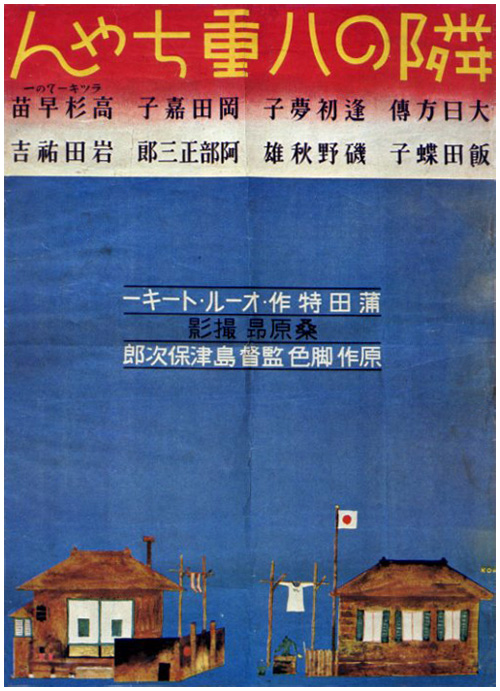
Lights of Asakusa posterThe lights of Asakusa (浅草の灯, Asakusa no Hi) still shone bright before the war. In this tiny corner of Tokyo well known for “low” entertainment, actors mingle with gangsters, lonely owners of amusement stalls, starving artists, bar girls, and wealthy industrialists each just trying to survive in an increasingly jittery city. Yasujiro Shimazu had been a pioneer of the “shomingeki” – stories of ordinary lower middle class people, and brings his characteristic wit and humanity to a tale of backstreet life where danger and ruin lurk on every corner and the only way to ensure one’s safety is to ensure you have the right defenders.

The main stage, if you will, is that of the Nippon-za “opera” company. This is, however, no great opera house but a run down little theatre presenting classical European opera for vaudeville audiences. The currently running show is Carmen, which will turn out to be appropriate for the events at hand. The trouble starts (or perhaps merely intensifies) when a young chorus member, Reiko (Mieko Takamine), begins attracting a range of wanted and unwanted male attention. Reiko, an orphan, had been taken in by a local bar mistress who later pushed her into the opera company but still expects her to make good on her investment by becoming a casual prostitute and taking on “customers” who present themselves at the bar (Reiko is around 16 or so, and therefore has just reached the age her foster mother thinks appropriate to join the business). The complication is that the man who’s taken a fancy to Reiko, Handa (Shunro Takeda), is a steel magnate who also finances the opera troupe meaning it’s not just the bar owner who’s coming under pressure but the financial security of the troupe too.

Being so young, Reiko finds her foster mother’s demands hard to refuse but is rescued by Sasaki (Seiji Nishimura) – the leading actor, married to leading lady Marie (Haruko Sugimura). The situation with Reiko exposes cracks already present in the group when Handa sends his goons in to disrupt the show, irking Sasaki to the point he takes off in a fit of artistic temperament. Meanwhile, another actor Yamagami (Ken Uehara), gets together with the rest of the troupe to ensure Reiko’s safety by hiding her with a feeble minded fan, Pokacho (Daijiro Natsukawa), so that she won’t be forced into a potentially life ruining situation.

Reiko’s plight is perhaps all too common on the streets of Asakusa. Having been orphaned she feels herself indebted to the bar mistress who took her in even if the relationship between them is not especially warm. She also feels grateful to have found a third family in the opera troupe and is afraid to lose her place there. Nevertheless, she is under extreme pressure to submit herself to this system of reciprocal arrangements and sleep with Handa solely to save making trouble for everyone else. Meanwhile her (sometimes) sympathetic roommate Beniko (Kayako Fujiwara) knows exactly what’s at stake through having been in a similar situation herself. She’s long been in love with the pure hearted Yamagami and is harbouring a degree of jealously in believing that Yamagami has a soft spot for Reiko, but she also half wants things to work out between them seeing as she has lost the “right” to love a man like Yamagami because she is no longer a virgin.

Shimazu had often been of a progressive mind, but sadly Beniko falls by the wayside, merely a sacrificial lamb prepared to give up on her dreams on Reiko’s behalf, so we never find out the limits of Yamagami’s justice loving heart or if he would be as bothered about Beniko’s past as she seems to fear he might be. Yamagami, brooding but righteous, would become one of matinee idol Ken Uehara’s best known roles though he too is teetering on the brink in Asakusa. Committed to defending the innocent, he tries to save Reiko’s honour but fails to declare a personal interest, entrusting her to the rather odd painter Pokacho who claims that his love for Reiko is of a spiritual, rather than carnal kind. Yamagami may succeed in his primary goal but still ends up in defeat, running away from the most important fight by retreating from Tokyo completely with a rebound girlfriend in tow, hoping to find kinder light in Osaka than he had on the dog eat dog streets of Asakusa.

Based on a novel by Hiroshi Hamamoto, Shimazu’s portrait of backstreet life sparkles with authenticity but also with a kind of hopelessness as each of these down on their luck “opera” stars laments their sorry fates and longs for a better gig somewhere less down and dirty. Meanwhile, the spectre of war lingers – when Carmen comes off the next show is to be “Two Honourable Soldiers”, filled with maudlin anthems of war which push the messages of patriotism and the glorification of offering one’s life for one’s country. The slimy Handa may have been defeated for now, but his kind are in the ascendent and the streets of Asakusa are unlikely to improve with only war and depression on the horizon.


The Black Gambler (黒い賭博師, Ko Nakahira, 1965)

Black Gambler poster

Nikkatsu’s “Mighty Guy” Akira Kobayashi occupied a very particular space in the studio’s collection of leading men. Where Yujiro Ishihara was known for his roguish cheek, Tetsuya Watari for his bruiser nobility, and Joe Shishido for his detached efficiency, Kobayashi’s chief selling point was his gentlemanly charm and unflappable decency. The “Gambler” series which ran to eight films in all cast him as a James Bond-esque wandering cardsharp with a well tailored suit and keen intellect capable of defeating even the most devious of opponents. The sixth in the series, simply titled The Black Gambler (黒い賭博師, Kuroi Tobakushi), finds Koji Himuro (Akira Kobayashi) returning to Tokyo and straight into the middle of international intrigue as he gets mixed up with a global gambling syndicate hellbent on bringing its particular brand of funny business to the Japanese capital.

Himuro, renowned for his skills at the gaming table, is called to an exclusive gambling party where he entertains the French Ambassador and ruins a cheating rival in the process. Inumaru (Asao Koike), humiliated by his defeat, sends his mistress Reiko (Manami Fuji) to spy on Himuro and figure out all his secrets so they can get their revenge. However, Himuro gets himself mixed up in a bigger crisis when he comes to the rescue of a foreign woman in a park running away from a scary looking gangster. The woman, Nina, claims to be an air stewardess flown in from Hong Kong who has fallen foul of a Chinese gangster named Yang. Yang has apparently tricked her into amassing vast debts and thereafter attempted to recoup his investment in other ways. Himuro is a noble sort of guy and so decides to pay off Nina’s debt by defeating Yang in a game of cards, but Yang is a different kind of opponent than he’s hitherto faced and Himuro finds himself floundering unable to figure out Yang’s particular cheat.

Nikkatsu’s action line was famous for its “borderless” approach, making an international milieu one of its many selling points. This is not to say its vision of global Japan was altogether positive – in fact the reverse was often true. Once again, the Chinese have been designated the criminal element of choice with Yang painted as a villainous cheater complete with a horrible Fu Manchu beard and delirious cackle, sure that his unique method for ensuring victory cannot be beaten. Meanwhile, Himuro’s first engagement dropped him straight into a world of international diplomacy and it comes as no surprise to learn that Yang’s activities are merely a facet of a wider conspiracy which turns out to be run by a Jewish gambler who apparently used his ill gotten gambling gains to finance the Nazis during the second world war. Perhaps it’s wise not to even start trying to unpack that one.

Himuro’s upscale world of high stakes games played in well appointed rooms by men wearing tuxedos and drinking martinis may be a world away from the dirty backstreet shenanigans of Nikkatsu’s other gambling adventures, but there is bite in its defiant bid for frivolity. When Himuro first rocks up at the French Ambassador’s residence, his assistant doesn’t really want to let him in. He is infuriated that with a war going on in Vietnam his boss is taking time out to play silly games of chance rather than getting on the with real business of diplomacy. Vietnam is referenced again in the ironic closing freeze frame in which Himuro covers his face with a newspaper bearing the headline “America bets on bombing North Vietnam” – politics itself is now a game played by men in smart suits trying to stave off the boredom of being alive by using the lives of real men and women as gambling chips with little more feeling for them than for the tiny scraps of plastic which stand in for meaningless little bits of paper in the centre of a table covered in green felt.

Women, it seems, are a more immediate casualty of a gambler’s vice. Reiko, sent to spy on Himuro but drawn to his cardsharp’s acumen, was herself gambled away by her father who lost her to Inumaru in a bet. She holds no affection for the man who won her, but feels bound to him all the same and has vowed to become a top gambler as an odd kind of revenge. Nina too suffers at the hands of gangsters and criminals, drawn to Himuro because of his heroic nobility and unable to escape the underground world of grifters and chancers without the help of a seasoned player.

Sticking to a house style, Nakahira finds little scope to express himself in another B-movie adventure for the sophisticated gambling man. Nevertheless, there’s enough Bond-inspired silliness to keep the franchise fans happy from Himuro’s ball bearing loaded car to the gaming intrigue and intricate cheats that define it. The Black Gambler is a fairly typical example of Nikkatsu’s regular programme picture with little to distinguish it but it does what it sets out to well enough and with crowd pleasing style.


Opening scene (no subtitles)

Double Suicide at Sonezaki (曽根崎心中, Yasuzo Masumura, 1978)

Love Suicides at Sonezaki posterAfter spending the vast majority of his career at Daiei, Yasuzo Masumura found himself at something of a loose end when the studio went bankrupt in the early ‘70s. Working as a freelance director for hire he made the best of what was available to him, even contributing an instalment in former Daiei star Shinataro Katsu’s series of period exploitation films, Hanzo the Razor: The Snare. There is, however, a particular shift in the famously fearless director’s point of view in these later films as his erotically charged grotesquery begins to soften into something more like an aching sadness in the crushing sense of defeat and impossibility which seems to consume each of his heroes. Maintaining the contemporary groove of Lullaby of the Earth – an uncharacteristically new age inflected tale of a naive orphan from the mountains tricked into the sex trade through a desire to see the sea, Double Suicide at Sonezaki (曽根崎心中, Sonezaki Shinju, AKA Love Suicides at Sonezaki / Double Suicides of Sonezaki, Double Suicide in Sonezaki) is a melancholy exploration of the limitations of love as a path to freedom in which the demands of a conformist, hierarchical society erode the will of those who refuse to compromise their personal integrity on its behalf until they finally accept that there is no way in which they can possibility continue to live inside it.

Ohatsu (Meiko Kaji), the geisha, has fallen in love with a client – Tokubei (Ryudo Uzaki), who is a humble man taken in by an uncle with the intention that he take over his soy-sauce shop. No longer the relationship between a prostitute and a customer, Ohatsu refuses to take Tokubei’s money which begins to cause friction with her “master” at the brothel to whom she still owes a significant debt. Tokubei does not possess the resources to redeem her, nor is he ever likely to. Matters are forced to a crisis point when each of them is offered what would usually be thought the best possible option for their respected social paths. Tokubei is offered the hand in marriage of his aunt’s niece and the chance to set up his own shop in Edo but it isn’t what he wants because he wants Ohatsu. Similarly, Ohatsu is sought by a wealthy client who wants to buy her and take her home as a mistress – she tries to refuse but has to play along given her relative lack of agency, longing to be with Tokubei or no one at all. Tokubei is thrown out by his uncle for refusing the marriage and finds himself the difficult position of having to reclaim dowry money from his greedy step-mother only to be conned out of it by an unscrupulous “friend”, Kuheiji (Isao Hashimoto), who later frames him to make it look like Tokubei cheated him. Beaten and ostracised, Tokubei sees no escape from his shame other than through an “honourable” death and Ohatsu sees no life for herself without her love.

Inspired by Chikamatsu’s world of double suicides, Masumura adopts a deliberately theatrical method of expression in which the cast perform in a heightened and rhythmic style intended to evoke the classical stage of Japan. Yet he also makes a point of scoring the film with contemporary folk and jazz as if this wasn’t such an old story after all. Times may be more permissive, but perhaps there’s no more freedom in love than there ever was and the pure dream of happiness in romantic fulfilment no more possible.

The forces that keep Tokubei and Ohatsu apart are only partly those unique to the feudal world – debt bondages and filial obligations being much weakened if not altogether absent in the post-war society, but are almost entirely due to their lack of individual agency and impossibility of freeing themselves from the various systems which oppress them. Tokubei is a poor boy from the country whose father has died. He has been taken in by an uncle and trained up as an heir – something he is grateful for and has worked hard to repay, but will not sacrifice his individual desire in order to accept the path laid down for him.

Ohatsu, in a more difficult position, is oppressed not only by her poverty but by her gender. Sold to a brothel she is subject to debt bondage and viewed only as a commodity, never as a person. When she intervenes to stop Tokubei being beaten by Kuheiji’s thugs, her patron panics but only because he will lose his money if she is “damaged”. Similarly, the brothel owner complains for the same reason after some ruckus at the inn. Neither of them are very much bothered about Ohatsu in herself but solely in her functionality as tool for making money or making merry respectively.

“Money is better, money means everything” claims Tokubei’s angry step-mother and she certainly seems to have a point as both of our lovers struggle through their lack of it. In the end it’s not so much money but “shame” which condemns them to a sad and lonely death as they realise they can no longer live with themselves in this cruel and unforgiving world which refuses them all hope or possibility for the future. An honourable man, Tokubei cannot live with such slander – men die for honour, and women for love, as Ohatsu puts it. Ironically enough there was a chance for them but it came too late as Kuheiji’s machinations begin to blow back on him and Tokubei’s uncle begins to regret his overhasty disowning of his nephew, but the world is still too impure for such pure souls and so they cannot stay.

Unlike some of Masumura’s earlier work, there’s a sadness and an innocence implicit in Double Suicide at Sonezaki that leaves defiance to one side only to pick it up again as the lovers decry their love too pure to survive in an impure world. The world does not deserve their love, and so they decide to leave it, freeing themselves from the “shame” of living through the purifying ritual of death. Softer and sadder, the message is not so far from the director’s earlier assertions save for being bleaker, leaving no space for love in an oppressive and conformist society which demands a negation of the soul as the price for acceptance into its world of cold austerity. 


Opening (no subtitles)

Orange (orange-オレンジ, Kojiro Hashimoto, 2015)

Orange posterPerhaps it isn’t possible (or even desirable) to live a life without regrets, but given the opportunity who wouldn’t want a second chance to tackle some of those thorny adolescent moments where you said something you shouldn’t have or didn’t say something that perhaps should have been said. The heroine of Kojiro Hashimoto’s Orange (orange-オレンジ) gets exactly this opportunity when she receives a letter from her future self asking for her help in “erasing” some of her teenage regrets by using the information in the letter to save a friend she hasn’t yet met. Though the letter contains little information about the life she is leading ten years from now, it is clear that something happened all those years ago which has profoundly affected the lives of a tight group of high school friends.

16-year-old Naho (Tao Tsuchiya) receives the letter at the beginning of her second year of high school, reading it under the vibrant pink cherry blossoms. A little creeped out, she doesn’t read it fully but is surprised when, just as the letter said, a new student, Kakeru (Kento Yamazaki), transfers into her class and occupies the previously empty desk next to hers. A shy and quiet girl Naho is nevertheless part of a group of five friends which includes sportsman Suwa (Ryo Ryusei), geek Hagita (Dori Sakurada), and two other girls Takako (Hirona Yamazaki) and Azusa (Kurumi Shimizu). For reasons unexplained, the group quickly takes Kakeru into their fold only for him to suddenly disappear for a couple of weeks. On closer inspection of the letter, Naho is disturbed by the news that Kakeru is “no longer around” at the time of her future self’s writing.

Orange fits neatly into the popular tragic high school romance genre in which an older version of the protagonist looks back on a traumatic event and tries to come to terms with their own action or inaction in order to move forward with their adult lives. 26-year-old Naho, as we quickly find out, has moved on – she is married to Suwa and has a young son she has named Kakeru but she and the others are still finding it difficult to come to terms with what happened to their friend and the possibility that they could have done something more to help him if they’d only known then what they know now.

So far so “junai”, but Orange tries to have things both ways by introducing a slightly clumsy time travel/parallel universe theory in which the protagonists realise that they won’t be able to change the past but are hoping that their friend is happy in an alternate timeline created by their efforts to influence their younger selves with more mature thinking coupled with the benefit of hindsight. Unlike other examples of the genre, Orange undercuts the usual need to deal with the past and find closure through a mild fantasy of denial in which the older protagonists can believe in an alternate future in which they were able to do things differently and save their friend from his unhappy destiny.

Saving their friend is, however, only a secondary goal – the first being to ease their own sense of guilt in not having seen that Kakeru was in trouble and needed their help. All this emphasis on personal “regret” cannot help but seem somewhat solipsistic – everyone is very sorry about what happened in the past and wishes that they could have acted differently but is also somewhat preoccupied with their own role in events rather than a true desire to have in someway eased their friend’s suffering. Though there is the true selflessness of real, grown up love such as that displayed by Suwa who has always loved Naho but supports her love of Kakeru despite his own feelings, the actions of the group remain childishly goal orientated as Kakeru’s survival becomes an end mission flag rather than an expression of love and care for a friend in trouble.

The teenagers are, despite advice from their older selves, still teenagers and so it is only to be expected that they respond to a very grown up problem with a degree of immaturity, but it is also true that Kakeru’s ongoing, mostly well hidden, depression plays second fiddle to the various romantic subplots currently in action. Though the friends rally round with fairly trite phrases about helping to carry Kakeru’s burden and always being there him, Orange almost tries to argue that kind words are enough to pull a strained mind back from the brink – not that kind words ever hurt, but some problems are bigger than superficial pledges of friendship can handle especially when you’ve half a mind on who loves who and who is trying to get in the way of someone else’s romantic destiny. In spending so much time worrying about their friend, they have, in a sense, left him to deal with all his problems on his own while revelling in their own “concern”.

Superficial and melodramatic, Orange’s insistence on the power of teenage friendship can’t help but ring a little false and the parallel universe solution an overly convenient narrative device which allows for two differing resolutions both of which essentially frustrate the attempts of the older protagonists to accept their own sense of guilt and responsibility for their friend’s death in order to move on with their lives. Kakeru, in a sense, gets forgotten in his friends’ need to absolve themselves of his fate – a particularly ironic development in a cautionary tale about the enduring legacy of regret and the necessity of communicating one’s true feelings fully in the knowledge that there may not always be another opportunity to do so.


Original trailer (no subtitles)