People in the Slum (꼬방동네 사람들, Bae Chang-ho, 1982)

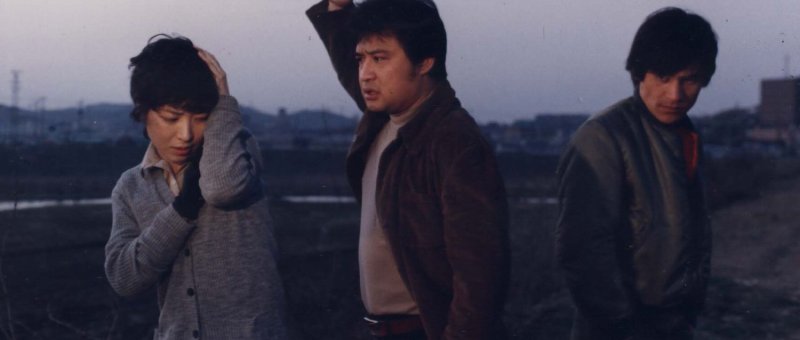
People in the slum still 2The Korea of the early ‘80s was not an altogether happy place. One dictator fell in 1979, but hopes of returning to democracy were dashed when general Chun Doo-hwan staged a coup and instigated martial law, brutally suppressing a large scale democracy protest in Gwangju in 1980 (though the news of the incident was also suppressed at the time it took place). People in the Slums (꼬방동네 사람들, Kkobangdongne Salamdeul), adapted from the best selling novel by Lee Dong-cheol, is not an overtly political film but takes as its heroes those who have lost out in the nation’s bold forward march into the capitalist future. Opening with a voice over from the author himself, the film dedicates itself to “the memory of neighbours of bygone days”, remembering both the hardships but also the fierce sense of community and warmth to be found among those living at the bottom of the heap.

Myeong-suk (Kim Bo-yeon), a still young-ish woman with a young son, lives in a slum outside of the city with her second husband, Tae-sub (kim Hee-ra). Nicknamed “Black Glove” because of the glove she always wears on her right hand, Myeong-suk is about to open her own business – a small grocery store serving the local residents, but her happiness is tempered with anxiety. Tae-sub, despite his promises, steals money from Myeong-suk to go drinking and gambling, is occasionally violent, and does not get on with her son, Jun-il, who refers to him as Mr. Piggy. Jun-il is also a constant worry because he’s picked up a habit of stealing things and generally causing trouble around the neighbourhood. When Myeong-suk’s former husband and the father of Jun-il, Ju-seok (Ahn Sung-ki), catches sight of her by chance one day, the past threatens to eclipse the small hope of her future.

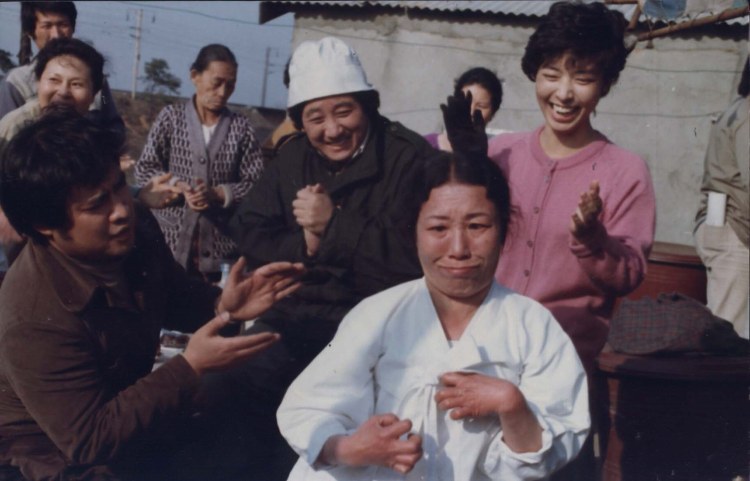
Life in the slums is not easy. There are few resources, few people are working and there are lots of children with no money to feed and clothe them. Fights are frequent but often unserious. The community pull together to support each other, turning out in force for the grand opening of Myeong-suk’s shop or the 60th birthday celebration of a fellow resident. Besides Myeong-suk, her second husband, and son, the slum is home to a collection of unusual characters from a widow who dresses in white and does strange dances to entertain the locals, to the pastor who does his best to help where he can. A poor drunken woman makes a fool of herself all over town, nursing a crush on the pastor but seemingly unable to move past her dependency on alcohol and whatever it is that caused it and landed her in the slum.

Myeong-suk’s early life would not have suggested her current trajectory, as Bae reveals in Ju-seok’s flashbacks of his courtship to the woman who would become his wife. Ju-seok, a pickpocket, spotted Myeong-suk on a bus and it was love at first sight. Eventually he married her but never revealed his illicit occupation until he was finally arrested. For the sake of his wife and child, Ju-seok attempts to go straight but his efforts are frustrated by bad luck, temptation, and unforgiving policemen. No matter how hard Ju-seok tries to be a decent, hardworking, family man, the economic instability of late ‘70s Korea will not allow him to do it.

Myeong-suk waits for him, but there comes a point she cannot wait anymore. Her second husband is no better than her first and, just like Ju-seok, is hiding something from her. Tae-sub is a bully and a bruiser who is only using Myeong-suk as a convenient place to hide. She cannot rely on him for affection, protection, or financial stability. Ju-seok, at least, did love Myeong-suk even if that love was the very thing which kept leading him back into a life of crime which then took him away from her. Once again love is a luxury the poor cannot afford .

Where the general atmosphere may seem destined for a tragedy for the resilient, suffering Myeong-suk, her damaged son, and reformed taxi-driver former husband, Bae gives them hope for a warmer, if not a better, future. As Myeong-suk prepares to leave the slum, the pastor, encircled by the residents, reads out a passage reminding the locals that a neighbour’s suffering is one’s own suffering while the drunken woman who previously hated children appears to have sobered up and happily hugs a child. Myeong-suk makes a selfless gesture of atonement and solidarity in giving the money from selling her shop to another single mother whose youngest three all have different fathers, perhaps indicating the difficulty of her life since the father of her eldest passed away. Tae-sub too reforms, decides to face the past he’s been running from and make amends for his former life, facilitating a possible reunion for the star-crossed lovers Myeong-suk and Ju-seok. The future suddenly looks brighter, but it remains uncertain and who knows if love and a taxi-driver’s salary will be enough to keep Ju-seok on the straight and narrow as a responsible husband and father in turbulent ‘80s Korea.


People in the Slum screens as part of the London Korean Film Festival 2017 which is hosting a mini Bae Chang-ho retrospective of three films at each of which the director will be present for a Q&A.

The film was also recently released on all regions blu-ray courtesy of the Korean Film Archive. In addition to English subtitles on the main feature, the blu-ray also includes English subtitles for the commentary track by Bae Chang-ho and film critic Kim Sungwook, and comes with a bilingual booklet featuring essays by Jang Byung-won (programmer for Jeonju International Film Festival), Lee Yong-cheol (film critic), and Chris Berry (King’s College London).

You can also watch the entirety of the film legally and for free courtesy of the Korean Film Archive’s YouTube Channel.

Barefooted Youth (맨발의 청춘, Kim Ki-duk, 1964)

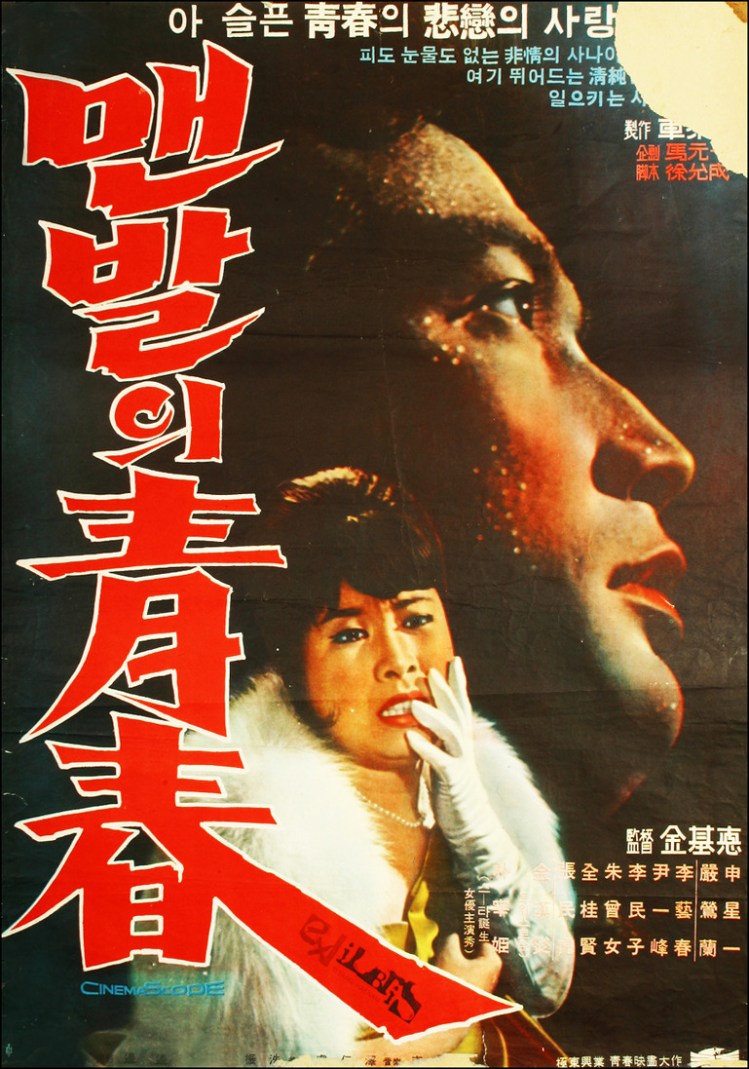
barefooted Youth posterThe “Seishun Eiga” or youth movie had long been a staple of Japanese cinema by the time the short-lived “Sun Tribe” movement took hold in the mid-1950s, but, for understandable reasons, it did not make its way to Korea until a decade or so later. When it comes to so called “adolescent films”, Kim Ki-duk’s 1964 Barefooted Youth (맨발의 청춘, Maenbaleui cheongchun) is hard to beat. The film had, in fact, been filtered through Japanese cinema as its star Shin Seong-il – then riding high as a youth idol and wanting to star in as many youth movies as he could before his era came to an end, had seen Ko Nakahira’s Dorodarake no Junjo which starred ’50s idol Sayuri Yoshinaga alongside her frequent co-star Mitsuo Harada in a tragic tale of love across the class divide (this enduring story was later remade in 1977 with another idol, Momoe Yamaguchi, as the female lead). Shin was keen to star in a remake of Dorodake no Junjo and petitioned his studio to set it up. The plot of Kim’s version is almost identical and was widely seen as a deceitful remake at the time of its release, but that’s not to say it failed to speak of a certain kind of hopelessness among the young people of Korea battling valiantly against an unforgiving society.

Petty gang errand boy Du-su (Shin Seong-il) has been sent on an important mission to deliver some smuggled watches to a fence. On his way out, his boss reminds him not to get into unnecessary fights and risk being late for this very important date. Du-su ignores him and comes to the defence of two nervous middle-class girls in the middle of being mugged by thugs of a different nature. One of the other thugs has a knife and stabs Du-su in the stomach, causing him to drop the prosthetic arm he’s been wearing “as a joke” as well as one of the watches. Turning the knife back on the attacker, Du-su gets away and eventually delivers the goods.

This event profoundly alters Du-su’s future prospects, firstly because he’s brought himself to the attention of the police and also risked putting them on the gang’s trail if the police have picked up the missing watch and discovered it’s a smuggled Hong Kong knock off that might be connected to Du-su. Secondly, the woman Du-su saved, an Ambassador’s daughter called Johanna (Um Aing-ran), is overly grateful and quickly becomes attached to him. 

Johanna is everything Du-su is not – wealthy, cultured, elegant, and religious. Her world could not be more different than Du-su’s yet there is an inescapable bond that exists between them. Unlike many class difference love stories, both parties move closer towards the centre, trying out the other’s world and finding it different but perhaps not impossible. After their first few hours together when Johanna finds her way to Du-su’s run down flat in a lower class neighbourhood, Du-su puts on a Beethoven record at his local club (much to the consternation of the other patrons) and orders himself a glass of juice, while Johanna swaps her usual bible based bedtime reading material for an English language boxing magazine and takes her first swigs of whisky directly from the bottle.

However, trying out the other world for real does not go as well – Du-su, having overdone it with a formal tail coat, falls asleep at a concert, while Johanna finds it difficult to adjust to the rowdiness of the boxing ring. When Johanna finally takes Du-su home, hoping her mother will help him find an honest job so he can go straight, his presence is met with horror and a meal with a hoped for ally goes about as wrong as it possibly could, exposing Du-su’s lack of sophistication as he picks up a steak to eat with his hands (not being confident with a knife and fork), and then spills water all over the hostess who points out his lack of employable skills. 

Trapped on all sides – by the gangsters worried he’ll expose them, by his origins as the son of a prostitute and a man who died in jail, and by the general lack of opportunities for poor boys in economically straightened 1960s Korea, Du-su has nowhere left to go. Johanna is also trapped, in a sense, by a prospective arranged marriage and an overbearing but well meaning mother determined to send her abroad to save her from her reckless amour fou. Du-su, facing prison and life in a gang, and Johanna facing losing love for respectability, have hit an impasse. Having managed to transcend their class differences on a personal level, they see no way they can ever be together and if they cannot be together in life then they see no option but to escape from a world which has no place for them.

The economic inequality and enduring inviability of their love is signalled in the closing scenes in which Johanna’s funeral procession is several miles long with flowers and hearses and a crowd of mourners dressed in white. Meanwhile, Du-su’s body, barefoot and covered by a sheet on the back of a cart being pulled by his grief-stricken friend, is unattended. Not only could they not be together in life, they are forever separated even in death. As in the title of the Japanese film (taken directly from the book which inspired it), it is the lovers’ “purity” which comes to define them and adds extra poignancy to their fate. Du-su and Johanna share a single kiss but Kim obscures it from view, photographing the pair through a window pane in which the crossbars once again divide them. When the bodies are discovered, the first question that is asked is if they had had sex before they died – the answer is a resounding “no”, to which the man replies “good, I’m glad” though he is not especially referring to the poetry of their chastity in death but some kind of pointless and retrospective moral judgement on the “illicit” quality of their relationship.

Unlike the respective Japanese versions which tend to pivot around the leading actress (here Shin is the star, but both the actresses in the 1963 and 1977 versions were the headliners) Barefooted Youth tilts towards Du-su who literally becomes the “barefooted youth” of the title on his funeral cart, causing his friend (whose feelings are perhaps more than those of brotherhood) to remove his own shoes and place them on Du-su’s icy feet, trudging through the snow in his socks remarking that Du-su’s burial is witness to a greater and warmer love than the superficial flashiness of Johanna’s procession. Having resented Johanna for taking his friend away, he now respects her for joining him in death. The tragic end of these two young people is not only a romantic tale of doomed love, but an indictment of an unforgiving society in which social inequality, entrenched social codes, and the rigidity of the older generation have destroyed youth’s expectations of a brighter future. Du-su’s final advice to his friend is to live his life to the fullest and die without without regrets while he dreams only of being like a white crane flying in the blue sky, a pure soul enduring in eternity.


Available to watch on the Korean Film Archive’s YouTube channel and as part of the Kim Ki-duk DVD box set.

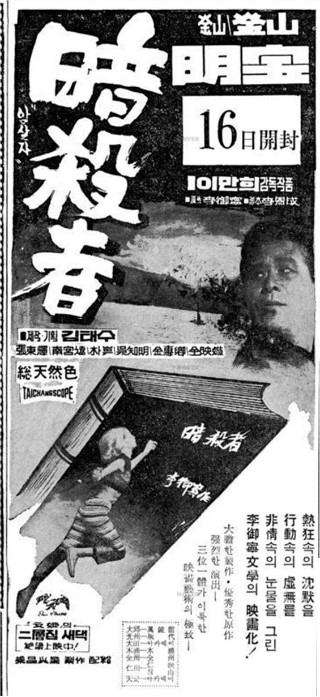
Assassin (암살자, Lee Man-hee, 1969)

Lee Man-hee Assassin vertical

Lee Man-hee thought he’d made an “anti-communist” film in 1965, but apparently he was wrong. The Seven Female POWs was severely edited and retitled Returned Female Soldiers when eventually released, meanwhile Lee did some jail time for supposedly breaking the law in his sympathetic depiction of leftist soldiers. In 1969’s Assassin (암살자, Amsalija) he takes no chances. Set directly after the liberation, Assassin makes no attempt to deny that this was a cruel and chaotic time in which loyalties were to be questioned and honour mourned.

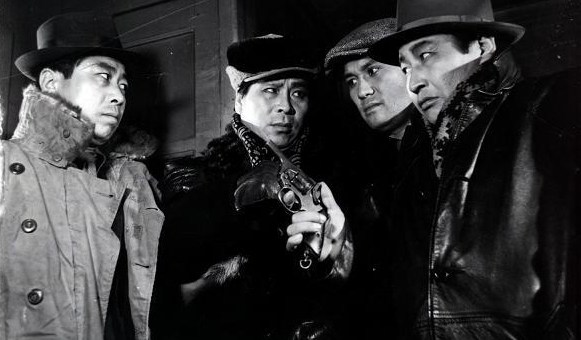
The hardline communists have a problem. One of their top generals, Nam (Park Am), is about to defect and ally with the ruling regime. They need to get rid of him in a hurry. Their plan is to hire an assassin and frame “the Right” before Nam can defect. The Assassin (Jang Dong-hui) they call on is the number one pro but some worry he’s too softhearted for what they have planned. Despite his cold hearted profession, the Assassin has been raising the daughter of a man he killed nine years ago as his own and will not take being dragged away from her at short notice kindly,

Though the communist agents turn up somewhat ominously – one hiding out and lending an umbrella to the Assassin’s little girl and the other inviting himself into the house, they do not directly threaten the Assassin or even offer him money when he tries to turn them down. He eventually decides to take the assignment only on hearing the target’s name and realising he would make a perfect addition to his hit list firstly because they have an old score to settle and secondly because the Assassin has long wanted to see the face of a man meeting his death bravely as he pulls the trigger.

Shooting in colour and with a more experimental mindset, Lee’s use of time is strange and bewildering. The entire enterprise takes place over one night yet much of the outdoor scenes are in daylight. He stages two monologues as a conversation by cutting between two different couples on boats – the Assassin recounting his childhood to a communist foot soldier, and Nam having a heart to heart with his lady love. Meanwhile, Lee also cuts back to the Assassin’s home where the innocent little girl is chatting playfully with another of the communist goons who has been sent to keep an eye on (and then perhaps eliminate) her while her father is out on the job.

Lee begins with a voice over stating that the film will expose the truth about communist violence, instantly locating its own political intentions. The communists are a bad bunch who have no honour, no loyalty, no compassion, and no interest in anything other than their own cause. The cause itself is thereby rendered irrelevant through their own hypocrisy. In order to get the job done, the communists have recruited a local boy to drive the boat and carry messages. They’ve promised him a place in a good school in Seoul. Needless to say they will not be honouring that promise. No one can know of this job – it’s supposed to be a rightest plot, and so all loose ends must be eliminated, including those currently members of the communist faction. 

The Assassin does not approve of this. His ideas are old fashioned and he believes in a kind of code even within the darkness of his own profession. The Assassin’s only joy is in his little girl – really the daughter of a man he murdered. This is both proof of his adherence to his code of honour and to his generally compassionate nature. Nam is much the same. He has his code too, though it has recently been ruptured by the intrusion of love. Before, he could have said anything but now he’s found love he’s happy to go and will bear his sentence with dignity. Strangely, neither Nam nor the Assassin pause to consider what will happen to the women in their lives when they are gone, even if it is these women and their relations with them that have humanised their otherwise calculating hearts.

The Assassin’s little girl remains completely unaware of her adopted father’s profession or of the danger posed by a man she doesn’t know sitting at her bedside fondling a gun. Her one request of her father is that he bring her back an apple with the leaves still on it – a symbol of her own innocence and naivety, but the apples he picks for her are later smashed to smithereens under a communist’s boot. The communist gets his own comeuppance (these communists do seem to be quite a dim bunch, gleefully felling their fellow officers yet never guessing they may be next), but Lee’s rather unsubtle message is clear as “the left” stomps all over any and all signs of love, compassion, innocence or beauty.

Unlike Lee’s other films this one ends with a heavy handed voice over but no “The End” – presumably the story of the struggle against communism is not yet finished. The story is an old one, men who live by the sword die by the sword – they know this and accept it almost as a religious rite. Both Nam and the Assassin know their place within this cycle and so they submit to it with bravery and stoicism whereas the strangely manic villain attempts to run from his fate but fails miserably. Lee experiments with time and form, perhaps attempting to move past the obvious propaganda element of the project but never manages to escape it. Still, The Assassin is oddly moving in its final moments even if tinged with cynicism and a sense of the world’s cruelty untempered by Lee’s generally forgiving melancholy.


Assassin is the fourth and final film in The Korean Film Archive’s Lee Man-hee box set which comes with English subtitles on all four films as well as a bilingual booklet. Also available to stream online via the Korean Film Archive’s YouTube Channel.

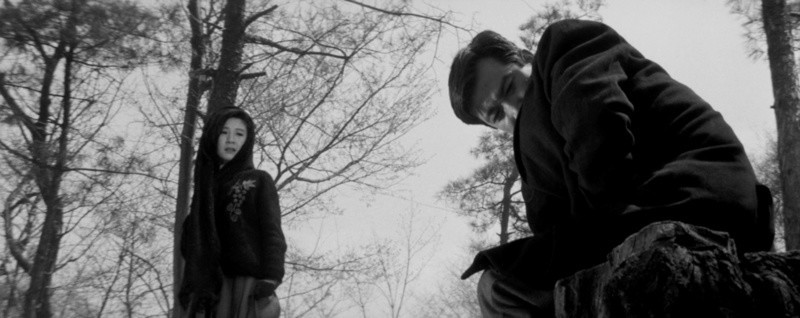
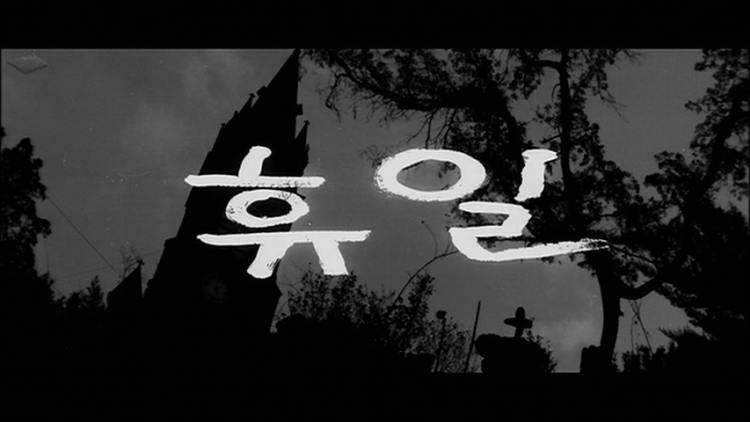
A Day Off (휴일, Lee Man-hee, 1968)

vlcsnap-2017-08-09-23h50m27s782Prolific as he was, Lee Man-hee had his fair share of troubles with the censors throughout Korea’s turbulent 1960s, most famously with his arrest for breaking anti-communism laws with The Seven Female POWs which was later heavily edited and released as Returned Female Soldiers (perhaps a neat nod back to Lee’s mega hit, The Marines who Never Returned). Before that, however, Lee’s poetic meditation of the difficulties of being young in the increasingly heartless capital, A Day Off (휴일, Hyuil), was banned altogether for painting an all too gloomy picture of modern life and love. Though modern Korean cinema has gained itself a reputation for gloominess, that of the gloomy years was still expected to be, in some way, “inspirational”. Refusing to end on a happier note, Lee shelved the film leaving it unseen until rediscovered for a retrospective in 2005.

The elliptical narrative begins with Huh Wook (Shin Seong-il), trapped by another listless Sunday and remembering a girl he used to spend them with, Ji-youn (Jeon Ji-youn). Huh Wook and Ji-youn can only meet on Sundays. They count down the hours until they can be together again but then when the day closes they almost wish they’d never met at all. Neither of them have any money – Huh Wook can’t even afford a cup of coffee, let alone a wife. The relationship reaches a crisis point when Ji-youn, whose constitution is weak, becomes pregnant.

Huh Wook and Ji-youn’s conversation is raw and painful, filled with half spoken thoughts and an unwillingness to confront the depth of their despair. The couple half discuss their predicament with the assumption that they are talking about a child they cannot afford to have and an abortion they cannot pay for but it turns out the operation that Ji-youn means may be for an unrelated illness. When they finally see a doctor he advises that Ji-youn have an abortion because her health is so poor that she would likely not survive a pregnancy.

This is a city which is rapidly expanding, living conditions and opportunities should be improving but for the left behind like Huh Wook and ji-youn Sunday is all they have to live for, and so they can hardly stand it. Their situation is so hopeless, so filled with despair that there is nothing at all waiting for them but a perpetual cycle of work and release. While Ji-youn is in hospital, Huh Wook wastes time at a bar where he gets chatting to another woman. They talk, they drink, they spend the night together in a derelict building before Huh Wook is woken by church bells and remembers poor Ji-youn lying in hospital, fighting for her life.

Huh Wook is the more romantic but also the least willing to confront the situation. He criticises Ji-youn for her silence but she fires back at him with a description of an idealised life she knows they can’t have – a nice house, flowers in the garden, and yes, children. An ordinary dream but one she knows will never be a reality. Huh Wook leaves her alone to try and borrow money, wasting one of their precious Sundays. His friends have all found different kinds of release – the first is a womaniser but flat refuses Huh Wook money he assumes is for an abortion, the second is a drunk who advises him to have the baby and spend the money on drink, and the third is a wealthy man with a live-in maid. Huh Wook never gets round to asking him for the money but steals it from his jacket while he’s in the bath. 

Completed in 1968, A Day Off has echoes of Antonioni in its beautifully empty cinematography and bleak view of human relationships in an increasingly modern world. Huh Wook and Ji-youn appear to have a deep and genuine connection but their existence is so fraught with financial and social difficulties that the future is always an impossibility and, in a sense, already the past. Huh Wook wanders alone. Beaten up by the friend he stole the money from, he’s tired, bloody, and worn out. Yet all he feels is relief. All his hope is gone and now he’s free of its burden, left with nothing other than the false promise of a new dawn on the unforgiving streets of Seoul.


A Day Off is the third in The Korean Film Archive’s Lee Man-hee box set which comes with English subtitles on all four films as well as a bilingual booklet. Also available to stream online via the Korean Film Archive’s YouTube Channel.

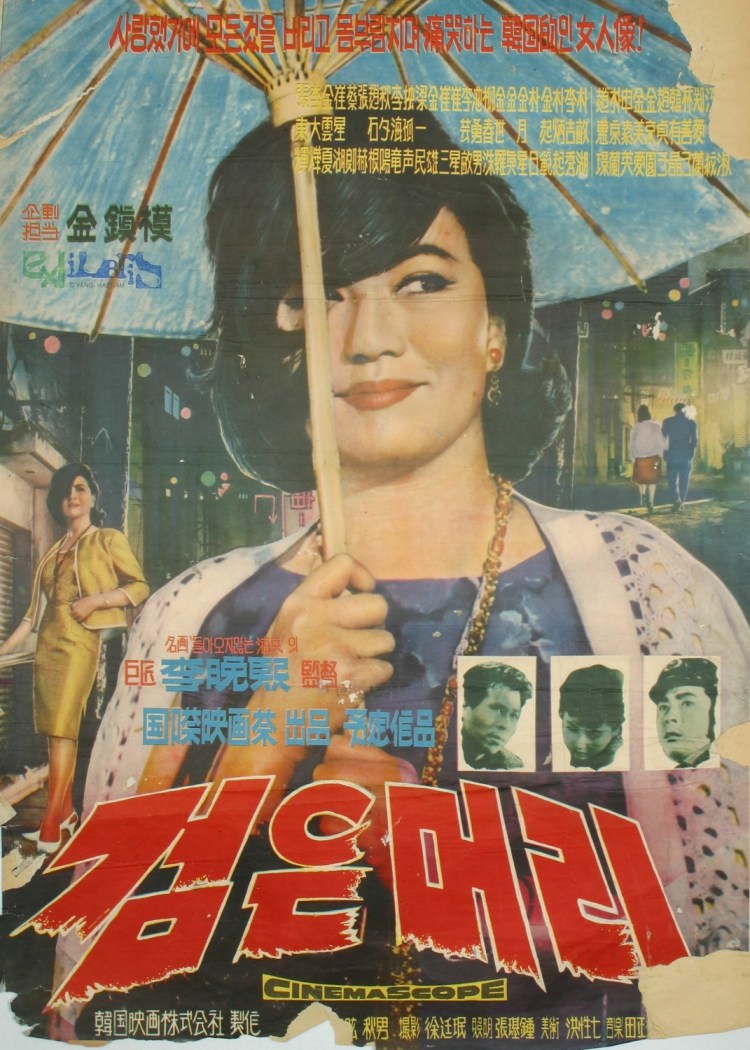
Black Hair (검은 머리, Lee Man-hee, 1964)

Black Hair 1964 posterFilm noir can be the most contradictory of genres. A moralistic world filled with immortality, fatalism mixed with existential angst, and a rage against society which is always tinged with a resignation to living on its margins. Genre in Korean cinema has always been a little more fluid than elsewhere and Lee Man-hee’s seminal crime thriller Black Hair (검은 머리, Geomeun Meori) is also a melodrama – the story of a self loathing man committed to his own arbitrary codes, and a woman he expects to pay the price for them.

In a brief prologue that has little to do with the ongoing narrative, ruthless gangster Dong-il (Jang Dong-hui) extorts a corrupt CEO by blackmailing him over some illicit smuggling. Meanwhile, across town, the gangster’s wife, Yeon-sil (Moon Jeong-suk), meets with a man, Man-ho (Chae Rang), in a hotel room. She’s come to pay him off, hoping it will be for the last time but Manh-ho, an opium addict, knows he’s onto an endless cash cow and refuses to put an end to their “arrangement”. Sometime ago, Man-ho raped Yeon-sil and has been blackmailing her for money and sexual favours ever since. Yeon-sil threatens to tell her husband and the police and suffer the consequences, but Man-ho knows she won’t. Dong-il’s gang have a strict rule about adultery and if Yeon-sil trusted him enough to believe he would believe her about the rape, she would have told him already.

Another goon hides behind a screen, snapping photos of Yeon-sil and Man-ho which he later passes on to Dong-il. The boss is shocked and shaken. He knows he has to enforce the rules he himself set down for the gang, but he never expected them to cost him his wife. Eventually Dong-il orders an underling to slash Yeon-sil’s face with a broken bottle, after which she is exiled from the gang. Anyone who tries to repair her scars or help her in any other way will be treated as an enemy.

At this point the narrative splits as Yeon-sil is cast down into a sleazy underworld, living with her blackmailer who pimps her out as a common streetwalker and then steals all her money to spend on drugs and booze. She pines for her husband whom she has been prevented from seeing, longing to at least explain why she did what she did and ensure he knows that her heart has always been with him. Dong-il, by contrast, is going to pieces – his gang no longer respect him, he feels guilty about the way he treated his wife, and he has no idea where to go from here.

Unlike other films of the era or film noir in general, Lee’s world view is non-judgemental in its treatment of the respective paths of Yeon-sil and Dong-il. Yeon-sil is left with no choice than to enter into a life of casual prostitution and the film forgives her for this – the fault is that of Dong-il and Man-ho rather than her own. Having been horribly scarred, she wears her hair longer on one side to hide her disfigurement but is constantly reminded of her emotional damage through its physical manifestation and the reactions it often elicits. Picking up a client in the street, she’s threatened with violence and cruel words for having “deceived” him when he catches sight of her disfigured face. A passing taxi driver witnesses the attack and challenges the man so Yeon-sil can escape. The cabbie then hires her and they spend the night together in a nearby brothel. He surprises Yeon-sil by being entirely unfazed about her facial scarring, offering to help her get it treated if that’s what she wants, and making it clear he would like to spend more time with her off the clock.

Yeon-sil’s life is completely controlled by her triangular relationship to the three men – her unforgiving husband Dong-il, the cruel and venal Man-ho, and the good and decent cab driver. After meeting the cabbie, Yeon-sil tries to see Dong-il again but his boys stop her. They say they’ll take her to see him, but really they’re planning quite another destination. Luckily, in a staggering coincidence, they’re spotted by the taxi driver who once again saves Yeon-sil, taking her home to stay with him and proposing they embark on a more formal relationship.

This is more of a problem than it seems for Dong-il’s guys who now fear their boss will find out they tried to kill his wife in an effort to wake him up from his ongoing existential malaise. The rules of the gang are tough and clear – adultery is not permissible, no woman is allowed to leave, no exceptions are to be made. Dong-il, however, is beginning to rethink the code he himself designed. A conversation with his childhood nanny throws up a number of interesting questions. She blames herself for giving Dong-il “evil” milk which has led to his spiritual corruption, though Dong-il later tells Yeon-sil that he did not choose evil so much evil chose him. He created these “evil” gang rules, but failed to live up to them in continuing to feel attached to Yeon-sil – he feels he must punish himself for the “sin” of being unable to forget her and abide by his own honour system which he now feels to be pointless and arbitrary. Effectively issuing himself a death sentence, Dong-il changes tack confirming that he has, in a sense, chosen evil even if it was a “choice” of refusing to resist the path set down for him. Suddenly realising the emotion he felt for Yeon-sil was love, he is struck by a terrible feeling of loneliness. 

As in much of Lee’s work, Yeon-sil and Dong-il are trapped by their own society and belief systems and finally perhaps by feeling. Yeong-sil is frequently captured behind bars or caught in a window, imprisoned within the frame as she tries to reconcile herself to her precarious position, daring to hope for a new, decent life with the good hearted taxi driver while also mourning her love for Dong-il and living with the humiliation caused to her by Man-ho. Lee’s structure is sometimes unclear as he introduces a fairly pointless subplot about the taxi driver’s modern woman little sister who has moved out to be independent but works in a hostess bar, inhabiting the same sleazy world as Yeon-sil and Dong-il, only more innocently, but never does much with it beyond contrasting the lives of the two women who occupy slightly different generations and have very different options open to them. There’s a fatalism and inevitability in the way Yeong-sil and Dong-il live their lives to which the taxi driver and his sister do not quite subscribe but Lee breaks with the genre’s trademark pessimism to offer the glimmer of a bittersweet ending and the chance of a new beginning for the much abused Yeon-sil now freed of her dark associations.


Black Hair is the second in The Korean Film Archive’s Lee Man-hee box set which comes with English subtitles on all four films as well as a bilingual booklet. (Not currently available to stream online)

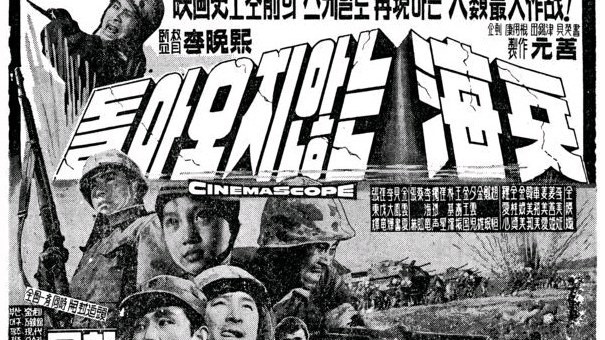
The Marines Who Never Returned (돌아오지 않는 해병, Lee Man-hee, 1963)

Marines Who Never ReturnedLee Man-hee was among the most prolific of Korean directors until his untimely death at the age of just 43 in 1975, but even among so many well regarded works The Marines Who Never Returned (돌아오지 않는 해병, 돌아오지 않는 해병, Doraoji Anneun Haebyong) has taken on an especial place in Korean film culture. Lee had himself served in the Korean War and brought his own ambivalent attitudes to the piece, expressing both an abject rejection of the senseless loss of life but also a warmth and nostalgia for the camaraderie born only out of such immediate danger. The film’s title, as melancholy as it is, points to this same ambivalence by signalling the eventually unhappy fates of these ordinary men but also according them a ghostly, unresolved future.

In the midst of the Korean War, a squad of South Korean soldiers is on patrol and taking fire from the Chinese in an urban environment. While they bide their time in a trench, a young girl and her pregnant mother run out of a nearby building. The girl runs clear but the mother is shot and killed in the crossfire. One of the soldiers is deeply struck by the scene and insists they at least make sure the little girl is safe. Pushing deeper into the building, the soldiers come upon a truly horrifying, hellish scene of men trussed up and hanging from the ceilings while bodies of the townspeople lie piled along the floor. The same soldier who wanted to save the little girl finds his own sister among the dead, just one face among so many.

From this point on the tale is narrated by the little girl, Young-hui (Jeon Young-sun), who is adopted by the troop of marines and smuggled around inside an old army kit bag so that the superiors do not find out about her presence. Young-hui proves a resilient little girl who obviously misses her parents but begins to care deeply for the soldiers who have taken her in. Giving each of her new uncles nicknames, Young-hui becomes the squad’s mascot and a symbol of everything it is they’re fighting for. Yet this makeshift family also has its share of difficulties. A problem arises when Young-hui recognises a new recruit, Choi (Choi Moo-ryong), as a man from her village. Choi is the brother of the man who joined the other side, took Young-hui’s father away and killed the sister of Private Goo, discovered so casually among the many dead in Young-hui’s village alone.

The conflict between Choi and Goo is emblematic of many ordinary families throughout Korea as fathers and sons, brothers and sisters, decided on different paths and found themselves on opposing sides of a war. Choi, as is pointed out, is not responsible for his brother’s actions – he clearly does not condone or agree with them, but still he feels responsible enough to understand Goo’s anger and resentment. Goo in turn realises his anger is pointless and misdirected but is powerless to change the way he feels. This situation is no one’s fault, but they’ll all pay the price anyway.

Lee spares no expense in recreating the hellish battles scenes more akin to the first war than the second with its outdated tanks, dugouts, and trenches. The easy, familial life of the camp soon gives way to action and danger as the squad meet their ends one by one. Away from the battlefield the men feel displaced within their own country – caught in the midst of a civil war yet also subjugated by foreign forces, barred from UN only bars and referred to as “tuppenny Koreans” by the “hostesses” in comparison to their big spending compatriots. Making his goodbye speech, the commanding officer instructs his comrade to return home and ask if anybody really needs to go to war, but rising from the trenches their thoughts are all for their fallen friends who will never see home again. These men remain “lost” on the battlefield, a lingering memory of loss and sacrifice which is impossible to resolve even so many years later.


The Marines Who Never Returned is the first in The Korean Film Archive’s Lee Man-hee box set which comes with English subtitles on all four films as well as a bilingual booklet but the film is also currently available to stream via the Korean Film Archive’s YouTube channel.


It’s Not Her Sin (그 여자의 죄가 아니다 , Shin Sang-ok, 1959)

it's not her sinIt’s Not Her Sin (그 여자의 죄가 아니다, Geu yeoja-ui joega anida) is, in contrast to its title, nowhere near as dark or salacious as the harsher end of female melodramas coming out of Hollywood in the 1950s. It’s not exactly clear to which of the central heroines the title refers, nor is it clear which “sin” it seeks to deny, but neither of the two women in question are “bad” even if they have each transgressed in some way. Drawing inspiration from the murkiness of a film noir world, Shin Sang-ok adapts the popular novel by Austrian author Gina Kaus by way of a previous French adaptation, Conflit. Shin sets his tale in contemporary Korea, caught in a moment of transition as the nation, still rebuilding after a prolonged period of war and instability, prepares to move onto the global stage while social attitudes are also in shift, but only up to a point.
Two women argue on the steps of the Office of Foreign Affairs. One dresses in traditional Hanbok and the other Western clothing. The traditionally dressed woman, Seong-hi (Ju Jeung-ryu), is desperate to stop the other woman, Yeong-suk (Choi Eun-hee) from going inside and doing something that will apparently “ruin” her. Yeong-suk does not listen. She turns her back on Seong-hi and climbs the stairs. They argue argue again and a gun falls out of Seong-hi’s bag. Losing her mind in panic, Seong-hi shoots Yeong-suk, thinking only of stopping her getting any further with her mysterious mission.

A conversation with the prosecutor reveals that Seong-hi is married to a respected diplomat and so the case is of national, rather than just personal, interest. The case will hit the papers, and it will run because it’s also very messy. Yeong-suk is Seong-hi’s adopted sister. So, what has happened between these three people – Yeong-suk, Seong-hi, and the respected diplomat Baek? The prosecutor thinks he’s got it all worked out though his theory really is the stuff of cheap melodrama. He thinks Seong-hi has probably been having an affair with Yeong-suk’s boyfriend, Yeong-suk found out and planned to tell her husband, Seong-hi panics and shoots. That does not, however, explain why the recovering Yeong-suk has forgiven Seong-hi unconditionally and does not want to pursue prosecution, or why the two women embrace each other warmly when the prosecutor engineers a meeting.

The relationship between the two women is close and filled with mutual respect and affection – there really is only one thing which could come between them and it isn’t a man. The secret, such as it is, is an obvious one and a frequent theme of maternal melodramas. The prosecutor, who seems to regard evidence as an optional extra, accidentally stumbles over a clue when he probes Baek about the status of his marriage. The couple have been married eight years and have only one son, which the prosecutor finds odd even given that Baek has spent much of the marriage living abroad. He imagines this as a possible indication that the marriage is unhappy, that Seong-hi is lonely, and that she might, then, have been engaging in illicit affairs which may result in blackmail and eventually murder.

All very fanciful, but the truth is more ordinary. Both Seong-hi and Yeong-suk are prisoners and victims of their social standing and responsibilities. Seong-hi is constrained in her marriage, her difficulty conceiving a child has affected her self esteem and faith in her husband. Yeong-suk, by contrast finds herself in a difficult position after being betrayed in love, misused and let down by an unscrupulous man. Her “muddy” past leads her to fear that she may not deserve a happy life with her new love, and that he too may leave if she reveals her own secret to him. The two women are left with no one else to rely on but each other and are then bound by the additional burden of a secret which they must protect at all costs, only to see their relationship placed under greater strain by its result.

Unlike many a Korean melodrama, It’s not Her Sin has a broadly happy, if bittersweet, conclusion in which the friendship between the two women is restored but also broken as one is forever exiled from her own family. In keeping with the title Shin refuses to condemn either woman, sympathising with their plight as they’re manipulated by circumstances beyond their control and oppressed by a very male world which forces them into making their illicit bargain in the first place. Beautifully played by leads Choi Eun-hee and Ju Jeung-ryu, It’s not Her Sin is, like all good melodramas, a chronicle of its times in its depiction of female friendship as the last bastion of defence against an unfair world.


Screened at the Korean Cultural Centre London. Also available to stream via the Korean Film Archive’s YouTube Channel.

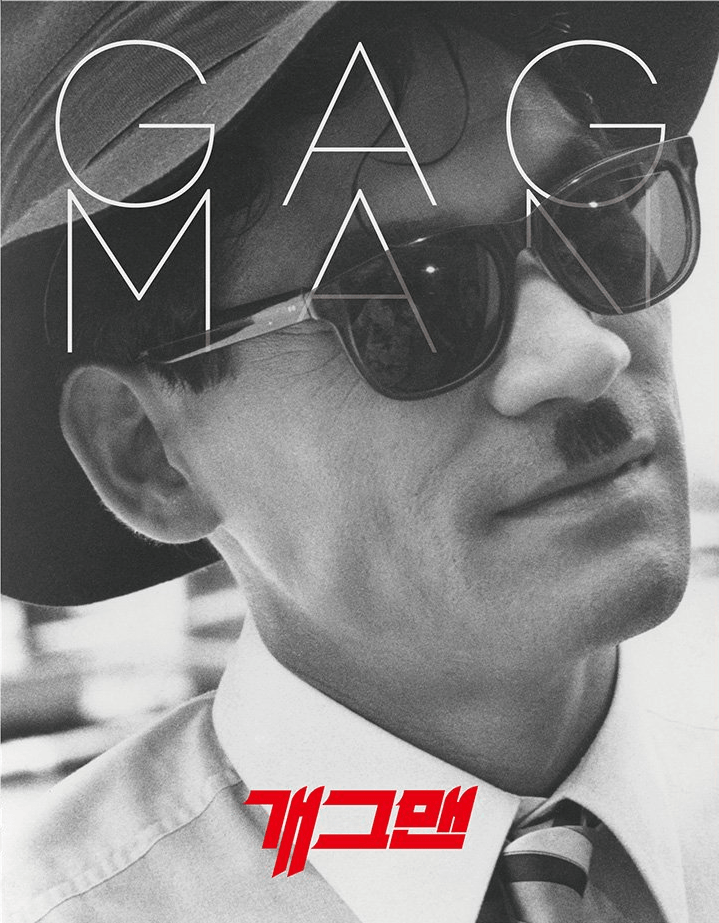
Gagman (개그맨, Lee Myung-se, 1988)

gagman cover

Is everything we see a waking dream or does it just appear that way? This question posed (or perhaps dreamed) by the protagonist of Lee Myung-se’s debut becomes a kind of key for unlocking much of what has gone before as Lee freewheels between fantasy and reality as his cast of movie obsessed dreamers attempt to inhabit their very own stretch of celluloid within the “real” world. Released in 1988, Gagman (개그맨) catches Korea in a moment of transition. Newly free of a lengthy dictatorship and back on the world stage after hosting the 1988 Olympics, the country was eager to promote itself as a modern liberal democracy. Hence, the arts were the first to feel the new freedom with young directors given the chance to create boundary pushing films and show just how far Korea could go. Lee was just one of these directors but Gagman is no political treatise (at least, not directly) preferring to experiment with form as a farcical exercise in meta comedy.

Cinema obsessed comedian Lee Jong-sae (Ahn Sung-ki) wants nothing more than to make the next great Korean movie which every one of the 40 million Koreans will fall in love with. Consequently he’s blagged his way onto the film set of a top director to whom he’s already sent his “prize-winning” script. Eventually thrown out, Jong-sae does not lose heart but promises the lead role in his movie to his equally film obsessed barber Moon Do-suk (Bae Chang-ho) whom he sends out on “research” missions walking into banks and asking about security. A fortuitous meeting with a feisty young woman in a cinema, Oh Sun-young (Hwang Cine), provides a another impetus for Jong-sae’s filmmaking dreams and so when he unexpectedly gets his hands on a gun after an encounter with a deserting soldier things just got real in a very unexpected way.

Lee signals his intent early on with a static camera shot focusing on the barber, Do-suk, as he waxes on about Kirk Douglas in the Vikings whilst simultaneously remarking on the fall in quality of his beloved dog meat. Do-suk feels that when it comes right down to it, Korean mutts are the best – not these scrawny poodles that cheap restaurant owners are substituting for the real thing. His comment might easily go for himself and Jong-sae, two scrappy working class Korean guys trying to make it in a walled off industry, but interestingly enough bar a mention of Sorrow Even Up in Heaven, Lee’s references are to European and American cinema rather than that of his homeland.

The most obvious of these lies in the central gag – that the gagman has a “funny” face. Ahn Sung-ki is saddled with a Charlie Chaplin moustache throughout the film (with the added bonus that it of course looks like a Hitler moustache to European/American viewers) and plays Jong-sae as someone who’s constantly doing a Chaplin impression with his strange walks and silent cinema plaintive looks. Ahn even begins layering his performance so that we get Charlie Chaplin impersonating Brando in the Godfather to recite the melancholy monologue which seems to open Jong-sae’s unfilmable script. For Jong-sae his existence is cinema, the life he lives is unreal or surreal always with an added dose of narrative in the ongoing story of his rise to greatness as the most famous Korean filmmaker of them all.

Fantasist as he is, Jong-sae has a way of pulling other people into his unrealisable dreams including the barber Do-suk and a young woman who unexpectedly starts canoodling with him in a cinema in an attempt to avoid some other creepy guys. Oh Sun-young is almost a mirror image of Jong-sae in her pragmatic realism though she too is looking at the stars and willing to engage in fantasy to get there. It is she who first suggests that the “research” they’ve been doing might have a more practical application and she is also the one to maintain a calm approach to their eventual need for escape but, even if she always has one foot in reality, Sun-young cannot escape the gravitational pull of Jong-sae’s strange dreamverse. Do-suk, by contrast, is a willing convert – just as obsessed with cinema and comics as Jong-sae, his desperation to be a part of the movies and unwavering faith in his friend lead him to give up everything in service of art even going so far as to get painful eye surgery to increase his box office potential (apparently a meta dig at a Korean celebrity who did something similar).

In keeping with the Chaplin theme Lee’s humorous universe is defined by slapstick and absurdity, his dialogue needlessly theatrical and mannered with a melodramatic seriousness. Nevertheless Lee makes the most of his canvas as the film goes on behind Jong-sae while he enters one of his reveries as in one particularly amusing scene in which he attempts to declare his love to Sun-young without noticing that she’s long wandered off and been replaced by Do-suk. Despite the cartoonish, comedic tone the atmosphere is a melancholy one reflecting the final destination of Jong-sae’s film project but also of his continuing inability to integrate the two distinct universes into one concrete whole which could be termed “reality”. In this Lee returns to that first question but this time he asks us as cinema lovers which world it is we live in, and which it is that is the more “real”.


Gagman is available on region free blu-ray courtesy of the Korean Film Archive but you can also watch the whole thing legally and for free via their YouTube channel!

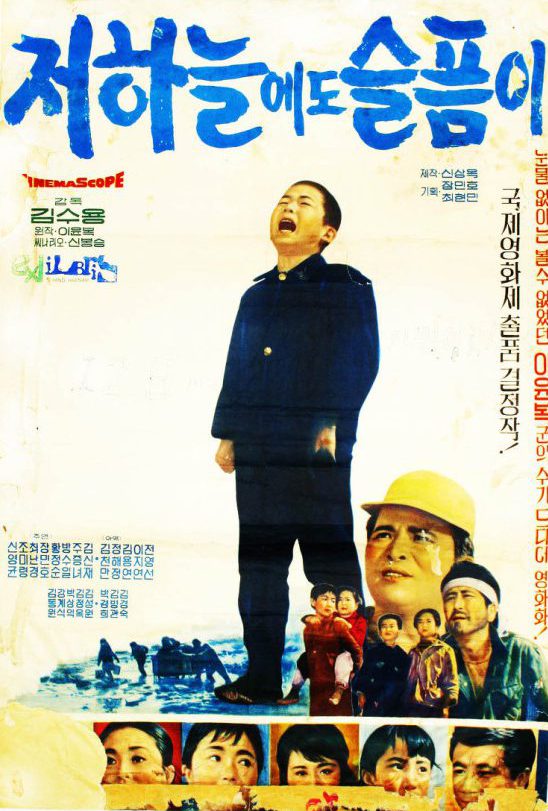
Sorrow Even Up in Heaven (저 하늘에도 슬픔이, Kim Soo-yong, 1965)

It’s a sorry enough tale to hear that many silent classics no longer exist, regarded only as disposable entertainment and only latterly collected into archives and preserved as valuable film history, but in the case of South Korea even mid and late 20th century films are unavailable thanks to the country’s turbulent political history. Though often listed among the greats of 1960s Korean cinema, Sorrow Even Up in Heaven (저 하늘에도 슬픔이, Jeo Haneuledo Seulpeumi) was presumed lost until a Mandarin subtitled print was discovered in an archive in Taiwan. Now given a full restoration by the Korean Film Archive, Kim’s tale of societal indifference to childhood poverty has finally been returned to its rightful place in cinema history but, as Kim’s own attempt to remake the film 20 years later bears out, how much has really changed?

11 year old Yun-bok has been forced out of his home and into a makeshift hovel near the river thanks to his gambling addicted invalid father’s inability to look after his four now destitute children. Yun-bok likes to narrate his life as a kind of letter to his absent mother who seems to have abandoned the family for unclear reasons possibly related to her husband’s drinking and gambling problem. Attending school as normal in an attempt to work hard and get an education so he can take care of the family in an adult world, Yun-bok, along with his younger sister Sun-na, spends his free time selling sticks of gum in the streets to try and earn enough money to feed everyone before his father drinks and gambles it all away.

Despite his obviously difficult circumstances, Yun-bok remains steadfast in his desire to stick by his family and take care of his siblings. Berated by the teacher for arriving late, Yun-bok finds an ally in a schoolmate who just wants to help even though many of the others shun him because of his raggedy clothes and lice infested hair. Eventually a teacher notices Yun-bok’s distress and urges him to write his struggles in a diary – which he does much as he’d been narrating his days in his imagined conversations with his mother. Moved by Yun-bok’s heartending descriptions of his life on the starvation line, the teacher manages to get the diaries to the newspapers who begin publishing them as a public interest column but just when it looks as if things maybe looking up for the family, Yun-bok loses heart and hops a freight train to look for Sun-na who has run away from home after an argument.

Korea in the 1960s was a difficult place, still bearing the scars of both WWII and the Korean War not to mention the resultant political turmoil. Nevertheless, by 1965 things had begun to pick up as seen in the flip side to Yun-bok’s sorry state of affairs – the various bars and drinking establishments he manages to work his way into in order to sell a few more sticks of gum. These places are filled with the sound of popular music where affluent young couples dance The Twist and salarymen in dark suits cement their business relationships over drinks. For some, everything is going fine but a concerted effort is being made to unsee the kind of unpleasantness which lurks below growing economic prosperity as manifested by 11 year old boys somehow responsible for the maintenance of a family of five.

As one teacher puts it, you can’t break the mirror because you don’t like what you see. Though there are some willing to help Yun-bok (at least to an extent) including his school friend who comes from a well to do family only too glad to set some food aside for Yun-bok and his siblings, out in the real world he finds only other desperate people willing to stoop to theft and violence against a child for nothing more than a few pennies. Many of these episodes are distressing as Yun-bok has his shoeshine kit stolen by an older boy or is violently beaten by a grown man at the harbour but the most serious occurs in the city when he is accused of pickpocketing by some louts who kidnap him and strip him naked for otherwise unclear reasons.

Though Sorrow Even Up in Heaven has a broadly positive ending as Yun-bok’s circumstances seem set to improve thanks to his accidental fame, Kim is quick to point out that there are many Yun-boks out there who can’t all become media sensations. Like many child heroes of classic Korean cinema, Yun-bok remains morally good – the idea of theft occurs to him but he remembers his teacher saying that everything will work out as long as his heart is pure, and his only transgression lies in spending a few pennies on himself to get something to eat and thereby work harder for his family (and for this he pays a heavy price). Even so his circumstances are portrayed in a naturalistic rather than melodramatic fashion neatly undercutting the inherent sentimentality of the material. Though Kim’s approach is closer to neorealism in the early scenes, he mixes in touches of magical realism with the ghostly appearances of Yun-bok’s mother which, alongside impressive montage and superimposition sequences, lend Yun-bok’s story an elevated cinematic quality. Remade several times over the last forty years, Sorrow Even up in Heaven remains sadly timeless in its depiction of an earnest young boy who knows only kindness and honesty even while those around him remain wilfully indifferent or actively cruel in the face of his continued suffering.


Aimless Bullet (오발탄, AKA Obaltan, Yu Hyun-mok, 1961)

Post-war cinema took many forms. In Korea there was initial cause for celebration but, shortly after the end of the Japanese colonial era, Korea went back to war, with itself. While neighbouring countries and much of the world were engaged in rebuilding or reforming their societies, Korea found itself under the corrupt and authoritarian rule of Syngman Rhee who oversaw the traumatic conflict which is technically still ongoing if on an eternal hiatus. Yu Hyun-mok’s masterwork Aimless Bullet (오발탄, Obaltan) takes place eight years after the truce was signed, shortly after mass student demonstrations led to Rhee’s unseating which was followed by a short period of parliamentary democracy under Yun Posun ending with the military coup led by Park Chung-hee and a quarter century of military dictatorship. Of course, Yu could not know what would come but his vision is anything but hopeful. Aimless Bullets all, this is an entire nation left reeling with no signposts to guide the way and no possible destination to hope for. All there is here is tragedy, misery, and inevitable suffering with no possibility of respite.

Nominal head of the family Cheolho (Kim Jin-kyu) has an OK job as an accountant but still he can’t make ends meet and his small family consisting of his wife, two children, war hero younger brother Yeongho (Choi Moo-ryong), unmarried sister Myeongsuk (Seo Ae-ja), and senile mother with wartime PTSD lives in a makeshift hovel in the middle of a fetid slum. Yeongho may have distinguished himself on the battlefield, but now the war is over society can’t find a use for him and so he remains jobless and another drain on his brother’s resources. In many ways he was one of the lucky ones, returning from the war with physical and mental scars but no permanent impairments. Myeongsuk’s former fiancé was not so lucky and requires the use of crutches to get around leading him to reject the woman he loves in the belief that he will never be anything more than a burden to all around him.

Cheolho suffers with a persistent toothache which he refuses to get treatment for despite the constant urging from his colleagues because he cannot in good conscience consider spending the money on himself when he has so many people with so many different needs to take care of. His toothache is not just a toothache but a manifestation of the unending torment of life in this ruined city defined by despair, madness, and cruelty.

The film begins with broken glass – a motif which will be repeated throughout as the structural integrity of this makeshift environment is repeatedly tested and repeatedly fails. A group of former soldiers is drinking in a bar, each lamenting their sorry progress in the post-war world. Yeongho remarks that he feels like a broken bowl – something used up and ready for the scrap heap. The country he fought so hard to protect has no place for him now the fighting is done. After such a long time searching for work, Yeongho is finally offered a promising job by an old flame currently working as an actress in the fledgling film industry, but the part they’ve offered him is that of a war veteran with similar scarring to his own. The studio want realism and casually ask him to remove his shirt and show off the traces of bullet holes on his side which is a step too far for Yeongho who objects to his wartime service being “exploited” in such a mercenary way. Insulted and not wanting to dishonour the memories of his fallen comrades Yeongho storms out only to later reconsider and realise he may have been foolish to turn down such a promising opportunity despite his indignation.

It isn’t just bowls and glass which end up shattered but dreams too as love lies bleeding in a land of permanent despair. Yeongho seems like something of a ladies’ man but re-encountering a kindly nurse he met at the front he begins to feel another life is possible. This particular dream is complicated by the presence of a disturbed neighbour who has also fallen in love with the nurse and stops by late at night to read her poetry despite the fact that she has taken to waving a gun to scare him off.

Cheolho has committed himself to living honestly, even if it means his family suffers. Yeongho is beginning to wonder if his philosophy is worth suffering for, why should they have to keep living like this when they could abandon conventional morality and humanitarian concerns and become rich through immoral means. Myeongsuk, abandoned by the love of her life and unable to find work, has fallen into prostitution, another effect of the ongoing American military presence. Yeongho, having lost all hope, makes a drastic decision of his own but one which is destined to be as ill fated as each of his other dreams, hollow and unfulfillable as they are.

Experiencing a moment of selfish indulgence born of total despair, Cheolho finally gets his tooth seen to. Actually he asks the dentist to just pull all his teeth right now but medical ethics suggest that’s not a good idea. Ignoring the dentist’s advice, Cheolho roams the streets of the city before stopping into another dental clinic for more “treatment”. Dazed and bloody he steps into a taxi but confuses his drivers by changing his mind on destinations from the morgue to the hospital to the police station. The Aimless Bullet of the title, as the cabbie calls him, Cheolho can only echo the words of his senile mother, “let’s go”, even if he has no idea where. Earlier in the film another character has the same dilemma and frames it as a joke – ask a dying man where he’s going, he says, and he’ll tell you he doesn’t know. There is nowhere for Cheolho to go. His road is blocked, his meter running. Korea is directionless and lost, a desolate land of broken bowls and ruined hearts too tired to keep moving even if there were any destination available.

So relentlessly bleak, it’s little wonder that the film ran into censorship problems which eventually saw it pulled from cinema screens. Legend has it censors objected to the frequent refrains of “let’s go” from the bedridden mother which they interpreted as “let’s go to North Korea” as opposed to the “just let us die” which seems to be the much darker message implied by her later talk of sheep and green pastures. Everything here is broken, caged, ruined. There is no way out or possibility of salvation in this life or any other. Lasting only a few seconds, the film’s most shocking moment passes with little to no reaction as Yeongho, on the run from the police, dashes past the body of a woman who has hanged herself with her crying baby still tied to her back. Yeongho, and presumably the police chasing him, ignore both the body and the wailing of the child in their self obsessed propulsion forwards. A warning – but one which is heeded only too late.


Short scene from the film (English subtitles)

Aimless Bullet is available on English subtitled region free blu-ray courtesy of the Korean Film Archive but you can currently watch the HD restoration version of the film in its entirety legally and for free via the Korean Film Archive’s YouTube channel. (You may have to sign in and “confirm” you’re a grown up.)