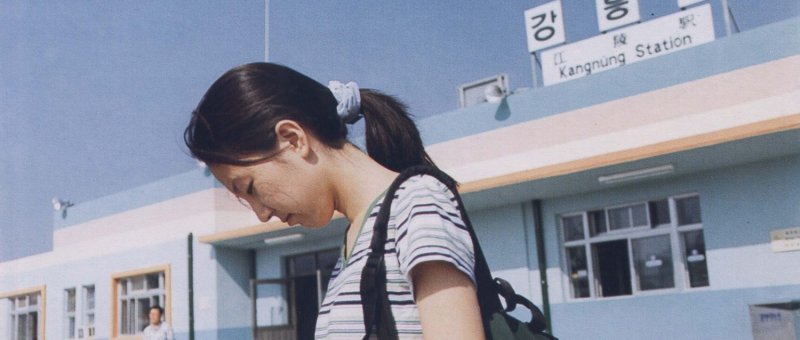
The Witness (목격자, Cho Kyu-jang, 2018)

The Witness poster 2The murder of a young woman outside of her New York apartment block in 1964 became a psychology text book standard thanks to the fact no one had raised the alarm or come to help her. Later investigations more or less debunked the so called “bystander effect”, at least in this instance, but it remains broadly true that those who find themselves witnessing a distressing incident fully expect that “someone” will be dealing with it, conveniently forgetting that they too are “someone”. The hero of Cho Kyu-jang’s The Witness (목격자, Mokgyeokja) is only one of many to temporarily distance himself from his community when he fears he has locked eyes with a killer and inadvertently made his family a target for retribution.

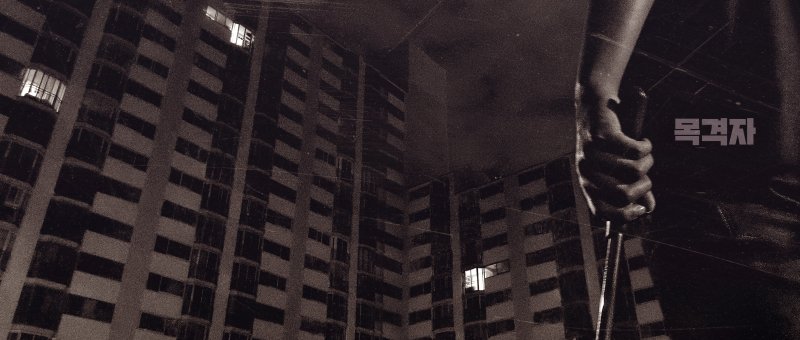
Sang-hoon (Lee Sung-min), a middle-class lawyer, is riding high after buying a new apartment (with a hefty mortgage) for his wife and daughter. Rolling home drunk after an evening drinking with colleagues, he opens yet another beer and gazes out over the balcony of his new apartment musing on how great his life is only to be confronted with a screaming woman being chased by a violent man in the courtyard. She falls and the man strikes her. Sang-hoon struggles for his phone but drops it in drunken shock. His wife emerges from the bedroom and alerts the killer to their presence by turning the lights on. Sang-hoon snaps them off and goes back to the balcony where he is convinced the killer has seen him. Paranoid, he forgets all about the poor woman bleeding on the concrete below and spends the night in his hallway clutching a baseball bat just in case.

He doesn’t know it yet, but Sang-hoon has indeed made himself a target for a marauding “random” killer. Afraid and ashamed, he decides to keep quiet. It would be easy enough to read Sang-hoon’s unwillingness to get “involved” in other people’s business as a hangover from an upbringing in an authoritarian regime in which keeping your head down and your nose clean might be essential tools for survival, but it’s also fair to say that his attitude is defined as much by notions of middle-class respectability as it is by cowardice and selfishness. An old busybody in the apartment block is constantly banging on about the house prices, getting the residents to sign a legal waver promising not to cooperate with the police or the media to avoid the name of the community becoming linked with violent crime. Sang-hoon says he wants to protect not only his wife and daughter, but their home too. His hopes and dreams are bound up with conventional homeownership. This is the way he intended to fulfil his male obligations to protect his family, but now it’s being threatened in a way he never expected and he finds himself tested.

Despite himself, Sang-hoon does feel he ought to help those in need. He bristles when his wife wants him to help out a friend whose child was injured in a car accident that the police didn’t bother to investigate properly, because he knows it’s a lost cause and she’s better to settle. He feels sorry for her, but not enough to rock the boat. Being a lawyer he perhaps knows what a risk it can be when the wrong people know where you live, but he’s at constant battle with himself knowing that the killer is still out there and will likely kill again. If he’d only called an ambulance instead of cowering by the front door, the poor woman might have survived – her death is on his hands as much as the killer’s because he chose to do nothing. The body count will only rise all while Sang-hoon tries to hedge his bets, calculating whether he’s better off keeping quiet and hoping the killer appreciates his complicity or surrendering himself to the police in the hope that they can protect him by taking the killer out of the picture.

Sang-hoon’s desire not to get involved has left him very involved indeed. He hoped it would all go away if he turned a blind eye and kept himself out of it, but like it or not he is a member of a community and he has a responsibility which cannot be abnegated. It turns out the best way to protect your family is protecting other people’s, maintaining a herd immunity to the threat of violent crime. There is, however, a reason they tell you to shout “fire” and not “help” – people are selfish and if they hear fire they know they are in danger too so it’s in their interest to come running, if it’s only you in danger they may not put themselves out. Sang-hoon’s brush with the embodiment of random threat does at least release him from the ingrained isolationism of the aspirant middle-classes in which any kind of fellow feeling is distinctly frowned upon, allowing him free rein to embrace his natural tendency towards altruism safe in the knowledge that his desire to help is not a weakness but a strength that will keep his family safe through the interconnectedness of a compassionate community.


The Witness was screened as part of the 2018 London Korean Film Festival.

International trailer (English subtitles)
The Land of Seonghye (성혜의 나라, Jung Hyung-suk, 2018)

Land of Seonghye posterA rapidly developing economy dangles the promise of social mobility, but like a hamster turning endlessly inside an empty wheel, the prize is often unattainable. The young men and women at the centre of Jung Hyung-suk’s The Land of Seonghye (성혜의 나라, Seonghyeui Nara) are caught in an endless struggle of bureaucratic trials, perpetually stepping over each other trying to get one more foot on the ladder to corporate success only for something to catch them by the ankles and pull them back down again. For the unlucky youth of modern Korean society, there may be no way out of its relentless demands other than to retire from the game entirely.

29-year-old Seonghye (Song Ji-in) lives a hand to mouth existence working two part-time jobs – one in a convenience store and the other delivering newspapers. Too tired to sleep, she knocks herself out with tranquillisers and mostly subsists on expired produce from her convenience store job. Meanwhile, she’s taking classes at cram school, trying to improve her TOEIC score, and chasing interviews at corporations in the hope of scoring a permanent position. A health scare underlines the fact that things can’t go on as they are, but there are only two other choices open to Seonghye – give up and go home to work in her parents’ restaurant, or marry her similarly troubled boyfriend Sanghwan (Kang Doo) which necessarily means he gives up on his civil service dreams and gets a regular job somewhere else.

When we first meet Seonghye, she’s sitting alone in a park watching the surreal action of the other visitors rocking back and forth on the exercise swings. Motion without direction seems to accurately sum up Seonghye’s way of life. At 29, she’s facing the facing the prospect that it’s already too late. On the old side for an entry level position, she’s been struggling to secure key interviews but she thinks there’s another reason she isn’t being selected. Some years previously, she’d achieved her dreams with an internship at a major company but she quit before it ended. The reason she left was familiar enough – sexual harassment at the hands of the boss. She reported it. It was ignored. She went to the police and they did nothing. None of the other women backed her up and the working environment became so uncomfortable that she was forced to resign. Working in the convenience store, Songhye runs into an old colleague who reveals that her lecherous boss got a big promotion and is well on the way to mainstream success. Such is life.

Seonghye’s former colleague seems happy enough with her corporate existence, perhaps a little self absorbed and insensitive, not spotting just how uncomfortable Seonghye is with being exposed at her “humiliating” part-time job. Seonghye lies out of embarrassment and tells her former officemate that this is her family’s store and she’s just helping out while she prepares to study abroad. She tells the doctor that she’s a graduate student, too ashamed to admit she’s drowning in the seas of “hell Joseon” all while her solicitous parents remind her she can always come home though doing so feels like accepting defeat from which she might never recover.

Seonghye is far from alone in her troubles. Many of her university friends are in a similar situation, mostly unemployed or in continuous cycles of unpaid “opportunities” which never pay off. Suicide hovers on the horizon as a prideful solution to the impossibility of their lives while others embrace the cruel individualism of the capitalist society, accepting that you will need to betray your friends if you’re going to get ahead. Seonghye doesn’t want that. She doesn’t want to get ahead by throwing bodies to the wolves but the world keeps conspiring against her and soon not even this sort of no life existence will be viable.

Later, Seonghye gets an unexpected windfall for the most terrible of reasons. She has no idea what to do with the money – it is a significant amount, it might be enough to live on frugally (and alone) for a number of years. Should she invest her money wisely and live simply for the rest of her days or keep on running herself into the ground trying to attain corporate success and the social status that goes with it? Seonghye makes her decision. Suddenly her motion has direction once again. She smiles for the first time in a long while, shrugging off the burdens of an oppressive society and embracing her own freedom in the face of its relentless drive.


The Land of Seonghye was screened as part of the 2018 London Korean Film Festival.

Original trailer (English subtitles)

The Princess and the Matchmaker (궁합, Hong Chang-pyo, 2018)

Princess and the Matchmaker posterLove – is it an act of fate or of free will? For the women of 18th century Korea, romance is a girlish affectation which must be outgrown in order to fulfil one’s proper obligations to a new family and the old by becoming the ideal wife to a man not of one’s own choosing. Love, in this world, would be more than an inconvenience. It would be a threat to the social order. In Hong Chang-pyo’s The Princess and the Matchmaker (궁합, Gunghab), each and every decision is dictated by birth, but as our soothsayer reminds us, serendipitous meetings can change all that’s gone before.

A severe drought is plaguing the subjects of Joseon, and their eyes are on their king to sort it out. For complicated reasons, many assume the pause in the rains is down to the gods’ wrath over the aborted wedding of problematic princess Songhwa (Shim Eun-kyung) some three years previously. Even before her failed marriage made her a flawed woman, Songhwa had always been tainted with an aura of ill fortune seeing as her mother died in childbirth. A reading of her astrological charts implied her presence was bad for the king (Kim Sang-kyung) and so she was sent away only to be called back when another reading revealed her presence may be essential to the king’s recovery from illness. She’s been at the court ever since but the taboo of her supposed bad luck has never left her. The king determines he’ll have to marry Songhwa off to improve the public mood but with her reputation who will they be able to find for a husband? With names thin on the ground, the king decides on a series of open auditions with the royal astrologer announcing the “winner” after a thorough examination of their birth charts.

It goes without saying that no one is especially interested in Songhwa’s opinion. Still naive and innocent, Songhwa is quite looking forward to finally getting married though a frank conversation with a recently hitched friend perhaps helps to lower her expectations. Still, she’d at least like to see the face of the man she’ll be spending the rest of her life with and so she sneaks out of the palace and goes investigating. Her first ventures outside of the walls which have protected her all her life are marked by a sense of magical freedom, though what she sees there later shocks her. Her subjects starve, and blame her for their starving. Lamenting the poor nobleman who will be taking one for the team in marrying the notoriously ugly and difficult Princess Songhwa, they pray for her wedding day and the rain they fully expect to fall.

Given all of this ill feeling towards the princess, it doesn’t take much to guess what sort of men are prepared to toss their hats into the ring. The suitors may look attractive on the surface, as Songhwa discovers, but each has faults not visible in his stars. One is a child, another a womanising playboy. It comes to something when the worst possible match isn’t the murderous psycho posing a philanthropist but the ambitious social climber who will stop at nothing to advance his cause.

Some might say the sacred art of divination is a bulwark against court intrigue, but this like anything else is open to manipulation. The king’s old astronomer has been taking bribes for years – something brought to light by ace investigator with a talent for divination Seo Do-yoon (Lee Seung-gi) with help from shady street corner soothsayer Gae-shi (Jo Bok-rae). Appointed to the position himself, Seo unwittingly holds the keys to Songhwa’s future though that isn’t something he’d given particular consideration to. His job was just to read the charts before everything started getting needlessly complicated. When his list of candidates goes missing he has no choice but to start visiting the ones he can remember in person which is how he ends up repeatedly running into Songhwa in disguise and, despite himself, beginning to fall in love with her.

Songhwa, trapped in a golden cage, longs to live a life of her own free from the patriarchal demands of a hierarchical society. She bucks palace authority by sneaking out on her own, but never seriously attempts to avoid her miserable fate or resist the tyranny of an arranged marriage, only to be allowed foreknowledge of the kind of life for which she has been destined. Nevertheless, determining her own future later becomes something within her grasp once the corruption has been uncovered and the art of prophecy exposed for what it is. Destiny is more malleable than it first seems and as Seo advises the king, when compassion reigns the heavens will open. True harmony is not born of a rigid adherence to facts and figures assigned by the arbitrary conditions of birth, but by a careful consideration of the feelings of others. A life without love is as starved as one without rain and the truly harmonious kingdom is the one in which all are free to feel it fall where it may.


The Princess and the Matchmaker was screened as part of the 2018 London Korean Film Festival.

International teaser trailer (English subtitles)

The Poet and the Boy (시인의 사랑, Kim Yang-hee, 2017)

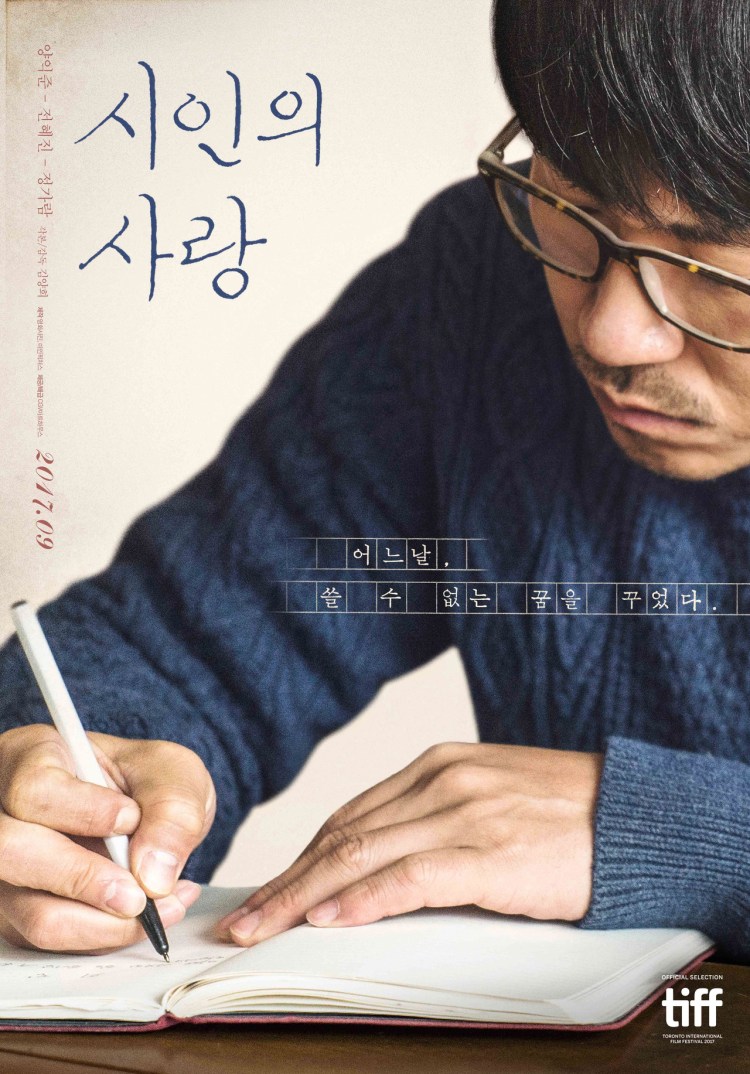
Poet and the Boy posterA poet cries for the sorrow of the world, according to the hero of Kim Yang-hee’s melancholy drama, The Poet and the Boy (시인의 사랑, Sienui Sarang). Unfortunately for him, he lives in his own poet’s world, lonely and disconnected but never knowing the true depth of sadness which would give his verse meaning. Until, that is, he falls in love. Beauty turns out to be a doubled edged sword for a mild mannered yet emotionally brave artist struggling to comprehend his place in the world but discovering that some of it, at least, has already been decided for him.

Hyon Taek-gi (Yang Ik-june) is a 30-something aspiring poet married to a feisty shopkeeper. The couple have been married several years and though they are happy enough together, theirs is a marriage born more of convenience than passion. Having married “late” each has settled in to making the best of things, sure that a greater love will one day blossom between them. Mrs. Hyon (Jeon Hye-jin), feeling an absence in the family home, has been longing for a baby but Taek-gi has never been especially interested in that side of things and isn’t really keen on the idea of becoming a father.

Meanwhile, a brand new donut shop has just opened up in town which is good news for Taek-gi because donuts are one of his favourite things. Unsure whether it’s just his status as a purveyor of sweet goods, Taek-gi develops a fascination with the beautiful boy at the bakery (Jung Ga-ram) which is further inflamed when he accidentally catches sight of him in amorous moment with a female customer. To his mild surprise, Taek-gi finds himself captivated with the male physical form, experiencing feelings and desires he had not even known existed.

As his wife later puts it, a poet’s world is different. Taek-gi stops to appreciate the flowers, watches the children play, and makes a round about detour to a fast food restaurant to observe human life but he doesn’t quite live in the world he inhabits or allow himself to truly experience its beauty. As we first meet him, Taek-gi is writing a poem to open the map of his heart but quickly finds himself lost and wandering, unable to settle on a clear direction and ending up at a disappointingly familiar destination. The poem is interesting but imperfect, somehow hollow and inauthentic.

Taek-gi’s creative block is also an emotional one. What begins with a single moment of captivating beauty expands into something deeper and warmer as the poet gets to know the boy on a more intimate level. Seyun is a troubled young man from an impoverished family caring for his bedridden father while resenting his coldhearted mother. What he sees in Taek-gi is something between friend and father, both wary of and delighting in unsolicited kindness from a virtual stranger. Taek-gi’s wife teases him about his attraction to Seyun, probing him about the nature of their own strange relationship. She wonders if it’s really “love” without intense physical desire – something he has made repeatedly clear that he does not feel for her. Taek-gi insists that it is, citing another romanticised love which remained chaste as further evidence only for his wife to fire back that perhaps all he really wanted was the sadness of unfulfilled longing to complete his poetic world view.

Taek-gi later takes his words back, insisting that what he feels for his wife is not “love” and that their relationship was always doomed to fail. Yet it’s not carnal desire which brings him to this realisation so much a greater motion towards connection. Taek-gi who was always ill-equipped for life and never able to take care of himself, begins to look after the younger man both physically and emotionally asking for nothing in return other than his continued company. Despite his otherworldliness and alienation, there is something uniquely brave in Taek-gi’s willingness to tug on the thread of an unfamiliar feeling, uncertain what it is or might be but determined to find out. Disregarding the conservative values of his society which have led him to embrace conventionality in marrying “late”, supposedly “grateful” that someone allowed him the opportunity to marry at all, Taek-gi moves forward if cautiously, aware that his desires may not be accepted and may present a danger to those around him.

Then again, Taek-gi is a middle-aged man with a series of choices already behind him, many of which entail consequences and responsibilities it would be selfish and irresponsible to break even in the pursuit of individual happiness and fulfilment. Perhaps all he really wants is the grand failed romance that will open the map of his heart through breaking its spine, craving “sadness” to feed his art over “love” to feed his soul. True enough, sorrow does wonders for Taek-gi’s art even if he feels himself trapped by his previous choices and the restrictive social codes of his community but there is also something inescapably poetic in his magnanimity as he prepares to set the thing he loves free in a way he never was and believes he never can be.


The Poet and the Boy was screened as part of the 2018 London Korean Film Festival.

International trailer (English subtitles)
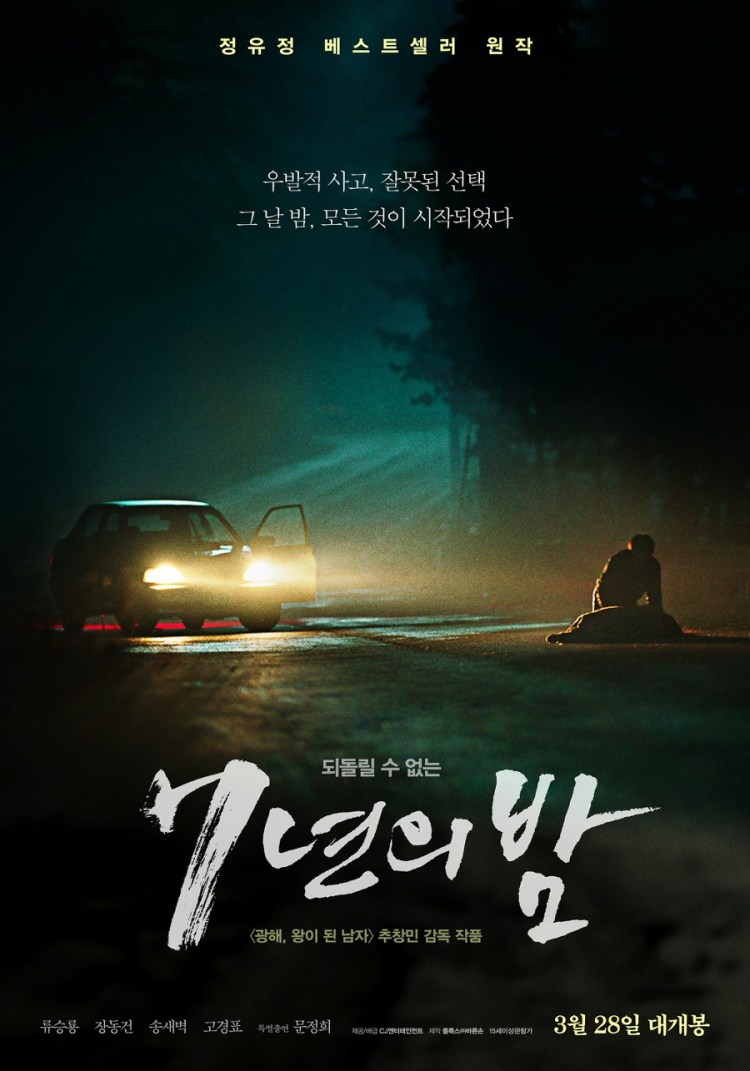
Seven Years of Night (7년의 밤, Choo Chang-min, 2018)

Seven Years of Night posterThe sins of the father are visited upon the son. Cycles of abuse and fatalistic retribution are a persistent theme in Korean cinema but Choo Chang-min plunges them to new depths of tragic inevitability in his adaptation of the best selling novel by Jeong You-jeong. The biblically titled Seven Years of Night (7년의 밤, 7 Nyeonui Bam) pits two visions of failed fatherhood against each other as two broken men attempt to restore order to their lives but damn their children in the process through their own refusal to engage with past trauma.

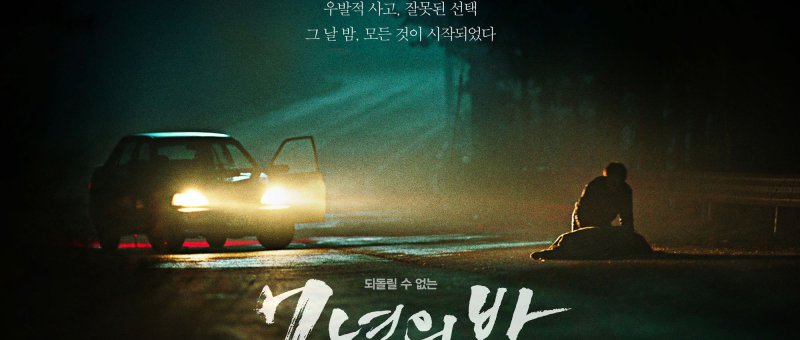
In 2004, security guard Hyun-su (Ryu Seung-ryong) buys an apartment he can’t afford in order to placate his wife who is in constant worry over their precarious financial circumstances. Hyun-su can’t really manage the interest payments on the mortgage so the family will be renting out the fancy apartment and moving to a remote house provided by his new employers at a hydroelectric dam. On the day that he was supposed to go and check over his new accommodation, Hyun-su partied hard with his former colleagues and set off drunk, getting into an altercation with another driver on the way. Lost in a thick fog and fuzzy from the drink, he hits a little girl who ran out in the middle of the road, panics and hides her body, planning to forget any of this ever really happened.

Forgetting is not, however, something anyone is permitted to do in Choo’s world of elemental retribution in which the buried past is always destined to make its way to the surface sooner or later. The lake around the dam was once home to a village which was sunk, intact, to make way for its construction. Locals fear the water with superstitious dread, believing the lake sucks the souls of men and is polluted with something darker and older than industrial corruption. Attempting to drown the inconvenient may have its appeal, but nothing stays underwater for long and the harder you try to push it down, the faster it will rise.

Unfortunately for Hyun-su, the father of the girl he has killed, known to all as Dr. Oh (Jang Dong-gun), is not a man to be messed with. Dr. Oh, apparently an upscale dentist in the city, rules over all with a tyrannical authority and, as he owns almost all the land around here, enjoys a near feudal level of deference from the villagers. Violent and controlling, Oh’s wife, who describes him as the Devil incarnate, has recently escaped and gone into hiding leaving their small daughter Se-ryung (whose name is coincidentally the same as that of the sunken village) alone to face his wrath. Doubtless, Dr. Oh was raised with an authoritarian father of his own and is unable to see beyond himself and understand that his reign of terror prevents him from achieving the very thing he craves – the love of his wife and daughter.

Desperate for revenge, needing to prove that this is all someone else’s fault to avoid admitting that his own violence drove his wife from him and his daughter into the path of another violent man, Dr. Oh vows poetic retribution by targeting the life of Hyun-su’s innocent son, Seo-won (Go Kyung-pyo). Increasingly disturbed by his crime, Hyun-su dreams of his own father – a violent drunk with PTSD from a pointless war whose death he longed for and who he swore never to become, only to be confronted with a vision of himself as a small boy in the face of his own son watching his father strike his mother in anger. Hyun-su sees. He sees what his father passed to him and what he fears he will pass to his own son. He wants to break the curse, but doesn’t know how. 

Still, Hyun-su would drown the world to save his son even if he hates him for it. Seo-won, left with a series of dubious legacies, struggles to emerge from the shadow of his father’s crimes, is disowned by his family as the son of a murderer and cast out from regular society as one polluted by murderous blood but eventually saves himself through skills learned from a second father, himself hoping to atone for a selfish decision that led only to tragedy. Deliberately disjointed and self-reflexive, Seven Years of Night is a dark tale of supernatural dread masking a horror all too real in the impossible task of exorcising the living ghost of defeated male pride.


Seven Years of Night was screened as part of the 2018 London Korean Film Festival.

International teaser trailer (English subtitles)

Treeless Mountain (나무없는 산, Kim So Yong, 2009)

Treeless mountain posterThe thing that parents are supposed to do for their children is create a world that’s safe where they will always be loved, accepted, and taken care of while also teaching them how to survive in a sometimes hostile environment. Sometimes, however, that safe space is punctured and a child becomes separated from their guardian. Kim So Yong’s Treeless Mountain (나무없는 산, Namueobsneun San) is the story of one little girl’s painful journey towards an early acceptance of rootless independence as she and her sister try to come to terms with the abrupt exit of their mother and the loss of the world they’d known.

Jin (Kim Hee-yeon) and her younger sister Bin (Kim Song-hee) live in a cramped Seoul apartment in a run down part of town. Their father having abandoned the family, the girls’ mother (Lee Soo-ah) works during the day while a neighbour looks after Bin until Jin gets out of school and the girls look after each other until mum comes home. Though the girls’ mother is kind and patient, she is also exhausted and has little time for anything other than a hasty dinner and trying to get the sisters to bed in good time. However, the morning after an awkward conversation with the landlady that her mother didn’t want to talk about, Jin gets back from school to find removal men already dismantling her home and is bundled onto a bus out of the city. She and her sister will be staying with Big Aunt (Kim Mi-hyang) in the country while her mother takes off to look for their long absent dad in the hope that she can convince him to reassume his responsibilities.

Jin’s mother does not have a particularly good support network or other people to rely on and has been forced to leave her daughters with Big Aunt, her absent husband’s older sister, whom she barely knows. If she did know her, she’d know Big Aunt is not a good person to leave children with. Though not actively abusive, Big Aunt is a severe, embittered older woman who does nothing but complain and make it clear to the sisters just how inconvenient she feels their existence to be. Big Aunt used to have her own business but it’s gone bust and now she spends her days soaked in soju and regret. She makes Jin and Bin do odd jobs around the house (one of which is clearing away the worrying number of empty soju bottles in the property) and berates them each time something is not to her liking. Jin, an anxious child, often wets the bed. When it happened at home her mother patiently cleaned her up and told her not to worry, but Big Aunt is furious and Jin lets Bin take the blame rather face her wrath directly.

When she left, Jin’s mother gave her a plastic red piggy bank and told the girls that their aunt would give them a coin everyday and that when the piggy was full she’d return. Facing their aunt’s ongoing neglect, the girls convince themselves that the piggy bank is magic and that if they can fill it up on their own their mother will come back. They start their own business selling grilled grasshoppers that a local boy showed them how catch and cook, and then hatch on the revelatory idea that they can turn their big coins into lots of smaller coins to fill the bank up faster but, of course, their mother still doesn’t appear and it’s merely another illusion shattered in their rapidly maturing minds. The girls find temporary relief at the home of another local woman whose son has Down’s Syndrome and is also lonely because the other kids don’t seem to play with him, but mostly they’re on their own, waiting for their mother to come back so everything will go back to normal but becoming increasingly worried that it never will.

Eventually, Big Aunt shuffles them onto their elderly grandparents who were not exactly keen to take them in either, but once they’re there it’s not so bad. Grandma is a nice woman who shows them much more affection than Big Aunt and invites rather than forces them to help her with various tasks around the farm. City kids, the children are fascinated by the natural world and begin to enjoy spending time with grandma who shares with them her knowledge while the girls begin to understand that grandma is suffering too by catching sight of her ruined shoes echoing the painful too-smallness of Jin’s own as her heels poke out from the back of her trainers. Jin, who was often lonely and resentful, constantly told she had to look after her sister all while no one was looking after her, begins to cede ground to others in accepting that perhaps her mother won’t come back but maintaining the fantasy for Bin even as she begins to find a place for herself on grandma’s farm independent of adult care or control.


Treeless Mountain screens at the Pheonix on 3rd November, 1pm as part of the 2018 London Korean Film Festival.

International trailer (English Subtitles)

Miss Baek (미쓰백, Lee Ji-won, 2018)

Miss baek posterIn one sense we’ve never been more connected to one another, but our tendency to remain inside our own solipsistic bubbles has never been higher. We ignore those in need, confident that “someone” will do something, that it isn’t our responsibility. Then again perhaps we don’t even notice. It’s freezing cold in director Lee Ji-won’s debut feature Miss Baek (미쓰백) and a little girl is sitting outside in her nightie. No one takes very much interest her even though it’s far too late for a child to be out alone. That is, until the titular Miss Baek (Han Ji-min) overcomes her own sense of alienation and decides to look back.

Now in her mid-30s, Baek Sang-ah is an aloof, near silent woman who ekes out a living through a series of casual jobs from car washing to massage. She is in a kind of relationship with a kindly policeman, Jang-sub (Lee Hee-joon), who wants to marry her, but Sang-ah has long ago ruled out the idea of marriage and family. She never wanted to be someone’s wife or mother. Sang-ah says this not (entirely) because she values her independence, but because of a legacy of trauma and abandonment born of the physical abuse she suffered at the hands of her mother who fell into depression and alcoholism following the loss of her husband. Fearing becoming another link in a long chain of abuse passed from parent to child, Sang-ha has kept herself isolated, avoiding all intimate relationships and vowing to continue on alone causing harm to no one.

One winter day, however, she can’t walk past the girl in the nightie anymore. Taking her to a nearby food stall, Sang-ha finds out the girl’s name is Ji-eun (Kim Si-a) and she’s nine years old. Just as Sang-ha is beginning to ask about the cuts and bruises on Ji-eun’s hands and feet, a well dressed woman who turns out to be her father’s girlfriend arrives and whisks the girl away. Sang-ha tries to forget about her and go on with her life, but she can’t seem to do it. Buying Ji-eun some proper winter wear, she resolves to try and help the girl the way that no one tried to help her.

There is something particularly insidious in the continuous stream of injustice and mistreatment Sang-ha and Ji-eun find themselves subject to precisely because of their lack of social power. Children, most obviously, have no mechanism to defend themselves besides their parents and should they try to speak out against them, they may not be listened to. Managing to escape, Ji-eun tried to tell the police what her parents were doing to her but they sent her home with only a mild warning to her smirking step-mother that she’d best ease back on the “discipline”. Understandably, Ji-eun doesn’t have much faith in the authorities as a source of salvation. Sang-ha experienced much the same but her oppression continued on into adulthood when she was arrested for violently defending herself against a would-be-rapist who happened to be the son of a wealthy and connected man who used his status to do as he pleased while Sang-ah went to jail. Sang-ha’s prison record comes back to bite her again when she tries to talk to the police on Ji-eun’s behalf only for them to lay into her when they eventually run her file.

Meanwhile, Ji-eun’s step-mother Mi-kyung (Kwon So-hyun) is well turned out and scrupulously polite. She has a plausible answer for everything and a talent for middle-class respectability, even crying during church services. Her father Il-gon (Baek Soo-jang), by contrast, is addicted to video games and rarely leaves the house while little Ji-eun is often locked in the bathroom where she cowers under the sink, or cast out onto the balcony in the mild hope that she’ll freeze to death. The only reason Mi-kyung has been keeping her around is the welfare payments, but they’re about to stop. Both “parents” project all of their personal resentments onto the face of a nine year old girl whom they beat, starve, and torture for no discernible reason other than they don’t know any other way to behave.

Ji-eun’s father was also beaten as a child. He wonders where the police were then and what sort of life they think Ji-eun is going to have when she too grew up like this. Sang-ah’s desire to save Ji-eun is also a desire to save herself as she contemplates maternity from both sides in revisiting the complicated relationship with her own mother while wondering if she is a fit person to care for a child with such poor models to follow. She doubts she can break the chain and free Ji-eun from a seemingly inescapable system of abuse and violence but through her deepening attachment to the little girl Sang-ha begins to find a way through her inertia and fear of intimacy to a deeper and more positive connection. A gritty yet always open and empathetic look at an all too often hidden social problem, Miss Baek is a promising and important debut from Lee Ji-won which refuses to look away from the dark and unpalatable but finds hope in the power of simple human kindness against cruelty and indifference.


Screened as part of the 2018 London East Asia Film Festival.

Original trailer (no subtitles)

Dark Figure of Crime (암수살인, Kim Tae-kyun, 2018)

Dark Figure of Crime poster 1No matter how accurate statistics relating to criminal activity might be, there are many more acts of violence and immorality which, for various reasons, will go unreported. Criminologists refer to this phenomenon as the “Dark Figure of Crime”. Kim Tae-kyun’s cerebral thriller takes the strangely poetic term as its title (암수살인, Amsusalin) and does indeed revolve around the perfect murder and a man who claims to have completed six of them before abandoning his system and getting himself caught. Yet unlike many cops and robber dramas, Dark Figure of Crime is not about the killer but about the hidden victims who’ve lived a life haunted by the horrible uncertainty of whether their loved ones abandoned them but are alive and well somewhere else, or have fallen victim to some terrible event.

Narcotics officer Kim Hyung-min’s (Kim Yoon-seok) introduction to a new source of information takes a turn for the unexpected when he first starts telling him about having disposed of a body some years ago and then is promptly arrested by Homicide for the murder of his girlfriend. Tae-oh (Ju Ji-hoon) is convicted and sent to prison, but calls Hyung-min and complains that the police framed him when they didn’t need to. Tae-ho murdered his former girlfriend alright, but the evidence the police submitted was faked which has annoyed him. He draws Hyung-min a map to where he buried the “real” evidence just so he can catch the police out acting improperly and embarrass them as well as earn Hyung-min’s trust for the next part of his plan, which is vaguely confessing to another six murders. Hyung-min can’t know if Tae-oh is on the level or just messing with his head but feels as if he has to investigate all the same.

Not everyone understands Hyung-min’s commitment to this strange series of cold cases. After getting himself a transfer to Homicide, Hyung-min’s new boss warns him about another officer who was tricked by a bored felon and ended up losing everything – once a promising policeman he’s now a divorced carpark attendant. A meeting with the former officer yields another warning – men like Tae-ho know the law and they play with it. He’ll get you to investigate crimes B and C for which he knows there won’t be enough evidence, then he’ll use his acquittals to cast doubt on his original conviction. Hyung-min is wary but also hooked. He knows Tae-ho is playing him, but thinks he can win by giving him the opportunity to slip-up and give something away he didn’t quite mean to.

Tae-ho is certainly a dangerous, unhinged young man no matter how much of what he says is actually true. Hyung-min can’t know if any of this is real or just a bizarre game Tae-ho has cooked up because he’s got 15 years and no one ever visits him, but then he starts turning up suspicious absences. As he tells him in a tense conversation late in the game, none of this is really about Tae-ho. Hyung-min couldn’t care less about his big man act and is not impressed by his “crimes” or the ways in which he got away with them though he does want to make sure he never gets out to hurt anyone else. What Hyung-min cares about is the victims whose family members are living with the unresolved trauma of not knowing what happened to their loved ones. Something Tae-ho could quite easily help with if he had a mind to, but seeing as Tae-ho only wants to play games Hyung-min will have to find out on his own, and he will stop at nothing to do so even if he ends up manning a rundown police box in the middle of nowhere for his pains.

Living with a trauma of his own, not even Hyung-min has much faith in the police hence why he needs to complete this case himself – he simply doesn’t believe anyone else will bother. Police in Korean films are universally bumbling and incompetent if not actually corrupt and selfish. Hyung-min is an exception though his opinion of his profession may not be much different to the stereotypes you see in the movies. He doesn’t care about getting a big promotion or being the guy who catches the big fish, he just wants the truth to be known and the past laid to rest so the indirect victims can begin to move on with their lives. The “dark figure of crime” refers not only to the hidden and unresolved, but to the oppressive spectre cast over those left behind with only pain and worry. The terrifying thing is, there may be countless other dangerous people out there whose crimes go undetected not because they’re criminal geniuses but because no one really cares enough to stop them. Subtly subverting serial killer movie norms, Kim pulls the focus from the self-aggrandising villain to remind us of the very real costs of his actions while making a hero of the dogged policeman who refuses to to give in to a societal expectation of indifference.


Screened as part of the 2018 London East Asia Film Festival.

International trailer (English subtitles)

Burning (버닝, Lee Chang-dong, 2018)

Burning posterWith the world the way it is, it’s no wonder young people everywhere find themselves lost and confused, unable to find a sense of greater purpose when all they see is futility. Eight years on from Poetry which revolved around a grandmother’s growing sense of disquiet on realising no one cares about the victim of her grandson’s transgression, Lee Chang-dong returns with a story of frustrated youth as three conflicted souls are drawn into a spiral of resentments, jealousies and forlorn hopes.

Our hero, Jong-su (Yoo Ah-in), is an aspiring writer currently working a series of casual blue collar jobs to get by in the city. One such job unexpectedly brings him into contact with Hae-mi (Jeon Jong-seo), a childhood friend from his home town he didn’t quite recognise. “Plastic surgery” she quips, though she seems happy enough to see him which comes as a surprise to Jong-su, awkward as he is. Hae-mi invites him for drinks over which she asks him a favour – to look after her cat while she goes off to Africa for a bit in response to the call of “great hunger”. Jong-su agrees, but has also agreed to go home to Paju to look after the family’s last remaining cow seeing as his dad, whom he hates, has got himself arrested after getting into a fight with a public official. Before she leaves for Africa, Jong-su begins a sexual relationship with Hae-mi which he seems to think is a sign of a deeper attachment, but when she rings and asks him to pick her up from the airport he is dismayed to find she’s in the company of another man – Ben (Steven Yeun), a handsome, sophisticated, and very wealthy Korean she was accidentally marooned with for three days in Nairobi waiting for a plane.

A man like Ben is an existential threat to one like Jong-su. He doesn’t even put up a fight when Ben, whose friend has been secretly following Jong-su’s rundown pickup all the way back to the city in his Porsche, offers to take Hae-mi the rest of the way. A farm boy from rural backwater Paju, he feels himself inferior, bumpkinish, and unrefined as Ben subtly undermines his self-confidence in order to boost his own sense of superiority. Jong-su, invited to Ben’s upscale condo for “pasta”, is instantly uncomfortable. Eventually unable to mask his rising resentment, he rudely lays into his host while smoking with Hae-mi out on the balcony by musing on how a man in early middle age can afford to live like this – cooking pasta and listening to music, driving a Porsche, owning a Gagnam apartment. In the first of many barbed comments which won’t help his cause, Jong-su asks Hae-mi what exactly she thinks Ben is doing with someone like her. She replies that he says he finds her “interesting”, but the sadness in her eyes implies that she’s already given this question more than a degree of thought.

Ben remains a cypher. Though his manner is charming, even superficially kind, there’s something unsettling about him, a kind of creeping hollowness coupled with unpredictability. Rattled, Jong-su starts going through his bathroom cupboards and finds a ladies’ makeup box and a draw full of trinkets which seem to have belonged to several different women. At the very least, Ben has not been honest with Hae-mi, but Jong-su doesn’t say anything. Jong-su, less naive, is also well aware of the way Ben has been trotting them out for entertainment value at dinner parties frequented by his wealthy friends who take in the country bumpkin freak show with cruel superiority. Ben, however, is already bored – yawning ostentatiously but making a conspiratorial show of locking eyes with Jong-su who he knows is on to him in more ways than one.

Unexpectedly rocking up at Jong-su’s rundown Paju farmhouse, Ben plants a kernel of intrigue in Jong-su’s fragile mind by telling him about his “hobby” of burning down random “greenhouses” just for the hell of it. Despite his literary pretensions, Jong-su takes Ben’s words at face value and misses the obvious subtext. Whatever Ben is or might be, men like him delight in destroying fragile things to mask their own fragility. Jong-su takes the bait and the “metaphorical” fire Ben has lit within him begins to catch.

Ben, who finds Hae-mi’s tears “fascinating” because he has never cried, says he burns things to feel his soul vibrate. Hae-mi, meanwhile, remains frustratingly distant to both men. She talks about spiritual hunger and longs to find some kind of meaning in a world of futility but also longs to disappear like an all too brief sunset. She “reminds” Jong-su of a childhood incident in which she fell into a well behind her family’s farm and eventually found salvation in the sudden appearance of his face, but Jong-su doesn’t even remember. Hae-mi is in a sense still living at the bottom of a well, staring at the sky and waiting for rescue only to find herself continually abandoned, friendless and alone.

Then again, perhaps nothing she’s told Jong-su is true. Hae-mi’s answer to want is imagination, a simple ability to “forget” a desired object does not already exist. She asks Jong-su to look after a cat who is so shy he begins to wonder if it’s real, reassured only by an empty food bowl and full litter tray. Jong-su is our “writer”, but the only thing he writes is a petition letter to get the father he can’t stand an appeal for crime he knows he committed. He is our guide to “truth” but his job is to engineer narrative – the story is his to direct and the ending his to choose. He writes because “the world is a mystery” to him, but remains trapped within his own petty preoccupations in which the full weight of his rage levels towards Ben whose existence seems so unfair.

Burdened by a strangely feudal deference, Jong-su is a fuse slowly catching light. Failed by family, he and Hae-mi are abandoned children looking for a way out. They thought they wanted out of Paju, but perhaps they were meant to be together in this place if the world were better and there were no more playboy kings like Ben, eager to do “anything for fun” in order to escape the emptiness of their existence in which inherited wealth has left them purposeless and hugely insecure despite the superficial confidence of class. Jong-su and Hae-mi chase brief moments of sunlight bounced back from the gleaming spires of an inaccessible city but find no relief or promise in its greying skies. Adapting a short story by Haruki Murakami, Lee Chang-dong paints a dizzying picture of a tinderbox world in which the rage of the oppressed little guy threatens to engulf us all while those best placed to help only want to fan the flames.


Screened as part of the 2018 BFI London Film Festival.

US trailer (English subtitles)
Believer (독전, Lee Hae-young, 2018)

Believer posterJohnnie To’s darkly comical tale of a weaselly meth cook with an extremely strong survival instinct and the austere policeman who can’t resist taking his bait might seem perfectly primed for a Korean remake in its innate pessimism and awkward bromance. Lee Hae-young’s Believer (독전, Dokjeon), however, merely borrows the bones of To’s Drug War while doubling down on its central conceit as reckless obsession leads to the undoing of both our heroes, each forced to confront the futility of their respective, mutually dependent quests.

Obsessed with tracking down a mysterious drug lord known only as “Mr. Lee”, narcotics cop Won-ho (Cho Jin-woong) asks a favour from an old informant only to see her murdered, leaving him only a vague clue by tracing an infinity symbol on a crumpled receipt moments before passing away. Warned off the Mr. Lee case, Won-ho finally gets a lead when an explosion at a drug lab brings scorned righthand woman Oh (Kim Sung-ryung) into his office promising to spill the beans in return for protection and immunity. Sadly, Won-ho couldn’t protect her either, but there was another unexpected survivor in the form of low level middleman Rak (Ryu Jun-yeol).

Traumatised by the death of his mother in the same explosion, Rak initially says nothing under interrogation but suddenly wakes up on learning that the lab’s dog also survived and has been rescued by the police. Unlike the “hero” of To’s film, Rak is small fry (if well connected) and is not looking at anything more than significant prison time. Rak may not be fighting for his life but he has a number of reasons for switching sides, especially once Won-ho fills him in on Mr. Lee’s backstory and long history of abrupt purges.

Despite working for the organisation, neither Oh nor Rak had ever met “Mr. Lee”. No one knows anything about them – gender, nationality, name, or location. In fact, there may not even be a Mr. Lee. Perhaps “Mr. Lee” is merely the “god” of drug dealers – an abstract idea almost given flesh but existing in a spiritual sense alone. Nevertheless, the idea of a Mr. Lee has completely captured the heart of compassionate police detective Won-ho whose all encompassing need to find him has already severely destabilised his life. After failing to protect his informant, Won-ho’s complaint against Mr. Lee is now a personal as well as professional one. Not so much out of vengeance (though there is that too), but a need to make the deaths count and his mounting losses meaningful.

Yet as another Mr. Lee contender later puts it, salvation may not be a matter of faith and if your faith has been misplaced, death may be a healing. In believing so deeply in the idea of “Mr. Lee”, Won-ho has given him form and created an idol to be worshipped through devotion. “Brian” (Cha Seung-won), a higher ranking gangster and former preacher chased out of the US for getting his congregation hooked on cocaine, has his own particular brand of faith based problems but subscribes to much the same philosophy. He may really be Mr. Lee (as may anyone), but if he isn’t he’s determined to convince himself he is in order to see himself as something more than the failed son of a chaebol dad who couldn’t hack it in the family business or in the pulpit. Brian would be happy to die as Mr. Lee rather than going on living as “himself”. Won-ho, unable to understand why kids do drugs asks his informant who explains it’s mostly because life is rubbish. Later someone says something similar to Brian, that he’d rather delude himself with the belief that he’s “someone” rather than face the emptiness.

Despite himself, and as Rak is eager to remind him, Won-ho is dependent on his informant for the pursuit of his case. Won-ho is reluctant to trust him even though Rak seems to be actively working to protect him in this extremely dangerous and largely unfamiliar world. Rak, by contrast, is aware he hasn’t won Won-ho’s faith, but assures him that’s OK because Rak trusts him. Rak does indeed seem to have the upper hand along with mysterious motivations and a fishy backstory, but Won-ho’s desperation to get close to Mr. Lee leaves him wide-open, unwilling to trust his guide but too invested to consider cutting him loose. “Belief” becomes its own drug, a transformative ritual act which gradually erodes all other needs and leaves only emptiness in their place. Won-ho can’t even remember why he started chasing Mr. Lee, but all that remains of him is the chase – a true believer suddenly bereft of a cause. Lee Hae-young takes To’s nihilistic cynicism and subverts it with a focus on the personal as both men fight self created images of their individual demons but find themselves unable to escape from their mutually assured identities.


Believer was screened as part of the 2018 BFI London Film Festival.