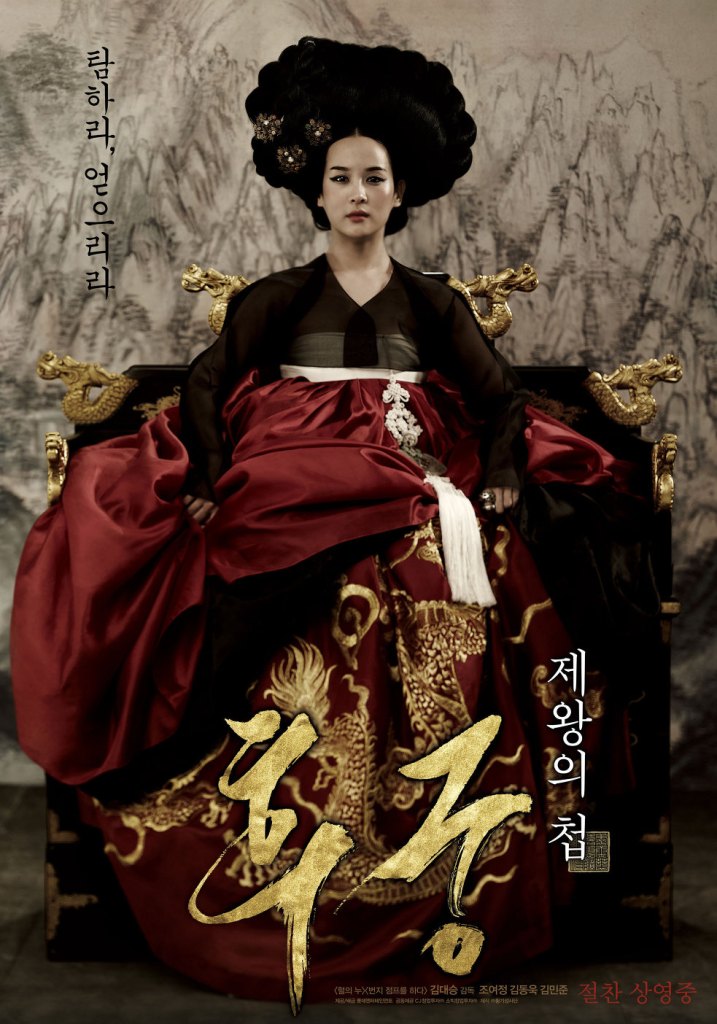
The Concubine (후궁: 제왕의 첩, Kim Dae-seung, 2012)

the-concubineYou can become the King of all Korea and your mum still won’t be happy. So it is for poor Prince Sungwon (Kim Dong-wook) who becomes accidental Iago in this Joseon tale of betrayal, cruelty, and love turning to hate in the toxic environment of the imperial court – Kim Dae-seung’s The Concubine (후궁: 제왕의 첩, Hugoong: Jewangui Chub). Power and impotence corrupt equally as the battlefield shifts to the bedroom and sex becomes weapon and currency in a complex political struggle.

Prince Sungwon first catches sight of official’s daughter Hwa-yeon (Cho Yeo-jeong) after a hunting party and develops a dangerous attraction to her. His possessive parent, the Queen Mother (Park Ji-young), finds this worrying and manoeuvres to take Hwa-yeon out of the picture by having her brought to court as a concubine of the king. Hwa-yeon, however, has a love of her own in the roguish hanger-on Kwon-yoo (Kim Min-jun) and is willing to risk her life by defying the imperial orders and running away with him. The pair consummate their union but are discovered at first light whereupon Hwa-yeon agrees to go to court on the condition Kwon-yoo’s life is spared.

Some years later, Hwa-yeon is the reigning queen as the mother of the sickly king’s only son but her life becomes considerably more complicated when the king dies in mysterious circumstances. Power passes back to the Queen Mother who puts her son, Sungwon, on the throne, making Hwa-yeon and the young prince direct threats to her power base. Sungwon is still in love with Hwa-yeon but his mother forbids him from pursuing her. Forbidding is something his mother does quite a lot of, and it’s not long before Sungwon becomes frustrated with his lack of real power. Matters come to a head when Kwon-yoo also resurfaces as a eunuch at the imperial court.

The imperial court is a golden prison and a world in itself. Once entered, it cannot be escaped. Everyone is vying for power but no one really has any. The king’s ill health and lack of a direct heir has left him dangerously vulnerable and the Queen Mother in a position of unusual strength. If one thing is clear, it’s that she has had to play a long game to get here, done terrible things in the name of power or self preservation, and will stop at nothing to make sure she remains on top.

The Queen Mother’s ascendency is contrasted with Hwa-yeon’s fall as she finds herself forced into the court against her will. Realising her total lack of agency as the court ladies are instructed to obey protocol in undressing her for the bath rather than allowing her to undress herself, Hwa-yeon exclaims that she has no right to her own body. Hwa-yeon’s body is, now, imperial property to be used and abused by the king for his pleasure and his alone. However, the Queen Mother may have met her match in the steely and intelligent politician’s daughter who seems just as well equipped to play the game as she is.

Much has been made of the sexual content of The Concubine which was largely sold on its titillating qualities. However, even if the adult content is frank it is far from erotic as sex becomes a tool of control and manipulation – one of the few available to the subjugated women of the court environment. Aside from the first love scene between Hwa-yeon and her true love, Kwon-yoo (which is perhaps the least direct), none of the subsequent scenes is fully consensual, each a part of a wider scheme or courtly ritual. Rather than an expression of love or intimacy, sex is an act of mutual conquest in which each side, essentially, loses.

Sungwon finds himself powerless both politically and romantically, unable to wrest power away from his controlling mother or win the heart of the already brutalised Hwa-yeon. A prisoner of his own circumstances, Sungwon’s increasing feelings of impotence manifest in violence and erratic behaviour as his obsession with Hwa-yeon borders on madness. Far from a liberation, Sungwon’s sex life is, in a sense literally, dictated as his ritualised consummation of marriage is conducted in front of an audience shouting out commands from behind screen doors who eventually criticise him for his lack of stamina. Kwon-yoo has been robbed of his ability to engage in this game and his desire for revenge is intense yet he will have to take it from the shadows by stealth if at all.

Director Kim Dae-seung manages the intrigue well in crafting the intensely claustrophobic environment of the oppressive court whilst ensuring motivations and desires remain crystal clear. There are no winners here even if there is a reigning champion claiming the throne. The cycle of violence and manipulation seems set to continue as even those who entered as innocents leave with blood on their hands, having become the very thing they fought so hard against. Often beautifully shot with opulent production values, The Concubine is an ice cold thriller in which desire competes with reason but rarely, if ever, with love.


Original trailer (no subtitles)
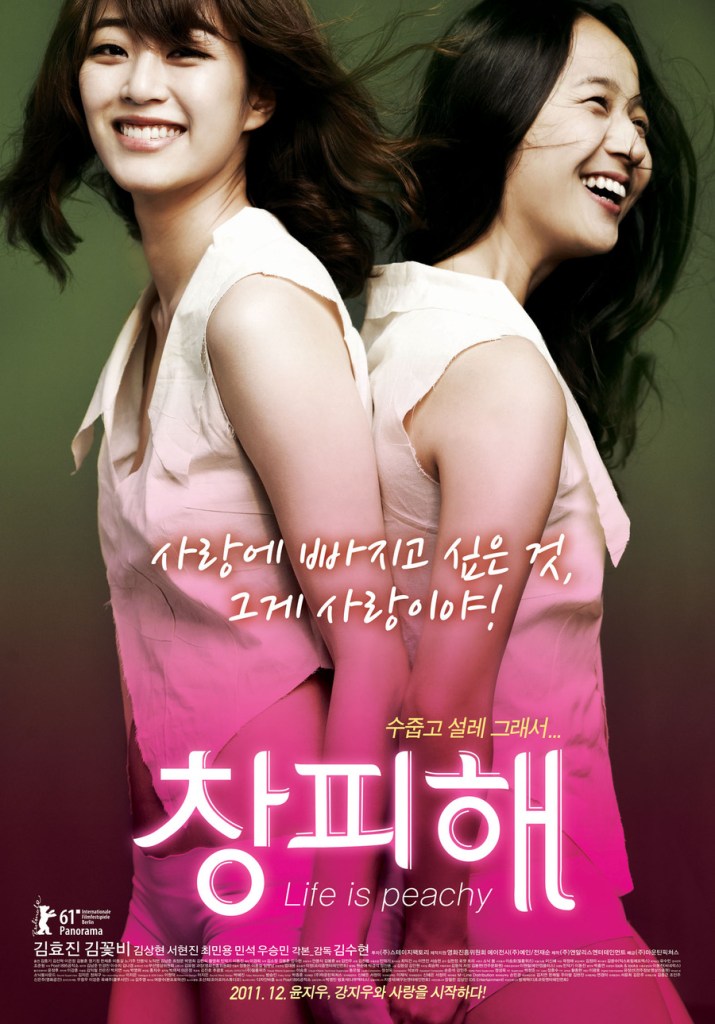
Ashamed (창피해, AKA Life is Peachy, Kim Soo-hyun, 2011)

ashamedOne of the very earliest films to address female same sex love in Korea, Ashamed (yes, really, but not quite – we’ll get to this later, 창피해, Changpihae, retitled Life is Peachy for US release) had a lot riding on it. Perhaps too much, but does at least manage to outline a convincing, refreshingly ordinary failed love romance even if hampered by a heavy handed structuring device and a lack of chemistry between its leading ladies.
Beginning in the film’s “present”, embittered art professor Jung Ji-woo (Kim Sang-hyeon) is auditioning models for an art project, whereupon she bonds with two students currently undergoing some kind of unresolved drama of their own. Hee-jin (Seo Hyun-jin), Jung’s pupil, has roped in her friend also coincidentally named (Youn) Ji-woo (Kim Hyo-jin) who, as she recounts in a lengthy flashback, she met in odd circumstances whilst drinking with layabouts in an alley. Eventually, Youn Ji-woo confessed to her that she’s attracted to people of the same sex, which has left Hee-jin feeling kind of awkward.

Trying to console her student, Jung encourages the younger woman to recount the story of her own great yet failed romance with a pickpocket named, yes, again (Kang) Ji-woo (Kim Kkobbi). Youn had been leading a dull and unfulfilling life as a shopgirl in a department store, baby sitting middle aged housewives. Disillusioned with her disappointing boyfriends, Yoon has entered a dark place where the thing she’s most sorry about in life is that she won’t be able to witness her own suicide. Accordingly she dresses up one of the department store mannequins in her clothes and pushes it off a roof, only it hits a car below and causes an accident.

Not exactly a traditional “meet-cute”, Youn and Kang first encounter each other surrounded by broken glass and are then handcuffed together by the investigating policeman (Choi Min-Yong) who was also just stabbed by one of Kang’s gang members after he spotted her pickpocketing on the metro. The policeman then randomly takes them to his friend’s Chinese restaurant which affords them an opportunity to escape even if they’re still chained at the wrists.

Though this very improbable situation points to a cute and quirky romance, Ashamed takes a non committal stance as regards to tone, throwing in odd details like strange priests living in the woods and Kang’s constantly unreliable self narratives but then retreating to something more straightforwardly melancholy. Love falls slowly as Youn recounts her lack of satisfaction with men only to find herself strangely attracted to her new handcuffs buddy while she, somewhat rudely, has sex with an ex-boyfriend she invited over for help with Youn lying mortified beside them. Suddenly realising why none of her boyfriends ever worked out, Youn feels, understandably, awkward alone with Kang and her ex and but is encouraged by Kang’s tentative but ultimately decisive grasping of her hand during the taxi journey onwards.

Kim’s attempt to avoid prurience whilst also pushing boundaries for sexual content unavoidably feels tame, hampered by the lack of chemistry between the leading actresses and lingering sense of embarrassment in his choice of camera angles. Though painted as a grand and heartbreaking love affair of a lifetime in the opening sequences, Youn and Kang’s romance never takes on the weight of tragedy or moves much beyond the very ordinary tale of two people who couldn’t make it work. This indeed may be the point, but given the melancholy atmosphere of the the three women discussing lost love on a lonely beach, Youn and Kang’s missed opportunity can’t help but feel slighting underwhelming.

Rather than the strongly negative “ashamed” the meaning of the original Korean might be more generously translated as “shy” or “embarrassed”, at any rate the film does not imply any of its characters have reason to feel shame. The title word surfaces a handful of times, most notably when the loosened up professor declares she has no need for it anymore, and in the final showdown with Kang as Youn attempts to challenge her on her problems with intimacy and commitment but fails to push her into a more honest space. Kang’s sense of “shame”, if that would be the right word, seems to be unconnected to sexuality but has deeper roots in the past which she remains unwilling to reveal. This sense of personal inadequacy fuels Kang’s drifting life as she feels the need to move on each time someone gets too close, afraid or perhaps on some level “ashamed” to commit herself fully.

Kim’s multi layered flashback structure mixed with imagined sequences and expressionist scenes inspired by Jung’s artwork proves an unwieldy concept which often detracts more than it gives. With a running time of over two hours and a romance which doesn’t start until many indie films have already ended, Ashamed bites off much more than it can chew but at the same time never fully engages with the most interesting elements of its subject matter. Flawed, if interesting, Ashamed is a bold and worthy effort yet one which falls far short of its target despite the committed performances of its central trio.


Original trailer (English subtitles)

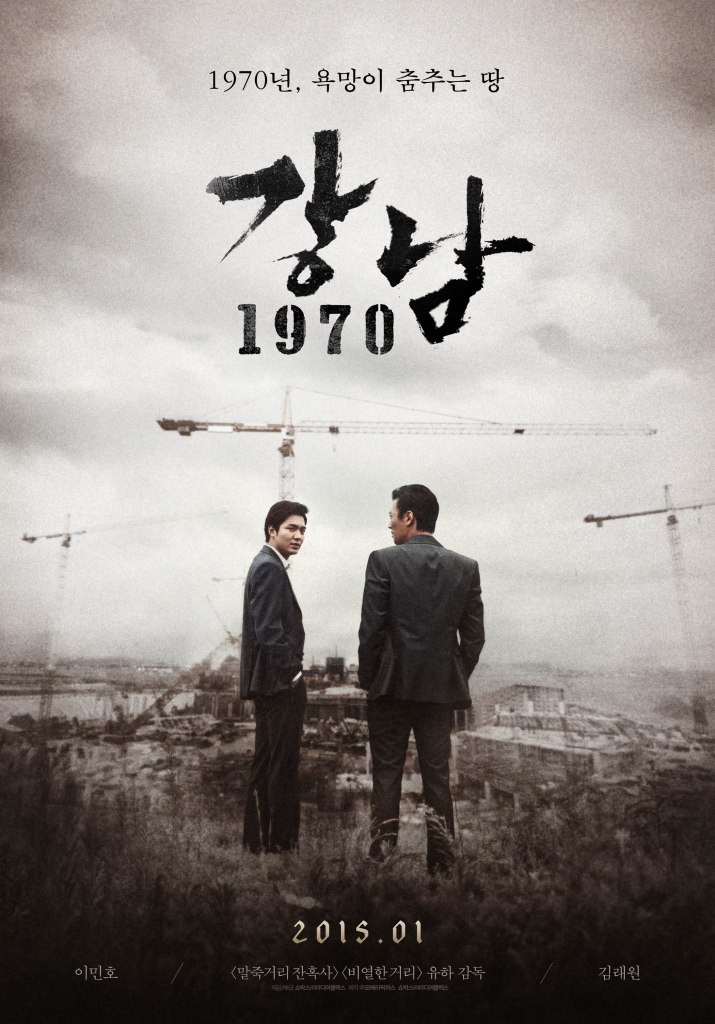
Gangnam Blues (강남 1970, Yoo Ha, 2015)

gangnam-bluesYoo ha takes us back to the 1970s for some Gangnam Blues (강남 1970, Gangnam 1970) in a sorry tale of fatherless men caught up in dangerous times of ambition and avarice, very much at the bottom of the heap and about to be eclipsed by the “new world” currently under construction. Back then, Gangnam really was all just fields, owned by farmers soon to be cheated out of their ancestral lands by enterprising gangsters engaged in a complicated series of land grab manoeuvres, anticipating the eventual expansion of the bursting at the seams capital. Far from the shining city of today, Gangnam was a wasteland frontier town, the sort of place where a man can make a name for himself trading on his wits and his fists alone.
In 1970, Jong-dae (Lee Min-ho) and Yong-ki (Kim Rae-won), sworn brothers from the same orphanage, are two street rats trying to survive in straightened times. When the shack they were squatting in is demolished and they come in to contact with a petty gangster, Kang (Jung Jin-young), the pair end up getting a one off job as thugs sent to smash up a political rally but get separated when the police arrive. Jong-dae finds himself taken in by Kang and his daughter Seon-hye (Kim Seol-hyun AKA Seolhyun) as a surrogate son and brother, repaying their affection by saving Kang’s life during an assassination attempt which later prompts his decision to retire from the criminal world altogether. Yong-ki joins the rival gang instead and seems to be making a success of himself but both find themselves at the mercy of an increasingly corrupt, dishonourable system hellbent on progress but only for the few.

Gangnam Blues has an overly complex, intricate narrative overlaying the generic brotherhood and betrayal theme that runs through the film. Dipping into a particularly dark period of history, Yoo is not afraid to step back into those difficult days marked by both rapid progress and increasing inequality furthered by complicated systems of interconnected corruption. The gangsters are at the service of the politicians but it’s always debatable who is running the show. Jong-dae’s participation in the land grab scheme is painted as amusing cleverness (at least at first) but little attention is paid to the farmers who are being “convinced” to sell their land off cheaply to gangsters who are each competing for the prime sections. Modern day Gangnam was built on blood and extortion, by men like Jong-dae and Yong-ki, even in the knowledge that they will be discarded as soon as their usefulness has been exhausted.

Jong-dae and Yong-ki are the bottom of the pile, orphaned and without family connections they have only each other to rely on yet their brotherly bond is repeatedly tested. The ‘70s Philippine folk song, Anak by Freddie Aguilar, which forms the film’s major musical motif has some very poignant lyrics about parents and their children but neither Jong-dae nor Yong-ki are able to find the kind of family they’re looking for. Both end up opting for the fraternal bond of a crime syndicate to replicate the kind of support usually offered by the family unit with Jong-dae finding a father figure in Kang who eventually takes him into his household as a son outside of the criminal world, and Yong-ki eventually marrying and soon to become a father himself. Forced into crime by their poverty, each becomes an outcast, permanently shut out from the thing they most want even whilst living a life of material comfort.

Yoo opts for a highly stylised approach filled with beautifully photographed, expertly choreographed scenes of violence including the traditional mass brawl in the rain, and a sequence of intercut killings each artfully sprayed with blood. Lee Min-ho acquits himself well enough in his first leading role as the noble hearted gangster Jong-dae with quality support from Kim Rae-won as the much less noble Yong-ki though the superfluity of secondary characters leads to an avoidable lack of depth. Relative newcomer Kim Seoul-hyun also does well with her underwritten role of the film’s most tragic character even if her domestic violence themed subplot seems like one too many. Another classic slice of gangster action from Korea, Gangnam Blues is an unflinching look back at a difficult era with uncanny echoes of the present day, and a suitably period tinged tale of melancholy ‘70s bleakness in which brotherhood and honour are merely words misused by men trying to justify their own ambitions.


International trailer (English subtitles)

Freddie Aguilar’s Anak as featured in the film:

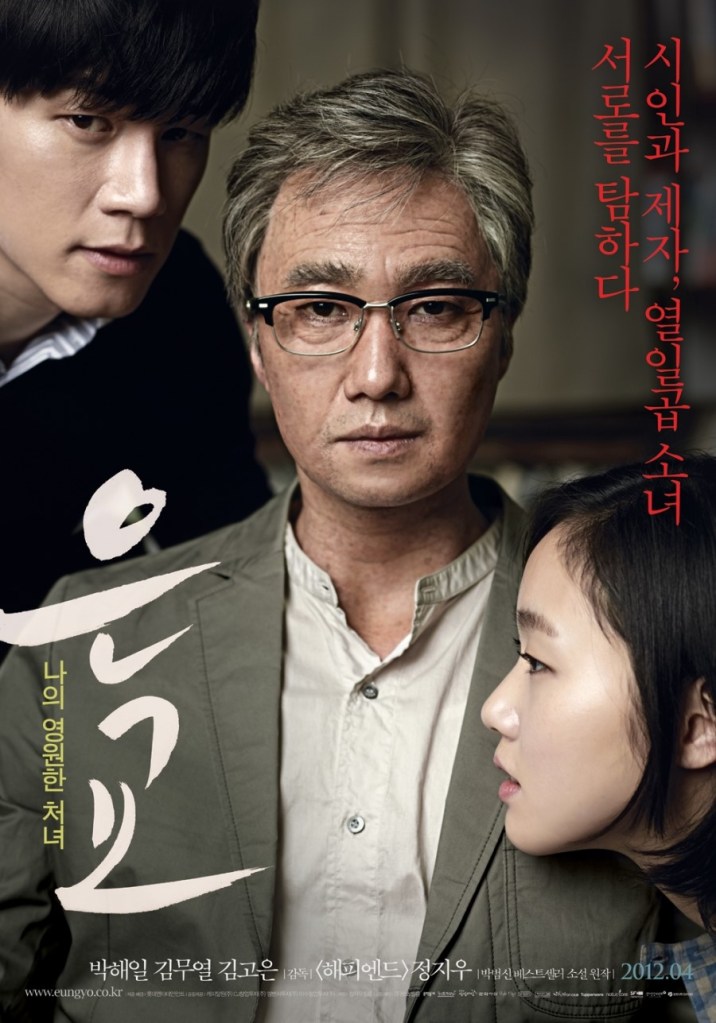
Eungyo (AKA A Muse, 은교, Jung Ji-woo, 2012)

eungyoStories of old men trying to recapture their lost youth through projecting their fantasies onto pretty young women are not exactly rare and the protagonist of Jung Ji-woo’s Eungyo ( AKA A Muse, 은교) is just as aware as most that his dreams of youthful romance border on the ridiculous. A tale of loss, nostalgia, and jealousy both professional and personal, Eungyo is a poetic exploration of the burdens and benefits of age which are often invisible to those who can only look forwards.
At 70, Lee Jeok-yo (Park Hae-il) is a respected professor and literary giant who lives a quiet and solitary life in an out of the way villa. His only companion is his apprentice-cum-assistant, Seo Ji-woo (Kim Moo-yul), who is currently experiencing a period of success as his genre crossing novel Heart is topping the best seller list. When the pair return home one day to find pretty teenager Eungyo (Kim Go-eun) asleep in their garden chair, it sparks off a three way relationship which sees her working as part-time housekeeper for Jeok-yo.

Eungyo is a lively young girl and brings a little light and laughter into the otherwise stuffy villa but when she runs away from home one stormy night and stays over, the situation changes. Catching sight of Eungyo emerging from Jeok-yo’s bed, Seo jumps to the obvious conclusion and is filled with moral outrage in thinking his aged boss is conducting an inappropriate relationship with a schoolgirl. Or, perhaps, Seo himself is attracted to the girl and is angry that Jeok-yo has once again “beaten” him and proved himself superior on the fields of both literature and romance. Eungyo’s presence deepens the divide between master and pupil, threatening to change both of their lives forever.

Jeok-yo is under no illusions and never contemplates the idea of real relationship with Eungyo. His life had been a quiet and solitary one, though there’s little indication exactly how he felt about that. What is clear is that Jeok-yo dislikes his ageing body and the loss of his youth. In his fantasy romance, Jeok-yo is young, running and playing like a naive teenager in love but as soon as he wakes up the spell is broken, he’s old again and the idyllic world he’d conjured for himself no longer exists.

Even if he dreams another world for himself, Jeok-yo is perfectly aware of how things are in this one. Ji-woo, by contrast, attempts to solve all his problems by deluding himself into believing his future is brighter than it really is. His professional relationship with Jeok-yo turns out to have an unexpected dimension and Ji-woo’s literary success is a hollow pillow for his self esteem. Insecure about his talent, especially in comparison to his mentor, Ji-woo sets about casting himself as morally superior through his objection to Eungyo’s new role in their lives but this too is a thinly veiled way of trying to eclipse his master. All Ji-woo has to offer is his youth but even this cannot heal his loneliness and lack of self worth.

Eungyo becomes a symbol of something else for both men but she is also a young woman with a number of problems of her own. Faced with an apparently difficult home environment, Eungyo is seeking a connection from these two men but her borderline status as an adolescent girl means that the water is always coloured with both men viewing her as a potential lover rather than a child in need of shelter. Coming to admire Jeok-yo for his poetic soul and literary talent and siding with him against Ji-woo, Eungyo later makes a self destructive decision which ends her relationship with both men.

There are no happy endings here, even if the idea of a “happy ending” is not quite as ironic as in Jung’s previous film centring on marital infidelity, Happy End. Nobody gets what they wanted or what the audience wanted for them and each end up unable to come back from the whirlwind of self destruction which they’ve each helped to generate. A nuanced character piece in which age competes with youth, loss competes with gain, success competes with personal fulfilment, and true feeling is sacrificed for a relief from loneliness, Eungyo is deceptively named not for the young woman at its centre but for the collection of hopes, dreams and aspects of self which each of the men have imbued her with, eclipsing the real woman with an imagined prize and losing her in the process.


International trailer (English subtitles)

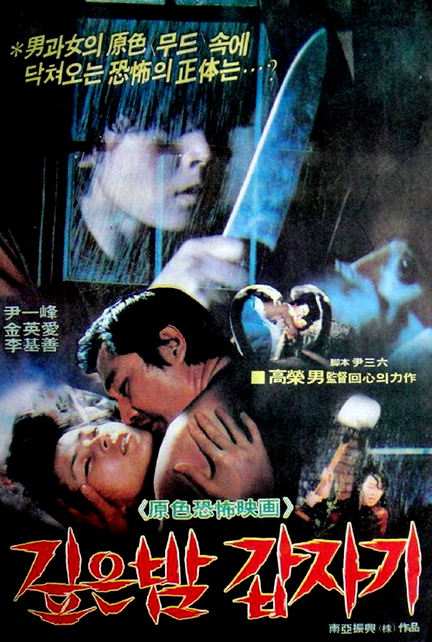
Suddenly in the Dark (깊은밤 갑자기, Go Yeong-nam, 1981)

suddenly-in-the-darkEverybody ought to have a maid, goes the old adage, but finding one you can trust can be a tall order. Kim Ki-young’s The Housemaid clearly sounds a warning call to husbands everywhere not to be tempted by the enticements of pretty young girls or conniving social climbers with designs on upending the domestic order by supplanting the legitimate wife from within her own home. The Housemaid is melodrama rewritten as horror in which a parasitical force colonises the domestic environment hell bent on taking it over through a subversion of its binding yet taboo foundation – sexual desire. Twenty years later, Suddenly in the Dark (깊은밤 갑자기, Gipeun Bam, Gapjagi) returns to the same theme but from a different angle. A once harmonious household is suddenly turned upside down following the introduction of a second female, provoking a series of crises within the already strained mind of its wife and mother.

Lepidopterist Kang Yu-jin (Yoon Il-bong) returns home after three weeks away chasing butterflies and is warmly greeted by his faithful wife, Seon-hee (Kim Young-ae), and their loving daughter. Seon-hee looks on while her husband shows off some slides of his latest finds to his colleagues but is disturbed by the incongruous presence of a shamanic statue, somehow mixed in with the shots of rare butterflies. The creepy doll-like figure continues to haunt Seon-hee who finds herself in a state of agitation regarding her husband’s frequent absences.

She is then, fairly non-plussed when Yu-jin returns from another trip with a strange young girl in tow. Essentially kind but also absent minded and a little insensitive, Yu-jin has picked up a waif and stray, recently orphaned and alone, with the idea of killing two birds with one stone by taking her into his house as a maid. On hearing Yu-jin’s explanation, Seon-hee reconsiders and is excited to get both some much needed domestic help and a degree of companionship in her otherwise lonely life. The girl, Mi-ok (Lee Ki-seon), is a little strange but seems grateful to have found a place to belong. Seon-hee, however, gradually becomes alarmed firstly by Mi-ok’s youth and beauty, and later by the presence of the same shamanic statue that’s been haunting her all this time among Mi-ok’s few belongings. Increasingly unhinged and paranoid, Seon-hee becomes convinced that her new maid has seduced her husband and means to kill her by any means possible.

Like The Housemaid, Suddenly in the Dark turns on the parasitical threat of an outsider within the family unit. Focussing on the women rather than the temptation and fall of the man of the house, the narrative shifts away from a crisis of male desire and responsibility to the fear and insecurity of the neglected, lonely housewife intentionally isolated from society at large yet under appreciated and often bored at home. By all appearances, the Kangs have made a fairly nice life for themselves with a spacious, if remote, country villa filled with nicknacks and elegant furniture, and seem to have a happy and fulfilled marriage. However, Yu-jin is often away for long stretches of time and even when home is often too occupied with work to appreciate his wife and daughter.

Seon-hee appears to have only one real “friend” who seems to be the sort of woman who likes to talk people down and undermine the happiness of others to make herself feel better. Consequently, she’s filled Seon-hee’s mind with lots of imagined troubles. Women over thirty might as well be sixty when it comes to male attention, she says. Suddenly throwing Seon-hee into a morass of uncertainty regarding her husband’s growing indifference towards her as he retreats to the spare room to finish writing his book, Eun-yeong is then quick to disregard Seon-hee’s distress over the threat posed by her new maid, refusing her help at the very time it’s most needed.

Mi-ok moves between an innocent young girl clutching the talisman left to her by her mother like a child her doll, and a predatory sex fiend corrupting and possessing Seon-hee’s husband aiming to displace her from her rightful position in this ordinary middle-class world. Aside from Seon-hee’s subjective perception, Yu-jin seems mostly indifferent or genially paternal in his dealings with Mi-ok, and even her caustic friend Eun-young remarks that she doesn’t think Mi-ok is all that pretty after all. In fact, the only person to be struck by Mi-ok’s physical beauty is Seon-hee who finds herself personally bathing her new maid, caressing her lithe and youthful body and remarking on the beauty of her skin. Insecure of her own ageing appearance, Seon-hee is, in one way or another, desirous of Mi-ok’s youthful figure, either jealously wishing to possess and wear it for herself, or possess it in a more obvious, externalised way.

Even if Seon-hee describes Mi-ok’s beauty as striking enough to attract even a woman, any latent desire on her own part is left on the level of psycho-sexual subtext rather than directly addressed even if each of the lingering shots of Mi-ok’s naked body are from Seon-hee’s POV and her (perhaps fantastical) observations of Mi-ok and her husband making love are entirely focussed on the younger woman.

Where Suddenly in the Dark diverges from its closer genre relatives is in its shamanistic themes as Seon-hee finds herself haunted by the creepy talisman and its later personification as Mi-ok before finally perhaps becoming the image herself. Shamanism had been aggressively suppressed in recent history, often viewed distastefully as a remnant of a backwards, superstitious age. Though Yu-jin insists that the doll is just a doll and holds no power, forcing Seon-hee to stay in the same room with it to overcome her irrational fear of a bit of old wood, the ancient ways work their magic on her, adding to her madness and ultimately provoking the final, psychedelic rampage.

Through the disorientating, kaleidoscopic butterfly vision which fractures Seon-hee’s fragile world view, Go creates a strange and eerie atmosphere of uncertainty as perception and reality diverge into opposing poles. Taking advantage of the recently relaxed censorship codes to further enhance the film’s erotic quality, Suddenly in the Dark is a psychedelic tour de force with its glass bottom view, green tinted shamanistic visions, taxidermy filled creepy mansion, and constantly shifting uncertainty born of spiritual and mental battling inside its heroine’s soul. A fantastic example of esoteric Korean horror, Suddenly in the Dark is an important rediscovery for the genre’s history but also a fascinating zeitgeisty character study which refuses definitive interpretation.


Recently released on blu-ray by Mondo Macabro with English subtitles (currently sold out, second pressing released 2017)

Mondo Macabro trailer (dialogue free, NSFW, quite creepy)

The Last Princess (덕혜옹주, Hur Jin-ho, 2016)

last-princessReview of Hur Jin-ho’s The Last Princess first published by UK Anime Network.


Filmic biopics of real life historical figures are not generally known for their fierce adherence to fact, but The Last Princess (덕혜옹주, Deokhyeongjoo) is unusually honest in its approach in the sense that it includes a brief opening statement to the effect that the film pays very little attention to historical veracity. Hur Jin-ho adapts the story of Korea’s last princess, Yi Deok-hye (Son Ye-jin), as recounted in a novel by Kwon Bi-young, whilst indulging the genre he’s best known for – romantic melodrama. Another of the recent spate of films to address Korea’s colonial past, The Last Princess is the story of a woman who was fiercely loyal to her homeland, even in the face of harsh opposition and final rejection by the very people she’d been striving so hard to protect.

Told in a non-linear fashion, The Last Princess spans the majority of Deok-hye’s life from her opulent childhood in the royal palace to her eventual repatriation to Korea in the mid 1960s. In 1919, nine years after Korea had been annexed by the Japanese, Deok-hye lives in the palace with her loving father, the former Emperor (Baek Yoon-sik), and her mother, the concubine Lady Yang (Park Joo-mi). Her carefree days soon end when she witnesses her father’s death by poison and comes to understand her precarious position as puppet royalty of a subjugated regime.

Her life, and those of her remaining family members, is largely in the hands of a traitorous civil servant, Han (Yoon Je-moon), whose fierce loyalty to the Japanese emperor knows no bounds. Deok-hye is unwilling to assist him in his desire to use her as a tool to promote the “Japanisation” of the country and so is packed off to the mainland to study with the promise that she can return to live with her mother in Korea after her studies have ended. Needless to say she does not return.

In a touch of cinematic romanticism, the film elides two characters into one in the otherwise fictional character of Kim Jang-han (Park Hae-il). The son of a resistance fighter loyal to the emperor, Jang-han was betrothed to Deok-hye when they were both children and later returns to her as an adult in Japan where he is active in the Resistance, before coming back to find her years after the war. Jang-han hatches a plan to help Deok-hye and the other royal family members escape for exile in Shanghai but the the pair are eventually separated.

Recalling other recent Korean Resistance movies Age of Shadows and Assassination, The Last Princess has its share of action as Deok-hye and Jang-han attempt to escape the Japanese occupation and foster the revolution from abroad. The villain of the piece this time around is not so much the Japanese but the Koreans who willingly helped them as as exemplified here by the odious Han. Han is the most typically melodramatic character and only lacks a moustache to twirl to complete the effect. Hellbent on ingratiating himself with the Japanese, Han is determined to harness his princess’ appeal to sell the virtues of the Japanese state. When Deok-hye resolutely refuses to play along, he threatens her family members and friends in an attempt to force her compliance but finds her love for her country too strong to be bent by his egocentric cruelty.

Sent away and kept a virtual prisoner far from home, there is little Deok-hye is able to do in service of her nation. Introduced to the Resistance operating in Japan, she begins to see a way to help and eventually finds herself taking a stand when blackmailed into reading out a propaganda speech in front of a collection of forced labourers. Beginning the speech in Japanese as ordered, Deok-hye finds she cannot continue and eventually makes her real feelings known in Korean as she instructs the people in front of her not to give up, she will be right along side them fighting to regain their homeland. In a touch of Casablanca inspired drama, a chorus of Arirang suddenly springs up among the crowd, much to the consternation of the Japanese officers expecting a show of contrition, as the Princess herself is whisked off to pay a heavy price for her “betrayal”.

The Last Princess forces its heroine through constant loss – of her home, of her position, of her family, of a future, of love, of a child, of happiness, of her mind, and most importantly of her nationality. Deok-hye never wanted to be Japanese, did not travel to Japan of her own volition, and did her best to resist even at great personal cost. Nevertheless she finds eventually finds herself barred from her homeland due to opposing political concerns when the fledgling Republic fears the misuse of a powerful symbol like a royal family to frustrate the democratic future. Played with wonderful sensitivity by leading actress Son Ye-jin, Deok-hye suffers as her nation suffers, longing for independence both personal and national but finding only new cages everywhere she goes. Despite the unconvincing ageing makeup of the latter part of the film and an overly intrusive score, The Last Princess is an impressively produced prestige picture which plays its melodrama credentials to the max but is also undoubtedly moving in recounting the tragic story of its heroine whose constant misuse and lack of agency mirror much of the history of the nation she holds so dear.


Reviewed at the 2016 London Korean Film Festival.

International trailer (English subtitles)

Kai (카이 : 거울 호수의 전설, Lee Sung-gang, 2016)

photo743471Review of Korean animation Kai (카이 : 거울 호수의 전설, Kai: Geowool Hosueui Jeonseol) first published by UK Anime Network.

Hans Christian Andersen’s classic fairy tale, The Snow Queen, has inspired a great number of animated classics with Disney’s Frozen not least among them. This Korean take shifts the action to the nomadic tribes of Mongolia and a young boy who failed to save his sister from a tragic accident only to see her fall into the clutches of an evil magician. Kai comes with a solid pedigree as it’s produced by one of the country’s leading animation lights in Yeon Sang-ho (King of Pigs, The Fake) and helmed by another successful director Lee Sung-gang (Yobi, The Five Tailed Fox), yet despite all of its advantages Kai still suffers from many of the same problems which continually plague Korean animation including noticeably low production values and an inability to move beyond children’s animation.

Beginning with a brief narrative voiceover detailing the origin story of the Snow Queen Hattan, the action then shifts to a convoy of nomads in Mongolia attempting to traverse a mountain in heavy snow. Youngster Kai is travelling with his family but quickly gets into trouble. Despite his mother’s desperate attempt to save both her children, only Kai is rescued with his sister Shamui falling into the snow below.

Years pass and Kai and his mother try to make a life for themselves, little knowing that Shamui is still alive but a prisoner of the Snow Queen Hatton. When Kai’s village begins to grow strangely cold, the villagers come to the realisation that the Snow Queen is back and trying to freeze the whole land. Kai, being the headstrong young man he is, decides to fight the supernatural threat all by himself entirely unaware that he is partly to blame for everything that’s going on.

Towards the end of his quest, Kai comes across a girl his sister’s age but fails to recognise his missing sibling owing to the intervening few years. Meeting again, she tells him her name is “Atta” which means “grudge” – a strange name to give a baby girl, still Kai is not the sharpest knife in the drawer and doesn’t even figure anything out when she tells him about her resentment towards the family she believes abandoned her. As in the original story, the Snow Queen seduces rather than bewitches Shamui through her emotional insecurity. Hurt and fearful, Shamui is easily taken in by the cold hearted witch who promises her protection and vengeance, even if rejecting familial warmth. The Snow Queen is not all ice as her loneliness dictates, though her inability to connect forces her to steal rather than earn loyalty as distinct from affection.

With younger audiences in mind Lee opts for a lighter tone than might be expected, moving away from the darker elements with cutesy forest folk complete with adorable spirit creatures and jovial childish rivalry between Kai and the woodland children. Though these episodes are enjoyable enough, they do detract from the overall narrative as Kai’s battle for the Snow Queen’s soul takes a back seat to the antics of a cheerful squirrel. Nevertheless, it all helps to lighten the mood even if it means that the story lacks depth as a consequence.

Kai is undoubtedly technically proficient and occasionally ambitious but also suffers from an obvious lack of production values. The TV quality animation will be turn off to those expecting a Studio Ghibli level of visual opulence but is of a fairly high standard given its limitations. Kai’s biggest problem lies in making its central battle engaging given its unwillingness to embrace the darker elements of its story in which unresolved negative emotions fester until they become infectious, forcing injured people to injure others in a mistaken attempt to heal themselves. Playing best to its target audience of younger viewers, Kai is likely to frustrate those watching with them but does offer a new take on a classic tale and enough cute characters to keep the little ones occupied.


Reviewed at the 2016 London Korean Film Festival.

Original trailer (Korean subtitles only)

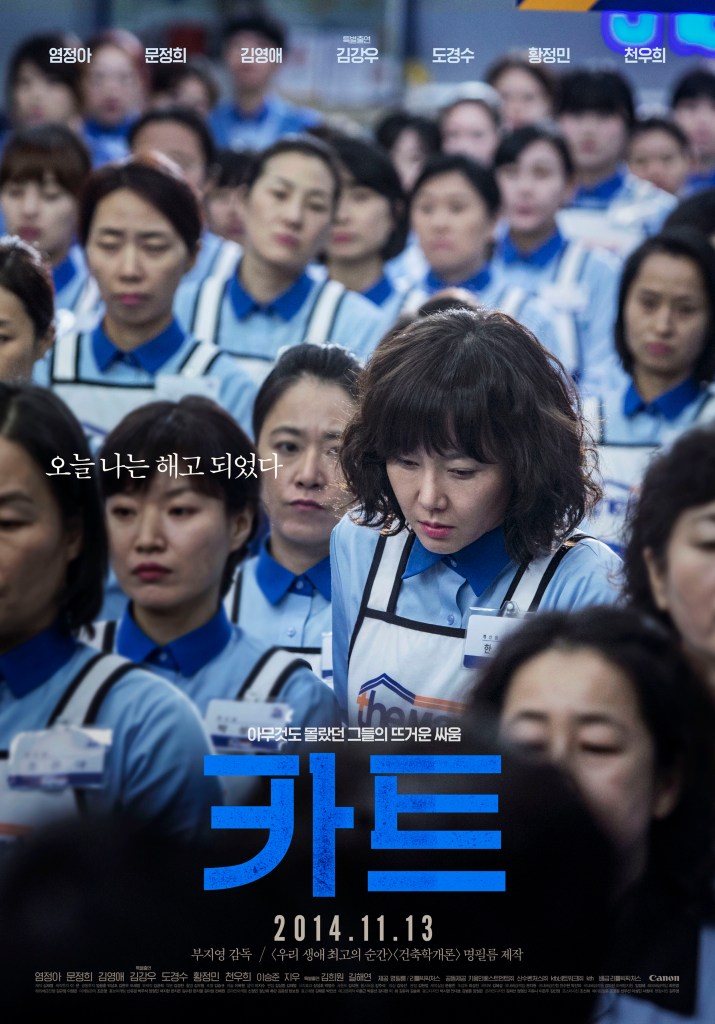
Cart (카트, Boo Ji-young, 2014)

cartUp until very recently, many of us lucky enough to live in nations with entrenched labour laws have had the luxury of taking them for granted. Mandated breaks, holidays, sick pay, strictly regulated working hours and overtime directives – we know our rights, and when we feel they’re being infringed we can go to our union representatives or a government ombudsman to get our grievances heard. If they won’t listen, we have the right to strike. Anyone who’s been paying attention to recent Korean cinema will know that this is not the case everywhere and even trying to join a union can not only lead to charges of communism and loss of employment but effective blacklisting too. Cart (카트), inspired by real events, is the story of one group of women’s attempt to fight back against an absurdly arbitrary and cruel system which forces them to accept constant mistreatment only to treat their contractual agreements with cavalier contempt.
Sun-hee (Yum Jung-ah) is a loyal employee at the Mart. She’s had zero penalty points for five whole years and has been told that she’s about to be transferred from a temp worker contract to a regular employee position. Run more like a cult than a supermarket, the Mart’s workers all wear pristine blue and white uniforms and recite the dramatic sounding company credo every morning, vowing to increase sales whilst honouring customer service, and are instructed to say “Welcome Beloved Customer!” to each and every visitor. Eager to take on extra overtime with no extra pay and always at the beck and call of brusque manager Choi (Lee Seung-joon), Sun-hee is respected by her colleagues but perhaps not always liked as her goody two-shoes persona both makes them look bad and encourages the management to continue taking advantage.

Sun-hee’s dreams are about to crumble when the evil corporate suits at HQ decide it would be cheaper to fire all the temp workers and use outsourced labour instead. Despite all her long years of hard work and sacrifice, not only is she not getting her secure position, she might not have a job at all. Some of the other women decide they’ve had enough with their poor working conditions and it’s worth taking the chance on forming a union to fight head office together. Sun-hee is reluctant but is eventually convinced to become one of the spokespeople, after all, if they won’t listen to miss five years no penalties, who will they listen to?

It’s worth asking the question why all these terrible jobs with low pay and frequently exploitative conditions are being done exclusively by women. All of the workers on temporary contracts are female from the cleaning staff to the shelf stackers and cashiers, but all come from different backgrounds from young university graduates to old ladies and ordinary working wives and mothers. The management is unwilling to listen to the concerns of their staff because they are “only women”, “working for pocket money” and should just be grateful that the store gave them something to do rather than being bored at home. Pointing out that many of these women are single mothers or live in difficult economic circumstances meaning they need that money to eat would likely not go down well with these fiercely conservative, wealthy executives whose only response is to tell the women not to be so silly and to stop making a fuss over nothing because the men have business to do.

After just ignoring the women fails and they decide to go on strike eventually occupying the store for a longterm sit in, the company go on the image offensive, offering minor concessions including the reinstatement of some, but not all, workers and other small improvements designed to guilt some of the employees with more pressing circumstances to cross the picket line. Eventually, they go to the extreme measures of employing armed thugs and riot police to remove the women by force. In contrast with other similarly themed films from other countries, there is no attempt to get the press onside to expose the company’s workings and the only news reports seen in the film are extremely biased, painting the women as selfish loonies making trouble for everyone by refusing to shut up and accept the status quo.

Following a fairly standard trajectory, the main narrative thrust is the gradual blossoming of near brainwashed and timid employee Sun-hee into a firebrand campaigner for social justice. Through being encouraged to stand up for the other women, Sun-hee becomes concerned not just with her own treatment but the general working environment in Korea. This new found indignation also helps rebuild her relationship with her sullen teenage son after he experiences some workplace discrimination of his own which his mother is able to sort out for him now that she is not prepared to simply smile, nod, and apologise every time someone attempts to get their own way through intimidation.

Cart treats an important issue with the kind of levity and interpersonal drama which make it primed for a screen one hit rather than a later night run in screen five catering to those already aware of the issues. It probably isn’t going to agitate for any direct social change and according to the final caption the outcome of the original incident was more of a bittersweet accomplishment rather than an outright victory. Still, the fight goes on, even if you find yourself ramming a supermarket trolley into a riot officer’s shield to get the message across – an effect which Cart mimics in its quest to ensure as many people as possible get the memo that the time for passive acceptance has long since passed.


Reviewed at the 2016 London Korean Film Festival.

International trailer (English subtitles)

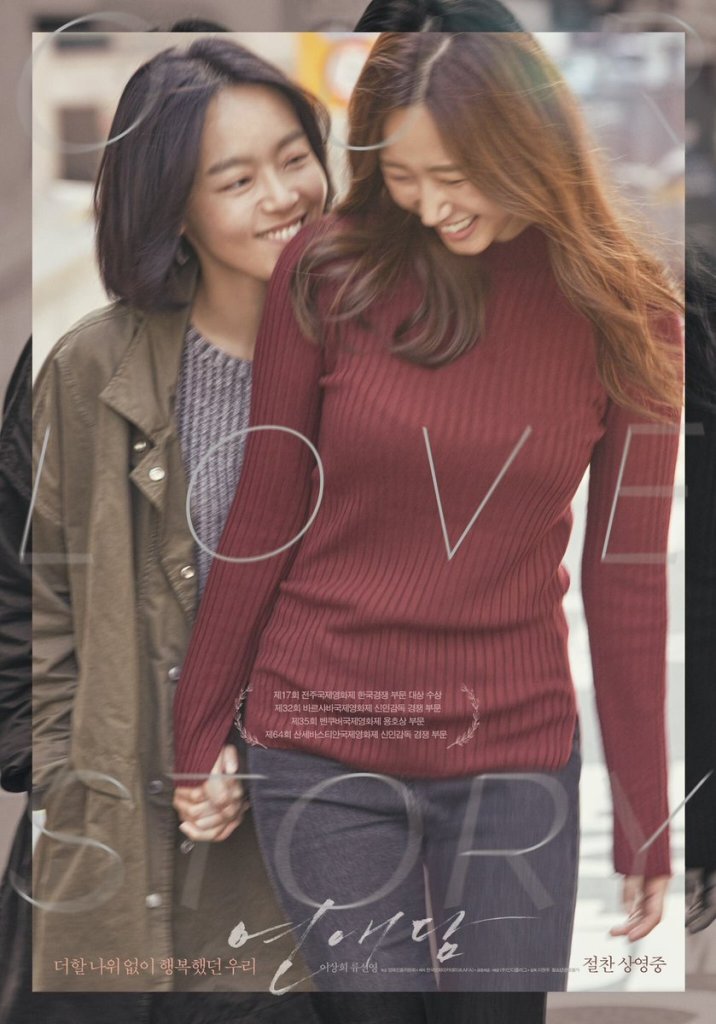
Our Love Story (연애담, Lee Hyun-ju, 2016)

cyaykwjucaav5frThe history of LGBT cinema in Korea is admittedly thin though recent years have seen an increase in big screen representation with an interest in exploring the reality rather than indulging in stereotypes. The debut feature from Lee Hyun-ju, Our Love Story (연애담, Yeonaedam), is among the first to chart the course of an ordinary romance between two women with all of the everyday drama that modern love entails. A beautiful, bittersweet tale of frustrated connection, Our Love Story is a realistic look at messy first love taking place under the snowy skies of Seoul.
Yoon-ju (Lee Sang-hee) is a busy fine arts graduate student working on her final project. Busy as she is, none of Yoon-ju’s friends can get their heads around her lack of interest in dating, but Yoon-ju is happy enough on her own and doesn’t get what all the fuss is about. Whilst perusing a local junk yard looking for interesting things for her art project, something unexpected catches her eye in the form of a young woman delivering magazines but after the woman completes her business she leaves Yoon-ju’s slightly stunned field of vision, presumably forever.

Because these things happen in a city, Yoon-ju runs into the same woman again in a convenience store where she is having trouble buying cigarettes because she’s forgotten her ID and the cashier is being pedantic about the rules. Coming to the rescue, Yoon-ju buys the cigarettes for her with her ID, which leads to the opportunity of sharing one outside. The mysterious woman is named Ji-soo (Ryu Sun-young) and works part-time at a nearby bar to which she invites Yoon-ju if she happens to fancy a drink of an evening. Yoon-ju doesn’t drink, particularly, but convinces some friends to accompany her to to Ji-soo’s bar – a plan which backfires when they drink too much and argue with each other causing a scene. The two women don’t get much of an opportunity to chat and it all seems like it might end there with Yoon-ju heading home to bed only to receive an unexpected phone call from Ji-soo inviting her over for a late night drinking session.

So begins Yoon-ju’s first romance, and Ji-soo’s 78th as she later jokes. The first night slips into the first day and before long the pair have established a happy domesticity but their original euphoria is short lived as Ji-soo is due to be moving back to her hometown to live with her recently widowed father for a while. The relationship also has adverse effects on Yoon-ju’s life as she begins to neglect her art project and lets her colleagues down by forgetting important meetings, while other events leave her questioning if Ji-soo is really as committed to Yoon-ju as Yoon-ju is to her.

After Ji-soo moves back home, the pair make sure to meet up every so often either in Ji-soo’s hometown of Incheon or in Seoul but there’s an undeniable change in their relationship aside from the distance. In the city, Ji-soo had been outgoing and unafraid but in Incheon she’s a completely different person, closed off and permanently anxious. Ji-soo’s father is a more conservative and religious type who has no idea that his daughter is gay and still expecting her to get married, preferably as soon as possible. Worried that Ji-soo “does not date” he sets her up with a family friend and she has little choice but to play along even if she’s not intending to let it get anywhere. Yoon-ju’s first visit occurs while Ji-soo’s father is away, but even so Ji-soo is uncomfortable with having her in the house. When her father turns up unexpectedly one day while Yoon-ju is there, Ji-soo describes her as “a friend” and makes a point of answering all of Yoon-ju’s questions for her in case she lets something slip.

Hurt and confused, spending time in Incheon becomes a painful experience for Yoon-ju considering the permanently jumpy Ji-soo doesn’t even want her father to know she smokes, let alone anything else he might not approve of. Earlier on the relationship, Yoon-ju made the decision to confide in an old friend from her hometown and found him broadly supportive, once he got over the surprise. Ji-soo, more experienced, warns Yoon-ju that she’ll lose friends if she isn’t careful. This Yoon-ju finds out to her cost when she decides to try talking to her roommate about her troubles with Ji-soo as even someone she felt close to and had trusted suddenly rejects her. Realising you’ve placed your trust in someone who wasn’t worthy of it is a terrible feeling, but it isn’t just familial opposition the two women will be facing if they decide to make a go of things together, even in the big city.

Post Incheon, awkwardness grows and the distance deepens prompting one to fight back and the other to retreat but eventually Ji-soo appears to make her choice in way which seems cuttingly final in its coldness. Later trying to fix what she broke, Ji-soo again goes about things in an inadvisable way, still only superficially committed and unable to fully connect on a deeper level. Ending on an ambiguous, bittersweet note which seems to offer either hope or the despairing vision of an ever repeating cycle of pain, Our Love Story is a beautifully nuanced and interestingly composed addition to the Korean indie scene finally bringing a very ordinary romance to the cinema screen in all of its everyday melodrama.


Reviewed at the 2016 London Korean Film Festival.

Clip from halfway through the film (English subtitles)

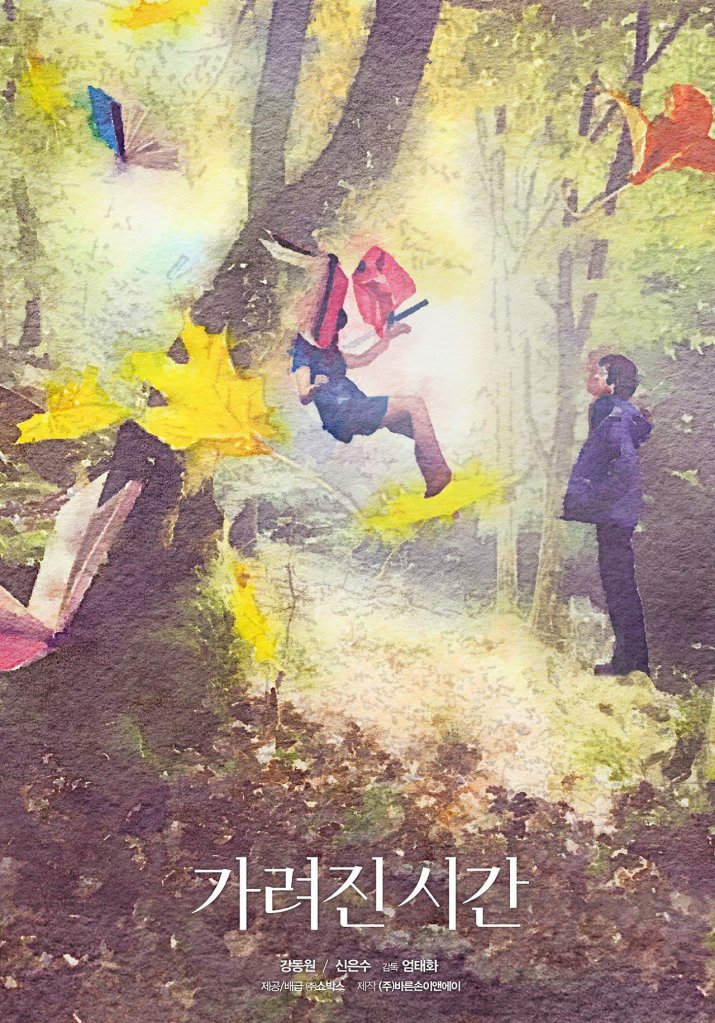
Vanishing Time: A Boy Who Returned (가려진 시간, Um Tae-hwa, 2016)

vanishing-timeWhen no time passes, does anything change? Yes, and then again, no, if Um Tae-hwa’s Vanishing Time: A Boy Who Returned (가려진 시간, Garyeojin Shigan) is to be believed. Dealing with the nature of time, connection, and faith Um’s film is a supernaturally tinged fairytale which never seriously entertains the more rational explanation offered by the naysayers, but is filled with the innocence of childhood and the essential naivety of adolescence. Melancholy, though somehow uplifting, Vanishing Time neatly avoids the pitfalls of romantic melodrama for a genuinely affecting coming of age story as its heroine is forced to make peace with her traumatic past through accepting the loss and sacrifice of her present.

Thirteen year old Su-rin (Shin Eun-soo) is an orphan, living with her step-father who has just moved to a small island where he is engaged in the construction work on a new tunnel. Sullen and lonely, Su-rin does not get on with her step-father whom she holds responsible for the death of her mother in a car accident. All Su-rin wants is to disappear into another world. In fact, she even has her own blog dedicated to exploring possible portals to alternate dimensions and the best methods for provoking an out of body experience. Needless to say, Su-rin does not fit in at school and has immense trouble making friends, especially when they stumble across her online activity and brand her a weirdo.

Su-rin does, however, bond with another boy, Sung-min (Lee Hyo-je), who (though not actually an orphan) lives at the orphanage. Sung-min seems to have some success with the methods Su-rin suggests for out of body experiences and the pair gradually build a up friendship complete with a secret written code and strange rituals. Though Sung-min’s friends Tae-sik (Kim Dan-yool) and Jae-wook (Jeong Woo-jin) don’t want any girls around, Sung-min convinces them to let her come when they sneak into the cordoned off construction area to witness the tunnel blasting. Whilst there, they discover a secret cavern in which there is a strange glowing egg at the bottom of a pool. The boys steal the egg and ponder over what it is until Tae-sik remembers a story his grandfather told about a time stealing goblin that turns children into adults and adults into old people by means of an egg found in a mysterious cave which only exists at a time of a full moon.

When Su-rin emerges from the cavern after nearly being buried by an explosion, the boys have vanished. The community begins to fear the worst – everything from child abduction to an industry conspiracy to cover up a blast related accident, but some time later Su-rin is approached by an older man who claims to be Sung-min.

Um begins the film with the lens cap of a camera as a woman gives a perfunctory voice over explaining that this is the record of her three month psychiatric evaluation of the teenager Su-rin which she hereby offers to us in the hope that we will understand her. When the lens cap comes off, a black and white montage sequence follows detailing the police investigation into the disappearance of the three boys before flashing back to Su-rin seated in front of the camera. It’s clear that Su-rin is sticking to her story, but also that she hasn’t been believed, has not managed to save any of her friends, and is, in some way, suspected of collusion in the events which have engulfed her.

Filmed with earthy browns and greens, the overall atmosphere is one of fairy tale with its supernatural rituals and stories of goblins which feast on time and misery. Obviously very affected by the death of her mother and by her resultant loneliness in having only the step-father she refuses to bond with, Su-rin has already retreated into a fantasy world despite being unable to actively cross over through any of the possible methods she explores in her blog. Bonding with Sung-min through their shared experimentation, the pair attempt a summoning ritual in which they each leave messages for a possible visitor – hers a question about her mother, his a wish that he grow tall and make enough money to retire by thirty. Su-rin’s question goes unanswered, but in the best fairy tale tradition Sung-min is going to get what he asked for, only in the most terrible of ways.

When the boys stop time it first seems like a paradise. They can do whatever they like, running round town stealing slices of pizza and peeking up ladies’ skirts but the novelty quickly wears off when they realise they’re stuck in this ever unchanging world with no means of escape. Thinking ahead, the boys study hard soaking up all the available knowledge in this completely silent universe whilst also stockpiling cash so they’ll be prepared if the hands on the clock ever start turning again. Trapped inside this bubble for more than a decade, the boys have grown into men but in body only. The lack of ongoing experience has also trapped them inside their fourteen year old minds rendering them adrift in either place. Some of them find escape in other ways yet tellingly, time comes only when despair reaches its critical mass.

Um’s painterly vision of the time stopped universe is a beautifully constructed one in which the suspended forward momentum of objects is depicted as a kind of anti-gravity where manga and crisp packets hover in the air while even the heaviest furniture can be trailed on a string like a balloon. Repeated motifs of Su-rin looking at her shadow and the occasionally strange angles give the picture an off kilter atmosphere which further brings out the creepy fairy tale quality of the abandoned Western-style cottage in the woods and its European gothic aesthetics.

Only Su-rin is prepared to believe Sung-min, convinced both by her gut instinct driven by the recognition of their original connection and the hard evidence of their unique code and the scar on Sung-min’s arm. The film never seriously entertains the “rational” explanation offered by the police, but focuses on Su-rin’s desire to restore her friend to his rightful place in society by ensuring he is recognised as Sung-min, the boy who disappeared and has returned as a man. Gang Dong-won, pale and gaunt, gives off just the right level of eerie uncanniness as this strangely innocent man-boy, desperately wanting to go home but having no home to go to other than Su-rin. A tale of innocent, selfless love, Vanishing Time: A Boy Who Returned is a melancholy, often dark exploration of the journey into adolescence captured with a beautiful, surrealist eye and a beating human heart.


Original trailer (English subtitles – select from settings menu)