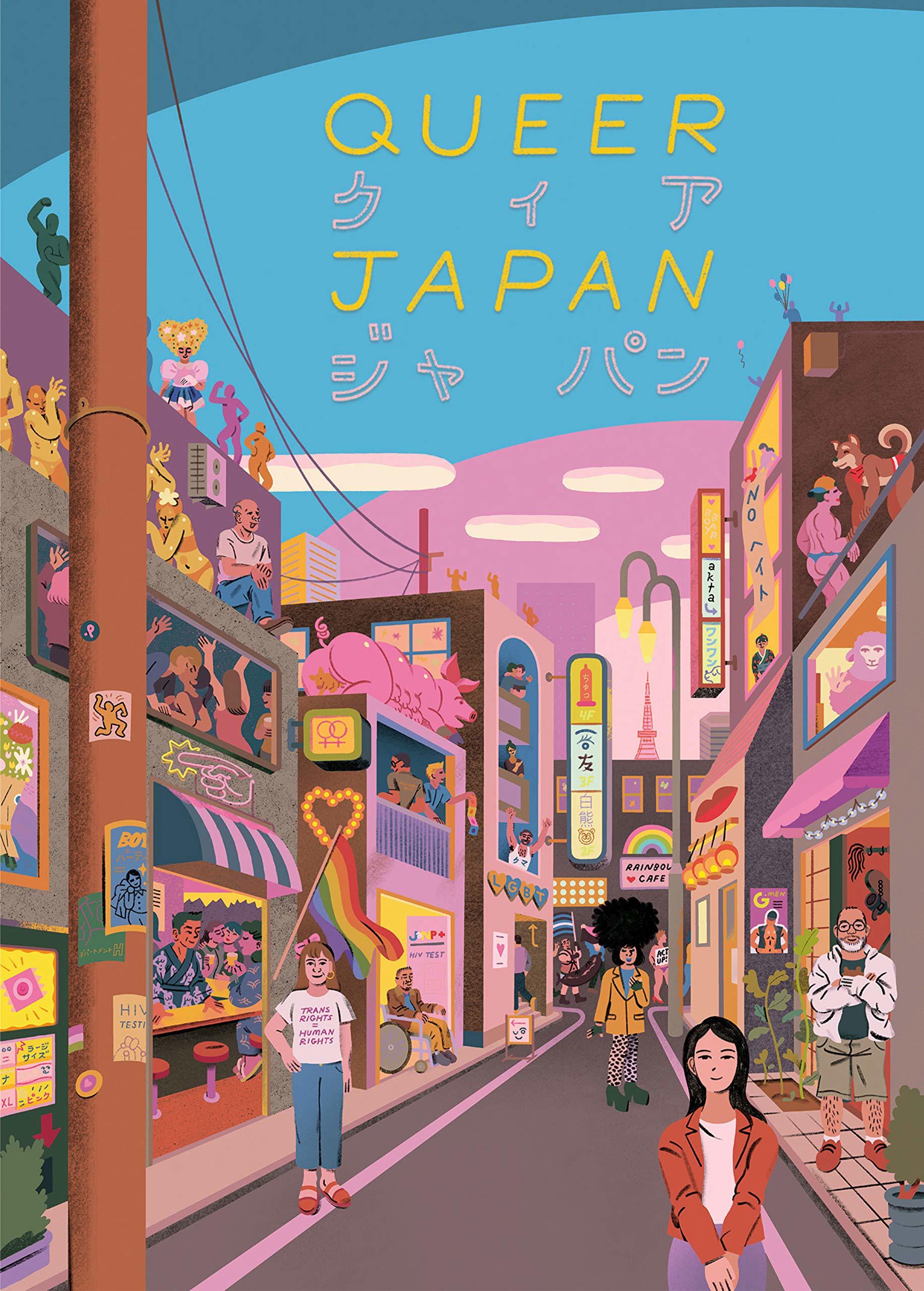
Queer Japan (クィア・ジャパン, Graham Kolbeins, 2019)

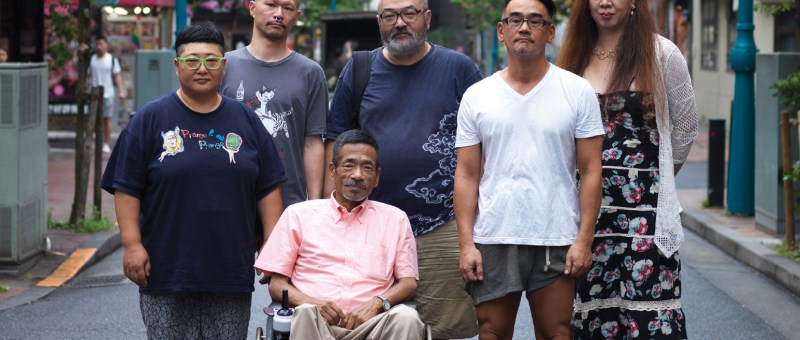
Japan has in recent years become a much more progressive place in which LGBTQ+ rights continue to advance though hopes that hosting the Olympics would finally provoke a shift in the political reality ultimately came to nothing with anti-discrimination and national equal marriage legislation still pending. Released in 2019, Graham Kolbeins’ comprehensive documentary Queer Japan (クィア・ジャパン) as its name suggests explores the lives of ordinary people across the spectrum of the LGBTQ+ community yet cannot perhaps avoid falling victim to, as one interviewee points out, a certain degree of exoticisation even while demonstrating the diversity present with the community itself.

Nevertheless, Kolbeins is keen to stress the warmth and solidarity found with the various subcultures he explores such as that surrounding Department H, a costume fetish ball at which all are welcome from gay furries and puppy play enthusiasts to avantgarde artists such as a young woman whose multi-person rubber pig giving birth is notable inclusion. As the club’s hostess, drag queen Margarette, points out the fetish scene often transcends ideas of gender, the club providing a totally safe, inclusive, and relaxed place where anyone can come to be themselves and find acceptance. 

That has not always been true when it comes to other aspects of the community as evidenced by the controversy surrounding lesbian bar Gold Finger which came under fire some years ago for refusing admittance to transwomen under its longstanding women only policy. Interviewed here Chika Ogawa outlines her original reluctance to admit transmen who had previously been frequent customers prior to transition but eventually reconsidered to team up with another group to host an evening geared towards transmen and masculine women as a place where the community can come together. 

As explained by activist Fumino Sugiyama, it is legally possible to change one’s gender in Japan though the conditions are somewhat draconian and require the surgical removal of reproductive organs which some have viewed as a breach of fundamental human rights. The change in the law was largely due to Japan’s first transgender lawmaker Aya Kamikawa who outlines how difficult her life had been unable to change her gender on her family register creating problems when trying to rent an apartment, access healthcare, or gain employment. She admits that the law passed was very strict, but laments the limits of what is possible under the current LDP administration and its ultraconservative outlook as evidenced by gaffe-prone politician Mio Sugita’s characterisation of the LGBTQ+ community as “unproductive” and therefore not deserving of social benefits. 

Pioneer of gay manga and G-Men co-creator Hiroshi Hasegawa remarks that the oppression faced by the community in Japan is often less direct than it might be elsewhere operating largely through societal shaming and a conformist social culture. Kolbeins discovers this to be true on visiting other cities such as Naha, Okinawa, where a cheerful dentist reveals that he only embraced his love of dancing at the age of 33 and spoke to no one for two years after receiving a bad reaction to coming out during university. Nevertheless, in the face of this indirect oppression the community has developed a sense of comprehensive, intersectional solidarity often coming out to counterprotest racist prejudice against ethnically Korean citizens and discovering that the anti-racist straight community often comes to Pride to support them in return. Bearing out this spirit of intersectionality, Queer Japan is fully subtitled in Japanese throughout while a deaf LGBTQ+ activist highlights the importance of proper sign language interpretation which is familiar with the community.

Even so, Japan’s LGBTQ+ community is subject to the same concerns as many others from around the world one Pride goer criticising the increasing commercialisation of the event, sympathetic that some degree of sponsorship is necessary to hold a celebration on this scale but also that you need to be accountable. Meanwhile a young trans person objects to the celebratory atmosphere insisting that all they want is to feel safe using the bathroom, love can wait. There is clearly work to do, but also much already accomplished one vox popper enthusiastically listing all of his various fetishes with thinly concealed glee while making a serious point about normalising condom usage. Featuring internationally well-known figures such as gay erotic manga pioneer Gengoroh Tagame alongside activists and ordinary members of the LGBTQ+ community, Kolbeins’ handsomely lensed doc showcases the diversity of queer life in Japan while never losing sight of the battles still to be won. 


Queer Japan screened as part of this year’s Queer East.

Original trailer (English subtitles)

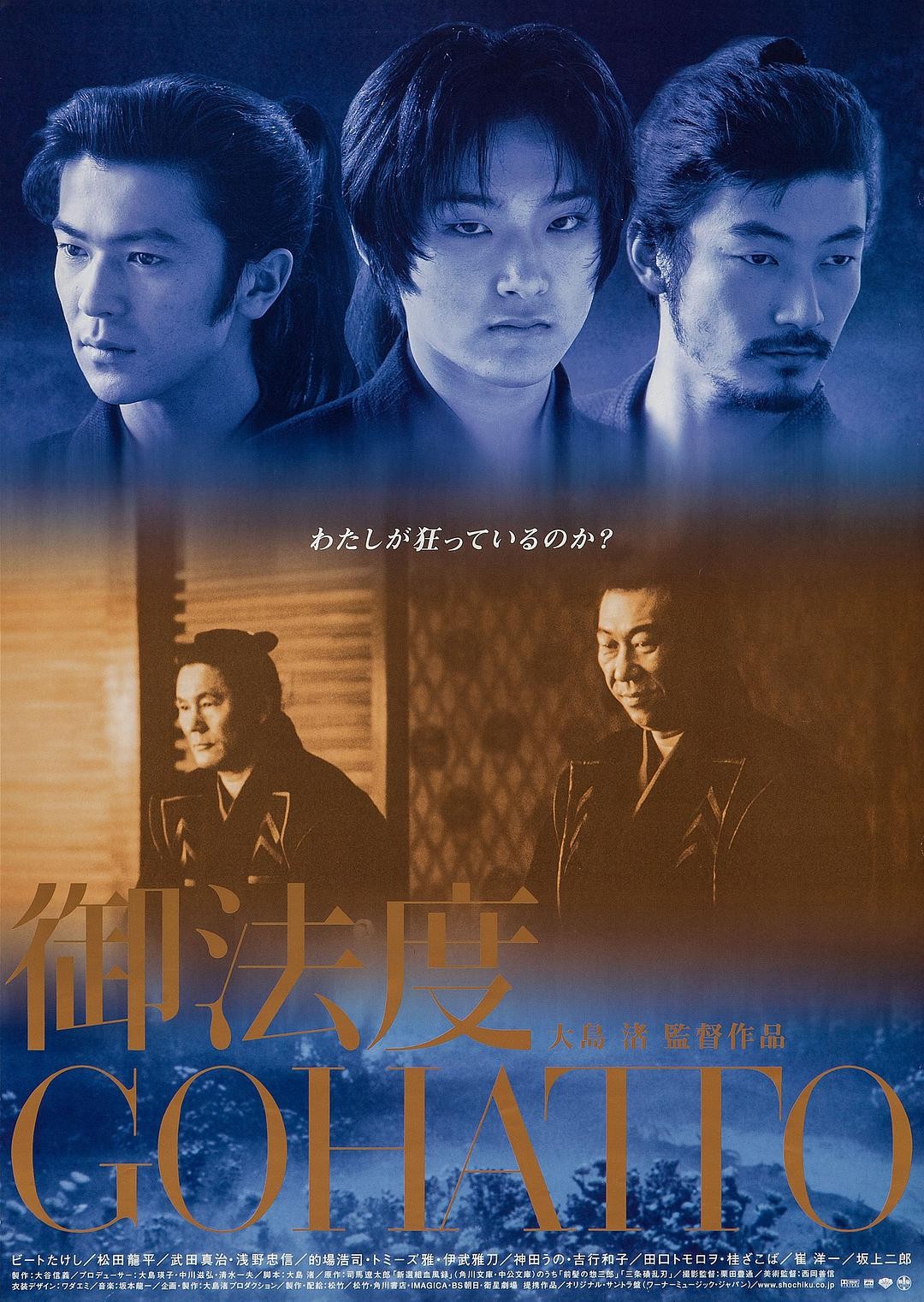
Gohatto (御法度, Nagisa Oshima, 1999)

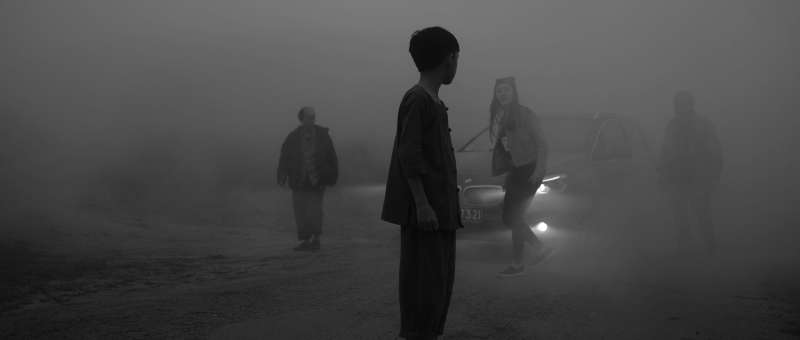
Nagisa Oshima once said that his hatred of Japanese cinema extended to absolutely all of it, decrying the hackneyed nativism of “foggy beauty and stupid gardens”, yet his final film is filled with Mizoguchian mist and almost a paen to Japanese aesthetics which ends with a cherry blossom tree in full bloom cut down in its prime. Burdened by the slightly more salacious title “Taboo”, Gohatto is less about love between men in an intensely homosocial world even as it asks what it might mean by “forbidden” or “against the law” than it is about idealism and aesthetics as its band of contradictory conservatives unknowingly approach the end of their world in a coming modernity ushered in by dangerous beauty. 

Set in the Kyoto of 1865, a scant three years prior to the Meiji Restoration, the film opens with an audition of sorts as the Shinsengumi search for promising new recruits among talented swordsmen. Already a mess of contradictions, the Shinsengumi is, loosely, a kind of official police force dedicated to defending the Shogunate against the revolutionary forces set on restoring power to the emperor. Nevertheless, in an odd way and in contrast to the elite Mimawarigumi which was staffed only by direct retainers to the Shogun, the Shinsengumi was noted for its lowkey egalitarianism in that it made a point of admitting those of ordinary birth as well as lower level samurai and ronin. Of course, the notions of equality only went so far and perhaps only fuelled its reputation for merciless savagery, but also make it a strangely progressive force fighting against progress in defence of the feudal status quo. 

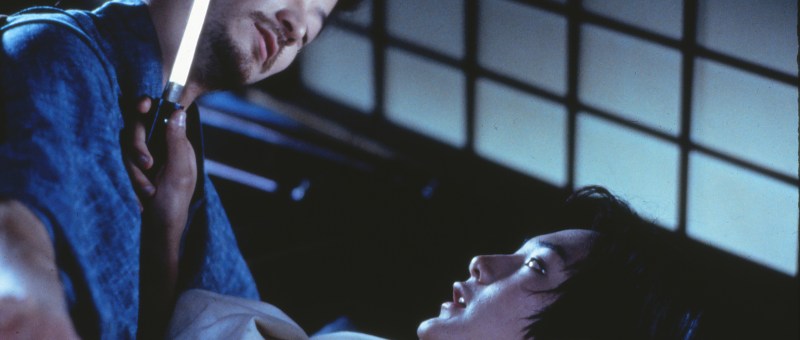
Only two of the hopefuls are thought to be any good, one a young ronin, Tashiro (Tadanobu Asano), and the other a beautiful boy, Kano Sozaburo (Ryuhei Matsuda), the third son of a wealthy merchant whose line were once samurai but are no longer counted among the noble retainers. A talented swordsman, Sozaburo’s dangerous beauty presents an existential threat to the Shinsengumi order, the steely Hijikata (Takeshi Kitano) looking on conflicted in witnessing the way his commander, Kondo (Yoichi Sai), looks at this vision of androgynous beauty remarking that he had not known him to be “that way inclined”.

Being that way inclined does not seem to be a particular issue within the Shinsengumi, it is not against their draconian rules and in fact appears to be tolerated at least as long as it causes no further problems. Kondo is however mindful of the chaos caused by a similar wave of homoerotic lust which took hold shortly before a climactic battle which would prove to be their last success. What Sozaburo seems to arouse in them is something more dangerous than the accepted patterns of love between military men which is in a sense sublimated as a mentor/student relationship, loyalty more than romance. Tashiro, who is of a similar age to the apparently 18-year-old Sozaburo, lets his desire be known, vowing to sleep with him before he dies ironically acknowledging Sozaburo for what he is, an angel of death. 

For his part, Sozaburo remains curiously passive in each of his encounters, aroused only it seems by the act of killing. Yet Hijikata discerns that he has indeed become Tashiro’s lover on witnessing them fight, Sozaburo losing clumsily despite being the more skilled in a dynamic that mimics their relationship in which Tashiro is the dominant partner. Aware of the danger in Sozaburo’s allure, Kondo suggests having a superior take him to the red light district to show him the delights of woman hoping to guide him back towards a less dangerous path, only the attempt backfires on several levels. Firstly, Sozaburo has no interest in women and continues to decline believing his commander is also hitting on him (like everyone else), thereafter determined to seduce him after all. Another retainer does indeed succeed in seducing Sozaburo, developing a mild obsession, but later ends up dead, Tashiro a main suspect in his murder with the motive of sexual jealousy though all of this additional violence is perhaps only an expression of Sozaburo’s dangerous beauty. 

As so often, sex if not love becomes the force which destabilises the social order only here it’s equated both with death and with an alternative mediation of male violence. Perhaps reflecting the way they look to the 18-year-old Sozaburo who makes a faux pas in accidentally suggesting at least one of them is of pensionable age, the ranking members of the Shinsengumi are played by actors already well into their golden years as if relics of a bygone era though in reality most were in their 30s. As Soji (Shinji Takeda), a filial figure like Sozaburo wearing long hair, puts it, there are no old men in their unit which is in essence an anti-revolutionary force. Nevertheless, the Shinsengumi is on the wrong side of history and already living in its end times, perhaps ushered towards its doom by the figure of the beautiful boy. “You were too beautiful”, Hijikata eventually laments as he finally perhaps understands the nature of the revolution he is witnessing. Perverse to the last, Oshima sets his ethereal finale in a stygian fog and pays an ironic tribute to the Mizoguchian classicism he so railed against in his youth, taking a sword to the cherry blossoms as he like Hijikata severs his own legacy in a moment of destructive beauty. 


Gohatto screens at Genesis Cinema on 25th September as part of this year’s Queer East

International trailer (English subtitles)

Madame X (Lucky Kuswandi, 2010)

“With the force of rainbows I will punish you all” transgender superhero Madame X exclaims as she takes on bigotry and self-interest to fight for human rights in a largely oppressive social culture. Despite emerging from long years of authoritarian military dictatorship in 1998, Indonesia’s LBGTQ+ community finds itself in a marginalised position with homosexuality still taboo and illegal under religious law in certain parts of the country. Lucky Kuswandi’s high camp, pure punk tale of a transwoman embracing her inner power to claim her place in society while standing up against intolerance is a bold advocation for a more compassionate world but also a whole lot of anarchic fun. 

It’s transgender hairdresser Adam’s (Amink) birthday and unbeknownst to her, her life is about to change. A mysterious client arriving at the salon warns her that she shouldn’t go dancing because there’s a kind of dance so dangerous it might end her life. Adam ignores her and goes anyway but is set up by her awful boyfriend and captured by anti-gay vigilante group Bogem who bundle all the transwomen in the place into their pickup truck for “recycling”. During the journey, Adam’s best friend Aline (Joko Anwar) is killed by Bogem leader Storm who turns out to be the head of the National Morality Front, a political party denying any ties to far right violence. Taken in by an LGBTQ+ friendly Lenggok dance studio in the dreamily named village Beyond the Clouds, Adam struggles to rebuild her life but receives a new mission when Aline appears to her in angelic form and demands vengeance. 

“There’s no place for us in the real world” Adam explains at the bar when a potential client asks what a nice girl like her is doing in a place like this, telling him that there are no “normal” jobs for women like her and so she has no other option than to make ends meet through sex work. Bogem refers to the transwomen as “trash”, as if they’re cleaning up the city while touting magnanimity in their intention to “recycle” them so they can be returned to mainstream society as “normal” men. Despite having three wives, their identities hidden by their colour-coded burkas, Storm preaches old fashioned family values but later is revealed to have ties to human trafficking mediated through Tarjo (Ikhsan Himawan), a local man continually dressed like a religious leader who himself is hiding an aspect of his sexuality from his sweet and innocent fiancée Ratih (Saira Jihan) whom he has convinced to give up her career as a lenggok dancer to become a “migrant worker”.

Lenggok, a traditional Indonesian dance, turns out to be the one that the mysterious woman said would end Adam’s life which is one reason she was reluctant to take it up, but only because the way former military instructor Uncle Radi (Robby Tumewu) is teaching it is really a martial art. Radi is himself in a happy longterm relationship with trans woman Auntie Yantje (Ria Irawan) who now uses a wheelchair because the strain of living has taken such a profound toll on her health as she and Radi attempted to stand up to injustice. With the help of mute servant Din (Vincent Ryan Rompies), they’ve built a secret base behind their bedroom filled with amazing gadgets made out of cosmetics and accessories, as well as a beautifully designed superhero suit just waiting for a hero. Adam can only embrace her destiny as Madame X by first accepting her national legacy in Lenggok dance, along with her identity as a transwoman and the trauma of her first love. 

Told in flashback, the melancholy story of Adam and Harun becomes a point origin in the tragedy of love destroyed by oppressive patriarchal authority. “You’re the one ruining my son” Harun’s father claims before literally scarring his own boy and leaving him with an internalised homophobia which encourages him to blame Adam for arousing in him such taboo desires. Yet Adam fights back with the tools used against her, vanquishing her foes with the power of the rainbow. Rich with pop culture references from the Bond-esque opening titles to a Sailor Moon meets Wonder Woman transformation scene imbued with its own particular irony, Madame X is an anarchic tale of high camp hijinks but also a heartfelt origin story for a transgender superwoman claiming her space and standing up for the oppressed in an increasingly hostile environment.  


Madame X screened as part of this year’s Queer East.

Original trailer (no subtitles)
Secrets of 1979 (弓蕉園的秘密, Zero Chou, 2021)

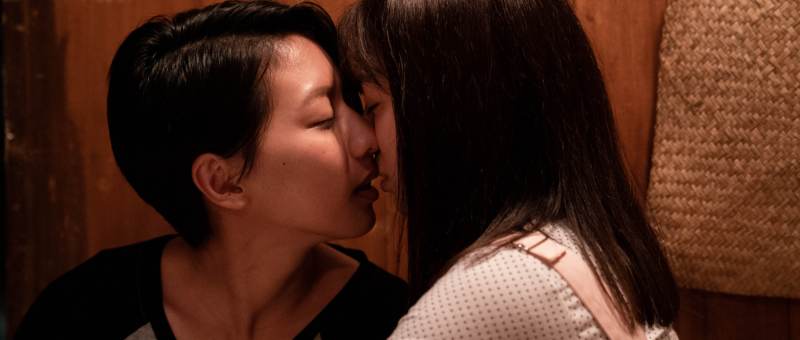
Love is a political act in the latest film from Zero Chou, Secrets of 1979 (弓蕉園的秘密, Gōng Jiāo Yuán de Mìmì). As history repeats itself, a now ageing woman is called back to the past on witnessing the Hong Kong democracy protests triggering memories of the Kaohsiung Incident and her youth fighting for political freedom in martial law Taiwan. Chou’s betrayed heroine dreams of a future in which all voices can be heard and all loves embraced, a future that in some senses may have come to pass, yet tragically too late for some forced to believe that their love must forever remain a secret. 

Malaysian student Shu-lan (Daphne Low) falls for Kuan (Chen Yu), the daughter of a banana plantation owner majoring in art as part of a teacher training programme. The pair draw closer while sharing a room, and a bed though partly because those two things are mainly the same, over the summer while Shu-lan takes a job at the farm but their innocent romance is soon overshadowed by the revelation that Kuan’s brother Siu (Hsu Yu-ting) has become involved with the movement against martial law producing a magazine critical of the government. Though they could never know it, their love will lie at the centre of a political divide, cruelly used against them even while they commit themselves to the battle for freedom and human rights. 

Soon after the film opens, a young man walks into Shu-lan’s classroom with application forms to join the nationalist governing party of the martial law one party state, the KMT. The idea does not seem popular among the students, but some are interested if treating it with a degree of irony explaining that they’d only be joining to take advantage of the generous perks which include free travel back to your hometown to vote and access to scholarships, or else because it may be advantageous in their future careers. Shu-lan is fiercely disinterested and attempts to politely decline, but the recruiter, Chih-hsiang (Sean Sun), has an obvious crush on her and won’t take no for an answer thrusting a form into her hand to think about later while lowkey resentful as she distances herself from him to leave with Kuan. 

Kuan, meanwhile, has just been subjected to an unpleasant grilling in her art class when she tried to stand up for a painter rumoured to be gay provoking a homophobic rant from several of her classmates who then openly mock her for being a lesbian. Perhaps surprisingly the rumour of homosexuality does not cause either of the girls particular problems with the authorities or their fellow students save for further irritating the extremely creepy, generally evil, and cruelly manipulative fascist Chih-hsiang who views it as merely another bargaining chip in his pointless quest to convince Shu-lan who has no interest in men (or members of the KMT) to go out with him. The problems that Shu-lan faces which are partly set up by Chih-hsiang so he can save her from them, are largely to do with her status as a foreign national and involvement with politics accused of collaborating with communists for listening to Chinese folk songs sent by her teacher in Malaysia. 

These are all reasons, along with her treatment at the hands of the authorities, that eventually convince her she must renounce her love for Kuan in order to keep her safe in fear that she too will be implicated as a politically suspicious person. Prior to that, she’d been learning Taiwanese and hoped to stay living on the banana farm with Kuan whose family seem relatively relaxed about the relationship, only for their love to be stamped out by oppressive authoritarianism and the machinations of a petty and jealous man. The bookending sequences set in the present day and featuring a Kuan who seems much older than a woman who’d only be in her mid-60s remind us that though Taiwan may have become a relatively progressive place in which same-sex marriage has been legalised, the battle is never really won as the young people of Hong Kong too campaign for freedom and democracy. But Kuan is left only with her secrets and her sadness stuck in the summer of 1979 and a love never to be told. 


Secrets of 1979 screens at Lexi Cinema on 21st September as part of this year’s Queer East. It is also available to stream in many territories via GagaOOLala.

Original trailer (English subtitles)

My Dear Friend (好友, Yang Pingdao, 2018)

“What’s right or wrong doesn’t matter anymore. Being at peace is what matters.” an old man insists, attempting to help his troubled companion regain a sense of himself at the end of his life. A magical realist fable, Yang Pingdao’s My Dear Friend (好友, Hǎoyǒu) quite literally sends its elderly heroes back into the past as if they had become unstuck in time but also bears witness to the inexorability of fate as events seem only to repeat themselves from one generation to the next. 

The film begins, however, with a literal intrusion of the present into the past as city girl Jingjing (Gabby So) drives her red saloon car, more suited to a morning commute than a trek through the mountains, into a rural village, rudely barging into the home of elderly couple A-Fang (Jiang Hong) and Shuimu (Luk Suk-Yuen AKA Robert Loh) in search of their grandson Yiming. Jingjing claims that she is pregnant and Yiming is the father, but now he’s ghosted her so she’s come to make him assume his responsibilities. Unfortunately Yiming isn’t there, but rather than scandalised or ashamed as one might have assumed them to be, A-Fang in particular and her husband seem to be both relieved and excited to the extent they don’t really want Jingjing to leave which might explain why her car won’t start the next morning. 

While staying with the elderly couple, Jingjing hears that absent fathers run in the family. Shuiming’s father disappeared suddenly without warning or explanation leaving his mother to raise him alone, while his son also abandoned Yiming to run off with an impoverished bar hostess who had four children of her own. Yiming’s mother remarried, leaving the boy with his grandparents. Jingjing asks why Shuimu didn’t leave and he doesn’t answer her, but following him around she may have stumbled on the answer in his 60-year, apparently secret friendship with a man of the same age who appears to be mute and intelligible to Shuimu alone. Zhongsheng (Lu Haoquan), as the man is called, is a man without a past apparently having no memory before the age of ten. Once her car is fixed, Shuimu asks Jingjing to drive them to another village 300km away where Zhongshen thinks he may be from, obsessed with a rumour about a child who survived a massacre by “four psychos” after falling into the river. 

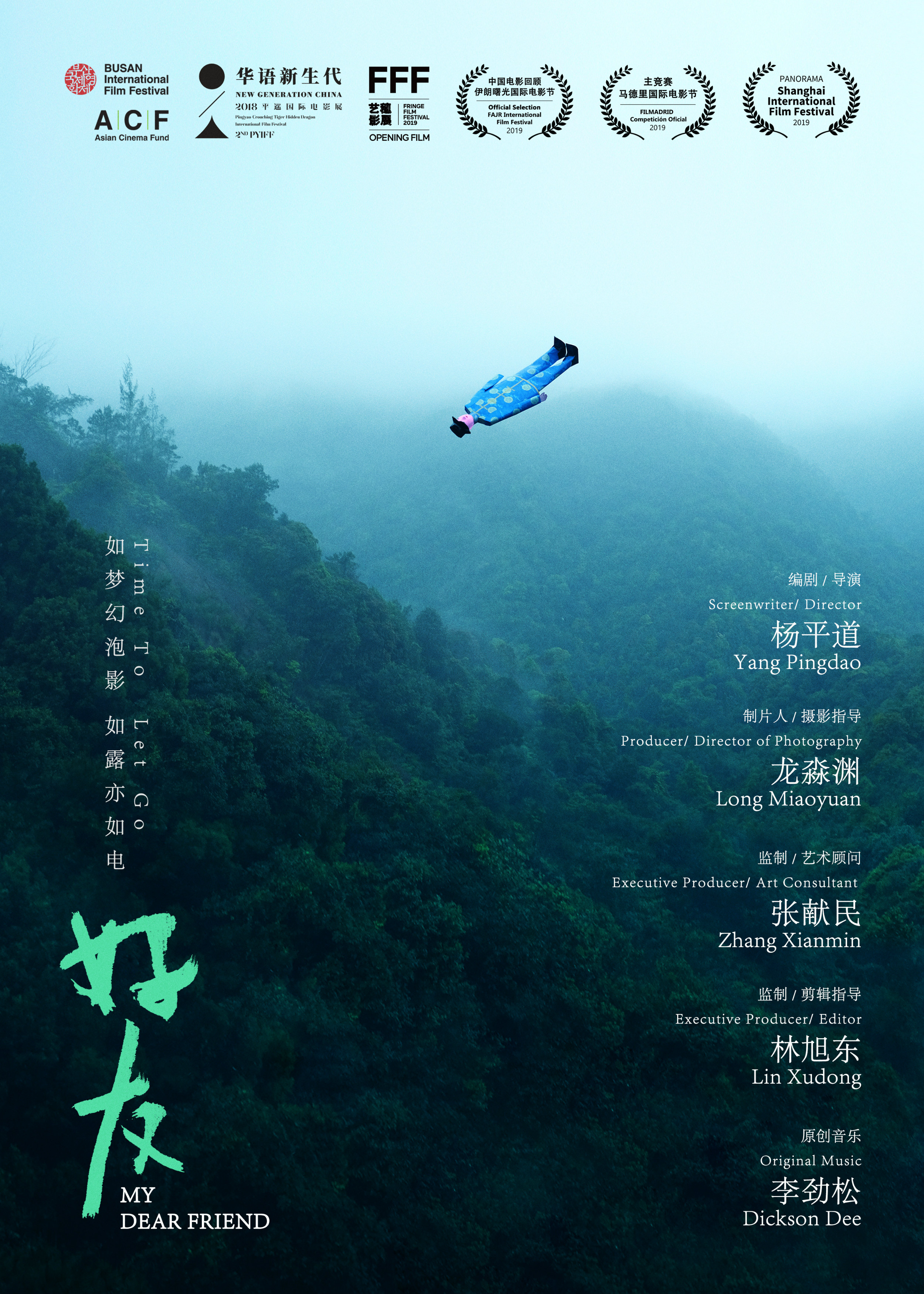
Things that drift loom large. Shuimu muses on a giant fish head apparently washed down by the voiding of the dam the head then linking back to a strange pipeline that reminds them of a giant whale only without its mouth as if something had been uncapped or opened to the elements. Travelling through mist and fog, the trio stop their car in what seems to be the meeting of a wedding and a funeral as a procession passes by them made of men and women from another time, wearing donkey jackets and silently carrying umbrellas, seemingly filled with solemnity. Shuimu and Zhongsheng encounter younger versions of themselves, a version of their story replaying itself as the boys become men who might equally be Yiming and his friend in this strange place where past and present co-exist. 

Yet Shuimu is perhaps looking for the truth of himself as much as his friend, Zhongsheng’s name apparently originally his only his mother changed it on the advice of a fengshui master worried he lacked water (水 shui) and wood (木 mu) though Shuimu liked the other name better. He also gives Zhongsheng his own birthday, making of him another self, in a sense a secret shadow self unable to speak though Shuimu is always able to interpret his thoughts perfectly. He sees a similarity in Jingjing and A-Fang, one which she also sees, a little jealous of the younger woman’s freedom lamenting the simplicity of her wedding and harshness of her life since. Both sharp tongued they’ve become prickly in the unreliability of men, each searching A-Fang like Zhongsheng’s mother calling out at night for her wandering husband only hers always comes back. Don’t become like me, she tells Jingjing, pledging to drag Yiming back and give her the proper wedding she never had. 

Zhongsheng complains A-Fang haunts him like a phantom, yet everyone here is already a ghost literally haunted by historical trauma and parental failure. Shuimu and Zhongsheng search for truth and identity, but find themselves in a place they no longer recognise which in turns claims not to know them. Perhaps truth isn’t so important, Shuimu claims, as peace, deciding the entire earth is a grave, make your offerings where you will. Aided by the rolling mists, Long Miaoyuan’s ethereal photography adds to the sense of mythic grandeur in this long sad story of enduring male friendship and perpetual orphanhood carried away in the grand ever flowing river of life and death.


My Dear Friend screens at Curzon Hoxton on 18th September as part of this year’s Queer East.

Original trailer (Simplified Chinese / English subtitles)

Number 1 (男儿王, Ong Kuo Sin, 2020)

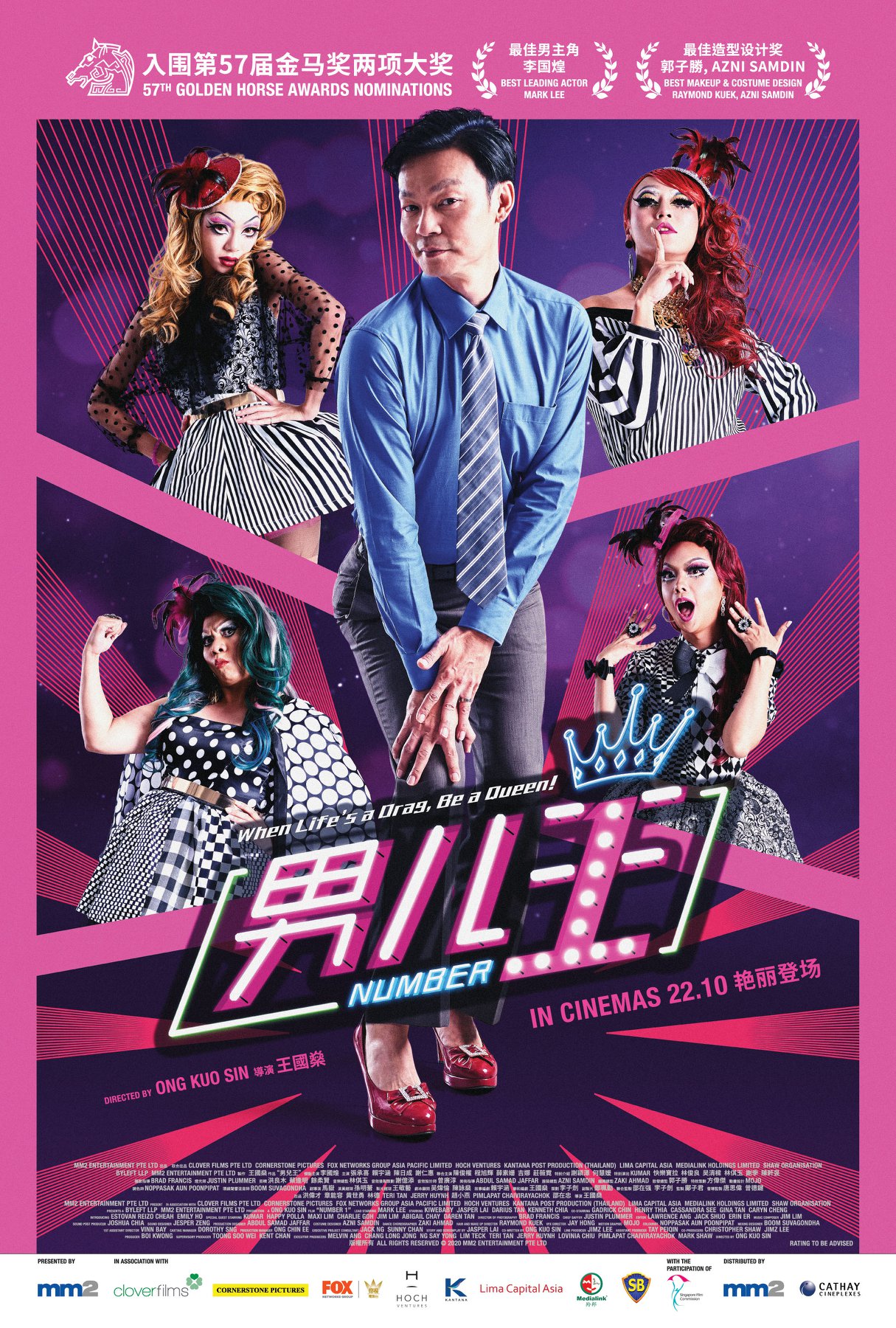
“What I don’t understand is your so-called rules and traditions. Just what good does it do?” a newcomer ironically asks of a veteran drag artist, having perhaps shed but not yet quite acknowledged his original prejudice towards those different from himself. Ong Kuo Sin’s cheerful drag dramedy Number 1 (男儿王, Nán’ér Wàng) examines attitudes to the LGBTQ+ community in the comparatively conservative nation of Singapore where sexual activity between men remains illegal even if the law is not heavily enforced, while subtly undermining oppressive group think as to what constitutes a “successful”, “normal” life. 

44-year-old Chow Chee Beng (Mark Lee Kok Huang) is a successful general manager at a construction firm where he’s worked for the last 17 years which is the entirety of his working life. It comes as quite a shock to him therefore when he’s unceremoniously let go, passed a letter of termination seconds after entertaining everyone with a song at the office New Year party. Given his experience, he perhaps feels that getting another job won’t be too difficult, but as various employers tell him he’s either “too old” or “too expensive” for the competitive Singapore job market. Faced with the prospect of telling his wife they’ll have to sell their luxury detached home because he can’t make the mortgage payments, Chee Beng is forced to accept the last resort offer from his recruitment advisor which happens to be as an AGM at local drag bar Number 1. 

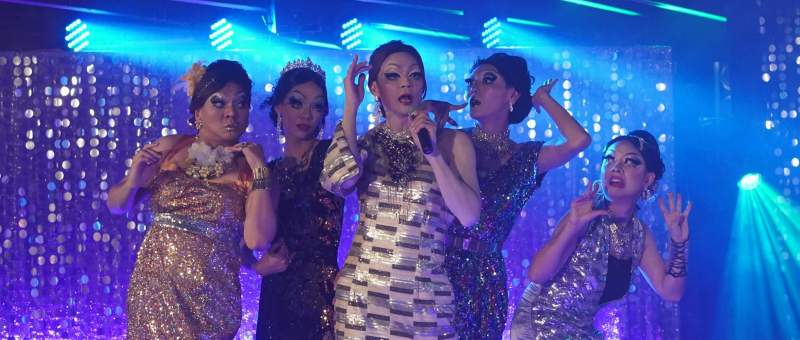
Like many men of his age, Chee Beng has a rather conservative mindset and had been living a very conventional life of suburban, middle-class success. His wife Marie (Gina Tan) even complains to her sister-in-law that their new swimming pool is a little on the small side and she’s thinking of swapping it for a bigger one. Yet as his performance stint at the company party implies, he is perhaps holding a part of himself back thinking that his love of singing is frivolous or even a little taboo given his wife’s mild embarrassment. The drag bar is therefore firmly outside his comfort zone. Not only does he lack experience managing an entertainment venue, but finds it difficult to overcome his sense of discomfort with those living lives so different from his own. When one of the drag artists turns out to be a deserter from the army and is carted off by the military police, Chee Beng finds himself press-ganged into performing and discovers that he is something of a natural though he doesn’t understand why they have to lip-sync to pre-recorded tracks rather than singing live. 

Chee Beng’s point seems to hint at a concern about the ability to completely embody the performance and fully express himself, yet he’s also a straight man wading into a predominantly LGBTQ+ community he knows nothing about and insisting on having his own way. That brings him into an additional conflict with former number one Pearly (Kiwebaby Chang) who dragged him on stage in the first place because with only four performers she wouldn’t be able to stand in the middle. Pearly might feel that lip-syncing completes her performance because she lacks the ability to sing in a feminine register, yet Chee Beng ironically accuses her of mandating a no singing rule in order to mask her own weakness while simultaneously attempting to mandate live singing in order showcase his strength as a performer. 

But even if he’s come to feel at home in the drag community, Chee Beng continues to keep his new life a secret from his socially conservative wife. When a video of him singing at the club goes viral, Chee Beng’s wife and sister-in-law react by taking the children’s phones away as if seeing it is in some way harmful. Later on seeing a poster for the Queens she irritatedly tells Chee Beng they should be banned by the government for giving children “wrong ideas”. Meanwhile their son Mason is conflicted in being a boy asked to play the part of Mulan in the school play, claiming he dislikes the character of Mulan because she “lies” about who she is while his father can only sympathise offering the justification that sometimes people have to lie in order to protect those they love. When Chee Beng’s identity is exposed, little Mason begins receiving vile hate mail online and all his friends stop playing with him. Yet he doesn’t see anything wrong in “wearing a dress” and can’t understand why everyone, including his mother, seems so upset. Marie complains that Chee Beng’s new life is “confusing” for Mason, but he doesn’t seem confused at all because he hasn’t yet had time to absorb the “wrong ideas” from the conservative world around him. 

That conservative world has been a very dark place for some of the Queens, Pearly revealing that she believes her coming out drove her parents in Taiwan into an early grave, while bar owner Fa’s brother took his own life, and the gang experience homophobic harassment from a man who turns out to be the high school bully who made one of their live’s a misery. Nevertheless, the sudden and otherwise unexplained reversal in the attitudes of some seems more than a little contrived for an otherwise uncomplicated happy ending despite Chee Beng’s defiant message that he wants his son to grow up “different” in that he learns early on not to be prejudiced against those different from himself and goes on to be happy with whoever he is rather than blindly following the rules of social conformity. Drag is for everyone, and becoming a member of the supportive drag queen community even helping out fundraising for a local LGBTQ+ friendly nursing home, Chee Beng begins to see a different way life that opens his eyes to the constraints of the way he lived before swapping the trappings of extreme consumerism for personal fulfilment and compassion for others. 


Number 1 screens at London’s Genesis Cinema on 18th September as part of this year’s Queer East.

Original trailer (English subtitles)

My Sorry Life (愛のくだらない, Kozue Nomoto, 2020)

A dejected, self-involved TV producer is forced into a moment of introspection when dealing with relationship breakdown and career setback in Kozue Nomoto’s ironic character study My Sorry Life (愛のくだらない, Ai no Kudaranai). Examining a number of social issues from women in the workplace to attitudes to LGBTQ+ people in contemporary Japan, Nomoto’s unflinching drama never lets its abrasive heroine off the hook even as she begins to realise that her own less than admirable behaviour has contributed to her present sense of despair and impossibility. 

Kei (Maki Fujiwara) has been in a relationship with former comedian Yoshi (Akiyoshi Okayasu) for the last five years, but it’s clear that she is beginning to tire of him. The couple are supposedly trying for a baby, but Kei has been taking contraceptive medicine behind Yoshi’s back while complaining that she doesn’t understand why he insists on getting pregnant before getting married when he hasn’t even met her parents. At work meanwhile she’s beginning to feel left behind, secretly jealous when a slightly younger female colleague reveals she’s been promoted to become the lead producer on a variety show and a little resentful when her idea for a programme focusing on the lives of ordinary people as opposed to celebrities is turned down by her bosses. The idea does however bring her to the attention of indie exec Kinjo (Takuma Nagao) who wants to bring her on board to produce a web series he’s about to launch along the same lines. And then, Yoshi drops the bombshell that he thinks he’s pregnant which is, to say the least, unexpected. 

Yoshi’s surprise announcement signals in a sense a reversal of traditional gender roles within their relationship with the man the nester and woman reluctant commitmentphobe. Kei is also the main financial provider, but on some level both resents and looks down on Yoshi for his lack of conventional masculinity having given up his comedy career to work part-time in a supermarket, obsessing over discount produce like the pettiest of housewives but often indulging in false economies such as reduced price yet still extravagant sake. Strangely, Kei goes along with Yoshi’s delusion taking him to a fertility clinic where she assumes they’ll set him straight but thereafter begins staying with a friend who ironically has an infant child and may be experiencing some difficulties in her marriage to which Kei remains entirely oblivious. 

Despite her journalistic desire to witness everyday stories, Kei is often blind to those around her never stopping to wonder if Yoshi is trying to tell her something through his bizarre pregnancy delusion or if her friend might need someone to talk to. She does something similar on spotting the office courier (Yukino Murakami) whom many of the ladies have a crush on using the ladies’ bathroom. Assuming the delivery guy is a lesbian she asks him about coming on the webshow, becoming even more excited when he explains that he’s a transman after inviting Kei to an LGBTQ+ friendly bar where he works part-time. Kei doesn’t realise that her throwaway comment that “that sort of thing is popular now” hurts Shiori’s feelings and leaves him feeling exploited as much as he would like to appear on the programme to raise awareness about LGBTQ+ issues. 

For her part, Kei is obviously not homophobic but does undoubtedly treat Shiori and his friends with a degree of exoticism, declaring that she’s never met anyone like them before while staring wide eyed in wonder as if these concepts are entirely new to her. Kinjo, the producer of the web series, is squeamish when Kei raises the idea, introducing her to a male scriptwriter who obviously already has his own concepts in mind, rudely ignoring Kei’s input while dismissively allowing his drink to drip on her proposal. The studio turn the idea down on the grounds that LGBTQ+ topics are “inappropriate” because there may be children watching and parents won’t want to explain words like “gay” or “lesbian” to their kids. Kei is rightly outraged, but she’s also a hypocrite because her intentions were essentially exploitative and self-interested. She wasn’t interested in furthering LGBTQ+ rights, she just wanted to chase ratings. 

Kinjo dresses up his personal distaste as a dictate from above but it’s clear that he doesn’t really value Kei’s input and continues to treat her poorly for the entirety of the project, blaming her for everything that goes wrong and expecting her to fix it on her own. There’s even an awful moment when Kei’s friend Tsubaki (Sayaka Hashimoto) shows up with her baby and one suspects they may be about to rope her in as a replacement guest, but the result is even worse as Kinjo stares into the pushchair and then throws the pair out while embarrassing Kei in the process. 

“Being busy’s no excuse for being unreliable” Tsubaki sympathetically tells her though it takes a few more setbacks before Kei begins to realise that she’s been unfair and to be honest generally unpleasant to those those around her. Feeling inferior, she makes a point of bumping into an elderly male janitor, treating him with contempt even when he stops to try and help her after she collapses in the office. Only through an ironic moment of emotional honesty which allows her to come to an understanding of her relationships does Kei begin to piece things together, reflect on her own mistakes and anxieties, and realise what it is she really wants. A contemplative reconsideration of accepted gender norms, Nomoto’s gently humorous drama never lets its heroine off the hook but does allow her to find new direction if only through confronting herself and the world in which she lives. 


My Sorry Life streams in the US until Sept. 2 as part of this year’s Japan Cuts.

Original trailer (English subtitles)

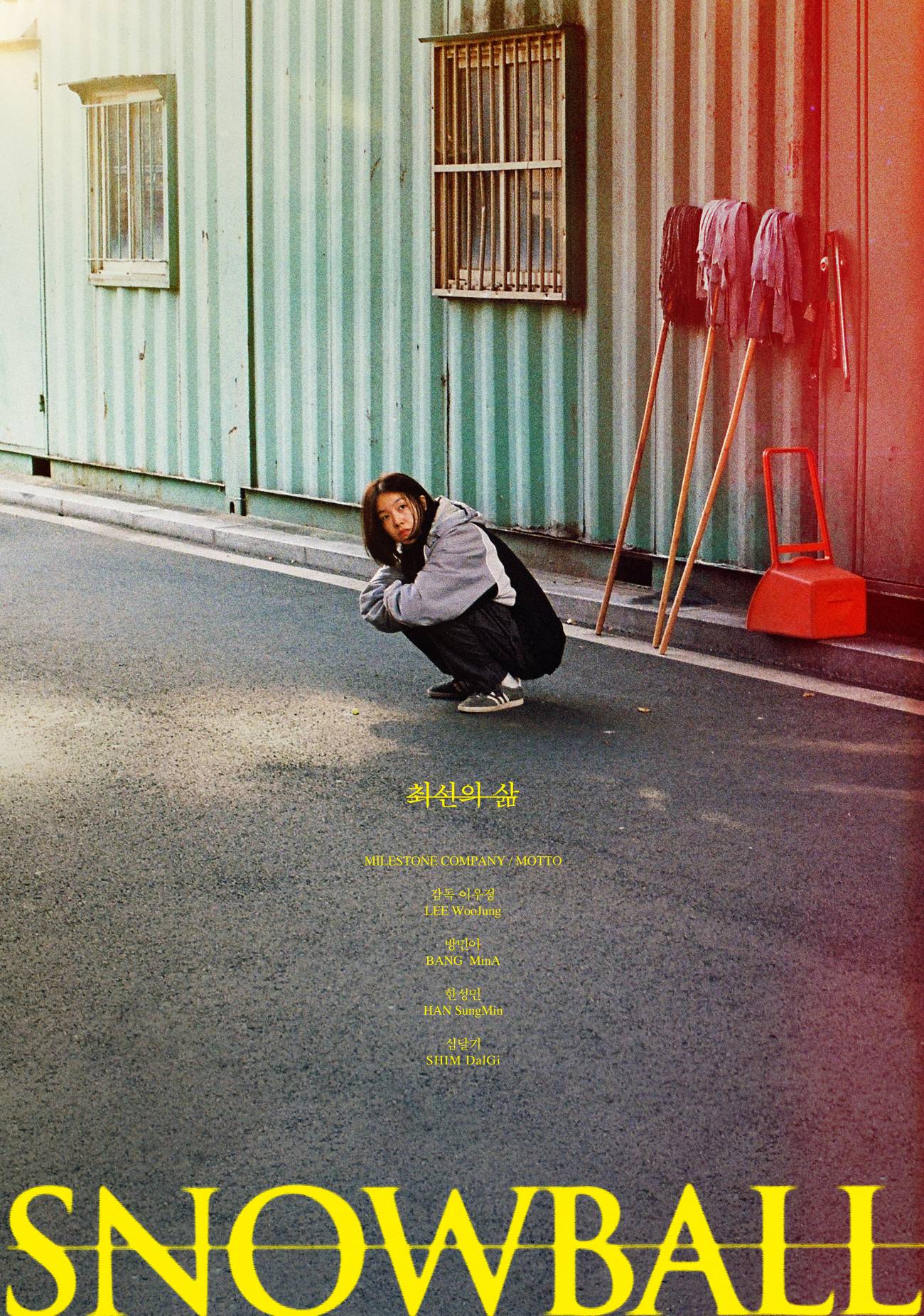
Snowball (최선의 삶, Lee Woo-jung, 2020)

Three teenage girls seeking escape from an unsatisfying adolescence find only betrayal and disappointment in Lee Woo-jung’s sensitive adaptation of the novel by Lim Solah, Snowball (최선의 삶, Choisunui Sarm). Each oppressed by a resolutely patriarchal society, the three women nevertheless differ in the their respective traumas and resentments finding solidarity in the strength of their friendship only to witness it crumble when its barriers must necessarily be confronted. “Why did you do this to me?” Kang-yi (Bang Min-ah) eventually asks, only to receive no answer and realise that in the end they did to and for themselves. 

Though perhaps feeling a sense of familial rejection in the otherwise peaceful home she shares with her overly religious Buddhist mother, emotionally reserved father, and a little dog also yearning for love, Kang-yi is ostensibly the least burdened of her friends if facing a similar sense of detachment. Aloof golden child So-young (Han Sung-min) is clever and pretty, everything seems to go right for her as Kang-yi enviously explains, except for her dream to become a model and actress which her family apparently don’t support. Ah-ram (Shim Dal-gi), by contrast, is quirky and rebellious with a tendency to collect stray animals and other items from the street little caring who they may or may not belong to but is also trapped in abusive home with an authoritarian father. When So-young one day suggests running away together the other girls agree, but after the novelty wears off and they begin to run out of money the realities of a forced adulthood are suddenly brought home to them. 

The depths of their naivety are perhaps signalled in an early and misguided attempt to misuse a potentially predatory middle-aged man who offers them money for food, allows them to stay in his apartment, and suggests an improbably low stress job they might be able to do for him. As she’s want to do, Ah-ram runs off with his wallet only to begin feeling sorry him seeing as there’s so little in it and he is so clearly lonely even if So-young proclaims him a creep. Picking up a mattress in the street the girls end up sleeping in a stairwell, only for Kang-yi and So-young to return and find Ah-ram apparently beaten and raped by a man she later willingly returns to, talking as if such brutal treatment is a normal part of any relationship. “Children, when you’re in love you sometimes get into fights” she depressingly explains, later implying that her violent boyfriend has become her pimp as she slides into sex work in an effort to provide economic support to all three of them. 

So brutalised is she, that Ah-ram thinks nothing of the abuse she continues to suffer while So-young solipsistically wallows in a sense of defeat and despair. It’s at this point she whips out a credit card she’s apparently been carrying all along, her choice not to use it seemingly less about the possibility of its being traced than a stubborn desire to insist she is as underprivileged as her two friends. As we later discover, Kang-yi lied about her address to get into the school and in fact lives in a run-down semi-rural area some distance away, secretly regarded as even more of a hick provincial by the upwardly mobile So-young. Nevertheless, it’s not class differences which eventually shatter their friendship but repressed sexuality. One extremely hot evening, So-young and Kang-yi share a moment of physical intimacy but while it only seems to bind Kang-yi more closely to her friend, So-young is unable to cope with the taboo realisation of her desires and becomes increasingly irritable, distancing herself from both of the other girls before abruptly deciding to call the experiment in independence short and return to her parental home. 

All Kang-yi wants is a return to their former friendship, but So-young’s repression eventually turns violent. Rejecting Kang-yi and Ah-ram she becomes a part of the popular set and embarks on a campaign of bullying that leaves Kang-yi both physically bruised and emotionally wounded. Yet she is also in her own way repressed, unable to accept her parents’ love for her and often ignoring the plaintive cries of the family dog longing to be picked up and held. Neither she nor Ah-ram are able to conceive of a future for themselves, Kang-yi’s sense of rejection eventually pushing her towards a self-destructive act of violence that will further rob her of possibility and the potential for happiness. Captured with a restless, roving energy imbued with with the colours of twilight, Lee’s melancholy indie drama suggests that not even friendship can provide a refuge from the pressures of the modern society and its relentlessly oppressive social codes in which internalised shame can quickly snowball into an avalanche of violence.


Snowball screened as part of this year’s New York Asian Film Festival.

Festival trailer (no subtitles)

Georama Boy, Panorama Girl (ジオラマボーイ・パノラマガール, Natsuki Seta, 2020) [Fantasia 2021]

“As long as you have a girl you can cope with anything. Who cares what’s happening in the world?” the lovestruck hero of Natsuki Seta’s Georama Boy, Panorama Girl (ジオラマボーイ・パノラマガール) blusters floating around on a cloud of adolescent intensity. “Man, you’re crazy” his more mature workmate replies with unconcealed exasperation. Adapted from a manga by Kyoko Okazaki, Seta’s post-modern drama like her previous film Parks recalls the lighthearted teen movies of the Bubble era even as it gleefully subverts rom-com norms as the mismatched youngsters repeatedly glide past each other experiencing parallel though connected episodes of romantic disillusionment in a rapidly deconstructing city. 

The heroine, Haruko Shibuya (Anna Yamada), is a dreamy, romantic sort of girl who’s read too many shojo manga and wishes the summer could go on indefinitely because she wants “to dream longer”. Kenichi Kanagawa (Jin Suzuki), by contrast, is a slightly nerdy young man who upends expectation by suddenly standing up mid-class after being forced to take a test on the first day back after the summer holidays to announce he’s quitting school because he’s realised it’s just not necessary for him. As if trying to get his mid-life crisis over as early as possible, Kenichi picks up a skateboard and starts hanging round in Shibuya unsuccessfully trying to pick up girls until he catches the attention of a free spirited older woman, Mayumi (Misato Morita), only to be unceremoniously beaten up by her maybe boyfriend after being spotted together in a cafe. Bloodied, bruised, and collapsed in the street is how he eventually meets Haruko who stops to see he’s OK and then randomly gifts him her combini purchases, keeping hold of his school ID card which is how she figures out who he is. 

Being a teenage girl, Haruko, like her friends Kaede (Erika Takizawa) and Maru (Kogarashi Wakasugi), longs to fall in love and thinks meeting Kenichi is her romantic destiny even over investing in its potency in believing their love is probably necessary in order to save the Earth from calamity like the star-crossed lovers from a shojo manga. As their names suggest, Haruko is the city centre whereas Kenichi is the provincial suburbs, but they spend their time dancing around each other living out parallel love stories as Kenichi continues to obsess over Mayumi whose free-spirited frankness is tinged with sadness while her toying with a lovestruck teen has an almost self-destructive quality. Each of them experience a moment of romantic disillusionment realising that their adolescent visions of pure love are essentially unrealistic and that chance meetings are sometimes just that intended to go no further because life thinks nothing of the rules of narrative causality. 

The failure of Haruko’s romantic dreams prompts her into a further moment of introspection as she continues to wonder if everything around her is merely an illusion. Meanwhile, the TV news is a catalogue of contemporary anxieties from an early report on a young woman who took her own life rather than return to school because of rampant bullying not to mention exam stress, to a protest over nuclear weapons and conscription, and even one about a potential response to meteors and aliens. The Tokyo the teens inhabit is one of constant uncertainty, a city half-built and in a state of limbo remaking itself for the upcoming Olympics (which ironically we now know will only half arrive). Yet as Kenichi had suggested, the teens barely notice what’s going on in the world around them so caught up are they in their adolescent dramas finding themselves less star-crossed than at cross purposes in their mutual romantic dilemmas. 

Just like the teen movies of old, Seta draws inspiration from the French New Wave as the youngsters frequently monologue across each other sometimes in sync and others not their dialogue in a sense pretentious but also filled with the naive intensity of youth as they each attempt to navigate their way towards a more mature adulthood. With a charmingly timeless retro quality, Georama Boy, Panorama Girl embraces the absurdity of teenage love but finally opens the door to something more “real” brokered in a way by twin heartbreak followed by a mutual resetting as the pair walk out into a new dawn now more ready to meet whatever it has waiting for them. 


Georama Boy, Panorama Girl streams in Canada until Aug. 25 as part of this year’s Fantasia International Film Festival.

International trailer (English subtitles)

The Two Lives of Li Ermao (他她:李二毛的双重人生, Jia Yuchuan, 2019)

“The only thing I’ve ever wanted is someone with whom to live a normal life” Li Ermao explains thinking she’s found it only to have it slip through her fingers once again. Photographer Jia Yuchuan first met Ermao while working on a project with the LGBT community becoming as she describes it something like a big brother. Following her over 17 years, Jia’s documentary The Two Lives of Li Ermao (他她:李二毛的双重人生, Tā Tā: Lǐ Èrmáo de Shuāngchóng Rénshēng) witnesses her constant search for acceptance in a rigid and conservative society the pressures of which also contribute to her sometimes self-destructive behaviour. 

As Ermao explains in an opening onstage monologue, she is not a man dressing as a woman though once thought of herself as crossdressing before living as a “ladyboy” and now identifying as a transgender woman. Jia begins in a sense with her high point at which she has achieved a degree of success as a cabaret performer despite having no formal training in singing and is in what seems to be a positive and loving relationship with a young man, Jiang. Things start to go wrong when Ermao fails to capitalise on the possibility of recording an album while her self-destructive gambling habit begins to eat away at her relationship with Jiang who eventually leaves her. 

As Jia explains, Ermao would often drop out of contact with him for unexplained periods of time despite describing him as an indispensable big brother. After another self-destructive episode renting out her spare room to randomers from the internet to escape her loneliness, Ermao next calls Jia to introduce him to her new boyfriend, Long, over whom she has apparently just attempted to take her own life prompting him to call the police which ends both with her being evicted by her fed up landlady and arrested for the possession of illegal drugs. 

Worried about her elderly mother, Ermao takes Long with back to her hometown but quickly finds herself conflicted in this even more conservative environment where she’s “Li Guomin’s son”, the villagers by turns bemused and scandalised by her feminine appearance. Ermao ran away to live on the city streets following the death of her father who, we learn, was a notorious people trafficker who kidnapped and sold women and children including Ermao’s younger brother who he sent away to Hainan while rumoured to have eaten the corpse of the stillborn baby who would have been Ermao’s elder. This might go someway to explaining the animosity with which she is held in the village, along with the fact that as she’s been away so long and was not expected to return other farmers have long since colonised her land and are not minded to return it. Stubborn, Ermao pitches a tent and tries to make a living chicken farming on the tiny patch that remains in the hope of funding the completion of her confirmation surgery but is finally forced out by the local mayor who describes her as an “unwelcome stranger” in their community and asks her leave. 

Falling still further, Ermao finds it impossible to gain steady employment as a transgender woman eventually when getting back touch with Jia having made the decision to essentially detransition, preparing to have her implants removed while presenting as male in order to continue working at a factory producing components for iPhones. She fears her coworkers finding out that she is transgender and for good reason as she’s later brutally beaten by a male middle-aged colleague. Despite this she seems in a sense happier to have been reaccepted by her hometown, but soon finds herself rejected once again on learning that she is HIV+ and coming to the conclusion that she is “harmful to others” and should choose self-isolation. 

Despite their long years of friendship, Jia is not always sympathetic to Ermao’s plight nor does he condone her sometimes self-destructive behaviour or tendency to overdramatise while uncomfortably asking where a woman like Ermao belongs in the contemporary society before finding that it may have no real place for her. Rejected in the city and finding no refuge in her hometown, Ermao’s reversion to a male persona cannot help but feel like a defeat, her gradual decline from brassy cabaret star to melancholy recluse a result of her battering at the hands of an unwelcoming society unprepared to accept those who do not conform to its rigid ideas of gender and sexuality.


The Two Lives of Li Ermao screens at Genesis Cinema on 19th July as part of this year’s Chinese Visual Festival in partnership with Queer East.