Between the Seasons (계절과 계절 사이, Kim Jun-sik, 2018)

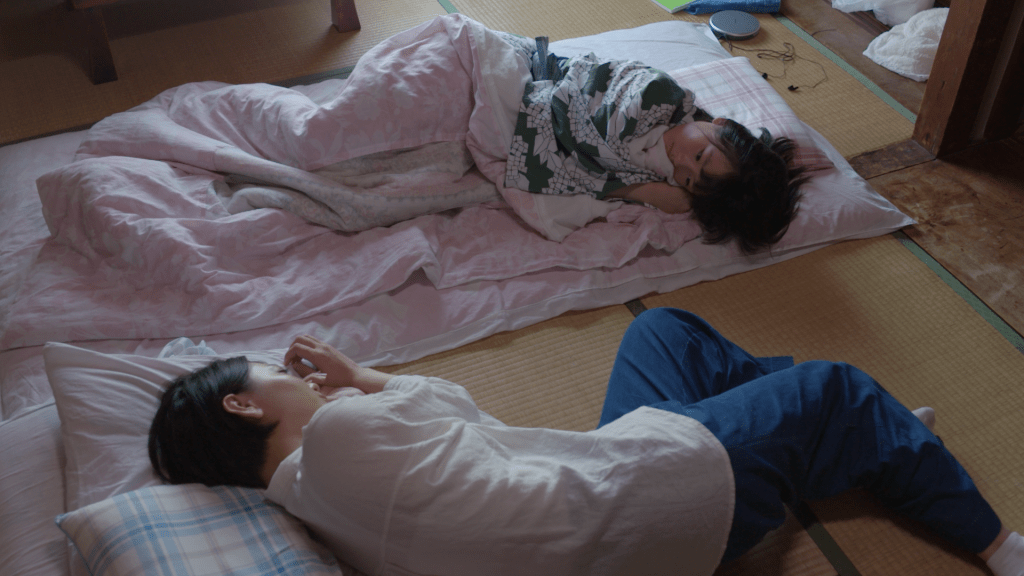
“To live the way I am” replies the reserved heroine of Kim Jun-sik’s Between the Seasons (계절과 계절 사이, Kyejeolkwa Kyejeol Sai Kaebongyejeong) when questioned about her dream, not quite able to answer when asked if she isn’t living that way now. An anti-romance and gentle meditation on the costs of authenticity, Between the Seasons finds two women at different stages of life unknowingly fighting a similar battle, perhaps identifying something in each other but unable to voice themselves fully though in fear and insecurity rather than shame even if they each internalise something of that too as they struggle to push past the barriers that prevent them from fully becoming themselves. 

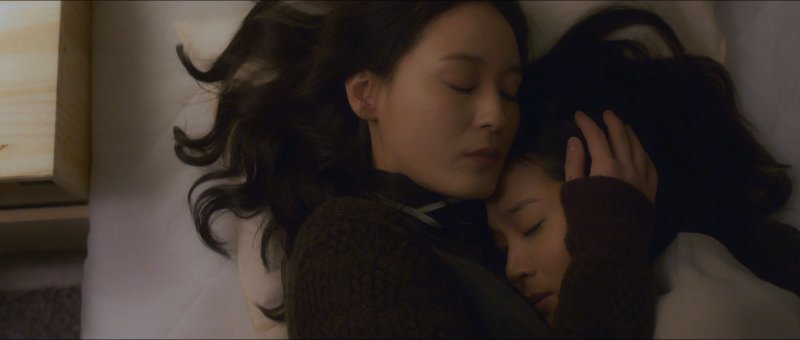
In her mid-30s, Hae-soo (Rie Young-zin) has just moved from Seoul to a small town to open a bare bones coffee shop. She spends her spare time alone, and we quickly get the impression that she’s making an attempt to move on from something, eventually visiting a mobile phone shop to buy a new handset and instructing the salesman to delete all of her previous contacts and photos. Despite her attempts to discourage her, however, Hae-soo ends up forming an awkward friendship with bubbly high schooler Ye-jin (Yoon Hye-ri) who came into the coffee shop with an unusual order and then became a regular customer. Further bonding on a rainy night after the movies where Ye-jin was stood up by her boyfriend, the young woman starts randomly helping out just because she can see Hae-soo is overstretched eventually becoming an official part-timer spending most of her spare time with Hae-soo much to the consternation of her overbearing, grades-obsessed mother. 

Ye-jin quite literally begins to bring spring into Hae-soo’s life decorating the cafe with pretty cherry blossoms and floral motifs, lending it a cosier, more domestic atmosphere than the rather frosty, utilitarian vibe of Hae-soo’s original non-design. Questioned by Hae-soo about her dream she says she’d like to make things by hand, a dream that is perhaps in direct contrast with her mother’s obvious ambition for her. There’s not much money in paper cherry blossoms after all. That’s two reasons she might prefer being in the cafe rather than at home or studying somewhere else, Hae-soo both mysterious older sister and quasi-maternal figure, only the relationship is further complicated by Ye-jin’s growing romantic attraction to the older woman, becoming jealous as Hae-soo begins a tentative relationship with the sweet and goofy guy from the phone shop (Kim Young-min). 

For her part, Hae-soo remains either wilfully oblivious or simply unwilling to acknowledge Ye-jin’s obvious crush, awkwardly failing her as a friend and as a quasi-parental figure in refusing to engage with her complicated feelings in fear of having to reveal her true self. Instead she pushes the younger woman away without explanation, rejects her, and leaves her with only more shame and awkwardness despite having insisted that that there is nothing wrong in being different and that only by embracing your difference can you improve your life. Ye-jin continues to struggle with her feelings, observing her homophobic friends making fun of the supposed lesbian only to find herself semi-stalking the young woman confessing that if the rumours are true she too is the same. Despite eventually approving of her, the other girl tells her to keep her distance at school, lest they each fall victim to guilt by association. Eventually she gets all dolled up and heads to a gay bar where she furiously makes out with the bartender, mostly one assumes because she reminds her of Hae-soo doubly confirming her feelings. 

Hae-soo, however, is still conflicted, afraid to reveal her true self to anyone. The realisation she eventually comes to, symbolically removing the scarf from around her neck, is that she wanted to shine by herself, finding the confidence in authenticity rather than reflecting the light cast by the approval of others. Ironically that’s something she tried to encourage Ye-jin to do too but accidentally crushed in her brutal rejection of her feelings, costing her perhaps more than she realised in the process. Ye-jin had coyly asked her if she wasn’t making a rash decision, that so far she’d only shown her spring in her cheerful coffeeshop interior design, perhaps she’d like to take in the summer, even see her in winter too, truly thinking long term but the two women remain caught between the seasons, trapped by a sense of internalised anxiety that prevents forward motion. A gentle meditation on connection, authenticity, and self-acceptance Between the Seasons offers no easy answers for its conflicted heroines but motions towards a season of openness in which all are free to be who they are.


Between the Seasons streams in the UK until Oct. 11 as part of the Iris Prize Film Festival in collaboration with Queer East.

Original trailer (Korean subtitles only)
Days (日子, Tsai Ming-liang, 2020)

It’s not so much time that makes you feel old as the weight of all the days. Returning with his first narrative feature since 2013’s Stray Dogs, Tsai Ming-liang’s Days (日子, Rìzi) spins a tale of twinned loneliness in which two men, one young one older, one rich the other poor, embody two kinds of sadness as they live out their days of detachment as living ghosts in world which seems to have no place for them. 

Tsai opens with the face of his muse, Lee Kang-sheng billed only in the credits as Kang a wealthy man living in a spacious home surrounded by the beauty of nature. The lengthy, unbroken scene finds him staring impassively out of a window while a storm rages outside, the sound of rain falling while the reflection of trees blown by the wind is eerily reflected behind him. We can see that Kang is a man in great pain, his eyes filled with a melancholy desperation. He stretches and rubs his neck, his physical discomfort perhaps a manifestation of the emotional suffering which he tries to heal by fire, enduring painful moxibustion in search of relief.

Meanwhile, in Bangokok, Laotian migrant Non (Anong Houngheuangsy) is quietly tending fires of his own, firstly those of ritual offering and secondly of sustenance as he stokes the embers to cook the old fashioned way in his tiny, spartan apartment. While Kang is a resolutely passive presence, Non fills his lonely days with industry, constantly at work as we witness him laboriously prepare his dinner with documentary realism. Non is at home with solitude in the private space, but forever alone outside of it. He stands to one side at the market where he works as customers mingle around him, always out of place and unseen like a ghost hovering in the corner of the frame. 

Parallel lines who meet, the two men eventually share a poignant, nominally transactional encounter in a nebulous third space of a neutral hotel room to which Kang has called Non for a sensual massage, presumably how he makes ends meet in Bangkok. Once again the young man does all the work while Kang lies impassive, Non oiling his fingers as he runs his hands over the older man’s body easing his pain through physical contact before he retreats off screen and we hear fabric falling, his Calvin Kleins hitting the floor as the two men briefly connect through an intense act of lovemaking, later proceeding to the shower where Non, still in the role of caregiver, tenderly washes the dejected Kang. Before he leaves, Kang idly hands the younger man the gift of a music box, a spontaneous decision that sparks a moment of melancholy emotional release. They struggle to say goodbye. Non leaves and Kang chases after him, Tsai lingering in the empty space of the hotel room while the two men head for dinner before returning to their respective days in someways changed and others not. 

His pain perhaps temporarily eased, Kang is not quite so passive as before, doing something or other with a fish and going for late night walks, but still finds himself lying awake while the sounds of outside wash over him, his eyes wide with fear and sadness. Non, meanwhile, returns to his routine but even more of a ghost than before, sadly cradling the music box as if in memory of his momentary connection its sound drowned out by the noise of anonymous modernity while the world goes on all around him, an invisible figure ignored by passersby walking alone into the night. 

A opening title card warns us that this is a film intentionally unsubtitled, much like life left to our own shallow grasp of meaning in thought or action, but what little dialogue there is hardly requires interpretation we feel it all the same. Tsai conjures an almost Antonionian sense of emptiness in place, a lengthy still shot of a “haunted” building peeling at the facade suddenly brought to life by the brief shadow of a cat in a window, while abruptly shifting to handheld to follow Kang, somehow alone and clutching his neck in pain in the chaotic streets. Both men exist at angles to the world, as if in some kind of secondary plane, meeting only for an instant and then returning to their solitary existences with only the brief memory of connection perhaps more painful than its absence. Tsai charts competing reactions to existential loneliness, the listless ennui of the wealthy Kang and the ceaseless industry of migrant worker Non, but finds them both equally displaced, searching for connection in an increasingly disconnected world. 


Days streams in the UK until 11th October, 6.30pm as part of this year’s BFI London Film Festival.

Original trailer (dialogue free)

Seven Days War (ぼくらの七日間戦争, Yuta Murano, 2019)

“Youth is the liberated zone of life” according to the voice of experience in Yuta Murano’s impassioned anime adaptation of the cult novel by Osamu Soda, Seven Days War (ぼくらの七日間戦争, Bokura no Nanoka-kan Senso). Featuring a number of meta references to the ‘80s original and live action movie, Murano’s stylistically conventional adaptation shifts the action to Hokkaido and the present day encompassing such themes as economic strife, systemic political corruption and small town nepotism, migration and exploitation, but is most of all a coming-of-age story as the rebellious teens meditate on the costs of adulthood, resolving not to become the vacuous and resentful adults they see all around them who have traded emotional authenticity for a mistaken ideal of civility. 

Obsessed with 19th century European military history, high schooler Mamoru (Takumi Kitamura) complains that no one takes any interest in him and remains too diffident to confess his feelings to the girl next door, Aya (Kyoko Yoshine), with whom he has been in love for the past six years. Hearing that Aya and her family will soon be moving away because her authoritarian politician father has been offered the opportunity to take over a relative’s seat in Tokyo gives him the boost he needs, nervously suggesting that he and Aya run away together so they can at least celebrate her upcoming birthday the following week. Aya surprises him by agreeing, but rather than a romantic getaway for two she decides to invite several not particularly close friends from school, holing up in a disused coal refinery on the edge of town. Once there, however, they realise someone has beaten them to it. Marret (Makoto Koichi), the child of undocumented migrant workers from Thailand, has been hiding in the building after being separated from their parents when the building they were living in was raided by immigration authorities. 

Though the group is not universally in favour, they quickly find themselves deciding to protect Marret while trying to help find the kid’s family using both their ingenuity in fortifying the coal refinery and their youthful know how in weaponising the internet and social media to win sympathy and fight back against the oppressive ideology of the authorities. Yet Marret finds it difficult to trust them because they occupy a liminal space between the idealism of childhood and the cynicism of maturity. Marret’s family came to Japan on the false promise of finding good employment only to be ruthlessly exploited, convincing the idealistic youngster that all adults lie and can never be trusted. Mamoru, whose name literally means “protect”, does his best to save everyone but temporarily gives in to despair, confessing that he is just an “optimistic child” lacking the power to do any real good, only later coming to a revelation that the problem with the duplicitous adults they’re rebelling against is that they continue to run from their emotions and the pain of not being able to be fully themselves for fear of not fitting in has made them cruel and cynical. 

Honda (Takahiro Sakurai), the conflicted assistant to Aya’s authoritarian father, tacitly approves of the teens, affirming that the young always fight for the things they believe in but then rebels against himself in doxxing them, exposing both their identities (sans Aya’s) and dark secrets online in an attempt both to intimidate and to drive them apart. But the kids run in another direction. They elect to share their truths and in the sharing neutralise the threat while gaining the confidence that comes with deciding not hide anything anymore. The sharing is it seems what matters, a collective unburdening which paves the way for emotional authenticity but sidesteps the need to consider the fallout from the concurrent revelations. A heavily telegraphed confession of same sex love, for example, is accepted by all though there is no explicit indication as to whether or not is reciprocated save that is in no way rejected. 

In any case, the kids decide that being their authentic selves is more important than conformity and make a mutual decision to respect the same in others, something which is eventually mirrored in those like Honda among the duplicitous adults touched by the kids’ pure hearted rebellion. Necessarily, that leaves the weightier themes such as the plight of undocumented migrants, the casual cruelty of the authorities, small-town corruption and persistent nepotism relegated to the background, perhaps superficially considered seen trough an adolescent lens, but nevertheless products of the inauthenticity of the cynical adult world the kids are rebelling against. A heartfelt advocation for the idealism and universal compassion of youth carried into a more open adulthood that comes with emotional authenticity, Seven Days War leaves its heroes with the spirit of resistance, defiantly themselves as they step into an adult world uncorrupted by cynicism or prejudice.


Seven Days War screened as part of Camera Japan 2020.

Original trailer (no subtitles)

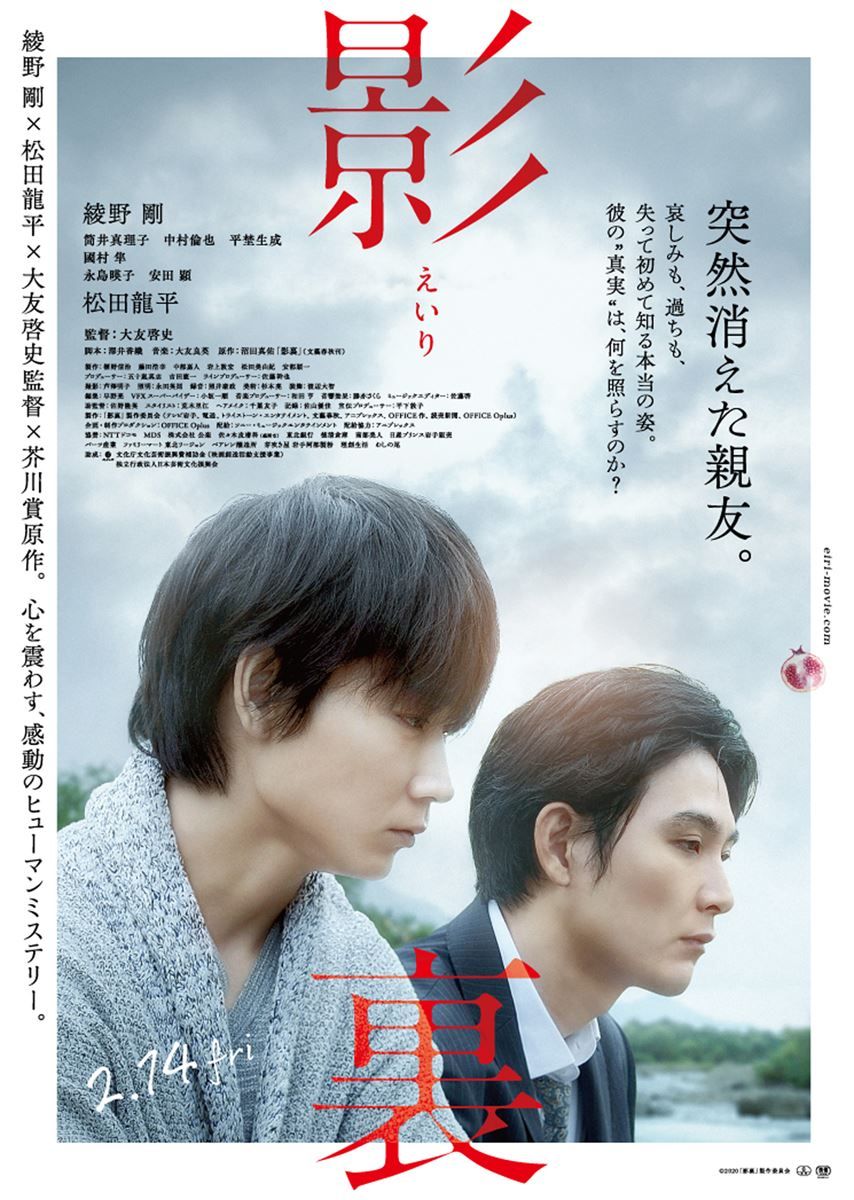
Beneath the Shadow (影裏, Keishi Ohtomo, 2020)

“There’s nothing wrong with leaving it a mystery” the enigmatic presence at the centre of Keishi Ohtomo’s Beneath the Shadow (影裏, Eiri) advises the hero as he vows to look into the unexpected appearance of a fish found swimming in the wrong river. Best known for mainstream blockbusters such as the Rurouni Kenshin series, March Comes in Like a Lion, and Museum, Ohtomo shits towards an arthouse register in adapting the Akutagawa Prize-winning novella by Shinsuke Numata which is in a sense obsessed with the unseen, the hidden details of life and secret sides we all have that are perhaps intended to protect but also leave us vulnerable. 

Konno (Go Ayano), an introverted man in his 30s, has just been transferred to rural Morioka by the pharmaceuticals company at which he works. He keeps himself to himself and largely spends his time caring for a Jasmine plant which appears to have some especial yet unexplained significance. It’s at work that he first encounters the enigmatic Hiasa (Ryuhei Matsuda), reminding him that theirs is a non-smoking building only to discover that Hiasa isn’t the sort to care very much about rules. For some reason or other, Hiasa takes a liking to Konno, turning up at his house with sake, teaching him how to fish, and going on what to anyone else look like dates. Yet when winter comes Hiasa abruptly quits his job and disappears without a word, resurfacing a few months later with a better haircut and a sharp suit explaining that he’s now a top salesman for a suspicious insurance company designed to help pay for expensive ceremonies such as weddings or more commonly funerals. The two men resume their friendship, but soon enough Hiasa again disappears. Only when he’s contacted by a co-worker (Mariko Tsutsui) after the earthquake hoping to find him because it turns out he owes her a large some of money does Konno begin to reflect on how little he might really have known this man he thought a friend. 

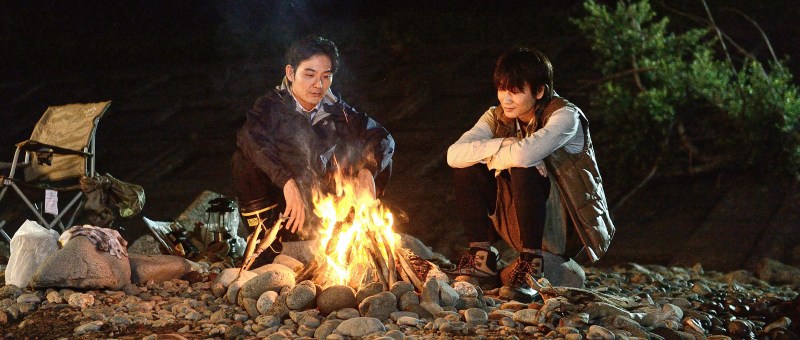
“Right from the start you have to groom it so it’s tantalised” Hiasa later explains, operating on several metaphorical levels but talking quite literally about lighting a fire. Konno has to wonder if that’s all it really was, if Hiasa is just a manipulative sociopath playing a long game, getting him on side in case he’d be useful later. When he resurfaces after his first absence, Hiasa eventually asks Konno to sign for one of his policies claiming that he’s one away from his quota and will be getting the can if he can’t fill it despite having talked a big game in proudly showing off a commendation he’d won as a top salesman when he turned up on Konno’s doorstep. “What you see is where the light hit for an instant, no more than that. When you look at someone you should look at the other side, the part where the shadow is deepest”, Hiasa had pointedly told him during a heated fireside conflagration, seemingly hurt as if in the moment he had wanted to be seen and is disappointed to be met with Konno’s irritated rejection, fed up with his mixed signals and distance both emotional and physical. 

Yet Konno is also himself living half in shadow as a closeted man choosing not to disclose his sexuality to those around him. A meeting with an old friend who has since transitioned presumably having embraced her own essential self raises further questions about the reasons he accepted the transfer to Morioka as if he too, like Hiasa, wanted to disappear from his old life and reinvent himself somewhere new, he’s just done it in a more conventional way. Even in contemporary Japan which is in some ways very old fashioned when it comes to the technology of everyday life and with a strong belief in personal privacy it’s surprisingly easy to just vanish at the best of times, but even his family members who are in no hurry to find him wonder if Hiasa may simply have used the cover of disaster to disappear for good. His conflicted brother (Ken Yasuda) affirms he thinks he’s probably alive because he’s “someone who can survive anywhere” which in the way he’s putting it is not much of a character reference. 

The conclusion Konno seems to come to, in a happier epilogue some years later, is that Hiasa himself was perhaps a fish swimming in the wrong waters, unable to adapt to the world around him. Perhaps it’s alright for him to remain a mystery because a mystery was what he was. Konno, by contrast, sets himself free apparently less gloomy, no longer living half in shadow, even if still hung up on the one that got away. A slow burn affair, Beneath the Shadow eventually refuses conflagration in favour of something cooler in accepting that you never really know anyone, perhaps not even yourself, even when you peer into the darkest part of the shadow. In the end you just have to let it go, “the cycle keeps repeating”. 


Beneath the Shadow streams in the US via the Smart Cinema app until Sept. 12 as part of this year’s New York Asian Film festival.

Original trailer (no subtitles)

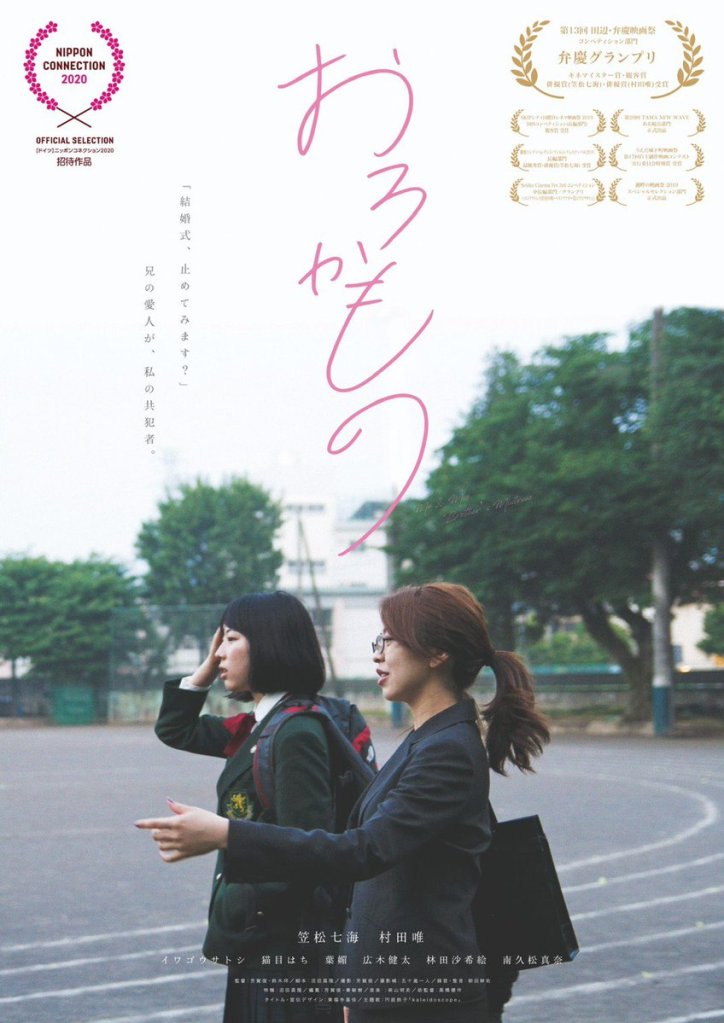
Me & My Brother’s Mistress (おろかもの, Sho Suzuki & Takashi Haga, 2019)

Why does everyone always blame “the other woman” and not the cheating boyfriend? That’s a question earnest high schooler Yoko begins to ask herself in Sho Suzuki & Takashi Haga’s Me & My Brother’s Mistress (おろかもの, Orokamono) after spotting a suspicious text on her brother’s phone and then spying on him as he leaves a love hotel with another woman a month before his wedding. But what is it that she finds so troubling, realising her only remaining family member is a two-bit louse, or the fact he’s going to get married and it won’t be just the two of them anymore?

In the last year of high school, Yoko (Nanami Kasamatsu) is filled with anxiety about the future. In fact, she’s the only one who hasn’t returned her careers survey and it seems she also turned the previous one in blank. Her parents passed away nine years previously, and ever since then it’s just been her and her older brother Kenji (Satoshi Iwago), now a permanently exhausted salaryman engaged to the homely Kaho (Hachi Nekome). Yoko doesn’t get on with Kaho, for the bizarre reason that she’s just too nice, but when she figures out that Kenji is having a torrid affair mostly conducted in love hotels on Sunday afternoons, she is quite rightly outraged that her brother could be so duplicitous. Rather than confront him, she decides to have a word with the “mistress”, following her around all day but conflicted on spotting her doing such unexpectedly decent things as giving up her seat on the train for a middle-aged woman laden with shopping. Tracking her to a restaurant, she planned to give her a dressing down but Misa (Yui Murata), as she discovers her name to be, is perfectly reasonable if also unrepentant.

Misa asks a number pertinent questions including why it is Yoko thinks this is any of her business in the first place and why she’s decided to have it out with her and not Kenji all of which Yoko has to concede is fair. Unlikely as it sounds, the two women end up becoming friends of a sort, Yoko beginning to sympathise in realising this is all her brother’s fault but still not really feeling all that sorry for Kaho which is one reason why she suddenly suggests they try to stop Kenji’s wedding. 

Tellingly, she later asks Kaho if she’s not afraid that another woman will steal Kenji away, but it’s a question she should perhaps have asked herself. She is quite obviously at difficult time. Everything is about to change for her. She’ll soon be leaving school and evidently doesn’t really want to think about what happens next, while her home life is also about to change when Kaho moves in with them permanently meaning it’ll no longer be just her and Kenji. Perhaps that’s what’s really bothering her, that Kaho is displacing her in her own home and stealing her big brother away to start a new family that might not include her in quite the same way. 

Indeed, her main objection to Kaho is in her genial domesticity, the various ways she and Kenji already operate as a couple, the perfectly cooked meals she prepares and the maternal care with which she overseas the house. Kaho isn’t really worried about another woman because she knows what Kenji is looking for is exactly what she gives him – a settled home. Misa, meanwhile, laments her status as a perpetual mistress, never really valued by the usually already attached men she ends up dating who think of her as a casual fling, a short-lived distraction from their domestic responsibilities. Still too young to fully understand, Yoko feels offended on Misa’s behalf that her brother could treat her or any woman this way. Yet their plan to stop the wedding ends up proving counterproductive in that it forces her to sympathise with Kaho and perhaps realise that Kaho herself was never the problem while also regretting having encouraged Misa’s self destructive descent towards an inevitable conclusion that is only going to cause her more pain. 

Yoko’s only future goals were apparently to become a decent and honest person, an ideal she perhaps is not quite serving in her “evil” plot to ruin her brother’s wedding. Misa brands her a “boring teen” already obsessed with dull stability, while it’s perhaps Misa’s boldness and unconventionality which attracts the otherwise straight-laced young woman. In any case, Yoko begins to discover a new equilibrium or at least a new accommodation with adulthood that lends her a little of Misa’s defiance as she makes an unexpectedly bold decision of her own in figuring out what it is she really wants and walking confidently towards the future even if with no real clue as to what comes next.


Me & My Brother’s Mistress streamed as part of this year’s online Nippon Connection Film Festival.

Original trailer (English subtitles)

My Identity (神様のいるところ, Sae Suzuki, 2019)

“You’re not the only one suffering because of language barriers” the heroine of Sae Suzuki’s My Identity calmly explains to her mother after spending a few days away perfecting her language skills. My Identity (神様のいるところ, Kamisama no Iru Tokoro) is perhaps less about identity in itself than the difficulty of communication but nevertheless finds a young woman displaced, quite literally pushed out both by her frustrated mother and by a society which continues to be fiercely intolerant of difference. What she realises however, is that she’s not the only one feeling lost, discovering an alternate maternal figure in an orphaned adult herself at the mercy of an unforgiving and judgemental patriarchal society. 

As we first meet her, high schooler Rei (Hinata Arakawa) is physically pushed out of her family home, the door closed behind her as her mother lays in to her father with accusations of fiscally irresponsible infidelity in her native language. As we later discover Rei is half-Taiwanese and in fact lived on the island until she was five but now feels under-confident in both a perhaps more familiar Mandarin and the Hokkien between which her mother switches freely. At school meanwhile she is taunted by two horrible boys who bully her for being “Chinese”, calling her “creepy” and “ugly” while questioning her ability to speak Japanese. When they tear up a thank you card she’d written in Chinese claiming not to understand it she finally loses her temper and fights back, hitting one of the boys on the head with her backpack. Ironically, she is the one that gets into trouble. Her mother takes a cane to her legs, angry most of all it seems that people will think that foreign mothers raise badly behaved children and will continue to look down on her. Rei just wants to connect with her mother, but her mother isn’t listening. 

That might be why she makes unwise decision to look into dodgy compensated dating after hearing about a forum where “gods” congregate looking to pick up teenage girls. She thinks better of it at the last minute only to be chased by a weird old man claiming to be worried about her which is how she bumps into Aoi (Kaho Seto) who cooperates by pretending to be her responsible adult. A youngish office worker, Aoi has problems of her own and has apparently been out on a night of heavy drinking with a colleague, something which becomes a source of gossip among the other women at work who seem to universally dislike her. She’s coming up for a transfer, but is aggressively harassed by her boss who tells her that he’s going to wait for her when she gets off, causing her to alter her schedule in order to avoid him. 

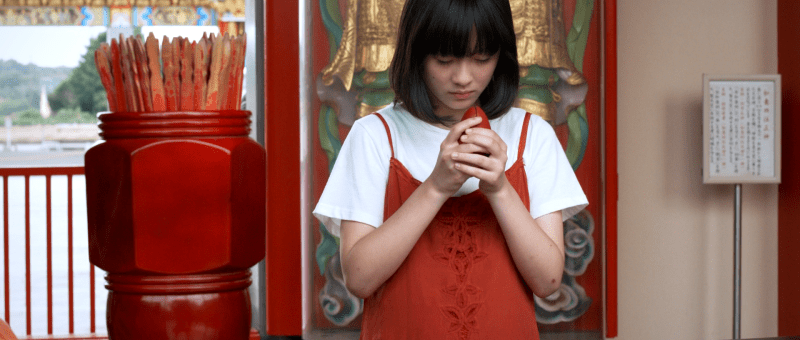
After a traumatic incident, the two women find themselves on the run, breaking into a disused inn which they end up operating in a temporary illusion of domesticity. Rei practices her Mandarin, looking to Aoi for guidance, but discovering that her worries are fairly universal. What if you can’t communicate your feelings she asks, but Aoi has no answer for her, and Rei can only lament that people start hurting each other when communication fails. Her Taiwanese heritage, however, becomes an unexpected, two-fold threat to her new familial connection when the pair visit a local Taiwanese temple which is also home to a Japanese researcher who speaks perfect Mandarin and has identified the two women as the fugitives from the news, but has also developed a quite obvious attraction to Aoi. 

Rei came here to face herself, but is consciously working towards a resolution, determined to make a connection while asserting her own agency. Aoi meanwhile worries she’s doing the opposite, “playing house”, “running away”, “refusing to face reality”. The researcher tells her, perhaps not altogether altruistically, that she’s being irresponsible, and that her indulgence of Rei may in the long run be harmful. She too feels lost and alone, confessing that she found herself subject to unwanted male attention she couldn’t directly deflect and feigned an ignorance that put her at odds with other women who came to resent her for it. Preoccupied, she too fails to understand Rei’s feelings, trying to be kind but nevertheless causing pain along the way. 

Through visiting the temple and reconnecting with her Taiwanese heritage, Rei finds the words she needs in order to communicate what it is she really feels and hopes that, finally, someone is going to listen. Contending with miscommunication, prejudice, ignorance, and a fundamental “language barrier” in the difficulty of translating feelings accurately and being fully understood, Rei does her best to become her most authentic self, integrating her identity and defiantly embracing it but doing so with openness as she strives for communication as a weapon against hate and violence.


My Identity streamed as part of this year’s Japan Cuts.

Original trailer (English subtitles)

Reiwa Uprising (れいわ一揆, Kazuo Hara, 2019)

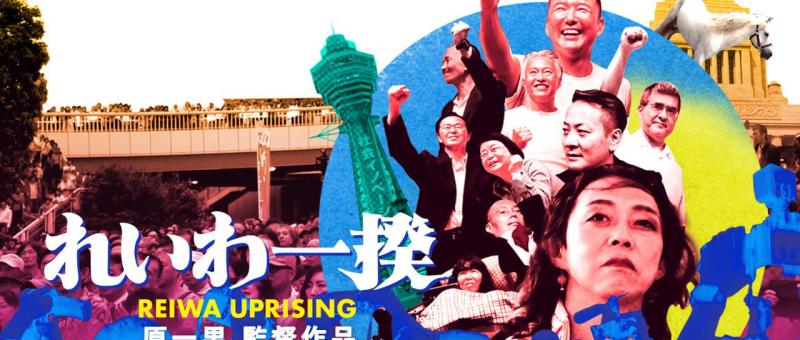
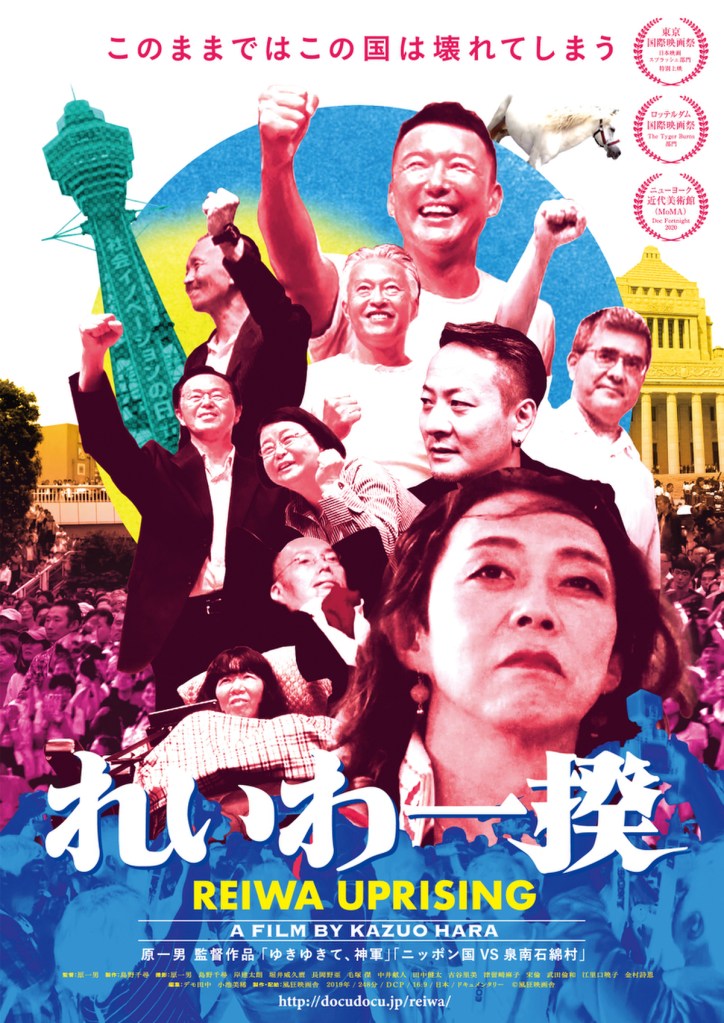
With a career spanning more than 40 years, veteran documentarian Kazuo Hara cannot exactly be described as prolific. His films can often take years to produce, his upcoming documentary on the Minamata disease apparently having been in development for the last decade and a half. Perhaps appropriately enough Reiwa Uprising (れいわ一揆, Reiwa Ikki) is then something of a revolution even within the director’s own career in that it saw him spring into action at a moment’s notice after being invited to document the imminent House of Councillors election by the documentary’s subject, Ayumi Yasutomi, making good on a joke made during an online interview. 

A transgender woman and professor at the University of Tokyo, Ayumi Yasutomi had received some previous press attention during an eccentric but unsuccessful campaign to become a local mayor. She was now one of 10 candidates selected to stand for brand new political party Reiwa Shinsengumi founded by former actor Taro Yamamoto. Yamamoto himself was already known for his unconventional political style, and Reiwa Shinsengumi was set up expressly to oppose the scandal-beset Abe administration with a series of broadly left-wing policies prioritising human rights and the environment in addition to pushing for an end to the consumption tax, nuclear power, and the controversial Henoko US military base in Okinawa. 

As a new political party, however, there was no firm organisation in place and Yamamoto chose his various candidates for their individual platforms, giving them in the main a fairly free rein to run their own campaign as they saw fit prioritising their own policy ideals. Yasutomi’s central policies revolve around the protection of children with a focus on preventing abuse and reform of the educational system, but she is also keen to encourage a return to nature and as in her mayoral campaign is regularly accompanied by a rented horse temporarily stabled in the city. Like Yamamoto she stages a series of publicity stunts including a Thriller flashmob, describing the video’s zombies as adults who have died inside after being robbed of their childhoods and have subsequently become mere machines perpetuating the systems of oppression which have made them what they are, while continuing with the musical processions which had originally caught Hara’s eye during her mayoral campaign. 

Though Yasutomi remains his main focus, Hara expands the canvas to capture the nascent revolution that Reiwa Shinsengumi is attempting to foster. As a new political party, they are not so much focussed on winning power as gaining a foothold, hoping for the 2% vote share that would grant them status as an official political party. The other candidates stand on a variety of social issue policy platforms from disability to workplace exploitation and the anti-nuclear movement with a keen focus on social equality insisting that no-one should be judged according to their “productivity” or “usefulness” to society. A sign language interpreter appears onstage next to the candidates at the central rallies, and in an impressive hustings gimmick the floor literally rises to allow his two wheelchair-using candidates access to the stage on the same level as their able-bodied colleagues. It is perhaps an unexpected candidate who makes the most impact, however, in the impassioned speeches of part-time worker and single mother Teruko Watanabe who advocates fiercely for the rights and dignities of Japan’s impoverished working class as a woman who found herself at the mercy of an inherently exploitative employment system which offers little protection to those outside of the full-time salaried employee. Her concerns are echoed in those of another candidate who once ran a 7-Eleven and has a deeply held grudge against Japan’s famous combini culture having taken the unusual position of being a boss who regularly advocated on behalf of workers. 

While passively documenting their struggle, Hara nevertheless uncovers a possible schism at the heart of the movement in that, as unconventional as he otherwise is, Yamamoto is determined to work within the system if only to change it while Yasutomi would rather destroy it completely, repeatedly insisting that the entire country is “crazy” and has never fully managed to escape from its militarist past. She resents the ruling LDP, who have been in power for almost the entirety of the period since Japan’s new post-war constitution came into effect, for perpetuating a kind of “positionism” in which all they care about is a conservative desire to maintain their own status granting only the concession that they will in turn recognise the status of others. It’s this “positionism” she seeks to counter in what she sees as the best expression of liberalism through rejecting labels, something which has apparently brought her into conflict with the wider LGBTQ+ community. Reiwa Shinsengumi managed to win two Diet seats, awarded to the two disabled candidates in a first for Japan, though Yamamoto himself did not make it back to parliament and Shinzo Abe’s administration remained comfortably in power. Nevertheless, Hara captures a political moment in which real change seems possible for the perhaps the first time since the decline of the post-war leftwing student movement in the early 1970s. As Watanabe puts it, this is just the start the starting line. The revolution starts now. 


Reiwa Uprising is available to stream in the US until July 30 as part of this year’s Japan Cuts.

Original trailer (English subtitles)

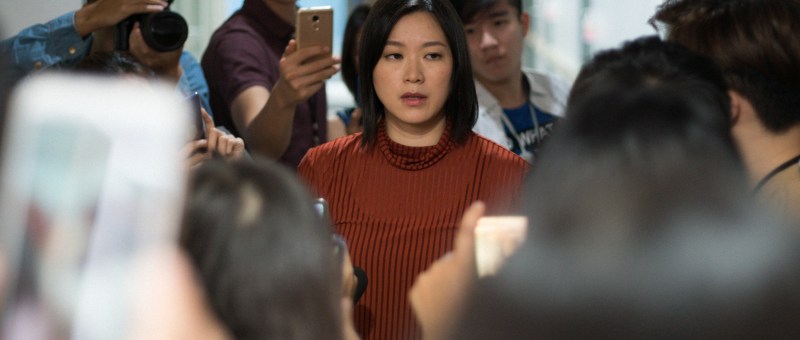
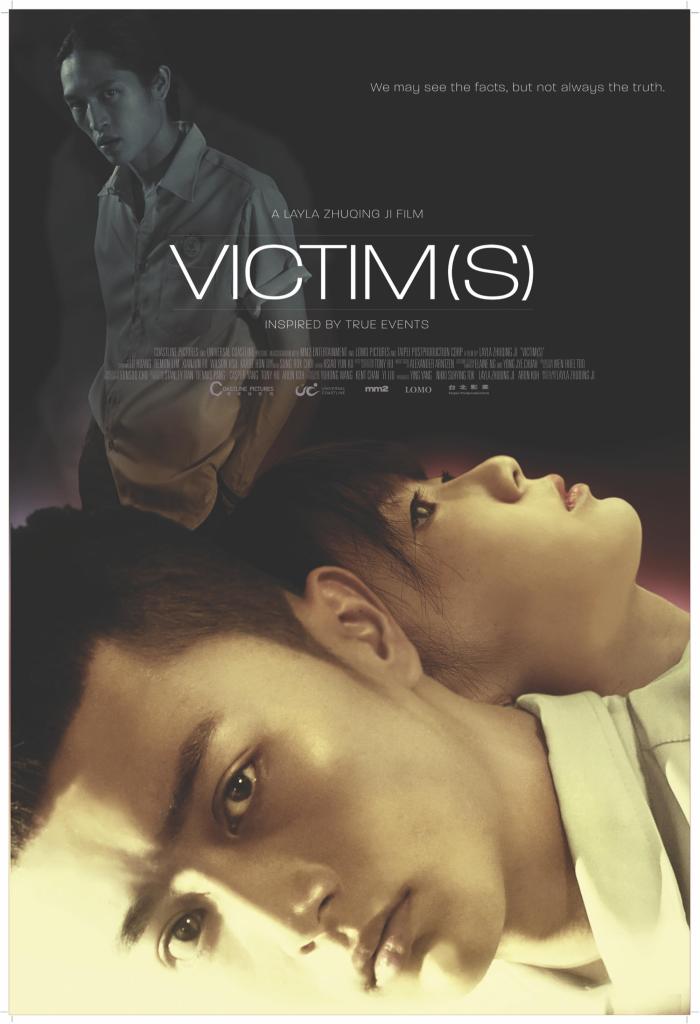
Victim(s) (加害者、被害人, Layla Zhuqing Ji, 2020)

“People don’t care about the truth, they just need someone to blame because that’s the easy thing to do” according to a secondary victim caught up in the complicated events which led to the killing at the centre of Layla Zhuqing Ji’s empathetic debut feature, Victim(s) (加害者、被害人, Jiāhàizhě, Bèihàirén). A tale of two mothers, Victim(s) does its best not to apportion blame to any one individual but points the finger at a rigid and austere conformist society in which conservative social codes and a culture of victim blaming conspire to restrict freedom and breed unhappiness. 

Cast in the roles of victim and killer are high school students Gangzi (Kahoe Hon), the son of a poor masseuse (Remon Lim) stabbed to death beside an ATM, and Chen (Fu Xianjun) son of a wealthy single-mother (Huang Lu) who some say made her money in questionable ways. Students at the school speak of discord between the two boys, describing Chen as strange, a bit of a loner with an unpleasant superiority complex that, coupled with his status as top of the class, led him to look down on those around him. They say he viewed Gangzi with disdain because of his working class background and was upset because they both liked the same girl, transfer student Qianmo (Wilson Hsu), but she turned him down in favour of Gangzi. After a few days on the run, Chen turns himself in and confesses to the crime but has a slightly different story, claiming that, in fact, he was bullied by the other kids including Gangzi partly because he was wealthy, they were roughing him up for money, and partly because he was an outsider at school widely disliked as a swot. 

Of course, both mothers are convinced their sons are perfect angels but are eventually led to discover that perhaps they didn’t know their children as well as they thought they did. The technological divide between the generations trumps that of social class with the kids largely living in an online world where the traditional prejudices are only magnified through teenage gossip. Rather than swapping notes like in the old days, they group chat during in lessons and reinforce social hierarchy through shame and bullying. Transfer student Qianmo quickly finds this out to her cost, becoming a target for the ruling group of popular girls after she declines to join their dance troupe, while the boys are determined to hit on her despite her obvious lack of interest. 

Qianmo was forced to give up dancing and leave her previous school which specialised in the arts because, it’s implied, her dance teacher was molesting her, yet she’s already been branded a “teenage slut” online for supposedly seducing him. The other girls are remarkably unsympathetic, engaging in sexualised bullying they proudly film and share amongst themselves. The boys are doing something similar, yet even though the point of these videos is that the kids share them widely to humiliate each other, they are never a part of the official investigation and the adults have no idea they exist. Qianmo is too afraid to report her bullying because she fears they’ll ask why it is she’s being bullied and then say it’s her own fault, while Chen who finds himself scapegoated after a homoerotic porn magazine is discovered in the dorm, simply fears reprisals. Questioned by the police the other kids all toe the line, afraid that they’ll become targets too for speaking the truth, all too happy to let Chen take the blame while allowing the awful status quo to continue but resentful that he will most likely wield his privilege to escape justice. 

Chen meanwhile blames himself, repeatedly asking if he’s the the cause of others’ suffering while Gangzi works out his frustrations with his abusive father and repressed sexuality through delinquency. Both mothers desperately try to save their sons, but find themselves struggling to comprehend the gap between the image they had of the young men their children were becoming and the unpleasant truths they are beginning to discover. Meanwhile, external bullying from a media mob further obfuscates the truth, baying for blood and creating only more victims in the process as it insists its brand of socially conservative, compassionless justice be served at all costs. Yet against the odds, the women eventually come to a kind of understanding, choosing to accept the reality while protecting other victims, refusing the “easy” option of a prepackaged “truth” that neatly fits the needs the needs of a bullying society. Ji’s hard-hitting debut too refuses easy answers, finding that in the cycle of violence and abuse perpetrators and victims are often one and the same but each subject to the same petty oppressions contributing to an atmosphere of rigid social conformity which breeds nothing but misery.


Victim(s) streamed as part of this year’s Udine Far East Film Festival.

Original trailer (English subtitles)

Vertigo (버티고, Jeon Gye-soo, 2019)

To many, the word “vertigo” is synonymous with a fear of heights, but in essence it refers more to a sense of unbalance, a giddiness born of having lost sight of the ground, temporarily unable to orient yourself within an environment which no longer seems to make sense. The heroine of Jeon Gye-soo’s artfully composed Vertigo (버티고) fears she is suffering with the medical variety caused by an ongoing problem with her inner ear which leaves her with recurrent tinnitus and a permanent sense of wooziness. She is also, however, suffering with a kind of existential dizziness, trapped in a constant state of anxiety in feeling entirely untethered to the world. 

30-something Seo-young (Chun Woo-hee), is a contract worker at an ad company with an office on the upper floors of a high-rise building. Unbeknownst to her colleagues, she’s been having an affair with her handsome, once divorced boss, Jin-soo (Yoo Teo), but he seems to be holding something back from her, insisting on keeping their relationship secret and reluctant to introduce her to his grown-up son. Meanwhile, she’s subject to most of the minor micro-aggressions plaguing women in the work place which run from being expected to come in early to do menial tasks like refilling the photocopier and tidying the shelves, to casual sexual harassment. Somewhat out of it, Seo-young has managed to avoid most of that and thinks she’s moved past the stage of having to play the office lady game by keeping the men entertained at the not-technically-compulsory-but-you-still-have-to-go afterwork get-togethers. Her friend Yedam (Park Ye-young), however, has her getting worried, at once complaining about their sleazy team leader asking for massages and reminding her that they need to turn on the charm at least until their contracts are renewed. 

Being a “contract worker” and not a salaried employee is certainly a major cause of Seo-young’s anxiety, leaving her feeling unanchored in her professional life in the knowledge that she could soon be unceremoniously cut loose for reasons largely unconnected to her performance. As a woman in her 30s it will be increasingly difficult to find a new job while a still patriarchal society will most likely write her off for daring to reject marriage in favour of work but failing to make a success of it. Her male bosses and colleagues, regular employees all, use her precarious status against her, expecting that she “play nice” to get a recommendation for further employment and threatening to tank her career if she doesn’t toe the line. She muses on going “far away” with Jin-soo, perhaps to Argentina, a land of passion where people dance the tango and drink wine late into the evening, but on some level knows it’s a just a comforting fantasy. 

Regularly visiting an ear doctor, Seo-young tries to overcome her sense of unease through medical means, unwittingly returning to the source of her trauma buried in a painful childhood which regularly resurrects itself in her toxic relationship with her mother who only rings to belittle her success while complaining about her string of relationships with terrible men and unsatisfying life with Seo-young’s step-father. Seo-young can’t find firm ground because she is essentially unanchored, left dangling by a failure of the traditional family and seemingly with no “real” friends. She begins experiencing panic attacks at work, retreating to unoccupied rooms to calm herself by looking out at the horizon. 

Meanwhile, her growing despair has been spotted by window cleaner and bookshop clown Gwan-woo (Jeong Jae-kwang) who is carrying a sadness of his own. He pities and protects her, supporting from the other side of the glass in a way which is not, strictly speaking, OK but is filled with such innocence and unspoken connection that it largely overcomes the otherwise unpalatable quality of his stalkerish devotion. Gwan-woo is, in a sense, a man who’s unafraid to fall, secure in his ties to the world and literally anchored by his position in society. Seo-young yearns to overcome her sense of anxiety, find firm footing and a sense of support, at once reassured by the presence of Gwan-woo and perhaps disturbed by it. She is, however, feeling her way back to solid ground, gaining the desire to climb safe in the knowledge that someone will be there to catch her even when she feels like falling. 


Vertigo streamed as part of this year’s Udine Far East Film Festival. It was also due to screen as part of the 10th Season of Asian Pop-Up Cinema.

International trailer (English subtitles)

Queer East Announces Docs4Pride Free Streaming Series

Following the success of QE: HomeSexual, Queer East returns with another online streaming series marking this year’s Pride. Four LGBTQ+ docs will stream for free throughout July with all except for Of Love & Law which is restricted to UK & Ireland available worldwide.

July 3 – 10: Out Run

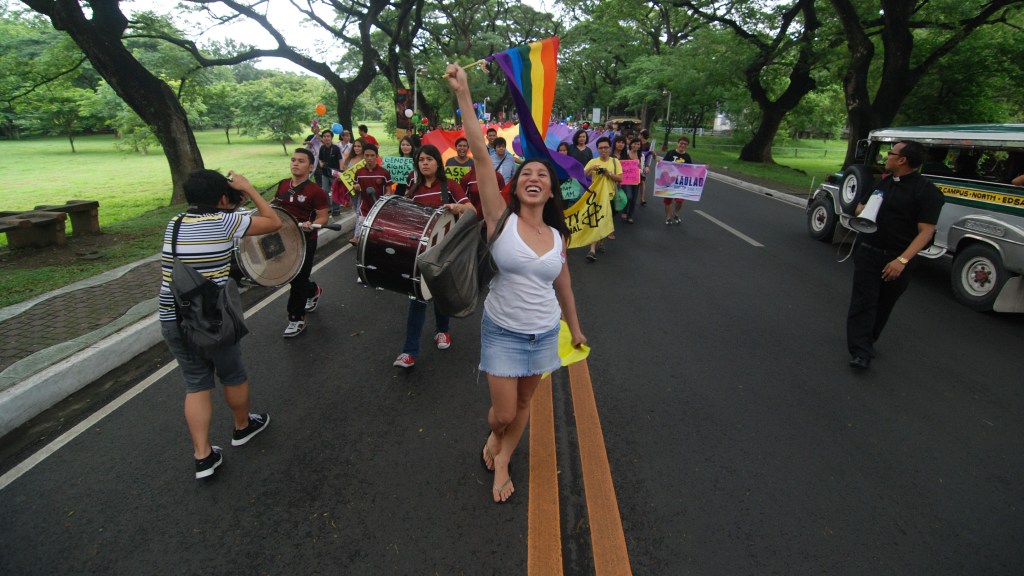
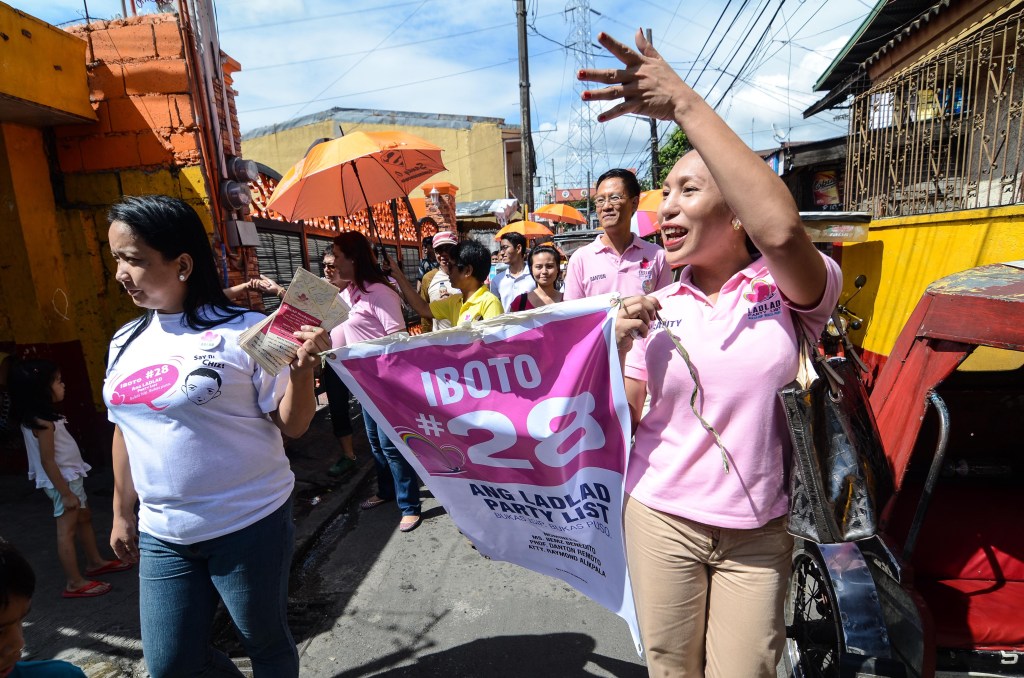
2016 documentary following Bemz Benedito as she leads Philippine LGBTQ+ political party Ladlad hoping to become the first transwoman to be elected to congress.

July 10 – 17: Shanghai Queer

Documentary focussing on grassroots activism in Shanghai sharing memories of the LGBTQ+ community from 2003 – 2018 featuring interviews with frontline activists, scholars, and artists.

July 17 – 24: Taipeilove*

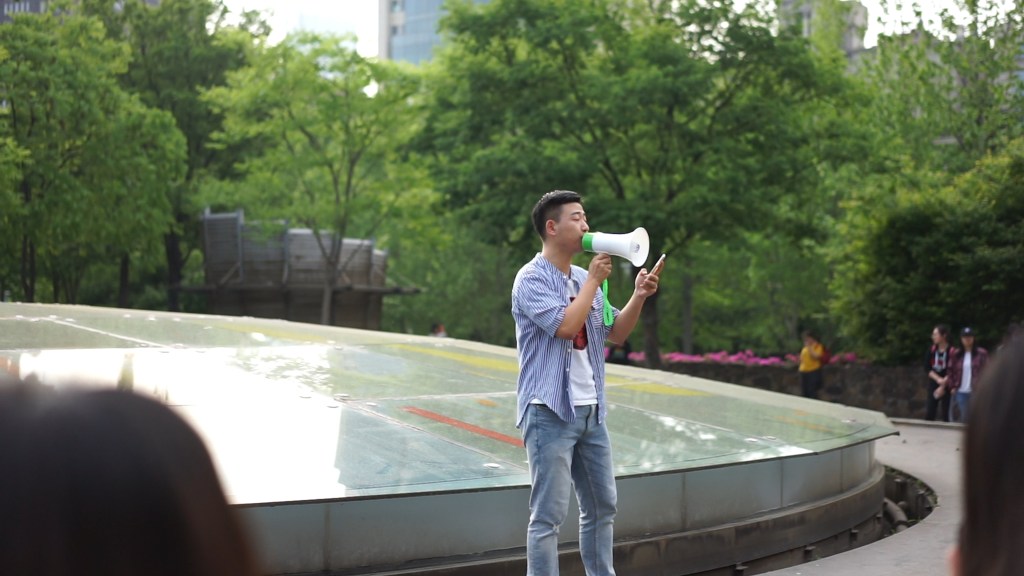
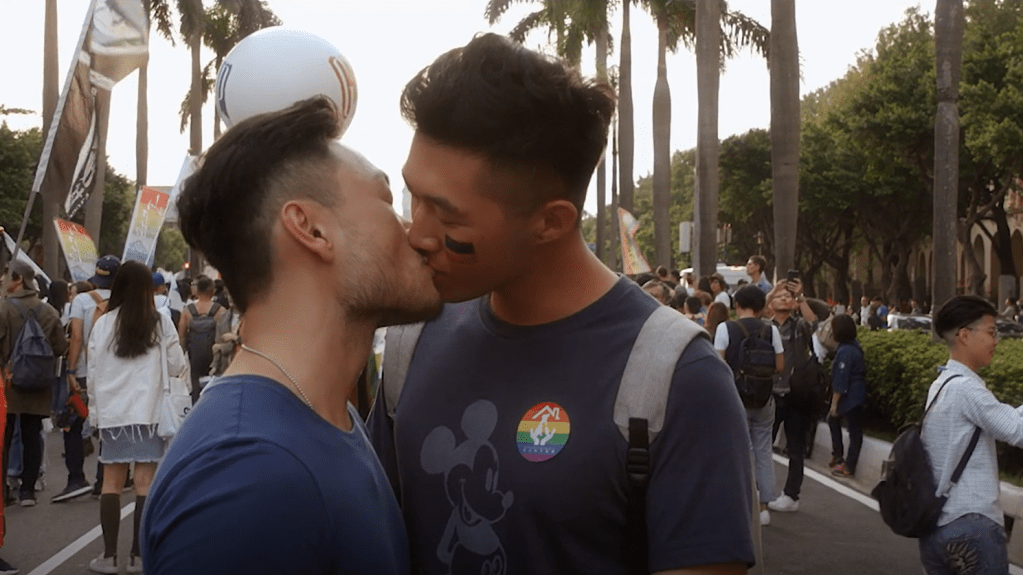
Taipeilove* charts the course towards the legalisation of same-sex marriage in Taiwan through interviews with key activists, lawmakers, and ordinary queer people.

July 24 – 31: Of Love & Law (UK & Ireland only)

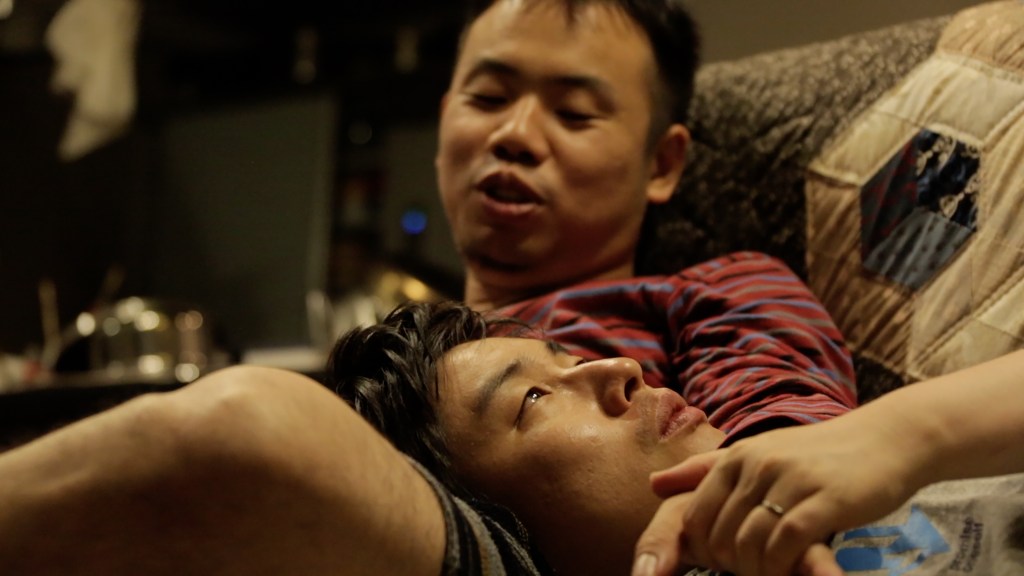
Hikaru Toda’s infinitely warm documentary following Love Hotel’s Kazu and Fumi who run Japan’s only LGBTQ+ law firm representing the marginalised in a largely conservative, conformist society. Review.

Each of the films will be available to stream for free for one week only via Queer East’s website and Vimeo channel. You can also keep up with all the latest festival news by following Queer East on Facebook,  TwitterInstagram, and YouTube.