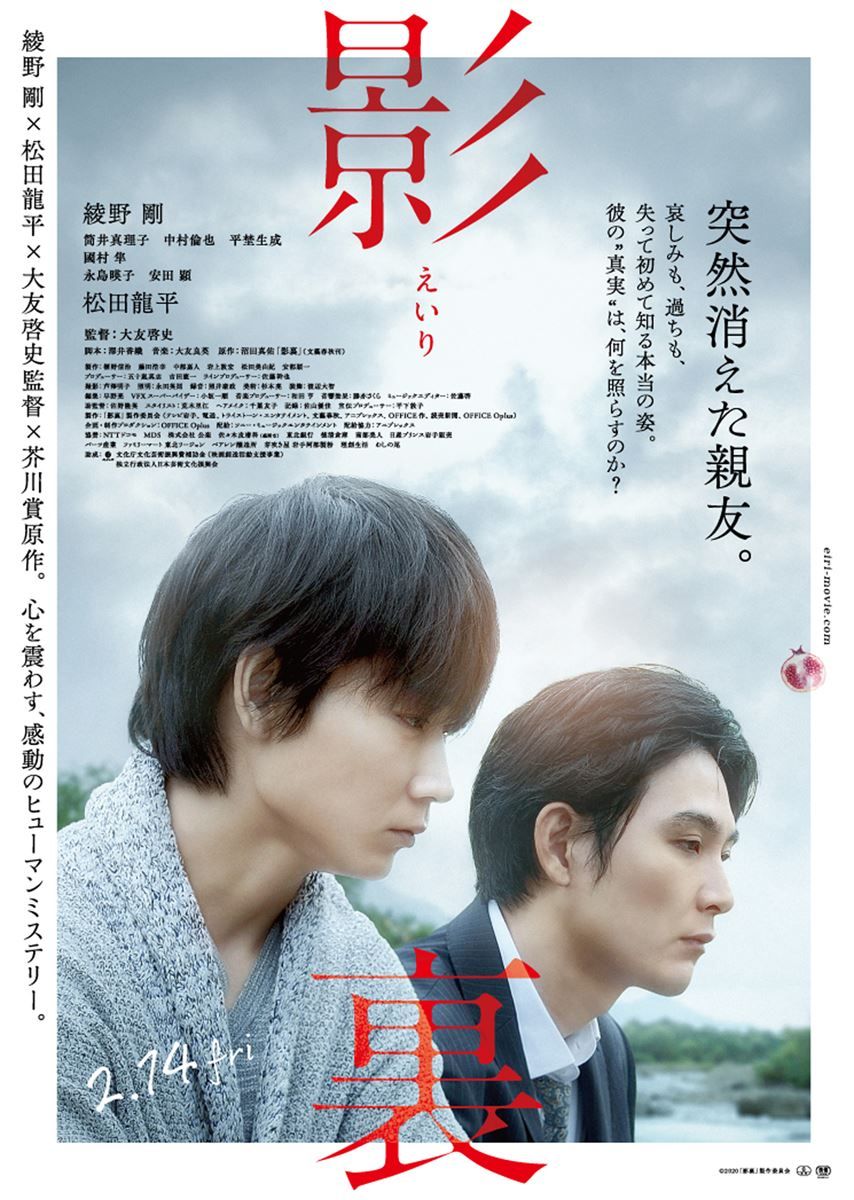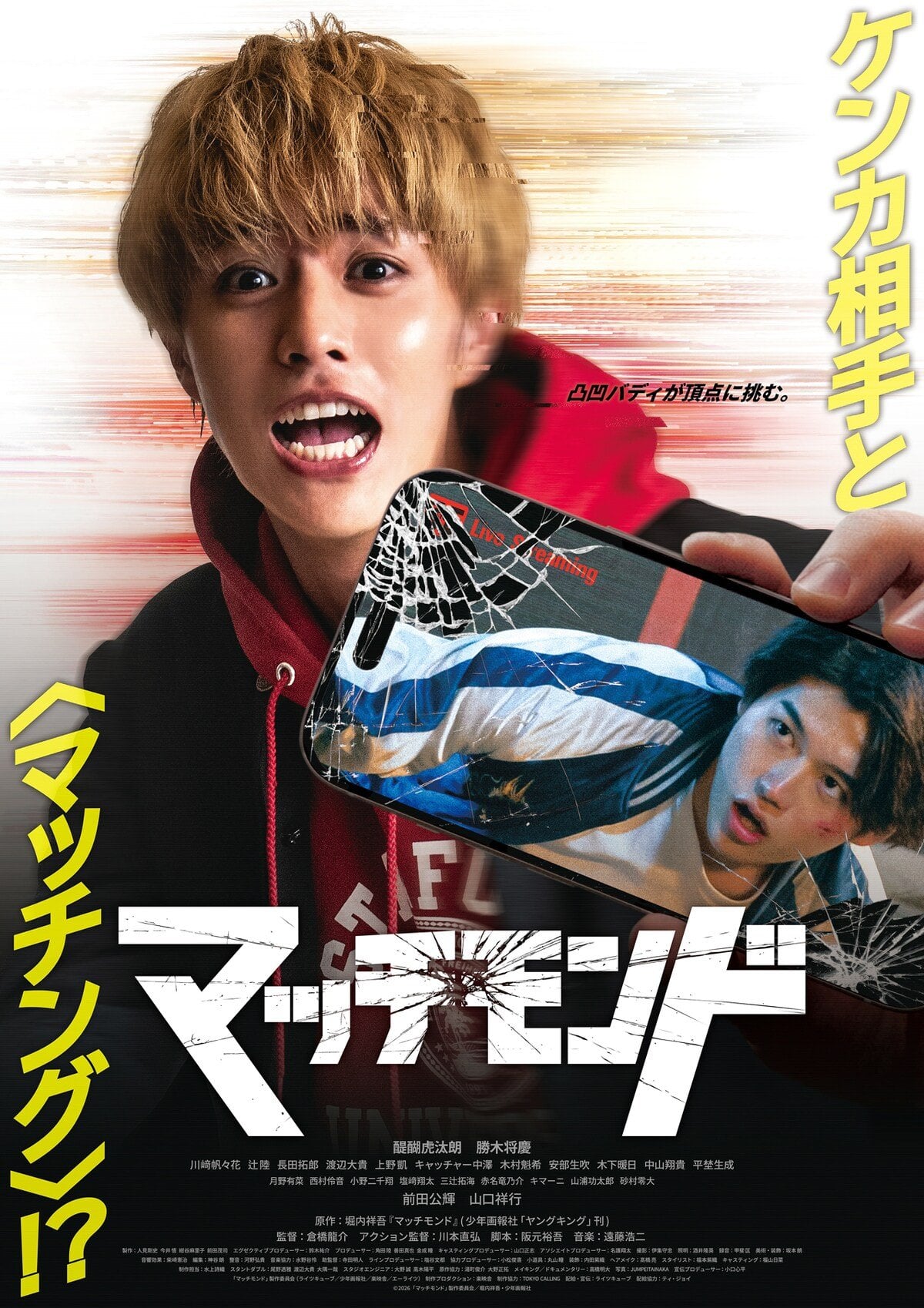
Match Monde (マッチモンド, Ryusuke Kurahashi, 2026)

Scripted by Yugo Sakamoto, Ryusuke Kurahashi’s low-budget adaptation of the Shogo Horiuchi manga Match Monde seems to be aiming for a Baby Assassins vibe while placing a contemporary spin on the classic high school delinquents fighting manga. Unlike many similarly themed films, high school never actually features and most of the users of fighting app Match Monde appear to be long past high school age even if it’s supposed to be limited to those 18 and under. 

The title is a kind pun in that Match Monde operates in the same way as a dating app, though it allows members to find worthy opponents for fighting. Users can also monetise their pugilistic talents though taking the “bounty” from defeated opponents, or pick up tips through live streaming. It’s not really clear why Mikio (Kotaro Daigo) is on this app as he dislikes fighting and seems to be something of a coward. In the opening sequence, he waits outside pretending to play on his phone while his best friend Yuta is beaten up by a bullying gang of older kids that Mikio later hides in a bin to avoid. It’s while running away, however, that he bumps into Mahiro (Masayoshi Katsuki) who can’t really be bothered to fight anyone but gives Mikio some life advice to the fact that he should be fighting to protect something important rather than just to protect himself. 

Mahiro is a bit a stock character in these kinds of stories, walking around with a beatific smile permanently on his face and carrying a strangely vacant aura. Obviously, it turns out that he’s a top fighter and high school drop out who is willing to fight for Mikio after seeing him develop his resolve to stand up to the bullies rather than let his friend get beaten up on his own again. Like Baby Assassins, however, the film is perhaps a little bit more interested in the boys’ mundane lives than it is in the fighting. Mahiro ropes Mikio in to help out at a part-time job working in his childhood friend Suzuna’s cafe because he says he seems kind earnest, which is broadly true, while Mahiro struggles to knuckle down and work and fears letting his friend down in that way.

While it may have strongly homoerotic undertones, particularly in the relationship between sometime villain Mairu and his late “best friend” Kitano who was murdered after becoming a delinquent, the film’s humour is distinctly old school and in some ways spills over into sexism as the defeated bullies are seen acting in stereotypically feminine ways such as knitting scarves for each other. Meanwhile, Mahiro and Mikio aren’t really afraid of getting into fights with the delinquents, but are apparently terrified of being told off by Shizuna. 

The focus is indeed on traditional masculinity which is rooted in protecting those weaker than oneself, especially women, though here also avoiding becoming someone who deliberately picks on picks on easy targets to assert their dominance as Mikio had been doing. Perhaps the only reason he was on the app was to prove Yuta wrong when he called him a coward, though he quickly ends up being exploited by the bullies who force him to fight so they can take his winnings, as optimistic as that might be. As the so-called “Penniless King”, Mahiro comes to occupy the space of an underdog hero who isn’t even technically in the game, but ends up winning it anyway just by virtue of being a cool guy who’s good with his fists.

Speaking of which, the fight scenes are sometimes unpolished but generally well choreographed. There seems to be some attempt to set up a continuing series with repeated references to a friend who is no longer on the scene as well as an incongruous appearance by Danhi Kinoshita, the star of Takashi Miike’s Blazing Fists, seemingly in a background, non-speaking part as a random member of Mairu’s gang. The potential there is quite interesting given that the natural result of all these boys fighting is that they end up becoming friends, even as Mairu insists he wants to defeat all the delinquents in revenge for his friend’s death so he’ll be the only one left and they’ll cause no more harm. Who knew that what they were really fighting was loneliness? Maybe Match Monde is friendship app after all.


Match Monde screens 23rd August as part of Big Bad Film Fest.

Trailer (no subtitles)
Beneath the Shadow (影裏, Keishi Ohtomo, 2020)

“There’s nothing wrong with leaving it a mystery” the enigmatic presence at the centre of Keishi Ohtomo’s Beneath the Shadow (影裏, Eiri) advises the hero as he vows to look into the unexpected appearance of a fish found swimming in the wrong river. Best known for mainstream blockbusters such as the Rurouni Kenshin series, March Comes in Like a Lion, and Museum, Ohtomo shits towards an arthouse register in adapting the Akutagawa Prize-winning novella by Shinsuke Numata which is in a sense obsessed with the unseen, the hidden details of life and secret sides we all have that are perhaps intended to protect but also leave us vulnerable. 

Konno (Go Ayano), an introverted man in his 30s, has just been transferred to rural Morioka by the pharmaceuticals company at which he works. He keeps himself to himself and largely spends his time caring for a Jasmine plant which appears to have some especial yet unexplained significance. It’s at work that he first encounters the enigmatic Hiasa (Ryuhei Matsuda), reminding him that theirs is a non-smoking building only to discover that Hiasa isn’t the sort to care very much about rules. For some reason or other, Hiasa takes a liking to Konno, turning up at his house with sake, teaching him how to fish, and going on what to anyone else look like dates. Yet when winter comes Hiasa abruptly quits his job and disappears without a word, resurfacing a few months later with a better haircut and a sharp suit explaining that he’s now a top salesman for a suspicious insurance company designed to help pay for expensive ceremonies such as weddings or more commonly funerals. The two men resume their friendship, but soon enough Hiasa again disappears. Only when he’s contacted by a co-worker (Mariko Tsutsui) after the earthquake hoping to find him because it turns out he owes her a large some of money does Konno begin to reflect on how little he might really have known this man he thought a friend. 

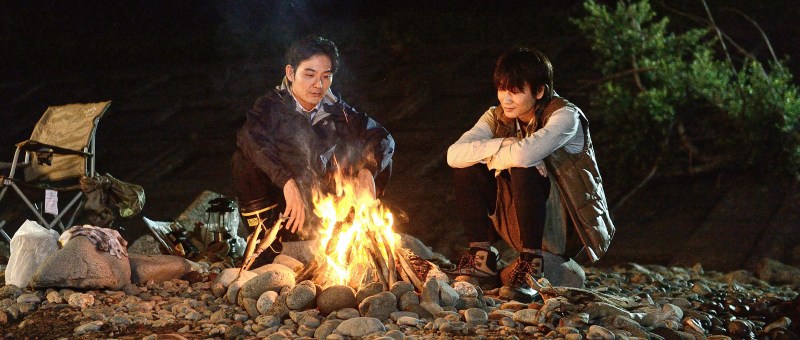
“Right from the start you have to groom it so it’s tantalised” Hiasa later explains, operating on several metaphorical levels but talking quite literally about lighting a fire. Konno has to wonder if that’s all it really was, if Hiasa is just a manipulative sociopath playing a long game, getting him on side in case he’d be useful later. When he resurfaces after his first absence, Hiasa eventually asks Konno to sign for one of his policies claiming that he’s one away from his quota and will be getting the can if he can’t fill it despite having talked a big game in proudly showing off a commendation he’d won as a top salesman when he turned up on Konno’s doorstep. “What you see is where the light hit for an instant, no more than that. When you look at someone you should look at the other side, the part where the shadow is deepest”, Hiasa had pointedly told him during a heated fireside conflagration, seemingly hurt as if in the moment he had wanted to be seen and is disappointed to be met with Konno’s irritated rejection, fed up with his mixed signals and distance both emotional and physical. 

Yet Konno is also himself living half in shadow as a closeted man choosing not to disclose his sexuality to those around him. A meeting with an old friend who has since transitioned presumably having embraced her own essential self raises further questions about the reasons he accepted the transfer to Morioka as if he too, like Hiasa, wanted to disappear from his old life and reinvent himself somewhere new, he’s just done it in a more conventional way. Even in contemporary Japan which is in some ways very old fashioned when it comes to the technology of everyday life and with a strong belief in personal privacy it’s surprisingly easy to just vanish at the best of times, but even his family members who are in no hurry to find him wonder if Hiasa may simply have used the cover of disaster to disappear for good. His conflicted brother (Ken Yasuda) affirms he thinks he’s probably alive because he’s “someone who can survive anywhere” which in the way he’s putting it is not much of a character reference. 

The conclusion Konno seems to come to, in a happier epilogue some years later, is that Hiasa himself was perhaps a fish swimming in the wrong waters, unable to adapt to the world around him. Perhaps it’s alright for him to remain a mystery because a mystery was what he was. Konno, by contrast, sets himself free apparently less gloomy, no longer living half in shadow, even if still hung up on the one that got away. A slow burn affair, Beneath the Shadow eventually refuses conflagration in favour of something cooler in accepting that you never really know anyone, perhaps not even yourself, even when you peer into the darkest part of the shadow. In the end you just have to let it go, “the cycle keeps repeating”. 


Beneath the Shadow streams in the US via the Smart Cinema app until Sept. 12 as part of this year’s New York Asian Film festival.

Original trailer (no subtitles)