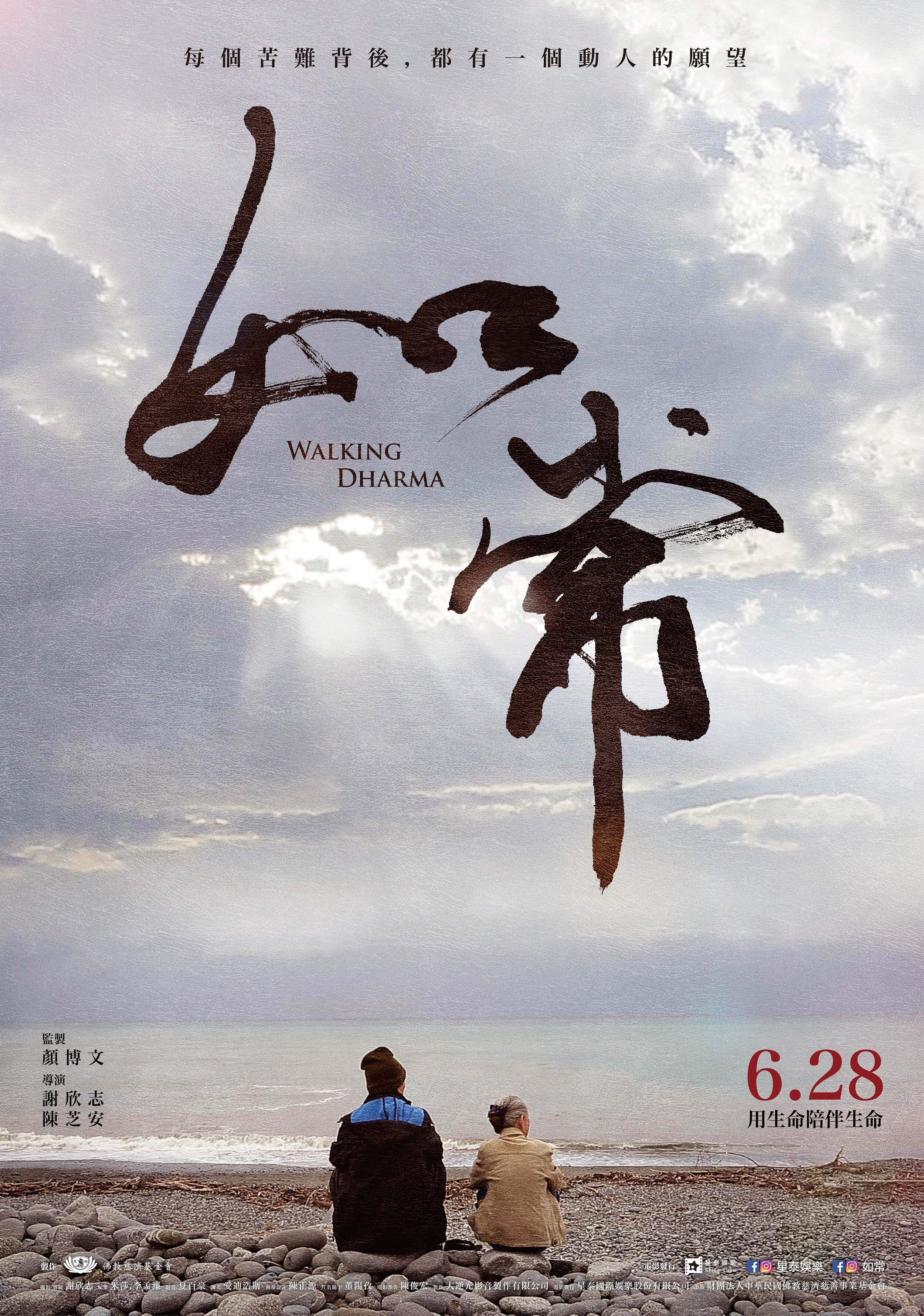
Walking Dharma (如常, Hsieh Hsih-Chih & Chen Chih-An, 2019)

The image we hold of Taiwan is of a prosperous nation among the most liberal in Asia, yet behind the shining cities there are still those experiencing hardship who might perhaps have fallen through the cracks if it were not for the efforts of the volunteers from the Tzu Chi Foundation. In Walking Dharma (如常, Rú Cháng) documentarians Chen Chih-An and Hsieh Hsin-Chih spent 18 months shadowing some of the organisation’s members many of whom are themselves elderly and have experienced their own share of suffering but equally of mutual support which they have committed to passing on through helping others. 

Testament to changing times, the first recipient of the volunteers’ care is an elderly woman who has had a nasty fall. She later thanks them for all their help in Japanese, a reminder that she was born in another world, raised in the colonial era. She is also one of many isolated older people in the nation’s ageing population, living all alone either with no surviving family around to care for them or perhaps with children who for whatever reason are not able to leaving them entirely dependent on the kindness of the volunteers. The foundation organises a crew to come round and clear the large amount of debris in front of the woman’s home to make it safer for her so she won’t fall again while trying to sort out her medication and make sure she’s safe during an upcoming typhoon. 

Meanwhile, they are also there for children and families who find themselves in difficult circumstances particularly those in which a parent has passed away unexpectedly or is suffering with a chronic illness which both renders them economically vulnerable and places an undue burden on the children whose academic prospects are then reduced while they are needed to care for their parent and siblings. The organisation provides educational assistance to cover school fees for children who find themselves in difficulty, emphasising that education is their best path out of poverty. One young woman later makes a heartfelt visit to one of the elderly volunteers to thank him for all his support over the years which has helped her to gain a place at a prestigious university. Not everyone is convinced, however, including one elderly grandmother who is reluctant to allow her granddaughters to pursue education at high school and beyond, partly because she fears they will go off the rails like the mother who abandoned them to her, and partly for more selfish reasons in that she too will be left alone with no one to look after her in her old age. Thanks to the gentle advice of the volunteers, the grandmother eventually relents and allows the young women the freedom to pursue their dreams. 

Though the members are all obviously adherents of Buddhism and committed to the teachings of the Tzu Chi Foundation which is admittedly cast in an extremely uncritical light, they are prohibited from preaching while offering help as the organisation has a strict policy in place to pursue a secular outlook. The assistance they provide is offered without seeking anything in return save the greater happiness of those they help, gaining a sense of joy in human solidarity as they witness the difference their intervention can make in the lives of others. There are some who might not want what they’re offering, or at least all of it, including one young man and his hearing impaired father who insist that they’re fine with heating up water the old fashioned way and don’t see the point in getting it piped in with a modern heating system, but the volunteers take it all in their stride always respecting the wishes of those they’ve come to help while continuing to offer advice and companionship. 

Yet it takes its toll on them too, a doctor confessing that they often see members of the Tzu Chi Foundation coming in after pushing themselves too hard, failing to look after themselves in their commitment to helping others. All of the volunteers we meet are retirees, one elderly gentlemen later heartbroken when the decline of his own health prevents him from continuing to volunteer. Nevertheless, they all emphasise that helping others is what gives their life meaning, enriching their experience as they find joy in alleviating suffering. A gentle and heartwarming reminder that we’re all in this together, Walking Dharma is testament to the existence of goodness in an all too often indifferent world.


Walking Dharma streams in the US until Sept. 26 as part of the 11th Season of Asian Pop-Up Cinema.

Original trailer (English subtitles)

Four Moods (喜怒哀樂, Pai Ching-Jui, King Hu, Li Hsing, Li Han-Hsiang, 1970)

A key figure in the history of Sinophone cinema, Li Han-Hsiang migrated to Hong Kong from the Mainland in 1948, studying originally as an actor at the Yong Hwa Film Company under the director Zhu Shilun before performing various roles in the industry working as a set painter and graphic artist as well as in voice acting. After his directorial debut Red Bloom in the Snow proved a critical hit, he joined Shaw Brothers in the mid-1950s where he became instrumental in the success of the studio’s hugely popular period musicals inspired by Huangmei opera including the classics The Kingdom And the Beauty (1959) and The Love Eterne (1963). In 1963 he left Shaw Brothers to found Grand Motion Picture Company in Taiwan, helping to further the burgeoning Taiwanese film industry where the Huangmei musicals had proved so popular. Unfortunately, however, the Grand Motion Picture Company ran into financial trouble in the late 1960s and Four Moods (喜怒哀樂, Xǐnù’āilè), a four-part historical portmanteau piece featuring instalments from the most prominent directors of the day including Li himself, was in part intended to improve its flagging fortunes. Unfortunately it was not in that regard successful and Li eventually returned to Hong Kong, founding another production house before rejoining Shaw Brothers in 1972. 

The first of the Four Moods, Joy, is directed by Pai Ching-Jui who studied filmmaking in Italy in the early ‘60s and was heavily influenced by Italian neo-realism but perhaps counterintuitively his contribution is an entirely wordless piece of expressionist psychedelica in which a man trying to stay awake (Yueh Yang) receives a visitation from a beautiful female spirit (Chen Chen) who seems to be the incarnation of a woman whose resting place he repaired after frightening off a disfigured grave robber, planting a pretty flower he found into the earth. The man eventually beds the demure young woman but is disappointed to find her disappeared the next morning, running out into the forest and trying the same thing again, scouring headstones looking for a woman’s name and then planting his flower only to be much less enthused with his next visitor. A visually arresting fever dream of sex and death playing out in a gothic dilapidated cottage in the middle of a foggy forest and set to a primal beat of traditional instrumentation, Pai’s eerie ghost story is feast for the senses. 

King Hu’s Anger, meanwhile, sees the legendary director return to Dragon Inn territory as the destabilising forces of the age meet in a nihilistic battle for survival at remote outpost. The main thrust of the drama follows retainer Tang-hui (Chang Fu-Geng) who is despatched by General Yang to follow one of their men, Tsun, who has been sent into exile after killing the son-in-law of rival general Wang in a fight, but it’s believed that Wang has bribed his guards to kill him before they reach the border. They do indeed try to assassinate Tsun but he seems to fend them off and no longer thinks of them as dangerous when they arrive the inn which turns out to be staffed by duplicitous innkeepers who make a habit of robbing and murdering their guests. Tang-hui, when he turns up, is next on their list because they believe he’s a wealthy businessman weighed down with silver. Soon enough all hell breaks loose as Tang-hui takes on the innkeepers while the mercenary guards debate which side it’s best to be on, culminating in an extraordinarily well choreographed battle set to the rhythms of Peking opera. 

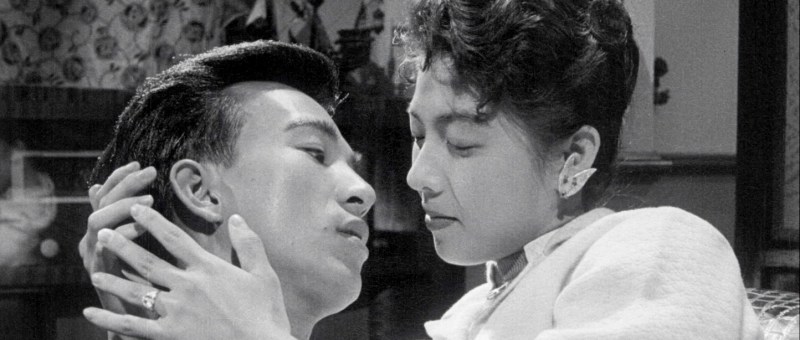
Anger then gives way to Sadness, directed by “godfather of Taiwanese cinema” Li Hsing who migrated from the Mainland in 1949 and began his career in Taiyupian Taiwanese language cinema in 1958 with Brother Liu and Brother Wang on the Road in Taiwan. One again a ghost story, Sadness meditates on the fallacy of vengeance as a man (Ou Wei) returns home after 10 years in prison on a trumped up charge looking for revenge against the men who murdered his family but inconviently discovers that they were all murdered themselves some years previously so there’s no one left to take revenge against. Retaking his family home, he finds a beautiful young woman (Chang Mei-yao) living there who claims to be a refugee making use of the empty house. She tries to talk him out of his revenge fantasies which involve pointlessly desecrating the graves of the Lan family so they’ll never rest in peace, but he doesn’t listen. Thrashing around angrily with his sword, the man eventually softens as he falls for the woman, but ruins his chance of happiness in his inability to let go of his grief and rage. 

The final segment, Happiness, is directed by Li Han-Hsiang himself and is a comparatively subdued tale revolving around a cheerful miller (Ko Hsiang-Ting) who enjoys a drink while fishing in the river by the millhouse. It’s there that he encounters a strange young man (Peter Yang Kwan) who charms the fish into his basket through the beautiful music of his flute. The miller learns that the mysterious man, Liu Lon, is the ghost of one who fell into the river drunk sometime previously and is looking for his replacement so he can move on. Problematically for the miller that involves the death of a young local woman (Chiang Ching) he knows well who considers drowning herself because her father doesn’t approve of her marriage to a man she loves. He saves her, offering to intercede with her father to make him see sense, which means he gets to spend more time with his ghost friend but also that Liu Lon will be in purgatory for another few years. Liu Lon later gets another chance but takes pity on a lost soul and is rewarded for his selfless act of kindness, as he tells the miller will he be for all his earthly goodness. If we haven’t learned already from all the terrible tales of fruitless human greed and violence presented in the other three segments, the path to happiness lies in temperate kindness which is sure to receive at least celestial reward in its proper time. 


Four Moods streams in the UK until 27th September as part of the Taiwan Film Festival Edinburgh.

Original trailer (English subtitles)

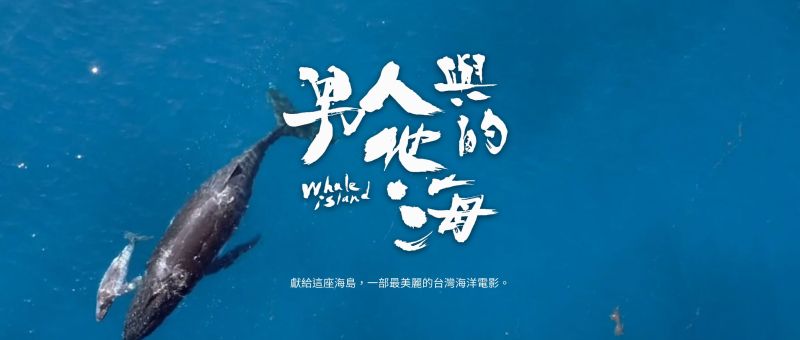
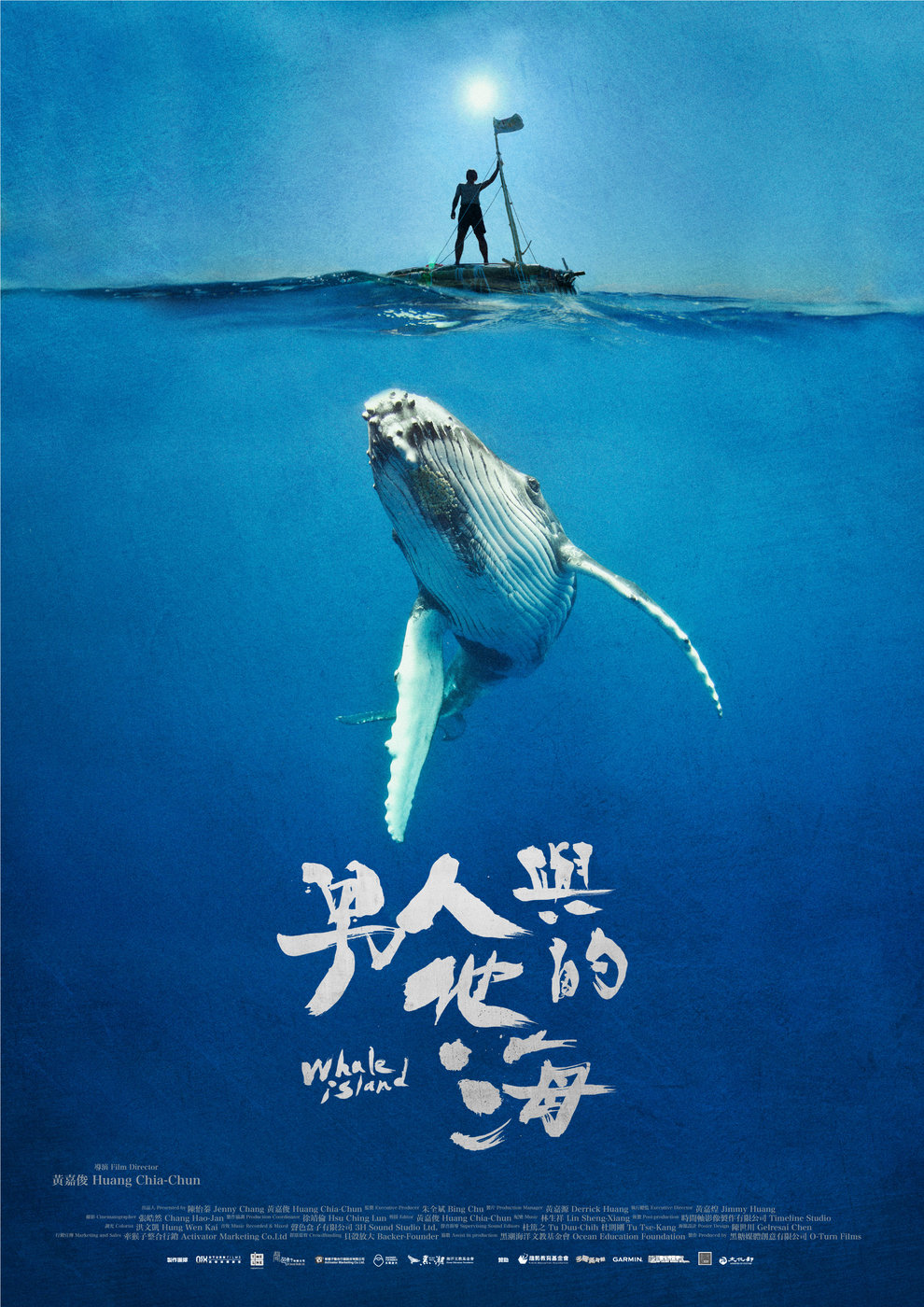
Whale Island (男人與他的海, Huang Chia-chun, 2020)

Taiwan is an island, but its people have lost touch with the sea according to one of the protagonists of Huang Chia-chun’s contemplative documentary. Whale Island (男人與他的海, Nánrén Yú Tā de Hǎi) argues that fear has blinded the populace to the beauty which surrounds it, robbing them of their natural freedoms in a symbolic act of repression, but love of the ocean has also cost both of Huang’s protagonists dearly as they find themselves having to prioritise leaving those they love behind on land while they immerse themselves in the solitude of the sea. 

Oceanoggrapher Liao refuses to be constrained. “During your lifetime it’s inevitable for you to be restricted.” he admits, “restricted by society, restricted by reality, restricted by age, restricted by body.” Liao laments that if only people could learn to lose their fear of the water, something he feels has been deliberately cultivated as a means of oppression, everything would be better. For his own part, he fell in love with the sea for the sense solitude. As a young man with language difficulties he longed to escape other people, dreaming of becoming a lighthouse keeper or perhaps a forest ranger before getting to know some captains of fishing boats and getting a job as a fisherman. These days he acts as a tour guide, running scenic trips for tourists showcasing the wonder that exists just off shore with its spinning dolphins and visiting whales. 

Ray, meanwhile, is a wildlife photographer specialising in underwater shots of marine animals. As a father to two young sons, however, he finds himself conflicted, putting his work on the back burner knowing that to do it all out would mean being away from his family for long stretches of time but watching other photographers push further ahead by hopping the planet chasing the seasons. A few weeks a year he travels to Tonga where, unlike Taiwan, it’s permissible to swim alongside the whales but the work is not without danger as he proves after getting whacked on the leg by a curious whale’s tail and being stuck on the shore while he recuperates. Ironically, his boys fear the water, not because its destructive capacity but because of the very real anxiety that that will swallow him whole, that one day he’ll disappear beneath the waves and never resurface. 

Like Ray, Liao also found himself with a kind of choice only in his case it was no choice at all. His marriage eventually broke down because of his obsession with the sea, damaging his relationship with his young daughter which was not repaired until she was a grown woman suffering a health crisis. Yet the sea was not something he could sacrifice, dedicating his life to unlocking its mysteries while insisting on his own freedom, refusing to be constrained by conventional social codes or the will of others. 

Liao is convinced that if people turned to face the sea, lost their fear of it, then many things would change. Perhaps they would feel less oppressed, better able to express themselves and better equipped to live in freedom as he has learned to. According to the life philosophy communicated to him by a friend and mentor, the only way to survive a storm is to sail straight into it, turn the prow towards the source of the problem instead of trying to outrun it. Liao has done just that, attempting to raise awareness of the joys of the sea while fully aware of its concurrent dangers. Huang captures both the majesty of the Taiwanese landscape with its rolling seas, rocky inlets, and remote islands while marvelling at the prevalence of sea life found not so far off shore, neatly contrasting dolphins frolicking in the open seas with those forced to do tricks for tourists in nearby theme parks. A picturesque voyage along the island’s idyllic coastlines, Whale Island is a poignant reminder of the beauty that lies just over the horizon, constantly at the mercy of an ever changing world.


Whale Island streams in the US until Sept. 26 as part of the 11th Season of Asian Pop-Up Cinema.

Original trailer (English subtitles)

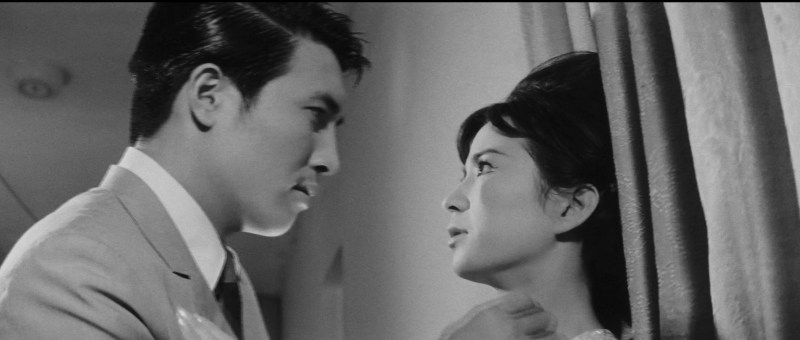
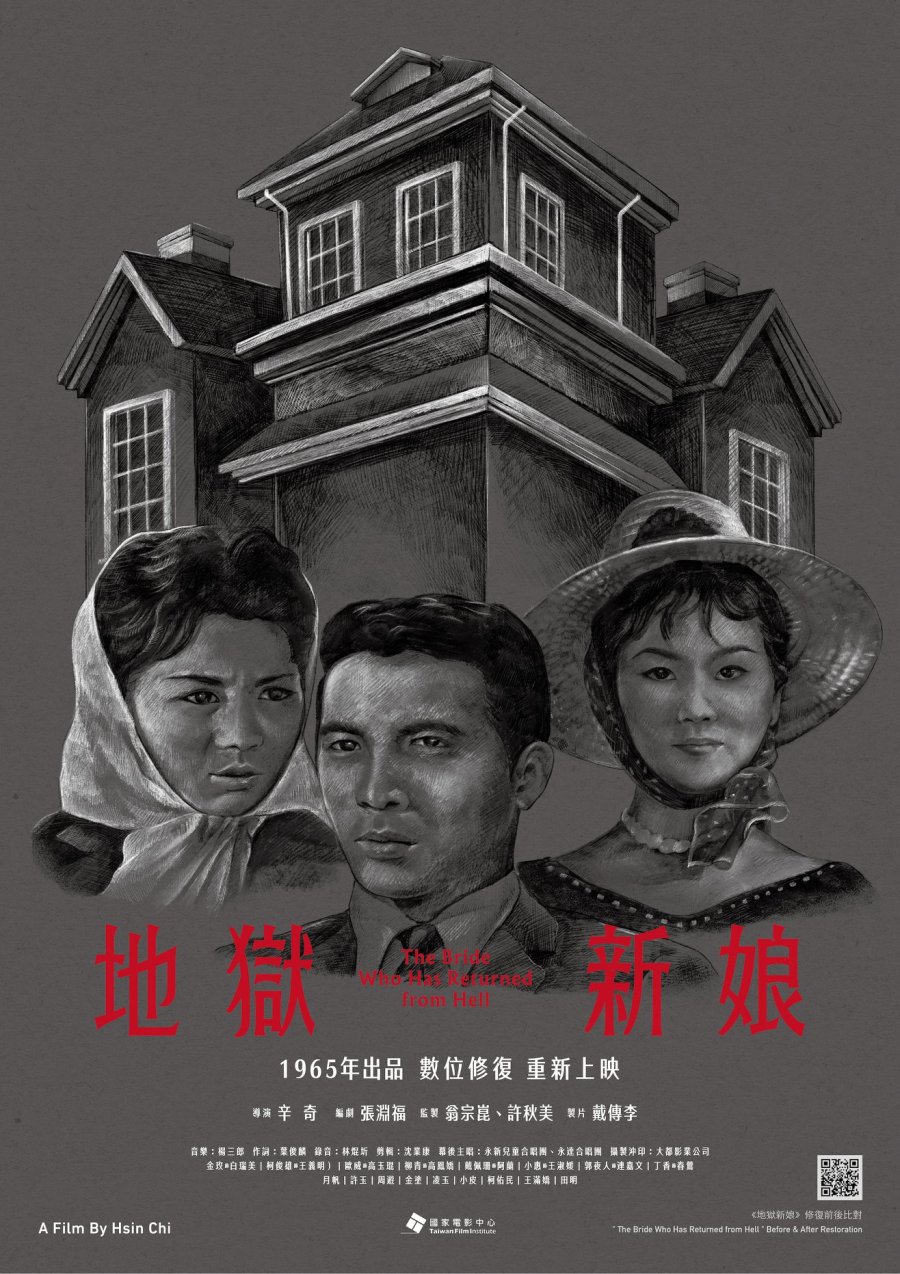
The Bride Who Has Returned From Hell (地獄新娘, Hsin Chi, 1965)

“That place is filled with horror and mystery” a creepily persistent man on a train claiming to be a clairvoyant warns the new governess to a home that does indeed turn out to be tinged with tragedy, though in true gothic melodrama fashion that was something of which she was already well aware. Inspired by the Victoria Holt novel Mistress of Mellyn, Taiyupian The Bride Who Has Returned From Hell (地獄新娘) is less supernatural mystery than eerie romance which sees frustrated desire collide with outdated social mores to destabilise the social order in the otherwise tranquil world of the new elite. 

Echoing the novel’s Cornish atmospherics, the opening title sequence pans over the rugged coastal landscape with its rocky outcrops and crashing waves before homing in on a policeman picking up a handbag while his colleagues investigate the body of a man drowned at sea. Meanwhile, wealthy entrepreneur Yi-Ming (Ko Chun-Hsiung) is worried because his wife Sui-Han is not at home despite the fact they’re supposed to be going to a friend’s birthday party. The man’s body is identified as Guo Jing-Min, Yi-Ming’s cousin and the older brother of the woman living next-door, Feng-Jiao (Liu Ching). Jing-Min and Sui-Han were once lovers, and given that the handbag appears to have been hers, it’s assumed that the pair attempted to elope but got into trouble and drowned with Sui-Han’s body possibly lost at sea. 

Perhaps tellingly, Yi-Ming’s reaction to his wife’s disappearance is irritation and suspicion. He asks the housekeeper if Sui-Han has ever stayed out all night while he’s away from home and on learning that she may have come to harm focuses solely on the embarrassment of being a man whose wife has betrayed him. “How am I supposed to face people?” he angrily asks Feng-Jiao who apologises on her brother’s behalf (but seems equally unperturbed at his demise). He more or less gives up on finding out what’s happened to Sui-Han and begins to reject his daughter, Su-Luan, solely because she reminds him of his wife while taking up with another woman, Mrs Lian (Kuo Yeh-Jen), who married a much older man presumably for his money. 

Meanwhile, Sui-Mi (Chin Mei), Sui-Han’s sister who has recently returned to Taiwan after many years living abroad in Singapore, has secretly taken a job as a governess in the Wang household under an assumed name in order to investigate her sister’s disappearance. The man on the train who warned her about the house’s dark mystery, the lonely little girl, and the man with a bad reputation turns out to be none other than the other brother of Feng-Jiao who lives with her in a neighbouring mansion. Apparently employed partly because of her physical similarity to the (presumed) late Sui-Han in an effort to provide comfort to the highly strung Su-Luan, Sui-Mi is only one of several doubles in play which include the decidedly creepy little girl Lan (Dai Pei-shan), the housekeeper’s granddaughter, who insists that Sui-Han is still alive while more or less spying on everyone making full use of her invisibility as a member of the servant class. 

Like any heroine of a gothic romance, Sui-Mi’s role is not just to solve the mystery but to restore order by unifying the various forces of destabilisation currently threatening the Wang family which is one reason we see her actively include Lan, treating her the same as she does Su-Luan, teaching the two girls to be friends and equals as she educates them both together. The other threat to social harmony is in Yi-Ming’s moodiness and womanising, most particularly his possibly immoral relationship with Mrs. Lian and inability to embrace his role as a father by showing love to his daughter who is already becoming strange and neurotic in the wake of her mother’s death, believing that she has been abandoned by both parents. Thus, partly thanks to her physical similarity to Sui-Han as her sister, Sui-Mi assumes the maternal role assuring Su-Luan that she will love her forever in her mother’s place while Yi-Ming’s growing attraction to her precisely because of these maternal qualities, in its own way also problematic, draws him back towards the proper path of home and family. 

Pursued by Feng-Jiao’s creepy brother and conflicted in her attraction to her brother-in-law while still harbouring the suspicion he may be involved in her sister’s disappearance, Sui-Mi finds herself drifting away from the idea of solving the mystery even while inhabiting the creepy mansion which is in its own way both literally and figuratively haunted. A dream apparition of her sister in an ethereal use of double exposure effectively gives her permission to pursue her romantic destiny by instructing her to stay in Taiwan and look after Su-Luan because, she fears, no one else will which doesn’t speak highly of Yi-Ming, while reminding Sui-Mi that she came to the Wangs’ for a reason.  

“You can’t get true love by manipulation” the villain is later told, revealing to us that the motive in this case really was romantic jealousy, a typically gothic sense of repression born of oppressive patriarchal social codes which prevent the proper expression of desire and eventually lead to violence. Sui-Mi restores order by solving the mystery and then healing the rifts by, ironically, submitting herself to those same oppressive social codes in assuming her “natural” role as wife and mother. Using a series of unexpected music cues from ominous Japanese folksong Moon over Ruined Castle as Sui-Mi surveys the rugged mansion to the more upbeat Hana as she plays with the children, moody jazz, Danny Boy, and even the James Bond theme playing over the climax (not to mention the many instances of child star and producer’s daughter Dai Pei-shan singing her gloomy lullaby), Hsin goes all in on the gothic imagery even having Sui-Mi almost fall victim to a suspicious rock fall just as she becomes a credible romantic heroine, before ending on a cheerful note with another song celebrating the simple joys of the traditional family.


The Bride Who Has Returned From Hell streams in the UK until 27th September as part of the Taiwan Film Festival Edinburgh.

Restoration trailer (English subtitles)
A City Called Dragon (龍城十日, Tu Chun-Hsun, 1970)

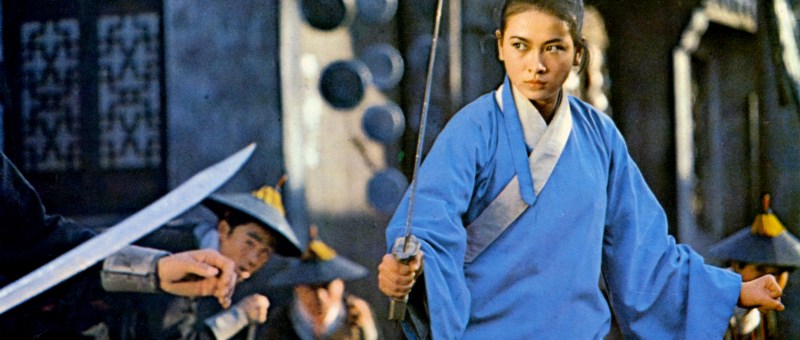
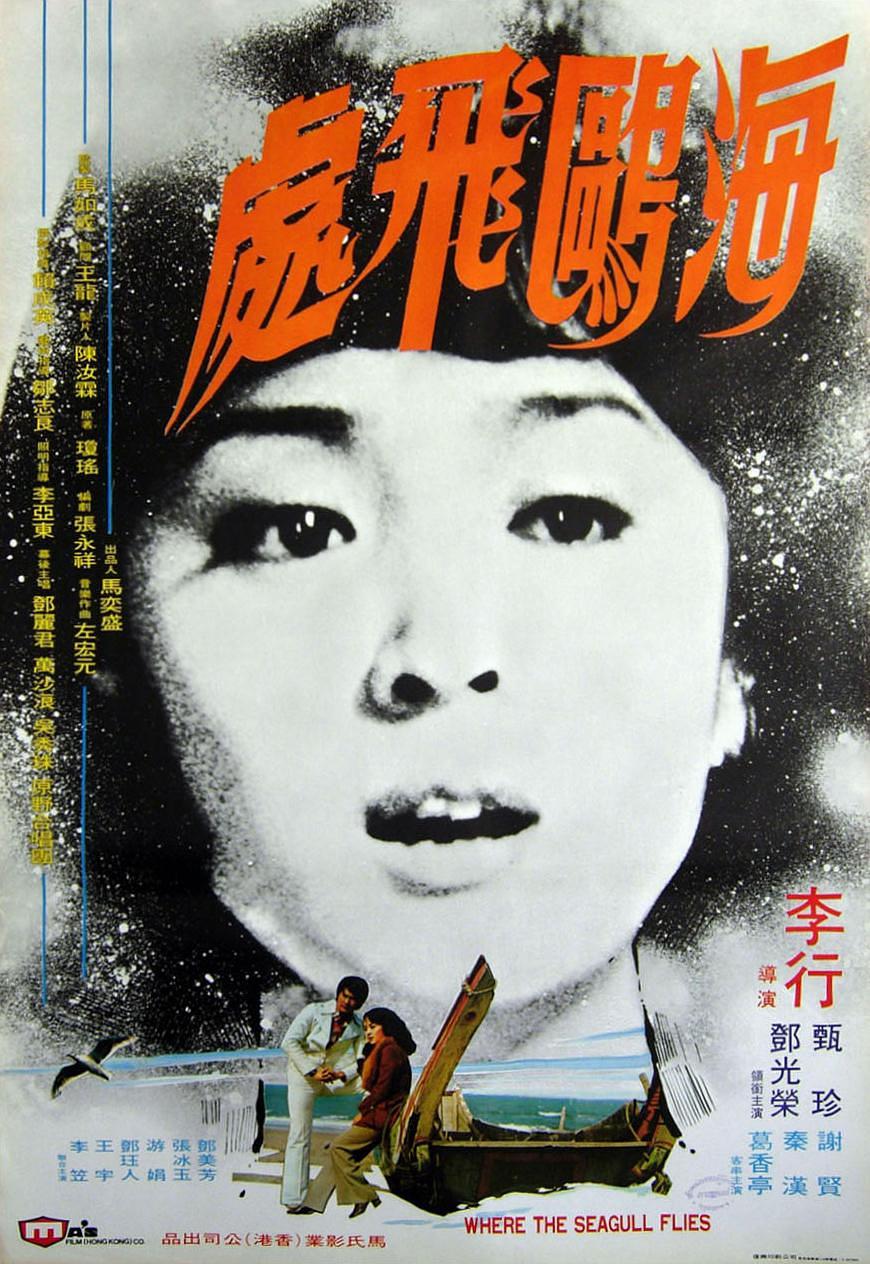
“A young girl like you has to be careful” a well-meaning palanquin driver warns our heroine, little knowing that into the heart of danger is exactly where she means to go. Tu Chun-Hsun’s Taiwanese wuxia A City Called Dragon (龍城十日, Lóngchéng Shí Rì) stars relative newcomer Hsu Feng immediately before her breakout role in King Hu’s A Touch of Zen as a noble Han Chinese revolutionary resisting Manchu oppression in the Song Dynasty bravely venturing into Dragon City currently in lockdown under the increasingly paranoid rule of its new magistrate, Lord Pu (Shih Chun). 

In 1131, “Jade Dragonfly” Shang Yen-Chih (Hsu Feng) leaves the mountain stronghold for Dragon City in order to rendezvous with Chen, a fellow revolutionary in possession of a plan book essential for the coming battle against the oppressive Manchu regime. As the palanquin drivers inform her, however, Chen, along with 80 members of his family, was executed for treason two days previously on orders of the new governor. The city is in a state of paranoid chaos that leaves the drivers unwilling to approach. Nevertheless, Yen-Chih is undaunted knowing she must get her hands on the book before it falls into the hands of the authorities. 

Tu conjures a world of tension and intrigue perfectly capturing the anxieties of Yen-chih’s undercover existence, painfully aware of each and every sound and always on the look out for trouble or betrayal as she wanders the paranoid city. Shortly before she arrives, a group of local men is brought in for questioning on the mere suspicion of visiting Chen’s grave, tainted by association and sent off to be tortured, bearing out the bearers’ assertion that Pu is a dangerously paranoid authoritarian intent on stamping out any and all dissent. If there’s a parallel to the White Terror here is it in implication only, but it’s presence is perhaps felt in the innate dangers of the world in which Yen-Chih now finds herself. In any case, she is perhaps in some instances protected by her appearance, written off as a genteel young woman in need of protection rather than a fearsome revolutionary able to leap tall walls in a single bound and endure days of torture never wavering in her mission. 

Meanwhile, Pu’s Manchu guards are universally corrupt. Yen-Chih makes a nervous entry into the city alarmed by a sudden cry of “freeze” only to realise the soldiers haven’t even noticed her, they are too busy gambling. Later they make a point of carting off her collaborator, tipped off by an obsequious informant hoping for advancement, and then ransacking his pharmacy, burning all his goods in the central square (which considering what they are might not be the best move), careful to pocket any valuables first. In such an atmosphere, perhaps it’s not surprising that Yen-Chih succeeds in finding unexpected allies, radicalising a young thief brought in, ironically, on suspicion of killing a spy she herself killed while they are both in prison. 

The Manchu regime and most particularly Pu’s deputy are indeed corrupt and oppressive, but as expected not quite everything is as we first assumed it to be. The ground constantly shifting beneath her feet, Yen-Chih chases the book but eventually discovers that she has been under a misapprehension as to its keepers and not only that, she’s also in the middle of someone else’s complicated revenge plot. The resolution though not exactly unexpected paves the way towards a surprisingly empathetic finale in which Yen-Chih is moved to discover the the extent to which a comrade has undertaken their duty, protecting her in facilitating her mission and allowing her to return to their shared cause with new hope while they remain behind alone in the increasingly destabilised environment of Dragon City the forces of Manchu for the moment seemingly turned against themselves. 

Breathtakingly tense, Tu’s anxious, low angle camera captures the sense of a city locked down by fear and paranoia while lending a ghostly air to the abandoned Chen estate where Yen-chih encounters its creepy butler before an intense showdown with Pu’s guards once again tipped off by their duplicitous informant. Boasting an extremely accomplished and charismatic performance from Hsu Feng as the intense swordswoman revolutionary and genuinely exciting choreography, A City Called Dragon is a forgotten gem of the ’70s Taiwanese wuxia boom.


A City Called Dragon streams in the UK 21st to 27th September as part of the Taiwan Film Festival Edinburgh.

Trailer (English subtitles)

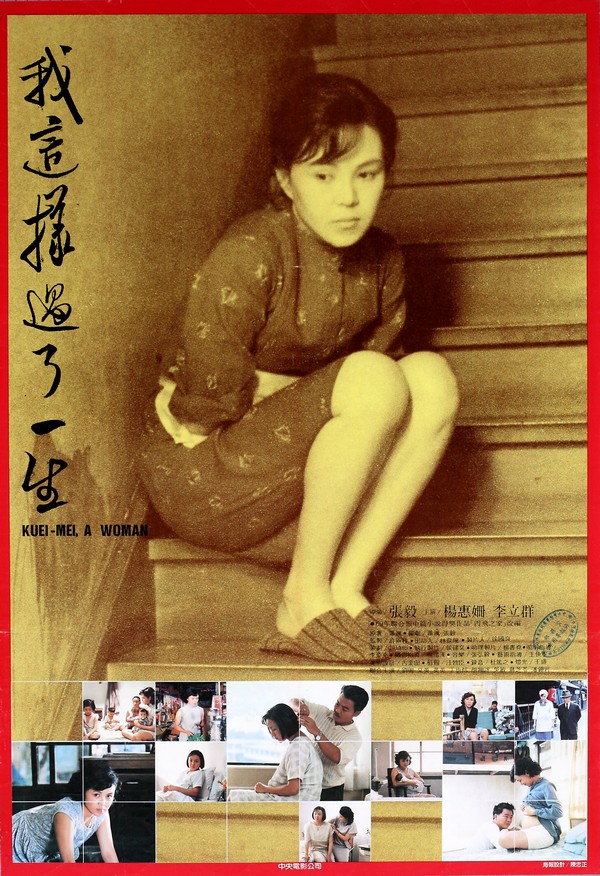
Kuei-Mei, a Woman (我這樣過了一生, Chang Yi, 1985)

“Why are women always being tolerant?” a middle-aged, unmarried daughter asks her mother uncertain why she stoically put up with everything she did as if she had any other choice. As the title implies, Chang Yi’s Kuei-Mei, a Woman (我這樣過了一生, Wǒ Zhèyàng Guò le Yīshēng) , based on a book by his then wife Hsiao Sa, is the story of one ordinary woman though one who perhaps stands in for that of her nation undergoing a period of rapid change from post-war penury to comfortable prosperity in a little more than 30 years which is in essence a generation. 

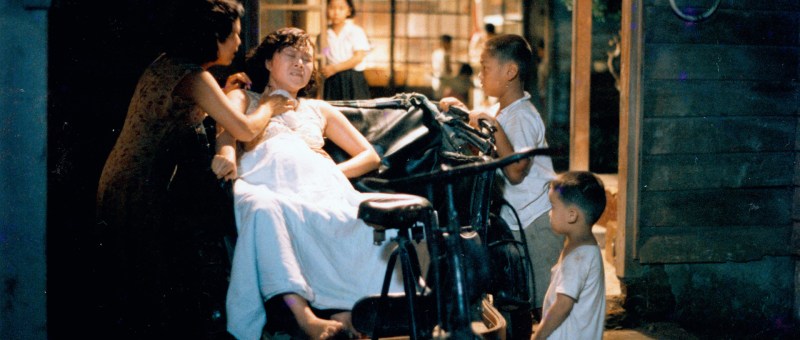
Kuei-Mei (Loretta Yang Hui-shan) leaves Mainland China during the chaos of the civil war and escapes to Taiwan with her cousin. Living in limbo, neither of them intended to stay very long and assumed they’d one day be going home. Nevertheless, there are things which must be done, which is why Kuei-Mei finds herself gravitating towards an arranged marriage with a widowed father of three, Hou (Lee Li-chun), another Mainland refugee with a steady job as a waiter in a restaurant run by a foreigner. For lack of other options, Kuei-Mei decides to become Hou’s wife, but unbeknownst to her, he has a serious gambling problem that continually endangers their family and eventually loses him his job. Shackled to an irresponsible man, it’s Kuei-Mei who has to shoulder the responsibility of trying to keep the family together but in the end she can save it only by breaking it apart, accepting a job as a housekeeper to a wealthy couple who are moving to Japan taking with her only two of her five children, one of the twins she bore herself and Hou’s oldest boy who struggles in the Taiwanese educational system. 

As a middle-aged, modern woman, Cheng-fang, Hou’s oldest daughter, asks her step-mother why she chose to forgive her father, returning after having left him on discovering that he had fathered a child with another woman. Kuei-Mei doesn’t have much of an answer for her, we can infer she returned because the children needed her and she couldn’t support them alone, but wonders if her unhappy marriage is the reason Cheng-fang has remained single. Contemporary women have other options, they need not stoically resign themselves to passive suffering as the women of Kuei-Mei’s generation were expected to do. None of the marriages we see are particularly happy, from that of Kuei-Mei’s cousin and her husband whose constant arguing pushes her towards a marriage of her own to escape the awkwardness of being a guest in their home, to the wealthy Weis in Japan who again argue constantly because, the servants gossip, of a patriarchal power imbalance. Mr. Wei is dependent on his wife’s family for influence and advancement, but humiliates her through his infidelity while she feels trapped, fearing the humiliation of middle-aged divorce may be even worse. Again it’s a desire to escape the awkwardness of the Weis, along with the “humiliation” of living as mistreated servant, that motivates Kuei-Mei to leave their employ to work illegally in a restaurant in the hope of earning higher wages in order to return home and open a restaurant of her own. 

Kuei-Mei’s determination is in a sense to be her own boss, though the level of autonomous independence she can achieve is perhaps limited by the patriarchal society in which she lives. Nevertheless, she works hard to achieve it despite being tied to the dead weight that is Hou who can only drift along behind her, waiting tables in the restaurant she eventually sets up which is named after a street in the Shanghai she left as little more than a teenager. As an old woman she receives a letter from the man she was engaged to in her village, a sudden reminder of the life she could have had, all her youthful dreams of romance sacrificed on the altar of pragmatism in her marriage to Hou. But despite all the difficulty she remains surrounded by the family she secured through her maternity, even if the grown-up children all dream of lives abroad, scattered by the glittering prizes of a newly prosperous era. 

Late in life walking with Cheng-fang, Kuei-Mei passes the place where her twins were born, an elegant tower block replacing the tenement where she first lived with her cousin after arriving in Taipei. Her rise mirrors that of her country, patiently working hard to make something of herself in turbulent times, unrecognised by the world around her, but emerging with quiet dignity in her ability to bear her sorrow with grace as she determined to build a better future for her children. Her life has, however, been hard and its costs are visited directly upon her at its end, the ills of the modern society ironically symbolised in a cancer of the womb in a woman whose triumph lies in her maternity. A social realist epic filmed with a studied detachment, Chang’s hugely empathetic biopic of the everywoman has only a profound respect for stoic suffering while quietly resentful of the society which demanded it.


Kuei-Mei, a Woman streams in the UK 18th to 27th September as part of the Taiwan Film Festival Edinburgh.

Trailer (English subtitles)
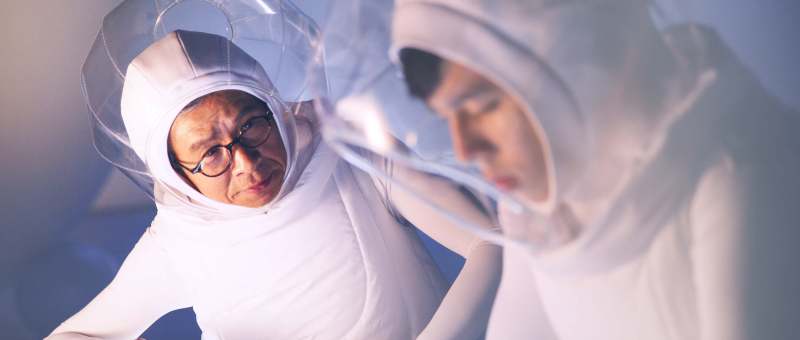
Where the Seagull Flies (海鷗飛處, Li Hsing, 1974)

Regarded as the “father of Taiwanese cinema”, Li Hsing was one of many who migrated from the Mainland during the Chinese civil war in 1949. Originally working as an actor, Li shifted into directing with the boom in Taiyupian Taiwanese language cinema in late ‘50s though he himself did not speak it, moving then into documentaries and finally self-financing the Mandarin language indie film Our Neighbors in 1963 becoming known for a particular brand of “healthy realism”. Despite this, however, the later part of the decade saw him enter into a long association with publishing phenomenon and romance writer Chiung Yao for a series of mainstream melodramas starring popular idols of the day. 

Chiung Yao’s novels are known for their depiction of relationships which are often in some way taboo as in Outside the Window the film adaptation of which launched the career of Brigitte Lin as a schoolgirl in love with her teacher. Li’s adaptation of Where the Seagull Flies (海鷗飛處, Hǎi’ōu Fēi Chǔ) by contrast erects barriers between the two lovers which are largely psychological as they struggle to overcome their pride, stubbornness, and fear of intimacy to embrace their love but also ambivalently engages with the changing nature of patriarchal society at once insisting its feisty heroine be softened in order to become a “good wife” while allowing her the agency her society denies her only by going abroad. 

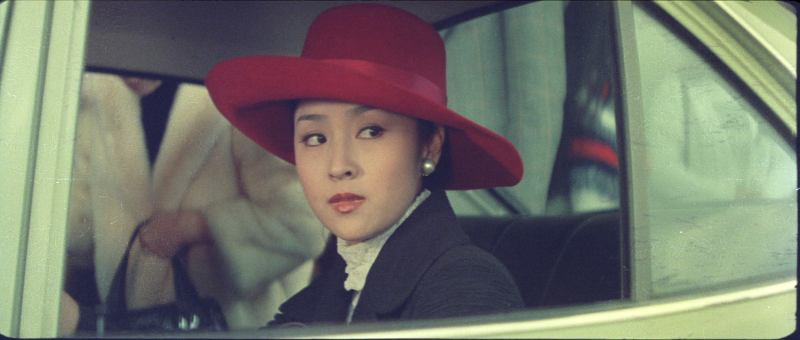
The hero, technically, is melancholy journalist Muhuai (Alan Tang Kwong-Wing) who encounters the heroine Yushang (Chen Chen) for the first time on a boat in Hong Kong where he saves her from committing suicide she later tells him, giving her name as “Seagull”, because she has just murdered her cheating husband by hitting him over the head with a wine bottle. Seagull disappears on him just as he’s trying to get through to the mistress to get her to check if the husband is really dead but he meets her again in Singapore where she gives her name as Ye Xin. Working as a nightclub singer she agrees to show him around the island, telling him that she’s originally from Manila and is supporting a troubled family. This time she doesn’t disappear but arrives too late to see off his plane at the airport. Disappointed that all his letters come back no such address, Muhuai is despondent and then extremely confused to meet the mysterious woman yet again as Yushang, a uni friend of his younger sister Mufeng (Tang Mei-Fang). 

Figuring out that all three women really are one and that Yushang is her “true” identity, Muhuai is extremely annoyed and decides to have his revenge by dating her until she falls in love with him and then ringing her to come out at 3am to tell her he was just having a bit of fun and never really loved her at all. The cause of all the drama is, at root, Muhuai’s male pride in that he resents being “deceived” by Yushang on their first two meetings during which she was essentially engaging in reckless role play as a break from her “boring” existence as a member of the new super rich elite (she can travel so freely because her father is a wealthy businessman who operates all over the world). Yushang, meanwhile, is being pushed towards an arranged marriage with her father’s business associate Shiche (Patrick Tse Yin) while attending college and falling in love with Muhuai. Each feeling spurned, their romance eventually turns dark with Yushang rebound marrying Shiche who turns out to be an abusive gold-digger. 

The barrier between herself and Muhuai then seems insurmountable. Believing she’s made her bed, Yushang quells her fiery, independent nature to conform to the image of the “good wife”, later literally beaten into submission by the cruel and manipulative Shiche. While it could be said that she’s being punished for her betrayal of love, it’s patriarchal social codes which eventually leave her trapped. Though her outwardly conventional mother had always been on her side, cautioning her to follow her heart rather than marry Shiche out of prideful self-destruction, she too thinks that her daughter should “be more like a woman, not a child. Feminine and tender”. When Yushang goes to her parents to suggest a divorce they reject the idea out of hand, refusing to believe that Shiche is really abusive, assuming that she is simply failing to adapt to married life in a refusal to accept her husband’s authority and is possibly realising she made a mistake while continuing to think of Muhuai. Yushang’s father eventually signals he may support her desire for a divorce if the marriage is unsalvageable but not if she’s merely leaving her husband for another man. 

Muhuai meanwhile has sunk into a depression, drowning his sorrows in drink and consumed by his sense of romantic impotence in having failed to fight for love while intensely resenting Yushang for making him feel this way. The barrier he has to overcome is male pride, getting over the literal inauthenticity of his relationships with the first two incarnations to realise that Yushang really is the one he loves no matter who else she might have been at various times in her life including Shiche’s wife. While the multi-country setting perhaps reflects a new globalising Taiwan as well as a rise in economic prosperity, Yushang’s globetrotting exploits are also an attempt to escape the patriarchal constrains of contemporary Taiwanese society, her “boring” life of continual ease and emotional emptiness where everyone is forever telling her that she has to be less, quieter, and above all obedient most particularly to men. 

Even so, the film too uncomfortably insists that Yushang’s feisty independence is “childish” and unfeminine while implying that her abusive relationship with Shiche turns her into a real woman capable of fulfilling her natural role as a housewife. Only by going abroad can she finally free herself of his control, and largely because he simply gets a better offer chasing an American oil heiress. It’s a minor irony that while Yushang’s problem is apparently her manly impulsivity both of her suitors are examples of male failure, Shiche in his laziness as a man who only wants to live off a rich woman rather than support himself, and Muhuai in his romantic diffidence too insecure to admit his love for Yushang. Nevertheless, Chiung Yao and Li Hsing are careful to leave the door open for love, refusing the possibility that it’s ever too late to fulfil one’s romantic destiny as the lovers each concede a movement towards the centre in finally finding the courage to open themselves to emotional authenticity. 


Where the Seagull Flies streams in the UK 21st to 27th September as part of the Taiwan Film Festival Edinburgh.

Trailer (English/Traditional Chinese subtitles)

The Husband’s Secret (丈夫的秘密, Lin Tuan-Chiu, 1960)

Emotional pain flows out of wronged love, according to the gently judgemental voiceover cutting in at random moments throughout Lin Tuan-Chiu’s familial melodrama The Husband’s Secret (丈夫的秘密). A tale of changing gender roles and a conservative society, Lin’s film finds a frustrated female solidarity but also insists on the repair of the traditional family even when that family may not take the form one expects or in fact be entirely healthy while romantic love which destabilises the social order must be suppressed in order to preserve the maternal which only reinforces it. 

The film opens with Tshiu-Bi (Wu Li-Fen) meeting some of her old friends from college at a reunion only to be accidentally shamed by another woman boasting about her already large family. Despite being apparently happily married to rising executive Siu-Gi (Chang Pan-Yang) and living a financially comfortable life in a large Western-style home with a live-in maid, there is discord in the marriage because the couple have no children. A moment of crisis presents itself when Tshiu-Bi runs into her old friend Le-Hun (Chang Mei-Yao) who had been missing from the reunion and learns that the reason for her absence was shame. Seduced and betrayed, Le-Hun is now a single mother living in desperate poverty, forced to pawn her coat in the middle of winter and pound the streets amid the falling snow looking for work. She is always turned away, prospective employers complaining that she looks like a drug addict because of her shivering in the cold, sunken cheeks, and hollow expression. When her young song Ah-Siong is ill and she needs money for hospital treatment, she is forced to swallow her pride and ask Tshiu-Bi for help. Tshiu-Bi gives her a diamond ring to pawn, bringing her into conflict with her husband who is stunned to hear the name and realise that Le-Hun maybe the girlfriend he broke up with to agree to an arranged marriage with Tshiu-Bi to further his business prospects. 

Tshiu-Bi of course knows nothing of this, bringing Le-Hun to stay with them after she is found passed out in the street and hurt when she abruptly leaves after realising that Siu-Gi and her old friend are now a married couple. As Siu-Gi later acknowledges, much of this is all his fault in the moral cowardice that saw him abandon a woman he loved to make an advantageous match. He may have tried to be a good husband and is not a bad man, but he has perhaps behaved badly and the consequences of his bad behaviour are visited on the women in his life alone. Siu-Gi wants to make amends, but is also overwhelmed by old emotions. Perhaps he envisages a solution in which he could have it all, protect Le-Hun and the son he suspects may be his while maintaining his married life and his wife none the wiser. 

Unlike Tshiu-Bi, Le-Hun has certainly been unlucky, ruined by an early failed affair with a bad man who turned out to be a petty criminal and forced her to become a bar hostess to support him. She left Sing-Liat after discovering him with another woman, but he continues to pursue her, damaging her earlier relationship with Siu-Gi and disrupting every opportunity she takes to make a life for herself, seemingly never allowed to forget that she is a “fallen woman” as if haunted by her transgression. Le-Hun is even evicted from her flat when the landlady’s drunken husband tries it on while she is half-conscious with fever, the landlady choosing to blame her rather than the husband in a theme which will be repeated when the prior relationship between Le-Hun and Siu-Gi eventually comes to light. Tshiu-Bi’s uncle, who had arranged the marriage, reminds her that boys will be boys and having a mistress is perfectly normal, keen that she not cause further scandal with a divorce over something as trivial as a husband’s infidelity. Running into Le-Hun by chance after she had fled to another town, Siu-Gi gives in to his passion and spends the night with her, justifying himself that what they have done is perfectly natural while the judgemental voiceover cuts in to ask how educated people could behave in such an uncivilised manner. 

As a result of their night of passion, Le-Hun becomes pregnant and finds refuge with a close friend and fellow bar girl who helps her to raise Ah-Siong, but once the pregnancy is discovered the uncle reassumes control and lays claim to the baby. He orders Le-Hun never to see Siu-Gi again, to which she agrees already overcome with guilt in having betrayed her friend by sleeping with her husband, but also makes the completely unreasonable demand that he will take the baby away after it’s born, apparently intending to put it out for adoption. Tshiu-Bi, meanwhile, sees he obvious solution and wants to keep the child as her own which angers the fiercely patriarchal uncle because it would mean that the mistress’ son inherits the estate (Siu-Gi had married into their family which is why he has a different surname to the one he used when he was with Le-Hun, perhaps explaining his feelings of resentment and emasculation in the reversed power balance of his marriage). 

Yet the illicit affair provides a point both of fracture and of healing which turns the single point of crisis into two definitively separate yet viable branches. While the relationship between Le-Hun and her friend seems perhaps transgressively close and hints at an alternative family born of female solidarity of the kind that Tshiu-Bi tried to offer to Le-Hun but was frustrated by romantic crisis, Le-Hun is eventually forced to reunite with her no-good gangster boyfriend who has apparently reformed after a spot in jail and now bitterly regrets his treatment of her. Wayward men are brought back into superficial conformity in being forced to assume a degree of responsibility as husbands and fathers, while women are expected to suppress their emotions and stoically endure the consequences of male failure. Nevertheless, even while Le-Hun’s friend is seemingly left out in the cold, the social order is preserved in the repair of two “happy” families cauterising the wound of transgression through the reinforcement of the conservative.


The Husband’s Secret streams in the UK 18th to 27th September as part of the Taiwan Film Festival Edinburgh.

Clip (English / Traditional Chinese subtitles)

Restoration trailer (English / Traditional Chinese subtitles)

Asian Pop-Up Cinema & TACCGC Announce Free Streaming Series @Home with Taiwan Cinema: Love & Hope

Asian Pop-Up Cinema is back with another free streaming series to take you through the winter months in collaboration with the Taiwanese American Chamber of Commerce of Greater Chicago (TACCGC) to present five Mandarin-language films showcasing the rich culture of the island nation streaming across the US for free at regular intervals until late December.

Sept. 11 – 13: My Egg Boy

A young woman decides to freeze some of her eggs to take the pressure off finding the right guy to start a family with in Fu Tien-yu’s unconventional rom-com starring Ariel Lin and Rhydian Vaughan.

Oct. 2 – 4: Pakeriran

A young man returns to his tribal community on vacation and is persuaded to take part in the sea festival as a replacement for his grandfather in order to impress a local woman.

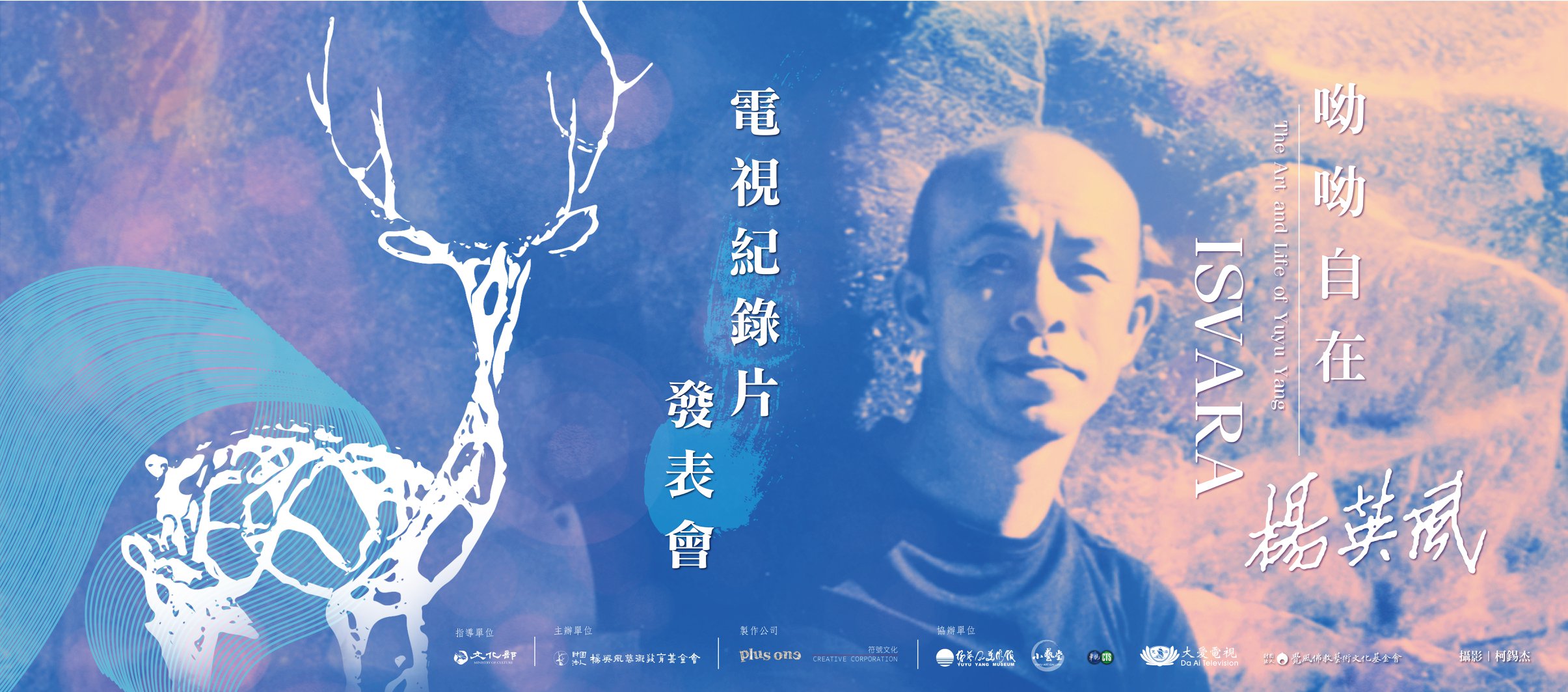
Oct. 23 – 25: Isvara the Art and Life of Yu-Yu Yang

Documentary in which the daughter of legendary artist Yang Yu-Yu who was known for his stainless steel sculptures guides us through her father’s lifelong artistic journey.

Nov. 27 – 29: Go! Crazy Gangster

A down his luck professional basketball player is placed in charge of a failing girls’ high school team in this zany sports comedy.

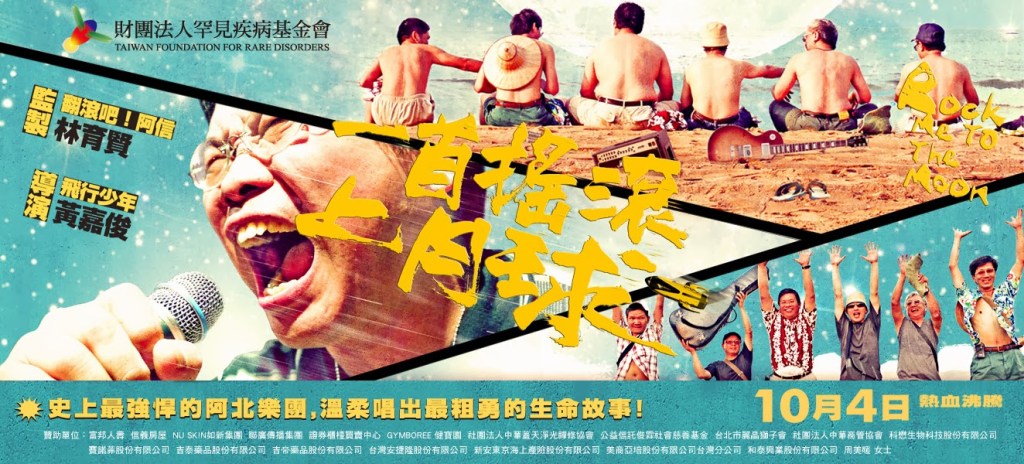
Dec. 18 – 20: Rock Me to the Moon

Heartwarming dad rock drama in which six middle-aged men who are each fathers to children with chronic health conditions decide to start a band.

The movies will be available to stream within the US during the above dates via Asian Pop Up Cinema’s Vimeo on Demand. Simply register before or during streaming time to be emailed a special single-use code with promo link up-to 12 hours before streaming starts which will allow you to bypass the rental fee. Once you press play you will have 72 hours to finish watching.

Full details for all the films as well as registration links are available via the official website and you can also keep up with all the latest news by following Asian Pop-up Cinema on FacebookTwitterInstagram, and Vimeo.

I WeirDO (怪胎, Liao Ming-Yi, 2020) [Fantasia 2020]

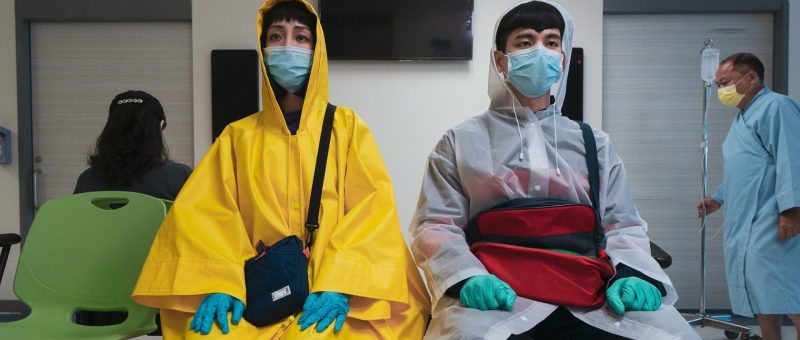
Being in love can be a little like a sickness, but what happens when the spell wears off? A meditation on fatal attraction syndrome and the duplicitous delusions of “normality’, Liao Ming-Yi’s charming romance I WeirDo (怪胎, Guàitāi) arrives at the most opportune moment in which we’re all “weirdos” now, stuck at home obsessively washing our hands and dutifully remaining “alert” as we disinfect everything we see. Liao’s PPE-clad heroes find love in shared anxiety, but happiness is the enemy of fear and the things that brought you together may in the end drive you apart.

Chen Po-ching (Austin Lin Bo-hong) is somehow able to afford a spacious two-level home working as a full-time literary translator despite the fact it takes him ages because he’s unable to type. A sufferer of severe OCD, he lives by strict routine and is deathly afraid of germs. For most of his life he simply remains at home, but on the 15th of every month he dons full body PPE and braves the outside to pay his bills, do his shopping, and visit a doctor he hopes can help him beat the condition but only gives him mysterious medication which doesn’t seem to make much difference. His life changes one particular 15th when he spots a woman dressed much like himself who is also headed to the supermarket where she shoplifts a bar of chocolate and buys up the remaining stocks of his favourite disinfectant. Chen Ching (Nikki Hsieh Hsin-Ying), as she later gives her name, approaches him to make sure he’s not going to dob her in about the chocolate which she doesn’t even like, it’s just a compulsion. She suffers from OCD too along with a skin allergy that means she’s not supposed to spend a lot of time outdoors. 

Love eventually blossoms. Ching opens up Po-ching’s world, conspiratorially involving him in her shoplifting and inviting him to visit her at work as a life model for a drawing class where she’s asked to pose like a fallen angel with broken wings. They go on weird “dates” taking germ challenges like eating at tiny eateries with questionable hygiene standards and picking up rubbish before Po-ching realises that going “out” so much is placing a strain on Ching’s health so he proposes she move in with him. Luckily she’s an ace typist so she can help with his work as well as the intensive cleaning regime he already has in place. What they’ve made is a blissful world of two, isolated from the confusing pollution of regular society. But paradise can also be a cage, and it’s natural enough to long for freedom. Before long a problematic pigeon and a loitering lizard have them each pondering life in the outside.  

Opening in a boxy, claustrophobic square, Liao eventually swaps narrators and switches to a comparatively open widescreen as horizons quite literally expand, a development which introduces, ironically, a new but distinctly unhelpful anxiety into a relationship both apparently hoped would be unchanging. The couple’s OCD struggles become a stand-in for the giddy obsession of new love as they cocoon themselves happily within their romantic bubble only for the magic to inevitably begin wearing off. Despite all they have in common, the pair have an ideological mismatch. She actively craves their difference, believing OCD is a gift that allows them to lead unique lives, but he secretly yearns for “normality”, to be cured and become a “normal” person living a “normal” life. She’s for staying in, he’s for going out. “Why do we have to be the weirdos?” Ching asks Po-ching seconds after revealing suicidal tendencies. He tells her he’s never given it too much thought. His OCD simply is, it can’t be changed, so he just accepted it. But change, which is of course what they most fear, eventually comes, paradoxically because when you’re “happy” and you feel accepted perhaps you don’t need so much obsessive control over your life. 

Liao undercuts the darker side of a life ruled by intense anxiety through whimsical production design adding a touch of fairytale glamour to the sad romance of the two similarly named protagonists falling in love in an uncertain world. Shot entirely on iPhone, the cinematography is unexpectedly rich and innovative, handsome even in its immediacy and like the protagonists embracing its limitations with wit and charm. Perfectly tailored for the post-corona world, I WeirDo wants to ask us if love can survive our fear of change or if our intense need for control over our lives robs us of the ability to live, if being “normal” is worth the price of love, and if there’s really anything wrong with being a “weirdo” especially if you find someone to be a weirdo with. Po-ching and Ching are still figuring it out, but aren’t we all even in these admittedly strange times? 


I WeirDO streamed as part of this year’s online edition of Fantasia International Film Festival.

Original trailer (English subtitles)