Alifu, the Prince/ss (阿莉芙, Wang Yu-lin, 2017)

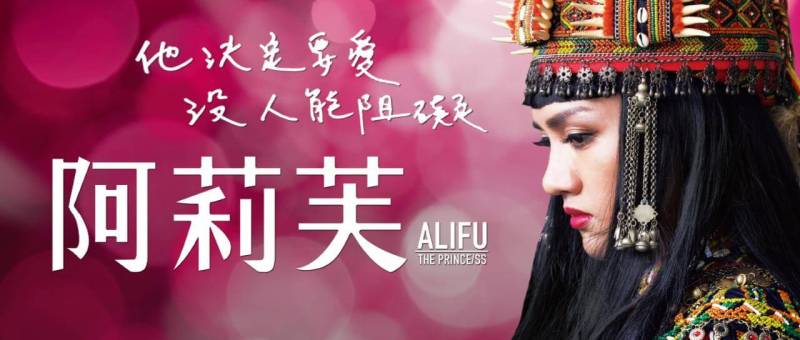
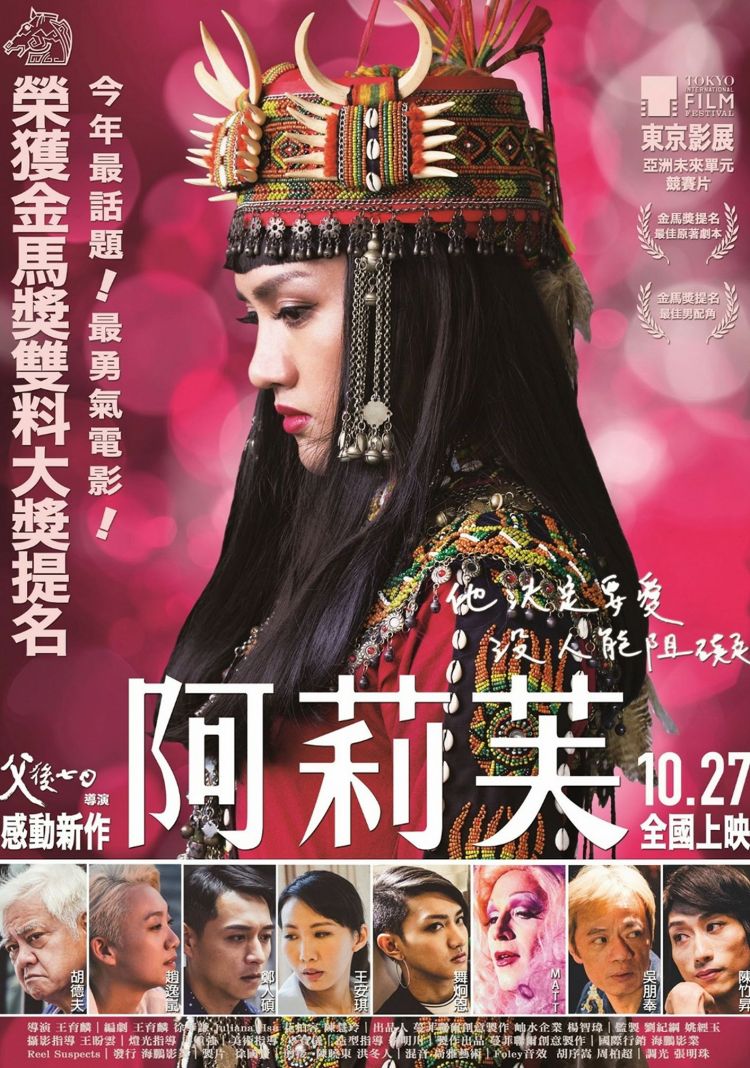
Alifu posterAmong Asian nations, Taiwan has a reputation for being liberal and permissive but if you’re a minority within a minority life is far from easy even if you manage to find support from others in a similar position. So it is for Alifu (Utjung Tjakivalid) – the conflicted soul at the centre of Wang Yu-lin’s nuanced depiction of the road towards self acceptance and actualisation in the face of competing duties and obligations, Alifu, the Prince/ss (阿莉芙, Ālìfú). While Alifu struggles with the demands of being the heir to the Chieftainship of an indigenous tribe with all the rights and obligations that entails, her lesbian roommate struggles with a bad breakup and growing feelings for her transitioning best friend, a drag queen is conflicted about his sexuality, and a transgender bar owner worries for the future of those close to her after she is diagnosed with a terminal illness. Despite the multitude of difficult circumstances, each attempts to deal with their problems in a mature and rational fashion finding love and mutual support from their friends and community even if others sometimes require a little more time.

Alifu, born the son of a tribal chief, identifies as a woman and has been working in a hairdressers in the city to save up for gender reassignment surgery. Her plans for the future are thrown into disarray when she is abruptly called home, walking into a family meeting during which her father (Ara Kimbo) suddenly announces that he is stepping down because of poor health and that his son will be taking over. Though it is possible for a woman to succeed as chief, Alifu has not disclosed her intentions to transition to her traditionally minded father who wears a prominent wooden cross around his neck and does not seem to be particularly understanding of his child’s feelings or emotions, caring only for his appearance in the eyes of the tribe.

Alifu’s transition is subtly revealed in the lengthy opening in which she slowly sheds her “masculine” appearance by discarding her baseball cap, rearranging her hair and stepping into the ladies loos where she puts on colourful lipstick and hoop earrings before making her way to the hairdressers where she earns her living. Meanwhile, her lesbian roommate Pei-Zhen (Chao Yi-Lan) thinks nothing of leaving the house dressed in a way which best makes her feel comfortable only to cause a mini ruckus in the salon when her ex gives her the side-eye for openly flirting with another client apparently after “something special”. After hours, Alifu picks up extra money by doing hair and makeup for the drag acts at a local gay bar where she has also drawn close to the owner, Sherry (Bamboo Chen), who is in a long-term though apparently non-sexual relationship with a former gangster (Wu Pong-fong).

Alifu soon develops a liking for a new drag act at the bar, describing him as somehow “not like the others”. Chris (Cheng Jen-shuo), a local government worker, is a mild mannered sort apparently happily married to a piano teacher (Angie Wang) and living a conventional middle-class life, except that he likes to stay out late on Fridays performing at Sherry’s drag bar. Though it would be a mistake to assume Chris is gay just because he enjoys drag, his “secret life” eventually places a wedge between himself and his wife who is hurt to find out about his alter-ego through a third party. Chris’ wife doesn’t necessarily disapprove of his drag career but is disturbed to discover such a big secret in her married life and, understandably, has a lot of questions about the status of their relationship – something Chris isn’t keen on talking about leading to his wife finally throwing him out. Struggling to reconcile his drag persona with his need for a conventional life, Chris finds himself exiled and unable to integrate himself fully as whole person, torn between his conflicting desires. 

Meanwhile, Alifu’s ever supportive best friend Pei-Zhen has begun to develop feelings for her roommate despite the fact that Alifu has no interest in women and Pei-Zhen is a lesbian with no previous interest in male genitals. Seducing her, Pei-Zhen reassures Alifu that male or female she will always love her – something which becomes a minor theme in arguing for fluidity and self identification over culturally defined notions of gender, echoed in the relationship of Sherry and her partner which seems to be deep and loving but also celibate. Perhaps overly convenient, the union of Alifu and Pei-Zhen does at least provide an opportunity to experience the best of both worlds in allowing Alifu to fulfil her obligations to her tribe while also living an authentic life as a transgender woman.

Warm and filled with a particularly Taiwanese brand of humour, Alifu is a sympathetic exploration of life on the margins, both from the perspectives of the LGBT community and that of the indigenous peoples attempting to preserve their traditional culture whilst acknowledging their place in the modern world. Arriving at an important moment, Wang Yu-lin’s empathetic drama is a celebration of love and equality but most of all of the power of self-acceptance and actualisation in bringing about real social change.


Screened as part of the Chinese Visual Festival 2018.

Original trailer (English subtitles)
Dear Ex (誰先愛上他的, Mag Hsu & Chih-yen Hsu, 2018)

A2oCsHnTaiwan is often thought to be among the most liberal of Asian nations and is one of the few to have legislated for registration of same sex partnerships. This is, however, not to say that there is no homophobia or that it is possible for anyone and everyone to be free to live the way they choose. If Dear Ex (誰先愛上他的, Shuí Xiān Ai Shàng Tā de) is to be believed, there is still quite a long way to go in terms of total acceptance though what the film is really interested in is the emotional fall out from lingering stigma and the various relationships which end up being created because of it.

Teenager Song Chengxi (Joseph Huang) has just lost his father. Or rather, he has just lost him again. Despite what his mother told him, Chengxi already knew that his father, Zhengyuan (Spark Chen), had left the family to be with another man, but the problem now is that Chengxi’s dad has named his lover, Jay (Roy Chiu), as the sole beneficiary for his life insurance policy. Chengxi’s mother Sanlian (Hsieh Ying-xuan) is not very happy about this and is determined to get her hands on an inheritance she believes “rightfully” belongs to her and to her son and which she wants to use to send Chengxi to study abroad so he can become “respectable” and “successful”. Fed up with his nagging mother, Chengxi decamps and, bizarrely enough, moves in with Jay who has barely any opportunity to refuse, eventually brokering something like a rapprochement between the “other woman” and the “other man”.

Though Sanlian emerges as the least sympathetic of the three central characters, she is also the one who has suffered most because of her husband’s decision to opt for a sham marriage in order to become a “normal man”. Having found love with Jay 17 years previously, Zhengyuan eventually left him rather than attempt to live an authentic life as a gay man. Thinking that he needed to force himself to be “normal” he married Sanlian and had a son, but the marriage was always distant and unhappy. Sanlian at her youngest seems shy and girlish, cheerfully helping the nervous Zhengyuan locate a missing parcel, while the version we see of her now is shrewish and embittered, humiliated by her husband’s abandonment and distraught in wondering if the entirety of her married life has been a lie and her husband never loved her at all.

In this respect the intense feelings of shame and resentment are perhaps no different for anyone in a relationship with an adulterous spouse, but for Sanlian they run deeper precisely because Jay is a man which leaves her feeling even more at fault and prone to lashing out. Sanlian is fond of referring to Jay as the “mistress” to which he points out, amusingly recasting himself as a “manstress”, that really she has been the unwelcome third wheel in the relationship between the two men.

Even if her anger is largely down to personal injury, Sanlian’s resentment contains an inescapable kernel of homophobia. Zhengyuan left his lover and got married because because he was too ashamed/afraid to go on living with the man he loved, but his decision ruined the life of the woman he made his wife only to selfishly abandon in order to live his last days as his authentic self safe in the knowledge that society could hardly touch him now. Sanlian has tried her best to turn Chengxi against Jay, not wanting him to become “corrupted” and insisting that Jay is a “bad man” who “stole” his father away. Getting to know him, however, and realising that Jay had cared for his dying father all alone, Chengxi starts to wonder why it is that Jay must be such a “bad” man, especially when he realises that he didn’t even know about the life insurance policy which puts his mother’s gold-digging hypothesis right out of the window.

Arguing with his wife while trying to break the news to her of his leaving, Zhengyuan poignantly reminds her that she doesn’t have the right to define the word “family”. Yet when Jay suggests telling his mother the truth about their relationship, Zhengyuan advises him not to because it would only make her “sad”. Jay wonders why anyone would be “sad” to hear one person tell another that they love them, as does Zhengyuan though he shrugs and replies that that’s just the way it is. Later Sanlian considers trying to blackmail Jay by threatening to out him to his mother whom she assumes will be heartbroken and disgusted despite Jay’s assertion that his mother loves him very much and will probably get over it (though he has evidently not decided to test his hypothesis just yet). Partly out of guilt, and finding a sense of empathy in Jay’s deep grief over the death of a man who regarded him as a husband, Sanlian starts to come around and begins to accept his place in the life of the man she married – a man they both loved and have lost.

Told with warmth and whimsy and filled with cute graphics seemingly lifted from Chengxi’s exercise book, Dear Ex is a timely plea for tolerance and understanding believing each of those things is possible only when one learns to put aside one’s own pain to consider someone else’s, coming to realise they are often the same.


Screened at the 20th Udine Far East Film Festival.

The Village of No Return (健忘村, Chen Yu-hsun, 2017)

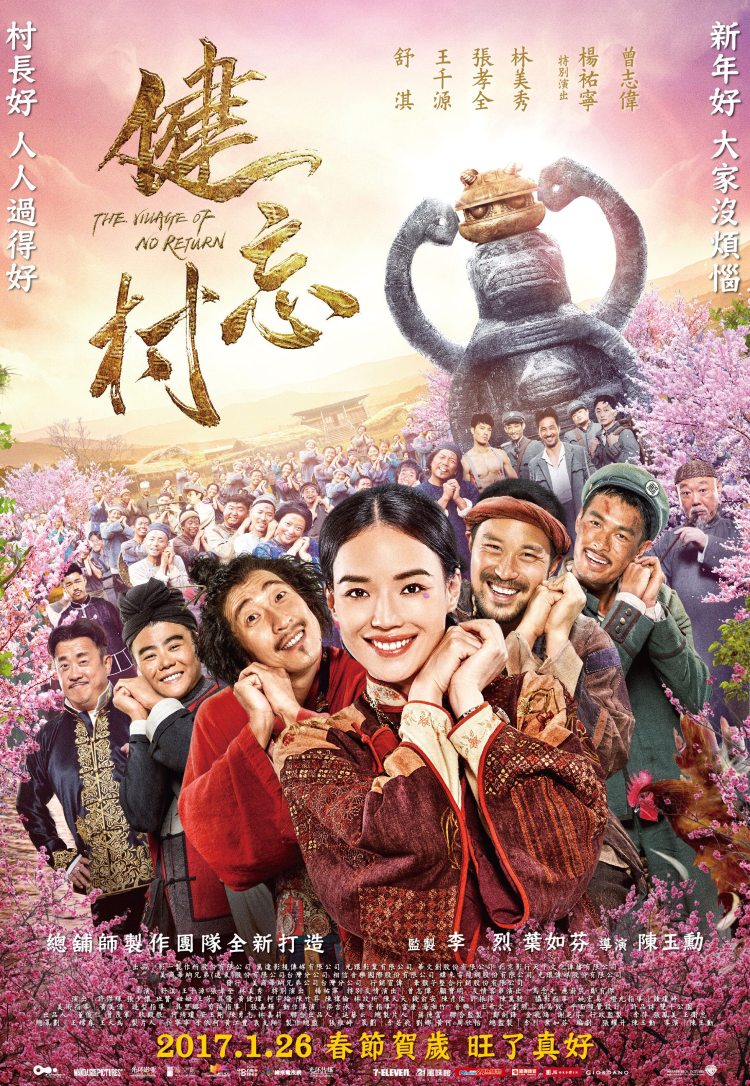
健忘村_畫報風篇_RED_OK_VWouldn’t it be wonderful to just forget all the terrible/embarrassing things that have ever happened to you and live in a paradise of blissful ignorance? To put it bluntly, this is an experiment with historical precedent and one which has never yet worked out for the best. Absurd Taiwanese comedy Village of No Return (健忘村, Jiànwàng Cūn) is both a raucous life in the village comedy and subtle satire on the roots of tyranny, cults of personality, fake news and the evils of the art of forgetting that ultimately turns into a defence of the benevolent dictator.

Somewhere around 1914, the early years of the Chinese Republic, an ambitious warlord (Eric Tsang) has his sights set on capturing Desire Village which, he has been assured by a fortune teller, contains numerous treasures and will make him a king. Unfortunately, his village mole is the unscrupulous Big Pie (Ban Zan) who treks home with carrier pigeons he’s supposed to send back with the message “wait”, “come”, or “don’t come” only Big Pie can’t read. None of that really matters in the end because Big Pie is shortly to die in mysterious circumstances just as a mysterious monk, Fortune Tien (Wang Qianyuan), rocks up with a strange “Worry Ridder” device he claims can permanently ease anxieties.

The main drama revolves around melancholy village girl, Autumn (Shu Qi), who was married off to the ugly and abusive Big Pie against her will. Still pining for the son of the village leader, Dean (Tony Yang), who went off to become an official but has become displaced during the Revolution, Autumn has spent her life literally shackled to the stove and has begun to dwell on death as an antidote to the hopelessness of realising Dean is probably not coming back. Autumn is, however, the last to hold out against the lure of the Worry Ridder, reluctant to give up the memory of Dean no matter how painful it may continue to be.

Fortune Tien is nothing if not persuasive. Little by little he sells the virtues of his machine and quickly has the villagers eating out of his hand. Before long he’s erased the memories of life before he came and installed himself as village chief, presiding over a collection of beatific zombies content to do the literal spade work while Fortune Tien reigns supreme with an easy answer for everything. The parallels are obvious, even if Tien’s case is more extreme. History is rewritten, anyone who remembers differently has a faulty memory or is, perhaps, mad. Only Tien can be relied upon to arbitrate the truth of his false revolution.

The Worry Ridder itself is a fabulously designed piece of anachronistic technology, displaying memories like silent movies with scratchy sound and operated by a modern user interface complete with kitschy animation. Its evils can only be undone with the long lost “Soul Restorer” and its overuse seems to lead to an advanced senility. Though it does indeed erase memories and offer a kind of drugged up serenity, the machine cannot undo the underlying emotions and so those lingering feelings of love or attraction, misplaced or otherwise, remain even without the reasons for their existence. Love is the force which saves the day as Autumn, temporarily saved from her hellish life as the wife of Big Pie after becoming the “First Flower” of Tien’s dictatorial regime, continues to dream of her former love leading her to question Tien’s all powerful grip on the accepted truth.   

Meanwhile outside the village other threats are looming. Prior to their own revolution, the villagers had been excited to learn of the coming railways, mistakenly believing that randomly building an unconnected station (which is like a farm for trains!) would make them rich. The nefarious gangster quickly gets forgotten but he seems evil enough seeing as he’s flying kites made out the skins of his murder victims, though his biggest allies – the Cloud Clan, are led by a portly postmistress (Lin Mei-hsiu) to whom he presents an “iron horse” (i.e. a bicycle) which proves a surprisingly difficult challenge for her to master. The Cloud Clan’s main weapon is their sweet sound, beatboxing a background melody for the surprisingly beautiful voice of the postmistress often heard just before she whips out her giant machete and dispatches her foes with ruthless efficiency. An absurd satire on the ease with which tyranny makes use of human failings, Village of no Return ultimately wonders if blissful mindlessness is really all that bad if all your needs are met and you can count yourself “safe” and “happy”. A good question at the best of times, but one that seems oddly urgent.


Currently streaming on Amazon Prime Video in UK & US.

International trailer (Mandarin with English subtitles)

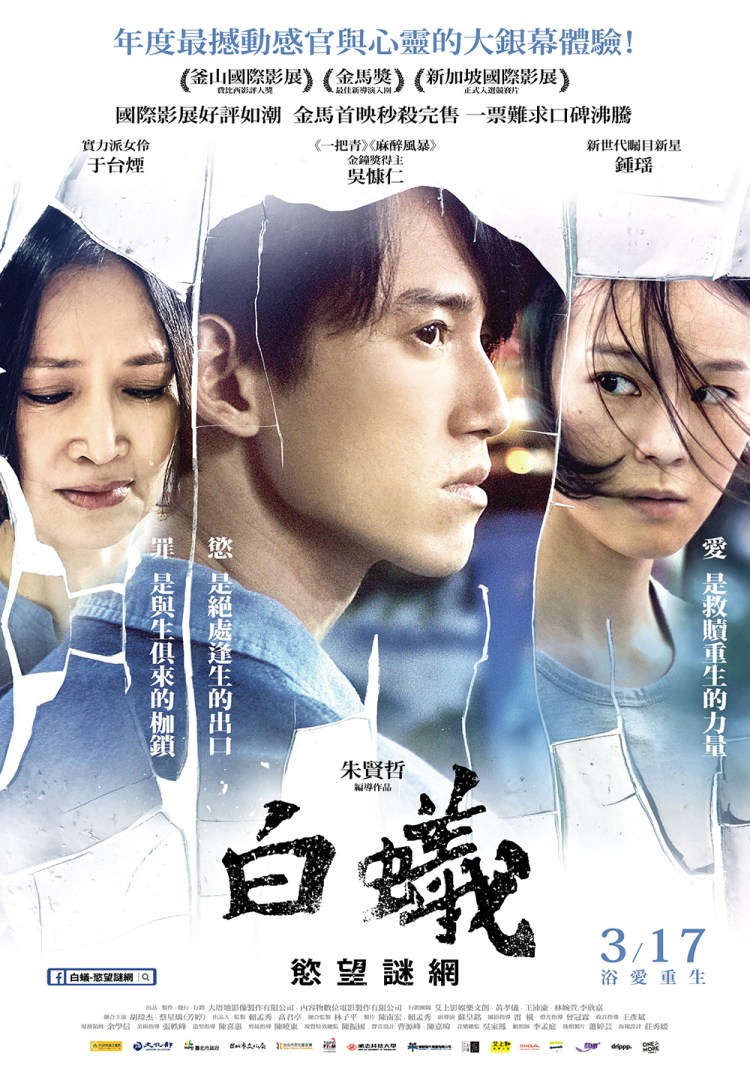
White Ant (白蟻─慾望謎網, Chu Hsien-che, 2016)

白蟻_poster_D_0105_final_更新tenga_cs5White Ant (白蟻─慾望謎網, Báiyǐ – Yùwàng Mí Wǎng) – another name for termite, is an apt title for this first indie narrative feature from veteran Taiwanese documentarian, Chu Hsien-che. Voyeurism, sexual fetish, social conservatism, stigma, embarrassment, and longstanding mental illness conspire towards tragedy as one young man becomes the target for a betrayed woman’s scorn, an innocent bystander in her quest for revenge as a salve for her own repressed emotional pain and loneliness. Chu certainly finds plenty of that as guilt and shame continue to eat away at our protagonists, burrowing ever deeper like the termite of the title, undermining already fragile foundations in each of these differently damaged people.

Bai Yide (Chris Wu Kan-Ren) is a quiet, aloof young man who works in a bookstore. On his way home one day, he stops to swipe a set of ladies’ underwear hanging out to dry in the courtyard where he lives. Bai puts on the underwear and then removes it to masturbate in front of his mirror, reduced to angry, desperate tears in the shame of his compulsion.

Unbeknownst to Bai, his illicit activities have not gone unnoticed. Two bored students, Tang Junhong (Aviis Zhong) and her minion Lu Peiyi, saw Bai steal the pants and bra and filmed him doing it. On the rebound for a bad breakup and looking for some random payback, Junhong mails Bai a copy of the DVD exposing his sordid needs. Junhong is, apparently, offended by Bai’s “depravity” though her true motivations remain unclear even to herself. Despite the urgings of Peiyi and Peiyi’s boyfriend who partially assists through his social media accounts, Junhong continues to taunt Bai who soon descends into a cycle of paranoia and depression which eventually has tragic consequences of the kind Junhong had not intended or imagined.

Besides the act of theft, which has admittedly deprived someone of a set of underwear, Bai’s unusual fetishes serve to harm no one though they appear to cause him a degree of mental stress in feeling himself to be in someway transgressive and required to keep his tastes firmly under wraps. The act of theft may be an attraction in and of itself, though if Bai desired pristine, unworn underwear he would likely find it difficult to acquire for the same reasons that lead him to feel ashamed just for wanting it. Junhong has no real right to feel as outraged as she does – it’s not as if Bai stole her pants or harmed her in any way. He is simply an innocent bystander who happened to step into a space approximating that of Junhong’s ex on whom she vowed revenge.

As we later find out from Bai’s melancholy mother, Lan (Yu Tai-yan), Bai had been experiencing a degree of mental distress since childhood. Following the death of his father and subsequently witnessing his mother with another man, Bai has suffered with a compulsion to steal ladies’ underwear beginning with Lan’s. Lan blames herself for this – in having been both too clingy in allowing him to sleep in the same bed long past the age most children lock themselves away in their own rooms, and in having been too self-centred in taking a lover which, she feels, led to a neglect of her son’s interests. Bai, suffering apparent paranoia and depression even in childhood, believing that there is a voice in his hair which torments him, is further unbalanced by Junhong’s campaign of terror. Trying to track down the blackmailer and figure out what is they want out of all of this, he becomes suspicious of everyone, permanently on edge, terrified, and angry lest his sordid secret be revealed.

Driven half mad by her own frenzy of vengeance, Junhong’s actions places a wedge between herself and her best friend Pieyi who thinks things have gone far enough. Friendships ruined, Junhong ends up just as lonely and isolated as Bai before eventually emerging scarred and guilty, unwilling to process the unintended consequences of what she saw as an amusing series of practical jokes probably designed to make her feel powerful when she felt anything but. Junhong attempts to atone by connecting with Bai’s sorrowful mother, Lan, who doesn’t know her true identity, but in any case continues to blame herself for her son’s death. Lan, a tragic figure, is also isolated by her feelings of guilt and self loathing both in claiming responsibility for Bai’s mental instability and for the loss of her husband which kickstarted the pair’s eventual downfall.

Strangely enough the two women bond through their shared guilt and grief, finding common ground even after the truth is revealed. Despite this final plea for empathy and connection, Chu’s premise seems to rest on an association of unusual sexual proclivities with mental illness. Bai’s suffering is never condemned, indeed the film seems to believe he should suffer for his “perversions” rather than criticising the society which has relentlessly excluded him, viewing his instability as further evidence of his otherness rather than a symptom of the isolation he is forced to feel through continued rejections. Nevertheless, Chu does seem to be clear that it is these repressed emotions that eventually become white ants, burrowing deeply inside the sufferer until they threaten to destroy the foundations of humanity, though whether the damage can ever be fully repaired appears to be far less clear.


Seen on Mubi.

Original trailer (English subtitles)
Interview with director Chu Hsien-che from Busan 2016

The Road to Mandalay (再見瓦城, Midi Z, 2016)

再見瓦城前導海報-GokKipling’s Mandalay, as uncomfortable as it seems to us now, is an imperialistic nostalgia trip through the orientalised, “exotic” East. Midi Z adopts a well known line of the poem, The Road to Mandalay (再見瓦城, Zài Jiàn Wǎ Chéng), as an ironic comment on the journey undertaken by the central pair of hopeful migrants crossing from Myanmar into Thailand each for different reasons but both in search of something unavailable to them at home.

Lianqing (Wu Ke-xi) crosses a river on a dingy and is met by a man on a motorbike who takes her to a truck which will take her into Bangkok. Only a second class passenger, Lianqing is about to huddle into a hidden compartment in the vehicle’s boot when a man volunteers to give up his seat in the front so that she can have a more comfortable journey. When they arrive, the man, Guo (Kai Ko), offers to help her find work and gives her his cousin’s phone number so they can keep in touch. Lianqiang is grateful but not particularly interested and tries to fob him off with a jar of shrimp paste as a thank you.

Mostly told through Lianqing’s eyes, her migration story is a difficult one. The friend she’s come to meet, Hua, isn’t even there when she arrives and is in a permanently bad mood after having lost her job due to not having the proper documentation. The other two women in the flat, one of whom, Cai, is also from her village, are currently working in the sex trade – something which they don’t particularly advise Lianqing take up, but finding a job without papers proves near impossible. Lianqiang eventually finds work as a dishwasher in a restaurant which, all things considered, suits her well enough – the work is menial and intensive, but the atmosphere is relaxed, the boss is OK, and she still earns enough to live on and send money home. Guo objects to Lianqing working in such a lowly place and wants her to come to work in a factory with him where the pay is better but Lianqing prefers her independent city life to an oppressive factory-bound existence. Nevertheless when the restaurant is raided she is forced to join Guo’s factory after running out of other options.

Though The Road to Mandalay is often described as a love story, its central romance is as thorny as the protagonists’ liminal status. Guo’s early gesture of self sacrifice looks like altruistic chivalry, but his designs on Lianqing are obvious from the outset. His big brotherly protection soon veers off into a kind of patronising paternalism before developing into something more worryingly possessive. Despite appearing to avoid seeming overbearing, Guo’s personal insecurities eventually lead him into the worst kind of betrayal when he tries to stop Lianqing from acquiring her work papers in the belief that they will take her away from him.

Guo’s philosophies are all short-term. He wants to earn as much money as possible with the idea of eventually going back to Myanmar and perhaps opening a shop selling imported Chinese clothing. Lianqing’s thinking couldn’t be more different. Her plans are longterm. She wants her work permit to get a proper, middle-class city job so she can have a better quality of life. After getting her work permit she wants a Thai passport which will allow her to move on again, perhaps to Taiwan, to further improve her living standards and future prospects. Guo wants Lianqing and he wants her to come home with him. He is not prepared to follow her and knows that she does not envisage the same kind of future as he does. Prompted by Lianqing’s talk of going to Taiwan, Guo asks her if she’s ever thought about getting married. Sensing his intention, Lianqing’s answer is a flat no. It’s too soon, she wants something more out of life than being someone’s wife.

Thailand, however, is not particularly supportive of her dreams. The migrants’ lives are hard. The streets are regularly patrolled at night with police checking IDs and constant crackdowns mean the visa rules are being enforced though bribery is also rife. Migrants present an easy point of exploitation for all as they have no way of protecting themselves and are unable to go to the authorities due to their undocumented status. Lianqing decides to get a permit through the back door, bribing officials through a broker, but the papers she paid a small fortune for are next to worthless and her only other options involve identity theft. At the factory she doesn’t even have an identity as her name is taken away from her and replaced with a number. When another migrant from Myanmar is badly injured in an accident, Lianqing and the others are forced to sign a waver form which absolves the factory of responsibility and declares the matter “settled” with an agreement to pay medical costs but with no further compensation or legal recourse. It’s  no wonder that the common advice swapped between migrants is to leave Thailand as soon as possible for somewhere less hostile to young people with big dreams.

Midi Z’s visual style is broadly naturalistic but slips into surrealism as Lianqing is forced to consider working in the sex trade while Guo impotently throws logs into a furnace with drug fuelled frustration. Lianqing might have been able to escape her economic circumstances, but she can’t escape the net of patriarchy presented by men like Guo who can’t accept her desire for independence and negation of their hopes and dreams which largely rely on her agreeing to conform to their visions rather than her own. Chances of success are slim yet Lianqing refuses to give up on her determination for a better future. For others, however, this dead end life of constant frustration is bound only for tragedy with no hope in sight.


The Road to Mandalay screens at Regent Street Cinema on 26th September before opening in selected cinemas courtesy of Day for Night. Further dates scheduled so far include:

Original trailer (dialogue free)

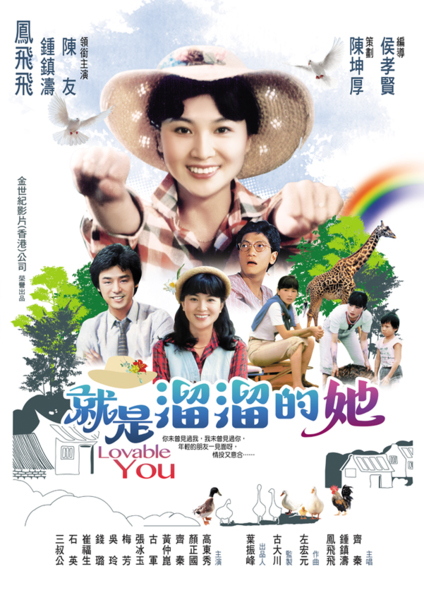
Cute Girl (AKA Loveable You 就是溜溜的她 Hou Hsiao-Hsien 1980)

f_10046820_1If you’re familiar with the name Hou Hsiao-Hsien, it’s probably for his role in the Taiwanese new wave and as one of the major directors of so called “slow cinema”. It might come as a surprise then that his first three movies were pop star vehicles, heavy on catchy tunes and universal humour but light on deep themes and social commentary. However, even if everything about his first film Cute Girl is intended to be just another run of the mill populist rom-com, many of the elements from Hou’s later films are already present from long lenses and longer takes to interesting ideas about composition and a noticeable town/country divide.

The story is predictable enough, poor boy Da-gang falls for wealthy Wen Wen who quite literally doesn’t give him a second glance. That is until she runs off to stay with an aunt in the country for a last holiday before her father has her married off to the son of an important businessman. Da-gang coincidentally ends up in the same village as part of a survey team for a new road (that’s going to go right through the middle of someone’s house). Being Da-gang he also gets bitten by a caterpillar and ends up being left behind to recover whereupon he begins a tentative romance with Wen Wen at last! However, disaster strikes when her father calls her home to meet her prospective husband – will Wen Wen and Da-gang ever find the happiness they deserve? The answer’s sort of obvious but it’s still fun finding out!

The film features pop stars Fong Fei-Fei and Kenny Bee (from Hong Kong) and is unsurprisingly heavy on pop music including the title track which recurs several times throughout the film. Though Cute Girl is undeniably formulaic and intended as nothing other than disposable entertainment hoping to capitalise on its stars profile and sell a few more records, the film has undeniable quirky charm. Full of strange, not quite slapstick humour and silliness you can’t help but find yourself hugely invested in the screwball style love story of Wen Wen and Da-gang.

No, it’s not a film for the ages. It doesn’t tackle the deep themes Hou would return to time and again in his later career but it does have a degree of heart and commitment that make it a very enjoyable example of the late ’70s/’80s Taiwanese musical romantic comedies.

For the extra curious, here is the undeniably catchy tune itself!

Salute! Sun Yat-Sen (UK Anime Network Review)

articlesubpic1597Reviewed the latest film from Blue Gate Crossing director Yee Chih-Yen Salute! Sun Yat-Sen for UK Anime Network. Also interviewed the director when he was here for the film’s screening as the closing night gala of the 2015 Chinese Visual Festival (under the old title of Meeting Dr Sun). This will also be getting a DVD/VOD release from Facet Film Distribution on 27th July if you didn’t manage to make it to the festival. Good movie, kind of cute but with bite too.


Salute! Sun Yat-Sen is the long awaited new film from Taiwanese director Yee Chih-Yen which arrives a massive 13 years after the award winning Blue Gate Crossing. Like Blue Gate Crossing, Salute! Sun Yat-Sen centres around the everyday life of teenagers with a subtle level of social commentary though this time it swaps sexuality for social inequality and complicated male friendships.

Lefty is a typical high school boy, at once giddy and lackadaisical. His major problem in life is that he’s behind on his school fees and despite his attempts to dodge the issue, it’s become an embarrassment for him around the school. Lefty lives with his grandmother who’s on a low income and he simply does not have the money to pay. That’s when he catches sight of an abandoned metal statue in a school storeroom and hatches on a plan to steal it and sell it for scrap. However, just when it looks like the plan is complete, Lefty and his friends discover another group of boys has hatched on the same idea! It’s then up to Lefty & co to figure out a way of getting to the statue before the other gang.

Salute! Sun Yat-Sen mixes comedy caper tropes with high school drama as the boys try to beat each other to this overly symbolic statue that they intend to sell for scrap. The plan is, of course, a little bit ridiculous – first of all the business of sneaking an extremely heavy and cumbersome metal statue out of the school with no one noticing and then simply taking it to a scrap metal merchant and selling it, all without anyone asking how exactly they came by this distinctive statue, is quite a childishly naive plan but one which makes for quite a lot of comedy. One of the best moments being the boys trying to buy masks to hide their faces from the security cameras and having to go for the cheapest one which happens to be a horrible anime style face which is so cheaply priced because it’s made from an awful plastic which gives you a rash and makes your face itch if you wear it too long.

Sun Yat-Sen is obviously a hugely important, inspirational and well known historical figure particularly in Taiwan but also across mainland China. However, it has to be said that he is not such a well known figure in the UK and, especially as his name is not even mentioned until a news report close to the end, UK viewers may find that the symbolism his name carries is largely lost on them as is the film’s subtle social commentary. Briefly put, Sun Yat-Sen was the “father of the Chinese Republic” who sought to steer China towards a democratic and more egalitarian society after the collapse of the Qing dynasty and the Chinese revolution in 1911. Sadly, his utopian vision for the new China was not to be but his idealism and humanitarian thinking are still widely praised in Chinese culture. He also still appears on Taiwanese bank notes and so may be primarily linked with money in the minds of these young boys, but there is a central irony that it’s a statue of the left leaning Sun Yat-Sen that these money strapped young men have chosen to steal and melt down to get the money they so desperately need to get by.

However, even without grasping all of the complex political allusions to Taiwanese cultural issues both historical and contemporary, Salute! Sun Yat-Sen still succeeds as a warm and amusing coming of age tale in which a group of teenage boys on the cusp of adulthood come to realise a few things about themselves and the culture they live in. Though the central two boys are in someways very different, in other ways they have a lot in common and it’s a fun ride seeing how their conflicting personalities rub up against each other until a tentative friendship eventually develops. The second boy (who repeatedly avoids telling Lefty his name throughout the film) is, in many ways, in a far worse position than Lefty which has made him bitter and devoid of hope for the future but thanks to Lefty’s optimism perhaps begins to think it’s not all as gloomy as he once thought.

Like Blue Gate Crossing, Salute! Sun Yat-Sen is a quiet sort of film where plot takes second place to character (although all the heist shenanigans are undeniably entertaining – especially one horror movie inspired episode). The film feels authentically youthful, manages to imbue its young cast with an unusual degree of realism and it’s very hard not to be charmed by Lefty’s giant smile and happy go lucky attitude. Simply put, Salute! Sun Yat-Sen is unlikely to spark a revolution but its quietly encouraging messages are certainly a good start.


Exit (迴光奏鳴曲, Chienn Hsiang, 2014)

exit 1Review of this existential character drama from Taiwan up at UK Anime Network. This one was screened at BFI London Film Festival but now it’s at Glasgow too and will be getting a further UK release courtesy of relatively new distributor Facet Films in April!


Sometimes it’s the little things that wear you out; stretching over years, becoming almost invisible until a surge of troubles washes over you and leaves you gasping for air in stormy seas. So it is for Ling, an ordinary, middle aged Taiwanese woman who finds herself alone with her husband working in Shanghai (constantly incommunicado even via telephone) and a teenage daughter, Mei Mei, who’s not very interested in spending quality time with her mother when she’s suddenly made redundant from her job as a seamstress at a factory and also discovers she’s heading into the menopause. Ling has also become the de facto carer for her mother-in-law who’s in hospital (not that her mother-in-law seems to appreciate it very much) where she becomes increasingly fascinated by a badly injured man in the bed opposite who has no family to visit him or take care of his daily needs. In a gesture of kindness, Ling begins by trying to ease some of his discomfort by mopping his brow and dripping water on his parched lips but soon transitions to bed baths. This purely physical relationship with a blinded stranger begins to reawaken something in Ling but will it be enough to save her from life’s disappointments?

Exit is the feature debut from director Chienn Hsiang, an award winning Taiwanese cinematographer (Blue Gate Crossing) and stars frequent Tsai Ming-liang collaborator Chen Shiang-Chyi in the leading role. Unfolding slowly with minimal, naturalistic dialogue the shadow of Tsai looms large (not that that’s ever a bad thing) but Chienn handles this extended moment of existential crisis with a steady hand and interesting compositional choices. Occasionally, his metaphors feel a little overplayed – the sticking lock on Ling’s front door for example and her general trouble with blocked exits are nice ideas but call attention to themselves a little too readily. That said, Chen’s central performance keeps the film well anchored in its everyday mundanity and ordinary despair whilst also ensuring Ling maintains the audience’s sympathies.

At heart, Exit is an intense character study of one woman’s struggles in modern Taiwan as she finds herself caught between several different transitionary moments. Everybody in Taiwan, it seems, is on their way to China. Ling has already lost her husband who never takes her calls any more, she’s just lost her job because the factory owner’s sons are all obsessed with the idea of the mainland – all everyone ever seems to talk about is leaving, there’s no more work here. She lives alone in a pretty run down apartment where the wallpaper is peeling off the walls (she reseals it with sellotape) and she’s plagued by amorous noisy neighbours next door. Her only ray of sunshine is the dance club run by a former work colleague which, aside from also providing a bit of income in the form of costuming and repairs, is the only thing that seems to catch Ling’s attention.

That and the mysterious stranger in the hospital with his strange and terrible injuries. Ling’s encounters with the blind man take on an oddly intimate, sensual quality but as soon as his eye bandages come off she becomes shy or possibly ashamed. Likewise, having made herself a nice new dress and wearing the new shoes suggested by her dance club owning friend Ling goes for a rare night out only to catch sight of her daughter. Once again conflicted, Ling removes her make-up in haste ready to confront Mei Mei (who also rejects her telephone calls) only to discover the girl and her boyfriend have already left leaving only a vague air of shame and discontent behind them.

Exit is a nuanced and engaging snapshot of a moment of crisis in an ordinary woman’s life. It may be true that we all lead lives of quiet desperation but Ling’s troubles are, sadly, of the relatable kind. Trapped in a rapidly changing city and isolated by its social circumstances and cultural constraints it isn’t surprising that Ling’s frustrations finally come to a head but like everyone else Ling has to find a way to go on living and watching her getting back to herself becomes an intensely moving experience.