
Anemone: A Fairy Tale for No Kids (아네모네, Jung Ha-yong, 2021)

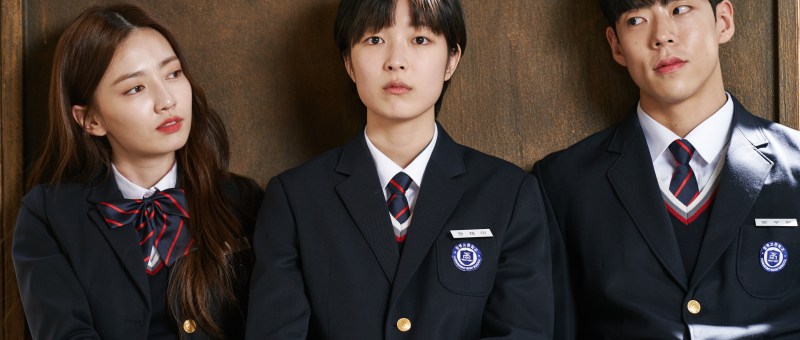
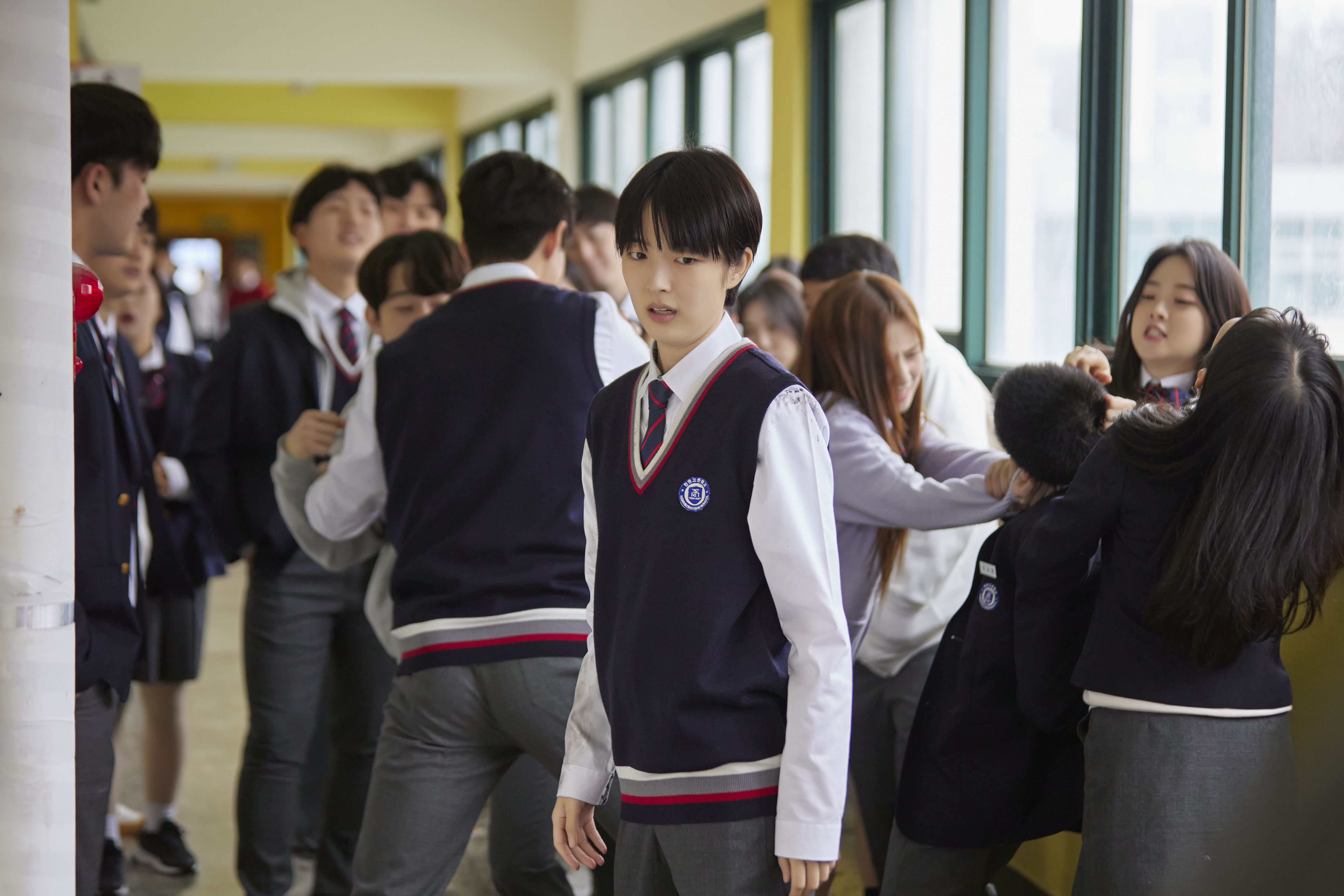
“Betrayal is betrayal” according to a jaded grandmother (Park Hye-jin) reading a children’s story that’s clearly not for children to a curious little girl in Jung Ha-yong’s extremely dark comedy, Anemone: A Fairytale for No Kids (아네모네, Anemone). Later someone asks what the difference is between treachery and betrayal before conceding there might not be any, but whatever betrayal is there’s certainly a lot of it going around as a winning lottery ticket causes discord between an otherwise unhappy couple, their friends, relatives, and just about everyone else. 

As the grandmother relates reading to the little girl, Yongja is a wife and mother of one who once had an illustrious career as a martial artist and is now an aspiring children’s author. Her husband, meanwhile, is a no-good layabout and the family is in constant financial difficulty dependent on Yongja’s part-time job in the kitchen of a bar. When she has a dream about winning lottery numbers, she writes them down and tells her husband to buy a ticket before going to work. Hearing the draw on the radio, she realises she’s won and abruptly walks out on her job getting into a physical altercation with her boss as she goes, but on arriving home her husband seems confused. Eventually he admits he forgot all about buying a ticket but Yongja doesn’t believe him and is convinced that he’s stashed it somewhere and plans to keep the money for himself.  

That would obviously be quite a big betrayal, but maybe not all that difficult to understand given the relationship dynamics in play between the obviously unhappy couple. Sending their daughter to her grandmother’s, Yongja goes to great lengths torturing her husband, making him wear a nappy and trying him to a rocking horse, in an effort to get him to reveal what he’s done with the ticket only to threaten murder suicide when he continues to say he can’t give her what he never bought. Just as we’re starting to feel sorry for him, and to be honest the constant “did you or did you not buy the ticket” conversation goes on for an incredibly long time, the husband manages to escape, expanding the search for the ticket across the wider area while Yongja ropes in her gangster brother and his dodgy friend to come to her aid. 

The ticket appears to have exposed the cracks within the family unit which are largely attributed somewhat uncomfortably to a misalignment of gender roles in which the husband is feckless and useless while Yongja essentially bullies him and is consumed by a sense of resentment that she is forced to shoulder the financial burden of supporting the family. The words the grandma reads from the picture book are often at odds with the reality, presenting Yongja as having achieved success with her children’s books but showing her dismissed by an editor who ironically points out the story’s not suitable for children. The grandmother further explains that poor people buy lottery tickets because it’s their one source of hope for a better life, no longer believing they have any possibility of improving their circumstances independently, which is perhaps the case for Yongja who hopes the money can help them fix their “train wreck of a family” for a happier future. 

Then again it may be the ticket that betrays them in proving so elusive. Because of the ticket, Yongja is forced to realise that she doesn’t trust her husband and that she is right not to because he is indeed keeping something from her. Other people she can’t trust include her brother’s shady friend while he is also a liability preventing her from calling the police because there’s a warrant out on his name. The problem is that everyone wants the ticket from themselves, except perhaps for Yongja who had obviously intended to use the money for the family as a whole though it seems unlikely that a simple injection of cash could fix these toxic relationships or restore their happy home if that is ever what it was. Fairy tales are often dark and this is no exception though the reason a child shouldn’t read it is not because it’s crude or violent but simply because it would crush their tiny spirit with the overwhelming disappointment of life. 


Anemone: A Fairy Tale for No Kids screened as part of the 2022 Yubari International Fantastic Film Festival.

Rainbow Over the Pacific (夜明けの二人, Yoshitaro Nomura, 1968)

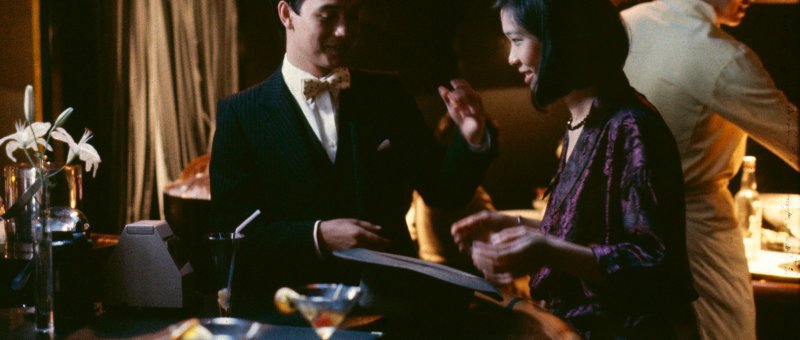
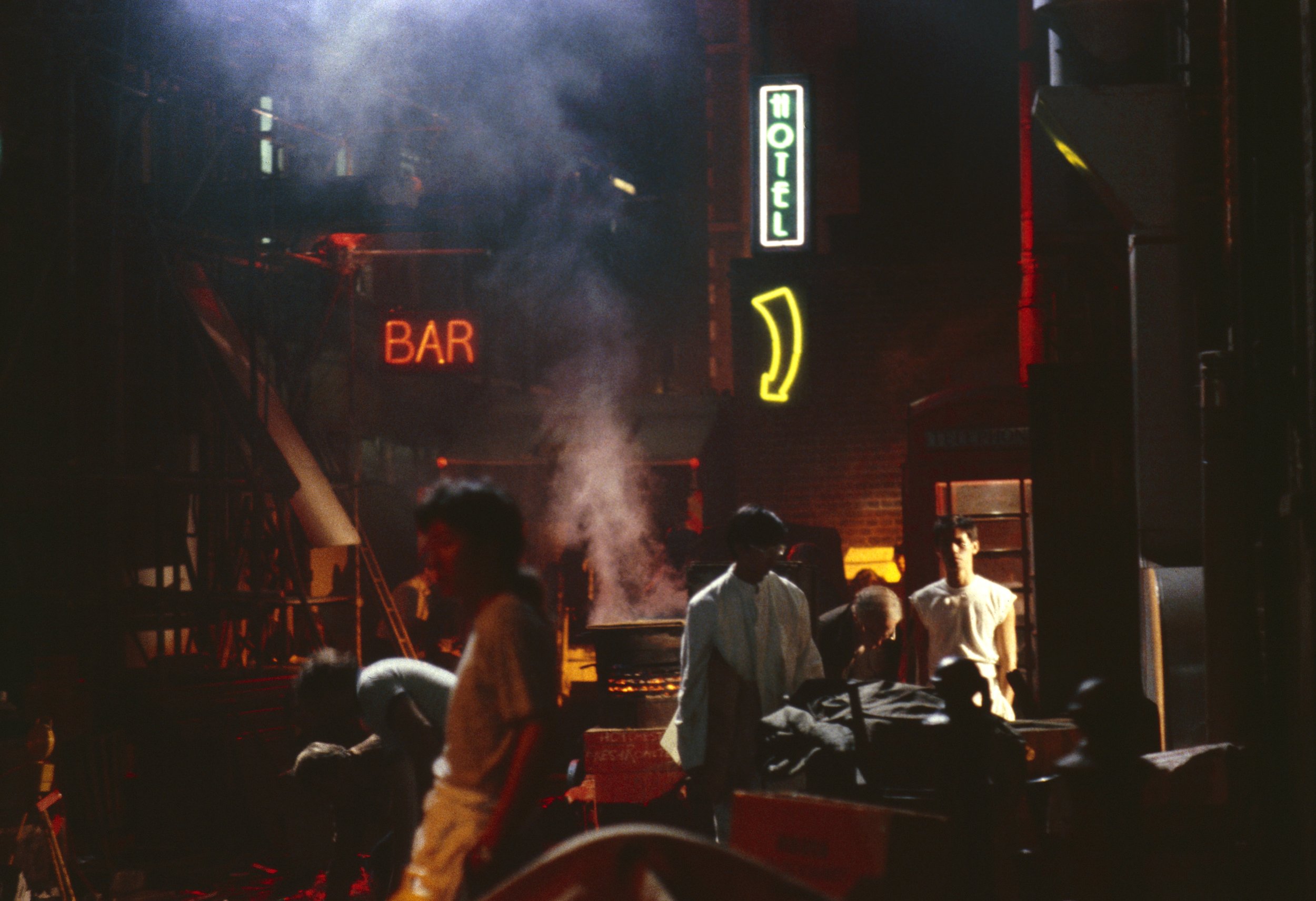
Yoshitaro Nomura is most closely associated with a series of gritty crime thrillers that dug deep into the dark heart of post-war Japan. It may seem surprising therefore to see him helming this generally cheerful if occasionally melancholy musical romance created as a star vehicle for singer Yukio Hashi in commemoration of 100 years of Japanese migration to Hawaii. Curiously pitched, Rainbow Over the Pacific (夜明けの二人, Yoake no Futari) arrives somewhere between extended tourist reel and accidentally colonialist soft propaganda that nevertheless never shies away from the complicated relationship between the two nations. 

As the film opens, hero Hideo (Yukio Hashi) is a something of a slacker working in a photo studio with a crush on an aspiring model. When she shows up late to what he thought was a date and then tells him she’s getting married before dumping her fiancé’s ex on him, he finds himself taking pity on the jilted girlfriend while they drown their mutual sorrows in the beerhalls of post-war Tokyo. Audrey Reiko Misaki (Jun Mayuzumi) is a third generation Japanese-Hawaiian who loves all things Japan and is becoming quite fond of Hideo though he abruptly tells her that it’s been fun but they live in different countries so it’s best they call it quits. Reiko goes back to Hawaii and tries to forget about her double romantic heartbreak in Japan while Hideo continues to be an unserious man berated by his grumpy granddad and exasperated mother not least because of his reluctance to get married. A year later his mentor takes him with him on a trip to the US stopping over in Hawaii where finds himself hoping for a fateful reunion with Reiko. 

Before that, however, he and his boss are met by a Japanese-American man who takes them on a tour of the island and explains that all the swanky hotels are owned by Japanese companies. “Anything you can find in Japan you can find in Hawaii” he insists, at once exoticising the environment and trying to sell it as a place that the growing Japanese middle classes might feel comfortable going on holiday because it is almost like being in Japan only of free of the intense atmosphere of the era of high prosperity where everyone works all the time. But then something a little strange happens, Sakata (Hiroyuki Nagato) points at the elephant in the room and begins talking about Pearl Harbour before visiting a cemetery where many men of Japanese descent who lost their lives fighting for the US in Europe are buried. Even so, he quickly points out that the Japanese community continue to dominate the political realities of the island with several Japanese-Americans elected to the Senate one of whom he actually interviews on camera. 

As for Hideo, he is at times a fairly crass tourist who accidentally mocks the traditional singing of a middle-aged Hawaiian. Much of the narrative appears to have been designed to take in most of the important tourist sites on the islands which are each marked with onscreen katakana as are several important landmarks in Japan in the later part of the film which almost does the same thing in showing off historical Kyoto and the Nara deer. After re-encountering Reiko, Hideo finds himself sucked into various kinds of romantic drama, accidentally coming between a local girl and her boyfriend whose relationship is strained by his wealthy father’s disapproval (much like Hideo he is thought to be an unserious man) and then getting into a dangerous situation with a rival suitor whose cool exterior masks a volatile intensity. 

Ironically enough, through his Hawaiian adventures Hideo becomes a “serious” man resolving to buckle down and work hard though seemingly abandoning his dreams of romance out of a kind of misplaced bro code that in a roundabout way undermines the message of solidarity between Hawaii and Japan in implying that Reiko must choose between the two but then refusing to respect her choice. Further parallels are drawn in the reunion of Hideo’s great uncle who has since become a respected teacher at a Japanese school and his grumpy grandfather who is exposed as a dissolute layabout who returned to Japan in disgrace after giving up in the face of the harshness of life for Japanese migrants, Nomura utilising stock footage to demonstrate the many difficulties they faced in trying to make new lives for themselves in Hawaii. Of course, this being a star vehicle for Hashi, he gets several opportunities to sing including a rendition of the title of song while the film at times turns into a musical though the melancholy, foggy conclusion perhaps plays against the expectations of the genre. In any case, the film appears to be a fascinating document of an increasingly globalising Japan which nevertheless looked for itself even while seeking escape.


Asian Pop-Up Cinema Returns for Season 16!

Asian Pop-Up Cinema returns for its 16th season in cinemas across Chicago March 18 to April 16. The season will kick off with a special pre-launch screening of Philip Yung’s highly anticipated 1960s crime drama Where the Wind Blows with lead actor Aaron Kwok scheduled to attend in person. It will then present films from Japan, South Korea, China, Hong Kong, and Taiwan, while a selection of Korean films will also be available to stream in the US and Canada via Eventive along with Vietnamese LGBTQ+ drama Song Lang and gritty Chinese neo-noir Old Town Girls.

Festival Pre-Launch Special Event 

Tuesday, March 14, 7:00 PM: Where the Wind Blows (風再起時, Philip Yung, 2023)

AMC NEWCITY 14 

Lead Actor Aaron Kwok is scheduled to attend for the award ceremony and introduction of the film.  

Long-awaited latest film from Port of Call’s Philip Yung starring Aaron Kwok and Tony Leung Chiu-wai as policemen who forge dangerous alliances with organised crime in ’60s Hong Kong.

Japan Week

AMC Evanston 12 (1715 Maple Ave, Evanston, IL)

Opening Film 

Saturday, March 18, 2:30 PM : A Man (ある男, Kei Ishikawa, 2022)

©2022 "A MAN" FILM PARTNERS

The latest film from Kei Ishikawa (Gukoroku: Traces of SinArc), A Man stars Satoshi Tsumabuki as a lawyer who is pulled into a web of intrigue when a former client asks him to investigate her late husband who had been living under an assumed identity.

Saturday, March 18, 5:30 PM: She Is Me, I Am Her (ワタシの中の彼女, Mayu Nakamura, 2022)

Career Achievement Award recipient lead actress Nahana and director Mayu Nakamura are scheduled to attend in person to introduce the film and have a Q&A after the film presentation moderated by Mark Schilling.

Mayu Nakamura’s anthology film spins four of tales of contemporary loneliness exacerbated by the COVID-19 pandemic each starring actress Nahana as a conflicted housewife meditating on past regret, a lonely woman who takes a liking to a takeaway delivery driver, a sex worker displaced by the pandemic, and a blind woman who offers a hand of salvation to a telephone scammer. Review.

Sunday, March 19, 2:30 PM: Before They Take Us Away (Antonia Grace Glenn, 2022)

Presenter/Producer Evelyn Nakano Glenn and Writer/Director Antonia Grace Glenn are scheduled to attend in person to introduce the film and have a Q&A after the screening moderated by Mark Schilling.

Antonia Grace Glenn’s documentary focuses on the Japanese Americans who evacuated voluntarily in the wake of Executive Order 9066 and avoided entering the internment camps but became refugees in their own country.

Sunday, March 19, 5:30 PM: Convenience Story (コンビニエンス ストーリー, Satoshi Miki, 2022)

Surreal Lynchian adventure based on a story by film writer Mark Schilling and directed by Satoshi Miki following a blocked writer (Ryo Narita) who becomes trapped in a weird alternate reality after entering a mysterious convenience store. Review.

Wednesday, March 22, 6:30 PM: Umami (Slony Sow, 2022)

Alliance Française de Chicago (54 W Chicago, Chicago, IL 60610) 

French-Japanese co-production starring Gérard Depardieu as a chef who has a near death experience and embarks on an existential journey to Japan haunted by his defeat in a culinary competition decades earlier at the hands of a Japanese ramen master.

Singapore and China

Michael Paul Galvin Tower, Schulz Auditorium at Illinois Institute of Technology (IIT)  (10 W. 35th St., Chicago) 

Saturday, March 25, 2:30pm: Ajoomma (아줌마, He Shuming, 2022)

 Drama in which a middle-aged woman from Singapore chases her obsession with Korean TV dramas all the way to Seoul only to become lost and embark on a journey of unexpected self-discovery,

Saturday, March 25, 4:30 PM: Ping Pong: The Triumph (中国乒乓之绝地反击, Deng Chao & Baimei Yu, 2023)   

True life sporting drama starring Deng Chao as a table tennis coach tasked with putting together a new national team.

March 25 – 31, 2023: South Korea Streaming Week

Streaming available for U.S./Canada viewers at https://watch.eventive.org/apuc16 

Please Make Me Look Pretty (니얼굴, Seo-Dong-il, 2020)

Documentary following a young woman who was born with Down Syndrome and is often on the receiving end of societal prejudice but has found release in drawing portraits of others which express a deep love and respect for all she meets despite not receiving the same in return.

Good Morning (안녕하세요, Cha Bong-ju, 2022)

Drama in which a young woman raised in an orphanage considers taking her own life but is prevented by a hospice nurse who paradoxically tells that she will show her how to die.

A Home From Home (아이를 위한 아이, Lee Seung-hwan, 2022)

Do-yoon, a young man planning to travel to Australia, reunites with his estranged father and agrees to live with him and his younger brother, Jae-min. When his father dies suddenly, Do-yoon gives up his plans of going abroad to become his brother’s guardian but later discovers an earth-shattering secret.

Rolling (말아, Kwak Min-seung, 2022)

Quirky indie dramedy following 25-year-old drop out Juri who is charged with looking after her mother’s kimbap shop during the pandemic while she travels to care for her own mother in the country. Review.

Hong Kong Week

AMC NEWCITY 14 (1500 N Clybourn Ave, Chicago, IL 60610)

Centerpiece Film

Friday, March 31, 7:00 PM: A Guilty Conscience (毒舌大狀, Jack Ng, 2023)

Bright Star Award recipient Renci Yeung and the director Jack Ng Wai Lun are scheduled to attend the award ceremony and Q&A in person.

A cynical lawyer’s existence is upended when a case he’d assumed would be easy ends in a bereaved mother being sent to prison for seventeen years for a crime she almost certainly did not commit in this often hilarious courtroom drama which puts social inequality on trial. Review.

Saturday, April 1, 12:00 PM: The Sparring Partner (正義迴廊, Ho Cheuk Tin, 2022)

Incredibly dark true crime courtroom drama inspired by a notorious case from 2013 in which a man murdered his parents with the help of a friend who has learning difficulties and then went on TV to appeal for information on their disappearance. Faced with conflicting testimonies, the jury must examine their own prejudices and the mechanisms of the justice system as they attempt to weigh guilt and innocence. Review.

Saturday, April 1, 5:30 PM: Remember What I Forgot (曾經擁有, Chui Tze Yiu, 2022) 

The producer of a reality TV show decides to investigate a local film buff known as Lil’ Kim (Philip Keung) who somehow shows up uninvited on movie sets or crashes premieres and press conferences though nobody seems to know anything about why or where he came from.

Saturday, April 1, 7:30 PM: Port of Call (踏血尋梅, Philip Yung, 2015)

Electric 2015 crime drama/state of the nation address in which a world-weary policeman is charged with investigating the death of a young woman in which the prime suspect has already confessed but claims that he killed her only because she asked him to. Review.

Sunday, April 2, 2:30 PM: Lost Love (流水落花, Ka Sing Fung, 2022)

Director Ka Sing Fung is scheduled to attend for INTRO and Q&A. 

A couple who have recently lost a child decide to foster, but the decision places additional strain on their relationship as the father drifts into an affair feeling pushed out by his wife’s dedication to the children under their care.

April 3 – 9, 2023: Movies You May Have Missed Streaming on Eventive

Streaming available for U.S./Canada views at https://watch.eventive.org/apuc16 

Song Lang (Leon Le, 2018)

Beautifully tragic romance set in ’80s Saigon in which a conflicted street punk falls in love with a Cai Luong opera singer. Review.

Old Town Girls (兔子暴力, Shen Yu, 2020) 

The left behind children of decaying industrial China find themselves at the mercy of a corrupted parental legacy in Shen Yu’s gritty neo-noir. Review.

April 3 – 9, 2023: Movies You May Have Missed Streaming on MUBI.com

Streaming available for U.S. and Canada viewers at MUBI.com. (Registration is required first to access the free trial link).

Family Romance, LLC (Werner Herzog, 2019)

Meta documentary-style drama from Werner Herzog following controversial “rental family” figure Yuichi Ishii as the lines between fantasy and reality begin to blur when he’s tasked with playing father to a lonely little girl.

The Case of Hana and Alice  (花とアリス殺人事件, Shunji Iwai, 2015)

Animated prequel to the much loved Shunji Iwai film Hana and Alice featuring the voices of original actresses Yu Aoi and Anne Suzuki as Alice transfers to a new school and ends up investigating the disappearance of the previous occupant of new friend Hana’s home.

Taiwan Week

AMC NEWCITY 14 (1500 N Clybourn Ave, Chicago, IL 60610)

Saturday, April 15, 2:30 PM: Day Off (本日公休, Fu Tien-Yu, 2023) 

A veteran hairdresser embarks on a road trip when the family of an old client who had moved far away and has since become bedridden ask her to come and cut his hair.

Saturday, April 15, 5:30 PM: Marry My Dead Body (關於我和鬼變成家人的那件事, Cheng Wei Hao, 2022)

A police officer discovers a red wedding envelope but soon realises the proposal comes from the other side and it is the ghost of a murdered man who wants to marry him!

Sunday, April 16, 2:30 PM: GAGA (哈勇家, Laha Mebow, 2022)

Lighthearted drama in which the lives of an indigenous family are thrown into turmoil when the grandfather passes away suddenly. Review.

Season Finale 

Sunday, April 16, 5:30 PM: Lost in Forest (山中森林, Johnny Chiang, 2022)

Director Johnny Chiang and lead actor Lee Kang Sheng are scheduled to attend to introduce the film and have a Q&A afterwards.   

Crime drama starring Lee Kang Sheng as a former gangster who served 12 years in prison after saving his friend who has since become the boss in their former territory. Though he had intended to leave the world of crime behind, he is soon pulled back in when his friend is murdered by a petty footsoldier.

Asian Pop-Up Cinema runs March 18 to April 16 at cinemas across Chicago with select films available to stream online throughout the US and Canada. Further details can be found on the official website where tickets are already on sale and you can also keep up with all the latest news by following Asian Pop-up Cinema on FacebookTwitter,  Instagram, and Vimeo.

Catharsis After the End (#ピリオド打ったらカタルシス, Crazy Joe, 2022)

“Why should I give my freedom to anyone but myself” the hero of Crazy Joe’s (Junpei Suzuki) Catharsis After the End (#ピリオド打ったらカタルシス, #Period Uttara Catharsis) asks himself, realising that his quest for internet fame has begun to erode his sense of self. Then again as he later admits, it isn’t video site New Qube or social media that have made him what he is, the darkness was there all along.  A critique of the dangers of the age of the internet in which online approval becomes all, Crazy Joe’s highly stylised dramedy ironically finds its hero fulfilling his desires but only in the darkest of ways. 

Hiro and his friend Hide are aspiring New Qubers trying to find fame and fortune through viral video but struggling to gain a foothold in the crowded space of online streaming. They start off with annoying public pranks and later find themselves drifting into an exploitative relationship with a homeless man who makes a habit of approaching men to ask if he can give them blow jobs while searching for new ideas to reel in views and subscribers which are all they really care about to the detriment of their other social relationships. 

Hiro at least in one sense got into New Qubing as a form of revenge, secretly videotaping the boss who regularly assaulted him physically with the intention of uploading to the internet. Access to the platform is also a source power as much as it’s a dangerous drug that feeds on his need for approval. After a while he stops doing what he wants to do and finds himself preoccupied only with what other people want, what they think of him, and what he can do to gain their engagement. At one point he and Hide venture into a forest in search of a dead body, though it’s not really clear what they intend to do if they find one, but end up running into a dejected salaryman who just wants to die but can’t seem to do it. They end up asking him if he wants to make a comment on video before almost realising how inappropriate that is in the quality of the man’s refusal. Later a pair of New Qubers will ask Hiro the same question in a similar situation while he can only marvel at the irony of the situation in the rapid evolution of ideas he himself helped to breed. 

In their ever increasing quest for success, the guys are roped into helping an intense old friend, Ryu, set up an account but he only posts inappropriate content including showing people how to waterboard or beating someone to a bloody pulp so all his videos are banned, yet Hiro still finds himself feeling jealous knowing Ryu is pushing boundaries in a way he’s failing to all of which leads him to his next evolution in creating crime duo Monolith which he intends to spark some kind of social movement among the young. But to his consternation there’s little interest in his crime spree while another old friend eventually steals his thunder by confessing to the crimes himself explaining that he did them because he wants to be “famous” before live streaming a murder to cement his notoriety. Running out of ideas in a continual game of oneupmanship, the New Qubers are left with nowhere to go other than increasingly bloody violence and cruelty while their followers egg them on from the sidelines crying out for pain and suffering. 

Hiro’s quest for freedom ends only in further constraint, addicted to the artificial high of internet acclaim and willing to sink ever lower to gain it. The irony is that he wanted to create something from nothing and then see others build on what he’d started which is in a sense what happens but only in the darkest of ways. Beautifully shot and highly stylised featuring animation, on screen text, and moments of genuine horror in its ominous score and red/blue lighting, Crazy Joe’s darkly humorous exploration of the ills of the contemporary society in which nothing happens if it doesn’t happen online presents an incredibly bleak prognosis for the evolution of social media but nevertheless has sympathy for its “scum of the earth” hero who only too late begins to realise he’s lost touch with himself in his never-ending quest for the approval of others. 


Catharsis After the End screened as part of the 2022 Yubari International Fantastic Film Festival.

Original trailer (no subtitles)

Doing Time (刑務所の中, Yoichi Sai, 2002)

Who ever thought that life in prison could be so…peaceful? Adapted from the autobiographical manga by Kazuichi Hanawa, Yoichi Sai’s 2002 drama Doing Time (刑務所の中, Keimusho no Naka) is a slice of life dramedy somewhat typical of the early 2000s save its unexpected setting in a state penitentiary. Unlike the average prison movie, the main thing that Hanawa discovers is that life inside is incredibly dull, yet he approaches his brief sojourn in this other world with anthropological precision observing and mimicking the behaviour of his fellow prisoners while making the most of this hopefully once in a lifetime experience reflecting that he’ll likely never have the opportunity to wear such worn out undergarments ever again. 

A quiet man already in middle age, Hanawa (Tsutomu Yamazaki) is no dangerous criminal merely a firearms enthusiast who liked to fire modified pistols into bottles of water. He’s got three years for illegal possession of weaponry and explosives, which seems to be quite a harsh penalty considering another man is doing seven for murder after shooting a man he says waved an axe at him when he went to collect a debt. There are clearly men who have committed violent crimes in Hanawa’s immediate vicinity, yet this is not a traditional tale of prison gangs and factional infighting, the only violence we witness concerns one prisoner who appears to have broken the rules accidentally in thoughtlessness or ignorance rather than direct rebellion. Rather it is, ironically enough, almost like a summer camp in which Hanawa and his four cellmates attempt to amuse themselves during the little free time they are offered for contemplation and relaxation. 

Even so, every inch of the prisoners’ lives is micromanaged by the guards from the way they walk to when they are allowed to move or speak. So entirely stripped of their dignity are they, that they must ask for permission even to use the toilet in their own cell while in solitary confinement and dutifully report back once they’ve finished. The communal squat toilets at the back of the workshop where Hanawa works crafting wooden tissue boxes are entirely open with only knee-height doors on each stall for privacy. The prisoners’ days are tightly ordered, early to bed and early to rise with work in-between and only the promise of rest to look forward to on weekends and holidays. 

Ostensibly a shy man, Hanawa dislikes having to ask permission all the time though not so much as an affront to his autonomy as simply bothersome. Surprisingly he begins to warm to the rhythms and routines of prison life discovering in them a kind of liberation, finding his time in solitary for “unauthorised communication” the most enjoyable of his sentence free as it is of the necessity of interacting with other people. Like the bug collector in Woman of the Dunes, he finds freedom in simplicity appreciating the mindlessness of his absurd new job folding paper bags for medical prescriptions. He can abandon any sense of responsibility for his life, submitting himself entirely to the guards’ authority and surrendering the need for control, happy to allow his existence to be managed for him without needing to decide on anything for himself. 

That aside, it’s difficult to see what other purpose prison could serve for a man like Hanawa who merely had an unusual if potentially dangerous hobby save providing him with a unique life experience he seems to be treating as a kind of adventure. He may at times look down on his cellmates who have their own routines, but otherwise appears grateful for their input and advice regarding prison life often listening to their explanations for behaviour he regards as strange such as removing one’s trousers before entering the bathroom and then deciding to do as they do. With so little stimulation the mundane becomes exciting, each meal a culinary adventure listening to a cellmate recount his group treat of a film screening (Takeshi Kitano’s Kid’s Return) as if he had returned from exotic land relishing his description of the chocolate biscuits and cola he was given to snack on. Time is what Hanawa is doing, but he does at least gain the opportunity of experiencing life in slow motion learning to appreciate the beauty of a single dandelion while observing the absurdity of the world all around him which is perhaps no more absurd than that which exists outside. 


Home Coming (万里归途, Rao Xiaozhi, 2022)

A pair of Chinese diplomats find themselves the last hope of stranded construction workers when civil war erupts in a middle-eastern nation in Rao Xiaozhi’s visually impressive action drama, Home Coming (万里归途, Wànlǐ Guītú). A “Main Melody” National Day release, the film is less heavy on jingoistic patriotism than might be expected if slotting neatly into the recent trend of celebrating various branches of officialdom, this time foreign service consular staff, but nevertheless leans into the recurrent “just stay in China” message of government-backed big budget cinema in insisting that nowhere is the Chinese citizen safe other than at “home”. 

According the closing titles inspired by a series of real life events, the film opens in the fictional nation of Numia which is currently experiencing a period of instability with widespread protests against the government. As tensions quickly rise amid a full-scale uprising led by rebel warlords, consular staff are tasked with evacuating Chinese citizens. Jaded consular attaché Zong (Zhang Yi) has a heavily pregnant wife at home, but gives up his seat on the last plane out to a “Taiwanese compatriot” in what can only be read as a less than subtle advocation for a One China philosophy. Booked on the next boat out, Zong nevertheless ends up staying behind to help rescue a contingent of construction workers who are unable to cross the border as they have lost their documentation and require consular assistance to secure exist visas to a neighbouring nation. 

The message of the film might in some ways seem confusing. The by now familiar inclusion of stock footage featuring Chinese citizens overjoyed to arrive home thanks to the assistance of the consular officials emphasises that the Chinese government will always be committed to protecting the interests and safety of Chinese citizens abroad, but it’s also clear that the safest thing of all is not to leave or else to return home as quickly as possible. “Let’s go home” becomes a recurring motif as the construction workers and diplomats will themselves forward fuelled by hometown memories and a desire to see their families as much as simply to survive. Then again, there is also a subtle defence of the role of Chinese corporations overseas. An elderly driver from the local area makes a point of defending his friends and employers to a warlord as he points a gun at his head, reminding him that the Chinese do them a service by building railways and hospitals though it seems this corporate intrusion is one of the things the warlord is rising up against.

No information is really given as to why there is animosity towards the ruling regime, but the film nevertheless goes out of its way critique dissent by suggesting that it is the rebels who are in the wrong. Bodies are frequently seen hanging from billboards and bridges, and rebel leader Mufta tortures and pillages while playing sadistic games with captives. A secondary plot strand seems to suggest that a good leader must sometimes mislead those around them for their own good. Zong finds himself in conflict with his young and naive partner Lang who thinks they should be honest and admit that even if they make it to the next town there may be no one waiting for them while Zong knows that if they tell the construction workers that they’ll never reach it anyway in which case there’s nothing else to do but stay still and die. Zong is proved right, implying that Lang’s problem was that he had insufficient faith in China to protect them (which they can largely because of their massive satellite surveillance network) and endangered the lives of others because of it. But then Mufta also makes a strategic error in a bit of showmanship that effectively unmasks him in front of his men as a duplicitous coward rather than the grizzled revolutionary they thought they were following. 

In any case the closing news reports emphasise the rescue’s value in demonstrating that China is a strong and reliable country capable of protecting its people abroad, though the flip side of that is also seen in Zong’s insistence to the warlord that China will retaliate if any of his people are harmed. Meanwhile, Zong also seems keen to prove that China is a more inclusive place than many others, offering to take their driver back with them if he wanted to come. When the rebels finally concede the Chinese can leave, they refuse permission for an orphaned local girl who had been adopted by a Chinese couple but Zong refuses to leave without her insisting that as she has been adopted she is now incontrovertibly Chinese and he will protect her too. Rao shoots with a gritty roving camera drawing inspiration from the paranoid thrillers of the 1970s along with similarly themed contemporary pictures such as Korea’s Escape From Mogadishu and Hollywood’s Argo, while making the most of incredibly high production values with a series of explosive action sequences but does his best to mitigate the jingoistic undertones through his uncertain, battle weary hero even if ending on a slightly ironic note with an unexpected, post-credits appearance from a National Day movie icon.


international trailer (English / Simplified Chinese subtitles)

Blue Ribbon Awards Announces Winners for 65th Edition

©2022 "A MAN" FILM PARTNERS

The Blue Ribbon Awards, presented by film critics and writers in Tokyo, has announced the winners for the 65th edition which honours films released in 2022. Kei Ishikawa’s A Man takes the Best Film prize but Chie Hayakawa walks away with Best Director for Plan 75 which also picks up Best Actress for Chieko Baisho.

Best Film

©2022 "A MAN" FILM PARTNERS

Best Director

  • Kei Ishikawa (A Man)
  • Shinzo Katayama (Missing)
  • Takahisa Zeze (Tombi: Father and Son, Fragments of the Last Will)
  • Chie Hayakawa (Plan 75)
  • Ryuichi Hiroki (2 Women, Motherhood, Phases of the Moon)

Best Actor

  • Sadao Abe (Lesson in Murder, I am Makimoto)
  • Jiro Sato (Missing)
  • Satoshi Tsumabuki (A Man)
  • Kazunari Ninomiya (Tang, Fragments of the Last Will)
  • Masaharu Fukuyama (Silent Parade)

Best Actress

Best Supporting Actor

Best Supporting Actress

  • Sakura Ando (A Man, Korosuna)
  • Machiko Ono (Anime Supremacy!, Soul At Twenty, Sabakan, Thousand and One Nights)
  • Nana Seino (Kingdom 2: To Distant Lands, Offbeat Cops, A Man)
  • Atsuko Takahata (Motherhood)
  • Ryoko Hirosue  (The Hound of the Baskervilles: Sherlock the Movie, 2 Women)

Best Newcomer

Best Foreign Film

  • Avatar: The Way of Water 
  • West Side Story
  • Cry Macho
  • Coda
  • Top Gun: Maverick
  • King Richard
  • Blue Bayou
  • Broker
  • Belfast
  • Lamb

Sources: Eiga Natalie, Nikkan Sports

Blood of Revenge (明治侠客伝 三代目襲名, Tai Kato, 1965)

An earnest yakuza trying to walk a more legitimate path faces off against a thuggish businessman in Tai Kato’s late-Meiji ninkyo eiga, Blood of Revenge (明治侠客伝 三代目襲名, Meiji kyokyakuden – Sandaime Shumei). Though set in the confusing world of 1907, Kato’s tale is in some ways not so different from contemporary gangster dramas in its suggestion that even in the early days of the 20th century the yakuza were already somewhat out of date while the fancy capitalist who calls them so is not so far off from the corporatised gangsters of the high prosperity era. 

Kato opens with a tense scene at a festival in which local boss Kiyatatsu is knifed by an impassive assailant who later claims to have been acting alone and that he did it to make a name for himself by stabbing a big time yakuza boss. Kiyatasu’s hot-headed son Haruo (Masahiko Tsugawa) suspects that rival businessman Hoshino (Minoru Oki) is somehow behind the attack but is talked out of a self-destructive bid for revenge as his father reminds him that they are “not a mob” but “honest businessmen” and acts of violence would impact their business negatively. 

Kiyatatsu may once have been a big time yakuza boss but it’s clear he’s made an attempt to go straight by founding a legitimate business that began trading lumber and now sells construction supplies that are helping to expand the rapidly modernising late-Meiji economy. He is closely involved with a construction project to introduce a modern water distribution system for the good of the people of Osaka organised by another former yakuza, Nomura (Tetsuro Tamba). Hoshino, who was indeed behind the attack and is secretly backed by his own band of mercenary yakuza, had Kiyatatsu knifed in the hope of getting his hands on the contract, later stooping to other dirty tricks such as ruining their cement supply so that he can swoop in with a special deal on his own.  

Just like yakuza, businessmen appear to have a code and letting personal feelings interfere with business is just as bad as letting ninjo get in the way of your giri. Hoshino is a bad yakuza in a business suit, his Western clothing just another symbol of his villainy. Kiyotatsu’s guys including noble retainer Asajiro (Koji Tsuruta) all wear kimono with the young son Haruo later shifting to a suit after taking over the business in a bid to appear less like a yakuza and more like a serious young professional. Though Hoshino sneers at Asajiro that yakuza are already out of date and that he hates their tendency to solve every problem through violence he is little more than a thug himself keeping a small band of yakuza onside to do his dirty work.

Yet there is something in what he says that the yakuza belong to an earlier age and are unable to travel into the new post-Meiji society men like Normura are building. Insiting that Japan must embrace international trade, Nomura builds piers as a kind of outreach to a new world and does so for the good of the people rather than himself, living up to an old yazkua ideal in trying to ensure prosperity for all. Kiyotatsu is already distancing himself from the gangster way of life, explaining to a travelling gambler to whom he grants hospitality that he does not allow gambling in his home and believes that modern gangsters should find new ways to live, but is constantly tarred by the yakuza brush unable to fully escape the legacy of his tattoos. When Asajiro is appointed the new head of the clan it comes as quite a shock to the young Haruo who is outraged having believed it was his birthright to succeed his father. Ever noble, Asajiro suggests that he succeed as the head of the clan and Haruo as the heir to the legitimate business saving him from a sordid yakuza existence. 

Even this cannot save the clan from destruction in the light of Hoshino’s avaricious greed forcing Asajiro on a bloody path of revenge while forced to give up the woman he loves because of his code of duty. Asajiro’s kindness is signalled by his decision to buy a geisha for three days so she can visit her dying father in the countryside but Hatsue (Junko Fuji) remains otherwise entirely trapped. Her contract is bought out by boorish assassin Karasawa (Toru Abe) who treats her cruelty and buys her complicity in insisting that should she disobey he will turn on Asajiro. Asajiro’s eventual arrest makes it clear that he is not a man who can survive in the new times because his brand of nobility is clearly out of fashion even as he takes revenge on an increasingly corrupt society by standing up against the duplicitous Hoshino ironically taking a leaf out of Haruo’s book that by appeasing men like Hoshino they only enable their own oppression. Kato’s characteristic low level photography reflects the anxiety of the times dwarfing these old-fashioned men with an awkward modernity they are ill-equipped to survive.


Torso (トルソ, Yutaka Yamazaki, 2009)

A traumatised woman overcomes her sense of loneliness by sharing her life with a limbless inflatable doll in the aptly named Torso (トルソ). More than a treatise on urban disconnection, the directorial debut from Yutaka Yamazaki is both an exploration of the lingering effects of childhood trauma and a contemplation of contemporary womanhood, the changing relationship dynamics between men and women, and the extent of bodily autonomy in an often conformist society while ending on a note of ambiguity which may represent either liberation or resignation. 

34-year-old Hiroko (Makiko Watanabe) works at an apparel studio where she is among the older of the employees and somewhat aloof with her colleagues, declining invitations to hang out after work or attend the singles mixers one of the other girls is forever organising. She is indeed the sort of person who likes to keep her distance, ostensibly preferring her own company spending her time working on a patchwork quilt but secretly cuddling up at night with a slightly smaller than life-size inflatable male torso which is anatomically correct yet has no head, arms, or legs and into which she must herself breathe life only to let it out again later. Her only other real connection is with her younger half-sister Mina (Sakura Ando) who is her polar opposite in terms of personality, a bubbly, energetic woman who seems to crave the kind of contact her sister is largely unable to give her. 

Even so despite claiming to hate having other people in her space, Hiroko is indulgent of Mina always giving in and allowing her to stay at her apartment at one point for an extended period of time even if not entirely happy about it. While Hiroko has eschewed male contact for the 100% controllable union with the torso pillow, Mina is trapped in an abusive relationship with a man, the otherwise unseen Jiro, whom we later learn to have been a long term boyfriend of Hiroko. Theirs is a relationship frustrated and defined by unresolved resentments, Hiroko complaining that Mina always takes everything she treasures beginning it seems with her mother’s love. A colleague of Hiroko’s around her own age laments that at their age weddings and funerals are the only occasions that they visit their hometowns, but Hiroko is reluctant to visit for reasons other than the usual awkwardness between grownup children and their parents, dressing up and catching a train to attend the funeral of the stepfather we gather must have abused her while her mother (Miyako Yamaguchi) turned a blind eye but finally unable to go through with it. 

For Hiroko’s mother, Hiroko is the embodiment of her resentment towards her first husband who left her, later on another visit snapping back that she must have got her “unpleasant personality” from him while otherwise praising Mina who admittedly has bad taste in men but a generous heart. Hiroko meanwhile projects her own resentment onto her mother who failed to protect her from abuse she wonders possibly because of the resentment she feels towards her while she also projects her feelings of jealous inadequacy onto Mina who may also in a sense resent her for being unable to return the sisterly affection she desires. As she replies, she took Hiroko’s things because she only wanted her love even if vicariously through the otherwise abusive relationship with Jiro whose child she is also carrying. 

In many ways it’s Mina’s pregnancy which forces Hiroko to reassess her life, not least in the accusation that she had wanted to carry Jiro’s child herself. At 34 Hiroko is perhaps at a moment of crisis, her frosty mother coldly telling her she’ll soon have to “give in” and abandon her solitary life for a conventional marriage (despite her recent widowhood her mother has already started another affair with the guy from the funeral parlour). On the other hand, are men actually very necessary anymore or has true independence become not only viable but a respected choice? Despite the constant mixers, some of the younger women at the office have decided not to wait for marriage and have already put a foot on the property ladder getting a good deal on a mortgage by starting young to own their own place and achieve financial independence. “You can’t rely on men these days” one of others agrees while recognising that choosing this kind of independence does not necessarily mean a rejection of romance or long term relationships. 

For her part, Hiroko is wary of men who do in the main seem to be sleazy and predatory, visibly flinching as an over-friendly clerk at the car rental office repeatedly attempts to lean across her while she’s sitting in the driving seat. Aside from its obvious insentience, the torso is symbolically unable to harm her in having no arms to strike, no legs to kick, and no head to hurt while preserving the part she most craves buried in its empty chest which she cradles constantly like a child with a favourite toy. Her attachment to it is not purely physical but emotional, taking it on a mini holiday to the beach dressed in a pair of tiny speedos as they frolic in the sea together alone on a private beach. Yet even this body as empty as she feels her own to be can also betray and be betrayed, another treasure to be stolen if only in the breaking of a spell on realising that Mina has discovered her secret. 

Mina’s final decision is both old-fashioned and ultra-contemporary, vowing to go back to the country and raise the child alone while in a symbolic sense becoming her mother in intending to take over her old part-time job at a nursing home. Hiroko meanwhile is preoccupied with the idea that she’s sacrificing her dreams and aspirations because of something that’s essentially Jiro’s fault, in part stripping her of her own agency in making her decisions and imposing on her the view that struggling in the city even if it doesn’t really suit you is inherently better than making a simple life at home. A brassy gravure model (Sora Aoi) who makes a point of the fact her body is business similarly looks down on Mina, suggesting that she’s simply weak and if she really wanted to pursue her dreams she’d have an abortion without a second thought. Yet does it really need to be an either or? The decision that Hiroko finally comes to may suggest that it might, or then again perhaps she’s merely freeing herself of her long held trauma and looking to lead a more emotionally fulfilling life. “We’re just starting out” Mina shouts back from from across the ticket barriers as she leaves hinting at new beginnings for each of the sisters having each at least laid something to rest. 


Original trailer (no subtitles)

Feast (Apag, Brillante Mendoza, 2022)

A young man fuelled by an internalised class conflict struggles to come to terms with his guilt after running over a man and his daughter in Brilliante Mendoza’s social drama, Feast (Apag). With a strong religious sentiment, each of the four acts is preceded by a title card with a Biblical quotation, Mendoza seems to suggest that we are all one big family and that all divisions are healed when the feast is shared equally, except that equal it is not even when brokered by mutual compassion. 

The opening scenes also have their irony. Wealthy businessman Alfredo (Lito Lapid) and his diffident son Rafael (Coco Martin) shop for expensive fresh crabs at the market, while Matias and his young daughter haggled for much less extravagant fare before making their way home by scooter and sidecar. Distracted by a phone call, Rafael ends up colliding with Matias in his 4×4. Acting quickly, Alfredo jumps in the driving seat and speeds away insisting that he will take the responsibility for the accident, whatever that might mean. After a talk with their lawyer who tells them they’ve not a leg to stand on, Rafael goes to the hospital and pays the family’s bills but Matias dies soon afterwards. Alfredo insists on taking the blame, agreeing to go prison in his stead, but Rafael can’t get over his guilt and enters a depressive spell that prevents him from getting on with the rest of his life.

As we later discover, Rafael occupies a difficult position in terms of his social class. His mother Elisa is Alfredo’s second wife, once a waitress in the family home and disliked by the children of his previous spouse. He is separated from his daughter as his wife seems to have left him for unclear reasons and gone abroad where she has met another man. He wants to unburden himself by accepting the punishment for Matias’ death but is prevented by his father’s heroic act of sacrifice and must carry the guilt alone. The family determine to make amends by “supporting” Matias’ widow Nita (Jaclyn Jose) and their children, but are in essence wielding their privilege over her in assuming they can settle all of this with money and need accept no other responsibility. 

Nita is rightly insulted when Elisa turns up to offer her money to compensate for her husband’s death, but it’s also clear that the family is already poor and now presumably without their main breadwinner. In any case what she wants is justice, and both gets it and doesn’t when Alfredo is sent to prison in place of Rafael. In the final acts of the film, the family has taken in Nita and her children but ostensibly as servants even if ones treated like friends while she is forced to feel grateful to the family that killed her husband for gifting her financial security. The feast with which the film ends was cooked by Nita, but she is not invited to partake in it only stand by and watch while the rest of the family eat. Yet the scene is presented to suggest that a divide has been healed, that inviting them to attend the feast was enough in itself even if a class distinction is still clearly felt between those who serve and those who eat. 

Though Nita seems to have some latent resentment, it is largely washed away on learning the truth allowing her to forgive and symbolically releasing Rafael from his torment. While forgiveness maybe worthy, it also lets the privileged off the hook for their oppressive behaviour in suggesting that the wealthy need only show magnanimity while the poor are expected to simply accept it in good faith. Had this not happened, there is no way they would share their feast with a woman like Nita nor will they ever do so again. If they really meant to dissolve class barriers, they could open the doors to all but they do not. In any case, through coming to terms with his responsibility for Matias’ death, Rafael appears to quell his own inner class conflict to occupy his rightful place but perhaps still fails to fully consider that Matias’ death wasn’t really just an “accident” but a natural consequence of the way in which men like himself move through the world.


Feast screened as part of the 2022 Busan International Film Festival.

Original trailer (no subtitles)