Two Blue Stripes (Dua Garis Biru, Gina S. Noer, 2019)

In less enlightened times, unplanned teenage pregnancy was sometimes seen as a grand tragedy involving the potential ruin of at least three lives. Thankfully, in many places at least, it isn’t quite like that anymore though for the young couple at the centre of Gina S. Noer’s sensitive yet lighthearted drama Two Blue Stripes (Dua Garis Biru) their impending parenthood exposes a series of divisions in a changing society as their families, one poor and religious, the other wealthy and secular though obsessed with respectability, react in quite different ways to the news their child is about to have a child of their own. 

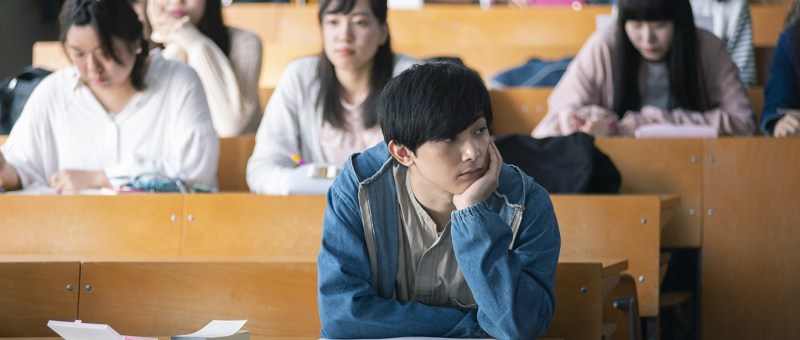
At 17, Bima (Angga Yunanda) and Dara (Adhisty Zara) are a bashful high school couple eagerly planning their futures. While Bima is not exactly a top student, Dara gets good grades and is obsessed with K-Pop, hoping to travel to Korea for university. One day however they get a little carried away and some time later Dara begins to suspect she may be expecting. Originally opting for an abortion, she later finds she can’t go through with it and the young couple decide that if only they can keep the pregnancy a secret until after graduation they’ll be able to figure something out. Unfortunately, however, the ruse is uncovered when Dara is taken ill during a PE session and accidentally reveals the pregnancy while worried about the baby. 

The surprising thing is that Bima’s parents who are devoted to their Islamic faith are the most sympathetic, quickly accepting that what’s happened has happened and needs to be dealt with as calmly and sensitively as possible if also somehow disappointed in Bima while quietly proud of his surefooted though naive pledge to take responsibility. Dara’s parents, however, and in particular her mother Rika (Lulu Tobing) are far less understanding, intensely questioning their daughter in the grim “hope” that Bima may have forced himself on her and she is therefore “blameless”. This rather old fashioned, sexist notion of female purity is further borne out by the school who confess that they aren’t allowed to expel Dara because of her pregnancy, but all the same are asking her to leave meaning she won’t be able to take her exams with the other pupils while nothing will happen to Bima who will be permitted to go to class as normal. 

For Rika shame and confusion seem to be the primary motivators. Attempting to sweep the whole thing under the carpet, she begins talking to a pair of relatives who are desperate for a baby and weren’t able to have any of their own in the hope they will adopt. Affluent and seemingly secular, her worry is perhaps only partly reputation and the fear her own parenting will be called in question with the remainder a sense of frustration that a single moment may have undone all her daughter’s hopes for the future along with all the ambitions she had for her. 

Dara, meanwhile, continues to dream of going to Korea hoping somehow she’ll be able to make it work as young mother. For his part, Bima makes it clear that she should be able to fulfil her dreams if that’s what she wants, never trying to tie her down and always keen to shoulder his sense of the burden. Young and in love they want to stay together and try to make a family of their own, but they are also naive little realising both the differences between them and difficulties of supporting themselves independently. Bima ends up working in his father-in-law David’s (Dwi Sasono) restaurant, proving a good employee and perhaps earning his respect but simultaneously losing Dara’s as he slacks off on his studies, she somewhat disappointed to think he might end up waiting tables for the rest of his life exposing her slightly snobbish attitude further borne out by her reaction on arriving at Bima’s comparatively humble family home. 

In an interesting role reversal, however, it is eventually Bima who takes on the stereotypically “maternal” role pledging to stay home and raise his son while affording Dara the opportunity to pursue her dreams. The parents meanwhile also reflect on their failure to properly prepare their children for adulthood, wishing that they had been less bashful and talked properly about sex so that they might have made better informed choices. “How are we supposed to love, to breathe, to be, when it hurts?” asks the plaintive song running over the closing scenes ironically titled “Growing Up”, each of the youngsters perhaps wondering just that as they try to come to terms with their respective choices while embarking on the next stage of their lives no longer children but perhaps no more certain. 


Two Blue Stripes streams in the US until March 31 as part of the 12th season of Asian Pop-Up Cinema.

Original trailer (English subtitles)

No. 76 Horror Bookstore: Tin of Fear (76号恐怖書店之恐懼罐頭, David Chuang & Hung Tzu-peng, 2020)

The first in a potential franchise, David Chuang & Hung Tzu-peng’s chilling anthology 76 Horror Bookstore: Tin of Fear (76号恐怖書店之恐懼罐頭, 76-Hào Kǒngbù Shūdiàn zhī Kǒngjù Guàntou) adapts four short stories from the online novel series of the same name. Somewhat interconnected and featuring some of the same cast, the four episodes each present a different kind of horror but all featuring a rather grisly spin from the secrets contained in the grim apartment building of the first instalment to the heartbreaking familial drama of the last as a collection of contemporary lost souls attempt to make sense of life, death, and that which exists somewhere in between. 

Titled “Rent”, the first chapter sees single mother Miss Ho (Esther Huang) leave her young son behind to travel to Taipei hoping to earn money through sex work in order to buy a house in which they can live together. Unfortunately, however, her city existence is even grimmer than expected, inhabiting a rundown apartment block overseen by an extremely creepy landlord (Lai Hao-Zhe) who informs her that the previous tenant, whose belongings are still in the room, abruptly disappeared without trace. “When your son grows up, he’ll be able to protect you” the landlord adds in rather sexist fashion finally getting round to fixing the lock on her door while singing unsettling nursery rhymes about slow rats getting eaten alive. Gradually Miss Ho becomes aware that the building is home to a dark secret connected with the sad fate of one particular family who apparently attempted to resist the urban renewal programme but ironically finds that her own victory lies in a sense with complicity. 

Meanwhile, in Hunger a convict (Joe Chang Shu-Wei) wakes up on the outside after a traumatic episode only to discover that in this version of reality food has been declared illegal. The clerk at a convenience store (Troy Liu Tzu-Chuan) reacts to his polite request for sustenance with shear horror as if he’d just asked him where he might be able to find the weapons grade plutonium or high grade explosives. A strangely dressed man hanging round outside explains that there’s no more food for another 76 days, but he can supply him with some tins for a small fee. Gesturing at the sign inside the store which is currently counting down to a ghost festival might have clued the man in on where he might be if only he had his thinking cap on, but sure enough he finds himself trapped in a purgatorial hellscape and eventually faced with an ironic confrontation as he resolutely fails to take the opportunity to overcome his baser instincts. 

Shifting into teen supernatural romance, Hide and Seek takes a less grisly though no less cruel turn as a bunch of kids head out on an adventure to celebrate the 18th birthday of Xiaoqi (Eric Lin Hui-Ming). Best friend Shaohua (Troy Liu Tzu-Chuan) has organised a camping trip to a supposedly haunted former dormitory yet the conflict here is of a more ordinary kind in that both the boys had unwittingly intended to declare their love to the same girl. Nevertheless, as the haunted house adventure proceeds Xiaoqi begins to to wonder who is haunting who, unwittingly forced into a delayed confession of his repressed emotion. 

Something similar befalls Hsin-chieh (Annie Ting-ni), the 30-something heroine of final instalment Taxi who has recently discovered she is pregnant and is subsequently consumed with maternal anxiety that reflects the loss of each of her parents in very different circumstances along with a possible sacrifice of independence and individual identity. Nagged by the aunt who raised her and seemingly cajoled by her perfectly pleasant, vaguely supportive boyfriend Ah-Shu (Wang Wei), Hsin-chieh leans towards an abortion, ending the relationship and getting a flat of her own but soon finds herself haunted by a creepy little girl and a host of other strange goings on until finally forced to face the legacy of abandonment in order to make peace with the traumatic past, ending a painful cycle of guilt and retribution in a bloody confluence of death and rebirth. Filled with surreal and nightmarish imagery, Taxi is at heart all about forgiveness and moving forward, a fitting end these four gloomy tales of supernatural harassment and guilty consciences finding at least a ray of hope in new life unburdened by fear or shame.


No. 76 Horror Bookstore: Tin of Fear streams in the US March 27 – 31 as part of the 12th season of Asian Pop-Up Cinema.

Original trailer (English / Traditional Chinese subtitles)

I Still Remember (二次人生, Lik Ho, 2021)

“I didn’t want to be left alone” admits the hero of Lik Ho’s sporting drama I Still Remember (二次人生) as he watches others his age pull relentlessly ahead of him while he languishes behind drained of all energy and sense of forward motion. Yet reuniting with an equally disillusioned father figure and a young woman battling a different sort of malaise, he eventually comes to realise that he’s never really been “alone” at all but has perhaps suffered a kind of self abandonment, standing on the sidelines cheering for everyone else but failing to cheer for himself or realise that others are in fact attempting to cheer for him only he couldn’t hear them. 

Now around 30, Lee Chi-hang (Tony Wu Tsz-Tung) has an unsatisfying job in real estate working for his childhood best friend (Johnny Hui) which is just as well because he’s regarded by many as the office dead weight and most of his colleagues are running bets on when he’ll eventually be fired. Raised by a single mother (Michelle Lo Mik-Suet), his father having passed away before he was born, Chi-hang was brought up to believe an “ordinary life” was good enough but also feels guilty that he hasn’t made good on his mother’s hopes for him and despite having attended university has no real sense of ambition in life. “How can you be so useless?” his exasperated girlfriend (Sofiee Ng Hoi Yan) eventually asks him, abruptly exiting his life as she leaves to pursue her own personal growth and fulfilment tired of waiting for Chi-hang to step up. 

Attending a reunion for his primary school class brings him back into contact with Mr. Wong (Patrick Tam Yiu-Man), his former PE teacher who had also been something of a surrogate father as he and his wife often looked after him while his mother worked. Mr. Wong it seems has troubles of his own in that his wife Wai-Ying (Isabel Chan Yat-Ning) is suffering with a longterm illness which is why he’s given up teaching and opened a sporting goods store which is itself floundering. Bamboozled into taking part in Mr. Wong’s camping trip, Chi-hang finds himself enlisted to help mentor a young woman, Tin-sum (Toby Choi Yu-Tung), who wants to lose weight and triumph in a 5k race in the hope of winning a trip to Japan to meet her idol, a handsome Japanese pop star (Alston Li Ka-Ho). 

Unlike Chi-hang, Tin-sum is not “alone” in that she appears to have a pair of extremely loving and supportive parents who let her know that whatever happens in the race they’re proud of her all the same. Yet she also finds herself on the receiving end of social prejudice, rejected by the mean girls in her idol fan club who arbitrarily introduce a weight limit for race entrants in order to “preserve the image of Hong Kong” while the competition also provokes a falling out with her best friend (Jocelyn Choi Zung Sze) who ends up siding with the bullies. Chi-hang meanwhile admits that he doesn’t really take his mentoring duties very seriously, too busy “running away” from his own problems to be much use in tackling anyone else’s.  

Yet through picking up the pace, each of the beleaguered runners begins to find direction in the finish line. Rediscovering the sense of joy and possibility he had as a small boy in primary school, Chi-hang realises that he’s never been as alone as he thought he was, all of the people in his life have been running at his side all along rooting for his success. While Tin-sum gains a new sense of self-confidence in finishing out her 5k without being pressured to lose weight or give up her appetite for life, Mr. Wong finds a sense of relief in being able to pass on the baton to a surrogate son in the now more self-assured Chi-hang finally figuring himself out and taking control over his future. Atmospheric shots of the nighttime city filled with a sense of melancholy alienation give way to poignant flashbacks of cherry blossom in bloom outside the primary school where Mr & Mrs Wong first met and bonded with little Chi-hang, while he realises that he does indeed “still remember” the sense of security, positivity, and energy he had as a child as he steps up the pace building the “ordinary life” his mother had envisaged for him. 


I Still Remember streams in the UK 31st March to 6th April as part of Focus Hong Kong. Readers in Chicago will also have the opportunity to catch it at Lincoln Yards Drive-In on April 17 as part of Asian Pop-Up Cinema’s Season 12.

Clip (English subtitles)

Chen Uen (千年一問, Wang Wan-Jo, 2020)

Born in Daxi in 1958, Chen Uen became one of Taiwan’s premiere comic book artists eventually publishing in Japan and Hong Kong and later travelling to the Mainland to work in the growing online gaming industry. Sadly after a tumultuous career spanning over 30 years, Chen passed away of a heart attack at the young age of 58 in 2017. Though he had perhaps not always been appreciated to the degree he would have liked in his home country, the artist did receive a posthumous exhibition at the National Palace Museum the summer following his death, apparently the first comic artist ever to have received such an honour. 

Exploring both his life and career, Wang Wan-jo’s engrossing documentary (千年一問, Qiānnián Yī Wèn) paints an enigmatic picture of the complicated artist, bringing his work to life with a series of animatics along with poignant shots of an animated Chen walking the city streets and eventually arriving at his own exhibition. Through interviewing his various collaborators, the image of him which eventually arises is of a man who was at once singleminded, driven by artistic conviction and certain in his skills, and that of a sometimes insecure talent privately hurt by his public failures and resentful that his home nation often failed to embrace his work. 

Like many of his generation, Chen was profoundly influenced by wuxia serials and carried that love into his art, becoming one of the first artists to move away from the then dominant Japanese manga aesthetics drawing inspiration from traditional Chinese ink painting including the use of a brush rather than the pen. In his later, increasingly avant-garde work we see him experimenting further with materials using toothbrushes and sand, scorching the paper with fire or marbling ink in water to achieve his desired effect. As mangaka Tetsuya Chiba (Ashita no Joe) points out, manga panels are constructed with narrative progression in mind yet Chen treated each of his panels as a standalone image with a strongly cinematic vision. This tendency towards directness in his stripped back storytelling leads Chiba and others to offer the slight criticism that to some readers Chen’s comics may have lacked dramatic richness as a consequence. Nevertheless, he soon found himself wooed by Bubble-era Japan, invited by publishing powerhouse Kodansha to collaborate on a series of wuxia-themed projects beginning with The Heroes of Eastern Zhou.

The Japan move would be the first of many, allowing Chen to escape the sense disillusionment he felt in Taiwan while honing his skills as a contractor for a major publishing house willing as his editor testifies to work on whatever they suggested including the ubiquitous cute girls then popular in the Japanese manga market. Unfortunately, however, he does not seem to have settled very comfortably in Tokyo while his wife recounts her difficulties trying to navigate raising their two children while unable to speak the language. The family soon returned to Taiwan, and Chen would make his subsequent moves alone leaving his family behind to work in comics in Hong Kong before moving on to Beijing where he began working on concept art for the then nascent world of online gaming beginning with a franchise inspired by Romance of the Three Kingdoms.  

In an excerpt from a TV interview, Chen describes his comic work as a dream that miraculously came true adding that had he been interested in material comfort he probably would have stuck to jacket art for video games which might have proved more lucrative. His decision to do just that later in his career might then seem like a minor defeat even as it feeds into comments from some of his assistants that he liked to stay ahead of technological change and was keen to experiment with new tools even teaching himself photoshop intuitively while the program lacked Chinese-language support. His colleagues describe him as mercurial, an unhappy person probably lonely away so long from his family yet also fiercely caring and protective of his staff. For Chen, heroes were less fearsome warriors than those who were “unwavering, rational, and polite”, qualities which ironically mirror his own personality though others also call him stubborn, a perfectionist who always did what was right rather than settling for the easy option. A poignant memorial to the under appreciated pioneer of Taiwanese comic art, Wang’s documentary does not set out to solve mystery of Chen but revels in his contradictions while celebrating the glorious complexity of his bold and colourful career. 


Chen Uen streams in the US until March 28 as part of the 12th season of Asian Pop-Up Cinema.

Original trailer (English subtitles)

Focus Hong Kong Returns for Online Easter Edition

Following the successful Chinese New Year edition, Focus Hong Kong is back for Easter with another fantastic selection of recent, and not so recent, cinema hits from Hong Kong streaming in the UK from 31st March to 6th April including six features (four contemporary and two classics) along with another round of Fresh Wave Shorts.

I Still Remember

A dejected real estate agent, a young woman hoping to lose weight to run with her idol, and a retired PE teacher trying to keep a promise to his late wife find direction in running in Lik Ho’s sporting drama.

Beyond the Dream

Traumatised romantics struggle to move beyond the dream of love in Kiwi Chow’s elegantly composed romantic psychodrama. Review.

My Prince Edward

(C)My Prince Edward Film Production Limited

A young woman begins to consider her choices when her controlling boyfriend proposes and she’s forced to deal with the fallout from a sham marriage in Norris Wong’s humorous exploration of contemporary relationships. Review.

Tracey

50-something Tai-hung is a married father of two grown-up children living a conventional life in contemporary Hong Kong, but a phone call informing him that a childhood friend has passed away forces him into a reconsideration of his life choices and a long delayed acceptance of a transgender identity in Li Jun’s moving drama. Screening in collaboration with Queer EastReview.

Throw Down

Louis Koo stars in Johnnie To’s 2004 classic as a former judo champ turned depressed barman unexpectedly challenged by Aaron Kwok’s young tough and former rival Tony Leung Ka-fai while his ageing mentor also enlists him to save the failing dojo and a girl from Taiwan needs his help to shield her from evil gangsters.

Once Upon a Time in China

Tsui Hark’s classic 1991 take on the legend of Wong Fei-hung and first in the cycle of films starring Jet Li as the umbrella wielding martial artist.

“Tickets” are on sale now via the official website for the reasonable price of £2.99 for features while shorts stream for free and an all access pass is also available for £8.99. You can keep up to date with all the latest news via the official websiteFacebook PageTwitter account, and Instagram channel.

Search Out (서치 아웃, Kwak Jung, 2020)

A trio of disillusioned youngsters kick back against Hell Joseon by chasing down an internet serial killer in Kwak Jung’s dark cyber thriller, Search Out (서치 아웃). As the title implies, the three are each looking for something to tell them that they still have time, their dreams are still achievable, and their lives are worth living, yet as they discover there are those keen to convince them otherwise including a mysterious online presence who seemingly takes advantage of those already in despair and pushes them towards a dark and irreversible decision. 

The hero, Jun-hyeok (Kim Sung-cheol), is currently job hunting while working part-time in a convenience store. His best friend, Seong-min (Lee Si-eon) is desperate to join the police force but having trouble passing the civil service exams. To pass the time, Jun-hyeok also does odd jobs for people who need help under the pseudonym “Genie” via his social media accounts, but when he’s unexpectedly approached by a woman in the same boarding house who tells him that she’s in a dark place and needs someone to talk to, he turns her down out of embarrassment afraid that his “real” identity might be exposed and ashamed to admit that “Genie” is just regular guy who can’t get a job. Unfortunately, however, the young woman is later found dead in an apparent suicide. 

Consumed with guilt, Jun-hyeok tries to ease his conscience but accidentally stumbles across a weird account the young woman had been interacting with shortly before she died. “Ereshkigal” asks all the wrong questions of those already in a dark place, probing them about the meaning of life and whether their lives are really worth living before, as Jun-hyeok later realises, blackmailing them into completing various “missions”. Paradoxically, Jun-hyeok’s quest to stop the mysterious online threat is partly a way of absolving himself of guilt while simultaneously fighting back against those same feelings of despair that he too feels as a young man who can’t seem to get his foot on the ladder, rudely insulted by a cocky high school kid for being an “adult” still doing a student’s job. 

Seong-min feels much the same, indulging his love of justice as a man who just wants to protect and serve and feels it’s unfair he’s being prevented from doing so because he struggles with paperwork when his true strengths lie in the field. Turning to a private detective when the police won’t listen to them, the guys team up with frustrated hacker Noo-rie (Heo Ga-yoon) who like them also feels as if she’s stagnating, slumming it with a shady job at the detective agency when she obviously has major IT skills. A psychiatrist Jun-hyeok meets through his Genie job warns them that the killer may be leveraging his victims’ feelings of despair to convince them that the only way to escape suffering is through death. Despite himself, it’s a sentiment that Jun-hyeok can well understand. 

Like other young people his age, he attempts to mask his sense of loneliness through social media, another weakness the killer sees fit to exploit. Yet as a potential suspect later points out, “it’s fun to peek at others’ private lives” exposing himself as a banal voyeur while simultaneously revealing the unexpected vulnerability of those who live online. In any case, the final revelations are perhaps expected, and not, in the way they bare out the inequalities of the contemporary Korean society. Jun-hyeok starts to wonder if it really was all his fault from the very beginning as his own not quite innocent but largely accidental moment of social media notoriety may have had unintended, unforeseen consequences even as he sought a kind of justice in exposing wrongdoing by the rich and powerful. 

Nevertheless, as Seong-min is fond of saying, “you must do what’s right. You must bring justice”. Others might argue that it’s “natural to kill others to survive”, but the trio at least prefer mutual solidarity as they work together to take down the killer while fighting their own demons along with the continued indifference of the authorities which are supposed to protect them. Partly a treatise on why you should be more careful about what you post online and how you interact with others in general, Kwak’s steely thriller is also a story of three young people searching out a reason to live and finding it largely in each other as they come to an acceptance of life’s ambiguities but also of their right to define them for themselves. 


Search Out streams in the US March 24 – 28 as part of the 12th season of Asian Pop-Up Cinema.

International trailer (English subtitles)

Come and See (เอหิปัสสิโก, Nottapon Boonprakob, 2019)

The ethics surrounding the organisation of religion can often be thorny, yet the issue is less one of practice or philosophy than of the potential exploitation of vulnerable people in search of spiritual support. Titled “Come and See” (เอหิปัสสิโก) after an exhibition organised by the religious organisation at its centre in order to debunk the “fake news” and frequent attempts at what it describes as defamation in the mainstream press, Nottapon Boonprakob’s documentary investigates not only the controversial Buddhist sect Dhammakaya and its former abbot Dhammachayo (missing since 2017) but the place of Buddhism in modern Thai society which was under the rule of a military junta until the summer of 2019 following a 2014 coup. 

Founded in 1970, the controversial sect is said to have over four million devotees with 131 temples located around the world and operates out of a vast religious complex centred in a building which resembles a giant spaceship with a large eye-shaped orb. It has caused controversy with practitioners of Buddhism firstly because its teachings run in contrast with traditional religious thought in suggesting that Nirvana is a physical rather than purely spiritual place and that it is possible to meet the Buddha as founder monk Dhammachayo claims to have done. Doctrinal issues aside, however, many view the sect with suspicion because of its aggressive fundraising programme while Dhammachayo has also been directly accused of money laundering and the receipt of stolen goods. The temple deflected the accusations on the grounds that Dhammachayo’s age and ill health prevented him from responding fully while his followers later insisted he would turn himself in but only once Thailand retransitioned to full democracy. Following a lengthy siege of the temple building it was however discovered that Dhammachayo was not in his “recovery room” as aides had stated but apparently missing, perhaps in hiding. His whereabouts are currently unknown. 

Using a mixture of talking heads interviews with current and former members as well as religious experts alongside documentary footage, Nottapon Boonprakob does not directly investigate the various allegations but sets them against the contemporary Thai society. The sect itself and some of the experts even those on the opposing side believe the charges are at least in part politically motivated, that given its vast wealth and huge number of followers it is in danger of becoming a state within a state and therefore presents a threat to the traditional authorities. This level of destabilisation is thought to have contributed to the military coup which took place in 2014 and is posited as an explanation for the junta’s determination to weaken the temple’s reach though in the continuous absence of Dhammachayo its efforts would seem to have proven fruitless. 

Nottapon Boonprakob follows one particular devotee as she takes part in the resistance movement to the police investigation eventually moving into the temple compound which is later placed into a lengthy siege during which two people sadly pass away, one from an asthma attack and the other apparently a suicide committed in protest (though the temple disavow this action and claim the man was not a follower). Devotees are heard to offer their lives for the abbot, perhaps disturbingly citing that dying for something when everyone dies anyway will buy them more “merit” and thereafter a secure place in the highest levels of heaven. Devotees can earn merit by donating monetarily to the temple or by completing other tasks as we see them do during the siege though it is perhaps strange that we only seem to see the women cleaning and cooking even if they also seem to make up a larger percentage of the devotees captured on film. It was this increasing concentration on “fundraising” with “sales” quotas set for monks that drove one former practitioner away, explaining that she felt under pressure to continue donating eventually becoming disillusioned with the materialist bent of the sect’s practice which she now feels is corrupting Buddhism in Thailand. 

Another former member who worked for the organisation says something similar, that he attempted to raise the matter with Dhammachayo after a practitioner came to him with a marital dilemma. Her husband had apparently walked out and she had devoted herself entirely to worship in order to get him back, selling inherited properties to buy more merit and wondering if she should sell the house she was living in too. While he worried the woman’s intense practice may have further strained her marriage and she should not perhaps be encouraged to bankrupt herself for religious reward, he claims that Dhammachayo coldly told him that he was no longer Dhammachayo the monk leaving him frightened and disillusioned. He subsequently resigned and joined another sect, becoming an outspoken critic of Dhammakaya claiming that Dhammachayo had attempted to convince him he was the “Creator of Everything”.

Other commentators meanwhile wonder if the ritual practice at the temple which takes place at grand scale featuring huge parades with much pomp and circumstance is merely an “extreme” expression of Thai Buddhism and perhaps reflects something of the contemporary society. Some describe it without judgement as “capitalist Buddhism”, providing a service that responds to customer’s desires and profiting by it as in any other business while others wonder if Buddhism has or should have any real relevance in 21st century Thailand. It is however the sect’s potential power to interfere in the mechanisms of government through complex networks of influence that has many alarmed, and is perhaps the reason they find themselves targeted by the regime while many other organisations similarly accused of corruption are largely ignored. In any case, the temple seems to have come out on top, the police forced to abandon their search in the continued absence of the abbot. Nottapon Boonprakob offers no real conclusion but as an interviewee points out independent enquiry is a central tenet of Buddhism, “come and see” for yourself. 


Come and See streams in the US March 24 – 28 as part of the 12th season of Asian Pop-Up Cinema.

Original trailer (English subtitles)

Changfeng Town (长风镇, Wang Jing, 2019)

“One strange thing follows another in this town” according to a world weary saloon owner attempting to process the mysterious theft of a handful of billiard balls. Like a magical realist fable, the village at the centre of Wang Jing’s whimsical nostalgia fest Changfeng Town (长风镇, Chángfēng Zhèn) exists slightly out of time, located at the intersection of memory and longing filled both with a sense of existential ennui and the comforting aimlessness of childhood. Yet even here where time passes and doesn’t the ironies of small-town life pervade as the older hero reflects on the wilful secrets and everyday mysteries which exist even in those places where everyone knows everyone and gossip is the lifeblood of the community. 

Narrated by the young “Scabby” (Song Daiwei), so nicknamed because of a prominent scar on the back of his head, Changfeng Town weaves together several stories set across one theoretical summer as seen through the eyes of a group of small boys continually on their periphery. Set comfortably in a “nostalgic past”, the atmosphere of the town shifts from a restrained post-war, early ‘60s tainted innocence towards something perhaps closer to its more logical position somewhere in the early to mid 1980s which of course places it after the Cultural Revolution but before Tiananmen Square in a China filled with a sense of hope and possibility for a brighter future mirroring perhaps Scabby’s own sense of growing adolescent energy. 

Nevertheless, Changfeng Town is a strange place where strange things do indeed happen though less one after another than all at once. Missing billiard balls, a plague of mice, a purifying flood, arrivals and disappearances each changing the unchanging town in small but marked ways, it’s nevertheless a sense of loneliness that defines each of the intersecting tales most of which have to do with misplaced or unfulfilled love. Redhead (Pema Jyad), the teenage ringleader of the local kids nicknamed for his red rinse hairdo, pines for the most beautiful girl in the village, Cai-xia (Luo Wenqing), half-sister of Scabby’s friend Four Eyes (Liu Xinrong) and box office girl at the local picture house, yet she has taken a liking to lovelorn poet Guang (Tao Taotao) who has just had his heart broken by the local school teacher. Redhead’s widowed mother (Cui Nan), meanwhile, has been carrying on an affair with the married local dentist (Wei Xidi), apparently an open secret in the village, while beloved truck driver Xi-shan (Chen Gang) continues to carry a torch for her knowing his love is impossible because he was involved in the accident which killed her husband. 

Known only as The Mute (San Shugong), an old man travels to the station every day with his parrot presumably hoping to meet someone who never arrives. One of the boys says his mother told him that he does so because he mistakenly thinks he can travel to other places by watching the trains go by, but no one really knows because no one really bothers to try to communicate with him. Some attempt to leave the village, occasionally returning like the much changed Redhead now dressed like someone who’s been to the city bringing back with him gifts of modernity such as a remote control Transformer that provokes a falling out between Four Eyes and Scabby which adds to the narrator’s growing sense of disillusionment, but to return is in many ways to fail, to be consumed by nostalgia and unable to move forward. Changfeng Town is also a charming trap. Scabby will soon outgrow it as spring travels towards autumn, the bald spot on the back of his head which gives him his name fast disappearing rendering him Scabby no more. Yet it will always in a sense be there for him, its residents permanently happy even as people come and go. 

Mirroring the ending of The 400 Blows, one of several films playing in the local cinema which also include Spring in a Small Town, A Touch of Zen, Steamboat Bill, Jr, and Nights of Cabiria among others, Wang closes with a freeze frame leaving Scabby “running towards the unknown” abandoning nostalgia in search of the elusive happiness of those who remain behind. Shot with a wistful ethereality, Changfeng Town marries an earthy, small-town rurality with an ironic absurdism as the various stories of its melancholy protagonists weave in and out of each other while remaining strangely unknown in the ever constant, ever changing village of nostalgia.


Changfeng Town streams in the US March 24 – 28 as part of the 12th season of Asian Pop-Up Cinema.

Original trailer (English subtitles)

The Way We Keep Dancing (狂舞派3, Adam Wong, 2020)

In a Hong Kong already under threat, a small community of artists finds itself torn over how best to preserve their culture and way of life amid the seemingly unstoppable wave of gentrification that threatens to engulf them in Adam Wong’s quasi-sequel to his 2013 hit The Way We Dance, The Way We Keep Dancing (狂舞派3). Cheekily titled The Way We Dance 3 in the original Chinese, The Way We Keep Dancing takes place in an alternate reality in which a part two has already been released and follows the fortunes of alternate versions of the earlier film’s stars as they each fight their own battles while finding themselves conflicted over the future direction of their community. 

As the film opens, rapper Heyo (Heyo) receives a tip-off from a friend that the disused industrial building in which he and others are illegally squatting is about to be raided by the police. Later talking to a journalist, he explains that the “apartment” only has a sofa because sleeping there would technically be against the code of usage for former industrial buildings, though it’s obvious that he does indeed “live” there. A member of the “KIDA” (Kowloon Industrial District Artists) community he like others is acutely aware of the increasing gentrification of the local area which threatens to push bohemian artists like himself further out of the city. Yet no one seems to have come up with a united means of resistance, previous protests apparently having proved largely ineffective. 

It’s perhaps for this reason that he, along with the dance stars “returning” from the first movie, is later convinced to begin working with the Urban Renewal Bureau on a new project entitled “Dance Street” which, they are told by YouTuber mastermind Leung (Babyjohn Choi), will bring public attention to the local dance subculture and give them greater leverage to preserve their place within the community. Not all are convinced, however, with other local artists deriding them as sell outs conspiring with the developers who are, after all, subverting everything they stand for in repackaging hip hop and street culture to make it marketable to a mainstream audience of the kind that will eventually be buying and investing in the upscale apartments they presumably plan to build after tearing down disused industrial structures. This conflict comes to the fore when Leung gets the gang involved in promoting a new “Hip Park” which will apparently have a skate bank and graffiti area crassly commodifying the unique creative spirit of the Industrial District while deliberately confining it to a single location, sanitised and controlled. 

Meanwhile, aspiring dancer Hana (Cherry Ngan Cheuk-ling) has become a minor star since the release of The Way We Dance and its sequel, a popular celebrity with a small internet following. Somewhat naive and swept along alternately by her agent Terese and the persuasive Leung, she finds herself torn between her loyalty to her old dancemates and the demands of her rising fame. Terese makes it clear that the agency is only really interested in her while she keeps trying to find opportunities for her friends but also finds herself an accidental figurehead of the Dance Street movement because of her minor celebrity. Like others she is convinced that collaboration is the answer, not quite understanding its duplicities until directly confronted by the odious “call me Tony” head of the development board who embarks on a crass down with the kids routine in order to sell his new brand as a hip urban space for trendy young professionals while the artists are pushed even further into the margins. 

There is perhaps a further meta commentary to be read into Wong’s gentrification debate in the light of Hong Kong’s changing status and relationship to the Mainland in which many feel the local character and culture is being slowly erased. In any case, though including a series of large-scale set pieces, Wong concentrates less on dance than the plight of the KIDA community shooting shaky handheld footage of Heyo as he wanders the city in search of inspiration but encounters both hostility and disappointment from his fellow artists before eventually making the decision to rebel against the Dance Street project and his own unwilling complicity with its slightly dubious aims. Nevertheless, even if slightly ambiguous Wong eventually returns his dancing heroes to their roots as a small boy whose dreams may have been dashed by Leung’s thoughtless machinations dances defiantly amid the ruins . 


The Way We Keep Dancing screened as part of the 2021 Osaka Asian Film Festival.

Original trailer (English / Traditional Chinese subtitles)

Images: Golden Scene Company Limited © 2020

JOINT (Oudai Kojima, 2020)

The yakuza is in some senses at least an outdated institution long thought to be on its way to extinction, some positing that the coronavirus pandemic may be the final nail in the coffin. Organised crime is however nothing if not resourceful and facing post-war decline has long been sliding into corporatised legitimacy. As Oudai Kojima’s JOINT points out, however, the line between legitimate business and illicit enterprise has become increasingly thin especially when it comes to the usage of today’s most valuable commodity, our data. 

Emerging from two years in prison, middle-aged Take (Ikken Yamamoto) took a job ripe with symbolism in “deconstruction” on the invitation of a friend who has apparently managed to escape the criminal underworld for a respectable life as a “financier” with a wife and child. Having saved a small nest egg, however, Take soon makes his way back to the Tokyo underworld, good jobs being hard to find for ex-cons, where he attempts to remain on the fringes of the gangster world working as a kind of freelancer for the Oshima clan while not technically a member of the yakuza. Getting back in touch with an old underling and a Korean friend running a restaurant as a hub for the migrant community, he finds himself getting involved in the yakuza’s latest big business innovation trafficking big data to be used to facilitate large-scale fraud usually against the elderly. The thing about data is that it’s only pieces of a puzzle, the various lists of names with phone numbers, emails, and addresses etc are not worth much individually but coupled with related datasets giving a fuller picture of an individual life they are a veritable goldmine. Pulling together his various resources Take soon becomes a major data broker known for comprehensive documents. 

Ultimately, however, he wants out of the criminal underworld and decides to invest his money in venture capital through a start up working with, yes, big data but this time to be used for the purposes of advertising and marketing. His gangster life and supposed fresh start are in fact based on the exact same source, and who’s to say that illicitly collecting information and using it to sell us more stuff we don’t want or need is really any better than using it to commit fraud. Big data is indeed big business, and its possession it turns out to be as dangerous and contested as any other illicit substance from drugs to black market booze back in the post-war yakuza heyday. 

To signal their commitment to moving on, the Oshima gang has already attempted to clean up its act by exiling old school, violent elements but their efforts have only created a further destabilisation in the criminal underworld as the “traditional” yakuza fight back by founding their own gang rooted in violence and vice. Take has one foot in one foot out of the yakuza life, yet sees fit to pontificate on the code of gangsterdom unable to understand why his old contacts have become so toothless unwilling to take a stand or claim revenge when one of their own is murdered by a rival intent on taking over both their turf and the big data business. Meanwhile, Jinghui, the Korean restaurant owner struggles to support the migrant community who, like Take, find it difficult to secure legitimate work, and ends up working with a third gangster conglomerate which is entirely staffed by foreign nationals themselves intensely marginalised in an often hostile society. They see fit to take things one step further by tapping data at source through tampering with routers to funnel it directly to them. 

The “information war” sees no sign of slowing down, though ironically enough having just got out of the “joint”, Take finds himself trapped in the liminal space somewhere between gangster and legitimate businessman even as that space seems to be shrinking so much that it may soon disappear entirely from beneath his feet. Shooting mainly with handheld, Kojima deglams the yakuza underworld surveying it with a documentary naturalism that suggests it is in fact perfectly ordinary while playing with the trappings of the classic jitsuroku throwing up onscreen text featuring the names of the main players along with details of their roles and affiliations. Though the moody score and twilight neon might hint at neo-noir there’s not so much fatalism here as a sense of sorry impossibility, yet in contrast to the perhaps expected nihilism there is a degree of hope for Take brokered by his internationalism even if it exists only outside of Japan. 


JOINT screened as part of the 2021 Osaka Asian Film Festival.

Original trailer (no subtitles)