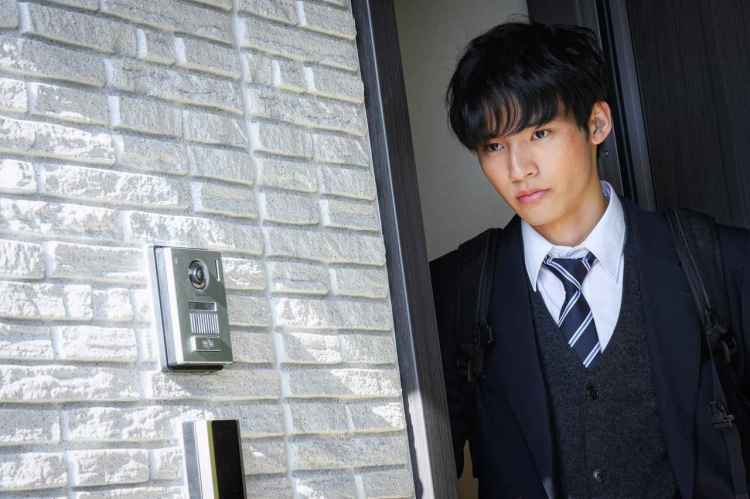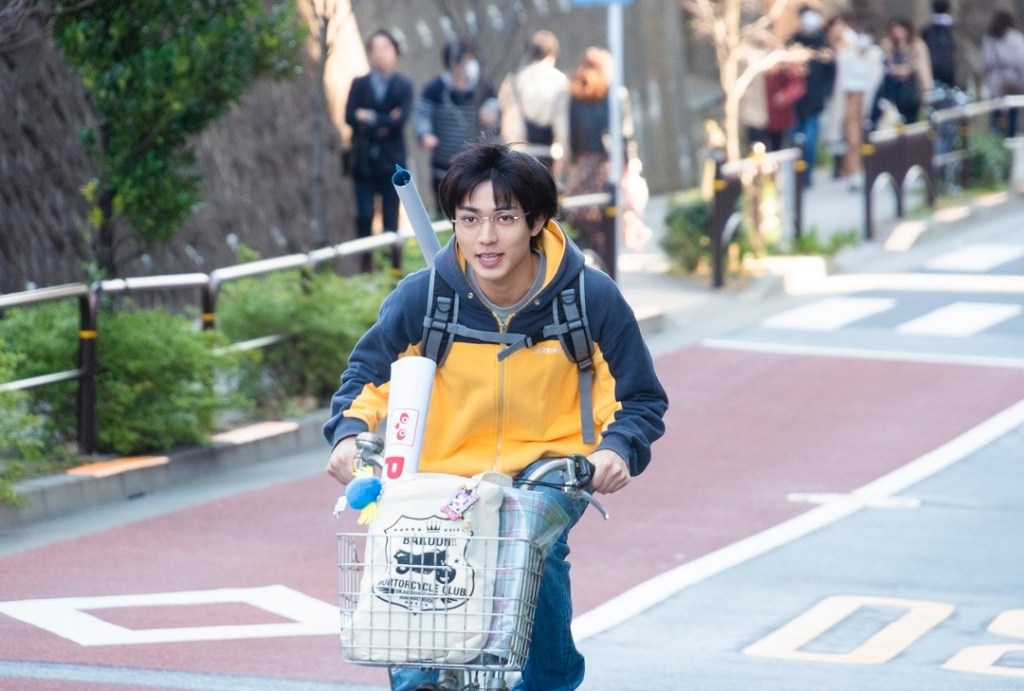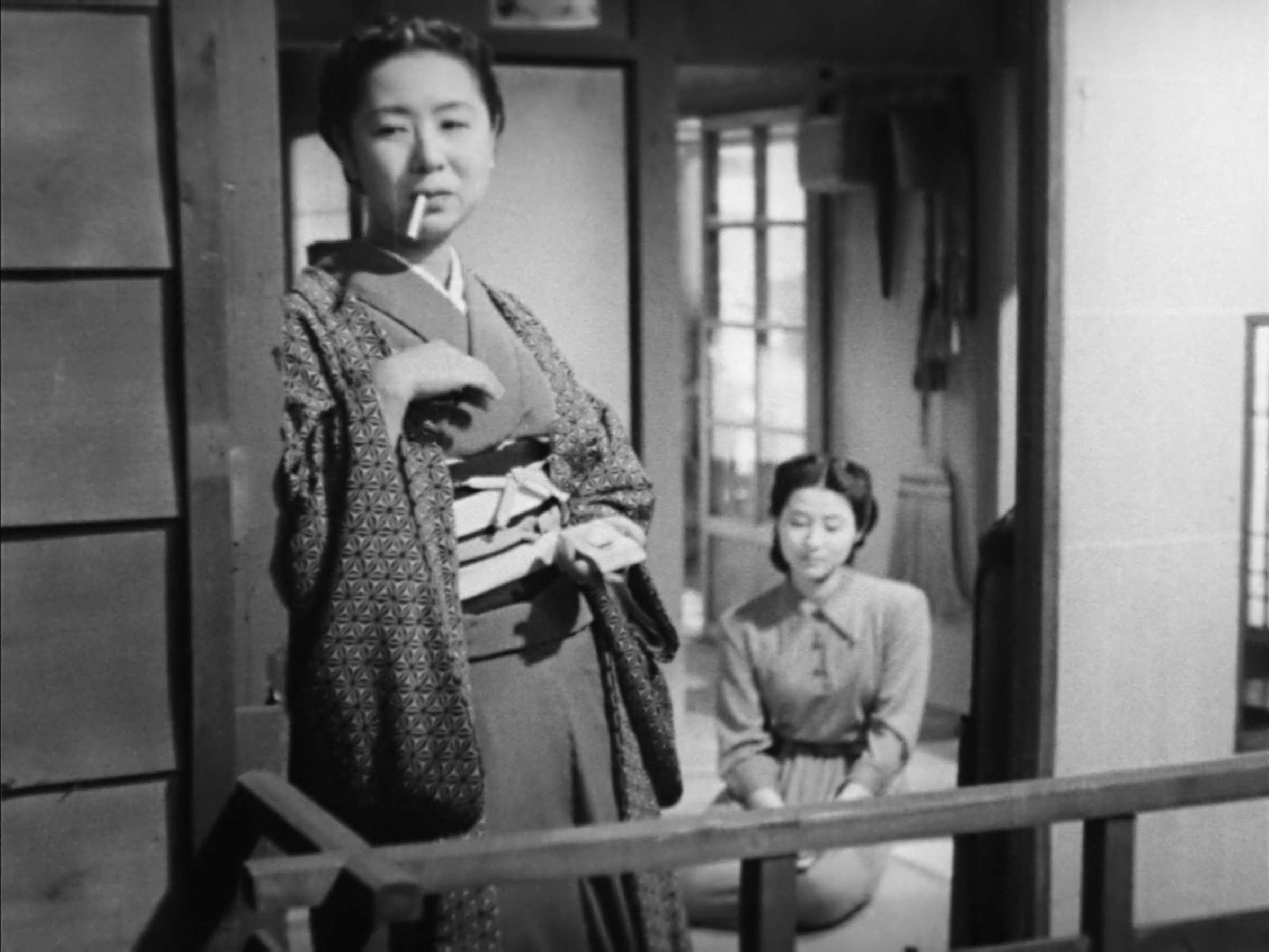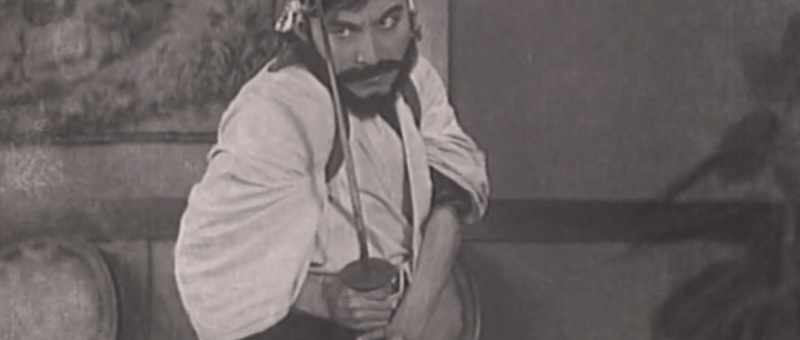
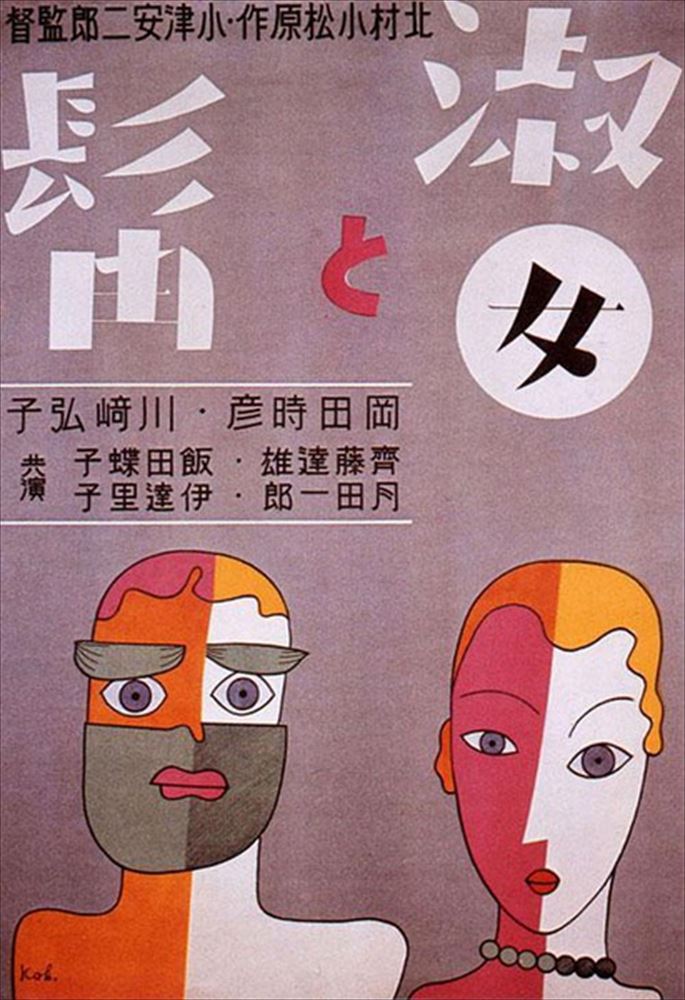
Boiling Water Lama (開水喇嘛, Lu Adiong, 2019)

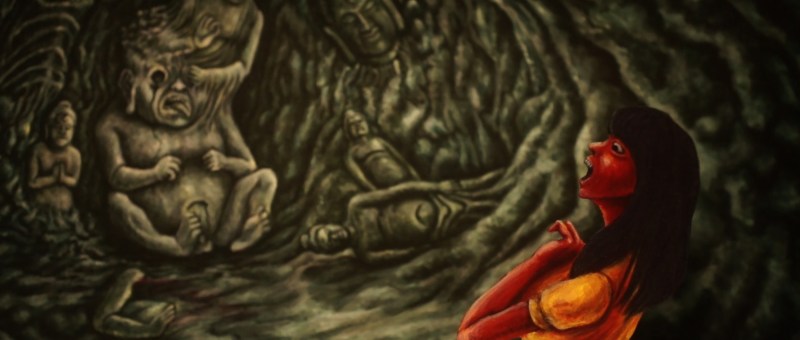
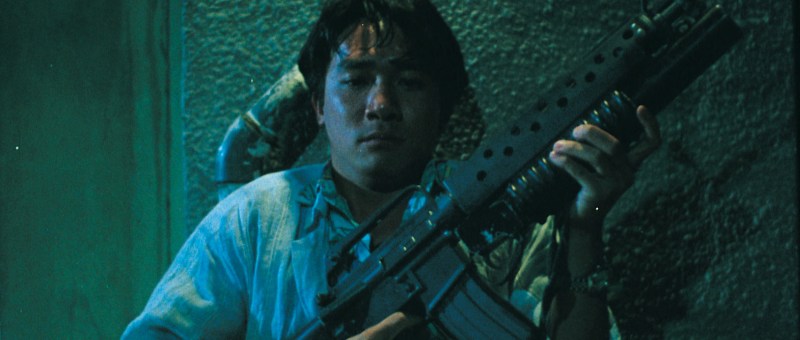
A lone monk provides spiritual healing in a decaying world in Lu Adiong’s enigmatic documentary Boiling Water Lama (開水喇嘛, Kāishuǐ Lǎma). Living in wooden house built by his followers high up in the small village of Xiongtuo on the Tibetan plateau, the Lama provides both pastoral care and traditional medicine to residents of the region many of whom have travelled over the mountains to visit him in hope of gaining his wisdom. 

Lu opens however with a lengthy shot of the desolate landscape, frosty and seemingly devoid of human presence home only to mud, smoke, and rubble. Later he will cut to a series of similar shots featuring a family of wild boar encroaching into the village, seemingly free to roam as if nature is already reclaiming this crumbling settlement. The Lama meanwhile remains hidden to us, crammed in as we are with a tightly packed group of followers awaiting his advice in a darkened room alight only with the warm yellow glow of the surrounding walls. The problems they bring him are many and varied, often related to the process of death and dying wanting to know which sutras they should read for a late relative, or intensely curious to know when and where their deceased loved one might have been reborn. Perhaps because of the obvious demands on his time, the Lama’s replies are often curt, imbued with unexpected efficiency as he simply consults his charts and recommends an appropriate sutra. He does not appear to recognise his visitors even when they remind him that he himself oversaw a ritual for them sometime previously, though he is always patient and kind, pausing to give a small boy receiving medical treatment some pocket money to buy sweets on the way home. 

Meanwhile, he also treats the sick attaching suction cups to the affected area to suck out the “bad blood” while explaining to another complainant that his problem is he is like a car engine with not enough oil and too much petrol. Cauterising the wound with incense sticks, he completes his treatment by spitting boiling water over the broken skin, handing over some paperwork to the husband which he apparently does not need to return in person. Other callers meanwhile are burdened with emotional dilemmas, a man wanting advice about the marriage of two village youngsters who’ve fallen in love but the girl’s parents aren’t keen and in any case would prefer that she and her new husband live independently rather than with his family as the in-laws wish. The Lama does not give the man the answer he was perhaps hoping for nor does he have a very favourable prognosis for another who visits wanting to know if it’s in the cards for him to patch things up with the wife who’s apparently left to return to her parents though as he tells it not because there was anything wrong in their relationship. 

True to his name, the Lama keeps the kettle boiling while a collection of visitors gather outside his home waiting for the climactic purification ritual in which men and women remove their shirts and endure the scalding water on their bodies, some directing it to the site of their ailments, baring their knees or ankles. Others have brought their children who scream in pain and terror, the water clearly far too hot for them to bear while the Lama spits out the last of the boiling liquid into the eyes of those there afflicted. In contrast to the traditional setting, many of the villagers can be seen photographing or filming the event on their smartphones to record the occasion. As if to refute the final image, however, of the Lama overseeing the landscape as the villagers return home, Lu breaks the intense Japanese folksong playing over the end credits with a whimsical, snow covered scene in which a cow eventually appears and fixes its gaze directly into the camera lens. An enigmatic exploration of a disappearing way of life in all of its various contradictions, Boiling Water Lama finds no answers to its central questions leaving only the Lama as he metes out his judgements to all who come seeking his advice. 


Boiling Water Lama screens on 12th December at London’s Rio Cinema as part of Taiwan Film Festival UK 2020.

Original trailer (English subtitles)

Rock Me to the Moon (一首搖滾上月球, Huang Chia-chun, 2013)

“Finally, I understand to be strong is to be gentle” sings the lead vocalist of Sleepy Dads, a rock band comprised entirely of middle-aged men who are each fathers of children with rare medical conditions. Documentarian Huang Chia-Chun first encountered the men while working as a volunteer with Taiwan Foundation for Rare Disorders where he was struck by their intense love for their children continuing to give all for their families while also obviously facing their own difficulties as they try to balance economic support with the emotional. Charting the Sleepy Dads’ quest to play at a high profile rock festival, Rock Me to the Moon (一首搖滾上月球, Yī Shǒu Yáogǔn Shàng Yuèqiú) is not only an exploration of living with disability but also a quiet re-evaluation of notions of masculinity as the fathers find themselves members of a minority when it comes to their children’s care. 

That was in fact one of the motivations which led to the founding of the band, one of the dads remarking that as they looked around at various support groups it was almost all mothers with very few men, lamenting that unfortunately many fathers either reject their children or abandon their families entirely. A news report later in the film, meanwhile, relates the tragic story of a single-father who was pushed towards suicide because of the difficulties of caring for his daughter alone which left him unable to earn the money to support them both and eventually overburdened with debt. Though one of the Sleepy Dads is a school teacher with a steady job, many of the others are in precarious freelance employment struggling to balance the need to earn money with the physical need to be there for their children each of whom has differing needs especially as some of them have more than one child suffering with longterm illness. 

The band provides a place where the men can come together to relax with others in a similar position, finding mutual support and solidarity while investing themselves in mastering a new skill. Guided by Spark, the lead singer of top rock band Quarterback, who offers them the opportunity to open at one of their concerts, the Sleepy Dads do their best to perfect their skills with the hope of eventually playing at a top festival despite their comparatively advanced age and lack of experience. Training hard to achieve their goal, it’s less the end point that matters than the process as they work through their difficulties together with good humour and determination. 

As another of the fathers puts it, however, Taiwanese men are raised to be brave and strong but he’s also under an intense amount of pressure. Poignantly his wife, preparing to undergo medical treatment herself, expresses that she’d just like her husband to give her a hug but he says he doesn’t know how because he wasn’t brought up to show emotion in that way. She also worries that he sometimes doesn’t see that she’s under a lot of pressure too and prefers to think of her as a kind of superwoman with an innate ability to cope with anything life throws at her. Nevertheless, the Sleepy Dads have fierce love for their children and are never afraid to show it, doing everything they can to care for them while knowing in some cases that their kids may not survive them and so their time together is even more precious. As the song says, they’ve learned that true strength lies in being gentle. 

While one of the mothers laments that she feels isolated even within her own family because her in-laws will not accept the children, asking her not to bring them to a family gathering, the Sleepy Dads have formed an extended family of their own coming together to celebrate one of the dad’s moves into a new home he’s had designed to better meet his family’s needs with all the kids playing together happily. They don’t pretend that their lives are easy, but they share their joys and sorrows equally and work out their frustrations through the medium of song. A warm and empathetic tribute to these selfless men and their infinite love for their children, Rock Me to the Moon is also a celebration of friendship and solidarity not to mention the power of music to overcome all hardships. 


Rock Me to the Moon streams in the US Dec. 11 – 13 as part of Asian Pop-Up Cinema & TACCGC’s @Home with Taiwan Cinema: Love & Hope.

Original trailer (English subtitles)

Poppy (虞美人草, Kenji Mizoguchi, 1935)

Most closely associated with tales of female suffering in a patriarchal society, Kenji Mizoguchi’s signature themes are already apparent in the films which survive from the pre-war era. Even so, 1935’s Poppy (虞美人草, Gubijinso), adapted from a novel by Natsume Soseki, largely sidesteps the parallel powerlessness of its twin heroines in placing the central dilemma firmly on the shoulders of its conflicted hero, a young man who owes everything to a benevolent patron whose daughter he is expected to marry but is captivated by a young and capricious heiress and consequently torn between duty and passion.

In late Meiji, an old man, Inoue (Yukichi Iwata), washes graffiti off his front wall apparently scrawled by a man desperate to marry his daughter Sayoko (Chiyoko Okura) whose beauty he claims puts other to shame (Inoue looks on approvingly at the last part, and decides to leave it). Inoue intends his daughter to marry Ono (Ichiro Tsukida), a young man he took in as a starving orphan and raised to adulthood. Ono is currently in Tokyo preparing to complete his doctoral thesis and the pair are very much looking forward to moving there to live with him. While Ono has not forgotten them, he has embarked on a life of his own as a Tokyo student, falling in love with the flighty Fujio (Kuniko Miyake) while working as a part-time English tutor. She too is keen to marry him, despite the fact she is technically still engaged to someone else, Hajime (Daijiro Natsukawa), in a match which was orchestrated by her father many years ago. Fujio’s mother is acutely concerned with her marriage for a number of reasons, the first being that Kingo (Kazuyoshi Takeda), her step-son and the family’s heir, refuses to marry and rejects his inheritance but if Fujio remains single then the fortune reverts to him. Secondly, she dislikes the idea of Hajime as a son-in-law because he has repeatedly failed to secure a position in the diplomatic corps and is currently unemployed.

The problem rests with Ono, whose conflicting desires are characterised not so much in terms of love versus obligation but as ambition versus constancy. Instead of explaining in person to Mr. Inoue that he is grateful to him and has no intention of rejecting their family but thinks of Sayoko as a sister and therefore would like to politely decline the idea of marriage, he sends a friend, Asai (Toichiro Negishi), to explain that he’s too busy to think about weddings and wants to defer the conversation until after his thesis is completed. Of course, Mr. Inoue sees through this thin excuse right away and is offended on his daughter’s behalf. The friend warns him that Ono is “worthless”. “He’s interested in what’s fashionable. He’s stupid” Asai goes on, implying that he is not exactly choosing to marry the woman he loves rather than honour a vague suggestion from the past, but is opportunistically seizing the chance to marry up into the high society of late Meiji Japan (a feat near impossible for a man who was once a starving orphan).

Love is not so much a part of the equation as one would expect and neither are the feelings of either woman held in very high regard. Nevertheless, Kingo eventually tries to warn Hajime away from his sister, explaining that “women who seek pleasure are dangerous”. “When I fall in love, I won’t just sit quietly waiting for my lover. I’ll make passionate love to him” Fujio flirtatiously tells Ono, dangling a precious watch from her father which serves as an indication of betrothal and membership of the family. Fujio and her mother are actively using the only means at their disposal to control their own futures by making a match they believe more beneficial which will ensure they keep themselves within the family succession, suggesting that Fujio, like Ono, is acting less out of “love” than self-interest, something which is later reinforced by her offering of the watch to Hajime who casts it to the waves in insistence that he was never interested in what it represents. 

While Asai recounts his meeting with Inoue, he tells Ono that he’s making the right decision and that his best option from all angles is to marry Fujio, but Hajime overhears him and chimes in with contrary advice that he should think carefully and be true to himself. In essence, all Hajime is telling him is to own his decision and make sure he is willing to live with it or else be consumed by self loathing and misery. By this point, we perhaps expect that modernity will win, that all will accept that it is unreasonable to expect anyone to sublimate their own desires to honour an old obligation and most particularly that the women be expected to submit themselves to dynastic marriages arranged by their fathers, but the resolution is quite the reverse. The modernist Fujio is twice rejected, while Sayoko and her father leave the modern capital for the ancient Kyoto. Ono is forced into a reconsideration of his spiritual debt to the Inoues who he would be betraying in marrying Fujio for social gain which is to say that feudalistic, patriarchal values are subtly reinforced while Western individualism is disparaged with only Hajime standing up for emotional integrity which neither philosophy particularly respects. In the end, nobody is happy but everyone is resigned to their particular misery as their burden to carry in knowledge that they have acted properly which is perhaps as close to a condemnation of a still oppressive society as you could get in 1935. 


The Reason Why I’m Home (回家的理由, Chang Ming Yu, 2019)

How do you learn to forgive after family tragedy? That’s a question Chen-yun the heroine of Chang Ming Yu’s documentary The Reason Why I’m Home (回家的理由, Huíjiā de Lǐyóu) begins to ask herself as she tries to come to terms with an extremely traumatic history while preparing to become a mother. As a close friend of his subject, Chang is both companion and chronicler, a quietly supportive presence as Chen-yun navigates these extremely difficult emotional waters, but also prompting her to think more deeply about the concept of family at the exact moment in which she begins to found her own. 

The reason Chen-yun returns home after a five year absence is that she is told her younger brother has been taken seriously ill. In fact, as it turns out he has passed away, apparently beaten to death by members of the cult her mother Fen-chueh belonged to though she also claims he had become a drug user. Fen-chueh accepts responsibility for her son’s death, but is said to have been under control of the cult’s crazed leader Chen-miao who according to Chen-yun brainwashed her brother to make him believe he was a bad person. Chen-yun suspects that like her he eventually wanted to leave but was unable to and was subsequently killed. She harbours a degree of guilt that she chose to leave him behind, telling him only that she was leaving to look for their father who had already escaped the cult. 

Expecting a baby with her policeman husband, Chen-yun is forced to deal with the fallout from the scandal of her mother’s crime, hounded by press determined to interview her about the case. Chen-yun’s father, technically the plaintiff in the case against Fen-chueh, signals his intention to sever ties with his former wife and advises Chen-yun to do the same while also telling her not to seem too happy which seems like an unfair request when she’s about to give birth to new life. After all as she puts it, life goes on. She hasn’t forgotten about her brother but you can’t go on mourning forever. Nevertheless, despite her earlier animosity in which she hinted that her mother had been abusive in her childhood and refused to say when questioned whether or not she still loved her, Chen-yun finds herself ringing Fen-chueh when she needs someone who can sign papers on her behalf at the hospital while her husband is unavailable. As healing an act as that might seem to be, it also has its share of awkwardness, a nurse accidentally asking a series of tactless questions necessary for the admission forms such as how many siblings Chen-yun has along with other details her mother is assumed to know but does not. 

Given what we know of her family background, it is perhaps surprising that Chen-yun continues to allow Fen-cheuh back into her life, even asking her to look after her baby son. Nevertheless in the brief time before Fen-chueh must report to serve her four-year prison sentence, Chen-yun begins to repair their fragile maternal bond, coming to understand her mother a little more now that she has become a mother herself and perhaps learning to forgive her for her role in her brother’s death. “No one taught us how to be parents” Fen-chueh later confesses to Chang in a private interview, having realised that though she thought she was doing the best for her daughter she may only have been causing her harm. 

As a new mother Chen-yun cannot help but think of similar questions as she begins to bring up her young son in the midst of her family legacy, taking him with her as she visits her brother’s grave and to visit her mother in the prison so he’ll get to know grandma even while she’s away. Mixing observational footage with brief conversational sessions between a behind the camera Chang and an often emotional Chen-yun, The Reason Why I’m Home focusses not on the tabloid fodder of the crime with its cruel cultists and legacy of abuse but on the slow process of healing as Chen-yun learns to forgive herself and her mother while repairing their fragile family bonds as she does her best to raise her son in love and safety.


The Reason Why I’m Home streamed as part of this year’s San Diego Asian Film Festival.

Original trailer (English subtitles)

The Glamorous Ghost (散歩する霊柩車, Hajime Sato, 1964)

Best known for Shochiku horror Goke the Body Snatcher from Hell, Hajime Sato spent the majority of his career at Toei which he joined in 1952 after graduating with an economics degree from Keio University. After directing his first film in 1960 he mainly worked on monster movies, sci-fi, and action while transitioning into television from the late ‘60s. 1964’s The Glamorous Ghost (散歩する霊柩車, Sanpo Suru Reikyusha), however, features no special effects at all and in fact no actual “ghost”, instead painting a dark satire of the increasingly greedy and consumerist post-war society in a nihilistic tale of crime and futility. 

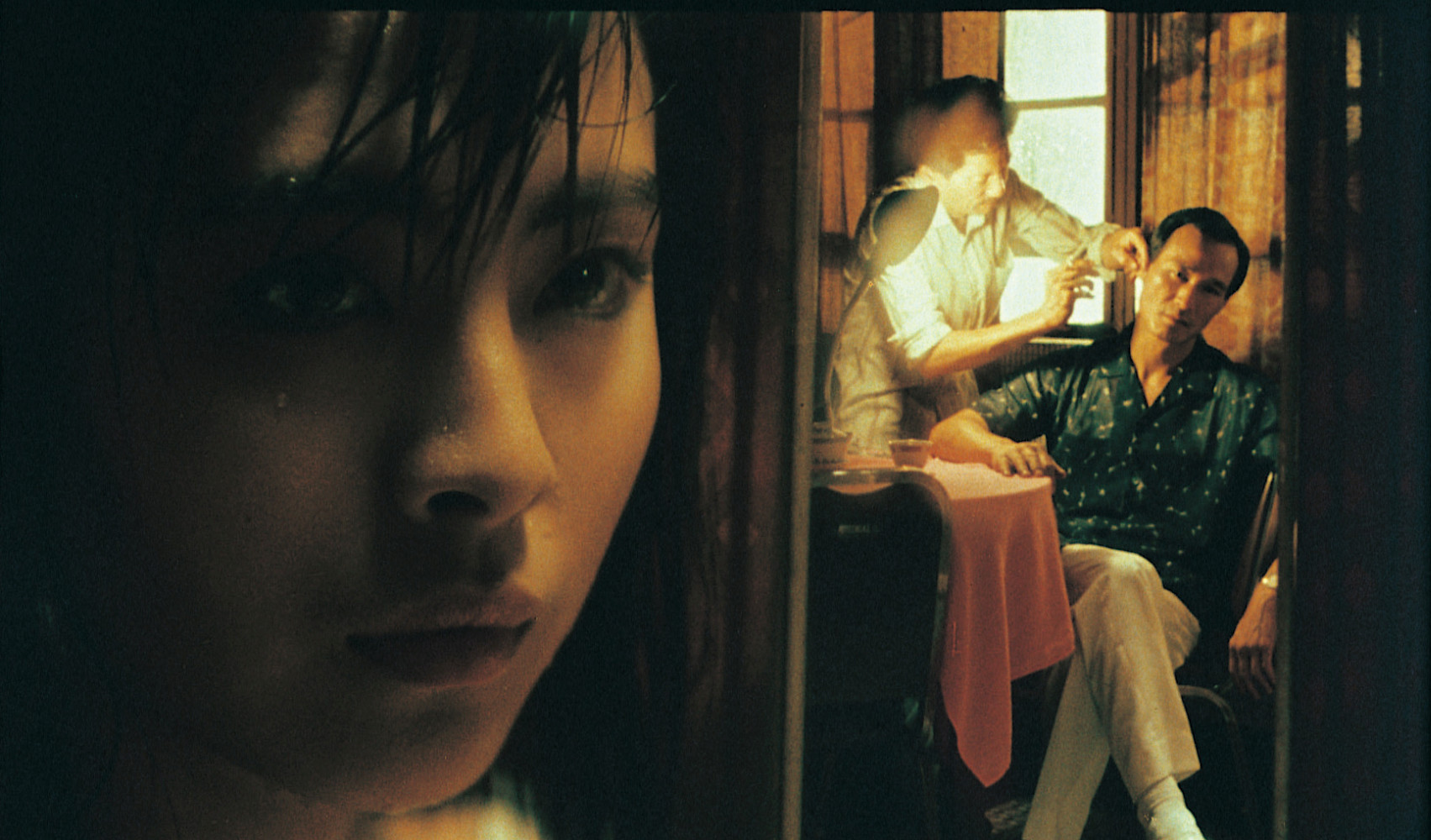
As the film opens, taxi driver Asami (Ko Nishimura) is ostentatiously shadowing his wife, Sugie (Masumi Harukawa), whom he suspects of having numerous affairs, through a busy department store. He later confronts her, suggesting that she’s the mysterious adulterous woman pictured in the paper but she denies everything before suggesting that if he’s so suspicious perhaps they should split up. He doesn’t appear to like that suggestion and becomes violent. A fight breaks out during which we see Asami strangle Sugie before an abrupt cut places him in the cab of a hearse sitting next to the driver, Mouri (Kiyoshi Atsumi), dressed in his best suit. Strangely, however, they don’t go to a funeral, but to a wedding where Asami confronts the father of the bride, Kitamura (Meicho Soganoya), showing him Sugie’s body with a prominent scar around her neck he says from her suicide producing a note that says she took her own life out of shame in having betrayed the husband who loved her so very much. The letter is dedicated to a KY, and Asami wants to know who it was his wife was sleeping with though Kitamura is careful not to admit anything while subtly promising him money if he goes away. Asami and the driver then make a second stop at a hospital where he tries the same thing with dodgy surgeon Yamagoshi (Nobuo Kaneko) who admits that he slept with Sugie but says it was only one time a while ago and he’s not sure why he’d be in her suicide note. 

As expected, not everything is quite as it seems. Sugie is not really dead, they’re just running a scam to blackmail her former lovers in order to get money to make a fresh start, possibly with a pig farm in the country which is why they didn’t bother with gigalo Tamio (Jiro Okazaki), the apparently penniless yet sportscar-driving young man Sugie was canoodling with in the park. “5 million yen would turn anyone into a murderer” one of their marks later admits after the scam goes south in several different ways, laying bare their sense of desperation in their otherwise perfectly fine if unsatisfying lives.

Yamagoshi, a doctor so compromised his admin staff assume the unexpected arrival of a hearse means he’s made another mistake, is desperate for money because he wants to open his own clinic. Sugie, meanwhile, gives a series of contradictory explanations for having come up with the scam, telling her marks she wants the money in order to get away from Asami and telling him that it’s for their future so they can live a happily married life. Asami’s male pride had indeed been wounded by Tamio in several different ways, firstly by his youth and vitality, but later by his assertion that a “shorty like him” couldn’t satisfy his wife which is why she puts it about at the club where she has to work because Asami’s cabbing job evidently doesn’t make enough to support them both. 

Sugie’s “death”, leaving aside fact that he “killed” her which is never brought up again, apparently helps him remember what she means to him, that if she really had died he’d be “lifeless” like the empty shell of a cicada. Scamming Sugie’s lovers probably does help rehabilitate his masculine pride and even though she is the one running the show it also suggests that she’s in a sense chosen him and wants to escape their disappointing urban life for something more wholesome as a happily married couple unburdened by financial anxiety. Meanwhile, we see her embarrassingly continue to chase the vacuous Tamio, an overgrown man child with expensive tastes and a room full of toy cars who lusts after a Porsche and appears to have a more age appropriate girlfriend he’d rather hang out in it with. Money corrupts human relationships whichever way you see it, and in the peculiarly toxic marriage of Sugie and Asami we can never quite be sure who’s playing whom. 

Then again in a fairly ironic touch, it may be the blissfully ignorant Tamio who is the only real “winner” seemingly continuing to live his life of empty consumerist pleasures without ever noticing the corruption of the world all around him. Gleefully cynical and accompanied by a playfully ironic, horror-inflected score, The Glamorous Ghost is a pitch black farce shot in the half light with crazy film noir framing and extreme depth of field in which it’s less money everyone wants than a less disappointing future and it seems they’re literally prepared to “die” to get it.


Title sequence (no subtitles)

76 Days (Wu Hao, Chen Weixi & Anonymous, 2020)

“Don’t worry, so many of us are here for you” a nurse tries to reassure a pregnant woman understandably anxious in being told that her husband cannot be in the room with her while she undergoes an emergency C-section in 76 Days, an observational documentary shot almost entirely within a series of hospitals during the Wuhan lockdown. Co-directed by New York-based director Wu Hao and two on the ground reporters, Chen Weixi and another who has elected to be credited anonymously, 76 Days is testimony to the heroism of the frontline medical personnel who found themselves dealing with a new and mysterious illness, but also a record of a moment as it happened through the eyes of those who were there. 

As such, it opens in chaos with a hospital overrun by those who desperately need help and have nowhere else to turn. “Let’s not panic, OK?” the head nurse adds to the end of her briefing as the team prepare for still more patients, many of them waiting in a small room complaining of the cold. Meanwhile, another healthcare worker in a full hazmat suit breaks down in tears not allowed to attend her own dying father while her colleagues try to offer comfort at the same time as encouraging her to pull herself together because they need her on the ward. She can only watch as he’s taken out of the room in an orange bodybag, two of her colleagues continue to take hold of her at the armpits, less for solidarity it seems than to keep her safe while while she follows the gurney down towards the van which will take his body away. 

Meanwhile, the doctors attempt to help those who’ve come in looking for treatment including one confused older gentleman who keeps insisting he’s not really ill and wants to go home. Making repeated attempts to escape which might be comical if it were not for the gravity of the situation, the old man is obviously frightened and alone alternating between crying on his bed and wandering around in search of company. Later his son rings him to give him a telling off for causing the doctors so much trouble, reminding him that he’s been a Party Member for decades and ought to be acting with a little more dignity while the doctors do their best to be patient with both men, especially when the son later expresses reluctance to have him back in case he’s not really “cured” (the old man will be one of last to leave the hospital). The old man’s anxiety raises another issue in that he’s used to speaking in dialect and so there is an obvious difficulty in communication between some of the patients, particularly those among the older generation, and the hospital staff some of whom are secondments from Shanghai rather than from the local area. Other patients, meanwhile have been looking up their symptoms on the internet which is causing them additional anxiety and headaches for their doctors who then have to re-explain all their treatment decisions. 

We also realise that certain procedures cannot be delayed just because there is so much to do leaving personnel tied up with bureaucracy, often needing to ring grieving relatives to ask them for a copy of their loved ones’ documentation so they can issue a death certificate. Some of the nurses also make a point of rescuing the personal affects of those who’ve died such as bracelets and other items of jewellery so they can be disinfected and returned to family members along with more practical items such as mobile phones and ID cards. At the height of the crisis, there is a large box filled with phones belonging to those who have already passed away some of which are still ringing. 

Keeping in touch becomes a secondary problem as couples come in and are shuffled into separate wards, an old woman making regular requests for updates on her husband and a compassionate nurse going so far as to show her his dinner so she can see that he’s eating. Meanwhile the woman who underwent the C-section is isolating away from her baby, she and her husband later enduring another anxious wait towards the end of the lockdown until they’re told that it’s safe for their little girl come home with them. There are no title cards or explanatory text, like everyone else we have no idea where we are or when this will end save for a few brief glances of the daily roster as we notice that admissions seem to be decreasing, people are beginning to go home, and on the momentary glimpses of the outside traffic seems to be increasing on the streets.  

Yet even when it’s over it’s not really over. A nurse has to sit and go through that box of phones ringing relatives again, some of whom evidently had not been made aware their loved one had died, to ask them what to do with the affects. The bracelet of one old woman is dutifully returned to her daughter who cannot help crying as she receives it, but like everyone else goes out of her way to thank the doctors for doing all they could while the nurse profusely apologies that they weren’t able to save her. A valuable historical document, 76 Days is also strangely imbued with a kind of hope in the selfless dedication of the doctors and medical staff who daily risked their own lives to save those they could, while proving that this will someday if not exactly end then at least stabilise. 


76 Days streamed as part of this year’s San Diego Asian Film Festival.

Clip (English subtitles)

Sing, Young People (歌え若人達, Keisuke Kinoshita, 1963)

Keisuke Kinoshita has sometimes been dismissed by Western critics for his supposed sentimentality, but his mid-career comedies can be surprisingly cynical. Scripted not by Kinoshita but Taichi Yamada, 1963’s Sing, Young People (歌え若人達, Utae Wakodotachi) is in someways an exception to the rule, a breezy take on the student comedy updated for the present day, but underneath all the absurdist humour and jibs about youthful ennui is a real sense of adolescent hopelessness as these aimless young men ponder their “pitch-black” futures in a rapidly changing Japan where the best they can hope for is fulfilling the salaryman dream.  

Shooting in glorious colour, Kinoshita opens with a lengthly pan over contemporary Tokyo which the jaunty voice over describes as “the number-one city in the world” before homing in on the incongruous figure of a strangely dressed man holding a sign advertising “sensual massage beauties”. A relic of an earlier advertising age, the wandering sign man nevertheless catches sight of someone even “weirder” than he is, a student wearing a student’s cap! Kinoshita then takes us on a brief detour through Japan’s major universities demonstrating that no one is so uncool as to wear a student’s cap in the age of protest, drawing a direct contrast to the student comedies of old while showing us a series of scenes of students “playing” hard with part-time jobs in bands or as models, training hard in preparation for the upcoming Olympics, fomenting the revolution, or fighting in the streets. In the first of many meta touches, our hero, Mori, is eventually woken by the narrator after falling asleep in class, his eyes “gleaming with hopes for the future”. 

Or, perhaps not, he’s just tired. Mori (Tsutomu Matsukawa) is as he describes himself a man without hopes or dreams who believes that the road ahead of him is “pitch black”. Dropping a brush from the window washers’ platform at one of his part-time jobs, he asks himself if there shouldn’t be more to life than this. The only son of his widowed mother, he’s pinned everything on graduating from a top university but feels powerless and empty, adrift in the post-war landscape. Where his calculating friend Miyamoto (Yusuke Kawazu) fills the void with romance and a determination to “get lots of As” and then land a top job, his roommate Okada (Shinichiro Mikami) earnestly studies hard afraid to disappoint his austere family but also quietly resentful in his lack of autonomy, and the dopey Hirao (Kei Yamamoto) simply goes about being nice to people more or less forcing them to eat the traditional treats his loving mother is forever sending. 

Yet for all the bleakness Mori seems to see in his future, he only ever falls up. Luck follows him and he’s presented with ever more fantastic opportunities at every turn. In fact, it’s his slightly grumpy expression as he cleans the windows of an office building that leads to them snapping a picture and making him a cover star without ever bothering to ask his permission though they do eventually pay. Still Mori remains indifferent, telling a reporter who tries to interview him that he had nothing to do with the cover, he has no dreams or aspirations for the future but lives his life day by day. He describes himself only as “nervous”. His words run ironically over the magazine literally becoming tomorrow’s chip paper, used by a stall owner to wrap her croquettes, as a stand for a hot pot, and otherwise bundled up to be pulped. Nevertheless, the cover leads to great opportunities from a TV network looking for a fresh face to front their new youth-orientated drama serial. 

Despite all the promise, Mori remains indifferent, later irritating a new colleague and potential love interest (Shima Iwashita) when he idly suggests he might just give up acting and fall back on the salaryman dream. As she points out, she had to fight all the way to achieve her dreams of becoming an actress so hearing someone say they’re going to throw away a tremendous opportunity that came to them entirely by chance is mildly offensive. Miyamoto meanwhile is growing lowkey resentful, realising that maybe nothing matters after all it’s all just dumb luck. Mori deliberately didn’t do anything because he thought his life was pointless but everything has landed right at his feet while Miyamoto’s life is crumbling. He’s lost all his girlfriends and endured a lonely New Year alone in the dorm, coming to the conclusion that his future really is “pitch black”.

Nevertheless, it’s difficult to remain resentful about a friend’s accidental success and so each of the men eventually finds direction in even in directionlessness. Mori realises that he might as well ride his wave of fame for as long as it lasts, accepting in part at least his sense of powerlessness, while Okada does the reverse in deciding to rebel against his authoritarian family by marrying in secret. Miyamoto resolves to make a success of himself in his own way, and Hirao seemingly accepts the hand fate has dealt him with good humour. Kinoshita ramps up the meta comedy with Mori joining Shochiku, encouraged to try and work for that “excellent” director Keisuke Kinoshita, later referencing Garden of Women, while Mariko Okada and Keiji Sada turn up as onstage guests at an event launching him as a young actor. Playfully using outdated, quirky screen wipes and opening with an artsy title sequence featuring colourful confetti falling up, Kinoshita perhaps adopts a slightly ironic tone in satirising the all pervasive sense of confusion and hopelessness among the younger generation but does so with only sympathy for those coming of age in uncertain times. 


The Age of Awakening (前進, Ke Chin-Yuan, 2018)

Taiwan is now a prosperous society regarded as most the progressive in Asia, yet for some that prosperity has come at too high a cost. Ke Chin-yuan’s documentary The Age of Awakening (前進, Qiánjìn) looks back over the last thirty years and wonders how it can be that in a little under half a century humanity has managed to “devastate this beautiful, mountainous island”. Tracing the links between the authoritarian past and the origins of eco-activism, Ke is nevertheless keen to remind us that the environmental costs of unchecked capitalism are not a local issue. 

Ke cites the titular “awakening” at the tail end of the martial law era, explaining that the picturesque coastline where he first picked up a camera was forever ruined when the area was re-designated as an industrial park. His own eyes were awakened to the environmental costs of development when local residents rose in opposition to the building of a petrochemical plant, apparently a key part of the nation’s economic strategy. Charting the resistance towards the DuPont plant in Lugang and the LCY Chemical Corp in Hsinchu, he uncovers the hidden link of environmental harm and authoritarianism as centralised government and a prohibition on protest largely prevent the local community having a say over their own land. Though some may have been glad to see the plants arrive, misled by false promises of good jobs and the benefits of development, they were soon disillusioned by the reality in which industrial pollution poisoned the sea life on which the local economy was otherwise dependent while also destroying farmland and leaving an acrid, near unbearable smell in the air. 

As one of the protestors puts it, all they want is breathable air and drinkable water. If your government cannot guarantee you such basic rights, then what really is it for? Yet the government, Ke seems to suggest, is minded to make a tradeoff and thinks this is an acceptable price for the prize of economic growth. Seeing the imposition of the plants and misinformation surrounding their foundation as yet more evidence of the various ways in which those with the least power suffer most under authoritarianism, Ke centres the awakening to environmentalism as a cornerstone of the movement against martial law in which communities sought the power and freedom to be able to advocate for their rights on a local level.

Yet as he points out the environment is never just a local issue. The protestors may be successful in keeping the plant out their town, but maybe the plant gets built the next town over where they perhaps aren’t so lucky possibly because they have less sympathetic political leaders keener to toe the government line. Taiwan is a small island, and at least according to some you can’t ever really be far enough away to escape the effects of industrial pollution. Yet even when prevented from building in Taiwan, local companies simply shift overseas to other, even less empowered, areas of Asia where the same thing happens again. The poor are misled by offers of good jobs only to find dead fish washing up on their shores, eventually mounting protests against the unfair imposition of having a chemical plant built on their land. In Taiwan, meanwhile, the issue is even thornier with large developments built on territory which belongs to the indigenous community. 

Nevertheless, the drive for economic development continued after the martial law era. According to another protestor, it’s a matter of conscience rather than technology with the choice to favour the economy over the environment seemingly irreversible even when major parties win on an economic platform and govern with the knowledge that such policies have widespread public support. So, Ke asks, why is the government so unwilling to listen when the idea that the environment itself is also a basic human right is almost a given? What has actually changed in the last three decades with Taiwan’s transition to democracy? Not enough, according to his veteran activists, but it’s not all doom and gloom. Awareness has improved, people care more than they used to. They’ve been ‘awakened” to the issues in all of their complexity and Taiwan has a lively, diverse and intersectional activist scene in which environmental concerns are very much part of a social justice movement full in the knowledge that the environment is never just a local issue. The age of awakening may have come to an end, but the age of action is only just beginning. 


The Age of Awakening screens on 6th December at London’s Rio Cinema as part of Taiwan Film Festival UK 2020.

Original trailer (no subtitles)

Boluomi (菠蘿蜜, Lau Kek Huat & Vera Chen, 2019)

Legacies of trauma and displacement frustrate the connection between two floating youngsters in Lau Kek Huat & Vera Chen’s poetic drama, Boluomi (菠蘿蜜, Bōluómì). Making a direct connection between the Malayan Emergency and a sense of rootlessness in the contemporary generation, Lau & Chen send their conflicted hero overseas in an attempt to plant himself anew but even there he discovers himself merely another kind of other even as he forms a tentative bond with a similarly displaced woman rendered still more marginalised by her undocumented status and inability to speak the language. 

The film opens with the central trauma which is itself one of many as a child is born to a communist guerrilla fighter, Gyun (Vera Chen), and is then abandoned in the forest hidden inside the shell of a jackfruit or “boluomi” as is the custom apparently intended to ensure the child’s survival. In this case the child does indeed survive and like the opening of a fairytale is rescued by an older muslim Malay couple who have no children of their own and decide to adopt him, giving him the name “Mi” inspired by the unusual circumstances of his birth. Segueing to the present day we’re introduced to the hero, Yi-fan (Wu Nien-hsuan), just as he’s been humiliatingly stopped at customs on his return to Taiwan where he is studying agriculture because the homemade sambal his mother gave him is apparently too fragrant for the authorities’ taste. They won’t meet until later, but it’s at the airport that he first crosses paths with Laila (Laila Ulao), a young woman from the Philippines escorted out as one of many “carers from South East Asia” though as we later discover her true destination is a local massage parlour where she works as a cleaner in order to send money home to her family. 
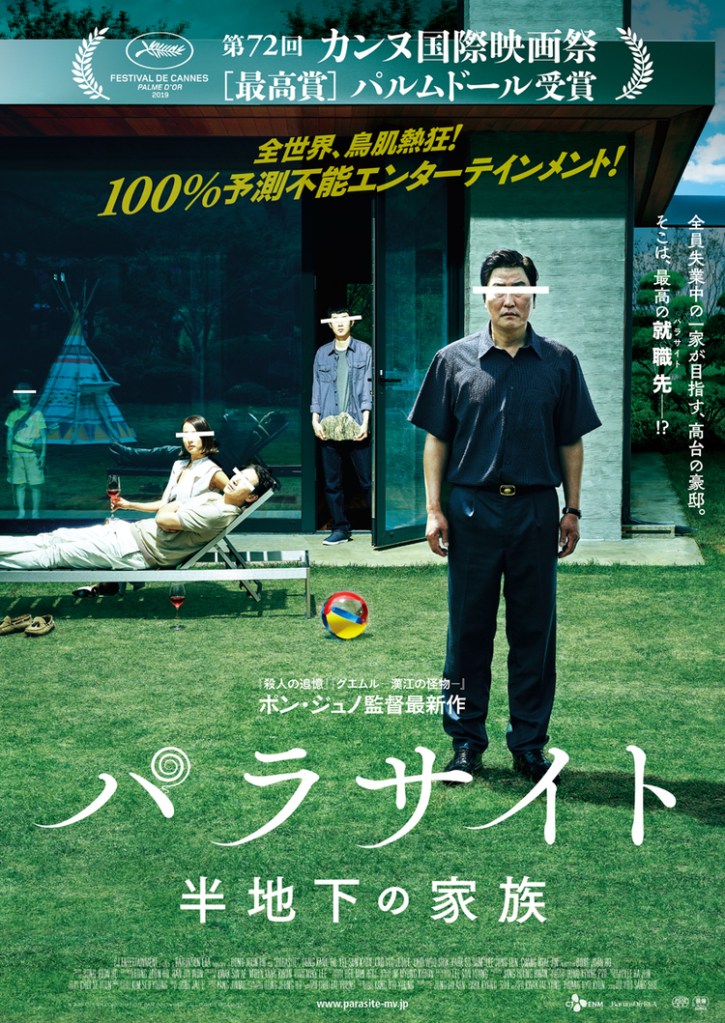
Connecting the two timelines through a fragmentary dream we can assume that the abandoned child is Yi-fan’s father and that his double abandonment, later taken away from the loving older couple he believed to be his parents when his birth mother resurfaces, is responsible for his rage and fecklessness which has in turn left Yi-fan angry and resentful. The legacy of the Malayan Emergency is also perhaps connected to his feelings of alienation as a member of the Chinese minority, denied a place at university he feels solely on the basis of his ethnicity. Yet when he gets to Taiwan he’s suddenly not “Chinese” enough and incongruously finds himself speaking Malay even if there’s a double irony in being told that he should speak Chinese while in Taiwan. His professor with whom he seems to be on slightly awkward terms, perhaps another manifestation of his suspicion of male authority figures, pours cold water on his suggestions of finding a way to stay in Taiwan by opening a business instructing him that diaspora students have a duty to go home to stimulate social change. 

In a rather pregnant metaphor, the teacher’s opening lecture concerns foreign fruits successfully transplanted to Taiwan but also uncomfortably references viruses lurking in the soil, while Yi-fan’s attempts to grow a hybrid boluomi tree by grafting the Malaysian plant onto the Taiwanese eventually fail in parallel with his frustrated relationship with Laila who finds herself equally rootless while attempting to care for a fragile friend trafficked from Vietnam as a mail-order bride and now suffering ill heath but afraid to get treatment because of her status as an undocumented sex worker. Yi-fan befriends Laila by becoming an interpreter, helping her at the post office by translating into their shared language, English, and thereafter deepening their connection through the similarities found in Malay and Tagalog. Yet Yi-fan’s simple dreams of romance are frustrated by the world in which they live even as the pair bond through a shared sense of continual displacement. 

Try as he might, Yi-fan can’t make the boluomi grow, though it seems Laila could, putting down firmer roots while Yi-fan remains perpetually on the margins unable to escape the legacy of loss and alienation even in wilful migration. Struggling to survive in the precarious, largely hidden migrant worker underclass, Yi-fan and Laila’s romantic fantasy can never be more than just that though eventually comes full circle with another boy abandoned in the forest and a tree finally taking root.


Boluomi streams in Poland until 6th December as part of the 14th Five Flavours Film Festival.

Original trailer (English subtitles)

Not My Mother’s Baking (不是我妈妈的烘焙, Remi M. Sali, 2020)

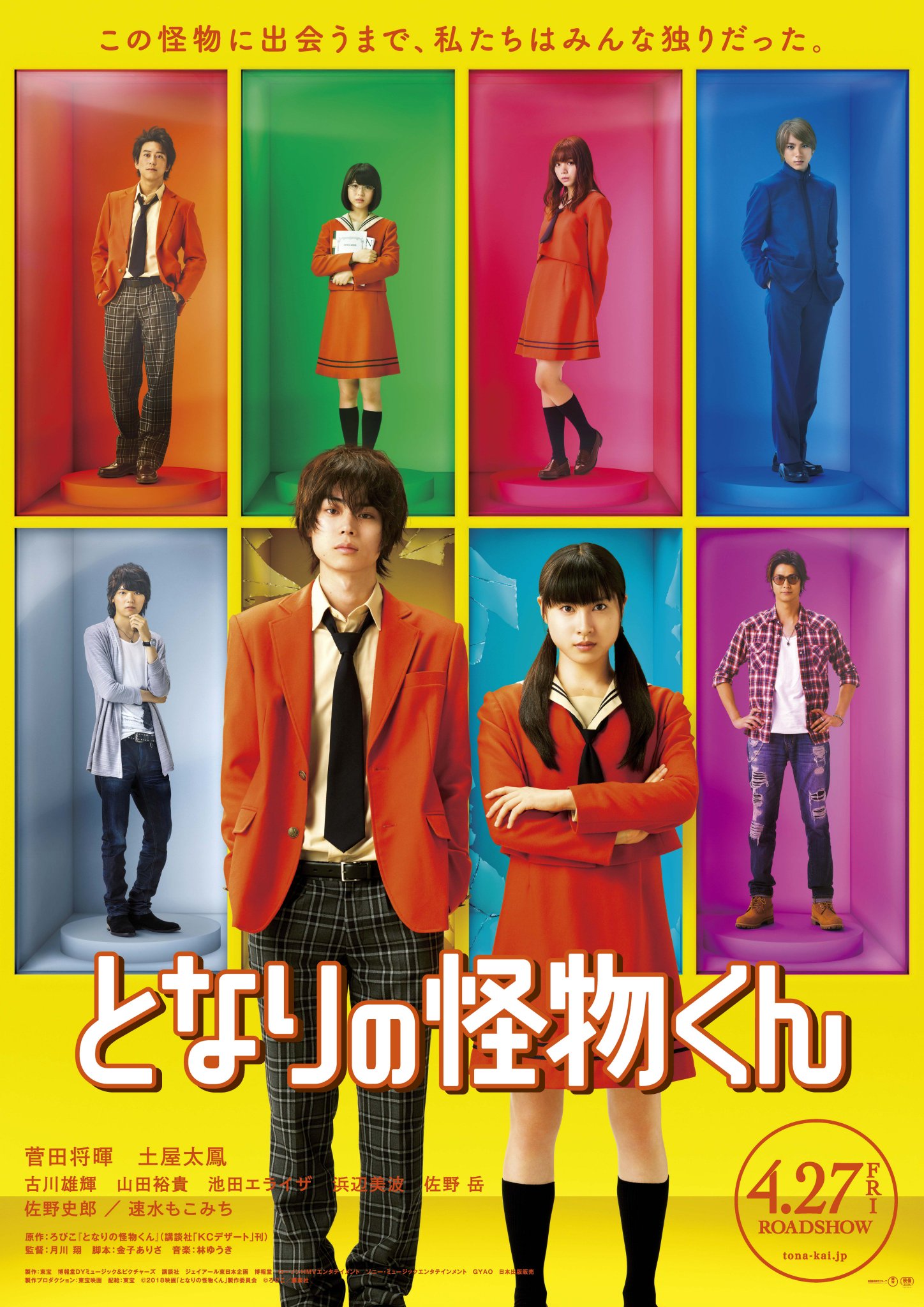
True love conquers all in Remi M Sali’s warmhearted Singaporean rom-com Not My Mother’s Baking (不是我妈妈的烘焙, Búshi Wǒ Māma de Hōngbèi). Spinning a Romeo and Juliet romance between an aspiring Malay Muslim cook and the heir to a roast pork hawker stall, Not My Mother’s Baking is as much about cross-cultural connection as it is about two young people finding their own directions and the strength to pursue them free of parental expectation as they figure out what it is that will really make them happy.

Daughter of celebrity chef Siti (Siti Mastura Alwi), Sarah (Sarah Ariffin) has always lived in her mother’s shadow, harbouring a mild sense of resentment towards her for neglecting her family in favour of her career. The little brother of her best friend Tini (Maya Jalil), Imran (Asraf Amin), who has long been carrying a torch for her suggests starting her own online cookery series to establish her brand as distinct from her mother’s setting her up with Edwin (Kaydash Cheung Shing Lai), an aspiring Chinese video producer. The two do not exactly hit it off thanks to some cultural misunderstandings, but begin to grow closer after they each reluctantly agree to work together in order to avoid having to spend more time with their families, Sarah potentially roped in as a temporary/free assistant to her mum and Edwin needed to help out at his parents’ hawker stand selling roast pork. 

Cheerfully narrated by Edwin’s upbeat dad Mr. Tan (Vincent Tee), this is a story which begins with a wedding and so we know right away that it all works out and Sarah and Edwin will get their happy ending, yet there are a lot of obstacles standing in the way of their burgeoning love story not least a lack of understanding that begins with Edwin somewhat insensitively advising Sarah to remove her headscarf to make a better impression in the videos. Ill-advised by Imran, Edwin is wary of telling Sarah about his family’s occupation firstly in case it causes offence and then later uncertain what level of interaction is permitted between them considering he’s been handling pork. Sarah’s cheeky brother Yusri (Benjamin Zainal) jokes that her potential love interest is not “halal”, but then her parents aren’t quite as against the idea as she might have assumed them to be while she finds herself somewhat conflicted, not least in her ambiguous relationship with the superficially “perfect” Imran whose cheesy pick up lines and tendency to try far too hard perhaps convince her that he might in fact be too perfect or at least the wrong kind of perfect for her. 

Meanwhile, she’s also trying to find her way out of her mother’s shadow as a cook, scoring a hit online when she retitles her show “Not my Mother’s Baking” and affectionately mocks Chef Siti’s signature TV star style claiming to be a little more real and authentic in contrast to her mother’s seeming affectation. In a meta twist, Sarah and her mother are played by real life mother and daughter celebrity chefs Sarah Ariffin and Siti Mastura Alwi, though their onscreen relationship is one defined by rivalry and frustrated connection. Chef Siti is understandably hurt by Sarah’s direct attack on her brand, but it does at least enable an overdue heart to heart which brings the two women closer as they work through their complicated relationship while bonding through their shared love of cooking. 

Edwin, meanwhile, has no real desire to take over the pork stand as his parents expect while no one seems to take his video career very seriously. In a slight twist, the Tans have decided Edwin rather than his sister Joyce (Lim Mei Fen) should take over not because she’s a girl but because she went to university and so they think it’s beneath her, stubbornly refusing to see that Joyce actually loves the business and has a few ideas how to bring it into the 21st century making full use of her skills and education. Unlike Sarah’s family, Edwin’s parents are less keen on a cross-cultural romance because they fear losing their son knowing that to marry a Malay muslim woman means not only leaving the pork shop behind but fully converting to her religion. 

Yet as the female religious leader who accepts his conversion points out (Singapore is apparently the first country to allow women to approve a man’s conversion to Islam), there is no issue with Edwin keeping his Chinese name and it’s not as if he has to cut off contact with his family even considering the problematic nature of their occupation as demonstrated in the couple’s beautifully colourful fusion wedding at which a roast pig is served for the Chinese guests alongside halal Malay cuisine, while Edwin is followed into the ceremony by two large pink dancing lions and the nuptials are concluded with a traditional tea ceremony. A very millennial romance, Not My Mother’s Baking allows its young heroes to forge their own paths outside of those their parents might have chosen for them, proving that love really does conquer all while bringing together two very different cultures each united by the desire to see their children happy. 


Not My Mother’s Baking streams in Poland until 6th December as part of the 14th Five Flavours Film Festival.

International trailer (English subtitles)