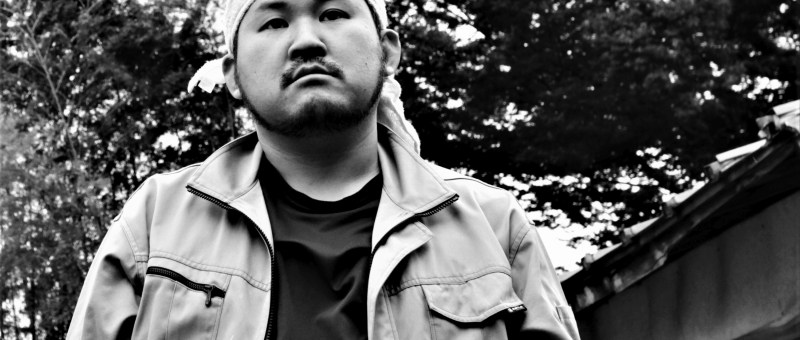
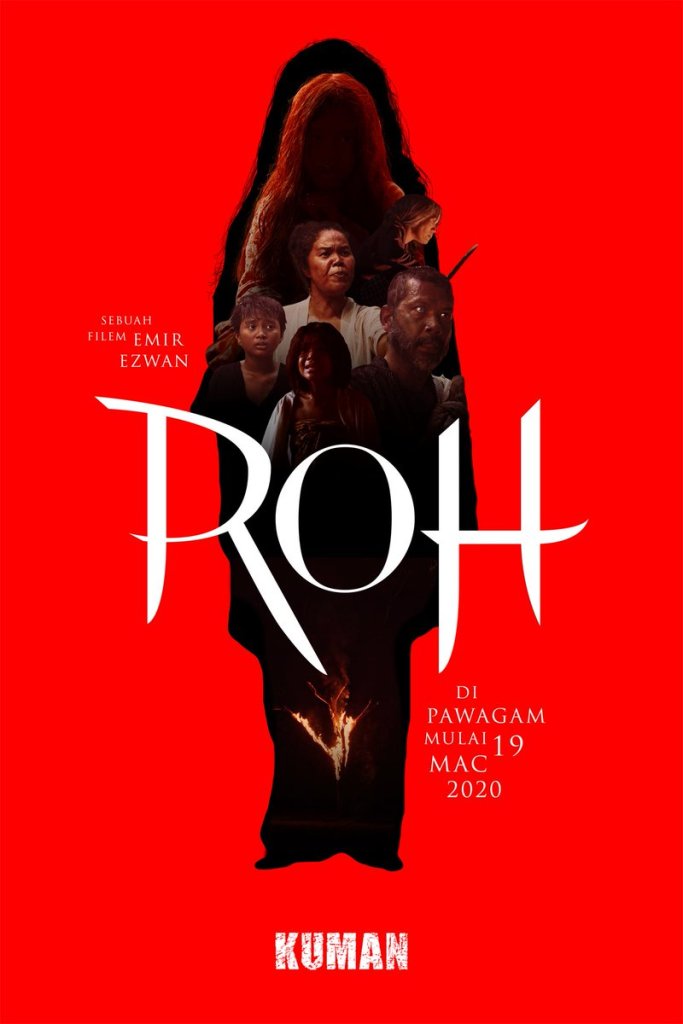
Soul (Roh, Emir Ezwan, 2020)

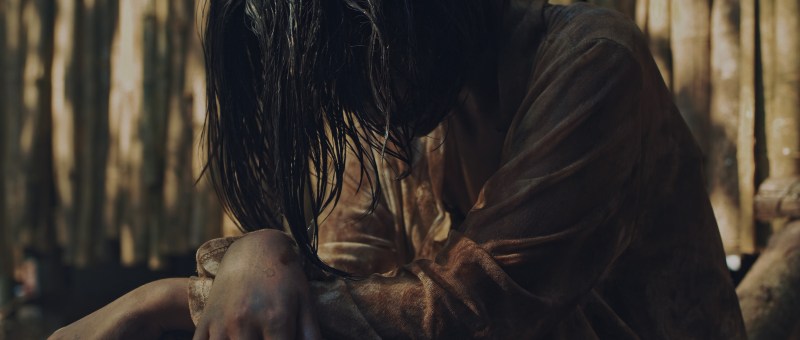
“We’re now living in a dangerous time. Many people are desperate and feel unsafe” according to the beleaguered single-mother at the centre of Emir Ezwan’s slow burn folk horror Soul (Roh). The latest film produced by Malaysian powerhouse Kuman Pictures which specialises in low budget horror, Ezwan’s tale of supernatural dread situates itself in a world in which there is “always something evil around us” and existential threat may arrive in the most unexpected of forms. 

This a small family discovers to its cost when they come across a little girl (Putri Qaseh) wandering in the jungle and, as anyone would, take her into their home where they give her food and shelter while trying to find out where she’s come from and what might have happened to her. Unfortunately, however, after some ominous events, the girl tears apart one of their chickens and eats it raw before cursing them by issuing the prophecy that they will all be dead by the next full moon, thereafter slashing her own throat. The woman, Mak (Farah Ahmad), and her two children, daughter Along (Mhia Farhana) and son Angah (Harith Haziq), are obviously upset and afraid but have no idea what to do. They take the body further into the jungle and leave it there. After that more visitors arrive at their remote hut, a hunter with a spear and a milky eye (Namron), and a wise old woman, Tok (June Lojong), who always seems to be offering them advice only to remember that she has other important business to attend to before imparting it. 

Things only get worse for the woman and her children who, as far as we know, have done nothing wrong, only try to help a lost little girl. Living as they do on the edge of the forest, they are well acquainted with its duplicitous mysteries. “Never believe anything that you see or hear in the jungle” Mak cautions the children, scolding her hungry son who’d wanted to take a deer he and his sister found mysteriously hanging from a tree and bring it home to eat. Along fears a tiger, but logically someone put that deer there for a reason and might not be happy if someone walked off with it, though as far as the family knew they were the only ones nearby. Still they don’t seem to find anything odd in the sudden arrival of the old woman who tells them she’s come from across the river to gather herbs, warning them that there are bad vibes all round their house and something untoward is sure to befall them if they don’t take care. 

Caught between the wise woman and the vengeful man apparently hot on the trail of the little girl, the family has no idea who to believe or where to turn. The old woman tells Angah that he has no need to be afraid, evil is all around us but can only hurt through other humans which is why it’s better not to trust anyone. Yet supernatural threat is always lurking, waiting for an opportunity to strike. We have no power over you, it later confesses, all we had to do was whisper and you obeyed. Mak, alone with her children, is entirely cut off from the outside world. She has no idea what has happened in the village across the water, and no recourse to help outside of Tok and the power of prayer, something she is later accused of not having valued enough. She and her children are accidental bystanders in someone else’s spiritual battle, completely powerless and entirely at the mercy of those who selfishly pursue their own desires with little thought to the family’s lives. 

Ezwan conjures a deep atmosphere of existential dread as the darkness begins to seep out of the forest and engulf all around it. Mak warned the children that they shouldn’t go taking things out of the jungle, but despite the eerie superstitions of ghosts and ghost hunters she knew from her youth was all too easily tricked by something that walked out on its own and followed them home. There is darkness everywhere, and with darkness fire. “Your next life will be as eternal as your soul” the voice of darkness warns, make your choices wisely.


Soul is available to stream in Europe until July 4 as part of this year’s Udine Far East Film Festival.

Original trailer (English subtitles)

Queer East Announces Docs4Pride Free Streaming Series

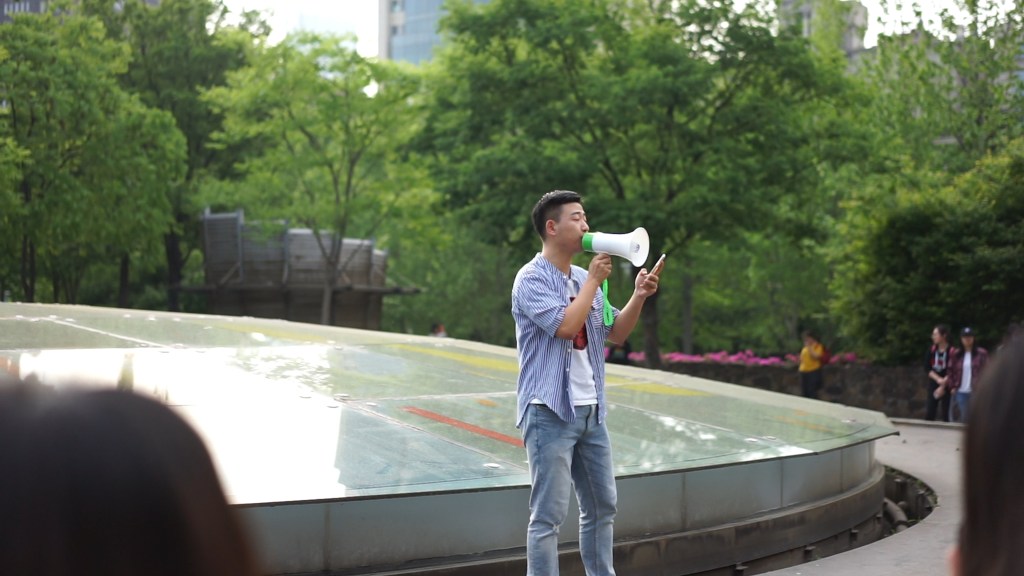
Following the success of QE: HomeSexual, Queer East returns with another online streaming series marking this year’s Pride. Four LGBTQ+ docs will stream for free throughout July with all except for Of Love & Law which is restricted to UK & Ireland available worldwide.

July 3 – 10: Out Run

2016 documentary following Bemz Benedito as she leads Philippine LGBTQ+ political party Ladlad hoping to become the first transwoman to be elected to congress.

July 10 – 17: Shanghai Queer

Documentary focussing on grassroots activism in Shanghai sharing memories of the LGBTQ+ community from 2003 – 2018 featuring interviews with frontline activists, scholars, and artists.

July 17 – 24: Taipeilove*

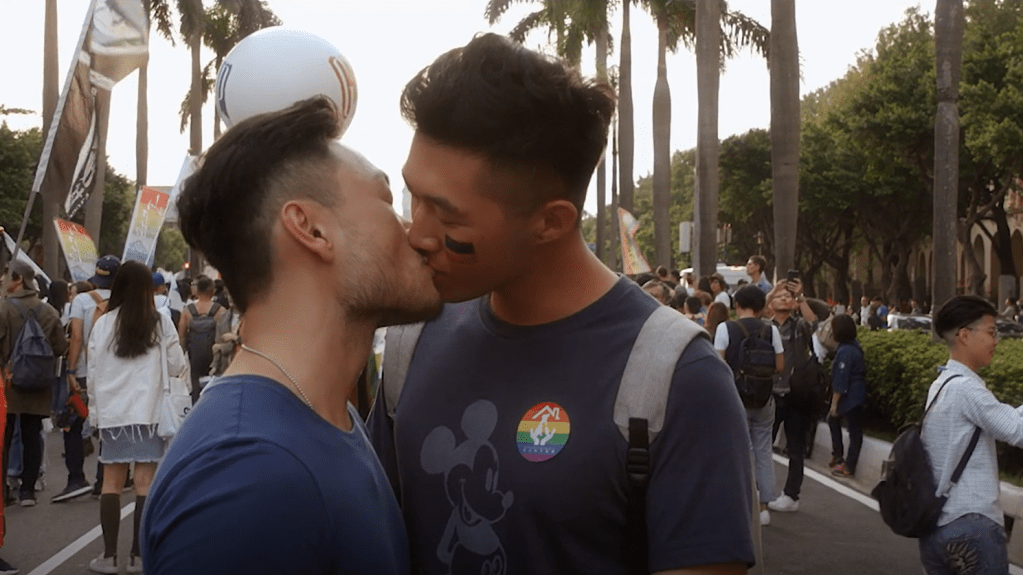
Taipeilove* charts the course towards the legalisation of same-sex marriage in Taiwan through interviews with key activists, lawmakers, and ordinary queer people.

July 24 – 31: Of Love & Law (UK & Ireland only)

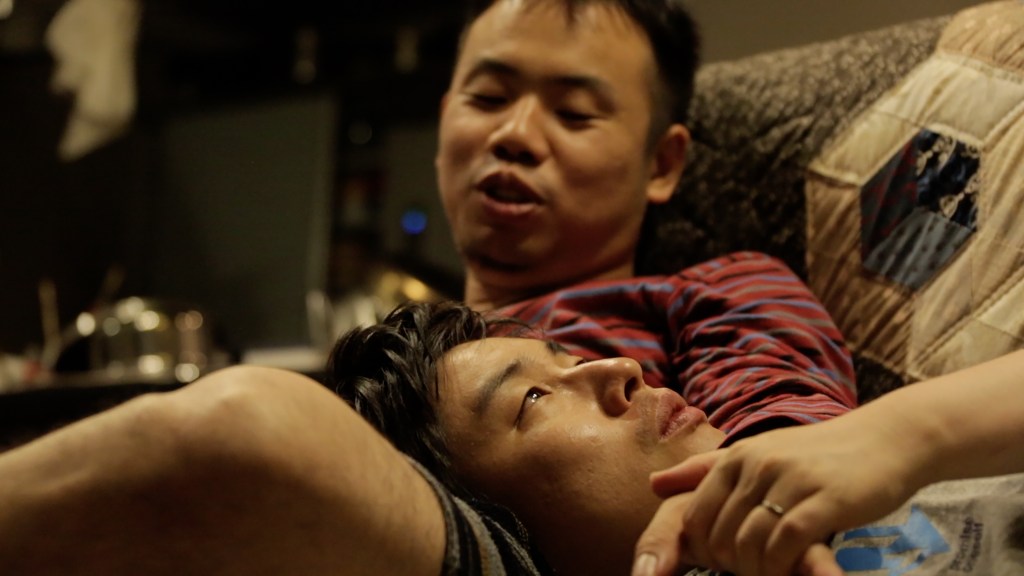
Hikaru Toda’s infinitely warm documentary following Love Hotel’s Kazu and Fumi who run Japan’s only LGBTQ+ law firm representing the marginalised in a largely conservative, conformist society. Review.

Each of the films will be available to stream for free for one week only via Queer East’s website and Vimeo channel. You can also keep up with all the latest festival news by following Queer East on Facebook,  TwitterInstagram, and YouTube.

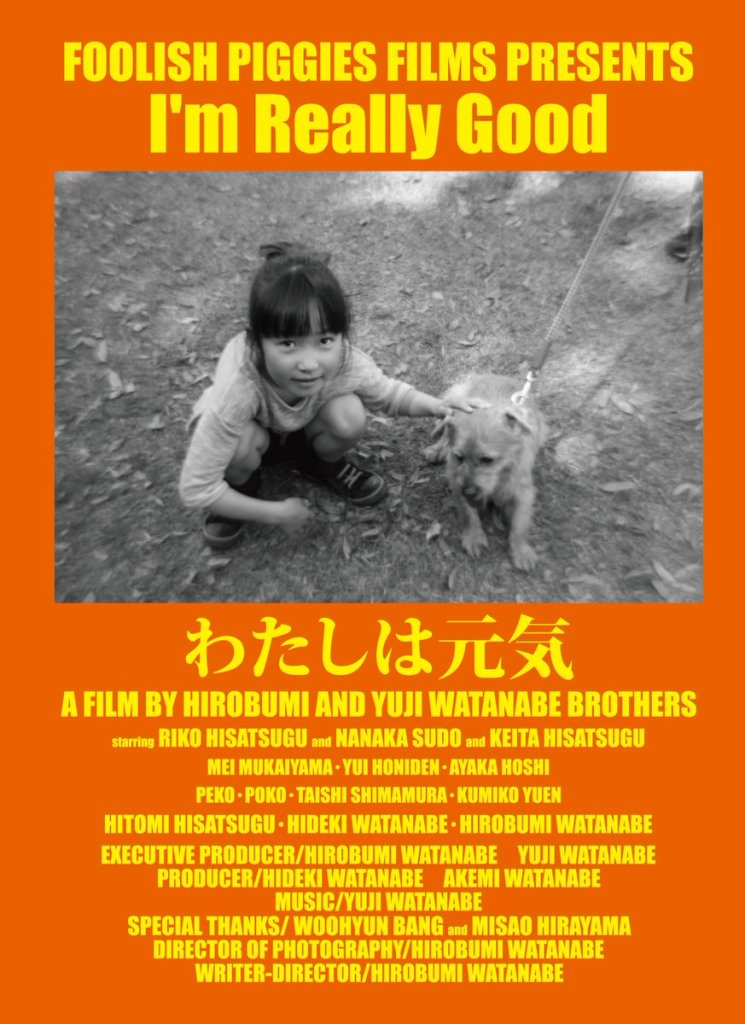
I’m Really Good (わたしは元気, Hirobumi Watanabe, 2020)

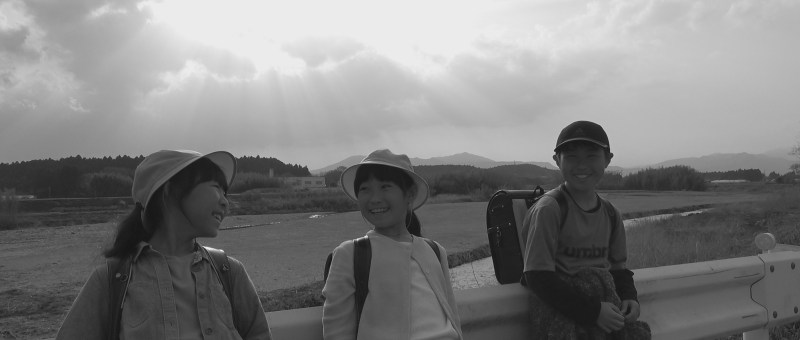
Hirobumi Watanabe has made a name for himself as a purveyor of deadpan wit, often shooting in a stark black and white and casting himself as a sometimes irate monologuer inhabiting a world of silence. With I’m Really Good (わたしは元気, Watashi wa Genki), however, he for the most part stays behind the camera which he operates for himself for the first time in the absence of regular cinematographer Bang Woo-hyun, and subverts the conceits of Poolsideman to show us the innocent world of childhood, following an energetic little girl through one ordinary, though as it turns out, packed with small incident day. 

After opening with a colour sequence in which Riko (Riko Hisatsugu), a very energetic young girl, shoots an encouraging iPhone video, Watanabe returns to a more familiar black and white to find her playing with her best friend Nanaka (Nanaka Sudo), and then waking up to the sound of bird song ready for a brand new day. Like the hero of Poolsideman, she is constantly exposed to the radio news though, we can assume, she is not the one who put it on or actively listening to it. The central irony is that, where Poolsideman’s hero found himself driven in dangerous directions by reports of death, violence, and war, Riko is largely indifferent to the current pensions crisis which seems to be dominating the news. As a child, pensions are not something she is particularly worried about, though in a very real sense this will one day affect her especially in its implications for Japan’s rapidly ageing society as the discussion moves on to potential tax reform and ideas to combat a stagnating economy. In any case, Riko carries on playing happily with her friends, the news washing over her as perhaps it should. 

Meanwhile, her days are filled with ordinary things like walking to school with her brother and Nanaka, chatting about what’s for lunch and what they had for dinner, playing shiritori, and enjoying the pleasant rural landscape. In the evening they make the exact same journey in reverse, returning to their homes where they do their homework and wait patiently for their parents to return from their jobs to make dinner. On this particular day, two unusual events occur the first being she’s ended up with Nanaka’s homework book by mistake and needs to return it. The second is a visit from a strange man with the bizarre name of Kamekichi Jinguji (Hirobumi Watanabe) who claims to be from a company selling textbooks that will send even the dimmest of students to the top of the class. 

Luckily Riko is not duped by Kamekichi whose rather bizarre scam is undermined when she tells him her dad’s a policeman which sends him into a bit of a panic, but his presence does perhaps hark back to the pensions crisis as Riko finds herself targeted by a problem which is usually associated with the elderly in being doorstepped by a fraudulent salesman taking advantage of the fact she is currently without responsible adults with both parents out working. He tries the same thing with Nanaka who is almost taken in, but catches her just after Riko has arrived to give the book back, pausing only to remind the girls that they are the future and it’s their job to build a better Japan. Particularly ironic advice from a guy conning children out of their pocket money in exchange for phoney textbooks, not to mention somewhat unfair in projecting the responsibility for fixing a series of social problems like the pensions crisis into the future when it’s people like him who should be fixing them now to make the better world possible while little girls like Riko and Nanaka play happily enjoying a carefree childhood. 

To that matter, Riko’s childhood seems to be pretty carefree. She hangs out with Nanaka, plays football, enjoys the pleasant country environment and is surrounded by loving family even if sad that her policeman dad often works late and can’t join them for dinner while her older brother is forever playing video games at the table. The politicians on the news debate what standard of life is appropriate, trying to get out of their responsibilities by splitting hairs about the “model family”, but Riko carries on enjoying her ordinary days oblivious to the troubles of the world around her. “I’m really good!” she affirms in her introductory video after politely enquiring after the viewers’ health, and it’s as good a mission statement as you’re likely to find. 


I’m Really Good is available to stream worldwide until July 4 as part of this year’s Udine Far East Film Festival.

Festival trailer (English captions)

Cry (叫び声, Hirobumi Watanabe, 2019)

Hirobumi Watanabe has become closely associated with a particular brand of deadpan, black and white comedy, often casting himself in a prominent role as a motormouth monologuer. Cry (叫び声, Sakebigoe), however, returns him to the themes of 7 Days which proved divisive with critics following as it did the lowkey absurdist charms of And the Mud Ship Sails Away… Once again set in rural Tochigi, the (almost entirely) wordless Cry stars Watanabe this time as a pig farmer rather than cattleman and follows the crushing mundanity of his life over the course of an ordinary week. 

Replete with agricultural detail, Cry is at pains to dramatise the cyclical, rhythmic qualities of a life lived in tune with nature even as that of a pig farmer is in some ways perhaps in conflict with it in the cultivation and constraint of other living creatures. There is perhaps something rather ironic in recalling that Watanabe’s production company is called Foolish Piggies Films, and it’s all but impossible to ignore the odd kind of symmetry in the life of the farmer and his animals who are each in their own way imprisoned on either side of the bars. The major difference between them lies in crowding and solitude, cacophony and silence. Aside from the equally silent grandmother (sadly the final onscreen appearance of Watanabe’s own grandmother Misao Hirayama who sadly passed away last year and had been a constant fixture in each of the director’s films to date) with whom he lives, the farmer has no other human contact, indeed his only “social” outlet is a solo trip to the cinema where he is the sole spectator and the only other person with whom he interacts is the usher who says nothing more than “enjoy the movie”. 

We can infer that the farmer goes to the pictures every Sunday at around the same time after seeing to the pigs, that he likely does so alone, and that this is a fixed part of his weekly routine. On a weekday, we see him rise, eat breakfast with his grandmother, muck out the pigs and break for lunch, usually taking a moment of rest on windswept rooftop under an incongruous electricity pylon as if to signal the encroachment of modernity on his simple life, or in event of rain returning home to read the paper. In the evenings he reads by the light of a small lamp and writes in a diary. Sunday aside, his days are almost identical yet, unlike the heroes of other Watanabe films who often comically walk the exact same routes they came by only in reverse, he seems to vary his path, making the surprisingly long journey between his home and the pens a little less predictable than the other areas of his life. 

The “cry” of the title might express this desire for an interruption to the maddening mundanity of his existence, but otherwise the farmer does not appear to be particularly unhappy with the simplicity of his life save for the intense drumming of the taiko score which accompanies him as he walks along the quiet country paths towards the pens as if he were heading to a battlefield which, in a way, he perhaps is as he engages in the paradoxical task of caring for animals he will one day surrender for slaughter and in fact consume.

He does not seem to be withholding a wail of existential despair, merely living an ordinary life in ordinary ways. Even on his trip to the cinema, he appears to be watching, until he falls asleep, footage from Watanabe’s own I’m Really Good (a poster for And the Mud Ship Sails Away… also sits in the foyer) in which farmland kids walk the same paths he walks but entertain themselves with games of shiritori which is generally much less fun to play on your own even if not exactly impossible. At home he cares patiently for his grandmother, diligently cleaning her dentures, again another part of his routine, while bathing in the calming silence free of the noisy cacophony of the pig pens and of the roar of the wind which sweeps the rooftop. His life may be simple, but perhaps no less repetitive than that of many others and with its own small joys even in its mundanity. 


Cry is available to stream worldwide until July 4 as part of this year’s Udine Far East Film Festival.

Festival trailer (English captions)

Life Finds a Way (普通は走り出す, Hirobumi Watanabe, 2018)

Hirobumi Watanabe goes full 8 1/2 with the decidedly meta comedy, Life Finds a Way (普通は走り出す, Futsu wa Hashiridasu). After the joyful celebration of Party ‘Round the Globe, he returns in a noticeably self-reflective mood once again playing a version of himself as a self-involved, childish blocked filmmaker who fears he is falling out of love with film. Unable to come up with ideas, he fobs off producers and ignores phone calls while hanging out with grandma (Misao Hirayama) and making a nuisance of himself at the library but a mini-nervous breakdown and a reconnection with the film-loving little boy he once was perhaps offer him new direction though the jury’s out on whether “Hirobumi” is ever going to grow up. 

Once again locating itself in peaceful Tochigi and shot in crisp black and white with Watanabe’s trademark deadpan static camera, Life Finds a Way opens with Hirobumi fielding a phone call from a producer in which he confesses that he’s supposed to be working on a script created in collaboration with rock band Triple Fire but he’s getting nowhere so he’s hanging out in a cafe to “relax” while playing Dragon Quest. Later he rings his cinematographer, Bang Woohyun, and makes a similar apology, admitting that he’s going to take some time off to watch the World Cup because, after all, it’s a once in every four years opportunity. Meanwhile, he’s mostly snoozing at home with grandma, or driving around with his almost entirely silent and extremely patient strawberry farmer friend Kurosaki (Kurosaki Takanori). 

One of his early rants offered as a monologue to Kurosaki who seems to be used to them, revolves around his sense of inferiority as a creative unfairly maligned as a lazy good-for-nothing by workaholic Japanese society. In Japan, he says, we worship the worker ant who survives because he works away earnestly, while in France they honour the grasshopper because his beautiful music can cheer you up even in the depths of winter. Hirobumi thinks the French have it right, that Japanese people are too obsessed with doing everything “properly”, always worrying about trivial things. According to him, there are far too many worker ant types in the Japanese film industry. He thinks films should be free and unconstrained, not bound by some kind of ideal. 

In any case, while being quite rude to “worker ant” Kurosaki who labours all day long on his strawberry farm, Hirobumi blames all his problems on having been unlucky enough to have been born in Japan rather than somewhere like France where they appreciate people like him. Later, he interviews a few locals and asks them what they think is the problem with the Japanese film industry, only for Kurosaki to repeatedly answer “it’s Hirobumi”, perhaps getting his own back. In fact, Kurosaki, apparently meaning well, shows Hirobumi a piece about of one of his films in a glossy magazine only it’s uncomplimentary in the extreme which sends him into a rage, ranting furiously about ungrateful audiences and how much he hates film critics. Hirobumi seemingly blames everyone but himself for his faults and failures, climbing all the way up to a hilltop shrine to pray that he wins the Palme d’Or while also asking that the gods not give good jobs to successful directors but give them all to him instead, and for bad things to happen to someone who sent him a strongly worded letter. 

Hirobumi’s “fan mail” appears to be from a stuffy old woman who states that she has “kindly” written to him several times already to explain that his work is an insult to cinema yet he keeps “selfishly” making films. She’d liked to have told him this in person, but was apparently “too busy” so has written another letter urging him to reflect on his life choices and either make “good” films like Koreeda and Miyazaki, or find himself another career. Hirobumi wonders what the point of films is if they don’t make people happy or have the capacity to change the world. Asked what films meant to them most of his interview subjects either had no answer or regarded them only as entertainment. An encounter with himself perhaps reminds him what it was he saw in cinema and allows hims him to begin moving forward creatively. 

But even having finished his script, has Hirobumi really changed? He seems permanently to be surrounded by children, hanging out reading the manga in the kids’ section of the library, lining up behind a string of obedient primary school students to check out his DVDs where he sets a bad example by having a series of Tora-san movies already overdue but using grandma’s card to take out more, and hanging out with his niece catching crayfish in the local stream with a bucket and net just like he must have done since he was little. He lies about missing the World Cup, ignores phone calls from the library to snooze while spending time with grandma, and is not really any nicer to the patient Kurosaki than he was before. But life finds its way, Hirobumi escapes his creative malaise by rediscovering the joy of cinema, healing himself body and soul, and feeling more positive about the future even if nothing has really changed. 


Life Finds a Way is available to stream worldwide until July 4 as part of this year’s Udine Far East Film Festival. It was also scheduled to screen as part of the 10th season of Asian Pop-Up Cinema.

Festival Trailer (English captions)

Original trailer (no subtitles)

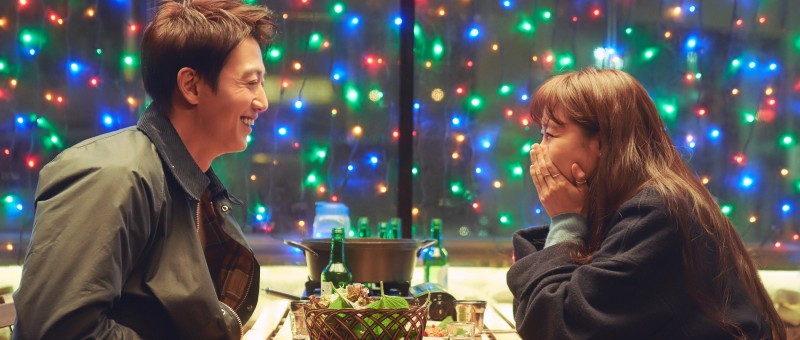
Crazy Romance (가장 보통의 연애, Kim Han-gyeol, 2019)

Can you find love in a crazy world? According to Crazy Romance (가장 보통의 연애, Gajang Botong-ui Yeonae), yes and then again no. The Korean title translates as something like the most ordinary of romances, which, considering what we’re about to see, is in someways quite depressing. Achingly contemporary in its Ephron-esque air of sophistication, Crazy Romance nevertheless lays bare the costs to both men and women of living in a rabidly patriarchal, misogynistic society.

Our heroine, Sun-young (Gong Hyo-jin), has just joined a small advertising company in what many seem to feel is an unexpected step down in her career. At the awkward welcome drinks she’s asked a series of inappropriate, sexist questions, but her claims of not currently having a boyfriend are quickly disproved when a young man barges into the restaurant with flowers and abruptly proposes to her. It seems, Sun-young had attempted to break up with him that very morning, but he refused to listen and has now caused embarrassment at her job (which he expects her to quit anyway because they’ll be getting married). Meanwhile, Jae-hoon (Kim Rae-won) wasn’t really paying attention because he’s had too much to drink and is obsessively texting his ex who hasn’t replied in months. 

Jae-hoon’s alcoholism doesn’t seem to have affected his work, but has become a talking point around the office. The day after the party we see him wake up on the floor of his apartment surrounded by the detritus of drinking including, for some reason, several bags of corn on the cob, not to mention a cat which is apparently not his but might as well be now. Ever since his engagement ended, he’s been unable to move on, getting blackout drunk nearly every night and texting his ex who resolutely ignores him (not that you can blame her).

We can immediately see that there is not much difference in practical terms between Sun-young’s abusive ex Dong-hwa (Ji Il-joo) and Jae-hoon who is being positioned as the unfairly maligned nice guy, derided for his maudlin romanticism in being unable to forget his past love even though, as we alter discover, he broke off the engagement because she cheated on him while he was busy working hard for their future, neglecting their relationship as he fulfilled what he saw as his male responsibility to provide financial stability. Jae-hoon does, however, leave it at drunk texting and while privately resenting the fact she never replies, does not become dangerously obsessive, belligerent, or threatening as Dong-hwa later does in refusing to accept that Sun-young has ended their relationship. Nevertheless, witnessing their intense encounter in the car park and perhaps projecting, Jae-hoon tells Sun-young that he feels she’s been unfair to Dong-hwa who is after all “trying very hard” while implying that it’s romantic disappointment that has led to the apparent downgrade in her career prospects in the wake of derailed marriage plans. 

Jae-hoon’s embittered tone might suggest he’s mildly intimidated by Sun-young’s previously successful track record, but it is in a manner of speaking romantic disappointment which has done for her career in that Sun-young is now incredibly sick of having to deal with misogynistic workplace practices and persistent sexual harassment. Finding out the truth, Jae-hoon is outraged on her behalf but contributes to an ironic kind of victim blaming in berating her for not defending herself, as if she had the same right of recourse as he would have in her situation which of course she does not. As they bond in a shared sense of romantic disillusionment, the other team members start to turn against Sun-young, branding her a workplace hussy, while she in turn points out the hypocrisy of their interoffice gossip where everyone has a secret nickname from an employee everyone assumes is gay but is afraid to come out (he might have good reason, judging by his colleagues’ snide comments), to a female office worker’s decades-long unrequited love for their now married boss who is frequently derided for being thoroughly henpecked which is why he forces them into unnecessary company bonding sessions so he won’t have to go home and spend time with his family. 

The problem is that romance, or at least being vulnerable, is still embarrassing even in your 30s which is why everyone has to at least pretend to be drunk to pursue it. Both Jae-hoon and Sun-young are offered extremely problematic dating advice which effectively normalises abusive behaviour, childishly incapable of any kind of emotional honestly as they awkwardly spar with each other while their exes hover in the background. Sun-young tries to take Jae-hoon to task for his hypocrisy, pointing out that he thinks of himself as “better” than all the other useless men, but ultimately the film more or less agrees with him even if clear that he’s still a product of a misogynistic society and extremely self-centred while also genuinely nice as proved when we realise how he ended up with all that random corn. While he is maudlin and romantic, Sun-young is (understandably) cynical, but her spiky aggressiveness finds far less favour even if she is perhaps the one finally in charge of the direction of their relationship. Nevertheless, Crazy Romance cannot help but reinforce contemporary conservative social codes even as it critiques them, insisting that ordinary love is in itself crazy because the world is mad.


Crazy Romance is available to stream worldwide until July 4 as part of this year’s Udine Far East Film Festival.

Original trailer (English subtitles)

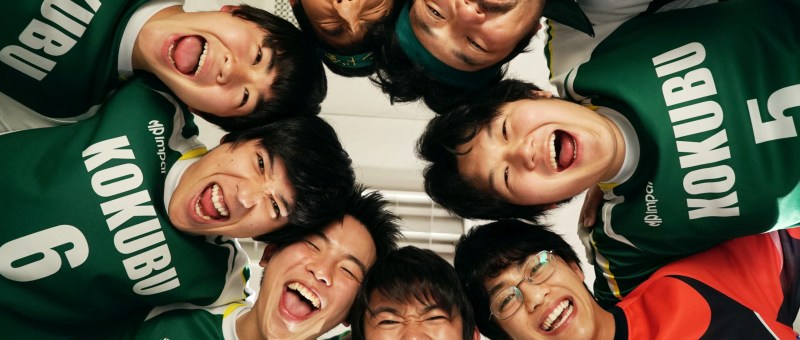
#HandballStrive (#ハンド全力, Daigo Matsui, 2020)

“Reach. Connect. Just like we used to” runs a vaguely inspirational slogan oft repeated in Daigo Matsui’s anti-defeatism teen drama #HandballStrive (#ハンド全力, #HandoZenryoku). We’ve never been so so “connected”, but as someone later puts it “people are selfish. They say whatever they like online” and the false affirmation of internet likes is a poor substitute for the earnest authenticity of those who know they’re giving their all for something they believe in. That’s a lesson that proves hard to learn for the teenage Masao (Seishiro Kato) who is, like many young men, filled with fear for the future and desperate to find some kind of control in world of constant uncertainty. 

In addition to the normal adolescent anxieties, Masao finds himself acutely burdened by a sense of despair as a survivor of the 2016 Kumamoto earthquake which destroyed his home, leaving him temporarily displaced. Thankfully, it seems his entire family survived, but three years on are still living in cramped temporary accommodation. In search of a sense of control, Masao is entirely wedded to his smartphone and an Instagram addict. Finding out that an old middle school buddy, Taichi (Shouma Kai), who moved away after the earthquake is now a top player on his high school handball team, a sport Masao has long given up, sends him looking back over old photos. Posting one on his feed proves unexpectedly popular, partly because it shows the temporary housing complex in the background and provokes sympathy in those who thought the photo was recent. Hoping to continue their Instagram high, Masao and his friend Okamoto (Kotaro Daigo) decide to attach an inspirational hashtag #HandballStrive and align themselves with the campaign to rebuild the area as residents of Kumamoto, only Masao has already posted all of his other handball photos so they need to get creative. 

It’s the creative part that eventually becomes a problem as the #HandballStrive phenomenon spirals out of control. Masao’s fond reminiscence about the sport was partly sparked by a pretty girl, Nanao (Haruka Imou), who plays on the high school team, but he really had no intention of ever stepping back on a court again until cornered by an intense young man, Shimada (Himi Sato), who is the de facto captain of the boys’ team by virtue of being its only remaining member. The boys find themselves press-ganged into joining too, but only ever halfheartedly, never intending to play for real only as a means of staging more photos to post online. 

As Shimada puts it, sometimes your heart connects the pass without you even looking. Masao finds himself lost, unable to fill in his career survey because he has no idea what it is he wants to do with his life and thinking about the future frightens him, in part because he is still intensely traumatised by the aftermath of the earthquake. What use is making plans when something terrifyingly unexpected can happen at any moment? He feels he has no control, and so he over invests in his phoney Instagram success as something stage managed and calculated, totally under his own authority. Masao looks around him for answers but isn’t convinced by what he sees, learning from his brother’s (Taiga Nakano) bubbly girlfriend (Mirai Shida) that he once dreamed of becoming a rock star to change the world through song but after the earthquake gave up on his dreams for the rewards of the practical, becoming a funeral director which is aside from anything else a steady job with relatively little competition. 

Masao gave up on his dream too in that he quit playing handball, or in essence retired from everything. Taichi carried on playing, which is to say that he carried on living and defiantly so, which may partly be the reason the two boys seem to have lost touch. “You always run away from things” an earnest player on the girls team taunts him, ramming home that they at least are serious even if they fail while he is so filled with insecurity that he never even tries. What he realises is that life is the ultimate team sport. “Things are out of control”, Taichi laments, “so let’s change them together” Okamoto suggests. To overcome his anxiety, Masao learns to focus not on the things he can’t control, like earthquakes, but on the things he can, what he can do right now to make a difference, finding meaning in the desire to strive for something even if it’s only handball glory. Perfectly in tune with his teenage protagonists, Matsui takes a standard shonen sports manga narrative and turns it into a manifesto for escaping existential despair as his conflicted heroes learn to connect, just like they used to, by reaching out to each other for support in an increasingly uncertain world.


#HandballStrive is available to stream worldwide until July 4 as part of this year’s Udine Far East Film Festival.

International trailer (English subtitles)

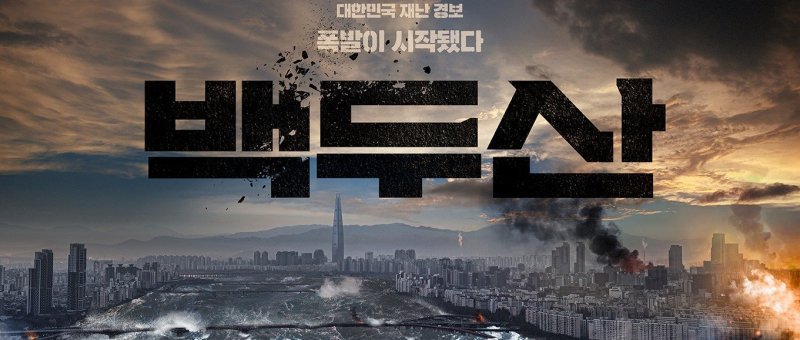
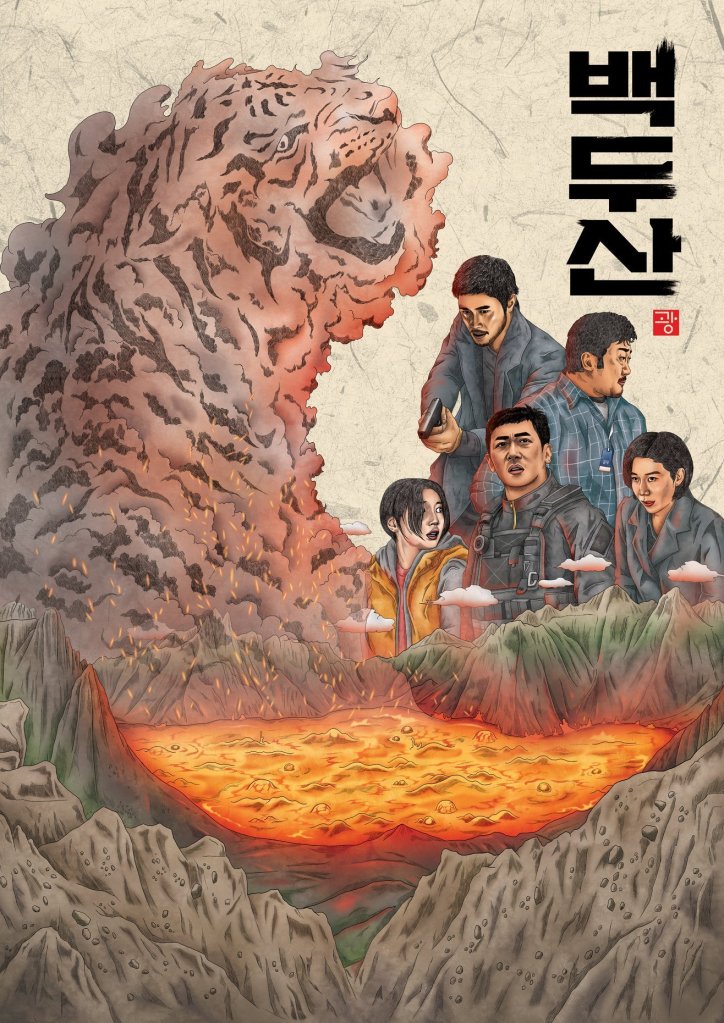
Ashfall (백두산, Lee Hae-jun & Kim Byung-seo, 2019)

The Korean Peninsula once again faces existential threat though this time of a natural genesis, and ironically the only way to save it might be nukes from the North. Ashfall (백두산, Baekdusan) is the latest and the largest of Korea’s big budget disaster movies featuring a veritable host of A-list talent and action sequences on an epic scale, but also doubles down on the less palatable sides of the genre in an overt and sometimes uncomfortable nationalism which nevertheless has its positive sides in its temporary elision of the North/South divide as the heroes pursue their cross-border mission to save the people of Korea not only from volcanic threat but from becoming mere pawns in geopolitical brinksmanship. 

The most obvious problem, however, is that long dormant volcano and pregnant national symbol Mt. Baekdu has erupted, provoking massive earthquakes which quickly reduce most of the high tech capital to mere rubble. This is particularly bad news for heroic army bomb disposal expert Captain Cho (Ha Jung-woo) because, in true disaster movie fashion, today was supposed to be his last day. Cho’s wife (Bae Suzy) is heavily pregnant, and it seems he’s opted for a safer occupation in the light of his impending fatherhood. According to the predictions of previously derided Korean-American scientist “Robert” Kang Bong-rae (Ma Dong-seok, cast brilliantly against type), Mt. Baekdu will continue erupting with the third and most powerful wave taking out most of the peninsula, but he has a plan to stop it. He wants to use nuclear weapons to blow a hole in the side of the chamber, relieving the pressure. To do that, they need to hijack some of the uranium from very recently decommissioned North Korean missiles, which means sending a small military expedition over the border in secret to track down a possible double agent who knows where all the nuclear material is before loading up their own detonators and driving them into a mine under the volcano. 

All of this takes place against the backdrop of North Korea’s long awaited denuclearisation which is in the process of being witnessed by American forces who are very much not in favour of Kang’s plan seeing as it effectively means detonating a nuclear bomb right on the Chinese border. Once again, the film suggests, Korea finds itself the battleground in a proxy war, its sovereignty denied as it attempts to use whatever means it has to save itself but is actively prevented by various kinds of outside forces. Kang, who idolises America to the point that he rejects his Korean name and tries to leave the country as soon as possible on his US passport, eventually makes the ironic statement that the ensuing chaos is all down to this “incompetant government that can’t decide its own fate” as the American army shutdown a Korean operation to put his plan in action while Cho and his guys also find themselves actively targeted by US military acting covertly in North Korea. 

Somewhat unexpectedly, Cho is not quite the heroic action hero one would expect. He’s anxious and inexperienced, out of his depth as a man unused to being in the field, trained to defuse bombs not launch them and unfamiliar with standard weaponry. Because his guys are the good guys, the North Korean mission is supposed to be “non-lethal”, so they’re wading into this with tasers and rubber bullets while his opposing numbers have no such scruples. Ri (Lee Byung-hun), the North Korean double agent, runs rings around them, playing every advantage while his motives remain unclear until finally sitting comfortably within the realms of action movie melodrama as he and Cho develop an awkward mismatched buddy dynamic, bonding over paternal worries and North/South pop-cultural exchange. 

The familiar message is that all things are possible when working together for a common cause, making a possibly subversive argument that North/South solidarity is the most powerful weapon against entrenched American imperialism and a resurgent China while advocating strongly for a greater national sovereignty less beholden to foreign powers for military support. It comes as little surprise that Kang eventually decides to go back to his original name and stay in Korea for good rather than return to a discredited US, having rediscovered his Koreaness thanks to his role in saving the nation. Subtle this is not, but then who ever asked for subtlety from a big budget disaster movie?


Ashfall is available to stream in Europe until July 4 as part of this year’s Udine Far East Film Festival.

International trailer (English subtitles)

Sonatine (ソナチネ, Takeshi Kitano, 1993)

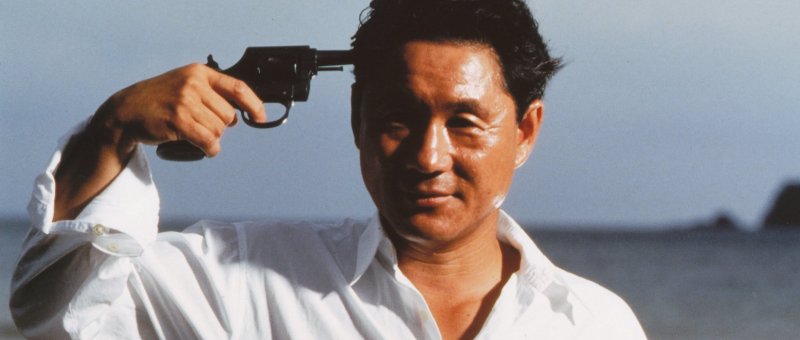
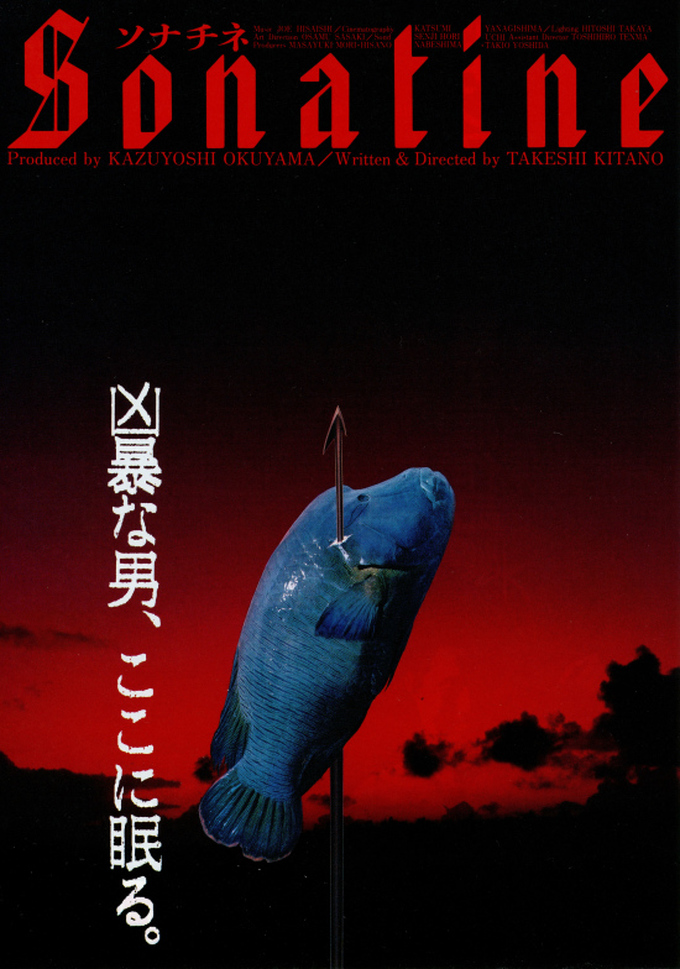
The problem with being a yakuza is that there is never any rest. Staying alive means constant vigilance, make a mistake and it could be the end of you or, conversely, get too good at your job and place a target on your own back. The hero of Takeshi Kitano’s Sonatine (ソナチネ) declares himself tired, not just of the life but life itself. By his fourth picture, Kitano was perhaps feeling something similar, later describing the near-fatal motorcycle accident he encountered some months after the film’s completion as an unconscious suicide attempt. For years he’d been one of Japan’s top TV personalities working a breakneck schedule that left him little time for other outlets such as painting, novels, and acting for others, but still he longed to be taken more seriously as an artist in his home nation where audiences largely stayed away from his “serious” films, as they did with Sonatine which flopped at the box office and put an end to his arrangement with Shochiku who had distributed his first two features in which he had also starred. 

For this third film, A Scene at the Sea, Kitano remained behind the camera and distanced himself from the themes of crime and violence which defined his early career, crafting instead an intensely melancholy tone poem about a deaf surfer falling in love with the ocean. In Sonatine he casts himself as the lead for the first time since Violent Cop, this time as a gangster experiencing extreme existential malaise when confronted with the futility and emptiness of his life in organised crime. Murakawa (Takeshi Kitano) is aware he has probably reached the zenith of his career as a mid-tier gang boss working as a, by all accounts, unexpectedly successful enforcer in a rundown area of the city. His first crisis concerns the owner of a mahjong parlour who thinks the yakuza are an outdated institution and refuses to take their threats seriously. He sees no need to pay them the customary protection money and assumes they’ll back off he simply tells them he’s not interested, but he is very wrong. Murakawa has him kidnapped to teach him a lesson, observing while his minions attach him to a crane and threaten him by dunking him in a large pool of water. Immediately apologetic, the man sees the error of his ways, but Murakawa doesn’t really care about the money anymore and so they dunk him again to see how long it takes a man to drown, barely shrugging as they realise he really died. 

Either because he’s an unusual man, or because he is simply tired of everything, Murakawa no longer bothers to abide by the rules of petty gangsterdom. He doesn’t do deference, smoking away long before his boss offers permission to do so and feeling unafraid to voice his reluctance when he’s ordered to take some of his guys to Okinawa to settle a nascent gang war involving one of their affiliates. Murakawa doesn’t want to go because he lost three men in a similar job in Hokkaido, but in reality has little choice. Later events prove he was right to be suspicious. The Okinawan gang boss tells him that he reported some minor friction with another gang out of courtesy and is confused he’s been sent reinforcements, not that he’s not glad to see them. As soon as they arrive, however, the tension rises and Murakawa and the guys are forced into hiding, holing up at the beach as they await orders from head office or word on a possible truce. 

Murakawa, his two right-hand men, and the Okinawan gangsters adjust to tranquil island life, playing on the beach and taking the time to master the art of Okinawan folk dance, but the grim spectres of death and violence present themselves even here in empty games of Russian roulette and Murakawa’s childish prank of digging sand traps for the guys to fall into as if into their graves. While he’s busy admiring the night sky, the silence is ruptured by a local tough chasing a young woman onto the beach where he proceeds to rape her. Murakawa doesn’t intervene but is challenged anyway and then forced to kill the puffed up youngster while the young woman, Miyuki (Aya Kokumai), becomes strangely attached to him, impressed by his cool dispatch of her attacker. 

Murakawa’s somehow innocent relationship with the young woman creates a minor rift with his men who resent the absence of his leadership at a time of crisis while he ponders alternate futures outside of the gangster brotherhood. But deep down he knows that his idyllic beach holiday cannot last forever and that he will have to leave this liminal space eventually for a destination of which he is all too aware. As he explains to Miyuki, when you fear death so intensely you begin to long for it if only for an end to its terrible anxiety. 

The title “Sonatine” is apparently inspired by the “sonatina”, a short, tripartite piece piano players attempt to mark an attainment of skills before choosing the future direction of their musical career. Murakawa undergoes three distinct arcs, from the city to the beach and back again, but perhaps knows there is no future direction in which for him to travel only the nihilistic fatalism of a life of violence. As for Kitano, it does perhaps draw a line in the sand marking the end of an apprenticeship and its associated compromises as he fully embraces an authentic personal style, like Murakawa no longer prepared to be deferent in an admittedly exhausting world. 


Sonatine is the third of three films included in the BFI’s Takeshi Kitano Collection blu-ray box set and is accompanied by an audio commentary by Chris D recorded in 2008. The first pressing includes a 44-page booklet featuring an essay on Sonatine and introduction to Kitano’s career by Jasper Sharp,  an essay on Violent Cop by Tom Mes, a piece on Boiling Point from Mark Schilling, an archival review by Geoff Andrew, and an appreciation of Beat Takeshi by James-Masaki Ryan.

The Takeshi Kitano Collection is released 29th June while Violent Cop, Boiling Point, and Sonatine will also be available to stream via BFI Player from 27th July as part of BFI Japan.

Original trailer (English subtitles)

Japan Cuts Announces Lineup for Online 2020 Edition

The latest festival to head online due to the ongoing coronavirus pandemic, Japan Cuts has unveiled another characteristically packed programme of recent Japanese cinema hits (plus a few retro classics) available to stream within the US July 17 – 30.

Feature Slate

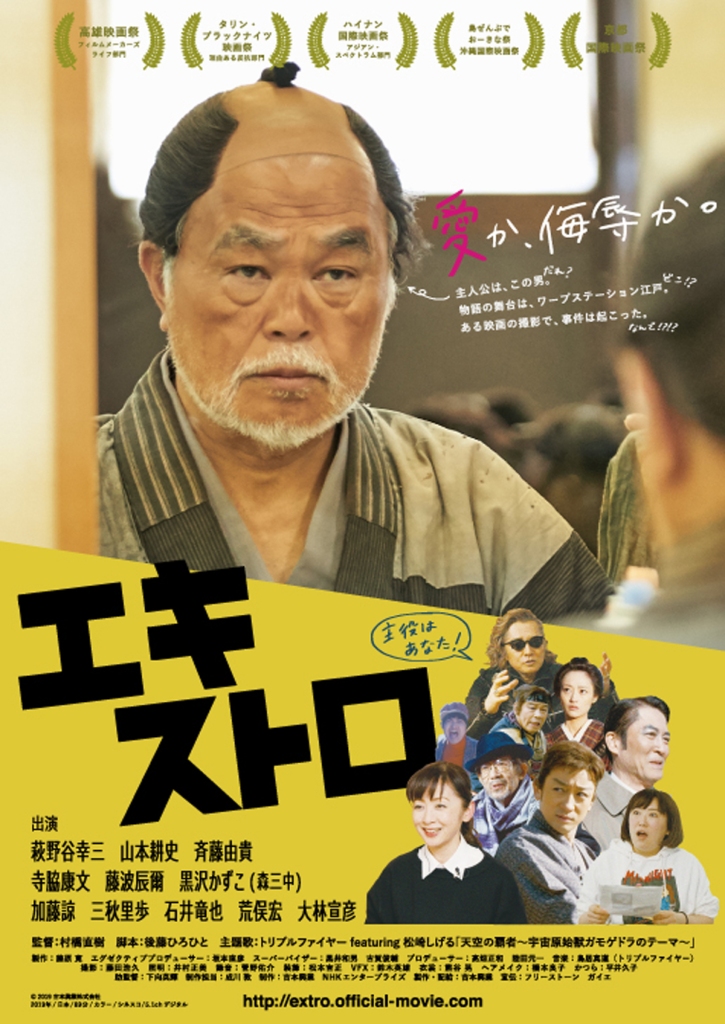
  • Extro – mockumentary in which a 64-year-old dental technician tries to fulfil a life long dream as a jidaigeki extra
  • Fukushima 50 – real life drama starring Koichi Sato and Ken Watanabe inspired by the workers who stayed behind to mitigate the Fukushima Daiichi nuclear disaster.
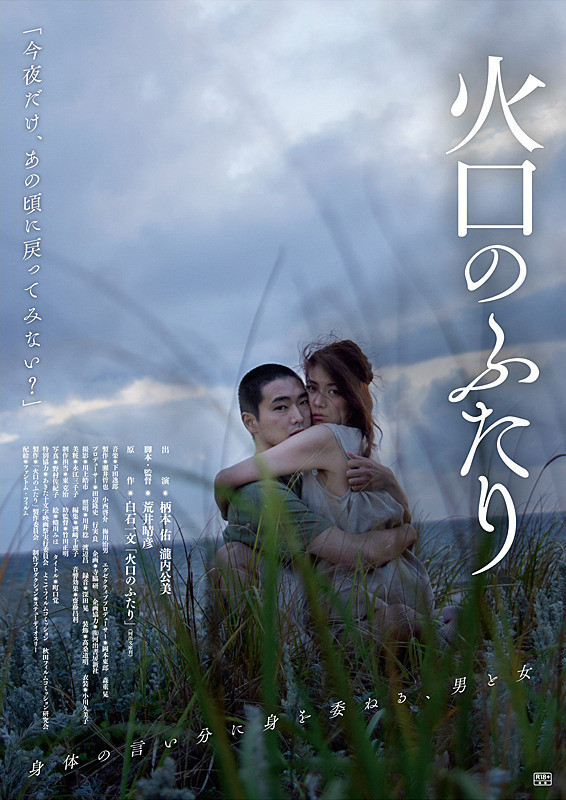
  • It Feels So Good – Steamy drama from Haruhiko Arai starring Tasuku Emoto as a young man retreating to his hometown where he reconnects with an old flame (Kumi Takiuchi) in the days before her wedding to another man.
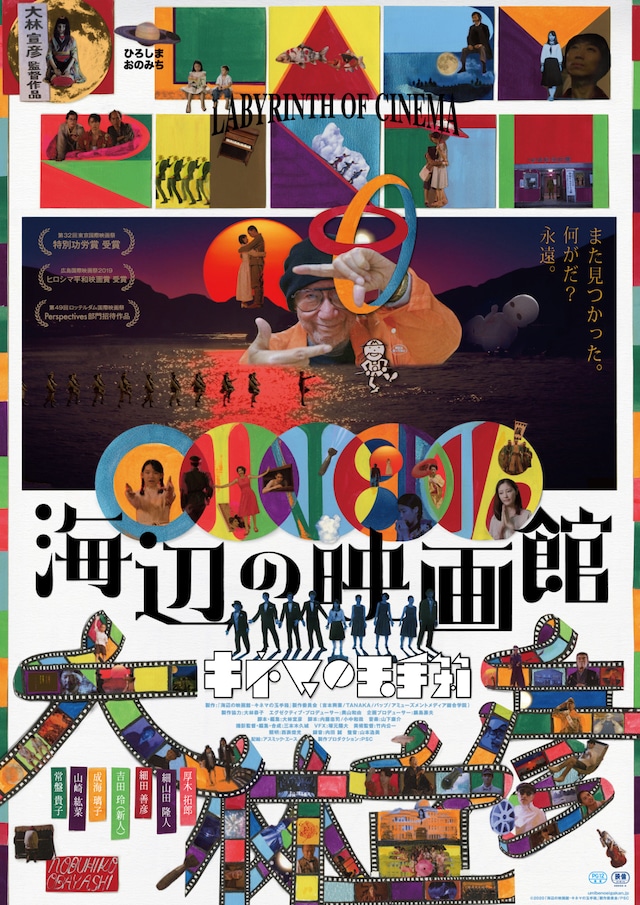
  • Labyrinth of Cinema – final film from Nobuhiko Obayashi in which three youngsters find themselves lost in the movies.
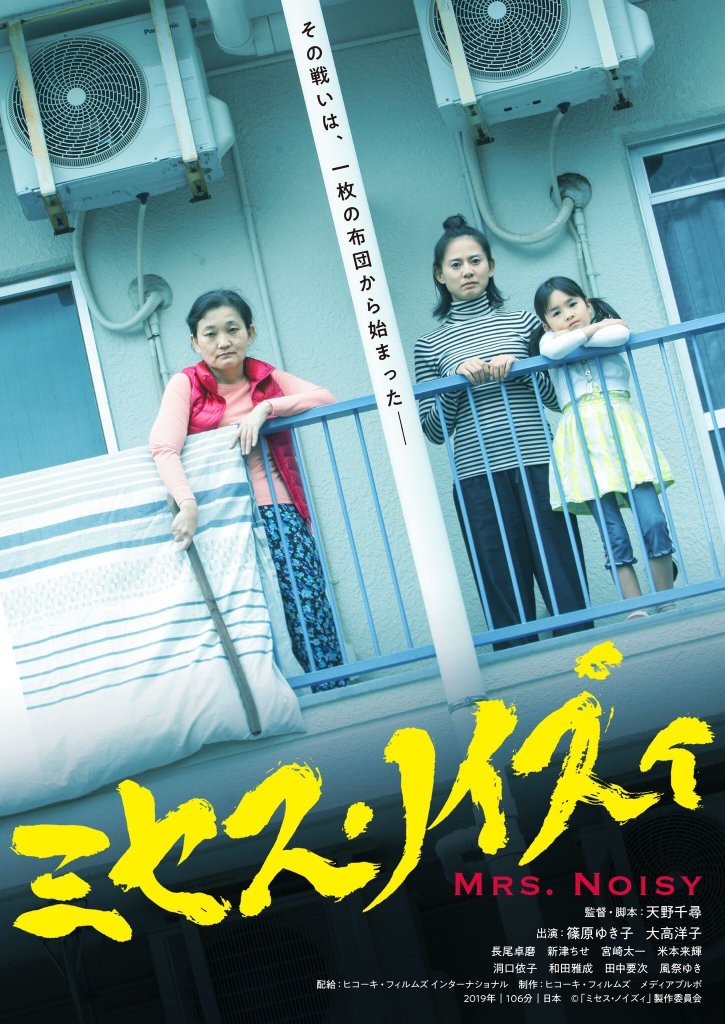
  • Mrs. Noisy – a blocked writer blames all her problems on the noisy woman next-door in Chihiro Amano’s quiet plea for a little more understanding. Review.
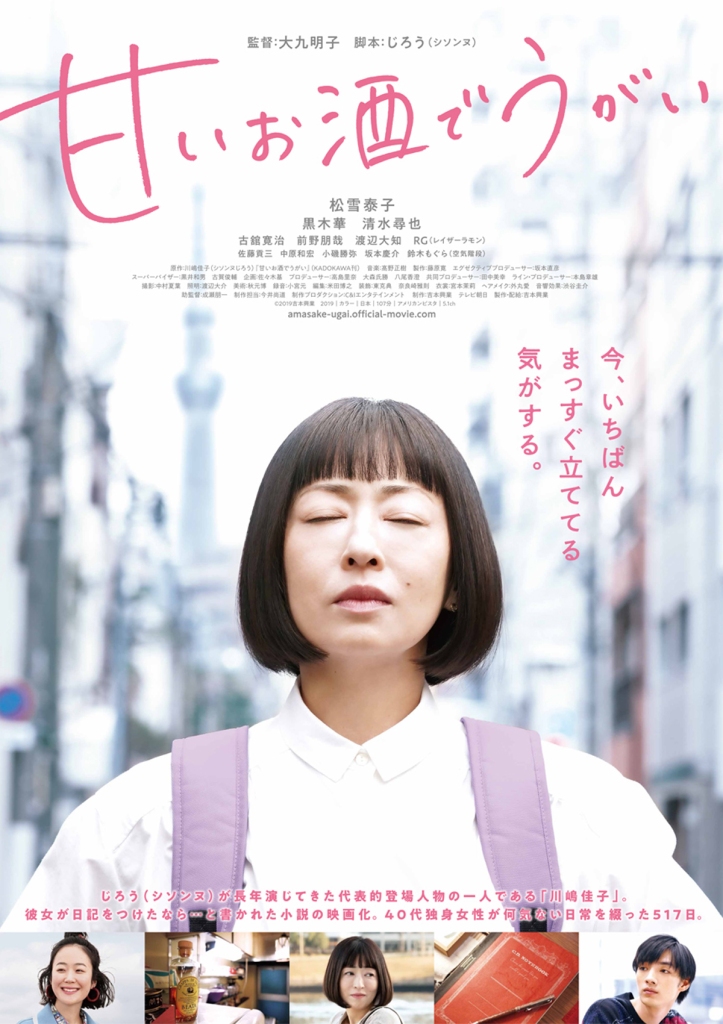
  • My Sweet Grappa Remedies – latest from Akiko Ohku in which a lonely middle-aged woman finds love and friendship with the help of an outgoing colleague. Review.
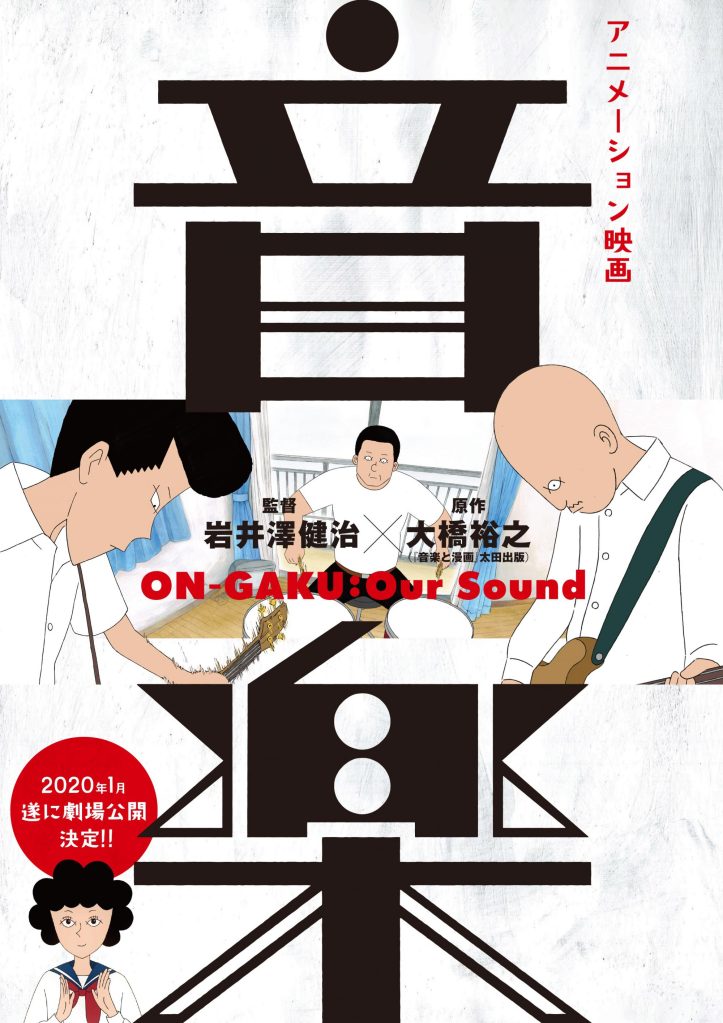
  • On-Gaku: Our Sound – award-winning animation in which a trio of bored high school students decide to start a band.
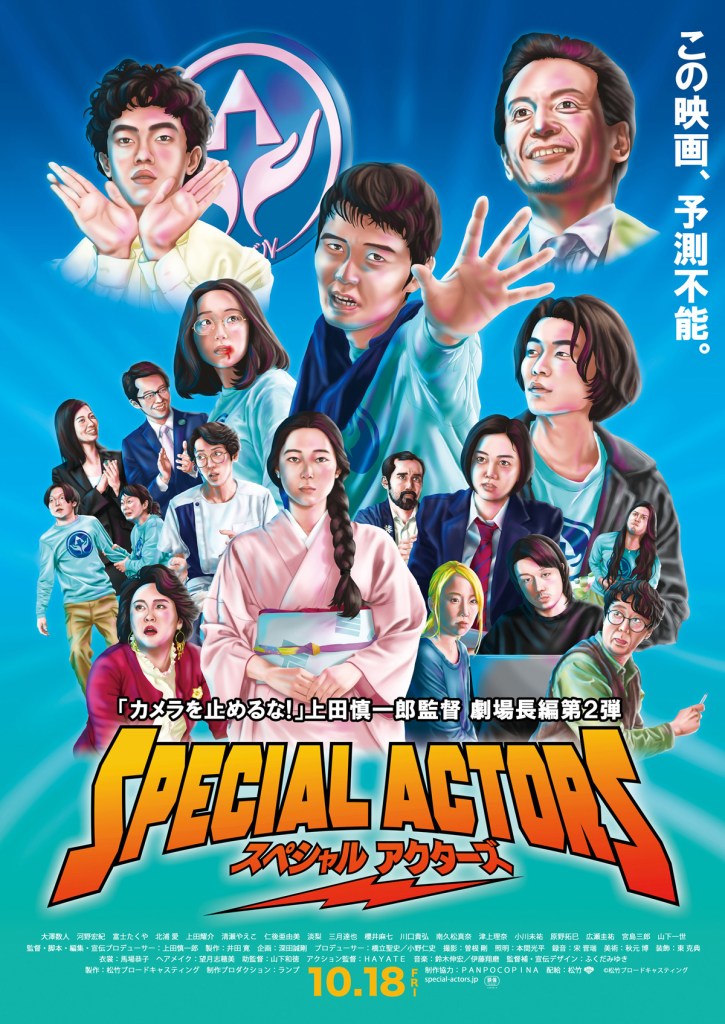
  • Special Actors – meta-narrative from One Cut of the Dead‘s Shinichiro Ueda in which a shy aspiring actor joins an unusual agency where he’s asked to play a part in other people’s “real life”.
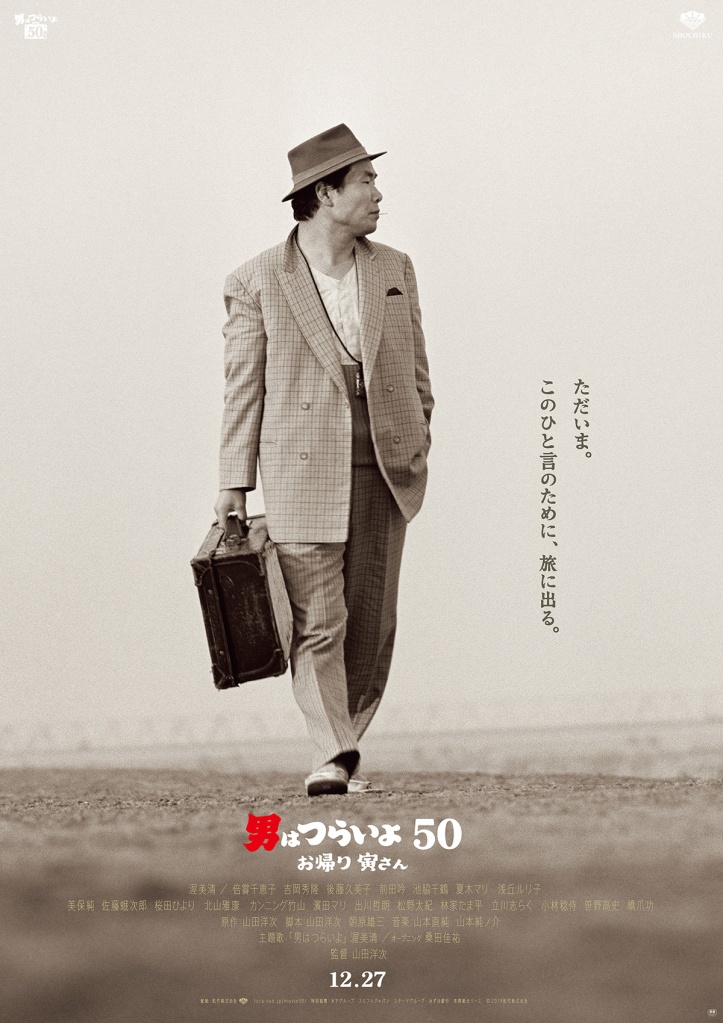
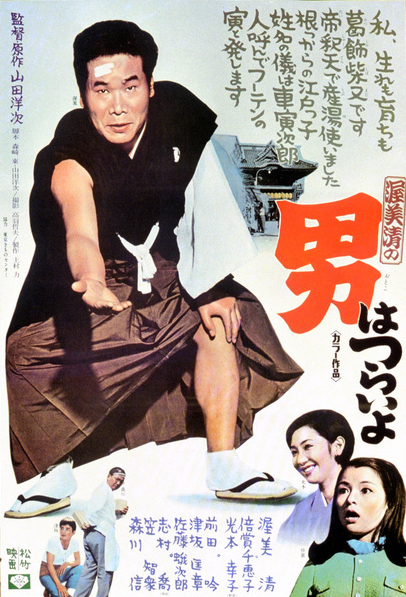
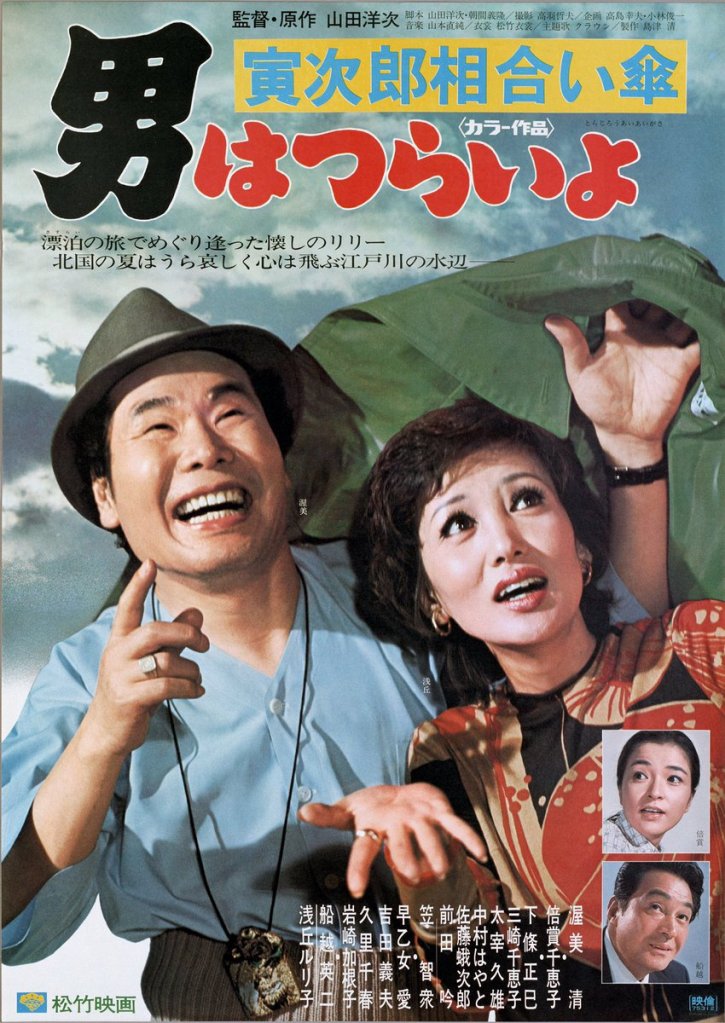
  • Tora-san, Wish You Were Here (Tora-san #50) – loving tribute to the classic Tora-san series
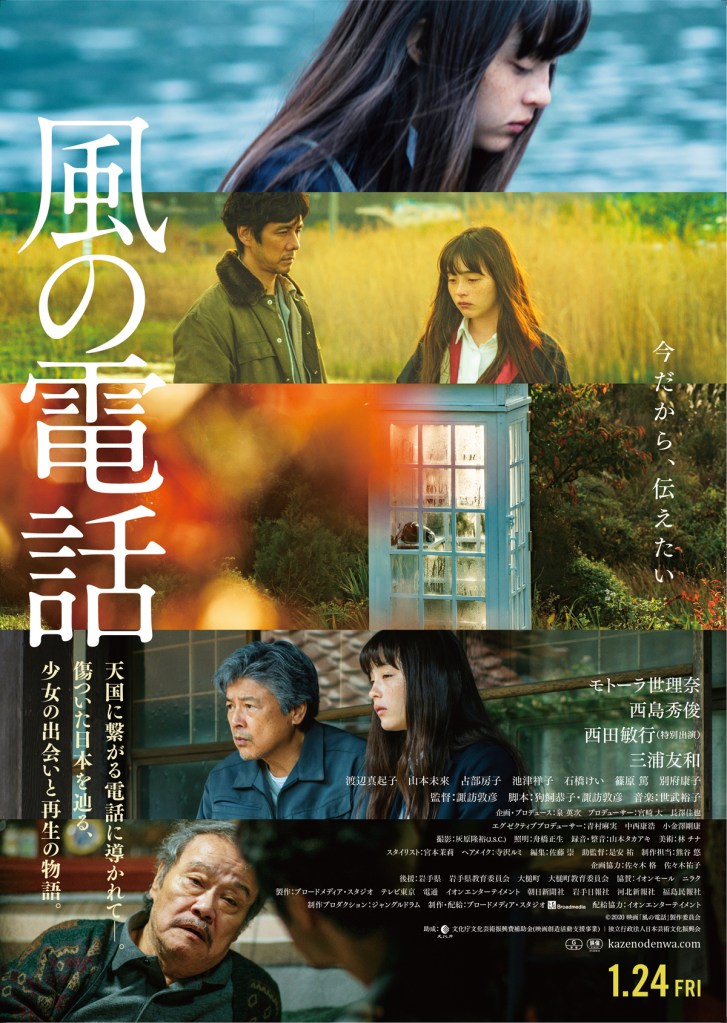
  • Voices in the Wind – a young woman travels back to her hometown in search of the famous “wind telephone” which has become a beacon of hope for those bereaved by the 2011 earthquake and tsunami.

Next Generation

  • Beyond the Night – a brooding outsider connects with a young woman trapped in an abusive marriage.
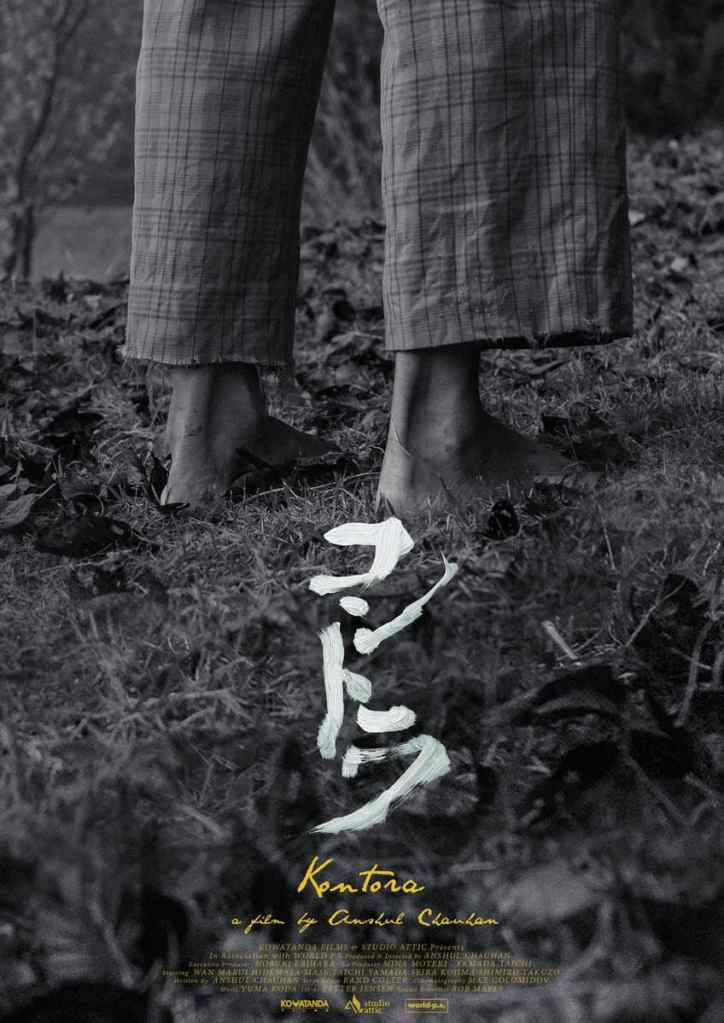
  • Kontora – a young woman uses her grandfather’s wartime diary to look for buried treasure in Ansul Chauhan’s Bad Poetry Tokyo followup. Review.
  • Life: Untitled – Kana Yamada adapts her own stage play set in the office of a Tokyo escort service.
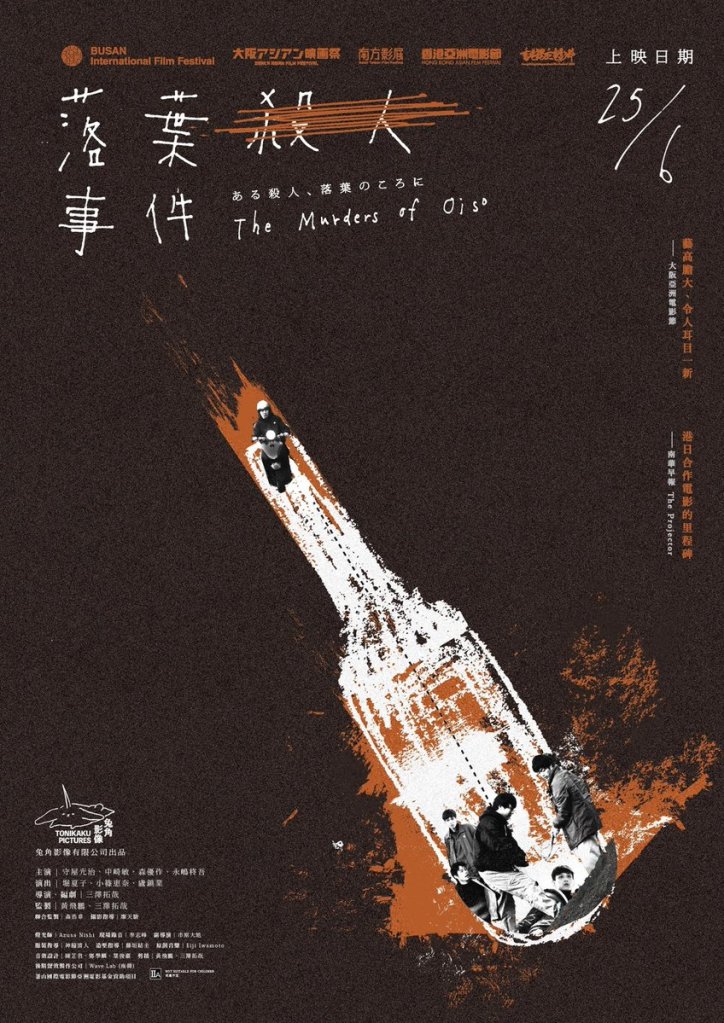
  • The Murders of Oiso – the everyday lives of four construction workers in a small town are thrown into disarray by the murder of their former teacher.
  • My Identity – a Taiwanese-Japanese teenager flees Tokyo with a harassed office worker.
  • Roar – parallel stories of violence in which a young man becomes involved with a vagrant paid to beat people up, while a radio host tries to fend off the aggressive attention of her boss.
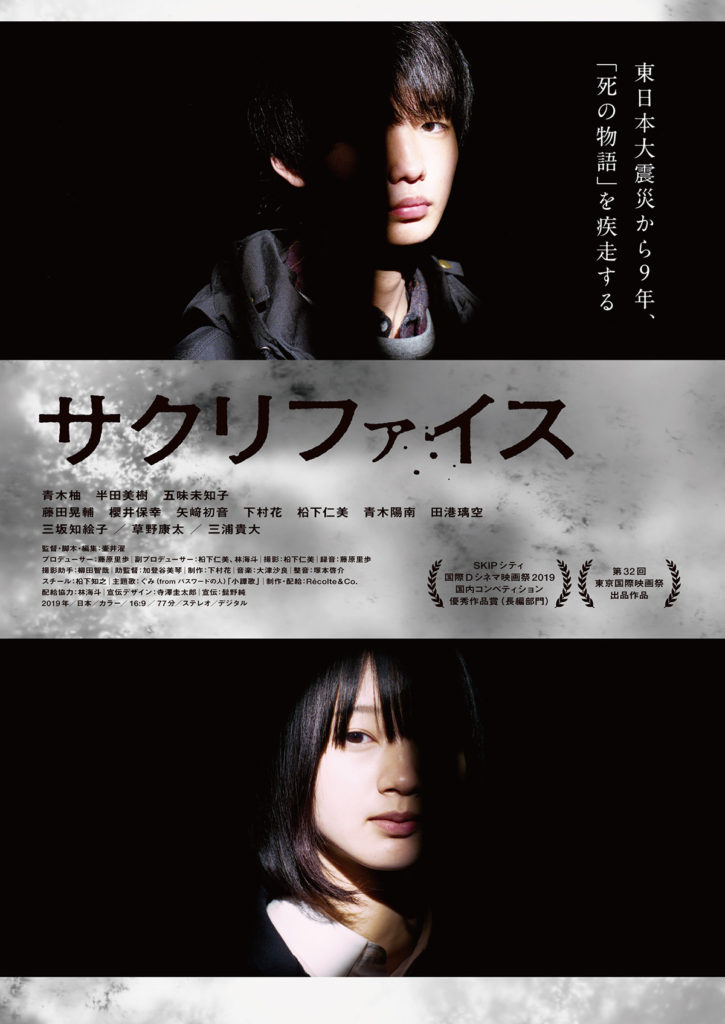
  • Sacrifice – a former cult member who predicted the 2011 earthquake continues to have mysterious visions, while her classmate begins to suspect that another student is responsible for a murder.

Classics

Documentary Focus

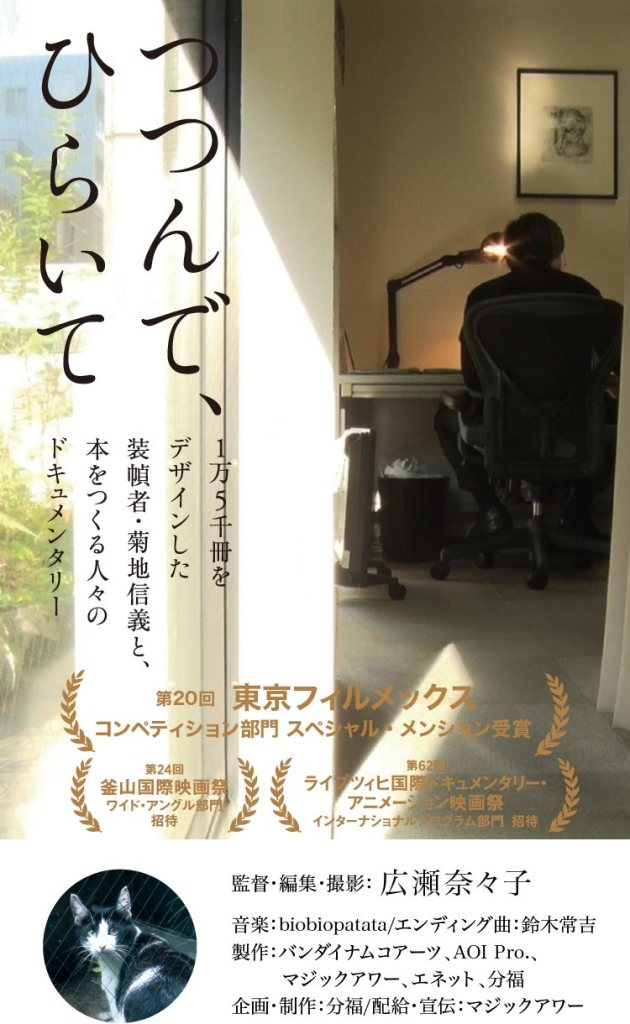
  • Book-Paper-Scissors – Nanako Hirose explores the life of book designer Nobuyoshi Kikuchi. Review.
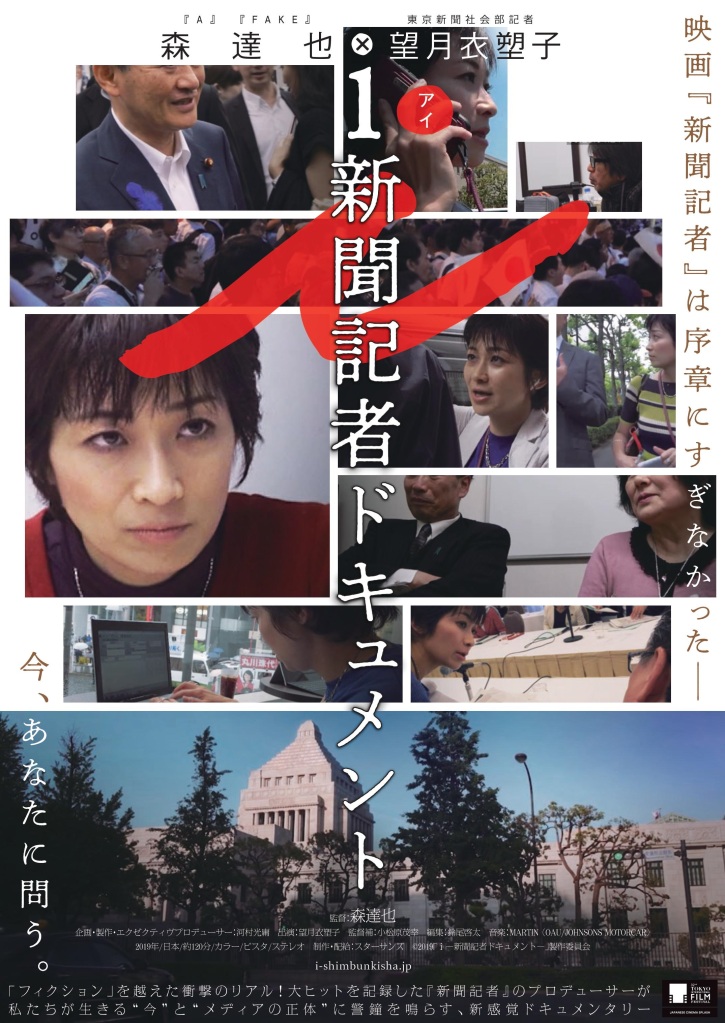
  • i -Documentary of the Journalist- – documentary following outspoken journalist Isoko Mochizuki. Review.
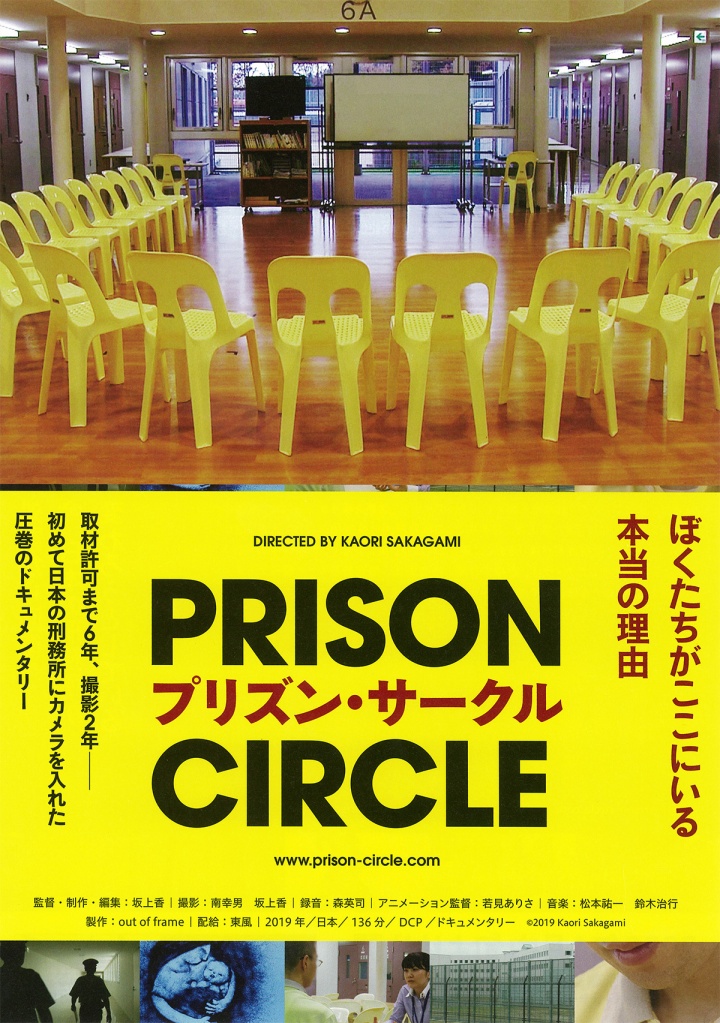
  • Prison Circle – documentary exploring therapy programs for prison inmates hoping to reintegrate into mainstream society
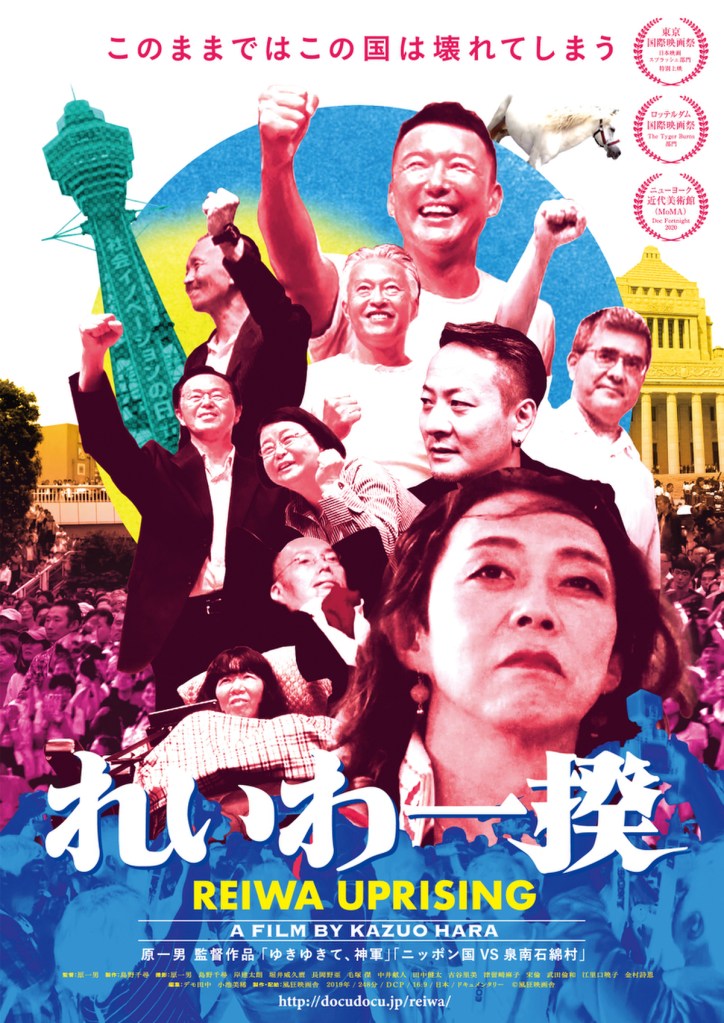
  • Reiwa Uprising – the latest documentary from Kazuo Hara follows newly formed left-leaning political party Reiwa Shinsengumi.
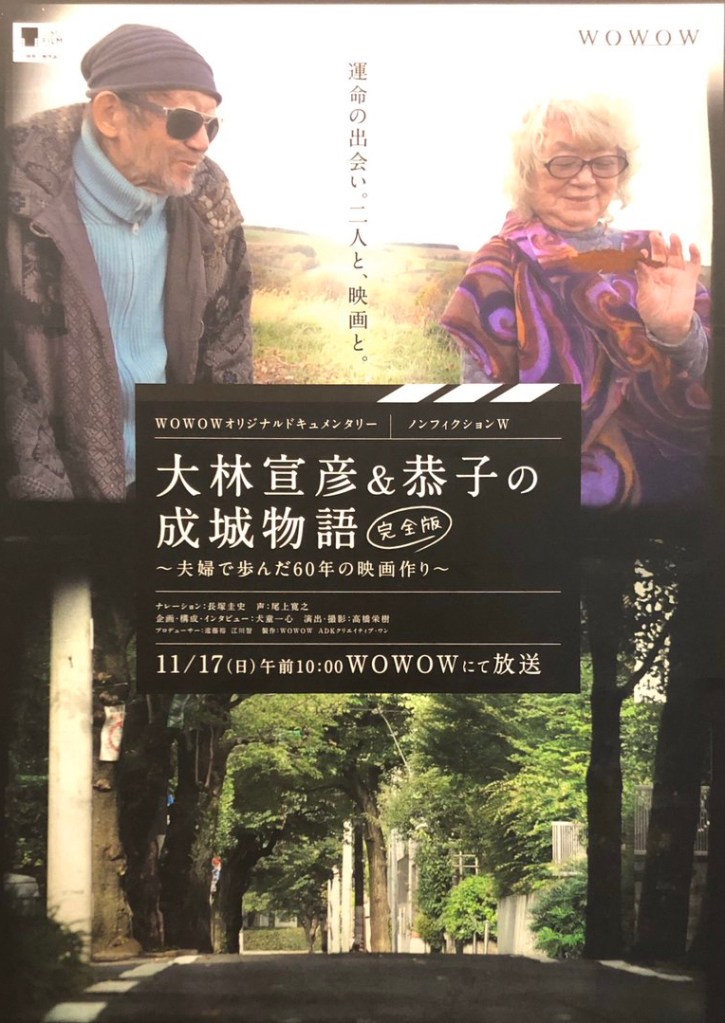
  • Seijo Story – 60 Years of Making Films – documentary exploring the 60-year professional relationship between Nobuhiko Obayashi and his wife/producer Kyoko Hanyu who met as students at Seijo University in 1959.
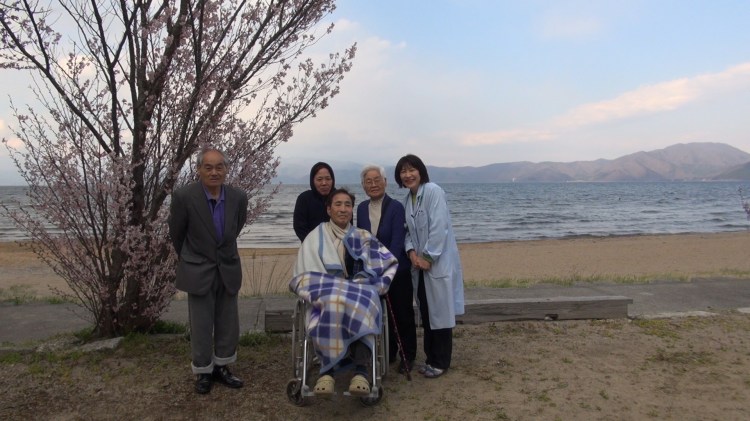
  • Sending Off – documentary by Ian Thomas Ash following a doctor who cares for terminally ill patients across rural Japan.
  • What Can You Do About It – a filmmaker with ADHD documents his friendship with a relative who has Pervasive Developmental Disorder.

Experimental Spotlight

There will also be a number of complementary events on offer including a series of panel discussions on such topics as the career of the late Nobuhiko Obayashi, cinema during the pandemic, and documentary, plus a live Q&A with Shinichiro Ueda, CUT ABOVE Awards: Koichi Sato & Ken Watanabe, and the Closing Night Live Q&A with the Obayashi Prize Recipient.

Limited numbers of “tickets” are available for each film and can been pre-booked from July 10 to be viewed July 17 to 30. After you start playing a film you will have 30 hours to finish watching. Features stream for $7 and shorts for $1.50 – $3.00. You can also pick up an all access pass for $99 or a selection of bundles for each strand. Full details for all the films as well ticketing links (when available) can be found on the official Japan Cuts platform, and you can also keep up with all the festival news as well as the year round programme via Japan Society New York’s website, or by following them on Twitter and Facebook.