Four Moods (喜怒哀樂, Pai Ching-Jui, King Hu, Li Hsing, Li Han-Hsiang, 1970)

A key figure in the history of Sinophone cinema, Li Han-Hsiang migrated to Hong Kong from the Mainland in 1948, studying originally as an actor at the Yong Hwa Film Company under the director Zhu Shilun before performing various roles in the industry working as a set painter and graphic artist as well as in voice acting. After his directorial debut Red Bloom in the Snow proved a critical hit, he joined Shaw Brothers in the mid-1950s where he became instrumental in the success of the studio’s hugely popular period musicals inspired by Huangmei opera including the classics The Kingdom And the Beauty (1959) and The Love Eterne (1963). In 1963 he left Shaw Brothers to found Grand Motion Picture Company in Taiwan, helping to further the burgeoning Taiwanese film industry where the Huangmei musicals had proved so popular. Unfortunately, however, the Grand Motion Picture Company ran into financial trouble in the late 1960s and Four Moods (喜怒哀樂, Xǐnù’āilè), a four-part historical portmanteau piece featuring instalments from the most prominent directors of the day including Li himself, was in part intended to improve its flagging fortunes. Unfortunately it was not in that regard successful and Li eventually returned to Hong Kong, founding another production house before rejoining Shaw Brothers in 1972. 

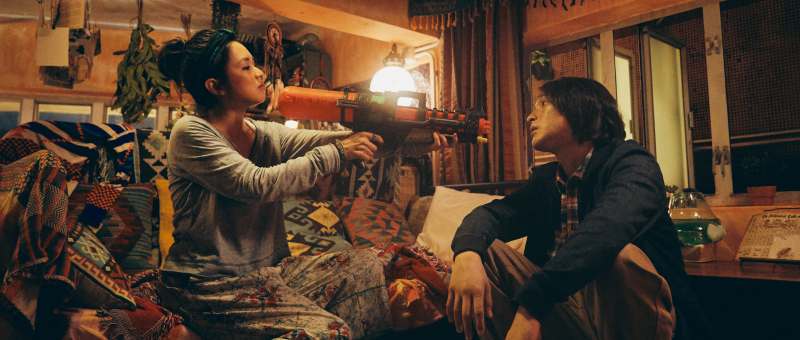
The first of the Four Moods, Joy, is directed by Pai Ching-Jui who studied filmmaking in Italy in the early ‘60s and was heavily influenced by Italian neo-realism but perhaps counterintuitively his contribution is an entirely wordless piece of expressionist psychedelica in which a man trying to stay awake (Yueh Yang) receives a visitation from a beautiful female spirit (Chen Chen) who seems to be the incarnation of a woman whose resting place he repaired after frightening off a disfigured grave robber, planting a pretty flower he found into the earth. The man eventually beds the demure young woman but is disappointed to find her disappeared the next morning, running out into the forest and trying the same thing again, scouring headstones looking for a woman’s name and then planting his flower only to be much less enthused with his next visitor. A visually arresting fever dream of sex and death playing out in a gothic dilapidated cottage in the middle of a foggy forest and set to a primal beat of traditional instrumentation, Pai’s eerie ghost story is feast for the senses. 

King Hu’s Anger, meanwhile, sees the legendary director return to Dragon Inn territory as the destabilising forces of the age meet in a nihilistic battle for survival at remote outpost. The main thrust of the drama follows retainer Tang-hui (Chang Fu-Geng) who is despatched by General Yang to follow one of their men, Tsun, who has been sent into exile after killing the son-in-law of rival general Wang in a fight, but it’s believed that Wang has bribed his guards to kill him before they reach the border. They do indeed try to assassinate Tsun but he seems to fend them off and no longer thinks of them as dangerous when they arrive the inn which turns out to be staffed by duplicitous innkeepers who make a habit of robbing and murdering their guests. Tang-hui, when he turns up, is next on their list because they believe he’s a wealthy businessman weighed down with silver. Soon enough all hell breaks loose as Tang-hui takes on the innkeepers while the mercenary guards debate which side it’s best to be on, culminating in an extraordinarily well choreographed battle set to the rhythms of Peking opera. 

Anger then gives way to Sadness, directed by “godfather of Taiwanese cinema” Li Hsing who migrated from the Mainland in 1949 and began his career in Taiyupian Taiwanese language cinema in 1958 with Brother Liu and Brother Wang on the Road in Taiwan. One again a ghost story, Sadness meditates on the fallacy of vengeance as a man (Ou Wei) returns home after 10 years in prison on a trumped up charge looking for revenge against the men who murdered his family but inconviently discovers that they were all murdered themselves some years previously so there’s no one left to take revenge against. Retaking his family home, he finds a beautiful young woman (Chang Mei-yao) living there who claims to be a refugee making use of the empty house. She tries to talk him out of his revenge fantasies which involve pointlessly desecrating the graves of the Lan family so they’ll never rest in peace, but he doesn’t listen. Thrashing around angrily with his sword, the man eventually softens as he falls for the woman, but ruins his chance of happiness in his inability to let go of his grief and rage. 

The final segment, Happiness, is directed by Li Han-Hsiang himself and is a comparatively subdued tale revolving around a cheerful miller (Ko Hsiang-Ting) who enjoys a drink while fishing in the river by the millhouse. It’s there that he encounters a strange young man (Peter Yang Kwan) who charms the fish into his basket through the beautiful music of his flute. The miller learns that the mysterious man, Liu Lon, is the ghost of one who fell into the river drunk sometime previously and is looking for his replacement so he can move on. Problematically for the miller that involves the death of a young local woman (Chiang Ching) he knows well who considers drowning herself because her father doesn’t approve of her marriage to a man she loves. He saves her, offering to intercede with her father to make him see sense, which means he gets to spend more time with his ghost friend but also that Liu Lon will be in purgatory for another few years. Liu Lon later gets another chance but takes pity on a lost soul and is rewarded for his selfless act of kindness, as he tells the miller will he be for all his earthly goodness. If we haven’t learned already from all the terrible tales of fruitless human greed and violence presented in the other three segments, the path to happiness lies in temperate kindness which is sure to receive at least celestial reward in its proper time. 


Four Moods streams in the UK until 27th September as part of the Taiwan Film Festival Edinburgh.

Original trailer (English subtitles)
Whale Island (男人與他的海, Huang Chia-chun, 2020)

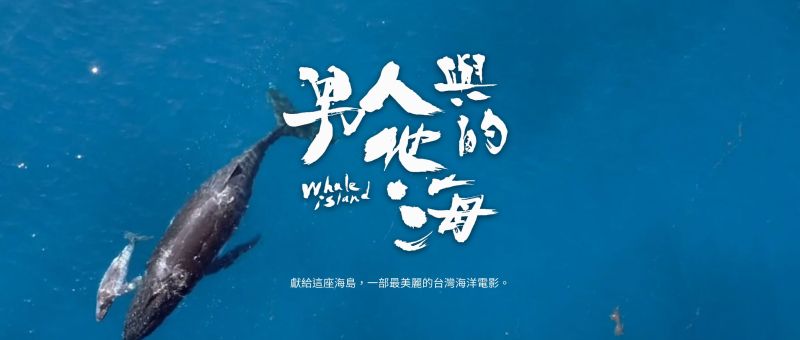
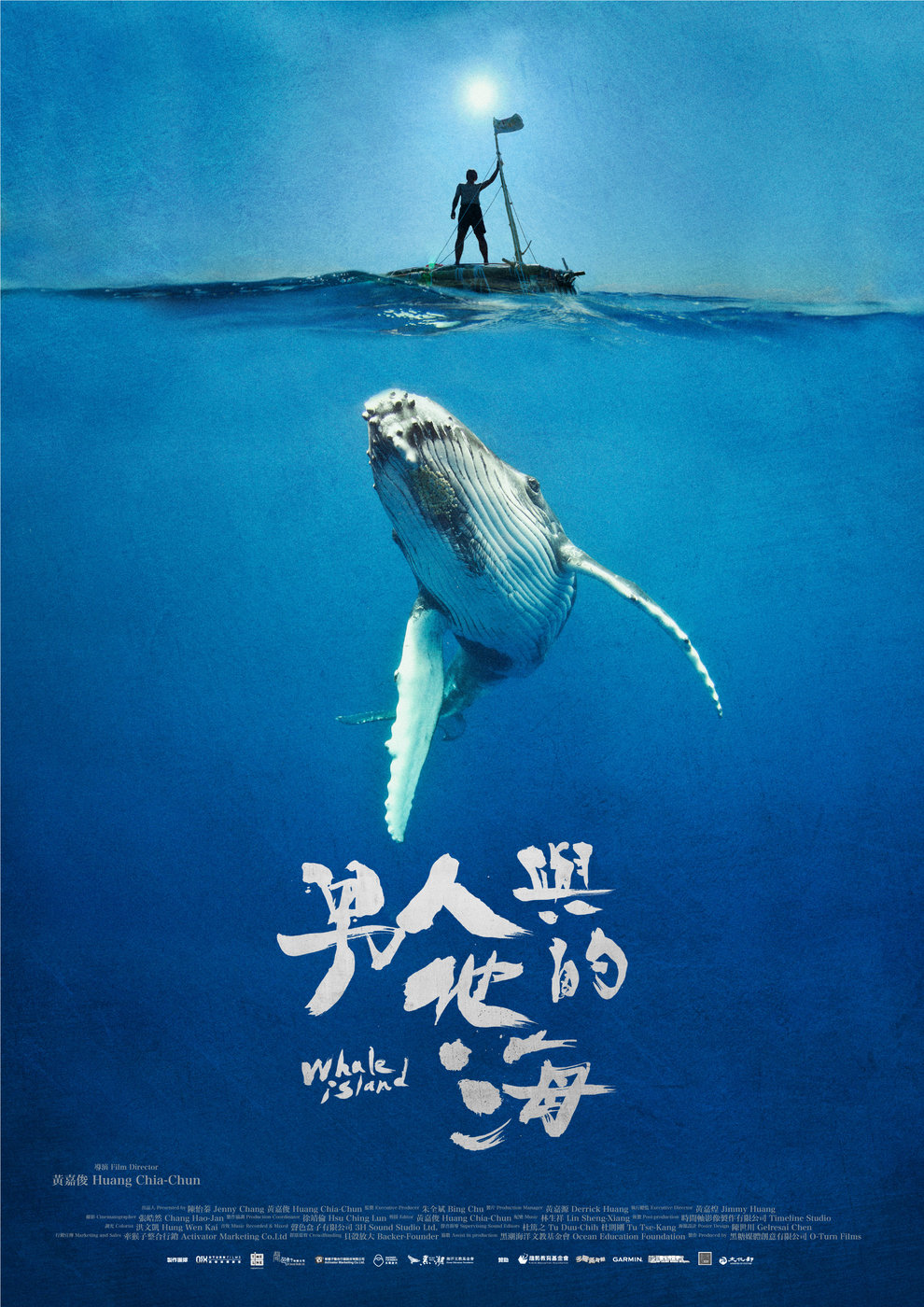
Taiwan is an island, but its people have lost touch with the sea according to one of the protagonists of Huang Chia-chun’s contemplative documentary. Whale Island (男人與他的海, Nánrén Yú Tā de Hǎi) argues that fear has blinded the populace to the beauty which surrounds it, robbing them of their natural freedoms in a symbolic act of repression, but love of the ocean has also cost both of Huang’s protagonists dearly as they find themselves having to prioritise leaving those they love behind on land while they immerse themselves in the solitude of the sea. 

Oceanoggrapher Liao refuses to be constrained. “During your lifetime it’s inevitable for you to be restricted.” he admits, “restricted by society, restricted by reality, restricted by age, restricted by body.” Liao laments that if only people could learn to lose their fear of the water, something he feels has been deliberately cultivated as a means of oppression, everything would be better. For his own part, he fell in love with the sea for the sense solitude. As a young man with language difficulties he longed to escape other people, dreaming of becoming a lighthouse keeper or perhaps a forest ranger before getting to know some captains of fishing boats and getting a job as a fisherman. These days he acts as a tour guide, running scenic trips for tourists showcasing the wonder that exists just off shore with its spinning dolphins and visiting whales. 

Ray, meanwhile, is a wildlife photographer specialising in underwater shots of marine animals. As a father to two young sons, however, he finds himself conflicted, putting his work on the back burner knowing that to do it all out would mean being away from his family for long stretches of time but watching other photographers push further ahead by hopping the planet chasing the seasons. A few weeks a year he travels to Tonga where, unlike Taiwan, it’s permissible to swim alongside the whales but the work is not without danger as he proves after getting whacked on the leg by a curious whale’s tail and being stuck on the shore while he recuperates. Ironically, his boys fear the water, not because its destructive capacity but because of the very real anxiety that that will swallow him whole, that one day he’ll disappear beneath the waves and never resurface. 

Like Ray, Liao also found himself with a kind of choice only in his case it was no choice at all. His marriage eventually broke down because of his obsession with the sea, damaging his relationship with his young daughter which was not repaired until she was a grown woman suffering a health crisis. Yet the sea was not something he could sacrifice, dedicating his life to unlocking its mysteries while insisting on his own freedom, refusing to be constrained by conventional social codes or the will of others. 

Liao is convinced that if people turned to face the sea, lost their fear of it, then many things would change. Perhaps they would feel less oppressed, better able to express themselves and better equipped to live in freedom as he has learned to. According to the life philosophy communicated to him by a friend and mentor, the only way to survive a storm is to sail straight into it, turn the prow towards the source of the problem instead of trying to outrun it. Liao has done just that, attempting to raise awareness of the joys of the sea while fully aware of its concurrent dangers. Huang captures both the majesty of the Taiwanese landscape with its rolling seas, rocky inlets, and remote islands while marvelling at the prevalence of sea life found not so far off shore, neatly contrasting dolphins frolicking in the open seas with those forced to do tricks for tourists in nearby theme parks. A picturesque voyage along the island’s idyllic coastlines, Whale Island is a poignant reminder of the beauty that lies just over the horizon, constantly at the mercy of an ever changing world.


Whale Island streams in the US until Sept. 26 as part of the 11th Season of Asian Pop-Up Cinema.

Original trailer (English subtitles)
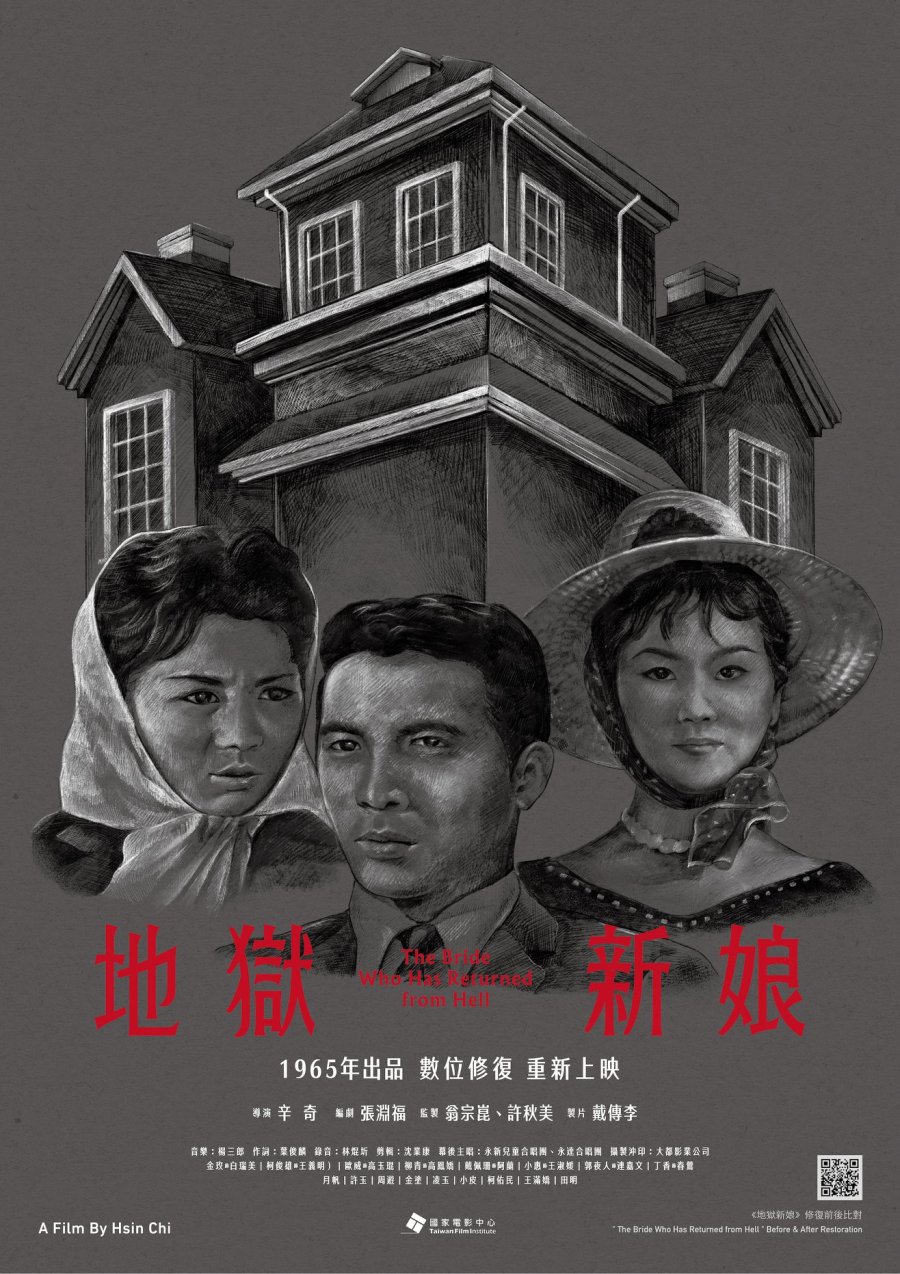
The Bride Who Has Returned From Hell (地獄新娘, Hsin Chi, 1965)

“That place is filled with horror and mystery” a creepily persistent man on a train claiming to be a clairvoyant warns the new governess to a home that does indeed turn out to be tinged with tragedy, though in true gothic melodrama fashion that was something of which she was already well aware. Inspired by the Victoria Holt novel Mistress of Mellyn, Taiyupian The Bride Who Has Returned From Hell (地獄新娘) is less supernatural mystery than eerie romance which sees frustrated desire collide with outdated social mores to destabilise the social order in the otherwise tranquil world of the new elite. 

Echoing the novel’s Cornish atmospherics, the opening title sequence pans over the rugged coastal landscape with its rocky outcrops and crashing waves before homing in on a policeman picking up a handbag while his colleagues investigate the body of a man drowned at sea. Meanwhile, wealthy entrepreneur Yi-Ming (Ko Chun-Hsiung) is worried because his wife Sui-Han is not at home despite the fact they’re supposed to be going to a friend’s birthday party. The man’s body is identified as Guo Jing-Min, Yi-Ming’s cousin and the older brother of the woman living next-door, Feng-Jiao (Liu Ching). Jing-Min and Sui-Han were once lovers, and given that the handbag appears to have been hers, it’s assumed that the pair attempted to elope but got into trouble and drowned with Sui-Han’s body possibly lost at sea. 

Perhaps tellingly, Yi-Ming’s reaction to his wife’s disappearance is irritation and suspicion. He asks the housekeeper if Sui-Han has ever stayed out all night while he’s away from home and on learning that she may have come to harm focuses solely on the embarrassment of being a man whose wife has betrayed him. “How am I supposed to face people?” he angrily asks Feng-Jiao who apologises on her brother’s behalf (but seems equally unperturbed at his demise). He more or less gives up on finding out what’s happened to Sui-Han and begins to reject his daughter, Su-Luan, solely because she reminds him of his wife while taking up with another woman, Mrs Lian (Kuo Yeh-Jen), who married a much older man presumably for his money. 

Meanwhile, Sui-Mi (Chin Mei), Sui-Han’s sister who has recently returned to Taiwan after many years living abroad in Singapore, has secretly taken a job as a governess in the Wang household under an assumed name in order to investigate her sister’s disappearance. The man on the train who warned her about the house’s dark mystery, the lonely little girl, and the man with a bad reputation turns out to be none other than the other brother of Feng-Jiao who lives with her in a neighbouring mansion. Apparently employed partly because of her physical similarity to the (presumed) late Sui-Han in an effort to provide comfort to the highly strung Su-Luan, Sui-Mi is only one of several doubles in play which include the decidedly creepy little girl Lan (Dai Pei-shan), the housekeeper’s granddaughter, who insists that Sui-Han is still alive while more or less spying on everyone making full use of her invisibility as a member of the servant class. 

Like any heroine of a gothic romance, Sui-Mi’s role is not just to solve the mystery but to restore order by unifying the various forces of destabilisation currently threatening the Wang family which is one reason we see her actively include Lan, treating her the same as she does Su-Luan, teaching the two girls to be friends and equals as she educates them both together. The other threat to social harmony is in Yi-Ming’s moodiness and womanising, most particularly his possibly immoral relationship with Mrs. Lian and inability to embrace his role as a father by showing love to his daughter who is already becoming strange and neurotic in the wake of her mother’s death, believing that she has been abandoned by both parents. Thus, partly thanks to her physical similarity to Sui-Han as her sister, Sui-Mi assumes the maternal role assuring Su-Luan that she will love her forever in her mother’s place while Yi-Ming’s growing attraction to her precisely because of these maternal qualities, in its own way also problematic, draws him back towards the proper path of home and family. 

Pursued by Feng-Jiao’s creepy brother and conflicted in her attraction to her brother-in-law while still harbouring the suspicion he may be involved in her sister’s disappearance, Sui-Mi finds herself drifting away from the idea of solving the mystery even while inhabiting the creepy mansion which is in its own way both literally and figuratively haunted. A dream apparition of her sister in an ethereal use of double exposure effectively gives her permission to pursue her romantic destiny by instructing her to stay in Taiwan and look after Su-Luan because, she fears, no one else will which doesn’t speak highly of Yi-Ming, while reminding Sui-Mi that she came to the Wangs’ for a reason.  

“You can’t get true love by manipulation” the villain is later told, revealing to us that the motive in this case really was romantic jealousy, a typically gothic sense of repression born of oppressive patriarchal social codes which prevent the proper expression of desire and eventually lead to violence. Sui-Mi restores order by solving the mystery and then healing the rifts by, ironically, submitting herself to those same oppressive social codes in assuming her “natural” role as wife and mother. Using a series of unexpected music cues from ominous Japanese folksong Moon over Ruined Castle as Sui-Mi surveys the rugged mansion to the more upbeat Hana as she plays with the children, moody jazz, Danny Boy, and even the James Bond theme playing over the climax (not to mention the many instances of child star and producer’s daughter Dai Pei-shan singing her gloomy lullaby), Hsin goes all in on the gothic imagery even having Sui-Mi almost fall victim to a suspicious rock fall just as she becomes a credible romantic heroine, before ending on a cheerful note with another song celebrating the simple joys of the traditional family.


The Bride Who Has Returned From Hell streams in the UK until 27th September as part of the Taiwan Film Festival Edinburgh.

Restoration trailer (English subtitles)

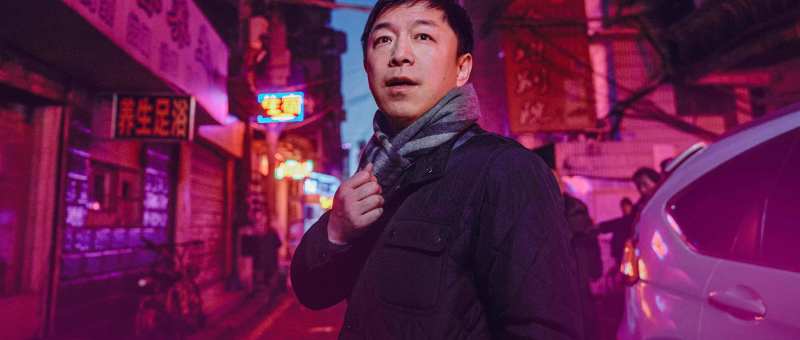
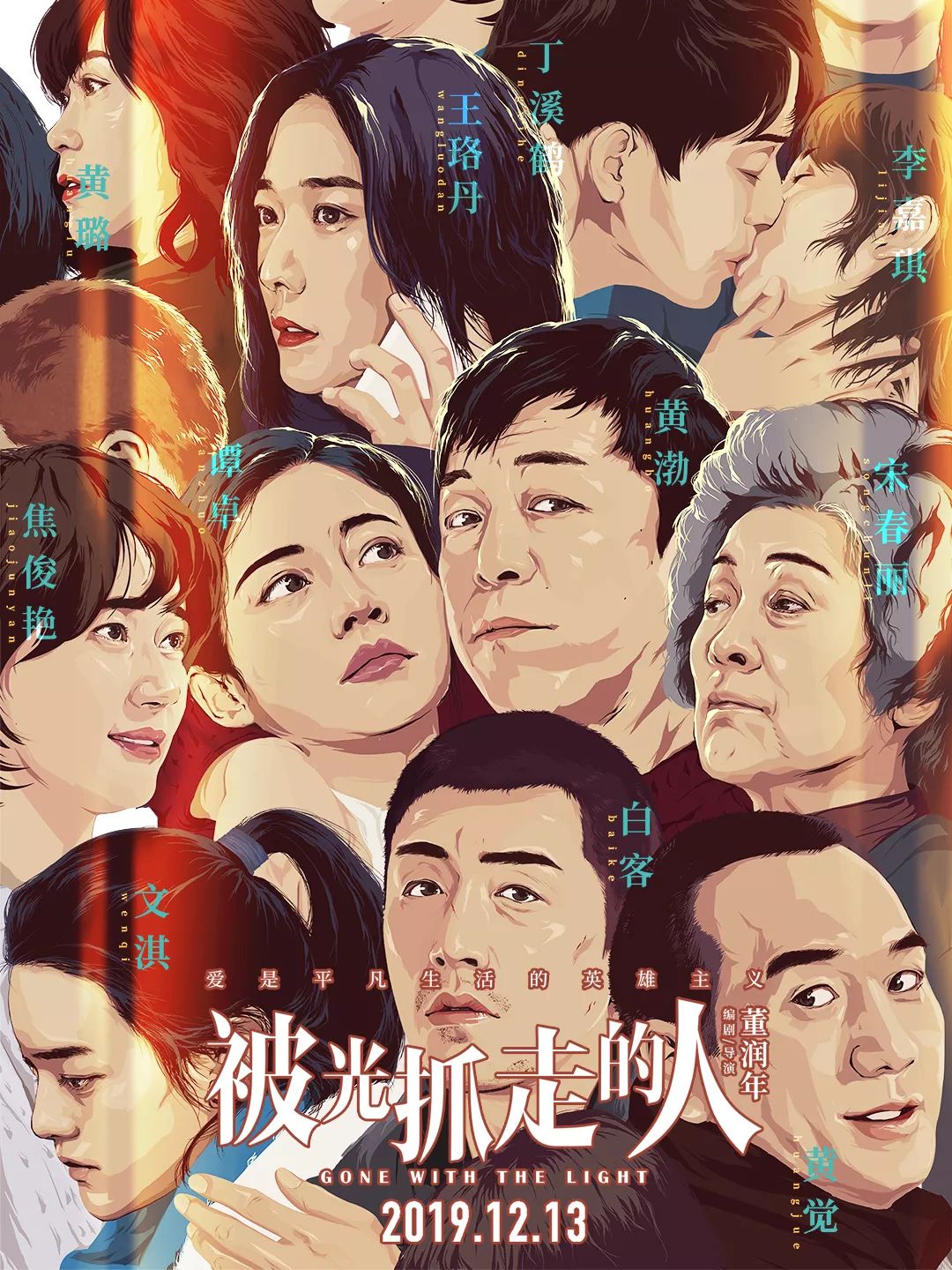
Gone with the Light (被光抓走的人, Dong Runnian, 2019)

What is love, and in the end does it really matter? It’s a question the mostly middle-aged couples of Gone with the Light (被光抓走的人, Bèi Guāng Zhuāzǒu de Rén) who perhaps assumed they were past such existential questioning find themselves contemplating after an unprecedented event causes the disappearance of seemingly random people from all over the world giving rise to the rumour that those taken were those truly in love. But if that’s so, what does it mean for the overwhelming majority left behind, suddenly lonely and uncertain wondering if they’ve been spared or judged and found wanting for their lack of emotional fulfilment. 

At 10am one spring morning, a brief flash of light creates a slight temporal disturbance causing a small percentage of the population to simply vanish. No one knows what happened or where they’ve gone, but the connection is later made that many seem to have been taken in pairs giving rise to the theory that the disappeared are the only true lovers. This is a minor problem for some of the left behind who have lost spouses twice over, not only literally but emotionally in realising that their loved one was in real, deep love with someone else. Meanwhile, those not taken begin to wonder why, questioning the validity of their relationships, doubting that their loved ones really love them but not quite daring to ask the same question in reverse. 

Dong opens the film with a vox pop session questioning several people about the nature of love, some of whom we’ll get to know better and others not. Our hero, school teacher, Wenxue (Huang Bo), unconvincingly claims that he does not put any stock in the admittedly unscientific theory that only true lovers were taken and that the rumours have not affected him or his wife but as we later see they have profoundly unsettled his unexceptional, middle-class family life which was at least superficially happy or perhaps merely unhappy in the most ordinary of ways. Before the light, we see him annoy his wife by waking her up smoking in bed before they have perfunctory, routine sex over which they discuss Wenxue’s hopes for promotion and whether or not it’s appropriate to schmooze with the headmaster to smooth the path. The fact they weren’t chosen eventually becomes a kind of embarrassment, the promotion going to a man whose wife disappeared on him for the slightly strange reason that being betrayed in love somehow grants him the moral high ground. Wenxue, like many, goes to great lengths to excuse himself, getting a fixer to photoshop pictures of his wife along with train tickets to make out she was in another town when the light descended.

Meanwhile, Li Nan (Wang Luodan), a woman who was in the middle of trying to divorce her husband when the light struck finds herself accosted by his mistress (Huang Lu) demanding to know where he is seeing as he did not ascend with her. The obvious conclusion is that he had another woman, but the quest forces each of them to reassess their true feelings towards the missing man, the mistress desperate to prove she wasn’t just an “adulteress” but a woman in love, and the wife that she really is ready to let him go. A young woman (Li Jiaqi) who threatened to commit suicide by jumping off a roof when her parents tried to stop her marrying her boyfriend (Ding Xihe) suddenly doubts her feelings when her parents disappear together while she and the man she thought she loved are left behind. A petty thug (Bai-ke), in the only subtle implication of a same sex love, becomes obsessed with the idea that his friend has been murdered by a TV presenter who had been bothering him and his death has been covered up to look like one of the disappearances, perhaps again hoping to find evidence against a romantic rejection. 

Talking to another man in a similar situation Wenxue is given a dressing-down, reminded that he’s been extremely self-involved and that the problems he’s now able to see in his marriage thanks to the light were there all along, only now he’s refusing to face them in a much more direct way. He couldn’t or chose not to see that his wife was lonely and filled with despair while flirting with an equally lonely woman at work. His confrontation with her provokes his only real moment of emotional reckoning as they each reflect on the fantasy of romance and its capacity to dissipate when realised. Walking in on his teenage daughter getting dumped for the first time he’s perhaps in the best position to offer advice, even if it’s of the fairly prosaic kind to the effect that she’ll get over it in time. “Your lies make me ashamed” she’d fired back at her parents’ middle-aged hypocrisy, a very ordinary marriage in which perhaps the “love” has gone, in one sense, but equally might be succeeded by something else. “It’s alright, you will know it in the future” Wenxue tells his heartbroken daughter but might as well be talking to himself, beginning to feel the love after love in conceding that perhaps this is what “love” is rather than any kind of “rapture” literal or otherwise. A beautifully pitched meditation on the consequences of love, the madness, violence, and loss, Gone with the Light finds its release in stillness and a gentle contemplation of that which remains when everything else is burned away. 


Gone with the Light streamed as part of this year’s New York Asian Film Festival.

Original trailer (Simplified Chinese subtitles only)

A City Called Dragon (龍城十日, Tu Chun-Hsun, 1970)

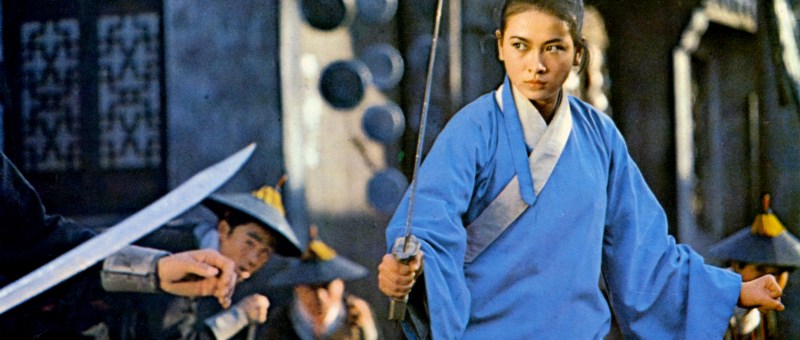
“A young girl like you has to be careful” a well-meaning palanquin driver warns our heroine, little knowing that into the heart of danger is exactly where she means to go. Tu Chun-Hsun’s Taiwanese wuxia A City Called Dragon (龍城十日, Lóngchéng Shí Rì) stars relative newcomer Hsu Feng immediately before her breakout role in King Hu’s A Touch of Zen as a noble Han Chinese revolutionary resisting Manchu oppression in the Song Dynasty bravely venturing into Dragon City currently in lockdown under the increasingly paranoid rule of its new magistrate, Lord Pu (Shih Chun). 

In 1131, “Jade Dragonfly” Shang Yen-Chih (Hsu Feng) leaves the mountain stronghold for Dragon City in order to rendezvous with Chen, a fellow revolutionary in possession of a plan book essential for the coming battle against the oppressive Manchu regime. As the palanquin drivers inform her, however, Chen, along with 80 members of his family, was executed for treason two days previously on orders of the new governor. The city is in a state of paranoid chaos that leaves the drivers unwilling to approach. Nevertheless, Yen-Chih is undaunted knowing she must get her hands on the book before it falls into the hands of the authorities. 

Tu conjures a world of tension and intrigue perfectly capturing the anxieties of Yen-chih’s undercover existence, painfully aware of each and every sound and always on the look out for trouble or betrayal as she wanders the paranoid city. Shortly before she arrives, a group of local men is brought in for questioning on the mere suspicion of visiting Chen’s grave, tainted by association and sent off to be tortured, bearing out the bearers’ assertion that Pu is a dangerously paranoid authoritarian intent on stamping out any and all dissent. If there’s a parallel to the White Terror here is it in implication only, but it’s presence is perhaps felt in the innate dangers of the world in which Yen-Chih now finds herself. In any case, she is perhaps in some instances protected by her appearance, written off as a genteel young woman in need of protection rather than a fearsome revolutionary able to leap tall walls in a single bound and endure days of torture never wavering in her mission. 

Meanwhile, Pu’s Manchu guards are universally corrupt. Yen-Chih makes a nervous entry into the city alarmed by a sudden cry of “freeze” only to realise the soldiers haven’t even noticed her, they are too busy gambling. Later they make a point of carting off her collaborator, tipped off by an obsequious informant hoping for advancement, and then ransacking his pharmacy, burning all his goods in the central square (which considering what they are might not be the best move), careful to pocket any valuables first. In such an atmosphere, perhaps it’s not surprising that Yen-Chih succeeds in finding unexpected allies, radicalising a young thief brought in, ironically, on suspicion of killing a spy she herself killed while they are both in prison. 

The Manchu regime and most particularly Pu’s deputy are indeed corrupt and oppressive, but as expected not quite everything is as we first assumed it to be. The ground constantly shifting beneath her feet, Yen-Chih chases the book but eventually discovers that she has been under a misapprehension as to its keepers and not only that, she’s also in the middle of someone else’s complicated revenge plot. The resolution though not exactly unexpected paves the way towards a surprisingly empathetic finale in which Yen-Chih is moved to discover the the extent to which a comrade has undertaken their duty, protecting her in facilitating her mission and allowing her to return to their shared cause with new hope while they remain behind alone in the increasingly destabilised environment of Dragon City the forces of Manchu for the moment seemingly turned against themselves. 

Breathtakingly tense, Tu’s anxious, low angle camera captures the sense of a city locked down by fear and paranoia while lending a ghostly air to the abandoned Chen estate where Yen-chih encounters its creepy butler before an intense showdown with Pu’s guards once again tipped off by their duplicitous informant. Boasting an extremely accomplished and charismatic performance from Hsu Feng as the intense swordswoman revolutionary and genuinely exciting choreography, A City Called Dragon is a forgotten gem of the ’70s Taiwanese wuxia boom.


A City Called Dragon streams in the UK 21st to 27th September as part of the Taiwan Film Festival Edinburgh.

Trailer (English subtitles)

Lucky Chan-sil (찬실이는 복도 많지, Kim Cho-hee, 2019)

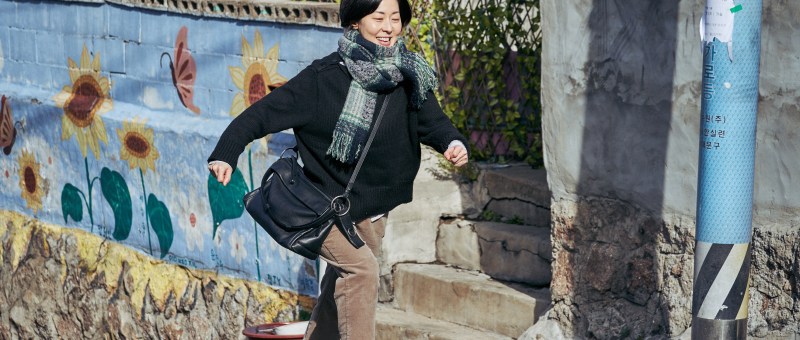
Life can be cruel and unpredictable. The titular heroine of Lucky Chan-sil (찬실이는 복도 많지, Chansilineun Bokdo Manji) thought she’d go on making movies with the same group of like minded people until the day she died only to have the rug pulled from under her by an ironic twist of fate that leaves her feeling worthless and exiled as if she’s wasted her youth on a one-sided love affair with cinema. What are you to do when your whole world collapses and you aren’t even sure who you are anymore? The answer, apparently, is to “dig deep”, maybe make a few mistakes, but figure out what it is you really want and then do that. 

The trouble is, all Chan-sil (Kang Mal-geum) had ever thought of doing was making movies. She’d been a long term producer to a notable indie auteur, but when he suddenly dies at the launch party for their latest film it leaves her without a career. Though a top industry figure had previously described her as the hidden gem of Korean cinema, a statement that seemed too effusive to be sincere even in the moment, she later tells her she doesn’t see the point in giving her a staff job because she’d only ever worked with the same director and for auteurs the producer is irrelevant. He would have made the same film without her or with literally anyone else. Even Chan-sil’s new landlady (Youn Yuh-jung) seems intent to put the boot in asking a genuine question as to what it is a producer actually does. Chan-sil tries to explain, but only ends up talking herself into another spiral of despair in wondering what exactly it was she was doing all these years. 

To ends meet she moves into room in a house lodging with an elderly woman who keeps a locked room Chan-sil is instructed not to enter. She also ends up becoming a cleaning woman/assistant to an eccentric actress friend with problems and insecurities of her own of which her timekeeping is only one. Sophie (Yoon Seung-ah) is also taking French lessons from secret indie filmmaker Young (Bae Yoo-ram), on whom Chan-sil gradually develops an awkward crush unsure in herself if she’s actually interested in him, in romance in general, or simply lonely and losing faith in cinema which she realises she had always used to fill the void of the emotional intimacy otherwise missing in her life. 

She is indeed a keen cinephile, going off Young when she tells him of her favourite filmmaker Ozu, only for him to admit he found Tokyo Story boring because “nothing happens” while expressing a preference for “entertaining” films like those of Christopher Nolan and retro hits from Hong Kong. That might be one reason Chan-sil finds herself haunted by a strange ghost (Kim Young-min) claiming to be Leslie Cheung and dressed in the white singlet and boxers he wore in an iconic scene from Days of Being Wild. Nevertheless, Leslie ends up being a sympathetic sounding board, giving her little bits of life advice and encouragement that finally allow her to rediscover her pure love of cinema aside from her industry betrayal. 

Director Kim Cho-hee draws on her own experience as a former producer who worked with the prolific Hong Sang-soo from 2008 to 2015 though her film is perhaps both a winking homage and rejection of Hongism. She opens with a Hongian title sequence featuring stark names against rattan, in itself a reference back to the Ozu Chan-sil claims to favour, before ironically expanding from 4:3 to a more comfortable widescreen as Chan-sil’s world implodes, killing of the indie auteur at a trademark Hong soju session. She also plays with doubling and symmetry, Chan-sil’s attempts to help her landlady learn to read cut against those of Young struggling to teach Sophie French while we learn that the landlady once had a daughter who loved movies and Chan-sil had a grandma who never learned to read or write. But unlike one of Hong’s self-obsessed directors, Chan-sil’s introspection has a more open quality, deciding that she wants to know what it is to really live while accepting that for her cinema is a part of that. Kim ends, literally, with the light at the end of the tunnel while a ghost applauds in a standing ovation, perhaps joining in with the audience as they celebrate Chan-sil’s success in finding her way out of a mid-life crisis and into a more positive future.


Lucky Chan-sil streamed as part of this year’s New York Asian Film Festival.

Original trailer (English subtitles)
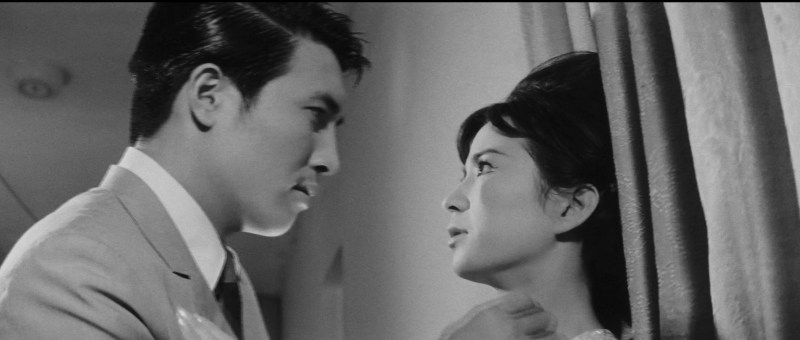
Leslie Cheung in Days of Being Wild

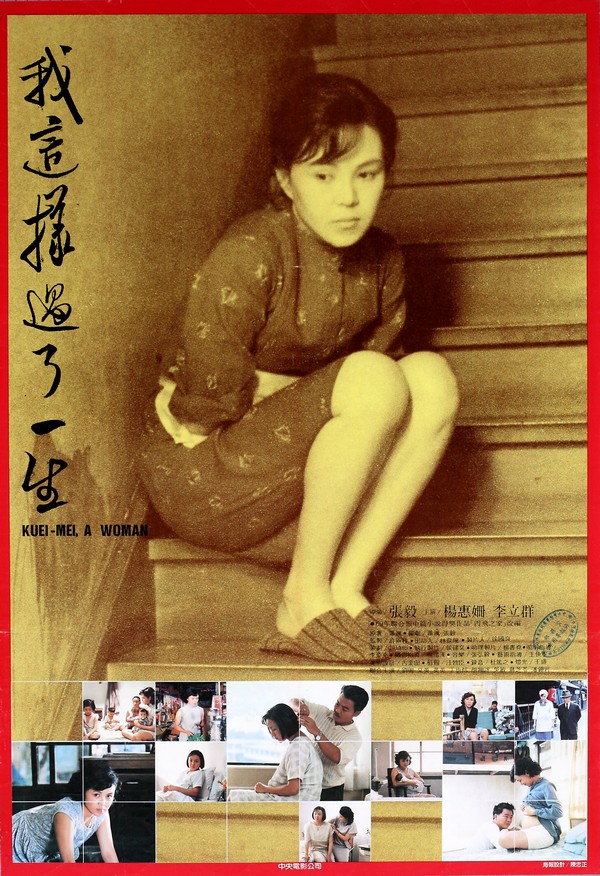
Kuei-Mei, a Woman (我這樣過了一生, Chang Yi, 1985)

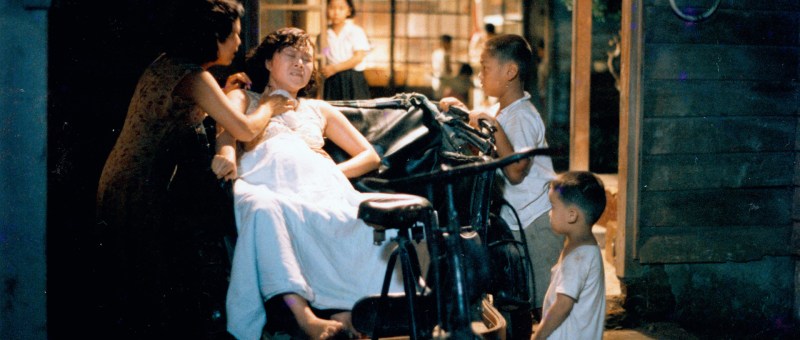
“Why are women always being tolerant?” a middle-aged, unmarried daughter asks her mother uncertain why she stoically put up with everything she did as if she had any other choice. As the title implies, Chang Yi’s Kuei-Mei, a Woman (我這樣過了一生, Wǒ Zhèyàng Guò le Yīshēng) , based on a book by his then wife Hsiao Sa, is the story of one ordinary woman though one who perhaps stands in for that of her nation undergoing a period of rapid change from post-war penury to comfortable prosperity in a little more than 30 years which is in essence a generation. 

Kuei-Mei (Loretta Yang Hui-shan) leaves Mainland China during the chaos of the civil war and escapes to Taiwan with her cousin. Living in limbo, neither of them intended to stay very long and assumed they’d one day be going home. Nevertheless, there are things which must be done, which is why Kuei-Mei finds herself gravitating towards an arranged marriage with a widowed father of three, Hou (Lee Li-chun), another Mainland refugee with a steady job as a waiter in a restaurant run by a foreigner. For lack of other options, Kuei-Mei decides to become Hou’s wife, but unbeknownst to her, he has a serious gambling problem that continually endangers their family and eventually loses him his job. Shackled to an irresponsible man, it’s Kuei-Mei who has to shoulder the responsibility of trying to keep the family together but in the end she can save it only by breaking it apart, accepting a job as a housekeeper to a wealthy couple who are moving to Japan taking with her only two of her five children, one of the twins she bore herself and Hou’s oldest boy who struggles in the Taiwanese educational system. 

As a middle-aged, modern woman, Cheng-fang, Hou’s oldest daughter, asks her step-mother why she chose to forgive her father, returning after having left him on discovering that he had fathered a child with another woman. Kuei-Mei doesn’t have much of an answer for her, we can infer she returned because the children needed her and she couldn’t support them alone, but wonders if her unhappy marriage is the reason Cheng-fang has remained single. Contemporary women have other options, they need not stoically resign themselves to passive suffering as the women of Kuei-Mei’s generation were expected to do. None of the marriages we see are particularly happy, from that of Kuei-Mei’s cousin and her husband whose constant arguing pushes her towards a marriage of her own to escape the awkwardness of being a guest in their home, to the wealthy Weis in Japan who again argue constantly because, the servants gossip, of a patriarchal power imbalance. Mr. Wei is dependent on his wife’s family for influence and advancement, but humiliates her through his infidelity while she feels trapped, fearing the humiliation of middle-aged divorce may be even worse. Again it’s a desire to escape the awkwardness of the Weis, along with the “humiliation” of living as mistreated servant, that motivates Kuei-Mei to leave their employ to work illegally in a restaurant in the hope of earning higher wages in order to return home and open a restaurant of her own. 

Kuei-Mei’s determination is in a sense to be her own boss, though the level of autonomous independence she can achieve is perhaps limited by the patriarchal society in which she lives. Nevertheless, she works hard to achieve it despite being tied to the dead weight that is Hou who can only drift along behind her, waiting tables in the restaurant she eventually sets up which is named after a street in the Shanghai she left as little more than a teenager. As an old woman she receives a letter from the man she was engaged to in her village, a sudden reminder of the life she could have had, all her youthful dreams of romance sacrificed on the altar of pragmatism in her marriage to Hou. But despite all the difficulty she remains surrounded by the family she secured through her maternity, even if the grown-up children all dream of lives abroad, scattered by the glittering prizes of a newly prosperous era. 

Late in life walking with Cheng-fang, Kuei-Mei passes the place where her twins were born, an elegant tower block replacing the tenement where she first lived with her cousin after arriving in Taipei. Her rise mirrors that of her country, patiently working hard to make something of herself in turbulent times, unrecognised by the world around her, but emerging with quiet dignity in her ability to bear her sorrow with grace as she determined to build a better future for her children. Her life has, however, been hard and its costs are visited directly upon her at its end, the ills of the modern society ironically symbolised in a cancer of the womb in a woman whose triumph lies in her maternity. A social realist epic filmed with a studied detachment, Chang’s hugely empathetic biopic of the everywoman has only a profound respect for stoic suffering while quietly resentful of the society which demanded it.


Kuei-Mei, a Woman streams in the UK 18th to 27th September as part of the Taiwan Film Festival Edinburgh.

Trailer (English subtitles)

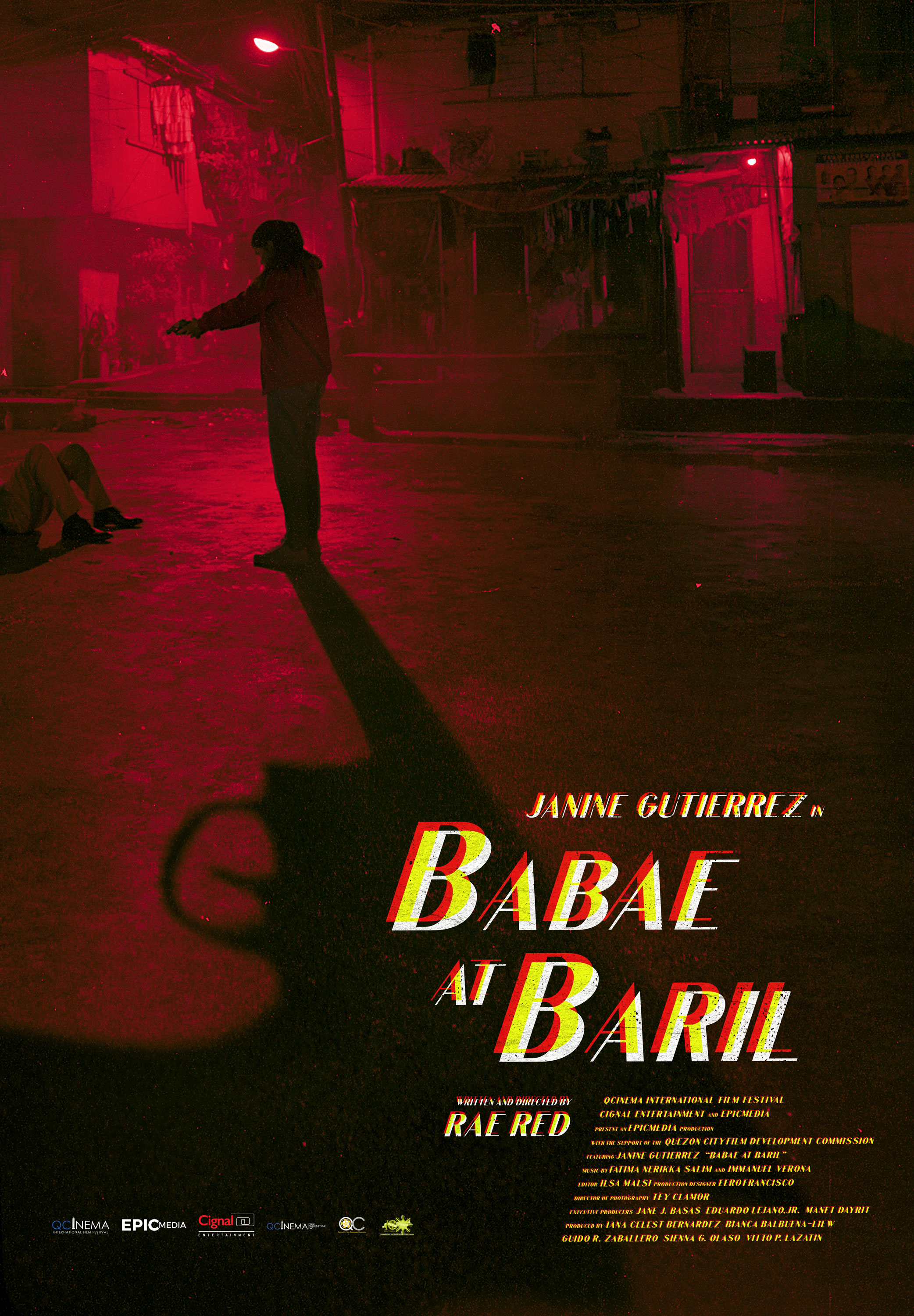
The Girl and the Gun (Babae at Baril, Rae Red, 2019)

“Everything is personal” according to one extremely oppressed young man in Rae Red’s neo noir voyage through the legacies of authoritarian violence, The Girl and the Gun (Babae at Baril). Drawing a direct line from Marcos-era oppression to Duterte’s Philippines and the war on drugs, Red’s debut solo feature is an irony-fuelled inquisition of the modern society equally ruled by fear and desperation in which many feel violence is the only recourse against their sense of despair only to discover that violence breeds only more of the same in a nihilistic spiral of hopeless impotence. 

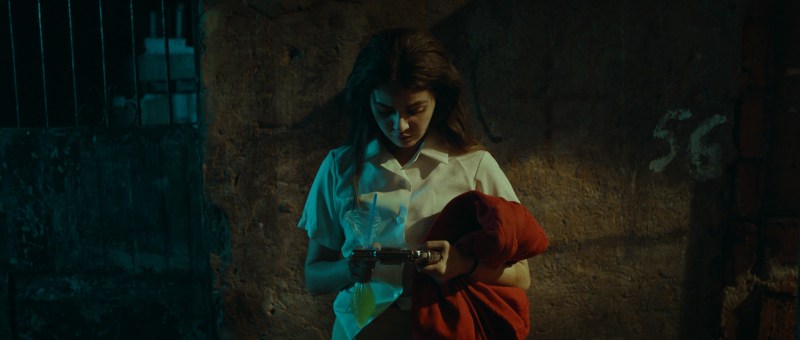
The never named heroine (Janine Gutierrez) is a meek and mild young woman who works in a department store where women, in particular, are expected to be prim and proper. The girl, however, is forever pulled up about the ladder in her tights, seemingly her only pair and as we’ll see she cannot afford to buy a replacement nor will one be provided for her by her employers who pat down employees as they leave the store each evening to ensure they haven’t stolen anything. Despite this however she believes she works hard and is under-appreciated, her sense of disappointment palpable as she witnesses another young woman be named employee of the month. Her colleagues view her as aloof because she is always the last to leave the building and never joins them for drinks, little knowing that it’s not her shyness that keeps her away but shame in her poverty. She has a long and arduous journey home to the poor part of town where she shares a room with another young woman, unable even to make her rent because she sends most of what she earns to the mother she apparently feels unable to return to. For all these reasons, she finds herself alone with a predatory colleague (Felix Roco) who rapes her, sheepishly apologises, and then returns with more threatening violence to advise her to keep her mouth shut. 

The evening before she’d heard a gun shot, left her apartment to investigate and seen a man run away, noticing an abandoned pistol with a heart on the barrel discarded in a rubbish bin. After the rape, she picks it up, immediately pointing it directly at the abusive boyfriend of her roommate. The gun gives her a sense of empowerment that counters the trauma of her victimisation. She is already beyond caring and can now say all the things she’s ever wanted to say to the men who treat her with such utter contempt, taking a flirty customer to task for his inappropriate behaviour with his young daughter sitting right next to him, and eventually giving her boss a piece of her mind when he finally fires her over something as petty as a barely visible uniform infraction. 

The girl had not usually been the type to complain, both her sleazy landlord and priggish boss keen to tell her that there are plenty of people waiting to take her place as if she should be grateful that her awful life is still not more awful. She and her friend dream of escaping the city, going home, or at least far away to a place where they could live a better life. Jun Jun (Elijah Canlas) the teenage drug dealer from the news reports dreams of something similar, lamenting most of all that he had homework due before he became the subject of a manhunt with which he’d struggled. He wonders how he might have done. His friend gives him all his savings which he’d been collecting for his own escape, hoping to return to his mother with his younger sister in tow in order to save her from a father he at least fears is abusive. 

Tracking through the history of the gun before it found its way into the hands of the girl, Red takes us back to the authoritarian violence of the Marcos regime as a nervous policeman assassinates “activists” in place of the current “drug dealers”, his son eventually picking up his gun a “policeman” like his father but filled with resentment towards inescapability of his fate. The gun passes from hand to hand, a child sticking the little heart sticker on it, creating only more chaos wherever it goes. It gives the girl the courage she thought she lacked to seize her agency, to talk back, to be “unladylike” in insisting on her equality in the face of the countless men who ignore, cat call, and abuse her. But the gun itself is not enough, her quest for violent vengeance hollow and unfulfilling, the only real liberation coming as she decides to abandon it in a final act of catharsis that breaks the cycle of violence and oppression which had trapped each of the gun’s owners. As a boy had said, it’s all personal. You might think it’s nothing to do with you, but you can’t escape the oppressions of the world in which you live be they poverty, misogyny, or authoritarianism. 

Largely taking place at night, Red bathes her city in the tones of neo noir, a land of shadows among neon, a shining cityscape of high rise buildings the like of which neither the girl or the street kids are ever likely to enter. Making fantastic use of music from the noirish jazz to the nostalgic pop of the oppressive ‘80s she fully embraces the pulpy exploitation of the material but always maintains a sense of playful irony, never forgetting the full import of her sometimes grim satire of life on the margins of Duterte’s Philippines as her variously oppressed protagonists seek freedom in violence but find only more constraint in the depths of nihilistic despair.


The Girl and the Gun streamed as part of this year’s New York Asian Film Festival.

Original trailer (English subtitles)
The Eight Hundred (八佰, Guan Hu, 2020)

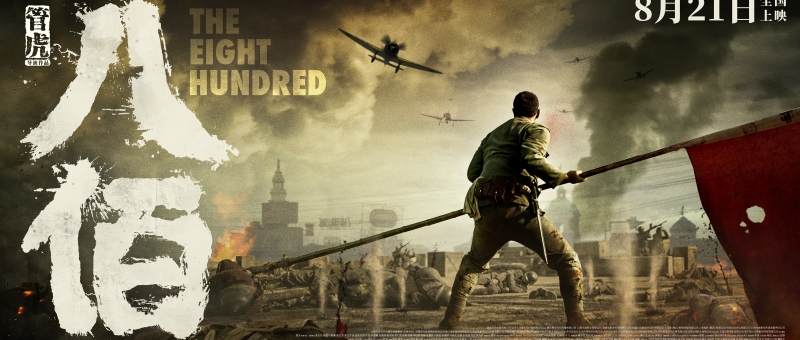
“Enjoy Shanghai. Enjoy Your Life” reads a neon-lit sign in the art deco paradise of Shanghai in the 1930s. Across the river, however, a war is raging. Guan Hu’s The Eight Hundred (八佰, Bābǎi), the first Chinese film to be shot in IMAX and boasting an unprecedented budget of US$80 million, was the last in a series of movies to be ignominiously pulled from a festival slot, the opening night of the Shanghai International Film Festival no less, for “technical reasons”. In this case, most have interpreted the nebulous term as a squeamishness on the part of the censors’ board to the fact that the film celebrates the heroism not of the PLA but of Chiang Kai-shek’s Nationalist Revolutionary Army who put up the last stand during the fall of Shanghai, securing a warehouse on the opposite side of the river from the British Concession knowing that there was no hope of stopping the Japanese, but hoping that their defiance would inspire foreign powers over to the Chinese side. 

The action opens in October 1937 shortly after the outbreak of the second Sino-Japanese War. Shanghai is falling and the Japanese will soon be on their way towards Chiang’s capital, Nanking. Nevertheless, the Japanese have resolutely avoided encroachment into the foreign concessions for fear of inflaming international relations in ways which might be inexpedient for their current goals. As a diplomat later puts it, war is always a matter of politics. Ordered to hold the line, the last remnants of the NRA are expected to die as an act of political theatre. There is no practical benefit to their sacrifice save the vindication that they went down fighting, their moral righteousness a tool to garner sympathy firstly with the international community who might be persuaded to intervene at an upcoming conference in Brussels (which is finally postponed because of a corruption scandal engulfing the Belgian PM). 

In Guan’s retelling, however, it is a much more domestic audience which becomes the ultimate target. A contrast is repeatedly drawn between behind the lines China, a wasteland of fire and rubble, and the glittering lights of the foreign concession with its billboards for Hollywood movies, famous actresses surveying the scene while the sound of opera both domestic and Western wafts over the river and business carries on as normal in the large casino run by an eccentric short-haired madam dressed in a Western suit. Cynical journalists chase the story from the comparative safety of a balcony above the bridge, chiding the Chinese reporter, Fang (Xin Baiqing), who has also been working as an interpreter for the Japanese, that he acts as if this war is nothing at all to do with him. The heroism of the 800 is the key to unlocking the latent patriotism of those living in the dream of the foreign concession where war happens only across the water, in another world no more real to them than a movie. They stand by the water and they watch, increasingly grateful to the soldiers for their protection until they too remember that they are also Chinese and this war is also their war. Women extend their hands towards those retreating across the bridge while the Peking opera turns its drums to the rhythms of war and the casino madam gives up first a flag and then a large stash of morphine hidden in her safe for probably obvious reasons. 

The flag might be one of several explanations for the censors’ squeamishness in that it is obviously now the flag of Taiwan and reminds us that these men are members of Chiang Kai-shek’s NRA, more often characterised in ideological terms as traitors rather than heroes. They are not however saints in the propaganda movie mould and it is even perhaps suggested that they are not much better than the Japanese, ruthlessly executing their own men as deserters and using prisoners of war as target practice for untrained, nervous recruits (the Japanese meanwhile publicly dismember their prisoners with the intention of intimidating Chinese forces). The youngest of the soldiers is only 13, a farmer’s son pulled off his land with his older brother who was tricked into the war machine by the desire to see the shining city of Shanghai and perhaps travel to England. Some of them try to run, torn between the desire for escape and a responsibility to their fellow men, each eventually fully committed to their forlorn hope determined to hold the warehouse if only to prove that they held the line for as long as it could be held. 

That same diplomat encourages commander Colonel Xie (Du Chun) that what he does here will be remembered, and that his men are the “real Chinese people” in another statement that probably rankled with the censors. Repeated references to legendary general Guan Yu paradoxically link back to the contemporary context as the narrator of a shadow play echoes that the Han restoration rests with the young while an angry soldier rants about planting a flag on Mount Fuji as revenge for everything they’ve suffered, making the case for the resurgent China beholden to no one something echoed by the moving scenes juxtaposing the ruined warehouse with the ultramodern city which now surrounds it. Yet Guan opens with a peaceful image of pastoral serenity which stands in stark contrast to the chaos of war as his numbed camera slowly pans between one scene of carnage and the next. Men blow themselves up, cry out for their mothers, send letters home, and call out their names as they die to prove that they existed while a beautiful white horse runs wild in the vistas of desolation. Unashamedly patriotic despite its slightly subversive context, The Eight Hundred presents war as the meaningless chaos that it is, but also lionises the men who fought it in the mythic quality of their heroism as they alone stood their ground and finally convinced others to do the same.


The Eight Hundred is in UK Cinemas from 16th September courtesy of Cine Asia.

UK trailer (English subtitles)
Hell Bank Presents: Running Ghost (冥通銀行特約:翻生爭霸戰, Mark Lee, 2020)

“The most important thing in life is to know how we die” according to the very efficient lady manning the desk in the Labour Department of Hell where, it seems, everyone has to do their bit. No rest for the wicked, even in death. A glorious satire on the business of modern living, Mark Lee’s Hell Bank Presents: Running Ghost (冥通銀行特約:翻生爭霸戰) sends its recently deceased hero on a quest to find meaning in his life from the other side as he becomes an unwilling contestant in an undead variety show. 

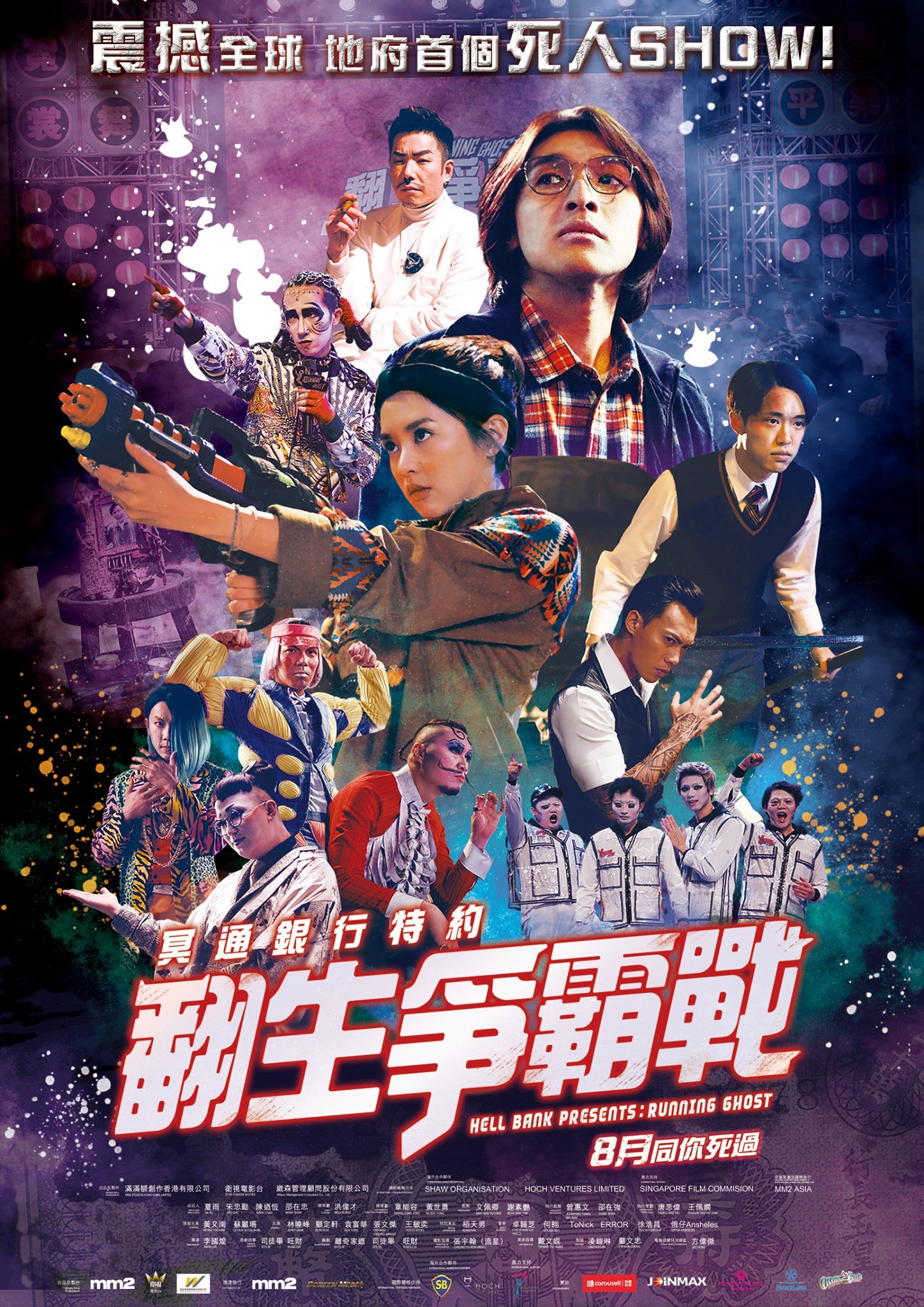
Wong Hui Kwai (Wong You-nam) has been dead for 22 days. Unusually, he can’t remember how he died, and as he tells the lady at Labour Department of Hell when asked what he achieved while alive was known chiefly for his ability to install internet cables with maximum efficiency (unfortunately Hell is already fully covered for wi-fi). Sadly, Hui Kwai didn’t do anything of note in his life and now it’s over he’d really rather just take it easy, which is why when he’s offered a nice job he tries to back out towards fiery torture. Nevertheless he finds himself a sudden replacement for a contestant who ascended at an extremely inconvenient moment right before he was supposed to take to the stage on Hell’s hottest variety show Hell Bank Presents: Running Ghost in which the prize is instant resurrection. Hui Kwai needs to succeed in three rounds of ghostly pranks, making the living faint, possessing a living person, and then scaring someone to death. 

Asked again on the stage where the MC reframes his abilities as a cable guy to paint him as a concealment expert, a very useful skill for a ghost trying to scare people, Hui Kwai is again forced to confront the fact that his life was extremely disappointing, his only “talent” was going to work, sleeping, and then going to work again. You might even say he was already a ghost before he died, though the resurrection prize does sound good because it would allow him to take care of some “unfinished business” with his childhood sweetheart Bo Yee (Venus Wong) whom, he fears, is being taken advantage of by an unscrupulous estate agent. As General Bull tells him, his problem is he needs to believe in himself more, pointing out that his nerdy appearance is just like that of a super hero before they discover their hidden powers. He never accomplished anything because he never really tried, if he wants his life back he’ll have to actually fight for it. 

Unfortunately, having been dead only 22 days he’s not exactly powerful which is why he’s abruptly sucked into the dream catcher set up by eccentric ghost enthusiast Ling Kay (Cecilia So Lai Shan) who has some “unfinished business” of her own, trying to trap a spirit in the hope that they’ll be able to make contact with her late father. Lee has a lot of fun with the gadgetry of the supernatural which runs from Ling Kay’s old school dream catcher and Ouija boards to water pistols filled with ghost-busting pee and children’s flashlights “blessed” with the ability to burn up spirits. Are you a ghost needing to find an unlucky person to scare? There’s an app for that, and it works with your “Fat-bit” wristwatch. Meanwhile, even in Hell there are variety shows sponsored by Starbucks Coffins which have breaks featuring ads for services you can use to offload your unwanted funerary offerings. Paper money is no longer any good, in the after life they use “Helipay”, but General Bull who can presumably beam himself anywhere still travels in a gothic rickshaw pulled by an unfortunate underling forced to re-enact his suicide every night as part of his eternal torment. 

Running Ghost excels in its madcap world building in which the after life is somehow much more technologically advanced than the mortal realm, all slick touch screens and augmented reality, but perhaps still subject to the same old vices in which the undead vacuously watch reality shows and get their kicks pranking the living. Still, only after he’s died can Hui Kwai make the zero to hero journey, realising his unfinished business is really learning to unlock his latent potential which he does by protecting someone else, just not the someone he originally came back to protect. A much needed shot in the arm for HK supernatural comedy, Hell Bank Presents: Running Ghost is a spooky delight. 


Hell Bank Presents: Running Ghost streamed as part of this year’s New York Asian Film Festival.

Original trailer (Cantonese with English & Traditional Chinese subtitles)