Asian Pop-Up Cinema Announces “Father’s Day Cheer” Free Streaming Series

Chicago’s Asian Pop-Up Cinema is back with their final mini streaming series ahead of cinemas reopening this summer to keep you entertained while you keep safe at home! From June 19 to 21, you can catch three dad-themed Japanese comedies streaming online for free in the US as part of the Father’s Day Cheer selection supported in part by the Japan Foundation New York.

Friday June 19: The Hikitas Are Expecting

The life of a 49-year-old writer (Yutaka Matsushige) is upended when his much younger wife (Keiko Kitagawa) decides she would like to have children. After trying for a while with no success, they decide to go to the hospital for tests and receive some surprising news.

Saturday June 20: My Dad and Mr. Ito

Family drama from Yuki Tanada in which an ageing father (Tatsuya Fuji) is thrown out of his son’s house and goes to stay with his 34-year-old daughter (Juri Ueno) where he is scandalised to discover she is living with a man (Lily Franky) who is 20 years older than her and 20 years younger than him.

Sunday June 21: Survival Family

Post-apocalyptic comedy from Shinobu Yaguchi (Waterboys, Swing Girls) in which a family is forced to get reacquainted with the simple life when salaryman dad takes them out on the road after the power goes out one day and never comes back on. Review.

Each of the movies is available to stream in the US on the named date only from 2pm to 10pm CDT and is free to view but registration is essential as viewing numbers are capped at 300. After registering you will be emailed the link shortly before the viewing time and must activate it within the 8-hour window after which you will have 24 hours to finish watching the movie. You can find further information and registration links on Asian Pop-Up Cinema’s official website and you can also keep up with all the latest news by following them on FacebookTwitter, and Instagram.

Who Killed Cock Robin (目擊者, Cheng Wei-Hao, 2017)

“Everything in this world has already been decided, no one is free” according to a jaded, psychopathic killer in Tag Along director’s Cheng Wei-Hao fatalistic neo-noir, Who Killed Cock Robin (目擊者, Mùjīzhě) . As the English title implies, each has their part to play when it comes to the orchestration of death, but the peculiar confluence of circumstances sees the central “witness” corrupted by his decision to alter his position, becoming part of the story in a way a journalist never should.

At 30-ish, Chi (Kaiser Chuang Kai-hsun) is a jaded paparazzo tuning in to the police scanners for the latest scoop on potentially scandalous crime. He thinks he’s hit the jackpot in pulling off the road and discovering a local politician in a car wreck with a beautiful young woman he later realises is a top glamour model, but his insistence on pushing the story without proper background checks comes back to haunt him when the politician comes out with documents proving he married the model in secret some months earlier and signals his intention to sue. All of a sudden, Chi’s bright future is slipping away from him. His mentor retires, and he’s abruptly made redundant, effectively fired for the problematic politician scoop. It’s at that point he starts looking back at photos he took of another car crash nine years earlier when he was still a rookie and realises his boss may have deleted some behind his back. 

As his mentor, Chiu (Christopher Lee Meng Soon), eventually tells him, Chi isn’t the sort of man who’d fight for justice for someone he didn’t even know. He’s in this for petty revenge in hoping to expose some kind of scandal involving the boss who got him fired. He’s also, however, meditating on the earnest young man he once was and the jaded hack he’s since become. As an intern he wanted to do hard journalism and make a difference, but after falling in with Chiu he became corrupted by urbanity, seduced by the fancy suits, celebrity contacts, and stylish parties. He does his business by forming “relationships” with useful people such as law enforcement officers though homosocial bonding, i.e. drinking and women. 

Chiu also, perhaps ironically, thanks his wife for helping him make the “relationships” which have enabled his successful life. These complex networks of interwoven corruption are what keeps the city running, but they’re also a web that can be unravelled to reveal the dirty secrets at its centre. Chi seems to know that fate is coming for him. “Things that happened to you come round in circles” he drunkenly laments on learning not only that the used car he was duped into buyng is an illegally remodelled vehicle but also that the chassis belongs to the one from the accident he witnessed all those years ago. Car accidents plague him, as if implying his life is one long car crash bracing for the impact. 

Yet, as Chiu cautions him, he only has a part of the truth. He is lied to and misled, left to reply on the reporter’s instinct he has long since allowed to become rusty. His investigation places others in danger, not least a young woman who was beginning to think she’d escaped the accident’s wake and built a nice life for herself free of past transgression. But Chi still has to make a choice, try to expose this world of infinite corruption for what it is while accepting his own complicity within it, or decide to unsee what he worked so hard to uncover and go back to being the hack reporter dependent on that same web of corruption whose entanglement he was so keen to escape. 

“I just want to know the truth” Chi claims, as a good reporter should, but his subjects ask him “what’s the point?”, “everyone wants to know the truth, but once you know then what?”.  It’s a good question, and one perhaps that Chi doesn’t know the answer to, reducing his dilemma to a sheepish grin and a cynical joke. “I prefer to remember happier things”, he admits. An infinitely compromised figure, Chi finds himself on dark and fatalistic path towards discovering, at least, his own truth. “I believe in myself” he later tells an equally corrupted colleague but something tells us we perhaps should not. 


Who Killed Cock Robin streams online for free in the US as part of Asian Pop-Up Cinema’s Mini-Focus: Taiwan Cinema Online on June 11.

International trailer (English subtitles)

The Gangster’s Daughter (林北小舞, Chen Mei-Juin, 2017)

Do little fish always get eaten by bigger ones, or can they manage to swim free into kinder waters? As the title perhaps suggests, The Gangster’s Daughter (林北小舞, lín běi xiǎowǔ) finds its young heroine battling parental mystery, stepping into her father’s world of crime and dubious morality while he grows ever more disillusioned with his duplicitous lifestyle and the price he has clearly been paying to survive it. Yet they are both in many ways victims of the corruptions of the society in which they live in which others play the system in less overt ways but to the same ends in order to manipulate individual privilege. 

Now a teenager, Shaowu’s (Ally Chiu) parents split up when she was little and she and her mother returned to live with her grandmother in Kinmen, an idyllic island village. Shaowu has no real memories of her father, Keigo (Jack Kao), a Taipei gangster and her grandmother is reluctant to enlighten her. The first time she sees him in many years is at her mother’s funeral at which he makes a notable appearance, an obvious “gangster” in dark sunglasses and sharp suit, backed by a dozen henchmen that, it later transpires, have been hired for the day by his overenthusiastic minions who thought he needed to look “good” while paying his respects to the mother of his child. 

For herself, Shaowu is a rebellious teen who hangs out in a makeshift den where she keeps the various souvenirs she finds of a more violent time in scouring the corn fields for landmines. A pair of horrible boys appear to be bullying her as an orphan with an atypical family background, but Shaowu is unfazed until a nasty prank backfires and harms her only friend. In revenge, she dumps a pail of cow dung over the ringleader while he’s eating his lunch right in the middle of the classroom which would be funny if it weren’t that his dad’s a bigwig with political clout. Reluctant as she is, grandma calls Keigo to help her negotiate with the school, but it ends with a “recommendation” that it might be better Shaowu continue her education in the capital. 

Which is all to say, that father and daughter have quite a lot in common. Shaowu becomes fascinated with the gangster life, acting out scenes from movies with an umbrella only to be stunned when she tries the same thing after finding one of Keigo’s guns and it turns out to be loaded. She finds herself sucked into his homosocial gangster world, dining with big boss Ting who remembers her from when she was a baby and has just returned from an extended stay in Thailand, and making friends with the daughter of another gangster, while Keigo ponders new routes forward as a responsible father trying to protect his daughter from the dangers of the circles in which he moves. 

Twin crises arrive when his underling Dreamer gets into a fight a powerful corrupt cop, Chang, while Boss Ting edges towards moving the gang into drugs which is something Keigo, a noble gangster, cannot condone especially after he finds some stuffed into a cigarette packet one of Shaowu’s new friends asked her to look after. He tries do his best as a modern dad, patiently reminding himself that his daughter’s not a little girl and refraining from laying down the law, but is frustrated by her fascination for everything he regards as a fall from grace in his life as a petty gangster. He wants to get out and dreams of opening a restaurant with his girlfriend but discovers that the gangster world may not be done with him yet. 

Father and daughter are, it seems, divided by an increasingly corrupted society where bent cops like Chang are no better than gangsters themselves while snotty kids know they can do as like they because they have powerful fathers and will never be expected to take responsibility for their actions. Little fish like Keigo don’t stand any kind of chance especially when they insist on swimming against the tide in adhering to the same kind of romanticised ideas of gangsterdom that Shaowu idolises from movies hopped up on jianghu idealism. Taipei or Kinmen, it doesn’t really matter. You’ll still find yourself squatting in the tall grass while others plot against you in the open. In her first narrative feature documentarian Chen Mei-Juin delights in capturing local character from the faded grandeur of traditional island life to the sleazy, neon-lit underbelly of the modern capital but never shies away from the ugliness which underpins it all and disrupts even the most essential of bonds.


The Gangster’s Daughter streams online for free in the US as part of Asian Pop-Up Cinema’s Mini-Focus: Taiwan Cinema Online on June 10.

Original trailer (English subtitles)

Murmur of the Hearts (念念, Sylvia Chang, 2015)

A legacy of abandonment frustrates the futures of three orphaned adults in Sylvia Chang’s moving drama, Murmur of the Hearts (念念, Niàn Niàn). Marooned in their own small pools, they yearn for the freedom of oceans but find themselves unable to let go of past hurt to move into a more settled adulthood, eventually discovering that there is no peace without understanding or forgiveness and no path to freedom without learning to let go of the shore. 

The heroine, Mei (Isabella Leong), is an artist living in Taipei and apparently still consumed with rage and resentment towards her late mother. She is in a troubled relationship with a down on his luck boxer, Hsiang (Joseph Chang Hsiao-chuan), who has abandonment issues of his own that are compounded by toxic masculinity which leaves him feeling inadequate in failing to live up to the expectations of his long absent father. Mei’s long lost brother, Nan (Lawrence Ko), meanwhile is now a melancholy bachelor in his 30s who, unlike all the other young men, never swam far from home, working for a tourist information company on Green Island which, though once notorious as a penal colony housing political prisoners during the White Terror has now become a tourist hotspot thanks to its picturesque scenery. 

Like one whole cleaved in two youthful separation weighs heavily on each of the siblings who cannot but help feel the absence of the other. Their mother, Jen (Angelica Lee Sinje), trapped in the oppressive island society, was fond of telling them stories about a mermaid who escaped her palace home by swimming towards the light and the freedom of the ocean. She tells the children to be the “angels” rescuing the little fish trapped in rock pools by sending them “home” to the sea, and, it seems, eventually escaped herself taking Mei with her but leaving Nan behind. Neither sibling has been ever been able to fully forgive her, not Mei who lost both her family and her home in the city, or Nan who stayed behind with his authoritarian father wondering if his mother didn’t take him him because she loved his sister more. 

Mei, meanwhile feels rejected by her father after overhearing him on the phone saying he wanted nothing to do with either of them ever again. Idyllic as it is, the island wears its penal history heavily as a permanent symbol of the authoritarian past which is perhaps both why Mei has never returned, and why Nan has remained afraid to leave. Unable to make peace with the past they cannot move forward. Mei’s life has reached a crisis point in the advent of maternity. She is pregnant with Hsiang’s child but conflicted about motherhood in her unresolved resentment towards her mother while insecure in her relationship with the emotionally stunted Hsiang who, likewise, is terrified of the idea of fatherhood because of his filial insecurity. 

Only by facing the past can they begin to let it go. Chang shifts into the register of magical realism as a mysterious barman arrives to offer advice to each of the siblings, Nan indulging in an uncharacteristic drinking session while sheltering from a typhoon on the evening his father that his father dies and somehow slipping inside a memory to converse with the mother who was forced to leave him behind, coming to see the love in her abandonment. Jen told him that she wanted him to see the world, but he is reluctant even to go Taipei and afraid to seek out his sister. 

Jen’s battle was, it seems, to save her children from the oppressions of Green Island, to be their angel returning them to the great ocean she herself felt she’d been denied. She wanted her children to be “creative”, resisting her abusive, authoritarian husband and his fiercely conservative, patriarchal ideals but eventually left with no option other than to leave. Yet the children flounder, left without guidance or harbour. “I don’t know where my home is”, Mei laments, revealing that she only feels real and alive when angry. For all that, however, it’s Jen’s story that finally sets them free, showing them path away from the prison of the past and finally returning them to each other united by a shared sense of loss but unburdened by fear or resentment in a newfound serenity.


Murmur of the Hearts streams online for free in the US as part of Asian Pop-Up Cinema’s Mini-Focus: Taiwan Cinema Online on June 9.

Original trailer (English subtitles)

Little Miss Period (生理ちゃん, Shunsuke Shinada, 2019)

Perhaps surprisingly, Japanese cinema has never been afraid to tackle the sometimes taboo issue of menstruation but Little Miss Period (生理ちゃん, Seiri-chan) is certainly the first time it’s been turned into an accidental protagonist. Inspired by a popular web manga by Ken Koyama, who is male as is the director Shunsuke Shinada, the film revolves around the titular Little Miss P who arrives every month in the form of a giant pink fuzzy monster and generally causes havoc in women’s lives, but for all the trouble, pain, and inconvenience she causes Little Miss P also becomes a symbol of female solidarity and an accidental confidant whose presence can also be a comfort in regrettably patriarchal society. 

The first victim is Aoko (Fumi Nikaido), a young woman working in a busy publishing office who receives an inconvenient visit from Little Miss P while trying to sort out a problem with an uncommunicative writer which eventually leads to more trouble after the author begins bad mouthing them on social media and Aoko is given a public telling off by her sexist boss for failing to appreciate artistic temperament. Aoko’s boss is an unreconstructed chauvinist who makes deliberately inappropriate comments in the workplace and then jokes that he hopes he won’t be accused of harassment. He complains about Aoko looking tired and exclaims that these are the reasons he doesn’t like working with women, but running into a colleague in the ladies’ room, Aoko gets some practical though unhelpful advice coming from another woman to the effect that they can’t ever use Little Miss P as an “excuse” because it will just be seen as another reason to deny women the same rights and privileges as men. 

Aoko wishes that men could experience what it’s like to host Little Miss P if only once year and then perhaps they’d understand, though they also have problems of their own as manifested in the large white Mr. Sex Drive who appears out of nowhere to bother the boyfriend (Kyohei Kanomi) of Aoko’s younger sister Hikaru (Risaki Matsukaze). While Aoko laments the sexist atmosphere in the workplace that leaves her feeling as if she has to make a choice to be seen actively prioritising her career, being more present, more productive than the men just to be seen as equal, the office cleaner, Riho (Sairi Ito), resents her invisibility as a faceless service worker many regard as little more than a bot or real world NPC with no identity or interior life. She makes caustic comments about the vacuous lives of the office workers around her but has fully internalised this view of herself as worthless and undesireable. She resents Little Miss P in part because she doesn’t understand what the point of her visit is when it seems so unlikely that she would ever bear a child. 

Riho is so invested in her inferiority complex that she cannot comprehend that Aoko’s company want to hire her for writing gig after figuring out her secret blogger identity, believing it must be some kind of trick. In one sense, she might be right in that Aoko’s colleague Uchiyama (Ren Sudo) has an obvious crush on her, but still she finds it impossible to accept that she has a right to expect recognition as a human being and indeed as woman. Each of the women find themselves in dialogue with Little Miss P who often provides a quite literal shoulder to cry on as well a reassuring sense of “you got this” security. Aoko apologises to Little Miss P as she bids her goodbye for another month, admitting that it can’t be nice that in general no one is glad to see her (though there are of course cases in which they might be rather more than glad), but Little Miss P takes it all in her stride as part of the job and as much as she often causes trouble and inconvenience is also a warm and reassuring presence which unites women not so much in shared struggle but gentle camaraderie. 

It’s Little Miss P who helps Aoko bond with her prospective step-daughter Karin (Hana Toyoshima), while she perhaps remains ambivalent on the idea of marriage with its consequent loss of independence and the responsibility of suddenly becoming a mother for the first time to an adolescent girl. Female solidarity trumps family or romance, or at least so it seems as Aoko looks back on getting her own first visit from Little Miss P which threw her recently widowed single-father into an ambulance-calling panic but also resulted in a comforting dish of rice with red beans, traditionally eaten at moments of celebration. “Not everything about it is bad” Aoko tells a troubled Karin, “there’s nothing good about it. Not one thing” she replies, but Little Miss P has at least brought them together in female solidarity as they return to their respective, disappointingly patriarchal, worlds. 


Little Miss Period is available to stream online (Worldwide except Japan, Mainland China, Taiwan, Hong Kong, Macau, Thailand, Laos, Cambodia, & Myanmar) from 9th to 14th June as part of this year’s Nippon Connection Film Festival.

Original trailer (English subtitles)

Udine Far East Film Festival Confirms Lineup for 22nd Online Edition

Despite having postponed from its usual April dates, the Udine Far East Film Festival is the latest to shift online in response to the ongoing global pandemic which is conspiring to keep us all away from cinema screens for the foreseeable future. From 26th June to 4th July, the festival will be making 46 films available for online streaming via www.mymovies.it. While most will be available on an on demand basis, Galas will stream live once only. Inevitably, there are a number of geographical restrictions in place which have been noted below.

China

  • Better Days – Derek Tsang’s Soul Mate followup stars Zhou Dongyu as a bullied young woman bonding with a bad boy played by boyband superstar Jackson Yee. ReviewItaly only. Closing film gala
  • The Captain – tense thriller from Andrew Lau inspired by the real life story of a heroic pilot who landed his plane safely with no loss of life after disaster struck in the skies. ReviewWorldwide (excl. China PRC)
  • Changfeng Town – nostalgic hometown drama. Italy only
  • An Insignificant Affair – love story directed by Ning Yuanyuan. Italy Only

Hong Kong

  • Chasing Dream – stylish romance from Johnnie To in which a boxer and singer fight for their respective dreams. Worldwide
  • Ip Man 4, The Finale – Donnie Yen returns in the series finale which sees Ip Man take on racism in ’60s San Fransisco. ReviewItaly only
  • Line Walker 2: Invisible Spy – “sequel” in name only starring the same actors as Line Walker in which HK police take on an international child smuggling terrorist syndicate. Italy only
  • My Prince Edward – a woman working at a bridal shop has met her Prince Charming and wants to get married, the only problem being the sham marriage she was paid to take part in several years previously. ReviewItaly only gala
  • Suk Suk – two older men find love and embrace their sexuality after a lifetime in the closet in Ray Yeung’s sensitive drama. Italy Only
  • The White Storm 2 Drug Lords – Herman Yau action drama starring Andy Lau and Louis Koo as a vigilante businessman and flamboyant drug lord respectively. ReviewItaly Only

Indonesia

  • Gundala – superhero action from Joko Anwar. Italy only
  • Impetigore – Joko Anwar horror in which a woman returns to her village to claim an inheritance but is caught up in sinister goings on. Italy only

Japan

  • #HandballStrive – coming-of-age sports drama from Daigo Matsui set in the world of handball. Worldwide
  • A Beloved Wife – Screenwriter Shin Adachi’s autobiographical comedy about a troubled marriage. Worldwide
  • Colorless – love story between a photographer and a model.  Europe only
  • Dance with Me – musical comedy from Shinobu Yaguchi in which a woman becomes accidentally hypnotised to break into Hollywood-style song and dance sequences every time she hears music. ReviewItaly only
  • Minori, on the Brink – latest from Ryutaro Ninomiya in which a young woman courts controversy with her uncompromising authenticity. Review. Worldwide (except Japan)
  • My Sweet Grappa Remedies – latest from Akiko Ohku in which a lonely middle-aged woman finds love and friendship with the help of an outgoing colleague. Review. Worldwide (Except Japan, Mainland Chian, Taiwan, USA)
  • One Night – drama from Kazuya Shiraishi in which grown-up siblings attempt to process the traumatic night that broke their family apart. Italy only
  • Romance Doll – romantic drama from Yuki Tanada adapting her own book about a man who hides the fact he sculpts sex dolls for a living from his wife. Italy only
  • WOTAKOI – Love is Hard for Otaku – Yuichi Fukuda musical comedy adapted from the popular manga. Italy only

Malaysia

  • Soul – folk horror in which a family in the forest receives a visitation from a creepy little girl with a prophesy. Europe
  • Victim(s) – crime drama revolving around the mothers of a killer and the victim. Worldwide

The Philippines

  • Edward – coming of age drama in which a boy takes care of his hospitalised father. Worldwide
  • Sunod – horror in which a woman takes a job at a call centre to pay for her child’s medical care but it turns out to be haunted! Worldwide (Except The Philippines)

South Korea

  • Ashfall – big budget volcano-themed disaster movie starring Lee Byung-hun, Ha Jung-woo, and Ma Dong-seok. Europe only. Opening Film
  • Beasts Clawing at Straws – darkly humorous thriller in which a collection of desperate people are connected by a missing bag full of cash. Italy only
  • The Closet – horror starring Ha Jung-woo as an irresponsible father whose daughter goes missing after they move to a weird cottage in the middle of nowhere. Italy only
  • Crazy Romance – romantic comedy in which a couple bond over their shared traumatic romantic histories.  Worldwide
  • Exit – a mountain climbing enthusiast is in his element when poison gas envelopes the city! Review. Italy only
  • The House of Us – lonely children ponder forming a family of their own in Yoon Ga-eun’s charming indie drama. ReviewEurope only
  • Kim Ji-young: Born 1982 – feminist drama following an ordinary woman’s path into middle-age in a fiercely patriarchal society. Italy only
  • Lucky Chan-sil – film producer Chan-sil finds herself unemployed after the director she’d been working with suddenly dies, taking a job as a cleaning lady for an actress and bonding with a handsome French teacher. Italy only
  • The Man Standing Next – ’70s-style conspiracy thriller exploring the assassination of Park Chung-hee which is depicted in a much less serious fashion in the also streaming The President’s Last Bang. Italy Only
  • Vertigo – a young office worker is rescued from her sense of existential vertigo by the gentle presence of a chivalrous window washer. Europe only

Taiwan

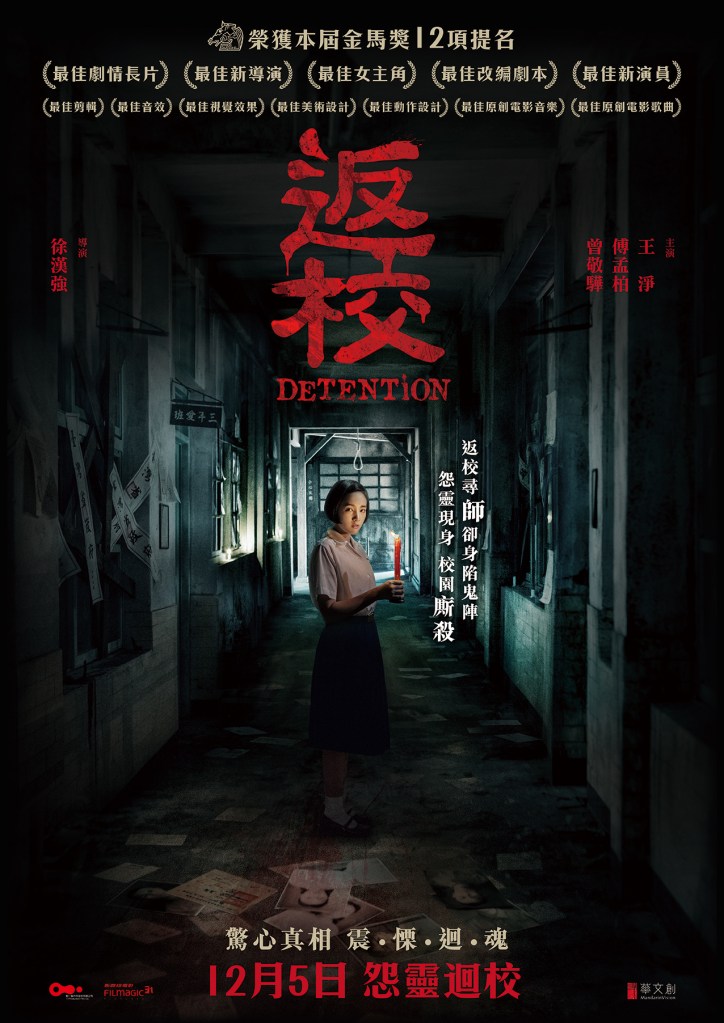
  • Detention – horror-inflected video game adaptation dramatising the trauma of the “White Terror” martial law era. Review. Italy only
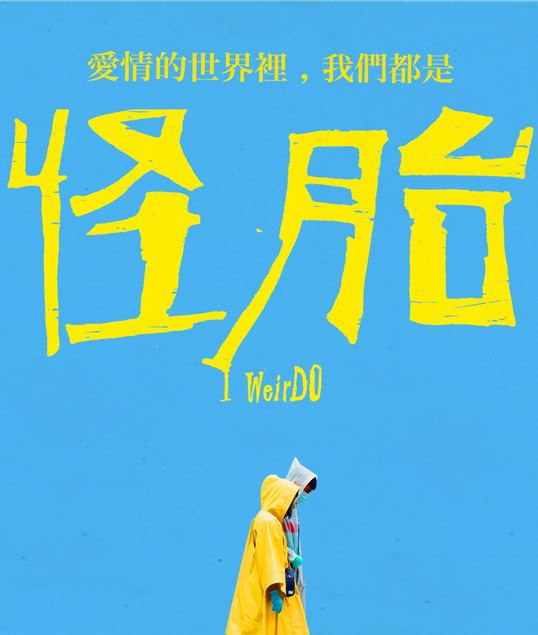
  • I WeirDO – madcap OCD rom-com shot on an iPhone. Italy only gala 
  • We Are Champions – basketball drama in which two brothers find themselves on opposite sides of the court. Italy only

Out of Competition

Special Screenings

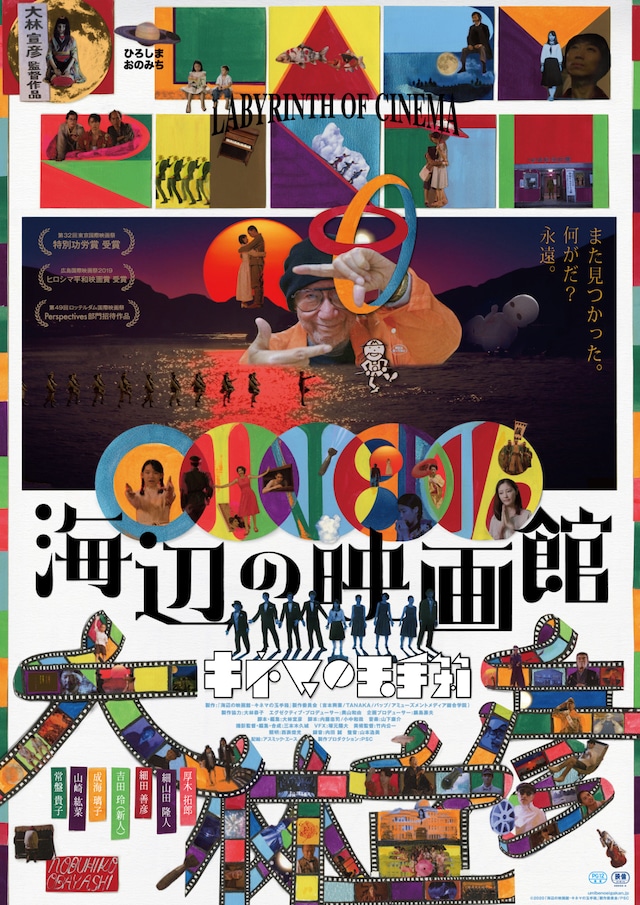
  • Labyrinth of Cinema – final film from Nobuhiko Obayashi in which three youngsters find themselves lost in the movies. Europe only (except UK)

Documentaries

Classics

  • Cheerful Wind – new restoration of Hou Hsiao-hsien’s 1982 idol movie. Worldwide

Info Screenings

Special Tribute

Watanabe Hirobumi, Comic Poet of the Everyday

  • Cry – silent drama following the everyday life of a pig farmer living with his grandma. Worldwide
  • I am Really Good – comedy revolving around a group of children. Worldwide
  • Life Finds A Way – self referential comedy. Worldwide
  • Party ‘Round the Globe – an extroverted Beatles fan befriends a silent colleague. ReviewWorldwide

The festival will be running on an accreditation basis with three price levels available all of which include access to the entire programme (subject to geographical restrictions), the basic Silver Ninja (€9.90), the Golden Samurai (€49) which also includes a copy of the festival catalogue, and the Platinum Shogun (€100) which includes the catalogue, a T-shirt, tote bag, and a discount on accreditations for next year’s festival. The accreditations also include access to FEFF’s new online streaming service set to launch this August for 1 month, 6 months, and 9 months respectively and go on sale from Monday 8th June via the official website.

The 22nd Udine Far East Film Festival will run online via www.mymovies.it from 26th June to 4th July. Full details will be shortly available via the official website and you can keep up with all the latest news by following the festival on FacebookInstagram, YouTubeTwitter, and Tumblr.

My Sweet Grappa Remedies (甘いお酒でうがい, Akiko Ohku, 2019)

In Tremble All You Want, Akiko Ohku showed us a painfully shy woman’s path towards seizing control of her romantic destiny while Marriage Hunting Beauty told us that there are no short cuts to love. My Sweet Grappa Remedies (甘いお酒でうがい, Amai Osake de Ugai) takes things one step further as a lonely middle-aged woman gradually finds the desire to make a change in her otherwise unchanging existence, coming to like herself as seen in the eyes of others and trusting in happiness however temporary it might turn out to be. 

40-something Yoshiko (Yasuko Matsuyuki) is an unmarried woman working at a publishing company. She tells us that she keeps a diary that she never expects any one to read, not even herself, and mostly spends her free time drinking alone at home or in elegant bars. From the sometimes lengthy gaps between entries, we can see that Yoshiko’s life is generally uneventful and essentially unchanging, that she has few friends, and though she gets by well enough on her own she often dwells on what might have been, disappointed that she was never able to become a mother. 

She is, however, a deeply caring person, sublimating her need for human attachment into anthropomorphising objects, gently patting her bicycle saddle as she parks it for the day and becoming alarmed that it has ended up “in prison” after being impounded. If she’d had children, she muses, she might never have let them leave the apartment. Yet when she discovers one of her favourite earrings is missing, she decides not to look for it because she accepts its decision, later welcoming it home when it makes an unexpected return. 

Overhearing the conversation of the women next to her at a bar, she wonders if their idle complaints that half the year is gone already are excessively negative but accepts that she too is living life in retrograde and needs to learn how to look forward with positivity, which might be why she starts making a series of small but active changes. She observes the world around her from a new angle in crossing a footbridge she has never crossed before, swaps her comfortable red loafers for grey high heels, and her futon for a bed. 

Some of these changes at least are down to an unexpected friendship with a young woman in her office, Wakabayashi (Haru Kuroki), who invites her out on paydays and brightens up the office atmosphere with her goofy antics. Yoshiko herself might be classically quirky, but she mainly keeps her quirks to herself, quietly getting on with her work, while Wakabayashi is the opposite, cheerfully outgoing yet perhaps just as lonely if in a less obvious way. It’s Wakabayashi who sets her on off another path by introducing her to a friend from university, Okamoto (Hiroya Shimizu), who has recently joined their company and to whom Yoshiko had already taken a liking in passing though he is more than 20 years her junior.  

Too shy to shout bingo, Yoshiko is a lifelong believer in love, observing a young couple at festival and hoping they enjoy a night of passion in the fullness of their youth. She still remembers old anniversaries with long gone exes and wonders if they still remember her, but resents the universe’s attempts to test her with texts from past lovers every time she becomes interested in another man. The fact that Okamoto is so much younger is never really an issue, though Yoshiko admits that she likes the fact he seems to favour older, lived in homes over sparkling new builds while she helps him look for a new apartment. 

Yoshiko celebrates the fact that colour seems to be returning to her black and white days, her desire to see the dark sea where she feels closest to death in order to reaffirm her connection to life seemingly receding. From her childhood, Yoshiko had wondered if the woman she sees in the mirror is the same one everyone else sees, but later realises that the vision of herself reflected is “somewhat nice”, catching sight of herself in Wakabayashi’s mirrored sunshades and noticing that she is in fact smiling. Reinvigorated by her younger friends, Yoshiko steps into an acceptance of herself, looking forward rather than back and willing to take on new challenges rather than merely dropping into a defensive position of protecting the irreplaceable. No longer dark and foreboding, the sea is now sunny and calm, a scene of peace and positivity with nary a cloud on the horizon.


My Sweet Grappa Remedies is available to stream online (worldwide excl. Japan, Mainland China, Taiwan, USA, & Italy) from 9th to 14th June as part of this year’s Nippon Connection Film Festival.

Original trailer (no subtitles)

20th Nippon Connection ONLINE Film Festival Confirms Full Program

Not even a global pandemic can stop our love for Japanese cinema! The world’s largest showcase for Japanese film, Nippon Connection is going online for the first time ever to deliver some of the best recent hits from Japan to homes around the world. The festival will be partnering with streaming service Vimeo from 9th to 14th June. Each film is €5 to rent and is valid for 24 hours after purchase. Of course, not everything is available everywhere and though most films are streaming with English subtitles exceptions have been noted below.

Nippon Cinema

  • After The Sunset – family drama in which a couple try to do what’s best for an abandoned child. English subtitles. Germany only.
  • Dancing Mary – latest from SABU in which a civil servant is charged with organising the demolition of a disused disco which turns out to be haunted. English subtitles. Germany only.
  • Family Romance, LLC – Werner Herzog’s fake family drama. English subtitles. Germany only.
  • Labyrinth of Cinema – final film from Nobuhiko Obayashi in which three youngsters find themselves lost in the movies. English subtitles. Germany only.
  • Little Miss Period – adaptation of the popular manga in which a harried publisher is joined by a monthly visitor in the form a giant pink fluffy monster. English subtitles. Worldwide except Japan, Mainland China, Taiwan, Hong Kong, Macau, Thailand, Laos, Cambodia, & Myanmar
  • Makuko – adaptation of Kanako Nishi’s novel in which a young boy becomes fascinated with the girl who moves into his family’s guest house. English subtitles. Germany only.
  • A Life Turned Upside Down: My Dad’s an Alcoholic – light hearted drama about living with an alcoholic dad starring Kiyohiko Shibukawa. English subtitles. Worldwide excl Japan & Mainland China.
  • My Sweet Grappa Recipes – latest from Akiko Ohku in which a lonely middle-aged woman finds love and friendship with the help of an outgoing colleague. English subtitles. Worldwide excl Japan, Mainland China, Taiwan, USA, & Italy
  • Shape of Red – steamy drama from Yukiko Mishima in which an unfulfilled married woman (Kaho) embarks on a passionate affair with an old lover (Satoshi Tsumabuki). English subtitles. Germany only.
  • The Journalist – political thriller from Michihito Fujii loosely inspired by real life reporter Isoko Mochizuki who is also the subject of i -Documentary of the Journalist- streaming in the docs strand. Review. English subtitles. Germany only.
  • Under Your Bed – Mari Asato’s sympathetic stalker drama starring Kengo Kora as an isolated young man yearning for a single word from a woman he knew in college. Review. English subtitles. Germany only.

Nippon Visions

  • Beautiful, Goodbye – award-winning Pia indie drama in which a man on the run knocks over a woman who turns out to be a zombie! English subtitles. Worldwide.
  • Extro – mockumentary in which a 64-year-old dental technician tries to fulfil a life long dream as jidaigeki extra. English subtitles. Worldwide excl Japan, USA.
  • F is for Future – drama in which a young man tries to fulfil a promise to a friend to get rid of his porn collection before his parents find it. English subtitles. Europe.
  • Flowers and Rain – hip hop drama featuring the music of SEEDA. English subtitles. Worldwide.
  • Forgiven Children – drama in which a young man kills a friend by accident but is acquitted due to lack of evidence and becomes a social pariah. English subtitles. Germany only.
  • Infinite Foundation – improvised musical drama revolving around the songs of Cosame Nishiyama. English subtitles. Worldwide.
  • Kinta and Ginji – surreal drama about the friendship of a tanuki and a robot. English subtitles. Worldwide.
  • Minori on the Brink – latest from Ryutaro Ninomiya in which a young woman courts controversy with her uncompromising authenticity. English subtitles. Worldwide excl Japan & Italy
  • Mrs Noisy – a blocked writer blames all her problems on the noisy woman next-door in Chihiro Amano’s quiet plea for a little more understanding. Review. English subtitles. Germany only.
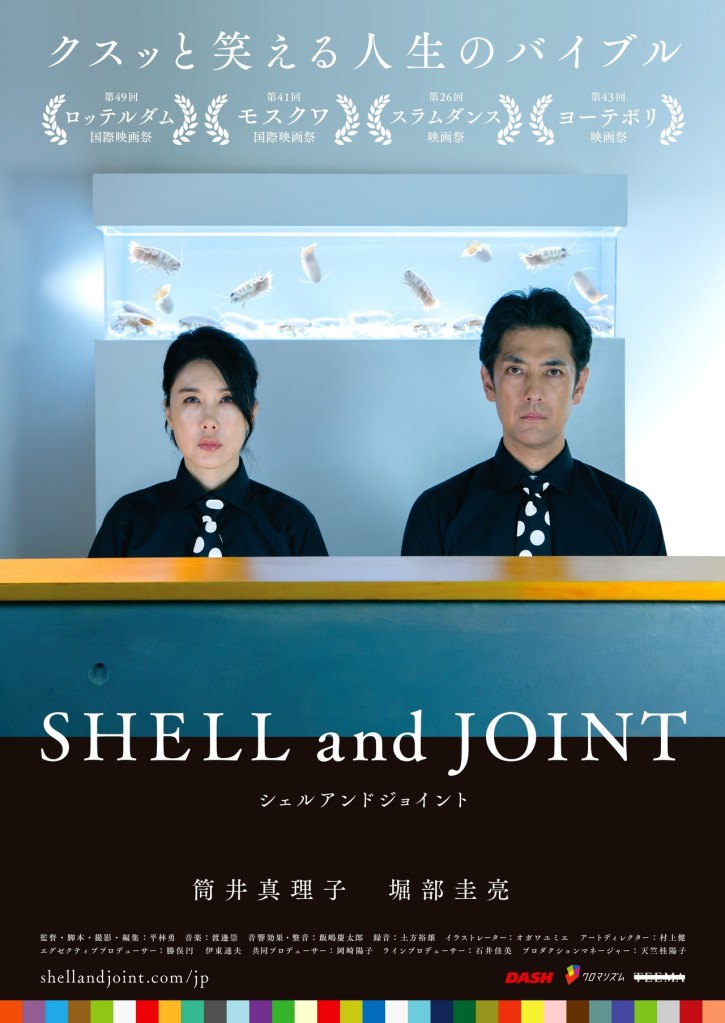
  • Shell and Joint – surreal drama from Isamu Hirabayashi. English subtitles. Worldwide.
  • Tamaran Hill – playful drama in which a young woman gets lost in a book. English subtitles. Worldwide.
  • Yan – A man travels to Taiwan to reunite with his brother 20 years after he returned to the island with their Taiwanese mother. English subtitles. Europe.
  • Me & My Brother’s Mistress – a woman spots her brother out with a woman who is not his fiancée but starts to wonder if she might be better for him after all. English subtitles. Worldwide excl Japan.

Nippon Docs

  • Ainu Indigenous People of Japan – documentary focussing on the Ainu indigenous people of Hokkaido. Germany only.
  • An Ant Strikes Back – documentary following a man resisting Japan’s rigid culture of overwork through union activities. English subtitles. Worldwide.
  • Book-Paper-Scissors – Nanako Hirose explores the life of book designer Nobuyoshi Kikuchi. English subtitles. Worldwide.
  • Cenote – experimental doc from Kaori Oda. English subtitles. Worldwide excl. Japan.
  • i -Documentary of the Journalist- – documentary following outspoken journalist Isoko Mochizuki. English subtitles. Germany only.
  • Listening to the Air – documentary following a radio host in post-tsunami Tohoku. English subtitles. Worldwide excl. Japan.
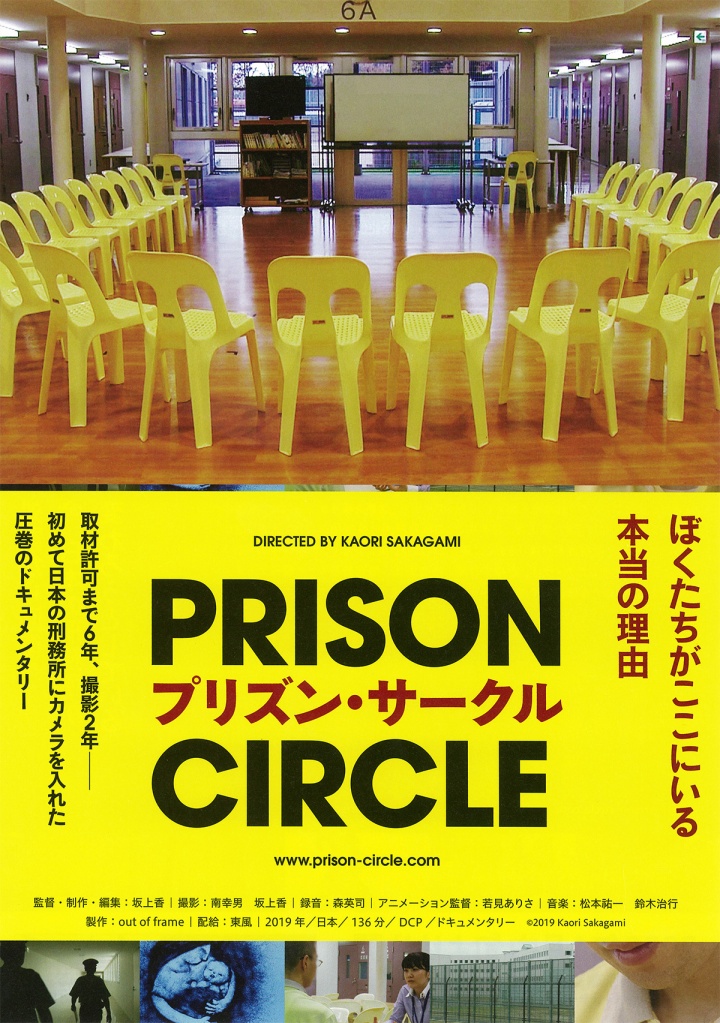
  • Prison Circle – documentary exploring therapy programs for prison inmates hoping to reintegrate into mainstream society. English subtitles. Germany only.
  • This Planet is Not My Planet – documentary following feminist pioneer Mitsu Tanaka. English subtitles. Germany only.
  • What Can You Do About It? – a filmmaker with ADHD documents his friendship with a relative who has Pervasive Developmental Disorder. English subtitles. Germany only.
  • Sleeping Village – documentary exploring the Nabari Poison Wine Incident in which a man confesses to killing five neighbours to get rid of his wife and lover but later retracts and protests his innocence. English subtitles. Worldwide excl. Japan.

Nippon Animation

  • Hello World – a high School student receives a visit from his future self telling him the love of his life will die in an accident. German subtitles. Germany, Austria, Switzerland only.
  • Her Blue Sky – a music-loving teen’s life is disrupted when her older sister’s boyfriend returns from the city. German subtitles. Germany, Austria, Switzerland only.

Nippon Kids

  • Summer Days with Coo – Kiichi Hara anime in which a boy finds a kappa under a rock and adopts him! German dub. Germany, Austria, Switzerland only.
  • Magical Sisters Yoyo and Nene – a girl from a magical kingdom ends up in Tokyo! German dub. Germany, Austria, Switzerland only.
  • The Piano Forest – 2007 movie in which two boys bond over a mysterious piano in the forest. German dub. Germany, Austria, Switzerland only.

Best of Nippon Connection

  • 100 Yen Love – slacker drama starring Sakura Ando in which a woman fights her way to freedom in the boxing ring. German Subtitles. Germany, Austria, Switzerland only.
  • Fuku-chan of Fukufuku Flats – quirky comedy from Yosuke Fujita about a cheerful man whose fear of women is challenged when an old friend returns. German subtitles. Germany, Austria, Switzerland only.
  • House – psychedelic classic from Nobuhiko Obayashi in which a girl takes some friends to see her aunt and gets a lot more than she bargained for. German Subtitles. Germany, Austria, Switzerland only.
  • The Night is Short Walk on Girl – Masaki Yuasa’s adaptation of the Tomihiko Morimi novel set over one wild night in Kyoto. Review. German Subtitles. Germany, Austria, Switzerland only.
  • Whispering Star – quiet sci-fi drama from Sion Sono. Review. German Subtitles. Germany, Austria, Switzerland only.
  • World of Kanako – controversial drama from Tetsuya Nakashima in which a cognitively compromised detective searches for his missing daughter. German Subtitles. Germany, Austria, Switzerland only.
  • Miss Hokusai – Kiichi Hara’s animation inspired by the life of Hokusai’s daughter. Review. German Subtitles. Germany, Austria, Switzerland only.

The festival will also be holding its usual complementary selection of events via Zoom and Vimeo Live including a panel discussion (in English) on two decades of 21st century Japanese cinema chaired by Dr. Alexander Zahlten featuring panelists Tom Mes, Stephan Holl, and festival director Marion Klomfass. You can find full details for all the films as well as viewing links on the official website and you can keep up with all the latest news on this landmark digital edition by following the festival on FacebookTwitterYouTubeFlickr, and Instagram.

The Song Lantern (歌行燈, Mikio Naruse, 1943)

Mikio Naruse famously denounced his wartime films, dissatisfied with himself largely for personal rather than political reasons though among those which survive it is possible to detect a degree of subversion even in his most “national policy” pieces. 1943’s The Song Lantern (歌行燈, Uta-andon) opens with a title card reminding the audience to “support the honour of family and people” and is in part a filial morality tale in which the hero is disowned by his father for his thoughtless haughtiness, though also one which largely manages to skirt its way around the censorship regulations through its historical setting and emphasis on traditional noh theatre. 

As the film opens, a troupe of noh players is moving on to its next destination when they are recognised by a man on the train who liked their performance but also claims to have seen better and if they want to account themselves true artists they need to pay a visit to Master Sozan (Masao Murata) who lives in the area they are heading to. Onchi Genzaburo (Ichijiro Oya), the troupe’s leader, takes this with good grace but his son and heir Kitahachi (Shotaro Hanayagi) is extremely offended. Genzaburo had just been talking with his brother about how good Kitahachi’s performance had been and how glad they are that he will be succeeding them, but were careful not to be overheard because they already think Kitahachi is a little full of himself. Still resentful, Kitahachi does indeed decide to pay Sozan a visit without telling his father or revealing his identity having heard from the maid at the inn that Sozan is a blind masseur who also runs a restaurant but she dislikes him because he has three mistresses, something which leaves Kitahachi mildly scandalised. 

Kitahachi gets him to sing his signature song but remains unimpressed, eventually slapping his thigh to beat out what is, in his view, the proper rhythm leaving the old man breathless and unable to continue singing. Sozan concludes that his guest must also be a great noh master and begs to hear him sing, but Kitahachi cruelly refuses and leaves in huff, rudely rebuffing Sozan’s daughter Osode (Isuzu Yamada) on the way out in the mistaken belief that she is one of the mistresses. The next morning, however, he is accosted by his father who wants to know if he saw Sozan the night before. He admits that he did but goes no further until he is informed that his stunt left the old man feeling so embarrassed that he took his own life. A group of reporters is outside wanting a statement. Encouraged by an audience who reveal that actually everyone hated Sozan and they’re glad he’s dead so Kitahachi need not fear offending them, he tells all but is disowned by his father who forbids him from singing noh ever again. 

So begins Kitahachi’s wandering. The troupe suffers without him, but Genzaburo is unwilling to forgive his son viewing it as bad luck to share a stage with someone who shortened another’s life. As his uncle points out, Kitahachi was raised to be a noh performer and if he can’t perform he has no other way of living. What he resorts to is becoming a street singer, strumming a shamisen and singing popular material. His new occupation provokes another humbling when he’s given a dressing down by a man whose career he has just ruined by shifting into his territory. After hearing him play, Jirozo (Eijiro Yanagi) relents, recognising Kitahachi’s technique as superior and therefore unable to resent him for undercutting his business. Jirozo too is in a similar position, “disowned” by his sister after losing his job as a cook and attempting to earn enough money to go back to his hometown to live right once again. 

Kitahachi is incapable of going back because he is still haunted, almost literally, by the figure of Sozan whose ghost he sees during sake-fuelled nightmares. He’s thinking of paying a visit to the old man’s grave to apologise, but gets another idea when Jirozo advises him to try helping Sozan’s daughter whom he, quite coincidentally, met while doing odd jobs and subsequently rescued from being pelted with eggs after being sold off by her wicked stepmother. Learning that Osode was a daughter not a mistress, Kitahachi feels even more guilty, but realises there is something he can do after Jirozo tells him that she is now working at his sister’s geisha house but is entirely incapable of mastering the shamisen. For some reason, however, he doesn’t teach her how to play an instrument, but gives her a crash course in traditional noh dance in only seven days which is not actually all that useful for an aspiring geisha but might at least help her with her determination never to become someone’s mistress. 

Kitahachi undergoes several humblings and then finally manages to atone only through becoming a teacher, passing on his art to an amateur. It’s Osode’s skill in learning the dance which eventually paves the way for his forgiveness and a possible return to his previous life while Genzaburo also decides to “adopt” her as a daughter, ensuring she won’t ever have to be a mistress (and will most likely become Kitahachi’s wife). Forgiven by everyone but himself, Kitahachi comes “home”, completing the cycle in regaining his position within the family and the theatre troupe in healing the rifts caused not only by his filial failures but his disrespect of the art in his selfish misuse of it to humiliate a man more like himself than he cared to admit.


Bronze Magician (妖僧, Teinosuke Kinugasa, 1963)

Even when you’re the empress, a woman has little freedom. Teinosuke Kinugasa’s Bronze Magician (妖僧, Yoso) is loosely based on a historical scandal concerning Nara-era empress Koken/Shotoku and a Rasputin-like monk, Dokyo, who unlike his counterpart in the film, eventually tried to seize the throne for himself alone only to have his ambitions frustrated by the empress’ death and the fierce resistance of her courtiers. As the title implies, Kinugasa is more interested in Dokyo than he is in the perilous position of Nara-era women even in power, painting his fall from grace as a Buddhist parable about a man who pays a heavy price for succumbing to worldly passions. 

As the film opens, Dokyo (Raizo Ichikawa) emerges from a shallow cave amid many other caves after meditating for 10 years during which he reached a higher level of enlightenment and obtained mystic powers. Now he thinks it’s time to continue the teachings of departed mentor Doen and use his abilities to “actively do good and save the masses”. Before that, however, he does some not quite Buddhist things like turning a rat into a living skeleton, and twisting a snake into a tangle. In any case, he begins roaming the land, miraculously healing the sick. While reviving a thief who had been killed by samurai after trying to make off with a bird they shot, Dokyo is spotted by a retainer of the empress who brings news of his miracles back to her closest advisors. 

Empress Koken (Yukiko Fuji), in the film at least, was a sickly child and even after ascending the throne has often been ill. She is currently bedridden with a painful respiratory complaint that is giving her servants cause for concern. None of the priests they’ve brought in to pray for her (apparently how you treat serious illness in the Nara era) has been of much use. The empress’ steward Mabito (Tatsuya Ishiguro) orders that Dokyo be found and brought to the palace to see if he can cure Koken, which he does while stressing that he’s helping her not because she’s the empress but in the same way as he would anyone else. 

As might be expected, the empress’ prolonged illness has made her a weak leader and left the door open for unscrupulous retainers intent on manipulating her position for themselves. There is intrigue in the court. The prime minister (Tomisaburo Wakayama) is colluding with a young prince to depose Koken and sieze power. Left with little oversight, he’s been embezzling state funds to bolster his position while secretly paying priests to engineer Koken’s illness continue. Dokyo’s arrival is then a huge threat to his plans, not only in Koken’s recovery and a subsequent reactivation of government but because Dokyo, like Koken, is of a compassionate, egalitarian mindset. She genuinely cares that the peasants are suffering under a bad and self-interested government and sees it as her job to do something about it, which is obviously bad news if you’re a venal elite intent on abusing your power to fill your pockets while the nation starves. 

As the prime minister puts it, however, the empress and most of her courtiers are mere puppets, “naive children”. At this point in history, power lies in the oligarchical executive who are only advised by the empress and don’t actually have to do what she says. As she is also a woman, they don’t necessarily feel they have to listen to her which is one reason why the prime minister assumes it will be easy to manoeuvre the young prince toward the throne. Koken’s short reign during which she overcame two coups is often used to support the argument against female succession because it can be claimed as a temporary aberration before power passed to the nearest male heir. Nevertheless, Koken tries to rule, even while she falls in love with the conflicted Dokyo. Her right to a romantic future, however, is also something not within her control. Many find the gossip scandalous and use it as an excuse to circumvent her authority, especially after she gives Dokyo an official title which allows them to argue she has been bewitched by him and he is merely manipulating her to gain access to power. 

Dokyo, meanwhile, is in the middle of a spiritual crisis. After 10 years of study he as reached a certain level of enlightenment and attained great powers which he intended to use for the good of mankind. He is happy to discover that Koken is also trying to do good in the world but she is, ironically, powerless while the elitist lords “indulge in debauchery”, abusing their power to enrich themselves while the people starve. He begins to fall in love with her but the palace corrupts him. He accepts a gift of a beautiful robe despite his vows of asceticism, and then later gives in to his physical desire for Koken only to plunge himself into suffering in the knowledge that he has broken his commandments. He loses his magic, but chooses to love all the same while rendered powerless to hold back Koken’s illness or to protect her from treachery. 

The pair mutually decide they cannot “abandon this happiness”, and Dokyo’s fate is sealed in the acceptance of the extremely ironic gift of golden prayer beads which once belonged to Koken’s father. He is reborn with a new name in the same way as the historical Koken was reborn as Shotoku after surviving insurrection, embracing bodily happiness while attempting to do good but battling an increasing emotional volatility. The lords continue to overrule the empress’ commands, insisting that they are really commands from Dokyo, while Dokyo’s “New Deal” involving a 2 year tax break for impoverished peasants finds support among the young radicals of the court who universally decide that they must stand behind him, protecting the ideal even if they are unable to save the man.

This troubles the elders greatly. Declaring that Dokyo has used “black magic” to bewitch the empress, they determine to eliminate him, but Dokyo never wanted power. “Power is not the final truth” he tells them, “those blindly pursuing status and power only destroy themselves”. Yet Dokyo has also destroyed himself in stepping off the path of righteousness. He damns himself by falling in love, failing to overcome emotion and embracing physical happiness in this life rather than maintaining his Buddhist teachings and doing small acts of good among the poor. Nevertheless, he is perhaps happy, and his shared happiness seems to have started a compassionate revolution among the young who resolve to work together to see that his ideal becomes a reality even in the face of entrenched societal corruption.


Original trailer (no subtitles)