Holiday in Seoul (서울의 休日 / 서울의 휴일, Lee Yong-min, 1956)

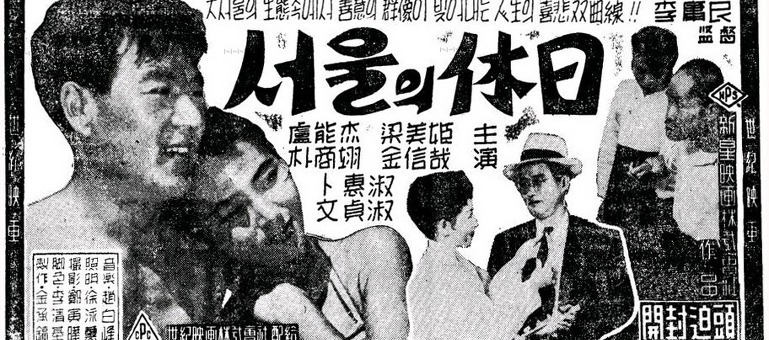
Holiday in Seoul title cardUnlike many “golden age” directors, Lee Yong-min was not especially prolific and left behind him only 23 films when he abruptly disappeared without trace. Perhaps a fitting legacy for a director so strongly associated with the horror genre, but Lee had begun his career as a documentarian working for a Japanese company during the Colonial era. It’s Lee’s documentary background rather than his taste for genre which is most strongly in evidence in his second film, Holiday in Seoul (서울의 休日 / 서울의 휴일, Seoul-ui Hyuil), which, while containing a fair few genre elements, is an anarchic romantic comedy set entirely in a small residential area of the capital over the course one day – a public holiday, in which a series of couples are separated by accident or design on this very day which has been specifically set aside for them to spend together.

Lee opens with a series of location shots of various Seoul landmarks, elegantly composed and somewhat romanticised as if to recast the burgeoning city as a capital of love with all the promise and mystery of Roman Holiday’s Italy which even gets a brief namecheck later on. Again unconventionally, he then breaks into a lengthy POV shot with additional voice over from a narrator who locates a drunk snoozing on a bench and follows him home hoping something more interesting is happening over in the residential quarter. The narrator settles on the house opposite which belongs to a young couple recently married – she an obstetrician running a clinic out of the house, and he a hotshot reporter who’s just made a big splash with a story about a violent murder.

This is, however, a public holiday so work should be strictly off limits. Hee-won (Yang Mi-hee) has designed a packed itinerary, while her husband Jae-kwan (No Neung-geol) would rather have just lazed around at home, but as it turns out neither of them is going to get what they wanted. Minor disagreements about how to spend a rare day off aside, Hee-won and Jae-kwan are a happy young couple who have apparently married for love, are each professionally successful, and are living a comfortable middle-class life in a period of increasing economic prosperity. Their marriage is directly contrasted with the families around them which include that of the drunk we first met on the bench whose daughter Ok-i eventually descends on Hee-won for help in fear she may have fallen pregnant out of wedlock to a man who won’t take responsibility, and a middle-aged couple who have the opposite problem to that of Hee-won and Jae-kwan. Mr. Ju, a regular salaryman, is excited about spending the day with his wife but she skips out on him to go to the beauty parlour and spends most of the day with a wealthy friend and her opera loving toyboys on a well appointed yacht.

Nevertheless, marital bliss is indeed tested by the demands of the day. Though Jae-kwan had promised to go along with Hee-won’s carefully crafted plan, he gets a phone call he thinks is an important tip off about the murder case but is actually a trick set up by his colleagues who were hoping to get him to buy them a few drinks. Unfortunately, due to an odd coincidence, Jae-kwan thinks he witnesses a kidnapping that might be related to the killings and takes off in hot pursuit only to find himself dealing with another sad case of a woman brought low by love. While Hee-won is busy trying to help Ok-i sort out her predicament with both her sad/angry father and the boyfriend that’s thrown her over, Jae-kwan finds himself locked in a room with a poor young girl (Moon Jeong-suk) who is apparently also pregnant by a man who’s disappeared and has gone out of her mind with heartbreak, actively adopting the role of Ophelia and reciting potent lines from Hamlet while absolutely convinced that Jae-kwan is her long absent lover.

While the new freedoms of the post-Colonial era have enabled Hee-won not only to find love and an elected marriage but also a successful professional career as the head of her own clinic, other women have not been so lucky and have suffered doubly at the hands of men who feel bolder in their casual pursuits but also know they cannot be held to account for their actions in the same way they might have been before. Ok-i’s story does at least have a happy ending but is symptomatic of the times in which she lives as she recounts going for a job at a factory only to be molested by the foreman who thought she was a “prostitute” because he found out she had a boyfriend, while the boyfriend sort of thought the same in assuming she had been taken advantage of by the foreman. At least Ok-i has her father who might be have been enraged to begin with but later comes to her defence as does the warmhearted Hee-won, while Jae-kwan’s young woman is all alone save for her mother who is worried sick over her daughter’s mental health and has no real way to help her.

Hee-won is indeed a force for good. Despite her worry about her husband’s whereabouts (she ends up going drinking with his work buddies who, along with her other married female friends, have half convinced her he’s gone off with another woman), Hee-won comes to the aid of a crying little girl who’s desperately looking for help because her heavily pregnant mother is in a very bad way at home while dad went out a few days ago and hasn’t come back. Needless to say, Hee-won’s emergency dovetails into Jae-kwan’s dogged pursuit of crime which eventually sees him arrest a murderer after accidentally getting into a cab with him. The killer, perhaps annoyed about the previous article, makes a point of explaining to Jae-kwan that his job isn’t quite as morally upright as he’d like to believe. You can’t just go printing things in papers, he tells him, it ruins people’s lives. Jae-kwan thinks it’s murdering people that ruins lives so anything after that is fair game but his heartless rationality brings him into conflict with Hee-won when he wants to photograph and interview one of her patients who is seriously ill and might not survive if she finds out the unpleasant truth Jae-kwan wants to get her reaction to on camera. To Jae-kwan, people are just his “subjects”, mere materials for his essays, but to Hee-won they are literally flesh and blood – less fortunate than herself, they are her responsibility and she will do all she can to help them even at great personal cost.

Yet in the end the conflicts resolve themselves satisfactorily and the couples are each reunited in time to spend the last of the holiday gazing up at the moon glowing above the twinkling lights of Seoul. Having spent the day apart, each spouse emerges with a greater understanding of their partner (or in Mr. Ju’s case perhaps just a greater talent for (self)deception) and remains committed to working on their relationship. Mostly shooting on location, Lee’s camera is as sophisticated as they come shifting effortlessly from documentary-style naturalism to a silent movie aesthetic while maintaining a high level of cinematic wit throughout. Cheerfully romantic and carefree even considering its darker themes, Holiday in Seoul is an oddly anarchic romantic comedy though one with total faith in true connection and emotional honesty.


Holiday in Seoul is the first of three films included in the Korean Film Archive’s Romantic Comedy Collection of the 1950s box set. It is also available to stream online from the Korean Film Archive‘s YouTube Channel.

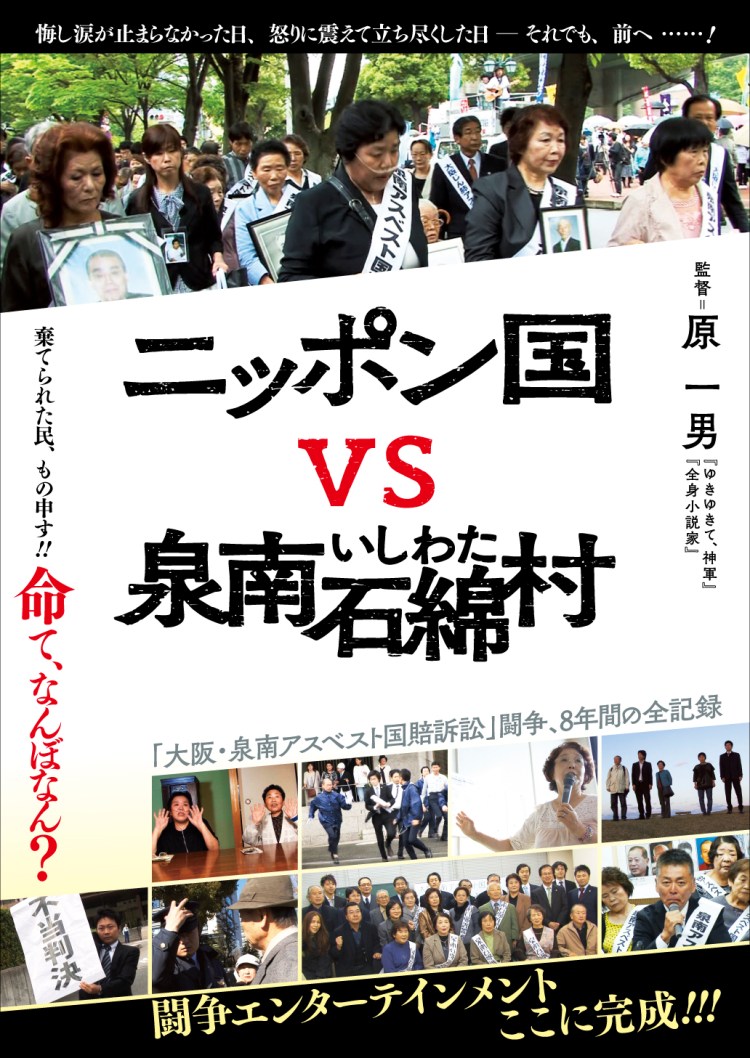
Sennan Asbestos Disaster (ニッポン国VS泉南石綿村, Kazuo Hara, 2017)

Sennan Asbestos Disaster posterIn these troubled times, many may find themselves wondering what the purpose of government really is. Is the primary duty of the state to look after its citizens or to maintain “order” and what exactly is the limit of the state’s responsibility towards those most in need of its care? Director Kazuo Hara had made a career of examining the lives of those who dared to defy the system, but his latest film Sennan Asbestos Disaster (ニッポン国VS泉南石綿村, Nipponkoku vs Sennan Ishiwata Mura) focusses not on an individual but on a group of ordinary people attempting to stand up to governmental bureaucracy after having been betrayed by successive administrations who put economic prosperity ahead of citizens’ welfare.

Asbestos was hailed as something of a wonder for its highly useful properties including sound insulation, fire proofing, strength and durability. Increasing in use throughout the industrial revolution, the harmful affects of asbestos were first discovered in the early 20th century but its use across most of the world was not banned until the turn of the millennium following long campaigns by those whose health had been adversely affected by breathing in its fibres leading to long term respiratory issues and even a risk of cancer.

In Sennan, in the South West of Japan, asbestos production was the dominant economy stretching back into the Meiji era. Concerns had been raised about the possible harmful effects of asbestos before the war and then again afterwards, but successive governments chose to do nothing while workers remained unaware of the risks even while noticing that many of their friends and family members were dying young often of respiratory conditions. Most only became aware that asbestos was dangerous in 2005 following a national scandal known as the “Kubota Shock” in which a well respected manufacturer of machinery was forced to admit that as much as 10% of its workforce had died of asbestos-related conditions.

Hara follows a collective of Sennan residents who have come together to file a class action law suit against the government for failing to ensure safety standards in asbestos production. Led by Kazuyoshi Yuoka whose grandfather owned an asbestos factory before the war, the group members are mainly older men and women who worked in the factories during the economically straitened days of the immediate post-war period. Though many point to the otherwise progressive nature of the factories which were desperate to attract workers and keen to foster a community spirit as well as offering other benefits including access to education, it is true that many of the employees were among those already facing other kinds of oppression aside from the economic – the uneducated rural poor, women, and a large number of minorities including zainichi Koreans. This information is important because it exposes the truth that the state decided these people were expendable and could be sacrificed in the name of the economic prosperity that was deemed necessary in order to rebuild the nation after its crushing wartime defeat.

Unlike the protagonists of Hara’s previous films, the Sennan campaigners are ordinary people – those assumed to have very little social power pressuring their government to take responsibility for having wilfully abandoned them. Unsurprisingly, the government is not very keen to do so. The legal case drags on eight years during which many of the sufferers die while their children or spouses continue the quest for justice. The case itself is wider than it first seems, extending not just to factory workers but to those exposed by general proximity such as famers owning land near asbestos plants and in one poignant case a woman whose parents took her to the factory while they worked when she was a child.

Forming a tightly knit community, the campaigners present a united front but come up against the wall of bureaucracy. As time wears on it’s difficult not to feel a small amount of sympathy for the junior civil servants the government trots out to deal with angry protestors, forced to repeat the same tired phrases without explanation while the group insist on seeing someone with a bit more clout, but even when the case is finally proved, progress is slow and the ritual apology as hollow as it always is. Yet even if some are angered by the perfunctory nature of professional atonement, others actively embrace it and appear grateful even for this small shred of attention from the authority. It’s here that Hara wavers in his sympathy, admiring the kindhearted solidarity of the protestors but lamenting their tendency towards feudal deference when they should be raging against a society which is often content to exploit and discard them, remaining accidentally complicit in enabling a gradual decline of democratic freedoms.

Nevertheless, Sennan Asbestos Disaster is the chronicle of a (partially) successful campaign in which a group of concerned citizens working within the law eventually force the government to concede an error, even if that concession may turn out to have no wider application. The victory, however, can’t bring back lost time nor ease past suffering and only serves to draw a line under one chapter of a struggle which is sadly far from over.


Sennan Asbestos Disaster was screened as part of a Kazuo Hara focus at Open City Documentary Festival 2018.

Original trailer (English subtitles)

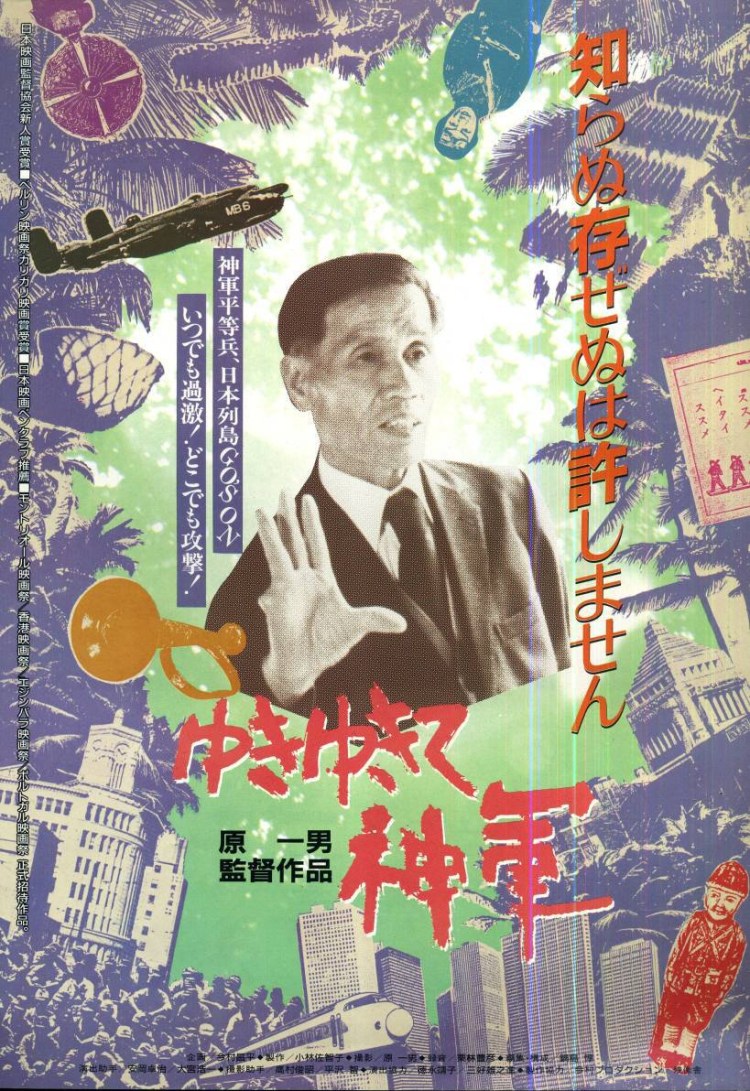
The Emperor’s Naked Army Marches On (ゆきゆきて、神軍, Kazuo Hara, 1987)

The Emperor's Naked Army Marches On PosterThe relationship between a director and a subject can often be a complex one. Who is really leading who and towards what end is a difficult enough question at the best of times, but when your subject is an unhinged crackpot with a definite agenda, a natural love of the camera, and an unpredictable violent streak, it’s an inescapable conundrum. Kenzo Okuzaki, a Pacific War veteran with a deeply seated grudge against the emperor for his refusal to acknowledge his war guilt, first came to the attention of director Shohei Imamura but a second stretch in prison for firing pachinko balls at the object of his wrath put paid to his directorial hopes. 10 years later Imamura passes his subject on to Kazuo Hara who finds himself increasingly at the mercy of his mercurial campaign for truth and reconciliation.

The main thrust of Okuzaki’s current activities lies in uncovering the facts behind the deaths of two enlisted men who were executed in New Guinea three weeks after the war was over. Okuzaki believes the men were murdered and lays the blame at the feet firstly of the officers on the ground and ultimately at those of the emperor who created the circumstances in which all of this horror was allowed to bloom. To assist him in his investigations, Okuzaki ropes in the families of the victims – one a Shinto priestess who is convinced she sees her brother in her dreams and on her altar, and the other a conflicted brother who just wants to know the truth. The truth, however, may be hard to hear, as one of the men Okuzaki corners tries to tell them. Like most of the others questioned about the events of almost forty years before, he advises the family that it’s better not to know while emphasising that their relatives died through no fault of their own.

What is probably obvious to Okuzaki but not to the relatively less cynical family members is that an issue is being skirted. The soldier makes out that he doesn’t want to go into the deaths because the men were executed for desertion – something which is absurd in itself when the war was already over, and that he did not want the family to experience the shame and social stigma of being related to “cowards” who failed in their “duty”. Such notions are already out of date by the late ‘80s, but evidently still weigh heavily on the minds of veterans. Wanting to spare others the pain and shame of discovering the truth about what happened in New Guinea is a frequent excuse offered by those questioned, but perhaps a way of deflecting their own reluctance to speak of such deeply traumatic, extremely difficult events.

Getting them to open up is not Okuzaki’s first thought. Okuzaki himself is a strange man with a disturbing aura and a tendency to self-aggrandisement. When we first meet him he’s acting as a go-between at a wedding of a man he met through his “activism” which is to say a fellow combatant in Okuzaki’s campaign against “The Establishment”. A wedding speech might not be the most appropriate moment to embark on a personal history that involves going to prison for murdering someone you “did not want” to murder as well as a litany of anti-establishment acts including the pachinko ball incident and distributing “pornographic” pictures of the emperor to shoppers at a Tokyo department store. Nevertheless, Okuzaki is extremely proud of these “achievements” which exemplify how he alone has continued to fight the good fight in the post-war world. He sees his original conviction as karma not for his actions in the Pacific but the wastefulness of his life afterwards. He now believes he was saved from New Guinea in order to educate the young about the horrors of war and ensure none of this ever happens again.

Problematically, his main weapon in this fight is violence. Okuzaki’s manner is one of extreme politeness, bordering on obsequiousness, but he is also direct and aggressive, becoming violent when his subjects decline to answer his questions. The relatives are there to shame the officers into speaking the truth through being directly confronted by the human costs of their actions, but Okuzaki’s personal bluster hasn’t thought through the various ways in which his tactics might make it more difficult for them to speak. After all, Okuzaki is a veteran of New Guinea himself, if these men could feel comfortable talking to anyone about their experiences, you’d think they could turn to someone like Okuzaki if only he were not so frightening a presence. Uncomfortably enough, the violence does seem to work and Okuzaki gets his answers through intimidation which leaves his quarry broken and compliant. Despite claiming to work for world peace, Okuzaki believes that his violence is justified by the worthiness of his aims, which you have to admit is an oddly familiar mantra.

His subject’s propensity for violence places Hara in a difficult position, as do his frequent attempts at engineering the situation including roping in his wife and a couple of male friends to pose as relatives of the deceased when the original couple tire of Okuzaki’s exploitative antics. Okuzaki quite obviously has a very clear aim for what he perhaps sees as a propaganda exercise for his ongoing cause which might stand in deep contrast to that of his director who is, after all, a bystander reconstructing narrative after the fact. Okuzaki emerges as a symbol of a nation’s repressed trauma, skittering between officious politeness and belligerent violence while offering a bizarre, quasi-religious philosophy about god’s plan for us all. Hara remains caught between conflicting impulses, unwittingly complicit in Okuzaki’s personal war against war while trying to maintain control in the face of his constant manipulations. As a portrait of a madman The Emperor’s Naked Army Marches On excels, painting Okuzaki as a product of his own mad times while refusing to back away from the bitter truths his madness is so keen to expose.


The Emperor’s Naked Army Marches On (ゆきゆきて、神軍, Yuki Yukite, Shingun) was screened as part of a Kazuo Hara focus at Open City Documentary Festival 2018.

Short clip from the film (English subtitles)

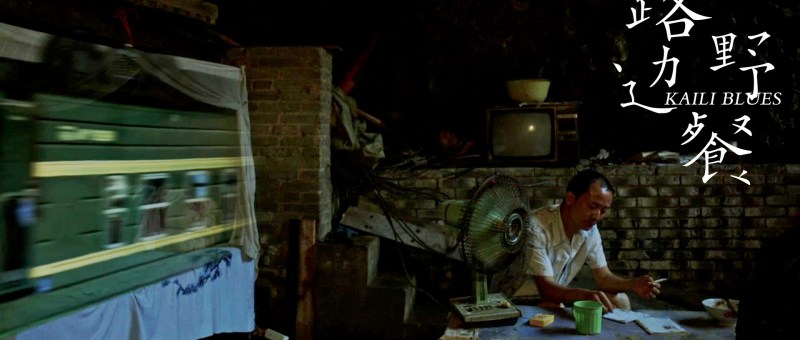
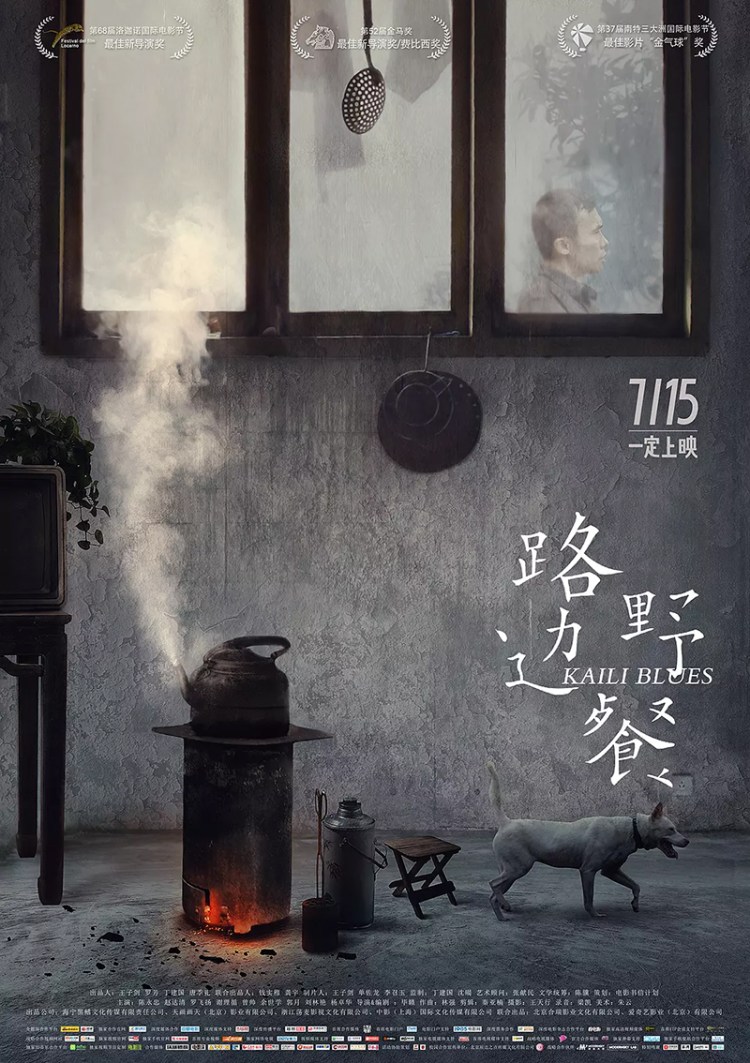
Kaili Blues (路边野餐, Bi Gan, 2015)

Kaili blues poster 5“There is bound to be one who will return, to fill an empty bamboo basket with love.” intones the lonely poet at the centre of Bi Gan’s Kaili Blues (路边野餐, Lùbiān Yěcān) part way through his strange odyssey through the tiny yet infinite village of Dangmai, a place either out of time or entirely made of it. Longing, regret, the temporal impossibilities of memory, injustice, disappointment – a lifetime’s unresolved emotional trauma works its way into a dreamlike exploration of the past as a work in progress, half built but already obsolete. Time is just memory mixed with desire, in the words of another poet, and contrary to conventional wisdom, perhaps it does not flow ceaselessly in only one direction.
Our hero is Chen (Chen Yongzhong) – a middle aged doctor and published poet who once served time prison and inherited the money to start his clinic from his mother who passed away while he was inside. His major preoccupation in life is his young nephew – the son of his half-brother, the aptly named Crazy Face (Xie Lixun). Crazy Face is, to put it mildly, not a reliable father and often locks his son, Weiwei (Luo Feiyang), in their apartment while he wastes his life drinking and gambling. Chen has taken it upon himself to ensure the boy is well looked after – taking him on days out to the amusement park, buying him nutritious dinners, and just generally keeping him company. Chen is even prepared to adopt the boy, but Crazy Face is resentful and vindictive, irritated their mother left the family home to Chen and not to him. Eventually, Crazy Face “sells” Weiwei to an old man in another town, Zhenyuan, and Chen decides to try and fetch him back while delivering a long overdue message from his assistant to a man she once knew there before the cultural revolution who is now gravely ill.

Chen himself was once abandoned in Zhenyuan, by the mother who now haunts his dreams with the sound of lusheng pipes and memories of the Miao people who are now themselves rapidly disappearing. All Chen can see of her in his dreams is her shoes with their floral embroidery, distorted by their journey in the water. His assistant urges him to burn some paper money for her that she can use in the afterlife but to do it when no one’s looking – such ancient superstitions, like the lusheng pipes, are not to be seen or heard in the new “modern” China. Even Chen’s clinic is due to be pulled down, rendering the animosity between himself and his unhinged brother all the more pointless.

Looking for the lonely boy, who is also in a way himself, Chen chases ghosts of future and past. His passage to find the famed lusheng players and the last remnants of the Miao is precipitated by an act of fate – a young man’s attempts to kick start his motorbike to give his “girlfriend” (he seems to think that what she is, she may feel differently) Yangyang (Guo Yue) a lift fails miserably and she gets one from someone else, enabling Chen to climb on. Later we learn the young man’s name is Weiwei, and his mission is that he wants to make time run backwards because Yangyang is leaving to go to Kaili to work as a “tour guide” (it remains unclear who needs a tour in Kaili) and says she will only return if he can “turn back time”. Whether this Weiwei is somehow the teenage version of the boy Chen was looking for or not, he shares his obsession with imagined time, scrawling fake clocks on trains so that time really will be running backwards as one train passes another as if travelling into the past.

If the future can yield its ghosts then the past can too. A young hairdresser is the spitting image of Chen’s late wife who, according to a story he tells her disguised as that of a friend, he discovered had died while he was is in prison but had written him several letters in advance to hide the truth. Chen’s strange life, his time “on the streets” and accidental involvement with a stoic loanshark who accepted the death of his son at the hands of an enemy but demanded vengeance for his severed hand, might as well have been a dream for its all meandering disappointments. The gangster is now a horologist, as luck would have it. Even dreams have their logic. Only on arrival at his secondary destination does it all come together, the dream world and the real somehow merging and becoming whole once again. The past is a call that can’t be answered, but must be heard all the same.


International trailer (English subtitles)

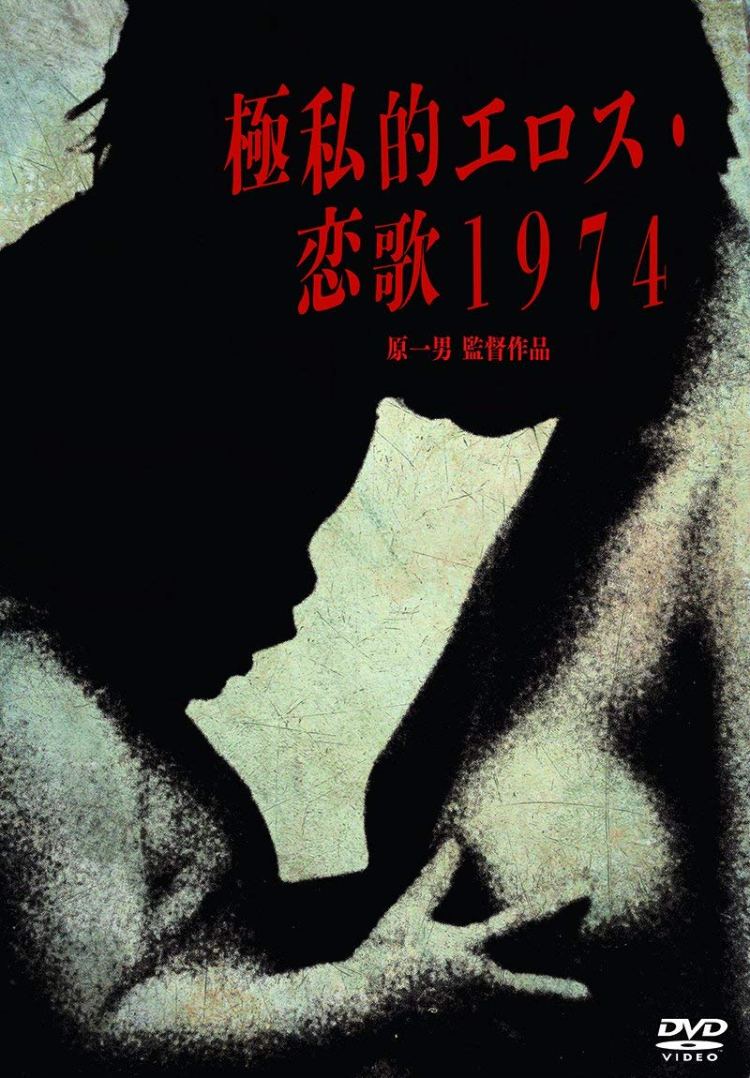
Extreme Private Eros: Love Song 1974 (極私的エロス 恋歌1974, Kazuo Hara, 1974)

Extreme private eros 1974If you’re going to use your camera to interrogate the world, perhaps it’s only fair to let the world interrogate you by means of your own camera. Kazuo Hara’s second documentary is about as personal as its possible to get – a detached, rational examination of the interplay between the director and his subject who happens to be his former lover and the mother of his child. A thinly veiled excuse to maintain contact with a woman who had abandoned him and taken his child with her, Extreme Private Eros: Love Song 1974 (極私的エロス 恋歌1974, Gokushiteki Eros: Renka 1974) is both a tiny snapshot of a nation in flux, and a timeless exploration of the end of love.

Hara and his former lover Miyuki Takeda had lived together for three years and even had a child when she abruptly announced that she no longer wanted to live under the authority of a man or as a member of a “traditional” family and intended to leave in order to live a life of complete independence. Although the relationship was officially over, Miyuki maintained contact with Hara and visited him more or less weekly so it was an additional shock when she suddenly announced she was moving to Okinawa. However, Miyuki made a strange request of her former lover – that he film her attempt to give birth without assistance. Hoping to remain close to her or perhaps to attempt to understand better the reasoning behind her erratic behaviour, Hara agrees.

In Okinawa, Miyuki has moved in with another woman, Sugako, but the relationship between them appears strained and ill defined. Hara’s arrival, he eventually realises, is yet another disruptive influence in this already fraught environment but it’s unclear whether his camera is a deliberate or accidental witness to a series of extremely difficult, not to mention private, conversations taking place in front of a third party in which Miyuki berates her silent roommate for rejecting her desire for a full and exclusive relationship in favour of continuing to sleep with her friend Tommy.

When the relationship with Sugako breaks down, Miyuki takes up with a black GI, Paul, who later becomes the father of the child she intends to birth alone. Though interviewing Miyuki alongside Paul (who speaks no Japanese) is a mild and dispassionate affair, interviewing Miyuki alone about her new lover and the basis of their relationship sends Hara into a spiral of jealousy and despair in which he eventually cedes control of his camera to an assistant and appears on screen breaking down in tears. Wondering if Miyuki is as accidentally jealous of him as he is of Miyuki, Hara muddies the waters by inviting his own new lover, Sachiko – who is also pregnant with his child, to assist him in the making of the documentary. Hara gets his wish. Miyuki is indeed jealous, angrily barking at Sachiko while running down her former lover in every conceivable way, and yet the two women eventually end up bonding, once again excluding Hara from his own attempt at narrative.

The perspective is indeed Hara’s – his weary voiceover and occasionally passive aggressive, exasperated intertitles making plain his own confusion and continued searching for the central question of what exactly he’s trying to achieve, but Miyuki wrestles with him for overall control and to assert her right of ownership over her own story (or at least the presentation of it). Miyuki’s quest seems to be one of total independence – she rejects the world of the patriarchal family, later rejecting love entirely and resolving to live without a man or woman, but remains firmly within its standard ideological parameters in recasting herself as the embodiment of selfless motherhood. She rejects the ideas of traditional Japanese femininity, insisting that her children are raised to be aggressive rather than meek or gentle or kind and going so far as to reject these supposedly feminised qualities as she sees them in her own son as reflections of those same qualities she eventually found unappealing in Hara. She becomes obsessed with the idea of mixed-race children, perhaps as an extension of her desire for a non-Japanese idea of individualism, but later tells her new born daughter that Japan is good and America bad, and pens a damning letter of advice to the women of Okinawa warning them off deceitful GIs.

Miyuki is a woman with scant respect for boundaries and so Hara is granted near unrestricted access to the entirety of her existence as she pursues her various desires and contradictory convictions. Hara’s camera is both unobtrusive and powerfully present, privy to extremely private thoughts and conversations and only occasionally inserting itself into the narrative but unafraid to embrace taboos while perhaps also conflicted in its own defiant pursuit of emotional honesty at all costs. In attempting to capture his subject Hara illuminates both himself and his society, exposing painful truths and unwelcome prejudices but perhaps allowing them to fester unresolved in a future which is both open yet also uncertain.


Extreme Private Eros: Love Song 1974 was screened as part of a Kazuo Hara focus at Open City Documentary Festival 2018.

Trailer (English subtitles)

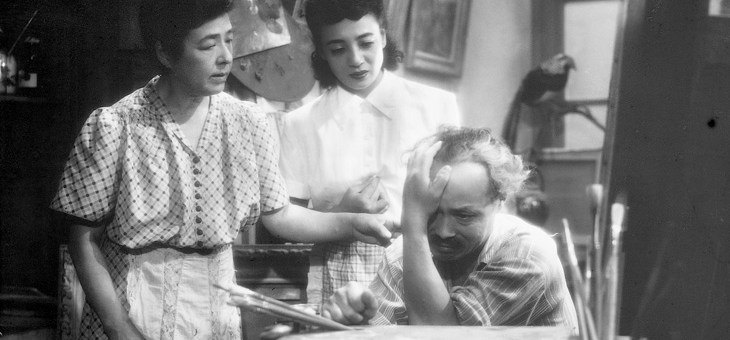
The Portrait (肖像, Keisuke Kinoshita, 1948)

vlcsnap-2018-09-06-01h35m07s763The immediate post-war period was one of fear and hardship. You might survive, but you might not like the person you’ll have to become in order to do so. The (unexpected) heroine of Keisuke Kinoshita’s The Portrait (肖像, Shozo) thought she’d made her peace with her choices, only to be confronted by a vision of her essential self as seen through the eyes of a cheerfully innocent artist. Despite the harshness of the times, there are those who’ve learned to be happy in their lot, but is their talent for happiness inspiration or irritation for those who’ve chosen a different path?

Kinoshita opens with a comic scene in which two shady real estate brokers take a look at a local property. Deciding it’s overpriced and impractical, the pair nevertheless decide to buy it together with the intention of flipping it once they convert the downstairs workspace into more practical living accommodation. There is, however, a slight hitch in that there are sitting tenants – a painter and his family who live in the room upstairs and use the rooms below as a studio. Thinking it will be easy enough to evict them, the men aren’t bothered but the the family are all so relentlessly nice that no one has yet been able to tell them to go. As a last resort, one of the men, Kaneko (Eitaro Ozawa), decides to move into the upstairs with his mistress, Midori (Kuniko Igawa), in the hope that the family will feel so awkward and in the way they will decide to vacate. Innocent and unworldly, the Nomuras all assume Midori is her lover’s daughter rather than his mistress, and start treating her like a well to do young lady. Such sudden and unexpected respect starts to weigh on Midori’s mind as she finds herself playing along, pretending to be “nice” and “respectable” while knowing that the life she’s living is anything but.

The problem is that the Nomuras are so essentially kind and welcoming that they really don’t mind sharing the house. Mr. Nomura (Ichiro Sugai), the middle-aged painter, feels guilty that he doesn’t earn more money and is too poor to move, but he’s also the sort to get over excited about having grown a giant pumpkin that he can’t resist showing to absolutely everyone. As it turns out the Nomuras are also living with a private tragedy – their eldest son Ichiro (Toru Abe) whose wife Kumiko (Kuniko Miyake) and son Koichi also live with the family has not yet returned home from the war and his whereabouts are unknown. Still, they don’t mind talking about it and are as happy as they can be, dancing away under the light of the moon – an unexpected upside to constant power outages. Meanwhile, Kaneko complains loudly as he attempts to finish his accounts in the evening gloom.

Midori half envies, half resents her new neighbours. The longer she lives with the Nomuras the guiltier she starts to feel in deceiving them. Matters begin to come to a head when Mr. Nomura asks permission to paint her portrait. He thinks Midori has a very “interesting” face, in part because he can see a sadness in her eyes that is totally absent in those of his daughter, Yoko (Yoko Katsuragi). Midori agrees and swaps her usual Western attire for the kimono her mother once gave her, but the picture Mr. Nomura paints begins to bother her. The portrait is of a pure young woman, innocent and honest, which is about as far from the way she sees herself as it’s possible to be.

As a friend of Midori’s puts it, you have to survive somehow and Midori thought she’d made her peace with the way she has decided to live but the portrait reminds her that she wasn’t always like this and now she’s not sure which version of herself she ought to despise. She wishes she could paint herself over, but feels her fate is sealed and there’s no way back. Kumiko, a little more worldly wise than her in-laws, is perfectly aware of what’s been going on upstairs but isn’t at all bothered by it. She doesn’t blame Midori for the choices that she’s made and thinks the picture is accurate in capturing her true soul, advising her that it is possible to be that woman again if that’s what she really wants.

The Portrait was scripted by none other than Akira Kurosawa whose belief in the essential goodness of humanity was perhaps not quite as strong as Kinoshita’s but the Nomuras are nevertheless typical Kinoshita heroes and it’s their unguarded warmth and kindness which begins to change the world for those around them. Even the cynical Kaneko is eventually moved by their cheerful selflessness, forced to accept their accidental moral victory rather than continue with his nefarious plan. Midori, forced into a reconsideration of herself, stands in for a generation attempting to make peace with the compromises of the past, learning that they don’t need to define the future and that it isn’t too late to strive for a more authentic life of simple happiness even if you feel you may have already sunk too far.


The Nomuras dancing in the moonlight

Adulthood (어른도감, Kim In-seon, 2018)

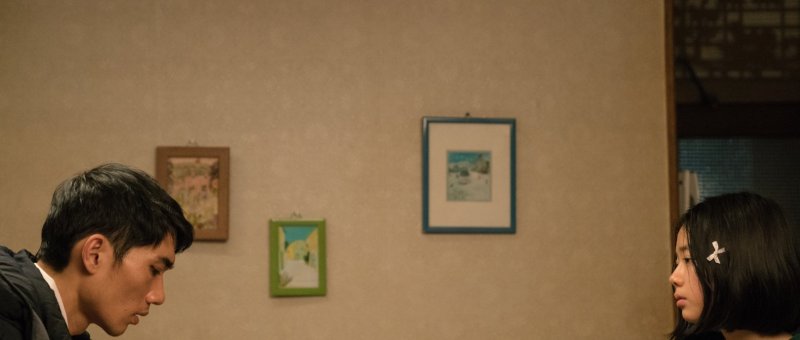
Adulthood poster 2Growing up is a funny thing, most of us are content to let it run as a background task while we get on with our daily lives but some of us are forced to contemplate the nature of “adulthood” from a transitionary perspective when confronted with independence delivered at an unexpected juncture. The debut feature from Kim In-seon, Adulthood (어른도감, Eoreundogam) is a coming of age tale but it’s also one about family, responsibility, integrity, and the social fabric as a teenage girl’s attempts to adjust to life alone are frustrated by the arrival of an irresponsible uncle with issues of his own.

14-year-old Kyung-un’s (Lee Jae-in) father (Choi Duk-moon) has just passed away following a lengthy illness. Her mother left when she was small, and now Kyung-un is all alone. The funeral is lonely, and Kyung-un is otherwise unaccompanied, without friends or relatives to assist in the business of mourning. That is, until a good-looking young man suddenly jumps on the bus to the crematorium and bursts into tears. Jae-min (Um Tae-Goo) claims to be the younger brother of Kyung-un’s father whom she has never met. Sceptical, Kyung-un has no other option than to allow Jae-min to invade her life even though she felt as if she was managing fine on her own.

However, Jae-min’s intentions turn out to be less than honourable. He’s a conman and a gigalo who’s forever failing in various scams and deceptions, and despite Kyung-un’s prudent caution towards him, he manages to trick her out of her dad’s life insurance money thanks to making himself her legal guardian on a pretext of saving her from a foster home. Being the clever little girl she is, Kyung-un manages to track her errant uncle down to a shady part of town, but the only way she’s getting her money back is if she consents to become Jae-min’s accomplice and pose as his daughter in order to win over his latest mark, lonely pharmacist Jum-hee (Seo Jung-yeon).

Forced to care for herself from an early age thanks to her father’s illness, Kyung-un is a mature little girl who can manage perfectly fine on her own, even dealing with complicated formalities like submitting death certificates and dealing with insurance companies. At 14 she probably shouldn’t have to do any of this alone but doesn’t want to lose her independence or have her life further disrupted by being forced out of her home and into foster care. Despite her natural caution there is perhaps a part of her that wants to believe Jae-min’s story, even if the other part of her is cloning his mobile phone and going through his bag to try and figure out what it is he’s after.

Jae-min, however, is a selfish man child perpetually chasing quick fixes and conveniently deciding to ignore whoever might end up getting hurt in the process, though it’s also true that he’s not completely unaffected by the pain he causes to others. His moral scruples do not extend to cheating his niece out of her father’s money which is all she has to live on and probably means she will also become homeless seeing as her landlord (who hasn’t even noticed her dad has died) is pushing the rent up. Eyes always on the prize, Jae-min’s dream of opening a Japanese restaurant is real enough and he doesn’t much care what he has to do to make it a reality.

However, when Jae-min and Kyung-un are forced to start playacting family for the lonely Jum-hee, a genuine connection is set in motion. As it turns out, there’s a reason for Jum-hee’s continued aloofness and fear to engage and her interactions with the “widowed” father and daughter do indeed begin to shift something inside her too. Despite all the lying and the natural mistrust, something true bubbles to the surface even if the continued deceptions threaten to push it all back down again.

In the end perhaps that’s what adulthood means, understanding that sometimes people tell the truth when they lie. Kyung-un and Jae-min, both orphans, both lonely, both doing “fine” on their own, nevertheless come to realise that perhaps it’s not so bad to be doing fine on your own with someone else. It’s not perfect, and perhaps it’s not what you wanted, but then that’s “adulthood” for you. A promising debut from Kim In-seon, Adulthood is a warm and empathetic look at different paths to maturity as a little girl and a hollow man bond in their shared sense of aloneness and come to realise that independence does not necessarily require solitude.


Adulthood gets its North American premiere as the opening night gala of the seventh season of Asian Pop-up Cinema which takes place in Chicago from 12th September to 14th November 2018. Director Kim In-seon and actress Lee Jae-in will be in attendance for the opening night screening at AMC River East 21 on 12th September for an introduction and Q&A. Tickets are already on sale via the official website.

Original trailer (no subtitles)

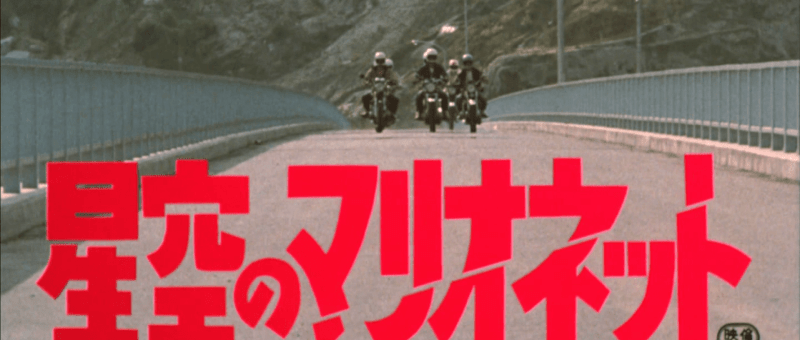
Puppets Under Starry Skies (星空のマリオネット, Hojin Hashiura, 1978)

Puppets under starry skies posterThe youth movie had been the populist rebellion against the stately Japanese cinema of the golden age, but many of its representative directors had quickly tired of the restrictive studio system. Some had decamped into the “independent” arena which offered relative artistic freedom if without the resources and financial rewards of the commercial sector. The Art Theatre Guild had provided a valuable outlet for experimental film since it began to shift from distribution of foreign films into production of Japanese language art movies, but paradoxically the early 1970s saw it shift again as the studio’s “arthouse” aims fell by the wayside and more conventional youth films made a gradual return. Puppets Under Starry Skies (星空のマリオネット, Hoshizora no Marionette), the first of three films directed by Hojin Hashiura for ATG (aside from an earlier 16mm independent effort, the only films Hashiura would ever make), is very much a youth movie in the new ATG mould which is to say its tone is one of sadness rather than anger as its protagonists find themselves adrift in the changing 1970s society, unable to find their place in the world their parents have been building for them.

Hideo (Yoichi Miura), leader of small biker gang, is best friends with Hiroshi (Kazuhito Takei) – an effeminate young man from a wealthy family who likes to wear makeup and dress in (slightly) flamboyant outfits. The trouble starts when Hideo picks a fight with a rival gang boss and then charges in for a rematch to avenge his honour only to be set on by thugs, stabbed, and beaten so badly he winds up in hospital for over a week. Humiliated, Hideo loses all his gang member friends with only Hiroshi sticking by him. Later he takes up with a local bar girl, Akemi (Ako), who has a promiscuous past and is already pregnant with another man’s child. Together the three attempt to find a way forward into a more conventional adulthood but struggle to find a place for themselves within a rigidly conformist society which has already rejected them.

Parental disconnection seems to be a recurrent theme in the lives of each of the troubled youngsters. Hideo lost his mother young, not long after they’d moved into the town from the mountains. Never having been able to come to terms with his mother’s death he has a difficult relationship with his father and takes out his frustrations through meaningless violence and male posturing. Akemi too has a difficult family background but this time with a single mother who is a former sex worker turned publican. Working in a local bar (not her mother’s) Akemi is harassed by the customers but is well known for being open to casual sex, suffering a degree of social stigma both because of her liberated attitude and because of her mother’s former profession.

Hiroshi’s problems are perhaps of a different order. From an “elite” family, he feels himself entirely disconnected from normal family life and has been raised in an atmosphere of cold austerity rather than parental love. Hiroshi believes this is partly because he has “bad blood” and is cursed beyond redemption. He is not his father’s biological son but the child of a sperm donor enlisted to ensure an heir for his father’s bloodline. Hiroshi, however, is gay and will not be able fulfil the purpose he was born for, at least not in the way that was expected of him. He is also effeminate, something of which his family do not approve, and feels himself excluded from mainstream society because of his sexual orientation. To combat his feelings of intense alienation, Hiroshi has become a drug user, sniffing glue in order to send himself on psychedelic trips to outer space in which he merges with the deep blue vacuum free of all worldly concerns.

Hideo too gets in on the glue sniffing act but feels himself becoming one with the river of life and death, feeling it flow through him as he flows with it. The river itself, and the idea of passive resignation that comes of simply allowing oneself to float, becomes a grim symbol of the futility that faces Hideo as he struggles to reassemble an identity in a world which consistently denies him one. The future looks bleak for each of our protagonists, the only one with any sense of hope once again investing it in the system which has already betrayed her – the family. Youth looks for new models, new standards by which to live, but does not find them. Puppets of fate, the trio dance under starry skies until the sun comes up and they realise that the day holds nothing for them except the nihilistic desire for its end.


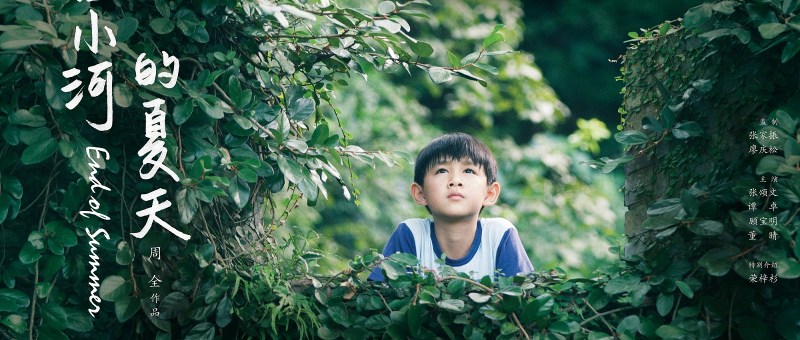
End of Summer (西小河的夏天, Zhou Quan, 2017)

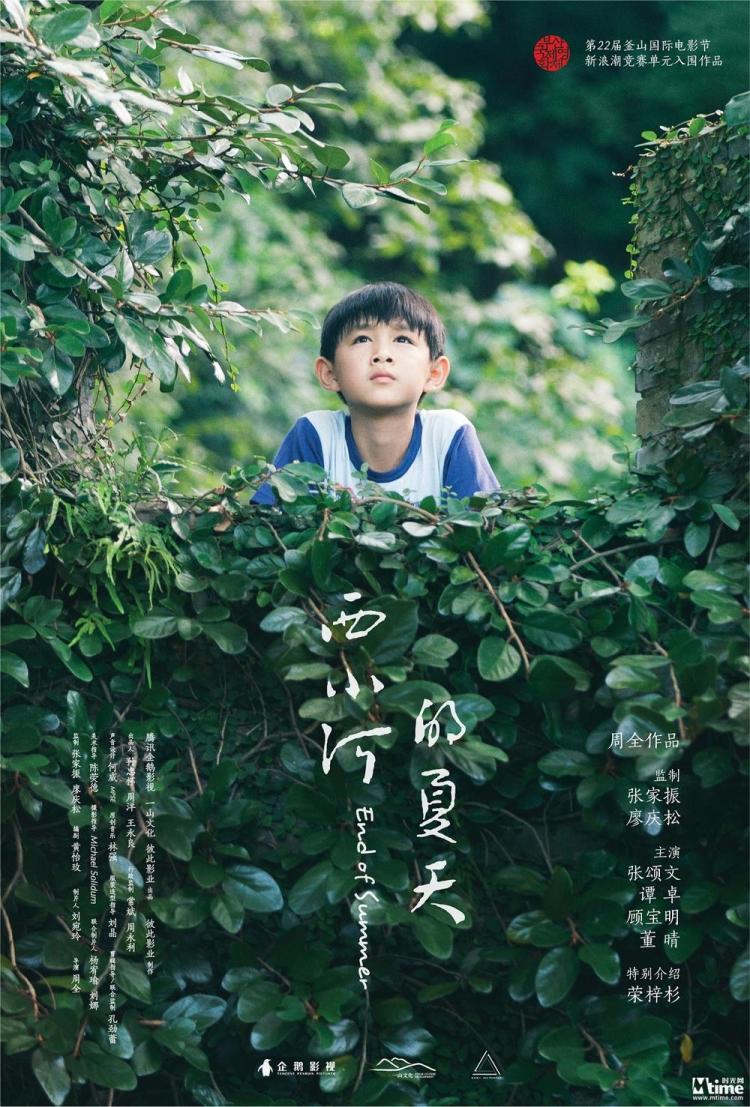
The End of Summer posterMany things were changing in late ‘90s China. For one little boy in the summer of 1998, however, nothing much mattered beyond the World Cup which was being broadcast in its entirety for the very first time. Part nostalgia fest for a more innocent world, Zhou Quan’s End of Summer (西小河的夏天, Xī Xiǎo de Xiàtiān) is, as the title implies, a story of befores as its various protagonists attempt to resolve a series of personal crises that will lead to great changes preceding the autumn of 1998.

Football obsessed little boy Xiaoyang (Rong Zishan) has to keep his love a secret because his dad, Jianhua (Zhang Songwen), thinks all sports are frivolous and has forbidden his son to play with the other children. Jianhua is also a high ranking teacher at Xiaoyang’s school and demands high levels of discipline and commitment from his family, even forcing Xiaoyang to dob one of his friends in under heavy questioning about a playground fight. Bored and lonely at home, Xiaoyang has begun to bond with an older man at their courtyard who also loves football and has promised to help Xiaoyang train for the upcoming school tryouts next term if only he can persuade his dad to sign the consent form.

Meanwhile, there’s trouble brewing on the home front. Xiaoyang’s mother Huifang (Tan Zhuo) is a successful Peking Opera performer whose career is skyrocketing now that she’s been nominated for a prestigious award. Jianhua has also been earmarked for a promotion at work and is covering for a sick colleague, but the arrival of a new teacher threatens to dangerously unbalance the carefully won equilibrium of the Gu family.

Miss Shen (Dong Qing) is indeed a harbinger of social change. The polar opposite of Huifang, Miss Shen is a hippyish free spirit who plays the guitar and sings folk songs in a local cafe with her boyfriend. She teaches the children English through singing songs and playing games, always cheerful and energetic with an adorable smile and easy going personality. Xiaoyang proves himself unusually astute for his years when he misinterprets an innocent scene between Miss Shen and his father, correctly guessing that Jianhua has developed a mild crush on the lovely young woman though perhaps not realising that Miss Shen is merely naive and entirely oblivious to her boss’ ulterior motives.

The camera first catches Xiaoyang caught between two football teams, standing motionless and staring vacantly ahead. He remains caught between two worlds while prompted a little early towards the compromises of adulthood as he experiences the moral outrage of realising his rigid, authoritarian father maybe breaking all the rules of conventional morality by stepping out on his mum. A victim of China’s one child policy, he is often intensely lonely, left alone at home with nothing to do but study while his mother is out rehearsing and his dad increasingly staying out late to offer “guidance” to Miss Shen.

Xiaoyang’s loneliness finds a mirror in the grumpy old man from across the way, Zheng (Ku Pao-Ming), who appears to have fallen out with his family and is missing his own absent grandson, Bao. Zheng picks up the fatherly responsibilities Jianhua has failed to fulfil – supporting Xiaoyang in his football dreams, giving him little bits of life advice, listening intently to his worries regarding his parents’ marital problems without trying to sugarcoat the seriousness of the issues or making a pretence of humouring a perspicuous little boy as they turn detective and catch Jianhua in the act but just miss out on his humiliating defeat and the epiphany which accompanies it as he is forced to confront the fact that he has become a sad old man. Jianhua’s major problems stem from an intense lack of self confidence as his growing son begins to reject his rigid authority and his wife’s increasing success punches a hole through his male pride. Temporarily boosted by the possibility of a promotion, he decides to try rebelling by chasing a younger woman who is very much not his type, little knowing that she sees him only as a venerable teacher and is shocked by his improper interest in her.

Meanwhile change is on the horizon everywhere. The courtyard is earmarked for “redevelopment”, and Mr. Zheng’s family are constantly trying to convince him to come and live with them in the city. By the end of the summer everything will have changed, some things for the better and some perhaps not but there will at least be a shift as each is forced into a reconsideration of their present circumstances. End of Summer is gentler than its title would suggest, a wistful look back one dramatic summer in the childhood of a sensitive little boy, but what it lacks in impact it makes up for with sincerity and a good deal of warmth.


End of Summer was screened as part of the New York Asian Film Festival 2018.

International trailer (English subtitles)

Interview with director Zhou Quan from the 2017 Busan Film Festival.

Break up the Chain (쇠사슬을 끊어라, Lee Man-hee, 1971)

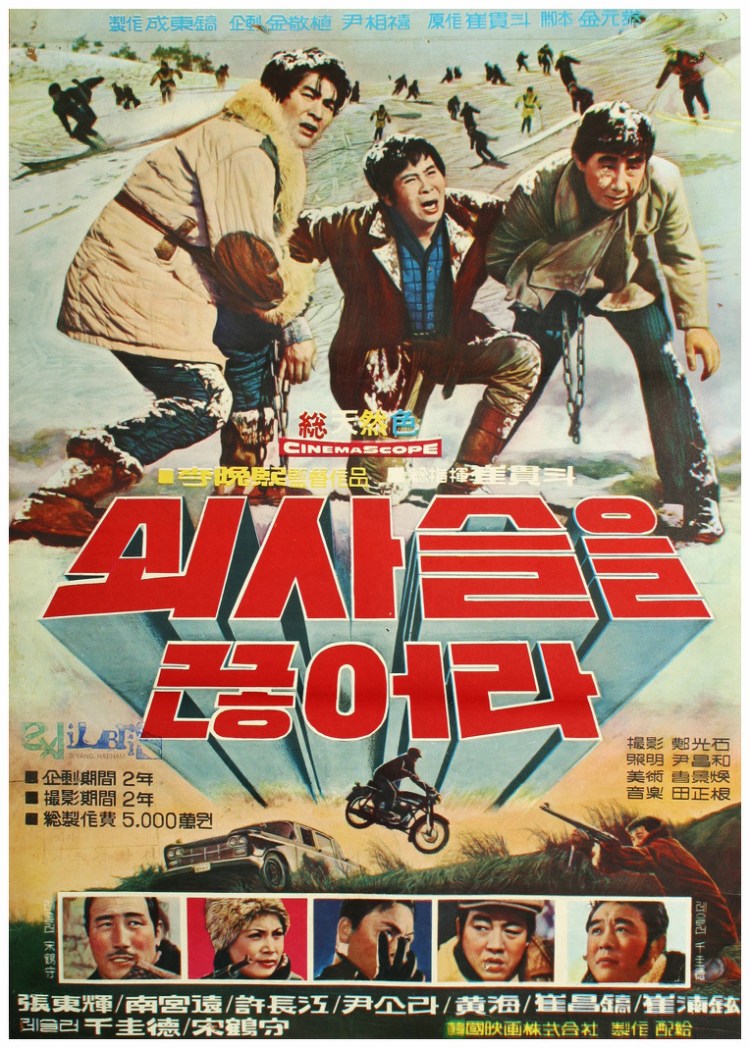
Break Up the Chain poster1970 had been a difficult year for Lee Man-hee. A conflict on the set of The Goboi Bridge in which Lee intended to star against the advice of his regular team resulted in the end of his creative relationship with screenwriter Baek Gyeol and cinematographer Lee Suck-ki. Meanwhile, he’d also suffered a crisis in his personal life after parting ways with actress Moon Jeong-suk who had been both a lover and a muse. To top it all off he also had some financial problems and didn’t work at all for the year following Goboi Bridge’s release – a significant period of time in the high-speed world of early ‘70s Korean cinema in which it was not unheard of for a director to make as many as 10 films in one year. Break Up the Chain (쇠사슬을 끊어라, Shwisaseuleul Geunheola) was intended to be something of a “come back” but it finds Lee defeated, doing what he does best but also playing the game he never really wanted to play in succumbing to the patriotism epic (albeit a little tongue in cheek).

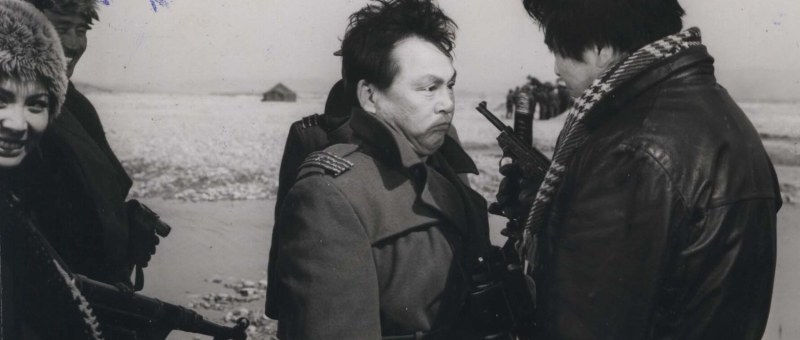
Riffing off Sergio Leone, Lee frames his resistance romp as a Manchurian western. A mysterious golden Buddhist statue has more than just monetary value as it also contains a list of the names of resistance operatives which can be revealed with the use of a special chemical formula. Three men are after it – Cheol-su (Namkoong Won), an adventurer for hire who might or might not be working for the resistance; Tae-ho (Jang Dong-hwi), a petty gangster; and Dal-geon (Heo Jang-kang), a collaborator working with the Japanese. The men are each interested in the statue for selfish reasons – Cheol-su for his reputation, Tae-ho for the money, and Dal-geon for the prestige. None of them is interested in the resistance movement itself, the statue’s importance in relation to it, or anything really beyond themselves and their day-to-day lives.

Of course, as this is a patriotism epic, the men eventually come round to the greatness of Korea as their individual quests converge and they find themselves alongside the resistance surrounded by the Japanese. The Japanese are largely a bumbling bunch who remain unaware of the statue’s “real” power even whilst holding it, thinking only of its monetary value as a lump of gold or work of art they could export abroad for financial gain. Confronted and faced with failure, the leader of the Japanese is firstly humiliated by his defeat at the hands of the resistance but then decides to show them the greatness of the Japanese army by committing Harakiri right there on the spot. Stripping off the captain begins to get cold feet, suddenly struck by the enormity of the moment when one of his lieutenants draws his sword ready for the beheading. The Japanese captain then seems to come down with “a cold” and resolves to visit the medical tent instead.

The early drama revolves around the interplay of the three self-interested outsiders as they scheme and plot to make use of each other and get the statue for themselves. Of the three, Cheol-su emerges as the most “noble” even though his quest is mercenary enough – his name is his business and thus he wants the statue to fulfil his contract and maintain his sense of integrity as a gun for hire. Tae-ho is merely interested in financial gain with a mild desire for social revenge and the thrill of outsmarting a rival, but both men are filled with an intense distaste for men like Dal-geon who have “betrayed” the countrymen they too have refused to serve. That aside, Tae-ho and Dal-geon begin to form a weak alliance of the opportunistic as they bond in their mercenary intentions, while Cheol-su lingers on the outside as his quest ties him more closely with the independence movement. Eventually the trio realise they have to work together to get the statue, even if their ultimate intention is to double cross the others and keep it for themselves. They do however suddenly rediscover their patriotic spirit, resolving to give the statue to the people who need to most while they ride off into the sunset in search of other ways to serve their country.

Set in dusty Manchuria (where the resistance movement operated in exile), Break Up the Chain is part of the short-lived boom of Korean “westerns” which were popular in the late ‘60s and early ‘70s. Lee abandons his experimental ambitions and aims squarely for the populist, reaching only for post-modern irony in his boys own adventure story filled with feats of daring do and flight on horseback. Yet he comforts himself with that sense of irony, pulling away from the absurd adventures of our heroes to show the faces of men dying in snow reminding us that their flight from the horror of war was perhaps a rational one rather than an act of cowardice or a failure of patriotism. Nevertheless, Lee seems to be at odds with himself as he gives in (to a point) and presents a silly story of amoral chancers suddenly rediscovering their “Koreanness” in the barren wastelands of Manchuria but does so with a sense of bitterness which conspires to rob the tale of its childish sense of fun.


Available to stream online via the Korean Film Archive’s YouTube Channel.